
Longevitabs Ingredients & Drug Interactions
What is this page for?
First and foremost: checking Longevitabs against your medications. The heart of this page is the interaction checker and the full interaction report — how this product’s ingredients may interact with prescription and over-the-counter medicines you may be taking.
Around that, we add a pharmacist’s high-level view of the product as a whole — what’s inside, the evidence for its stated use, how transparent the label is, and what safety data exists — so you can see the full picture in one place. It’s educational information from our licensed clinical databases and the clinical staff at HelloPharmacist — not medical advice — and we don’t sell or endorse products. Our editorial policy
Longevitabs is a dietary supplement by Health Concerns with 18 active ingredients. Its ingredients are commonly taken for digestive upset and bloating, infant colic, menstrual cramps.Based on those ingredients, 1,313 medications have a known interaction with it, the most serious rated major. The ingredients most likely to interact are Ho-shou-wu, Lycium, Fennel. Use the checker below to test your specific medication, or read the full HelloPharmacist Interaction Report.
Check Your Meds Against Longevitabs by Health Concerns
Ask about any prescription or over-the-counter medication and we check it for interactions with Longevitabs by Health Concerns — and tell you which ingredient is responsible.
AI summaries are generated from our interaction database for education only — always confirm with your pharmacist. How we use AI
Ask the Pharmacist
A licensed pharmacist will answer your question by email — free, usually within 24 hours.
Got it — thank you!
A licensed pharmacist will answer within 24 hours. Keep an eye on your email (worth checking spam, just in case).
HelloPharmacist Scorecard of Longevitabs by Health Concerns
Our pharmacy team’s full take, with four database checks built into the cards below — a summary of what is known, not a grade of the product itself.
What’s inside
Low disclosure
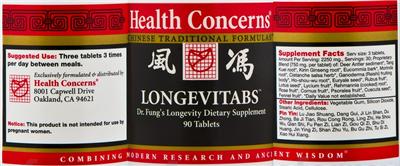
Longevitabs is an 18-ingredient blend of traditional Chinese herbs. The active ingredients include fennel seed, ho-shou-wu (fo-ti root), rehmannia, tang kuei (dong quai root), psoralea, rubus, lycium (goji berry), eucommia bark, cuscuta (dodder), cornus, cistanche salsa, morinda (ba ji tian), lotus seed, rose, deer antler sediment, kirin ginseng, ganoderma (reishi mushroom), and euryale.
The tablet also contains inactive ingredients — vegetable gum, silicon dioxide, stearic acid, and cellulose — which are fillers and binders.
Does it work?
Moderate evidence
The evidence supporting Longevitabs' ingredients varies widely. Fennel is possibly effective for menstrual pain (dysmenorrhea), but evidence for its other uses is insufficient.
Rehmannia is possibly effective for chronic kidney disease. Morinda is possibly effective for depression.
For most other claimed uses — including brain function, bone health, heart health, immune support, and sexual function — the data we hold shows insufficient evidence to rate the ingredients. No effectiveness rating is documented for several ingredients including deer antler sediment, ganoderma (reishi), and multiple others.
How safe is it?
Well-documented data
Several ingredients carry important safety flags. Fo-ti has been linked to liver injury in around 450 documented cases, ranging from mild to severe, at various doses and durations — this is a serious concern.
Fennel, tang quei, and goji are generally well tolerated as foods but may cause side effects at medicinal doses: fennel can cause stomach upset, skin sensitivity to sun, or rarely seizures; tang quei can cause skin sensitivity and contains constituents that raise cancer concerns at high doses; goji has rare reports of liver inflammation and allergic reactions including anaphylaxis. Lotus can trigger allergic reactions like hives and contact dermatitis.
Reishi is usually tolerated short-term but may cause dizziness, dry mouth, nausea, rash, or respiratory allergy to its spores. Fennel, fo-ti, tang quei, lycium, cuscuta, cornus, morinda, lotus, deer antler, and ganoderma all carry insufficient or no safety data in pregnancy and breastfeeding — the facts advise against use during pregnancy for most of these and caution or avoidance while breastfeeding.
Meds to double-check
Major interaction found
Before taking Longevitabs, double-check with your doctor or pharmacist if you take: blood thinners like warfarin or other anticoagulants and antiplatelet drugs (Major risk with tang quei; Moderate with fennel, fo-ti, goji, and lotus); blood pressure medications (Moderate risk from rehmannia and ganoderma); diabetes drugs (Moderate risk from rehmannia, morinda, lotus, and ganoderma); drugs metabolized by liver enzymes including CYP3A4, CYP2C9, CYP2C8, CYP2B6, CYP2D6, and CYP2C19 (Moderate risk from fennel, fo-ti, and goji); ciprofloxacin (Cipro) or sulindac (Clinoril); tamoxifen (Nolvadex); digoxin (Lanoxin); flecainide (Tambocor); contraceptives or hormone replacement therapy; stimulant laxatives or diuretics; or pentobarbital. No interactions are documented for the ingredients we could not check.
The bottom line
Scorecard at a glanceFormula with limited ingredient disclosure with some supporting evidence behind its ingredients' uses. Major medication interactions have been identified, and safety information is well characterized.
Longevitabs is a multi-ingredient herbal blend with strong traditional use but limited modern evidence for most of its claimed benefits; fennel may help menstrual pain, and rehmannia may help chronic kidney disease, but evidence for other purposes is incomplete. If you take blood thinners, blood pressure or diabetes medications, or heart drugs, this product carries documented interaction risks — check with your pharmacist or doctor before starting.
Liver safety is a concern given fo-ti's history; pregnant or breastfeeding people should avoid it. Talk to your own healthcare provider about whether this supplement makes sense for you and your medications.
Educational only — not medical advice; always confirm with your pharmacist. Our editorial policy · How we use AI
Assessment coverage: 11 of 18 active ingredients matched to our full ingredient reviews (monographs). Based on the product label dated Sep 25, 2013.
This Scorecard evaluates available label information, ingredient evidence, and known medication-safety considerations. It does not independently verify product identity, purity, potency, contamination, or manufacturing quality. How these ratings are computed
General information
Key facts about Longevitabs, straight from the product label.
| Brand | Health Concerns |
|---|---|
| Net contents | 90 Tablet(s) |
| Market status | On market |
| Date entered into DSLD | Sep 25, 2013 |
| DSLD ID | 25625 |
| Product type | Other Combinations |
| Supplement form | Tablet Or Pill |
| Dietary claims / uses | All Other |
| Intended target group(s) | Adult (18 - 50 Years) |
Everything in this section is reproduced from the manufacturer’s own product label — it’s the label speaking, not HelloPharmacist. We show it so you can see exactly what the maker states; we don’t verify or endorse those statements.
Supplement Facts
The label details for Longevitabs by Health Concerns, sourced from the NIH Dietary Supplement Label Database.
Supplement Facts
| Ingredient | Amount | % DV |
|---|---|---|
| Proprietary Blend | 2250 mg | -- |
| Fennel | 0 Not Present | -- |
| Ho-shou-wu | 0 Not Present | -- |
| Rehmannia | 0 Not Present | -- |
| Tang Kuei | 0 Not Present | -- |
| Psoralea | 0 Not Present | -- |
| Rubus | 0 Not Present | -- |
| Lycium | 0 Not Present | -- |
| Eucommia | 0 Not Present | -- |
| Cuscuta | 0 Not Present | -- |
| Cornus | 0 Not Present | -- |
| Cistanche salsa | 0 Not Present | -- |
| Morinda | 0 Not Present | -- |
| Lotus | 0 Not Present | -- |
| Rose | 0 Not Present | -- |
| Deer Antler sediment | 0 Not Present | -- |
| Kirin Ginseng | 0 Not Present | -- |
| Ganoderma | 0 Not Present | -- |
| Euryale | 0 Not Present | -- |
Other ingredients: Vegetable Gum, Silicon Dioxide, Stearic Acid, Cellulose
Tap any ingredient to jump to its full detail below.
These statements are the manufacturer’s wording, reproduced from the product label — the label is saying it, not HelloPharmacist. We don’t verify or endorse them.
Precautions
Notice: This product is not intended for use by pregnant women.
Brand IP Statement(s)
CHINESE TRADITIONAL FORMULAS(TM)
COMBINING MODERN RESEARCH AND ANCIENT WISDOM(R)
Suggested/Recommended/Usage/Directions
Suggested Use: Three tablets 3 times per day between meals.
FDA Statement of Identity
Dr. Fung's Longevity Dietary Supplement
General Statements
Pin Yin: Lu Jiao Suang, Dang Gui, Ji Lin Shen, Du Zhong, Ba Ji Tian, Rou Cong Rong, Ling Zhi, He Shou Wu, Qian Shi, Fu Pen Zi, Lian Zi, Gou Qi Zi, Shu Dii Huang, Jin Ying Zi, Shan Zhu Yu, Bu Gu Zhi, Tu Si Zi, Hiao Hui Xiang.
Is this label outdated? Report a formula or label change and our pharmacy team will review it.
Longevitabs by Health Concerns label
The label scan from the NIH Dietary Supplement Label Database. Tap to enlarge.
Label images are published by the NIH Dietary Supplement Label Database for the version of this product on file. Always read your actual product label.
View the full label (PDF)The Ingredients in Longevitabs by Health Concerns
These are the 18 active ingredients this product is made of. Select any to open its full monograph.
Serving size3 Tablet(s) Dosage formTablet Or Pill Servings per container30 Amounts shown are per serving.
Most supplement products combine several ingredients, and a medication can interact with the product through any one of them. Each ingredient below shows whether it has known drug interactions.
Other (inactive) ingredients: Vegetable Gum, Silicon Dioxide, Stearic Acid, Cellulose. These complete the product’s ingredient list but are not active constituents.
Longevitabs by Health Concerns Drug Interactions
HelloPharmacist Interaction Report
Longevitabs by Health Concerns contains several ingredients with documented interactions: fennel, ho-shou-wu (fo-ti), rehmannia, tang kuei (dong quai), lycium (goji), morinda (ba ji tian), lotus, deer antler sediment (deer velvet), and ganoderma (reishi mushroom).
The most serious interaction is tang kuei with warfarin (Coumadin), a blood thinner — tang quei may increase warfarin's effects and raise bleeding risk significantly.
Read the full breakdown — every affected drug type, severity by severity
Fennel, fo-ti, and goji also interact with warfarin and other blood thinners (anticoagulants and antiplatelet drugs) at Moderate severity, with fennel and goji additionally affecting multiple drug-metabolizing enzymes (CYP3A4, CYP2C9, CYP2D6, CYP2C19). Fo-ti carries particular concern: it's been linked to liver injury cases that reduced clotting factors and elevated warfarin levels dangerously.
Rehmannia may lower blood pressure and blood sugar when combined with blood pressure or diabetes medications. Tang quei may also interfere with hormones (estrogens and contraceptives).
Goji has 5+ case reports of increased bleeding risk with warfarin and may affect heart rhythm drugs like flecainide.
Morinda may increase or decrease blood sugar unpredictably with diabetes drugs. Lotus may increase bleeding risk with antiplatelet drugs and low blood sugar with diabetes medications.
Ganoderma (reishi) may add to blood pressure-lowering and blood-sugar-lowering effects. Several ingredients we could not check — psoralea, rubus, eucommia, cistanche salsa, rose, and kirin ginseng — have no interaction data on file.
Altogether, these interactions span 1,314 individual medications. If you take any prescription drugs, especially blood thinners, blood pressure or diabetes medications, or heart rhythm drugs, check your exact medications with the tool on this page before starting Longevitabs.
Check your own medications below · Editorial policy · How we use AI
Want to check YOUR meds against Longevitabs?
Ask about interactions with your drugs in plain English — “Can I take it with lisinopril?” — and we find you the answer in seconds, ingredient by ingredient.
Go to the checkerIngredients driving the most interactions
Individual Drug Interactions
The ingredients in Longevitabs interact with 1,313 drugs. Click any drug to see the details.
9 of the 18 ingredients in Longevitabs interact with drugs. Each result below shows which ingredient is responsible. Ho-shou-wu Lycium Fennel Ganoderma Rehmannia Lotus Tang Kuei Morinda Deer Antler sediment
Acetaminophen, Chlorpheniramine Maleate, Dextromethorphan HbrVicks Formula 44M Cough, Cold & Flu Relief
How Acetaminophen, Chlorpheniramine Maleate, Dextromethorphan Hbr interacts with Longevitabs — through 3 ingredients. Tap an ingredient for the detail:
Ho-shou-wuCytochrome P450 3a4 (cyp3a4) Substrates, Hepatotoxic Drugs +2 Moderate
Interaction Summary
Theoretically, fo-ti might increase the levels and clinical effects of drugs metabolized by CYP3A4.
Read the full Ho-shou-wu + Acetaminophen, Chlorpheniramine Maleate, Dextromethorphan Hbr interactionFennelCytochrome P450 3a4 (cyp3a4) Substrates Moderate
Interaction Summary
Theoretically, fennel might increase levels of drugs metabolized by CYP3A4.
Read the full Fennel + Acetaminophen, Chlorpheniramine Maleate, Dextromethorphan Hbr interactionLyciumCytochrome P450 2d6 (cyp2d6) Substrates, Cytochrome P450 3a4 (cyp3a4) Substrates Moderate
Interaction Summary
Theoretically, goji berry might inhibit CYP2D6 and reduce metabolism of CYP2D6 substrates.
Read the full Lycium + Acetaminophen, Chlorpheniramine Maleate, Dextromethorphan Hbr interactionAcetaminophen, Chlorpheniramine, Codeine, PhenylephrineColrex
How Acetaminophen, Chlorpheniramine, Codeine, Phenylephrine interacts with Longevitabs — through 3 ingredients. Tap an ingredient for the detail:
LyciumCytochrome P450 2d6 (cyp2d6) Substrates, Cytochrome P450 3a4 (cyp3a4) Substrates Moderate
Interaction Summary
Theoretically, goji berry might inhibit CYP2D6 and reduce metabolism of CYP2D6 substrates.
Read the full Lycium + Acetaminophen, Chlorpheniramine, Codeine, Phenylephrine interactionHo-shou-wuHepatotoxic Drugs, Cytochrome P450 3a4 (cyp3a4) Substrates +2 Moderate
Interaction Summary
Theoretically, fo-ti might increase the risk of liver damage when taken with hepatotoxic drugs.
Read the full Ho-shou-wu + Acetaminophen, Chlorpheniramine, Codeine, Phenylephrine interactionFennelCytochrome P450 3a4 (cyp3a4) Substrates Moderate
Interaction Summary
Theoretically, fennel might increase levels of drugs metabolized by CYP3A4.
Read the full Fennel + Acetaminophen, Chlorpheniramine, Codeine, Phenylephrine interactionAcetaminophen, Chlorpheniramine, DextromethorphanCoricidin II Extra Strength Cold and Flu
How Acetaminophen, Chlorpheniramine, Dextromethorphan interacts with Longevitabs — through 3 ingredients. Tap an ingredient for the detail:
FennelCytochrome P450 3a4 (cyp3a4) Substrates Moderate
Interaction Summary
Theoretically, fennel might increase levels of drugs metabolized by CYP3A4.
Read the full Fennel + Acetaminophen, Chlorpheniramine, Dextromethorphan interactionHo-shou-wuCytochrome P450 2d6 (cyp2d6) Substrates, Cytochrome P450 1a2 (cyp1a2) Substrates +2 Moderate
Interaction Summary
Theoretically, fo-ti may increase the levels and clinical effects of drugs metabolized by CYP2D6.
Read the full Ho-shou-wu + Acetaminophen, Chlorpheniramine, Dextromethorphan interactionLyciumCytochrome P450 3a4 (cyp3a4) Substrates, Cytochrome P450 2d6 (cyp2d6) Substrates Moderate
Interaction Summary
Theoretically, goji berry might inhibit CYP3A4 and reduce metabolism of CYP3A4 substrates.
Read the full Lycium + Acetaminophen, Chlorpheniramine, Dextromethorphan interactionAcetaminophen, Chlorpheniramine, Dextromethorphan HydrobromideCoricidin HBP Maximum Strength Flu
How Acetaminophen, Chlorpheniramine, Dextromethorphan Hydrobromide interacts with Longevitabs — through 3 ingredients. Tap an ingredient for the detail:
Ho-shou-wuCytochrome P450 3a4 (cyp3a4) Substrates, Hepatotoxic Drugs +2 Moderate
Interaction Summary
Theoretically, fo-ti might increase the levels and clinical effects of drugs metabolized by CYP3A4.
Read the full Ho-shou-wu + Acetaminophen, Chlorpheniramine, Dextromethorphan Hydrobromide interactionFennelCytochrome P450 3a4 (cyp3a4) Substrates Moderate
Interaction Summary
Theoretically, fennel might increase levels of drugs metabolized by CYP3A4.
Read the full Fennel + Acetaminophen, Chlorpheniramine, Dextromethorphan Hydrobromide interactionLyciumCytochrome P450 2d6 (cyp2d6) Substrates, Cytochrome P450 3a4 (cyp3a4) Substrates Moderate
Interaction Summary
Theoretically, goji berry might inhibit CYP2D6 and reduce metabolism of CYP2D6 substrates.
Read the full Lycium + Acetaminophen, Chlorpheniramine, Dextromethorphan Hydrobromide interactionAcetaminophen, Chlorpheniramine, Dextromethorphan, PhenylpropanolamineMulti Symptom Cold Relief
How Acetaminophen, Chlorpheniramine, Dextromethorphan, Phenylpropanolamine interacts with Longevitabs — through 3 ingredients. Tap an ingredient for the detail:
LyciumCytochrome P450 3a4 (cyp3a4) Substrates, Cytochrome P450 2d6 (cyp2d6) Substrates Moderate
Interaction Summary
Theoretically, goji berry might inhibit CYP3A4 and reduce metabolism of CYP3A4 substrates.
Read the full Lycium + Acetaminophen, Chlorpheniramine, Dextromethorphan, Phenylpropanolamine interactionHo-shou-wuHepatotoxic Drugs, Cytochrome P450 3a4 (cyp3a4) Substrates +2 Moderate
Interaction Summary
Theoretically, fo-ti might increase the risk of liver damage when taken with hepatotoxic drugs.
Read the full Ho-shou-wu + Acetaminophen, Chlorpheniramine, Dextromethorphan, Phenylpropanolamine interactionFennelCytochrome P450 3a4 (cyp3a4) Substrates Moderate
Interaction Summary
Theoretically, fennel might increase levels of drugs metabolized by CYP3A4.
Read the full Fennel + Acetaminophen, Chlorpheniramine, Dextromethorphan, Phenylpropanolamine interactionAcetaminophen, Chlorpheniramine, Dextromethorphan, PseudoephedrineChildren's Tylenol Cold Plus Cough, Tylenol Cold Ex Strength
How Acetaminophen, Chlorpheniramine, Dextromethorphan, Pseudoephedrine interacts with Longevitabs — through 3 ingredients. Tap an ingredient for the detail:
Ho-shou-wuCytochrome P450 1a2 (cyp1a2) Substrates, Cytochrome P450 2d6 (cyp2d6) Substrates +2 Moderate
Interaction Summary
Theoretically, fo-ti might increase or decrease the levels and clinical effects of drugs metabolized by CYP1A2.
Read the full Ho-shou-wu + Acetaminophen, Chlorpheniramine, Dextromethorphan, Pseudoephedrine interactionFennelCytochrome P450 3a4 (cyp3a4) Substrates Moderate
Interaction Summary
Theoretically, fennel might increase levels of drugs metabolized by CYP3A4.
Read the full Fennel + Acetaminophen, Chlorpheniramine, Dextromethorphan, Pseudoephedrine interactionLyciumCytochrome P450 2d6 (cyp2d6) Substrates, Cytochrome P450 3a4 (cyp3a4) Substrates Moderate
Interaction Summary
Theoretically, goji berry might inhibit CYP2D6 and reduce metabolism of CYP2D6 substrates.
Read the full Lycium + Acetaminophen, Chlorpheniramine, Dextromethorphan, Pseudoephedrine interactionAcetaminophen, Chlorpheniramine, Guaifenesin, Phenylephrine, SalicylamideRhinogesic GG
How Acetaminophen, Chlorpheniramine, Guaifenesin, Phenylephrine, Salicylamide interacts with Longevitabs — through 3 ingredients. Tap an ingredient for the detail:
Ho-shou-wuHepatotoxic Drugs, Cytochrome P450 3a4 (cyp3a4) Substrates +1 Moderate
Interaction Summary
Theoretically, fo-ti might increase the risk of liver damage when taken with hepatotoxic drugs.
Read the full Ho-shou-wu + Acetaminophen, Chlorpheniramine, Guaifenesin, Phenylephrine, Salicylamide interactionFennelCytochrome P450 3a4 (cyp3a4) Substrates Moderate
Interaction Summary
Theoretically, fennel might increase levels of drugs metabolized by CYP3A4.
Read the full Fennel + Acetaminophen, Chlorpheniramine, Guaifenesin, Phenylephrine, Salicylamide interactionLyciumCytochrome P450 3a4 (cyp3a4) Substrates Moderate
Interaction Summary
Theoretically, goji berry might inhibit CYP3A4 and reduce metabolism of CYP3A4 substrates.
Read the full Lycium + Acetaminophen, Chlorpheniramine, Guaifenesin, Phenylephrine, Salicylamide interactionAcetaminophen, Chlorpheniramine, PhenylephrineAlka-Seltzer PLUS, Histex SR, Protid
How Acetaminophen, Chlorpheniramine, Phenylephrine interacts with Longevitabs — through 3 ingredients. Tap an ingredient for the detail:
LyciumCytochrome P450 3a4 (cyp3a4) Substrates Moderate
Interaction Summary
Theoretically, goji berry might inhibit CYP3A4 and reduce metabolism of CYP3A4 substrates.
Read the full Lycium + Acetaminophen, Chlorpheniramine, Phenylephrine interactionHo-shou-wuHepatotoxic Drugs, Cytochrome P450 3a4 (cyp3a4) Substrates +1 Moderate
Interaction Summary
Theoretically, fo-ti might increase the risk of liver damage when taken with hepatotoxic drugs.
Read the full Ho-shou-wu + Acetaminophen, Chlorpheniramine, Phenylephrine interactionFennelCytochrome P450 3a4 (cyp3a4) Substrates Moderate
Interaction Summary
Theoretically, fennel might increase levels of drugs metabolized by CYP3A4.
Read the full Fennel + Acetaminophen, Chlorpheniramine, Phenylephrine interactionAcetaminophen, Chlorpheniramine, Phenylephrine, SalicylamideRhinogesic, Rhinogesic JR
How Acetaminophen, Chlorpheniramine, Phenylephrine, Salicylamide interacts with Longevitabs — through 3 ingredients. Tap an ingredient for the detail:
FennelCytochrome P450 3a4 (cyp3a4) Substrates Moderate
Interaction Summary
Theoretically, fennel might increase levels of drugs metabolized by CYP3A4.
Read the full Fennel + Acetaminophen, Chlorpheniramine, Phenylephrine, Salicylamide interactionHo-shou-wuCytochrome P450 1a2 (cyp1a2) Substrates, Hepatotoxic Drugs +1 Moderate
Interaction Summary
Theoretically, fo-ti might increase or decrease the levels and clinical effects of drugs metabolized by CYP1A2.
Read the full Ho-shou-wu + Acetaminophen, Chlorpheniramine, Phenylephrine, Salicylamide interactionLyciumCytochrome P450 3a4 (cyp3a4) Substrates Moderate
Interaction Summary
Theoretically, goji berry might inhibit CYP3A4 and reduce metabolism of CYP3A4 substrates.
Read the full Lycium + Acetaminophen, Chlorpheniramine, Phenylephrine, Salicylamide interactionAcetaminophen, Chlorpheniramine, PhenylpropanolamineAlumadrine, Conex, Sinadrin Max Strength, Sinulin
How Acetaminophen, Chlorpheniramine, Phenylpropanolamine interacts with Longevitabs — through 3 ingredients. Tap an ingredient for the detail:
Ho-shou-wuHepatotoxic Drugs, Cytochrome P450 3a4 (cyp3a4) Substrates +1 Moderate
Interaction Summary
Theoretically, fo-ti might increase the risk of liver damage when taken with hepatotoxic drugs.
Read the full Ho-shou-wu + Acetaminophen, Chlorpheniramine, Phenylpropanolamine interactionFennelCytochrome P450 3a4 (cyp3a4) Substrates Moderate
Interaction Summary
Theoretically, fennel might increase levels of drugs metabolized by CYP3A4.
Read the full Fennel + Acetaminophen, Chlorpheniramine, Phenylpropanolamine interactionLyciumCytochrome P450 3a4 (cyp3a4) Substrates Moderate
Interaction Summary
Theoretically, goji berry might inhibit CYP3A4 and reduce metabolism of CYP3A4 substrates.
Read the full Lycium + Acetaminophen, Chlorpheniramine, Phenylpropanolamine interactionAcetaminophen, Chlorpheniramine, Phenylpropanolamine, OpiumHista-Derfule
How Acetaminophen, Chlorpheniramine, Phenylpropanolamine, Opium interacts with Longevitabs — through 3 ingredients. Tap an ingredient for the detail:
LyciumCytochrome P450 3a4 (cyp3a4) Substrates Moderate
Interaction Summary
Theoretically, goji berry might inhibit CYP3A4 and reduce metabolism of CYP3A4 substrates.
Read the full Lycium + Acetaminophen, Chlorpheniramine, Phenylpropanolamine, Opium interactionHo-shou-wuCytochrome P450 3a4 (cyp3a4) Substrates, Hepatotoxic Drugs +1 Moderate
Interaction Summary
Theoretically, fo-ti might increase the levels and clinical effects of drugs metabolized by CYP3A4.
Read the full Ho-shou-wu + Acetaminophen, Chlorpheniramine, Phenylpropanolamine, Opium interactionFennelCytochrome P450 3a4 (cyp3a4) Substrates Moderate
Interaction Summary
Theoretically, fennel might increase levels of drugs metabolized by CYP3A4.
Read the full Fennel + Acetaminophen, Chlorpheniramine, Phenylpropanolamine, Opium interactionAcetaminophen, Chlorpheniramine, Phenylpropanolamine, PhenyltoloxamineNorel Plus
How Acetaminophen, Chlorpheniramine, Phenylpropanolamine, Phenyltoloxamine interacts with Longevitabs — through 3 ingredients. Tap an ingredient for the detail:
Ho-shou-wuCytochrome P450 1a2 (cyp1a2) Substrates, Hepatotoxic Drugs +1 Moderate
Interaction Summary
Theoretically, fo-ti might increase or decrease the levels and clinical effects of drugs metabolized by CYP1A2.
Read the full Ho-shou-wu + Acetaminophen, Chlorpheniramine, Phenylpropanolamine, Phenyltoloxamine interactionFennelCytochrome P450 3a4 (cyp3a4) Substrates Moderate
Interaction Summary
Theoretically, fennel might increase levels of drugs metabolized by CYP3A4.
Read the full Fennel + Acetaminophen, Chlorpheniramine, Phenylpropanolamine, Phenyltoloxamine interactionLyciumCytochrome P450 3a4 (cyp3a4) Substrates Moderate
Interaction Summary
Theoretically, goji berry might inhibit CYP3A4 and reduce metabolism of CYP3A4 substrates.
Read the full Lycium + Acetaminophen, Chlorpheniramine, Phenylpropanolamine, Phenyltoloxamine interactionAcetaminophen, Chlorpheniramine, PseudoephedrineAlka-Seltzer PLUS Liquid Gels, Children's Tylenol Cold, Codimal, Comtrex, Extra Strength Tylenol Allergy Sinus, Lorsin +3 more
How Acetaminophen, Chlorpheniramine, Pseudoephedrine interacts with Longevitabs — through 3 ingredients. Tap an ingredient for the detail:
Ho-shou-wuCytochrome P450 3a4 (cyp3a4) Substrates, Hepatotoxic Drugs +1 Moderate
Interaction Summary
Theoretically, fo-ti might increase the levels and clinical effects of drugs metabolized by CYP3A4.
Read the full Ho-shou-wu + Acetaminophen, Chlorpheniramine, Pseudoephedrine interactionFennelCytochrome P450 3a4 (cyp3a4) Substrates Moderate
Interaction Summary
Theoretically, fennel might increase levels of drugs metabolized by CYP3A4.
Read the full Fennel + Acetaminophen, Chlorpheniramine, Pseudoephedrine interactionLyciumCytochrome P450 3a4 (cyp3a4) Substrates Moderate
Interaction Summary
Theoretically, goji berry might inhibit CYP3A4 and reduce metabolism of CYP3A4 substrates.
Read the full Lycium + Acetaminophen, Chlorpheniramine, Pseudoephedrine interactionAcetaminophen, ChlorzoxazoneAcetazone Forte, Extra Strength Tylenol Aches & Strains, Parafon Forte
How Acetaminophen, Chlorzoxazone interacts with Longevitabs — through 1 ingredient. Tap an ingredient for the detail:
Ho-shou-wuHepatotoxic Drugs, Cytochrome P450 1a2 (cyp1a2) Substrates Moderate
Interaction Summary
Theoretically, fo-ti might increase the risk of liver damage when taken with hepatotoxic drugs.
Read the full Ho-shou-wu + Acetaminophen, Chlorzoxazone interactionAcetaminophen, Chlorzoxazone, CodeineAcetazone Forte C8, Parafon Forte C8
How Acetaminophen, Chlorzoxazone, Codeine interacts with Longevitabs — through 2 ingredients. Tap an ingredient for the detail:
Ho-shou-wuCytochrome P450 1a2 (cyp1a2) Substrates, Cytochrome P450 2d6 (cyp2d6) Substrates +1 Moderate
Interaction Summary
Theoretically, fo-ti might increase or decrease the levels and clinical effects of drugs metabolized by CYP1A2.
Read the full Ho-shou-wu + Acetaminophen, Chlorzoxazone, Codeine interactionLyciumCytochrome P450 2d6 (cyp2d6) Substrates Moderate
Interaction Summary
Theoretically, goji berry might inhibit CYP2D6 and reduce metabolism of CYP2D6 substrates.
Read the full Lycium + Acetaminophen, Chlorzoxazone, Codeine interactionAcetaminophen, CodeineTylenol No.3, Tylenol w/ Codeine
How Acetaminophen, Codeine interacts with Longevitabs — through 2 ingredients. Tap an ingredient for the detail:
Ho-shou-wuHepatotoxic Drugs, Cytochrome P450 2d6 (cyp2d6) Substrates +1 Moderate
Interaction Summary
Theoretically, fo-ti might increase the risk of liver damage when taken with hepatotoxic drugs.
Read the full Ho-shou-wu + Acetaminophen, Codeine interactionLyciumCytochrome P450 2d6 (cyp2d6) Substrates Moderate
Interaction Summary
Theoretically, goji berry might inhibit CYP2D6 and reduce metabolism of CYP2D6 substrates.
Read the full Lycium + Acetaminophen, Codeine interactionAcetaminophen, Codeine, DoxylamineMersyndol
How Acetaminophen, Codeine, Doxylamine interacts with Longevitabs — through 2 ingredients. Tap an ingredient for the detail:
LyciumCytochrome P450 2d6 (cyp2d6) Substrates Moderate
Interaction Summary
Theoretically, goji berry might inhibit CYP2D6 and reduce metabolism of CYP2D6 substrates.
Read the full Lycium + Acetaminophen, Codeine, Doxylamine interactionHo-shou-wuHepatotoxic Drugs, Cytochrome P450 1a2 (cyp1a2) Substrates +1 Moderate
Interaction Summary
Theoretically, fo-ti might increase the risk of liver damage when taken with hepatotoxic drugs.
Read the full Ho-shou-wu + Acetaminophen, Codeine, Doxylamine interactionAcetaminophen, Codeine, MethocarbamolAcetaminophen, Codeine, Methocarbamol, Robaxacet 8
How Acetaminophen, Codeine, Methocarbamol interacts with Longevitabs — through 2 ingredients. Tap an ingredient for the detail:
Ho-shou-wuCytochrome P450 2d6 (cyp2d6) Substrates, Cytochrome P450 1a2 (cyp1a2) Substrates +1 Moderate
Interaction Summary
Theoretically, fo-ti may increase the levels and clinical effects of drugs metabolized by CYP2D6.
Read the full Ho-shou-wu + Acetaminophen, Codeine, Methocarbamol interactionLyciumCytochrome P450 2d6 (cyp2d6) Substrates Moderate
Interaction Summary
Theoretically, goji berry might inhibit CYP2D6 and reduce metabolism of CYP2D6 substrates.
Read the full Lycium + Acetaminophen, Codeine, Methocarbamol interactionAcetaminophen, Dexbrompheniramine, PseudoephedrineSinadrin Plus
How Acetaminophen, Dexbrompheniramine, Pseudoephedrine interacts with Longevitabs — through 1 ingredient. Tap an ingredient for the detail:
Ho-shou-wuHepatotoxic Drugs, Cytochrome P450 1a2 (cyp1a2) Substrates Moderate
Interaction Summary
Theoretically, fo-ti might increase the risk of liver damage when taken with hepatotoxic drugs.
Read the full Ho-shou-wu + Acetaminophen, Dexbrompheniramine, Pseudoephedrine interactionAcetaminophen, DextromethorphanTylenol Cough Ex Strength
How Acetaminophen, Dextromethorphan interacts with Longevitabs — through 3 ingredients. Tap an ingredient for the detail:
Ho-shou-wuCytochrome P450 1a2 (cyp1a2) Substrates, Cytochrome P450 2d6 (cyp2d6) Substrates +2 Moderate
Interaction Summary
Theoretically, fo-ti might increase or decrease the levels and clinical effects of drugs metabolized by CYP1A2.
Read the full Ho-shou-wu + Acetaminophen, Dextromethorphan interactionFennelCytochrome P450 3a4 (cyp3a4) Substrates Moderate
Interaction Summary
Theoretically, fennel might increase levels of drugs metabolized by CYP3A4.
Read the full Fennel + Acetaminophen, Dextromethorphan interactionLyciumCytochrome P450 2d6 (cyp2d6) Substrates, Cytochrome P450 3a4 (cyp3a4) Substrates Moderate
Interaction Summary
Theoretically, goji berry might inhibit CYP2D6 and reduce metabolism of CYP2D6 substrates.
Read the full Lycium + Acetaminophen, Dextromethorphan interactionAcetaminophen, Dextromethorphan, Doxylamine, PseudoephedrineVicks NyQuil
How Acetaminophen, Dextromethorphan, Doxylamine, Pseudoephedrine interacts with Longevitabs — through 3 ingredients. Tap an ingredient for the detail:
LyciumCytochrome P450 3a4 (cyp3a4) Substrates, Cytochrome P450 2d6 (cyp2d6) Substrates Moderate
Interaction Summary
Theoretically, goji berry might inhibit CYP3A4 and reduce metabolism of CYP3A4 substrates.
Read the full Lycium + Acetaminophen, Dextromethorphan, Doxylamine, Pseudoephedrine interactionFennelCytochrome P450 3a4 (cyp3a4) Substrates Moderate
Interaction Summary
Theoretically, fennel might increase levels of drugs metabolized by CYP3A4.
Read the full Fennel + Acetaminophen, Dextromethorphan, Doxylamine, Pseudoephedrine interactionHo-shou-wuCytochrome P450 2d6 (cyp2d6) Substrates, Cytochrome P450 1a2 (cyp1a2) Substrates +2 Moderate
Interaction Summary
Theoretically, fo-ti may increase the levels and clinical effects of drugs metabolized by CYP2D6.
Read the full Ho-shou-wu + Acetaminophen, Dextromethorphan, Doxylamine, Pseudoephedrine interactionAcetaminophen, Dextromethorphan, Guaifenesin, PhenylephrineConar-A
How Acetaminophen, Dextromethorphan, Guaifenesin, Phenylephrine interacts with Longevitabs — through 3 ingredients. Tap an ingredient for the detail:
Ho-shou-wuCytochrome P450 3a4 (cyp3a4) Substrates, Hepatotoxic Drugs +2 Moderate
Interaction Summary
Theoretically, fo-ti might increase the levels and clinical effects of drugs metabolized by CYP3A4.
Read the full Ho-shou-wu + Acetaminophen, Dextromethorphan, Guaifenesin, Phenylephrine interactionLyciumCytochrome P450 2d6 (cyp2d6) Substrates, Cytochrome P450 3a4 (cyp3a4) Substrates Moderate
Interaction Summary
Theoretically, goji berry might inhibit CYP2D6 and reduce metabolism of CYP2D6 substrates.
Read the full Lycium + Acetaminophen, Dextromethorphan, Guaifenesin, Phenylephrine interactionFennelCytochrome P450 3a4 (cyp3a4) Substrates Moderate
Interaction Summary
Theoretically, fennel might increase levels of drugs metabolized by CYP3A4.
Read the full Fennel + Acetaminophen, Dextromethorphan, Guaifenesin, Phenylephrine interactionAcetaminophen, Dextromethorphan, Guaifenesin, PhenylpropanolamineAnatuss
How Acetaminophen, Dextromethorphan, Guaifenesin, Phenylpropanolamine interacts with Longevitabs — through 3 ingredients. Tap an ingredient for the detail:
Ho-shou-wuCytochrome P450 2d6 (cyp2d6) Substrates, Cytochrome P450 1a2 (cyp1a2) Substrates +2 Moderate
Interaction Summary
Theoretically, fo-ti may increase the levels and clinical effects of drugs metabolized by CYP2D6.
Read the full Ho-shou-wu + Acetaminophen, Dextromethorphan, Guaifenesin, Phenylpropanolamine interactionFennelCytochrome P450 3a4 (cyp3a4) Substrates Moderate
Interaction Summary
Theoretically, fennel might increase levels of drugs metabolized by CYP3A4.
Read the full Fennel + Acetaminophen, Dextromethorphan, Guaifenesin, Phenylpropanolamine interactionLyciumCytochrome P450 3a4 (cyp3a4) Substrates, Cytochrome P450 2d6 (cyp2d6) Substrates Moderate
Interaction Summary
Theoretically, goji berry might inhibit CYP3A4 and reduce metabolism of CYP3A4 substrates.
Read the full Lycium + Acetaminophen, Dextromethorphan, Guaifenesin, Phenylpropanolamine interactionAcetaminophen, Dextromethorphan, Guaifenesin, PseudoephedrineRobitussin Cold, Severe Cold, Suphedrine Cold/Cough
How Acetaminophen, Dextromethorphan, Guaifenesin, Pseudoephedrine interacts with Longevitabs — through 3 ingredients. Tap an ingredient for the detail:
LyciumCytochrome P450 2d6 (cyp2d6) Substrates, Cytochrome P450 3a4 (cyp3a4) Substrates Moderate
Interaction Summary
Theoretically, goji berry might inhibit CYP2D6 and reduce metabolism of CYP2D6 substrates.
Read the full Lycium + Acetaminophen, Dextromethorphan, Guaifenesin, Pseudoephedrine interactionFennelCytochrome P450 3a4 (cyp3a4) Substrates Moderate
Interaction Summary
Theoretically, fennel might increase levels of drugs metabolized by CYP3A4.
Read the full Fennel + Acetaminophen, Dextromethorphan, Guaifenesin, Pseudoephedrine interactionHo-shou-wuCytochrome P450 2d6 (cyp2d6) Substrates, Cytochrome P450 1a2 (cyp1a2) Substrates +2 Moderate
Interaction Summary
Theoretically, fo-ti may increase the levels and clinical effects of drugs metabolized by CYP2D6.
Read the full Ho-shou-wu + Acetaminophen, Dextromethorphan, Guaifenesin, Pseudoephedrine interactionAcetaminophen, Dextromethorphan, Phenylpropanolamine, PyrilamineTheracaps
How Acetaminophen, Dextromethorphan, Phenylpropanolamine, Pyrilamine interacts with Longevitabs — through 3 ingredients. Tap an ingredient for the detail:
Ho-shou-wuHepatotoxic Drugs, Cytochrome P450 3a4 (cyp3a4) Substrates +2 Moderate
Interaction Summary
Theoretically, fo-ti might increase the risk of liver damage when taken with hepatotoxic drugs.
Read the full Ho-shou-wu + Acetaminophen, Dextromethorphan, Phenylpropanolamine, Pyrilamine interactionLyciumCytochrome P450 3a4 (cyp3a4) Substrates, Cytochrome P450 2d6 (cyp2d6) Substrates Moderate
Interaction Summary
Theoretically, goji berry might inhibit CYP3A4 and reduce metabolism of CYP3A4 substrates.
Read the full Lycium + Acetaminophen, Dextromethorphan, Phenylpropanolamine, Pyrilamine interactionFennelCytochrome P450 3a4 (cyp3a4) Substrates Moderate
Interaction Summary
Theoretically, fennel might increase levels of drugs metabolized by CYP3A4.
Read the full Fennel + Acetaminophen, Dextromethorphan, Phenylpropanolamine, Pyrilamine interactionAcetaminophen, Dextromethorphan, PseudoephedrineAlka-Seltzer PLUS Flu Liquid Gels, Non Aspirin Cold Caps, Tylenol Cold, Tylenol Flu Daytime Ex Strength, Tylenol Flu Ex Strength
How Acetaminophen, Dextromethorphan, Pseudoephedrine interacts with Longevitabs — through 3 ingredients. Tap an ingredient for the detail:
Ho-shou-wuCytochrome P450 2d6 (cyp2d6) Substrates, Cytochrome P450 1a2 (cyp1a2) Substrates +2 Moderate
Interaction Summary
Theoretically, fo-ti may increase the levels and clinical effects of drugs metabolized by CYP2D6.
Read the full Ho-shou-wu + Acetaminophen, Dextromethorphan, Pseudoephedrine interactionFennelCytochrome P450 3a4 (cyp3a4) Substrates Moderate
Interaction Summary
Theoretically, fennel might increase levels of drugs metabolized by CYP3A4.
Read the full Fennel + Acetaminophen, Dextromethorphan, Pseudoephedrine interactionLyciumCytochrome P450 2d6 (cyp2d6) Substrates, Cytochrome P450 3a4 (cyp3a4) Substrates Moderate
Interaction Summary
Theoretically, goji berry might inhibit CYP2D6 and reduce metabolism of CYP2D6 substrates.
Read the full Lycium + Acetaminophen, Dextromethorphan, Pseudoephedrine interactionAcetaminophen, Dichloralantipyrine, IsomethepteneAmidrine, Midchlor, Migquin, Migratine
How Acetaminophen, Dichloralantipyrine, Isometheptene interacts with Longevitabs — through 1 ingredient. Tap an ingredient for the detail:
Ho-shou-wuCytochrome P450 1a2 (cyp1a2) Substrates, Hepatotoxic Drugs Moderate
Interaction Summary
Theoretically, fo-ti might increase or decrease the levels and clinical effects of drugs metabolized by CYP1A2.
Read the full Ho-shou-wu + Acetaminophen, Dichloralantipyrine, Isometheptene interactionAcetaminophen, Dichloralphenazone, IsomethepteneMidrin
How Acetaminophen, Dichloralphenazone, Isometheptene interacts with Longevitabs — through 1 ingredient. Tap an ingredient for the detail:
Ho-shou-wuHepatotoxic Drugs, Cytochrome P450 1a2 (cyp1a2) Substrates Moderate
Interaction Summary
Theoretically, fo-ti might increase the risk of liver damage when taken with hepatotoxic drugs.
Read the full Ho-shou-wu + Acetaminophen, Dichloralphenazone, Isometheptene interactionAcetaminophen, Dichlorophenazone, IsometheptaneIsocom
How Acetaminophen, Dichlorophenazone, Isometheptane interacts with Longevitabs — through 1 ingredient. Tap an ingredient for the detail:
Ho-shou-wuCytochrome P450 1a2 (cyp1a2) Substrates, Hepatotoxic Drugs Moderate
Interaction Summary
Theoretically, fo-ti might increase or decrease the levels and clinical effects of drugs metabolized by CYP1A2.
Read the full Ho-shou-wu + Acetaminophen, Dichlorophenazone, Isometheptane interactionAcetaminophen, DiphenhydramineTylenol PM, Tylenol PM Ex Strength
How Acetaminophen, Diphenhydramine interacts with Longevitabs — through 1 ingredient. Tap an ingredient for the detail:
Ho-shou-wuHepatotoxic Drugs, Cytochrome P450 1a2 (cyp1a2) Substrates Moderate
Interaction Summary
Theoretically, fo-ti might increase the risk of liver damage when taken with hepatotoxic drugs.
Read the full Ho-shou-wu + Acetaminophen, Diphenhydramine interactionEach ingredient & the kinds of drugs it affects
For each ingredient in Longevitabs with known interactions, here are the types of medications they can affect. Open any type for the detail — or search your exact drug in the checker above.
Ho-shou-wu
Anticoagulant/Antiplatelet Drugs
Fo-ti has been linked to cases of acute liver failure which can decrease clotting factor production and increase the effects of anticoagulants. In one case, a patient who had been stable on warfarin presented with acute hepatitis and an INR elevated to 14.98. The patient had been taking fo-ti for 90 days prior to admission. Discontinuation of warfarin and fo-ti lead to a decrease in the INR and full recovery. Theoretically, concomitant use of fo-ti with anticoagulant or antiplatelet drugs may increase the risk of bleeding in some patients. Until more is known, monitor patients taking fo-ti and drugs that affect bleeding.
Some of these drugs include aspirin, clopidogrel (Plavix), dalteparin (Fragmin), dipyridamole (Persantine), enoxaparin (Lovenox), heparin, ticlopidine (Ticlid), warfarin (Coumadin), and others.
Antidiabetes Drugs
Theoretically, fo-ti might increase the risk of hypoglycemia when taken with antidiabetes drugs.
Fo-ti reportedly has hypoglycemic effects.
Contraceptive Drugs
Theoretically, taking large amounts of fo-ti might interfere with contraceptive drugs due to competition for estrogen receptors.
In vitro research suggests that fo-ti extract has estrogenic activity.
Cytochrome P450 1A2 (Cyp1A2) Substrates
Theoretically, fo-ti might increase or decrease the levels and clinical effects of drugs metabolized by CYP1A2.
In vitro research suggests that fo-ti might inhibit CYP1A2. Additionally, in vitro research suggests that the degree of CYP1A2 inhibition depends on the type of fo-ti extract (i.e., the raw plant leads to greater inhibition than extensively processed extracts). However, in an animal study, an aqueous extract of fo-ti inhibited CYP1A2 while an alcoholic extract of fo-ti induced CYP1A2. Induction or inhibition of CYP1A2 by fo-ti has not been reported in humans.
Cytochrome P450 2B6 (Cyp2B6) Substrates
Theoretically, fo-ti might increase the levels and clinical effects of drugs metabolized by CYP2B6.
Animal research suggests that fo-ti might inhibit CYP2B6. One in vitro study suggests that the degree of CYP2B6 inhibition may depend on the type of fo-ti extract (i.e., the raw plant leads to greater inhibition than extensively processed extracts). However, this interaction has not been reported in humans.
Cytochrome P450 2C19 (Cyp2C19) Substrates
Theoretically, fo-ti may increase the levels and clinical effects of drugs metabolized by CYP2C19.
Animal and in vitro research suggests that fo-ti may inhibit CYP2C19. An in vitro study suggests that the degree of CYP2C19 inhibition may depend on the type of fo-ti extract (i.e., the raw plant leads to greater inhibition than extensively processed extracts). However, this interaction has not been reported in humans.
Cytochrome P450 2C8 (Cyp2C8) Substrates
Theoretically, fo-ti might increase the levels and clinical effects of drugs metabolized by CYP2C8.
In vitro research suggests that fo-ti might inhibit CYP2C8. However, this interaction has not been reported in humans.
Cytochrome P450 2C9 (Cyp2C9) Substrates
Theoretically, fo-ti may increase the levels and clinical effects of drugs metabolized by CYP2C9.
Animal and in vitro research suggests that fo-ti may inhibit CYP2C9. However, this interaction has not been reported in humans.
Cytochrome P450 2D6 (Cyp2D6) Substrates
Theoretically, fo-ti may increase the levels and clinical effects of drugs metabolized by CYP2D6.
Animal research suggests that fo-ti might inhibit CYP2D6. Additionally, an in vitro study suggests that the degree of CYP2D6 inhibition may depend on the type of fo-ti extract (i.e., the raw plant leads to greater inhibition than extensively processed extracts). However, this interaction has not been reported in humans.
Cytochrome P450 3A4 (Cyp3A4) Substrates
Theoretically, fo-ti might increase the levels and clinical effects of drugs metabolized by CYP3A4.
In vitro research suggests that fo-ti might inhibit CYP3A4. One in vitro study suggests that the degree of CYP3A4 inhibition may depend on the type of fo-ti extract (i.e., the raw plant leads to greater inhibition than extensively processed extracts). However, this evidence conflicts with animal research suggesting that fo-ti does not inhibit CYP3A4. This interaction has not been reported in humans.
Digoxin (Lanoxin)
Theoretically, fo-ti, particularly raw fo-ti root, might increase the risk of hypokalemia and cardiotoxicity when taken with digoxin.
Raw fo-ti root contains anthraquinone derivatives, which might have stimulant laxative effects. In vitro research shows that fermented and processed fo-ti root have reduced laxative effects compared with raw fo-ti root.
Diuretic Drugs
Theoretically, fo-ti, particularly raw fo-ti root, might increase the risk of hypokalemia when taken with diuretic drugs.
Raw fo-ti root contains anthraquinone derivatives, which might have stimulant laxative effects and compound diuretic-induced potassium loss. In vitro research shows that fermented and processed fo-ti root have reduced laxative effects compared with raw fo-ti root.
Estrogens
Theoretically, taking large amounts of fo-ti might interfere with hormone replacement therapy through competition for estrogen receptors.
In vitro research suggests that fo-ti extract has estrogenic activity.
Hepatotoxic Drugs
Theoretically, fo-ti might increase the risk of liver damage when taken with hepatotoxic drugs.
Fo-ti has been linked to liver damage in many reports.
Stimulant Laxatives
Theoretically, fo-ti, particularly raw fo-ti root, might increase the risk of fluid and electrolyte depletion when taken with stimulant laxatives.
Raw fo-ti root contains anthraquinone derivatives, which might have stimulant laxative effects. However, in vitro research shows that fermented and processed fo-ti root have reduced laxative effects compared with raw fo-ti root.
Sulindac (Clinoril)
Theoretically, fo-ti might increase or decrease the levels and clinical effects of sulindac.
Animal research suggests that the type of fo-ti extract might affect the levels of sulindac differently; the raw plant may increase levels, but processed parts may decrease levels. Induction or inhibition of CYP1A2 by fo-ti has not been reported in humans.
Warfarin (Coumadin)
Theoretically, fo-ti might increase the effects and adverse effects of warfarin.
Fo-ti may have stimulant laxative effects and cause diarrhea, especially when the raw or unprocessed fo-ti root is used. Diarrhea can increase the effects of warfarin, increase international normalized ratio (INR), and increase the risk of bleeding. Also, fo-ti has been linked to cases of acute liver failure which can decrease clotting factor production and increase the effects of warfarin. In one case, a patient who had been stable on warfarin presented with acute hepatitis and an INR elevated to 14.98. The patient had been taking fo-ti for 90 days prior to admission. Discontinuation of warfarin and fo-ti lead to a decrease in the INR and full recovery.
Lycium
Warfarin (Coumadin)
Goji can increase the effects of warfarin and possibly increase the risk of bleeding.
There are at least 5 case reports of increased international normalized ratio (INR) in patients stabilized on warfarin who began drinking goji juice, concentrated goji tea, or goji wine. Goji may inhibit the metabolism of warfarin by cytochrome P450 2C9 (CYP2C9).
Antihypertensive Drugs
Theoretically, concomitant use of goji root bark, but not goji fruit, with antihypertensive drugs might have additive effects.
Animal and in vitro research suggest that goji root bark has hypotensive effects. However, goji fruit juice does not appear to reduce systolic or diastolic blood pressure in humans.
Cytochrome P450 2C19 (Cyp2C19) Substrates
Theoretically, goji berry might inhibit CYP2C19 and reduce metabolism of CYP2C19 substrates.
In vitro research shows that goji berry tincture and juice inhibit CYP2C19 enzymes. Concomitant use with goji may decrease metabolism and increase levels of CYP2C19 substrates. However, this has not been reported in humans.
Cytochrome P450 2C9 (Cyp2C9) Substrates
Theoretically, goji berry might inhibit CYP2C9 and reduce metabolism of CYP2C9 substrates.
In vitro research shows that goji berry tincture and juice inhibit CYP2C9 enzymes. Additionally, multiple case reports suggest that goji berry concentrated tea and juice inhibit the metabolism of warfarin, a CYP2C9 substrate. Concomitant use with goji may decrease metabolism and increase levels of CYP2C9 substrates.
Cytochrome P450 2D6 (Cyp2D6) Substrates
Theoretically, goji berry might inhibit CYP2D6 and reduce metabolism of CYP2D6 substrates.
In vitro research shows that goji berry juice inhibits CYP2D6 enzymes. Concomitant use with goji may decrease metabolism and increase levels of CYP2D6 substrates. However, this has not been reported in humans.
Cytochrome P450 3A4 (Cyp3A4) Substrates
Theoretically, goji berry might inhibit CYP3A4 and reduce metabolism of CYP3A4 substrates.
In vitro research shows that goji berry juice inhibits CYP3A4 enzymes. Concomitant use with goji may decrease metabolism and increase levels of CYP3A4 substrates. However, this has not been reported in humans.
Flecainide (Tambocor)
Theoretically, goji berry might increase the levels and clinical effects of flecainide.
In one case report, a 75-year-old patient stable on flecainide and warfarin presented to the emergency room with fainting and pleomorphic arrhythmia caused by flecainide toxicity. Flecainide toxicity was attributed to drinking 1-2 glasses of concentrated goji tea daily for 2 weeks. Theoretically, goji may have inhibited the cytochrome P450 2D6 (CYP2D6) metabolism of flecainide.
Antidiabetes Drugs
Theoretically, concomitant use of goji fruit polysaccharides or goji root bark with antidiabetes drugs might have additive effects.
Animal and in vitro research show that goji root bark and fruit polysaccharides might have hypoglycemic effects. However, clinical research has only shown that taking goji fruit polysaccharides with or without antidiabetes drugs modestly reduces postprandial glucose when compared with control, with no reports of hypoglycemia.
Fennel
Anticoagulant/Antiplatelet Drugs
Theoretically, fennel might increase the risk of bleeding when used with antiplatelet or anticoagulant drugs.
Animal research suggests that fennel oil has antithrombotic and antiplatelet effects.
Ciprofloxacin (Cipro)
Theoretically, fennel might decrease the levels and clinical effects of ciprofloxacin.
Animal research shows that fennel reduces ciprofloxacin bioavailability by nearly 50%, possibly due to the metal cations such as calcium, iron, and magnesium contained in fennel. This study also found that fennel increased tissue distribution and slowed elimination of ciprofloxacin.
Contraceptive Drugs
Theoretically, taking large amounts of fennel might decrease the effects of contraceptive drugs due to competition for estrogen receptors.
Some constituents of fennel have estrogenic activity.
Cytochrome P450 3A4 (Cyp3A4) Substrates
Theoretically, fennel might increase levels of drugs metabolized by CYP3A4.
In vitro research suggests that fennel inhibits CYP3A4 enzyme activity. This effect has not been reported in humans.
Estrogens
Theoretically, taking large amounts of fennel might interfere with hormone replacement therapy due to competition for estrogen receptors.
Some constituents of fennel have estrogenic activity.
Tamoxifen (Nolvadex)
Theoretically, taking large amounts of fennel might decrease the antiestrogenic effect of tamoxifen.
Some constituents of fennel have estrogenic activity, which may interfere with the antiestrogenic activity of tamoxifen.
Ganoderma
Anticoagulant/Antiplatelet Drugs
Theoretically, high doses of reishi mushroom might increase the risk of bleeding.
A dose of 1.5 grams daily of reishi mushroom does not seem to decrease platelet aggregation, but a higher dose of 3 grams daily does.
Antidiabetes Drugs
Theoretically, reishi mushroom might have additive effects with antidiabetes drugs.
Animal research suggests that reishi mushroom decreases blood sugar. However, in patients with type 2 diabetes, taking reishi mushroom does not reduce fasting glucose levels, and its effects on glycated hemoglobin are inconsistent.
Antihypertensive Drugs
Theoretically, concurrent use of reishi mushroom with antihypertensive drugs might increase the risk of hypotension.
Reishi mushroom has shown hypotensive activity in animal research. Clinical evidence suggests that reishi mushroom reduces blood pressure in some, but not all, patients with hypertension.
Rehmannia
Antidiabetes Drugs
Theoretically, rehmannia might increase the risk of hypoglycemia when taken with antidiabetes drugs.
Animal research shows that rehmannia may have hypoglycemic effects.
Antihypertensive Drugs
Theoretically, rehmannia might increase the risk of hypotension when taken with antihypertensive drugs.
Animal research shows that rehmannia may have hypotensive effects. Laboratory research shows that formulations of dried and processed rehmannia root inhibit angiotensin-converting enzyme (ACE).
Lotus
Anticoagulant/Antiplatelet Drugs
Theoretically, concurrent use of lotus with other antiplatelet drugs might reduce platelet aggregation and increase the risk of bleeding.
Neferine and isoliensinine, constituents of lotus, have been shown to inhibit platelet aggregation, in vitro. These constituents can inhibit the production of pro-aggregating factors like prostaglandins.
Antidiabetes Drugs
Theoretically, lotus might have additive effects with antidiabetes drugs and increase the risk of hypoglycemia.
Animal research shows that the ethanolic extract of lotus reduces blood glucose levels and potentiates the effects of injected insulin. Monitor blood glucose levels closely. Dose adjustments might be necessary.
Pentobarbital (Nembutal)
Theoretically, taking lotus concomitantly with pentobarbital might increase sedation.
Animal research shows that lotus extract increases pentobarbitone-induced sleeping time. It is not known if this occurs in humans or if this effect occurs with other barbiturates or sedatives.
Tang Kuei
Warfarin (Coumadin)
Dong quai may increase the risk of bleeding when used with warfarin.
Case reports suggest that concomitant use of dong quai with warfarin can increase the anticoagulant effects of warfarin and increase the risk of bleeding. In one case, after 4 weeks of taking dong quai 565 mg once or twice daily, the international normalized ratio (INR) increased to 4.9. The INR normalized 4 weeks after discontinuation of dong quai.
Anticoagulant/Antiplatelet Drugs
Theoretically, dong quai may increase the risk of bleeding when used with anticoagulant or antiplatelet drugs; however, research is conflicting.
Animal studies suggest that dong quai has antithrombin activity and inhibits platelet aggregation due to its coumarin components. Additionally, some case reports in humans suggest that dong quai can increase the anticoagulant effects of warfarin. However, clinical research in healthy adults shows that taking 1 gram of dong quai root daily for 3 weeks does not significantly inhibit platelet aggregation or cause bleeding. Until more is known, use dong quai with caution in patients taking antiplatelet/anticoagulant drugs.
Estrogens
Theoretically, dong quai may reduce the effects of estrogens.
Dong quai has estrogenic effects. Theoretically, concomitant use of large amounts of dong quai might interfere with hormone replacement therapy due to competition for estrogen receptors.
Morinda
Antidiabetes Drugs
Animal research shows that taking ba ji tian extracts might increase or decrease blood glucose levels. Theoretically ba ji tian might have additive effects or attenuate the effects antidiabetes drugs. Monitor blood glucose levels closely; dose adjustments of antidiabetes drugs might be necessary. Some antidiabetes drugs include glimepiride (Amaryl), glyburide (DiaBeta, Glynase PresTab, Micronase), insulin, metformin (Glucophage), pioglitazone (Actos), rosiglitazone (Avandia), and others.
Deer Antler sediment
Contraceptive Drugs
Theoretically, deer velvet might interfere with the effectiveness of contraceptive drugs.
Laboratory research shows that deer velvet contains small quantities of estradiol and testosterone. While clinical research shows that taking deer velvet extract does not raise testosterone levels, estradiol levels were not measured.
Estrogens
Theoretically, deer velvet might increase the effects and side effects of estrogens.
Laboratory evidence shows that deer velvet contains small quantities of estradiol and testosterone. While clinical research shows that taking deer velvet extract does not raise testosterone levels, estradiol levels were not measured.
Brand information
Manufacturer and brand details for Longevitabs, from the product label.
Health Concerns
See all Health Concerns products- Name
- Health Concerns
- Street Address
- 8001 Capwell Drive
- City
- Oakland
- State
- CA
- ZipCode
- 94621
Longevitabs by Health Concerns: Common Questions
Does Longevitabs by Health Concerns interact with any medications?
How can one product interact with so many drugs?
Where does this information come from?
Does Longevitabs contain any ingredients I should avoid if I'm on warfarin?
Is it safe to take Longevitabs while pregnant?
Can Longevitabs lower my blood sugar if I take diabetes medication?
What's fo-ti (ho-shou-wu) and why does the product include it if it can hurt the liver?
Do any of the ingredients have proven benefits, or is this just traditional?
I'm not on any medications — is Longevitabs safe for me?
Written and reviewed by the HelloPharmacist editorial staff. Our editorial policy
Not sure if Longevitabs is safe with your meds?
Our pharmacists answer your medication & supplement questions — free.
Label information is sourced from the NIH Dietary Supplement Label Database and reflects the product version on file; always read your actual product label. This page is for education only and is not a substitute for professional medical advice. Confirm with your pharmacist or doctor before combining supplements and medications.
The Full Monographs Behind Longevitabs’s Ingredients
Every ingredient we hold a full HelloPharmacist monograph for — uses, evidence, safety, and the complete interaction list.
Fennel
Interacts with 740 drugsFennel is a Mediterranean herb widely used as a food and spice, and traditionally taken for digestive complaints, colic, and menstrual cramps. Some small studies suggest possible benefit for...
Read the full Fennel monograph → Herb & supplement monographFo-ti
Interacts with 1,257 drugsFo-ti (He Shou Wu) is a root used in traditional Chinese medicine, often promoted for healthy aging and hair. High-quality human evidence for these benefits is limited, and processed Fo-ti h...
Read the full Fo-ti monograph → Herb & supplement monographRehmannia
Interacts with 258 drugsRehmannia is a root used for centuries in Traditional Chinese Medicine, often to 'tonify' the kidneys and support energy or blood health. Human evidence for most modern uses is limited, so i...
Read the full Rehmannia monograph → Herb & supplement monographDong Quai
Interacts with 163 drugsDong Quai is a traditional Chinese herb often called "female ginseng" and is mostly used for menstrual and menopausal complaints. High-quality scientific evidence that it works for these use...
Read the full Dong Quai monograph → Herb & supplement monographGoji
Interacts with 1,000 drugsGoji berries are a nutritious fruit rich in antioxidants, vitamins, and plant polysaccharides, and they are safe for most people as a food. While they are popular for eye health, immune supp...
Read the full Goji monograph → Herb & supplement monographDodder
Dodder (Cuscuta) is a parasitic plant whose seeds are used in traditional Chinese and Middle Eastern medicine, mainly for sexual, kidney, and energy-related complaints. Human evidence for an...
Read the full Dodder monograph → Herb & supplement monographAmerican Dogwood
American Dogwood is a North American flowering tree whose bark was used in traditional folk medicine, especially as a substitute for quinine to treat fevers. There is very little modern huma...
Read the full American Dogwood monograph → Herb & supplement monographBa Ji Tian
Interacts with 86 drugsBa Ji Tian is a root used in Traditional Chinese Medicine, mostly to 'tonify the kidneys' and support energy, sexual function, and bone health. Modern evidence in humans is very limited, and...
Read the full Ba Ji Tian monograph → Herb & supplement monographLotus
Interacts with 212 drugsLotus is an edible aquatic plant used in food and traditional medicine across Asia, with parts like the seeds, leaves, and flowers taken for digestion, calm, and overall wellness. Most healt...
Read the full Lotus monograph → Herb & supplement monographDeer Velvet
Interacts with 52 drugsDeer velvet is a traditional remedy made from the soft, growing antlers of deer or elk, and it is most often promoted for energy, athletic performance, and joint health. Good-quality human e...
Read the full Deer Velvet monograph → Herb & supplement monographReishi Mushroom
Interacts with 375 drugsReishi is a traditional Asian mushroom widely used to support the immune system and overall wellness. Human evidence for most of its claimed benefits is limited or low-quality, so it should...
Read the full Reishi Mushroom monograph →Sources & How We Checked
Longevitabs's label data comes from the NIH Dietary Supplement Label Database; the ingredient interaction data is from the Natural Medicines database, reviewed by our pharmacists.
- NIH Dietary Supplement Label Database (DSLD) — The official product label on file for this supplement.
- Natural Medicines (Therapeutic Research Center) — Evidence-graded clinical reference behind the ingredient interaction data.
Content is written and reviewed by licensed HelloPharmacist pharmacists. See our data sources and editorial standards for how this information is built and checked.
The 111 references behind this product’s interaction data
Every citation that drives the interaction findings for this product’s ingredients, from the evidence-graded Natural Medicines (TRC Healthcare) database. Open an ingredient to browse its citations — links open the study on PubMed or the publisher’s site.
Fennel 17 references
- Leung AY, Foster S. Encyclopedia of Common Natural Ingredients Used in Food, Drugs and Cosmetics. 2nd ed. New York, NY: John Wiley & Sons, 1996.
- Brinker F. Herb Contraindications and Drug Interactions. 2nd ed. Sandy, OR: Eclectic Medical Publications, 1998.
- Zhu M, Wong PY, Li RC. Effect of oral administration of fennel (Foeniculum vulgare) on ciprofloxacin absorption and disposition in the rat. J Pharm Pharmacol 1999;51:1391-6.
- Gral N, Beani JC, Bonnot D, et al. [Plasma levels of psoralens after celery ingestion]. Ann Dermatol Venereol 1993;120:599-603.
- Burkhard PR, Burkhardt K, Haenggeli CA, Landis T. Plant-induced seizures: reappearance of an old problem. J Neurol 1999;246:667-70. PubMed
- Rosti L, Nardini A, Bettinelli ME, Rosti D. Toxic effects of a herbal tea mixture in two newborns. Acta Paediatrica 1994;83:683. PubMed
- Cuzzolin L, Zaffani S, and Benoni G. Safety implications regarding use of phytomedicines. Eur.J Clin Pharmacol. 2006;62:37-42. PubMed
- Tognolini, M., Ballabeni, V., Bertoni, S., Bruni, R., Impicciatore, M., and Barocelli, E. Protective effect of Foeniculum vulgare essential oil and anethole in an experimental model of thrombosis. Pharmacol.Res 2007;56(3):254-260. PubMed
- Subehan, Usia, T., Iwata, H., Kadota, S., and Tezuka, Y. Mechanism-based inhibition of CYP3A4 and CYP2D6 by Indonesian medicinal plants. J Ethnopharmacol. 5-24-2006;105(3):449-455. PubMed
- Tognolini, M., Barocelli, E., Ballabeni, V., Bruni, R., Bianchi, A., Chiavarini, M., and Impicciatore, M. Comparative screening of plant essential oils: phenylpropanoid moiety as basic core for antiplatelet activity. Life Sci. 2-23-2006;78(13):1419-1432. PubMed
- Subehan, Zaidi, S. F., Kadota, S., and Tezuka, Y. Inhibition on human liver cytochrome P450 3A4 by constituents of fennel (Foeniculum vulgare): identification and characterization of a mechanism-based inactivator. J Agric.Food Chem. 12-12-2007;55(25):101 PubMed
- LEVY, S. B. Bronchial asthma due to ingestion of fennel and fennel seed. Ann.Allergy 1948;6(4):415.
- Ottolenghi, A., De Chiara, A., Arrigoni, S., Terracciano, L., and De Amici, M. [Diagnosis of food allergy caused by fruit and vegetables in children with atopic dermatitis]. Pediatr Med Chir 1995;17(6):525-530.
- Trabace L, Tucci P, Ciuffreda L, et al. "Natural" relief of pregnancy-related symptoms and neonatal outcomes: above all do no harm. J Ethnopharmacol. 2015;174:396-402. PubMed
- Denaxa D, Arkwright PD. Fennel as a cause of immediate hypersensitivity to toothpaste. Ann Allergy Asthma Immunol. 2020;125(1):99-100. PubMed
- Lee HW, Ang L, Lee MS, Alimoradi Z, Kim E. Fennel for reducing pain in primary dysmenorrhea: a systematic review and meta-analysis of randomized controlled trials. Nutrients 2020;12(11):3438. PubMed
- Mathew T, John SK, Javali M, Vasireddy M, Nadig R, Sarma GRK. Substance use related cluster headache: A case series. Headache 2022;62(7):908-910. PubMed
Fo-ti 28 references
- Foster S, Tyler VE. Tyler's Honest Herbal: A Sensible Guide to the Use of Herbs and Related Remedies. 3rd ed., Binghamton, NY: Haworth Herbal Press, 1993.
- McGuffin M, Hobbs C, Upton R, Goldberg A, eds. American Herbal Products Association's Botanical Safety Handbook. Boca Raton, FL: CRC Press, LLC 1997.
- Brinker F. Herb Contraindications and Drug Interactions. 2nd ed. Sandy, OR: Eclectic Medical Publications, 1998.
- Covington TR, et al. Handbook of Nonprescription Drugs. 11th ed. Washington, DC: American Pharmaceutical Association, 1996.
- Park GJ, Mann SP, Ngu MC. Acute hepatitis induced by Shou-Wu-Pian, a herbal product derived from Polygonum multiflorum. J Gastroenterol Hepatol 2001;16:115-7.
- But PP, Tomlinson B, Lee KL. Hepatitis related to the Chinese medicine Shou-wu-pian manufactured from Polygonum multiflorum. Vet Hum Toxicol 1996;38:280-2.
- Oerter Klein KO, Janfaza M, Wong JA, Chang RJ. Estrogen bioactivity in Fo-Ti and other herbs used for their estrogen-like effects as determined by a recombinant cell bioassay. J Clin Endocrinol Metab 2003;88:4077-9.. PubMed
- Unger M, Frank A. Simultaneous determination of the inhibitory potency of herbal extracts on the activity of six major cytochrome P450 enzymes using liquid chromatography/mass spectrometry and automated online extraction. Rapid Commun Mass Spectrom 2004;1 PubMed
- UK Medicines and Healthcare Products Regulatory Agency. Polygonum multiflorum and liver reactions. April 2006. Available at: www.mhra.gov.uk/home/idcplg?IdcService= SS_GET_PAGE&useSecondary=true&ssDocName= CON2023590&ssTargetNodeId= 833 (Accessed 10 May 2
- Panis B, Wong DR, Hooymans PM, De Smet PA, Rosias PP. Recurrent toxic hepatitis in a Caucasian girl related to the use of Shou-Wu-Pian, a Chinese herbal preparation. J Pediatr Gastroenterol Nutr 2005;41:256-8. PubMed
- Mazzanti G, Battinelli L, Daniele C, et al. New case of acute hepatitis following the consumption of Shou Wu Pian, a Chinese herbal product derived from Polygonum multiflorum. Ann Intern Med 2004;140:E589-90.
- Cardenas A, Restrepo JC, Sierra F, Correa G. Acute hepatitis due to shen-min: a herbal product derived from Polygonum multiflorum. J Clin Gastroenterol 2006;40:629-32. PubMed
- Zhang CZ, Wang SX, Zhang Y, et al. In vitro estrogenic activities of Chinese medicinal plants traditionally used for the management of menopausal symptoms. J Ethnopharmacol 2005;98:295-300. PubMed
- Laird AR, Ramchandani N, deGoma EM, et al. Acute hepatitis associated with the use of an herbal supplement (Polygonum multiflorum) mimicking iron-overload syndrome. J Clin Gastroenterol 2008;42:861-2. PubMed
- Jung KA, Min HJ, Yoo SS, et al. Drug-Induced Liver Injury: Twenty Five Cases of Acute Hepatitis Following Ingestion of Polygonum multiflorum Thunb. Gut Liver 2011;5(4):493-9. PubMed
- Kang, S. C., Lee, C. M., Choi, H., Lee, J. H., Oh, J. S., Kwak, J. H., and Zee, O. P. Evaluation of oriental medicinal herbs for estrogenic and antiproliferative activities. Phytother Res 2006;20(11):1017-1019. PubMed
- Yuen, M. F., Tam, S., Fung, J., Wong, D. K., Wong, B. C., and Lai, C. L. Traditional Chinese medicine causing hepatotoxicity in patients with chronic hepatitis B infection: a 1-year prospective study. Aliment.Pharmacol.Ther 10-15-2006;24(8):1179-1186. PubMed
- Zhang, L., Yang, X., Sun, Z., and Qu, Y. [Retrospective study of adverse events of Polygonum multiflorum and risk control]. Zhongguo Zhong.Yao Za Zhi. 2009;34(13):1724-1729.
- Bae, S. H., Kim, D. H., Bae, Y. S., Lee, K. J., Kim, D. W., Yoon, J. B., Hong, J. H., and Kim, S. H. [Toxic hepatitis associated with Polygoni multiflori]. Korean J.Hepatol. 2010;16(2):182-186. PubMed
- Furukawa, M., Kasajima, S., Nakamura, Y., Shouzushima, M., Nagatani, N., Takinishi, A., Taguchi, A., Fujita, M., Niimi, A., Misaka, R., and Nagahara, H. Toxic hepatitis induced by show-wu-pian, a Chinese herbal preparation. Intern.Med. 2010;49(15):1537-1 PubMed
- McGuffin, M., Hobbs, C., Upton, R., and Goldberg, A. American Herbal Products Association's Botanical Safety Handbook. Boca Raton, FL: CRC Press, LLC;1997.
- Dong H, Slain D, Cheng J, Ma W, Liang W. Eighteen cases of liver injury following ingestion of Polygonum multiflorum. Complement Ther Med 2014;22(1):70-4. PubMed
- Lei X, Chen J, Ren J, et al. Liver damage associated with Polygonum multiflorum Thunb.: a systematic review of case reports and case series. Evid Based Complement Alternat Med 2015;2015:459749.
- Ma KF, Zhang XG, Jia HY. CYP1A2 polymorphism in Chinese patients with acute liver injury induced by Polygonum multiflorum. Genet Mol Res 2014;13(3):5637-43. PubMed
- Zhang Y, Ding T, Diao T, Deng M, Chen S. Effects of Polygonum multiflorum on the activity of cytochrome P450 isoforms in rats. Pharmazie 2015;70(1):47-54. DOI
- Yu J, Xie J, Mao XJ, et al. Comparison of laxative and antioxidant activities of raw, processed and fermented Polygoni multiflori radix. Chin J Nat Med 2012;10(1):63-7. DOI
- Shao YL, Ma CM, Wu JM, Guo FC, Zhang SC. Concurrent severe hepatotoxicity and agranulocytosis induced by Polygonum multiflorum: A case report. World J Clin Cases 2022;10(27):9921-9928.
- Xing Y, Yu Q, Zhou L, et al. Cytochrome P450-mediated herb-drug interaction (HDI) of Polygonum multiflorum Thunb. based on pharmacokinetic studies and in vitro inhibition assays. Phytomedicine 2023;112:154710. PubMed
Rehmannia 3 references
- Zhang R, Zhou J, Jia Z, et al. Hypoglycemic effect of Rehmannia glutinosa oligosaccharide in hyperglycemic and alloxan-induced diabetic rats and its mechanism. J Ethnopharmacol 2004;90:39-43. PubMed
- Zhang RX, Li MX, Jia ZP. Rehmannia glutinosa: review of botany, chemistry and pharmacology. J Ethnopharmacol 2008;117(2):199-214. PubMed
- Chao CH, Hsu JL, Chen MF, et al. Anti-hypertensive effects of Radix Rehmanniae and its active ingredients. Nat Prod Res. 2020;34(11):1547-1552.
Dong Quai 19 references
- Hirata JD, Swiersz LM, Zell B, et al. Does dong quai have estrogenic effects in postmenopausal women? A double-blind, placebo-controlled trial. Fertil Steril 1997;68:981-6. PubMed
- Page RL II, Lawrence JD. Potentiation of warfarin by dong quai. Pharmacotherapy 1999;19:870-6. PubMed
- Heck AM, DeWitt BA, Lukes AL. Potential interactions between alternative therapies and warfarin. Am J Health Syst Pharm 2000;57:1221-7. DOI
- Eagon PK, Elm MS, Hunter DS, et al. Medicinal herbs: modulation of estrogen action. Era of Hope Mtg, Dept Defense; Breast Cancer Res Prog, Atlanta, GA 2000;Jun 8-11.
- Dr. Duke's Phytochemical and Ethnobotanical Databases. Available at: http://www.ars-grin.gov/duke/.
- Amato P, Christophe S, Mellon PL. Estrogenic activity of herbs commonly used as remedies for menopausal symptoms. Menopause 2002;9:145-50. PubMed
- Shi M, Chang L, He G. [Stimulating action of Carthamus tinctorius L., Angelica sinensis (Oliv.) Diels and Leonurus sibiricus L. on the uterus]. Zhongguo Zhong Yao Za Zhi 1995;20:173-5, 192.
- Hoult JR, Paya M. Pharmacological and biochemical actions of simple coumarins: natural products with therapeutic potential. Gen Pharmacol 1996;27:713-22.. PubMed
- Cheong JL, Bucknall R. Retinal vein thrombosis associated with a herbal phytoestrogen preparation in a susceptible patient. Postgrad Med J 2005;81:266-7.. PubMed
- Chang CJ, Chiu JH, Tseng LM, et al. Modulation of HER2 expression by ferulic acid on human breast cancer MCF7 cells. Eur J Clin Invest 2006;36:588-96. PubMed
- Chuang CH, Doyle P, Wang JD, et al. Herbal medicines used during the first trimester and major congenital malformations: an analysis of data from a pregnancy cohort study. Drug Saf 2006;29:537-48. PubMed
- Lau CBS, Ho TCY, Chan TWL, Kim SCF. Use of dong quai (Angelica sinensis) to treat peri- and postmenopausal symptoms in women with breast cancer: is it appropriate? Menopause 2005;12:734-40.
- Ellis GR, Stephens MR. Untitled (photograph and a brief case report). BMJ 1999;319:650.
- Nambiar, S., Schwartz, R. H., and Constantino, A. Hypertension in mother and baby linked to ingestion of Chinese herbal medicine. West J Med 1999;171(3):152.
- Lee, S. K., Cho, H. K., Cho, S. H., Kim, S. S., Nahm, D. H., and Park, H. S. Occupational asthma and rhinitis caused by multiple herbal agents in a pharmacist. Ann.Allergy Asthma Immunol. 2001;86(4):469-474. PubMed
- Xu, J. and Li, G. [Observation on short-term effects of Angelica injection on chronic obstructive pulmonary disease patients with pulmonary hypertension]. Zhongguo Zhong Xi Yi Jie He Za Zhi 2000;20(3):187-189.
- Scott, G. N. and Elmer, G. W. Update on natural product--drug interactions. Am J Health Syst.Pharm 2-15-2002;59(4):339-347. PubMed
- Circosta, C., Pasquale, R. D., Palumbo, D. R., Samperi, S., and Occhiuto, F. Estrogenic activity of standardized extract of Angelica sinensis. Phytother.Res. 2006;20(8):665-669.
- Fung FY, Wong WH, Ang SK, et al. A randomized, double-blind, placebo- controlled study on the anti-haemostatic effects of Curcuma longa, Angelica sinensis and Panax ginseng. Phytomedicine. 2017;32:88-96. PubMed
Goji 14 references
- Huang KC. The Pharmacology of Chinese Herbs. 2nd ed. Boca Raton, FL: CRC Press, LLC 1999.
- Lam AY, Elmer GW, Mohutsky MA. Possible interaction between warfarin and Lycium Barbarum. Ann Pharmacother 2001;35:1199-201.
- Leung H, Hung A, Hui AC, Chan TY. Warfarin overdose due to the possible effects of Lycium barbarum L. Food Chem Toxicol 2008;46:1860-2. PubMed
- Amagase H, Nance DM. A randomized, double-blind, placebo-controlled, clinical study of the general effects of a standardized Lycium barbarum (goji) juice, GoChi. J Altern Complement Med 2008;14:403-12.
- Rivera, C. A., Ferro, C. L., Bursua, A. J., and Gerber, B. S. Probable interaction between Lycium barbarum (goji) and warfarin. Pharmacotherapy 2012;32(3):e50-e53.
- Monzon, Ballarin S., Lopez-Matas, M. A., Saenz, Abad D., Perez-Cinto, N., and Carnes, J. Anaphylaxis associated with the ingestion of Goji berries (Lycium barbarum). J.Investig.Allergol.Clin.Immunol. 2011;21(7):567-570.
- Franco, M., Monmany, J., Domingo, P., and Turbau, M. [Autoimmune hepatitis triggered by consumption of Goji berries]. Med.Clin.(Barc.) 9-22-2012;139(7):320-321.
- Jiménez-Encarnación E, Ríos G, Muñoz-Mirabal A, Vilá LM. Euforia-induced acute hepatitis in a patient with scleroderma. BMJ Case Rep 2012;2012. PubMed
- Larramendi CH, García-Abujeta JL, Vicario S, García-Endrino A, López-Matas MA, García-Sedeño MD, et al. Goji berries (Lycium barbarum): Risk of allergic reactions in individuals with food allergy. J Investig Allergol Clin Immunol. 2012;22(5):345-50.
- Cai H, Liu F, Zuo P, Huang G, Song Z, Wang T, et al. Practical application of antidiabetic efficacy of Lycium barbarum polysaccharide in patients with type 2 diabetes. Med Chem. 2015;11(4):383-90.
- Potterat O. Goji (Lycium barbarum and L. chinense): Phytochemistry, pharmacology and safety in the perspective of traditional uses and recent popularity. Planta Med 2010;76(1):7-19.
- Guzmán CE, Guzmán-Moreno CG, Assad-Morell JL, Edgar Francisco Carrizales-Sepúlveda EF. Flecainide toxicity associated with the use of goji berries: a case report. Eur Heart J Case Rep. 2021;5(6):ytab204. PubMed
- Liu R, Tam TW, Mao J, et al. In vitro activity of Lycium barbarum (Goji) against major human phase I metabolism enzymes. Complement Integr Med. 2016;13(3):257-265.
- Zhang J, Tian L, Xie B. Bleeding due to a probable interaction between warfarin and Gouqizi (Lycium Barbarum L.). Toxicol Rep. 2015;2:1209-1212. PubMed
Dodder 3 references
- Gruenwald J, Brendler T, Jaenicke C. PDR for Herbal Medicines. 1st ed. Montvale, NJ: Medical Economics Company, Inc., 1998.
- Mehrbani M, Choopani R, Fekri A, Mehrabani M, Mosaddegh M, Mehrabani M. The efficacy of whey associated with dodder seed extract on moderate-to-severe atopic dermatitis in adults: A randomized, double-blind, placebo-controlled clinical trial. J Ethnopharm PubMed
- Firoozabadi A, Zarshenas MM, Salehi A, Jahanbin S, Mohagheghzadeh A. Effectiveness of Cuscuta planiflora Ten. and Nepeta menthoides Boiss. & Buhse in major depression: a triple-blind randomized controlled trial study. J Evid Based Complementary Altern Med
American Dogwood 1 reference
- Dietary Supplements: What You Need to Know — NIH Office of Dietary Supplements Source
Ba Ji Tian 2 references
- Soon, Y. Y. and Tan, B. K. Evaluation of the hypoglycemic and anti-oxidant activities of Morinda officinalis in streptozotocin-induced diabetic rats. Singapore Med J 2002;43(2):077-085.
- Du Y, Zheng Q, Ou ZH, et al. Efficacy and safety of Morinda officinalis oligosaccharide capsules for depressive disorder: a systematic review and meta-analysis. Braz J Psychiatry 2021;43(3):306-313. PubMed
Lotus 5 references
- Yu, J. and Hu, W. S. [Effects of neferine on platelet aggregation in rabbits]. Yao Xue.Xue.Bao. 1997;32(1):1-4.
- Yang, J. and Zhou, K. NMR spectroscopic analysis of neferine and isoliensinine. Magn Reson.Chem 2004;42(11):994-997. PubMed
- Mukherjee, P. K., Saha, K., Balasubramanian, R., Pal, M., and Saha, B. P. Studies on psychopharmacological effects of Nelumbo nucifera Gaertn. rhizome extract. J Ethnopharmacol. 1996;54(2-3):63-67. PubMed
- Mukherjee, P. K., Saha, K., Pal, M., and Saha, B. P. Effect of Nelumbo nucifera rhizome extract on blood sugar level in rats. J Ethnopharmacol. 1997;58(3):207-213. PubMed
- Hiraguchi Y, Tokuda R, Gen M, et al. Identification of a novel food allergen in lotus root. Allergol Int. 2018;67(1):141-143. PubMed
Deer Velvet 2 references
- Sleivert, G., Burke, V., Palmer, C., Walmsley, A., Gerrard, D., Haines, S., and Littlejohn, R. The effects of deer antler velvet extract or powder supplementation on aerobic power, erythropoiesis, and muscular strength and endurance characteristics. Int PubMed
- Bubenik, G. A., Miller, K. V., Lister, A. L., Osborn, D. A., Bartos, L., and van der Kraak, G. J. Testosterone and estradiol concentrations in serum, velvet skin, and growing antler bone of male white-tailed deer. J Exp Zoolog.A Comp Exp Biol 3-1-2005;30 PubMed
Reishi Mushroom 17 references
- McGuffin M, Hobbs C, Upton R, Goldberg A, eds. American Herbal Products Association's Botanical Safety Handbook. Boca Raton, FL: CRC Press, LLC 1997.
- Tao J, Feng KY. Experimental and clinical studies on inhibitory effect of ganoderma lucidum on platelet aggregation. J Tongji Med Univ 1990;10:240-3. PubMed
- Singh AB, Gupta SK, Pereira BM, Prakash D. Sensitization to Ganoderma lucidum in patients with respiratory allergy in India. Clin Exp Allergy 1995;25:440-7.
- Lee SY, Rhee HM. Cardiovascular effects of mycelium extract of Ganoderma lucidum: inhibition of sympathetic outflow as a mechanism of its hypotensive action. Chem Pharm Bull (Tokyo) 1990;38:1359-64. PubMed
- Kwok Y, Ng KFJ, Li, CCF, et al. A prospective, randomized, double-blind, placebo-controlled study of the platelet and global hemostatic effects of Ganoderma lucidum (Ling-Zhi) in healthy volunteers. Anesth Analg 2005;101:423-6. PubMed
- Wanmuang, H., Leopairut, J., Kositchaiwat, C., Wananukul, W., and Bunyaratvej, S. Fatal fulminant hepatitis associated with Ganoderma lucidum (Lingzhi) mushroom powder. J Med Assoc Thai. 2007;90(1):179-181.
- Seto, S. W., Lam, T. Y., Tam, H. L., Au, A. L., Chan, S. W., Wu, J. H., Yu, P. H., Leung, G. P., Ngai, S. M., Yeung, J. H., Leung, P. S., Lee, S. M., and Kwan, Y. W. Novel hypoglycemic effects of Ganoderma lucidum water-extract in obese/diabetic (+db/+db
- Chu, T. T., Benzie, I. F., Lam, C. W., Fok, B. S., Lee, K. K., and Tomlinson, B. Study of potential cardioprotective effects of Ganoderma lucidum (Lingzhi): results of a controlled human intervention trial. Br.J.Nutr. 2012;107(7):1017-1027.
- Jin, X., Ruiz, Beguerie J., Sze, D. M., and Chan, G. C. Ganoderma lucidum (Reishi mushroom) for cancer treatment. Cochrane.Database.Syst.Rev. 2012;6:CD007731.
- Kabir, Y., Kimura, S., and Tamura, T. Dietary effect of Ganoderma lucidum mushroom on blood pressure and lipid levels in spontaneously hypertensive rats (SHR). J Nutr Sci Vitaminol.(Tokyo) 1988;34(4):433-438. PubMed
- Kanmatsuse, K., Kajiwara, N., Hayashi, K., Shimogaichi, S., Fukinbara, I., Ishikawa, H., and Tamura, T. [Studies on Ganoderma lucidum. I. Efficacy against hypertension and side effects]. Yakugaku Zasshi 1985;105(10):942-947. PubMed
- Gao, Y., Lan, J., Dai, X., Ye, J., and Zhou, S. A Phase I/II Study of Ling Zhi Mushroom Ganoderma lucidum(W.Curt: Fr.) Lloyd (Aphyllophoromycetideae) Extract in Patients with Type II Diabetes Mellitus. International Journal of Medicinal Mushrooms 2004;6. DOI
- Jin H, Zhang G, Cao X, and et al. Treatment of hypertension by linzhi combined with hypotensor and its effects on arterial, arteriolar and capillary pressure and microcirculation. In: Niimi H, Xiu RJ, Sawada T, and et al. Microcirculatory Approach to Asi
- Klupp NL, Chang D, Hawke F, Kiat H, Cao H, Grant SJ, Bensoussan A. Ganoderma lucidum mushroom for the treatment of cardiovascular risk factors. Cochrane Database Syst Rev. 2015 Feb 17;2:CD007259. PubMed
- Zhao H, Zhang Q, Zhao L, Huang X, Wang J, Kang X. Spore Powder of Ganoderma lucidum Improves Cancer-Related Fatigue in Breast Cancer Patients Undergoing Endocrine Therapy: A Pilot Clinical Trial. Evid Based Complement Alternat Med. 2012;2012:809614.
- Pazzi F, Adsuar JC, Domínguez-Muñoz FJ, García-Gordillo MA, Gusi N, Collado-Mateo D. Ganoderma lucidum effects on mood and health-related quality of life in women with fibromyalgia. Healthcare (Basel) 2020;8(4):520. PubMed
- Kogure T, Koiwai A, Fukushi D, et al. Hypereosinophilia with hepatic nodule formation caused by Ganoderma lucidum. Intern Med 2021;60(24):3897-3903.
Parts of this content are provided by the Therapeutic Research Center, LLC.
DISCLAIMER: Currently this does not check for drug-drug interactions. This is not an all-inclusive comprehensive list of potential interactions and is for informational purposes only. Not all interactions are known or well-reported in the scientific literature, and new interactions are continually being reported. Input is needed from a qualified healthcare provider including a pharmacist before starting any therapy. Application of clinical judgment is necessary.
© 2021 Therapeutic Research Center, LLC