
Maxi Lipoic Supreme Ingredients & Drug Interactions
by Maxi Health
What is this page for?
First and foremost: checking Maxi Lipoic Supreme against your medications. The heart of this page is the interaction checker and the full interaction report — how this product’s ingredients may interact with prescription and over-the-counter medicines you may be taking.
Around that, we add a pharmacist’s high-level view of the product as a whole — what’s inside, the evidence for its stated use, how transparent the label is, and what safety data exists — so you can see the full picture in one place. It’s educational information from our licensed clinical databases and the clinical staff at HelloPharmacist — not medical advice — and we don’t sell or endorse products. Our editorial policy
Maxi Lipoic Supreme is a dietary supplement by Maxi Health with 3 active ingredients. Its ingredients are commonly taken for liver health and fatty liver, brain and memory support, prenatal nutrition and fetal development.Based on those ingredients, 279 medications have a known interaction with it, the most serious rated moderate. The ingredients most likely to interact are Alpha-Lipoic Acid, Inositol, Choline. Use the checker below to test your specific medication, or read the full HelloPharmacist Interaction Report.
Check Your Meds Against Maxi Lipoic Supreme by Maxi Health
Ask about any prescription or over-the-counter medication and we check it for interactions with Maxi Lipoic Supreme by Maxi Health — and tell you which ingredient is responsible.
AI summaries are generated from our interaction database for education only — always confirm with your pharmacist. How we use AI
Ask the Pharmacist
A licensed pharmacist will answer your question by email — free, usually within 24 hours.
Got it — thank you!
A licensed pharmacist will answer within 24 hours. Keep an eye on your email (worth checking spam, just in case).
HelloPharmacist Scorecard of Maxi Lipoic Supreme by Maxi Health
Our pharmacy team’s full take, with four database checks built into the cards below — a summary of what is known, not a grade of the product itself.
What’s inside
Full disclosure
Maxi Lipoic Supreme contains three active ingredients. Choline is a nutrient that supports cell function and brain health; inositol is a carbohydrate-like compound involved in cell signaling and glucose metabolism; and alpha-lipoic acid is an antioxidant that may help protect cells from damage.
The product also contains inactive ingredients including rice flour, cellulose, magnesium stearate, calcium carbonate, several digestive enzymes (bromelain, papain, lipase, amylase, protease), silica, and chlorophyll.
Does it work?
Moderate evidence
The evidence for this product's ingredients is mixed. Alpha-lipoic acid is possibly effective for diabetic nerve pain (neuropathy), high cholesterol, and weight management.
Inositol is possibly effective for polycystic ovary syndrome (PCOS), metabolic syndrome, and preventing preterm labor. Choline has insufficient evidence to rate it for most conditions the data covers, though it's rated possibly ineffective for athletic performance.
Overall, the strongest evidence supports alpha-lipoic acid and inositol for specific metabolic and hormonal concerns, but effectiveness varies by condition.
How safe is it?
Well-documented data
Alpha-lipoic acid is generally well tolerated but can lower blood sugar—use it under medical guidance. The most common side effects from these ingredients when taken by mouth are headache, heartburn, nausea, vomiting, diarrhea, gas, and fishy body odor (from choline at high doses).
At very high choline doses exceeding 3.5 grams daily, gastrointestinal discomfort and sweating can occur. Inositol is well tolerated at common doses with mostly mild digestive side effects.
For pregnancy and breastfeeding: choline is rated likely safe and is important during these times, but use only as advised by your doctor; inositol and alpha-lipoic acid lack sufficient safety data, and alpha-lipoic acid should be avoided in pregnancy and while breastfeeding.
Meds to double-check
Moderate interaction found
Double-check before adding this product if you take blood thinners or antiplatelet drugs (Moderate risk of bleeding), chemotherapy including alkylating agents or antitumor antibiotics (Moderate risk of reduced drug effectiveness), thyroid hormone replacement (Moderate risk of decreased effect), or diabetes medications (Moderate to Minor risk of low blood sugar). Also check if you take atropine or similar anticholinergic drugs.
The bottom line
Scorecard at a glanceFully disclosed formula with some supporting evidence behind its ingredients' uses. Moderate medication interactions have been identified, and safety information is well characterized.
Consider this product if you're managing blood sugar, cholesterol, or PCOS under professional guidance and your medications don't interact with its ingredients. Be cautious if you take blood thinners, chemotherapy, thyroid medication, or diabetes drugs—check them first.
Talk with your pharmacist or doctor before starting, especially if you're pregnant, breastfeeding, or have diabetes.
Educational only — not medical advice; always confirm with your pharmacist. Our editorial policy · How we use AI
Assessment coverage: 3 of 3 active ingredients matched to our full ingredient reviews (monographs). Based on the product label dated Feb 23, 2025.
This Scorecard evaluates available label information, ingredient evidence, and known medication-safety considerations. It does not independently verify product identity, purity, potency, contamination, or manufacturing quality. How these ratings are computed
General information
Key facts about Maxi Lipoic Supreme, straight from the product label.
| Brand | Maxi Health |
|---|---|
| Barcode (UPC) | 753406132065 |
| Net contents | 60 Maxicap(s) |
| Market status | On market |
| Date entered into DSLD | Feb 23, 2025 |
| DSLD ID | 323791 |
| Product type | Other Combinations |
| Supplement form | Capsule |
| Dietary claims / uses | All Other, Structure/Function |
| Intended target group(s) | Vegetarian, Adult (18 - 50 Years), Kosher, Gluten Free, Dairy Free, Sugar Free |
Everything in this section is reproduced from the manufacturer’s own product label — it’s the label speaking, not HelloPharmacist. We show it so you can see exactly what the maker states; we don’t verify or endorse those statements.
Supplement Facts
The label details for Maxi Lipoic Supreme by Maxi Health, sourced from the NIH Dietary Supplement Label Database.
Supplement Facts
| Ingredient | Amount | % DV |
|---|---|---|
| Choline | 100 mg | -- |
| Inositol | 100 mg | -- |
| Alpha-Lipoic Acid | 600 mg | -- |
Other ingredients: Rice Flour, Cellulose, Magnesium Stearate, Calcium Carbonate, Bromelain, Papain, Lipase, Amylase, Protease, Silica, Chlorophyll
Tap any ingredient to jump to its full detail below.
These statements are the manufacturer’s wording, reproduced from the product label — the label is saying it, not HelloPharmacist. We don’t verify or endorse them.
Suggested/Recommended/Usage/Directions
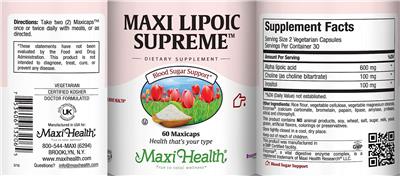
Directions: Take two (2) Maxicaps once or twice daily with meals, or as directed.
FDA Disclaimer Statement
These statements have not been evaluated by the Food and Drug Administration. This product is not intended to diagnose, treat, cure, or prevent any disease.
Formulation
Vegetarian
Blood sugar support Nerve health
This product contains no animal products, soy, wheat, salt, sugar, milk, yeast, gluten, artificial flavors, colorings or preservatives.
This product was manufactured in a GMP Certified Facility.
Formula
Certified Kosher UK (Rav Shmuel Dovid Krausz (Udvarer Rav)) (Kosher) BDZ Edah Charedis - Orthodox Council of Jerusalem (Kosher)
OU (Kosher)
Enzymax base
Seals/Symbols
UK (Rav Shmuel Dovid Krausz (Udvarer Rav)) (Kosher) BDZ Edah Charedis - Orthodox Council of Jerusalem (Kosher)
OU (Kosher)
Manufactured in a Certified GMP Facility
General Statements
Doctor formulated
Health that's your type
Brand IP Statement(s)
Maxi Health True to total wellness
Enzymax, a vital digestive enzyme complex, is a registered trademark of Maxi Health Research LLC.
FDA Statement of Identity
Dietary Supplement
Storage
Store tightly closed in a cool, dry place.
Precautions
Keep out of reach of children.
Is this label outdated? Report a formula or label change and our pharmacy team will review it.
Maxi Lipoic Supreme by Maxi Health label
The label scan from the NIH Dietary Supplement Label Database. Tap to enlarge.
Label images are published by the NIH Dietary Supplement Label Database for the version of this product on file. Always read your actual product label.
View the full label (PDF)The Ingredients in Maxi Lipoic Supreme by Maxi Health
These are the 3 active ingredients this product is made of. Select any to open its full monograph.
Serving size2 Vegetarian Capsule(s) Dosage formCapsule Servings per container30 Amounts shown are per serving.
Most supplement products combine several ingredients, and a medication can interact with the product through any one of them. Each ingredient below shows whether it has known drug interactions.
Choline
Interacts with16 drugs
Choline is an essential nutrient your body needs for liver function, brain health, and nerve signaling, and many people get enough from foods like egg...
Choline monograph & interactionsInositol
Interacts with86 drugs
Inositol is a sugar alcohol made naturally in the body and found in many foods, and it is sold as a supplement (often myo-inositol) mainly for PCOS, m...
Inositol monograph & interactionsAlpha-Lipoic Acid
Interacts with263 drugs
Alpha-lipoic acid (ALA) is an antioxidant made naturally by the body and found in small amounts in foods. It is most studied for diabetic nerve pain,...
Alpha-Lipoic Acid monograph & interactionsOther (inactive) ingredients: Rice Flour, Cellulose, Magnesium Stearate, Calcium Carbonate, Bromelain, Papain, Lipase, Amylase, Protease, Silica, Chlorophyll. These complete the product’s ingredient list but are not active constituents.
Maxi Lipoic Supreme by Maxi Health Drug Interactions
HelloPharmacist Interaction Report
Maxi Lipoic Supreme contains three active ingredients, and together they interact with a substantial number of medications.
Alpha-lipoic acid carries the most serious concerns: it may increase bleeding risk if you take blood thinners or antiplatelet drugs (anticoagulants or antiplatelets)—this is a Moderate-severity interaction. It also may interfere with chemotherapy drugs that work by generating free radicals, including alkylating agents and antitumor antibiotics, which is also Moderate severity.
Additionally, alpha-lipoic acid may reduce how well thyroid hormone replacement works, another Moderate concern.
Read the full breakdown — every affected drug type, severity by severity
Inositol poses a Moderate risk of low blood sugar (hypoglycemia) if combined with diabetes medications, since research shows it can lower blood glucose levels. Choline carries a Minor interaction with atropine (an anticholinergic drug used for certain conditions), where it may reduce atropine's effects in the brain.
Alpha-lipoic acid and inositol may also both cause a Minor increase in low blood sugar risk with diabetes drugs, though alpha-lipoic acid's effect appears smaller in larger studies. Altogether, these interactions span 278 individual medications.
Check your exact prescriptions with the search tool on this page before starting this product.
Check your own medications below · Editorial policy · How we use AI
Want to check YOUR meds against Maxi Lipoic Supreme?
Ask about interactions with your drugs in plain English — “Can I take it with lisinopril?” — and we find you the answer in seconds, ingredient by ingredient.
Go to the checkerIngredients driving the most interactions
Individual Drug Interactions
The ingredients in Maxi Lipoic Supreme interact with 279 drugs. Click any drug to see the details.
3 of the 3 ingredients in Maxi Lipoic Supreme interact with drugs. Each result below shows which ingredient is responsible. Alpha-Lipoic Acid Inositol Choline
AbciximabReoPro
How Abciximab interacts with Maxi Lipoic Supreme — through 1 ingredient. Tap an ingredient for the detail:
Alpha-lipoic AcidAnticoagulant/antiplatelet Drugs Moderate
Interaction Summary
Theoretically, alpha-lipoic acid may have antiplatelet effects and may increase the risk of bleeding if used with anticoagulant or antiplatelet drugs.
Read the full Alpha-lipoic Acid + Abciximab interactionAbrocitinibCibinqo
How Abrocitinib interacts with Maxi Lipoic Supreme — through 1 ingredient. Tap an ingredient for the detail:
Alpha-lipoic AcidAnticoagulant/antiplatelet Drugs Moderate
Interaction Summary
Theoretically, alpha-lipoic acid may have antiplatelet effects and may increase the risk of bleeding if used with anticoagulant or antiplatelet drugs.
Read the full Alpha-lipoic Acid + Abrocitinib interactionAcarboseGlucobay, Prandase, Precose
How Acarbose interacts with Maxi Lipoic Supreme — through 2 ingredients. Tap an ingredient for the detail:
InositolAntidiabetes Drugs Moderate
Interaction Summary
Theoretically, taking inositol with antidiabetes drugs might increase the risk of hypoglycemia.
Read the full Inositol + Acarbose interactionAlpha-lipoic AcidAntidiabetes Drugs Minor
Interaction Summary
Theoretically, taking alpha-lipoic acid with antidiabetes drugs might increase the risk of hypoglycemia.
Read the full Alpha-lipoic Acid + Acarbose interactionAcenocoumarolSintrom
How Acenocoumarol interacts with Maxi Lipoic Supreme — through 1 ingredient. Tap an ingredient for the detail:
Alpha-lipoic AcidAnticoagulant/antiplatelet Drugs Moderate
Interaction Summary
Theoretically, alpha-lipoic acid may have antiplatelet effects and may increase the risk of bleeding if used with anticoagulant or antiplatelet drugs.
Read the full Alpha-lipoic Acid + Acenocoumarol interactionAcetaminophen, AspirinGemnisyn
How Acetaminophen, Aspirin interacts with Maxi Lipoic Supreme — through 1 ingredient. Tap an ingredient for the detail:
Alpha-lipoic AcidAnticoagulant/antiplatelet Drugs Moderate
Interaction Summary
Theoretically, alpha-lipoic acid may have antiplatelet effects and may increase the risk of bleeding if used with anticoagulant or antiplatelet drugs.
Read the full Alpha-lipoic Acid + Acetaminophen, Aspirin interactionAcetaminophen, Aspirin, CaffeineExcedrin, Excedrin Extra Strength, Excedrin Migraine
How Acetaminophen, Aspirin, Caffeine interacts with Maxi Lipoic Supreme — through 1 ingredient. Tap an ingredient for the detail:
Alpha-lipoic AcidAnticoagulant/antiplatelet Drugs Moderate
Interaction Summary
Theoretically, alpha-lipoic acid may have antiplatelet effects and may increase the risk of bleeding if used with anticoagulant or antiplatelet drugs.
Read the full Alpha-lipoic Acid + Acetaminophen, Aspirin, Caffeine interactionAcetaminophen, IbuprofenCombogesic
How Acetaminophen, Ibuprofen interacts with Maxi Lipoic Supreme — through 1 ingredient. Tap an ingredient for the detail:
Alpha-lipoic AcidAnticoagulant/antiplatelet Drugs Moderate
Interaction Summary
Theoretically, alpha-lipoic acid may have antiplatelet effects and may increase the risk of bleeding if used with anticoagulant or antiplatelet drugs.
Read the full Alpha-lipoic Acid + Acetaminophen, Ibuprofen interactionAcetohexamideDymelor
How Acetohexamide interacts with Maxi Lipoic Supreme — through 2 ingredients. Tap an ingredient for the detail:
InositolAntidiabetes Drugs Moderate
Interaction Summary
Theoretically, taking inositol with antidiabetes drugs might increase the risk of hypoglycemia.
Read the full Inositol + Acetohexamide interactionAlpha-lipoic AcidAntidiabetes Drugs Minor
Interaction Summary
Theoretically, taking alpha-lipoic acid with antidiabetes drugs might increase the risk of hypoglycemia.
Read the full Alpha-lipoic Acid + Acetohexamide interactionAcetylsalicylic AcidEntrophen
How Acetylsalicylic Acid interacts with Maxi Lipoic Supreme — through 1 ingredient. Tap an ingredient for the detail:
Alpha-lipoic AcidAnticoagulant/antiplatelet Drugs Moderate
Interaction Summary
Theoretically, alpha-lipoic acid may have antiplatelet effects and may increase the risk of bleeding if used with anticoagulant or antiplatelet drugs.
Read the full Alpha-lipoic Acid + Acetylsalicylic Acid interactionAlbiglutideTanzeum
How Albiglutide interacts with Maxi Lipoic Supreme — through 2 ingredients. Tap an ingredient for the detail:
InositolAntidiabetes Drugs Moderate
Interaction Summary
Theoretically, taking inositol with antidiabetes drugs might increase the risk of hypoglycemia.
Read the full Inositol + Albiglutide interactionAlpha-lipoic AcidAntidiabetes Drugs Minor
Interaction Summary
Theoretically, taking alpha-lipoic acid with antidiabetes drugs might increase the risk of hypoglycemia.
Read the full Alpha-lipoic Acid + Albiglutide interactionAlogliptinNesina
How Alogliptin interacts with Maxi Lipoic Supreme — through 2 ingredients. Tap an ingredient for the detail:
InositolAntidiabetes Drugs Moderate
Interaction Summary
Theoretically, taking inositol with antidiabetes drugs might increase the risk of hypoglycemia.
Read the full Inositol + Alogliptin interactionAlpha-lipoic AcidAntidiabetes Drugs Minor
Interaction Summary
Theoretically, taking alpha-lipoic acid with antidiabetes drugs might increase the risk of hypoglycemia.
Read the full Alpha-lipoic Acid + Alogliptin interactionAlogliptin, MetforminKazano
How Alogliptin, Metformin interacts with Maxi Lipoic Supreme — through 2 ingredients. Tap an ingredient for the detail:
InositolAntidiabetes Drugs Moderate
Interaction Summary
Theoretically, taking inositol with antidiabetes drugs might increase the risk of hypoglycemia.
Read the full Inositol + Alogliptin, Metformin interactionAlpha-lipoic AcidAntidiabetes Drugs Minor
Interaction Summary
Theoretically, taking alpha-lipoic acid with antidiabetes drugs might increase the risk of hypoglycemia.
Read the full Alpha-lipoic Acid + Alogliptin, Metformin interactionAlogliptin, PioglitazoneOseni
How Alogliptin, Pioglitazone interacts with Maxi Lipoic Supreme — through 2 ingredients. Tap an ingredient for the detail:
InositolAntidiabetes Drugs Moderate
Interaction Summary
Theoretically, taking inositol with antidiabetes drugs might increase the risk of hypoglycemia.
Read the full Inositol + Alogliptin, Pioglitazone interactionAlpha-lipoic AcidAntidiabetes Drugs Minor
Interaction Summary
Theoretically, taking alpha-lipoic acid with antidiabetes drugs might increase the risk of hypoglycemia.
Read the full Alpha-lipoic Acid + Alogliptin, Pioglitazone interactionAlteplase, TpaActilyse, Activase
How Alteplase, Tpa interacts with Maxi Lipoic Supreme — through 1 ingredient. Tap an ingredient for the detail:
Alpha-lipoic AcidAnticoagulant/antiplatelet Drugs Moderate
Interaction Summary
Theoretically, alpha-lipoic acid may have antiplatelet effects and may increase the risk of bleeding if used with anticoagulant or antiplatelet drugs.
Read the full Alpha-lipoic Acid + Alteplase, Tpa interactionAltretamineHexalen
How Altretamine interacts with Maxi Lipoic Supreme — through 1 ingredient. Tap an ingredient for the detail:
Alpha-lipoic AcidAlkylating Agents Moderate
Interaction Summary
Theoretically, the antioxidant effects of alpha-lipoic acid might alter the effectiveness of alkylating agents.
Read the full Alpha-lipoic Acid + Altretamine interactionAluminum Hydroxide, Aspirin, Codeine Phosphate, Magnesium HydroxideAscriptin Codeine #2
How Aluminum Hydroxide, Aspirin, Codeine Phosphate, Magnesium Hydroxide interacts with Maxi Lipoic Supreme — through 1 ingredient. Tap an ingredient for the detail:
Alpha-lipoic AcidAnticoagulant/antiplatelet Drugs Moderate
Interaction Summary
Theoretically, alpha-lipoic acid may have antiplatelet effects and may increase the risk of bleeding if used with anticoagulant or antiplatelet drugs.
Read the full Alpha-lipoic Acid + Aluminum Hydroxide, Aspirin, Codeine Phosphate, Magnesium Hydroxide interactionAluminum Hydroxide, Aspirin, Magnesium HydroxideAscriptin
How Aluminum Hydroxide, Aspirin, Magnesium Hydroxide interacts with Maxi Lipoic Supreme — through 1 ingredient. Tap an ingredient for the detail:
Alpha-lipoic AcidAnticoagulant/antiplatelet Drugs Moderate
Interaction Summary
Theoretically, alpha-lipoic acid may have antiplatelet effects and may increase the risk of bleeding if used with anticoagulant or antiplatelet drugs.
Read the full Alpha-lipoic Acid + Aluminum Hydroxide, Aspirin, Magnesium Hydroxide interactionAnacaulase-bcdbNexoBrid
How Anacaulase-bcdb interacts with Maxi Lipoic Supreme — through 1 ingredient. Tap an ingredient for the detail:
Alpha-lipoic AcidAnticoagulant/antiplatelet Drugs Moderate
Interaction Summary
Theoretically, alpha-lipoic acid may have antiplatelet effects and may increase the risk of bleeding if used with anticoagulant or antiplatelet drugs.
Read the full Alpha-lipoic Acid + Anacaulase-bcdb interactionAnagrelideAgrylin
How Anagrelide interacts with Maxi Lipoic Supreme — through 1 ingredient. Tap an ingredient for the detail:
Alpha-lipoic AcidAnticoagulant/antiplatelet Drugs Moderate
Interaction Summary
Theoretically, alpha-lipoic acid may have antiplatelet effects and may increase the risk of bleeding if used with anticoagulant or antiplatelet drugs.
Read the full Alpha-lipoic Acid + Anagrelide interactionAnisindioneMiradon
How Anisindione interacts with Maxi Lipoic Supreme — through 1 ingredient. Tap an ingredient for the detail:
Alpha-lipoic AcidAnticoagulant/antiplatelet Drugs Moderate
Interaction Summary
Theoretically, alpha-lipoic acid may have antiplatelet effects and may increase the risk of bleeding if used with anticoagulant or antiplatelet drugs.
Read the full Alpha-lipoic Acid + Anisindione interactionAntidiabetes, Dipeptidyl Peptidase-4 (dpp-iv) InhibitorGlyxambi
How Antidiabetes, Dipeptidyl Peptidase-4 (dpp-iv) Inhibitor interacts with Maxi Lipoic Supreme — through 2 ingredients. Tap an ingredient for the detail:
InositolAntidiabetes Drugs Moderate
Interaction Summary
Theoretically, taking inositol with antidiabetes drugs might increase the risk of hypoglycemia.
Read the full Inositol + Antidiabetes, Dipeptidyl Peptidase-4 (dpp-iv) Inhibitor interactionAlpha-lipoic AcidAntidiabetes Drugs Minor
Interaction Summary
Theoretically, taking alpha-lipoic acid with antidiabetes drugs might increase the risk of hypoglycemia.
Read the full Alpha-lipoic Acid + Antidiabetes, Dipeptidyl Peptidase-4 (dpp-iv) Inhibitor interactionAntithrombin IiiThrombate III
How Antithrombin Iii interacts with Maxi Lipoic Supreme — through 1 ingredient. Tap an ingredient for the detail:
Alpha-lipoic AcidAnticoagulant/antiplatelet Drugs Moderate
Interaction Summary
Theoretically, alpha-lipoic acid may have antiplatelet effects and may increase the risk of bleeding if used with anticoagulant or antiplatelet drugs.
Read the full Alpha-lipoic Acid + Antithrombin Iii interactionApixabanEliquis
How Apixaban interacts with Maxi Lipoic Supreme — through 1 ingredient. Tap an ingredient for the detail:
Alpha-lipoic AcidAnticoagulant/antiplatelet Drugs Moderate
Interaction Summary
Theoretically, alpha-lipoic acid may have antiplatelet effects and may increase the risk of bleeding if used with anticoagulant or antiplatelet drugs.
Read the full Alpha-lipoic Acid + Apixaban interactionArgatrobanArgatroban
How Argatroban interacts with Maxi Lipoic Supreme — through 1 ingredient. Tap an ingredient for the detail:
Alpha-lipoic AcidAnticoagulant/antiplatelet Drugs Moderate
Interaction Summary
Theoretically, alpha-lipoic acid may have antiplatelet effects and may increase the risk of bleeding if used with anticoagulant or antiplatelet drugs.
Read the full Alpha-lipoic Acid + Argatroban interactionAspirinAngettes 75, ASA, Asaphen, Aspirin, Caprin, Cartia +8 more
How Aspirin interacts with Maxi Lipoic Supreme — through 1 ingredient. Tap an ingredient for the detail:
Alpha-lipoic AcidAnticoagulant/antiplatelet Drugs Moderate
Interaction Summary
Theoretically, alpha-lipoic acid may have antiplatelet effects and may increase the risk of bleeding if used with anticoagulant or antiplatelet drugs.
Read the full Alpha-lipoic Acid + Aspirin interactionAspirin, Aluminum Hydroxide, Codeine Phosphate, Magnesium HydroxideAscriptin Codeine #3
How Aspirin, Aluminum Hydroxide, Codeine Phosphate, Magnesium Hydroxide interacts with Maxi Lipoic Supreme — through 1 ingredient. Tap an ingredient for the detail:
Alpha-lipoic AcidAnticoagulant/antiplatelet Drugs Moderate
Interaction Summary
Theoretically, alpha-lipoic acid may have antiplatelet effects and may increase the risk of bleeding if used with anticoagulant or antiplatelet drugs.
Read the full Alpha-lipoic Acid + Aspirin, Aluminum Hydroxide, Codeine Phosphate, Magnesium Hydroxide interactionAspirin, ButalbitalAxotal
How Aspirin, Butalbital interacts with Maxi Lipoic Supreme — through 1 ingredient. Tap an ingredient for the detail:
Alpha-lipoic AcidAnticoagulant/antiplatelet Drugs Moderate
Interaction Summary
Theoretically, alpha-lipoic acid may have antiplatelet effects and may increase the risk of bleeding if used with anticoagulant or antiplatelet drugs.
Read the full Alpha-lipoic Acid + Aspirin, Butalbital interactionAspirin, Butalbital, CaffeineFiorinal
How Aspirin, Butalbital, Caffeine interacts with Maxi Lipoic Supreme — through 1 ingredient. Tap an ingredient for the detail:
Alpha-lipoic AcidAnticoagulant/antiplatelet Drugs Moderate
Interaction Summary
Theoretically, alpha-lipoic acid may have antiplatelet effects and may increase the risk of bleeding if used with anticoagulant or antiplatelet drugs.
Read the full Alpha-lipoic Acid + Aspirin, Butalbital, Caffeine interactionAspirin, Butalbital, Caffeine, Codeine PhosphateFiorinal w/ Codeine
How Aspirin, Butalbital, Caffeine, Codeine Phosphate interacts with Maxi Lipoic Supreme — through 1 ingredient. Tap an ingredient for the detail:
Alpha-lipoic AcidAnticoagulant/antiplatelet Drugs Moderate
Interaction Summary
Theoretically, alpha-lipoic acid may have antiplatelet effects and may increase the risk of bleeding if used with anticoagulant or antiplatelet drugs.
Read the full Alpha-lipoic Acid + Aspirin, Butalbital, Caffeine, Codeine Phosphate interactionAspirin, Butalbital, Caffeine, PhenacetinMarnal
How Aspirin, Butalbital, Caffeine, Phenacetin interacts with Maxi Lipoic Supreme — through 1 ingredient. Tap an ingredient for the detail:
Alpha-lipoic AcidAnticoagulant/antiplatelet Drugs Moderate
Interaction Summary
Theoretically, alpha-lipoic acid may have antiplatelet effects and may increase the risk of bleeding if used with anticoagulant or antiplatelet drugs.
Read the full Alpha-lipoic Acid + Aspirin, Butalbital, Caffeine, Phenacetin interactionEach ingredient & the kinds of drugs it affects
For each ingredient in Maxi Lipoic Supreme with known interactions, here are the types of medications they can affect. Open any type for the detail — or search your exact drug in the checker above.
Alpha-Lipoic Acid
Alkylating Agents
Theoretically, the antioxidant effects of alpha-lipoic acid might alter the effectiveness of alkylating agents.
The use of antioxidants like alpha-lipoic acid during chemotherapy is controversial. There are concerns that antioxidants could reduce the activity of chemotherapy drugs that generate free radicals. However, some researchers theorize that antioxidants might make chemotherapy more effective by reducing oxidative stress that might interfere with apoptosis (cell death) of cancer cells. More evidence is needed to determine what effect, if any, antioxidants such as alpha-lipoic acid have on chemotherapy. Advise patients to consult their oncologist before using alpha-lipoic acid.
Anticoagulant/Antiplatelet Drugs
Theoretically, alpha-lipoic acid may have antiplatelet effects and may increase the risk of bleeding if used with anticoagulant or antiplatelet drugs.
In vitro, alpha-lipoic acid inhibits platelet aggregation.
Antitumor Antibiotics
Theoretically, the antioxidant effects of alpha-lipoic acid might alter the effectiveness of antitumor antibiotics.
The use of antioxidants like alpha-lipoic acid during chemotherapy is controversial. There are concerns that antioxidants could reduce the activity of antitumor antibiotic drugs, which work by generating free radicals. However, some researchers theorize that antioxidants might make chemotherapy more effective by reducing oxidative stress that might interfere with apoptosis (cell death) of cancer cells. More evidence is needed to determine what effect, if any, antioxidants such as alpha-lipoic acid have on chemotherapy involving antitumor antibiotics. Advise patients to consult their oncologist before using alpha-lipoic acid.
Thyroid Hormone
Theoretically, alpha-lipoic acid might decrease the effects of thyroid hormone drugs.
Animal research suggests that co-administration of thyroxine with alpha-lipoic acid reduces conversion into the active T3 form.
Antidiabetes Drugs
Theoretically, taking alpha-lipoic acid with antidiabetes drugs might increase the risk of hypoglycemia.
Although some small clinical studies have suggested that alpha-lipoic acid can lower blood glucose levels, larger clinical studies in patients with diabetes have shown no clinically meaningful effect. Additionally, co-administration of single doses of alpha-lipoic acid and glyburide or acarbose did not cause detectable drug interactions in healthy volunteers.
Inositol
Antidiabetes Drugs
Theoretically, taking inositol with antidiabetes drugs might increase the risk of hypoglycemia.
Clinical research shows that inositol lowers blood glucose levels and glycated hemoglobin (HbA1c) levels in patients with diabetes.
Choline
Atropine
Theoretically, choline might decrease the effects of atropine in the brain.
Animal research shows that administering choline one hour before administering atropine can attenuate atropine-induced decreases in brain levels of acetylcholine. Theoretically, concomitant use of choline and atropine may decrease the effects of atropine.
Brand information
Manufacturer and brand details for Maxi Lipoic Supreme, from the product label.
Maxi Health
See all Maxi Health products- Name
- Maxi Health
- City
- Brooklyn
- State
- N.Y.
- Phone Number
- 800-544-6294
- Web Address
- www.maxihealth.com
Maxi Lipoic Supreme by Maxi Health: Common Questions
Does Maxi Lipoic Supreme by Maxi Health interact with any medications?
How can one product interact with so many drugs?
Where does this information come from?
Will this lower my blood sugar if I'm on diabetes medication?
Can I take this while pregnant or breastfeeding?
What are the most common side effects?
Does this product actually work for weight loss or high cholesterol?
What is alpha-lipoic acid and what's it for?
I take thyroid medication. Can I use this?
Written and reviewed by the HelloPharmacist editorial staff. Our editorial policy
Not sure if Maxi Lipoic Supreme is safe with your meds?
Our pharmacists answer your medication & supplement questions — free.
Label information is sourced from the NIH Dietary Supplement Label Database and reflects the product version on file; always read your actual product label. This page is for education only and is not a substitute for professional medical advice. Confirm with your pharmacist or doctor before combining supplements and medications.
The Full Monographs Behind Maxi Lipoic Supreme’s Ingredients
Every ingredient we hold a full HelloPharmacist monograph for — uses, evidence, safety, and the complete interaction list.
Choline
Interacts with 16 drugsCholine is an essential nutrient your body needs for liver function, brain health, and nerve signaling, and many people get enough from foods like eggs, meat, and fish. Supplements may help...
Read the full Choline monograph → Herb & supplement monographInositol
Interacts with 86 drugsInositol is a sugar alcohol made naturally in the body and found in many foods, and it is sold as a supplement (often myo-inositol) mainly for PCOS, mood, and metabolic concerns. The stronge...
Read the full Inositol monograph → Herb & supplement monographAlpha-lipoic Acid
Interacts with 263 drugsAlpha-lipoic acid (ALA) is an antioxidant made naturally by the body and found in small amounts in foods. It is most studied for diabetic nerve pain, where some evidence suggests it may help...
Read the full Alpha-lipoic Acid monograph →Sources & How We Checked
Maxi Lipoic Supreme's label data comes from the NIH Dietary Supplement Label Database; the ingredient interaction data is from the Natural Medicines database, reviewed by our pharmacists.
- NIH Dietary Supplement Label Database (DSLD) — The official product label on file for this supplement.
- Natural Medicines (Therapeutic Research Center) — Evidence-graded clinical reference behind the ingredient interaction data.
Content is written and reviewed by licensed HelloPharmacist pharmacists. See our data sources and editorial standards for how this information is built and checked.
The 76 references behind this product’s interaction data
Every citation that drives the interaction findings for this product’s ingredients, from the evidence-graded Natural Medicines (TRC Healthcare) database. Open an ingredient to browse its citations — links open the study on PubMed or the publisher’s site.
Choline 14 references
- Yates AA, Schlicker SA, Suitor CW. Dietary reference intakes: The new basis for recommendations for calcium and related nutrients, B vitamins, and choline. J Am Diet Assoc 1998;98:699-706. PubMed
- Cho E, Willett WC, Colditz GA, et al. Dietary choline and betaine and the risk of distal colorectal adenoma in women. J Natl Cancer Inst 2007;99:1224-31. PubMed
- Schmidt, C., Abicht, A., Krampfl, K., Voss, W., Stucka, R., Mildner, G., Petrova, S., Schara, U., Mortier, W., Bufler, J., Huebner, A., and Lochmuller, H. Congenital myasthenic syndrome due to a novel missense mutation in the gene encoding choline acetyl
- Tamminga, C., Smith, R. C., Chang, S., Haraszti, J. S., and Davis, J. M. Depression associated with oral choline. Lancet 10-23-1976;2(7991):905. PubMed
- Wood, J. L. and Allison, R. G. Effects of consumption of choline and lecithin on neurological and cardiovascular systems. Fed.Proc. 1982;41(14):3015-3021.
- Growdon, J. H. and Gelenberg, A. J. Choline and lecithin administration to patients with tardive dyskinesia. Trans.Am.Neurol.Assoc. 1978;103:95-99.
- Smith, C. M., Swash, M., Exton-Smith, A. N., Phillips, M. J., Overstall, P. W., Piper, M. E., and Bailey, M. R. Choline therapy in Alzheimer's disease. Lancet 8-5-1978;2(8084):318. PubMed
- Morrison, L. M. and W. F. Gonzales. Choline in coronary atherosclerosis. Amer.Heart J. 1950;39:729.
- Christie, J. G. Blackburn 1. M. Glen A. I. M. Zeisel S. Shering A. & Yates C. M. Effects of choline and lecithin on CSF choline levels and on cognitive functioning in patients with presenile dementia of the Alzheimer type. Nutrition and the brain 1979;5
- Sidhu N, Davies S, Nadarajah A, et al. Oral choline supplementation for postoperative pain. Br J Anaesth 2013;111(2):249-55. PubMed
- Wozniak JR, Fuglestad AJ, Eckerle JK, et al. Choline supplementation in children with fetal alcohol spectrum disorders has high feasibility and tolerability. Nutr Res. 2013;33(11):897-904. PubMed
- Wozniak JR, Fuglestad AJ, Eckerle JK, et al. Choline supplementation in children with fetal alcohol disorders: a randomized, double-blind, placebo-controlled trial. Am J Clin Nutr. 2015;102(5): 1113-25.
- Ross RG, Hunter SK, McCarthy L, et al. Perinatal choline effects on neonatal pathophysiology related to later schizophrenia risk. Am J Psychiatry. 2013;170(3):290-8. PubMed
- Food and Nutrition Board, Institute of Medicine. Choline. Dietary Reference Intakes: Thiamin, Riboflavin, Niacin, Vitamin B-6, Vitamin B-12, Pantothenic Acid, Biotin, and Choline. Washington D.C.: National Academy Press; 1998:390-422.
Inositol 14 references
- Palatnik A, Frolov K, Fux M, Benjamin J. Double-blind, controlled, crossover trial of inositol versus fluvoxamine for the treatment of panic disorder. J Clin Psychopharmacol 2001;21:335-9.. PubMed
- Allan SJ, Kavanagh GM, Herd RM, Savin JA. The effect of inositol supplements on the psoriasis of patients taking lithium: a randomized, placebo-controlled trial. Br J Dermatol 2004;150:966-9. PubMed
- Machado-Vieira R, Viale CI, Kapczinski F. Mania associated with an energy drink: the possible role of caffeine, taurine, and inositol. Can J Psychiatry 2001;46:454-5. PubMed
- Kamenov Z, Kolarov G, Gateva A, Carlomagno G, Genazzani AD. Ovulation induction with myo-inositol alone and in combination with clomiphene citrate in polycystic ovarian syndrome patients with insulin resistance. Gynecol Endocrinol 2015;31(2):131-5. PubMed
- Matarrelli B, Vitacolonna E, D'Angelo M, et al. Effect of dietary myo-inositol supplementation in pregnancy on the incidence of maternal gestational diabetes mellitus and fetal outcomes: a randomized controlled trial. J Matern Fetal Neonatal Med 2013;26(1 PubMed
- Mukai T, Kishi T, Matsuda Y, Iwata N. A meta-analysis of inositol for depression and anxiety disorders. Hum Psychopharmacol 2014;29(1):55-63. PubMed
- Farren M, Daly N, McKeating A, Kinsley B, Turner MJ, Daly S. The Prevention of Gestational Diabetes Mellitus With Antenatal Oral Inositol Supplementation: A Randomized Controlled Trial. Diabetes Care. 2017;40(6):759-63. PubMed
- Zheng X, Liu Z, Zhang Y, et al. Relationship Between Myo-Inositol Supplementary and Gestational Diabetes Mellitus: A Meta-Analysis. Medicine (Baltimore). 2015;94(42):e1604. PubMed
- Crawford TJ, Crowther CA, Alsweiler J, Brown J. Antenatal dietary supplementation with myo-inositol in women during pregnancy for preventing gestational diabetes. Cochrane Database Syst Rev. 2015;(12):CD011507. PubMed
- Maurizi AR, Menduni M, Del Toro R, et al. A pilot study of D-chiro-inositol plus folic acid in overweight patients with type 1 diabetes. Acta Diabetol. 2017;54(4):361-65. PubMed
- Leppink EW, Redden SA, Grant JE. A double-blind, placebo-controlled study of inositol in trichotillomania. Int Clin Psychopharmacol. 2017;32(2):107-14. PubMed
- Lam S, Mandrekar SJ, Gesthalter Y. A Randomized Phase IIb Trial of myo-Inositol in Smokers with Bronchial Dysplasia. Cancer Prev Res (Phila). 2016;9(12):906-14.
- Wozniak J, Faraone SV, Chan J, et al. A randomized clinical trial of high eicosapentaenoic acid omega-3 fatty acids and inositol as monotherapy and in combination in the treatment of pediatric bipolar spectrum disorders: a pilot study. J Clin Psychiatry. PubMed
- Vitale SG, Corrado F, Caruso S, et al. Myo-inositol supplementation to prevent gestational diabetes in overweight non-obese women: bioelectrical impedance analysis, metabolic aspects, obstetric and neonatal outcomes - a randomized and open-label, placebo-
Alpha-lipoic Acid 48 references
- Labriola D, Livingston R. Possible interactions between dietary antioxidants and chemotherapy. Oncology 1999;13:1003-8.
- Anon. Alpha-lipoic acid. Altern Med Rev 1998;3:308-10.
- Konrad T, Vicini P, Kusterer K, et al. Alpha-lipoic acid treatment decreases serum lactate and pyruvate concentrations and improves glucose effectiveness in lean and obese patients with Type 2 diabetes. Diabetes Care 1999;22:280-7. PubMed
- Ziegler D, Hanefeld M, Ruhnau KJ, et al. Treatment of symptomatic diabetic peripheral neuropathy with the antioxidant alpha-lipoic acid: A 3-week, multicentre randomized controlled trial (ALADIN Study). Diabetologia 1995;38:1425-33.
- Gleiter CH, Schreeb KH, Freudenthaler S, et al. Lack of interaction between thioctic acid, glibenclamide and acarbose. Br J Clin Pharmacol 1999;48:819-25. PubMed
- Jacob S, Henriksen EJ, Tritschler HJ, et al. Improvement of insulin-stimulated glucose-disposal in type 2 diabetes after repeated parenteral administration of thioctic acid. Exp Clin Endocrinol Diabet 1996;104:284-8. PubMed
- Jacob S, Henriksen EJ, Schiemann AL, et al. Enhancement of glucose disposal in patients with type 2 diabetes by alpha-lipoic acid. Arzneimittelforschung 1995;45:872-4.
- Jacob S, Ruus P, Hermann R, et al. Oral administration of RAC-alpha-lipoic acid modulates insulin sensitivity in patients with type-2 diabetes mellitus: a placebo-controlled, pilot trial. Free Rad Biol Med 1999;27:309-14.
- Segermann J, Hotze A, Ulrich H, Rao GS. Effect of alpha-lipoic acid on the peripheral conversion of thyroxine to triiodothyronine and on serum lipid-, protein- and glucose levels. Arzneimittelforschung 1991;41:1294-8.
- Beitner H. Randomized, placebo controlled, double-blind study on the clinical efficacy of a cream containing 5% alpha-lipoic acid related to photoaging of facial skin. Br J Dermatol 2003;149:841-9.
- Ziegler D, Nowak H, Kempler P, et al. Treatment of symptomatic diabetic polyneuropathy with the antioxidant alpha-lipoic acid: A meta-analysis. Diabet Med 2004;21:114-21.
- Prasad KN. Rationale for using high-dose multiple dietary antioxidants as an adjunct to radiation therapy and chemotherapy. J Nutr 2004;134:3182S-3S. PubMed
- Conklin KA. Cancer chemotherapy and antioxidants. J Nutr 2004;134:3201S-3204S. PubMed
- Vincent HK, Bourguignon CM, Vincent KR, Taylor AG. Effects of alpha-lipoic acid supplementation in peripheral arterial disease: a pilot study. J Alt Complement Med 2007;13:577-84. PubMed
- Furukawa N, Miyamura N, Nishida K, et al. Possible relevance of alpha lipoic acid contained in a health supplement in a case of insulin autoimmune syndrome. Diabetes Res Clin Pract 2007;75:366-7. PubMed
- Ziegler D., Ametov A., Barinov A., Dyck P. J., Gurieva I., Low P. A., Munzel U., Yakhno N., Raz I., Novosadova M., Maus J., Samigullin, R. Oral treatment with alpha-lipoic acid improves symptomatic diabetic polyneuropathy: the SYDNEY 2 trial. Diabetes Car
- Gu X. M., Zhang S. S., Wu J. C., Tang Z. Y., Lu Z. Q., Li H., Liu C., Chen L., Ning, G. [Efficacy and safety of high-dose a-lipoic acid in the treatment of diabetic polyneuropathy]. Zhonghua Yi Xue Za Zhi 2010;90(35):2473-2476.
- Porasuphatana S., Suddee S., Nartnampong A., Konsil J., Harnwong B., Santaweesuk A. Glycemic and oxidative status of patients with type 2 diabetes mellitus following oral administration of alpha-lipoic acid: a randomized double-blinded placebo-controlled
- Ansar H., Mazloom Z., Kazemi F., Hejazi N. Effect of alpha-lipoic acid on blood glucose, insulin resistance and glutathione peroxidase of type 2 diabetic patients. Saudi Med J 2011;32(6):584-588. DOI
- de Oliveira A. M., Rondó P. H., Luzia L. A., D'Abronzo F. H., Illison V. K. The effects of lipoic acid and a-tocopherol supplementation on the lipid profile and insulin sensitivity of patients with type 2 diabetes mellitus: a randomized, double-blind, pla
- Mazloom Z., Ansar H. The Effect of Alpha-Lipoic Acid on Blood Pressure in Type 2 Diabetics. Iranian Journal of Endocrinology and Metabolism 2009;11(3):245-250.
- Volchegorskii I. A., Rassokhina L. M., Koliadich M. I., Alekseev M. I. [Comparative study of alpha-lipoic acid and mexidol effects on affective status, cognitive functions and quality of life in diabetes mellitus patients]. Eksp Klin Farmakol 2011;74(11):
- Cavalcanti D. R., da Silveira F. R. Alpha lipoic acid in burning mouth syndrome--a randomized double-blind placebo-controlled trial. J Oral Pathol Med 2009;38(3):254-261. PubMed
- Koh E. H., Lee W. J., Lee S. A., Kim E. H., Cho E. H., Jeong E., Kim D. W., Kim M. S., Park J. Y., Park K. G., Lee H. J., Lee I. K., Lim S., Jang H. C., Lee K. H., Lee K. U. Effects of alpha-lipoic Acid on body weight in obese subjects. Am J Med 2011;124( PubMed
- Bergqvist-Karlsson, A., Thelin, I., and Bergendorff, O. Contact dermatitis to alpha-lipoic acid in an anti-wrinkle cream. Contact Dermatitis 2006;55(1):56-57.
- Tang, J., Wingerchuk, D. M., Crum, B. A., Rubin, D. I., and Demaerschalk, B. M. Alpha-lipoic acid may improve symptomatic diabetic polyneuropathy. Neurologist. 2007;13(3):164-167. PubMed
- Hegazy SK, Tolba OA, Mostafa TM, Eid MA, El-Afify DR. Alpha-lipoic acid improves subclinical left ventricular dysfunction in asymptomatic patients with type 1 diabetes. Rev Diabet Stud 2013;10(1):58-67. PubMed
- Huang Z, Wan X, Liu J, et al. Short-term continuous subcutaneous insulin infusion combined with insulin sensitizers rosiglitazone, metformin, or antioxidant a-lipoic acid in patients with newly diagnosed type 2 diabetes mellitus. Diabetes Technol Ther 201
- Sarezky D, Raquib AR, Dunaief JL, Kim BJ. Tolerability in the elderly population of high-dose alpha lipoic acid: a potential antioxidant therapy for the eye. Clin Ophthalmol. 2016 Sep 29;10:1899-1903. PubMed
- Boriani F, Granchi D, Roatti G, Merlini L, Sabattini T, Baldini N. Alpha-lipoic acid after median nerve decompression at the carpal tunnel: a randomized controlled trial. J Hand Surg Am. 2017 Apr;42(4):236-42. PubMed
- Karkabounas S, Papadopoulos N, Anastasiadou C, et al. Effects of a-lipoic Acid, carnosine, and thiamine supplementation in obese patients with type 2 diabetes mellitus: A randomized, double-blind study. J Med Food. 2018;21(12):1197-1203.
- Murray GL, Colombo J. (r)Alpha lipoic acid is a safe, effective pharmacologic therapy of chronic orthostatic hypotension associated with low sympathetic tone. Int J Angiol. 2019;28(3):188-193. PubMed
- Bobe G, Michels AJ, Zhang WJ, et al. A randomized controlled trial of long-term (R)-α-lipoic acid supplementation promotes weight loss in overweight or obese adults without altering baseline elevated plasma triglyceride concentrations. J Nutr. 2020:
- Passiatore M, Perna A, De-Vitis R, Taccardo G. The use of alfa-lipoic acid-R (ALA-R) in patients with mild-moderate carpal tunnel syndrome: A randomised controlled open label prospective study. Malays Orthop J. 2020;14(1):1-6. PubMed
- El-Nahas MR, Elkannishy G, Abdelhafez H, Elkhamisy ET, El-Sehrawy AA. Oral alpha lipoic acid treatment for symptomatic diabetic peripheral neuropathy: A randomized double-blinded placebo-controlled study. Endocr Metab Immune Disord Drug Targets. 2020. PubMed
- Kim BJ, Hunter A, Brucker AJ, et al. Orally administered alpha lipoic acid as a treatment for geographic atrophy: A randomized clinical trial. Ophthalmol Retina. 2020;4(9):889-898. PubMed
- Derosa G, D'Angelo A, Preti P, Maffioli P. Safety and efficacy of alpha lipoic acid during 4 years of observation: A retrospective, clinical trial in healthy subjects in primary prevention. Drug Des Devel Ther. 2020;14:5367-5374.
- Sun Y, Guan X, Wang H, et al. Randomized clinical trial of combined therapy with oral a-lipoic acid and NB-UVB for nonsegmental stable vitiligo. Dermatol Ther. 2021;34(1):e14610.
- Gilron I, Robb S, Tu D, et al. Double-blind, randomized, placebo-controlled crossover trial of alpha-lipoic acid for the treatment of fibromyalgia pain: the IMPALA trial. Pain. 2021;162(2):561-568. PubMed
- Gullo D, Evans JL, Sortino G, Goldfine ID, Vigneri R. Insulin autoimmune syndrome (Hirata Disease) in European Caucasians taking a-lipoic acid. Clin Endocrinol (Oxf). 2014;81(2):204-9.
- Yukina M, Nuralieva N, Solovyev M, Troshina E, Vasilyev E. Insulin autoimmune syndrome. Endocrinol Diabetes Metab Case Rep. 2020;2020:19-0159. PubMed
- Moffa S, Improta I, Rocchetti S, Mezza T, Giaccari A. Potential cause-effect relationship between insulin autoimmune syndrome and alpha lipoic acid: Two case reports. Nutrition. 2019;57:1-4. PubMed
- Izzo V, Greco C, Corradini D, et al. Insulin autoimmune syndrome in an Argentine woman taking a-lipoic acid: A case report and review of the literature. SAGE Open Med Case Rep. 2018;6:2050313X18819601.
- EFSA Panel on Nutrition, Novel Foods and Food Allergens (NDA), Turck D, et al. Scientific opinion on the relationship between intake of alpha-lipoic acid (thioctic acid) and the risk of insulin autoimmune syndrome. EFSA J 2021;19(6):e06577. PubMed
- Jibril AT, Jayedi A, Shab-Bidar S. Efficacy and safety of oral alpha-lipoic acid supplementation for type 2 diabetes management: a systematic review and dose-response meta-analysis of randomized trials. Endocr Connect 2022;11(10):e220322. PubMed
- Corazza M, Arlotti E, Schettini N, Pacetti L, Bianchi A, Borghi A. Allergic contact dermatitis due to a-lipoic acid in a topical over-the-counter product: A case report. Contact Dermatitis 2023.
- Velasco-Amador JP, Prados-Carmona Á, Navarro-Triviño FJ. Contact urticaria syndrome caused by alpha-lipoic acid in a master formula for vulvar lichen sclerosus. Contact Dermatitis 2023;89(2):136-137. PubMed
- Sehgal T, Ohri U, Mittal N, Attri P, Dishant F. A Case of Insulin Autoimmune Syndrome in an Indian Male Taking Alpha-Lipoic Acid. Cureus 2023;15(8):e43743. PubMed
Parts of this content are provided by the Therapeutic Research Center, LLC.
DISCLAIMER: Currently this does not check for drug-drug interactions. This is not an all-inclusive comprehensive list of potential interactions and is for informational purposes only. Not all interactions are known or well-reported in the scientific literature, and new interactions are continually being reported. Input is needed from a qualified healthcare provider including a pharmacist before starting any therapy. Application of clinical judgment is necessary.
© 2021 Therapeutic Research Center, LLC