
NDF Immune Blueberry Ingredients & Drug Interactions
by Bioray Kids
What is this page for?
First and foremost: checking NDF Immune Blueberry against your medications. The heart of this page is the interaction checker and the full interaction report — how this product’s ingredients may interact with prescription and over-the-counter medicines you may be taking.
Around that, we add a pharmacist’s high-level view of the product as a whole — what’s inside, the evidence for its stated use, how transparent the label is, and what safety data exists — so you can see the full picture in one place. It’s educational information from our licensed clinical databases and the clinical staff at HelloPharmacist — not medical advice — and we don’t sell or endorse products. Our editorial policy
NDF Immune Blueberry is a dietary supplement by Bioray Kids with 13 active ingredients. Its ingredients are commonly taken for urinary tract infection prevention, bladder health, antioxidant support.Based on those ingredients, 1,335 medications have a known interaction with it, the most serious rated moderate. The ingredients most likely to interact are Cranberry fruit concentrate, Reishi Mushroom, NDF. Use the checker below to test your specific medication, or read the full HelloPharmacist Interaction Report.
Check Your Meds Against NDF Immune Blueberry by Bioray Kids
Ask about any prescription or over-the-counter medication and we check it for interactions with NDF Immune Blueberry by Bioray Kids — and tell you which ingredient is responsible.
AI summaries are generated from our interaction database for education only — always confirm with your pharmacist. How we use AI
Ask the Pharmacist
A licensed pharmacist will answer your question by email — free, usually within 24 hours.
Got it — thank you!
A licensed pharmacist will answer within 24 hours. Keep an eye on your email (worth checking spam, just in case).
HelloPharmacist Scorecard of NDF Immune Blueberry by Bioray Kids
Our pharmacy team’s full take, with four database checks built into the cards below — a summary of what is known, not a grade of the product itself.
What’s inside
Low disclosure
This liquid formula contains thirteen ingredients, including a proprietary blend of traditional herbal and mushroom extracts alongside fruit concentrates. The active ingredients are cranberry fruit concentrate, reishi mushroom, white mulberry leaf, skullcap, blueberry fruit concentrate, camu camu, elderberry fruit concentrate, and chlorella (listed as NDF).
Several other botanical ingredients—Trichosanthes, Fritillaria, Houttuynia, and Ophiopogonis—are included but we could not check their interaction data. The product also contains glycerin, deionized water, and natural blueberry flavor as inactive ingredients.
Does it work?
Not established
Evidence for most uses in this blend is limited. Cranberry is possibly effective for urinary tract infections (UTIs), though we have insufficient evidence for age-related cognitive decline, benign prostatic hyperplasia, cancer prevention, fatty liver disease, or chronic fatigue.
Reishi mushroom appears possibly ineffective for high cholesterol and lacks sufficient evidence for altitude sickness, Alzheimer's disease, and athletic performance. White mulberry, blueberry, elderberry, and camu camu all show insufficient evidence for their listed traditional uses — ranging from androgenic alopecia and cold prevention to cardiovascular health and cognitive support.
Chlorella is possibly effective for pregnancy-related iron deficiency but has insufficient evidence for brain tumors, depression, fatty liver disease, and fatigue.
How safe is it?
Well-documented data
Most of these ingredients are generally well tolerated when used short-term. Cranberry commonly causes diarrhea and gastrointestinal discomfort, especially at high doses; in very large intakes (3–4 liters of juice daily) it can trigger significant GI upset, particularly in young children.
Reishi mushroom can cause dizziness, dry mouth, itching, nausea, rash, and stomach upset; long-term safety isn't well studied. White mulberry leaf may cause bloating, flatulence, loose stools, or constipation, though these often improve over time.
Skullcap can cause sedation, cognitive impairment, and digestive disturbances. Blueberry extracts (freeze-dried form) may cause constipation, diarrhea, nausea, and vomiting; one trial saw 26% of participants drop out in the first week due to GI complaints.
Chlorella can trigger allergic reactions (including anaphylaxis, though rare), abdominal cramping, diarrhea, nausea, and photosensitivity. Reishi mushroom, white mulberry, skullcap, elderberry, and the chlorella component should be avoided during pregnancy and breastfeeding due to insufficient safety data.
Cranberry and blueberry are likely safe in pregnancy; however, concentrated supplements of blueberry haven't been well studied in pregnancy or breastfeeding.
Meds to double-check
Moderate interaction found
Check before using if you take blood thinners (warfarin, anticoagulants), blood pressure-lowering drugs, cholesterol medications (especially atorvastatin), diabetes drugs, immunosuppressants, the cancer drug pazopanib, or any sedating medications (CNS depressants). These moderate and major interactions are documented for ingredients in this blend.
The bottom line
Scorecard at a glanceFormula with limited ingredient disclosure with no established evidence rating for its marketed use. Moderate medication interactions have been identified, and safety information is well characterized.
This product is best suited for someone looking to support immune function with traditional botanicals and willing to accept limited clinical evidence for most claims. If you take blood thinners, cholesterol or blood pressure medications, diabetes drugs, immunosuppressants, or any sedating medication, talk with your pharmacist or doctor before starting — the interactions are real enough to matter.
Pregnant and breastfeeding customers should check with their provider first, as safety data is sparse for several ingredients. A pharmacist can help you weigh the potential benefits against your personal medication profile.
Educational only — not medical advice; always confirm with your pharmacist. Our editorial policy · How we use AI
Assessment coverage: 9 of 13 active ingredients matched to our full ingredient reviews (monographs). Based on the product label dated Jul 24, 2025.
This Scorecard evaluates available label information, ingredient evidence, and known medication-safety considerations. It does not independently verify product identity, purity, potency, contamination, or manufacturing quality. How these ratings are computed
General information
Key facts about NDF Immune Blueberry, straight from the product label.
| Brand | Bioray Kids |
|---|---|
| Barcode (UPC) | 752830678880 |
| Net contents | 60 mL; 2 Fluid Ounce(s) |
| Market status | On market |
| Date entered into DSLD | Jul 24, 2025 |
| DSLD ID | 334002 |
| Product type | Botanical |
| Supplement form | Liquid |
| Dietary claims / uses | All Other, Structure/Function |
| Intended target group(s) | Children 4 or More Years of Age, Adult (18 - 50 Years), Children more than 1 but less than 4 |
Everything in this section is reproduced from the manufacturer’s own product label — it’s the label speaking, not HelloPharmacist. We show it so you can see exactly what the maker states; we don’t verify or endorse those statements.
Supplement Facts
The label details for NDF Immune Blueberry by Bioray Kids, sourced from the NIH Dietary Supplement Label Database.
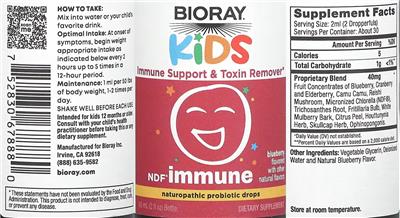
Supplement Facts
| Ingredient | Amount | % DV |
|---|---|---|
| Calories | 5 Calorie(s) | -- |
| Total Carbohydrates | 1 Gram(s) | 1% |
| Proprietary Blend | 40 mg | -- |
| Cranberry fruit concentrate | 0 NP | -- |
| Citrus | 0 NP | -- |
| Reishi Mushroom | 0 NP | -- |
| White Mulberry | 0 NP | -- |
| Skullcap | 0 NP | -- |
| Trichosanthes | 0 NP | -- |
| Fritillaria | 0 NP | -- |
| Houttuynia | 0 NP | -- |
| Blueberry fruit concentrate | 0 NP | -- |
| Camu Camu | 0 NP | -- |
| Elderberry Fruit Concentrate | 0 NP | -- |
| Ophiopogonis | 0 NP | -- |
| NDF | 0 NP | -- |
Other ingredients: Glycerin, Water, Deionized, Blueberry Flavor, Natural
Tap any ingredient to jump to its full detail below.
These statements are the manufacturer’s wording, reproduced from the product label — the label is saying it, not HelloPharmacist. We don’t verify or endorse them.
General Statements
Scan me
Bottle
Suggested/Recommended/Usage/Directions
How to take: Mix into water or your child's favorite drink. Optimal Intake: At onset of symptoms, begin weight appropriate intake as indicated below every 2 hours up to 5 times in a 12-hour period. Maintenance: 1 ml per 50 lbs of body weight, 1-2 times per day. Shake well before each use.
Precautions
Intended for kids 12 months or older. Consult with your child's health practitioner before taking this or any dietary supplement.
FDA Disclaimer Statement
These statements have not been evaluated by the Food and Administration. This product is not intended to diagnose, treat out or prevent any disease.
Formulation
Immune Support & Toxin Remover Naturopathic probiotic drops
Formula
Blueberry Flavored with other natural flavors
FDA Statement of Identity
Dietary Supplement
Storage
Store at room temperature.
Is this label outdated? Report a formula or label change and our pharmacy team will review it.
NDF Immune Blueberry by Bioray Kids label
The label scan from the NIH Dietary Supplement Label Database. Tap to enlarge.
Label images are published by the NIH Dietary Supplement Label Database for the version of this product on file. Always read your actual product label.
View the full label (PDF)The Ingredients in NDF Immune Blueberry by Bioray Kids
These are the 13 active ingredients this product is made of. Select any to open its full monograph.
Serving size1 mL Dosage formLiquid Servings per container30 Amounts shown are per serving.
Most supplement products combine several ingredients, and a medication can interact with the product through any one of them. Each ingredient below shows whether it has known drug interactions.
Proprietary Blend
- › Cranberry fruit concentrate
- › Citrus
- › Reishi Mushroom
- › White Mulberry
- › Skullcap
- › Trichosanthes
- › Fritillaria
- › Houttuynia
- › Blueberry fruit concentrate
- › Camu Camu
- › Elderberry Fruit Concentrate
- › Ophiopogonis
- › NDF
Other (inactive) ingredients: Glycerin, Water, Deionized, Blueberry Flavor, Natural. These complete the product’s ingredient list but are not active constituents.
NDF Immune Blueberry by Bioray Kids Drug Interactions
HelloPharmacist Interaction Report
NDF Immune Blueberry by Bioray Kids contains several ingredients with documented interactions with medications.
The most serious concern is cranberry fruit concentrate, which moderately interacts with blood thinners like warfarin (Coumadin) — it may raise your INR, the measure of how thin your blood is — though the evidence is conflicting. Cranberry also has moderate interactions with cholesterol-lowering drugs like atorvastatin (Lipitor) and the blood pressure medication nifedipine (Procardia), with a reported case of muscle breakdown and liver problems when combined with high-dose cranberry juice.
Additionally, reishi mushroom in this blend moderately interacts with blood pressure medications, blood thinners, and diabetes drugs, potentially making blood pressure drop too low or raising the risk of bleeding or low blood sugar. Skullcap can add to the effects of sedating drugs (CNS depressants), while white mulberry leaf moderately interacts with diabetes medications and certain kidney-filtered drugs.
Elderberry fruit concentrate moderately interacts with immunosuppressants and the cancer drug pazopanib. Blueberry fruit concentrate and chlorella (NDF) carry minor and moderate interactions respectively with diabetes drugs, NSAIDs, and warfarin.
We could not check citrus, Trichosanthes, Fritillaria, Houttuynia, and Ophiopogonis. Altogether, these interactions span 1,320 individual medications.
Please use the medication checker on this page to verify your specific prescriptions before starting.
Check your own medications below · Editorial policy · How we use AI
Want to check YOUR meds against NDF Immune Blueberry?
Ask about interactions with your drugs in plain English — “Can I take it with lisinopril?” — and we find you the answer in seconds, ingredient by ingredient.
Go to the checkerIngredients driving the most interactions
Individual Drug Interactions
The ingredients in NDF Immune Blueberry interact with 1,335 drugs. Click any drug to see the details.
8 of the 13 ingredients in NDF Immune Blueberry interact with drugs. Each result below shows which ingredient is responsible. Cranberry fruit concentrate Reishi Mushroom NDF Skullcap Elderberry Fruit Concentrate Blueberry fruit concentrate White Mulberry Trichosanthes
6-mercaptopurinePurinethol
How 6-mercaptopurine interacts with NDF Immune Blueberry — through 1 ingredient. Tap an ingredient for the detail:
Elderberry Fruit ConcentrateImmunosuppressants Moderate
Interaction Summary
Theoretically, elderberry might interfere with immunosuppressant therapy due to its immunostimulant activity.
Read the full Elderberry Fruit Concentrate + 6-mercaptopurine interactionAdo-trastuzumab EmtansineKadcyla
How Ado-trastuzumab Emtansine interacts with NDF Immune Blueberry — through 1 ingredient. Tap an ingredient for the detail:
Cranberry Fruit ConcentrateCytochrome P450 3a4 (cyp3a4) Substrates Moderate
Interaction Summary
Theoretically, cranberry might increase the levels and adverse effects of CYP3A4 substrates.
Read the full Cranberry Fruit Concentrate + Ado-trastuzumab Emtansine interactionAbciximabReoPro
How Abciximab interacts with NDF Immune Blueberry — through 1 ingredient. Tap an ingredient for the detail:
Reishi MushroomAnticoagulant/antiplatelet Drugs Moderate
Interaction Summary
Theoretically, high doses of reishi mushroom might increase the risk of bleeding.
Read the full Reishi Mushroom + Abciximab interactionAbemaciclibVerzenio
How Abemaciclib interacts with NDF Immune Blueberry — through 1 ingredient. Tap an ingredient for the detail:
Cranberry Fruit ConcentrateCytochrome P450 3a4 (cyp3a4) Substrates Moderate
Interaction Summary
Theoretically, cranberry might increase the levels and adverse effects of CYP3A4 substrates.
Read the full Cranberry Fruit Concentrate + Abemaciclib interactionAbiraterone
How Abiraterone interacts with NDF Immune Blueberry — through 1 ingredient. Tap an ingredient for the detail:
Cranberry Fruit ConcentrateCytochrome P450 3a4 (cyp3a4) Substrates Moderate
Interaction Summary
Theoretically, cranberry might increase the levels and adverse effects of CYP3A4 substrates.
Read the full Cranberry Fruit Concentrate + Abiraterone interactionAbiraterone AcetateYonsa, Zytiga
How Abiraterone Acetate interacts with NDF Immune Blueberry — through 1 ingredient. Tap an ingredient for the detail:
Cranberry Fruit ConcentrateCytochrome P450 3a4 (cyp3a4) Substrates Moderate
Interaction Summary
Theoretically, cranberry might increase the levels and adverse effects of CYP3A4 substrates.
Read the full Cranberry Fruit Concentrate + Abiraterone Acetate interactionAbrocitinibCibinqo
How Abrocitinib interacts with NDF Immune Blueberry — through 3 ingredients. Tap an ingredient for the detail:
Elderberry Fruit ConcentrateImmunosuppressants Moderate
Interaction Summary
Theoretically, elderberry might interfere with immunosuppressant therapy due to its immunostimulant activity.
Read the full Elderberry Fruit Concentrate + Abrocitinib interactionReishi MushroomAnticoagulant/antiplatelet Drugs Moderate
Interaction Summary
Theoretically, high doses of reishi mushroom might increase the risk of bleeding.
Read the full Reishi Mushroom + Abrocitinib interactionCranberry Fruit ConcentrateCytochrome P450 2c9 (cyp2c9) Substrates Minor
Interaction Summary
Theoretically, cranberry might increase the levels and adverse effects of CYP2C9 substrates.
Read the full Cranberry Fruit Concentrate + Abrocitinib interactionAcalabrutinibCalquence
How Acalabrutinib interacts with NDF Immune Blueberry — through 1 ingredient. Tap an ingredient for the detail:
Cranberry Fruit ConcentrateCytochrome P450 3a4 (cyp3a4) Substrates Moderate
Interaction Summary
Theoretically, cranberry might increase the levels and adverse effects of CYP3A4 substrates.
Read the full Cranberry Fruit Concentrate + Acalabrutinib interactionAcarboseGlucobay, Prandase, Precose
How Acarbose interacts with NDF Immune Blueberry — through 4 ingredients. Tap an ingredient for the detail:
Reishi MushroomAntidiabetes Drugs Moderate
Interaction Summary
Theoretically, reishi mushroom might have additive effects with antidiabetes drugs.
Read the full Reishi Mushroom + Acarbose interactionTrichosanthesAntidiabetes Drugs Moderate
Interaction Summary
Theoretically, concomitant use of Chinese cucumber with antidiabetic drugs may have additive effects and adverse effects.
Read the full Trichosanthes + Acarbose interactionWhite MulberryAntidiabetes Drugs Moderate
Interaction Summary
Theoretically, white mulberry leaf might increase the risk of hypoglycemia when taken with antidiabetes drugs.
Read the full White Mulberry + Acarbose interactionBlueberry Fruit ConcentrateAntidiabetes Drugs Minor
Interaction Summary
Theoretically, blueberries or blueberry leaf extracts might increase the risk of hypoglycemia when taken with antidiabetes drugs.
Read the full Blueberry Fruit Concentrate + Acarbose interactionAcebutololRhotral, Sectral
How Acebutolol interacts with NDF Immune Blueberry — through 1 ingredient. Tap an ingredient for the detail:
Reishi MushroomAntihypertensive Drugs Moderate
Interaction Summary
Theoretically, concurrent use of reishi mushroom with antihypertensive drugs might increase the risk of hypotension.
Read the full Reishi Mushroom + Acebutolol interactionAcenocoumarolSintrom
How Acenocoumarol interacts with NDF Immune Blueberry — through 1 ingredient. Tap an ingredient for the detail:
Reishi MushroomAnticoagulant/antiplatelet Drugs Moderate
Interaction Summary
Theoretically, high doses of reishi mushroom might increase the risk of bleeding.
Read the full Reishi Mushroom + Acenocoumarol interactionAcepromazineAtravet
How Acepromazine interacts with NDF Immune Blueberry — through 2 ingredients. Tap an ingredient for the detail:
SkullcapCns Depressants Moderate
Interaction Summary
Theoretically, skullcap can have additive effects when used with other CNS depressants.
Read the full Skullcap + Acepromazine interactionNdfPhotosensitizing Drugs Moderate
Interaction Summary
Theoretically, chlorella might have additive effects with photosensitizing drugs.
Read the full Ndf + Acepromazine interactionAcetaminophen, AspirinGemnisyn
How Acetaminophen, Aspirin interacts with NDF Immune Blueberry — through 1 ingredient. Tap an ingredient for the detail:
Reishi MushroomAnticoagulant/antiplatelet Drugs Moderate
Interaction Summary
Theoretically, high doses of reishi mushroom might increase the risk of bleeding.
Read the full Reishi Mushroom + Acetaminophen, Aspirin interactionAcetaminophen, Aspirin, CaffeineExcedrin, Excedrin Extra Strength, Excedrin Migraine
How Acetaminophen, Aspirin, Caffeine interacts with NDF Immune Blueberry — through 2 ingredients. Tap an ingredient for the detail:
Reishi MushroomAnticoagulant/antiplatelet Drugs Moderate
Interaction Summary
Theoretically, high doses of reishi mushroom might increase the risk of bleeding.
Read the full Reishi Mushroom + Acetaminophen, Aspirin, Caffeine interactionCranberry Fruit ConcentrateCytochrome P450 3a4 (cyp3a4) Substrates Moderate
Interaction Summary
Theoretically, cranberry might increase the levels and adverse effects of CYP3A4 substrates.
Read the full Cranberry Fruit Concentrate + Acetaminophen, Aspirin, Caffeine interactionAcetaminophen, Brompheniramine, PhenylpropanolamineDimetapp Cold and Flu
How Acetaminophen, Brompheniramine, Phenylpropanolamine interacts with NDF Immune Blueberry — through 1 ingredient. Tap an ingredient for the detail:
NdfPhotosensitizing Drugs Moderate
Interaction Summary
Theoretically, chlorella might have additive effects with photosensitizing drugs.
Read the full Ndf + Acetaminophen, Brompheniramine, Phenylpropanolamine interactionAcetaminophen, Butalbital, CaffeineEsgic, Esgic Plus, Fiogesic, Fioricet, Repan, Tecnal +1 more
How Acetaminophen, Butalbital, Caffeine interacts with NDF Immune Blueberry — through 1 ingredient. Tap an ingredient for the detail:
Cranberry Fruit ConcentrateCytochrome P450 3a4 (cyp3a4) Substrates Moderate
Interaction Summary
Theoretically, cranberry might increase the levels and adverse effects of CYP3A4 substrates.
Read the full Cranberry Fruit Concentrate + Acetaminophen, Butalbital, Caffeine interactionAcetaminophen, Butalbital, Caffeine, CodeineEsgic with Codeine, Fioricet w/ Codeine
How Acetaminophen, Butalbital, Caffeine, Codeine interacts with NDF Immune Blueberry — through 2 ingredients. Tap an ingredient for the detail:
Cranberry Fruit ConcentrateCytochrome P450 3a4 (cyp3a4) Substrates Moderate
Interaction Summary
Theoretically, cranberry might increase the levels and adverse effects of CYP3A4 substrates.
Read the full Cranberry Fruit Concentrate + Acetaminophen, Butalbital, Caffeine, Codeine interactionSkullcapCns Depressants Moderate
Interaction Summary
Theoretically, skullcap can have additive effects when used with other CNS depressants.
Read the full Skullcap + Acetaminophen, Butalbital, Caffeine, Codeine interactionAcetaminophen, Butalbital, CodeineBancap w/ Codeine
How Acetaminophen, Butalbital, Codeine interacts with NDF Immune Blueberry — through 1 ingredient. Tap an ingredient for the detail:
SkullcapCns Depressants Moderate
Interaction Summary
Theoretically, skullcap can have additive effects when used with other CNS depressants.
Read the full Skullcap + Acetaminophen, Butalbital, Codeine interactionAcetaminophen, Butalbital, Codeine PhosphatePhrenilin #3
How Acetaminophen, Butalbital, Codeine Phosphate interacts with NDF Immune Blueberry — through 1 ingredient. Tap an ingredient for the detail:
SkullcapCns Depressants Moderate
Interaction Summary
Theoretically, skullcap can have additive effects when used with other CNS depressants.
Read the full Skullcap + Acetaminophen, Butalbital, Codeine Phosphate interactionAcetaminophen, Caffeine, Chlorpheniramine, Hydrocodone, PhenylephrineHycomine Compound
How Acetaminophen, Caffeine, Chlorpheniramine, Hydrocodone, Phenylephrine interacts with NDF Immune Blueberry — through 3 ingredients. Tap an ingredient for the detail:
SkullcapCns Depressants Moderate
Interaction Summary
Theoretically, skullcap can have additive effects when used with other CNS depressants.
Read the full Skullcap + Acetaminophen, Caffeine, Chlorpheniramine, Hydrocodone, Phenylephrine interactionCranberry Fruit ConcentrateCytochrome P450 3a4 (cyp3a4) Substrates Moderate
Interaction Summary
Theoretically, cranberry might increase the levels and adverse effects of CYP3A4 substrates.
Read the full Cranberry Fruit Concentrate + Acetaminophen, Caffeine, Chlorpheniramine, Hydrocodone, Phenylephrine interactionNdfPhotosensitizing Drugs Moderate
Interaction Summary
Theoretically, chlorella might have additive effects with photosensitizing drugs.
Read the full Ndf + Acetaminophen, Caffeine, Chlorpheniramine, Hydrocodone, Phenylephrine interactionAcetaminophen, Caffeine, CodeineGesic C15, Gesic C30, Gesic C8, Lenoltec 1, Lenoltec 2, Lenoltec 3 +1 more
How Acetaminophen, Caffeine, Codeine interacts with NDF Immune Blueberry — through 2 ingredients. Tap an ingredient for the detail:
Cranberry Fruit ConcentrateCytochrome P450 3a4 (cyp3a4) Substrates Moderate
Interaction Summary
Theoretically, cranberry might increase the levels and adverse effects of CYP3A4 substrates.
Read the full Cranberry Fruit Concentrate + Acetaminophen, Caffeine, Codeine interactionSkullcapCns Depressants Moderate
Interaction Summary
Theoretically, skullcap can have additive effects when used with other CNS depressants.
Read the full Skullcap + Acetaminophen, Caffeine, Codeine interactionAcetaminophen, Caffeine, Codeine, SalicylamideCodalan No.1, Codalan No.2, Codalan No.3
How Acetaminophen, Caffeine, Codeine, Salicylamide interacts with NDF Immune Blueberry — through 2 ingredients. Tap an ingredient for the detail:
SkullcapCns Depressants Moderate
Interaction Summary
Theoretically, skullcap can have additive effects when used with other CNS depressants.
Read the full Skullcap + Acetaminophen, Caffeine, Codeine, Salicylamide interactionCranberry Fruit ConcentrateCytochrome P450 3a4 (cyp3a4) Substrates Moderate
Interaction Summary
Theoretically, cranberry might increase the levels and adverse effects of CYP3A4 substrates.
Read the full Cranberry Fruit Concentrate + Acetaminophen, Caffeine, Codeine, Salicylamide interactionAcetaminophen, Caffeine, DihydrocodeineDHC Plus, Panlor DC, Panlor SS
How Acetaminophen, Caffeine, Dihydrocodeine interacts with NDF Immune Blueberry — through 2 ingredients. Tap an ingredient for the detail:
Cranberry Fruit ConcentrateCytochrome P450 3a4 (cyp3a4) Substrates Moderate
Interaction Summary
Theoretically, cranberry might increase the levels and adverse effects of CYP3A4 substrates.
Read the full Cranberry Fruit Concentrate + Acetaminophen, Caffeine, Dihydrocodeine interactionSkullcapCns Depressants Moderate
Interaction Summary
Theoretically, skullcap can have additive effects when used with other CNS depressants.
Read the full Skullcap + Acetaminophen, Caffeine, Dihydrocodeine interactionAcetaminophen, Caffeine, IsomethepteneMigralam
How Acetaminophen, Caffeine, Isometheptene interacts with NDF Immune Blueberry — through 1 ingredient. Tap an ingredient for the detail:
Cranberry Fruit ConcentrateCytochrome P450 3a4 (cyp3a4) Substrates Moderate
Interaction Summary
Theoretically, cranberry might increase the levels and adverse effects of CYP3A4 substrates.
Read the full Cranberry Fruit Concentrate + Acetaminophen, Caffeine, Isometheptene interactionAcetaminophen, Caffeine, PyrilamineMidol Max Strength Menstrual
How Acetaminophen, Caffeine, Pyrilamine interacts with NDF Immune Blueberry — through 1 ingredient. Tap an ingredient for the detail:
Cranberry Fruit ConcentrateCytochrome P450 3a4 (cyp3a4) Substrates Moderate
Interaction Summary
Theoretically, cranberry might increase the levels and adverse effects of CYP3A4 substrates.
Read the full Cranberry Fruit Concentrate + Acetaminophen, Caffeine, Pyrilamine interactionAcetaminophen, Chlorpheniramine Maleate, Dextromethorphan HbrVicks Formula 44M Cough, Cold & Flu Relief
How Acetaminophen, Chlorpheniramine Maleate, Dextromethorphan Hbr interacts with NDF Immune Blueberry — through 2 ingredients. Tap an ingredient for the detail:
Cranberry Fruit ConcentrateCytochrome P450 3a4 (cyp3a4) Substrates Moderate
Interaction Summary
Theoretically, cranberry might increase the levels and adverse effects of CYP3A4 substrates.
Read the full Cranberry Fruit Concentrate + Acetaminophen, Chlorpheniramine Maleate, Dextromethorphan Hbr interactionNdfPhotosensitizing Drugs Moderate
Interaction Summary
Theoretically, chlorella might have additive effects with photosensitizing drugs.
Read the full Ndf + Acetaminophen, Chlorpheniramine Maleate, Dextromethorphan Hbr interactionAcetaminophen, Chlorpheniramine, Codeine, PhenylephrineColrex
How Acetaminophen, Chlorpheniramine, Codeine, Phenylephrine interacts with NDF Immune Blueberry — through 3 ingredients. Tap an ingredient for the detail:
Cranberry Fruit ConcentrateCytochrome P450 3a4 (cyp3a4) Substrates Moderate
Interaction Summary
Theoretically, cranberry might increase the levels and adverse effects of CYP3A4 substrates.
Read the full Cranberry Fruit Concentrate + Acetaminophen, Chlorpheniramine, Codeine, Phenylephrine interactionNdfPhotosensitizing Drugs Moderate
Interaction Summary
Theoretically, chlorella might have additive effects with photosensitizing drugs.
Read the full Ndf + Acetaminophen, Chlorpheniramine, Codeine, Phenylephrine interactionSkullcapCns Depressants Moderate
Interaction Summary
Theoretically, skullcap can have additive effects when used with other CNS depressants.
Read the full Skullcap + Acetaminophen, Chlorpheniramine, Codeine, Phenylephrine interactionAcetaminophen, Chlorpheniramine, DextromethorphanCoricidin II Extra Strength Cold and Flu
How Acetaminophen, Chlorpheniramine, Dextromethorphan interacts with NDF Immune Blueberry — through 2 ingredients. Tap an ingredient for the detail:
Cranberry Fruit ConcentrateCytochrome P450 3a4 (cyp3a4) Substrates Moderate
Interaction Summary
Theoretically, cranberry might increase the levels and adverse effects of CYP3A4 substrates.
Read the full Cranberry Fruit Concentrate + Acetaminophen, Chlorpheniramine, Dextromethorphan interactionNdfPhotosensitizing Drugs Moderate
Interaction Summary
Theoretically, chlorella might have additive effects with photosensitizing drugs.
Read the full Ndf + Acetaminophen, Chlorpheniramine, Dextromethorphan interactionAcetaminophen, Chlorpheniramine, Dextromethorphan HydrobromideCoricidin HBP Maximum Strength Flu
How Acetaminophen, Chlorpheniramine, Dextromethorphan Hydrobromide interacts with NDF Immune Blueberry — through 2 ingredients. Tap an ingredient for the detail:
NdfPhotosensitizing Drugs Moderate
Interaction Summary
Theoretically, chlorella might have additive effects with photosensitizing drugs.
Read the full Ndf + Acetaminophen, Chlorpheniramine, Dextromethorphan Hydrobromide interactionCranberry Fruit ConcentrateCytochrome P450 3a4 (cyp3a4) Substrates Moderate
Interaction Summary
Theoretically, cranberry might increase the levels and adverse effects of CYP3A4 substrates.
Read the full Cranberry Fruit Concentrate + Acetaminophen, Chlorpheniramine, Dextromethorphan Hydrobromide interactionAcetaminophen, Chlorpheniramine, Dextromethorphan, PhenylpropanolamineMulti Symptom Cold Relief
How Acetaminophen, Chlorpheniramine, Dextromethorphan, Phenylpropanolamine interacts with NDF Immune Blueberry — through 2 ingredients. Tap an ingredient for the detail:
Cranberry Fruit ConcentrateCytochrome P450 3a4 (cyp3a4) Substrates Moderate
Interaction Summary
Theoretically, cranberry might increase the levels and adverse effects of CYP3A4 substrates.
Read the full Cranberry Fruit Concentrate + Acetaminophen, Chlorpheniramine, Dextromethorphan, Phenylpropanolamine interactionNdfPhotosensitizing Drugs Moderate
Interaction Summary
Theoretically, chlorella might have additive effects with photosensitizing drugs.
Read the full Ndf + Acetaminophen, Chlorpheniramine, Dextromethorphan, Phenylpropanolamine interactionEach ingredient & the kinds of drugs it affects
For each ingredient in NDF Immune Blueberry with known interactions, here are the types of medications they can affect. Open any type for the detail — or search your exact drug in the checker above.
Cranberry fruit concentrate
Atorvastatin (Lipitor)
Theoretically, cranberry might increase levels and adverse effects of atorvastatin.
In one case report, a patient taking atorvastatin experienced upper back pain, rhabdomyolysis, and abnormal liver function after drinking cranberry juice 16 ounces daily for 2 weeks. Theoretically, this may have been caused by inhibition of cytochrome P450 3A4 (CYP3A4) enzymes by cranberry juice, as atorvastatin is a CYP3A4 substrate. Creatinine kinase and liver enzymes normalized within 2 weeks of stopping cranberry juice. Patients taking atorvastatin should avoid large quantities of cranberry juice.
Cytochrome P450 3A4 (Cyp3A4) Substrates
Theoretically, cranberry might increase the levels and adverse effects of CYP3A4 substrates.
A case of upper back pain, rhabdomyolysis, and abnormal liver function has been reported for a patient taking atorvastatin, a CYP3A4 substrate, in combination with cranberry juice 16 ounces daily for 2 weeks. Creatinine kinase and liver enzymes normalized within 2 weeks of stopping cranberry juice. Also, animal research suggests that cranberry juice, administered intraduodenally 30 minutes prior to nifedipine, a CYP3A4 substrate, inhibits nifedipine metabolism and increases the area under the concentration-time curve by 1.6-fold compared to control.
Nifedipine (Procardia)
Theoretically, cranberry might increase the levels and adverse effects of nifedipine.
Animal research suggests that cranberry juice, administered intraduodenally 30 minutes prior to nifedipine treatment, inhibits nifedipine metabolism and increases the area under the concentration-time curve by 1.6-fold compared to control. This interaction has not been reported in humans.
Warfarin (Coumadin)
Theoretically, cranberry might increase the levels and adverse effects of warfarin. However, research is conflicting.
There is contradictory evidence about the effect of cranberry juice on warfarin. Case reports have linked cranberry juice consumption to increases in the international normalized ratio (INR) in patients taking warfarin, resulting in severe spontaneous bleeding and excessive postoperative bleeding. Daily consumption of cranberry sauce for one week has also been linked to an increase in INR in one case report. In a small study in healthy young males, taking a high dose of 3 grams of cranberry juice concentrate capsules, equivalent to 57 grams of fruit daily, for 2 weeks produced a 30% increase in the area under the INR-time curve after a single 25-mg dose of warfarin. However, 3 very small clinical studies in patients stabilized on warfarin reported that cranberry juice 250 mL once or twice daily for 7 days (27% cranberry juice or pure cranberry juice) or 240 mL once daily for 14 days does not significantly increase INR or affect plasma warfarin levels. The reasons for these discrepant findings are unclear. It is possible that the form and dose of cranberry may play a role, as cranberry extracts and juices contain different constituents. Additionally, an in vitro study evaluating 5 different cranberry juices found varying effects, with only a cranberry concentrate, and not diluted cranberry juices, inhibiting CYP2C9. However, this concentrate did not inhibit CYP2C9 activity in humans.
Cytochrome P450 2C9 (Cyp2C9) Substrates
Theoretically, cranberry might increase the levels and adverse effects of CYP2C9 substrates. However, research is conflicting.
There is contradictory evidence about the effect of cranberry on CYP2C9 enzymes. In vitro evidence suggests that flavonoids in cranberry inhibit CYP2C9 enzymes. However, clinical research shows that cranberry juice does not significantly affect the levels, metabolism, or elimination of the CYP2C9 substrates flurbiprofen or diclofenac. Also, in patients stabilized on warfarin, drinking cranberry juice 250 mL daily for 7 days does not significantly increase the anticoagulant activity of warfarin, a CYP2C9 substrate. Additional pharmacokinetic research shows that cranberry juice does not increase peak plasma concentrations or area under the concentration-time curve of warfarin.
Diclofenac (Voltaren, Others)
Theoretically, cranberry might modestly increase the levels and adverse effects of diclofenac.
In vitro evidence suggests that cranberry juice inhibits diclofenac metabolism by human liver microsomes. However, drinking cranberry juice does not seem to affect diclofenac metabolism in humans.
Reishi Mushroom
Anticoagulant/Antiplatelet Drugs
Theoretically, high doses of reishi mushroom might increase the risk of bleeding.
A dose of 1.5 grams daily of reishi mushroom does not seem to decrease platelet aggregation, but a higher dose of 3 grams daily does.
Antidiabetes Drugs
Theoretically, reishi mushroom might have additive effects with antidiabetes drugs.
Animal research suggests that reishi mushroom decreases blood sugar. However, in patients with type 2 diabetes, taking reishi mushroom does not reduce fasting glucose levels, and its effects on glycated hemoglobin are inconsistent.
Antihypertensive Drugs
Theoretically, concurrent use of reishi mushroom with antihypertensive drugs might increase the risk of hypotension.
Reishi mushroom has shown hypotensive activity in animal research. Clinical evidence suggests that reishi mushroom reduces blood pressure in some, but not all, patients with hypertension.
NDF
Photosensitizing Drugs
Theoretically, chlorella might have additive effects with photosensitizing drugs.
Chlorella has been reported to cause photosensitization. In five case reports, patients who had ingested chlorella exhibited swelling followed by erythematopurpuric lesions on sun-exposed areas of the body. Theoretically, concomitant use with photosensitizing drugs may exacerbate effects.
Warfarin (Coumadin)
Theoretically, chlorella might reduce the clinical effects of warfarin.
Chlorella contains significant amounts of vitamin K. There is at least one case report of warfarin therapy becoming sub-therapeutic after initiation of chlorella supplements.
Skullcap
Cns Depressants
Theoretically, skullcap can have additive effects when used with other CNS depressants.
Animal and clinical research suggests that skullcap can cause sedation and cognitive impairment.
Elderberry Fruit Concentrate
Immunosuppressants
Theoretically, elderberry might interfere with immunosuppressant therapy due to its immunostimulant activity.
Elderberry has immunostimulant activity, increasing the production of cytokines, including interleukin and tumor necrosis factor.
Pazopanib (Votrient)
Theoretically, elderberry might interact with pazopanib, potentially increasing the risk of adverse effects.
Blueberry fruit concentrate
Antidiabetes Drugs
Theoretically, blueberries or blueberry leaf extracts might increase the risk of hypoglycemia when taken with antidiabetes drugs.
Animal and in vitro research suggests that blueberry and/or blueberry leaf extracts can lower blood glucose levels.
Buspirone (Buspar)
Theoretically, blueberry juice might increase blood levels of buspirone.
In vitro research shows that blueberry juice can inhibit the metabolism of buspirone, possibly by inhibiting cytochrome P450 3A (CYP3A) enzymes. However, pharmacokinetic research in humans shows that drinking 300 mL of blueberry juice 30 minutes before taking buspirone hydrochloride 10 mg does not significantly affect the concentration or clearance of buspirone.
Flurbiprofen (Ansaid, Others)
Theoretically, blueberry juice might increase blood levels of flurbiprofen.
In vitro research shows that blueberry juice can inhibit the metabolism of flurbiprofen, possibly by inhibiting cytochrome P450 2C9 (CYP2C9) enzymes. However, pharmacokinetic research in humans shows that drinking 300 mL of blueberry juice 30 minutes before taking flurbiprofen 100 mg does not significantly affect the concentration or clearance of flurbiprofen.
White Mulberry
Antidiabetes Drugs
Theoretically, white mulberry leaf might increase the risk of hypoglycemia when taken with antidiabetes drugs.
Clinical research shows that white mulberry leaf can lower blood glucose levels. Advise patients to monitor glucose levels closely.
Organic Cation Transporter 2 (Oct2) Substrates
Theoretically, white mulberry leaf might slow the elimination and increase the adverse effects of drugs which are OCT2 substrates.
Animal research shows that coadministration of white mulberry leaf extract with metformin, an OCT2 substrate, slows the renal elimination of metformin via inhibition of OCT2 activity. OCT2 is expressed in the kidneys and is responsible for transporting cationic drugs into tubular epithelial cells in order to be excreted in the urine.
Trichosanthes
Antidiabetes Drugs
Theoretically, concomitant use of Chinese cucumber with antidiabetic drugs may have additive effects and adverse effects. Monitor blood glucose levels closely, dose adjustment may be needed.
Brand information
Manufacturer and brand details for NDF Immune Blueberry, from the product label.
Bioray Kids
See all Bioray Kids products- Name
- Bioray Inc.
- City
- Laguna Hills
- State
- CA
- Phone Number
- (888) 635-9582
- Web Address
- bioray.com
NDF Immune Blueberry by Bioray Kids: Common Questions
Does NDF Immune Blueberry by Bioray Kids interact with any medications?
How can one product interact with so many drugs?
Where does this information come from?
What's the proprietary blend, and why can't I see the amounts of each ingredient?
Is this safe for my kid?
Can I take this if I'm pregnant or breastfeeding?
Does blueberry really improve memory or brain health?
What are the most common side effects I might notice?
Is this a substitute for antibiotics if I have a UTI?
Written and reviewed by the HelloPharmacist editorial staff. Our editorial policy
Not sure if NDF Immune Blueberry is safe with your meds?
Our pharmacists answer your medication & supplement questions — free.
Label information is sourced from the NIH Dietary Supplement Label Database and reflects the product version on file; always read your actual product label. This page is for education only and is not a substitute for professional medical advice. Confirm with your pharmacist or doctor before combining supplements and medications.
The Full Monographs Behind NDF Immune Blueberry’s Ingredients
Every ingredient we hold a full HelloPharmacist monograph for — uses, evidence, safety, and the complete interaction list.
Cranberry
Interacts with 712 drugsCranberry is best known for helping to prevent repeated urinary tract infections (UTIs) in some people, and the evidence here is moderate but mixed. It is not a reliable treatment for an act...
Read the full Cranberry monograph → Herb & supplement monographReishi Mushroom
Interacts with 375 drugsReishi is a traditional Asian mushroom widely used to support the immune system and overall wellness. Human evidence for most of its claimed benefits is limited or low-quality, so it should...
Read the full Reishi Mushroom monograph → Herb & supplement monographWhite Mulberry
Interacts with 87 drugsWhite mulberry leaf is most studied for helping blunt the rise in blood sugar after meals, but the human evidence is limited and not strong. It is generally well tolerated as a food and tea,...
Read the full White Mulberry monograph → Herb & supplement monographSkullcap
Interacts with 248 drugsAmerican skullcap is an herb traditionally used to calm anxiety and promote relaxation, but solid human evidence is very limited. It is generally considered relatively safe for short-term us...
Read the full Skullcap monograph → Herb & supplement monographChinese Cucumber
Interacts with 86 drugsChinese cucumber (Trichosanthes kirilowii) is a plant used in traditional Chinese medicine, and a protein from its root called trichosanthin (Compound Q) has been studied as an injectable dr...
Read the full Chinese Cucumber monograph → Herb & supplement monographBlueberry
Interacts with 88 drugsBlueberries are a nutritious fruit rich in antioxidants called anthocyanins, and eating them as part of a balanced diet is healthy and safe for most people. Concentrated supplements are mark...
Read the full Blueberry monograph → Herb & supplement monographCamu Camu
Camu camu is an Amazonian berry that is very high in vitamin C and plant antioxidants, which is why it is popular as an immune and antioxidant supplement. Human research is still limited, so...
Read the full Camu Camu monograph → Herb & supplement monographElderberry
Interacts with 121 drugsElderberry is a popular herbal supplement, mainly taken to help with colds and flu. Some small studies suggest it may modestly shorten cold or flu symptoms, but the evidence is limited and n...
Read the full Elderberry monograph → Herb & supplement monographChlorella
Interacts with 337 drugsChlorella is a nutrient-rich freshwater green algae taken as a supplement for general wellness, immune support, and 'detox.' Some small studies suggest possible benefits for cholesterol, blo...
Read the full Chlorella monograph →Sources & How We Checked
NDF Immune Blueberry's label data comes from the NIH Dietary Supplement Label Database; the ingredient interaction data is from the Natural Medicines database, reviewed by our pharmacists.
- NIH Dietary Supplement Label Database (DSLD) — The official product label on file for this supplement.
- Natural Medicines (Therapeutic Research Center) — Evidence-graded clinical reference behind the ingredient interaction data.
Content is written and reviewed by licensed HelloPharmacist pharmacists. See our data sources and editorial standards for how this information is built and checked.
The 91 references behind this product’s interaction data
Every citation that drives the interaction findings for this product’s ingredients, from the evidence-graded Natural Medicines (TRC Healthcare) database. Open an ingredient to browse its citations — links open the study on PubMed or the publisher’s site.
Cranberry 33 references
- Anon. Possible interaction between warfarin and cranberry juice. Current Problems in Pharmacovigilance 2003;29:8. PubMed
- Greenblatt DJ, von Moltke LL, Perloff ES, et al. Interaction of flurbiprofen with cranberry juice, grape juice, tea, and fluconazole: in vitro and clinical studies. Clin Pharmacol Ther 2006;79:125-33. PubMed
- Hodek P, Trefil P, Stiborova M. Flavonoids-potent and versatile biologically active compounds interacting with cytochromes P450. Chem Biol Interact 2002;139:1-21.. PubMed
- Grant P. Warfarin and cranberry juice: An interaction? J Heart Valve Dis 2004;13:25-6.
- Suvarna R, Pirmohamed M, Henderson L. Possible interaction between warfarin and cranberry juice. BMJ 2003;327:1454. PubMed
- Li Z, Seeram NP, Carpenter CL, et al. Cranberry does not affect prothrombin time in male subjects on warfarin. J Am Diet Assoc 2006;106:2057-61. PubMed
- Lilja JJ, Backman JT, Neuvonen PJ. Effects of daily ingestion of cranberry juice on the pharmacokinetics of warfarin, tizanidine, and midazolam - probes of CYP2C9, CYP1A2 and CYP3A4. Clin Pharmacol The 2007:81:833-9. PubMed
- Wing DA, Rumney PJ, Preslicka CW, Chung JH. Daily cranberry juice for the prevention of asymptomatic bacteriuria in pregnancy: a randomized, controlled pilot study. J Urol 2008;180:1367-72. PubMed
- Mohammed Abdul MI, Jiang X, Williams KM, et al. Pharmacodynamic interaction of warfarin with cranberry but not with garlic in healthy subjects. Br J Pharmacol 2008;154:1691-700. PubMed
- McMurdo MET, Argo I, Phillips G, et al. Cranberry or trimethoprim for the prevention of recurrently urinary tract infections? A randomized controlled trial in older women. J Antimicrob Chemother 2009;63:389-95.
- Mergenhagen KA, Sherman O. Elevated International Normalized Ratio after concurrent ingestion of cranberry sauce and warfarin. Am J Health-Syst Pharm 2008;65:2113-6. PubMed
- Ansell J, McDonough M, Zhao Y, et al. The absence of an interaction between warfarin and cranberry juice: a randomized, double-blind trial. J Clin Pharmacol 2009;49:824-30. PubMed
- Haber SL, Cauthon KA, Raney EC. Cranberry and warfarin interaction: a case report and review of the literature. Consult Pharm 2012;27:58-65. PubMed
- Hamann GL, Campbell JD, George CM. Warfarin-cranberry juice interaction. Ann Pharmacother 2011;45:e17. PubMed
- Roberts D, Flanagan P. Case report: Cranberry juice and warfarin. Home Healthc Nurse 2011;29:92-7.
- Garcia-Calatayud, S., Larreina Cordoba, J. J., and Lozano De La Torre MJ. [Severe cranberry juice poisoning]. An.Esp.Pediatr. 2002;56(1):72-73.
- Patel, D. A., Gillespie, B., Sobel, J. D., Leaman, D., Nyirjesy, P., Weitz, M. V., and Foxman, B. Risk factors for recurrent vulvovaginal candidiasis in women receiving maintenance antifungal therapy: results of a prospective cohort study. Am J Obstet.Gy PubMed
- Isele, H. [Fatal bleeding under warfarin plus cranberry juice. Is it due to salicylic acid?]. MMW.Fortschr.Med 3-11-2004;146(11):13.
- Linsenmeyer, T. A., Harrison, B., Oakley, A., Kirshblum, S., Stock, J. A., and Millis, S. R. Evaluation of cranberry supplement for reduction of urinary tract infections in individuals with neurogenic bladders secondary to spinal cord injury. A prospecti
- McMurdo, M. E., Bissett, L. Y., Price, R. J., Phillips, G., and Crombie, I. K. Does ingestion of cranberry juice reduce symptomatic urinary tract infections in older people in hospital? A double-blind, placebo-controlled trial. Age Ageing 2005;34(3):256- PubMed
- Sylvan, L. and Justice, N. P. Possible interaction between warfarin and cranberry juice. Am Fam.Physician 9-15-2005;72(6):1000.
- Niklasson, A. and Andren, L. [Interaction between Waran and cranberry juice]. Lakartidningen 3-15-2006;103(11):853-854.
- Rindone, J. P. and Murphy, T. W. Warfarin-cranberry juice interaction resulting in profound hypoprothrombinemia and bleeding. Am J Ther 2006;13(3):283-284. PubMed
- Uesawa, Y. and Mohri, K. Effects of cranberry juice on nifedipine pharmacokinetics in rats. J Pharm Pharmacol 2006;58(8):1067-1072. PubMed
- Valentova, K., Stejskal, D., Bednar, P., Vostalova, J., Cihalik, C., Vecerova, R., Koukalova, D., Kolar, M., Reichenbach, R., Sknouril, L., Ulrichova, J., and Simanek, V. Biosafety, antioxidant status, and metabolites in urine after consumption of dried
- Royer, D. J., George, J. N., and Terrell, D. R. Thrombocytopenia as an adverse effect of complementary and alternative medicines, herbal remedies, nutritional supplements, foods, and beverages. Eur J Haematol 2010;84(5):421-429. PubMed
- Stapleton, A. E., Dziura, J., Hooton, T. M., Cox, M. E., Yarova-Yarovaya, Y., Chen, S., and Gupta, K. Recurrent urinary tract infection and urinary Escherichia coli in women ingesting cranberry juice daily: a randomized controlled trial. Mayo.Clin.Proc. PubMed
- Doad GJ, Kabange W. Cranberry juice, atorvastatin and back pain. J Med Assoc Ga 2014;103(1):14.
- Griffiths AP, Beddall A, Pegler S. Fatal haemopericardium and gastrointestinal haemorrhage due to possible interaction of cranberry juice with warfarin. J R Soc Promot Health 2008;128(6):324-6. PubMed
- Mellen CK, Ford M, Rindone JP. Effect of high-dose cranberry juice on the pharmacodynamics of warfarin in patients. Br J Clin Pharmacol 2010;70(1):139-42. PubMed
- Ushijima K, Tsuruoka S, Tsuda H, Hasegawa G, Obi Y, Kaneda T, Takahashi M, Maekawa T, Sasaki T, Koshimizu TA, Fujimura A. Cranberry juice suppressed the diclofenac metabolism by human liver microsomes, but not in healthy human subjects. Br J Clin Pharmaco PubMed
- Ngo N, Brantley SJ, Carrizosa DR, et al. The warfarin-cranberry juice interaction revisited: A systematic in vitro-in vivo evaluation. J Exp Pharmacol. 2010;2010(2):83-91.
- Williams G, Stothart CI, Hahn D, Stephens JH, Craig JC, Hodson EM. Cranberries for preventing urinary tract infections. Cochrane Database Syst Rev 2023;11(11):CD001321. PubMed
Reishi Mushroom 17 references
- McGuffin M, Hobbs C, Upton R, Goldberg A, eds. American Herbal Products Association's Botanical Safety Handbook. Boca Raton, FL: CRC Press, LLC 1997.
- Tao J, Feng KY. Experimental and clinical studies on inhibitory effect of ganoderma lucidum on platelet aggregation. J Tongji Med Univ 1990;10:240-3. PubMed
- Singh AB, Gupta SK, Pereira BM, Prakash D. Sensitization to Ganoderma lucidum in patients with respiratory allergy in India. Clin Exp Allergy 1995;25:440-7.
- Lee SY, Rhee HM. Cardiovascular effects of mycelium extract of Ganoderma lucidum: inhibition of sympathetic outflow as a mechanism of its hypotensive action. Chem Pharm Bull (Tokyo) 1990;38:1359-64. PubMed
- Kwok Y, Ng KFJ, Li, CCF, et al. A prospective, randomized, double-blind, placebo-controlled study of the platelet and global hemostatic effects of Ganoderma lucidum (Ling-Zhi) in healthy volunteers. Anesth Analg 2005;101:423-6. PubMed
- Wanmuang, H., Leopairut, J., Kositchaiwat, C., Wananukul, W., and Bunyaratvej, S. Fatal fulminant hepatitis associated with Ganoderma lucidum (Lingzhi) mushroom powder. J Med Assoc Thai. 2007;90(1):179-181.
- Seto, S. W., Lam, T. Y., Tam, H. L., Au, A. L., Chan, S. W., Wu, J. H., Yu, P. H., Leung, G. P., Ngai, S. M., Yeung, J. H., Leung, P. S., Lee, S. M., and Kwan, Y. W. Novel hypoglycemic effects of Ganoderma lucidum water-extract in obese/diabetic (+db/+db
- Chu, T. T., Benzie, I. F., Lam, C. W., Fok, B. S., Lee, K. K., and Tomlinson, B. Study of potential cardioprotective effects of Ganoderma lucidum (Lingzhi): results of a controlled human intervention trial. Br.J.Nutr. 2012;107(7):1017-1027.
- Jin, X., Ruiz, Beguerie J., Sze, D. M., and Chan, G. C. Ganoderma lucidum (Reishi mushroom) for cancer treatment. Cochrane.Database.Syst.Rev. 2012;6:CD007731.
- Kabir, Y., Kimura, S., and Tamura, T. Dietary effect of Ganoderma lucidum mushroom on blood pressure and lipid levels in spontaneously hypertensive rats (SHR). J Nutr Sci Vitaminol.(Tokyo) 1988;34(4):433-438. PubMed
- Kanmatsuse, K., Kajiwara, N., Hayashi, K., Shimogaichi, S., Fukinbara, I., Ishikawa, H., and Tamura, T. [Studies on Ganoderma lucidum. I. Efficacy against hypertension and side effects]. Yakugaku Zasshi 1985;105(10):942-947. PubMed
- Gao, Y., Lan, J., Dai, X., Ye, J., and Zhou, S. A Phase I/II Study of Ling Zhi Mushroom Ganoderma lucidum(W.Curt: Fr.) Lloyd (Aphyllophoromycetideae) Extract in Patients with Type II Diabetes Mellitus. International Journal of Medicinal Mushrooms 2004;6. DOI
- Jin H, Zhang G, Cao X, and et al. Treatment of hypertension by linzhi combined with hypotensor and its effects on arterial, arteriolar and capillary pressure and microcirculation. In: Niimi H, Xiu RJ, Sawada T, and et al. Microcirculatory Approach to Asi
- Klupp NL, Chang D, Hawke F, Kiat H, Cao H, Grant SJ, Bensoussan A. Ganoderma lucidum mushroom for the treatment of cardiovascular risk factors. Cochrane Database Syst Rev. 2015 Feb 17;2:CD007259. PubMed
- Zhao H, Zhang Q, Zhao L, Huang X, Wang J, Kang X. Spore Powder of Ganoderma lucidum Improves Cancer-Related Fatigue in Breast Cancer Patients Undergoing Endocrine Therapy: A Pilot Clinical Trial. Evid Based Complement Alternat Med. 2012;2012:809614.
- Pazzi F, Adsuar JC, Domínguez-Muñoz FJ, García-Gordillo MA, Gusi N, Collado-Mateo D. Ganoderma lucidum effects on mood and health-related quality of life in women with fibromyalgia. Healthcare (Basel) 2020;8(4):520. PubMed
- Kogure T, Koiwai A, Fukushi D, et al. Hypereosinophilia with hepatic nodule formation caused by Ganoderma lucidum. Intern Med 2021;60(24):3897-3903.
White Mulberry 6 references
- Andallu B, Suryakantham V, Lakshmi Srikanthi B, Reddy GK. Effect of mulberry (Morus indica L.) therapy on plasma and erythrocyte membrane lipids in patients with type 2 diabetes. Clin Chim Acta 2001;314:47-53. PubMed
- Mudra M, Ercan-Fang N, Zhong L, et al. Influence of mulberry leaf extract on the blood glucose and breath hydrogen response to ingestion of 75 g sucrose by type 2 diabetic and control subjects. Diabetes Care 2007;30:1272-4. PubMed
- Kimura T, Nakagawa K, Kubota H, et al. Food-grade mulberry powder enriched with 1-deoxynojirimycin suppresses the elevation of postprandial blood glucose in humans. J Agric Food Chem 2007;55:5869-74. PubMed
- Huh HW, Na YG, Bang KH, et al. Extended intake of mulberry leaf extract delayed metformin elimination via inhibiting the organic cation transporter 2. Pharmaceutics. 2020;12(1):49. PubMed
- Thaipitakwong T, Supasyndh O, Rasmi Y, Aramwit P. A randomized controlled study of dose-finding, efficacy, and safety of mulberry leaves on glycemic profiles in obese persons with borderline diabetes. Complement Ther Med. 2020;49:102292. PubMed
- Thondre PS, Lightowler H, Ahlstrom L, Gallagher A. Mulberry leaf extract improves glycaemic response and insulaemic response to sucrose in healthy subjects: results of a randomized, double blind, placebo-controlled study. Nutr Metab (Lond) 2021;18(1):41. PubMed
Skullcap 3 references
- Wolfson P, Hoffmann DL. An investigation into the efficacy of Scutellaria lateriflora in healthy volunteers. Altern Ther Health Med 2003;9:74-8.
- Awad, R., Arnason, J. T., Trudeau, V., Bergeron, C., Budzinski, J. W., Foster, B. C., and Merali, Z. Phytochemical and biological analysis of skullcap (Scutellaria lateriflora L.): a medicinal plant with anxiolytic properties. Phytomedicine. 2003;10(8):6 PubMed
- Brock C, Whitehouse J, Tewfik I, Towell T. American skullcap (Scutellaria lateriflora): a randomised, double-blind placebo-controlled crossover study of its effects on mood in healthy volunteers. Phytother Res 2014;28(5):692-8.
Chinese Cucumber 4 references
- The Review of Natural Products by Facts and Comparisons. St. Louis, MO: Wolters Kluwer Co., 1999.
- McGuffin M, Hobbs C, Upton R, Goldberg A, eds. American Herbal Products Association's Botanical Safety Handbook. Boca Raton, FL: CRC Press, LLC 1997.
- Hikino H, Yoshizawa M, Suzuki Y, et al. Isolation and hypoglycemic activity of trichosans A, B, C, D, and E: glycans of Trichosanthes kirilowii roots. Planta Med 1989;55:349-50.
- Jung YB, Roh KJ, Jung JA, et al. Effect of SKI 306X, a new herbal anti-arthritic agent, in patients with osteoarthritis of the knee: a double-blind placebo controlled study. Am J Chin Med. 2001;29(3-4):485-91. PubMed
Blueberry 7 references
- Cignarella A, Nastasi M, Cavalli E, Puglisi L. Novel lipid-lowering properties of Vaccinium myrtillus L. leaves, a traditional antidiabetic treatment, in several models of rat dyslipidaemia: a comparison with ciprofibrate. Thromb Res 1996;84:311-22. PubMed
- Wang SY, Lin HS. Antioxidant activity in fruits and leaves of blackberry, raspberry, and strawberry varies with cultivar and developmental stage. J Agric Food Chem 2000;48:140-6.. PubMed
- Martineau, L. C., Couture, A., Spoor, D., Benhaddou-Andaloussi, A., Harris, C., Meddah, B., Leduc, C., Burt, A., Vuong, T., Mai, Le P., Prentki, M., Bennett, S. A., Arnason, J. T., and Haddad, P. S. Anti-diabetic properties of the Canadian lowbush bluebe
- Vuong, T., Martineau, L. C., Ramassamy, C., Matar, C., and Haddad, P. S. Fermented Canadian lowbush blueberry juice stimulates glucose uptake and AMP-activated protein kinase in insulin-sensitive cultured muscle cells and adipocytes. Can J Physiol Pharma
- Hanley MJ, Masse G, Harmatz JS, Cancalon PF, Dolnikowski GG, Court MH, Greenblatt DJ. Effect of blueberry juice on clearance of buspirone and flurbiprofen in human volunteers. Br J Clin Pharmacol. 2013 Apr;75(4):1041-52. PubMed
- Basu A, Du M, Leyva MJ, et al. Blueberries decrease cardiovascular risk factors in obese men and women with metabolic syndrome. J Nutr 2010;140(9):1582-7. PubMed
- Basu A, Feng D, Planinic P, Ebersole JL, Lyons TJ, Alexander JM. Dietary blueberry and soluble fiber supplementation reduces risk of gestational diabetes in women with obesity in a randomized controlled trial. J Nutr 2021;151(5):1128-38. PubMed
Camu Camu 2 references
Elderberry 6 references
- Barak V, Halperin T, Kalickman I. The effect of Sambucol, a black elderberry-based, natural product, on the production of human cytokines: I. Inflammatory cytokines. Eur Cytokine Netw 2001;12:290-6..
- Elderberry (Sambucus species). The Poison Plant Patch, Novia Scotia Museum, 2007. Available at: http://museum.gov.ns.ca/poison/?section=species&id=117 (Accessed 16 October 2009).
- European elder. Canadian Poisonous Plants Information System. Available at: http://www.cbif.gc.ca/pls/pp/ppack.jump?p_null=all&p_psn=121&p_type=all&p_sci=comm&p_x=px (Accessed 16 October 2009).
- Raus K, Pleschka S, Klein P, Schoop R, Fisher P. Effect of an echinacea-based hot drink versus oseltamivir in Influenza treatment: a randomized, double-blind, double-dummy, multicenter, noninferiority clinical trial. . Curr Ther Res Clin Exp. 2015;20;77:6 PubMed
- Ramachandran A, Antala D, Pudasainee P, Panginikkod S, Gupta H. A Plausible Association Between the Use of Elderberry and Autoimmune Hepatitis. Cureus 2022;14(4):e24250. PubMed
- Agarwal N, Mangla A. Elderberry interaction with pazopanib in a patient with soft-tissue sarcoma: A case report and literature review. Mol Clin Oncol 2024;20(5):36. PubMed
Chlorella 13 references
- Peirce A. The American Pharmaceutical Association Practical Guide to Natural Medicines. New York, NY: William Morrow and Co., 1999.
- Ng TP, Tan WC, Lee YK. Occupational asthma in a pharmacist induced by chlorella, a unicellular algae preparation. Resp Med 1994;88:555-7. PubMed
- Jitsukawa K, Suizu R, Hidano A. Chlorella photosensitization. New phytophotodermatosis. Int J Dermatol 1984;23:263-8. PubMed
- Merchant RE, Carmack CA, Wise CM. Nutritional supplementation with Chlorella pyrenoidosa for patients with fibromyalgia syndrome: a pilot study. Phytother Res 2000;14:167-73.
- Merchant RE, Rice CD, Young HF. Dietary Chlorella pyrenoidosa for patients with malignant glioma: effects on immunocompetence, quality of life, and survival. Phytother Res 1990;4:220-31.
- Halperin SA, Smith B, Nolan C, et al. Safety and immunoenhancing effect of a Chlorella-derived dietary supplement in healthy adults undergoing influenza vaccination: randomized, double-blind, placebo-controlled trial. CMAJ 2003;169:111-7..
- Ohtake, T., Negishi, K., Okamoto, K., Oka, M., Maesato, K., Moriya, H., and Kobayashi, S. Manganese-induced Parkinsonism in a patient undergoing maintenance hemodialysis. Am J Kidney Dis 2005;46(4):749-753. PubMed
- Ng, T. P., Tan, W. C., and Lee, Y. K. Occupational asthma in a pharmacist induced by Chlorella, a unicellular algae preparation. Respir.Med. 1994;88(7):555-557. PubMed
- Ohkawa, S., Yoneda, Y., Ohsumi, Y., and Tabuchi, M. [Warfarin therapy and chlorella]. Rinsho Shinkeigaku 1995;35(7):806-807.
- Azocar J, Diaz A. Efficacy and safety of chlorella supplementation in adults with chronic hepatitis C virus infection. World J Gastroenterol 2013;19(7):1085-90. PubMed
- Panahi Y, Badeli R, Karami GR, Badeli Z, Sahebkar A. A randomized controlled trial of 6-week Chlorella vulgaris supplementation in patients with major depressive disorder. Complement Ther Med 2015;23(4):598-602. PubMed
- Nakano S, Takekoshi H, Nakano M. Chlorella pyrenoidosa supplementation reduces the risk of anemia, proteinuria and edema in pregnant women. Plant Foods Hum Nutr 2010;65(1):25-30. PubMed
- Yavasoglu I, Turgutkaya A, Bolaman Z. Chlorella-induced thrombocytopenia. Sao Paulo Med J 2018;136(6):602-3. PubMed
Parts of this content are provided by the Therapeutic Research Center, LLC.
DISCLAIMER: Currently this does not check for drug-drug interactions. This is not an all-inclusive comprehensive list of potential interactions and is for informational purposes only. Not all interactions are known or well-reported in the scientific literature, and new interactions are continually being reported. Input is needed from a qualified healthcare provider including a pharmacist before starting any therapy. Application of clinical judgment is necessary.
© 2021 Therapeutic Research Center, LLC