
NDF Pooper Mango Ingredients & Drug Interactions
by Bioray Kids
What is this page for?
First and foremost: checking NDF Pooper Mango against your medications. The heart of this page is the interaction checker and the full interaction report — how this product’s ingredients may interact with prescription and over-the-counter medicines you may be taking.
Around that, we add a pharmacist’s high-level view of the product as a whole — what’s inside, the evidence for its stated use, how transparent the label is, and what safety data exists — so you can see the full picture in one place. It’s educational information from our licensed clinical databases and the clinical staff at HelloPharmacist — not medical advice — and we don’t sell or endorse products. Our editorial policy
NDF Pooper Mango is a dietary supplement by Bioray Kids with 10 active ingredients. Its ingredients are commonly taken for stress and energy support, immune support and colds, blood sugar management.Based on those ingredients, 1,753 medications have a known interaction with it, the most serious rated major. The ingredients most likely to interact are Lycium, Bitter Orange, White Peony. Use the checker below to test your specific medication, or read the full HelloPharmacist Interaction Report.
Check Your Meds Against NDF Pooper Mango by Bioray Kids
Ask about any prescription or over-the-counter medication and we check it for interactions with NDF Pooper Mango by Bioray Kids — and tell you which ingredient is responsible.
AI summaries are generated from our interaction database for education only — always confirm with your pharmacist. How we use AI
Ask the Pharmacist
A licensed pharmacist will answer your question by email — free, usually within 24 hours.
Got it — thank you!
A licensed pharmacist will answer within 24 hours. Keep an eye on your email (worth checking spam, just in case).
HelloPharmacist Scorecard of NDF Pooper Mango by Bioray Kids
Our pharmacy team’s full take, with four database checks built into the cards below — a summary of what is known, not a grade of the product itself.
What’s inside
Low disclosure
NDF Pooper Mango contains 10 active ingredients in a proprietary blend, delivered as a liquid. The active components include American ginseng, magnolia bark extract, lycium (goji berry), micronized chlorella (a freshwater algae), rhubarb root, bitter orange peel extract, apricot, white peony root, flaxseed (linum), and probiotics (CytoFlora Probiotic Lysates).
The liquid also contains glycerin, deionized water, and natural mango flavor as inactive ingredients.
Does it work?
Moderate evidence
The evidence for this product's ingredients is mixed. American ginseng is possibly effective for upper respiratory tract infections, but we don't have established evidence for the other uses sometimes attributed to it.
Magnolia is possibly effective for gingivitis. Lycium (goji) and apricot show insufficient evidence in our data for their marketed uses.
Chlorella, white peony, bitter orange, and rhubarb all lack sufficient reliable evidence for most conditions the product might be marketed for. Flaxseed and probiotics do show possibly effective evidence—flaxseed for high cholesterol, diabetes, breast pain, and blood pressure; probiotics for eczema-type skin conditions, respiratory infections, antibiotic-related diarrhea, and constipation.
How safe is it?
Well-documented data
Most of the individual ingredients are generally well tolerated short-term in healthy adults, though quality and dosing vary widely across supplement products. However, several raise pregnancy and breastfeeding concerns.
Magnolia, rhubarb, and white peony should be avoided during pregnancy due to limited safety data and traditional concerns about effects on the uterus. Bitter orange is possibly unsafe in pregnancy due to its stimulant effects.
Lycium and flaxseed also carry cautions in pregnancy and should only be used if your doctor approves. Chlorella and probiotics may be used during pregnancy, though data remain limited.
For breastfeeding, magnolia, rhubarb, bitter orange, and white peony should be avoided; flaxseed and chlorella warrant caution; and probiotics and lycium are less studied but often considered acceptable. The most common adverse effects across ingredients are gastrointestinal: nausea, diarrhea, abdominal cramping, and bloating, especially early in use.
Rare serious reactions including anaphylaxis and allergic reactions (particularly with goji and chlorella) have been reported.
Meds to double-check
Major interaction found
Before taking this product, double-check with your pharmacist if you take: blood thinners like warfarin (Major risk from ginseng, goji, and chlorella), MAOIs or other antidepressants (Major risk from bitter orange and ginseng), heart or blood pressure medications (Moderate risks from multiple ingredients), blood sugar drugs (Moderate risks from ginseng, goji, and flaxseed), sedatives or CNS depressants (Moderate risk from magnolia), immune suppressants (Moderate risk from ginseng), or corticosteroids or diuretics (Moderate risks from rhubarb). If you take antibiotics, discuss timing with your pharmacist since they may reduce probiotic benefit.
The bottom line
Scorecard at a glanceFormula with limited ingredient disclosure with some supporting evidence for its stated purpose. Major medication interactions have been identified, and safety information is well characterized.
This product combines herbs and supplements with documented interactions across a wide range of blood thinners, blood pressure drugs, diabetes medications, and psychoactive drugs. If you take any prescription medications, especially warfarin, MAOIs, heart or blood pressure drugs, or diabetes treatments, check with your pharmacist before starting.
Pregnant or breastfeeding individuals should speak with their doctor first, as several ingredients carry cautions. Healthy adults with no medications may tolerate it, but the blend does not have established evidence for most marketed uses.
Educational only — not medical advice; always confirm with your pharmacist. Our editorial policy · How we use AI
Assessment coverage: 10 of 10 active ingredients matched to our full ingredient reviews (monographs). Based on the product label dated Jan 23, 2025.
This Scorecard evaluates available label information, ingredient evidence, and known medication-safety considerations. It does not independently verify product identity, purity, potency, contamination, or manufacturing quality. How these ratings are computed
General information
Key facts about NDF Pooper Mango, straight from the product label.
| Brand | Bioray Kids |
|---|---|
| Barcode (UPC) | 646858160024 |
| Net contents | 2 Fluid Ounce(s); 60 mL |
| Market status | On market |
| Date entered into DSLD | Jan 23, 2025 |
| DSLD ID | 321529 |
| Product type | Other Combinations |
| Supplement form | Liquid |
| Dietary claims / uses | All Other, Structure/Function |
| Intended target group(s) | Children 4 or More Years of Age, Vegan, Vegetarian, Gluten Free, Dairy Free, Children more than 1 but less than 4 |
Everything in this section is reproduced from the manufacturer’s own product label — it’s the label speaking, not HelloPharmacist. We show it so you can see exactly what the maker states; we don’t verify or endorse those statements.
Supplement Facts
The label details for NDF Pooper Mango by Bioray Kids, sourced from the NIH Dietary Supplement Label Database.
Supplement Facts
| Ingredient | Amount | % DV |
|---|---|---|
| Proprietary Blend | 500 mg | -- |
| American Ginseng | 0 NP | -- |
| Magnolia | 0 NP | -- |
| Lycium | 0 NP | -- |
| micronized Chlorella | 0 NP | -- |
| Rhubarb | 0 NP | -- |
| Bitter Orange | 0 NP | -- |
| Apricot | 0 NP | -- |
| White Peony | 0 NP | -- |
| Linum | 0 NP | -- |
| CytoFlora Probiotics Lystates | 0 NP | -- |
Other ingredients: Glycerin, Water, Deionized, Mango Flavor, Natural
Tap any ingredient to jump to its full detail below.
These statements are the manufacturer’s wording, reproduced from the product label — the label is saying it, not HelloPharmacist. We don’t verify or endorse them.
Formulation
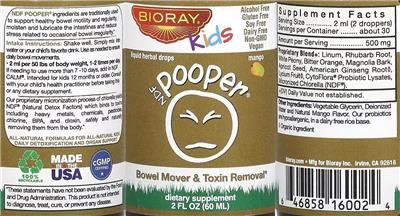
NDF Pooper ingredients are traditionally used to support healthy bowel motility and regularity, moisten and lubricate the intestines and reduce stress related to occasional bowel irregularity.
Alcohol free Gluten free Soy free Dairy free Non-GMO
Vegan
Liquid herbal drops
Bowel mover & toxin removal
Our probiotics are hypoallergenic, in a dairy free rice base.
All natural formulas for all-natural kids Daily detoxification and organ support
Suggested/Recommended/Usage/Directions
Intake instructions: Shake well. Simply mix into water or your child's favorite drink. Use as needed to ensure daily bowel movements. 2 ml per 50 pounds of body weight, 1-2 times per day. If needing to use more than 7-10 days, add in NDF Calm.
Formula
Intended for kids 12 months or older.
Our proprietary micronization process of chlorella yields NDF (Natural Detox Factors) which binds to toxins including heavy metals, chemicals, pesticides, chlorine, BPA, and dioxin, safely and naturally removing them from the body.
Precautions
Consult with your child's health practitioner before taking this or any dietary supplement.
General Statements
100% recyclable
Seals/Symbols
Made in the USA cGMP Certified
FDA Disclaimer Statement
These statements have not been evaluated by the Food and Drug Administration. This product is not intended to diagnose, treat, cure, or prevent any disease.
FDA Statement of Identity
Dietary Supplement
Is this label outdated? Report a formula or label change and our pharmacy team will review it.
NDF Pooper Mango by Bioray Kids label
The label scan from the NIH Dietary Supplement Label Database. Tap to enlarge.
Label images are published by the NIH Dietary Supplement Label Database for the version of this product on file. Always read your actual product label.
View the full label (PDF)The Ingredients in NDF Pooper Mango by Bioray Kids
These are the 10 active ingredients this product is made of. Select any to open its full monograph.
Serving size2 mL Dosage formLiquid Servings per container30 Amounts shown are per serving.
Most supplement products combine several ingredients, and a medication can interact with the product through any one of them. Each ingredient below shows whether it has known drug interactions.
Proprietary Blend
Other (inactive) ingredients: Glycerin, Water, Deionized, Mango Flavor, Natural. These complete the product’s ingredient list but are not active constituents.
NDF Pooper Mango by Bioray Kids Drug Interactions
HelloPharmacist Interaction Report
NDF Pooper Mango by Bioray Kids is a 10-ingredient liquid supplement that does interact with a range of medications.
The most serious concern is bitter orange, which can trigger a hypertensive crisis if taken with MAOIs (monoamine oxidase inhibitors) — a Major interaction. It also poses Major risks with midazolam by raising its blood levels.
Read the full breakdown — every affected drug type, severity by severity
American ginseng and lycium (goji) also carry Major interactions with warfarin, a blood thinner. Ginseng may reduce warfarin's effectiveness by lowering your INR (the measure of blood thinning), while goji does the opposite—it can increase warfarin levels and bleeding risk.
These are opposite effects but equally serious.
The remaining interactions span Moderate severity across many drug types: blood thinners and antiplatelet drugs (magnolia, peony, flaxseed), blood pressure medications (goji, flaxseed, antihypertensive effects), blood sugar drugs (ginseng, goji, bitter orange, flaxseed), CNS depressants like sedatives (magnolia), immune suppressants (ginseng), enzyme inhibitors affecting drug metabolism (goji, bitter orange, peony, white peony, flaxseed), hormone treatments (peony, flaxseed), and several others including heart-rhythm drugs and corticosteroids. Altogether, these interactions span 1,731 individual medications.
We could not check apricot for interactions—our data holds no monograph for it. Check your exact medications with the search tool on this page before starting.
Check your own medications below · Editorial policy · How we use AI
Want to check YOUR meds against NDF Pooper Mango?
Ask about interactions with your drugs in plain English — “Can I take it with lisinopril?” — and we find you the answer in seconds, ingredient by ingredient.
Go to the checkerIngredients driving the most interactions
Individual Drug Interactions
The ingredients in NDF Pooper Mango interact with 1,753 drugs. Click any drug to see the details.
9 of the 10 ingredients in NDF Pooper Mango interact with drugs. Each result below shows which ingredient is responsible. Lycium Bitter Orange White Peony Rhubarb Linum Magnolia micronized Chlorella CytoFlora Probiotics Lystates American Ginseng
AmphetamineAdensys XR-ODT, Adzenys ER, Dyanavel XR, Mydayis
How Amphetamine interacts with NDF Pooper Mango — through 3 ingredients. Tap an ingredient for the detail:
Bitter OrangeStimulant Drugs, Monoamine Oxidase Inhibitors (maois) +1 Major
Interaction Summary
Theoretically, bitter orange might increase the risk of hypertension and adverse cardiovascular effects when taken with stimulant drugs.
Read the full Bitter Orange + Amphetamine interactionAmerican GinsengMonoamine Oxidase Inhibitors (maois) Moderate
Interaction Summary
Theoretically, American ginseng can interfere with MAOI therapy.
Read the full American Ginseng + Amphetamine interactionLyciumCytochrome P450 2d6 (cyp2d6) Substrates Moderate
Interaction Summary
Theoretically, goji berry might inhibit CYP2D6 and reduce metabolism of CYP2D6 substrates.
Read the full Lycium + Amphetamine interactionIsocarboxazidMarplan
How Isocarboxazid interacts with NDF Pooper Mango — through 2 ingredients. Tap an ingredient for the detail:
Bitter OrangeMonoamine Oxidase Inhibitors (maois) Major
Interaction Summary
Theoretically, taking MAOIs with synephrine-containing bitter orange preparations might increase the hypertensive effects of synephrine, potentially leading to hypertensive crisis.
Read the full Bitter Orange + Isocarboxazid interactionAmerican GinsengMonoamine Oxidase Inhibitors (maois) Moderate
Interaction Summary
Theoretically, American ginseng can interfere with MAOI therapy.
Read the full American Ginseng + Isocarboxazid interactionMidazolamNayzilam, Seizalam, Versed
How Midazolam interacts with NDF Pooper Mango — through 4 ingredients. Tap an ingredient for the detail:
Bitter OrangeCytochrome P450 3a4 (cyp3a4) Substrates, Midazolam (versed) Major
Interaction Summary
Bitter orange might increase levels of drugs metabolized by CYP3A4.
Read the full Bitter Orange + Midazolam interactionLyciumCytochrome P450 3a4 (cyp3a4) Substrates Moderate
Interaction Summary
Theoretically, goji berry might inhibit CYP3A4 and reduce metabolism of CYP3A4 substrates.
Read the full Lycium + Midazolam interactionWhite PeonyCytochrome P450 3a4 (cyp3a4) Substrates Moderate
Interaction Summary
Theoretically, use of peony may increase the levels and clinical effects of drugs metabolized by CYP3A4.
Read the full White Peony + Midazolam interactionMagnoliaCns Depressants Moderate
Interaction Summary
Theoretically, concomitant use of large doses of magnolia bark and CNS depressants might have additive effects.
Read the full Magnolia + Midazolam interactionMoclobemideManerix, Moclobemide
How Moclobemide interacts with NDF Pooper Mango — through 3 ingredients. Tap an ingredient for the detail:
Bitter OrangeMonoamine Oxidase Inhibitors (maois) Major
Interaction Summary
Theoretically, taking MAOIs with synephrine-containing bitter orange preparations might increase the hypertensive effects of synephrine, potentially leading to hypertensive crisis.
Read the full Bitter Orange + Moclobemide interactionLyciumCytochrome P450 2c19 (cyp2c19) Substrates Moderate
Interaction Summary
Theoretically, goji berry might inhibit CYP2C19 and reduce metabolism of CYP2C19 substrates.
Read the full Lycium + Moclobemide interactionAmerican GinsengMonoamine Oxidase Inhibitors (maois) Moderate
Interaction Summary
Theoretically, American ginseng can interfere with MAOI therapy.
Read the full American Ginseng + Moclobemide interactionOzanimod HydrochlorideZeposia
How Ozanimod Hydrochloride interacts with NDF Pooper Mango — through 3 ingredients. Tap an ingredient for the detail:
Bitter OrangeQt Interval-prolonging Drugs, Monoamine Oxidase Inhibitors (maois) Major
Interaction Summary
Theoretically, bitter orange might have an additive effect when combined with drugs that prolong the QT interval, potentially increasing the risk of ventricular arrhythmias.
Read the full Bitter Orange + Ozanimod Hydrochloride interactionAmerican GinsengImmunosuppressants, Monoamine Oxidase Inhibitors (maois) Moderate
Interaction Summary
Theoretically, American ginseng use might interfere with immunosuppressive therapy.
Read the full American Ginseng + Ozanimod Hydrochloride interactionRhubarbHepatotoxic Drugs Moderate
Interaction Summary
Theoretically, concomitant use of rhubarb with potentially hepatotoxic drugs might increase the risk of developing liver damage.
Read the full Rhubarb + Ozanimod Hydrochloride interactionPhenelzine SulfateNardil
How Phenelzine Sulfate interacts with NDF Pooper Mango — through 3 ingredients. Tap an ingredient for the detail:
Bitter OrangeMonoamine Oxidase Inhibitors (maois) Major
Interaction Summary
Theoretically, taking MAOIs with synephrine-containing bitter orange preparations might increase the hypertensive effects of synephrine, potentially leading to hypertensive crisis.
Read the full Bitter Orange + Phenelzine Sulfate interactionAmerican GinsengMonoamine Oxidase Inhibitors (maois) Moderate
Interaction Summary
Theoretically, American ginseng can interfere with MAOI therapy.
Read the full American Ginseng + Phenelzine Sulfate interactionMagnoliaCns Depressants Moderate
Interaction Summary
Theoretically, concomitant use of large doses of magnolia bark and CNS depressants might have additive effects.
Read the full Magnolia + Phenelzine Sulfate interactionRasagilineAzilect
How Rasagiline interacts with NDF Pooper Mango — through 4 ingredients. Tap an ingredient for the detail:
Bitter OrangeMonoamine Oxidase Inhibitors (maois) Major
Interaction Summary
Theoretically, taking MAOIs with synephrine-containing bitter orange preparations might increase the hypertensive effects of synephrine, potentially leading to hypertensive crisis.
Read the full Bitter Orange + Rasagiline interactionMicronized ChlorellaPhotosensitizing Drugs Moderate
Interaction Summary
Theoretically, chlorella might have additive effects with photosensitizing drugs.
Read the full Micronized Chlorella + Rasagiline interactionAmerican GinsengMonoamine Oxidase Inhibitors (maois) Moderate
Interaction Summary
Theoretically, American ginseng can interfere with MAOI therapy.
Read the full American Ginseng + Rasagiline interactionWhite PeonyCytochrome P450 1a2 (cyp1a2) Substrates Moderate
Interaction Summary
Theoretically, use of peony may increase the levels and clinical effects of drugs metabolized by CYP1A2.
Read the full White Peony + Rasagiline interactionSafinamide MesylateXadago
How Safinamide Mesylate interacts with NDF Pooper Mango — through 2 ingredients. Tap an ingredient for the detail:
Bitter OrangeMonoamine Oxidase Inhibitors (maois) Major
Interaction Summary
Theoretically, taking MAOIs with synephrine-containing bitter orange preparations might increase the hypertensive effects of synephrine, potentially leading to hypertensive crisis.
Read the full Bitter Orange + Safinamide Mesylate interactionAmerican GinsengMonoamine Oxidase Inhibitors (maois) Moderate
Interaction Summary
Theoretically, American ginseng can interfere with MAOI therapy.
Read the full American Ginseng + Safinamide Mesylate interactionSelegilineCarbex, Eldepryl, Emsam, Zelapar
How Selegiline interacts with NDF Pooper Mango — through 3 ingredients. Tap an ingredient for the detail:
Bitter OrangeMonoamine Oxidase Inhibitors (maois) Major
Interaction Summary
Theoretically, taking MAOIs with synephrine-containing bitter orange preparations might increase the hypertensive effects of synephrine, potentially leading to hypertensive crisis.
Read the full Bitter Orange + Selegiline interactionAmerican GinsengMonoamine Oxidase Inhibitors (maois) Moderate
Interaction Summary
Theoretically, American ginseng can interfere with MAOI therapy.
Read the full American Ginseng + Selegiline interactionMicronized ChlorellaPhotosensitizing Drugs Moderate
Interaction Summary
Theoretically, chlorella might have additive effects with photosensitizing drugs.
Read the full Micronized Chlorella + Selegiline interactionTranylcypromineParnate
How Tranylcypromine interacts with NDF Pooper Mango — through 2 ingredients. Tap an ingredient for the detail:
Bitter OrangeMonoamine Oxidase Inhibitors (maois) Major
Interaction Summary
Theoretically, taking MAOIs with synephrine-containing bitter orange preparations might increase the hypertensive effects of synephrine, potentially leading to hypertensive crisis.
Read the full Bitter Orange + Tranylcypromine interactionAmerican GinsengMonoamine Oxidase Inhibitors (maois) Moderate
Interaction Summary
Theoretically, American ginseng can interfere with MAOI therapy.
Read the full American Ginseng + Tranylcypromine interactionWarfarinWarfarin
How Warfarin interacts with NDF Pooper Mango — through 8 ingredients. Tap an ingredient for the detail:
LyciumWarfarin (coumadin), Cytochrome P450 2c19 (cyp2c19) Substrates +2 Major
Interaction Summary
Goji can increase the effects of warfarin and possibly increase the risk of bleeding.
Read the full Lycium + Warfarin interactionAmerican GinsengWarfarin (coumadin) Major
Interaction Summary
American ginseng seems to decrease the effectiveness of warfarin therapy.
Read the full American Ginseng + Warfarin interactionBitter OrangeCytochrome P450 3a4 (cyp3a4) Substrates Moderate
Interaction Summary
Bitter orange might increase levels of drugs metabolized by CYP3A4.
Read the full Bitter Orange + Warfarin interactionLinumAnticoagulant/antiplatelet Drugs Moderate
Interaction Summary
Theoretically, using flaxseed in combination with anticoagulant or antiplatelet drugs might have additive effects and increase the risk of bleeding.
Read the full Linum + Warfarin interactionMicronized ChlorellaWarfarin (coumadin) Moderate
Interaction Summary
Theoretically, chlorella might reduce the clinical effects of warfarin.
Read the full Micronized Chlorella + Warfarin interactionRhubarbWarfarin (coumadin) Moderate
Interaction Summary
Theoretically, excessive use of rhubarb might increase the risk of bleeding when taken with warfarin.
Read the full Rhubarb + Warfarin interactionWhite PeonyCytochrome P450 3a4 (cyp3a4) Substrates, Anticoagulant/antiplatelet Drugs +1 Moderate
Interaction Summary
Theoretically, use of peony may increase the levels and clinical effects of drugs metabolized by CYP3A4.
Read the full White Peony + Warfarin interactionMagnoliaAnticoagulant/antiplatelet Drugs Moderate
Interaction Summary
Theoretically, magnolia might have additive effects and increase the risk of bleeding when used with anticoagulant or antiplatelet drugs.
Read the full Magnolia + Warfarin interactionWarfarin SodiumCoumadin, Panwarfin, Sofarin
How Warfarin Sodium interacts with NDF Pooper Mango — through 8 ingredients. Tap an ingredient for the detail:
LyciumCytochrome P450 2c19 (cyp2c19) Substrates, Cytochrome P450 2c9 (cyp2c9) Substrates +2 Major
Interaction Summary
Theoretically, goji berry might inhibit CYP2C19 and reduce metabolism of CYP2C19 substrates.
Read the full Lycium + Warfarin Sodium interactionAmerican GinsengWarfarin (coumadin) Major
Interaction Summary
American ginseng seems to decrease the effectiveness of warfarin therapy.
Read the full American Ginseng + Warfarin Sodium interactionWhite PeonyCytochrome P450 1a2 (cyp1a2) Substrates, Cytochrome P450 3a4 (cyp3a4) Substrates +1 Moderate
Interaction Summary
Theoretically, use of peony may increase the levels and clinical effects of drugs metabolized by CYP1A2.
Read the full White Peony + Warfarin Sodium interactionMagnoliaAnticoagulant/antiplatelet Drugs Moderate
Interaction Summary
Theoretically, magnolia might have additive effects and increase the risk of bleeding when used with anticoagulant or antiplatelet drugs.
Read the full Magnolia + Warfarin Sodium interactionLinumAnticoagulant/antiplatelet Drugs Moderate
Interaction Summary
Theoretically, using flaxseed in combination with anticoagulant or antiplatelet drugs might have additive effects and increase the risk of bleeding.
Read the full Linum + Warfarin Sodium interactionBitter OrangeCytochrome P450 3a4 (cyp3a4) Substrates Moderate
Interaction Summary
Bitter orange might increase levels of drugs metabolized by CYP3A4.
Read the full Bitter Orange + Warfarin Sodium interactionRhubarbWarfarin (coumadin) Moderate
Interaction Summary
Theoretically, excessive use of rhubarb might increase the risk of bleeding when taken with warfarin.
Read the full Rhubarb + Warfarin Sodium interactionMicronized ChlorellaWarfarin (coumadin) Moderate
Interaction Summary
Theoretically, chlorella might reduce the clinical effects of warfarin.
Read the full Micronized Chlorella + Warfarin Sodium interaction6-mercaptopurinePurinethol
How 6-mercaptopurine interacts with NDF Pooper Mango — through 2 ingredients. Tap an ingredient for the detail:
American GinsengImmunosuppressants Moderate
Interaction Summary
Theoretically, American ginseng use might interfere with immunosuppressive therapy.
Read the full American Ginseng + 6-mercaptopurine interactionRhubarbHepatotoxic Drugs Moderate
Interaction Summary
Theoretically, concomitant use of rhubarb with potentially hepatotoxic drugs might increase the risk of developing liver damage.
Read the full Rhubarb + 6-mercaptopurine interactionAdo-trastuzumab EmtansineKadcyla
How Ado-trastuzumab Emtansine interacts with NDF Pooper Mango — through 3 ingredients. Tap an ingredient for the detail:
White PeonyCytochrome P450 3a4 (cyp3a4) Substrates Moderate
Interaction Summary
Theoretically, use of peony may increase the levels and clinical effects of drugs metabolized by CYP3A4.
Read the full White Peony + Ado-trastuzumab Emtansine interactionBitter OrangeCytochrome P450 3a4 (cyp3a4) Substrates Moderate
Interaction Summary
Bitter orange might increase levels of drugs metabolized by CYP3A4.
Read the full Bitter Orange + Ado-trastuzumab Emtansine interactionLyciumCytochrome P450 3a4 (cyp3a4) Substrates Moderate
Interaction Summary
Theoretically, goji berry might inhibit CYP3A4 and reduce metabolism of CYP3A4 substrates.
Read the full Lycium + Ado-trastuzumab Emtansine interactionAbacavir Sulfate, Dolutegravir, LamivudineTriumeq
How Abacavir Sulfate, Dolutegravir, Lamivudine interacts with NDF Pooper Mango — through 1 ingredient. Tap an ingredient for the detail:
RhubarbHepatotoxic Drugs Moderate
Interaction Summary
Theoretically, concomitant use of rhubarb with potentially hepatotoxic drugs might increase the risk of developing liver damage.
Read the full Rhubarb + Abacavir Sulfate, Dolutegravir, Lamivudine interactionAbacavir, LamivudineEpzicom
How Abacavir, Lamivudine interacts with NDF Pooper Mango — through 1 ingredient. Tap an ingredient for the detail:
RhubarbHepatotoxic Drugs Moderate
Interaction Summary
Theoretically, concomitant use of rhubarb with potentially hepatotoxic drugs might increase the risk of developing liver damage.
Read the full Rhubarb + Abacavir, Lamivudine interactionAbciximabReoPro
How Abciximab interacts with NDF Pooper Mango — through 3 ingredients. Tap an ingredient for the detail:
MagnoliaAnticoagulant/antiplatelet Drugs Moderate
Interaction Summary
Theoretically, magnolia might have additive effects and increase the risk of bleeding when used with anticoagulant or antiplatelet drugs.
Read the full Magnolia + Abciximab interactionWhite PeonyAnticoagulant/antiplatelet Drugs Moderate
Interaction Summary
Theoretically, combining peony with anticoagulant or antiplatelet drugs might increase the risk of bleeding.
Read the full White Peony + Abciximab interactionLinumAnticoagulant/antiplatelet Drugs Moderate
Interaction Summary
Theoretically, using flaxseed in combination with anticoagulant or antiplatelet drugs might have additive effects and increase the risk of bleeding.
Read the full Linum + Abciximab interactionAbemaciclibVerzenio
How Abemaciclib interacts with NDF Pooper Mango — through 3 ingredients. Tap an ingredient for the detail:
Bitter OrangeCytochrome P450 3a4 (cyp3a4) Substrates Moderate
Interaction Summary
Bitter orange might increase levels of drugs metabolized by CYP3A4.
Read the full Bitter Orange + Abemaciclib interactionLyciumCytochrome P450 3a4 (cyp3a4) Substrates Moderate
Interaction Summary
Theoretically, goji berry might inhibit CYP3A4 and reduce metabolism of CYP3A4 substrates.
Read the full Lycium + Abemaciclib interactionWhite PeonyCytochrome P450 3a4 (cyp3a4) Substrates Moderate
Interaction Summary
Theoretically, use of peony may increase the levels and clinical effects of drugs metabolized by CYP3A4.
Read the full White Peony + Abemaciclib interactionAbiraterone
How Abiraterone interacts with NDF Pooper Mango — through 4 ingredients. Tap an ingredient for the detail:
White PeonyCytochrome P450 3a4 (cyp3a4) Substrates Moderate
Interaction Summary
Theoretically, use of peony may increase the levels and clinical effects of drugs metabolized by CYP3A4.
Read the full White Peony + Abiraterone interactionBitter OrangeCytochrome P450 3a4 (cyp3a4) Substrates Moderate
Interaction Summary
Bitter orange might increase levels of drugs metabolized by CYP3A4.
Read the full Bitter Orange + Abiraterone interactionRhubarbHepatotoxic Drugs Moderate
Interaction Summary
Theoretically, concomitant use of rhubarb with potentially hepatotoxic drugs might increase the risk of developing liver damage.
Read the full Rhubarb + Abiraterone interactionLyciumCytochrome P450 3a4 (cyp3a4) Substrates Moderate
Interaction Summary
Theoretically, goji berry might inhibit CYP3A4 and reduce metabolism of CYP3A4 substrates.
Read the full Lycium + Abiraterone interactionAbiraterone AcetateYonsa, Zytiga
How Abiraterone Acetate interacts with NDF Pooper Mango — through 4 ingredients. Tap an ingredient for the detail:
LyciumCytochrome P450 3a4 (cyp3a4) Substrates Moderate
Interaction Summary
Theoretically, goji berry might inhibit CYP3A4 and reduce metabolism of CYP3A4 substrates.
Read the full Lycium + Abiraterone Acetate interactionBitter OrangeCytochrome P450 3a4 (cyp3a4) Substrates Moderate
Interaction Summary
Bitter orange might increase levels of drugs metabolized by CYP3A4.
Read the full Bitter Orange + Abiraterone Acetate interactionWhite PeonyCytochrome P450 3a4 (cyp3a4) Substrates Moderate
Interaction Summary
Theoretically, use of peony may increase the levels and clinical effects of drugs metabolized by CYP3A4.
Read the full White Peony + Abiraterone Acetate interactionRhubarbHepatotoxic Drugs Moderate
Interaction Summary
Theoretically, concomitant use of rhubarb with potentially hepatotoxic drugs might increase the risk of developing liver damage.
Read the full Rhubarb + Abiraterone Acetate interactionAbrocitinibCibinqo
How Abrocitinib interacts with NDF Pooper Mango — through 5 ingredients. Tap an ingredient for the detail:
American GinsengImmunosuppressants Moderate
Interaction Summary
Theoretically, American ginseng use might interfere with immunosuppressive therapy.
Read the full American Ginseng + Abrocitinib interactionLinumAnticoagulant/antiplatelet Drugs Moderate
Interaction Summary
Theoretically, using flaxseed in combination with anticoagulant or antiplatelet drugs might have additive effects and increase the risk of bleeding.
Read the full Linum + Abrocitinib interactionLyciumCytochrome P450 2c9 (cyp2c9) Substrates, Cytochrome P450 2c19 (cyp2c19) Substrates Moderate
Interaction Summary
Theoretically, goji berry might inhibit CYP2C9 and reduce metabolism of CYP2C9 substrates.
Read the full Lycium + Abrocitinib interactionWhite PeonyAnticoagulant/antiplatelet Drugs Moderate
Interaction Summary
Theoretically, combining peony with anticoagulant or antiplatelet drugs might increase the risk of bleeding.
Read the full White Peony + Abrocitinib interactionMagnoliaAnticoagulant/antiplatelet Drugs Moderate
Interaction Summary
Theoretically, magnolia might have additive effects and increase the risk of bleeding when used with anticoagulant or antiplatelet drugs.
Read the full Magnolia + Abrocitinib interactionAcalabrutinibCalquence
How Acalabrutinib interacts with NDF Pooper Mango — through 3 ingredients. Tap an ingredient for the detail:
White PeonyCytochrome P450 3a4 (cyp3a4) Substrates Moderate
Interaction Summary
Theoretically, use of peony may increase the levels and clinical effects of drugs metabolized by CYP3A4.
Read the full White Peony + Acalabrutinib interactionBitter OrangeCytochrome P450 3a4 (cyp3a4) Substrates Moderate
Interaction Summary
Bitter orange might increase levels of drugs metabolized by CYP3A4.
Read the full Bitter Orange + Acalabrutinib interactionLyciumCytochrome P450 3a4 (cyp3a4) Substrates Moderate
Interaction Summary
Theoretically, goji berry might inhibit CYP3A4 and reduce metabolism of CYP3A4 substrates.
Read the full Lycium + Acalabrutinib interactionAcarboseGlucobay, Prandase, Precose
How Acarbose interacts with NDF Pooper Mango — through 5 ingredients. Tap an ingredient for the detail:
American GinsengAntidiabetes Drugs Moderate
Interaction Summary
Theoretically, taking American ginseng with antidiabetes drugs might increase the risk of hypoglycemia.
Read the full American Ginseng + Acarbose interactionRhubarbHepatotoxic Drugs Moderate
Interaction Summary
Theoretically, concomitant use of rhubarb with potentially hepatotoxic drugs might increase the risk of developing liver damage.
Read the full Rhubarb + Acarbose interactionBitter OrangeAntidiabetes Drugs Moderate
Interaction Summary
Theoretically, bitter orange might increase the risk of hypoglycemia when taken with antidiabetes drugs.
Read the full Bitter Orange + Acarbose interactionLinumAntidiabetes Drugs Moderate
Interaction Summary
Theoretically, flaxseed might have additive effects when used with antidiabetes drugs and increase the risk for hypoglycemia.
Read the full Linum + Acarbose interactionLyciumAntidiabetes Drugs Minor
Interaction Summary
Theoretically, concomitant use of goji fruit polysaccharides or goji root bark with antidiabetes drugs might have additive effects.
Read the full Lycium + Acarbose interactionAcebutololRhotral, Sectral
How Acebutolol interacts with NDF Pooper Mango — through 3 ingredients. Tap an ingredient for the detail:
LinumAntihypertensive Drugs Moderate
Interaction Summary
Theoretically, flaxseed might have additive effects when used with antihypertensive drugs and increase the risk of hypotension.
Read the full Linum + Acebutolol interactionLyciumAntihypertensive Drugs Moderate
Interaction Summary
Theoretically, concomitant use of goji root bark, but not goji fruit, with antihypertensive drugs might have additive effects.
Read the full Lycium + Acebutolol interactionRhubarbHepatotoxic Drugs Moderate
Interaction Summary
Theoretically, concomitant use of rhubarb with potentially hepatotoxic drugs might increase the risk of developing liver damage.
Read the full Rhubarb + Acebutolol interactionAcenocoumarolSintrom
How Acenocoumarol interacts with NDF Pooper Mango — through 3 ingredients. Tap an ingredient for the detail:
LinumAnticoagulant/antiplatelet Drugs Moderate
Interaction Summary
Theoretically, using flaxseed in combination with anticoagulant or antiplatelet drugs might have additive effects and increase the risk of bleeding.
Read the full Linum + Acenocoumarol interactionWhite PeonyAnticoagulant/antiplatelet Drugs Moderate
Interaction Summary
Theoretically, combining peony with anticoagulant or antiplatelet drugs might increase the risk of bleeding.
Read the full White Peony + Acenocoumarol interactionMagnoliaAnticoagulant/antiplatelet Drugs Moderate
Interaction Summary
Theoretically, magnolia might have additive effects and increase the risk of bleeding when used with anticoagulant or antiplatelet drugs.
Read the full Magnolia + Acenocoumarol interactionAcepromazineAtravet
How Acepromazine interacts with NDF Pooper Mango — through 2 ingredients. Tap an ingredient for the detail:
MagnoliaCns Depressants Moderate
Interaction Summary
Theoretically, concomitant use of large doses of magnolia bark and CNS depressants might have additive effects.
Read the full Magnolia + Acepromazine interactionMicronized ChlorellaPhotosensitizing Drugs Moderate
Interaction Summary
Theoretically, chlorella might have additive effects with photosensitizing drugs.
Read the full Micronized Chlorella + Acepromazine interactionAcetaminophenChildren's Tylenol, Children's Tylenol Meltaways, Tylenol, Tylenol Ex Strength
How Acetaminophen interacts with NDF Pooper Mango — through 2 ingredients. Tap an ingredient for the detail:
RhubarbHepatotoxic Drugs, Nephrotoxic Drugs Moderate
Interaction Summary
Theoretically, concomitant use of rhubarb with potentially hepatotoxic drugs might increase the risk of developing liver damage.
Read the full Rhubarb + Acetaminophen interactionWhite PeonyCytochrome P450 1a2 (cyp1a2) Substrates Moderate
Interaction Summary
Theoretically, use of peony may increase the levels and clinical effects of drugs metabolized by CYP1A2.
Read the full White Peony + Acetaminophen interactionAcetaminophen, AspirinGemnisyn
How Acetaminophen, Aspirin interacts with NDF Pooper Mango — through 4 ingredients. Tap an ingredient for the detail:
White PeonyCytochrome P450 1a2 (cyp1a2) Substrates, Anticoagulant/antiplatelet Drugs Moderate
Interaction Summary
Theoretically, use of peony may increase the levels and clinical effects of drugs metabolized by CYP1A2.
Read the full White Peony + Acetaminophen, Aspirin interactionRhubarbNephrotoxic Drugs, Hepatotoxic Drugs Moderate
Interaction Summary
Theoretically, long-term use of anthraquinones from rhubarb might increase the risk of nephrotoxicity when used with nephrotoxic drugs.
Read the full Rhubarb + Acetaminophen, Aspirin interactionMagnoliaAnticoagulant/antiplatelet Drugs Moderate
Interaction Summary
Theoretically, magnolia might have additive effects and increase the risk of bleeding when used with anticoagulant or antiplatelet drugs.
Read the full Magnolia + Acetaminophen, Aspirin interactionLinumAnticoagulant/antiplatelet Drugs Moderate
Interaction Summary
Theoretically, using flaxseed in combination with anticoagulant or antiplatelet drugs might have additive effects and increase the risk of bleeding.
Read the full Linum + Acetaminophen, Aspirin interactionAcetaminophen, Aspirin, CaffeineExcedrin, Excedrin Extra Strength, Excedrin Migraine
How Acetaminophen, Aspirin, Caffeine interacts with NDF Pooper Mango — through 6 ingredients. Tap an ingredient for the detail:
LinumAnticoagulant/antiplatelet Drugs Moderate
Interaction Summary
Theoretically, using flaxseed in combination with anticoagulant or antiplatelet drugs might have additive effects and increase the risk of bleeding.
Read the full Linum + Acetaminophen, Aspirin, Caffeine interactionBitter OrangeCaffeine, Stimulant Drugs +1 Moderate
Interaction Summary
Bitter orange might increase blood pressure and heart rate when taken with caffeine.
Read the full Bitter Orange + Acetaminophen, Aspirin, Caffeine interactionRhubarbHepatotoxic Drugs, Nephrotoxic Drugs Moderate
Interaction Summary
Theoretically, concomitant use of rhubarb with potentially hepatotoxic drugs might increase the risk of developing liver damage.
Read the full Rhubarb + Acetaminophen, Aspirin, Caffeine interactionMagnoliaAnticoagulant/antiplatelet Drugs Moderate
Interaction Summary
Theoretically, magnolia might have additive effects and increase the risk of bleeding when used with anticoagulant or antiplatelet drugs.
Read the full Magnolia + Acetaminophen, Aspirin, Caffeine interactionWhite PeonyCytochrome P450 3a4 (cyp3a4) Substrates, Cytochrome P450 1a2 (cyp1a2) Substrates +1 Moderate
Interaction Summary
Theoretically, use of peony may increase the levels and clinical effects of drugs metabolized by CYP3A4.
Read the full White Peony + Acetaminophen, Aspirin, Caffeine interactionLyciumCytochrome P450 3a4 (cyp3a4) Substrates Moderate
Interaction Summary
Theoretically, goji berry might inhibit CYP3A4 and reduce metabolism of CYP3A4 substrates.
Read the full Lycium + Acetaminophen, Aspirin, Caffeine interactionAcetaminophen, Brompheniramine, PhenylpropanolamineDimetapp Cold and Flu
How Acetaminophen, Brompheniramine, Phenylpropanolamine interacts with NDF Pooper Mango — through 4 ingredients. Tap an ingredient for the detail:
RhubarbHepatotoxic Drugs, Nephrotoxic Drugs Moderate
Interaction Summary
Theoretically, concomitant use of rhubarb with potentially hepatotoxic drugs might increase the risk of developing liver damage.
Read the full Rhubarb + Acetaminophen, Brompheniramine, Phenylpropanolamine interactionMicronized ChlorellaPhotosensitizing Drugs Moderate
Interaction Summary
Theoretically, chlorella might have additive effects with photosensitizing drugs.
Read the full Micronized Chlorella + Acetaminophen, Brompheniramine, Phenylpropanolamine interactionBitter OrangeStimulant Drugs Moderate
Interaction Summary
Theoretically, bitter orange might increase the risk of hypertension and adverse cardiovascular effects when taken with stimulant drugs.
Read the full Bitter Orange + Acetaminophen, Brompheniramine, Phenylpropanolamine interactionWhite PeonyCytochrome P450 1a2 (cyp1a2) Substrates Moderate
Interaction Summary
Theoretically, use of peony may increase the levels and clinical effects of drugs metabolized by CYP1A2.
Read the full White Peony + Acetaminophen, Brompheniramine, Phenylpropanolamine interactionEach ingredient & the kinds of drugs it affects
For each ingredient in NDF Pooper Mango with known interactions, here are the types of medications they can affect. Open any type for the detail — or search your exact drug in the checker above.
Lycium
Warfarin (Coumadin)
Goji can increase the effects of warfarin and possibly increase the risk of bleeding.
There are at least 5 case reports of increased international normalized ratio (INR) in patients stabilized on warfarin who began drinking goji juice, concentrated goji tea, or goji wine. Goji may inhibit the metabolism of warfarin by cytochrome P450 2C9 (CYP2C9).
Antihypertensive Drugs
Theoretically, concomitant use of goji root bark, but not goji fruit, with antihypertensive drugs might have additive effects.
Animal and in vitro research suggest that goji root bark has hypotensive effects. However, goji fruit juice does not appear to reduce systolic or diastolic blood pressure in humans.
Cytochrome P450 2C19 (Cyp2C19) Substrates
Theoretically, goji berry might inhibit CYP2C19 and reduce metabolism of CYP2C19 substrates.
In vitro research shows that goji berry tincture and juice inhibit CYP2C19 enzymes. Concomitant use with goji may decrease metabolism and increase levels of CYP2C19 substrates. However, this has not been reported in humans.
Cytochrome P450 2C9 (Cyp2C9) Substrates
Theoretically, goji berry might inhibit CYP2C9 and reduce metabolism of CYP2C9 substrates.
In vitro research shows that goji berry tincture and juice inhibit CYP2C9 enzymes. Additionally, multiple case reports suggest that goji berry concentrated tea and juice inhibit the metabolism of warfarin, a CYP2C9 substrate. Concomitant use with goji may decrease metabolism and increase levels of CYP2C9 substrates.
Cytochrome P450 2D6 (Cyp2D6) Substrates
Theoretically, goji berry might inhibit CYP2D6 and reduce metabolism of CYP2D6 substrates.
In vitro research shows that goji berry juice inhibits CYP2D6 enzymes. Concomitant use with goji may decrease metabolism and increase levels of CYP2D6 substrates. However, this has not been reported in humans.
Cytochrome P450 3A4 (Cyp3A4) Substrates
Theoretically, goji berry might inhibit CYP3A4 and reduce metabolism of CYP3A4 substrates.
In vitro research shows that goji berry juice inhibits CYP3A4 enzymes. Concomitant use with goji may decrease metabolism and increase levels of CYP3A4 substrates. However, this has not been reported in humans.
Flecainide (Tambocor)
Theoretically, goji berry might increase the levels and clinical effects of flecainide.
In one case report, a 75-year-old patient stable on flecainide and warfarin presented to the emergency room with fainting and pleomorphic arrhythmia caused by flecainide toxicity. Flecainide toxicity was attributed to drinking 1-2 glasses of concentrated goji tea daily for 2 weeks. Theoretically, goji may have inhibited the cytochrome P450 2D6 (CYP2D6) metabolism of flecainide.
Antidiabetes Drugs
Theoretically, concomitant use of goji fruit polysaccharides or goji root bark with antidiabetes drugs might have additive effects.
Animal and in vitro research show that goji root bark and fruit polysaccharides might have hypoglycemic effects. However, clinical research has only shown that taking goji fruit polysaccharides with or without antidiabetes drugs modestly reduces postprandial glucose when compared with control, with no reports of hypoglycemia.
Bitter Orange
Midazolam (Versed)
Bitter orange might increase blood levels of midazolam.
One small clinical study shows that bitter orange juice can increase midazolam levels, likely through inhibition of cytochrome P450 3A4 (CYP3A4). Theoretically, bitter orange might increase the risk of midazolam-related adverse effects.
Monoamine Oxidase Inhibitors (Maois)
Theoretically, taking MAOIs with synephrine-containing bitter orange preparations might increase the hypertensive effects of synephrine, potentially leading to hypertensive crisis.
Bitter orange contains tyramine, octopamine, and synephrine, which are MAO substrates.
Antidiabetes Drugs
Theoretically, bitter orange might increase the risk of hypoglycemia when taken with antidiabetes drugs.
Some clinical research shows that drinking a tea containing bitter orange and Indian snakeroot reduces fasting and postprandial glucose levels in patients with type 2 diabetes who are using antidiabetes drugs. However, it is unclear if these effects are due to bitter orange, Indian snakeroot, or the combination. An animal study also shows that p-synephrine in combination with gliclazide , a sulfonylurea, causes an additional 20% to 44% decrease in glucose levels when compared with gliclazide alone.
Caffeine
Bitter orange might increase blood pressure and heart rate when taken with caffeine.
Small clinical studies show that taking bitter orange in combination with caffeine can increase blood pressure and heart rate in otherwise healthy normotensive adults. Theoretically, this might increase the risk of serious cardiovascular adverse effects.
Colchicine
Bitter orange might affect colchicine levels.
Colchicine is a substrate of P-glycoprotein and cytochrome P450 3A4 (CYP3A4). Bitter orange has been reported to inhibit CYP3A4 and increase levels of CYP3A4 substrates. However, one small clinical study in healthy adults shows that drinking bitter orange juice 240 mL twice daily for 4 days and taking a single dose of colchicine 0.6 mg on the 4th day decreases colchicine peak serum levels by 24%, time to peak serum level by 1 hour, and overall exposure to colchicine by 20%. The clinical significance of this finding is unclear.
Cytochrome P450 3A4 (Cyp3A4) Substrates
Bitter orange might increase levels of drugs metabolized by CYP3A4.
Small clinical studies suggest that single or multiple doses of freshly squeezed bitter orange juice 200-240 mL can inhibit CYP3A4 metabolism of drugs, causing increased drug levels and potentially increasing the risk of adverse effects. However, the extent of the effect of bitter orange on CYP3A4-mediated drug interactions is unknown. Some evidence suggests that bitter orange selectively inhibits intestinal CYP3A4, but not hepatic CYP3A4. Its effect on P-glycoprotein, which strongly overlaps with CYP3A4 interactions, is unclear. One small clinical study shows that drinking 8 ounces of freshly squeezed bitter orange juice has no effect on cyclosporine, which seems to be more dependent on hepatic CYP3A4 and P-glycoprotein than intestinal CYP3A4.
Dextromethorphan (Robitussin Dm, Others)
Bitter orange might increase blood levels of dextromethorphan.
One small clinical study shows that bitter orange juice increases dextromethorphan levels, likely through cytochrome P450 3A4 (CYP3A4) inhibition. Theoretically, bitter orange might increase the risk for dextromethorphan-related adverse effects.
Felodipine (Plendil)
Bitter orange might increase blood levels of felodipine.
One small clinical study shows that bitter orange juice increases felodipine levels, likely through cytochrome P450 3A4 (CYP3A4) inhibition. Theoretically, bitter orange might increase the risk for felodipine-related adverse effects.
Indinavir (Crixivan)
Bitter orange might increase blood levels of indinavir.
One small clinical study shows that bitter orange juice slightly increases indinavir levels, but this effect is likely to be clinically insignificant. Bitter orange selectively inhibits intestinal cytochrome P450 3A4 (CYP3A4); however, the metabolism of indinavir seems to be more dependent on hepatic CYP3A4. The effect of bitter orange on other protease inhibitors has not been studied.
Qt Interval-Prolonging Drugs
Theoretically, bitter orange might have an additive effect when combined with drugs that prolong the QT interval, potentially increasing the risk of ventricular arrhythmias.
One case report suggests that taking bitter orange in combination with other stimulants such as caffeine might prolong the QT interval in some patients.
Sildenafil (Viagra)
Bitter orange juice might increase blood levels of sildenafil.
A small clinical study in healthy adult males shows that drinking freshly squeezed bitter orange juice 250 mL daily for 3 days and taking a single dose of sildenafil 50 mg on the 3rd day increases the peak plasma concentration of sildenafil by 18% and the overall exposure to sildenafil by 44%. Theoretically, this may be due to inhibition of cytochrome P450 3A4 by bitter orange.
Stimulant Drugs
Theoretically, bitter orange might increase the risk of hypertension and adverse cardiovascular effects when taken with stimulant drugs.
Bitter orange appears to have stimulant effects.
Cytochrome P450 2D6 (Cyp2D6) Substrates
Theoretically, bitter orange might increase levels of drug metabolized by CYP2D6.
In vitro research shows that octopamine, a constituent of bitter orange, weakly inhibits CYP2D6 enzymes. This effect has not been reported in humans.
White Peony
Anticoagulant/Antiplatelet Drugs
Theoretically, combining peony with anticoagulant or antiplatelet drugs might increase the risk of bleeding.
In vitro research suggests that peony might have antiplatelet, anticoagulant, and antithrombotic effects.
Clozapine (Clozaril)
Theoretically, peony might increase the levels and clinical effects of clozapine.
In vitro research shows that peony suppresses the metabolism of clozapine via weak-to-moderate inhibitory effects on cytochromes P450 (CYP) 1A2 and CYP3A4. This effect has not been reported in humans.
Contraceptive Drugs
Theoretically, peony might interfere with contraceptive drugs due to competition for estrogen receptors.
In vitro and animal research shows that peony extract has estrogenic activity. Concomitant use might also increase the risk for estrogen-related adverse effects.
Cytochrome P450 1A2 (Cyp1A2) Substrates
Theoretically, use of peony may increase the levels and clinical effects of drugs metabolized by CYP1A2.
In vitro research shows that peony suppresses the metabolism of clozapine via weak-to-moderate inhibitory effects on CYP1A2 and CYP3A4. This effect has not been reported in humans.
Cytochrome P450 3A4 (Cyp3A4) Substrates
Theoretically, use of peony may increase the levels and clinical effects of drugs metabolized by CYP3A4.
In vitro research shows that peony suppresses the metabolism of clozapine via weak-to-moderate inhibitory effects on CYP1A2 and CYP3A4. This effect has not been reported in humans.
Estrogens
Theoretically, concomitant use of large amounts of peony might interfere with hormone replacement therapy and/or increase the risk for estrogen-related adverse effects.
In vitro and animal research shows that peony extract has estrogenic activity. Theoretically, peony might compete for estrogen receptors and/or cause additive estrogenic effects.
Phenytoin (Dilantin)
Theoretically, peony might reduce the levels and clinical effects of phenytoin.
Animal research shows that taking peony root reduces levels of phenytoin. Some researchers suggest that peony root might affect cytochrome P450 (CYP) 2C9, which metabolizes phenytoin. However, preliminary research in humans shows that peony root does not alter levels of losartan (Cozaar), which is also metabolized by CYP2C9.
Rhubarb
Corticosteroids
Theoretically, frequent and high doses of rhubarb might increase the risk of hypokalemia when taken with corticosteroids.
Rhubarb has stimulant laxative effects. Overuse of rhubarb might compound corticosteroid-induced potassium loss.
Cyclosporine (Neoral, Sandimmune)
Theoretically, taking rhubarb with cyclosporine might reduce cyclosporine levels.
Animal research shows that co-administration of rhubarb decoction 0.25 or 1 gram/kg with cyclosporine 2.5 mg/kg, decreases cyclosporine maximum plasma concentration and overall exposure levels when compared with taking cyclosporine alone. The authors theorize that rhubarb might reduce cyclosporine bioavailability by inducing of P-glycoprotein and/or cytochrome P450 3A4. However, since rhubarb was administered as a single oral dose and enzyme induction usually occurs after multiple doses, it is possible that cyclosporine absorption was actually reduced via rhubarb's stimulant laxative effects. Also, the composition of the rhubarb decoction was not described.
Digoxin (Lanoxin)
Theoretically, overuse of rhubarb might increase the risk of adverse effects when taken with digoxin.
Rhubarb has stimulant laxative effects. Overuse of rhubarb might cause potassium depletion, increasing the risk of digoxin toxicity.
Diuretic Drugs
Theoretically, frequent and high doses of rhubarb might increase the risk of hypokalemia.
Rhubarb has stimulant laxative effects. Overuse of rhubarb might cause potassium depletion and compound diuretic-induced potassium loss.
Hepatotoxic Drugs
Theoretically, concomitant use of rhubarb with potentially hepatotoxic drugs might increase the risk of developing liver damage.
Some animal research suggests that anthraquinones in rhubarb might have hepatotoxic effects. Also, rhubarb use has been linked to at least 24 cases of liver injury, although details on the dose of rhubarb and duration of use in these cases is unclear.
Nephrotoxic Drugs
Theoretically, long-term use of anthraquinones from rhubarb might increase the risk of nephrotoxicity when used with nephrotoxic drugs.
The anthraquinone constituents of rhubarb have been shown to induce nephrotoxicity in animal research. Additionally, in a case report, a 23-year old female presented with kidney failure after taking 6 tablets of a proprietary slimming agent (found to contain the anthraquinones emodin and aloe-emodin from rhubarb) daily for 6 weeks and then adding diclofenac 25 mg 4 times daily for 2 days. The authors postulate that the anthraquinone constituents of rhubarb contributed to the renal dysfunction, and the addition of diclofenac, a nephrotoxic drug, led to renal failure. Until more is known, advise patients to avoid taking rhubarb if they are taking other potentially nephrotoxic drugs.
Stimulant Laxatives
Theoretically, rhubarb might increase the risk for fluid and electrolyte loss when taken with other stimulant laxatives.
Rhubarb has stimulant laxative effects. Concomitant use with stimulant laxatives might compound fluid and electrolyte loss.
Warfarin (Coumadin)
Theoretically, excessive use of rhubarb might increase the risk of bleeding when taken with warfarin.
Rhubarb has stimulant laxative effects and can cause diarrhea. Diarrhea can increase the effects of warfarin, increase international normalized ratio (INR), and increase the risk of bleeding. Advise patients who take warfarin not to take excessive amounts of rhubarb.
Linum
Antibiotic Drugs
Theoretically, antibiotics might interfere with the metabolism of flaxseed constituents, which could potentially alter the effects of flaxseed.
Some potential benefits of flaxseed are thought to be due to its lignan content. Secoisolariciresinol diglucoside (SDG), a major lignan precursor, is found in high concentrations in flaxseed. SDG is converted by bacteria in the colon to the lignans enterolactone and enterodiol. Antibiotics alter the flora of the colon, which could theoretically alter the metabolism of flaxseed.
Anticoagulant/Antiplatelet Drugs
Theoretically, using flaxseed in combination with anticoagulant or antiplatelet drugs might have additive effects and increase the risk of bleeding.
Some clinical evidence suggests that the oil contained in flaxseed can decrease platelet aggregation.
Antidiabetes Drugs
Theoretically, flaxseed might have additive effects when used with antidiabetes drugs and increase the risk for hypoglycemia.
Some clinical research suggests that flaxseed can lower blood glucose levels.
Antihypertensive Drugs
Theoretically, flaxseed might have additive effects when used with antihypertensive drugs and increase the risk of hypotension.
Clinical research shows that daily flaxseed consumption, especially for longer than 12 weeks, modestly reduces blood pressure.
Estrogens
Theoretically, taking flaxseed might decrease the effects of estrogens.
Flaxseed contains lignans with mild estrogenic and possible antiestrogenic effects. The lignans seem to compete with circulating endogenous estrogen and might reduce estrogen binding to estrogen receptors, resulting in an anti-estrogen effect. It is unclear if this effect transfers to exogenously administered estrogens.
Magnolia
Anticoagulant/Antiplatelet Drugs
Theoretically, magnolia might have additive effects and increase the risk of bleeding when used with anticoagulant or antiplatelet drugs.
In vitro research shows that the chemicals magnolol and honokiol, isolated from magnolia bark, inhibit platelet aggregation that is experimentally induced by collagen and arachidonic acid. However, they do not inhibit platelet aggregation that is induced by adenosine diphosphate, platelet-activating factor, or thrombin. This interaction has not been reported in humans.
Cns Depressants
Theoretically, concomitant use of large doses of magnolia bark and CNS depressants might have additive effects.
In vitro and animal research shows that constituents extracted from magnolia bark, especially honokiol and magnolol, have sedative effects. These effects may be due to the inhibition of catecholamine release and modulation of gamma-aminobutyric acid-A (GABA-A) receptors.
micronized Chlorella
Photosensitizing Drugs
Theoretically, chlorella might have additive effects with photosensitizing drugs.
Chlorella has been reported to cause photosensitization. In five case reports, patients who had ingested chlorella exhibited swelling followed by erythematopurpuric lesions on sun-exposed areas of the body. Theoretically, concomitant use with photosensitizing drugs may exacerbate effects.
Warfarin (Coumadin)
Theoretically, chlorella might reduce the clinical effects of warfarin.
Chlorella contains significant amounts of vitamin K. There is at least one case report of warfarin therapy becoming sub-therapeutic after initiation of chlorella supplements.
CytoFlora Probiotics Lystates
Antibiotic Drugs
Theoretically, taking antibiotic drugs with certain probiotics might decrease the effectiveness of probiotics.
Many probiotics are bacteria. Since these preparations usually contain live and active organisms, simultaneously taking antibiotics might kill a significant number of sensitive organisms. Human research shows that taking probiotic concurrently with antibiotic treatment does not affect the diversity of the gut microbiome compared with antibiotic treatment in the absence of probiotics. Tell patients to separate administration of antibiotics and these preparations by at least two hours.
Antifungals
Theoretically, taking antifungals with certain probiotics might decrease the effectiveness of probiotics.
Some probiotics such as Saccharomyces boulardii are fungi. Therefore, simultaneously taking antifungals might kill a significant number of these organisms.
American Ginseng
Warfarin (Coumadin)
American ginseng seems to decrease the effectiveness of warfarin therapy.
Healthy patients receiving warfarin 5 mg daily, who also take American ginseng 1 gram twice daily, seem to have a significantly reduced international normalized ratio (INR).
Antidiabetes Drugs
Theoretically, taking American ginseng with antidiabetes drugs might increase the risk of hypoglycemia.
American ginseng seems to lower postprandial blood glucose. Theoretically, concomitant use with antidiabetes drugs might enhance blood glucose lowering effects and possibly cause hypoglycemia.
Immunosuppressants
Theoretically, American ginseng use might interfere with immunosuppressive therapy.
American ginseng seems to stimulate immune function. Theoretically, American ginseng might decrease the effectiveness of immunosuppressant drugs.
Monoamine Oxidase Inhibitors (Maois)
Theoretically, American ginseng can interfere with MAOI therapy.
There is one case report of insomnia, headache, and tremors when an unspecified ginseng product was used with phenelzine (Nardil), an MAOI. There is also one case report of hypomania when an unspecified ginseng product was used with phenelzine. Theoretically, American ginseng may interfere with MAOI therapy.
Brand information
Manufacturer and brand details for NDF Pooper Mango, from the product label.
Bioray Kids
See all Bioray Kids products- Name
- BioRay Inc.
- City
- Irvine
- State
- CA
- ZipCode
- 92618
- Phone Number
- (888) 635-9582
- Web Address
- bioray.com
NDF Pooper Mango by Bioray Kids: Common Questions
Does NDF Pooper Mango by Bioray Kids interact with any medications?
How can one product interact with so many drugs?
Where does this information come from?
Is this product safe during pregnancy or while breastfeeding?
Can I take this with my warfarin?
What are the most common side effects?
Does this product actually work?
What is 'CytoFlora Probiotics Lysates' in this product?
Can I take this with antibiotics?
Written and reviewed by the HelloPharmacist editorial staff. Our editorial policy
Not sure if NDF Pooper Mango is safe with your meds?
Our pharmacists answer your medication & supplement questions — free.
Label information is sourced from the NIH Dietary Supplement Label Database and reflects the product version on file; always read your actual product label. This page is for education only and is not a substitute for professional medical advice. Confirm with your pharmacist or doctor before combining supplements and medications.
The Full Monographs Behind NDF Pooper Mango’s Ingredients
Every ingredient we hold a full HelloPharmacist monograph for — uses, evidence, safety, and the complete interaction list.
American Ginseng
Interacts with 217 drugsAmerican ginseng is an herbal root used as an 'adaptogen' to support energy, stress, immune function, and blood sugar. Some uses—such as reducing the chance or length of colds and modestly l...
Read the full American Ginseng monograph → Herb & supplement monographMagnolia
Interacts with 351 drugsMagnolia bark and flower buds have a long history in traditional Chinese and Japanese medicine, often for stress, sleep, and digestion. Modern human research is still limited, so we can't be...
Read the full Magnolia monograph → Herb & supplement monographGoji
Interacts with 1,000 drugsGoji berries are a nutritious fruit rich in antioxidants, vitamins, and plant polysaccharides, and they are safe for most people as a food. While they are popular for eye health, immune supp...
Read the full Goji monograph → Herb & supplement monographChlorella
Interacts with 337 drugsChlorella is a nutrient-rich freshwater green algae taken as a supplement for general wellness, immune support, and 'detox.' Some small studies suggest possible benefits for cholesterol, blo...
Read the full Chlorella monograph → Herb & supplement monographRhubarb
Interacts with 658 drugsRhubarb root has a long history of use as a laxative and in traditional Chinese medicine, and its edible stalks are a common food. Most medicinal claims are backed by limited or low-quality...
Read the full Rhubarb monograph → Herb & supplement monographBitter Orange
Interacts with 957 drugsBitter orange is a citrus fruit whose extracts contain synephrine, a mild stimulant often added to weight-loss and energy supplements. Evidence that it works for weight loss or performance i...
Read the full Bitter Orange monograph → Herb & supplement monographApricot
Apricot is a nutritious fruit that provides fiber, potassium, and vitamins A and C, and it is safe and healthy to eat as part of a normal diet. There is little strong evidence that apricot f...
Read the full Apricot monograph → Herb & supplement monographPeony
Interacts with 811 drugsPeony root is a traditional Chinese medicine herb often used for menstrual problems, cramps, and inflammation, frequently as part of combination formulas. Human evidence for most uses is lim...
Read the full Peony monograph → Herb & supplement monographFlaxseed
Interacts with 597 drugsFlaxseed is a nutritious food rich in fiber, omega-3 fats (ALA), and plant compounds called lignans. It is most reliably helpful for constipation and may modestly lower cholesterol, but evid...
Read the full Flaxseed monograph → Herb & supplement monographProbiotics
Interacts with 222 drugsProbiotics are live 'friendly' microbes that may help certain digestive conditions, such as antibiotic-associated diarrhea and some cases of IBS, though benefits depend heavily on the specif...
Read the full Probiotics monograph →Sources & How We Checked
NDF Pooper Mango's label data comes from the NIH Dietary Supplement Label Database; the ingredient interaction data is from the Natural Medicines database, reviewed by our pharmacists.
- NIH Dietary Supplement Label Database (DSLD) — The official product label on file for this supplement.
- Natural Medicines (Therapeutic Research Center) — Evidence-graded clinical reference behind the ingredient interaction data.
Content is written and reviewed by licensed HelloPharmacist pharmacists. See our data sources and editorial standards for how this information is built and checked.
The 245 references behind this product’s interaction data
Every citation that drives the interaction findings for this product’s ingredients, from the evidence-graded Natural Medicines (TRC Healthcare) database. Open an ingredient to browse its citations — links open the study on PubMed or the publisher’s site.
American Ginseng 12 references
- Shader RI, Greenblatt DJ. Phenelzine and the dream machine-ramblings and reflections. J Clin Psychopharmacol 1985;5:65. PubMed
- Jones BD, Runikis AM. Interaction of ginseng with phenelzine. J Clin Psychopharmacol 1987;7:201-2. PubMed
- Janetzky K, Morreale AP. Probable interaction between warfarin and ginseng. Am J Health Syst Pharm 1997;54:692-3. PubMed
- Vuksan V, Sievenpiper JL, Koo VY, et al. American ginseng (Panax quinquefolius L) reduces postprandial glycemia in nondiabetic subjects and subjects with type 2 diabetes mellitus. Arch Intern Med 2000;160:1009-13. PubMed
- Vuksan V, Stavro MP, Sievenpiper JL, et al. Similar postprandial glycemic reductions with escalation of dose and administration time of American ginseng in type 2 diabetes. Diabetes Care 2000;23:1221-6. PubMed
- Chan LY, Chiu PY, Lau TK. An in-vitro study of ginsenoside Rb(1)-induced teratogenicity using a whole rat embryo culture model. Hum Reprod 2003;18:2166-8..
- McElhaney JE, Gravenstein S, Cole SK, et al. A Placebo-Controlled Trial of a Proprietary Extract of North American Ginseng (CVT-E002) to Prevent Acute Respiratory Illness in Institutionalized Older Adults. J Am Geriatr Soc 2004;52:13-9. PubMed
- Yuan CS, Wei G, Dey L, et al. American ginseng reduces warfarin's effect in healthy patients: a randomized, controlled trial. Ann Intern Med 2004;141:23-7.
- Predy GN, Goel V, Lovlin R, et al. Efficacy of an extract of North American ginseng containing poly-furanosyl-pyranosyl-saccharides for preventing upper respiratory tract infections: a randomized controlled trial. CMAJ 2005;173:1043-8.. PubMed
- McElhaney JE, Goel V, Toane B, et al. Efficacy of COLD-fX in the prevention of respiratory symptoms in community-dwelling adults: a randomized, double-blinded, placebo controlled trial. J Altern Complement Med 2006;12:153-7. PubMed
- Predy GN, Goel V, Lovlin RE, et al. Immune modulating effects of daily supplementation of COLD-fX (a proprietary extract of North American ginseng) in healthy adults. J Clin Biochem Nutr 2006;39:162-167. DOI
- Stavro PM, Woo M, Leiter LA, et al. Long-term intake of North American ginseng has no effect on 24-hour blood pressure and renal function. Hypertension 2006;47(4):791-6. PubMed
Magnolia 9 references
- Kuribara H, Kishi E, Hattori N, et al. The anxiolytic effect of two oriental herbal drugs in Japan attributed to honokiol from magnolia bark. J Pharm Pharmacol 2000;52:1425-9. PubMed
- Tachikawa E, Takahashi M, Kashimoto T. Effects of extract and ingredients isolated from Magnolia obovata thunberg on catecholamine secretion from bovine adrenal chromaffin cells. Biochem Pharmacol 2000;60:433-40. PubMed
- Jung KY, Kim DS, Oh SR, et al. Magnone A and B, novel anti-PAF tetrahydrofuran lignans from the flower buds of Magnolia fargesii. J Nat Prod 1998;61:808-11.
- Garrison R, Chambliss WG. Effect of a proprietary Magnolia and Phellodendron extract on weight management: a pilot, double-blind, placebo-controlled clinical trial. Altern Ther Health Med 2006;12:50-4.
- Teng CM, Chen CC, Ko FN, et al. Two antiplatelet agents from Magnolia officinalis. Thromb Res 1988;50:757-65. PubMed
- Ghys K, De Palma A, Vandevenne A, Werbrouck J, Goossens A. Magnolia officinalis bark extract, a recently identified contact allergen in 'anti-ageing' cosmetics. Contact Dermatitis. 2015 Aug;73(2):130-2.
- Raison-Peyron N, Césaire A, Du-Thanh A, Dereure O. Allergic contact dermatitis caused by Magnolia officinalis bark extract in a facial anti-ageing cream. Contact Dermatitis. 2015 Jun;72(6):416-7.
- Nilausen TD, Johansen JD, Thyssen JP. Allergic contact dermatitis of the face caused by Magnolia officinalis bark extract. Contact Dermatitis. 2016;75(6):385-87.
- Amat-Samaranch V, López-Sánchez C, Tubau C, Puig L, Serra-Baldrich E. Vulvar allergic contact dermatitis caused by Magnolia officinalis bark extract. Contact Dermatitis 2022;87(1):96-97.
Goji 14 references
- Huang KC. The Pharmacology of Chinese Herbs. 2nd ed. Boca Raton, FL: CRC Press, LLC 1999.
- Lam AY, Elmer GW, Mohutsky MA. Possible interaction between warfarin and Lycium Barbarum. Ann Pharmacother 2001;35:1199-201.
- Leung H, Hung A, Hui AC, Chan TY. Warfarin overdose due to the possible effects of Lycium barbarum L. Food Chem Toxicol 2008;46:1860-2. PubMed
- Amagase H, Nance DM. A randomized, double-blind, placebo-controlled, clinical study of the general effects of a standardized Lycium barbarum (goji) juice, GoChi. J Altern Complement Med 2008;14:403-12.
- Rivera, C. A., Ferro, C. L., Bursua, A. J., and Gerber, B. S. Probable interaction between Lycium barbarum (goji) and warfarin. Pharmacotherapy 2012;32(3):e50-e53.
- Monzon, Ballarin S., Lopez-Matas, M. A., Saenz, Abad D., Perez-Cinto, N., and Carnes, J. Anaphylaxis associated with the ingestion of Goji berries (Lycium barbarum). J.Investig.Allergol.Clin.Immunol. 2011;21(7):567-570.
- Franco, M., Monmany, J., Domingo, P., and Turbau, M. [Autoimmune hepatitis triggered by consumption of Goji berries]. Med.Clin.(Barc.) 9-22-2012;139(7):320-321.
- Jiménez-Encarnación E, Ríos G, Muñoz-Mirabal A, Vilá LM. Euforia-induced acute hepatitis in a patient with scleroderma. BMJ Case Rep 2012;2012. PubMed
- Larramendi CH, García-Abujeta JL, Vicario S, García-Endrino A, López-Matas MA, García-Sedeño MD, et al. Goji berries (Lycium barbarum): Risk of allergic reactions in individuals with food allergy. J Investig Allergol Clin Immunol. 2012;22(5):345-50.
- Cai H, Liu F, Zuo P, Huang G, Song Z, Wang T, et al. Practical application of antidiabetic efficacy of Lycium barbarum polysaccharide in patients with type 2 diabetes. Med Chem. 2015;11(4):383-90.
- Potterat O. Goji (Lycium barbarum and L. chinense): Phytochemistry, pharmacology and safety in the perspective of traditional uses and recent popularity. Planta Med 2010;76(1):7-19.
- Guzmán CE, Guzmán-Moreno CG, Assad-Morell JL, Edgar Francisco Carrizales-Sepúlveda EF. Flecainide toxicity associated with the use of goji berries: a case report. Eur Heart J Case Rep. 2021;5(6):ytab204. PubMed
- Liu R, Tam TW, Mao J, et al. In vitro activity of Lycium barbarum (Goji) against major human phase I metabolism enzymes. Complement Integr Med. 2016;13(3):257-265.
- Zhang J, Tian L, Xie B. Bleeding due to a probable interaction between warfarin and Gouqizi (Lycium Barbarum L.). Toxicol Rep. 2015;2:1209-1212. PubMed
Chlorella 13 references
- Peirce A. The American Pharmaceutical Association Practical Guide to Natural Medicines. New York, NY: William Morrow and Co., 1999.
- Ng TP, Tan WC, Lee YK. Occupational asthma in a pharmacist induced by chlorella, a unicellular algae preparation. Resp Med 1994;88:555-7. PubMed
- Jitsukawa K, Suizu R, Hidano A. Chlorella photosensitization. New phytophotodermatosis. Int J Dermatol 1984;23:263-8. PubMed
- Merchant RE, Carmack CA, Wise CM. Nutritional supplementation with Chlorella pyrenoidosa for patients with fibromyalgia syndrome: a pilot study. Phytother Res 2000;14:167-73.
- Merchant RE, Rice CD, Young HF. Dietary Chlorella pyrenoidosa for patients with malignant glioma: effects on immunocompetence, quality of life, and survival. Phytother Res 1990;4:220-31.
- Halperin SA, Smith B, Nolan C, et al. Safety and immunoenhancing effect of a Chlorella-derived dietary supplement in healthy adults undergoing influenza vaccination: randomized, double-blind, placebo-controlled trial. CMAJ 2003;169:111-7..
- Ohtake, T., Negishi, K., Okamoto, K., Oka, M., Maesato, K., Moriya, H., and Kobayashi, S. Manganese-induced Parkinsonism in a patient undergoing maintenance hemodialysis. Am J Kidney Dis 2005;46(4):749-753. PubMed
- Ng, T. P., Tan, W. C., and Lee, Y. K. Occupational asthma in a pharmacist induced by Chlorella, a unicellular algae preparation. Respir.Med. 1994;88(7):555-557. PubMed
- Ohkawa, S., Yoneda, Y., Ohsumi, Y., and Tabuchi, M. [Warfarin therapy and chlorella]. Rinsho Shinkeigaku 1995;35(7):806-807.
- Azocar J, Diaz A. Efficacy and safety of chlorella supplementation in adults with chronic hepatitis C virus infection. World J Gastroenterol 2013;19(7):1085-90. PubMed
- Panahi Y, Badeli R, Karami GR, Badeli Z, Sahebkar A. A randomized controlled trial of 6-week Chlorella vulgaris supplementation in patients with major depressive disorder. Complement Ther Med 2015;23(4):598-602. PubMed
- Nakano S, Takekoshi H, Nakano M. Chlorella pyrenoidosa supplementation reduces the risk of anemia, proteinuria and edema in pregnant women. Plant Foods Hum Nutr 2010;65(1):25-30. PubMed
- Yavasoglu I, Turgutkaya A, Bolaman Z. Chlorella-induced thrombocytopenia. Sao Paulo Med J 2018;136(6):602-3. PubMed
Rhubarb 20 references
- Blumenthal M, ed. The Complete German Commission E Monographs: Therapeutic Guide to Herbal Medicines. Trans. S. Klein. Boston, MA: American Botanical Council, 1998.
- McGuffin M, Hobbs C, Upton R, Goldberg A, eds. American Herbal Products Association's Botanical Safety Handbook. Boca Raton, FL: CRC Press, LLC 1997.
- Gruenwald J, Brendler T, Jaenicke C. PDR for Herbal Medicines. 1st ed. Montvale, NJ: Medical Economics Company, Inc., 1998.
- Brinker F. Herb Contraindications and Drug Interactions. 2nd ed. Sandy, OR: Eclectic Medical Publications, 1998.
- Nusko G, Schneider B, Schneider I, et al. Anthranoid laxative use is not a risk factor for colorectal neoplasia: results of a prospective case control study. Gut 2000;46:651-5. PubMed
- Kwan TH, Tong MK, Leung KT, et al. Acute renal failure associated with prolonged intake of slimming pills containing anthraquinones. Hong Kong Med J 2006;12:394-7.
- Fairbairn JW. The anthraquinone laxatives. Biological assay and its relation to chemical structure. Pharmacology 1976;14:48-61. PubMed
- Siegers, C. P., Hertzberg-Lottin, E., Otte, M., and Schneider, B. Anthranoid laxative abuse--a risk for colorectal cancer? Gut 1993;34(8):1099-1101. PubMed
- Fan, J. G. Evaluating the efficacy and safety of Danning Pian in the short-term treatment of patients with non-alcoholic fatty liver disease: a multicenter clinical trial. Hepatobiliary.Pancreat.Dis.Int 2004;3(3):375-380.
- Yan, M., Zhang, L. Y., Sun, L. X., Jiang, Z. Z., and Xiao, X. H. Nephrotoxicity study of total rhubarb anthraquinones on Sprague Dawley rats using DNA microarrays. J Ethnopharmacol. 4-15-2006; PubMed
- Zhang, J. H., Li, L. S., and Zhang, M. Clinical effects of rheum and captopril on preventing progression of chronic renal failure. Chin Med J (Engl.) 1990;103(10):788-793.
- Mitsuma, T., Yokozawa, T., Oura, H., and Terasawa, K. [Rhubarb therapy in patients with chronic renal failure (Part 2)]. Nippon Jinzo Gakkai Shi 1987;29(2):195-207.
- Wu, C. X. [A preliminary study on the effect of a single Rheum officinale in heavy doses in the treatment of acute icteric hepatitis]. Zhong.Xi.Yi.Jie.He.Za Zhi.(Chinese Journal of Modern Developments in Traditional Medicine) 1984;4(2):88-89.
- Jiao, D. H. [Clinical research on the hemostatic effect of rhubarb on peptic ulcer with acute bleeding]. Zhong.Xi.Yi.Jie.He.Za Zhi.(Chinese Journal of Modern Developments in Traditional Medicine) 1984;4(10):597-600, 579.
- Jiao, D. H., Ma, Y. H., Chen, S. J., Liu, C. T., Shu, H. N., and Chu, C. M. Resume of 400 cases of acute upper digestive tract bleeding treated by rhubarb alone. Pharmacology 1980;20 Suppl 1:128-130.
- Zhang, JH, Yao, XD, Song, Y, and et al. [Long-term treating effects of rhubarb and captopril in delaying the progression of renal failure]. Chinese Kidney Disease Journal 1993;9(4):197-201.
- Rehman H, Begum W, Anjum F, Tabasum H, Zahid S. Effect of rhubarb (Rheum emodi) in primary dysmenorrhoea: a single-blind randomized controlled trial. J Complement Integr Med. 2015 Mar;12(1):61-9.
- Yu CP, Lin HJ, Lin SP, Shia CS, Chang PH, Hou YC, Hsieh YW. Rhubarb decreased the systemic exposure of cyclosporine, a probe substrate of P-glycoprotein and CYP 3A. Xenobiotica. 2016 Aug;46(8):677-82. PubMed
- Byeon JH, Kil JH, Ahn YC, Son CG. Systematic review of published data on herb induced liver injury. J Ethnopharmacol 2019;233:190-6. PubMed
- Zhao D, Feng SX, Zhang HJ, et al. Pharmacokinetics, tissue distribution and excretion of five rhubarb anthraquinones in rats after oral administration of effective fraction of anthraquinones from rheum officinale. Xenobiotica. 2021;51(8):916-925. PubMed
Bitter Orange 47 references
- Penzak SR, Jann MW, Cold JA, et al. Seville (sour) orange juice: synephrine content and cardiovascular effects in normotensive adults. J Clin Pharmacol 2001;41:1059-63. PubMed
- Electronic Code of Federal Regulations. Title 21. Part 182 -- Substances Generally Recognized As Safe. Available at: https://www.accessdata.fda.gov/scripts/cdrh/cfdocs/cfcfr/CFRSearch.cfm?CFRPart=182
- Calapai G, Firenzuoli F, Saitta A, et al. Antiobesity and cardiovascular toxic effects of Citrus aurantium extracts in the rat: A preliminary report. Fitoterapia 1999;70:586-92. DOI
- Keogh AM, Baron DW. Sympathomimetic abuse and coronary artery spasm. Br Med J 1985;291:940.
- Malhotra S, Bailey DG, Paine MF, Watkins PB. Seville orange juice-felodipine interaction: comparison with dilute grapefruit juice and involvement of furocoumarins. Clin Pharmacol Ther 2001;69:14-23. PubMed
- Pellati F, Benvenuti S, Melegari M, Firenzuoli F. Determination of adrenergic agonists from extracts and herbal products of Citrus aurantium L. var. amara by LC. J Pharm Biomed Anal 2002;29:1113-9. . PubMed
- Colker CM, Kalman DS, Torina GC, et al. Effects of Citrus aurantium extract, caffeine, and St. John's wort on body fat loss, lipid levels, and mood states in overweight healthy adults. Curr Ther Res 1999;60:145-153. DOI
- Penzak SR, Acosta EP, Turner M, et al. Effect of Seville orange juice and grapefruit juice on indinavir pharmacokinetics. J Clin Pharmacol 2002;42:1165-70. PubMed
- Edwards DJ, Fitzsimmons ME, Schuetz EG, et al. 6',7'-Dihydroxybergamottin in grapefruit juice and Seville orange juice: effects on cyclosporine disposition, enterocyte CYP3A4, and P-glycoprotein. Clin Pharmacol Ther 1999;65:237-44. PubMed
- Di Marco MP, Edwards DJ, Wainer IW, Ducharme MP. The effect of grapefruit juice and seville orange juice on the pharmacokinetics of dextromethorphan: the role of gut CYP3A and P-glycoprotein. Life Sci 2002;71:1149-60. PubMed
- Visentin V, Morin N, Fontana E, et al. Dual action of octopamine on glucose transport into adipocytes: inhibition via beta3-adrenoceptor activation and stimulation via oxidation by amine oxidases. J Pharmacol Exp Ther 2001;299:96-104.
- Nykamp DL, Fackih MN, Compton AL. Possible association of acute lateral-wall myocardial infarction and bitter orange supplement. Ann Pharmacother 2004;38:812-6. PubMed
- Fugh-Berman A, Myers A. Citrus aurantium, an ingredient of dietary supplements marketed for weight loss: Current status of clinical and basic Research. Exp Biol Med 2004;229:698-704.
- Suzuki O, Matsumoto T, Oya M, Katsumata Y. Oxidation of synephrine by type A and type B monoamine oxidase. Experientia 1979;35:1283-4. PubMed
- Nasir JM, Durning SJ, Ferguson M, et al. Exercise-induced syncope associated with QT prolongation and ephedra-free Xenadrine. Mayo Clin Proc 2004;79:1059-62.. PubMed
- Firenzuoli F, Gori L, Galapai C. Adverse reaction to an adrenergic herbal extract (Citrus aurantium). Phytomedicine 2005;12:247-8. PubMed
- Bouchard NC, Howland MA, Greller HA, et al. Ischemic stroke associated with use of an ephedra-free dietary supplement containing synephrine. Mayo Clin Proc 2005;80:541-5. PubMed
- Haller CA, Benowitz NL, Jacob P 3rd. Hemodynamic effects of ephedra-free weight-loss supplements in humans. Am J Med 2005;118:998-1003.. PubMed
- Bui LT, Nguyen DT, Ambrose PJ. Blood pressure and heart rate effects following a single dose of bitter orange. Ann Pharmacother 2006;40:53-7. PubMed
- Min B, Cios D, Kluger J, White CM. Absence of QTc-interval-prolonging or hemodynamic effects of a single dose of bitter-orange extract in healthy subjects. Pharmacotherapy 2005;25:1719-24. PubMed
- Gange CA, Madias C, Felix-Getzik EM, et al. Variant angina associated with bitter orange in a dietary supplement. Mayo Clin Proc 2006;81:545-8. PubMed
- Jordan S, Murty M, Pilon K. Products containing bitter orange or synephrine: suspected cardiovascular adverse reactions. Canadian Adverse Reaction Newsletter 2004;14:3-4.
- Burke J, Seda G, Allen D, Knee TS. A case of severe exercise-induced rhabdomyolysis associated with a weight loss dietary supplement. Mil Med 2007;172:656-8. PubMed
- Gray, S. and Woolf, A. D. Citrus aurantium used for weight loss by an adolescent with anorexia nervosa. J Adolesc.Health 2005;37(5):414-415. PubMed
- Haller, C. A., Duan, M., Jacob, P., III, and Benowitz, N. Human pharmacology of a performance-enhancing dietary supplement under resting and exercise conditions. Br J Clin Pharmacol 2008;65(6):833-840. PubMed
- Thomas, J. E., Munir, J. A., McIntyre, P. Z., and Ferguson, M. A. STEMI in a 24-year-old man after use of a synephrine-containing dietary supplement: a case report and review of the literature. Tex.Heart Inst.J 2009;36(6):586-590.
- Campbell-Tofte, J. I., Molgaard, P., Josefsen, K., Abdallah, Z., Hansen, S. H., Cornett, C., Mu, H., Richter, E. A., Petersen, H. W., Norregaard, J. C., and Winther, K. Randomized and double-blinded pilot clinical study of the safety and anti-diabetic ef
- Seifert, J. G., Nelson, A., Devonish, J., Burke, E. R., and Stohs, S. J. Effect of acute administration of an herbal preparation on blood pressure and heart rate in humans. Int J Med Sci 2011;8(3):192-197. PubMed
- Stohs, S. J., Preuss, H. G., Keith, S. C., Keith, P. L., Miller, H., and Kaats, G. R. Effects of p-synephrine alone and in combination with selected bioflavonoids on resting metabolism, blood pressure, heart rate and self-reported mood changes. Int J Med
- Wason, S., DiGiacinto, J. L., and Davis, M. W. Effects of grapefruit and Seville orange juices on the pharmacokinetic properties of colchicine in healthy subjects. Clin Ther 2012;34(10):2161-2173. PubMed
- Kaats, G. R., Miller, H., Preuss, H. G., and Stohs, S. J. A 60day double-blind, placebo-controlled safety study involving Citrus aurantium (bitter orange) extract. Food Chem Toxicol. 2013;55:358-362.
- Calapai, G., Firenzuoli, F., Saitta, A., Squadrito, F. R., Arlotta, M., Costantino, G., and Inferrera, G. Antiobesity and cardiovascular toxic effects of Citrus aurantium extracts in the rat: a preliminary report. Fitoterapia 12-1-1999;70(6):586-592. DOI
- Colker, C., Kalman, D., and Torina, G. Effects of Citrus aurantium extract, caffeine, and St. John's Wort on body fat loss, lipid levels, and mood states in overweight healthy adults. Curr Ther Res 1999;60:145-153. DOI
- Shara M, Stohs SJ. Safety evaluation of Bitter orange extract (p-synephrine) in healthy volunteers. J.Amer.Coll.Nutr. 2011;30:358.
- Lynch B. Review of the safety of p-synephrine and caffeine. Intertek-Cantox Report, 2013;1-20.
- Smith TB, Staub BA, Natarajan GM, et al. Acute myocardial infarction associated with dietary supplements containing 1,3-dimethylamylamine and Citrus aurantium. Tex Heart Inst J 2014;41(1):70-2. PubMed
- Shara M, Stohs SJ, Mukattash TL. Cardiovascular safety of oral p-synephrine (bitter orange) in healthy subjects: a randomized placebo-controlled cross-over clinical trial. Phytother Res. 2016;30(5):842-7.
- Liu Y, Santillo MF. Cytochrome P450 2D6 and 3A4 enzyme inhibition by amine stimulants in dietary supplements. Drug Test Anal. 2016;8(3-4):307-10. PubMed
- Abdelkawy KS, Donia AM, Turner RB, Elbarbry F. Effects of Lemon and Seville Orange Juices on the Pharmacokinetic Properties of Sildenafil in Healthy Subjects. Drugs R D. 2016 Sep;16(3):271-278. PubMed
- Gutiérrez-Hellín J, Salinero JJ, Abían-Vicen J, Areces F, Lara B, Gallo C, et al. Acute consumption of p-synephrine does not enhance performance in sprint athletes.J. Appl Physiol Nutr Metab. 2016;41(1):63-9. doi: 10.1139/apnm-2015-0299.
- Jung YP, Earnest CP, Koozehchian M, et al. Effects of ingesting a pre-workout dietary supplement with and without synephrine for 8 weeks on training adaptations in resistance-trained males. J Int Soc Sports Nutr. 2017;3;14:1. doi: 10.1186/s12970-016-0158- PubMed
- Jung YP, Earnest CP, Koozehchian M, et al. Effects of acute ingestion of a pre-workout dietary supplement with and without synephrine on resting energy expenditure, cognitive function and exercise performance. J Int Soc Sports Nutr. 2017;14:3. doi: 10.118
- Vatsavai LK, Kilari EK. Interaction of p-synephrine on the pharmacodynamic and pharmacokinetics of gliclazide in animal models. J Ayurveda Integr Med 2017; S0975-9476(16)30487-9. doi: 10.1016/j.jaim.2017.04.010.
- Ratamess NA, Bush JA, Stohs SJ, et al. Acute cardiovascular effects of bitter orange extract (p-synephrine) consumed alone and in combination with caffeine in human subjects: A placebo-controlled, double-blind study. Phytother Res. 2018;32(1):94-102.
- Gutiérrez-Hellín J, Ruiz-Moreno C, Del Coso J. Acute p-synephrine ingestion increases whole-body fat oxidation during 1-h of cycling at Fatmax. Eur J Nutr. 2019 Nov 5. PubMed
- Karimzadeh Z, Azizzadeh Forouzi M, Tajadini H, Ahmadinejad M, Roy C, Dehghan M. Effects of lavender and Citrus aurantium on pain of conscious intensive care unit patients: a parallel randomized placebo-controlled trial. J Integr Med 2021:S2095-4964(21)000 PubMed
- Koncz D, Tóth B, Bahar MA, Roza O, Csupor D. The Safety and Efficacy of Citrus aurantium (Bitter Orange) Extracts and p-Synephrine: A Systematic Review and Meta-Analysis. Nutrients 2022;14(19):4019. PubMed
Apricot 1 reference
- Dietary Supplements - What You Need to Know — NIH Office of Dietary Supplements Source
Peony 15 references
- Chen LC, Chou MH, Lin MF, Yang LL. Effects of Paeoniae Radix, a traditional Chinese medicine, on the pharmacokinetics of phenytoin. J Clin Pharm Ther 2001;26:271-8. PubMed
- Guo TL, Zhou XW. [Clinical observations on the treatment of the gestational hypertension syndrome with Angelica and Paeonia powder]. Zhong Xi Yi Jie He Za Zhi 1986;6:714-6, 707.
- Xie HJ, Yasar U, Sandberg M, Rane A. Paeoniae Radix, a traditional Chinese medicine, and CYP2C9 activity. J Clin Pharm Ther 2002;27:229-30. . PubMed
- Harada M, Suzuki M, Ozaki Y. Effect of Japanese Angelica root and peony root on uterine contraction in the rabbit in situ. J Pharmacobiodyn 1984;7:304-11. PubMed
- Anon. Monograph. Peony (Paeonia spp). Alt Med Rev 2001;6:495-9.
- Bruynzeel DP. Contact Dermatitis Due to Paeonia (Peony). Contact Dermatitis 1989; 20:152-3..
- Bian, X., Xu, Y., Zhu, L., Gao, P., Liu, X., Liu, S., Qian, M., Gai, M., Yang, J., and Wu, Y. Prevention of maternal-fetal blood group incompatibility with traditional Chinese herbal medicine. Chin Med J (Engl.) 1998;111(7):585-587.
- Wong, A. L. and Chan, T. Y. Interaction between warfarin and the herbal product quilinggao. Ann Pharmacother 2003;37(6):836-838.
- Cai Y, Yuan Q, Xu K, et al. Assessment of the therapeutic effect of total glycosides of peony for juvenile idiopathic arthritis: a systematic review and meta-analysis. Evid Based Complement Alternat Med 2016;2016:8292486.
- Koo YK, Kim JM, Koo JY, et al. Platelet anti-aggregatory and blood anti-coagulant effects of compounds isolated from Paeonia lactiflora and Paeonia suffruticosa. Pharmazie 2010;65(8):624-8.
- Wang W, Tian DD, Zheng B, et al. Peony-glycyrrhiza decoction, an herbal preparation, inhibits clozapine metabolism via cytochrome P450s, but not flavin-containing monooxygenase in in vitro models. Drug Metab Dispos 2015;43(7):1147-53. PubMed
- Zhou Y, Jin L, Kong F, et al. Clinical and immunological consequences of total glucosides of paeony treatment in Sjögren's syndrome: A randomized controlled pilot trial. Int Immunopharmacol. 2016 Oct;39:314-319. doi: 10.1016/j.intimp.2016.08.006. PubMed
- Zhu Q, Qi X, Wu Y, Wang K. Clinical study of total glucosides of paeony for the treatment of diabetic kidney disease in patients with diabetes mellitus. Int Urol Nephrol. 2016 Nov;48(11):1873-1880. doi: 10.1007/s11255-016-1345-5. PubMed
- Xu Y, Li X, Chen T, et al. Radix Paeoniae Alba increases serum estrogen level and up-regulates estrogen receptor expression in uterus and vagina of immature/ovariectomized mice. Phytother Res. 2019;33(1):117-29. [RETRACTED].
- Liu X, Li X, Li X, et al. The efficacy and safety of total glucosides of peony in the treatment of primary Sjögren's syndrome: a multi-center, randomized, double-blinded, placebo-controlled clinical trial. Clin Rheumatol. 2019;38(3):657-64. Erratum i
Flaxseed 37 references
- Kolonel LN, Nomura AM, Cooney RV. Dietary fat and prostate cancer: current status. J Natl Cancer Inst 1999;91:414-28. PubMed
- Ramon JM, Bou R, Romea S, et al. Dietary fat intake and prostate cancer risk: a case-control study in Spain. Cancer Causes Control 2000;11:679-85. PubMed
- Thompson LU, Rickard SE, Cheung F, et al. Variability in anticancer lignan levels in flaxseed. Nutr Cancer 1997;27:26-30. PubMed
- Nordstrom DC, Honkanen VE, Nasu Y, et al. Alpha-linolenic acid in the treatment of rheumatoid arthritis. A double-blind, placebo-controlled and randomized study: flaxseed vs. safflower seed. Rheumatol Int 1995;14:231-4. PubMed
- Cunnane SC, Ganguli S, Menard C, et al. High alpha-linolenic acid flaxseed (Linum usitatissimum): some nutritional properties in humans. Br J Nutr 1993;69:443-53.
- Clark WF, Parbtani A, Huff MW, et al. Flaxseed: a potential treatment for lupus nephritis. Kidney Int 1995;48:475-80. PubMed
- Cunnane SC, Hamadeh MJ, Liede AC, et al. Nutritional attributes of traditional flaxseed in healthy young adults. Am J Clin Nutr 1995;61:62-8. PubMed
- De Stefani E, Deneo-Pellegrini H, Boffetta P, et al. Alpha-linolenic acid and risk of prostate cancer: a case-control study in Uruguay. Cancer Epidemiol Biomarkers Prev 2000;9:335-8.
- Giovannucci E, Rimm EB, Colditz GA, et al. A prospective study of dietary fat and risk of prostate cancer. J Natl Cancer Inst 1993;85:1571-9. PubMed
- Clark WF, Kortas C, Heidenheim P, et al. Flaxseed in lupus nephritis: a two-year nonplacebo-controlled crossover study. J Am Coll Nutr 2001;20:143-8. PubMed
- Serraino M, Thompson LU. The effect of flaxseed supplementation on early risk markers for mammary carcinogenesis. Cancer Lett 1991;60:135-42. PubMed
- Rickard SE, Yuan YV, Thompson LU. Plasma insulin-like growth factor I levels in rats are reduced by dietary supplementation of flaxseed or its lignan secoisolariciresinol diglycoside. Cancer Lett 2000;161:47-55. PubMed
- Mousavi Y, Adlercreutz H. Enterolactone and estradiol inhibit each other's proliferative effect on MCF-7 breast cancer cells in culture. J Steroid Biochem Mol Biol 1992;41:615-9.. PubMed
- Adlercreutz H, Fotsis T, Bannwart C, et al. Determination of urinary lignans and phytoestrogen metabolites, potential antiestrogens and anticarcinogens, in urine of women on various habitual diets. J Steroid Biochem 1986;25:791-7.. PubMed
- Rose DP. Dietary fiber and breast cancer. Nutr Cancer 1990;13:1-8.. PubMed
- Lemay A, Dodin S, Kadri N, et al. Flaxseed dietary supplement versus hormone replacement therapy in hypercholesterolemic menopausal women. Obstet Gynecol 2002;100:495-504.. DOI
- Brooks JD, Ward WE, Lewis JE, et al. Supplementation with flaxseed alters estrogen metabolism in postmenopausal women to a greater extent than does supplementation with an equal amount of soy. Am J Clin Nutr 2004;79:318-25.. PubMed
- Laaksonen DE, Laukkanen JA, Niskanen L, et al. Serum linoleic and total polyunsaturated fatty acids in relation to prostate and other cancers: a population-based cohort study. Int J Cancer 2004;111:444-50.. PubMed
- Dodin S, Lemay A, Jacques H, et al. The effects of flaxseed dietary supplement on lipid profile, bone mineral density, and symptoms in menopausal women: a randomized, double-blind, wheat germ placebo-controlled clinical trial. J Clin Endocrinol Metab 2005 PubMed
- Brouwer IA, Katan MB, Zock PL. Dietary alpha-linolenic acid is associated with reduced risk of fatal coronary heart disease, but increased prostate cancer risk: a meta-analysis. J Nutr 2004;134:919-22.
- Demark-Wahnefried W, Polascik TJ, George SL, et al. Flaxseed supplementation (not dietary fat restriction) reduces prostate cancer proliferation rates in men presurgery. Cancer Epidemiol Biomarkers Prev 2008;17:3577-87. PubMed
- Thompson LU, Chen JM, Li T, et al. Dietary flaxseed alters tumor biological markers in postmenopausal breast cancer. Clin Cancer Res 2005;11:3828-35. PubMed
- Mani UV, Mani I, Biswas M, Kumar SN. An open-label study on the effect of flax seed powder (Linum usitatissimum) supplementation in the management of diabetes mellitus. J Diet Suppl 2011;8:257-65.
- Rhee Y, Brunt A. Flaxseed supplementation improved insulin resistance in obese glucose intolerant people: a randomized crossover design. Nutr J 2011;10:44. PubMed
- Cornish SM, Chilibeck PD, Paus-Jennsen L, et al. A randomized controlled trial of the effects of flaxseed lignan complex on metabolic syndrome composite score and bone mineral in older adults. Appl Physiol Nutr Metab 2009;34:89-98. PubMed
- Cockerell KM, Watkins AS, Reeves LB, et al. Effects of linseeds on the symptoms of irritable bowel syndrome: a pilot randomised controlled trial. J Hum Nutr Diet 2012;25:435-43. PubMed
- Colli MC, Bracht A, Soares AA, et al. Evaluation of the efficacy of flaxseed meal and flaxseed extract in reducing menopausal symptoms. J Med Food 2012;15:840-5. PubMed
- Allman, M. A., Pena, M. M., and Pang, D. Supplementation with flaxseed oil versus sunflowerseed oil in healthy young men consuming a low fat diet: effects on platelet composition and function. Eur.J Clin.Nutr. 1995;49(3):169-178.
- Simbalista RL, Sauerbronn AV, Aldrighi JM, Areas JA. Consumption of a flaxseed-rich food is not more effective than a placebo in alleviating the climacteric symptoms of postmenopausal women. J Nutr 2010;140:293-7. PubMed
- Patade A, Devareddy L, Lucas EA, et al. Flaxseed reduces total and LDL cholesterol concentrations in Native American postmenopausal women. J Womens Health (Larchmt) 2008;17:355-66. PubMed
- Rodriguez-Leyva D, Weighell W, Edel AL, LaVallee R, Dibrov E, Pinneker R, Maddaford TG, Ramjiawan B, Aliani M, Guzman R, Pierce GN. Potent antihypertensive action of dietary flaxseed in hypertensive patients. Hypertension. 2013 Dec;62(6):1081-9. PubMed
- Bloedon LT, Balikai S, Chittams J, et al. Flaxseed and cardiovascular risk factors: results from a double blind, randomized, controlled clinical trial. J Am Coll Nutr 2008;27:65-74. PubMed
- Ursoniu S, Sahebkar A, Andrica F, Serban C, Banach M; Lipid and Blood Pressure Meta-analysis Collaboration Group. Effects of flaxseed supplements on blood pressure: a systematic review and meta-analysis of controlled clinical trial. Clin Nutr. 2016 Jun;3 PubMed
- Mohammadi-Sartang M, Sohrabi Z, Barati-Bodaji R, Raeisi-Dehkordi H, Mazloom Z. Flaxseed supplementation on glucose control and insulin sensitivity: a systematic review and meta-analysis of 25 randomized, placebo-controlled trials. Nutr Rev. 2018 Feb 1;76( PubMed
- Haidari F, Banaei-Jahromi N, Zakerkish M, Ahmadi K. The effects of flaxseed supplementation on metabolic status in women with polycystic ovary syndrome: a randomized open-labeled controlled clinical trial. Nutr J. 2020;19(1):8. PubMed
- Villarreal-Renteria AI, Herrera-Echauri DD, Rodríguez-Rocha NP, et al. Effect of flaxseed (Linum usitatissimum) supplementation on glycemic control and insulin resistance in prediabetes and type 2 diabetes: A systematic review and meta-analysis of randomi
- Li L, Li H, Gao Y, Vafaei S, Zhang X, Yang M. Effect of flaxseed supplementation on blood pressure: a systematic review, and dose-response meta-analysis of randomized clinical trials. Food Funct 2023;14(2):675-690. PubMed
Probiotics 77 references
- Blumenthal M, ed. The Complete German Commission E Monographs: Therapeutic Guide to Herbal Medicines. Trans. S. Klein. Boston, MA: American Botanical Council, 1998.
- Niault M, Thomas F, Prost J, et al. Fungemia due to Saccharomyces species in a patient treated with enteral Saccharomyces boulardii. Clin Infect Dis 1999;28:930.
- Pierce A. The American Pharmaceutical Association Practical Guide to Natural Medicines. New York: The Stonesong Press, 1999:19.
- Phuapradit P, Varavithya W, Vathanophas K, et al. Reduction of rotavirus infection in children receiving bifidobacteria-supplemented formula. J Med Assoc Thai 1999;82:S43-8.
- Pletinex M, Legein J, Vandenplas Y. Fungemia with Saccharomyces boulardii in a 1-year-old girl with protracted diarrhea. J Pediatr Gastroenterol Nutr 1995;21:113-5. DOI
- Fredenucci I, Chomarat M, Boucaud C, et al. Saccharomyces boulardii fungemia in a patient receiving ultra-levure therapy. Clin Infect Dis 1998;27:222-3.
- Elmer GW, McFarland LV, Surawicz CM, et al. Behaviour of Saccharomyces boulardii in recurrent Clostridium difficile disease patients. Aliment Pharmacol Ther 1999;13:1663-8.
- Lewis SJ, Freedman AR. Review article: the use of biotherapeutic agents in the prevention and treatment of gastrointestinal disease. Aliment Pharmacol Ther 1998;12:807-22. PubMed
- Saxelin M, Chuang NH, Chassy B, et al. Lactobacilli and bacteremia in southern Finland 1989-1992. Clin Infect Dis 1996;22:564-6. PubMed
- Tynkkynen S, Singh KV, Varmanen P. Vancomycin resistance factor of Lactobacillus rhamnosus GG in relation to enterococcal vancomycin resistance (van) genes. Int J Food Microbiol 1998;41:195-204. PubMed
- Klein G, Zill E, Schindler R, et al. Peritonitis associated with vancomycin-resistant Lactobacillus rhamnosus in a continuous ambulatory peritoneal dialysis patient; organism identification, antibiotic therapy, and case report. J Clin Microbiol 1998;36:
- Kalima P, Masterton RG, Roddie PH, et al. Lactobacillus rhamnosus infection in a child following bone marrow transplant. J Infect 1996;32:165-7. PubMed
- Goldin BR. Health Benefits of probiotics. Br J Nutr 1998;80:S203-7. DOI
- Rautio M, Jousimies-Somer H, Kauma H, et al. Liver abscess due to Lactobacillus rhamnosus strain indistinguishable from L. rhamnosus strain GG. Clin Infect Dis 1999;28:1159-60.
- Cesaro S, Chinello P, Rossi L, Zanesco L. Saccharomyces cerevisiae fungemia in a neutropenic patient treated with Saccharomyces boulardii. Support Care Cancer 2000;8:504-5. PubMed
- MacGregor G, Smith AJ, Thakker B, Kinsella J. Yoghurt biotherapy: contraindicated in immunosuppressed patients? Postgrad Med J 2002;78:366-7. PubMed
- Borriello SP, Hammes WP, Holzapfel W, et al. Safety of probiotics that contain lactobacilli or bifidobacteria. Clin Infect Dis 2003;36:775-80. PubMed
- Marteau P, Seksik P. Tolerance of probiotics and prebiotics. J Clin Gastroenterol 2004;38:S67-9. PubMed
- Land MH, Rouster-Stevens K, Woods CR, et al. Lactobacillus sepsis associated with probiotic therapy. Pediatrics 2005;115:178-81.
- De Groote MA, Frank DN, Dowell E, et al. Lactobacillus rhamnosus GG bacteremia associated with probiotic use in a child with short gut syndrome. Pediatr Infect Dis J 2005;24:278-80. PubMed
- Munoz P, Bouza E, Cuenca-Estrella M, et al. Saccharomyces cerevisiae fungemia: an emerging infectious disease. Clin Infect Dis 2005;40:1625-34. PubMed
- Miele E, Pascarella F, Giannetti E. et al. Effect of a probiotic preparation (VSL#3) on induction and maintenance of remission in children with ulcerative colitis. Am J Gastroenterol 2009;104:437-43. PubMed
- Xiao JZ, Takahashi S, Odamaki T, et al. Antibiotic susceptibility of bifidobacterial strains distributed in the Japanese market. Biosci Biotechnol Biochem. 2010;74(2):336-42. PubMed
- Lherm, T., Monet, C., Nougiere, B., Soulier, M., Larbi, D., Le Gall, C., Caen, D., and Malbrunot, C. Seven cases of fungemia with Saccharomyces boulardii in critically ill patients. Intensive Care Med 2002;28(6):797-801. PubMed
- Riquelme, A. J., Calvo, M. A., Guzman, A. M., Depix, M. S., Garcia, P., Perez, C., Arrese, M., and Labarca, J. A. Saccharomyces cerevisiae fungemia after Saccharomyces boulardii treatment in immunocompromised patients. J Clin.Gastroenterol. 2003;36(1):41- PubMed
- Cherifi, S., Robberecht, J., and Miendje, Y. Saccharomyces cerevisiae fungemia in an elderly patient with Clostridium difficile colitis. Acta Clin Belg. 2004;59(4):223-224. PubMed
- Beerepoot MA, ter Riet G, Nys S, van der Wal WM, de Borgie CA, de Reijke TM,Prins JM, Koeijers J, Verbon A, Stobberingh E, Geerlings SE. Lactobacilli vs antibiotics to prevent urinary tract infections: a randomized, double-blind, noninferiority trial in p DOI
- Begtrup LM, de Muckadell OB, Kjeldsen J, Christensen RD, Jarbøl DE. Long-term treatment with probiotics in primary care patients with irritable bowel syndrome--a randomised, double-blind, placebo controlled trial. Scand J Gastroenterol 2013;48(10):1127-35 PubMed
- Chatterjee S, Kar P, Das T, Ray S, Gangulyt S, Rajendiran C, Mitra M. Randomised placebo-controlled double blind multicentric trial on efficacy and safety of Lactobacillus acidophilus LA-5 and Bifidobacterium BB-12 for prevention of antibiotic-associated
- Krag A, Munkholm P, Israelsen H, von Ryberg B, Andersen KK, Bendtsen F. Profermin is efficacious in patients with active ulcerative colitis--a randomized controlled trial. Inflamm Bowel Dis. 2013;19(12):2584-92. PubMed
- Shavakhi A, Tabesh E, Yaghoutkar A, Hashemi H, Tabesh F, Khodadoostan M,Minakari M, Shavakhi S, Gholamrezaei A. The effects of multistrain probiotic compound on bismuth-containing quadruple therapy for Helicobacter pylori infection: a randomized placebo-c
- Vahabnezhad E, Mochon AB, Wozniak LJ, Ziring DA. Lactobacillus bacteremia associated with probiotic use in a pediatric patient with ulcerative colitis. J Clin Gastroenterol. 2013;47(5):437-9. PubMed
- Ellouze O, Berthoud V, Mervant M, Parthiot JP, Girard C. Septic shock due to Sacccaromyces boulardii. Med Mal Infect. 2016;46(2):104-105.
- Merenstein DJ, Smith KH, Scriven M, Roberts RF, Sanders ME, Petterson S. The study to investigate the potential benefits of probiotics in yogurt, a patient-oriented, double-blind, cluster-randomised, placebo-controlled, clinical trial. Eur J Clin Nutr. 20 PubMed
- Appel-da-Silva MC, Narvaez GA, Perez LRR, Drehmer L, Lewgoy J. Saccharomyces cerevisiae var. boulardii fungemia following probiotic treatment. Med Mycol Case Rep. 2017;18:15-7. PubMed
- Atici S, Soysal A, Karadeniz Cerit K, et al. Catheter-related Saccharomyces cerevisiae Fungemia Following Saccharomyces boulardii Probiotic Treatment: In a child in intensive care unit and review of the literature. Med Mycol Case Rep. 2017;15:33-35. PubMed
- Martin IW, Tonner R, Trivedi J, et al. Saccharomyces boulardii probiotic-associated fungemia: questioning the safety of this preventive probiotic's use. Diagn Microbiol Infect Dis. 2017;87(3):286-8. PubMed
- Romanio MR, Coraine LA, Maielo VP, Abramczyc ML, Souza RL, Oliveira NF. Saccharomyces cerevisiae fungemia in a pediatric patient after treatment with probiotics. Rev Paul Pediatr 2017;35(3):361-4.
- Roy U, Jessani LG, Rudramurthy SM, et al. Seven cases of Saccharomyces fungaemia related to use of probiotics. Mycoses 2017;60(6):375-380.
- Taipale TJ, Pienihäkkinen K, Isolauri E, Jokela JT, Söderling EM. Bifidobacterium animalis subsp. lactis BB-12 in reducing the risk of infections in early childhood. Pediatr Res. 2016;79(1-1):65-9. PubMed
- Pruccoli G, Silvestro E, Pace Napoleone C, Aidala E, Garazzino S, Scolfaro C. Are probiotics safe? Bifidobacterium bacteremia in a child with severe heart failure. Infez Med. 2019;27(2):175-178.
- Sendil S, Shrimanker I, Mansoora Q, Goldman J, Nookala VK. Lactobacillus rhamnosus bacteremia in an immunocompromised renal transplant patient. Cureus. 2020;12(2):e6887. PubMed
- Albarillo FS, Shah U, Joyce C, Slade D. Lactobacillus rhamnosus Infection: A single-center 4-year descriptive analysis. J Glob Infect Dis. 2020;12(3):119-123. PubMed
- Pasala S, Singer L, Arshad T, Roach K. Lactobacillus endocarditis in a healthy patient with probiotic use. IDCases. 2020;22:e00915. PubMed
- Agrawal S, Tuchman ES, Bruce MJ, Theodorou ME. Fatal Lactobacillus endocarditis in a patient with transcatheter aortic valve replacement. BMJ Case Rep. 2020;13(11):e236835.
- Antoun M, Hattab Y, Akhrass FA, Hamilton LD. Uncommon pathogen, Lactobacillus, causing infective endocarditis: Case report and review. Case Rep Infect Dis. 2020;2020:8833948. PubMed
- Ventoulis I, Sarmourli T, Amoiridou P, et al. Bloodstream infection by Saccharomyces cerevisiae in two COVID-19 patients after receiving supplementation of Saccharomyces in the ICU. J Fungi (Basel). 2020;6(3):98. PubMed
- Shahriari A, Karimi E, Shahriari M, Aslani N, Khooshideh M, Arab A. The effect of probiotic supplementation on the risk of gestational diabetes mellitus among high-risk pregnant women: A parallel double-blind, randomized, placebo-controlled clinical trial PubMed
- Rossi F, Amadoro C, Gasperi M, Colavita G. Lactobacilli infection case reports in the last three years and safety implications. Nutrients. 2022;14(6):1178. PubMed
- Franko B, Vaillant M, Recule C, Vautrin E, et al. Lactobacillus paracasei endocarditis in a consumer of probiotics. Med Mal Infect. 2013;43(4):171-3. PubMed
- Campbell RE, Miller A, Afroze A. Native valve endocarditis secondary to Lactobacillus paracasei bacteremia. Consultant. 2020;60(9):27-8. DOI
- Kato K, Funabashi N, Takaoka H, et al. Lactobacillus paracasei endocarditis in a consumer of probiotics with advanced and severe bicuspid aortic valve stenosis complicated with diffuse left ventricular mid-layer fibrosis. Int J Cardiol. 2016;224:157-161. PubMed
- Sakurai Y, Watanabe T, Miura Y, et al. Clinical and bacteriologic characteristics of six cases of Bifidobacterium breve bacteremia due to probiotic administration in the neonatal intensive care unit. Pediatr Infect Dis J 2022;41(1):62-65. PubMed
- Esaiassen E, Hjerde E, Cavanagh JP, Simonsen GS, Klingenberg C; Norwegian Study Group on Invasive Bifidobacterial Infections. Bifidobacterium bacteremia: Clinical characteristics and a genomic approach to assess pathogenicity. J Clin Microbiol. 2017;55(7) PubMed
- Freedman KE, Hill JL, Wei Y, et al. Examining the gastrointestinal and immunomodulatory effects of the novel probiotic Bacillus subtilis DE111. Int J Mol Sci 2021;22(5):2453. PubMed
- Hanifi A, Culpepper T, Mai V, et al. Evaluation of Bacillus subtilis R0179 on gastrointestinal viability and general wellness: a randomised, double-blind, placebo-controlled trial in healthy adults. Benef Microbes 2015;6(1):19-27. PubMed
- Luo C, Peng S, Li M, Ao X, Liu Z. The efficacy and safety of probiotics for allergic rhinitis: A systematic review and meta-analysis. Front Immunol 2022;13:848279. PubMed
- DI Pierro F, Criscuolo AA, Dei Giudici A, et al. Oral administration of Lactobacillus crispatus M247 to papillomavirus-infected women: results of a preliminary, uncontrolled, open trial. Minerva Obstet Gynecol 2021;73(5):621-631. PubMed
- Dellino M, Cascardi E, Laganà AS, et al. Lactobacillus crispatus M247 oral administration: Is it really an effective strategy in the management of papillomavirus-infected women?. Infect Agent Cancer 2022;17(1):53. PubMed
- Tasli L, Mat C, De Simone C, Yazici H. Lactobacilli lozenges in the management of oral ulcers of Behçet's syndrome. Clin Exp Rheumatol. 2006;24(5 Suppl 42):S83-6.
- Silva NLNV, Della Bona A, Cardoso M, et al. Lactobacillus brevis CD2 attenuates traumatic oral lesions induced by fixed orthodontic appliance: A randomized phase 2 trial. Orthod Craniofac Res. 2021;24(3):379-385.
- Mäkelä SM, Forssten SD, Kailajärvi M, et al. Effects of Bifidobacterium animalis ssp. lactis 420 on gastrointestinal inflammation induced by a nonsteroidal anti-inflammatory drug: A randomized, placebo-controlled, double-blind clinical trial. Br J Clin Ph
- Wildt S, Munck LK, Vinter-Jensen L, et al. Probiotic treatment of collagenous colitis: a randomized, double-blind, placebo-controlled trial with Lactobacillus acidophilus and Bifidobacterium animalis subsp. Lactis. Inflamm Bowel Dis 2006;12(5):395-401. PubMed
- US Food and Drug Administration (FDA). Dear Healthcare Provider Letter: Warning Regarding Use of Probiotics in Preterm Infants. September 2023. Available at: https://www.fda.gov/media/172606/download?attachment. Accessed November 1, 2023.
- Pillai A, Tan J, Paquette V, Panczuk J. Does probiotic bacteremia in premature infants impact clinically relevant outcomes? A case report and updated review of literature. Clin Nutr ESPEN. 2020;39:255-259. PubMed
- Dani C, Coviello C C, Corsini I I, Arena F, Antonelli A, Rossolini GM. Lactobacillus Sepsis and Probiotic Therapy in Newborns: Two New Cases and Literature Review. AJP Rep. 2016;6(1):e25-9. PubMed
- Sadrin S, Sennoune S, Gout B, et al. A 2-strain mixture of Lactobacillus acidophilus in the treatment of irritable bowel syndrome: A placebo-controlled randomized clinical trial. Dig Liver Dis 2020;52(5):534-540. PubMed
- Zbinden A, Zbinden R, Berger C, Arlettaz R. Case series of Bifidobacterium longum bacteremia in three preterm infants on probiotic therapy. Neonatology 2015;107(1):56-9.
- Bertelli C, Pillonel T, Torregrossa A, et al. Bifidobacterium longum bacteremia in preterm infants receiving probiotics. Clin Infect Dis 2015;60(6):924-7. PubMed
- Esaiassen E, Cavanagh P, Hjerde E, Simonsen GS, Støen R, Klingenberg C. Bifidobacterium longum subspecies infantis bacteremia in 3 extremely preterm infants receiving probiotics. Emerg Infect Dis 2016;22(9):1664-6.
- Rubin IMC, Stevnsborg L, Mollerup S, Petersen AM, Pinholt M. Bacteraemia caused by Lactobacillus rhamnosus given as a probiotic in a patient with a central venous catheter: a WGS case report. Infect Prev Pract 2022;4(1):100200. PubMed
- Karime C, Barrios MS, Wiest NE, Stancampiano F. Lactobacillus rhamnosus sepsis, endocarditis and septic emboli in a patient with ulcerative colitis taking probiotics. BMJ Case Rep 2022;15(6):e249020.
- Sadowska-Krawczenko I, Paprzycka M, Korbal P, et al. Lactobacillus rhamnosus GG suspected infection in a newborn with intrauterine growth restriction. Benef Microbes. 2014;5(4):397-402. PubMed
- Rahman A, Alqaisi S, Nath J. A Case of Lactobacillus casei endocarditis associated with probiotic intake in an immunocompromised patient. Cureus. 2023;15(4):e38049. PubMed
- Éliás AJ, Barna V, Patoni C, et al. Probiotic supplementation during antibiotic treatment is unjustified in maintaining the gut microbiome diversity: a systematic review and meta-analysis. BMC Med 2023;21(1):262. PubMed
- Lee ZY, Lew CCH, Ortiz-Reyes A, et al. Benefits and harm of probiotics and synbiotics in adult critically ill patients. A systematic review and meta-analysis of randomized controlled trials with trial sequential analysis. Clin Nutr 2023;42(4):519-531. PubMed
- Wang Y, Zheng Y, Kuang L, et al. Effects of probiotics in patients with morbid obesity undergoing bariatric surgery: a systematic review and meta-analysis. Int J Obes (Lond) 2023;47(11):1029-1042. PubMed
Parts of this content are provided by the Therapeutic Research Center, LLC.
DISCLAIMER: Currently this does not check for drug-drug interactions. This is not an all-inclusive comprehensive list of potential interactions and is for informational purposes only. Not all interactions are known or well-reported in the scientific literature, and new interactions are continually being reported. Input is needed from a qualified healthcare provider including a pharmacist before starting any therapy. Application of clinical judgment is necessary.
© 2021 Therapeutic Research Center, LLC