
Neurologix Ingredients & Drug Interactions
What is this page for?
First and foremost: checking Neurologix against your medications. The heart of this page is the interaction checker and the full interaction report — how this product’s ingredients may interact with prescription and over-the-counter medicines you may be taking.
Around that, we add a pharmacist’s high-level view of the product as a whole — what’s inside, the evidence for its stated use, how transparent the label is, and what safety data exists — so you can see the full picture in one place. It’s educational information from our licensed clinical databases and the clinical staff at HelloPharmacist — not medical advice — and we don’t sell or endorse products. Our editorial policy
Neurologix is a dietary supplement by Integrative Therapeutics with 4 active ingredients. Its ingredients are commonly taken for morning sickness in pregnancy, premenstrual syndrome (pms), preventing or treating b6 deficiency.Based on those ingredients, 824 medications have a known interaction with it, the most serious rated moderate. The ingredients most likely to interact are Neumentix, Affron, Vitamin B6. Use the checker below to test your specific medication, or read the full HelloPharmacist Interaction Report.
Check Your Meds Against Neurologix by Integrative Therapeutics
Ask about any prescription or over-the-counter medication and we check it for interactions with Neurologix by Integrative Therapeutics — and tell you which ingredient is responsible.
AI summaries are generated from our interaction database for education only — always confirm with your pharmacist. How we use AI
Ask the Pharmacist
A licensed pharmacist will answer your question by email — free, usually within 24 hours.
Got it — thank you!
A licensed pharmacist will answer within 24 hours. Keep an eye on your email (worth checking spam, just in case).
HelloPharmacist Scorecard of Neurologix by Integrative Therapeutics
Our pharmacy team’s full take, with four database checks built into the cards below — a summary of what is known, not a grade of the product itself.
What’s inside
Full disclosure
Neurologix contains 4 active ingredients. Vitamin B6 supports nerve function and is used for certain anemias and deficiency states.
Citicoline (branded as Cognizin) is a compound that may support brain health and cognitive function. Saffron (Affron) is an extract from the crocus flower with possible benefits for memory and nerve health.
Spearmint (Neumentix) is included for its potential cognitive support. The capsule also contains inactive ingredients: cellulose, hypromellose, calcium laurate, and silica.
Does it work?
Moderate evidence
Vitamin B6 is effective for sideroblastic anemia and vitamin B6 deficiency, likely effective for high homocysteine levels, and possibly effective for pregnancy-related nausea and vomiting. Citicoline is possibly effective for age-related cognitive decline and glaucoma, but the evidence for stroke, Alzheimer's disease, traumatic brain injury, and cardiac arrest is either insufficient or suggests it may not work.
Saffron is possibly effective for chemotherapy-related nerve pain and Alzheimer's disease. Spearmint has insufficient evidence to rate its effectiveness for cognitive decline, cognitive function, flatulence, IBS, nausea after surgery, or osteoarthritis — we simply don't hold enough data on it.
How safe is it?
Well-documented data
Vitamin B6 is generally well tolerated at doses under 100 mg daily; common side effects at any dose include headache, nausea, and heartburn. At high doses (above 1000 mg daily or very high total lifetime doses), it can cause nerve damage (sensory neuropathy), and some population research links high intakes to increased rectal cancer risk in women.
Citicoline is generally well tolerated in studies, though long-term safety isn't fully established. Saffron is generally well tolerated at supplement doses but can cause nausea, vomiting, and drowsiness; rare anaphylactic reactions have occurred, and high doses may trigger anxiety.
Spearmint is well tolerated when used as food or tea; topical exposure can cause allergic skin reactions in sensitive people, and one report of anxiety occurred with supplement doses.
Meds to double-check
Moderate interaction found
Before starting Neurologix, double-check with your pharmacist if you take blood pressure medications, seizure drugs (phenytoin, phenobarbital), sedatives or sleep aids, diabetes medications, liver-stressing drugs, or caffeine supplements — vitamin B6 and saffron have Moderate interactions with these drug types. If you take levodopa without carbidopa, vitamin B6 may reduce its effect (Minor interaction).
The bottom line
Scorecard at a glanceFully disclosed formula with some supporting evidence for its stated purpose. Moderate medication interactions have been identified, and safety information is well characterized.
Neurologix may help support cognitive function and nerve health, but the evidence is strongest only for vitamin B6's use in certain anemias and deficiency. If you take blood pressure medications, seizure medications, sedatives, diabetes drugs, or have liver concerns, talk to your pharmacist before starting this — the ingredient interactions could affect how your medications work.
Pregnant or breastfeeding? The safety data on saffron advises against it in pregnancy, and citicoline has insufficient data; check with your doctor or pharmacist.
Educational only — not medical advice; always confirm with your pharmacist. Our editorial policy · How we use AI
Assessment coverage: 4 of 4 active ingredients matched to our full ingredient reviews (monographs). Based on the product label dated Jun 20, 2024.
This Scorecard evaluates available label information, ingredient evidence, and known medication-safety considerations. It does not independently verify product identity, purity, potency, contamination, or manufacturing quality. How these ratings are computed
General information
Key facts about Neurologix, straight from the product label.
| Brand | Integrative Therapeutics |
|---|---|
| Barcode (UPC) | 871791110151 |
| Net contents | 28 Capsule(s) |
| Market status | On market |
| Date entered into DSLD | Jun 20, 2024 |
| DSLD ID | 302490 |
| Product type | Other Combinations |
| Supplement form | Capsule |
| Dietary claims / uses | All Other, Structure/Function |
| Intended target group(s) | Vegan, Vegetarian, Adult (18 - 50 Years), Women (not pregnant or lactating), Gluten Free, Dairy Free |
Everything in this section is reproduced from the manufacturer’s own product label — it’s the label speaking, not HelloPharmacist. We show it so you can see exactly what the maker states; we don’t verify or endorse those statements.
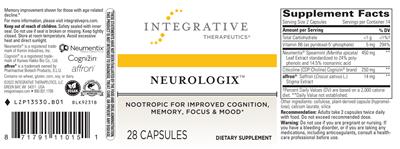
Supplement Facts
The label details for Neurologix by Integrative Therapeutics, sourced from the NIH Dietary Supplement Label Database.
Supplement Facts
| Ingredient | Amount | % DV |
|---|---|---|
| Total Carbohydrate | 1 Gram(s) | 1% |
| Vitamin B6 | 5 mg | 294% |
| Cognizin | 250 mg | -- |
| Affron | 14 mg | -- |
| Neumentix | 450 mg | -- |
Other ingredients: Cellulose, Hypromellose, Calcium Laurate, Silica
Tap any ingredient to jump to its full detail below.
These statements are the manufacturer’s wording, reproduced from the product label — the label is saying it, not HelloPharmacist. We don’t verify or endorse them.
Formulation
Memory Improvement shown for those with age-related decline.
Contains no wheat, gluten, corn, soy, or dairy.
Vegan
Nootropic for improved cognition, memory, focus & mood
General Statements
For more information, please visit integrativepro.com.
Precautions
Keep out of reach of children.
Safety sealed with inner seal. Do not use if seal is broken or missing.
Warning: Do not use if you are pregnant or nursing. If you have a bleeding disorder, or if you are taking any medications, including anticoagulants, consult a healthcare professional before use.
Do not exceed recommended dose. If you have a bleeding disorder, or if you are taking any medications, including anticoagulants, consult a healthcare professional before use.
Storage
Keep tightly closed. Store at room temperature. Avoid excessive heat and direct sunlight.
Brand IP Statement(s)
Neumentix is a registered trademark of Kemin Industries, Inc. Cognizin is a registered trademark of Kyowa Hakko Bio Co., Ltd. affron is a trademark owned by Pharmactive Biotech Products, S.L.U.
Copyright 2022 Integrative Therapeutics, LLC
Formula
Neumentix Phenolic Complex K110-42 Cognizin affron
Seals/Symbols
Quality Global Sourcing Bottled & Tested In The USA
FDA Disclaimer Statement
These statements have not been evaluated by the Food and Drug Administration. This product is not intended to diagnose, treat, cure, or prevent any disease.
FDA Statement of Identity
Dietary Supplement
Suggested/Recommended/Usage/Directions
Recommendation: Adults take 2 capsules twice daily with food. Do not exceed recommended dose.
Is this label outdated? Report a formula or label change and our pharmacy team will review it.
Neurologix by Integrative Therapeutics label
The label scan from the NIH Dietary Supplement Label Database. Tap to enlarge.
Label images are published by the NIH Dietary Supplement Label Database for the version of this product on file. Always read your actual product label.
View the full label (PDF)The Ingredients in Neurologix by Integrative Therapeutics
These are the 4 active ingredients this product is made of. Select any to open its full monograph.
Serving size2 Capsule(s) Dosage formCapsule Servings per container14 Amounts shown are per serving.
Most supplement products combine several ingredients, and a medication can interact with the product through any one of them. Each ingredient below shows whether it has known drug interactions.
Vitamin B6
Interacts with210 drugs
Vitamin B6 (pyridoxine) is an essential water-soluble vitamin that your body needs for metabolism, brain function, and making red blood cells. It is b...
Vitamin B6 monograph & interactionsCognizin
No knowninteractions
Citicoline is a naturally occurring compound involved in making brain cell membranes and the messenger chemical acetylcholine. It is popularly taken f...
Cognizin monograph & interactionsAffron
Interacts with521 drugs
Saffron is a costly spice that has shown promise in early studies for mild-to-moderate depression and some mood and PMS symptoms, but most research us...
Affron monograph & interactionsNeumentix
Interacts with579 drugs
Spearmint is a common culinary mint that is generally safe in food and tea amounts. Early research suggests possible benefits for digestion, mild horm...
Neumentix monograph & interactionsOther (inactive) ingredients: Cellulose, Hypromellose, Calcium Laurate, Silica. These complete the product’s ingredient list but are not active constituents.
Neurologix by Integrative Therapeutics Drug Interactions
HelloPharmacist Interaction Report
Neurologix by Integrative Therapeutics contains four active ingredients, and our data shows documented interactions with medications.
The most serious concern is vitamin B6 with antihypertensive drugs (blood pressure medications), antiarrhythmic drugs, and seizure medications — vitamin B6 at high doses can reduce how well phenobarbital and phenytoin work, and may lower blood pressure further when combined with blood pressure drugs.
Read the full breakdown — every affected drug type, severity by severity
Saffron (Affron) interacts with CNS depressants (sedatives, sleep aids, pain medications), antihypertensive drugs, antidiabetes drugs, and caffeine — it may add to drowsiness, lower blood pressure further, or increase the risk of low blood sugar (hypoglycemia). Spearmint (Neumentix) can interact with CNS depressants and drugs that stress the liver (hepatotoxic drugs).
Vitamin B6 also has a Minor interaction with levodopa when taken without carbidopa. Citicoline (Cognizin) has no interactions documented in our data.
Altogether, these interactions span 807 individual medications. Use the medication checker below to verify your exact prescriptions before starting this product.
Check your own medications below · Editorial policy · How we use AI
Want to check YOUR meds against Neurologix?
Ask about interactions with your drugs in plain English — “Can I take it with lisinopril?” — and we find you the answer in seconds, ingredient by ingredient.
Go to the checkerIngredients driving the most interactions
Individual Drug Interactions
The ingredients in Neurologix interact with 824 drugs. Click any drug to see the details.
3 of the 4 ingredients in Neurologix interact with drugs. Each result below shows which ingredient is responsible. Neumentix Affron Vitamin B6
6-mercaptopurinePurinethol
How 6-mercaptopurine interacts with Neurologix — through 1 ingredient. Tap an ingredient for the detail:
NeumentixHepatotoxic Drugs Moderate
Interaction Summary
Theoretically, high doses of spearmint might increase the risk of liver damage when taken with hepatotoxic drugs.
Read the full Neumentix + 6-mercaptopurine interactionAbacavir Sulfate, Dolutegravir, LamivudineTriumeq
How Abacavir Sulfate, Dolutegravir, Lamivudine interacts with Neurologix — through 1 ingredient. Tap an ingredient for the detail:
NeumentixHepatotoxic Drugs Moderate
Interaction Summary
Theoretically, high doses of spearmint might increase the risk of liver damage when taken with hepatotoxic drugs.
Read the full Neumentix + Abacavir Sulfate, Dolutegravir, Lamivudine interactionAbacavir, LamivudineEpzicom
How Abacavir, Lamivudine interacts with Neurologix — through 1 ingredient. Tap an ingredient for the detail:
NeumentixHepatotoxic Drugs Moderate
Interaction Summary
Theoretically, high doses of spearmint might increase the risk of liver damage when taken with hepatotoxic drugs.
Read the full Neumentix + Abacavir, Lamivudine interactionAbiraterone
How Abiraterone interacts with Neurologix — through 1 ingredient. Tap an ingredient for the detail:
NeumentixHepatotoxic Drugs Moderate
Interaction Summary
Theoretically, high doses of spearmint might increase the risk of liver damage when taken with hepatotoxic drugs.
Read the full Neumentix + Abiraterone interactionAbiraterone AcetateYonsa, Zytiga
How Abiraterone Acetate interacts with Neurologix — through 1 ingredient. Tap an ingredient for the detail:
NeumentixHepatotoxic Drugs Moderate
Interaction Summary
Theoretically, high doses of spearmint might increase the risk of liver damage when taken with hepatotoxic drugs.
Read the full Neumentix + Abiraterone Acetate interactionAcarboseGlucobay, Prandase, Precose
How Acarbose interacts with Neurologix — through 2 ingredients. Tap an ingredient for the detail:
NeumentixHepatotoxic Drugs Moderate
Interaction Summary
Theoretically, high doses of spearmint might increase the risk of liver damage when taken with hepatotoxic drugs.
Read the full Neumentix + Acarbose interactionAffronAntidiabetes Drugs Moderate
Interaction Summary
Theoretically, concomitant use of saffron with antidiabetes drugs might increase the risk of hypoglycemia.
Read the full Affron + Acarbose interactionAcebutololRhotral, Sectral
How Acebutolol interacts with Neurologix — through 3 ingredients. Tap an ingredient for the detail:
AffronAntihypertensive Drugs Moderate
Interaction Summary
Theoretically, concomitant use of saffron with antihypertensive drugs might have additive effects.
Read the full Affron + Acebutolol interactionNeumentixHepatotoxic Drugs Moderate
Interaction Summary
Theoretically, high doses of spearmint might increase the risk of liver damage when taken with hepatotoxic drugs.
Read the full Neumentix + Acebutolol interactionVitamin B6Antihypertensive Drugs Moderate
Interaction Summary
Theoretically, vitamin B6 may have additive effects when used with antihypertensive drugs.
Read the full Vitamin B6 + Acebutolol interactionAcepromazineAtravet
How Acepromazine interacts with Neurologix — through 2 ingredients. Tap an ingredient for the detail:
AffronCns Depressants Moderate
Interaction Summary
Theoretically, concomitant use of saffron and CNS depressants might have additive sedative effects.
Read the full Affron + Acepromazine interactionNeumentixCns Depressants Moderate
Interaction Summary
Theoretically, spearmint might alter the sedative effects of CNS depressants.
Read the full Neumentix + Acepromazine interactionAcetaminophenChildren's Tylenol, Children's Tylenol Meltaways, Tylenol, Tylenol Ex Strength
How Acetaminophen interacts with Neurologix — through 1 ingredient. Tap an ingredient for the detail:
NeumentixHepatotoxic Drugs Moderate
Interaction Summary
Theoretically, high doses of spearmint might increase the risk of liver damage when taken with hepatotoxic drugs.
Read the full Neumentix + Acetaminophen interactionAcetaminophen, AspirinGemnisyn
How Acetaminophen, Aspirin interacts with Neurologix — through 1 ingredient. Tap an ingredient for the detail:
NeumentixHepatotoxic Drugs Moderate
Interaction Summary
Theoretically, high doses of spearmint might increase the risk of liver damage when taken with hepatotoxic drugs.
Read the full Neumentix + Acetaminophen, Aspirin interactionAcetaminophen, Aspirin, CaffeineExcedrin, Excedrin Extra Strength, Excedrin Migraine
How Acetaminophen, Aspirin, Caffeine interacts with Neurologix — through 2 ingredients. Tap an ingredient for the detail:
NeumentixHepatotoxic Drugs Moderate
Interaction Summary
Theoretically, high doses of spearmint might increase the risk of liver damage when taken with hepatotoxic drugs.
Read the full Neumentix + Acetaminophen, Aspirin, Caffeine interactionAffronCaffeine Moderate
Interaction Summary
Theoretically, saffron might inhibit the metabolism of caffeine.
Read the full Affron + Acetaminophen, Aspirin, Caffeine interactionAcetaminophen, Brompheniramine, PhenylpropanolamineDimetapp Cold and Flu
How Acetaminophen, Brompheniramine, Phenylpropanolamine interacts with Neurologix — through 1 ingredient. Tap an ingredient for the detail:
NeumentixHepatotoxic Drugs Moderate
Interaction Summary
Theoretically, high doses of spearmint might increase the risk of liver damage when taken with hepatotoxic drugs.
Read the full Neumentix + Acetaminophen, Brompheniramine, Phenylpropanolamine interactionAcetaminophen, ButalbitalAxocet, Bancap, Bucet, Butex Forte, Esgic CF, Orbivan CF +5 more
How Acetaminophen, Butalbital interacts with Neurologix — through 1 ingredient. Tap an ingredient for the detail:
NeumentixHepatotoxic Drugs Moderate
Interaction Summary
Theoretically, high doses of spearmint might increase the risk of liver damage when taken with hepatotoxic drugs.
Read the full Neumentix + Acetaminophen, Butalbital interactionAcetaminophen, Butalbital, CaffeineEsgic, Esgic Plus, Fiogesic, Fioricet, Repan, Tecnal +1 more
How Acetaminophen, Butalbital, Caffeine interacts with Neurologix — through 2 ingredients. Tap an ingredient for the detail:
NeumentixHepatotoxic Drugs Moderate
Interaction Summary
Theoretically, high doses of spearmint might increase the risk of liver damage when taken with hepatotoxic drugs.
Read the full Neumentix + Acetaminophen, Butalbital, Caffeine interactionAffronCaffeine Moderate
Interaction Summary
Theoretically, saffron might inhibit the metabolism of caffeine.
Read the full Affron + Acetaminophen, Butalbital, Caffeine interactionAcetaminophen, Butalbital, Caffeine, CodeineEsgic with Codeine, Fioricet w/ Codeine
How Acetaminophen, Butalbital, Caffeine, Codeine interacts with Neurologix — through 2 ingredients. Tap an ingredient for the detail:
AffronCaffeine, Cns Depressants Moderate
Interaction Summary
Theoretically, saffron might inhibit the metabolism of caffeine.
Read the full Affron + Acetaminophen, Butalbital, Caffeine, Codeine interactionNeumentixCns Depressants, Hepatotoxic Drugs Moderate
Interaction Summary
Theoretically, spearmint might alter the sedative effects of CNS depressants.
Read the full Neumentix + Acetaminophen, Butalbital, Caffeine, Codeine interactionAcetaminophen, Butalbital, CodeineBancap w/ Codeine
How Acetaminophen, Butalbital, Codeine interacts with Neurologix — through 2 ingredients. Tap an ingredient for the detail:
AffronCns Depressants Moderate
Interaction Summary
Theoretically, concomitant use of saffron and CNS depressants might have additive sedative effects.
Read the full Affron + Acetaminophen, Butalbital, Codeine interactionNeumentixHepatotoxic Drugs, Cns Depressants Moderate
Interaction Summary
Theoretically, high doses of spearmint might increase the risk of liver damage when taken with hepatotoxic drugs.
Read the full Neumentix + Acetaminophen, Butalbital, Codeine interactionAcetaminophen, Butalbital, Codeine PhosphatePhrenilin #3
How Acetaminophen, Butalbital, Codeine Phosphate interacts with Neurologix — through 2 ingredients. Tap an ingredient for the detail:
NeumentixCns Depressants, Hepatotoxic Drugs Moderate
Interaction Summary
Theoretically, spearmint might alter the sedative effects of CNS depressants.
Read the full Neumentix + Acetaminophen, Butalbital, Codeine Phosphate interactionAffronCns Depressants Moderate
Interaction Summary
Theoretically, concomitant use of saffron and CNS depressants might have additive sedative effects.
Read the full Affron + Acetaminophen, Butalbital, Codeine Phosphate interactionAcetaminophen, Caffeine, Chlorpheniramine, Hydrocodone, PhenylephrineHycomine Compound
How Acetaminophen, Caffeine, Chlorpheniramine, Hydrocodone, Phenylephrine interacts with Neurologix — through 2 ingredients. Tap an ingredient for the detail:
AffronCns Depressants, Caffeine Moderate
Interaction Summary
Theoretically, concomitant use of saffron and CNS depressants might have additive sedative effects.
Read the full Affron + Acetaminophen, Caffeine, Chlorpheniramine, Hydrocodone, Phenylephrine interactionNeumentixHepatotoxic Drugs, Cns Depressants Moderate
Interaction Summary
Theoretically, high doses of spearmint might increase the risk of liver damage when taken with hepatotoxic drugs.
Read the full Neumentix + Acetaminophen, Caffeine, Chlorpheniramine, Hydrocodone, Phenylephrine interactionAcetaminophen, Caffeine, CodeineGesic C15, Gesic C30, Gesic C8, Lenoltec 1, Lenoltec 2, Lenoltec 3 +1 more
How Acetaminophen, Caffeine, Codeine interacts with Neurologix — through 2 ingredients. Tap an ingredient for the detail:
AffronCaffeine, Cns Depressants Moderate
Interaction Summary
Theoretically, saffron might inhibit the metabolism of caffeine.
Read the full Affron + Acetaminophen, Caffeine, Codeine interactionNeumentixCns Depressants, Hepatotoxic Drugs Moderate
Interaction Summary
Theoretically, spearmint might alter the sedative effects of CNS depressants.
Read the full Neumentix + Acetaminophen, Caffeine, Codeine interactionAcetaminophen, Caffeine, Codeine, SalicylamideCodalan No.1, Codalan No.2, Codalan No.3
How Acetaminophen, Caffeine, Codeine, Salicylamide interacts with Neurologix — through 2 ingredients. Tap an ingredient for the detail:
AffronCns Depressants, Caffeine Moderate
Interaction Summary
Theoretically, concomitant use of saffron and CNS depressants might have additive sedative effects.
Read the full Affron + Acetaminophen, Caffeine, Codeine, Salicylamide interactionNeumentixHepatotoxic Drugs, Cns Depressants Moderate
Interaction Summary
Theoretically, high doses of spearmint might increase the risk of liver damage when taken with hepatotoxic drugs.
Read the full Neumentix + Acetaminophen, Caffeine, Codeine, Salicylamide interactionAcetaminophen, Caffeine, DihydrocodeineDHC Plus, Panlor DC, Panlor SS
How Acetaminophen, Caffeine, Dihydrocodeine interacts with Neurologix — through 2 ingredients. Tap an ingredient for the detail:
AffronCaffeine, Cns Depressants Moderate
Interaction Summary
Theoretically, saffron might inhibit the metabolism of caffeine.
Read the full Affron + Acetaminophen, Caffeine, Dihydrocodeine interactionNeumentixCns Depressants, Hepatotoxic Drugs Moderate
Interaction Summary
Theoretically, spearmint might alter the sedative effects of CNS depressants.
Read the full Neumentix + Acetaminophen, Caffeine, Dihydrocodeine interactionAcetaminophen, Caffeine, IsomethepteneMigralam
How Acetaminophen, Caffeine, Isometheptene interacts with Neurologix — through 2 ingredients. Tap an ingredient for the detail:
NeumentixHepatotoxic Drugs Moderate
Interaction Summary
Theoretically, high doses of spearmint might increase the risk of liver damage when taken with hepatotoxic drugs.
Read the full Neumentix + Acetaminophen, Caffeine, Isometheptene interactionAffronCaffeine Moderate
Interaction Summary
Theoretically, saffron might inhibit the metabolism of caffeine.
Read the full Affron + Acetaminophen, Caffeine, Isometheptene interactionAcetaminophen, Caffeine, PyrilamineMidol Max Strength Menstrual
How Acetaminophen, Caffeine, Pyrilamine interacts with Neurologix — through 2 ingredients. Tap an ingredient for the detail:
AffronCaffeine Moderate
Interaction Summary
Theoretically, saffron might inhibit the metabolism of caffeine.
Read the full Affron + Acetaminophen, Caffeine, Pyrilamine interactionNeumentixHepatotoxic Drugs Moderate
Interaction Summary
Theoretically, high doses of spearmint might increase the risk of liver damage when taken with hepatotoxic drugs.
Read the full Neumentix + Acetaminophen, Caffeine, Pyrilamine interactionAcetaminophen, Chlorpheniramine Maleate, Dextromethorphan HbrVicks Formula 44M Cough, Cold & Flu Relief
How Acetaminophen, Chlorpheniramine Maleate, Dextromethorphan Hbr interacts with Neurologix — through 1 ingredient. Tap an ingredient for the detail:
NeumentixHepatotoxic Drugs Moderate
Interaction Summary
Theoretically, high doses of spearmint might increase the risk of liver damage when taken with hepatotoxic drugs.
Read the full Neumentix + Acetaminophen, Chlorpheniramine Maleate, Dextromethorphan Hbr interactionAcetaminophen, Chlorpheniramine, Codeine, PhenylephrineColrex
How Acetaminophen, Chlorpheniramine, Codeine, Phenylephrine interacts with Neurologix — through 2 ingredients. Tap an ingredient for the detail:
NeumentixHepatotoxic Drugs, Cns Depressants Moderate
Interaction Summary
Theoretically, high doses of spearmint might increase the risk of liver damage when taken with hepatotoxic drugs.
Read the full Neumentix + Acetaminophen, Chlorpheniramine, Codeine, Phenylephrine interactionAffronCns Depressants Moderate
Interaction Summary
Theoretically, concomitant use of saffron and CNS depressants might have additive sedative effects.
Read the full Affron + Acetaminophen, Chlorpheniramine, Codeine, Phenylephrine interactionAcetaminophen, Chlorpheniramine, DextromethorphanCoricidin II Extra Strength Cold and Flu
How Acetaminophen, Chlorpheniramine, Dextromethorphan interacts with Neurologix — through 1 ingredient. Tap an ingredient for the detail:
NeumentixHepatotoxic Drugs Moderate
Interaction Summary
Theoretically, high doses of spearmint might increase the risk of liver damage when taken with hepatotoxic drugs.
Read the full Neumentix + Acetaminophen, Chlorpheniramine, Dextromethorphan interactionAcetaminophen, Chlorpheniramine, Dextromethorphan HydrobromideCoricidin HBP Maximum Strength Flu
How Acetaminophen, Chlorpheniramine, Dextromethorphan Hydrobromide interacts with Neurologix — through 1 ingredient. Tap an ingredient for the detail:
NeumentixHepatotoxic Drugs Moderate
Interaction Summary
Theoretically, high doses of spearmint might increase the risk of liver damage when taken with hepatotoxic drugs.
Read the full Neumentix + Acetaminophen, Chlorpheniramine, Dextromethorphan Hydrobromide interactionAcetaminophen, Chlorpheniramine, Dextromethorphan, PhenylpropanolamineMulti Symptom Cold Relief
How Acetaminophen, Chlorpheniramine, Dextromethorphan, Phenylpropanolamine interacts with Neurologix — through 1 ingredient. Tap an ingredient for the detail:
NeumentixHepatotoxic Drugs Moderate
Interaction Summary
Theoretically, high doses of spearmint might increase the risk of liver damage when taken with hepatotoxic drugs.
Read the full Neumentix + Acetaminophen, Chlorpheniramine, Dextromethorphan, Phenylpropanolamine interactionAcetaminophen, Chlorpheniramine, Dextromethorphan, PseudoephedrineChildren's Tylenol Cold Plus Cough, Tylenol Cold Ex Strength
How Acetaminophen, Chlorpheniramine, Dextromethorphan, Pseudoephedrine interacts with Neurologix — through 1 ingredient. Tap an ingredient for the detail:
NeumentixHepatotoxic Drugs Moderate
Interaction Summary
Theoretically, high doses of spearmint might increase the risk of liver damage when taken with hepatotoxic drugs.
Read the full Neumentix + Acetaminophen, Chlorpheniramine, Dextromethorphan, Pseudoephedrine interactionAcetaminophen, Chlorpheniramine, Guaifenesin, Phenylephrine, SalicylamideRhinogesic GG
How Acetaminophen, Chlorpheniramine, Guaifenesin, Phenylephrine, Salicylamide interacts with Neurologix — through 1 ingredient. Tap an ingredient for the detail:
NeumentixHepatotoxic Drugs Moderate
Interaction Summary
Theoretically, high doses of spearmint might increase the risk of liver damage when taken with hepatotoxic drugs.
Read the full Neumentix + Acetaminophen, Chlorpheniramine, Guaifenesin, Phenylephrine, Salicylamide interactionEach ingredient & the kinds of drugs it affects
For each ingredient in Neurologix with known interactions, here are the types of medications they can affect. Open any type for the detail — or search your exact drug in the checker above.
Neumentix
Cns Depressants
Theoretically, spearmint might alter the sedative effects of CNS depressants.
Animal research suggests that (-)-carvone, a major constituent of spearmint, has sedative effects. However, in humans, chewing spearmint-flavored gum induced arousal effects.
Hepatotoxic Drugs
Theoretically, high doses of spearmint might increase the risk of liver damage when taken with hepatotoxic drugs.
Animal research suggests that drinking spearmint tea for 30 days can increase markers of liver damage, including aspartate aminotransferase (AST) and alanine aminotransferase (ALT), and cause liver degeneration and necrosis, in a dose-dependent manner. This effect has not been reported in humans.
Affron
Antidiabetes Drugs
Theoretically, concomitant use of saffron with antidiabetes drugs might increase the risk of hypoglycemia.
Some clinical research shows that taking saffron extract reduces fasting levels of glucose when used in addition to hypoglycemic agents. However, saffron powder itself has not been shown to reduce fasting glucose levels.
Antihypertensive Drugs
Theoretically, concomitant use of saffron with antihypertensive drugs might have additive effects.
Animal and human research suggests that saffron extract can decrease blood pressure.
Caffeine
Theoretically, saffron might inhibit the metabolism of caffeine.
A small clinical study suggests that taking saffron powder 300 mg in 150 mL water daily for 5 days and then taking caffeine 200 mg seems to reduce caffeine metabolite levels in the saliva and urine in males, but not females. Theoretically, this may be due to the inhibition of cytochrome P450 1A2 by saffron.
Cns Depressants
Theoretically, concomitant use of saffron and CNS depressants might have additive sedative effects.
Clinical research shows that taking saffron extract 60 mg orally daily for 26 weeks can cause drowsiness and sedation. Animal research suggests that adding saffron to hexobarbital further increases sleeping and slows motor activity.
Vitamin B6
Amiodarone (Cordarone)
Theoretically, vitamin B6 might increase the photosensitivity caused by amiodarone.
Despite initial case reports suggesting that pyridoxine may have a protective effect against amiodarone-induced photosensitivity, preliminary clinical research suggests that pyridoxine may actually exacerbate this adverse effect.
Antihypertensive Drugs
Theoretically, vitamin B6 may have additive effects when used with antihypertensive drugs.
Research in hypertensive rats shows that vitamin B6 can decrease systolic blood pressure. Similarly, clinical research in patients with hypertension shows that taking high doses of vitamin B6 may reduce systolic and diastolic blood pressure, possibly by reducing plasma levels of epinephrine and norepinephrine.
Phenobarbital (Luminal)
High doses of vitamin B6 may reduce the levels and clinical effects of phenobarbital.
Preliminary clinical evidence suggests that vitamin B6 200 mg daily can reduce plasma levels of phenobarbital, possibly by increasing metabolism. It is not known whether lower doses have any effect. Advise people taking phenobarbital to avoid high doses of vitamin B6.
Phenytoin (Dilantin)
High doses of vitamin B6 may reduce the levels and clinical effects of phenytoin.
Preliminary clinical evidence suggests that vitamin B6 200 mg daily can reduce plasma levels of phenytoin, possibly by increasing metabolism. It is not known whether lower doses have any effect. Advise people taking phenytoin to avoid high doses of vitamin B6.
Levodopa
Vitamin B6 may increase the metabolism of levodopa when taken alone, but not when taken in conjunction with carbidopa.
Vitamin B6 (pyridoxine) enhances the metabolism of levodopa, reducing its clinical effects. However, this interaction does not occur when carbidopa is used concurrently with levodopa (Sinemet). Therefore, it is not likely to be a problem in most people.
Brand information
Manufacturer and brand details for Neurologix, from the product label.
Integrative Therapeutics
See all Integrative Therapeutics products- Name
- Integrative Therapeutics, LLC
- City
- Green Bay
- State
- WI
- ZipCode
- 54311
- Phone Number
- 800.931.1709
- Web Address
- integrativepro.com
Neurologix by Integrative Therapeutics: Common Questions
Does Neurologix by Integrative Therapeutics interact with any medications?
How can one product interact with so many drugs?
Where does this information come from?
Is this safe to take while pregnant?
Is it safe while breastfeeding?
What are the most common side effects?
Can high doses of vitamin B6 in this product harm my nerves?
Will this help me think more clearly?
What is saffron in this supplement supposed to do?
Written and reviewed by the HelloPharmacist editorial staff. Our editorial policy
Not sure if Neurologix is safe with your meds?
Our pharmacists answer your medication & supplement questions — free.
Label information is sourced from the NIH Dietary Supplement Label Database and reflects the product version on file; always read your actual product label. This page is for education only and is not a substitute for professional medical advice. Confirm with your pharmacist or doctor before combining supplements and medications.
The Full Monographs Behind Neurologix’s Ingredients
Every ingredient we hold a full HelloPharmacist monograph for — uses, evidence, safety, and the complete interaction list.
Vitamin B6
Interacts with 210 drugsVitamin B6 (pyridoxine) is an essential water-soluble vitamin that your body needs for metabolism, brain function, and making red blood cells. It is best known for helping with pregnancy-rel...
Read the full Vitamin B6 monograph → Herb & supplement monographCiticoline
Citicoline is a naturally occurring compound involved in making brain cell membranes and the messenger chemical acetylcholine. It is popularly taken for memory, focus, and brain aging, and s...
Read the full Citicoline monograph → Herb & supplement monographSaffron
Interacts with 521 drugsSaffron is a costly spice that has shown promise in early studies for mild-to-moderate depression and some mood and PMS symptoms, but most research uses small trials, so results are not defi...
Read the full Saffron monograph → Herb & supplement monographSpearmint
Interacts with 579 drugsSpearmint is a common culinary mint that is generally safe in food and tea amounts. Early research suggests possible benefits for digestion, mild hormone-related issues (such as excess facia...
Read the full Spearmint monograph →Sources & How We Checked
Neurologix's label data comes from the NIH Dietary Supplement Label Database; the ingredient interaction data is from the Natural Medicines database, reviewed by our pharmacists.
- NIH Dietary Supplement Label Database (DSLD) — The official product label on file for this supplement.
- Natural Medicines (Therapeutic Research Center) — Evidence-graded clinical reference behind the ingredient interaction data.
Content is written and reviewed by licensed HelloPharmacist pharmacists. See our data sources and editorial standards for how this information is built and checked.
The 85 references behind this product’s interaction data
Every citation that drives the interaction findings for this product’s ingredients, from the evidence-graded Natural Medicines (TRC Healthcare) database. Open an ingredient to browse its citations — links open the study on PubMed or the publisher’s site.
Vitamin B6 32 references
- Hansten PD, Horn JR. Drug Interactions Analysis and Management. Vancouver, WA: Applied Therapeutics Inc., 1997 and updates.
- Yates AA, Schlicker SA, Suitor CW. Dietary reference intakes: The new basis for recommendations for calcium and related nutrients, B vitamins, and choline. J Am Diet Assoc 1998;98:699-706. PubMed
- Geerling BJ, Dagnelie PC, Badart-Smook A, et al. Diet as a risk factor for the development of ulcerative colitis. Am J Gastroenterol 2000;95:1008-13. PubMed
- South M. Neonatal seizures after pyridoxine use -- reply. Lancet 1999;354:2083. PubMed
- Food and Nutrition Board, Institute of Medicine. Dietary Reference Intakes for Thiamin, Riboflavin, Niacin, Vitamin B6, Folate, Vitamin B12, Pantothenic Acid, Biotin, and Choline (2000). Washington, DC: National Academy Press, 2000. Available at: http://b
- Baxter P, Aicardi J. Neonatal seizures after pyridoxine use. Lancet 1999;354:2082-3. PubMed
- Bendich A, Cohen M. Vitamin B6 safety issues. Ann N Y Acad Sci 1990;585:321-30.
- Schaumburg H, Kaplan J, Windebank A. Sensory neuropathy from pyridoxine abuse. A new megavitamin syndrome. N Engl J Med 1983;309:445-8. PubMed
- Gordon N. Pyridoxine dependency: an update. Dev Med Child Neurol 1997;39:63-5. PubMed
- Lewis PJ. Pain in the hand and wrist. Pyridoxine supplements may help patients with carpal tunnel syndrome. BMJ 1995;310:1534. PubMed
- Kaufman G. Pyridoxine against amiodarone-induced photosensitivity (letter). Lancet 1984;1:51-2. PubMed
- Mulrow JP, Mulrow CD, McKenna WJ. Pyridoxine and amiodarone-induced photosensitivity. Ann Intern Med 1985;103:68-9. PubMed
- Kawada A, Kashima A, Shiraishi H, et al. Pyridoxine-induced photosensitivity and hypophosphatasia. Dermatology 2000;201:356-60.. PubMed
- Vasile A, Goldberg R, Kornberg B. Pyridoxine toxicity: report of a case. J Am Osteopath Assoc 1984;83:790-1. DOI
- Hansson O, Sillanpaa M. Pyridoxine and serum concentration of phenytoin and phenobarbitone. Lancet 1976;1:256. DOI
- Jansen T, Romiti R, Kreuter A, Altmeyer P. Rosacea fulminans triggered by high-dose vitamins B6 and B12. J Eur Acad Dermatol Venereol 2001;15:484-5..
- Chittumma P, Kaewkiattikun K, Wiriyasiriwach B. Comparison of the effectiveness of ginger and vitamin B6 for treatment of nausea and vomiting in early pregnancy: a randomized double-blind controlled trial. J Med Assoc Thai 2007;90:15-20.
- Hatzitolios, A., Iliadis, F., Katsiki, N., and Baltatzi, M. Is the anti-hypertensive effect of dietary supplements via aldehydes reduction evidence based? A systematic review. Clin Exp.Hypertens. 2008;30(7):628-639. PubMed
- Vasdev, S., Ford, C. A., Parai, S., Longerich, L., and Gadag, V. Dietary vitamin B6 supplementation attenuates hypertension in spontaneously hypertensive rats. Mol.Cell Biochem. 1999;200(1-2):155-162.
- de, Vogel S., Dindore, V., van, Engeland M., Goldbohm, R. A., van den Brandt, P. A., and Weijenberg, M. P. Dietary folate, methionine, riboflavin, and vitamin B-6 and risk of sporadic colorectal cancer. J Nutr 2008;138(12):2372-2378. PubMed
- Hagen, I., Nesheim, B. I., and Tuntland, T. No effect of vitamin B-6 against premenstrual tension. A controlled clinical study. Acta Obstet.Gynecol.Scand. 1985;64(8):667-670. PubMed
- Aybak, M., Sermet, A., Ayyildiz, M. O., and Karakilcik, A. Z. Effect of oral pyridoxine hydrochloride supplementation on arterial blood pressure in patients with essential hypertension. Arzneimittelforschung. 1995;45(12):1271-1273.
- Lal, K. J., Dakshinamurti, K., and Thliveris, J. The effect of vitamin B6 on the systolic blood pressure of rats in various animal models of hypertension. J Hypertens. 1996;14(3):355-363. PubMed
- Lauritzen CH, Reuter HD, Repges R, Bohnert K, and Schmidt U. Treatment of premenstrual tension syndrome with Vitex agnus castus. Controlled, double-blind study versus pyridoxine. Phytomed 1997;4(3):183-189. PubMed
- Fonseca VA, Lavery LA, Thethi TK, et al. Metanx in type 2 diabetes with peripheral neuropathy: A randomized trial. Am J Med 2013;126(2):141-9. PubMed
- Hankey GJ, Eikelboom JW, Yi Q, et al. Treatment with B vitamins and incidence of cancer in patients with previous stroke or transient ischemic attack: Results of a randomized placebo-controlled trial. Stroke 2012;43(6):1572-7. PubMed
- Hoyer-Kuhn H, Kohbrok S, Volland R, Franklin J, Hero B, Beck BB, Hoppe B. Vitamin B6 in primary hyperoxaluria I: first prospective trial after 40 years of practice. Clin J Am Soc Nephrol. 2014 Mar;9(3):468-77. PubMed
- Mahmoud A, Tabassum S, Al Enazi S, et al. Amelioration of levetiracetam-induced behavioral side effects by pyridoxine. A randomized double blind controlled study. Pediatr Neurol 2021;119:15-21. PubMed
- Gupta M, Gallante B, Bamberger JN, et al. Prospective randomized evaluation of idiopathic hyperoxaluria treatments. J Endourol 2021;35(12):1844-1851. PubMed
- Li H, Chen M, Liang S, et al. Excessive vitamin B6 during treatment is related to poor prognosis of patients with nasopharyngeal carcinoma: A U-shaped distribution suggests low dose supplement. Clin Nutr 2021;40(4):2293-2300. PubMed
- Tanigawa J, Nabatame S, Tominaga K, et al. High-dose pyridoxine treatment for inherited glycosylphosphatidylinositol deficiency. Brain Dev 2021;43(6):680-687. PubMed
- Committee on Practice Bulletins-Obstetrics. ACOG Practice Bulletin No. 189: Nausea And Vomiting Of Pregnancy. Obstet Gynecol. 2018;131(1):e15-e30. PubMed
Citicoline 11 references
- Spiers PA, Myers D, Hochanadel GS, et al. Citicoline improves verbal memory in aging. Arch Neurol 1996;53:441-8. PubMed
- Fioravanti M, Yanagi M. Cytidinediphosphocholine (CDP-choline) for cognitive and behavioural disturbances associated with chronic cerebral disorders in the elderly. Cochrane Database Syst Rev 2005;(2):CD000269. PubMed
- Conant R, Schauss AG. Therapeutic applications of citicoline for stroke and cognitive function in the elderly: A review of the literature. Altern Med Rev 2004;9:17-31.
- Warach, S., Pettigrew, L. C., Dashe, J. F., Pullicino, P., Lefkowitz, D. M., Sabounjian, L., Harnett, K., Schwiderski, U., and Gammans, R. Effect of citicoline on ischemic lesions as measured by diffusion-weighted magnetic resonance imaging. Citicoline 0 DOI
- Lukas, S. E., Kouri, E. M., Rhee, C., Madrid, A., and Renshaw, P. F. Effects of short-term citicoline treatment on acute cocaine intoxication and cardiovascular effects. Psychopharmacology.(Berl.) 2001;157(2):163-167. PubMed
- Dinsdale, J. R., Griffiths, G. K., Castello, J., Maddock, J., Ortiz, J. A., and Aylward, M. CDP-choline: repeated oral dose tolerance studies in adult healthy volunteers. Arzneimittelforschung. 1983;33(7A):1061-1065.
- Clark BC, Georgekutty J, Berul CI. Myocardial ischemia secondary to synthetic cannabinoid (K2) use in pediatric patients. J Pediatr 2015;167(3):757-61.e1. PubMed
- Ghajar A, Gholamian F, Tabatabei-Motlagh M, et al. Citicoline (CDP-choline) add-on therapy to risperidone for treatment of negative symptoms in patients with stable schizophrenia: a double-blind, randomized placebo-controlled trial. Hum Psychopharmacol. 2
- Castagna A, Manzo C, Fabbo A, Lacava R, Ruberto C, Ruotolo G. The CITIMERIVA Study: CITIcoline plus MEmantina plus RIVAstigmine in Older Patients Affected with Alzheimer's Disease. Clin Drug Investig. 2021 Feb;41(2):177-182. PubMed
- Jeong H, Yoon S, Sung YH, et al. Effects of cytidine-5'-diphosphate choline on gray matter volumes in methamphetamine-dependent patients: A randomized, double-blind, placebo-controlled study. J Psychiatr Res 2021;143:215-221. PubMed
- Nakazaki E, Mah E, Sanoshy K, Citrolo D, Watanabe F. Citicoline and Memory Function in Healthy Older Adults: A Randomized, Double-Blind, Placebo-Controlled Clinical Trial. J Nutr 2021;151(8):2153-2160. PubMed
Saffron 22 references
- Blumenthal M, ed. The Complete German Commission E Monographs: Therapeutic Guide to Herbal Medicines. Trans. S. Klein. Boston, MA: American Botanical Council, 1998.
- Leung AY, Foster S. Encyclopedia of Common Natural Ingredients Used in Food, Drugs and Cosmetics. 2nd ed. New York, NY: John Wiley & Sons, 1996.
- Gruenwald J, Brendler T, Jaenicke C. PDR for Herbal Medicines. 1st ed. Montvale, NJ: Medical Economics Company, Inc., 1998.
- Feo F, Martinez J, Martinez A, et al. Occupational allergy in saffron workers. Allergy 1997;52:633-41. PubMed
- Wuthrich B, Schmid-Grendelmeyer P, Lundberg M. Anaphylaxis to saffron. Allergy 1997;52:476-7. PubMed
- Akhondzadeh S, Tahmacebi-Pour N, Noorbala AA, et al. Crocus sativus L. in the treatment of mild to moderate depression: a double-blind, randomized and placebo-controlled trial. Phytother Res 2005;19:148-51.
- Safarinejad MR, Shafiei N, Safarinejad S. A prospective double-blind randomized placebo-controlled study of the effect of saffron (Crocus sativus Linn.) on semen parameters and seminal plasma antioxidant capacity in infertile men with idiopathic oligoasth
- Fatehi, M., Rashidabady, T., and Fatehi-Hassanabad, Z. Effects of Crocus sativus petals' extract on rat blood pressure and on responses induced by electrical field stimulation in the rat isolated vas deferens and guinea-pig ileum. J Ethnopharmacol. 2003; PubMed
- Modaghegh, M. H., Shahabian, M., Esmaeili, H. A., Rajbai, O., and Hosseinzadeh, H. Safety evaluation of saffron (Crocus sativus) tablets in healthy volunteers. Phytomedicine. 2008;15(12):1032-1037. PubMed
- Imenshahidi, M., Hosseinzadeh, H., and Javadpour, Y. Hypotensive effect of aqueous saffron extract (Crocus sativus L.) and its constituents, safranal and crocin, in normotensive and hypertensive rats. Phytother.Res 12-9-2009;
- Zhang, Y., Shoyama, Y., Sugiura, M., and Saito, H. Effects of Crocus sativus L. on the ethanol-induced impairment of passive avoidance performances in mice. Biol.Pharm Bull. 1994;17(2):217-221. PubMed
- Wuthrich, B., Schmid-Grendelmeyer, P., and Lundberg, M. Anaphylaxis to saffron. Allergy 1997;52(4):476-477. PubMed
- Akhondzadeh S, Sabet MS, Harirchian MH, Togha M, Cheraghmakani H, Razeghi S, Hejazi SSh, Yousefi MH, Alimardani R, Jamshidi A, Zare F, Moradi A. Saffron in the treatment of patients with mild to moderate Alzheimer's disease: a 16-week, randomized and plac
- Kashani L, Eslatmanesh S, Saedi N, Niroomand N, Ebrahimi M, Hosseinian M, Foroughifar T, Salimi S, Akhondzadeh S. Comparison of Saffron versus Fluoxetine in Treatment of Mild to Moderate Postpartum Depression: A Double-Blind, Randomized Clinical Trial. Ph PubMed
- Kianbakht S, Ghazavi A. Immunomodulatory effects of saffron: a randomized double-blind placebo-controlled clinical trial. Phytother Res. 2011 Dec;25(12):1801-5. PubMed
- Mazidi M, Shemshian M, Mousavi SH, Norouzy A, Kermani T, Moghiman T, Sadeghi A, Mokhber N, Ghayour-Mobarhan M, Ferns GA. A double-blind, randomized and placebo-controlled trial of Saffron (Crocus sativus L.) in the treatment of anxiety and depression. J C
- Safarinejad MR, Shafiei N, Safarinejad S. An open label, randomized, fixed-dose, crossover study comparing efficacy and safety of sildenafil citrate and saffron (Crocus sativus Linn.) for treating erectile dysfunction in men naïve to treatment. Int J Impo PubMed
- Talaei A, Hassanpour Moghadam M, Sajadi Tabassi SA, Mohajeri SA. Crocin, the main active saffron constituent, as an adjunctive treatment in major depressive disorder: a randomized, double-blind, placebo-controlled, pilot clinical trial. J Affect Disord. 2 PubMed
- Azimi P, Ghiasvand R Feizi A, Hariri M, Abbasi B. Effects of cinnamon, cardamom, saffron, and ginger consumption on markers of glycemic control, lipid profile, oxidative stress, and inflammation in type 2 diabetes. Rev Diabet Stud. 2014 Fall-Winter;11(3-4
- Begas E, Bounitsi M, Kilindris T, et al. Effects of short-term saffron (Crocus sativus L.) intake on the in vivo activities of xenobiotic metabolizing enzymes in healthy volunteers. Food Chem Toxicol. 2019;130:32-43. PubMed
- Moravej Aleali A, Amani R, Shahbazian H, Namjooyan F, Latifi SM, Cheraghian B. The effect of hydroalcoholic Saffron (Crocus sativus L.) extract on fasting plasma glucose, HbA1c, lipid profile, liver, and renal function tests in patients with type 2 diabet
- Abbaszadeh-Mashkani S, Hoque SS, Banafshe HR, Ghaderi A. The effect of crocin (the main active saffron constituent) on the cognitive functions, craving, and withdrawal syndrome in opioid patients under methadone maintenance treatment. Phytother Res. 2021; PubMed
Spearmint 20 references
- Electronic Code of Federal Regulations. Title 21. Part 182 -- Substances Generally Recognized As Safe. Available at: https://www.accessdata.fda.gov/scripts/cdrh/cfdocs/cfcfr/CFRSearch.cfm?CFRPart=182
- Akdogan M, Ozguner M, Aydin G, Gokalp O. Investigation of biochemical and histopathological effects of Mentha piperita Labiatae and Mentha spicata Labiatae on liver tissue in rats. Hum Exp Toxicol 2004;23:21-8.
- Poon, T. S. and Freeman, S. Cheilitis caused by contact allergy to anethole in spearmint flavoured toothpaste. Australas.J Dermatol. 2006;47(4):300-301. PubMed
- Andersen, K. E. Contact allergy to toothpaste flavors. Contact Dermatitis 1978;4(4):195-198. PubMed
- de Sousa, D. P., Farias Nobrega, F. F., and de Almeida, R. N. Influence of the chirality of (R)-(-)- and (S)-(+)-carvone in the central nervous system: a comparative study. Chirality 5-5-2007;19(4):264-268.
- Larsen, W., Nakayama, H., Fischer, T., Elsner, P., Frosch, P., Burrows, D., Jordan, W., Shaw, S., Wilkinson, J., Marks, J., Jr., Sugawara, M., Nethercott, M., and Nethercott, J. Fragrance contact dermatitis: a worldwide multicenter investigation (Part II PubMed
- Guney, M., Oral, B., Karahanli, N., Mungan, T., and Akdogan, M. The effect of Mentha spicata Labiatae on uterine tissue in rats. Toxicol.Ind.Health 2006;22(8):343-348.
- Masumoto, Y., Morinushi, T., Kawasaki, H., Ogura, T., and Takigawa, M. Effects of three principal constituents in chewing gum on electroencephalographic activity. Psychiatry Clin.Neurosci. 1999;53(1):17-23. PubMed
- Bulat, R., Fachnie, E., Chauhan, U., Chen, Y., and Tougas, G. Lack of effect of spearmint on lower oesophageal sphincter function and acid reflux in healthy volunteers. Aliment.Pharmacol Ther. 1999;13(6):805-812. PubMed
- Francalanci, S., Sertoli, A., Giorgini, S., Pigatto, P., Santucci, B., and Valsecchi, R. Multicentre study of allergic contact cheilitis from toothpastes. Contact Dermatitis 2000;43(4):216-222. PubMed
- Bonamonte, D., Mundo, L., Daddabbo, M., and Foti, C. Allergic contact dermatitis from Mentha spicata (spearmint). Contact Dermatitis 2001;45(5):298.
- Tomson, N., Murdoch, S., and Finch, T. M. The dangers of making mint sauce. Contact Dermatitis 2004;51(2):92-93. PubMed
- Clayton, R. and Orton, D. Contact allergy to spearmint oil in a patient with oral lichen planus. Contact Dermatitis 2004;51(5-6):314-315. PubMed
- Dal Sacco, D., Gibelli, D., and Gallo, R. Contact allergy in the burning mouth syndrome: a retrospective study on 38 patients. Acta Derm.Venereol. 2005;85(1):63-64. PubMed
- Goncalves, J. C., Oliveira, Fde S., Benedito, R. B., de Sousa, D. P., de Almeida, R. N., and de Araujo, D. A. Antinociceptive activity of (-)-carvone: evidence of association with decreased peripheral nerve excitability. Biol Pharm Bull. 2008;31(5):1017- PubMed
- Ormerod, A. D. and Main, R. A. Sensitisation to "sensitive teeth" toothpaste. Contact Dermatitis 1985;13(3):192-193. PubMed
- Skrebova, N., Brocks, K., and Karlsmark, T. Allergic contact cheilitis from spearmint oil. Contact Dermatitis 1998;39(1):35. PubMed
- Damiani E, Aloia AM, Priore MG, et al. Allergy to mint (Mentha spicata). J Investig Allergol Clin Immunol 2012;22:309-10.
- Connelly AE, Tucker AJ, Tulk H, et al. High-rosmarinic acid spearmint tea in the management of knee osteoarthritis symptoms. J Med Food 2014;17:1361-7. PubMed
- Lasrado JA, Nieman KM, Fonseca BA, et al. Safety and tolerability of a dried aqueous spearmint extract. Regul Toxicol Pharmacol 2017;86:167-176. PubMed
Parts of this content are provided by the Therapeutic Research Center, LLC.
DISCLAIMER: Currently this does not check for drug-drug interactions. This is not an all-inclusive comprehensive list of potential interactions and is for informational purposes only. Not all interactions are known or well-reported in the scientific literature, and new interactions are continually being reported. Input is needed from a qualified healthcare provider including a pharmacist before starting any therapy. Application of clinical judgment is necessary.
© 2021 Therapeutic Research Center, LLC