
Magtein Magnesium L-Threonate Ingredients & Drug Interactions
What is this page for?
First and foremost: checking Magtein Magnesium L-Threonate against your medications. The heart of this page is the interaction checker and the full interaction report — how this product’s ingredients may interact with prescription and over-the-counter medicines you may be taking.
Around that, we add a pharmacist’s high-level view of the product as a whole — what’s inside, the evidence for its stated use, how transparent the label is, and what safety data exists — so you can see the full picture in one place. It’s educational information from our licensed clinical databases and the clinical staff at HelloPharmacist — not medical advice — and we don’t sell or endorse products. Our editorial policy
Magtein Magnesium L-Threonate is a dietary supplement by Protocol For Life Balance with 2 active ingredients. Its ingredients are commonly taken for preventing or treating magnesium deficiency, constipation, muscle cramps.Based on those ingredients, 295 medications have a known interaction with it, the most serious rated major. The ingredients most likely to interact are Magnesium. Use the checker below to test your specific medication, or read the full HelloPharmacist Interaction Report.
Check Your Meds Against Magtein Magnesium L-Threonate by Protocol For Life Balance
Ask about any prescription or over-the-counter medication and we check it for interactions with Magtein Magnesium L-Threonate by Protocol For Life Balance — and tell you which ingredient is responsible.
AI summaries are generated from our interaction database for education only — always confirm with your pharmacist. How we use AI
Ask the Pharmacist
A licensed pharmacist will answer your question by email — free, usually within 24 hours.
Got it — thank you!
A licensed pharmacist will answer within 24 hours. Keep an eye on your email (worth checking spam, just in case).
HelloPharmacist Scorecard of Magtein Magnesium L-Threonate by Protocol For Life Balance
Our pharmacy team’s full take, with four database checks built into the cards below — a summary of what is known, not a grade of the product itself.
What’s inside
Full disclosure
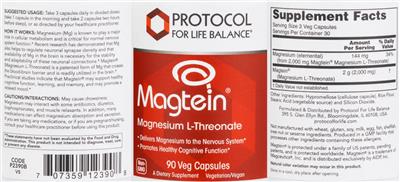
This supplement contains 2 active ingredients: magnesium and Magtein (a proprietary magnesium L-threonate complex). Both are forms of magnesium — an essential mineral your body uses for muscle and nerve function, bone health, and energy production.
The product also includes inactive ingredients: hypromellose, rice flour, stearic acid, and silicon dioxide (capsule material and processing aids).
Does it work?
Not established
Magnesium is effective for indigestion (dyspepsia), constipation, low blood magnesium (hypomagnesemia), and pre-eclampsia in pregnancy, according to the data we hold. If you're taking this for one of those purposes, the evidence supports its use.
For other uses, effectiveness data isn't established in what we have on file.
How safe is it?
Well-documented data
Magnesium is generally well tolerated at recommended doses in healthy adults. The most common side effects when taken by mouth are diarrhea, stomach irritation, nausea, and vomiting.
In rare cases, very high oral doses have caused bezoars — indigestible clumps in the stomach — though this is uncommon. Magnesium is needed in pregnancy, but use supplements only under your doctor's guidance.
During breastfeeding, normal dietary amounts are fine; check with your doctor before adding a supplement.
Meds to double-check
Major interaction found
Before taking this product, double-check with your pharmacist if you take levodopa/carbidopa (Sinemet) for Parkinson's — magnesium significantly reduces its effectiveness. Also check if you use skeletal muscle relaxants, potassium-sparing diuretics, calcium channel blockers, quinolone antibiotics (like ciprofloxacin), bisphosphonates (bone medications), sulfonylurea diabetes drugs, or acid-reducing medications (PPIs or H2 blockers).
The bottom line
Scorecard at a glanceFully disclosed formula with no established evidence rating for its marketed use. Major medication interactions have been identified, and safety information is well characterized.
This magnesium supplement works well for constipation, indigestion, and low magnesium levels if that's why you're taking it. If you take Parkinson's medication, muscle relaxants, diabetes drugs, antibiotics, bone medications, or blood-pressure or diuretic drugs, talk to your pharmacist first — magnesium can interfere with how they work.
It's also worth checking any acid-reducing medication you're on.
Educational only — not medical advice; always confirm with your pharmacist. Our editorial policy · How we use AI
Assessment coverage: 2 of 2 active ingredients matched to our full ingredient reviews (monographs). Based on the product label dated Mar 25, 2025.
This Scorecard evaluates available label information, ingredient evidence, and known medication-safety considerations. It does not independently verify product identity, purity, potency, contamination, or manufacturing quality. How these ratings are computed
General information
Key facts about Magtein Magnesium L-Threonate, straight from the product label.
| Brand | Protocol For Life Balance |
|---|---|
| Barcode (UPC) | 707359123908 |
| Net contents | 90 Veg Capsule(s) |
| Market status | On market |
| Date entered into DSLD | Mar 25, 2025 |
| DSLD ID | 326454 |
| Product type | Mineral |
| Supplement form | Capsule |
| Dietary claims / uses | Nutrient, All Other, Structure/Function |
| Intended target group(s) | Vegan, Vegetarian, Adult (18 - 50 Years), Gluten Free, Dairy Free |
Everything in this section is reproduced from the manufacturer’s own product label — it’s the label speaking, not HelloPharmacist. We show it so you can see exactly what the maker states; we don’t verify or endorse those statements.
Supplement Facts
The label details for Magtein Magnesium L-Threonate by Protocol For Life Balance, sourced from the NIH Dietary Supplement Label Database.
Supplement Facts
| Ingredient | Amount | % DV |
|---|---|---|
| Magnesium | 144 mg | 34% |
| Magtein | 2 Gram(s) | -- |
Other ingredients: Hypromellose, Rice Flour, Stearic Acid, Silicon Dioxide
Tap any ingredient to jump to its full detail below.
These statements are the manufacturer’s wording, reproduced from the product label — the label is saying it, not HelloPharmacist. We don’t verify or endorse them.
Suggested/Recommended/Usage/Directions
Suggested Usage: Take 3 capsules daily in divided doses (take 1 capsule in the morning and take 2 capsules two hours before sleep), or as directed by your healthcare practitioner.
Formula
How it works: Magnesium (Mg) is known to play a major role in cellular metabolism and is critical for normal nervous system function. Recent research has demonstrated that Mg also helps to regulate neuronal synapse density and that availability of Mg in the brain is necessary for the stability and adaptability of these neuronal connections. Magtein (Magnesium L-Threonate) is a patented form of Mg that crosses the blood-brain barrier and is readily utilized in the brain. Preclinical studies indicate that Magtein may support healthy cognitive function, learning, and memory, and may promote a relaxed mood.
Precautions
Cautions/Interactions: May cause drowsiness.
Magnesium may interact with some antibiotics, diuretics, bisphosphonates, and muscle relaxants. In addition, many medications can affect magnesium absorption and excretion. If you are taking any medications, or if you are pregnant/nursing, consult your healthcare practitioner before using this product.
Not manufactured with wheat, gluten, soy, milk, egg, fish, shellfish, tree nut or sesame ingredients. Produced in a GMP facility that processes other ingredients containing these allergens.
FDA Disclaimer Statement
These statements have not been evaluated by the Food and Drug Administration. This product is not intended to diagnose, treat, cure or prevent any disease.
Formulation
Delivers Magnesium to the nervous system Promotes healthy cognitive function
Non-GMO
Vegetarian/Vegan
Not manufactured with wheat, gluten, soy, milk, egg, fish, shellfish, tree nut or sesame ingredients.
Natural color variation may occur in this product.
FDA Statement of Identity
A Dietary Supplement
Brand IP Statement(s)
Magtein in protected under a family of US patents, pending patents, and is protected worldwide. Magtein is a trademark of Magceutics, Inc. and is distributed exclusively by AIDP, Inc.
Storage
Store in a cool, dry place after opening.
Is this label outdated? Report a formula or label change and our pharmacy team will review it.
Magtein Magnesium L-Threonate by Protocol For Life Balance label
The label scan from the NIH Dietary Supplement Label Database. Tap to enlarge.
Label images are published by the NIH Dietary Supplement Label Database for the version of this product on file. Always read your actual product label.
View the full label (PDF)The Ingredients in Magtein Magnesium L-Threonate by Protocol For Life Balance
These are the 2 active ingredients this product is made of. Select any to open its full monograph.
Serving size1 Veg Capsule(s) Dosage formCapsule Servings per container30 Amounts shown are per serving.
Most supplement products combine several ingredients, and a medication can interact with the product through any one of them. Each ingredient below shows whether it has known drug interactions.
Magnesium
Interacts with295 drugs
Magnesium is an essential mineral your body needs for muscles, nerves, blood pressure, and many other functions, and supplements are useful for preven...
Magnesium monograph & interactionsMagtein
Interacts with295 drugs
Magnesium is an essential mineral your body needs for muscles, nerves, blood pressure, and many other functions, and supplements are useful for preven...
Magtein monograph & interactionsOther (inactive) ingredients: Hypromellose, Rice Flour, Stearic Acid, Silicon Dioxide. These complete the product’s ingredient list but are not active constituents.
Magtein Magnesium L-Threonate by Protocol For Life Balance Drug Interactions
HelloPharmacist Interaction Report
Magtein Magnesium L-Threonate by Protocol For Life Balance does interact with several medication types.
The most serious concern is with levodopa/carbidopa (Sinemet), used for Parkinson's disease — magnesium can significantly reduce how much of these drugs your body absorbs, cutting levodopa levels by about 35% and carbidopa by 81%, which may make them less effective at controlling symptoms.
Read the full breakdown — every affected drug type, severity by severity
Moderate interactions are documented with skeletal muscle relaxants (which magnesium may strengthen and speed up), potassium-sparing diuretics (which may cause magnesium to build up in your system), calcium channel blockers for blood pressure (additive blood-pressure-lowering effects), acid-reducing medications like proton pump inhibitors (PPIs) and H2 blockers, sulfonylurea diabetes drugs (which magnesium may strengthen, raising low blood sugar risk), quinolone antibiotics, and bisphosphonates for bone health.
Altogether, these interactions span 293 individual medications. Use the medication checker on this page to look up your exact drugs before starting.
Check your own medications below · Editorial policy · How we use AI
Want to check YOUR meds against Magtein Magnesium L-Threonate?
Ask about interactions with your drugs in plain English — “Can I take it with lisinopril?” — and we find you the answer in seconds, ingredient by ingredient.
Go to the checkerIngredients driving the most interactions
Individual Drug Interactions
The ingredients in Magtein Magnesium L-Threonate interact with 295 drugs. Click any drug to see the details.
1 of the 2 ingredients in Magtein Magnesium L-Threonate interact with drugs. Each result below shows which ingredient is responsible. Magnesium
Benserazide, LevodopaMadopar, Prolopa
How Benserazide, Levodopa interacts with Magtein Magnesium L-Threonate — through 1 ingredient. Tap an ingredient for the detail:
MagteinLevodopa/carbidopa (sinemet) Major
Interaction Summary
Magnesium can reduce the bioavailability of levodopa/carbidopa.
Read the full Magtein + Benserazide, Levodopa interactionCarbidopaLodosyn
How Carbidopa interacts with Magtein Magnesium L-Threonate — through 1 ingredient. Tap an ingredient for the detail:
MagteinLevodopa/carbidopa (sinemet) Major
Interaction Summary
Magnesium can reduce the bioavailability of levodopa/carbidopa.
Read the full Magtein + Carbidopa interactionCarbidopa, LevodopaDhivy, Rytary, Sinemet, Sinemet CR
How Carbidopa, Levodopa interacts with Magtein Magnesium L-Threonate — through 1 ingredient. Tap an ingredient for the detail:
MagteinLevodopa/carbidopa (sinemet) Major
Interaction Summary
Magnesium can reduce the bioavailability of levodopa/carbidopa.
Read the full Magtein + Carbidopa, Levodopa interactionCarbidopa, Levodopa, EntacaponeStalevo
How Carbidopa, Levodopa, Entacapone interacts with Magtein Magnesium L-Threonate — through 1 ingredient. Tap an ingredient for the detail:
MagteinLevodopa/carbidopa (sinemet) Major
Interaction Summary
Magnesium can reduce the bioavailability of levodopa/carbidopa.
Read the full Magtein + Carbidopa, Levodopa, Entacapone interactionLevodopaInbrija, Larodopa
How Levodopa interacts with Magtein Magnesium L-Threonate — through 1 ingredient. Tap an ingredient for the detail:
MagteinLevodopa/carbidopa (sinemet) Major
Interaction Summary
Magnesium can reduce the bioavailability of levodopa/carbidopa.
Read the full Magtein + Levodopa interactionLevodopa, CarbidopaDuodopa
How Levodopa, Carbidopa interacts with Magtein Magnesium L-Threonate — through 1 ingredient. Tap an ingredient for the detail:
MagteinLevodopa/carbidopa (sinemet) Major
Interaction Summary
Magnesium can reduce the bioavailability of levodopa/carbidopa.
Read the full Magtein + Levodopa, Carbidopa interactionAcetaminophen, ChlorzoxazoneAcetazone Forte, Extra Strength Tylenol Aches & Strains, Parafon Forte
How Acetaminophen, Chlorzoxazone interacts with Magtein Magnesium L-Threonate — through 1 ingredient. Tap an ingredient for the detail:
MagteinSkeletal Muscle Relaxants Moderate
Interaction Summary
Parenteral magnesium alters the pharmacokinetics of skeletal muscle relaxants, increasing their effects and accelerating the onset of effect.
Read the full Magtein + Acetaminophen, Chlorzoxazone interactionAcetaminophen, Chlorzoxazone, CodeineAcetazone Forte C8, Parafon Forte C8
How Acetaminophen, Chlorzoxazone, Codeine interacts with Magtein Magnesium L-Threonate — through 1 ingredient. Tap an ingredient for the detail:
MagteinSkeletal Muscle Relaxants Moderate
Interaction Summary
Parenteral magnesium alters the pharmacokinetics of skeletal muscle relaxants, increasing their effects and accelerating the onset of effect.
Read the full Magtein + Acetaminophen, Chlorzoxazone, Codeine interactionAcetaminophen, Codeine, MethocarbamolAcetaminophen, Codeine, Methocarbamol, Robaxacet 8
How Acetaminophen, Codeine, Methocarbamol interacts with Magtein Magnesium L-Threonate — through 1 ingredient. Tap an ingredient for the detail:
MagteinSkeletal Muscle Relaxants Moderate
Interaction Summary
Parenteral magnesium alters the pharmacokinetics of skeletal muscle relaxants, increasing their effects and accelerating the onset of effect.
Read the full Magtein + Acetaminophen, Codeine, Methocarbamol interactionAcetaminophen, MethocarbamolRobaxacet
How Acetaminophen, Methocarbamol interacts with Magtein Magnesium L-Threonate — through 1 ingredient. Tap an ingredient for the detail:
MagteinSkeletal Muscle Relaxants Moderate
Interaction Summary
Parenteral magnesium alters the pharmacokinetics of skeletal muscle relaxants, increasing their effects and accelerating the onset of effect.
Read the full Magtein + Acetaminophen, Methocarbamol interactionAcetaminophen, OrphenadrineOrfenagesic
How Acetaminophen, Orphenadrine interacts with Magtein Magnesium L-Threonate — through 1 ingredient. Tap an ingredient for the detail:
MagteinSkeletal Muscle Relaxants Moderate
Interaction Summary
Parenteral magnesium alters the pharmacokinetics of skeletal muscle relaxants, increasing their effects and accelerating the onset of effect.
Read the full Magtein + Acetaminophen, Orphenadrine interactionAcetohexamideDymelor
How Acetohexamide interacts with Magtein Magnesium L-Threonate — through 1 ingredient. Tap an ingredient for the detail:
MagteinSulfonylureas Moderate
Interaction Summary
Magnesium increases the systemic absorption of sulfonylureas, increasing their effects and side effects.
Read the full Magtein + Acetohexamide interactionAlcuroniumAlcuronium
How Alcuronium interacts with Magtein Magnesium L-Threonate — through 1 ingredient. Tap an ingredient for the detail:
MagteinSkeletal Muscle Relaxants Moderate
Interaction Summary
Parenteral magnesium alters the pharmacokinetics of skeletal muscle relaxants, increasing their effects and accelerating the onset of effect.
Read the full Magtein + Alcuronium interactionAlendronateBinosto, Fosamax
How Alendronate interacts with Magtein Magnesium L-Threonate — through 1 ingredient. Tap an ingredient for the detail:
MagteinBisphosphonates Moderate
Interaction Summary
Magnesium can decrease absorption of bisphosphonates.
Read the full Magtein + Alendronate interactionAlendronate Sodium
How Alendronate Sodium interacts with Magtein Magnesium L-Threonate — through 1 ingredient. Tap an ingredient for the detail:
MagteinBisphosphonates Moderate
Interaction Summary
Magnesium can decrease absorption of bisphosphonates.
Read the full Magtein + Alendronate Sodium interactionAlendronate Sodium, CholecalciferolFosamax Plus D
How Alendronate Sodium, Cholecalciferol interacts with Magtein Magnesium L-Threonate — through 1 ingredient. Tap an ingredient for the detail:
MagteinBisphosphonates Moderate
Interaction Summary
Magnesium can decrease absorption of bisphosphonates.
Read the full Magtein + Alendronate Sodium, Cholecalciferol interactionAlginic Acid, Aluminum HydroxideRafton
How Alginic Acid, Aluminum Hydroxide interacts with Magtein Magnesium L-Threonate — through 1 ingredient. Tap an ingredient for the detail:
MagteinAntacids Moderate
Interaction Summary
Use of acid reducers may reduce the laxative effect of magnesium oxide.
Read the full Magtein + Alginic Acid, Aluminum Hydroxide interactionAluminum HydroxideAlu-Cap, Amphojel, Gaviscon
How Aluminum Hydroxide interacts with Magtein Magnesium L-Threonate — through 1 ingredient. Tap an ingredient for the detail:
MagteinAntacids Moderate
Interaction Summary
Use of acid reducers may reduce the laxative effect of magnesium oxide.
Read the full Magtein + Aluminum Hydroxide interactionAluminum Hydroxide, Aspirin, Codeine Phosphate, Magnesium HydroxideAscriptin Codeine #2
How Aluminum Hydroxide, Aspirin, Codeine Phosphate, Magnesium Hydroxide interacts with Magtein Magnesium L-Threonate — through 1 ingredient. Tap an ingredient for the detail:
MagteinAnticoagulant/antiplatelet Drugs, Antacids Moderate
Interaction Summary
Theoretically, magnesium may have antiplatelet effects, but the evidence is conflicting.
Read the full Magtein + Aluminum Hydroxide, Aspirin, Codeine Phosphate, Magnesium Hydroxide interactionAluminum Hydroxide, Aspirin, Magnesium HydroxideAscriptin
How Aluminum Hydroxide, Aspirin, Magnesium Hydroxide interacts with Magtein Magnesium L-Threonate — through 1 ingredient. Tap an ingredient for the detail:
MagteinAnticoagulant/antiplatelet Drugs, Antacids Moderate
Interaction Summary
Theoretically, magnesium may have antiplatelet effects, but the evidence is conflicting.
Read the full Magtein + Aluminum Hydroxide, Aspirin, Magnesium Hydroxide interactionAluminum Hydroxide, Magnesium Hydroxide (otc Drug)Maalox, Mucogel
How Aluminum Hydroxide, Magnesium Hydroxide (otc Drug) interacts with Magtein Magnesium L-Threonate — through 1 ingredient. Tap an ingredient for the detail:
MagteinAntacids Moderate
Interaction Summary
Use of acid reducers may reduce the laxative effect of magnesium oxide.
Read the full Magtein + Aluminum Hydroxide, Magnesium Hydroxide (otc Drug) interactionAluminum Hydroxide, Magnesium Hydroxide, Simethicone (otc Drug)Mylanta
How Aluminum Hydroxide, Magnesium Hydroxide, Simethicone (otc Drug) interacts with Magtein Magnesium L-Threonate — through 1 ingredient. Tap an ingredient for the detail:
MagteinAntacids Moderate
Interaction Summary
Use of acid reducers may reduce the laxative effect of magnesium oxide.
Read the full Magtein + Aluminum Hydroxide, Magnesium Hydroxide, Simethicone (otc Drug) interactionAluminum, Magnesium (otc Drug)Almagel
How Aluminum, Magnesium (otc Drug) interacts with Magtein Magnesium L-Threonate — through 1 ingredient. Tap an ingredient for the detail:
MagteinAntacids Moderate
Interaction Summary
Use of acid reducers may reduce the laxative effect of magnesium oxide.
Read the full Magtein + Aluminum, Magnesium (otc Drug) interactionAmikacinAmikin, Arikayce
How Amikacin interacts with Magtein Magnesium L-Threonate — through 1 ingredient. Tap an ingredient for the detail:
MagteinAminoglycoside Antibiotics Moderate
Interaction Summary
Concomitant use of aminoglycoside antibiotics and magnesium can increase the risk for neuromuscular weakness.
Read the full Magtein + Amikacin interactionAmilorideAmilamont, Midamor
How Amiloride interacts with Magtein Magnesium L-Threonate — through 1 ingredient. Tap an ingredient for the detail:
MagteinPotassium-sparing Diuretics Moderate
Interaction Summary
Potassium-sparing diuretics decrease excretion of magnesium, possibly increasing magnesium levels.
Read the full Magtein + Amiloride interactionAmiloride, HydrochlorothiazideAmil-Co, Amilzide, Moduret 25, Moduretic
How Amiloride, Hydrochlorothiazide interacts with Magtein Magnesium L-Threonate — through 1 ingredient. Tap an ingredient for the detail:
MagteinPotassium-sparing Diuretics Moderate
Interaction Summary
Potassium-sparing diuretics decrease excretion of magnesium, possibly increasing magnesium levels.
Read the full Magtein + Amiloride, Hydrochlorothiazide interactionAmlodipineNorliqva
How Amlodipine interacts with Magtein Magnesium L-Threonate — through 1 ingredient. Tap an ingredient for the detail:
MagteinCalcium Channel Blockers Moderate
Interaction Summary
Magnesium can have additive effects with calcium channel blockers, although evidence is conflicting.
Read the full Magtein + Amlodipine interactionAmlodipine BenzoateKaterzia
How Amlodipine Benzoate interacts with Magtein Magnesium L-Threonate — through 1 ingredient. Tap an ingredient for the detail:
MagteinCalcium Channel Blockers Moderate
Interaction Summary
Magnesium can have additive effects with calcium channel blockers, although evidence is conflicting.
Read the full Magtein + Amlodipine Benzoate interactionAmlodipine BesilateIstin
How Amlodipine Besilate interacts with Magtein Magnesium L-Threonate — through 1 ingredient. Tap an ingredient for the detail:
MagteinCalcium Channel Blockers Moderate
Interaction Summary
Magnesium can have additive effects with calcium channel blockers, although evidence is conflicting.
Read the full Magtein + Amlodipine Besilate interactionAmlodipine BesylateNorvasc
How Amlodipine Besylate interacts with Magtein Magnesium L-Threonate — through 1 ingredient. Tap an ingredient for the detail:
MagteinCalcium Channel Blockers Moderate
Interaction Summary
Magnesium can have additive effects with calcium channel blockers, although evidence is conflicting.
Read the full Magtein + Amlodipine Besylate interactionEach ingredient & the kinds of drugs it affects
For each ingredient in Magtein Magnesium L-Threonate with known interactions, here are the types of medications it can affect. Open any type for the detail — or search your exact drug in the checker above.
Magnesium
Levodopa/Carbidopa (Sinemet)
Magnesium can reduce the bioavailability of levodopa/carbidopa.
Clinical research in healthy volunteers shows that taking magnesium oxide 1000 mg with levodopa 100 mg/carbidopa 10 mg reduces the area under the curve (AUC) of levodopa by 35% and of carbidopa by 81%. In vitro and animal research shows that magnesium produces an alkaline environment in the digestive tract, which might lead to degradation and reduced bioavailability of levodopa/carbidopa.
Aminoglycoside Antibiotics
Concomitant use of aminoglycoside antibiotics and magnesium can increase the risk for neuromuscular weakness.
Both aminoglycosides and magnesium reduce presynaptic acetylcholine release, which can lead to neuromuscular blockade and possible paralysis. This is most likely to occur with high doses of magnesium given intravenously.
Antacids
Use of acid reducers may reduce the laxative effect of magnesium oxide.
A retrospective analysis shows that, in the presence of H2 receptor antagonists (H2RAs) or proton pump inhibitors (PPIs), a higher dose of magnesium oxide is needed for a laxative effect. This may also occur with antacids. Under acidic conditions, magnesium oxide is converted to magnesium chloride and then to magnesium bicarbonate, which has an osmotic laxative effect. By reducing acidity, antacids may reduce the conversion of magnesium oxide to the active bicarbonate salt.
Bictegravir/Emtricitabine/Tenofovir Alafenamide (Biktarvy)
Magnesium might decrease levels of bictegravir/emtricitabine/tenofovir alafenamide by reducing its absorption.
Advise patients that bictegravir/emtricitabine/tenofovir alafenamide should be taken at least 2 hours before or 6 hours after magnesium containing products.
Bisphosphonates
Magnesium can decrease absorption of bisphosphonates.
Cations, including magnesium, can decrease bisphosphonate absorption. Advise patients to separate doses of magnesium and these drugs by at least 2 hours.
Calcium Channel Blockers
Magnesium can have additive effects with calcium channel blockers, although evidence is conflicting.
Magnesium inhibits calcium entry into smooth muscle cells and may therefore have additive effects with calcium channel blockers. Severe hypotension and neuromuscular blockades may occur when nifedipine is used with intravenous magnesium, although some contradictory evidence suggests that concurrent use of magnesium with nifedipine does not increase the risk of neuromuscular weakness. High doses of magnesium could theoretically have additive effects with other calcium channel blockers.
Digoxin
Magnesium salts may reduce absorption of digoxin.
Clinical evidence suggests that treatment with oral magnesium hydroxide or magnesium trisilicate reduces absorption of digoxin from the intestines. This may reduce the blood levels of digoxin and decrease its therapeutic effects.
Potassium-Sparing Diuretics
Potassium-sparing diuretics decrease excretion of magnesium, possibly increasing magnesium levels.
Potassium-sparing diuretics also have magnesium-sparing properties, which can counteract the magnesium losses associated with loop and thiazide diuretics. Theoretically, increased magnesium levels could result from concomitant use of potassium-sparing diuretics and magnesium supplements.
Quinolone Antibiotics
Magnesium decreases absorption of quinolones.
Magnesium can form insoluble complexes with quinolones and decrease their absorption. Advise patients to take these drugs at least 2 hours before, or 4 to 6 hours after, magnesium supplements.
Skeletal Muscle Relaxants
Parenteral magnesium alters the pharmacokinetics of skeletal muscle relaxants, increasing their effects and accelerating the onset of effect.
Parenteral magnesium shortens the time to onset of skeletal muscle relaxants by about 1 minute and prolongs the duration of action by about 2 minutes. Magnesium potentiates the effects of skeletal muscle relaxants by decreasing calcium-mediated release of acetylcholine from presynaptic nerve terminals, reducing postsynaptic sensitivity to acetylcholine, and having a direct effect on the membrane potential of myocytes. Magnesium also has vasodilatory actions and increases cardiac output, allowing a greater amount of muscle relaxant to reach the motor end plate. A clinical study found that low-dose rocuronium (0.45 mg/kg), when given after administration of magnesium 30 mg/kg over 10 minutes, has an accelerated onset of effect, which matches the onset of effect seen with a full-dose rocuronium regimen (0.6 mg/kg). In another clinical study, onset times for rocuronium doses of 0.3, 0.6, and 1.2 mg/kg were 86, 76, and 50 seconds, respectively, when given alone, but were reduced to 66, 44, and 38 seconds, respectively, when the doses were given after a 15-minute infusion of magnesium sulfate 60 mg/kg. Giving intraoperative intravenous magnesium sulfate, 50 mg/kg loading dose followed by 15 mg/kg/hour, reduces the onset time of rocuronium, enhances its clinical effects, reduces the dose of intraoperative opiates, and prolongs the spontaneous recovery time. It does not affect the activity of subsequently administered neostigmine.
Sulfonylureas
Magnesium increases the systemic absorption of sulfonylureas, increasing their effects and side effects.
Clinical research shows that administration of magnesium hydroxide with glyburide increases glyburide absorption, increases maximal insulin response by 35-fold, and increases the risk of hypoglycemia, when compared with glyburide alone. A similar interaction occurs between magnesium hydroxide and glipizide. The mechanism of this effect appears to be related to the elevation of gastrointestinal pH by magnesium-based antacids, increasing solubility and enhancing absorption of sulfonylureas.
Tetracycline Antibiotics
Magnesium decreases absorption of tetracyclines.
Magnesium can form insoluble complexes with tetracyclines in the gut and decrease their absorption and antibacterial activity. Advise patients to take these drugs 1 hour before or 2 hours after magnesium supplements.
Anticoagulant/Antiplatelet Drugs
Theoretically, magnesium may have antiplatelet effects, but the evidence is conflicting.
In vitro evidence shows that magnesium sulfate inhibits platelet aggregation, even at low concentrations. Some preliminary clinical evidence shows that infusion of magnesium sulfate increases bleeding time by 48% and reduces platelet activity. However, other clinical research shows that magnesium does not affect platelet aggregation, although inhibition of platelet-dependent thrombosis can occur.
Gabapentin (Neurontin)
Gabapentin absorption can be decreased by magnesium.
Clinical research shows that giving magnesium oxide orally along with gabapentin decreases the maximum plasma concentration of gabapentin by 33%, time to maximum concentration by 36%, and area under the curve by 43%. Advise patients to take gabapentin at least 2 hours before, or 4 to 6 hours after, magnesium supplements.
Sevelamer (Renagel, Renvela)
Sevelamer may increase serum magnesium levels.
In patients on hemodialysis, sevelamer use was associated with a 0.28 mg/dL increase in serum magnesium. The mechanism of this interaction remains unclear.
Brand information
Manufacturer and brand details for Magtein Magnesium L-Threonate, from the product label.
Protocol For Life Balance
See all Protocol For Life Balance products- Name
- Protocol For Life Balance
- Street Address
- 395 S. Glen Ellyn Rd.
- City
- Bloomingdale
- State
- IL
- ZipCode
- 60108
- Web Address
- protocolforlife.com
Magtein Magnesium L-Threonate by Protocol For Life Balance: Common Questions
Does Magtein Magnesium L-Threonate by Protocol For Life Balance interact with any medications?
How can one product interact with so many drugs?
Where does this information come from?
Is it safe to take this while pregnant?
Can I breastfeed while taking this?
What are the most common side effects?
Does this supplement really work for constipation?
What is Magtein, and how is it different from regular magnesium?
How far apart should I take this from my antibiotics?
Written and reviewed by the HelloPharmacist editorial staff. Our editorial policy
Not sure if Magtein Magnesium L-Threonate is safe with your meds?
Our pharmacists answer your medication & supplement questions — free.
Label information is sourced from the NIH Dietary Supplement Label Database and reflects the product version on file; always read your actual product label. This page is for education only and is not a substitute for professional medical advice. Confirm with your pharmacist or doctor before combining supplements and medications.
The Full Monographs Behind Magtein Magnesium L-Threonate’s Ingredients
Every ingredient we hold a full HelloPharmacist monograph for — uses, evidence, safety, and the complete interaction list.
Sources & How We Checked
Magtein Magnesium L-Threonate's label data comes from the NIH Dietary Supplement Label Database; the ingredient interaction data is from the Natural Medicines database, reviewed by our pharmacists.
- NIH Dietary Supplement Label Database (DSLD) — The official product label on file for this supplement.
- Natural Medicines (Therapeutic Research Center) — Evidence-graded clinical reference behind the ingredient interaction data.
Content is written and reviewed by licensed HelloPharmacist pharmacists. See our data sources and editorial standards for how this information is built and checked.
The 82 references behind this product’s interaction data
Every citation that drives the interaction findings for this product’s ingredients, from the evidence-graded Natural Medicines (TRC Healthcare) database. Open an ingredient to browse its citations — links open the study on PubMed or the publisher’s site.
Magnesium 82 references
- Rodin SM, Johnson BF. Pharmacokinetic interactions with digoxin. Clin Pharmacokinet 1988;15:227-44.
- Covington TR, et al. Handbook of Nonprescription Drugs. 11th ed. Washington, DC: American Pharmaceutical Association, 1996.
- Dahle LO, Berg G, Hammar M, et al. The effect of oral magnesium substitution on pregnancy-induced leg cramps. Am J Obstet Gynecol 1995;173:175-80. PubMed
- Hansten PD, Horn JR. Drug Interactions Analysis and Management. Vancouver, WA: Applied Therapeutics Inc., 1997 and updates.
- Peikert A, Wilimzig C, Kohne-Volland R. Prophylaxis of migraine with oral magnesium: results from a prospective, multi-center, placebo-controlled and double-blind randomized study. Cephalalgia 1996;16:257-63. PubMed
- Food and Nutrition Board, Institute of Medicine. Dietary Reference Intakes for Calcium, Phosphorus, Magnesium, Vitamin D, and Fluoride. Washington, DC: National Academy Press, 1999. Available at: http://books.nap.edu/books/0309063507/html/index.html.
- Birrer RB, Shallash AJ, Totten V. Hypermagnesemia-induced fatality following epsom salt gargles. J Emerg Med 2002;22:185-8. PubMed
- Ryan MP. Diuretics and potassium/magnesium depletion. Directions for treatment. Am J Med 1987;82:38-47.. PubMed
- Hollifield JW. Magnesium depletion, diuretics, and arrhythmias. Am J Med 1987;82:30-7.. PubMed
- Heidenreich O. Mode of action of conventional and potassium-sparing diuretics--aspects with relevance to Mg-sparing effects. Magnesium 1984;3:248-56..
- Pfaffenrath V, Wessely P, Meyer C, et al. Magnesium in the prophylaxis of migraine--a double-blind placebo-controlled study. Cephalalgia 1996;16:436-40.. PubMed
- Wang F, Van Den Eeden SK, Ackerson LM, et al. Oral magnesium oxide prophylaxis of frequent migrainous headache in children: a randomized, double-blind, placebo-controlled trial. Headache 2003;43:601-10.. PubMed
- Sompolinsky D, Samra Z. Influence of magnesium and manganese on some biological and physical properties of tetracycline. J Bacteriol 1972;110:468-76.. PubMed
- Jeyabalan A, Caritis SN. Pharmacologic inhibition of preterm labor. Clin Obstet Gynecol 2002;45:99-113. PubMed
- Mittendorf R, Dambrosia J, Pryde PG, et al. Association between the use of antenatal magnesium sulfate in preterm labor and adverse health outcomes in infants. Am J Obstet Gynecol 2002;186:1111-8.. PubMed
- Witlin AG, Sibai BM. Magnesium sulfate therapy in preeclampsia and eclampsia. Obstet Gynecol 1998;92:883-9.. DOI
- Crowther CA, Hiller JE, Doyle LW. Magnesium sulphate for preventing preterm birth in threatened preterm labour. Cochrane Database Syst Rev 2002;4:CD001060. . PubMed
- Davey MJ, Teubner D. A randomized controlled trial of magnesium sulfate, in addition to usual care, for rate control in atrial fibrillation. Ann Emerg Med 2005;45:347-53.. PubMed
- L'Hommedieu CS, Nicholas D, Armes DA, et al. Potentiation of magnesium sulfate--induced neuromuscular weakness by gentamicin, tobramycin, and amikacin. J Pediatr 1983;102:629-31..
- Dunn CJ, Goa KL. Risedronate: a review of its pharmacological properties and clinical use in resorptive bone disease. Drugs 2001;61:685-712..
- Kass L, Weekes J, Carpenter L. Effect of magnesium supplementation on blood pressure: a meta-analysis. Eur J Clin Nutr 2012;66:411-8. PubMed
- Koontz SL, Friedman SA, Schwartz ML. Symptomatic hypocalcemia after tocolytic therapy with magnesium sulfate and nifedipine. Am J Obstet Gynecol. 2004;190(6):1773-6. PubMed
- Snyder SW, Cardwell MS. Neuromuscular blockade with magnesium sulfate and nifedipine. Am J Obstet Gynecol. 1989;161(1):35-6. PubMed
- Waisman GD, Mayorga LM, Cámera MI, et al. Magnesium plus nifedipine: potentiation of hypotensive effect in preeclampsia? Am J Obstet Gynecol. 1988;159(2):308-9. PubMed
- Brown DD, Juhl RP. Decreased bioavailability of digoxin due to antacids and kaolin-pectin. N Engl J Med. 1976;295(19):1034-7. PubMed
- Allen MD, Greenblatt DJ, Harmatz JS, et al. Effect of magnesium--aluminum hydroxide and kaolin--pectin on absorption of digoxin from tablets and capsules. J Clin Pharmacol. 1981;21(1):26-30. PubMed
- Ravn HB, Vissinger H, Kristensen SD, et al. Magnesium inhibits platelet activity--an in vitro study. Thromb Haemost. 1996;76(1):88-93. DOI
- Ravn HB, Kristensen SD, Vissinger H, et al. Magnesium inhibits human platelets. Blood Coagul Fibrinolysis. 1996;7(2):241-4. PubMed
- Ravn HB, Vissinger H, Kristensen SD, et al. Magnesium inhibits platelet activity--an infusion study in healthy volunteers. Thromb Haemost. 1996;75(6):939-44. DOI
- Neuvonen PJ, Kivistö KT. The effects of magnesium hydroxide on the absorption and efficacy of two glibenclamide preparations. Br J Clin Pharmacol. 1991;32(2):215-20. PubMed
- Kivistö KT, Neuvonen PJ. Enhancement of absorption and effect of glipizide by magnesium hydroxide. Clin Pharmacol Ther. 1991;49(1):39-43. PubMed
- Neuvonen PJ, Kivistö KT. Enhancement of drug absorption by antacids. An unrecognised drug interaction. Clin Pharmacokinet. 1994;27(2):120-8. PubMed
- Shechter, M., Merz, C. N., Paul-Labrador, M., Meisel, S. R., Rude, R. K., Molloy, M. D., Dwyer, J. H., Shah, P. K., and Kaul, S. Beneficial antithrombotic effects of the association of pharmacological oral magnesium therapy with aspirin in coronary heart
- Ganzevoort, J. W., Hoogerwaard, E. M., and van der Post, J. A. [Hypocalcemic delirium due to magnesium sulphate therapy in a pregnant woman with pre-eclampsia]. Ned.Tijdschr.Geneeskd. 8-3-2002;146(31):1453-1456.
- Horner, S. M. Efficacy of intravenous magnesium in acute myocardial infarction in reducing arrhythmias and mortality. Meta-analysis of magnesium in acute myocardial infarction. Circulation 1992;86(3):774-779. PubMed
- Azria, E., Tsatsaris, V., Goffinet, F., Kayem, G., Mignon, A., and Cabrol, D. [Magnesium sulfate in obstetrics: current data]. J Gynecol.Obstet.Biol.Reprod.(Paris) 2004;33(6 Pt 1):510-517.
- Magee, L. A., Miremadi, S., Li, J., Cheng, C., Ensom, M. H., Carleton, B., Cote, A. M., and von Dadelszen, P. Therapy with both magnesium sulfate and nifedipine does not increase the risk of serious magnesium-related maternal side effects in women with p
- Henyan, N. N., Gillespie, E. L., White, C. M., Kluger, J., and Coleman, C. I. Impact of intravenous magnesium on post-cardiothoracic surgery atrial fibrillation and length of hospital stay: a meta-analysis. Ann.Thorac.Surg. 2005;80(6):2402-2406. PubMed
- Li, J., Zhang, Q., Zhang, M., and Egger, M. Intravenous magnesium for acute myocardial infarction. Cochrane.Database.Syst.Rev. 2007;(2):CD002755. PubMed
- Doyle, L. W., Crowther, C. A., Middleton, P., Marret, S., and Rouse, D. Magnesium sulphate for women at risk of preterm birth for neuroprotection of the fetus. Cochrane.Database.Syst.Rev. 2009;(1):CD004661. PubMed
- Han, S., Crowther, C. A., and Moore, V. Magnesium maintenance therapy for preventing preterm birth after threatened preterm labour. Cochrane.Database.Syst.Rev. 2010;(7):CD000940. PubMed
- Duley, L., Gulmezoglu, A. M., Henderson-Smart, D. J., and Chou, D. Magnesium sulphate and other anticonvulsants for women with pre-eclampsia. Cochrane.Database.Syst.Rev. 2010;(11):CD000025. PubMed
- Conde-Agudelo, A., Romero, R., and Kusanovic, J. P. Nifedipine in the management of preterm labor: a systematic review and metaanalysis. Am J Obstet.Gynecol. 2011;204(2):134-20. PubMed
- Wong, G. K., Boet, R., Poon, W. S., Chan, M. T., Gin, T., Ng, S. C., and Zee, B. C. Intravenous magnesium sulphate for aneurysmal subarachnoid hemorrhage: an updated systemic review and meta-analysis. Crit Care 2011;15(1):R52. PubMed
- Magee, L., Sawchuck, D., Synnes, A., and von, Dadelszen P. SOGC Clinical Practice Guideline. Magnesium sulphate for fetal neuroprotection. J Obstet.Gynaecol.Can. 2011;33(5):516-529.
- Doyle, L. W. Antenatal magnesium sulfate and neuroprotection. Curr Opin Pediatr 2012;24(2):154-159. PubMed
- McDonald, S. D., Lutsiv, O., Dzaja, N., and Duley, L. A systematic review of maternal and infant outcomes following magnesium sulfate for pre-eclampsia/eclampsia in real-world use. Int J Gynaecol.Obstet. 2012;118(2):90-96. PubMed
- Gordon, M., Naidoo, K., Akobeng, A. K., and Thomas, A. G. Osmotic and stimulant laxatives for the management of childhood constipation. Cochrane.Database.Syst.Rev. 2012;7:CD009118. PubMed
- Dodd, J. M., Crowther, C. A., and Middleton, P. Oral betamimetics for maintenance therapy after threatened preterm labour. Cochrane.Database.Syst.Rev. 2012;12:CD003927. PubMed
- Wu, X., Wang, C., Zhu, J., Zhang, C., Zhang, Y., and Gao, Y. Meta-analysis of randomized controlled trials on magnesium in addition to beta-blocker for prevention of postoperative atrial arrhythmias after coronary artery bypass grafting. BMC.Cardiovasc.D PubMed
- Thorp, J. M., Jr., Katz, V. L., Campbell, D., and Cefalo, R. C. Hypersensitivity to magnesium sulfate. Am.J.Obstet.Gynecol. 1989;161(4):889-890. PubMed
- Duley L and Gulmezoglu AM. Magnesium sulphate versus lytic cocktail for eclampsia. Cochrane Database of Systematic Reviews 2000;(3) PubMed
- Gibbins KJ, Browning KR, Lopes VV, Anderson BL, Rouse DJ. Evaluation of the clinical use of magnesium sulfate for cerebral palsy prevention. Obstet Gynecol 2013;121(2 Pt 1):235-40. PubMed
- Ji D. Oral magnesium sulfate causes perforation during bowel preparation for fiberoptic colonoscopy in patients with colorectal cancer. J Emerg Med 2012;43(4):716-7. PubMed
- Yagi T, Naito T, Mino Y, Umemura K, Kawakami J. Impact of concomitant antacid administration on gabapentin plasma exposure and oral bioavailability in healthy adult subjects. Drug Metab Pharmacokinet 2012;27(2):248-54. PubMed
- Yamasaki M, Funakoshi S, Matsuda S, Imazu T, Takeda Y, Murakami T, Maeda Y. Interaction of magnesium oxide with gastric acid secretion inhibitors in clinical pharmacotherapy. Eur J Clin Pharmacol 2014;70(8):921-4. PubMed
- Choi ES, Jeong WJ, Ahn SH, Oh AY, Jeon YT, Do SH. Magnesium sulfate accelerates the onset of low-dose rocuronium in patients undergoing laryngeal microsurgery. J Clin Anesth. 2017 Feb;36:102-106. PubMed
- Ikee R, Toyoyama T, Endo T, Tsunoda M, Hashimoto N. Impact of sevelamer hydrochloride on serum magnesium concentrations in hemodialysis patients. Magnes Res. 2016 Apr 1;29(4):184-90. PubMed
- Miller ES, Sakowicz A, Leger E. Lange E, Yee LM. The association between receipt of intrapartum magnesium and postpartum hemorrhage. Am J Obstet Gynecol 2018;218(1 Suppl):S165.
- Rodríguez-Rubio L, Solis Garcia Del Pozo J, Nava E, Jordán J. Interaction between magnesium sulfate and neuromuscular blockers during the perioperative period. A systematic review and meta-analysis. J Clin Anesth. 2016;34:524-34. PubMed
- Brown RS. Magnesium Sulfate: Another Cause of a Solute Diuresis. Am J Kidney Dis. 2017;69(4):550-551. PubMed
- Park H, Qin R, Smith TJ, et al. North Central Cancer Treatment Group N10C2 (Alliance): a double-blind placebo-controlled study of magnesium supplements to reduce menopausal hot flashes. Menopause. 2015;22(6):627-32. PubMed
- Sakanoue M, Sanada J, Kanekura T. Skin eruption elicited by magnesium oxide (Maglax). J Dermatol. 2016;43(2):221-2.
- Iwamuro M, Saito S, Yoshioka M, et al. A Magnesium Oxide Bezoar. Intern Med. 2018;57(21):3087-3091. PubMed
- Vilchez G, Dai J, Kumar K, Mundy D, Kontopoulos E, Sokol RJ. Racial/ethnic disparities in magnesium sulfate neuroprotection: a subgroup analysis of a multicenter randomized controlled trial. J Matern Fetal Neonatal Med. 2018;31(17):2304-2311. PubMed
- Drug Safety Communication: FDA Recommends Against Prolonged Use of Magnesium Sulfate to Stop Pre-term Labor Due to Bone Changes in Exposed Babies. U.S. Food and Drug Administration (FDA), May 30, 2013. https://www.fda.gov/downloads/Drugs/DrugSafety/UCM353
- Committee Opinion: Magnesium Sulfate Use in Obstetrics. The American College of Obstetricians and Gynecologists Committee on Obstetric Practice Society for Maternal-Fetal Medicine, Number 652, January 2016. https://www.acog.org/Clinical-Guidance-and-Publi
- Kashihara Y, Terao Y, Yoda K, et al. Effects of magnesium oxide on pharmacokinetics of L-dopa/carbidopa and assessment of pharmacodynamic changes by a model-based simulation. Eur J Clin Pharmacol. 2019;75(3):351-361. PubMed
- Shepherd E, Salam RA, Manhas D, et al. Antenatal magnesium sulphate and adverse neonatal outcomes: A systematic review and meta-analysis. PLoS Med. 2019;16(12):e1002988. PubMed
- Hong JY, Hong JY, Choi YS, et al. Antenatal magnesium sulfate treatment and risk of necrotizing enterocolitis in preterm infants born at less than 32 weeks of gestation. Sci Rep. 2020;10(1):12826. PubMed
- Schuh S, Sweeney J, Rumantir M, et al. Effect of nebulized magnesium vs placebo added to albuterol on hospitalization among children with refractory acute asthma treated in the emergency department: a randomized clinical trial. JAMA. 2020;324(20):2038-20 PubMed
- Almeida CED, Carvalho LR, Andrade CVC, Nascimento PD Jr, Barros GAM, Modolo NSP. Effects of magnesium sulphate on the onset time of rocuronium at different doses: a randomized clinical trial. Braz J Anesthesiol. 2021;71(5):482-8. PubMed
- Gochi Valdovinos A, Arriaga-Redondo M, Dejuan Bitriá E, Pérez Rodríguez I, Márquez Isidro E, Blanco Bravo D. Prenatal therapy with magnesium sulphate and intestinal obstruction due to meconium in preterm newborns. An Pediatr (Engl Ed). 2022 Feb;96(2):138- PubMed
- Iio K, Kondo E, Shibata E, et al. Long-term tocolysis with magnesium sulfate as a risk factor for low bone mass: a case series. J Med Cases. 2022 Feb;13(2):47-50. PubMed
- Eiraku K, Uozumi Y, Hieda M, Maruyama T, Nomura H. A senile case of heart failure associated with hypermagnesemia induced by magnesium-containing laxative agent. Geriatr Gerontol Int. 2022;22(10):897-899.
- Enayati A, Gin JH, Sajeev JK, et al. Efficacy of intravenous magnesium for the management of non-post operative atrial fibrillation with rapid ventricular response: A systematic review and meta-analysis. J Cardiovasc Electrophysiol 2023;34(5):1286-1295. PubMed
- Su YH, Luo DC, Pang Y. Effects of intraoperative Magnesium sulfate infusion on emergency agitation during general anesthesia in patients undergoing radical mastectomy: a randomized controlled study. BMC Anesthesiol 2023;23(1):326. PubMed
- Han J, Park HY, Shin HJ, Chung SH, Do SH. Effects of magnesium sulphate on neostigmine-induced recovery from moderate neuromuscular blockade with rocuronium: a randomized controlled trial. Magnes Res 2023;36(2):31-39. PubMed
- Lee AT, Cordova JC, Jamplis RP, Pomicter GR. Posterior Reversible Encephalopathy Syndrome and Eclampsia in the Setting of Magnesium Toxicity: A Case Report. A A Pract 2023;17(11):e01726. PubMed
- Darmawan D, Rengganis I, Rumende CM, et al. Effectiveness and Safety of Nebulized Magnesium as Last Line Treatment in Adults with Acute Asthma Attack: A Systematic Review and Meta-Analysis. Acta Med Indones 2024;56(1):3-12.
- Shepherd ES, Goldsmith S, Doyle LW, et al. Magnesium sulphate for women at risk of preterm birth for neuroprotection of the fetus. Cochrane Database Syst Rev 2024;5(5):CD004661. PubMed
- US Food and Drug Administration (FDA). Biktarvy Prescribing Information. October 2024. Available at: https://www.accessdata.fda.gov/drugsatfda_docs/label/2024/210251Orig1s020lbl.pdf. Accessed July 16, 2025.
Parts of this content are provided by the Therapeutic Research Center, LLC.
DISCLAIMER: Currently this does not check for drug-drug interactions. This is not an all-inclusive comprehensive list of potential interactions and is for informational purposes only. Not all interactions are known or well-reported in the scientific literature, and new interactions are continually being reported. Input is needed from a qualified healthcare provider including a pharmacist before starting any therapy. Application of clinical judgment is necessary.
© 2021 Therapeutic Research Center, LLC