
Restore Ingredients & Drug Interactions
What is this page for?
First and foremost: checking Restore against your medications. The heart of this page is the interaction checker and the full interaction report — how this product’s ingredients may interact with prescription and over-the-counter medicines you may be taking.
Around that, we add a pharmacist’s high-level view of the product as a whole — what’s inside, the evidence for its stated use, how transparent the label is, and what safety data exists — so you can see the full picture in one place. It’s educational information from our licensed clinical databases and the clinical staff at HelloPharmacist — not medical advice — and we don’t sell or endorse products. Our editorial policy
Restore is a dietary supplement by Herbally Grounded with 9 active ingredients. Its ingredients are commonly taken for sore throat and cough, heartburn and acid reflux, digestive upset and ibs.Based on those ingredients, 2,138 medications have a known interaction with it, the most serious rated major. The ingredients most likely to interact are Slippery Elm, Hops, Saw Palmetto. Use the checker below to test your specific medication, or read the full HelloPharmacist Interaction Report.
Check Your Meds Against Restore by Herbally Grounded
Ask about any prescription or over-the-counter medication and we check it for interactions with Restore by Herbally Grounded — and tell you which ingredient is responsible.
AI summaries are generated from our interaction database for education only — always confirm with your pharmacist. How we use AI
Ask the Pharmacist
A licensed pharmacist will answer your question by email — free, usually within 24 hours.
Got it — thank you!
A licensed pharmacist will answer within 24 hours. Keep an eye on your email (worth checking spam, just in case).
HelloPharmacist Scorecard of Restore by Herbally Grounded
Our pharmacy team’s full take, with four database checks built into the cards below — a summary of what is known, not a grade of the product itself.
What’s inside
Low disclosure
Restore contains eight ingredients in a proprietary blend format, meaning the specific amounts of each component are not disclosed on the label. The active ingredients are slippery elm, damiana, saw palmetto, hops, blessed thistle, dong quai, and yellow dock root.
Slippery elm is included for its mucilage content; damiana and hops are traditionally used for various wellness purposes; blessed thistle has a history in digestive support; and dong quai and yellow dock root are included for their traditional roles in herbal medicine. The product also contains inactive ingredients: glycerin, deionized water, and apple cider vinegar.
Does it work?
Not established
The evidence supporting the active ingredients in Restore is limited. For slippery elm, damiana, hops, and blessed thistle, we have insufficient reliable evidence to rate their effectiveness for any of the conditions they're traditionally used for — including constipation, cough, sexual dysfunction, anxiety, insomnia, and digestive discomfort.
Saw palmetto shows possibly ineffective evidence for benign prostatic hyperplasia, though it is possibly effective for transurethral resection of the prostate. Dong quai and yellow dock have insufficient reliable evidence for their traditional uses such as anemia, osteoporosis, and migraine.
In short, the data we hold does not establish that this product's ingredients work for their stated purposes.
How safe is it?
Well-documented data
Most of these ingredients are generally well tolerated in short-term use, but safety data are often limited. Slippery elm may cause contact dermatitis or allergic reactions to its pollen.
Damiana has caused tetanus-like convulsions in very high doses (200 grams of extract). Saw palmetto is mild and reversible in most people but has rare reports of heart rhythm problems, fixed drug eruptions (blistered lesions), and acne worsening.
Hops may cause drowsiness and has been linked to postmenopausal bleeding in combination supplements. Blessed thistle can cause stomach irritation or vomiting in doses above 5 grams per cup of tea.
Dong quai is generally well tolerated but may increase sun sensitivity. Yellow dock acts as a laxative and contains oxalates; raw leaves or rhizomes can cause serious effects including low calcium and kidney stones.
Pregnancy and breastfeeding safety varies by ingredient — damiana, hops, blessed thistle, dong quai, and yellow dock all lack sufficient safety data for these periods, and some are best avoided.
Meds to double-check
Major interaction found
Before taking Restore, double-check with your pharmacist if you take: blood thinners like warfarin or antiplatelet drugs (Major concern with dong quai and yellow dock; Moderate with saw palmetto), diuretics or digoxin heart medications (Major concern with yellow dock), sedatives or sleep aids (Moderate concern with hops), estrogens or contraceptive birth control (Moderate concern with saw palmetto and dong quai), or stomach-acid medications like H2-blockers, antacids, or proton pump inhibitors (Minor concern with blessed thistle). If you take any oral medications, slippery elm may slow their absorption.
The bottom line
Scorecard at a glanceFormula with limited ingredient disclosure with no established evidence rating for its marketed use. Major medication interactions have been identified, and safety information is well characterized.
If you take blood thinners, diuretics, digoxin, sedatives, contraceptives, estrogens, or acid-reflux medications, do not use this product without speaking to your pharmacist first — several of its ingredients interact with these drug types and some interactions are serious. The ingredients are not well proven to work for any condition.
Talk to your pharmacist or doctor before starting, especially if you're pregnant, breastfeeding, or taking any prescription medications.
Educational only — not medical advice; always confirm with your pharmacist. Our editorial policy · How we use AI
Assessment coverage: 7 of 8 active ingredients matched to our full ingredient reviews (monographs). Based on the product label dated Sep 25, 2024.
This Scorecard evaluates available label information, ingredient evidence, and known medication-safety considerations. It does not independently verify product identity, purity, potency, contamination, or manufacturing quality. How these ratings are computed
General information
Key facts about Restore, straight from the product label.
| Brand | Herbally Grounded |
|---|---|
| Barcode (UPC) | 653341320902 |
| Net contents | 4 Fluid Ounce(s); 118 Milliliter(s) |
| Market status | On market |
| Date entered into DSLD | Sep 25, 2024 |
| DSLD ID | 318569 |
| Product type | Botanical |
| Supplement form | Liquid |
| Dietary claims / uses | All Other, Structure/Function |
| Intended target group(s) | Vegetarian, Adult (18 - 50 Years), Kosher |
Everything in this section is reproduced from the manufacturer’s own product label — it’s the label speaking, not HelloPharmacist. We show it so you can see exactly what the maker states; we don’t verify or endorse those statements.
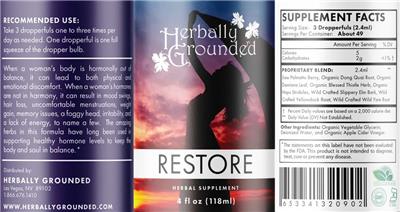
Supplement Facts
The label details for Restore by Herbally Grounded, sourced from the NIH Dietary Supplement Label Database.
Supplement Facts
| Ingredient | Amount | % DV |
|---|---|---|
| Calories | 5 Calorie(s) | -- |
| Proprietary Blend | 2.4 mL | -- |
| Carbohydrates | 2 Gram(s) | 1% |
| Slippery Elm | 0 NP | -- |
| Damiana | 0 NP | -- |
| Saw Palmetto | 0 NP | -- |
| Hops | 0 NP | -- |
| Blessed Thistle | 0 NP | -- |
| Dong quai | 0 NP | -- |
| Yellowdock root | 0 NP | -- |
| Yam, Wild | 0 NP | -- |
Other ingredients: Glycerin, Water, Deionized, Apple Cider Vinegar
Tap any ingredient to jump to its full detail below.
These statements are the manufacturer’s wording, reproduced from the product label — the label is saying it, not HelloPharmacist. We don’t verify or endorse them.
Suggested/Recommended/Usage/Directions
Recommended use: Take 3 dropperfuls one to three times per day as needed. One dropperful is one full squeeze of the bulb.
General Statements
When a woman's body is hormonally out of balance, it can lead to both physical and emotional discomfort. When a woman's hormones are not in harmony, it can result in mood swings, hair loss, uncomfortable menstruations, weight gain, memory issues, a foggy head, irritability, and a lack of energy, to name a few.
Formula
The amazing herbs in this formula have long been used in supporting healthy hormone levels to keep the body and soul in balance.
K Parve (Kosher) K-1604
FDA Statement of Identity
Herbal Supplement
FDA Disclaimer Statement
The statements on this label have not been evaluated by the FDA. This product is not intended to diagnose, treat, cure or prevent any disease.
Formulation
Vegetarian
Seals/Symbols
GMP Certified High Quality Products
K Parve (Kosher) K-1604
Is this label outdated? Report a formula or label change and our pharmacy team will review it.
Restore by Herbally Grounded label
The label scan from the NIH Dietary Supplement Label Database. Tap to enlarge.
Label images are published by the NIH Dietary Supplement Label Database for the version of this product on file. Always read your actual product label.
View the full label (PDF)The Ingredients in Restore by Herbally Grounded
These are the 9 active ingredients this product is made of. Select any to open its full monograph.
Serving size2.4 mL Dosage formLiquid Servings per container49 Amounts shown are per serving.
Most supplement products combine several ingredients, and a medication can interact with the product through any one of them. Each ingredient below shows whether it has known drug interactions.
Proprietary Blend
- › Slippery Elm
- › Damiana
- › Saw Palmetto
- › Hops
- › Blessed Thistle
- › Dong quai
- › Yellowdock root
- › Yam, Wild
Carbohydrates
Other (inactive) ingredients: Glycerin, Water, Deionized, Apple Cider Vinegar. These complete the product’s ingredient list but are not active constituents.
Restore by Herbally Grounded Drug Interactions
HelloPharmacist Interaction Report
Restore by Herbally Grounded is a liquid supplement containing eight ingredients, and we've identified documented interactions with a substantial number of medications across its checked ingredients.
The most serious concern is dong quai, which carries a Major interaction with warfarin (a blood thinner used to prevent clots). Dong quai may increase warfarin's effects and raise your bleeding risk significantly.
Read the full breakdown — every affected drug type, severity by severity
Yellow dock presents two other Major interactions: with diuretics (water pills), where it may cause dangerously low potassium levels that compound the drug's own effects, and with digoxin (a heart medication), where chronic use could increase the risk of toxicity if potassium drops. Saw palmetto and dong quai both interact with estrogens and contraceptive drugs (Moderate severity), potentially reducing their effectiveness.
Saw palmetto may also increase bleeding risk with blood thinners like warfarin or antiplatelet agents.
Hops may cause extra drowsiness with sedatives (Moderate), and minor interactions with certain heartburn and acid-reflux medications exist via blessed thistle. Slippery elm may slow the absorption of oral medications (Moderate).
Altogether, these interactions span 2,119 individual medications. We could not check wild yam.
Before you take this product, run your exact medications through the search tool on this page.
Check your own medications below · Editorial policy · How we use AI
Want to check YOUR meds against Restore?
Ask about interactions with your drugs in plain English — “Can I take it with lisinopril?” — and we find you the answer in seconds, ingredient by ingredient.
Go to the checkerIngredients driving the most interactions
Individual Drug Interactions
The ingredients in Restore interact with 2,138 drugs. Click any drug to see the details.
7 of the 9 ingredients in Restore interact with drugs. Each result below shows which ingredient is responsible. Slippery Elm Hops Saw Palmetto Dong quai Damiana Yellowdock root Blessed Thistle
Acetaminophen, Caffeine, PyrilamineMidol Max Strength Menstrual
How Acetaminophen, Caffeine, Pyrilamine interacts with Restore — through 3 ingredients. Tap an ingredient for the detail:
Yellowdock RootDiuretic Drugs Major
Interaction Summary
Theoretically, yellow dock might increase the risk of hypokalemia when taken with diuretics.
Read the full Yellowdock Root + Acetaminophen, Caffeine, Pyrilamine interactionSlippery ElmOral Drugs Moderate
Interaction Summary
Theoretically, slippery elm may slow the absorption and reduce serum levels of oral drugs.
Read the full Slippery Elm + Acetaminophen, Caffeine, Pyrilamine interactionHopsCytochrome P450 3a4 (cyp3a4) Substrates, Cytochrome P450 1a2 (cyp1a2) Substrates Minor
Interaction Summary
Theoretically, hops extract might alter metabolism of CYP3A4 substrates; however, this effect may not be clinically significant.
Read the full Hops + Acetaminophen, Caffeine, Pyrilamine interactionAcetaminophen, Pamabrom, PyrilamineMidol Max Strength PMS, Pamprin, Pamprin ES
How Acetaminophen, Pamabrom, Pyrilamine interacts with Restore — through 3 ingredients. Tap an ingredient for the detail:
Yellowdock RootDiuretic Drugs Major
Interaction Summary
Theoretically, yellow dock might increase the risk of hypokalemia when taken with diuretics.
Read the full Yellowdock Root + Acetaminophen, Pamabrom, Pyrilamine interactionSlippery ElmOral Drugs Moderate
Interaction Summary
Theoretically, slippery elm may slow the absorption and reduce serum levels of oral drugs.
Read the full Slippery Elm + Acetaminophen, Pamabrom, Pyrilamine interactionHopsCytochrome P450 1a2 (cyp1a2) Substrates Minor
Interaction Summary
Hops extract does not seem to affect the metabolism of CYP1A2 substrates.
Read the full Hops + Acetaminophen, Pamabrom, Pyrilamine interactionAcetazolamideAk-Zol, Diamox
How Acetazolamide interacts with Restore — through 3 ingredients. Tap an ingredient for the detail:
Yellowdock RootDiuretic Drugs Major
Interaction Summary
Theoretically, yellow dock might increase the risk of hypokalemia when taken with diuretics.
Read the full Yellowdock Root + Acetazolamide interactionSlippery ElmOral Drugs Moderate
Interaction Summary
Theoretically, slippery elm may slow the absorption and reduce serum levels of oral drugs.
Read the full Slippery Elm + Acetazolamide interactionHopsCns Depressants Moderate
Interaction Summary
Theoretically, concomitant use of hops with sedative drugs might cause additive sedation.
Read the full Hops + Acetazolamide interactionAmiloride, HydrochlorothiazideAmil-Co, Amilzide, Moduret 25, Moduretic
How Amiloride, Hydrochlorothiazide interacts with Restore — through 2 ingredients. Tap an ingredient for the detail:
Yellowdock RootDiuretic Drugs Major
Interaction Summary
Theoretically, yellow dock might increase the risk of hypokalemia when taken with diuretics.
Read the full Yellowdock Root + Amiloride, Hydrochlorothiazide interactionSlippery ElmOral Drugs Moderate
Interaction Summary
Theoretically, slippery elm may slow the absorption and reduce serum levels of oral drugs.
Read the full Slippery Elm + Amiloride, Hydrochlorothiazide interactionAmmonium ChlorideAmmonium Chloride
How Ammonium Chloride interacts with Restore — through 2 ingredients. Tap an ingredient for the detail:
Yellowdock RootDiuretic Drugs Major
Interaction Summary
Theoretically, yellow dock might increase the risk of hypokalemia when taken with diuretics.
Read the full Yellowdock Root + Ammonium Chloride interactionSlippery ElmOral Drugs Moderate
Interaction Summary
Theoretically, slippery elm may slow the absorption and reduce serum levels of oral drugs.
Read the full Slippery Elm + Ammonium Chloride interactionAtenolol, ChlortalidoneAtenixCo, Tenoret 50, Totaretic
How Atenolol, Chlortalidone interacts with Restore — through 2 ingredients. Tap an ingredient for the detail:
Yellowdock RootDiuretic Drugs Major
Interaction Summary
Theoretically, yellow dock might increase the risk of hypokalemia when taken with diuretics.
Read the full Yellowdock Root + Atenolol, Chlortalidone interactionSlippery ElmOral Drugs Moderate
Interaction Summary
Theoretically, slippery elm may slow the absorption and reduce serum levels of oral drugs.
Read the full Slippery Elm + Atenolol, Chlortalidone interactionAtenolol, ChlorthalidoneTenoretic
How Atenolol, Chlorthalidone interacts with Restore — through 2 ingredients. Tap an ingredient for the detail:
Yellowdock RootDiuretic Drugs Major
Interaction Summary
Theoretically, yellow dock might increase the risk of hypokalemia when taken with diuretics.
Read the full Yellowdock Root + Atenolol, Chlorthalidone interactionSlippery ElmOral Drugs Moderate
Interaction Summary
Theoretically, slippery elm may slow the absorption and reduce serum levels of oral drugs.
Read the full Slippery Elm + Atenolol, Chlorthalidone interactionAzilsartan, ChlorthalidoneEdarbyclor
How Azilsartan, Chlorthalidone interacts with Restore — through 2 ingredients. Tap an ingredient for the detail:
Yellowdock RootDiuretic Drugs Major
Interaction Summary
Theoretically, yellow dock might increase the risk of hypokalemia when taken with diuretics.
Read the full Yellowdock Root + Azilsartan, Chlorthalidone interactionSlippery ElmOral Drugs Moderate
Interaction Summary
Theoretically, slippery elm may slow the absorption and reduce serum levels of oral drugs.
Read the full Slippery Elm + Azilsartan, Chlorthalidone interactionBenazepril, HydrochlorothiazideLotensin HCT
How Benazepril, Hydrochlorothiazide interacts with Restore — through 2 ingredients. Tap an ingredient for the detail:
Yellowdock RootDiuretic Drugs Major
Interaction Summary
Theoretically, yellow dock might increase the risk of hypokalemia when taken with diuretics.
Read the full Yellowdock Root + Benazepril, Hydrochlorothiazide interactionSlippery ElmOral Drugs Moderate
Interaction Summary
Theoretically, slippery elm may slow the absorption and reduce serum levels of oral drugs.
Read the full Slippery Elm + Benazepril, Hydrochlorothiazide interactionBendroflumethiazideAprinox, Naturetin, Neo-NaClex
How Bendroflumethiazide interacts with Restore — through 2 ingredients. Tap an ingredient for the detail:
Yellowdock RootDiuretic Drugs Major
Interaction Summary
Theoretically, yellow dock might increase the risk of hypokalemia when taken with diuretics.
Read the full Yellowdock Root + Bendroflumethiazide interactionSlippery ElmOral Drugs Moderate
Interaction Summary
Theoretically, slippery elm may slow the absorption and reduce serum levels of oral drugs.
Read the full Slippery Elm + Bendroflumethiazide interactionBendroflumethiazide, NadololCorzide
How Bendroflumethiazide, Nadolol interacts with Restore — through 2 ingredients. Tap an ingredient for the detail:
Yellowdock RootDiuretic Drugs Major
Interaction Summary
Theoretically, yellow dock might increase the risk of hypokalemia when taken with diuretics.
Read the full Yellowdock Root + Bendroflumethiazide, Nadolol interactionSlippery ElmOral Drugs Moderate
Interaction Summary
Theoretically, slippery elm may slow the absorption and reduce serum levels of oral drugs.
Read the full Slippery Elm + Bendroflumethiazide, Nadolol interactionBendroflumethiazide, PotassiumCentyl K, Neo-NaClex-K
How Bendroflumethiazide, Potassium interacts with Restore — through 2 ingredients. Tap an ingredient for the detail:
Yellowdock RootDiuretic Drugs Major
Interaction Summary
Theoretically, yellow dock might increase the risk of hypokalemia when taken with diuretics.
Read the full Yellowdock Root + Bendroflumethiazide, Potassium interactionSlippery ElmOral Drugs Moderate
Interaction Summary
Theoretically, slippery elm may slow the absorption and reduce serum levels of oral drugs.
Read the full Slippery Elm + Bendroflumethiazide, Potassium interactionBendroflumethiazide, Rauwolfia SerpentinaRauzide
How Bendroflumethiazide, Rauwolfia Serpentina interacts with Restore — through 2 ingredients. Tap an ingredient for the detail:
Yellowdock RootDiuretic Drugs Major
Interaction Summary
Theoretically, yellow dock might increase the risk of hypokalemia when taken with diuretics.
Read the full Yellowdock Root + Bendroflumethiazide, Rauwolfia Serpentina interactionSlippery ElmOral Drugs Moderate
Interaction Summary
Theoretically, slippery elm may slow the absorption and reduce serum levels of oral drugs.
Read the full Slippery Elm + Bendroflumethiazide, Rauwolfia Serpentina interactionBenzthiazideExna
How Benzthiazide interacts with Restore — through 2 ingredients. Tap an ingredient for the detail:
Yellowdock RootDiuretic Drugs Major
Interaction Summary
Theoretically, yellow dock might increase the risk of hypokalemia when taken with diuretics.
Read the full Yellowdock Root + Benzthiazide interactionSlippery ElmOral Drugs Moderate
Interaction Summary
Theoretically, slippery elm may slow the absorption and reduce serum levels of oral drugs.
Read the full Slippery Elm + Benzthiazide interactionBisoprolol, HydrochlorothiazideZiac
How Bisoprolol, Hydrochlorothiazide interacts with Restore — through 2 ingredients. Tap an ingredient for the detail:
Yellowdock RootDiuretic Drugs Major
Interaction Summary
Theoretically, yellow dock might increase the risk of hypokalemia when taken with diuretics.
Read the full Yellowdock Root + Bisoprolol, Hydrochlorothiazide interactionSlippery ElmOral Drugs Moderate
Interaction Summary
Theoretically, slippery elm may slow the absorption and reduce serum levels of oral drugs.
Read the full Slippery Elm + Bisoprolol, Hydrochlorothiazide interactionBumetanideBurinex
How Bumetanide interacts with Restore — through 2 ingredients. Tap an ingredient for the detail:
Yellowdock RootDiuretic Drugs Major
Interaction Summary
Theoretically, yellow dock might increase the risk of hypokalemia when taken with diuretics.
Read the full Yellowdock Root + Bumetanide interactionSlippery ElmOral Drugs Moderate
Interaction Summary
Theoretically, slippery elm may slow the absorption and reduce serum levels of oral drugs.
Read the full Slippery Elm + Bumetanide interactionBumetanide, PotassiumBurinex K
How Bumetanide, Potassium interacts with Restore — through 2 ingredients. Tap an ingredient for the detail:
Yellowdock RootDiuretic Drugs Major
Interaction Summary
Theoretically, yellow dock might increase the risk of hypokalemia when taken with diuretics.
Read the full Yellowdock Root + Bumetanide, Potassium interactionSlippery ElmOral Drugs Moderate
Interaction Summary
Theoretically, slippery elm may slow the absorption and reduce serum levels of oral drugs.
Read the full Slippery Elm + Bumetanide, Potassium interactionCaffeine, Potassium Salicylate, SalicylamideTrim-Elim
How Caffeine, Potassium Salicylate, Salicylamide interacts with Restore — through 3 ingredients. Tap an ingredient for the detail:
Yellowdock RootDiuretic Drugs Major
Interaction Summary
Theoretically, yellow dock might increase the risk of hypokalemia when taken with diuretics.
Read the full Yellowdock Root + Caffeine, Potassium Salicylate, Salicylamide interactionSlippery ElmOral Drugs Moderate
Interaction Summary
Theoretically, slippery elm may slow the absorption and reduce serum levels of oral drugs.
Read the full Slippery Elm + Caffeine, Potassium Salicylate, Salicylamide interactionHopsCytochrome P450 3a4 (cyp3a4) Substrates, Cytochrome P450 1a2 (cyp1a2) Substrates Minor
Interaction Summary
Theoretically, hops extract might alter metabolism of CYP3A4 substrates; however, this effect may not be clinically significant.
Read the full Hops + Caffeine, Potassium Salicylate, Salicylamide interactionCandesartan Cilexetil, HydrochlorothiazideAtacand HCT
How Candesartan Cilexetil, Hydrochlorothiazide interacts with Restore — through 2 ingredients. Tap an ingredient for the detail:
Yellowdock RootDiuretic Drugs Major
Interaction Summary
Theoretically, yellow dock might increase the risk of hypokalemia when taken with diuretics.
Read the full Yellowdock Root + Candesartan Cilexetil, Hydrochlorothiazide interactionSlippery ElmOral Drugs Moderate
Interaction Summary
Theoretically, slippery elm may slow the absorption and reduce serum levels of oral drugs.
Read the full Slippery Elm + Candesartan Cilexetil, Hydrochlorothiazide interactionCaptopril, HydrochlorothiazideAcezide, Capozide
How Captopril, Hydrochlorothiazide interacts with Restore — through 2 ingredients. Tap an ingredient for the detail:
Yellowdock RootDiuretic Drugs Major
Interaction Summary
Theoretically, yellow dock might increase the risk of hypokalemia when taken with diuretics.
Read the full Yellowdock Root + Captopril, Hydrochlorothiazide interactionSlippery ElmOral Drugs Moderate
Interaction Summary
Theoretically, slippery elm may slow the absorption and reduce serum levels of oral drugs.
Read the full Slippery Elm + Captopril, Hydrochlorothiazide interactionChlorothiazideDiuril
How Chlorothiazide interacts with Restore — through 2 ingredients. Tap an ingredient for the detail:
Yellowdock RootDiuretic Drugs Major
Interaction Summary
Theoretically, yellow dock might increase the risk of hypokalemia when taken with diuretics.
Read the full Yellowdock Root + Chlorothiazide interactionSlippery ElmOral Drugs Moderate
Interaction Summary
Theoretically, slippery elm may slow the absorption and reduce serum levels of oral drugs.
Read the full Slippery Elm + Chlorothiazide interactionChlorothiazide, MethyldopaAldochlor, Aldoclor 150, Aldoclor 250
How Chlorothiazide, Methyldopa interacts with Restore — through 2 ingredients. Tap an ingredient for the detail:
Yellowdock RootDiuretic Drugs Major
Interaction Summary
Theoretically, yellow dock might increase the risk of hypokalemia when taken with diuretics.
Read the full Yellowdock Root + Chlorothiazide, Methyldopa interactionSlippery ElmOral Drugs Moderate
Interaction Summary
Theoretically, slippery elm may slow the absorption and reduce serum levels of oral drugs.
Read the full Slippery Elm + Chlorothiazide, Methyldopa interactionChlorothiazide, ReserpineDiupres
How Chlorothiazide, Reserpine interacts with Restore — through 2 ingredients. Tap an ingredient for the detail:
Yellowdock RootDiuretic Drugs Major
Interaction Summary
Theoretically, yellow dock might increase the risk of hypokalemia when taken with diuretics.
Read the full Yellowdock Root + Chlorothiazide, Reserpine interactionSlippery ElmOral Drugs Moderate
Interaction Summary
Theoretically, slippery elm may slow the absorption and reduce serum levels of oral drugs.
Read the full Slippery Elm + Chlorothiazide, Reserpine interactionChlorthalidoneHygroton, Thalitone
How Chlorthalidone interacts with Restore — through 2 ingredients. Tap an ingredient for the detail:
Yellowdock RootDiuretic Drugs Major
Interaction Summary
Theoretically, yellow dock might increase the risk of hypokalemia when taken with diuretics.
Read the full Yellowdock Root + Chlorthalidone interactionSlippery ElmOral Drugs Moderate
Interaction Summary
Theoretically, slippery elm may slow the absorption and reduce serum levels of oral drugs.
Read the full Slippery Elm + Chlorthalidone interactionChlorthalidone, ClonidineClorpres, Combipres
How Chlorthalidone, Clonidine interacts with Restore — through 2 ingredients. Tap an ingredient for the detail:
Yellowdock RootDiuretic Drugs Major
Interaction Summary
Theoretically, yellow dock might increase the risk of hypokalemia when taken with diuretics.
Read the full Yellowdock Root + Chlorthalidone, Clonidine interactionSlippery ElmOral Drugs Moderate
Interaction Summary
Theoretically, slippery elm may slow the absorption and reduce serum levels of oral drugs.
Read the full Slippery Elm + Chlorthalidone, Clonidine interactionCryptenamine, MethyclothiazideDiutensen
How Cryptenamine, Methyclothiazide interacts with Restore — through 2 ingredients. Tap an ingredient for the detail:
Yellowdock RootDiuretic Drugs Major
Interaction Summary
Theoretically, yellow dock might increase the risk of hypokalemia when taken with diuretics.
Read the full Yellowdock Root + Cryptenamine, Methyclothiazide interactionSlippery ElmOral Drugs Moderate
Interaction Summary
Theoretically, slippery elm may slow the absorption and reduce serum levels of oral drugs.
Read the full Slippery Elm + Cryptenamine, Methyclothiazide interactionCyclothiazideAnhydron, Fluidil
How Cyclothiazide interacts with Restore — through 2 ingredients. Tap an ingredient for the detail:
Yellowdock RootDiuretic Drugs Major
Interaction Summary
Theoretically, yellow dock might increase the risk of hypokalemia when taken with diuretics.
Read the full Yellowdock Root + Cyclothiazide interactionSlippery ElmOral Drugs Moderate
Interaction Summary
Theoretically, slippery elm may slow the absorption and reduce serum levels of oral drugs.
Read the full Slippery Elm + Cyclothiazide interactionDeserpidine, HydrochlorothiazideOreticyl, Oreticyl Forte
How Deserpidine, Hydrochlorothiazide interacts with Restore — through 2 ingredients. Tap an ingredient for the detail:
Yellowdock RootDiuretic Drugs Major
Interaction Summary
Theoretically, yellow dock might increase the risk of hypokalemia when taken with diuretics.
Read the full Yellowdock Root + Deserpidine, Hydrochlorothiazide interactionSlippery ElmOral Drugs Moderate
Interaction Summary
Theoretically, slippery elm may slow the absorption and reduce serum levels of oral drugs.
Read the full Slippery Elm + Deserpidine, Hydrochlorothiazide interactionDeserpidine, MethyclothiazideEnduronyl, Enduronyl Forte
How Deserpidine, Methyclothiazide interacts with Restore — through 2 ingredients. Tap an ingredient for the detail:
Yellowdock RootDiuretic Drugs Major
Interaction Summary
Theoretically, yellow dock might increase the risk of hypokalemia when taken with diuretics.
Read the full Yellowdock Root + Deserpidine, Methyclothiazide interactionSlippery ElmOral Drugs Moderate
Interaction Summary
Theoretically, slippery elm may slow the absorption and reduce serum levels of oral drugs.
Read the full Slippery Elm + Deserpidine, Methyclothiazide interactionDigoxinDigitek, Lanoxicaps, Lanoxin
How Digoxin interacts with Restore — through 2 ingredients. Tap an ingredient for the detail:
Yellowdock RootDigoxin (lanoxin) Major
Interaction Summary
Theoretically, yellow dock might increase the risk of digoxin toxicity when used long-term or in large amount.
Read the full Yellowdock Root + Digoxin interactionSlippery ElmOral Drugs Moderate
Interaction Summary
Theoretically, slippery elm may slow the absorption and reduce serum levels of oral drugs.
Read the full Slippery Elm + Digoxin interactionEach ingredient & the kinds of drugs it affects
For each ingredient in Restore with known interactions, here are the types of medications they can affect. Open any type for the detail — or search your exact drug in the checker above.
Slippery Elm
Oral Drugs
Theoretically, slippery elm may slow the absorption and reduce serum levels of oral drugs.
Slippery elm inner bark contains mucilage, which may interfere with the absorption of orally administered drugs.
Hops
Cns Depressants
Theoretically, concomitant use of hops with sedative drugs might cause additive sedation.
Some animal research shows that hops has sedative effects.
Estrogens
Theoretically, concomitant use of large amounts of hops might interfere with hormone replacement therapy due to competition for estrogen receptors.
In vitro research suggests that certain hops constituents can competitively bind to estrogen receptors. However, most hops extracts contain very small amounts of these constituents.
Cytochrome P450 1A2 (Cyp1A2) Substrates
Hops extract does not seem to affect the metabolism of CYP1A2 substrates.
In vitro research suggests that flavonoid constituents of hops inhibit CYP1A2 enzyme activity. However, a pharmacokinetic study in healthy postmenopausal patients shows that taking a standardized extract of spent hops containing prenylated phenols, as 59.5 mg twice daily for 2 weeks, does not affect levels of caffeine, a CYP1A2 probe substrate.
Cytochrome P450 3A4 (Cyp3A4) Substrates
Theoretically, hops extract might alter metabolism of CYP3A4 substrates; however, this effect may not be clinically significant.
Animal research suggests that specific constituents of hops, called lupulones, can induce hepatic CYP3A4 enzyme activity. However, a pharmacokinetic study in healthy postmenopausal patients with normal metabolism shows that taking a standardized extract of spent hops containing prenylated phenols, as 59.5 mg twice daily for 2 weeks, decreases the concentration of alprazolam, a CYP3A4 probe substrate, by 7.6%. This reduction is unlikely to be clinically relevant.
Saw Palmetto
Anticoagulant/Antiplatelet Drugs
Saw palmetto might increase the risk of bleeding with anticoagulant or antiplatelet drugs.
Saw palmetto is reported to prolong bleeding time. Theoretically, it might increase the risk of bleeding when used concomitantly with anticoagulant or antiplatelet drugs.
Contraceptive Drugs
Saw palmetto might reduce the effectiveness of contraceptive drugs.
Saw palmetto might have antiestrogenic effects. Theoretically, it might interfere with contraceptive drugs taken concomitantly.
Estrogens
Saw palmetto might reduce the effectiveness of estrogens.
Saw palmetto might have antiestrogenic effects. Theoretically, it might interfere with estrogens taken concomitantly.
Dong quai
Warfarin (Coumadin)
Dong quai may increase the risk of bleeding when used with warfarin.
Case reports suggest that concomitant use of dong quai with warfarin can increase the anticoagulant effects of warfarin and increase the risk of bleeding. In one case, after 4 weeks of taking dong quai 565 mg once or twice daily, the international normalized ratio (INR) increased to 4.9. The INR normalized 4 weeks after discontinuation of dong quai.
Anticoagulant/Antiplatelet Drugs
Theoretically, dong quai may increase the risk of bleeding when used with anticoagulant or antiplatelet drugs; however, research is conflicting.
Animal studies suggest that dong quai has antithrombin activity and inhibits platelet aggregation due to its coumarin components. Additionally, some case reports in humans suggest that dong quai can increase the anticoagulant effects of warfarin. However, clinical research in healthy adults shows that taking 1 gram of dong quai root daily for 3 weeks does not significantly inhibit platelet aggregation or cause bleeding. Until more is known, use dong quai with caution in patients taking antiplatelet/anticoagulant drugs.
Estrogens
Theoretically, dong quai may reduce the effects of estrogens.
Dong quai has estrogenic effects. Theoretically, concomitant use of large amounts of dong quai might interfere with hormone replacement therapy due to competition for estrogen receptors.
Damiana
Antidiabetes Drugs
Theoretically, taking damiana with antidiabetes drugs might increase the risk of hypoglycemia.
Animal research shows that taking damiana lowers blood glucose level.
Yellowdock root
Digoxin (Lanoxin)
Theoretically, yellow dock might increase the risk of digoxin toxicity when used long-term or in large amount.
When yellow dock is used chronically or in large amounts, hypokalemia may occur. This might increase the toxic effects of digoxin.
Diuretic Drugs
Theoretically, yellow dock might increase the risk of hypokalemia when taken with diuretics.
When yellow dock is used chronically or in large amounts, hypokalemia may occur, and overuse of yellow dock might compound diuretic-induced potassium loss.
Warfarin (Coumadin)
Theoretically, the laxative effects of yellow dock might increase the effects of warfarin, including the risk of bleeding.
The anthraquinones in yellow dock have a mild stimulant laxative effect. Consuming excessive amounts can cause diarrhea. Diarrhea can increase the effects of warfarin, increase international normalized ratio (INR), and increase the risk of bleeding.
Blessed Thistle
Antacids
Theoretically, blessed thistle might decrease the effectiveness of antacids.
There are reports that blessed thistle increases stomach acid.
H2-Blockers
Theoretically, blessed thistle might decrease the effectiveness of H2-blockers.
There are reports that blessed thistle increases stomach acid.
Proton Pump Inhibitors (Ppis)
Theoretically, blessed thistle might decrease the effectiveness of PPIs.
There are reports that blessed thistle increases stomach acid.
Brand information
Manufacturer and brand details for Restore, from the product label.
Herbally Grounded
See all Herbally Grounded products- Name
- Herbally Grounded
- City
- Las Vegas
- State
- NV
- ZipCode
- 89102
- Phone Number
- 1.866.676.1410
- Web Address
- www.herballygrounded.com
Restore by Herbally Grounded: Common Questions
Does Restore by Herbally Grounded interact with any medications?
How can one product interact with so many drugs?
Where does this information come from?
Can I take Restore if I'm on birth control?
Is Restore safe during pregnancy?
Will Restore help with constipation or digestive problems?
Can Restore make me drowsy?
What's in the proprietary blend?
Can I take Restore while breastfeeding?
Written and reviewed by the HelloPharmacist editorial staff. Our editorial policy
Not sure if Restore is safe with your meds?
Our pharmacists answer your medication & supplement questions — free.
Label information is sourced from the NIH Dietary Supplement Label Database and reflects the product version on file; always read your actual product label. This page is for education only and is not a substitute for professional medical advice. Confirm with your pharmacist or doctor before combining supplements and medications.
The Full Monographs Behind Restore’s Ingredients
Every ingredient we hold a full HelloPharmacist monograph for — uses, evidence, safety, and the complete interaction list.
Slippery Elm
Interacts with 2,022 drugsSlippery elm is a traditional herbal remedy made from the inner bark of a North American elm tree, used mainly to soothe sore throats and irritated digestive tracts. Its mucilage can coat an...
Read the full Slippery Elm monograph → Herb & supplement monographDamiana
Interacts with 86 drugsDamiana is a traditional herb most famous as an aphrodisiac and mild mood-lifter, but solid human evidence for any of its uses is very limited. It is generally well tolerated in the small am...
Read the full Damiana monograph → Herb & supplement monographSaw Palmetto
Interacts with 174 drugsSaw palmetto is a plant extract most often used for urinary symptoms linked to an enlarged prostate (BPH). The best research suggests it works no better than a placebo for most men, though i...
Read the full Saw Palmetto monograph → Herb & supplement monographHops
Interacts with 865 drugsHops are most often used for sleep and mild anxiety, frequently combined with valerian, but the human evidence is limited and not very strong. They are generally well tolerated when used sho...
Read the full Hops monograph → Herb & supplement monographBlessed Thistle
Interacts with 36 drugsBlessed thistle is a bitter herb traditionally used to stimulate appetite and ease mild digestive complaints. High-quality human studies are lacking, so its benefits are not well proven. It...
Read the full Blessed Thistle monograph → Herb & supplement monographDong Quai
Interacts with 163 drugsDong Quai is a traditional Chinese herb often called "female ginseng" and is mostly used for menstrual and menopausal complaints. High-quality scientific evidence that it works for these use...
Read the full Dong Quai monograph → Herb & supplement monographYellow Dock
Interacts with 78 drugsYellow dock is a traditional herb used mostly as a mild laxative and a digestive and skin tonic. Good-quality human studies are lacking, so its benefits are largely unproven, and its natural...
Read the full Yellow Dock monograph →Sources & How We Checked
Restore's label data comes from the NIH Dietary Supplement Label Database; the ingredient interaction data is from the Natural Medicines database, reviewed by our pharmacists.
- NIH Dietary Supplement Label Database (DSLD) — The official product label on file for this supplement.
- Natural Medicines (Therapeutic Research Center) — Evidence-graded clinical reference behind the ingredient interaction data.
Content is written and reviewed by licensed HelloPharmacist pharmacists. See our data sources and editorial standards for how this information is built and checked.
The 71 references behind this product’s interaction data
Every citation that drives the interaction findings for this product’s ingredients, from the evidence-graded Natural Medicines (TRC Healthcare) database. Open an ingredient to browse its citations — links open the study on PubMed or the publisher’s site.
Slippery Elm 3 references
- The Review of Natural Products by Facts and Comparisons. St. Louis, MO: Wolters Kluwer Co., 1999.
- Brinker F. Herb Contraindications and Drug Interactions. 2nd ed. Sandy, OR: Eclectic Medical Publications, 1998.
- Czarnecki D, Nixon R, Bekhor P, and et al. Delayed prolonged contact urticaria from the elm tree. Contact Dermatitis 1993;28:196-197. PubMed
Damiana 2 references
- Newall CA, Anderson LA, Philpson JD. Herbal Medicine: A Guide for Healthcare Professionals. London, UK: The Pharmaceutical Press, 1996.
- Alarcon-Aquilar FJ, Roman-Ramos R, Perez-Gutierrez S, et al. Study of the anti-hyperglycemic effect of plants used as antidiabetics. J Ethnopharmacol 1998;61:101-10. PubMed
Saw Palmetto 22 references
- Wilt TJ, Ishani A, Stark G, et al. Saw palmetto extracts for treatment of benign prostatic hyperplasia: a systematic review. JAMA 1998;280:1604-9. PubMed
- Carraro JC, Raynaud JP, Koch G, et al. Comparison of phytotherapy (Permixon) with finasteride in the treatment of benign prostate hyperplasia: a randomized international study of 1,098 patients. Prostate 1996;29:231-40. DOI
- Di Silverio F, D'Eramo G, Lubrano C, et al. Evidence that Serenoa repens extract displays an antiestrogenic activity in prostatic tissue of benign prostatic hypertrophy patients. Eur Urol 1992;21:309-14. PubMed
- Stepanov VN, Siniakova LA, Sarrazin B, Raynaud JP. Efficacy and tolerability of the lipidosterolic extract of Serenoa repens (Permixon) in benign prostatic hyperplasia: a double-blind comparison of two dosage regimens. Adv Ther 1999;16:231-41.
- Cheema P, El-Mefty O, Jazieh AR. Intraoperative haemorrhage associated with the use of extract of Saw Palmetto herb: a case report and review of literature. J Intern Med 2001;250:167-9. PubMed
- Jibrin I, Erinle A, Saidi A, Aliyu ZY. Saw palmetto-induced pancreatitis. South Med J 2006;99:611-2. PubMed
- Prager N, Bickett K, French N, Marcovici G. A randomized, double-blind, placebo-controlled trial to determine the effectiveness of botanically derived inhibitors of 5-alpha-reductase in the treatment of androgenetic alopecia. J Altern Complement Med 2002
- Avins AL, Bent S, Staccone S, et al. A detailed safety assessment of a saw palmetto extract. Complement Ther Med 2008;16:147-54. PubMed
- Morgia, G., Mucciardi, G., Gali, A., Madonia, M., Marchese, F., Di, Benedetto A., Romano, G., Bonvissuto, G., Castelli, T., Macchione, L., and Magno, C. Treatment of chronic prostatitis/chronic pelvic pain syndrome category IIIA with Serenoa repens plus
- Aliaev, IuG, Vinarov, A. Z., Lokshin, K. L., and Spivak, L. G. [Efficiency and safety of prostamol-Uno in patients with chronic abacterial prostatitis]. Urologiia. 2006;(1):47-50.
- Agbabiaka, T. B., Pittler, M. H., Wider, B., and Ernst, E. Serenoa repens (saw palmetto): a systematic review of adverse events. Drug Saf 2009;32(8):637-647. PubMed
- Wargo, K. A., Allman, E., and Ibrahim, F. A possible case of saw palmetto-induced pancreatitis. South.Med.J. 2010;103(7):683-685. PubMed
- Lapi, F., Gallo, E., Giocaliere, E., Vietri, M., Baronti, R., Pieraccini, G., Tafi, A., Menniti-Ippolito, F., Mugelli, A., Firenzuoli, F., and Vannacci, A. Acute liver damage due to Serenoa repens: a case report. Br.J.Clin.Pharmacol. 2010;69(5):558-560.
- Mantovani, F. Serenoa repens in benign prostatic hypertrophy: analysis of 2 Italian studies. Minerva Urol.Nefrol. 2010;62(4):335-340.
- Hanaka, M., Yoshii, C., Yatera, K., Ito, C., Chojin, Y., Nagata, S., Yamasaki, K., Nishida, C., Kawanami, T., Kawanami, Y., Ishimoto, H., and Mukae, H. [A case of rhabdomyolysis caused by saw palmetto of healthy foods]. J.UOEH. 6-1-2012;34(2):193-199. PubMed
- Miroddi, M., Carni, A., Mannucci, C., Moleti, M., Navarra, M., and Calapai, G. Hot flashes in a young girl: a wake-up call concerning Serenoa repens use in children. Pediatrics 2012;130(5):e1374-e1376.
- Braeckman J. The extract of Serenoa repens in the treatment of benign prostatic hyperplasia: a multicenter open study. Current Therapeutic Research 1994;55(7):776-785. DOI
- Jipescu D, Patel A, Bohra H, Pientka A. Rare case of saw palmetto induced heart block. JACC 2017;69(11) supplement:2310.
- Morabito P, Miroddi M, Giovinazzo S, Spina E, Calapai G. Serenoa repens as an endocrine disruptor in a 10-year-Old young girl: a new case report. Pharmacology. 2015;96(1-2):41-3. doi: 10.1159/000431327.
- Gammoudi R, Ameur K, Ouni B, et al. Fixed drug eruption to Serenoa repens: first case report and consideration of the use of herbal medicine. Dermatol Ther 2020 Aug 29:e14247.
- Paulis G, Paulis A, Perletti G. Serenoa repens and its effects on male sexual function. A systematic review and meta-analysis of clinical trials. Arch Ital Urol Androl 2021;93(4):475-480. PubMed
- Venkateswaran S, Declet-Bauzo R, Shodeinde M, Gilford P. Postoperative Retroperitoneal Hematoma: A Case of Saw Palmetto and the Importance of Primary Care Intervention. HCA Healthc J Med 2020;1(5):279-282. PubMed
Hops 15 references
- Newall CA, Anderson LA, Philpson JD. Herbal Medicine: A Guide for Healthcare Professionals. London, UK: The Pharmaceutical Press, 1996.
- McGuffin M, Hobbs C, Upton R, Goldberg A, eds. American Herbal Products Association's Botanical Safety Handbook. Boca Raton, FL: CRC Press, LLC 1997.
- Zava DT, Dollbaum CM, Blen M. Estrogen and progestin bioactivity of foods, herbs, and spices. Proc Soc Exp Biol Med 1998;217:369-78. PubMed
- Milligan SR, Kalita JC, Heyerick A, et al. Identification of a potent phytoestrogen in hops (Humulus lupulus L.) and beer. J Clin Endocrinol Metab 1999;84:2249-52.. PubMed
- Milligan SR, Kalita JC, Pocock V, et al. The endocrine activities of 8-prenylnaringenin and related hop (Humulus lupulus L.) flavonoids. J Clin Endocrinol Metab 2000;85:4912-5.. DOI
- Henderson MC, Miranda CL, Stevens JF, et al. In vitro inhibition of human P450 enzymes by prenylated flavonoids from hops, Humulus lupulus. Xenobiotica 2000;30:235-51.. PubMed
- Mannering, G. J., Shoeman, J. A., and Deloria, L. B. Identification of the antibiotic hops component, colupulone, as an inducer of hepatic cytochrome P-4503A in the mouse. Drug Metab Dispos 1992;20(2):142-147. DOI
- Skorska, C., Mackiewicz, B., Gora, A., Golec, M., and Dutkiewicz, J. Health effects of inhalation exposure to organic dust in hops farmers. Ann.Univ Mariae.Curie Sklodowska [Med] 2003;58(1):459-465.
- Schiller, H., Forster, A., Vonhoff, C., Hegger, M., Biller, A., and Winterhoff, H. Sedating effects of Humulus lupulus L. extracts. Phytomedicine. 2006;13(8):535-541. PubMed
- van Hunsel, F. P. and Kampschoer, P. [Postmenopausal bleeding and dietary supplements: a possible causal relationship with hop- and soy-containing preparations]. Ned.Tijdschr.Geneeskd. 2012;156(41):A5095.
- Fenselau, C. and Talalay, P. Is oestrogenic activity present in hops? Food Cosmet.Toxicol. 1973;11(4):597-602. PubMed
- Godnic-Cvar, J., Zuskin, E., Mustajbegovic, J., Schachter, E. N., Kanceljak, B., Macan, J., Ilic, Z., and Ebling, Z. Respiratory and immunological findings in brewery workers. Am J Ind Med 1999;35(1):68-75. DOI
- Lee KM, Jung JS, Song DK, and et al. Effects of Humulus lupulus extract on the central nervous system in mice. Planta Med 1993;59(Suppl):A691.
- Assessment report on Humulus lupulus L., flos. European Medicines Agency, 2014. Available at: https://www.ema.europa.eu/en/documents/herbal-report/final-assessment-report-humulus-lupulus-l-flos_en.pdf. Accessed September 29, 2021.
- van Breemen RB, Chen L, Tonsing-Carter A, et al. Pharmacokinetic Interactions of a Hop Dietary Supplement with Drug Metabolism in Perimenopausal and Postmenopausal Women. J Agric Food Chem. 2020;68(18):5212-5220. PubMed
Blessed Thistle 2 references
- McGuffin M, Hobbs C, Upton R, Goldberg A, eds. American Herbal Products Association's Botanical Safety Handbook. Boca Raton, FL: CRC Press, LLC 1997.
- Brinker F. Herb Contraindications and Drug Interactions. 2nd ed. Sandy, OR: Eclectic Medical Publications, 1998.
Dong Quai 19 references
- Hirata JD, Swiersz LM, Zell B, et al. Does dong quai have estrogenic effects in postmenopausal women? A double-blind, placebo-controlled trial. Fertil Steril 1997;68:981-6. PubMed
- Page RL II, Lawrence JD. Potentiation of warfarin by dong quai. Pharmacotherapy 1999;19:870-6. PubMed
- Heck AM, DeWitt BA, Lukes AL. Potential interactions between alternative therapies and warfarin. Am J Health Syst Pharm 2000;57:1221-7. DOI
- Eagon PK, Elm MS, Hunter DS, et al. Medicinal herbs: modulation of estrogen action. Era of Hope Mtg, Dept Defense; Breast Cancer Res Prog, Atlanta, GA 2000;Jun 8-11.
- Dr. Duke's Phytochemical and Ethnobotanical Databases. Available at: http://www.ars-grin.gov/duke/.
- Amato P, Christophe S, Mellon PL. Estrogenic activity of herbs commonly used as remedies for menopausal symptoms. Menopause 2002;9:145-50. PubMed
- Shi M, Chang L, He G. [Stimulating action of Carthamus tinctorius L., Angelica sinensis (Oliv.) Diels and Leonurus sibiricus L. on the uterus]. Zhongguo Zhong Yao Za Zhi 1995;20:173-5, 192.
- Hoult JR, Paya M. Pharmacological and biochemical actions of simple coumarins: natural products with therapeutic potential. Gen Pharmacol 1996;27:713-22.. PubMed
- Cheong JL, Bucknall R. Retinal vein thrombosis associated with a herbal phytoestrogen preparation in a susceptible patient. Postgrad Med J 2005;81:266-7.. PubMed
- Chang CJ, Chiu JH, Tseng LM, et al. Modulation of HER2 expression by ferulic acid on human breast cancer MCF7 cells. Eur J Clin Invest 2006;36:588-96. PubMed
- Chuang CH, Doyle P, Wang JD, et al. Herbal medicines used during the first trimester and major congenital malformations: an analysis of data from a pregnancy cohort study. Drug Saf 2006;29:537-48. PubMed
- Lau CBS, Ho TCY, Chan TWL, Kim SCF. Use of dong quai (Angelica sinensis) to treat peri- and postmenopausal symptoms in women with breast cancer: is it appropriate? Menopause 2005;12:734-40.
- Ellis GR, Stephens MR. Untitled (photograph and a brief case report). BMJ 1999;319:650.
- Nambiar, S., Schwartz, R. H., and Constantino, A. Hypertension in mother and baby linked to ingestion of Chinese herbal medicine. West J Med 1999;171(3):152.
- Lee, S. K., Cho, H. K., Cho, S. H., Kim, S. S., Nahm, D. H., and Park, H. S. Occupational asthma and rhinitis caused by multiple herbal agents in a pharmacist. Ann.Allergy Asthma Immunol. 2001;86(4):469-474. PubMed
- Xu, J. and Li, G. [Observation on short-term effects of Angelica injection on chronic obstructive pulmonary disease patients with pulmonary hypertension]. Zhongguo Zhong Xi Yi Jie He Za Zhi 2000;20(3):187-189.
- Scott, G. N. and Elmer, G. W. Update on natural product--drug interactions. Am J Health Syst.Pharm 2-15-2002;59(4):339-347. PubMed
- Circosta, C., Pasquale, R. D., Palumbo, D. R., Samperi, S., and Occhiuto, F. Estrogenic activity of standardized extract of Angelica sinensis. Phytother.Res. 2006;20(8):665-669.
- Fung FY, Wong WH, Ang SK, et al. A randomized, double-blind, placebo- controlled study on the anti-haemostatic effects of Curcuma longa, Angelica sinensis and Panax ginseng. Phytomedicine. 2017;32:88-96. PubMed
Yellow Dock 8 references
- Newall CA, Anderson LA, Philpson JD. Herbal Medicine: A Guide for Healthcare Professionals. London, UK: The Pharmaceutical Press, 1996.
- Foster S, Tyler VE. Tyler's Honest Herbal: A Sensible Guide to the Use of Herbs and Related Remedies. 3rd ed., Binghamton, NY: Haworth Herbal Press, 1993.
- The Review of Natural Products by Facts and Comparisons. St. Louis, MO: Wolters Kluwer Co., 1999.
- McGuffin M, Hobbs C, Upton R, Goldberg A, eds. American Herbal Products Association's Botanical Safety Handbook. Boca Raton, FL: CRC Press, LLC 1997.
- Ellenhorn MJ, et al. Ellenhorn's Medical Toxicology: Diagnoses and Treatment of Human Poisoning. 2nd ed. Baltimore, MD: Williams & Wilkins, 1997.
- Gruenwald J, Brendler T, Jaenicke C. PDR for Herbal Medicines. 1st ed. Montvale, NJ: Medical Economics Company, Inc., 1998.
- Brinker F. Herb Contraindications and Drug Interactions. 2nd ed. Sandy, OR: Eclectic Medical Publications, 1998.
- Latif A, Fichadiya H, Abid F, Capo G. Herbal Teas and Thrombocytopenia: A Curious Case of Yellow Dock and Burdock-Induced Thrombocytopenia. Eur J Case Rep Intern Med 2022;9(3):003247. PubMed
Parts of this content are provided by the Therapeutic Research Center, LLC.
DISCLAIMER: Currently this does not check for drug-drug interactions. This is not an all-inclusive comprehensive list of potential interactions and is for informational purposes only. Not all interactions are known or well-reported in the scientific literature, and new interactions are continually being reported. Input is needed from a qualified healthcare provider including a pharmacist before starting any therapy. Application of clinical judgment is necessary.
© 2021 Therapeutic Research Center, LLC