
Vitamin D3 2000 IU Ingredients & Drug Interactions
by MegaFood
What is this page for?
First and foremost: checking Vitamin D3 2000 IU against your medications. The heart of this page is the interaction checker and the full interaction report — how this product’s ingredients may interact with prescription and over-the-counter medicines you may be taking.
Around that, we add a pharmacist’s high-level view of the product as a whole — what’s inside, the evidence for its stated use, how transparent the label is, and what safety data exists — so you can see the full picture in one place. It’s educational information from our licensed clinical databases and the clinical staff at HelloPharmacist — not medical advice — and we don’t sell or endorse products. Our editorial policy
Vitamin D3 2000 IU is a dietary supplement by MegaFood with 7 active ingredients. Its ingredients are commonly taken for bone health and osteoporosis, correcting vitamin d deficiency, immune system support.Based on those ingredients, 1,080 medications have a known interaction with it, the most serious rated major. The ingredients most likely to interact are organic Beet, Vitamin D3, organic Parsley. Use the checker below to test your specific medication, or read the full HelloPharmacist Interaction Report.
Check Your Meds Against Vitamin D3 2000 IU by MegaFood
Ask about any prescription or over-the-counter medication and we check it for interactions with Vitamin D3 2000 IU by MegaFood — and tell you which ingredient is responsible.
AI summaries are generated from our interaction database for education only — always confirm with your pharmacist. How we use AI
Ask the Pharmacist
A licensed pharmacist will answer your question by email — free, usually within 24 hours.
Got it — thank you!
A licensed pharmacist will answer within 24 hours. Keep an eye on your email (worth checking spam, just in case).
HelloPharmacist Scorecard of Vitamin D3 2000 IU by MegaFood
Our pharmacy team’s full take, with four database checks built into the cards below — a summary of what is known, not a grade of the product itself.
What’s inside
Low disclosure
This product contains 7 ingredients, of which 6 are active. The star is vitamin D3, a form of vitamin D that supports bone health and calcium absorption.
It's paired with a food-based blend: organic beet (a source of beneficial plant compounds), organic broccoli (from the cruciferous vegetable family), organic parsley (a culinary herb), S. cerevisiae or brewer's yeast (a source of B vitamins and chromium), organic brown rice, and organic carrot. These whole-food ingredients are meant to work together to deliver nutrients alongside the vitamin D.
The product also contains inactive ingredients (cellulose, silica, and stearic acid) that serve as fillers and binders in the tablet.
Does it work?
Strong evidence
Vitamin D3's effectiveness is well established: it is effective for familial hypophosphatemia, osteomalacia (soft bones), renal bone disease, rickets, and low parathyroid hormone. The other ingredients show mixed evidence.
Beet is possibly effective for athletic performance and exercise-induced muscle soreness, but evidence is insufficient for dyslipidemia and cognitive function. Broccoli is possibly effective for colorectal cancer, though evidence is insufficient for bladder, breast, and gastric cancers.
Brewer's yeast is possibly effective for irritable bowel syndrome. Carrot is possibly effective for vitamin A deficiency.
Parsley and brown rice lack sufficient evidence to rate their effectiveness for the claims studied.
How safe is it?
Well-documented data
Vitamin D3 at 2,000 IU is generally well tolerated at this dose; toxicity is a concern only with very high doses over time. The food-based ingredients—beet, broccoli, parsley, brewer's yeast, and carrot—are safe in normal food amounts.
However, concentrated supplements of these ingredients carry less safety data, so caution is warranted, especially with parsley in large amounts (which can cause serious effects at very high doses) and brewer's yeast in people with weakened immune systems. Beet supplements lack robust safety data.
The most common side effects are mild: beet may cause red or black stools (harmless), brewer's yeast may cause gas or headache, and broccoli extracts at high doses may cause loose stools or cramping. Carrot is generally well tolerated, though allergic reactions are possible in sensitive individuals.
Meds to double-check
Major interaction found
Before taking this product, double-check with your pharmacist or doctor if you take monoamine oxidase inhibitors (MAOIs) — brewer's yeast carries a Major interaction risk here. Also verify your use if you take thiazide diuretics, heart drugs (verapamil, diltiazem, digoxin), blood thinners (anticoagulants or antiplatelet drugs), diabetes medications, warfarin, atorvastatin, pentobarbital, sirolimus, or aspirin — these all carry Moderate interactions with one or more ingredients.
Additionally, check if you take drugs processed by your liver's CYP1A2, CYP2A6, or CYP3A4 enzyme systems, as several ingredients may affect how quickly your body breaks them down.
The bottom line
Scorecard at a glanceFormula with limited ingredient disclosure with clinical evidence supporting its stated purpose. Major medication interactions have been identified, and safety information is well characterized.
This product may work well for supporting vitamin D status through a food-based combination. It's suitable for most adults looking for a whole-food multivitamin approach.
However, if you take blood thinners, diabetes medications, heart rhythm drugs, water pills, antidepressants (especially MAOIs), or any statin, you need to check your specific medications against the interaction data on this page before starting. Talk with your doctor or pharmacist to make sure this supplement fits safely with your current regimen.
Educational only — not medical advice; always confirm with your pharmacist. Our editorial policy · How we use AI
Assessment coverage: 6 of 7 active ingredients matched to our full ingredient reviews (monographs). Based on the product label dated Jun 16, 2022.
This Scorecard evaluates available label information, ingredient evidence, and known medication-safety considerations. It does not independently verify product identity, purity, potency, contamination, or manufacturing quality. How these ratings are computed
General information
Key facts about Vitamin D3 2000 IU, straight from the product label.
| Brand | MegaFood |
|---|---|
| Barcode (UPC) | 051494102220 |
| Net contents | 90 Tablet(s) |
| Market status | On market |
| Date entered into DSLD | Jun 16, 2022 |
| DSLD ID | 265283 |
| Product type | Botanical With Nutrients |
| Supplement form | Tablet Or Pill |
| Dietary claims / uses | Nutrient, All Other, Structure/Function |
| Intended target group(s) | Vegetarian, Adult (18 - 50 Years), Kosher, Gluten Free, Dairy Free |
Everything in this section is reproduced from the manufacturer’s own product label — it’s the label speaking, not HelloPharmacist. We show it so you can see exactly what the maker states; we don’t verify or endorse those statements.
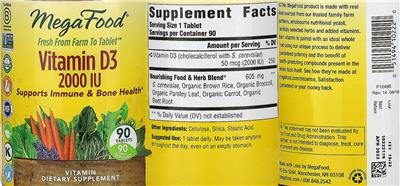
Supplement Facts
The label details for Vitamin D3 2000 IU by MegaFood, sourced from the NIH Dietary Supplement Label Database.
Supplement Facts
| Ingredient | Amount | % DV |
|---|---|---|
| organic Beet | 0 NP | -- |
| organic Broccoli | 0 NP | -- |
| organic Parsley | 0 NP | -- |
| S. cerevisiae | 0 NP | -- |
| organic Brown Rice | 0 NP | -- |
| organic Carrot | 0 NP | -- |
| Vitamin D3 | 50 mcg | 250% |
| Nourishing Food & Herb Blend | 605 mg | -- |
Other ingredients: Cellulose, Silica, Stearic Acid
Tap any ingredient to jump to its full detail below.
These statements are the manufacturer’s wording, reproduced from the product label — the label is saying it, not HelloPharmacist. We don’t verify or endorse them.
Seals/Symbols
To learn about our seals, please visit megafood.com/standards. Certified B Corporation Non GMO Project Verified nongmoproject.org Glyphosate Residue free detoxproject.org Tested 125+ Pesticides & herbicides NSF Certified Gluten-free OK (Kosher)
Formula
OK (Kosher)
This MegaFood product is made with real food sourced from our trusted family farm partners, wholesome nutritional yeast, carefully selected herbs and added vitamins. Each vitamin is paired with an ideal whole food using our unique process to deliver guaranteed potency and the benefit of health-promoting compounds present in the whole food itself. See how they're made at megafood.com/showme.
Formulation
Vegetarian
Non GMO Project Verified nongmoproject.org Residue free Glyphosate detoxproject.org Tested 125+ Pesticides & herbicides NSF Certified Gluten-free Dairy free Soy free
Supports immune & bone health
Brand IP Statement(s)
Fresh from farm to tablet
FDA Statement of Identity
Vitamin Dietary Supplement
Suggested/Recommended/Usage/Directions
Suggested Use: 1 tablet daily. May be taken anytime throughout the day, even on an empty stomach.
General Statements
Satisfaction guaranteed or your money back.
Please recycle
FDA Disclaimer Statement
This statement has not been evaluated by the Food and Drug Administration. This product is not intended to diagnose, treat, cure or prevent any disease.
Is this label outdated? Report a formula or label change and our pharmacy team will review it.
Vitamin D3 2000 IU by MegaFood label
The label scan from the NIH Dietary Supplement Label Database. Tap to enlarge.
Label images are published by the NIH Dietary Supplement Label Database for the version of this product on file. Always read your actual product label.
View the full label (PDF)The Ingredients in Vitamin D3 2000 IU by MegaFood
These are the 7 active ingredients this product is made of. Select any to open its full monograph.
Serving size1 Tablet(s) Dosage formTablet Or Pill Servings per container90 Amounts shown are per serving.
Most supplement products combine several ingredients, and a medication can interact with the product through any one of them. Each ingredient below shows whether it has known drug interactions.
Vitamin D3
Interacts with717 drugs
Vitamin D is a fat-soluble vitamin that helps your body absorb calcium and is important for healthy bones, muscles, and immune function. Many people,...
Vitamin D3 monograph & interactionsNourishing Food & Herb Blend
- › Organic Beet
- › Organic Broccoli
- › Organic Parsley
- › S. cerevisiae
- › Organic Brown Rice
- › Organic Carrot
Other (inactive) ingredients: Cellulose, Silica, Stearic Acid. These complete the product’s ingredient list but are not active constituents.
Vitamin D3 2000 IU by MegaFood Drug Interactions
HelloPharmacist Interaction Report
MegaFood's Vitamin D3 2000 IU contains several ingredients with documented interactions with medications.
The most serious concern is brewer's yeast's interaction with monoamine oxidase inhibitors (MAOIs) — a Major severity interaction that can raise blood pressure dangerously. Beyond that, beet, broccoli, parsley, brewer's yeast, and vitamin D3 all have Moderate interactions with various drug types.
Read the full breakdown — every affected drug type, severity by severity
Beet may increase levels of certain medications broken down by your liver's CYP3A4 enzyme system (similar to how the antifungal ketoconazole works). Broccoli can speed up how your body processes drugs that rely on CYP1A2 and CYP2A6 enzymes, potentially making those medications less effective.
Parsley carries multiple Moderate concerns: it may raise levels of CYP1A2 drugs, increase bleeding risk with blood thinners, lower blood sugar with diabetes medications, interfere with water pills, reduce warfarin's effectiveness, and possibly extend the effects of the sedative pentobarbital. Brewer's yeast (S. cerevisiae) may lower blood sugar in people taking diabetes medications.
Vitamin D3 at this dose (2000 IU) poses Moderate interactions mainly at high doses: it can raise calcium levels with thiazide water pills or the heart drug digoxin, reduce how your body absorbs the statin atorvastatin, interfere with certain heart rhythm medications, and theoretically speed up the breakdown of some other drugs. One ingredient, organic brown rice, could not be checked against our interaction data.
Use the medication checker below to confirm whether your exact drugs interact with any of these ingredients before you start.
Check your own medications below · Editorial policy · How we use AI
Want to check YOUR meds against Vitamin D3 2000 IU?
Ask about interactions with your drugs in plain English — “Can I take it with lisinopril?” — and we find you the answer in seconds, ingredient by ingredient.
Go to the checkerIngredients driving the most interactions
Individual Drug Interactions
The ingredients in Vitamin D3 2000 IU interact with 1,080 drugs. Click any drug to see the details.
5 of the 7 ingredients in Vitamin D3 2000 IU interact with drugs. Each result below shows which ingredient is responsible. organic Beet Vitamin D3 organic Parsley organic Broccoli S. cerevisiae
AmphetamineAdensys XR-ODT, Adzenys ER, Dyanavel XR, Mydayis
How Amphetamine interacts with Vitamin D3 2000 IU — through 1 ingredient. Tap an ingredient for the detail:
S. CerevisiaeMonoamine Oxidase Inhibitors (maois) Major
Interaction Summary
Theoretically, taking brewer's yeast with MAOIs might increase the risk of hypertension.
Read the full S. Cerevisiae + Amphetamine interactionIsocarboxazidMarplan
How Isocarboxazid interacts with Vitamin D3 2000 IU — through 1 ingredient. Tap an ingredient for the detail:
S. CerevisiaeMonoamine Oxidase Inhibitors (maois) Major
Interaction Summary
Theoretically, taking brewer's yeast with MAOIs might increase the risk of hypertension.
Read the full S. Cerevisiae + Isocarboxazid interactionMoclobemideManerix, Moclobemide
How Moclobemide interacts with Vitamin D3 2000 IU — through 1 ingredient. Tap an ingredient for the detail:
S. CerevisiaeMonoamine Oxidase Inhibitors (maois) Major
Interaction Summary
Theoretically, taking brewer's yeast with MAOIs might increase the risk of hypertension.
Read the full S. Cerevisiae + Moclobemide interactionOzanimod HydrochlorideZeposia
How Ozanimod Hydrochloride interacts with Vitamin D3 2000 IU — through 1 ingredient. Tap an ingredient for the detail:
S. CerevisiaeMonoamine Oxidase Inhibitors (maois) Major
Interaction Summary
Theoretically, taking brewer's yeast with MAOIs might increase the risk of hypertension.
Read the full S. Cerevisiae + Ozanimod Hydrochloride interactionPhenelzine SulfateNardil
How Phenelzine Sulfate interacts with Vitamin D3 2000 IU — through 1 ingredient. Tap an ingredient for the detail:
S. CerevisiaeMonoamine Oxidase Inhibitors (maois) Major
Interaction Summary
Theoretically, taking brewer's yeast with MAOIs might increase the risk of hypertension.
Read the full S. Cerevisiae + Phenelzine Sulfate interactionRasagilineAzilect
How Rasagiline interacts with Vitamin D3 2000 IU — through 4 ingredients. Tap an ingredient for the detail:
S. CerevisiaeMonoamine Oxidase Inhibitors (maois) Major
Interaction Summary
Theoretically, taking brewer's yeast with MAOIs might increase the risk of hypertension.
Read the full S. Cerevisiae + Rasagiline interactionOrganic BroccoliCytochrome P450 1a2 (cyp1a2) Substrates Moderate
Interaction Summary
Theoretically, broccoli might reduce the levels and effects of drugs metabolized by CYP1A2.
Read the full Organic Broccoli + Rasagiline interactionOrganic ParsleyCytochrome P450 1a2 (cyp1a2) Substrates Moderate
Interaction Summary
Theoretically, parsley might increase serum levels of CYP1A2 substrates.
Read the full Organic Parsley + Rasagiline interactionOrganic BeetCytochrome P450 1a2 (cyp1a2) Substrates Minor
Interaction Summary
Theoretically, beet might decrease the levels and clinical effects of CYP1A2 substrates.
Read the full Organic Beet + Rasagiline interactionSafinamide MesylateXadago
How Safinamide Mesylate interacts with Vitamin D3 2000 IU — through 1 ingredient. Tap an ingredient for the detail:
S. CerevisiaeMonoamine Oxidase Inhibitors (maois) Major
Interaction Summary
Theoretically, taking brewer's yeast with MAOIs might increase the risk of hypertension.
Read the full S. Cerevisiae + Safinamide Mesylate interactionSelegilineCarbex, Eldepryl, Emsam, Zelapar
How Selegiline interacts with Vitamin D3 2000 IU — through 1 ingredient. Tap an ingredient for the detail:
S. CerevisiaeMonoamine Oxidase Inhibitors (maois) Major
Interaction Summary
Theoretically, taking brewer's yeast with MAOIs might increase the risk of hypertension.
Read the full S. Cerevisiae + Selegiline interactionTranylcypromineParnate
How Tranylcypromine interacts with Vitamin D3 2000 IU — through 1 ingredient. Tap an ingredient for the detail:
S. CerevisiaeMonoamine Oxidase Inhibitors (maois) Major
Interaction Summary
Theoretically, taking brewer's yeast with MAOIs might increase the risk of hypertension.
Read the full S. Cerevisiae + Tranylcypromine interactionAdo-trastuzumab EmtansineKadcyla
How Ado-trastuzumab Emtansine interacts with Vitamin D3 2000 IU — through 2 ingredients. Tap an ingredient for the detail:
Organic BeetCytochrome P450 3a4 (cyp3a4) Substrates Moderate
Interaction Summary
Theoretically, beet might increase the levels of CYP3A4 substrates.
Read the full Organic Beet + Ado-trastuzumab Emtansine interactionVitamin D3Cytochrome P450 3a4 (cyp3a4) Substrates Minor
Interaction Summary
Vitamin D might induce CYP3A4 enzymes and reduce the bioavailability of CYP3A4 substrates.
Read the full Vitamin D3 + Ado-trastuzumab Emtansine interactionAbciximabReoPro
How Abciximab interacts with Vitamin D3 2000 IU — through 1 ingredient. Tap an ingredient for the detail:
Organic ParsleyAnticoagulant/antiplatelet Drugs Moderate
Interaction Summary
Theoretically, parsley might increase the risk of bleeding when taken with anticoagulant or antiplatelet drugs.
Read the full Organic Parsley + Abciximab interactionAbemaciclibVerzenio
How Abemaciclib interacts with Vitamin D3 2000 IU — through 2 ingredients. Tap an ingredient for the detail:
Organic BeetCytochrome P450 3a4 (cyp3a4) Substrates Moderate
Interaction Summary
Theoretically, beet might increase the levels of CYP3A4 substrates.
Read the full Organic Beet + Abemaciclib interactionVitamin D3Cytochrome P450 3a4 (cyp3a4) Substrates Minor
Interaction Summary
Vitamin D might induce CYP3A4 enzymes and reduce the bioavailability of CYP3A4 substrates.
Read the full Vitamin D3 + Abemaciclib interactionAbiraterone
How Abiraterone interacts with Vitamin D3 2000 IU — through 2 ingredients. Tap an ingredient for the detail:
Organic BeetCytochrome P450 3a4 (cyp3a4) Substrates Moderate
Interaction Summary
Theoretically, beet might increase the levels of CYP3A4 substrates.
Read the full Organic Beet + Abiraterone interactionVitamin D3Cytochrome P450 3a4 (cyp3a4) Substrates Minor
Interaction Summary
Vitamin D might induce CYP3A4 enzymes and reduce the bioavailability of CYP3A4 substrates.
Read the full Vitamin D3 + Abiraterone interactionAbiraterone AcetateYonsa, Zytiga
How Abiraterone Acetate interacts with Vitamin D3 2000 IU — through 2 ingredients. Tap an ingredient for the detail:
Organic BeetCytochrome P450 3a4 (cyp3a4) Substrates Moderate
Interaction Summary
Theoretically, beet might increase the levels of CYP3A4 substrates.
Read the full Organic Beet + Abiraterone Acetate interactionVitamin D3Cytochrome P450 3a4 (cyp3a4) Substrates Minor
Interaction Summary
Vitamin D might induce CYP3A4 enzymes and reduce the bioavailability of CYP3A4 substrates.
Read the full Vitamin D3 + Abiraterone Acetate interactionAbrocitinibCibinqo
How Abrocitinib interacts with Vitamin D3 2000 IU — through 1 ingredient. Tap an ingredient for the detail:
Organic ParsleyAnticoagulant/antiplatelet Drugs Moderate
Interaction Summary
Theoretically, parsley might increase the risk of bleeding when taken with anticoagulant or antiplatelet drugs.
Read the full Organic Parsley + Abrocitinib interactionAcalabrutinibCalquence
How Acalabrutinib interacts with Vitamin D3 2000 IU — through 2 ingredients. Tap an ingredient for the detail:
Organic BeetCytochrome P450 3a4 (cyp3a4) Substrates Moderate
Interaction Summary
Theoretically, beet might increase the levels of CYP3A4 substrates.
Read the full Organic Beet + Acalabrutinib interactionVitamin D3Cytochrome P450 3a4 (cyp3a4) Substrates Minor
Interaction Summary
Vitamin D might induce CYP3A4 enzymes and reduce the bioavailability of CYP3A4 substrates.
Read the full Vitamin D3 + Acalabrutinib interactionAcarboseGlucobay, Prandase, Precose
How Acarbose interacts with Vitamin D3 2000 IU — through 2 ingredients. Tap an ingredient for the detail:
Organic ParsleyAntidiabetes Drugs Moderate
Interaction Summary
Theoretically, parsley might increase the risk of hypoglycemia when taken with antidiabetes drugs.
Read the full Organic Parsley + Acarbose interactionS. CerevisiaeAntidiabetes Drugs Moderate
Interaction Summary
Taking brewer's yeast with antidiabetes drugs might increase the risk of hypoglycemia.
Read the full S. Cerevisiae + Acarbose interactionAcenocoumarolSintrom
How Acenocoumarol interacts with Vitamin D3 2000 IU — through 1 ingredient. Tap an ingredient for the detail:
Organic ParsleyAnticoagulant/antiplatelet Drugs Moderate
Interaction Summary
Theoretically, parsley might increase the risk of bleeding when taken with anticoagulant or antiplatelet drugs.
Read the full Organic Parsley + Acenocoumarol interactionAcetaminophenChildren's Tylenol, Children's Tylenol Meltaways, Tylenol, Tylenol Ex Strength
How Acetaminophen interacts with Vitamin D3 2000 IU — through 3 ingredients. Tap an ingredient for the detail:
Organic BroccoliCytochrome P450 1a2 (cyp1a2) Substrates Moderate
Interaction Summary
Theoretically, broccoli might reduce the levels and effects of drugs metabolized by CYP1A2.
Read the full Organic Broccoli + Acetaminophen interactionOrganic ParsleyCytochrome P450 1a2 (cyp1a2) Substrates Moderate
Interaction Summary
Theoretically, parsley might increase serum levels of CYP1A2 substrates.
Read the full Organic Parsley + Acetaminophen interactionOrganic BeetCytochrome P450 1a2 (cyp1a2) Substrates Minor
Interaction Summary
Theoretically, beet might decrease the levels and clinical effects of CYP1A2 substrates.
Read the full Organic Beet + Acetaminophen interactionAcetaminophen, AspirinGemnisyn
How Acetaminophen, Aspirin interacts with Vitamin D3 2000 IU — through 3 ingredients. Tap an ingredient for the detail:
Organic ParsleyCytochrome P450 1a2 (cyp1a2) Substrates, Anticoagulant/antiplatelet Drugs +1 Moderate
Interaction Summary
Theoretically, parsley might increase serum levels of CYP1A2 substrates.
Read the full Organic Parsley + Acetaminophen, Aspirin interactionOrganic BroccoliCytochrome P450 1a2 (cyp1a2) Substrates Moderate
Interaction Summary
Theoretically, broccoli might reduce the levels and effects of drugs metabolized by CYP1A2.
Read the full Organic Broccoli + Acetaminophen, Aspirin interactionOrganic BeetCytochrome P450 1a2 (cyp1a2) Substrates Minor
Interaction Summary
Theoretically, beet might decrease the levels and clinical effects of CYP1A2 substrates.
Read the full Organic Beet + Acetaminophen, Aspirin interactionAcetaminophen, Aspirin, CaffeineExcedrin, Excedrin Extra Strength, Excedrin Migraine
How Acetaminophen, Aspirin, Caffeine interacts with Vitamin D3 2000 IU — through 4 ingredients. Tap an ingredient for the detail:
Organic BroccoliCytochrome P450 1a2 (cyp1a2) Substrates Moderate
Interaction Summary
Theoretically, broccoli might reduce the levels and effects of drugs metabolized by CYP1A2.
Read the full Organic Broccoli + Acetaminophen, Aspirin, Caffeine interactionOrganic ParsleyAspirin, Cytochrome P450 1a2 (cyp1a2) Substrates +1 Moderate
Interaction Summary
Theoretically, aspirin might increase the severity of allergic reactions to parsley.
Read the full Organic Parsley + Acetaminophen, Aspirin, Caffeine interactionOrganic BeetCytochrome P450 1a2 (cyp1a2) Substrates, Cytochrome P450 3a4 (cyp3a4) Substrates Moderate
Interaction Summary
Theoretically, beet might decrease the levels and clinical effects of CYP1A2 substrates.
Read the full Organic Beet + Acetaminophen, Aspirin, Caffeine interactionVitamin D3Cytochrome P450 3a4 (cyp3a4) Substrates Minor
Interaction Summary
Vitamin D might induce CYP3A4 enzymes and reduce the bioavailability of CYP3A4 substrates.
Read the full Vitamin D3 + Acetaminophen, Aspirin, Caffeine interactionAcetaminophen, Brompheniramine, PhenylpropanolamineDimetapp Cold and Flu
How Acetaminophen, Brompheniramine, Phenylpropanolamine interacts with Vitamin D3 2000 IU — through 3 ingredients. Tap an ingredient for the detail:
Organic ParsleyCytochrome P450 1a2 (cyp1a2) Substrates Moderate
Interaction Summary
Theoretically, parsley might increase serum levels of CYP1A2 substrates.
Read the full Organic Parsley + Acetaminophen, Brompheniramine, Phenylpropanolamine interactionOrganic BroccoliCytochrome P450 1a2 (cyp1a2) Substrates Moderate
Interaction Summary
Theoretically, broccoli might reduce the levels and effects of drugs metabolized by CYP1A2.
Read the full Organic Broccoli + Acetaminophen, Brompheniramine, Phenylpropanolamine interactionOrganic BeetCytochrome P450 1a2 (cyp1a2) Substrates Minor
Interaction Summary
Theoretically, beet might decrease the levels and clinical effects of CYP1A2 substrates.
Read the full Organic Beet + Acetaminophen, Brompheniramine, Phenylpropanolamine interactionAcetaminophen, ButalbitalAxocet, Bancap, Bucet, Butex Forte, Esgic CF, Orbivan CF +5 more
How Acetaminophen, Butalbital interacts with Vitamin D3 2000 IU — through 3 ingredients. Tap an ingredient for the detail:
Organic ParsleyCytochrome P450 1a2 (cyp1a2) Substrates Moderate
Interaction Summary
Theoretically, parsley might increase serum levels of CYP1A2 substrates.
Read the full Organic Parsley + Acetaminophen, Butalbital interactionOrganic BroccoliCytochrome P450 1a2 (cyp1a2) Substrates Moderate
Interaction Summary
Theoretically, broccoli might reduce the levels and effects of drugs metabolized by CYP1A2.
Read the full Organic Broccoli + Acetaminophen, Butalbital interactionOrganic BeetCytochrome P450 1a2 (cyp1a2) Substrates Minor
Interaction Summary
Theoretically, beet might decrease the levels and clinical effects of CYP1A2 substrates.
Read the full Organic Beet + Acetaminophen, Butalbital interactionAcetaminophen, Butalbital, CaffeineEsgic, Esgic Plus, Fiogesic, Fioricet, Repan, Tecnal +1 more
How Acetaminophen, Butalbital, Caffeine interacts with Vitamin D3 2000 IU — through 4 ingredients. Tap an ingredient for the detail:
Organic BroccoliCytochrome P450 1a2 (cyp1a2) Substrates Moderate
Interaction Summary
Theoretically, broccoli might reduce the levels and effects of drugs metabolized by CYP1A2.
Read the full Organic Broccoli + Acetaminophen, Butalbital, Caffeine interactionOrganic BeetCytochrome P450 1a2 (cyp1a2) Substrates, Cytochrome P450 3a4 (cyp3a4) Substrates Moderate
Interaction Summary
Theoretically, beet might decrease the levels and clinical effects of CYP1A2 substrates.
Read the full Organic Beet + Acetaminophen, Butalbital, Caffeine interactionOrganic ParsleyCytochrome P450 1a2 (cyp1a2) Substrates Moderate
Interaction Summary
Theoretically, parsley might increase serum levels of CYP1A2 substrates.
Read the full Organic Parsley + Acetaminophen, Butalbital, Caffeine interactionVitamin D3Cytochrome P450 3a4 (cyp3a4) Substrates Minor
Interaction Summary
Vitamin D might induce CYP3A4 enzymes and reduce the bioavailability of CYP3A4 substrates.
Read the full Vitamin D3 + Acetaminophen, Butalbital, Caffeine interactionAcetaminophen, Butalbital, Caffeine, CodeineEsgic with Codeine, Fioricet w/ Codeine
How Acetaminophen, Butalbital, Caffeine, Codeine interacts with Vitamin D3 2000 IU — through 4 ingredients. Tap an ingredient for the detail:
Organic ParsleyCytochrome P450 1a2 (cyp1a2) Substrates Moderate
Interaction Summary
Theoretically, parsley might increase serum levels of CYP1A2 substrates.
Read the full Organic Parsley + Acetaminophen, Butalbital, Caffeine, Codeine interactionOrganic BeetCytochrome P450 1a2 (cyp1a2) Substrates, Cytochrome P450 3a4 (cyp3a4) Substrates Moderate
Interaction Summary
Theoretically, beet might decrease the levels and clinical effects of CYP1A2 substrates.
Read the full Organic Beet + Acetaminophen, Butalbital, Caffeine, Codeine interactionOrganic BroccoliCytochrome P450 1a2 (cyp1a2) Substrates Moderate
Interaction Summary
Theoretically, broccoli might reduce the levels and effects of drugs metabolized by CYP1A2.
Read the full Organic Broccoli + Acetaminophen, Butalbital, Caffeine, Codeine interactionVitamin D3Cytochrome P450 3a4 (cyp3a4) Substrates Minor
Interaction Summary
Vitamin D might induce CYP3A4 enzymes and reduce the bioavailability of CYP3A4 substrates.
Read the full Vitamin D3 + Acetaminophen, Butalbital, Caffeine, Codeine interactionAcetaminophen, Butalbital, CodeineBancap w/ Codeine
How Acetaminophen, Butalbital, Codeine interacts with Vitamin D3 2000 IU — through 3 ingredients. Tap an ingredient for the detail:
Organic ParsleyCytochrome P450 1a2 (cyp1a2) Substrates Moderate
Interaction Summary
Theoretically, parsley might increase serum levels of CYP1A2 substrates.
Read the full Organic Parsley + Acetaminophen, Butalbital, Codeine interactionOrganic BroccoliCytochrome P450 1a2 (cyp1a2) Substrates Moderate
Interaction Summary
Theoretically, broccoli might reduce the levels and effects of drugs metabolized by CYP1A2.
Read the full Organic Broccoli + Acetaminophen, Butalbital, Codeine interactionOrganic BeetCytochrome P450 1a2 (cyp1a2) Substrates Minor
Interaction Summary
Theoretically, beet might decrease the levels and clinical effects of CYP1A2 substrates.
Read the full Organic Beet + Acetaminophen, Butalbital, Codeine interactionAcetaminophen, Butalbital, Codeine PhosphatePhrenilin #3
How Acetaminophen, Butalbital, Codeine Phosphate interacts with Vitamin D3 2000 IU — through 3 ingredients. Tap an ingredient for the detail:
Organic BroccoliCytochrome P450 1a2 (cyp1a2) Substrates Moderate
Interaction Summary
Theoretically, broccoli might reduce the levels and effects of drugs metabolized by CYP1A2.
Read the full Organic Broccoli + Acetaminophen, Butalbital, Codeine Phosphate interactionOrganic ParsleyCytochrome P450 1a2 (cyp1a2) Substrates Moderate
Interaction Summary
Theoretically, parsley might increase serum levels of CYP1A2 substrates.
Read the full Organic Parsley + Acetaminophen, Butalbital, Codeine Phosphate interactionOrganic BeetCytochrome P450 1a2 (cyp1a2) Substrates Minor
Interaction Summary
Theoretically, beet might decrease the levels and clinical effects of CYP1A2 substrates.
Read the full Organic Beet + Acetaminophen, Butalbital, Codeine Phosphate interactionAcetaminophen, Caffeine, Chlorpheniramine, Hydrocodone, PhenylephrineHycomine Compound
How Acetaminophen, Caffeine, Chlorpheniramine, Hydrocodone, Phenylephrine interacts with Vitamin D3 2000 IU — through 4 ingredients. Tap an ingredient for the detail:
Organic BeetCytochrome P450 3a4 (cyp3a4) Substrates, Cytochrome P450 1a2 (cyp1a2) Substrates Moderate
Interaction Summary
Theoretically, beet might increase the levels of CYP3A4 substrates.
Read the full Organic Beet + Acetaminophen, Caffeine, Chlorpheniramine, Hydrocodone, Phenylephrine interactionOrganic ParsleyCytochrome P450 1a2 (cyp1a2) Substrates Moderate
Interaction Summary
Theoretically, parsley might increase serum levels of CYP1A2 substrates.
Read the full Organic Parsley + Acetaminophen, Caffeine, Chlorpheniramine, Hydrocodone, Phenylephrine interactionOrganic BroccoliCytochrome P450 1a2 (cyp1a2) Substrates Moderate
Interaction Summary
Theoretically, broccoli might reduce the levels and effects of drugs metabolized by CYP1A2.
Read the full Organic Broccoli + Acetaminophen, Caffeine, Chlorpheniramine, Hydrocodone, Phenylephrine interactionVitamin D3Cytochrome P450 3a4 (cyp3a4) Substrates Minor
Interaction Summary
Vitamin D might induce CYP3A4 enzymes and reduce the bioavailability of CYP3A4 substrates.
Read the full Vitamin D3 + Acetaminophen, Caffeine, Chlorpheniramine, Hydrocodone, Phenylephrine interactionAcetaminophen, Caffeine, CodeineGesic C15, Gesic C30, Gesic C8, Lenoltec 1, Lenoltec 2, Lenoltec 3 +1 more
How Acetaminophen, Caffeine, Codeine interacts with Vitamin D3 2000 IU — through 4 ingredients. Tap an ingredient for the detail:
Organic BeetCytochrome P450 1a2 (cyp1a2) Substrates, Cytochrome P450 3a4 (cyp3a4) Substrates Moderate
Interaction Summary
Theoretically, beet might decrease the levels and clinical effects of CYP1A2 substrates.
Read the full Organic Beet + Acetaminophen, Caffeine, Codeine interactionOrganic BroccoliCytochrome P450 1a2 (cyp1a2) Substrates Moderate
Interaction Summary
Theoretically, broccoli might reduce the levels and effects of drugs metabolized by CYP1A2.
Read the full Organic Broccoli + Acetaminophen, Caffeine, Codeine interactionOrganic ParsleyCytochrome P450 1a2 (cyp1a2) Substrates Moderate
Interaction Summary
Theoretically, parsley might increase serum levels of CYP1A2 substrates.
Read the full Organic Parsley + Acetaminophen, Caffeine, Codeine interactionVitamin D3Cytochrome P450 3a4 (cyp3a4) Substrates Minor
Interaction Summary
Vitamin D might induce CYP3A4 enzymes and reduce the bioavailability of CYP3A4 substrates.
Read the full Vitamin D3 + Acetaminophen, Caffeine, Codeine interactionAcetaminophen, Caffeine, Codeine, SalicylamideCodalan No.1, Codalan No.2, Codalan No.3
How Acetaminophen, Caffeine, Codeine, Salicylamide interacts with Vitamin D3 2000 IU — through 4 ingredients. Tap an ingredient for the detail:
Organic ParsleyCytochrome P450 1a2 (cyp1a2) Substrates Moderate
Interaction Summary
Theoretically, parsley might increase serum levels of CYP1A2 substrates.
Read the full Organic Parsley + Acetaminophen, Caffeine, Codeine, Salicylamide interactionOrganic BroccoliCytochrome P450 1a2 (cyp1a2) Substrates Moderate
Interaction Summary
Theoretically, broccoli might reduce the levels and effects of drugs metabolized by CYP1A2.
Read the full Organic Broccoli + Acetaminophen, Caffeine, Codeine, Salicylamide interactionOrganic BeetCytochrome P450 1a2 (cyp1a2) Substrates, Cytochrome P450 3a4 (cyp3a4) Substrates Moderate
Interaction Summary
Theoretically, beet might decrease the levels and clinical effects of CYP1A2 substrates.
Read the full Organic Beet + Acetaminophen, Caffeine, Codeine, Salicylamide interactionVitamin D3Cytochrome P450 3a4 (cyp3a4) Substrates Minor
Interaction Summary
Vitamin D might induce CYP3A4 enzymes and reduce the bioavailability of CYP3A4 substrates.
Read the full Vitamin D3 + Acetaminophen, Caffeine, Codeine, Salicylamide interactionEach ingredient & the kinds of drugs it affects
For each ingredient in Vitamin D3 2000 IU with known interactions, here are the types of medications they can affect. Open any type for the detail — or search your exact drug in the checker above.
organic Beet
Cytochrome P450 3A4 (Cyp3A4) Substrates
Theoretically, beet might increase the levels of CYP3A4 substrates.
In vitro research suggests that betanin, the major pigment in beet, competitively inhibits CYP3A4 in a dose-dependent manner similarly to strong CYP3A4 inhibitor ketoconazole.
Antihypertensive Drugs
Beet and beetroot contain nitrates, which can cause vasodilation, potentially leading to lower blood pressure. However, a study published in the European Journal of Clinical Nutrition using concentrated beetroot juice found no significant impact on blood pressure or heart rate in different age groups. Other small clinical studies suggest that while beet consumption might transiently lower blood pressure due to vessel dilation, there's no consistent evidence of a lasting effect. Overall, the theoretical risk of reduced blood pressure due to beet's nitrate content exists, but studies generally indicate a low and temporary impact rather than a sustained decrease.
Cytochrome P450 1A2 (Cyp1A2) Substrates
Theoretically, beet might decrease the levels and clinical effects of CYP1A2 substrates.
In vitro research suggests that beet induces CYP1A2 enzymes.
Vitamin D3
Aluminum
Vitamin D might increase aluminum absorption and toxicity, but this has only been reported in people with renal failure.
The protein that transports calcium across the intestinal wall can also bind and transport aluminum. This protein is stimulated by vitamin D, which may therefore increase aluminum absorption. This mechanism may contribute to increased aluminum levels and toxicity in people with renal failure, when they take vitamin D and aluminum-containing phosphate binders chronically.
Atorvastatin (Lipitor)
Vitamin D might reduce absorption of atorvastatin.
A small, low-quality clinical study shows that taking vitamin D reduces levels of atorvastatin and its active metabolites by up to 55%. However, while atorvastatin levels decreased, total cholesterol, low-density lipoprotein (LDL) cholesterol, and high-density lipoprotein (HDL) cholesterol levels did not substantially change. Atorvastatin is metabolized in the gut by CYP3A4 enzymes, and researchers theorized that vitamin D might induce CYP3A4, causing reduced levels of atorvastatin. However, this proposed mechanism was not specifically studied.
Calcipotriene (Dovonex)
Taking calcipotriene with vitamin D increases the risk for hypercalcemia.
Calcipotriene is a vitamin D analog used topically for psoriasis. It can be absorbed in sufficient amounts to cause systemic effects, including hypercalcemia. Theoretically, combining calcipotriene with vitamin D supplements might increase the risk of hypercalcemia.
Digoxin (Lanoxin)
Theoretically, hypercalcemia induced by high-dose vitamin D can increase the risk of arrhythmia from digoxin.
High doses of vitamin D can cause hypercalcemia. Hypercalcemia increases the risk of fatal cardiac arrhythmias with digoxin. Avoid vitamin D doses above the tolerable upper intake level (4000 IU daily for adults) and monitor serum calcium levels in people taking vitamin D and digoxin concurrently.
Diltiazem (Cardizem, Others)
Theoretically, hypercalcemia induced by high-dose vitamin D can reduce the therapeutic effects of diltiazem for arrhythmia.
High doses of vitamin D can cause hypercalcemia. Hypercalcemia can reduce the effectiveness of verapamil in atrial fibrillation. Theoretically this could also occur with diltiazem. Avoid vitamin D doses above the tolerable upper intake level (4000 IU daily for adults) and monitor serum calcium levels in people taking vitamin D and diltiazem concurrently.
Thiazide Diuretics
Theoretically, taking thiazide diuretics and high-dose vitamin D can increase the risk of hypercalcemia.
Thiazide diuretics decrease urinary calcium excretion, which could lead to hypercalcemia if vitamin D supplements are taken concurrently. This has been reported in people being treated with vitamin D for hypoparathyroidism, and also in elderly people with normal parathyroid function who were taking a thiazide, vitamin D, and calcium-containing antacids daily.
Verapamil (Calan, Others)
Hypercalcemia induced by high-dose vitamin D can reduce the therapeutic effects of verapamil for arrhythmia.
Hypercalcemia due to high doses of vitamin D can reduce the effectiveness of verapamil in atrial fibrillation. Avoid vitamin D doses above the tolerable upper intake level (4000 IU daily for adults) and monitor serum calcium levels in people taking vitamin D and verapamil concurrently.
Cytochrome P450 3A4 (Cyp3A4) Substrates
Vitamin D might induce CYP3A4 enzymes and reduce the bioavailability of CYP3A4 substrates.
There is some concern that vitamin D might induce CYP3A4. In vitro research suggests that vitamin D induces CYP3A4 transcription. Additionally, observational research has found that increased UV light exposure and serum vitamin D levels are associated with decreased serum levels of CYP3A4 substrates such as tacrolimus and sirolimus, while no association between UV light exposure or vitamin D levels and levels of mycophenolic acid, a non-CYP3A4 substrate, was found. A small, low-quality clinical study shows that taking vitamin D reduces levels of the CYP3A4 substrate atorvastatin and its active metabolites by up to 55%; however, the clinical effects of atorvastatin were not reduced. While researchers theorized that vitamin D might induce CYP3A4, this proposed mechanism was not specifically studied.
organic Parsley
Anticoagulant/Antiplatelet Drugs
Theoretically, parsley might increase the risk of bleeding when taken with anticoagulant or antiplatelet drugs.
Animal research suggests that parsley has antiplatelet effects.
Antidiabetes Drugs
Theoretically, parsley might increase the risk of hypoglycemia when taken with antidiabetes drugs.
Animal research suggests that parsley might decrease blood glucose. Monitor blood glucose levels closely. Dose adjustments might be necessary.
Cytochrome P450 1A2 (Cyp1A2) Substrates
Theoretically, parsley might increase serum levels of CYP1A2 substrates.
Laboratory research suggests that parsley can inhibit CYP1A2.
Diuretic Drugs
Theoretically, parsley might enhance or interfere with the effects of diuretic drugs.
Animal research suggests that parsley seed extract increases urine elimination. Parsley leaf and root might also interfere with diuretic therapy due their purported aquaretic effects.
Pentobarbital (Nembutal)
Theoretically, parsley might increase the duration of pentobarbital effects.
Animal research suggests that parsley juice prolongs the action of pentobarbital, perhaps by decreasing cytochrome P450 levels. It is not known if this occurs in humans or if this applies to other barbiturates or sedatives.
Sirolimus (Rapamune)
Theoretically, large quantities of parsley might increase sirolimus levels.
In one case report, an adult female with a history of kidney transplant presented with elevated blood sirolimus levels, approximately 4-7 times greater than previous measures, after daily consumption of a juice containing approximately 30 grams of parsley for 7 days. Sirolimus levels returned to normal a week after the parsley juice was discontinued.
Warfarin (Coumadin)
Theoretically, large amounts of parsley leaf and root might decrease the effects of warfarin.
Parlsey contains vitamin K.
Aspirin
Theoretically, aspirin might increase the severity of allergic reactions to parsley.
In one case, severe urticaria and swelling were reported after taking aspirin with parsley in an individual with a known mild parsley allergy.
organic Broccoli
Cytochrome P450 1A2 (Cyp1A2) Substrates
Theoretically, broccoli might reduce the levels and effects of drugs metabolized by CYP1A2.
Pharmacokinetic research in humans shows that eating 500 grams of fresh broccoli daily for 6-12 days can increase CYP1A2 activity by 10% to 200%. Induction of CYP1A2 activity by broccoli is attributed to its glucosinolate constituents.
Cytochrome P450 2A6 (Cyp2A6) Substrates
Theoretically, broccoli might reduce the levels and effects of drugs metabolized by CYP2A6.
Pharmacokinetic research in humans shows that eating 500 grams of broccoli daily for 6 days increases CYP2A6 activity by 135% to 550%. Induction of CYP2A6 activity is attributed to its glucosinolate constituents.
S. cerevisiae
Monoamine Oxidase Inhibitors (Maois)
Theoretically, taking brewer's yeast with MAOIs might increase the risk of hypertension.
Brewer's yeast contains tyramine. Taking brewer's yeast with MAOIs might increase the risk for hypertensive crisis.
Antidiabetes Drugs
Taking brewer's yeast with antidiabetes drugs might increase the risk of hypoglycemia.
Clinical research shows that taking chromium-containing brewer's yeast can decrease levels of blood glucose in diabetic patients being treated with antidiabetes drugs.
Lithium
Theoretically, taking brewer's yeast with lithium might cause additive effects and side effects.
Some brewer's yeast products contains lithium.
Antifungals
Theoretically, taking antifungals with some brewer's yeast products might decrease the effectiveness of brewer's yeast.
Some brewer's yeast products contain live yeast. Therefore, simultaneously taking antifungals might kill a significant number of the organisms.
Brand information
Manufacturer and brand details for Vitamin D3 2000 IU, from the product label.
MegaFood
See all MegaFood products- Name
- MegaFood
- Street Address
- PO Box 5244
- City
- Manchester
- State
- NH
- ZipCode
- 03108
- Phone Number
- 800-848-2542
- Web Address
- megafood.com
Vitamin D3 2000 IU by MegaFood: Common Questions
Does Vitamin D3 2000 IU by MegaFood interact with any medications?
How can one product interact with so many drugs?
Where does this information come from?
Can I take this if I'm pregnant or breastfeeding?
Is this just vitamin D, or is there more to it?
What side effects might I notice?
Will this really help with vitamin D deficiency?
Why include beet and broccoli in a vitamin D product?
Is there any ingredient you couldn't check for interactions?
Written and reviewed by the HelloPharmacist editorial staff. Our editorial policy
Not sure if Vitamin D3 2000 IU is safe with your meds?
Our pharmacists answer your medication & supplement questions — free.
Label information is sourced from the NIH Dietary Supplement Label Database and reflects the product version on file; always read your actual product label. This page is for education only and is not a substitute for professional medical advice. Confirm with your pharmacist or doctor before combining supplements and medications.
The Full Monographs Behind Vitamin D3 2000 IU’s Ingredients
Every ingredient we hold a full HelloPharmacist monograph for — uses, evidence, safety, and the complete interaction list.
Vitamin D
Interacts with 717 drugsVitamin D is a fat-soluble vitamin that helps your body absorb calcium and is important for healthy bones, muscles, and immune function. Many people, especially those with low sun exposure,...
Read the full Vitamin D monograph → Herb & supplement monographBeet
Interacts with 863 drugsBeet, especially beetroot juice, is a nitrate-rich food that may modestly lower blood pressure and slightly improve exercise performance in some people. It is generally safe as a food, but s...
Read the full Beet monograph → Herb & supplement monographBroccoli
Interacts with 187 drugsBroccoli is a nutritious cruciferous vegetable rich in fiber, vitamins, and plant compounds like sulforaphane that have drawn scientific interest for health benefits. Eating broccoli as food...
Read the full Broccoli monograph → Herb & supplement monographParsley
Interacts with 443 drugsParsley is a popular culinary herb that is safe to eat in normal food amounts and is a good source of vitamins K and C. It is traditionally used as a diuretic and for digestion, but solid hu...
Read the full Parsley monograph → Herb & supplement monographBrewer's Yeast
Interacts with 136 drugsBrewer's yeast is a nutrient-rich fungus that provides B vitamins, protein, and minerals, and a related yeast product (S. boulardii) is used for some types of diarrhea. Most other health cla...
Read the full Brewer's Yeast monograph → Herb & supplement monographCarrot
Carrot is a common food vegetable that is a rich source of beta-carotene (which the body turns into vitamin A) and other nutrients. Eating carrots is safe and nutritious for most people, but...
Read the full Carrot monograph →Sources & How We Checked
Vitamin D3 2000 IU's label data comes from the NIH Dietary Supplement Label Database; the ingredient interaction data is from the Natural Medicines database, reviewed by our pharmacists.
- NIH Dietary Supplement Label Database (DSLD) — The official product label on file for this supplement.
- Natural Medicines (Therapeutic Research Center) — Evidence-graded clinical reference behind the ingredient interaction data.
Content is written and reviewed by licensed HelloPharmacist pharmacists. See our data sources and editorial standards for how this information is built and checked.
The 81 references behind this product’s interaction data
Every citation that drives the interaction findings for this product’s ingredients, from the evidence-graded Natural Medicines (TRC Healthcare) database. Open an ingredient to browse its citations — links open the study on PubMed or the publisher’s site.
Beet 10 references
- Gruenwald J, Brendler T, Jaenicke C. PDR for Herbal Medicines. 1st ed. Montvale, NJ: Medical Economics Company, Inc., 1998.
- Siervo M, Lara J, Ogbonmwan I, Mathers JC. Inorganic nitrate and beetroot juice supplementation reduces blood pressure in adults: a systematic review and meta-analysis. J Nutr 2013;143:818-26. PubMed
- Wylie LJ, Kelly J, Bailey SJ, et al. Beetroot juice and exercise: pharmacodynamic and dose-response relationships. J Appl Physiol (1985). 2013;115(3):325-36. PubMed
- Garnacho-Castaño MV, Palau-Salvà G, Cuenca E, et al. Effects of a single dose of beetroot juice on cycling time trial performance at ventilatory thresholds intensity in male triathletes. J Int Soc Sports Nutr. 2018;15(1):49. PubMed
- Rasica L, Porcelli S, Marzorati M, et al. Ergogenic effects of beetroot juice supplementation during severe-intensity exercise in obese adolescents. Am J Physiol Regul Integr Comp Physiol. 2018;315(3):R453-R460. PubMed
- Henrohn D, Björkstrand K, Lundberg JO, et al. Effects of oral supplementation with nitrate-rich beetroot juice in patients with pulmonary arterial hypertension-results from BEET-PAH, an exploratory randomized, double-blind, placebo-controlled, crosso
- Serra-Payá N, Garnacho-Castaño MV, Sánchez-Nuño S, et al. The relationship between resistance exercise performance and ventilatory efficiency after beetroot juice intake in well-trained athletes. Nutrients 2021;13(4):1094. PubMed
- Haron MH, Dale O, Martin K, et al. Evaluation of the Herb-Drug Interaction Potential of Commonly Used Botanicals on the US Market with Regard to PXR- and AhR-Mediated Influences on CYP3A4 and CYP1A2. J Diet Suppl 2022. PubMed
- Lim SH, Bae S, Lee HS, Han HK, Choi CI. Effect of Betanin, the Major Pigment of Red Beetroot (Beta vulgaris L.), on the Activity of Recombinant Human Cytochrome P450 Enzymes. Pharmaceuticals (Basel) 2023;16(9):1224. PubMed
- Oscherwitz M, Tamayo RM, Heudebert A, Centor R. A Case of Pseudo-Hematochezia from Beet Supplement Ingestion. Am J Med 2023;136(9):e177-e178. PubMed
Broccoli 5 references
- Kristal AR, Lampe JW. Brassica vegetables and prostate cancer risk: a review of the epidemiological evidence. Nutr Cancer 2002;42:1-9. PubMed
- Chakrabarti A, Prais L, Foulds IS. Allergic contact dermatitis to broccoli. Br J Dermatol 2003;148:172-3. PubMed
- Hakooz, N. and Hamdan, I. Effects of dietary broccoli on human in vivo caffeine metabolism: a pilot study on a group of Jordanian volunteers. Curr Drug Metab 2007;8(1):9-15. PubMed
- Kall MA, Vang O, Clausen J. Effects of dietary broccoli on human drug metabolising activity. Cancer Lett. 1997;114(1-2):169-70. PubMed
- Bauman JE, Hsu CH, Centuori S, et al. Randomized Crossover Trial Evaluating Detoxification of Tobacco Carcinogens by Broccoli Seed and Sprout Extract in Current Smokers. Cancers (Basel). 2022;14(9):2129. Published 2022 Apr 24. PubMed
Parsley 21 references
- Newall CA, Anderson LA, Philpson JD. Herbal Medicine: A Guide for Healthcare Professionals. London, UK: The Pharmaceutical Press, 1996.
- Leung AY, Foster S. Encyclopedia of Common Natural Ingredients Used in Food, Drugs and Cosmetics. 2nd ed. New York, NY: John Wiley & Sons, 1996.
- McGuffin M, Hobbs C, Upton R, Goldberg A, eds. American Herbal Products Association's Botanical Safety Handbook. Boca Raton, FL: CRC Press, LLC 1997.
- Brinker F. Herb Contraindications and Drug Interactions. 2nd ed. Sandy, OR: Eclectic Medical Publications, 1998.
- Robbers JE, Tyler VE. Tyler's Herbs of Choice: The Therapeutic Use of Phytomedicinals. New York, NY: The Haworth Herbal Press, 1999.
- Foster S, Tyler VE. Tyler's Honest Herbal, 4th ed., Binghamton, NY: Haworth Herbal Press, 1999. DOI
- Eberhard P, Gall HM, Muller I, Moller R. Dramatic augmentation of a food allergy by acetylsalicylic acid. J Allergy Clin Immunol 2000;105:844 PubMed
- Tunali T, Yarat A, Yanardag R, et al. Effect of parsley (Petroselinum crispum) on the skin of STZ induced diabetic rats. Phytother Res 1999;13:138-41.. DOI
- Chuang CH, Doyle P, Wang JD, et al. Herbal medicines used during the first trimester and major congenital malformations: an analysis of data from a pregnancy cohort study. Drug Saf 2006;29:537-48. PubMed
- Ciganda C, and Laborde A. Herbal infusions used for induced abortion. J Toxicol.Clin Toxicol. 2003;41:235-239. PubMed
- Jakovljevic, V., Raskovic, A., Popovic, M., and Sabo, J. The effect of celery and parsley juices on pharmacodynamic activity of drugs involving cytochrome P450 in their metabolism. Eur.J Drug Metab Pharmacokinet. 2002;27(3):153-156. PubMed
- Kreydiyyeh, S. I. and Usta, J. Diuretic effect and mechanism of action of parsley. J Ethnopharmacol 2002;79(3):353-357. PubMed
- Yanardag, R., Bolkent, S., Tabakoglu-Oguz, A., and Ozsoy-Sacan, O. Effects of Petroselinum crispum extract on pancreatic B cells and blood glucose of streptozotocin-induced diabetic rats. Biol Pharm Bull. 2003;26(8):1206-1210. PubMed
- Bolkent, S., Yanardag, R., Ozsoy-Sacan, O., and Karabulut-Bulan, O. Effects of parsley (Petroselinum crispum) on the liver of diabetic rats: a morphological and biochemical study. Phytother.Res 2004;18(12):996-999.
- Ozsoy-Sacan, O., Yanardag, R., Orak, H., Ozgey, Y., Yarat, A., and Tunali, T. Effects of parsley (Petroselinum crispum) extract versus glibornuride on the liver of streptozotocin-induced diabetic rats. J Ethnopharmacol 3-8-2006;104(1-2):175-181. PubMed
- Peterson, S., Lampe, J. W., Bammler, T. K., Gross-Steinmeyer, K., and Eaton, D. L. Apiaceous vegetable constituents inhibit human cytochrome P-450 1A2 (hCYP1A2) activity and hCYP1A2-mediated mutagenicity of aflatoxin B1. Food Chem.Toxicol. 2006;44(9):147 PubMed
- Gadi, D., Bnouham, M., Aziz, M., Ziyyat, A., Legssyer, A., Legrand, C., Lafeve, F. F., and Mekhfi, H. Parsley extract inhibits in vitro and ex vivo platelet aggregation and prolongs bleeding time in rats. J Ethnopharmacol 8-17-2009;125(1):170-174. PubMed
- Arslan S, Ucar R, Caliskaner AZ. A Cases of Near-fatal Anaphylaxis: Parsley "Over-use" as an Herbal Remedy. Med Arch. 2014;68(6):426-7.
- Foti C, Cassano N, Mistrello G, Amato S, Romita P, Vena GA. Contact urticaria to raw arugula and parsley. Ann Allergy Asthma Immunol. 2011 May;106(5):447-8. PubMed
- Farzaei MH, Abbasabadi Z, Ardekani MR, Rahimi R, Farzaei F. Parsley: a review of ethnopharmacology, phytochemistry and biological activities. J Tradit Chin Med. 2013;33(6):815-26. PubMed
- Kurtaran M, Koc NS, Aksun MS, Yildirim T, Yilmaz SR, Erdem Y. Petroselinum crispum, a commonly consumed food, affects sirolimus level in a renal transplant recipient: a case report. Ther Adv Drug Saf 2021;12:20420986211009358.
Brewer's Yeast 6 references
- Blumenthal M, ed. The Complete German Commission E Monographs: Therapeutic Guide to Herbal Medicines. Trans. S. Klein. Boston, MA: American Botanical Council, 1998.
- Lewis SJ, Freedman AR. Review article: the use of biotherapeutic agents in the prevention and treatment of gastrointestinal disease. Aliment Pharmacol Ther 1998;12:807-22. PubMed
- Bahijiri, S. M., Mira, S. A., Mufti, A. M., and Ajabnoor, M. A. The effects of inorganic chromium and brewer's yeast supplementation on glucose tolerance, serum lipids and drug dosage in individuals with type 2 diabetes. Saudi.Med.J. 2000;21(9):831-837. DOI
- Schrauzer, G. N. and de, Vroey E. Effects of nutritional lithium supplementation on mood. A placebo-controlled study with former drug users. Biol.Trace Elem.Res. 1994;40(1):89-101. PubMed
- Gayathri R, Aruna T, Malar S, Shilpa B, Dhanasekar KR. Efficacy of Saccharomyces cerevisiae CNCM I-3856 as an add-on therapy for irritable bowel syndrome. Int J Colorectal Dis. 2020;35(1):139-145. PubMed
- Mourey F, Decherf A, Jeanne JF, et al. Saccharomyces cerevisiae I-3856 in irritable bowel syndrome with predominant constipation. World J Gastroenterol 2022;28(22):2509-2522.
Carrot 14 references
- Electronic Code of Federal Regulations. Title 21. Part 182 -- Substances Generally Recognized As Safe. Available at: https://www.accessdata.fda.gov/scripts/cdrh/cfdocs/cfcfr/CFRSearch.cfm?CFRPart=182
- Wetzel WE, Lehn W, Grieb A. [Carotene jaundice in infants with "sugar nursing bottle syndrome"]. Monatsschr Kinderheilkd 1989;137(10):659-61.
- el-Arab AE, Khalil F, Hussein L. Vitamin A deficiency among preschool children in a rural area of Egypt: the results of dietary assessment and biochemical assay. Int J Food Sci Nutr 2002;53(6):465-74. PubMed
- Helbling A. [Food allergy]. Ther Umsch 1994;51(1):31-7.
- Kaplan R. Carrot addiction. Aust N Z J Psychiatry 1996;30(5):698-700.
- Ncube, T. N., Greiner, T., Malaba, L. C., and Gebre-Medhin, M. Supplementing lactating women with puréed papaya and grated carrots improved vitamin A status in a placebo-controlled trial. J Nutr 2001;131(5):1497-1502. PubMed
- Mullins M, Froelke BR, Rivera MR. Effect of delayed activated charcoal on acetaminophen concentration after simulated overdose of oxycodone and acetaminophen. Clin Toxicol (Phila) 2009;47(2):112-5. PubMed
- Kawai M, Tamagawa-Mineoka R, Hagura A, Masuda K, Katoh N. Allergic contact dermatitis due to carrots. J Dermatol 2014;41(8):753-4. PubMed
- Xu X, Cheng Y, Li S, et al. Dietary carrot consumption and the risk of prostate cancer. Eur J Nutr 2014;53(8):1615-23. PubMed
- Donaldson MS, Speight N, Loomis S. Fibromyalgia syndrome improved using a mostly raw vegetarian diet: an observational study. BMC Complement Altern Med. 2001;1:7. PubMed
- Chen H, Shao F, Zhang F, Miao Q. Association between dietary carrot intake and breast cancer: A meta-analysis. Medicine (Baltimore). 2018;97(37):e12164. PubMed
- Bosanac SS, Clark AK, Sivamani RK. Phytophotodermatitis related to carrot extract-containing sunscreen. Dermatol Online J. 2018;24(1). pii: 13030/qt2nv2d1n0. DOI
- Deding U, Baatrup G, Christensen LP, Kobaek-Larsen M. Carrot Intake and Risk of Colorectal Cancer: A Prospective Cohort Study of 57,053 Danes. Nutrients 2020;12(2):332. PubMed
- Sánchez-Guerrero IM, Nieto A, Meseguer J, et al. Occupational Rhinoconjunctivitis Induced by Unusual Allergens of Carrot. J Investig Allergol Clin Immunol 2020;30(3):204-206. PubMed
Vitamin D 25 references
- McEvoy GK, ed. AHFS Drug Information. Bethesda, MD: American Society of Health-System Pharmacists, 1998.
- Tatro DS, ed. Drug Interactions Facts. Facts and Comparisons Inc., St. Louis, MO. 1999.
- Koutkia P, Chen TC, Holick MF. Vitamin D intoxication associated with an over-the-counter supplement. N Engl J Med 2001;345:66-7. PubMed
- Bar-Or D, Yoel G. Calcium and calciferol antagonize effect of verapamil in atrial fibrillation. Br Med J 1981;282:1585-6.
- Demontis R, Leflon A, Fournier A, et al. 1 alpha(OH) vitamin D3 increases plasma aluminum in hemodialyzed patients taking AI(OH)3. Clin Nephrol 1986;26:146-9.
- Crowe M, Wollner L, Griffiths RA. Hypercalcemia following vitamin D and thiazide therapy in the elderly. Practitioner 1984;228:312-3.
- Parfitt AM. Thiazide-induced hypercalcemia in vitamin D-treated hypoparathyroidism. Ann Intern Med 1972;77:557-63. PubMed
- Thiazide diuretics and the risk of osteoporosis. Pharmacist's Letter/Prescriber's Letter 2003;19(11):191105.
- Moon J. The role of vitamin D in toxic metal absorption. J Am Coll Nutr 1994;13:559-64.
- Demontis R, Reissi D, Noel C, et al. Indirect clinical evidence that 1alphaOH vitamin D<SUB>3</SUB> increases the intestinal absorption of aluminum. Clin Nephrol 1989;31:123-7.
- Adler AJ, Berlyne GM. Duodenal aluminum absorption in the rat: effect of vitamin D. Am J Physiol 1985;249:G209-13. PubMed
- Schwartz JB. Effects of vitamin D supplementation in atorvastatin-treated patients: A new drug interaction with an unexpected consequence. Clin Pharmacol Ther 2009;85:198-203. PubMed
- Dietary reference intakes for calcium and vitamin D. Institute of Medicine, November 30, 2010. Available at: http://www.iom.edu/~/media/Files/Report%20Files/2010/Dietary-Reference-Intakes-for-Calcium-and-Vitamin-D/Vitamin%20D%20and%20Calcium%202010%20Repo
- Cox KA, Dunn MA. Aluminum toxicity alters the regulation of calbindin-D28k protein and mRNA expression in chick intestine. J Nutr 2001;131:2007-13. PubMed
- Escribano, J., Balaguer, A., Pagone, F., Feliu, A., and Roque, I. Figuls. Pharmacological interventions for preventing complications in idiopathic hypercalciuria. Cochrane.Database.Syst.Rev. 2009;(1):CD004754. PubMed
- Carlton, S., Clopton, D., and Cappuzzo, K. A. Vitamin D deficiency: appropriate replenishment therapies and the effects of vitamin D toxicity. Consult Pharm 2010;25(3):171-177. PubMed
- Wang, H., Xia, N., Yang, Y., and Peng, D. Q. Influence of vitamin D supplementation on plasma lipid profiles: a meta-analysis of randomized controlled trials. Lipids Health Dis. 2012;11:42. PubMed
- Turner AN, Carr Reese P, Fields KS, Anderson J, Ervin M, Davis JA, Fichorova RN, Roberts MW, Klebanoff MA, Jackson RD. A blinded, randomized controlled trial of high-dose vitamin D supplementation to reduce recurrence of bacterial vaginosis. Am J Obstet G PubMed
- Weiner M, Epstein FH. Signs and symptoms of electrolyte disorders. Yale J Biol Med. 1970;43(2):76-109.
- Lappe J, Watson P, Travers-Gustafson D, Recker R, Garland C, Gorham E, Baggerly K, McDonnell SL. Effect of Vitamin D and Calcium Supplementation on Cancer Incidence in Older Women: A Randomized Clinical Trial. JAMA. 2017 Mar 28;317(12):1234-1243. PubMed
- Roth DE, Leung M, Mesfin E, Qamar H, Watterworth J, Papp E. Vitamin D supplementation during pregnancy: state of the evidence from a systematic review of randomised trials. BMJ. 2017;359:j5237. PubMed
- Murai IH, Fernandes AL, Sales LP, et al. Effect of a single high dose of vitamin D3 on hospital length of stay in patients with moderate to severe COVID-19: A randomized clinical trial. JAMA. 2021.
- Wang Z, Schuetz EG, Xu Y, Thummel KE. Interplay between vitamin D and the drug metabolizing enzyme CYP3A4. J Steroid Biochem Mol Biol 2013;136:54-8. PubMed
- Doyle D, Browne U, Brickley A, Murphy D. Vitamin D-induced hypercalcaemia and acute kidney injury in sarcoidosis. BMJ Case Rep 2023;16(1):e250580. PubMed
- Williamson A, Martineau AR, Sheikh A, Jolliffe D, Griffiths CJ. Vitamin D for the management of asthma. Cochrane Database Syst Rev 2023;2(2):CD011511. PubMed
Parts of this content are provided by the Therapeutic Research Center, LLC.
DISCLAIMER: Currently this does not check for drug-drug interactions. This is not an all-inclusive comprehensive list of potential interactions and is for informational purposes only. Not all interactions are known or well-reported in the scientific literature, and new interactions are continually being reported. Input is needed from a qualified healthcare provider including a pharmacist before starting any therapy. Application of clinical judgment is necessary.
© 2021 Therapeutic Research Center, LLC