
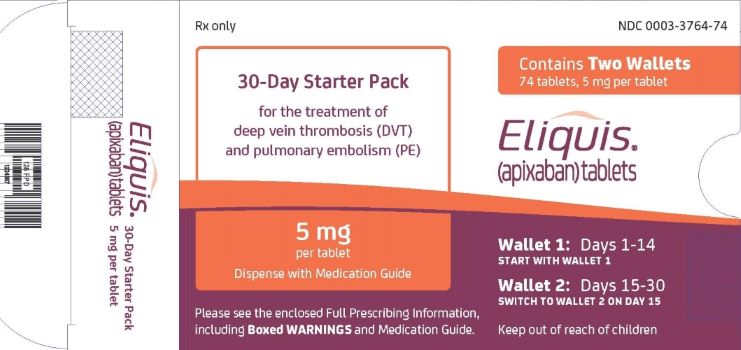
ELIQUIS 30-Day Starter Pack apixaban Kit — NDC 0003-3764-74 (Billing 00003-3764-74)
This is a package of ELIQUIS 30-Day Starter Pack apixaban Kit from E.R. Squibb & Sons, L.L.C., marketed since Nov 2017 and currently FDA-listed; retail pharmacies pay about $5.51 per unit (NADAC). It is this product's only package size.
NDC database record
One package, one record: these facts belong to NDC 0003-3764-74 alone.
- Record
- FDA NDC Directory package listing · Human prescription drug
- Code segments
- 0003 labeler · 3764 product · 74 package
- Package marketed since
- Nov 30, 2017
- Sample package
- No — commercial package
- Listing certified through
- Dec 31, 2027
- Barcode (UPC-A, from the NDC)
- 3 0003376474 1
- Medicaid fills, this package
- 19,377 prescriptions in the last four reported quarters
- FDA record last changed
- Oct 1, 2026
Identity & classification
Regulatory identifiers FDA, NLM and CMS codes for this package
Drug-database identifiers Medi-Span GPI and First Databank GCN / HICL / AHFS classification
- GSN (GCN sequence number): 078093
- GCN: 44357
- GPI-14 (Medi-Span): 8337001000B720
- HICL (First Databank): 037792
- AHFS class code: 20:12.04.14
Where does this data come from?
- FDA openFDA NDC Directory · synced Oct 1, 2026
- FDA label on DailyMed · label index refreshed Oct 6, 2026
- RxNorm (NLM RxNav) · catalog refreshed Oct 1, 2026
- Medi-Span GPI (licensed)
- First Databank (licensed) · refreshed Oct 1, 2026
Clinical
Apixaban is used to: prevent strokes or blood clots in people who have atrial fibrillation (a condition where the heart beats irregularly and can lead to clots and stroke) in adults. prevent deep vein thrombosis (DVT; a blood clot, usually in the leg) and pulmonary embolism (PE; a blood clot in the lung) in certain situations. treat DVT and PE Apixaban is in a class of medications called factor Xa inhibitors. It works by blocking a natural substance that helps blood clots to form.
Read the full MedlinePlus article ↗- Apixaban is a blood thinner prescribed to reduce the risk of stroke if you have a type of irregular heartbeat called atrial fibrillation. It's also used to treat or prevent dangero...
- You can take apixaban with or without food — it doesn't make a difference to how it's absorbed. It's usually taken twice a day, so try to space your doses roughly 12 hours apart an...
- Can I take apixaban with food, and does it matter what time of day I take it?
- Since apixaban thins your blood, bleeding is the main side effect to stay alert to. Serious warning signs include unusual or heavy bruising, cuts that won't stop bleeding, pink or...
Patient education
Supplement & herbal interactions
Some supplements/herbs that may interact with Apixaban — tap one for details:
Where does this data come from?
- MedlinePlus (NLM) · refreshed Oct 1, 2026
- FDA label on DailyMed · label index refreshed Oct 6, 2026
Ask a licensed pharmacist directly — free, answered by our team.
Pricing
A drug doesn't have one price. Each row is a different public payment system, and none is what you'd pay at the counter — that depends on your insurance. The ⓘ on each row explains what it measures.
| Price system | Per ea | Per package |
|---|---|---|
| Retail pharmacies payNADAC · weekly | $5.508 | — |
| Medicaid paysCMS SDUD · 12 mo | $8.85 | — |
| Medicare drug plans payPart D · Q2 2026 | $4.15 | — |
Where does this data come from?
- CMS NADAC weekly file · file of Sep 30, 2026
- CMS ASP pricing files · refreshed Sep 20, 2026
- CMS Medicaid State Drug Utilization Data · through Q1 2026
- CMS Part D plan pricing files · refreshed Sep 24, 2026
- VA National Acquisition Center price file
Packaging — all sizes for this product
| Package NDC | Description | Marketing start | Marketing end | Status |
|---|---|---|---|---|
| 00003-3764-74 You're viewing this Main listing | 1 KIT in 1 CARTON * 32 TABLET, COATED in 1 BLISTER PACK * 42 TABLET, COATED in 1 BLISTER PACK | 2017-11-30 | — | Active |
Therapeutic equivalents
| Product | Labeler | Pack | NADAC/unit | TE | Status | Price vs. this |
|---|---|---|---|---|---|---|
| ELIQUIS 30-Day Starter Packthis 00003-3764-74 | E.R. | 32 tablets | $5.508 | — | Availability likely | — |
Where does this data come from?
- FDA openFDA NDC Directory · synced Oct 1, 2026
- FDA Orange Book · refreshed Oct 3, 2026
- CMS NADAC weekly file · file of Sep 30, 2026
Availability & generic status
We did not find an FDA-approved generic match for this exact strength, form and route. Patent/protection dates below may affect future generic timing.
Why the date isn’t exact: Generic timing can change because patents may be challenged, settled, licensed, added, removed, or worked around with a narrower label — and FDA approval does not always mean a pharmacy can get the generic today.
🛈 What do these terms mean?
- Patent
- Legal protection listed in the Orange Book that may delay generic approval or launch. Issued by the U.S. Patent & Trademark Office.
- Substance patent
- Covers the active drug molecule itself — the hardest to design around. A generic generally can’t launch until it expires.
- Formulation (product) patent
- Covers a specific formulation or dosage form. A generic can sometimes work around it with a different formulation.
- Method-of-use patent
- A patent covering one specific approved use of the drug — not necessarily the whole molecule. A generic can sometimes launch with a “skinny label” that carves out the protected use and keeps the others.
- Skinny label
- A generic label that omits a still-patented use when the FDA allows it — letting a generic reach the market for the unprotected uses.
- Exclusivity
- FDA-granted marketing protection, separate from patents — e.g. 5-yr new chemical entity, 7-yr orphan drug, or a +6-month pediatric extension.
- Paragraph IV
- A generic applicant’s formal challenge to a listed patent. It can potentially lead to earlier generic entry, but often involves litigation or a settlement.
- RLD / RS
- Reference Listed Drug — the brand product the FDA uses as the reference for generic applications. Reference Standard — the product the FDA expects generics to compare against in bioequivalence testing.
- TE / AB rating
- FDA therapeutic-equivalence rating. An AB rating generally means the FDA considers a generic therapeutically equivalent to — and substitutable for — the brand.
- LOE (loss of exclusivity)
- The latest patent or exclusivity currently listed — the loss-of-exclusivity / latest-listed-protection date shown on this page. Paragraph-IV challenges and settlements can move the real date earlier; FDA approval and a manufacturer’s decision to market can move it later.
Built from the FDA Orange Book. The bars above are scaled to each protection’s expiry; the red LOE marker is the last one to lapse.
| Patent | Type | Use code | Expires |
|---|---|---|---|
| US 6967208 ↗ | Drug substance | U-1501 | Nov 21, 2026 |
| US 6967208 ↗ | Drug substance | U-1200 | Nov 21, 2026 |
| US 6967208 ↗ | Drug substance | U-1302 | Nov 21, 2026 |
| US 6967208 ↗ | Drug substance | U-1729 | Nov 21, 2026 |
| US 6967208 ↗ | Drug substance | U-1301 | Nov 21, 2026 |
| US 6967208 ↗ | Drug substance | U-1200 | Nov 21, 2026 |
| US 6967208 ↗ | Drug substance | U-1730 | Nov 21, 2026 |
| US 6967208 ↗ | Drug substance | U-1301 | Nov 21, 2026 |
| US 6967208 ↗ | Drug substance | U-1167 | Nov 21, 2026 |
| US 6967208 ↗ | Drug substance | U-1302 | Nov 21, 2026 |
| US 6967208 ↗ | Drug substance | U-1323 | Nov 21, 2026 |
| US 6967208 ↗ | Drug substance | U-4178 | Nov 21, 2026 |
| US 6967208 ↗ | Drug substance | U-4178 | Nov 21, 2026 |
| US 6967208 ↗ | Drug substance | U-4179 | Nov 21, 2026 |
| US 6967208 ↗ | Drug substance | U-1323 | Nov 21, 2026 |
| US 6967208 ↗ | Drug substance | U-1502 | Nov 21, 2026 |
| US 9326945 ↗ | Drug product | — | Feb 24, 2031 |
| US 9326945 ↗ | Drug product | — | Feb 24, 2031 |
| US 9326945 ↗ | Drug product | — | Feb 24, 2031 |
| US 6967208*PED ↗ | Drug product | — | May 21, 2027 |
| US 6967208*PED ↗ | Drug product | — | May 21, 2027 |
| US 9326945*PED ↗ | Drug product | — | Aug 24, 2031 |
| US 9326945*PED ↗ | Drug product | — | Aug 24, 2031 |
| US 6967208*PED ↗ | Drug product | — | May 21, 2027 |
| US 9326945*PED ↗ | Drug product | — | Aug 24, 2031 |
| Code | What it grants | Expires |
|---|---|---|
| NPP | New Patient Population | Apr 17, 2028 |
| NPP | New Patient Population | Apr 17, 2028 |
| NS | New Strength | Apr 17, 2028 |
| PED | Pediatric Exclusivity (+6 months) | Oct 17, 2028 |
| PED | Pediatric Exclusivity (+6 months) | Oct 17, 2028 |
| PED | Pediatric Exclusivity (+6 months) | Oct 17, 2028 |
Is there a generic version of ELIQUIS DVT-PE TREAT START 5MG?
The FDA approved a generic — why can’t I get it at my pharmacy yet?
Why do different websites show different generic release dates?
What does “FDA listed” mean?
What does a patent or protection date mean here?
What does “current Orange Book estimate” mean?
Can a generic come out before the last patent expires?
Can a generic come out after the listed dates?
What is the difference between patents and exclusivity?
Why are there multiple patent dates?
Where does this data come from?
- FDA Orange Book · refreshed Oct 3, 2026
What it looks like
Where does this data come from?
- FDA label on DailyMed · label index refreshed Oct 6, 2026
Inactive Ingredients / Excipients
Inactive ingredients, also called excipients, are components of the drug product other than the active ingredient. They may include fillers, dyes, coatings, preservatives, flavors, or other formulation ingredients.
🧪 Avoiding an ingredient? See Apixaban inactive ingredients by manufacturer: every current product's list side by side, so you can ask your pharmacy for the version that does not list it.
Where does this data come from?
IACT rows and label-wide narrative are kept separate; availability and product-level specificity depend on the submitted label.- FDA label on DailyMed · label index refreshed Oct 6, 2026
- FDA openFDA NDC Directory · synced Oct 1, 2026
Inactive ingredient FAQ
Are inactive ingredients the same for every manufacturer?
Why might an inactive ingredient be missing?
Can inactive ingredients matter?
Manufacturer & labeler
More NDCs from E.R. Squibb & Sons, L.L.C. labeler code 00003
- Reyataz Atazanavir 300 mg Capsule, Gelatin Coated NDC 0003-3622-12
- Reyataz Atazanavir 200 mg Capsule, Gelatin Coated NDC 0003-3631-12
- Reyataz Atazanavir 50 mg Powder NDC 0003-3638-10
- Evotaz atazanavir and cobicistat 300 mg; 150 mg Tablet NDC 0003-3641-11
- OPDIVO nivolumab 10 mg/mL Injection NDC 0003-3734-13
- OPDIVO nivolumab 10 mg/mL Injection NDC 0003-3756-14
- OPDIVO nivolumab 10 mg/mL Injection NDC 0003-3772-11
- OPDIVO nivolumab 10 mg/mL Injection NDC 0003-3774-12
- Augtyro repotrectinib 40 mg Capsule NDC 0003-4040-12
- Augtyro repotrectinib 160 mg Capsule NDC 0003-4160-14
- Empliciti elotuzumab 400 mg Injection, Powder, Lyophilized, For Solution NDC 0003-4522-11
- Cobenfy xanomeline and trospium chloride Kit NDC 0003-5150-14
Where does this data come from?
- FDA openFDA NDC Directory · synced Oct 1, 2026
- Drugs@FDA
Full prescribing information FDA SPL
🚨 Boxed Warning ▾
WARNING: (A) PREMATURE DISCONTINUATION OF ELIQUIS INCREASES THE RISK OF THROMBOTIC EVENTS (B) SPINAL/EPIDURAL HEMATOMA (A) PREMATURE DISCONTINUATION OF ELIQUIS INCREASES THE RISK OF THROMBOTIC EVENTS Premature discontinuation of any oral anticoagulant, including ELIQUIS, increases the risk of thrombotic events. If anticoagulation with ELIQUIS is discontinued for a reason other than pathological bleeding or completion of a course of therapy, consider coverage with another anticoagulant [see Dosage and Administration (2.5) , Warnings and Precautions (5.1) , and Clinical Studies (14.1) ] .
(B) SPINAL/EPIDURAL HEMATOMA Epidural or spinal hematomas may occur in patients treated with ELIQUIS who are receiving neuraxial anesthesia or undergoing spinal puncture. These hematomas may result in long-term or permanent paralysis. Consider these risks when scheduling patients for spinal procedures.
Factors that can increase the risk of developing epidural or spinal hematomas in these patients include: • use of indwelling epidural catheters • concomitant use of other drugs that affect hemostasis, such as nonsteroidal anti-inflammatory drugs (NSAIDs), platelet inhibitors, other anticoagulants • a history of traumatic or repeated epidural or spinal punctures • a history of spinal deformity or spinal surgery • optimal timing between the administration of ELIQUIS and neuraxial procedures is not known [see Warnings and Precautions (5.3) ] Monitor patients frequently for signs and symptoms of neurological impairment.
If neurological compromise is noted, urgent treatment is necessary [see Warnings and Precautions (5.3) ] . Consider the benefits and risks before neuraxial intervention in patients anticoagulated or to be anticoagulated [see Warnings and Precautions (5.3) ] . WARNING: (A) PREMATURE DISCONTINUATION OF ELIQUIS INCREASES THE RISK OF THROMBOTIC EVENTS (B) SPINAL/EPIDURAL HEMATOMA See full prescribing information for complete boxed warning.
(A) PREMATURE DISCONTINUATION OF ELIQUIS INCREASES THE RISK OF THROMBOTIC EVENTS: Premature discontinuation of any oral anticoagulant, including ELIQUIS, increases the risk of thrombotic events. To reduce this risk, consider coverage with another anticoagulant if ELIQUIS is discontinued for a reason other than pathological bleeding or completion of a course of therapy. ( 2.5 , 5.1 , 14.1 ) (B) SPINAL/EPIDURAL HEMATOMA: Epidural or spinal hematomas may occur in patients treated with ELIQUIS who are receiving neuraxial anesthesia or undergoing spinal puncture.
These hematomas may result in long-term or permanent paralysis. Consider these risks when scheduling patients for spinal procedures. ( 5.3 )
🎯 Indications and Usage ▾
1 INDICATIONS AND USAGE ELIQUIS is a factor Xa inhibitor indicated: • to reduce the risk of stroke and systemic embolism in adult patients with nonvalvular atrial fibrillation. (1.1) • for the prophylaxis of deep vein thrombosis (DVT), which may lead to pulmonary embolism (PE), in adult patients who have undergone hip or knee replacement surgery. (1.2) • for the treatment of DVT and PE, and for the reduction in the risk of recurrent DVT and PE in adult patients following initial therapy.
(1.3 , 1.4 , 1.5) • Treatment of venous thromboembolism (VTE) and reduction in the risk of recurrent VTE in pediatric patients from birth and older after at least 5 days of initial anticoagulant treatment. (1.6)
1.1Reduction of Risk of Stroke and Systemic Embolism in Nonvalvular Atrial Fibrillation ELIQUIS is indicated to reduce the risk of stroke and systemic embolism in adult patients with nonvalvular atrial fibrillation.
1.2Prophylaxis of Deep Vein Thrombosis Following Hip or Knee Replacement Surgery ELIQUIS is indicated for the prophylaxis of deep vein thrombosis (DVT), which may lead to pulmonary embolism (PE), in adult patients who have undergone hip or knee replacement surgery.
1.3Treatment of Deep Vein Thrombosis ELIQUIS is indicated for the treatment of adults with deep vein thrombosis (DVT).
1.4Treatment of Pulmonary Embolism ELIQUIS is indicated for the treatment of adults with pulmonary embolism (PE).
1.5Reduction in the Risk of Recurrence of Deep Vein Thrombosis and Pulmonary Embolism ELIQUIS is indicated to reduce the risk of recurrent deep vein thrombosis (DVT) and pulmonary embolism (PE) in adult patients following initial therapy.
1.6Treatment of Venous Thromboembolism and Reduction in the Risk of Recurrent Venous Thromboembolism in Pediatric Patients ELIQUIS is indicated for the treatment of venous thromboembolism (VTE) and reduction in the risk of recurrent VTE in pediatric patients from birth and older after at least 5 days of initial anticoagulant treatment.
⏱️ Dosage and Administration ▾
2 DOSAGE AND ADMINISTRATION • Reduction of risk of stroke and systemic embolism in nonvalvular atrial fibrillation: • The recommended dose is 5 mg orally twice daily. (2.1) • In patients with at least 2 of the following characteristics: age greater than or equal to 80 years, body weight less than or equal to 60 kg, or serum creatinine greater than or equal to 1.5 mg/dL, the recommended dose is 2.5 mg orally twice daily. (2.1) • Prophylaxis of DVT following hip or knee replacement surgery: • The recommended dose is 2.5 mg orally twice daily.
(2.1) • Treatment of DVT and PE: • The recommended dose is 10 mg taken orally twice daily for 7 days, followed by 5 mg taken orally twice daily. (2.1) • Reduction in the risk of recurrent DVT and PE following initial therapy: • The recommended dose is 2.5 mg taken orally twice daily. (2.1) • Treatment of VTE and reduction in the risk of recurrent VTE in pediatric patients from birth and older after at least 5 days of initial anticoagulant treatment: • See dosing recommendations in the Full Prescribing Information (2.2)
2.1Recommended Dose in Adult Patients Reduction of Risk of Stroke and Systemic Embolism in Patients with Nonvalvular Atrial Fibrillation The recommended dose of ELIQUIS for most patients is 5 mg taken orally twice daily. The recommended dose of ELIQUIS is 2.5 mg twice daily in patients with at least two of the following characteristics: • age greater than or equal to 80 years • body weight less than or equal to 60 kg • serum creatinine greater than or equal to 1.5 mg/dL Prophylaxis of Deep Vein Thrombosis Following Hip or Knee Replacement Surgery The recommended dose of ELIQUIS is 2.5 mg taken orally twice daily.
The initial dose should be taken 12 to 24 hours after surgery. • In patients undergoing hip replacement surgery, the recommended duration of treatment is 35 days. • In patients undergoing knee replacement surgery, the recommended duration of treatment is 12 days. Treatment of DVT and PE The recommended dose of ELIQUIS is 10 mg taken orally twice daily for the first 7 days of therapy. After 7 days, the recommended dose is 5 mg taken orally twice daily.
Reduction in the Risk of Recurrence of DVT and PE The recommended dose of ELIQUIS is 2.5 mg taken orally twice daily after at least 6 months of treatment for DVT or PE [see Clinical Studies (14.3) ] .
2.2Recommended Dose in Pediatric Patients Treatment of Venous Thromboembolism (VTE) and Reduction in the Risk of Recurrent VTE in Pediatric Patients The recommended dose of ELIQUIS is based on the patient’s weight, see Table 1. Adjust the dose according to weight-tier as treatment progresses. Initiate ELIQUIS treatment for pediatric patients from birth to less than 18 years of age following at least 5 days of initial anticoagulation therapy.
Individualize duration of overall therapy after careful assessment of the treatment benefit and the risk for bleeding. Table 1: Dose Recommendation in Pediatric Patients from Birth to less than 18 Years of Age for the Treatment of VTE and Reduction in the Risk of Recurrent VTE Days 1-7 Days 8 and beyond Presentation Body weight (kg) Dosing schedule Dosing schedule Powder in Capsule 0.15 mg For pediatric use 2.6 to less than 4 0.3 mg twice daily 0.15 mg twice daily Tablet 0.5 mg For pediatric use 4 to less than 6 1 mg twice daily 0.5 mg twice daily 6 to less than 9 2 mg twice daily 1 mg twice daily 9 to less than 12 3 mg twice daily 1.5 mg twice daily 12 to less than 18 4 mg twice daily 2 mg twice daily 18 to less than 25 6 mg twice daily 3 mg twice daily 25 to less than 35 8 mg twice daily 4 mg twice daily Tablets 2.5 mg and 5 mg greater than or equal to 35 10 mg twice daily 5 mg twice daily ELIQUIS is not recommended for use in pediatric patients less than 2.6 kg because ELIQUIS was not studied in these patients.
2.3Missed Dose If a dose of ELIQUIS is not taken at the scheduled time, the dose should be taken as soon as possible on the same day and twice-daily administration should… [Excerpted — this section continues on DailyMed.]
💊 Dosage Forms and Strengths ▾
3 DOSAGE FORMS AND STRENGTHS • 0.5 mg, pink, round, film-coated tablets for oral suspension packaged in packets. 1-count (0.5 mg), 3-count (1.5 mg), and 4-count (2 mg). • 2.5 mg, yellow, round, biconvex, film-coated tablets with “893” debossed on one side and “2½” on the other side. • 5 mg, pink, oval-shaped, biconvex, film-coated tablets with “894” debossed on one side and “5” on the other side. • 0.15 mg, white to pale yellow powder for oral suspension, in a yellow opaque capsule marked “898”. • Tablets: 2.5 mg and 5 mg (3) • Tablet For Oral Suspension: 0.5 mg (3) • For Oral Suspension: 0.15 mg in a yellow opaque capsule (3)
⛔ Contraindications ▾
4 CONTRAINDICATIONS ELIQUIS is contraindicated in patients with the following conditions: • Active pathological bleeding [see Warnings and Precautions (5.2) and Adverse Reactions (6.1) ] • Severe hypersensitivity reaction to ELIQUIS (e.g., anaphylactic reactions) [see Adverse Reactions (6.1) ] • Active pathological bleeding (4) • Severe hypersensitivity to ELIQUIS (4)
⚠️ Warnings and Cautions ▾
5 WARNINGS AND PRECAUTIONS • ELIQUIS can cause serious, potentially fatal, bleeding. Promptly evaluate signs and symptoms of blood loss. An agent to reverse the anti-factor Xa activity of apixaban is available. ( 5.2 ) • Prosthetic heart valves: ELIQUIS use not recommended. ( 5.4 ) • Increased Risk of Thrombosis in Patients with Triple Positive Antiphospholipid Syndrome: ELIQUIS use not recommended. ( 5.6 )
5.1Increased Risk of Thrombotic Events after Premature Discontinuation Premature discontinuation of any oral anticoagulant, including ELIQUIS, in the absence of adequate alternative anticoagulation increases the risk of thrombotic events. An increased rate of stroke was observed during the transition from ELIQUIS to warfarin in clinical trials in atrial fibrillation patients. If ELIQUIS is discontinued for a reason other than pathological bleeding or completion of a course of therapy, consider coverage with another anticoagulant [see Dosage and Administration (2.5) and Clinical Studies (14.1) ] .
5.2Bleeding ELIQUIS increases the risk of bleeding and can cause serious, potentially fatal, bleeding [see Dosage and Administration (2.1) and Adverse Reactions (6.1) ] . Concomitant use of drugs affecting hemostasis increases the risk of bleeding. These include aspirin and other antiplatelet agents, other anticoagulants, heparin, thrombolytic agents, selective serotonin reuptake inhibitors, serotonin norepinephrine reuptake inhibitors, and nonsteroidal anti-inflammatory drugs (NSAIDs) [see Drug Interactions (7.3) ] .
Advise patients of signs and symptoms of blood loss and to report them immediately or go to an emergency room. Discontinue ELIQUIS in patients with active pathological hemorrhage. Reversal of Anticoagulant Effect A specific reversal agent (andexanet alfa) antagonizing the pharmacodynamic effect of apixaban is available for adults.
However, its safety and efficacy have not been established in pediatric patients (refer to the USPI of andexanet alfa). The pharmacodynamic effect of ELIQUIS can be expected to persist for at least 24 hours after the last dose, i.e., for about two drug half-lives. Prothrombin complex concentrate (PCC), activated prothrombin complex concentrate or recombinant factor VIIa may be considered, but have not been evaluated in clinical studies [see Clinical Pharmacology (12.2) ] .
When PCCs are used, monitoring for the anticoagulation effect of apixaban using a clotting test (PT, INR, or aPTT) or anti-factor Xa (FXa) activity is not useful and is not recommended. Activated oral charcoal reduces absorption of apixaban, thereby lowering apixaban plasma concentration [see Overdosage (10) ] . Hemodialysis does not appear to have a substantial impact on apixaban exposure [see Clinical Pharmacology (12.3) ] .
Protamine sulfate and vitamin K are not expected to affect the anticoagulant activity of apixaban. There is no experience with antifibrinolytic agents (tranexamic acid, aminocaproic acid) in individuals receiving apixaban. There is no experience with systemic hemostatics (desmopressin) in individuals receiving ELIQUIS, and they are not expected to be effective as a reversal agent.
5.3Spinal/Epidural Anesthesia or Puncture When neuraxial anesthesia (spinal/epidural anesthesia) or spinal/epidural puncture is employed, patients treated with antithrombotic agents for prevention of thromboembolic complications are at risk of developing an epidural or spinal hematoma which can result in long-term or permanent paralysis. The risk of these events may be increased by the postoperative use of indwelling epidural catheters or the concomitant use of medicinal products affecting hemostasis. Indwelling epidural or intrathecal catheters should not be removed earlier than 24 hours after the last administration of ELIQUIS.
The next dose of ELIQUIS should not be administered earlier than 5 hours after the removal of the catheter. The risk may also be increased by traumatic or repeated epidural or spinal puncture. I… [Excerpted — this section continues on DailyMed.]
🤒 Adverse Reactions ▾
6 ADVERSE REACTIONS The following clinically significant adverse reactions are discussed in greater detail in other sections of the prescribing information. • Increased Risk of Thrombotic Events After Premature Discontinuation [see Warnings and Precautions (5.1) ] • Bleeding [see Warnings and Precautions (5.2) ] • Spinal/Epidural Anesthesia or Puncture [see Warnings and Precautions (5.3) ] • Most common adverse reactions (>1%) in adult patients are related to bleeding. ( 6.1 ) • The most common adverse reactions (≥10%) in pediatric patients were headache, vomiting, and excessive menstrual bleeding.
( 6.1 ) To report SUSPECTED ADVERSE REACTIONS, contact Bristol-Myers Squibb at 1-800-721-5072 or FDA at 1-800-FDA-1088 or www.fda.gov/medwatch.
6.1Clinical Trials Experience Adult Patients Because clinical trials are conducted under widely varying conditions, adverse reaction rates observed in the clinical trials of a drug cannot be directly compared to rates in the clinical trials of another drug and may not reflect the rates observed in practice. Reduction of Risk of Stroke and Systemic Embolism in Patients with Nonvalvular Atrial Fibrillation The safety of ELIQUIS was evaluated in the ARISTOTLE and AVERROES studies [see Clinical Studies (14) ] , including 11,284 patients exposed to ELIQUIS 5 mg twice daily and 602 patients exposed to ELIQUIS 2.5 mg twice daily.
The duration of ELIQUIS exposure was ≥12 months for 9375 patients and ≥24 months for 3369 patients in the two studies. In ARISTOTLE, the mean duration of exposure was 89 weeks (>15,000 patient-years). In AVERROES, the mean duration of exposure was approximately 59 weeks (>3000 patient-years).
The most common reason for treatment discontinuation in both studies was for bleeding-related adverse reactions; in ARISTOTLE this occurred in 1.7% and 2.5% of patients treated with ELIQUIS and warfarin, respectively, and in AVERROES, in 1.5% and 1.3% on ELIQUIS and aspirin, respectively. Bleeding in Patients with Nonvalvular Atrial Fibrillation in ARISTOTLE and AVERROES Tables 2 and 3 show the number of patients experiencing major bleeding during the treatment period and the bleeding rate (percentage of subjects with at least one bleeding event per 100 patient-years) in ARISTOTLE and AVERROES.
Table 2: Bleeding Events in Patients with Nonvalvular Atrial Fibrillation in ARISTOTLE Bleeding events within each subcategory were counted once per subject, but subjects may have contributed events to multiple endpoints. Bleeding events were counted during treatment or within 2 days of stopping study treatment (on-treatment period). ELIQUIS N=9088 n (per 100 pt-year) Warfarin N=9052 n (per 100 pt-year) Hazard Ratio (95% CI) P-value Major Defined as clinically overt bleeding accompanied by one or more of the following: a decrease in hemoglobin of ≥2 g/dL, a transfusion of 2 or more units of packed red blood cells, bleeding at a critical site: intracranial, intraspinal, intraocular, pericardial, intra-articular, intramuscular with compartment syndrome, retroperitoneal or with fatal outcome.
327 (2.13) 462 (3.09) 0.69 (0.60, 0.80) <0.0001 Intracranial (ICH) Intracranial bleed includes intracerebral, intraventricular, subdural, and subarachnoid bleeding. Any type of hemorrhagic stroke was adjudicated and counted as an intracranial major bleed. 52 (0.33) 125 (0.82) 0.41 (0.30, 0.57) - Hemorrhagic stroke On-treatment analysis based on the safety population, compared to ITT analysis presented in Section 14.
38 (0.24) 74 (0.49) 0.51 (0.34, 0.75) - Other ICH 15 (0.10) 51 (0.34) 0.29 (0.16, 0.51) - Gastrointestinal (GI) GI bleed includes upper GI, lower GI, and rectal bleeding. 128 (0.83) 141 (0.93) 0.89 (0.70, 1.14) - Fatal Fatal bleeding is an adjudicated death with the primary cause of death as intracranial bleeding or non-intracranial bleeding during the on-treatment period. 10 (0.06) 37 (0.24) 0.27 (0.13, 0.53) - Intracranial 4 (0.03) 30 (0.20) 0.13 (0.05, 0.37) - Non-intracranial 6 (0.04) 7 (0.05… [Excerpted — this section continues on DailyMed.]
🔄 Drug Interactions ▾
7 DRUG INTERACTIONS • Combined P-gp and strong CYP3A4 inhibitors increase blood levels of apixaban. Reduce ELIQUIS dose or avoid coadministration. ( 2.6 , 7.1 , 12.3 ) • Simultaneous use of combined P-gp and strong CYP3A4 inducers reduces blood levels of apixaban: Avoid concomitant use. ( 7.2 , 12.3 )
7.1Combined P-gp and Strong CYP3A4 Inhibitors For patients receiving ELIQUIS 5 mg or 10 mg twice daily, the dose of ELIQUIS should be decreased by 50% when coadministered with drugs that are combined P-gp and strong CYP3A4 inhibitors (e.g., ketoconazole, itraconazole, ritonavir) [see Dosage and Administration (2.6) and Clinical Pharmacology (12.3) ] . For patients receiving ELIQUIS at a dose of 2.5 mg twice daily, avoid coadministration with combined P-gp and strong CYP3A4 inhibitors [see Dosage and Administration (2.6) and Clinical Pharmacology (12.3) ] .
Concomitant administration of combined P-gp and strong CYP3A4 inhibitors has not been studied in pediatric patients. Apixaban is a substrate of both CYP3A4 and P-gp. Concomitant use with drugs that are combined P-gp and strong CYP3A4 inhibitors increases exposure to apixaban [see Clinical Pharmacology (12.3) ] which increases the risk for bleeding.
Clarithromycin Although clarithromycin is a combined P-gp and strong CYP3A4 inhibitor, pharmacokinetic data suggest that no dose adjustment is necessary with concomitant administration with ELIQUIS [see Clinical Pharmacology (12.3) ] .
7.2Combined P-gp and Strong CYP3A4 Inducers Avoid concomitant use of ELIQUIS with combined P-gp and strong CYP3A4 inducers (e.g., rifampin, carbamazepine, phenytoin, St. John’s wort) because such drugs will decrease exposure to apixaban [see Clinical Pharmacology (12.3) ] . Apixaban is a substrate of both CYP3A4 and P-gp.
Concomitant use with drugs that are combined P-gp and strong CYP3A4 inducers decreases exposure to apixaban [see Clinical Pharmacology (12.3) ] which increases the risk for stroke and other thromboembolic events.
7.3Anticoagulants and Antiplatelet Agents Coadministration of antiplatelet agents, fibrinolytics, heparin, aspirin, and chronic NSAID use increases the risk of bleeding. APPRAISE-2, a placebo-controlled clinical trial of ELIQUIS in high-risk, post-acute coronary syndrome patients treated with aspirin or the combination of aspirin and clopidogrel, was terminated early due to a higher rate of bleeding with ELIQUIS compared to placebo. The rate of ISTH major bleeding was 2.8% per year with ELIQUIS versus 0.6% per year with placebo in patients receiving single antiplatelet therapy and was 5.9% per year with ELIQUIS versus 2.5% per year with placebo in those receiving dual antiplatelet therapy.
In ARISTOTLE, concomitant use of aspirin increased the bleeding risk on ELIQUIS from 1.8% per year to 3.4% per year and concomitant use of aspirin and warfarin increased the bleeding risk from 2.7% per year to 4.6% per year. In this clinical trial, there was limited (2.3%) use of dual antiplatelet therapy with ELIQUIS.
👥 Use in Specific Populations ▾
8 USE IN SPECIFIC POPULATIONS • Pregnancy: Not recommended. ( 8.1 ) • Lactation: Advise not to breastfeed. ( 8.2 ) • Severe Hepatic Impairment: Not recommended. ( 8.7 , 12.2 )
8.1Pregnancy Risk Summary The limited available data on ELIQUIS use in pregnant women are insufficient to inform drug-associated risks of major birth defects, miscarriage, or adverse developmental outcomes. Treatment may increase the risk of bleeding during pregnancy and delivery. In animal reproduction studies, no adverse developmental effects were seen when apixaban was administered to rats (orally), rabbits (intravenously) and mice (orally) during organogenesis at unbound apixaban exposure levels up to 4, 1 and 19 times, respectively, the human exposure based on area under plasma-concentration time curve (AUC) at the Maximum Recommended Human Dose (MRHD) of 5 mg twice daily.
The estimated background risk of major birth defects and miscarriage for the indicated populations is unknown. All pregnancies have a background risk of birth defect, loss, or other adverse outcomes. In the U.S. general population, the estimated background risk of major birth defects and miscarriage in clinically recognized pregnancies is 2% to 4% and 15% to 20%, respectively.
Clinical Considerations Disease-associated maternal and/or embryo/fetal risk Pregnancy confers an increased risk of thromboembolism that is higher for women with underlying thromboembolic disease and certain high-risk pregnancy conditions. Published data describe that women with a previous history of venous thrombosis are at high risk for recurrence during pregnancy. Fetal/Neonatal adverse reactions Use of anticoagulants, including ELIQUIS, may increase the risk of bleeding in the fetus and neonate.
Labor or delivery All patients receiving anticoagulants, including pregnant women, are at risk for bleeding. ELIQUIS use during labor or delivery in women who are receiving neuraxial anesthesia may result in epidural or spinal hematomas. Consider use of a shorter acting anticoagulant as delivery approaches [see Warnings and Precautions (5.3) ] .
Data Animal Data No developmental toxicities were observed when apixaban was administered during organogenesis to rats (orally), rabbits (intravenously) and mice (orally) at unbound apixaban exposure levels 4, 1, and 19 times, respectively, the human exposures at the MRHD. There was no evidence of fetal bleeding, although conceptus exposure was confirmed in rats and rabbits. Oral administration of apixaban to rat dams from gestation day 6 through lactation day 21 at maternal unbound apixaban exposures ranging from 1.4 to 5 times the human exposures at the MRHD was not associated with reduced maternal mortality or reduced conceptus/neonatal viability, although increased incidences of peri-vaginal bleeding were observed in dams at all doses.
There was no evidence of neonatal bleeding.
8.2Lactation Risk Summary There are no data on the presence of apixaban or its metabolites in human milk, the effects on the breastfed child, or the effects on milk production. Apixaban and/or its metabolites were present in the milk of rats (see Data) . Because human exposure through milk is unknown, breastfeeding is not recommended during treatment with ELIQUIS.
Data Animal Data Maximal plasma concentrations were observed after 30 minutes following a single oral administration of a 5 mg dose to lactating rats. Maximal milk concentrations were observed 6 hours after dosing. The milk to plasma AUC (0-24) ratio is 30:1 indicating that apixaban can accumulate in milk.
The concentrations of apixaban in animal milk does not necessarily predict the concentration of drug in human milk.
8.3Females and Males of Reproductive Potential Females of reproductive potential requiring anticoagulation should discuss pregnancy planning with their physician. The risk of clinically significant uterine bleeding, potentially requiring gynecological surgical interventions, identified with oral anticoagulants incl… [Excerpted — this section continues on DailyMed.]
🤰 Pregnancy ▾
8.1Pregnancy Risk Summary The limited available data on ELIQUIS use in pregnant women are insufficient to inform drug-associated risks of major birth defects, miscarriage, or adverse developmental outcomes. Treatment may increase the risk of bleeding during pregnancy and delivery. In animal reproduction studies, no adverse developmental effects were seen when apixaban was administered to rats (orally), rabbits (intravenously) and mice (orally) during organogenesis at unbound apixaban exposure levels up to 4, 1 and 19 times, respectively, the human exposure based on area under plasma-concentration time curve (AUC) at the Maximum Recommended Human Dose (MRHD) of 5 mg twice daily.
The estimated background risk of major birth defects and miscarriage for the indicated populations is unknown. All pregnancies have a background risk of birth defect, loss, or other adverse outcomes. In the U.S. general population, the estimated background risk of major birth defects and miscarriage in clinically recognized pregnancies is 2% to 4% and 15% to 20%, respectively.
Clinical Considerations Disease-associated maternal and/or embryo/fetal risk Pregnancy confers an increased risk of thromboembolism that is higher for women with underlying thromboembolic disease and certain high-risk pregnancy conditions. Published data describe that women with a previous history of venous thrombosis are at high risk for recurrence during pregnancy. Fetal/Neonatal adverse reactions Use of anticoagulants, including ELIQUIS, may increase the risk of bleeding in the fetus and neonate.
Labor or delivery All patients receiving anticoagulants, including pregnant women, are at risk for bleeding. ELIQUIS use during labor or delivery in women who are receiving neuraxial anesthesia may result in epidural or spinal hematomas. Consider use of a shorter acting anticoagulant as delivery approaches [see Warnings and Precautions (5.3) ] .
Data Animal Data No developmental toxicities were observed when apixaban was administered during organogenesis to rats (orally), rabbits (intravenously) and mice (orally) at unbound apixaban exposure levels 4, 1, and 19 times, respectively, the human exposures at the MRHD. There was no evidence of fetal bleeding, although conceptus exposure was confirmed in rats and rabbits. Oral administration of apixaban to rat dams from gestation day 6 through lactation day 21 at maternal unbound apixaban exposures ranging from 1.4 to 5 times the human exposures at the MRHD was not associated with reduced maternal mortality or reduced conceptus/neonatal viability, although increased incidences of peri-vaginal bleeding were observed in dams at all doses.
There was no evidence of neonatal bleeding.
🧒 Pediatric Use ▾
8.4Pediatric Use The safety and effectiveness of ELIQUIS for the treatment of VTE and the reduction in the risk of recurrent VTE have been established in pediatric patients aged birth and older. Use of ELIQUIS for this indication is supported by evidence from adequate and well-controlled studies in adults with additional pharmacokinetic, safety, and efficacy data in pediatric patients. These studies included a randomized, active controlled, open label, multi-center study of ELIQUIS [see Adverse Reactions (6.1) and Clinical Studies (14.4) ] .
🧓 Geriatric Use ▾
8.5Geriatric Use Of the total subjects in the ARISTOTLE and AVERROES clinical studies, >69% were 65 years of age and older, and >31% were 75 years of age and older. In the ADVANCE-1, ADVANCE-2, and ADVANCE-3 clinical studies, 50% of subjects were 65 years of age and older, while 16% were 75 years of age and older. In the AMPLIFY and AMPLIFY-EXT clinical studies, >32% of subjects were 65 years of age and older and >13% were 75 years of age and older.
No clinically significant differences in safety or effectiveness were observed when comparing subjects in different age groups.
🆘 Overdosage ▾
10 OVERDOSAGE Overdose of ELIQUIS increases the risk of bleeding [see Warnings and Precautions (5.2) ] . In healthy subjects, administration of activated charcoal 2 and 6 hours after ingestion of a 20-mg dose of apixaban reduced mean apixaban AUC by 50% and 27%, respectively. Thus, administration of activated charcoal may be useful in the management of ELIQUIS overdose or accidental ingestion.
An agent to reverse the anti-factor Xa activity of apixaban is available. Consider contacting the Poison Help line (1-800-222-1222) or a medical toxicologist for additional overdose management recommendations.
🧬 Clinical Pharmacology ▾
12 CLINICAL PHARMACOLOGY
12.1Mechanism of Action Apixaban is a selective inhibitor of FXa. It does not require antithrombin III for antithrombotic activity. Apixaban inhibits free and clot-bound FXa, and prothrombinase activity. Apixaban has no direct effect on platelet aggregation, but indirectly inhibits platelet aggregation induced by thrombin. By inhibiting FXa, apixaban decreases thrombin generation and thrombus development.
12.2Pharmacodynamics As a result of FXa inhibition, apixaban prolongs clotting tests such as prothrombin time (PT), INR, and activated partial thromboplastin time (aPTT). Changes observed in these clotting tests at the expected therapeutic dose, however, are small, subject to a high degree of variability, and not useful in monitoring the anticoagulation effect of apixaban. The Rotachrom® Heparin chromogenic assay was used to measure the effect of apixaban on FXa activity in humans primarily during the apixaban adult development program.
A concentration-dependent increase in anti-FXa activity was observed in the dose range tested and was similar in healthy subjects and patients with AF. This test is not recommended for assessing the anticoagulant effect of apixaban. Effect of PCCs on Pharmacodynamics of ELIQUIS There is no clinical experience to reverse bleeding with the use of 4-factor PCC products in individuals who have received ELIQUIS.
Effects of 4-factor PCCs on the pharmacodynamics of apixaban were studied in healthy subjects. Following administration of apixaban dosed to steady state, endogenous thrombin potential (ETP) returned to pre-apixaban levels 4 hours after the initiation of a 30-minute PCC infusion, compared to 45 hours with placebo. Mean ETP levels continued to increase and exceeded pre-apixaban levels reaching a maximum (34%-51% increase over pre-apixaban levels) at 21 hours after initiating PCC and remained elevated (21%-27% increase) at the end of the study (69 hours after initiation of PCC).
The clinical relevance of this increase in ETP is unknown. Pharmacodynamic Drug Interaction Studies Pharmacodynamic drug interaction studies with aspirin, clopidogrel, aspirin and clopidogrel, prasugrel, enoxaparin, and naproxen were conducted. No pharmacodynamic interactions were observed with aspirin, clopidogrel, or prasugrel [see Warnings and Precautions (5.2) ] .
A 50% to 60% increase in anti-FXa activity was observed when ELIQUIS was coadministered with enoxaparin or naproxen. Specific Populations Renal impairment: Anti-FXa activity adjusted for exposure to apixaban was similar across renal function categories. Hepatic impairment: Changes in anti-FXa activity were similar in patients with mild-to-moderate hepatic impairment and healthy subjects.
However, in patients with moderate hepatic impairment, there is no clear understanding of the impact of this degree of hepatic function impairment on the coagulation cascade and its relationship to efficacy and bleeding. Patients with severe hepatic impairment were not studied. Pediatric patients: In pediatric patients treated with apixaban, the correlation between anti-FXa activity and plasma concentration is linear with a slope close to 1.
Cardiac Electrophysiology Apixaban has no effect on the QTc interval in humans at doses up to 50 mg.
12.3Pharmacokinetics Apixaban demonstrates linear pharmacokinetics with dose-proportional increases in exposure for oral doses up to 10 mg. Absorption The absolute bioavailability of apixaban is approximately 50% for doses up to 10 mg of ELIQUIS. Food does not affect the bioavailability of apixaban.
Maximum concentrations (Cmax) of apixaban appear 3 to 4 hours after oral administration of ELIQUIS. At doses ≥25 mg, apixaban displays dissolution-limited absorption with decreased bioavailability. Following oral administration of 10 mg of apixaban as 2 crushed 5 mg tablets suspended in 30 mL of water, exposure was similar to that after oral administration of 2 intact 5 mg tablets.
Following oral administration… [Excerpted — this section continues on DailyMed.]
🧬 Mechanism of Action ▾
12.1Mechanism of Action Apixaban is a selective inhibitor of FXa. It does not require antithrombin III for antithrombotic activity. Apixaban inhibits free and clot-bound FXa, and prothrombinase activity. Apixaban has no direct effect on platelet aggregation, but indirectly inhibits platelet aggregation induced by thrombin. By inhibiting FXa, apixaban decreases thrombin generation and thrombus development.
📦 How Supplied / Storage and Handling ▾
16 HOW SUPPLIED/STORAGE AND HANDLING How Supplied ELIQUIS (apixaban) tablets for oral use, ELIQUIS (apixaban) tablets for oral suspension, and ELIQUIS SPRINKLE (apixaban) for oral suspension are available as listed in the table below. Strength Dosage form/Description Markings Package Size NDC Code 0.15 mg Powder In a yellow, opaque capsule Printed with “898” Bottles of 28 0003-0898-28 0.5 mg Film-coated Tablet for oral suspension, Pink, round N/A Carton of 28 packets 28 count tablet carton (1 tablet per packet) 84 count tablet carton (3 tablets per packet) 112 count tablet carton (4 tablets per packet) 0003-1028-28 0003-1028-84 0003-1028-12 2.5 mg Film-coated Tablet Yellow, round, biconvex Debossed with “893” on one side and “2½” on the other side Bottles of 60 Hospital Unit-Dose Blister Package of 100 0003-0893-21 0003-0893-31 5 mg Film-coated Tablet Pink, oval, biconvex Debossed with “894” on one side and “5” on the other side Bottles of 60 Bottles of 74 Hospital Unit-Dose Blister Package of 100 30-Day Starter Pack for Treatment of DVT and PE Containing 74 Tablets (1 blister pack of 42 tablets and 1 blister pack of 32 tablets) 0003-0894-21 0003-0894-70 0003-0894-31 0003-3764-74 Storage and Handling Store ELIQUIS and ELIQUIS SPRINKLE at 20°C to 25°C (68°F to 77°F); excursions permitted between 15°C to 30°C (59°F to 86°F) [see USP Controlled Room Temperature].
How Supplied ELIQUIS (apixaban) tablets for oral use, ELIQUIS (apixaban) tablets for oral suspension, and ELIQUIS SPRINKLE (apixaban) for oral suspension are available as listed in the table below. Strength Dosage form/Description Markings Package Size NDC Code 0.15 mg Powder In a yellow, opaque capsule Printed with “898” Bottles of 28 0003-0898-28 0.5 mg Film-coated Tablet for oral suspension, Pink, round N/A Carton of 28 packets 28 count tablet carton (1 tablet per packet) 84 count tablet carton (3 tablets per packet) 112 count tablet carton (4 tablets per packet) 0003-1028-28 0003-1028-84 0003-1028-12 2.5 mg Film-coated Tablet Yellow, round, biconvex Debossed with “893” on one side and “2½” on the other side Bottles of 60 Hospital Unit-Dose Blister Package of 100 0003-0893-21 0003-0893-31 5 mg Film-coated Tablet Pink, oval, biconvex Debossed with “894” on one side and “5” on the other side Bottles of 60 Bottles of 74 Hospital Unit-Dose Blister Package of 100 30-Day Starter Pack for Treatment of DVT and PE Containing 74 Tablets (1 blister pack of 42 tablets and 1 blister pack of 32 tablets) 0003-0894-21 0003-0894-70 0003-0894-31 0003-3764-74
📦 Storage and Handling ▾
Storage and Handling Store ELIQUIS and ELIQUIS SPRINKLE at 20°C to 25°C (68°F to 77°F); excursions permitted between 15°C to 30°C (59°F to 86°F) [see USP Controlled Room Temperature].
📋 Description ▾
11 DESCRIPTION ELIQUIS (apixaban), a factor Xa (FXa) inhibitor, is chemically described as 1-(4-methoxyphenyl)-7-oxo-6-[4-(2-oxopiperidin-1-yl)phenyl]-4,5,6,7-tetrahydro-1 H -pyrazolo[3,4- c ]pyridine-3-carboxamide. Its molecular formula is C25H25N5O4, which corresponds to a molecular weight of 459.5. Apixaban has the following structural formula: Apixaban is a white to pale-yellow powder.
At physiological pH (1.2-6.8), apixaban does not ionize; its aqueous solubility across the physiological pH range is ~0.04 mg/mL. ELIQUIS tablets 2.5 mg and 5 mg are available for oral administration and contain the following inactive ingredients: anhydrous lactose, microcrystalline cellulose, croscarmellose sodium, sodium lauryl sulfate, and magnesium stearate. The film coating contains lactose monohydrate, hypromellose, titanium dioxide, triacetin, and yellow iron oxide (2.5 mg tablets) or red iron oxide (5 mg tablets).
ELIQUIS 0.5 mg film coated tablets for oral suspension are supplied in packets containing 1 (0.5 mg), 3 (1.5 mg) or 4 (2 mg) apixaban tablets. The inactive ingredients are anhydrous lactose, microcrystalline cellulose, croscarmellose sodium, sodium lauryl sulfate, and magnesium stearate. The film coating contains lactose monohydrate, hypromellose, titanium dioxide, triacetin, and red iron oxide.
ELIQUIS SPRINKLE 0.15 mg for oral suspension is supplied as a white to off-white powder in capsules, which contain 0.15 mg apixaban and the following inactive ingredients: hypromellose and sugar spheres. Apixaban Chemical Structure
💬 Information for Patients ▾
17 PATIENT COUNSELING INFORMATION Advise patients to read the FDA-approved patient labeling (Medication Guide and Instructions for Use). Advise patients of the following: • Not to discontinue ELIQUIS without talking to their physician first. • That it might take longer than usual for bleeding to stop, and they may bruise or bleed more easily when treated with ELIQUIS. Advise patients about how to recognize bleeding or symptoms of hypovolemia and of the urgent need to report any unusual bleeding to their physician. • To tell their physicians and dentists they are taking ELIQUIS, and/or any other product known to affect bleeding (including nonprescription products, such as aspirin or NSAIDs), before any surgery or medical or dental procedure is scheduled and before any new drug is taken. • If the patient is having neuraxial anesthesia or spinal puncture, inform the patient to watch for signs and symptoms of spinal or epidural hematomas [see Warnings and Precautions (5.3) ] .
If any of these symptoms occur, advise the patient to seek emergent medical attention. • To tell their physicians if they are pregnant or plan to become pregnant or are breastfeeding or intend to breastfeed during treatment with ELIQUIS [see Use in Specific Populations (8.1 , 8.2) ] . • How to take ELIQUIS if they cannot swallow or require a nasogastric tube [see Dosage and Administration (2.7) ] . • What to do if a dose is missed [see Dosage and Administration (2.2 and 2.3) ] . Pediatric Patients Advise the caregiver or the patient of the following: • To always give this medicine exactly as the child’s physician or pharmacist has instructed them. • The importance of keeping scheduled physician’s visits.
ELIQUIS dose is based on body weight and the dose may need to be adjusted as the child’s weight changes. This ensures that the child receives the correct dose of ELIQUIS. The physician may adjust the child’s dose when needed.
The caregiver should be advised not to adjust the dose themselves. • What to do if the child vomits or spits up. If a child vomits or spits up within 30 minutes after taking ELIQUIS, repeat the dose. If a child vomits or spits up more than 30 minutes after taking ELIQUIS, do not repeat the dose.
Continue to give the next ELIQUIS dose at the next scheduled time. The caregiver should contact the physician if the child repeatedly vomits or spits up after taking ELIQUIS. Marketed by: Bristol-Myers Squibb Company Princeton, NJ 08543 USA and Pfizer Inc New York, NY 10001 USA Rotachrom ® is a registered trademark of Diagnostica Stago. [PRINT CODES]
💬 Medication Guide ▾
Medication Guide MEDICATION GUIDE ELIQUIS ® (ELL eh kwiss) (apixaban) tablets ELIQUIS ® (ELL eh kwiss) SPRINKLE (SPRINK el) (apixaban) for oral suspension What is the most important information I should know about ELIQUIS? ELIQUIS may cause serious side effects, including: • Increased risk of blood clots if you stop taking ELIQUIS. ELIQUIS lowers your chance of having a stroke by helping to prevent clots from forming.
If you stop taking ELIQUIS, you may have increased risk of forming a clot in your blood. Do not stop taking ELIQUIS without talking to the healthcare provider who prescribes it for you. Stopping ELIQUIS increases your risk of having a stroke.
ELIQUIS may need to be stopped, if possible, prior to surgery or a medical or dental procedure. Ask the healthcare provider who prescribed ELIQUIS for you when you should stop taking it. Your healthcare provider will tell you when you may start taking ELIQUIS again after your surgery or procedure.
If you have to stop taking ELIQUIS, your healthcare provider may prescribe another medicine to help prevent a blood clot from forming. • Increased risk of bleeding. ELIQUIS can cause bleeding which can be serious and may lead to death. This is because ELIQUIS is a blood thinner medicine that reduces blood clotting.
You may have a higher risk of bleeding if you take ELIQUIS and take other medicines that increase your risk of bleeding, including: ∘ aspirin or aspirin-containing products ∘ long-term (chronic) use of nonsteroidal anti-inflammatory drugs (NSAIDs) ∘ warfarin sodium ∘ any medicine that contains heparin ∘ clopidogrel ∘ selective serotonin reuptake inhibitors (SSRIs) or serotonin norepinephrine reuptake inhibitors (SNRIs) ∘ other medicines to help prevent or treat blood clots Tell your healthcare provider if you take any of these medicines.
Ask your healthcare provider or pharmacist if you are not sure if your medicine is one listed above. During treatment with ELIQUIS: ∘ you may bruise more easily ∘ it may take longer than usual for any bleeding to stop Call your healthcare provider or get medical help right away if you or your child develop any of these signs or symptoms of bleeding during treatment with ELIQUIS: ∘ unexpected bleeding or bruising, or bleeding that lasts a long time, such as: ▪ unusual bleeding from the gums ▪ nosebleeds that happen often ▪ menstrual bleeding or vaginal bleeding that is heavier than normal ∘ bleeding that is severe or you cannot control ∘ red, pink, or brown urine ∘ red or black stools (looks like tar) ∘ cough up blood or blood clots ∘ vomit blood or your vomit looks like “coffee grounds” ∘ unexpected pain, swelling, or joint pain ∘ headaches, feeling dizzy or weak • Spinal or epidural blood clots (hematoma).
People who take a blood thinner medicine (anticoagulant) like ELIQUIS, and have medicine injected into their spinal and epidural area, or have a spinal puncture have a risk of forming a blood clot that can cause long-term or permanent loss of the ability to move (paralysis). Your risk of developing a spinal or epidural blood clot is higher if: ∘ a thin tube called an epidural catheter is placed in your back to give you certain medicine ∘ you take NSAIDs or a medicine to prevent blood from clotting ∘ you have a history of difficult or repeated epidural or spinal punctures ∘ you have a history of problems with your spine or have had surgery on your spine If you take ELIQUIS and receive spinal anesthesia or have a spinal puncture, your healthcare provider should watch you closely for symptoms of spinal or epidural blood clots or bleeding.
Tell your healthcare provider or get medical help right away if you have back pain, tingling, numbness, or muscle weakness, especially in your legs and feet, or loss of control of the bowels or bladder (incontinence). • ELIQUIS is not for use in people with artificial heart valves. • ELIQUIS is not for use in people with antiphospholipid syndrome (APS), especially with positive triple antibody testing.… [Excerpted — this section continues on DailyMed.]
🧬 Pharmacokinetics ▾
12.3Pharmacokinetics Apixaban demonstrates linear pharmacokinetics with dose-proportional increases in exposure for oral doses up to 10 mg. Absorption The absolute bioavailability of apixaban is approximately 50% for doses up to 10 mg of ELIQUIS. Food does not affect the bioavailability of apixaban.
Maximum concentrations (Cmax) of apixaban appear 3 to 4 hours after oral administration of ELIQUIS. At doses ≥25 mg, apixaban displays dissolution-limited absorption with decreased bioavailability. Following oral administration of 10 mg of apixaban as 2 crushed 5 mg tablets suspended in 30 mL of water, exposure was similar to that after oral administration of 2 intact 5 mg tablets.
Following oral administration of 10 mg of apixaban as 2 crushed 5 mg tablets mixed with 30 g of applesauce, the Cmax and AUC were 20% and 16% lower, respectively, when compared to administration of 2 intact 5 mg tablets. Following administration of a crushed 5 mg ELIQUIS tablet that was suspended in 60 mL D5W and delivered through a nasogastric tube, exposure was similar to that seen in other clinical trials involving healthy volunteers receiving a single oral 5 mg tablet dose. Distribution Plasma protein binding in humans is approximately 87%.
The volume of distribution (Vss) is approximately 21 liters. Metabolism Approximately 25% of an orally administered apixaban dose is recovered in urine and feces as metabolites. Apixaban is metabolized mainly via CYP3A4 with minor contributions from CYP1A2, 2C8, 2C9, 2C19, and 2J2.
O-demethylation and hydroxylation at the 3-oxopiperidinyl moiety are the major sites of biotransformation. Unchanged apixaban is the major drug-related component in human plasma; there are no active circulating metabolites. Elimination Apixaban is eliminated in both urine and feces.
Renal excretion accounts for about 27% of total clearance. Biliary and direct intestinal excretion contributes to elimination of apixaban in the feces. Apixaban has a total clearance of approximately
3.3L/hour and an apparent half-life of approximately 12 hours following oral administration. Apixaban is a substrate of transport proteins: P-gp and breast cancer resistance protein. Drug Interaction Studies In in vitro apixaban studies at concentrations significantly greater than therapeutic exposures, no inhibitory effect on the activity of CYP1A2, CYP2A6, CYP2B6, CYP2C8, CYP2C9, CYP2D6, CYP3A4/5, or CYP2C19, nor induction effect on the activity of CYP1A2, CYP2B6, or CYP3A4/5 were observed.
Therefore, apixaban is not expected to alter the metabolic clearance of coadministered drugs that are metabolized by these enzymes. Apixaban is not a significant inhibitor of P-gp. The effects of coadministered drugs on the pharmacokinetics of apixaban are summarized in Figure 2 [see also Warnings and Precautions (5.2) and Drug Interactions (7) ] .
Figure 2: Effect of Coadministered Drugs on the Pharmacokinetics of Apixaban In dedicated studies conducted in healthy subjects, famotidine, atenolol, prasugrel, and enoxaparin did not meaningfully alter the pharmacokinetics of apixaban. In studies conducted in healthy subjects, apixaban did not meaningfully alter the pharmacokinetics of digoxin, naproxen, atenolol, prasugrel, or acetylsalicylic acid. Effect of Coadministered Drugs on Pharmacokinetics of Apixaban Specific Populations The effects of level of renal impairment, age, body weight, and level of hepatic impairment on the pharmacokinetics of apixaban are summarized in Figure 3.
Figure 3: Effect of Specific Populations on the Pharmacokinetics of Apixaban * ESRD subjects treated with intermittent hemodialysis; reported PK findings are following single dose of apixaban posthemodialysis. † Results reflect CrCl of 15 mL/min based on regression analysis. ‡ Dashed vertical lines illustrate pharmacokinetic changes that were used to inform dosing recommendations. § No dose adjustment is recommended for nonvalvular atrial fibrillation patients unless at least 2 of the following… [Excerpted — this section continues on DailyMed.]
🧬 Pharmacodynamics ▾
12.2Pharmacodynamics As a result of FXa inhibition, apixaban prolongs clotting tests such as prothrombin time (PT), INR, and activated partial thromboplastin time (aPTT). Changes observed in these clotting tests at the expected therapeutic dose, however, are small, subject to a high degree of variability, and not useful in monitoring the anticoagulation effect of apixaban. The Rotachrom® Heparin chromogenic assay was used to measure the effect of apixaban on FXa activity in humans primarily during the apixaban adult development program.
A concentration-dependent increase in anti-FXa activity was observed in the dose range tested and was similar in healthy subjects and patients with AF. This test is not recommended for assessing the anticoagulant effect of apixaban. Effect of PCCs on Pharmacodynamics of ELIQUIS There is no clinical experience to reverse bleeding with the use of 4-factor PCC products in individuals who have received ELIQUIS.
Effects of 4-factor PCCs on the pharmacodynamics of apixaban were studied in healthy subjects. Following administration of apixaban dosed to steady state, endogenous thrombin potential (ETP) returned to pre-apixaban levels 4 hours after the initiation of a 30-minute PCC infusion, compared to 45 hours with placebo. Mean ETP levels continued to increase and exceeded pre-apixaban levels reaching a maximum (34%-51% increase over pre-apixaban levels) at 21 hours after initiating PCC and remained elevated (21%-27% increase) at the end of the study (69 hours after initiation of PCC).
The clinical relevance of this increase in ETP is unknown. Pharmacodynamic Drug Interaction Studies Pharmacodynamic drug interaction studies with aspirin, clopidogrel, aspirin and clopidogrel, prasugrel, enoxaparin, and naproxen were conducted. No pharmacodynamic interactions were observed with aspirin, clopidogrel, or prasugrel [see Warnings and Precautions (5.2) ] .
A 50% to 60% increase in anti-FXa activity was observed when ELIQUIS was coadministered with enoxaparin or naproxen. Specific Populations Renal impairment: Anti-FXa activity adjusted for exposure to apixaban was similar across renal function categories. Hepatic impairment: Changes in anti-FXa activity were similar in patients with mild-to-moderate hepatic impairment and healthy subjects.
However, in patients with moderate hepatic impairment, there is no clear understanding of the impact of this degree of hepatic function impairment on the coagulation cascade and its relationship to efficacy and bleeding. Patients with severe hepatic impairment were not studied. Pediatric patients: In pediatric patients treated with apixaban, the correlation between anti-FXa activity and plasma concentration is linear with a slope close to 1.
Cardiac Electrophysiology Apixaban has no effect on the QTc interval in humans at doses up to 50 mg.
🔬 Clinical Studies ▾
14 CLINICAL STUDIES
14.1Reduction of Risk of Stroke and Systemic Embolism in Nonvalvular Atrial Fibrillation ARISTOTLE Evidence for the efficacy and safety of ELIQUIS was derived from ARISTOTLE, a multinational, double-blind study in patients with nonvalvular AF comparing the effects of ELIQUIS and warfarin on the risk of stroke and non-central nervous system (CNS) systemic embolism. In ARISTOTLE, patients were randomized to ELIQUIS 5 mg orally twice daily (or 2.5 mg twice daily in subjects with at least 2 of the following characteristics: age greater than or equal to 80 years, body weight less than or equal to 60 kg, or serum creatinine greater than or equal to 1.5 mg/dL) or to warfarin (targeted to an INR range of 2.0-3.0).
Patients had to have one or more of the following additional risk factors for stroke: • prior stroke or transient ischemic attack (TIA) • prior systemic embolism • age greater than or equal to 75 years • arterial hypertension requiring treatment • diabetes mellitus • heart failure ≥New York Heart Association Class 2 • left ventricular ejection fraction ≤40% The primary objective of ARISTOTLE was to determine whether ELIQUIS 5 mg twice daily (or 2.5 mg twice daily) was effective (noninferior to warfarin) in reducing the risk of stroke (ischemic or hemorrhagic) and systemic embolism.
Superiority of ELIQUIS to warfarin was also examined for the primary endpoint (rate of stroke and systemic embolism), major bleeding, and death from any cause. A total of 18,201 patients were randomized and followed on study treatment for a median of 89 weeks. Forty-three percent of patients were vitamin K antagonist (VKA) “naive,” defined as having received ≤30 consecutive days of treatment with warfarin or another VKA before entering the study.
The mean age was 69 years and the mean CHADS2 score (a scale from 0 to 6 used to estimate risk of stroke, with higher scores predicting greater risk) was 2.1. The population was 65% male, 83% Caucasian, 14% Asian, and 1% Black. There was a history of stroke, TIA, or non-CNS systemic embolism in 19% of patients.
Concomitant diseases of patients in this study included hypertension 88%, diabetes 25%, congestive heart failure (or left ventricular ejection fraction ≤40%) 35%, and prior myocardial infarction 14%. Patients treated with warfarin in ARISTOTLE had a mean percentage of time in therapeutic range (INR 2.0-3.0) of 62%. ELIQUIS was superior to warfarin for the primary endpoint of reducing the risk of stroke and systemic embolism (Table 13 and Figure 4).
Superiority to warfarin was primarily attributable to a reduction in hemorrhagic stroke and ischemic strokes with hemorrhagic conversion compared to warfarin. Purely ischemic strokes occurred with similar rates on both drugs. ELIQUIS also showed significantly fewer major bleeds than warfarin [see Adverse Reactions (6.1) ] .
Table 13: Key Efficacy Outcomes in Patients with Nonvalvular Atrial Fibrillation in ARISTOTLE (Intent-to-Treat Analysis) The primary endpoint was based on the time to first event (one per subject). Component counts are for subjects with any event, not necessarily the first. ELIQUIS N=9120 n (%/year) Warfarin N=9081 n (%/year) Hazard Ratio (95% CI) P-value Stroke or systemic embolism 212 (1.27) 265 (1.60) 0.79 (0.66, 0.95)
0.01Stroke 199 (1.19) 250 (1.51) 0.79 (0.65, 0.95) Ischemic without hemorrhage 140 (0.83) 136 (0.82) 1.02 (0.81, 1.29) Ischemic with hemorrhagic conversion 12 (0.07) 20 (0.12) 0.60 (0.29, 1.23) Hemorrhagic 40 (0.24) 78 (0.47) 0.51 (0.35, 0.75) Unknown 14 (0.08) 21 (0.13) 0.65 (0.33, 1.29) Systemic embolism 15 (0.09) 17 (0.10) 0.87 (0.44, 1.75) Figure 4: Kaplan-Meier Estimate of Time to First Stroke or Systemic Embolism in ARISTOTLE (Intent-to-Treat Population) All-cause death was assessed using a sequential testing strategy that allowed testing for superiority if effects on earlier endpoints (stroke plus systemic embolus and major bleeding) were demonstrated.
ELIQUIS treatment resulted in a sign… [Excerpted — this section continues on DailyMed.]
🧪 Nonclinical Toxicology ▾
13 NONCLINICAL TOXICOLOGY
13.1Carcinogenesis, Mutagenesis, Impairment of Fertility Carcinogenesis: Apixaban was not carcinogenic when administered to mice and rats for up to 2 years. The systemic exposures (AUCs) of unbound apixaban in male and female mice at the highest doses tested (1500 and 3000 mg/kg/day) were 9 and 20 times, respectively, the human exposure of unbound drug at the MRHD of 10 mg/day. Systemic exposures of unbound apixaban in male and female rats at the highest dose tested (600 mg/kg/day) were 2 and 4 times, respectively, the human exposure.
Mutagenesis: Apixaban was neither mutagenic in the bacterial reverse mutation (Ames) assay, nor clastogenic in Chinese hamster ovary cells in vitro , in a 1‑month in vivo / in vitro cytogenetics study in rat peripheral blood lymphocytes, or in a rat micronucleus study in vivo . Impairment of Fertility: Apixaban had no effect on fertility in male or female rats when given at doses up to 600 mg/kg/day, a dose resulting in unbound apixaban exposure levels that are 3 and 4 times, respectively, the human exposure. Apixaban administered to female rats at doses up to 1000 mg/kg/day from implantation through the end of lactation produced no adverse findings in male offspring (F1 generation) at doses up to 1000 mg/kg/day, a dose resulting in exposure to unbound apixaban that is 5 times the human exposure.
Adverse effects in the F1-generation female offspring were limited to decreased mating and fertility indices at ≥200 mg/kg/day (a dose resulting in exposure to unbound apixaban that is ≥5 times the human exposure).
📄 Carcinogenesis, Mutagenesis, Impairment of Fertility ▾
13.1Carcinogenesis, Mutagenesis, Impairment of Fertility Carcinogenesis: Apixaban was not carcinogenic when administered to mice and rats for up to 2 years. The systemic exposures (AUCs) of unbound apixaban in male and female mice at the highest doses tested (1500 and 3000 mg/kg/day) were 9 and 20 times, respectively, the human exposure of unbound drug at the MRHD of 10 mg/day. Systemic exposures of unbound apixaban in male and female rats at the highest dose tested (600 mg/kg/day) were 2 and 4 times, respectively, the human exposure.
Mutagenesis: Apixaban was neither mutagenic in the bacterial reverse mutation (Ames) assay, nor clastogenic in Chinese hamster ovary cells in vitro , in a 1‑month in vivo / in vitro cytogenetics study in rat peripheral blood lymphocytes, or in a rat micronucleus study in vivo . Impairment of Fertility: Apixaban had no effect on fertility in male or female rats when given at doses up to 600 mg/kg/day, a dose resulting in unbound apixaban exposure levels that are 3 and 4 times, respectively, the human exposure. Apixaban administered to female rats at doses up to 1000 mg/kg/day from implantation through the end of lactation produced no adverse findings in male offspring (F1 generation) at doses up to 1000 mg/kg/day, a dose resulting in exposure to unbound apixaban that is 5 times the human exposure.
Adverse effects in the F1-generation female offspring were limited to decreased mating and fertility indices at ≥200 mg/kg/day (a dose resulting in exposure to unbound apixaban that is ≥5 times the human exposure).
📖 Instructions for Use ▾
Instructions for Use - ELIQUIS TABLETS FOR ORAL SUSPENSION INSTRUCTIONS FOR USE ELIQUIS ® (ELL EH KWISS) (APIXABAN) TABLETS FOR ORAL SUSPENSION Important information you need to know before giving a dose of ELIQUIS tablets for oral suspension (ELIQUIS tablets): • Read this Instructions for Use carefully before you prepare and give a dose of ELIQUIS tablets for the first time and each time you get a refill. There may be new information. • This Instructions for Use does not take the place of talking with your healthcare provider about your child’s medical condition and treatment. • Your healthcare provider or pharmacist should show you how to prepare and give a dose of ELIQUIS tablets.
Always give this medicine exactly as your child’s healthcare provider or pharmacist has told you. • If you have any questions about how to prepare or give a dose of ELIQUIS tablets, talk to the healthcare provider or pharmacist. • Mix ELIQUIS tablets with food or liquid to give medicine. Do not swallow tablets. • If given with liquid, give the medicine right away or within 2 hours of preparation. • If given with food, give the medicine right away after preparation. • If your child vomits or spits up within 30 minutes after taking ELIQUIS, repeat the dose.
If your child vomits or spits up more than 30 minutes after taking ELIQUIS, do not repeat the dose. • Contact the doctor if your child repeatedly vomits or spits up after taking ELIQUIS. • For children who have difficulty swallowing, the liquid mixture can be delivered through a gastrostomy tube (G tube) or nasogastric tube (NG tube). • For more information about ELIQUIS or if you have any questions, see the Medication Guide and talk with your healthcare provider. Preparing the prescribed dose of ELIQUIS tablets There are 2 ways you can mix and give ELIQUIS tablets: • With liquid method, using an oral dosing syringe, or • With food method, using a small bowl and spoon.
You will need a medicine cup and oral dosing syringe (liquid mixing method) or a cup and small spoon (food mixing method) to give this medicine. Liquid Mixing Method ❏ Step 1: Prepare Supplies • Wash and dry your hands. • Clean and prepare a flat work surface. • Gather your supplies: ∘ Packet(s) (check prescription label for the number of packet(s) needed for the prescribed dose). ∘ Oral dosing syringe (to give medicine to your child) ∘ Medicine cup (to mix medicine) ∘ Small spoon (to mix medicine) ∘ Small scissors (to open packet) ∘ Mixing liquid (use infant formula, water or apple juice ).
You can ask your pharmacist for the oral dosing syringe and medicine cup. Packet(s) Small spoon (not included) Medicine cup (not included) Oral dosing syringe (not included) Small scissors (not included) Mixing liquid (use infant formula, water or apple juice) (not included) ❏ Step 2: Check prescription label for prescribed dose • Check the prescription label for the number of packet(s) needed for the prescribed dose. • Repeat Step 3 and Step 4, if needed, to get the full prescribed dose. ❏ Step 3: Tap and open packet • Tap packet to move the tablet(s) inside to the bottom. • Cut the dotted line on the packet to open it. ❏ Step 4: Empty the packet • Empty the tablet(s) inside the packet into the medicine cup. • Run your finger over the packet to remove all the tablet(s). ❏ Step 5: Add liquid to the medicine cup • You will need 10 mL (2 teaspoons) of liquid total, regardless of the number of packets(s) prescribed. • For children with fluid restrictions, your healthcare provider will tell you if you can use 2.5 mL of liquid.
Use water, infant formula, or apple juice only as the liquid. Do not use any other type of liquid. Important: To make sure your child gets the full dose, do not put the medicine in a baby bottle. ❏ Step 6: Mix medicine and liquid • Hold the medicine cup with one hand. • Use a small spoon crush the tablet(s) and stir the medicine in the liquid. • Continue to stir until tablet(s) are no longer visible throughout the liquid.
Thi… [Excerpted — this section continues on DailyMed.]
📄 Recent Major Changes ▾
Indications and Usage ( 1.6 ) 04/2025 Dosage and Administration ( 2.2 , 2.6 , 2.7 ) 04/2025 Warnings and Precautions ( 5.2 , 5.3 ) 04/2025
📄 Package Label / Principal Display Panel ▾
ELIQUIS SPRINKLE 0.15 mg tablets Representative Packaging See How Supplied section for a complete list of available packages of ELIQUIS 28 capsules for opening NDC 0003-0898-28 Rx Only Eliquis ® Sprinkle (apixaban) for oral suspension 0.15 mg Open the capsule and mix the contents with liquid prior to ingestion. Do not swallow the capsule Dispense with enclosed Medication Guide For Pediatric Use Bristol Myers Squibb Pfizer eliquis-sprinkle-0.15.jpg
ELIQUIS 0.5 mg tablets Representative Packaging See How Supplied section for a complete list of available packages of ELIQUIS 28 packets NDC 0003-1028-28 Rx Only Eliquis ® (apixaban) tablets for oral suspension 0.5 mg per packet Mix tablets prior to ingestion. Do not swallow tablet Dispense with enclosed Medication Guide For Pediatric Use Bristol Myers Squibb Pfizer eliquis-0.5mg-panel.jpg
ELIQUIS 2.5 mg tablets Representative Packaging See How Supplied section for a complete list of available packages of ELIQUIS. 60 Tablets NDC 0003-0893-21 ELIQUIS ® (apixaban) tablets 2.5 mg DISPENSE WITH MEDICATION GUIDE Rx only Bristol Myers Squibb Pfizer apixa-2.5mg-label
ELIQUIS 5 mg tablets Representative Packaging 60 Tablets NDC 0003-0894-21 ELIQUIS ® (apixaban) tablets 5 mg DISPENSE WITH MEDICATION GUIDE Rx only Bristol Myers Squibb Pfizer apixa-5.0mg-label
Eliquis Starter-Pack 5 mg Tablets, Representative Packaging Rx only 30-Day Starter Pack for the treatment of deep vein thrombosis (DVT) and pulmonary embolism (PE) 5 mg per tablet Dispense with Medication Guide Please see the enclosed Full Prescribing Information, including Boxed WARNINGS and Medication Guide. NDC 0003-3765-74 Contains Two Wallets 74 tablets, 5 mg per tablet ELIQUIS® (apixaban) tablets Wallet 1: Days 1-14 Start with Wallet 1 Wallet 2: Days 15-30 Switch to Wallet 2 on Day 15 Keep out of reach of children apixa-5.0mg-startcrtn
Eliquis Starter-Pack 5 mg Tablets, Representative Packaging Rx only 30-Day Starter Pack for the treatment of deep vein thrombosis (DVT) and pulmonary embolism (PE) 5 mg per tablet Dispense with Medication Guide Please see the enclosed Full Prescribing Information, including Boxed WARNINGS and Medication Guide. NDC 0003-3765-79 Contains Two Wallets 74 tablets, 5 mg per tablet ELIQUIS® (apixaban) tablets Wallet 1: Days 1-14 Start with Wallet 1 Wallet 2: Days 15-30 Switch to Wallet 2 on Day 15 Keep out of reach of children apixa-5.0mg-startctn-79.jpg
Medicaid utilization & spend
Medicare Part D spend CMS · PART D · 2026 (Q1)
Reported adverse events (FAERS)
Top reported reactions
Age at onset
Reporter sex
Serious outcomes
Where does this data come from?
About this NDC listing & data coverage
Kit / multi-component package
This NDC identifies a kit — a package containing more than one component. Structured data (pricing, ingredients, equivalents) is often reported per component rather than for the kit NDC itself, which can make this page look thinner than the components' own pages.
What data is (and isn’t) available for this NDC — tap to expand
| NDC identity (package / product / labeler codes) | ✓ Available |
| Labeler | ✓ Available |
| Product & package description | ✓ Available |
| Marketing category & status | ✓ Available |
| Active ingredient / dosage form / route | ✓ Available |
| FDA label (SPL via DailyMed) | ✓ Available |
| Package photos | ✓ Available |
| Inactive ingredients (structured) | — Not published for this NDC The labeler did not submit a structured excipient list, or no SPL is available. |
| NADAC pharmacy acquisition price (CMS) | ✓ Available |
| Orange Book / therapeutic-equivalence data | ✓ Available |
| HCPCS J-code billing crosswalk | — Not published for this NDC Most self-administered / retail products have no J-code — that is normal. |
| Medicaid utilization (CMS SDUD) | ✓ Available |