
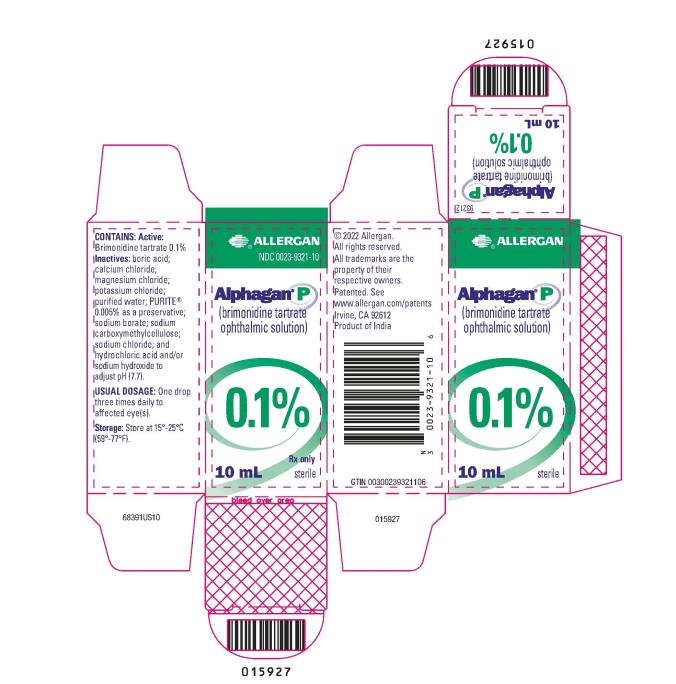
ALPHAGAN P brimonidine tartrate 1 mg/mL Solution/ Drops — NDC 0023-9321-15 (Billing 00023-9321-15)
This is a package of ALPHAGAN P brimonidine tartrate 1 mg/mL Solution/ Drops from Allergan, Inc., marketed since Jan 2006 and currently FDA-listed; retail pharmacies pay about $37.25 per mL (NADAC).
NDC database record
One package, one record: these facts belong to NDC 0023-9321-15 alone.
- Record
- FDA NDC Directory package listing · Human prescription drug
- Code segments
- 0023 labeler · 9321 product · 15 package
- Package marketed since
- Jan 25, 2006
- Sample package
- No — commercial package
- Listing certified through
- Dec 31, 2027
- Barcode (UPC)
- 0300239177109
- Medicaid fills, this package
- 2,557 prescriptions in the last four reported quarters
- FDA record last changed
- Aug 6, 2026
Identity & classification
Regulatory identifiers FDA, NLM and CMS codes for this package
Drug-database identifiers Medi-Span GPI and First Databank GCN / HICL / AHFS classification
- GSN (GCN sequence number): 059668
- GCN: 25414
- HICL (First Databank): 011786
- AHFS class code: 52:40.04.00
- RxCUI (RxNorm): 861204
Where does this data come from?
- FDA openFDA NDC Directory · synced Oct 8, 2026
- FDA label on DailyMed · label index refreshed Oct 8, 2026
- RxNorm (NLM RxNav) · catalog refreshed Oct 8, 2026
- Medi-Span GPI (licensed)
- First Databank (licensed) · refreshed Oct 8, 2026
RxNorm drug class
This medicine belongs to the alpha-Adrenergic Agonist class.
Where does this data come from?
- RxClass (NLM) · catalog refreshed Oct 8, 2026
Clinical
- It depends on the product. Prescription eye drops lower eye pressure in glaucoma or ocular hypertension. Lumify eye drops relieve eye redness from minor irritation, and the gel tre...
- Prescription eye drops are usually one drop three times a day, about 8 hours apart. Lumify is every 6 to 8 hours, up to 4 times a day. The rosacea gel is once a day on the face, av...
- With the eye drops, you may notice eye itching, redness, burning, dry mouth, blurred vision, headache or sleepiness. The gel can cause redness or flushing. Most are manageable, but...
- Get emergency help for swelling of the face, tongue or throat, or trouble breathing. Also seek help if you feel faint or your heartbeat feels very slow. If a child swallows any bri...
Patient education
Supplement & herbal interactions
Some supplements/herbs that may interact with Brimonidine Tartrate — tap one for details:
Where does this data come from?
- MedlinePlus (NLM) · refreshed Oct 8, 2026
- FDA label on DailyMed · label index refreshed Oct 8, 2026
Ask a licensed pharmacist directly — free, answered by our team.
Pricing
A drug doesn't have one price. Each row is a different public payment system, and none is what you'd pay at the counter — that depends on your insurance. The ⓘ on each row explains what it measures.
| Price system | Per mL | Per package |
|---|---|---|
| Retail pharmacies payNADAC · weekly | $37.254 | $558.81 / 15 ml |
| Medicaid paysCMS SDUD · 12 mo | $37.91 | $568.64 / 15 ml |
| Medicare drug plans payPart D · Q2 2026 | $39.33 | $589.91 / 15 ml |
Where does this data come from?
- CMS NADAC weekly file · file of Oct 7, 2026
- CMS ASP pricing files · refreshed Sep 20, 2026
- CMS Medicaid State Drug Utilization Data · through Q1 2026
- CMS Part D plan pricing files · refreshed Sep 24, 2026
- VA National Acquisition Center price file
Packaging — all sizes for this product
| Package NDC | Description | Per unit | Per pack | Marketing start | Marketing end | Status |
|---|---|---|---|---|---|---|
| 00023-9321-03 0023-9321-03 | 1 BOTTLE, DROPPER in 1 CARTON / 3 mL in 1 BOTTLE, DROPPER Sample | — | — | 2006-01-25 | — | Active |
| 00023-9321-05 0023-9321-05 Main listing | 1 BOTTLE, DROPPER in 1 CARTON / 5 mL in 1 BOTTLE, DROPPER | $37.36 / mL | $186.78 | 2006-01-25 | — | Active |
| 00023-9321-10 0023-9321-10 | 1 BOTTLE, DROPPER in 1 CARTON / 10 mL in 1 BOTTLE, DROPPER | $37.27 / mL | $372.68 | 2006-01-25 | — | Active |
| 00023-9321-15 You're viewing this | 1 BOTTLE, DROPPER in 1 CARTON / 15 mL in 1 BOTTLE, DROPPER | $37.25 / mL | $558.81 | 2006-01-25 | — | Active |
This pack has the lowest per-mL cost of the 3 priced pack sizes ($37.25 NADAC).
This pack accounts for about 11% of this product's recent Medicaid fills; most go to a different pack size. See all packs ↓
Pack size FAQ
What quantity is in this package?
What NDC number is used to bill for this package of ALPHAGAN P brimonidine tartrate 1 mg/mL Solution/ Drops?
Prices are the latest CMS NADAC pharmacy acquisition cost per NDC; per-pack figures are per-unit × pack quantity, shown only when the pack is denominated in the same measure NADAC prices.
Therapeutic equivalents
| Product | Labeler | Pack | NADAC/unit | TE | Status | Price vs. this |
|---|---|---|---|---|---|---|
| Brimonidine Tartrate 1 mg/mL 70069-0568-01 | Somerset | 1 bottle | $6.554 | AB | Availability likely | save 82% |
| Brimonidine Tartrate 1 mg/mL 60505-0577-01 | Apotex | 1 bottle | $9.059 | AB | Availability likely | save 76% |
| Brimonidine Tartrate 1 mg/mL 62332-0749-05 | Alembic | 1 bottle | $9.059 | AB | Availability likely | save 76% |
| Brimonidine Tartrate 1 mg/mL 70069-0566-01 | Somerset | 1 bottle | $9.059 | AB | Availability likely | save 76% |
| Brimonidine tartrate 1 mg/mL 82182-0321-05 | Pacific | 1 bottle | $9.059 | AB | Availability likely | save 76% |
| Brimonidine 1 mg/mL 00781-7177-70 | Sandoz | 1 bottle | $10.520 | AB | Availability likely | save 72% |
| Brimonidine Tartrate 1 mg/mL 70069-0567-01 | Somerset | 1 bottle | $10.520 | AB | Availability likely | save 72% |
| Alphagan P 1 mg/mLthis 00023-9321-15 | Allergan, | 1 bottle | $37.254 | AB | Availability likely | — |
| Brimonidine Tartrate 1 mg/mL 46708-0749-05 | Alembic | 1 bottle | — | AB | FDA listed | — |
| Brimonidine Tartrate 1 mg/mL 68083-0626-05 | Gland | 1 bottle | — | AB | FDA listed | — |
| Brimonidine Tartrate Ophthalmic Solution 1 mg/mL 70756-0677-00 | Lifestar | 1 bottle | — | AB | FDA listed | — |
| Brimonidine Tartrate Ophthalmic Solution 1 mg/mL 70756-0678-00 | Lifestar | 1 bottle | — | AB | FDA listed | — |
| Brimonidine Tartrate Ophthalmic Solution 1 mg/mL 70756-0679-00 | Lifestar | 1 bottle | — | AB | FDA listed | — |
| brimonidine tartrate 1 mg/mL 42571-0462-56 | Micro | 1 bottle | — | AB | FDA listed | — |
| Brimonidine Tartrate 1 mg/mL 00832-1435-05 | Upsher-Smith | 1 bottle | — | AB | FDA listed | — |
Where does this data come from?
- FDA openFDA NDC Directory · synced Oct 8, 2026
- FDA Orange Book · refreshed Oct 3, 2026
- CMS NADAC weekly file · file of Oct 7, 2026
Availability & generic status
FDA-approved generic versions are listed, and recent pricing/market data suggests they may be available — see Therapeutic equivalents.
Where does this data come from?
- FDA Orange Book · refreshed Oct 3, 2026
Inactive Ingredients / Excipients
Inactive ingredients, also called excipients, are components of the drug product other than the active ingredient. They may include fillers, dyes, coatings, preservatives, flavors, or other formulation ingredients.
🧪 Avoiding an ingredient? See Brimonidine inactive ingredients by manufacturer: every current product's list side by side, so you can ask your pharmacy for the version that does not list it.
💡 Tap an ingredient (hover on desktop) to see what it is and why it’s used.
-
UNII R57ZHV85D4
Boric acid is a weak acid derived from boron. In medicines, it typically serves as a buffer to help maintain the product's pH level and may act as a preservative in certain formulations.
-
UNII M4I0D6VV5M
Calcium chloride is a salt compound that acts as a firming agent and source of calcium ions in medications. It's used in formulations to help maintain tablet structure, improve texture, or serve as a buffering agent.
-
UNII K679OBS311
Carboxymethylcellulose sodium is a plant-derived thickening agent made from cellulose. In medicines, it acts as a binder to hold ingredients together, a disintegrant to help the tablet break apart, or a thickener in liquids.
-
UNII QTT17582CB
A strong acid used to adjust and maintain the proper pH level in liquid medicines, ensuring stability and preventing breakdown of active ingredients.
-
UNII 02F3473H9O
A mineral salt used in medications as a source of magnesium. It helps bind ingredients together, improve texture, and maintain the product's stability during storage.
-
UNII 660YQ98I10
Potassium chloride is a mineral salt used in medicines as a buffer and to help maintain the proper pH balance and stability of the formulation during storage and use.
-
UNII 91MBZ8H3QO
Sodium borate is an inorganic salt compound used in medicines as a buffer to help maintain a stable pH level, and sometimes as a mild preservative or cleansing agent in topical formulations.
-
UNII 451W47IQ8X
Sodium chloride is common table salt. It's used in medicines as a buffer to maintain proper pH, as a filler to add bulk, or to adjust the osmotic balance in liquid formulations.
-
UNII G538EBV4VF
Sodium chlorite is a white crystalline salt used as a preservative and antimicrobial agent in medications. It helps prevent bacterial and fungal growth to maintain product stability during storage.
-
UNII 55X04QC32I
A strong alkaline chemical used to adjust and maintain the pH balance of liquid medicines. It helps keep the medicine stable and ensures it stays effective during storage.
-
UNII 059QF0KO0R
Water is a liquid solvent that dissolves and mixes ingredients together in liquid medicines, syrups, and injections. It helps distribute the active drug evenly throughout the product.
11 inactive ingredients listed in the exact product block matched to this NDC.
Where does this data come from?
ingredient classCode="IACT" elements from the exact product block matched by this NDC. Label-section narrative from DailyMed / the openFDA label index is shown separately when available.- FDA label on DailyMed · label index refreshed Oct 8, 2026
- FDA openFDA NDC Directory · synced Oct 8, 2026
Inactive ingredient FAQ
Are inactive ingredients the same for every manufacturer?
Why might an inactive ingredient be missing?
Can inactive ingredients matter?
Manufacturer & labeler
More NDCs from Allergan, Inc. labeler code 00023
- RESTASIS cyclosporine .5 mg/mL Emulsion NDC 0023-9163-12
- ALPHAGAN P brimonidine tartrate 1.5 mg/mL Solution/ Drops NDC 0023-9177-05
- REFRESH LIQUIGEL Carboxymethylcellulose sodium 10 mg/mL Gel NDC 0023-9205-15
- COMBIGAN brimonidine tartrate, timolol maleate 2 mg/mL; 5 mg/mL Solution/ Drops NDC 0023-9211-03
- BOTOX Cosmetic onabotulinumtoxinA 100 [USP'U]/1 Injection, Powder, Lyophilized, For Solution NDC 0023-9232-01
- ACULAR LS Ketorolac Tromethamine 4 mg/mL Solution/ Drops NDC 0023-9277-05
- Refresh RELIEVA PF Carboxymethylcellulose sodium and Glycerin 5 mg/mL; 10 mg/mL Solution/ Drops NDC 0023-9537-05
- Oxytrol for Women Oxybutynin 3.9 mg/d Patch NDC 0023-9637-04
- Durysta bimatoprost 10 ug Implant NDC 0023-9652-01
Where does this data come from?
- FDA openFDA NDC Directory · synced Oct 8, 2026
- Drugs@FDA
Full prescribing information FDA SPL
🎯 Indications and Usage ▾
1 INDICATIONS AND USAGE ALPHAGAN P (brimonidine tartrate ophthalmic solution) 0.1% or 0.15% is indicated for the reduction of elevated intraocular pressure (IOP) in patients with open-angle glaucoma or ocular hypertension. ALPHAGAN P is an alpha adrenergic agonist indicated for the reduction of elevated intraocular pressure (IOP) in patients with open-angle glaucoma or ocular hypertension. ( 1 )
⏱️ Dosage and Administration ▾
2 DOSAGE AND ADMINISTRATION The recommended dosage is one drop of ALPHAGAN P in the affected eye(s) three times daily, approximately 8 hours apart. ALPHAGAN P may be used concomitantly with other topical ophthalmic drug products to lower intraocular pressure. If more than one topical ophthalmic product is to be used, the different products should be instilled at least 5 minutes apart.
One drop in the affected eye(s) three times daily, approximately 8 hours apart. ( 2 )
💊 Dosage Forms and Strengths ▾
3 DOSAGE FORMS AND STRENGTHS Ophthalmic solution containing 0.1% (1 mg/mL) or 0.15% (1.5 mg/mL) brimonidine tartrate. Ophthalmic solution containing 0.1% (1 mg/mL) or 0.15% (1.5 mg/mL) brimonidine tartrate. ( 3 )
⛔ Contraindications ▾
4 CONTRAINDICATIONS Neonates and infants (pediatric patients younger than 2 years old). ( 4.1 ) Hypersensitivity Reactions. ( 4.2 )
4.1Neonates and Infants (Pediatric Patients Younger than 2 Years Old) ALPHAGAN P is contraindicated in neonates and infants (pediatric patients younger than 2 years old) [see Use in Specific Populations ( 8.4 )].
4.2Hypersensitivity Reactions ALPHAGAN P is contraindicated in patients who have exhibited a hypersensitivity reaction to any component of this medication in the past.
⚠️ Warnings and Cautions ▾
5 WARNINGS AND PRECAUTIONS Potentiation of vascular insufficiency. ( 5.1 )
5.1Potentiation of Vascular Insufficiency ALPHAGAN P may potentiate syndromes associated with vascular insufficiency. ALPHAGAN P should be used with caution in patients with depression, cerebral or coronary insufficiency, Raynaud’s phenomenon, orthostatic hypotension, or thromboangiitis obliterans.
5.2Severe Cardiovascular Disease Although brimonidine tartrate ophthalmic solution had minimal effect on the blood pressure of patients in clinical studies, caution should be exercised in treating patients with severe cardiovascular disease.
5.3Contamination of Topical Ophthalmic Products After Use There have been reports of bacterial keratitis associated with the use of multiple-dose containers of topical ophthalmic products. These containers had been inadvertently contaminated by patients who, in most cases, had a concurrent corneal disease or a disruption of the ocular epithelial surface. Do not touch the tip of the dispensing container to the eye or surrounding structures.
Serious damage to the eye and subsequent loss of vision may result from using contaminated solutions [ see P atient C ounseling I nformation ( 17 )] .
🤒 Adverse Reactions ▾
6 ADVERSE REACTIONS The following serious adverse reactions are described elsewhere in the labeling: Potentiation of Vascular Insufficiency [ see Warnings and Precautions ( 5.1 ) ] Severe Cardiovascular Disease [ see Warnings and Precautions ( 5.2 ) ] Contamination of Topical Ophthalmic Products after Use [ see Warnings and Precautions ( 5.3 ) ] Neonates and Infants (Pediatric Patients Younger than 2 Years Old) [ see Contraindications ( 4.1 ) ] Most common adverse reactions occurring in approximately 5% to 20% of patients receiving brimonidine ophthalmic solution (0.1% to 0.2%) included allergic conjunctivitis, burning sensation, conjunctival folliculosis, conjunctival hyperemia, eye pruritus, hypertension, ocular allergic reaction, oral dryness, and visual disturbance.
( 6.1 ) To report SUSPECTED ADVERSE REACTIONS, contact AbbVie at 1-800-678-1605 or the FDA at 1-800-FDA-1088 or www.fda.gov/medwatch.
6.1Clinical Trials Experience Because clinical trials are conducted under widely varying conditions, adverse reaction rates observed in the clinical trials of a drug cannot be directly compared to rates in the clinical trials of another drug and may not reflect the rates observed in practice. Adverse reactions occurring in approximately 10% to 20% of the subjects receiving brimonidine ophthalmic solution (0.1% to 0.2%) included: allergic conjunctivitis, conjunctival hyperemia, and eye pruritus. Adverse reactions occurring in approximately 5% to 9% included: burning sensation, conjunctival folliculosis, hypertension, ocular allergic reaction, oral dryness, and visual disturbance.
Adverse reactions occurring in approximately 1% to 4% of the subjects receiving brimonidine ophthalmic solution (0.1% to 0.2%) included: abnormal taste, allergic reaction, asthenia, blepharitis, blepharoconjunctivitis, blurred vision, bronchitis, cataract, conjunctival edema, conjunctival hemorrhage, conjunctivitis, cough, dizziness, dyspepsia, dyspnea, epiphora, eye discharge, eye dryness, eye irritation, eye pain, eyelid edema, eyelid erythema, fatigue, flu syndrome, follicular conjunctivitis, foreign body sensation, gastrointestinal disorder, headache, hypercholesterolemia, hypotension, infection (primarily colds and respiratory infections), insomnia, keratitis, lid disorder, pharyngitis, photophobia, rash, rhinitis, sinus infection, sinusitis, somnolence, stinging, superficial punctate keratopathy, tearing, visual field defect, vitreous detachment, vitreous disorder, vitreous floaters, and worsened visual acuity.
The following reactions were reported in less than 1% of subjects: corneal erosion, hordeolum, nasal dryness, and taste perversion.
6.2Postmarketing Experience The following reactions have been identified during postapproval use of brimonidine tartrate ophthalmic solutions. Because these reactions are reported voluntarily from a population of uncertain size, it is not always possible to reliably estimate their frequency or establish a causal relationship to drug exposure. Bradycardia, depression, hypersensitivity, iritis, keratoconjunctivitis sicca, miosis, nausea, skin reactions (including erythema, eyelid pruritus, rash, and vasodilation), syncope, and tachycardia.
Apnea, coma, hypotension, hypothermia, hypotonia, lethargy, pallor, respiratory depression, and somnolence have been reported in infants receiving brimonidine tartrate ophthalmic solutions.
🔄 Drug Interactions ▾
7 DRUG INTERACTIONS Antihypertensives/cardiac glycosides may lower blood pressure. ( 7.1 ) Use with CNS depressants may result in an additive or potentiating effect. ( 7.2 ) Tricyclic antidepressants may potentially blunt the hypotensive effect of systemic clonidine. ( 7.3 ) Monoamine oxidase inhibitors may result in increased hypotension. ( 7.4 )
7.1Antihypertensives/Cardiac Glycosides Because ALPHAGAN P may reduce blood pressure, caution in using drugs such as antihypertensives and/or cardiac glycosides with ALPHAGAN P is advised.
7.2CNS Depressants Although specific drug interaction studies have not been conducted with ALPHAGAN P, the possibility of an additive or potentiating effect with CNS depressants (alcohol, barbiturates, opiates, sedatives, or anesthetics) should be considered.
7.3Tricyclic Antidepressants Tricyclic antidepressants have been reported to blunt the hypotensive effect of systemic clonidine. It is not known whether the concurrent use of these agents with ALPHAGAN P in humans can lead to resulting interference with the IOP lowering effect. Caution is advised in patients taking tricyclic antidepressants which can affect the metabolism and uptake of circulating amines.
7.4Monoamine Oxidase Inhibitors Monoamine oxidase (MAO) inhibitors may theoretically interfere with the metabolism of brimonidine and potentially result in an increased systemic side-effect such as hypotension. Caution is advised in patients taking MAO inhibitors which can affect the metabolism and uptake of circulating amines.
👥 Use in Specific Populations ▾
8 USE IN SPECIFIC POPULATIONS Use with caution in pediatric patients aged 2 years and older. ( 8.4 )
8.1Pregnancy Risk Summary There are no adequate and well-controlled studies with ALPHAGAN P in pregnant women. In the U.S. general population, the estimated background risk of major birth defects and miscarriage in clinically recognized pregnancies is 2% to 4% and 15% to 20%, respectively. In animal studies, brimonidine crossed the placenta and entered into the fetal circulation to a limited extent (see Data ) .
Because animal reproduction studies are not always predictive of human response, ALPHAGAN P should be used during pregnancy only if the potential benefit to the mother justifies the potential risk to the fetus. Data Human Data Limited available data from postmarketing safety reports and published literature with topical use of brimonidine ophthalmic solution in pregnant women are insufficient to inform a drug-associated risk of pregnancy-related adverse outcomes including miscarriage, stillbirth, congenital anomaly, and events experienced by offspring while breastfeeding.
Animal Data Embryofetal studies were conducted in pregnant rabbits administered brimonidine tartrate by daily oral gavage on gestation days 6 to 18, to target the period of organogenesis. Brimonidine caused miscarriage at 5 mg/kg/day (approximately 70- or 50-times the recommended human ophthalmic dose [RHOD] based on AUC, respectively for brimonidine tartrate 0.1% and 0.15%). The no observed adverse effect level (NOAEL) for developmental toxicity in rabbits was 1 mg/kg/day (approximately 9- and 6-fold the RHOD based on AUC, respectively for brimonidine tartrate 0.1% and 0.15%).
No treatment-related malformations were observed in rabbits. Signs of maternal sedation and fatigue were observed at all dose levels; the lowest observed adverse effect level (LOAEL) for maternal toxicity was 5 mg/kg/day, based on the dose response for these signs. Embryofetal studies were conducted in pregnant rats administered brimonidine tartrate by daily oral gavage on gestation days 6 to 15, to target the period of organogenesis.
The NOAEL for developmental toxicity was 2.5 mg/kg/day (approximately 1100- and 750-fold the RHOD based on AUC, respectively for brimonidine tartrate 0.1% and 0.15%). No treatment-related malformations were observed in rats. The LOAEL for maternal toxicity was 2.5 mg/kg/day, based on signs of sedation and fatigue.
The maternal NOAEL was 1.0 mg/kg/day (250- and 180-fold the RHOD based on AUC, respectively for brimonidine tartrate 0.1% and 0.15%). After pregnant rats received a single oral dose of 14 C-brimonidine tartrate, brimonidine and metabolites crossed the placenta and were detectable in fetal blood and organs.
8.2Lactation Risk Summary It is not known whether brimonidine tartrate is excreted in human milk. In animal studies, brimonidine tartrate has been shown to cross the blood-brain barrier and is excreted into breast milk after oral administration to lactating rats ( see Data ) . Because of the potential for serious adverse reactions, including central nervous system depression and apnea, from ALPHAGAN P in nursing infants, ALPHAGAN P is not recommended for use during lactation.
Data Animal Data After a single oral dose of 14 C-labeled brimonidine tartrate to lactating rats, brimonidine and metabolites were detected in milk. After male and female rats received a single oral dose of 14 C-brimonidine tartrate, brimonidine crossed the blood-brain barrier. Radiolabel was detected in the cerebellum, cerebrum, and spinal cord.
8.4Pediatric Use ALPHAGAN P is contraindicated in pediatric patients younger than 2 years old [see Contraindications (4.1) ] . During postmarketing surveillance, apnea, bradycardia, coma, hypotension, hypothermia, hypotonia, lethargy, pallor, respiratory depression, and somnolence have been reported in infants receiving brimonidine. In a well-controlled clinical study conducted in pediatric glaucoma patients aged 2 to 7… [Excerpted — this section continues on DailyMed.]
🤰 Pregnancy ▾
8.1Pregnancy Risk Summary There are no adequate and well-controlled studies with ALPHAGAN P in pregnant women. In the U.S. general population, the estimated background risk of major birth defects and miscarriage in clinically recognized pregnancies is 2% to 4% and 15% to 20%, respectively. In animal studies, brimonidine crossed the placenta and entered into the fetal circulation to a limited extent (see Data ) .
Because animal reproduction studies are not always predictive of human response, ALPHAGAN P should be used during pregnancy only if the potential benefit to the mother justifies the potential risk to the fetus. Data Human Data Limited available data from postmarketing safety reports and published literature with topical use of brimonidine ophthalmic solution in pregnant women are insufficient to inform a drug-associated risk of pregnancy-related adverse outcomes including miscarriage, stillbirth, congenital anomaly, and events experienced by offspring while breastfeeding.
Animal Data Embryofetal studies were conducted in pregnant rabbits administered brimonidine tartrate by daily oral gavage on gestation days 6 to 18, to target the period of organogenesis. Brimonidine caused miscarriage at 5 mg/kg/day (approximately 70- or 50-times the recommended human ophthalmic dose [RHOD] based on AUC, respectively for brimonidine tartrate 0.1% and 0.15%). The no observed adverse effect level (NOAEL) for developmental toxicity in rabbits was 1 mg/kg/day (approximately 9- and 6-fold the RHOD based on AUC, respectively for brimonidine tartrate 0.1% and 0.15%).
No treatment-related malformations were observed in rabbits. Signs of maternal sedation and fatigue were observed at all dose levels; the lowest observed adverse effect level (LOAEL) for maternal toxicity was 5 mg/kg/day, based on the dose response for these signs. Embryofetal studies were conducted in pregnant rats administered brimonidine tartrate by daily oral gavage on gestation days 6 to 15, to target the period of organogenesis.
The NOAEL for developmental toxicity was 2.5 mg/kg/day (approximately 1100- and 750-fold the RHOD based on AUC, respectively for brimonidine tartrate 0.1% and 0.15%). No treatment-related malformations were observed in rats. The LOAEL for maternal toxicity was 2.5 mg/kg/day, based on signs of sedation and fatigue.
The maternal NOAEL was 1.0 mg/kg/day (250- and 180-fold the RHOD based on AUC, respectively for brimonidine tartrate 0.1% and 0.15%). After pregnant rats received a single oral dose of 14 C-brimonidine tartrate, brimonidine and metabolites crossed the placenta and were detectable in fetal blood and organs.
🧒 Pediatric Use ▾
8.4Pediatric Use ALPHAGAN P is contraindicated in pediatric patients younger than 2 years old [see Contraindications (4.1) ] . During postmarketing surveillance, apnea, bradycardia, coma, hypotension, hypothermia, hypotonia, lethargy, pallor, respiratory depression, and somnolence have been reported in infants receiving brimonidine. In a well-controlled clinical study conducted in pediatric glaucoma patients aged 2 to 7 years old, the most commonly observed adverse reactions with brimonidine tartrate ophthalmic solution 0.2% dosed three times daily were somnolence (50% to 83% in pediatric patients aged 2 to 6 years old) and decreased alertness.
In pediatric patients aged 7 years and older (greater than 20 kg), somnolence appears to occur less frequently (25%). Approximately 16% of pediatric patients on brimonidine tartrate ophthalmic solution 0.2% discontinued from the study due to somnolence.
🧓 Geriatric Use ▾
8.5Geriatric Use No overall differences in safety or effectiveness have been observed between elderly and other adult patients.
🆘 Overdosage ▾
10 OVERDOSAGE Limited information exists on accidental ingestion of brimonidine in adults; the only adverse reaction reported to date has been hypotension. Symptoms of brimonidine overdose have been reported in neonates, infants, and children receiving ALPHAGAN P as part of medical treatment of congenital glaucoma or by accidental oral ingestion [see Use in Specific Populations (8.4) ] . Treatment of an oral overdose includes supportive and symptomatic therapy; a patent airway should be maintained.
🧬 Clinical Pharmacology ▾
12 CLINICAL PHARMACOLOGY
12.1Mechanism of Action ALPHAGAN P is a relatively selective alpha-2 adrenergic receptor agonist with a peak ocular hypotensive effect occurring at two hours post-dosing. Fluorophotometric studies in animals and humans suggest that brimonidine tartrate has a dual mechanism of action by reducing aqueous humor production and increasing uveoscleral outflow.
12.3Pharmacokinetics Absorption After ocular administration of either a 0.1% or 0.2% solution, plasma concentrations peaked within 0.5 to 2.5 hours and declined with a systemic half-life of approximately 2 hours. Distribution Brimonidine was approximately 29% bound to plasma proteins in healthy subjects. Elimination Metabolism In humans, brimonidine is extensively metabolized by the liver.
Excretion Urinary excretion is the major route of elimination of brimonidine and its metabolites. Approximately 87% of an orally-administered radioactive dose of brimonidine was eliminated within 120 hours, with 74% found in the urine.
🧬 Mechanism of Action ▾
12.1Mechanism of Action ALPHAGAN P is a relatively selective alpha-2 adrenergic receptor agonist with a peak ocular hypotensive effect occurring at two hours post-dosing. Fluorophotometric studies in animals and humans suggest that brimonidine tartrate has a dual mechanism of action by reducing aqueous humor production and increasing uveoscleral outflow.
📦 How Supplied / Storage and Handling ▾
16 HOW SUPPLIED/STORAGE AND HANDLING ALPHAGAN P is supplied sterile, in teal opaque plastic LDPE bottles and tips, with purple high impact polystyrene (HIPS) caps as follows: 0.1% 5 mL in 10 mL bottle NDC 0023-9321-05 10 mL in 10 mL bottle NDC 0023-9321-10 15 mL in 15 mL bottle NDC 0023-9321-15 0.15% 5 mL in 10 mL bottle NDC 0023-9177-05 10 mL in 10 mL bottle NDC 0023-9177-10 15 mL in 15 mL bottle NDC 0023-9177-15 Storage: Store at 15 o C to 25 o C (59 o F to 77 o F).
📋 Description ▾
11 DESCRIPTION ALPHAGAN P (brimonidine tartrate ophthalmic solution) 0.1% or 0.15%, sterile, is a relatively selective alpha-2 adrenergic receptor agonist for topical ophthalmic use. The structural formula of brimonidine tartrate is: 5-Bromo-6-(2-imidazolidinylideneamino) quinoxaline L-tartrate; MW= 442.24 In solution, ALPHAGAN P (brimonidine tartrate ophthalmic solution) has a clear, greenish-yellow color. It has an osmolality of 250-350 mOsmol/kg and a pH of 7.4-8.0 (0.1%) or 6.9-7.4 (0.15%).
Brimonidine tartrate appears as an off-white to pale-yellow powder and is soluble in both water (0.6 mg/mL) and in the product vehicle (1.4 mg/mL) at pH 7.7. Each mL of ALPHAGAN P contains the active ingredient brimonidine tartrate 0.1% (1 mg/mL) or 0.15% (1.5 mg/mL) with the inactive ingredients sodium carboxymethylcellulose; sodium borate; boric acid; sodium chloride; potassium chloride; calcium chloride; magnesium chloride; PURITE ® 0.005% (0.05 mg/mL) as a preservative; purified water; and hydrochloric acid and/or sodium hydroxide to adjust pH.
The structural formula of brimonidine tartrate is brimonidine tartrate ophthalmic solution) 0.1% or 0.15%, sterile, is a relatively selective alpha-2 adrenergic receptor agonist (topical intraocular pressure lowering agent).
💬 Information for Patients ▾
17 PATIENT COUNSELING INFORMATION Handling the Container Instruct patients that ocular solutions, if handled improperly or if the tip of the dispensing container contacts the eye or surrounding structures, can become contaminated by common bacteria known to cause ocular infections. Serious damage to the eye and subsequent loss of vision may result from using contaminated solutions [see Warnings and Precautions (5.3) ] . Always replace the cap after using.
If solution changes color or becomes cloudy, do not use. Do not use the product after the expiration date marked on the bottle. When to Seek Physician Advice Advise patients that if they have ocular surgery or develop an intercurrent ocular condition (e.g., trauma or infection), they should immediately seek their physician's advice concerning the continued use of the present multidose container.
Use with Other Ophthalmic Drugs Advise patients that if more than one topical ophthalmic drug is being used, the drugs should be administered at least five minutes apart. Potential for Decreased Mental Alertness As with other similar medications, ALPHAGAN P may cause fatigue and/or drowsiness in some patients. Caution patients who engage in hazardous activities of the potential for a decrease in mental alertness.
Distributed by: AbbVie Inc. North Chicago, IL 60064 © 2025 AbbVie. All rights reserved.
ALPHAGAN P and its design and PURITE are trademarks of Allergan, Inc., an AbbVie company. 20091160 Abbvie logo
🧬 Pharmacokinetics ▾
12.3Pharmacokinetics Absorption After ocular administration of either a 0.1% or 0.2% solution, plasma concentrations peaked within 0.5 to 2.5 hours and declined with a systemic half-life of approximately 2 hours. Distribution Brimonidine was approximately 29% bound to plasma proteins in healthy subjects. Elimination Metabolism In humans, brimonidine is extensively metabolized by the liver.
Excretion Urinary excretion is the major route of elimination of brimonidine and its metabolites. Approximately 87% of an orally-administered radioactive dose of brimonidine was eliminated within 120 hours, with 74% found in the urine.
🔬 Clinical Studies ▾
14 CLINICAL STUDIES Elevated IOP presents a major risk factor in glaucomatous field loss. The higher the level of IOP, the greater the likelihood of optic nerve damage and visual field loss. Brimonidine tartrate has the action of lowering intraocular pressure with minimal effect on cardiovascular and pulmonary parameters.
Clinical studies were conducted to evaluate the safety, efficacy, and acceptability of ALPHAGAN P (brimonidine tartrate ophthalmic solution) 0.15% compared with ALPHAGAN administered three-times-daily in patients with open-angle glaucoma or ocular hypertension. Those results indicated that ALPHAGAN P (brimonidine tartrate ophthalmic solution) 0.15% is comparable in IOP lowering effect to ALPHAGAN (brimonidine tartrate ophthalmic solution) 0.2%, and effectively lowers IOP in patients with open-angle glaucoma or ocular hypertension by approximately 2-6 mmHg.
A clinical study was conducted to evaluate the safety, efficacy, and acceptability of ALPHAGAN P (brimonidine tartrate ophthalmic solution) 0.1% compared with ALPHAGAN administered three-times-daily in patients with open-angle glaucoma or ocular hypertension. Those results indicated that ALPHAGAN P (brimonidine tartrate ophthalmic solution) 0.1% is equivalent in IOP lowering effect to ALPHAGAN (brimonidine tartrate ophthalmic solution) 0.2%, and effectively lowers IOP in patients with open-angle glaucoma or ocular hypertension by approximately 2-6 mmHg.
🧪 Nonclinical Toxicology ▾
13 NONCLINICAL TOXICOLOGY
13.1Carcinogenesis, Mutagenesis, Impairment of Fertility Carcinogenesis No compound-related carcinogenic effects were observed in either mice or rats following a 21-month and 24-month study, respectively. In these studies, dietary administration of brimonidine tartrate at doses up to 2.5 mg/kg/day in mice and 1 mg/kg/day in rats achieved approximately 150 and 120 times or 93 and 76 times the recommended human ophthalmic dose (RHOD) based on C max respectively for brimonidine tartrate 0.1% or 0.15%. Mutagenesis Brimonidine tartrate was not mutagenic or clastogenic in a series of in vitro and in vivo studies including the Ames bacterial reversion test, chromosomal aberration assay in Chinese Hamster Ovary (CHO) cells, and three in vivo studies in CD-1 mice: a host-mediated assay, cytogenetic study, and dominant lethal assay.
Impairment of Fertility A reproduction and fertility study in rats with brimonidine tartrate demonstrated no adverse effect on male or female fertility at oral doses up to 1 mg/kg (approximately 250 or 180 times the recommended human ophthalmic dose [RHOD] based on estimated AUC) respectively for brimonidine tartrate 0.1% and 0.15%.
📄 Carcinogenesis, Mutagenesis, Impairment of Fertility ▾
13.1Carcinogenesis, Mutagenesis, Impairment of Fertility Carcinogenesis No compound-related carcinogenic effects were observed in either mice or rats following a 21-month and 24-month study, respectively. In these studies, dietary administration of brimonidine tartrate at doses up to 2.5 mg/kg/day in mice and 1 mg/kg/day in rats achieved approximately 150 and 120 times or 93 and 76 times the recommended human ophthalmic dose (RHOD) based on C max respectively for brimonidine tartrate 0.1% or 0.15%. Mutagenesis Brimonidine tartrate was not mutagenic or clastogenic in a series of in vitro and in vivo studies including the Ames bacterial reversion test, chromosomal aberration assay in Chinese Hamster Ovary (CHO) cells, and three in vivo studies in CD-1 mice: a host-mediated assay, cytogenetic study, and dominant lethal assay.
Impairment of Fertility A reproduction and fertility study in rats with brimonidine tartrate demonstrated no adverse effect on male or female fertility at oral doses up to 1 mg/kg (approximately 250 or 180 times the recommended human ophthalmic dose [RHOD] based on estimated AUC) respectively for brimonidine tartrate 0.1% and 0.15%.
📄 Recent Major Changes ▾
Warnings and Precautions ( 5.3 ) 9/2025
📄 Package Label / Principal Display Panel ▾
PRINCIPAL DISPLAY PANEL abbvie NDC 0023-9321-10 Alphagan ® P (brimonidine tartrate ophthalmic solution) 0.1% 10 mL Rx only sterile PRINCIPAL DISPLAY PANEL abbvie NDC 0023-9321-10 Alphagan® P (brimonidine tartrate ophthalmic solution) 0.1% 10 mL Rx only sterile
PRINCIPAL DISPLAY PANEL abbvie NDC 0023-9177-10 Alphagan ® P (brimonidine tartrate ophthalmic solution) 0.15% 10 mL Rx only sterile PRINCIPAL DISPLAY PANEL abbvie NDC 0023-9177-10 Alphagan® P (brimonidine tartrate ophthalmic solution) 0.15% 10 mL Rx only sterile