
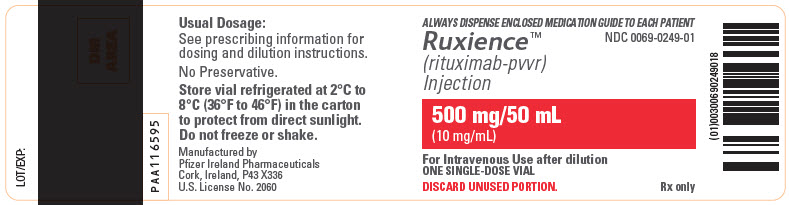
Ruxience rituximab-pvvr 500 mg/50mL Injection, Solution — NDC 0069-0249-01 (Billing 00069-0249-01)
This is a package of Ruxience rituximab-pvvr 500 mg/50mL Injection, Solution from Pfizer Laboratories Div Pfizer Inc, marketed since Jan 2020 and currently FDA-listed. It is this product's only package size.
NDC database record
One package, one record: these facts belong to NDC 0069-0249-01 alone.
- Record
- FDA NDC Directory package listing · Human prescription drug
- Code segments
- 0069 labeler · 0249 product · 01 package
- Package marketed since
- Jan 23, 2020
- Sample package
- No — commercial package
- Listing certified through
- Dec 31, 2027
- Barcode (UPC-A, from the NDC)
- 3 0069024901 8
- Medicaid fills, this package
- 6,949 prescriptions in the last four reported quarters
- FDA record last changed
- Sep 10, 2026
Identity & classification
Regulatory identifiers FDA, NLM and CMS codes for this package
Drug-database identifiers Medi-Span GPI and First Databank GCN / HICL / AHFS classification
- GSN (GCN sequence number): 080059
- GCN: 46734
- HICL (First Databank): 045899
- AHFS class code: 10:00.00.00
- RxCUI (RxNorm): 2273512
Where does this data come from?
- FDA openFDA NDC Directory · synced Oct 1, 2026
- FDA label on DailyMed · label index refreshed Oct 5, 2026
- RxNorm (NLM RxNav) · catalog refreshed Oct 1, 2026
- Medi-Span GPI (licensed)
- First Databank (licensed) · refreshed Oct 1, 2026
RxNorm drug class
This medicine belongs to the CD20-directed Cytolytic Antibody class.
Where does this data come from?
- RxClass (NLM) · catalog refreshed Oct 1, 2026
Clinical
- It treats certain blood cancers like non-Hodgkin's lymphoma and chronic lymphocytic leukemia. It also treats rheumatoid arthritis, GPA, MPA and pemphigus vulgaris. Your doctor choo...
- Only as an IV infusion given by a healthcare professional. You'll get medicines beforehand to lower the chance of a reaction, and the first infusion goes slowly. Your prescriber se...
- Fever, chills, itching, rash, nausea and weakness during or after the infusion are common, especially the first time. Infections and low white blood cell counts can also happen. Te...
- Call for signs of infection, yellow skin or eyes, blistering or peeling skin, mouth sores, severe belly pain, or new confusion, vision changes or weakness. Get emergency help for t...
Patient education
Supplement & herbal interactions
Some supplements/herbs that may interact with Rituximab-Pvvr — tap one for details:
Where does this data come from?
- MedlinePlus (NLM) · refreshed Oct 1, 2026
- FDA label on DailyMed · label index refreshed Oct 5, 2026
Ask a licensed pharmacist directly — free, answered by our team.
Pricing
A drug doesn't have one price. Each row is a different public payment system, and none is what you'd pay at the counter — that depends on your insurance. The ⓘ on each row explains what it measures.
| Price system | Per mL | Per package |
|---|---|---|
| Retail pharmacies payNADAC · weekly | Not in the retail survey — common for institutional, discontinued, or low-volume packs. | |
| Medicaid paysCMS SDUD · 12 mo | $33.46 | $1,673.10 / 50 ml |
| Medicare drug plans payPart D · quarterly | No Part D plan price is available for this NDC in our data. | |
| Medicare Part B allowsASP · Q5119 | $16.160 / Q5119 unit | — |
Where does this data come from?
- CMS NADAC weekly file
- CMS ASP pricing files · refreshed Sep 20, 2026
- CMS Medicaid State Drug Utilization Data · through Q1 2026
- CMS Part D plan pricing files · refreshed Sep 24, 2026
- VA National Acquisition Center price file
Billing & reimbursement
Where does this data come from?
- CMS ASP NDC-HCPCS crosswalk · refreshed Sep 22, 2026
- DMEPDAC NDC-HCPCS crosswalk
- openFDA NSDE billing units · refreshed Sep 7, 2026
Packaging — all sizes for this product
| Package NDC | Description | Marketing start | Marketing end | Status |
|---|---|---|---|---|
| 00069-0249-01 You're viewing this Main listing | 1 VIAL, SINGLE-USE in 1 CARTON / 50 mL in 1 VIAL, SINGLE-USE | 2020-01-23 | — | Active |
Therapeutic equivalents
| Product | Labeler | Pack | NADAC/unit | TE | Status | Price vs. this |
|---|---|---|---|---|---|---|
| Ruxience 500 mg/50mLthis 00069-0249-01 | Pfizer | 1 vial | — | — | FDA listed | — |
Where does this data come from?
- FDA openFDA NDC Directory · synced Oct 1, 2026
- FDA Purple Book · refreshed Oct 5, 2026
- CMS NADAC weekly file
Availability & biosimilar status
3 biosimilars are FDA-licensed for this reference biologic — see the list below. (Biologics have no small-molecule generics.)
Why the date isn’t exact: Biosimilar timing can change because patents may be challenged, settled, licensed, added or removed, and litigation can move the real date earlier or later.
🛈 What do these terms mean?
- Biologic patent
- A patent the reference product’s maker has publicly listed. A biosimilar generally can’t launch until these expire — unless they’re invalidated or resolved in a settlement.
- Reference-product exclusivity
- A flat 12 years of FDA market protection from the biologic’s first licensure (the BPCIA). No biosimilar can be licensed before it ends, regardless of patents.
- Interchangeable exclusivity
- The first interchangeable biosimilar can earn a period as the only interchangeable version (pharmacists can substitute it without the prescriber).
- Earliest biosimilar (LOE)
- The latest of all the dates above — the soonest a biosimilar can realistically reach the market. Litigation and settlements can move it earlier.
Biologics have no small-molecule “generics” — competition comes from FDA-licensed biosimilars, tracked in the FDA Purple Book.
| Code | What it grants | Expires |
|---|---|---|
| RefProduct | Reference-product exclusivity (12-year, BPCIA) — no biosimilar can be licensed before this date | Jul 23, 2031 |
Is there a biosimilar for RUXIENCE 500 MG/50 ML VIAL?
Why do different websites show different biosimilar dates?
Can a biosimilar launch before the last patent expires?
What does “current Purple Book estimate” mean?
What does “FDA listed” mean?
What does a patent or protection date mean here?
Where does this data come from?
- FDA Purple Book · refreshed Oct 5, 2026
Inactive Ingredients / Excipients
Inactive ingredients, also called excipients, are components of the drug product other than the active ingredient. They may include fillers, dyes, coatings, preservatives, flavors, or other formulation ingredients.
🧪 Avoiding an ingredient? See Rituximab Injection inactive ingredients by manufacturer: every current product's list side by side, so you can ask your pharmacy for the version that does not list it.
💡 Tap an ingredient (hover on desktop) to see what it is and why it’s used.
-
128.5 mg / 50 mL
UNII 7FLD91C86K
Edetate disodium is a chemical compound that binds and removes certain metal ions. In medicines, it acts as a preservative and stabilizer by preventing metals like calcium from interfering with the product's shelf life and consistency.
-
60 mg / 50 mL
UNII 4QD397987E
An amino acid used as a buffer and stabilizer in medications. It helps maintain the pH balance and protects the active drug from breaking down during storage and use.
-
128.5 mg / 50 mL
UNII X573657P6P
Histidine monohydrochloride monohydrate is an amino acid salt used as a buffer in medicines. It helps maintain the proper acidity level of liquid formulations to keep the drug stable and effective.
-
10 mg / 50 mL
UNII 6OZP39ZG8H
Polysorbate 80 is a synthetic emulsifier derived from sorbitol and oleic acid. It helps mix oil and water-based ingredients together in medications and improves how the product disperses in the body.
-
4250 mg / 50 mL
UNII C151H8M554
A natural sugar derived from sugar cane or sugar beets. It's used as a sweetener, filler, and binder to improve taste, add bulk, and help hold tablet or capsule ingredients together.
-
UNII 059QF0KO0R
Water is a liquid solvent that dissolves and mixes ingredients together in liquid medicines, syrups, and injections. It helps distribute the active drug evenly throughout the product.
6 inactive ingredients listed in the exact product block matched to this NDC.
Where does this data come from?
ingredient classCode="IACT" elements from the exact product block matched by this NDC. Label-section narrative from DailyMed / the openFDA label index is shown separately when available.- FDA label on DailyMed · label index refreshed Oct 5, 2026
- FDA openFDA NDC Directory · synced Oct 1, 2026
Inactive ingredient FAQ
Are inactive ingredients the same for every manufacturer?
Why might an inactive ingredient be missing?
Can inactive ingredients matter?
Manufacturer & labeler
More NDCs from Pfizer Laboratories Div Pfizer Inc labeler code 00069
- Propofol 10 mg/mL Injection, Emulsion NDC 0069-0234-20
- Cibinqo abrocitinib 50 mg Tablet, Film Coated NDC 0069-0235-30
- Ruxience rituximab-pvvr 100 mg/10mL Injection, Solution NDC 0069-0238-01
- Toviaz fesoterodine fumarate 4 mg Tablet, Film Coated, Extended Release NDC 0069-0242-30
- Toviaz fesoterodine fumarate 8 mg Tablet, Film Coated, Extended Release NDC 0069-0244-30
- Propofol 10 mg/mL Injection, Emulsion NDC 0069-0248-10
- Xalkori CRIZOTINIB 20 mg Capsule, Coated Pellets NDC 0069-0251-60
- Talzenna talazoparib .1 mg Capsule, Liquid Filled NDC 0069-0252-30
- Fragmin Dalteparin Sodium 2500 [iU]/mL Injection NDC 0069-0253-10
- Doxorubicin Hydrochloride 2 mg/mL Injection, Solution NDC 0069-0255-10
- Velsipity etrasimod 2 mg Tablet, Film Coated NDC 0069-0274-30
- Doxorubicin Hydrochloride 2 mg/mL Injection, Solution NDC 0069-0277-02
Where does this data come from?
- FDA openFDA NDC Directory · synced Oct 1, 2026
- Drugs@FDA
Full prescribing information FDA SPL
🚨 Boxed Warning ▾
WARNING: FATAL INFUSION-RELATED REACTIONS, SEVERE MUCOCUTANEOUS REACTIONS, HEPATITIS B VIRUS REACTIVATION and PROGRESSIVE MULTIFOCAL LEUKOENCEPHALOPATHY Infusion-Related Reactions Administration of rituximab products can result in serious, including fatal, infusion-related reactions. Deaths within 24 hours of rituximab infusion have occurred. Approximately 80% of fatal infusion-related reactions occurred in association with the first infusion.
Monitor patients closely. Discontinue RUXIENCE infusion for severe reactions and provide medical treatment for Grade 3 or 4 infusion-related reactions [see Warnings and Precautions (5.1) , Adverse Reactions (6.1) ] . Severe Mucocutaneous Reactions Severe, including fatal, mucocutaneous reactions can occur in patients receiving rituximab products [see Warnings and Precautions (5.2) ] .
Hepatitis B Virus (HBV) Reactivation HBV reactivation can occur in patients treated with rituximab products, in some cases resulting in fulminant hepatitis, hepatic failure, and death. Screen all patients for HBV infection before treatment initiation, and monitor patients during and after treatment with RUXIENCE. Discontinue RUXIENCE and concomitant medications in the event of HBV reactivation [see Warnings and Precautions (5.3) ] .
Progressive Multifocal Leukoencephalopathy (PML) Progressive Multifocal Leukoencephalopathy (PML), including fatal PML, can occur in patients receiving rituximab products [see Warnings and Precautions (5.4) , Adverse Reactions (6.3) ] . WARNING: FATAL INFUSION-RELATED REACTIONS, SEVERE MUCOCUTANEOUS REACTIONS, HEPATITIS B VIRUS REACTIVATION and PROGRESSIVE MULTIFOCAL LEUKOENCEPHALOPATHY See full prescribing information for complete boxed warning. • Fatal infusion-related reactions within 24 hours of rituximab infusion; approximately 80% of fatal reactions occurred with first infusion.
Monitor patients and discontinue RUXIENCE infusion for severe reactions ( 5.1 , 6.1 ). • Severe mucocutaneous reactions, some with fatal outcomes ( 5.2 ). • Hepatitis B virus (HBV) reactivation, in some cases resulting in fulminant hepatitis, hepatic failure, and death ( 5.3 ). • Progressive multifocal leukoencephalopathy (PML) resulting in death ( 5.4 , 6.3 ).
🎯 Indications and Usage ▾
1 INDICATIONS AND USAGE RUXIENCE is a CD20-directed cytolytic antibody indicated for the treatment of: • Adult patients with Non-Hodgkin's Lymphoma (NHL) ( 1.1 ). o Relapsed or refractory, low grade or follicular, CD20-positive B-cell NHL as a single agent. o Previously untreated follicular, CD20-positive, B-cell NHL in combination with first line chemotherapy and, in patients achieving a complete or partial response to a rituximab product in combination with chemotherapy, as single-agent maintenance therapy. o Non-progressing (including stable disease), low-grade, CD20-positive, B-cell NHL as a single agent after first-line cyclophosphamide, vincristine, and prednisone (CVP) chemotherapy. o Previously untreated diffuse large B-cell, CD20-positive NHL in combination with (cyclophosphamide, doxorubicin, vincristine, and prednisone) (CHOP) or other anthracycline-based chemotherapy regimens. • Adult patients with Chronic Lymphocytic Leukemia (CLL) ( 1.2 ). o Previously untreated and previously treated CD20-positive CLL in combination with fludarabine and cyclophosphamide (FC). • Rheumatoid Arthritis (RA) in combination with methotrexate in adult patients with moderately-to-severely-active RA who have inadequate response to one or more TNF antagonist therapies ( 1.3 ). • Granulomatosis with Polyangiitis (GPA) (Wegener's Granulomatosis) and Microscopic Polyangiitis (MPA) in adult patients in combination with glucocorticoids ( 1.4 ). • Moderate to severe Pemphigus Vulgaris (PV) in adult patients ( 1.5 ).
1.1Non-Hodgkin's Lymphoma (NHL) RUXIENCE is indicated for the treatment of adult patients with: • Relapsed or refractory, low-grade or follicular, CD20-positive, B-cell NHL as a single agent. • Previously untreated follicular, CD20-positive, B-cell NHL in combination with first line chemotherapy and, in patients achieving a complete or partial response to a rituximab product in combination with chemotherapy, as single-agent maintenance therapy. • Non-progressing (including stable disease), low-grade, CD20-positive, B-cell NHL as a single agent after first-line cyclophosphamide, vincristine, and prednisone (CVP) chemotherapy. • Previously untreated diffuse large B-cell, CD20-positive NHL in combination with cyclophosphamide, doxorubicin, vincristine, prednisone (CHOP) or other anthracycline-based chemotherapy regimens.
1.2Chronic Lymphocytic Leukemia (CLL) RUXIENCE, in combination with fludarabine and cyclophosphamide (FC), is indicated for the treatment of adult patients with previously untreated and previously treated CD20-positive CLL.
1.3Rheumatoid Arthritis (RA) RUXIENCE, in combination with methotrexate, is indicated for the treatment of adult patients with moderately-to-severely-active rheumatoid arthritis who have had an inadequate response to one or more Tumor Necrosis Factor (TNF) antagonist therapies.
1.4Granulomatosis with Polyangiitis (GPA) (Wegener's Granulomatosis) and Microscopic Polyangiitis (MPA) RUXIENCE, in combination with glucocorticoids, is indicated for the treatment of adult patients with Granulomatosis with Polyangiitis (GPA) (Wegener's Granulomatosis) and Microscopic Polyangiitis (MPA).
1.5Pemphigus Vulgaris (PV) RUXIENCE is indicated for the treatment of adult patients with moderate to severe pemphigus vulgaris.
⏱️ Dosage and Administration ▾
2 DOSAGE AND ADMINISTRATION • Administer only as an intravenous infusion ( 2.1 ). • Do not administer as an intravenous push or bolus ( 2.1 ). • RUXIENCE should only be administered by a healthcare professional with appropriate medical support to manage severe infusion-related reactions that can be fatal if they occur ( 2.1 ). • The dose for adult B-cell NHL is 375 mg/m 2 ( 2.2 ). • The dose for CLL is 375 mg/m 2 in the first cycle and 500 mg/m 2 in Cycles 2–6, in combination with FC, administered every 28 days ( 2.3 ). • The dose as a component of Zevalin ® (ibritumomab tiuxetan) Therapeutic Regimen is 250 mg/m 2 ( 2.4 ). • The dose for RA in combination with methotrexate is two-1,000 mg intravenous infusions separated by 2 weeks (one course) every 24 weeks or based on clinical evaluation, but not sooner than every 16 weeks.
Methylprednisolone 100 mg intravenous or equivalent glucocorticoid is recommended 30 minutes prior to each infusion ( 2.5 ). • The induction dose for adult patients with active GPA and MPA in combination with glucocorticoids is 375 mg/m 2 once weekly for 4 weeks. The follow up dose for adult patients with GPA and MPA who have achieved disease control with induction treatment, in combination with glucocorticoids is two 500 mg intravenous infusions separated by two weeks, followed by a 500 mg intravenous infusion every 6 months thereafter based on clinical evaluation ( 2.6 ). • The dose for PV is two-1,000 mg intravenous infusions separated by 2 weeks in combination with a tapering course of glucocorticoids, then a 500 mg intravenous infusion at Month 12 and every 6 months thereafter or based on clinical evaluation.
Dose upon relapse is a 1,000 mg intravenous infusion with considerations to resume or increase the glucocorticoid dose based on clinical evaluation. Subsequent infusions may be no sooner than 16 weeks after the previous infusion ( 2.7 ). Methylprednisolone 100 mg intravenous or equivalent glucocorticoid is recommended 30 minutes prior to each infusion ( 2.8 ).
2.1Important Dosing Information Administer only as an intravenous infusion [see Dosage and Administration (2.9) ] . Do not administer as an intravenous push or bolus. RUXIENCE should only be administered by a healthcare professional with appropriate medical support to manage severe infusion-related reactions that can be fatal if they occur [see Warnings and Precautions (5.1) ].
Premedicate before each infusion [see Dosage and Administration (2.8) ] . Prior to First Infusion Screen all patients for HBV infection by measuring HBsAg and anti-HBc before initiating treatment with RUXIENCE [see Warnings and Precautions (5.3) ] . Obtain complete blood counts (CBC) including platelets prior to the first dose.
During RUXIENCE Therapy In patients with lymphoid malignancies, during treatment with RUXIENCE monotherapy, obtain complete blood counts (CBC) with differential and platelet counts prior to each RUXIENCE course. During treatment with RUXIENCE and chemotherapy, obtain CBC with differential and platelet counts at weekly to monthly intervals and more frequently in patients who develop cytopenias [see Adverse Reactions (6.1) ]. In patients with RA, GPA or MPA, obtain CBC with differential and platelet counts at two to four month intervals during RUXIENCE therapy.
Continue to monitor for cytopenias after final dose and until resolution. • First Infusion Standard Infusion: Initiate infusion at a rate of 50 mg/hour. In the absence of infusion toxicity, increase infusion rate by 50 mg/hour increments every 30 minutes, to a maximum of 400 mg/hour. • Subsequent Infusions Standard Infusion: Initiate infusion at a rate of 100 mg/hour. In the absence of infusion toxicity, increase rate by 100 mg/hour increments at 30-minute intervals, to a maximum of 400 mg/hour.
For Previously Untreated Follicular NHL and DLBCL Adult Patients: If patients did not experience a Grade 3 or 4 infusion-related adverse event during Cycle 1, a 90-minute infusion can be adminis… [Excerpted — this section continues on DailyMed.]
💊 Dosage Forms and Strengths ▾
3 DOSAGE FORMS AND STRENGTHS Injection: RUXIENCE is a clear to slightly opalescent, colorless to pale brownish-yellow solution for intravenous infusion: • 100 mg/10 mL (10 mg/mL) in a single-dose vial • 500 mg/50 mL (10 mg/mL) in a single-dose vial Injection: 100 mg/10 mL (10 mg/mL) and 500 mg/50 mL (10 mg/mL) solution in single-dose vials ( 3 ).
⛔ Contraindications ▾
4 CONTRAINDICATIONS None. None ( 4 ).
⚠️ Warnings and Cautions ▾
5 WARNINGS AND PRECAUTIONS • Tumor lysis syndrome: Administer aggressive intravenous hydration, anti-hyperuricemic agents, monitor renal function ( 5.5 ). • Infections: Withhold RUXIENCE and institute appropriate anti-infective therapy ( 5.6 ). • Cardiac adverse reactions: Discontinue infusions in case of serious or life-threatening events ( 5.7 ). • Renal toxicity: Discontinue in patients with rising serum creatinine or oliguria ( 5.8 ). • Bowel obstruction and perforation: Consider and evaluate for abdominal pain, vomiting, or related symptoms ( 5.9 ). • Immunizations: Live virus vaccinations prior to or during RUXIENCE treatment are not recommended ( 5.10 ). • Embryo-Fetal toxicity: Can cause fetal harm.
Advise females of reproductive potential of the potential risk to a fetus and use of effective contraception ( 5.11 ).
5.1Infusion-Related Reactions Rituximab products can cause severe, including fatal, infusion-related reactions. Severe reactions typically occurred during the first infusion with time to onset of 30 to 120 minutes. Rituximab product-induced infusion-related reactions and sequelae include urticaria, hypotension, angioedema, hypoxia, bronchospasm, pulmonary infiltrates, acute respiratory distress syndrome, myocardial infarction, ventricular fibrillation, cardiogenic shock, anaphylactoid events, or death.
Premedicate patients with an antihistamine and acetaminophen prior to dosing. For RA, GPA and MPA , and PV patients, methylprednisolone 100 mg intravenously or its equivalent is recommended 30 minutes prior to each infusion. Institute medical management (e.g., glucocorticoids, epinephrine, bronchodilators, or oxygen) for infusion-related reactions as needed.
Depending on the severity of the infusion-related reaction and the required interventions, temporarily or permanently discontinue RUXIENCE. Resume infusion at a minimum 50% reduction in rate after symptoms have resolved. Closely monitor the following patients: those with pre-existing cardiac or pulmonary conditions, those who experienced prior cardiopulmonary adverse reactions, and those with high numbers of circulating malignant cells (greater than or equal to 25,000/mm 3 ) [see Warnings and Precautions (5.7) , Adverse Reactions (6.1) ] .
5.2Severe Mucocutaneous Reactions Mucocutaneous reactions, some with fatal outcome, can occur in patients treated with rituximab products. These reactions include paraneoplastic pemphigus, Stevens-Johnson syndrome, lichenoid dermatitis, vesiculobullous dermatitis, and toxic epidermal necrolysis. The onset of these reactions has been variable and includes reports with onset on the first day of rituximab exposure.
Discontinue RUXIENCE in patients who experience a severe mucocutaneous reaction. The safety of re-administration of rituximab products to patients with severe mucocutaneous reactions has not been determined.
5.3Hepatitis B Virus (HBV) Reactivation Hepatitis B virus (HBV) reactivation, in some cases resulting in fulminant hepatitis, hepatic failure, and death, can occur in patients treated with drugs classified as CD20-directed cytolytic antibodies, including rituximab products. Cases have been reported in patients who are hepatitis B surface antigen (HBsAg) positive and also in patients who are HBsAg negative but are hepatitis B core antibody (anti-HBc) positive. Reactivation also has occurred in patients who appear to have resolved hepatitis B infection (i.e., HBsAg negative, anti-HBc positive and hepatitis B surface antibody [anti-HBs] positive).
HBV reactivation is defined as an abrupt increase in HBV replication manifesting as a rapid increase in serum HBV DNA levels or detection of HBsAg in a person who was previously HBsAg negative and anti-HBc positive. Reactivation of HBV replication is often followed by hepatitis, i.e., increase in transaminase levels. In severe cases increase in bilirubin levels, liver failure, and death can occur.
Screen all patients for HBV infection by measuring HBsAg and anti-HB… [Excerpted — this section continues on DailyMed.]
🤒 Adverse Reactions ▾
6 ADVERSE REACTIONS The following clinically significant adverse reactions are discussed in greater detail in other sections of the labeling: • Infusion-related reactions [see Warnings and Precautions (5.1) ] • Severe mucocutaneous reactions [see Warnings and Precautions (5.2) ] • Hepatitis B reactivation with fulminant hepatitis [see Warnings and Precautions (5.3) ] • Progressive multifocal leukoencephalopathy [see Warnings and Precautions (5.4) ] • Tumor lysis syndrome [see Warnings and Precautions (5.5) ] • Infections [see Warnings and Precautions (5.6) ] • Cardiovascular adverse reactions [see Warnings and Precautions (5.7) ] • Renal toxicity [see Warnings and Precautions (5.8) ] • Bowel obstruction and perforation [see Warnings and Precautions (5.9) ] Most common adverse reactions in clinical trials were: • NHL (greater than or equal to 25%): infusion-related reactions, fever, lymphopenia, chills, infection and asthenia ( 6.1 ). • CLL (greater than or equal to 25%): infusion-related reactions and neutropenia ( 6.1 ). • RA (greater than or equal to 10%): upper respiratory tract infection, nasopharyngitis, urinary tract infection, and bronchitis (other important adverse reactions include infusion-related reactions, serious infections, and cardiovascular events) ( 6.1 ). • GPA and MPA (greater than or equal to 15%): infections, nausea, diarrhea, headache, muscle spasms, anemia, peripheral edema, infusion-related reactions ( 6.1 ). • PV (greater than or equal to 15%): infusion-related reactions, depression, upper respiratory tract infection/nasopharyngitis, headache (other important adverse reactions include infections) ( 6.1 ).
To report SUSPECTED ADVERSE REACTIONS, contact Pfizer Inc. at 1-800-438-1985 or FDA at 1-800-FDA-1088 or www.fda.gov/medwatch .
6.1Clinical Trials Experience Because clinical trials are conducted under widely varying conditions, adverse reaction rates observed in the clinical trials of a drug cannot be directly compared to rates in the clinical trials of another drug and may not reflect the rates observed in clinical practice. B-Cell Malignancies The data described below reflect exposure to rituximab in 3,092 patients, with exposures ranging from a single infusion up to 2 years. Rituximab was studied in both single-arm and controlled trials (n=356 and n=2,427).
The population included 1,180 patients with low grade or follicular lymphoma, 927 patients with DLBCL, 676 patients with CLL, and 309 patients with another indication. Most NHL patients received rituximab as an infusion of 375 mg/m 2 per infusion, given as a single agent weekly for up to 8 doses, in combination with chemotherapy for up to 8 doses, or following chemotherapy for up to 16 doses. CLL patients received rituximab 375 mg/m 2 as an initial infusion followed by 500 mg/m 2 for up to 5 doses, in combination with fludarabine and cyclophosphamide.
Seventy-one percent of CLL patients received 6 cycles and 90% received at least 3 cycles of rituximab-based therapy. The most common adverse reactions of rituximab (incidence greater than or equal to 25%) observed in clinical trials of patients with NHL were infusion-related reactions, fever, lymphopenia, chills, infection, and asthenia. The most common adverse reactions of rituximab (incidence greater than or equal to 25%) observed in clinical trials of patients with CLL were: infusion-related reactions and neutropenia.
Infusion-Related Reactions In the majority of patients with NHL, infusion-related reactions consisting of fever, chills/rigors, nausea, pruritus, angioedema, hypotension, headache, bronchospasm, urticaria, rash, vomiting, myalgia, dizziness, or hypertension occurred during the first rituximab infusion. Infusion-related reactions typically occurred within 30 to 120 minutes of beginning the first infusion and resolved with slowing or interruption of the rituximab infusion and with supportive care (diphenhydramine, acetaminophen, and intravenous saline).
The incidence of infusion-re… [Excerpted — this section continues on DailyMed.]
🔄 Drug Interactions ▾
7 DRUG INTERACTIONS Formal drug interaction studies have not been performed with rituximab products. In patients with CLL, rituximab did not alter systemic exposure to fludarabine or cyclophosphamide. In clinical trials of patients with RA, concomitant administration of methotrexate or cyclophosphamide did not alter the pharmacokinetics of rituximab. Renal toxicity when used in combination with cisplatin ( 5.8 ).
👥 Use in Specific Populations ▾
8 USE IN SPECIFIC POPULATIONS • Lactation: Advise not to breastfeed ( 8.2 ). • Geriatric Use: In CLL patients older than 70 years of age, exploratory analyses suggest no benefit with the addition of rituximab to FC ( 8.5 ).
8.1Pregnancy Risk Summary Based on human data, rituximab products can cause adverse developmental outcomes including B-cell lymphocytopenia in infants exposed in-utero (see Clinical Considerations ) . In animal reproduction studies, intravenous administration of rituximab to pregnant cynomolgus monkeys during the period of organogenesis caused lymphoid B-cell depletion in the newborn offspring at doses resulting in 80% of the exposure (based on AUC) of those achieved following a dose of 2 grams in humans. Advise pregnant women of the risk to a fetus.
Adverse outcomes in pregnancy occur regardless of the health of the mother or the use of medications. The background risk of major birth defects and miscarriage for the indicated populations is unknown. The estimated background risk in the U.S. general population of major birth defects is 2%–4% and of miscarriage is 15%–20% of clinically recognized pregnancies.
Clinical Considerations Fetal/Neonatal Adverse Reactions Observe newborns and infants for signs of infection and manage accordingly. Data Human Data Postmarketing data indicate that B-cell lymphocytopenia generally lasting less than six months can occur in infants exposed to rituximab in-utero. Rituximab was detected postnatally in the serum of infants exposed in-utero.
Animal Data An embryo-fetal developmental toxicity study was performed on pregnant cynomolgus monkeys. Pregnant animals received rituximab via the intravenous route during early gestation (organogenesis period; post coitum Days 20 through 50). Rituximab was administered as loading doses on post coitum (PC) Days 20, 21, and 22, at 15, 37.5, or 75 mg/kg/day, and then weekly on PC Days 29, 36, 43, and 50, at 20, 50, or 100 mg/kg/week.
The 100 mg/kg/week dose resulted in 80% of the exposure (based on AUC) of those achieved following a dose of 2 grams in humans. Rituximab crosses the monkey placenta. Exposed offspring did not exhibit any teratogenic effects but did have decreased lymphoid tissue B cells.
A subsequent pre- and postnatal reproductive toxicity study in cynomolgus monkeys was completed to assess developmental effects including the recovery of B cells and immune function in infants exposed to rituximab in-utero. Animals were treated with a loading dose of 0, 15, or 75 mg/kg every day for 3 days, followed by weekly dosing with 0, 20, or 100 mg/kg dose. Subsets of pregnant females were treated from PC Day 20 through postpartum Day 78, PC Day 76 through PC Day 134, and from PC Day 132 through delivery and postpartum Day 28.
Regardless of the timing of treatment, decreased B cells and immunosuppression were noted in the offspring of rituximab-treated pregnant animals. The B-cell counts returned to normal levels, and immunologic function was restored within 6 months postpartum.
8.2Lactation There are limited data on the presence of rituximab in human milk, and the effect on the breastfed child, and there are no data on the effect on milk production. Rituximab is detected in the milk of lactating cynomolgus monkeys, and maternal IgG is present in human breast milk. Rituximab has also been reported to be excreted at low concentrations in human breast milk.
Given that the clinical significance of this finding for children is not known, advise women not to breastfeed during treatment with RUXIENCE and for 6 months after the last dose due to the potential of serious adverse reactions in breastfed children.
8.3Females and Males of Reproductive Potential Rituximab products can cause fetal harm when administered to a pregnant woman [see Use in Specific Populations (8.1) ] . Pregnancy Testing Verify pregnancy status in females of reproductive potential prior to initiating RUXIENCE. Contraception Females Advise females of reproductive potentia… [Excerpted — this section continues on DailyMed.]
🤰 Pregnancy ▾
8.1Pregnancy Risk Summary Based on human data, rituximab products can cause adverse developmental outcomes including B-cell lymphocytopenia in infants exposed in-utero (see Clinical Considerations ) . In animal reproduction studies, intravenous administration of rituximab to pregnant cynomolgus monkeys during the period of organogenesis caused lymphoid B-cell depletion in the newborn offspring at doses resulting in 80% of the exposure (based on AUC) of those achieved following a dose of 2 grams in humans. Advise pregnant women of the risk to a fetus.
Adverse outcomes in pregnancy occur regardless of the health of the mother or the use of medications. The background risk of major birth defects and miscarriage for the indicated populations is unknown. The estimated background risk in the U.S. general population of major birth defects is 2%–4% and of miscarriage is 15%–20% of clinically recognized pregnancies.
Clinical Considerations Fetal/Neonatal Adverse Reactions Observe newborns and infants for signs of infection and manage accordingly. Data Human Data Postmarketing data indicate that B-cell lymphocytopenia generally lasting less than six months can occur in infants exposed to rituximab in-utero. Rituximab was detected postnatally in the serum of infants exposed in-utero.
Animal Data An embryo-fetal developmental toxicity study was performed on pregnant cynomolgus monkeys. Pregnant animals received rituximab via the intravenous route during early gestation (organogenesis period; post coitum Days 20 through 50). Rituximab was administered as loading doses on post coitum (PC) Days 20, 21, and 22, at 15, 37.5, or 75 mg/kg/day, and then weekly on PC Days 29, 36, 43, and 50, at 20, 50, or 100 mg/kg/week.
The 100 mg/kg/week dose resulted in 80% of the exposure (based on AUC) of those achieved following a dose of 2 grams in humans. Rituximab crosses the monkey placenta. Exposed offspring did not exhibit any teratogenic effects but did have decreased lymphoid tissue B cells.
A subsequent pre- and postnatal reproductive toxicity study in cynomolgus monkeys was completed to assess developmental effects including the recovery of B cells and immune function in infants exposed to rituximab in-utero. Animals were treated with a loading dose of 0, 15, or 75 mg/kg every day for 3 days, followed by weekly dosing with 0, 20, or 100 mg/kg dose. Subsets of pregnant females were treated from PC Day 20 through postpartum Day 78, PC Day 76 through PC Day 134, and from PC Day 132 through delivery and postpartum Day 28.
Regardless of the timing of treatment, decreased B cells and immunosuppression were noted in the offspring of rituximab-treated pregnant animals. The B-cell counts returned to normal levels, and immunologic function was restored within 6 months postpartum.
🧒 Pediatric Use ▾
8.4Pediatric Use The safety and effectiveness of RUXIENCE have not been established in pediatric patients with NHL, CLL, PV or RA. Rituximab was not studied in pediatric patients with polyarticular juvenile idiopathic arthritis (PJIA) due to concerns regarding the potential for prolonged immunosuppression as a result of B-cell depletion in the developing juvenile immune system.
🧓 Geriatric Use ▾
8.5Geriatric Use Diffuse Large B-Cell NHL Among patients with DLBCL evaluated in three randomized, active-controlled trials, 927 patients received rituximab in combination with chemotherapy. Of these, 396 (43%) were age 65 or greater and 123 (13%) were age 75 or greater. No overall differences in effectiveness were observed between these patients and younger patients.
Cardiac adverse reactions, mostly supraventricular arrhythmias, occurred more frequently among elderly patients. Serious pulmonary adverse reactions were also more common among the elderly, including pneumonia and pneumonitis. Low-Grade or Follicular Non-Hodgkin's Lymphoma Patients with previously untreated follicular NHL evaluated in NHL Study 5 were randomized to rituximab as single-agent maintenance therapy (n=505) or observation (n=513) after achieving a response to rituximab in combination with chemotherapy.
Of these, 123 (24%) patients in the rituximab arm were age 65 or older. No overall differences in safety or effectiveness were observed between these patients and younger patients. Other clinical studies of rituximab in low-grade or follicular, CD20-positive, B-cell NHL did not include sufficient numbers of patients aged 65 and over to determine whether they respond differently from younger subjects.
Chronic Lymphocytic Leukemia Among patients with CLL evaluated in two randomized active-controlled trials, 243 of 676 rituximab-treated patients (36%) were 65 years of age or older; of these, 100 rituximab-treated patients (15%) were 70 years of age or older. In exploratory analyses defined by age, there was no observed benefit from the addition of rituximab to fludarabine and cyclophosphamide among patients 70 years of age or older in CLL Study 1 or in CLL Study 2; there was also no observed benefit from the addition of rituximab to fludarabine and cyclophosphamide among patients 65 years of age or older in CLL Study 2 [see Clinical Studies (14.5) ] .
Patients 70 years or older received lower dose intensity of fludarabine and cyclophosphamide compared to younger patients, regardless of the addition of rituximab. In CLL Study 1, the dose intensity of rituximab was similar in older and younger patients, however in CLL Study 2 older patients received a lower dose intensity of rituximab. The incidence of Grade 3 and 4 adverse reactions was higher among patients receiving R-FC who were 70 years or older compared to younger patients for neutropenia [44% vs.
31% (CLL Study 1); 56% vs. 39% (CLL Study 2)], febrile neutropenia [16% vs. 6% (NHL Study 10 (NCT00719472))], anemia [5% vs.
2% (CLL Study 1); 21% vs. 10% (CLL Study 2)], thrombocytopenia [19% vs. 8% (CLL Study 2)], pancytopenia [7% vs.
2% (CLL Study 1); 7% vs. 2% (CLL Study 2)], and infections [30% vs. 14% (CLL Study 2)].
Rheumatoid Arthritis Among the 2,578 patients in global RA studies completed to date, 12% were 65–75 years old and 2% were 75 years old and older. The incidences of adverse reactions were similar between older and younger patients. The rates of serious adverse reactions, including serious infections, malignancies, and cardiovascular events were higher in older patients.
Granulomatosis with Polyangiitis (GPA) (Wegener's Granulomatosis) and Microscopic Polyangiitis Of the 99 rituximab-treated GPA and MPA patients in GPA/MPA Study 1, 36 (36%) were 65 years old and over, while 8 (8%) were 75 years and over. No overall differences in efficacy were observed between patients that were 65 years old and over and younger patients. The overall incidence and rate of all serious adverse events was higher in patients 65 years old and over.
The clinical study did not include sufficient numbers of patients aged 65 and over to determine whether they respond differently from younger subjects. In GPA/MPA Study 2, 30 (26%) of the enrolled patients were at least 65 years old, of which 12 patients were exposed to non-U.S.-licensed rituximab and 18 were exposed to azathioprine. The clinical study did not include… [Excerpted — this section continues on DailyMed.]
🧬 Clinical Pharmacology ▾
12 CLINICAL PHARMACOLOGY
12.1Mechanism of Action Rituximab-pvvr is a monoclonal antibody. Rituximab products target the CD20 antigen expressed on the surface of pre-B and mature B-lymphocytes. Upon binding to CD20, rituximab products mediate B-cell lysis.
Possible mechanisms of cell lysis include complement dependent cytotoxicity (CDC) and antibody dependent cell mediated cytotoxicity (ADCC). B cells are believed to play a role in the pathogenesis of rheumatoid arthritis (RA) and associated chronic synovitis. In this setting, B cells may be acting at multiple sites in the autoimmune/inflammatory process, including through production of rheumatoid factor (RF) and other autoantibodies, antigen presentation, T-cell activation, and/or proinflammatory cytokine production.
12.2Pharmacodynamics Non-Hodgkin's Lymphoma (NHL) In NHL patients, administration of rituximab resulted in depletion of circulating and tissue-based B cells. Among 166 patients in NHL Study 1 (NCT000168740), circulating CD19-positive B cells were depleted within the first three weeks with sustained depletion for up to 6 to 9 months post treatment in 83% of patients. B-cell recovery began at approximately 6 months and median B-cell levels returned to normal by 12 months following completion of treatment.
There were sustained and statistically significant reductions in both IgM and IgG serum levels observed from 5 through 11 months following rituximab administration; 14% of patients had IgM and/or IgG serum levels below the normal range. Rheumatoid Arthritis In RA patients, treatment with rituximab-induced depletion of peripheral B-lymphocytes, with the majority of patients demonstrating near complete depletion (CD19 counts below the lower limit of quantification, 20 cells/µL) within 2 weeks after receiving the first dose of rituximab.
The majority of patients showed peripheral B-cell depletion for at least 6 months. A small proportion of patients (~4%) had prolonged peripheral B-cell depletion lasting more than 3 years after a single course of treatment. Total serum immunoglobulin levels, IgM, IgG, and IgA were reduced at 6 months with the greatest change observed in IgM.
At Week 24 of the first course of rituximab treatment, small proportions of patients experienced decreases in IgM (10%), IgG (2.8%), and IgA (0.8%) levels below the lower limit of normal (LLN). In the experience with rituximab in RA patients during repeated rituximab treatment, 23.3%, 5.5%, and 0.5% of patients experienced decreases in IgM, IgG, and IgA concentrations below LLN at any time after receiving rituximab, respectively. The clinical consequences of decreases in immunoglobulin levels in RA patients treated with rituximab are unclear.
Treatment with rituximab in patients with RA was associated with reduction of certain biologic markers of inflammation such as interleukin-6 (IL-6), C-reactive protein (CRP), serum amyloid protein (SAA), S100 A8/S100 A9 heterodimer complex (S100 A8/9), anti-citrullinated peptide (anti-CCP), and RF. Granulomatosis with Polyangiitis (GPA) (Wegener's Granulomatosis) and Microscopic Polyangiitis In GPA and MPA patients in GPA/MPA Study 1, peripheral blood CD19 B-cells depleted to less than 10 cells/μL following the first two infusions of rituximab, and remained at that level in most (84%) patients through Month 6.
By Month 12, the majority of patients (81%) showed signs of B-cell return with counts greater than 10 cells/μL. By Month 18, most patients (87%) had counts greater than 10 cells/μL. In GPA/MPA Study 2 where patients received non-U.S.-licensed rituximab as two 500 mg intravenous infusions separated by two weeks, followed by a 500 mg intravenous infusion at Month 6, 12, and 18, 70% (30 out of 43) of the rituximab-treated patients with CD19+ peripheral B cells evaluated post-baseline had undetectable CD19+ peripheral B cells at Month 24.
At Month 24, all 37 patients with evaluable baseline CD19+ peripheral B cells and Month 24 measurements had lower CD19… [Excerpted — this section continues on DailyMed.]
🧬 Mechanism of Action ▾
12.1Mechanism of Action Rituximab-pvvr is a monoclonal antibody. Rituximab products target the CD20 antigen expressed on the surface of pre-B and mature B-lymphocytes. Upon binding to CD20, rituximab products mediate B-cell lysis.
Possible mechanisms of cell lysis include complement dependent cytotoxicity (CDC) and antibody dependent cell mediated cytotoxicity (ADCC). B cells are believed to play a role in the pathogenesis of rheumatoid arthritis (RA) and associated chronic synovitis. In this setting, B cells may be acting at multiple sites in the autoimmune/inflammatory process, including through production of rheumatoid factor (RF) and other autoantibodies, antigen presentation, T-cell activation, and/or proinflammatory cytokine production.
📦 How Supplied / Storage and Handling ▾
16 HOW SUPPLIED/STORAGE AND HANDLING RUXIENCE (rituximab-pvvr) injection is a sterile, preservative-free, clear to slightly opalescent, colorless to pale brownish-yellow solution for intravenous infusion supplied as follows: Carton contents NDC number One 100 mg/10 mL (10 mg/mL) single-dose vial NDC 0069-0238-01 One 500 mg/50 mL (10 mg/mL) single-dose vial NDC 0069-0249-01 Store RUXIENCE vials refrigerated at 2°C to 8°C (36°F to 46°F) in the original carton. RUXIENCE vials should be protected from direct sunlight. Do not freeze or shake.
📦 Storage and Handling ▾
Store RUXIENCE vials refrigerated at 2°C to 8°C (36°F to 46°F) in the original carton. RUXIENCE vials should be protected from direct sunlight. Do not freeze or shake.
📋 Description ▾
11 DESCRIPTION Rituximab-pvvr is a genetically engineered chimeric murine/human monoclonal IgG 1 kappa antibody directed against the CD20 antigen. Rituximab-pvvr has an approximate molecular weight of 145 kD. Rituximab-pvvr is produced by mammalian cell (Chinese Hamster Ovary) suspension culture in a nutrient medium.
RUXIENCE (rituximab-pvvr) injection is a sterile, preservative-free, clear to slightly opalescent, colorless to pale brownish-yellow solution for intravenous infusion. RUXIENCE is supplied at a concentration of 10 mg/mL in either 100 mg/10 mL or 500 mg/50 mL single-dose vials. Each mL of solution contains 10 mg rituximab-pvvr, 0.056 mg of edetate disodium dihydrate, 1.2 mg of L-histidine, 2.57 mg of L-histidine hydrochloride monohydrate, 0.2 mg of polysorbate 80, 85 mg of sucrose, and Water for Injection, USP.
The pH is 5.8.
💬 Information for Patients ▾
17 PATIENT COUNSELING INFORMATION Advise the patient to read the FDA-approved patient labeling (Medication Guide). Infusion-Related Reactions Inform patients about the signs and symptoms of infusion-related reactions. Advise patients to contact their healthcare provider immediately to report symptoms of infusion-related reactions including urticaria, hypotension, angioedema, sudden cough, breathing problems, weakness, dizziness, palpitations, or chest pain [see Warnings and Precautions (5.1) ] .
Severe Mucocutaneous Reactions Advise patients to contact their healthcare provider immediately for symptoms of severe mucocutaneous reactions, including painful sores or ulcers on the mouth, blisters, peeling skin, rash, and pustules [see Warnings and Precautions (5.2) ] . Hepatitis B Virus Reactivation Advise patients to contact their healthcare provider immediately for symptoms of hepatitis including worsening fatigue or yellow discoloration of skin or eyes [see Warnings and Precautions (5.3) ] . Progressive Multifocal Leukoencephalopathy (PML) Advise patients to contact their healthcare provider immediately for signs and symptoms of PML, including new or changes in neurological symptoms such as confusion, dizziness or loss of balance, difficulty talking or walking, decreased strength or weakness on one side of the body, or vision problems [see Warnings and Precautions (5.4) ] .
Tumor Lysis Syndrome (TLS) Advise patients to contact their healthcare provider immediately for signs and symptoms of tumor lysis syndrome such as nausea, vomiting, diarrhea, and lethargy [see Warnings and Precautions (5.5) ] . Infections Advise patients to contact their healthcare provider immediately for signs and symptoms of infections including fever, cold symptoms (e.g., rhinorrhea or laryngitis), flu symptoms (e.g., cough, fatigue, body aches), earache or headache, dysuria, oral herpes simplex infection, and painful wounds with erythema and advise patients of the increased risk of infections during and after treatment with RUXIENCE [see Warnings and Precautions (5.6) ] .
Cardiovascular Adverse Reactions Advise patients of the risk of cardiovascular adverse reactions, including ventricular fibrillation, myocardial infarction, and cardiogenic shock. Advise patients to contact their healthcare provider immediately to report chest pain and irregular heartbeats [see Warnings and Precautions (5.7) ] . Renal Toxicity Advise patients of the risk of renal toxicity.
Inform patients of the need for healthcare providers to monitor kidney function [see Warnings and Precautions (5.8) ] . Bowel Obstruction and Perforation Advise patients to contact their healthcare provider immediately for signs and symptoms of bowel obstruction and perforation, including severe abdominal pain or repeated vomiting [see Warnings and Precautions (5.9) ] . Embryo-Fetal Toxicity Advise pregnant women of the potential risk to a fetus.
Advise females of reproductive potential to inform their healthcare provider of a known or suspected pregnancy [see Warnings and Precautions (5.11) , Use in Specific Populations (8.1) ] . Advise females of reproductive potential to use effective contraception during treatment with RUXIENCE and for 12 months after the last dose [see Use in Specific Populations (8.3) ] . Lactation Advise women not to breastfeed during treatment with RUXIENCE and for 6 months after the last dose [see Use in Specific Populations (8.2) ] .
💬 Medication Guide ▾
This Medication Guide has been approved by the U.S. Food and Drug Administration Revised: 4/2026 MEDICATION GUIDE RUXIENCE ® (RUKSee-ents) (rituximab-pvvr) injection What is the most important information I should know about RUXIENCE? RUXIENCE can cause serious side effects that can lead to death, including: • Infusion-related reactions.
Infusion-related reactions are very common side effects of RUXIENCE treatment. Serious infusion-related reactions can happen during your infusion or within 24 hours after your infusion of RUXIENCE. Your healthcare provider should give you medicines before your infusion of RUXIENCE to decrease your chance of having a severe infusion-related reaction.
Tell your healthcare provider or get medical help right away if you get any of these symptoms during or after an infusion of RUXIENCE: o hives (red itchy welts) or rash o itching o swelling of your lips, tongue, throat or face o sudden cough o shortness of breath, difficulty breathing, or wheezing o weakness o dizziness or feel faint o palpitations (feel like your heart is racing or fluttering) o chest pain • Severe skin and mouth reactions. Tell your healthcare provider or get medical help right away if you get any of these symptoms at any time during your treatment with RUXIENCE: o painful sores or ulcers on your skin, lips or in your mouth o blisters o peeling skin o rash o pustules • Hepatitis B virus (HBV) reactivation.
Before you receive your RUXIENCE treatment, your healthcare provider will do blood tests to check for HBV infection. If you have had hepatitis B or are a carrier of hepatitis B virus, receiving RUXIENCE could cause the virus to become an active infection again. Hepatitis B reactivation may cause serious liver problems including liver failure, and death.
You should not receive RUXIENCE if you have active hepatitis B liver disease. Your healthcare provider will monitor you for hepatitis B infection during and for several months after you stop receiving RUXIENCE. Tell your healthcare provider right away if you get worsening tiredness, or yellowing of your skin or white part of your eyes, during treatment with RUXIENCE. • Progressive Multifocal Leukoencephalopathy (PML).
PML is a rare, serious brain infection caused by a virus that can happen in people who receive RUXIENCE. People with weakened immune systems can get PML. PML can result in death or severe disability.
There is no known treatment, prevention, or cure for PML. Tell your healthcare provider right away if you have any new or worsening symptoms or if anyone close to you notices these symptoms: o confusion o dizziness or loss of balance o difficulty walking or talking o decreased strength or weakness on one side of your body o vision problems See " What are the possible side effects of RUXIENCE? " for more information about side effects. What is RUXIENCE?
RUXIENCE is a prescription medicine used to treat: • Adults with Non-Hodgkin's Lymphoma (NHL): alone or with other chemotherapy medicines. • Adults with Chronic Lymphocytic Leukemia (CLL): with the chemotherapy medicines fludarabine and cyclophosphamide. • Adults with Rheumatoid Arthritis (RA): with another prescription medicine called methotrexate, to reduce the signs and symptoms of moderate to severe active RA in adults, after treatment with at least one other medicine called a Tumor Necrosis Factor (TNF) antagonist has been used and did not work well. • Adults with Granulomatosis with Polyangiitis (GPA) (Wegener's Granulomatosis) and Microscopic Polyangiitis (MPA): with glucocorticoids, to treat GPA and MPA. • Adults with Pemphigus Vulgaris (PV): to treat moderate to severe PV.
RUXIENCE is not indicated for treatment of children. Before you receive RUXIENCE, tell your healthcare provider about all of your medical conditions, including if you: • have had a severe reaction to RUXIENCE or another rituximab product • have a history of heart problems, irregular heart beat or chest pain • have lung or kidney problems • hav… [Excerpted — this section continues on DailyMed.]
🧬 Pharmacokinetics ▾
12.3Pharmacokinetics Non-Hodgkin's Lymphoma (NHL) Pharmacokinetics were characterized in 203 NHL patients receiving 375 mg/m 2 rituximab weekly by intravenous infusion for 4 doses. Rituximab was detectable in the serum of patients 3 to 6 months after completion of treatment. The pharmacokinetic profile of rituximab when administered as 6 infusions of 375 mg/m 2 in combination with 6 cycles of CHOP chemotherapy was similar to that seen with rituximab alone.
Based on a population pharmacokinetic analysis of data from 298 NHL patients who received rituximab once weekly or once every three weeks, the estimated median terminal elimination half-life was 22 days (range, 6.1 to 52 days). Patients with higher CD19-positive cell counts or larger measurable tumor lesions at pretreatment had a higher clearance. However, dose adjustment for pretreatment CD19 count or size of tumor lesion is not necessary.
Age and gender had no effect on the pharmacokinetics of rituximab. Pharmacokinetics were characterized in 21 patients with CLL receiving rituximab according to the recommended dose and schedule. The estimated median terminal half-life of rituximab was 32 days (range, 14 to 62 days).
Rheumatoid Arthritis Following administration of 2 doses of rituximab in patients with RA, the mean (±S.D.; % CV) concentrations after the first infusion (C max first) and second infusion (C max second) were 157 (±46; 29%) and 183 (±55; 30%) mcg/mL, and 318 (±86; 27%) and 381 (±98; 26%) mcg/mL for the 2 × 500 mg and 2 × 1,000 mg doses, respectively. Based on a population pharmacokinetic analysis of data from 2,005 RA patients who received rituximab, the estimated clearance of rituximab was 0.335 L/day; volume of distribution was
3.1L and mean terminal elimination half-life was 18.0 days (range, 5.17 to 77.5 days). Age, weight and gender had no effect on the pharmacokinetics of rituximab in RA patients. Granulomatosis with Polyangiitis (GPA) (Wegener's Granulomatosis) and Microscopic Polyangiitis The pharmacokinetic parameters in adult patients with GPA/MPA receiving 375 mg/m 2 intravenous rituximab or non-U.S.-licensed rituximab once weekly for four doses are summarized in Table 6.
Table 6 Population PK in Adult Patients with GPA/MPA Parameter Statistic GPA/MPA Study 1 N Number of Patients 97 Terminal Half-life (days) Median (Range) 25 (11 to 52) AUC 0–180d (µg/mL*day) Median (Range) 10302 (3653 to 21874) Clearance (L/day) Median (Range) 0.279 (0.113 to 0.653) Volume of Distribution (L) Median (Range) 3.12 (2.42 to 3.91) The population PK analysis in adults with GPA and MPA showed that male patients and patients with higher BSA or positive anti-rituximab antibody levels have higher clearance. However, further dose adjustment based on gender or anti-drug antibody status is not necessary.
Pemphigus Vulgaris The pharmacokinetic parameters in adult PV patients receiving 1,000 mg IV infusion of rituximab at Days 1, 15, 168, and 182 are summarized in Table 7. Table 7 Population PK in Adult PV Patients from PV Study 2 Parameter Infusion Cycle 1st cycle of 1,000 mg Day 1 and Day 15 N=67 2nd cycle of 1,000 mg Day 168 and Day 182 N=67 Terminal Half-life (days) Median (Range) 21.1 (9.3 to 36.2) 26.2 (16.4 to 42.8) Clearance (L/day) Median (Range) 0.30 (0.16 to 1.51) 0.24 (0.13 to 0.45) Central Volume of Distribution (L) Median (Range) 3.49 (2.48 to 5.22) 3.49 (2.48 to 5.22) Following the first cycle of rituximab administration, the pharmacokinetic parameters of rituximab in patients with PV were similar to those in patients with RA and in patients with GPA/MPA.
Following the second cycle of rituximab administration, rituximab clearance decreased by 22% assuming Pemphigus Disease Area Index (PDAI) activity score of 0 at the start of both cycles, while the central volume of distribution remained unchanged. The presence of anti-rituximab antibodies was associated with a higher clearance resulting in lower rituximab concentrations. Specific Populations The clearance and vo… [Excerpted — this section continues on DailyMed.]
🧬 Pharmacodynamics ▾
12.2Pharmacodynamics Non-Hodgkin's Lymphoma (NHL) In NHL patients, administration of rituximab resulted in depletion of circulating and tissue-based B cells. Among 166 patients in NHL Study 1 (NCT000168740), circulating CD19-positive B cells were depleted within the first three weeks with sustained depletion for up to 6 to 9 months post treatment in 83% of patients. B-cell recovery began at approximately 6 months and median B-cell levels returned to normal by 12 months following completion of treatment.
There were sustained and statistically significant reductions in both IgM and IgG serum levels observed from 5 through 11 months following rituximab administration; 14% of patients had IgM and/or IgG serum levels below the normal range. Rheumatoid Arthritis In RA patients, treatment with rituximab-induced depletion of peripheral B-lymphocytes, with the majority of patients demonstrating near complete depletion (CD19 counts below the lower limit of quantification, 20 cells/µL) within 2 weeks after receiving the first dose of rituximab.
The majority of patients showed peripheral B-cell depletion for at least 6 months. A small proportion of patients (~4%) had prolonged peripheral B-cell depletion lasting more than 3 years after a single course of treatment. Total serum immunoglobulin levels, IgM, IgG, and IgA were reduced at 6 months with the greatest change observed in IgM.
At Week 24 of the first course of rituximab treatment, small proportions of patients experienced decreases in IgM (10%), IgG (2.8%), and IgA (0.8%) levels below the lower limit of normal (LLN). In the experience with rituximab in RA patients during repeated rituximab treatment, 23.3%, 5.5%, and 0.5% of patients experienced decreases in IgM, IgG, and IgA concentrations below LLN at any time after receiving rituximab, respectively. The clinical consequences of decreases in immunoglobulin levels in RA patients treated with rituximab are unclear.
Treatment with rituximab in patients with RA was associated with reduction of certain biologic markers of inflammation such as interleukin-6 (IL-6), C-reactive protein (CRP), serum amyloid protein (SAA), S100 A8/S100 A9 heterodimer complex (S100 A8/9), anti-citrullinated peptide (anti-CCP), and RF. Granulomatosis with Polyangiitis (GPA) (Wegener's Granulomatosis) and Microscopic Polyangiitis In GPA and MPA patients in GPA/MPA Study 1, peripheral blood CD19 B-cells depleted to less than 10 cells/μL following the first two infusions of rituximab, and remained at that level in most (84%) patients through Month 6.
By Month 12, the majority of patients (81%) showed signs of B-cell return with counts greater than 10 cells/μL. By Month 18, most patients (87%) had counts greater than 10 cells/μL. In GPA/MPA Study 2 where patients received non-U.S.-licensed rituximab as two 500 mg intravenous infusions separated by two weeks, followed by a 500 mg intravenous infusion at Month 6, 12, and 18, 70% (30 out of 43) of the rituximab-treated patients with CD19+ peripheral B cells evaluated post-baseline had undetectable CD19+ peripheral B cells at Month 24.
At Month 24, all 37 patients with evaluable baseline CD19+ peripheral B cells and Month 24 measurements had lower CD19+ B cells relative to baseline.
🔬 Clinical Studies ▾
14 CLINICAL STUDIES
14.1Relapsed or Refractory, Low-Grade or Follicular, CD20-Positive, B-Cell NHL The safety and effectiveness of rituximab in relapsed, refractory CD20+ NHL were demonstrated in 3 single-arm studies enrolling 296 patients. NHL Study 1 A multicenter, open-label, single-arm study was conducted in 166 patients with relapsed or refractory, low-grade or follicular, B-cell NHL who received 375 mg/m 2 of rituximab given as an intravenous infusion weekly for 4 doses. Patients with tumor masses greater than 10 cm or with greater than 5,000 lymphocytes/µL in the peripheral blood were excluded from the study.
Results are summarized in Table 8. The median time to onset of response was 50 days. Disease-related signs and symptoms (including B symptoms) resolved in 64% (25/39) of those patients with such symptoms at study entry.
NHL Study 2 In a multicenter, single-arm study, 37 patients with relapsed or refractory, low-grade NHL received 375 mg/m 2 of rituximab weekly for 8 doses. Results are summarized in Table 8. NHL Study 3 In a multicenter, single-arm study, 60 patients received 375 mg/m 2 of rituximab weekly for 4 doses.
All patients had relapsed or refractory, low-grade or follicular, B-cell NHL and had achieved an objective clinical response to rituximab administered 3.8–35.6 months (median 14.5 months) prior to retreatment with rituximab. Of these 60 patients, 5 received more than one additional course of rituximab. Results are summarized in Table 8.
Bulky Disease In pooled data from studies 1 and 3, 39 patients with bulky (single lesion greater than 10 cm in diameter) and relapsed or refractory, low-grade NHL received rituximab 375 mg/m 2 weekly for 4 doses. Results are summarized in Table 8. Table 8 Summary of Rituximab NHL Efficacy Data by Schedule and Clinical Setting NHL Study 1 Weekly × 4 N=166 NHL Study 2 Weekly × 8 N=37 NHL Study 1 and NHL Study 3 Bulky disease, Weekly × 4 N=39 Six of these patients are included in the first column.
Thus, data from 296 intent-to-treat patients are provided in this table. NHL Study 3 Retreatment, Weekly × 4 N=60 Overall Response Rate 48% 57% 36% 38% Complete Response Rate 6% 14% 3% 10% Median Duration of Response Kaplan-Meier projected with observed range. , "+" indicates an ongoing response. , Duration of response: interval from the onset of response to disease progression. 11.2 13.4 6.9 15.0 (Months) [Range] [1.9 to 42.1+] [2.5 to 36.5+] [2.8 to 25.0+] [3.0 to 25.1+]
14.2Previously Untreated, Low-Grade or Follicular, CD20-Positive, B-Cell NHL The safety and effectiveness of rituximab in previously untreated, low-grade or follicular, CD20+ NHL were demonstrated in 3 randomized, controlled trials enrolling 1,662 patients. NHL Study 4 A total of 322 patients with previously untreated follicular NHL were randomized (1:1) to receive up to eight 3-week cycles of CVP chemotherapy alone (CVP) or in combination with rituximab 375 mg/m 2 on Day 1 of each cycle (R-CVP) in an open-label, multicenter study.
The main outcome measure of the study was progression-free survival (PFS) defined as the time from randomization to the first of progression, relapse, or death. Twenty-six percent of the study population was greater than 60 years of age, 99% had Stage III or IV disease, and 50% had an International Prognostic Index (IPI) score greater than or equal to 2. The results for PFS as determined by a blinded, independent assessment of progression are presented in Table 9.
The point estimates may be influenced by the presence of informative censoring. The PFS results based on investigator assessment of progression were similar to those obtained by the independent review assessment. Table 9 Efficacy Results in NHL Study 4 Study Arm R-CVP N=162 CVP N=160 Median PFS (years) p <0.0001, two-sided stratified log-rank test.
2.4
1.4Hazard ratio (95% CI) Estimates of Cox regression stratified by center. 0.44 (0.29, 0.65) NHL Study 5 An open-label, multicenter, randomized (1:1) study was conducted… [Excerpted — this section continues on DailyMed.]
🧪 Nonclinical Toxicology ▾
13 NONCLINICAL TOXICOLOGY
13.1Carcinogenesis, Mutagenesis, Impairment of Fertility No long-term animal studies have been performed to establish the carcinogenic or mutagenic potential of rituximab products or to determine potential effects on fertility in males or females.
📄 Carcinogenesis, Mutagenesis, Impairment of Fertility ▾
13.1Carcinogenesis, Mutagenesis, Impairment of Fertility No long-term animal studies have been performed to establish the carcinogenic or mutagenic potential of rituximab products or to determine potential effects on fertility in males or females.
📄 Recent Major Changes ▾
Indications and Usage, Pemphigus Vulgaris (PV) ( 1.5 ) 6/2025 Dosage and Administration ( 2 ) 6/2025 Warnings and Precautions ( 5 ) 6/2025
📄 Package Label / Principal Display Panel ▾
PRINCIPAL DISPLAY PANEL - 10 mL Vial Label ALWAYS DISPENSE ENCLOSED MEDICATION GUIDE TO EACH PATIENT NDC 0069-0238-01 Rx only Ruxience ® (rituximab-pvvr) Injection 100 mg/10 mL (10 mg/mL) For Intravenous Use after dilution ONE SINGLE-DOSE VIAL DISCARD UNUSED PORTION. PRINCIPAL DISPLAY PANEL - 10 mL Vial Label
PRINCIPAL DISPLAY PANEL - 10 mL Vial Carton ALWAYS DISPENSE ENCLOSED MEDICATION GUIDE TO EACH PATIENT NDC 0069-0238-01 Ruxience ® (rituximab-pvvr) Injection 100 mg/10 mL (10 mg/mL) For Intravenous Use after dilution ONE SINGLE-DOSE VIAL DISCARD UNUSED PORTION. Rx only Pfizer Oncology PRINCIPAL DISPLAY PANEL - 10 mL Vial Carton
PRINCIPAL DISPLAY PANEL - 50 mL Vial Label ALWAYS DISPENSE ENCLOSED MEDICATION GUIDE TO EACH PATIENT NDC 0069-0249-01 Ruxience ® (rituximab-pvvr) Injection 500 mg/50 mL (10 mg/mL) For Intravenous Use after dilution ONE SINGLE-DOSE VIAL DISCARD UNUSED PORTION. Rx only PRINCIPAL DISPLAY PANEL - 50 mL Vial Label
PRINCIPAL DISPLAY PANEL - 50 mL Vial Carton ALWAYS DISPENSE ENCLOSED MEDICATION GUIDE TO EACH PATIENT NDC 0069-0249-01 Ruxience ® (rituximab-pvvr) Injection 500 mg/50 mL (10 mg/mL) For Intravenous Use after dilution ONE SINGLE-DOSE VIAL DISCARD UNUSED PORTION. Rx only Pfizer Oncology PRINCIPAL DISPLAY PANEL - 50 mL Vial Carton
Medicaid utilization & spend
Medicare Part D spend CMS · PART D · 2026 (Q1)
About this NDC listing & data coverage
What data is (and isn’t) available for this NDC — tap to expand
| NDC identity (package / product / labeler codes) | ✓ Available |
| Labeler | ✓ Available |
| Product & package description | ✓ Available |
| Marketing category & status | ✓ Available |
| Active ingredient / dosage form / route | ✓ Available |
| FDA label (SPL via DailyMed) | ✓ Available |
| Package photos | ✓ Available |
| Inactive ingredients (structured) | ✓ Available |
| NADAC pharmacy acquisition price (CMS) | — Not published for this NDC CMS publishes NADAC only for NDCs reported in its retail-pharmacy survey. |
| Orange Book / therapeutic-equivalence data | ✓ Available |
| HCPCS J-code billing crosswalk | ✓ Available |
| Medicaid utilization (CMS SDUD) | ✓ Available |