
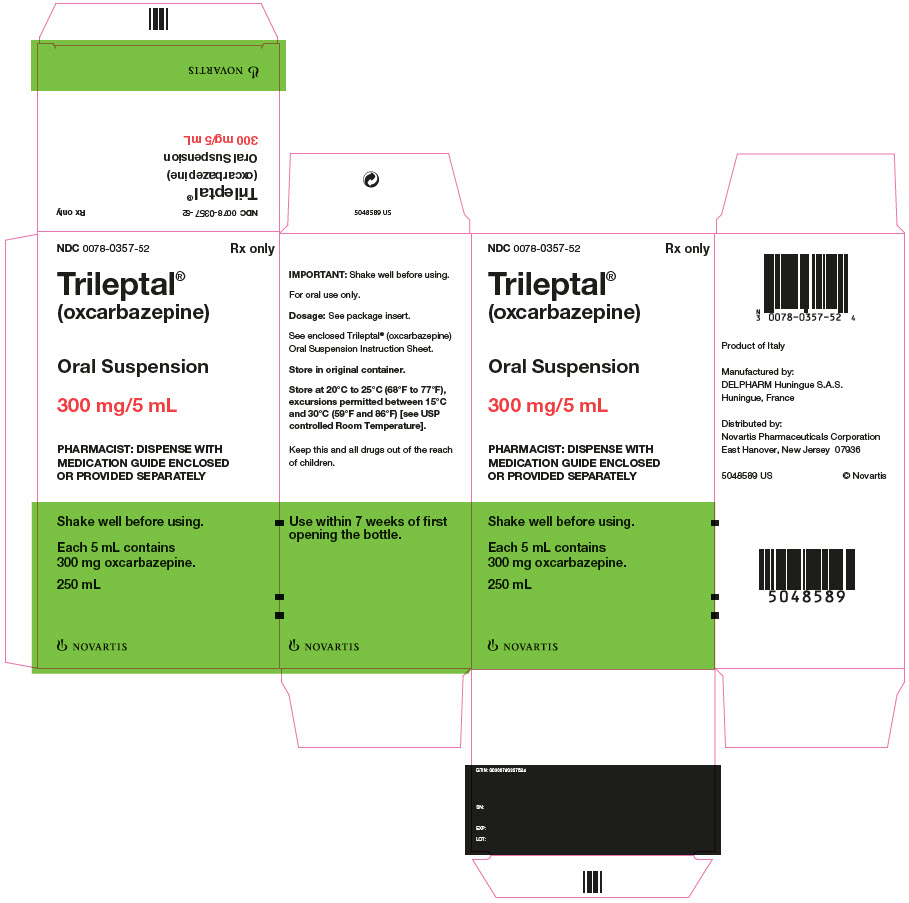
Trileptal oxcarbazepine 60 mg/mL Suspension, 250 mL — NDC 0078-0357-52 (Billing 00078-0357-52)
This is a package of 250 mL of Trileptal oxcarbazepine 60 mg/mL Suspension from Novartis Pharmaceuticals Corporation, marketed since May 2001 and currently FDA-listed; retail pharmacies pay about $1.93 per mL (NADAC). It is this product's only package size.
NDC database record
One package, one record: these facts belong to NDC 0078-0357-52 alone.
- Record
- FDA NDC Directory package listing · Human prescription drug
- Code segments
- 0078 labeler · 0357 product · 52 package
- Package marketed since
- May 30, 2001
- Sample package
- No — commercial package
- Listing certified through
- Dec 31, 2026
- Billing quantity
- 250 mL per package
- Barcode (UPC-A, from the NDC)
- 3 0078035752 4
- Medicaid fills, this package
- 46,351 prescriptions in the last four reported quarters
- FDA record last changed
- Jul 24, 2026
Identity & classification
Regulatory identifiers FDA, NLM and CMS codes for this package
Drug-database identifiers Medi-Span GPI and First Databank GCN / HICL / AHFS classification
- GSN (GCN sequence number): 033724
- GCN: 21723
- GPI-14 (Medi-Span): 72600046001820
- HICL (First Databank): 011735
- AHFS class code: 28:12.24.00
- RxCUI (RxNorm): 261356
Where does this data come from?
- FDA openFDA NDC Directory · synced Oct 1, 2026
- FDA label on DailyMed · label index refreshed Oct 5, 2026
- RxNorm (NLM RxNav) · catalog refreshed Oct 1, 2026
- Medi-Span GPI (licensed)
- First Databank (licensed) · refreshed Oct 1, 2026
RxNorm drug class
This medicine belongs to the Anti-epileptic Agent class.
Where does this data come from?
- RxClass (NLM) · catalog refreshed Oct 1, 2026
Clinical
Oxcarbazepine (Trileptal) is used alone or in combination with other medications to control certain types of seizures in adults and children. Oxcarbazepine extended-release tablets (Oxtellar XR) are used in combination with other medications to control certain types of seizures in adults and children 6 years of age and older. Oxcarbazepine is in a class of medications called anticonvulsants. It works by decreasing abnormal electrical activity in the brain.
Read the full MedlinePlus article ↗- It treats partial-onset seizures, which start in one area of the brain. Depending on the product and your age, it may be used alone or along with other seizure medicines. Your phar...
- Take it by mouth exactly as prescribed. Immediate-release tablets and the suspension are usually taken twice a day, with or without food. Extended-release products like Oxtellar XR...
- Dizziness, sleepiness, tiredness, double vision, nausea, headache, and unsteadiness are the most common. Be careful driving until you know how it affects you. Tell your doctor if t...
- Call for any new rash, blistering, or peeling skin, or swelling of the face, lips, or throat. Also call for confusion, severe headache or nausea, more seizures, or mood changes and...
Patient education
Supplement & herbal interactions
Some supplements/herbs that may interact with Oxcarbazepine — tap one for details:
Oxcarbazepine may be associated with lower levels of 2 nutrients — worth a chat with your pharmacist, not a cause for alarm.
Where does this data come from?
- MedlinePlus (NLM) · refreshed Oct 1, 2026
- FDA label on DailyMed · label index refreshed Oct 5, 2026
Ask a licensed pharmacist directly — free, answered by our team.
Pricing
A drug doesn't have one price. Each row is a different public payment system, and none is what you'd pay at the counter — that depends on your insurance. The ⓘ on each row explains what it measures.
| Price system | Per mL | Per package |
|---|---|---|
| Retail pharmacies payNADAC · weekly | $1.931 | $482.70 / 250 ml |
| Medicaid paysCMS SDUD · 12 mo | $1.89 | $472.75 / 250 ml |
| Medicare drug plans payPart D · Q2 2026 | $1.91 | $477.83 / 250 ml |
Where does this data come from?
- CMS NADAC weekly file · file of Sep 30, 2026
- CMS ASP pricing files · refreshed Sep 20, 2026
- CMS Medicaid State Drug Utilization Data · through Q1 2026
- CMS Part D plan pricing files · refreshed Sep 24, 2026
- VA National Acquisition Center price file
Packaging — all sizes for this product
| Package NDC | Description | Marketing start | Marketing end | Status |
|---|---|---|---|---|
| 00078-0357-52 You're viewing this Main listing | 250 mL in 1 BOTTLE | 2001-05-30 | — | Active |
Therapeutic equivalents
| Product | Labeler | Pack | NADAC/unit | TE | Status | Price vs. this |
|---|---|---|---|---|---|---|
| Oxcarbazepine 60 mg/mL 31722-0687-25 | Camber | 1 bottle | $0.110 | AB | Availability likely | save 94% |
| Oxcarbazepine 300 mg/5mL 42806-0600-22 | EPIC | 1 bottle | $0.110 | AB | Availability likely | save 94% |
| Oxcarbazepine 60 mg/mL 67877-0532-58 | Ascend | 250 ml | $0.110 | AB | Availability likely | save 94% |
| Oxcarbazepine 300 mg/5mL 69452-0125-50 | Bionpharma | 1 bottle | $0.110 | AB | Availability likely | save 94% |
| Oxcarbazepine 60 mg/mL 70377-0117-11 | Biocon | 1 bottle | $0.110 | AB | Availability likely | save 94% |
| Oxcarbazepine 60 mg/mL 72603-0252-01 | NorthStar | 1 bottle | $0.110 | AB | Availability likely | save 94% |
| Oxcarbazepine 300 mg/5mL 72888-0074-14 | Advagen | 1 bottle | $0.110 | AB | Availability likely | save 94% |
| Trileptal 60 mg/mLthis 00078-0357-52 | Novartis | 250 ml | $1.931 | AB | Availability likely | — |
| Oxcarbazepine 300 mg/5mL 10135-0798-41 | Marlex | 250 ml | — | AB | FDA listed | — |
| oxcarbazepine 300 mg/5mL 33342-0259-67 | Macleods | 1 bottle | — | AB | FDA listed | — |
| Oxcarbazepine 60 mg/mL 51672-1393-01 | Sun | 1 bottle | — | AB | Discontinued | — |
| Oxcarbazepine 300 mg/5mL 62135-0841-24 | Chartwell | 20 cups | — | AB | FDA listed | — |
| Oxcarbazepine 300 mg/5mL 65162-0649-48 | Amneal | 10 cups | — | AB | FDA listed | — |
| Oxcarbazepine 300 mg/5mL 68094-0123-62 | Precision | 10 cups | — | AB | FDA listed | — |
| Oxcarbazepine 300 mg/5mL 68999-0841-24 | Chartwell | 10 cups | — | AB | FDA listed | — |
| Oxcarbazepine 300 mg/5mL 72162-2088-02 | Bryant | 1 bottle | — | AB | FDA listed | — |
| Oxcarbazepine 300 mg/5mL 72162-2631-02 | Bryant | 250 ml | — | AB | FDA listed | — |
| Oxcarbazepine 300 mg/5mL 72205-0354-85 | Novadoz | 1 bottle | — | AB | FDA listed | — |
| Oxcarbazepine 300 mg/5mL 85742-0007-06 | Kanchan | 250 ml | — | AB | FDA listed | — |
Where does this data come from?
- FDA openFDA NDC Directory · synced Oct 1, 2026
- FDA Orange Book · refreshed Oct 3, 2026
- CMS NADAC weekly file · file of Sep 30, 2026
Availability & generic status
FDA-approved generic versions are listed, and recent pricing/market data suggests they may be available — see Therapeutic equivalents.
Where does this data come from?
- FDA Orange Book · refreshed Oct 3, 2026
What it looks like
Where does this data come from?
- FDA label on DailyMed · label index refreshed Oct 5, 2026
Inactive Ingredients / Excipients
Inactive ingredients, also called excipients, are components of the drug product other than the active ingredient. They may include fillers, dyes, coatings, preservatives, flavors, or other formulation ingredients.
💡 Tap an ingredient (hover on desktop) to see what it is and why it’s used.
-
UNII PQ6CK8PD0R
Ascorbic acid, also known as vitamin C, is a white crystalline powder. It serves as an antioxidant to prevent degradation of other ingredients and may also function as a preservative in the formulation.
-
UNII 05JZI7B19X
A plant-based thickener made from cellulose that holds water and creates texture. It works as a binder and thickening agent to give the medicine its proper consistency and help ingredients blend together.
-
UNII OP1R32D61U
Microcrystalline cellulose is a purified form of cellulose, a natural fiber from plant sources. It acts as a binder and filler in tablets and capsules, helping hold ingredients together and give the medicine its shape and size.
-
UNII 24RS0A988O
Lemon is a citrus fruit extract used as a natural flavoring agent and acidulant to add tart taste and help preserve medicines while improving their palatability.
-
UNII A2I8C7HI9T
Methylparaben is a preservative derived from benzoic acid that prevents growth of bacteria, fungi, and mold in medicines. It extends the product's shelf life and maintains safety during storage.
-
UNII N762921K75
A colorless, odorless gas that makes up most of the air we breathe. In medicines, it's used as a packaging gas or propellant to protect products from oxidation and maintain freshness.
-
UNII 67M3EQ6BE1
Plum is a natural fruit extract or powder used as a flavoring agent and colorant in medicines. It adds taste and visual appeal to make medications more palatable, particularly in liquid or chewable formulations.
-
UNII B697894SGQ
Polyethylene glycol 400 is a clear, thick liquid made from petroleum-derived polymers. It acts as a solvent and humectant in medicines, helping dissolve active ingredients and retain moisture in the formulation.
-
UNII 6DC9Q167V3
Propylene glycol is a clear liquid derived from petroleum or vegetable sources. It acts as a solvent, humectant, and preservative in medicines, helping dissolve active ingredients and maintain product stability.
-
UNII Z8IX2SC1OH
Propylparaben is a chemical preservative used to prevent bacterial and fungal growth in medicines and personal care products. It helps extend shelf life and maintain product safety during storage.
-
UNII SB8ZUX40TY
Saccharin sodium is an artificial sweetener made from saccharin salt. It's added to medicines to improve taste, especially in liquid formulations for children or bitter drugs.
-
UNII X045WJ989B
Sorbic acid is a preservative derived from berries that prevents mold, yeast, and bacterial growth in medicines. It keeps the product stable and safe during storage.
-
UNII 506T60A25R
Sorbitol is a natural sugar alcohol derived from glucose. It serves as a sweetener, humectant, and bulking agent in medications to improve taste and help maintain moisture in the product.
-
UNII 059QF0KO0R
Water is a liquid solvent that dissolves and mixes ingredients together in liquid medicines, syrups, and injections. It helps distribute the active drug evenly throughout the product.
14 inactive ingredients listed in the exact product block matched to this NDC.
Where does this data come from?
ingredient classCode="IACT" elements from the exact product block matched by this NDC. Label-section narrative from DailyMed / the openFDA label index is shown separately when available.- FDA label on DailyMed · label index refreshed Oct 5, 2026
- FDA openFDA NDC Directory · synced Oct 1, 2026
Inactive ingredient FAQ
Are inactive ingredients the same for every manufacturer?
Why might an inactive ingredient be missing?
Can inactive ingredients matter?
Manufacturer & labeler
More NDCs from Novartis Pharmaceuticals Corporation labeler code 00078
- Femara letrozole 2.5 mg Tablet, Film Coated NDC 0078-0249-15
- Neoral cyclosporine 100 mg/mL Solution NDC 0078-0274-22
- Diovan HCT valsartan and hydrochlorothiazide 80 mg; 12.5 mg Tablet, Film Coated NDC 0078-0314-34
- Diovan HCT valsartan and hydrochlorothiazide 160 mg; 12.5 mg Tablet, Film Coated NDC 0078-0315-34
- Simulect basiliximab 20 mg/5mL Injection, Powder, For Solution NDC 0078-0331-84
- Trileptal oxcarbazepine 300 mg Tablet, Film Coated NDC 0078-0337-05
- Diovan valsartan 80 mg Tablet NDC 0078-0358-34
- Diovan valsartan 160 mg Tablet NDC 0078-0359-34
- Diovan valsartan 320 mg Tablet NDC 0078-0360-34
- Lotrel amlodipine besylate and benazepril hydrochloride 10 mg; 20 mg Capsule NDC 0078-0364-05
- Ritalin LA methylphenidate hydrochloride 20 mg Capsule, Extended Release NDC 0078-0370-05
- Ritalin LA methylphenidate hydrochloride 30 mg Capsule, Extended Release NDC 0078-0371-05
Where does this data come from?
- FDA openFDA NDC Directory · synced Oct 1, 2026
- Drugs@FDA
Full prescribing information FDA SPL
🎯 Indications and Usage ▾
1 INDICATIONS AND USAGE TRILEPTAL is indicated for use as monotherapy or adjunctive therapy in the treatment of partial-onset seizures in adults and as monotherapy in the treatment of partial-onset seizures in pediatric patients aged 4 years and above, and as adjunctive therapy in pediatric patients aged 2 years and above with partial-onset seizures. TRILEPTAL is indicated for: Adults: Monotherapy or adjunctive therapy in the treatment of partial-onset seizures Pediatrics: - Monotherapy in the treatment of partial-onset seizures in children 4-16 years - Adjunctive therapy in the treatment of partial-onset seizures in children 2-16 years ( 1 )
⏱️ Dosage and Administration ▾
2 DOSAGE AND ADMINISTRATION Adults: Initiate with a dose of 600 mg/day, given twice a day Adjunctive Therapy: Maximum increment of 600 mg/day at approximately weekly intervals. The recommended daily dose is 1200 mg/day ( 2.1 ) Conversion to Monotherapy: Withdrawal concomitant over 3 to 6 weeks; reach maximum dose of TRILEPTAL in 2 to 4 weeks with increments of 600 mg/day at weekly intervals to a recommended daily dose of 2400 mg/day ( 2.2 ) Initiation of Monotherapy: Increments of 300 mg/day every third day to a dose of 1200 mg/day ( 2.3 ) Initiate at one-half the usual starting dose and increase slowly in patients with a creatinine clearance < 30 mL/min ( 2.7 ) Pediatrics : Initiation with 8 to 10 mg/kg/day, given twice a day.
For patients aged 2 to < 4 years and under 20 kg, a starting dose of 16 to 20 mg/kg/day may be considered. Recommended daily dose is dependent upon patient weight. Adjunctive Patients (Aged 2-16 Years): For patients aged 4 to 16 years, target maintenance dose should be achieved over 2 weeks ( 2.4 ).
For patients aged 2 to < 4 years, maximum maintenance dose should be achieved over 2 to 4 weeks and should not exceed 60 mg/kg/day ( 2.4 ) Conversion to Monotherapy for Patients (Aged 4-16 Years): Maximum increment of 10 mg/kg/day at weekly intervals, concomitant antiepileptic drugs (AEDs) can be completely withdrawn over 3 to 6 weeks ( 2.5 ) Initiation of Monotherapy for Patients (Aged 4-16 Years): Increments of 5 mg/kg/day every third day ( 2.6 )
2.1Adjunctive Therapy for Adults Initiate TRILEPTAL with a dose of 600 mg/day, given twice a day. If clinically indicated, the dose may be increased by a maximum of 600 mg/day at approximately weekly intervals; the maximum recommended daily dose is 1200 mg/day. Daily doses above 1200 mg/day show somewhat greater effectiveness in controlled trials, but most patients were not able to tolerate the 2400 mg/day dose, primarily because of central nervous (CNS) effects.
Dosage adjustment is recommended with concomitant use of strong CYP3A4 enzyme inducers or UDP-glucuronosyltransferases (UGT) inducers, which include certain antiepileptic drugs (AEDs) [ see Drug Interactions (7.1, 7.2) ].
2.2Conversion to Monotherapy for Adults Patients receiving concomitant AEDs may be converted to monotherapy by initiating treatment with TRILEPTAL at 600 mg/day (given in a twice a day regimen) while simultaneously initiating the reduction of the dose of the concomitant AEDs. The concomitant AEDs should be completely withdrawn over 3 to 6 weeks, while the maximum dose of TRILEPTAL should be reached in about 2 to 4 weeks. TRILEPTAL may be increased as clinically indicated by a maximum increment of 600 mg/day at approximately weekly intervals to achieve the maximum recommended daily dose of 2400 mg/day.
A daily dose of 1200 mg/day has been shown in one study to be effective in patients in whom monotherapy has been initiated with TRILEPTAL. Patients should be observed closely during this transition phase.
2.3Initiation of Monotherapy for Adults Patients not currently being treated with AEDs may have monotherapy initiated with TRILEPTAL. In these patients, initiate TRILEPTAL at a dose of 600 mg/day (given twice a day); the dose should be increased by 300 mg/day every third day to a dose of 1200 mg/day. Controlled trials in these patients examined the effectiveness of a 1200 mg/day dose; a dose of 2400 mg/day has been shown to be effective in patients converted from other AEDs to TRILEPTAL monotherapy (see above).
2.4Adjunctive Therapy for Pediatric Patients (Aged 2-16 Years) In pediatric patients aged 4-16 years, initiate TRILEPTAL at a daily dose of 8 to 10 mg/kg generally not to exceed 600 mg/day, given twice a day. The target maintenance dose of TRILEPTAL should be achieved over 2 weeks, and is dependent upon patient weight, according to the following chart: 20 to 29 kg-900 mg/day 29.1 to 39 kg-1200 mg/day 39 kg-1800 mg/day In the clinical trial, in which the intention was to reach th… [Excerpted — this section continues on DailyMed.]
💊 Dosage Forms and Strengths ▾
3 DOSAGE FORMS AND STRENGTHS Film-coated Tablets: 150 mg: pale grey-green, ovaloid, slightly biconvex, scored on both sides. Imprinted with “T/D” on one side and “C/G” on the other side. 300 mg: yellow, ovaloid, slightly biconvex, scored on both sides.
Imprinted with “TE/TE” on one side and “CG/CG” on the other side. 600 mg: light pink, ovaloid, slightly biconvex, scored on both sides. Imprinted with “TF/TF” on one side and “CG/CG” on the other side.
Oral Suspension: 300 mg/5 mL (60 mg/mL): off-white to slightly brown or slightly red suspension. Film-coated tablets: 150 mg, 300 mg and 600 mg ( 3 ) Oral suspension: 300 mg/5 mL (60 mg/mL) ( 3 )
⛔ Contraindications ▾
4 CONTRAINDICATIONS TRILEPTAL is contraindicated in patients with a known hypersensitivity to oxcarbazepine or to any of its components, or to eslicarbazepine acetate [ see Warnings and Precautions (5.2, 5.3) ]. Known hypersensitivity to oxcarbazepine or to any of its components, or to eslicarbazepine acetate ( 4 , 5.2 )
⚠️ Warnings and Cautions ▾
5 WARNINGS AND PRECAUTIONS Hyponatremia: Monitor serum sodium levels ( 5.1 ) Cross Hypersensitivity Reaction to Carbamazepine: Discontinue immediately if hypersensitivity occurs ( 5.3 ) Serious Dermatological Reactions: If occurs, consider discontinuation ( 5.4 ) Suicidal Behavior and Ideation: Monitor for suicidal thoughts/behavior ( 5.5 ) Withdrawal of AEDs: Withdraw TRILEPTAL gradually ( 5.6 ) Cognitive/Neuropsychiatric Adverse Reactions: May cause cognitive dysfunction, somnolence, and coordination abnormalities.
Use caution when operating machinery ( 5.7 ) Drug Reaction with Eosinophilia and Systemic Symptoms (DRESS)/Multi-Organ Hypersensitivity: Monitor and discontinue if another cause cannot be established ( 5.8 ) Hematologic Events: Consider discontinuing ( 5.9 ) Seizure Control During Pregnancy: Active metabolite may decrease ( 5.10 ) Risk of Seizure Aggravation: Discontinue if occurs ( 5.11 )
5.1Hyponatremia Clinically significant hyponatremia (sodium < 125 mmol/L) can develop during TRILEPTAL use. In the 14 controlled epilepsy studies, 2.5% of TRILEPTAL-treated patients (38/1524) had a sodium of less than 125 mmol/L at some point during treatment, compared to no such patients assigned placebo or active control (carbamazepine and phenobarbital for adjunctive and monotherapy substitution studies, and phenytoin and valproate for the monotherapy initiation studies). Clinically significant hyponatremia generally occurred during the first 3 months of treatment with TRILEPTAL, although there were patients who first developed a serum sodium < 125 mmol/L more than 1 year after initiation of therapy.
Most patients who developed hyponatremia were asymptomatic, but patients in the clinical trials were frequently monitored and some had their TRILEPTAL dose reduced, discontinued, or had their fluid intake restricted for hyponatremia. Whether or not these maneuvers prevented the occurrence of more severe events is unknown. Cases of symptomatic hyponatremia and syndrome of inappropriate antidiuretic hormone secretion (SIADH) have been reported during postmarketing use.
In clinical trials, patients whose treatment with TRILEPTAL was discontinued due to hyponatremia generally experienced normalization of serum sodium within a few days without additional treatment. Measurement of serum sodium levels should be considered for patients during maintenance treatment with TRILEPTAL, particularly if the patient is receiving other medications known to decrease serum sodium levels (e.g., drugs associated with inappropriate ADH secretion), or if symptoms possibly indicating hyponatremia develop (e.g., nausea, malaise, headache, lethargy, confusion, obtundation, or increase in seizure frequency or severity).
5.2Anaphylactic Reactions and Angioedema Rare cases of anaphylaxis and angioedema involving the larynx, glottis, lips and eyelids have been reported in patients after taking the first or subsequent doses of TRILEPTAL. Angioedema associated with laryngeal edema can be fatal. If a patient develops any of these reactions after treatment with TRILEPTAL, the drug should be discontinued and an alternative treatment started.
These patients should not be rechallenged with the drug [ see Warnings and Precautions (5.3) ].
5.3Cross Hypersensitivity Reaction to Carbamazepine Approximately 25% to 30% of patients who have had hypersensitivity reactions to carbamazepine will experience hypersensitivity reactions with TRILEPTAL. For this reason, patients should be specifically questioned about any prior experience with carbamazepine, and patients with a history of hypersensitivity reactions to carbamazepine should ordinarily be treated with TRILEPTAL only if the potential benefit justifies the potential risk. If signs or symptoms of hypersensitivity develop, TRILEPTAL should be discontinued immediately [ see Warnings and Precautions (5.2, 5.8) ].
5.4Serious Dermatological Reactions Serious dermatological reactions, including Stevens-Johnson syndrome (SJ… [Excerpted — this section continues on DailyMed.]
🤒 Adverse Reactions ▾
6 ADVERSE REACTIONS The following serious adverse reactions are described below and elsewhere in the labeling: Hyponatremia [see Warnings and Precautions (5.1)] Anaphylactic Reactions and Angioedema [see Warnings and Precautions (5.2)] Cross Hypersensitivity Reaction to Carbamazepine [see Warnings and Precautions (5.3)] Serious Dermatological Reactions [see Warnings and Precautions (5.4)] Suicidal Behavior and Ideation [see Warnings and Precautions (5. 5 )] Cognitive/Neuropsychiatric Adverse Reactions [see Warnings and Precautions (5.
7 )] Drug Reaction with Eosinophilia and Systemic Symptoms (DRESS)/Multi-Organ Hypersensitivity [see Warnings and Precautions (5. 8 )] Hematologic Events [see Warnings and Precautions (5. 9 )] The most common (≥ 10% more than placebo for adjunctive or low dose for monotherapy) adverse reactions in adults and pediatrics were: dizziness, somnolence, diplopia, fatigue, nausea, vomiting, ataxia, abnormal vision, headache, nystagmus, tremor, and abnormal gait ( 6.1 ) To report SUSPECTED ADVERSE REACTIONS, contact Novartis Pharmaceuticals Corporation at 1-888-669-6682 or FDA at 1-800-FDA-1088 or www.fda.gov/medwatch .
6.1Clinical Trials Experience Because clinical trials are conducted under widely varying conditions, adverse reaction rates observed in the clinical trials of a drug cannot be directly compared to rates in the clinical trials of another drug and may not reflect the rates observed in practice. Most Common Adverse Reactions in All Clinical Studies Adjunctive Therapy/Monotherapy in Adults Previously Treated With Other AEDs The most common (≥ 10% more than placebo for adjunctive or low dose for monotherapy) adverse reactions with TRILEPTAL: dizziness, somnolence, diplopia, fatigue, nausea, vomiting, ataxia, abnormal vision, headache, nystagmus tremor, and abnormal gait.
Approximately 23% of these 1537 adult patients discontinued treatment because of an adverse reaction. The adverse reactions most commonly associated with discontinuation were: dizziness (6.4%), diplopia (5.9%), ataxia (5.2%), vomiting (5.1%), nausea (4.9%), somnolence (3.8%), headache (2.9%), fatigue (2.1%), abnormal vision (2.1%), tremor (1.8%), abnormal gait (1.7%), rash (1.4%), and hyponatremia (1.0%). Monotherapy in Adults Not Previously Treated With O ther AEDs The most common (≥ 5%) adverse reactions with TRILEPTAL in these patients were similar to those in previously treated patients.
Approximately 9% of these 295 adult patients discontinued treatment because of an adverse reaction. The adverse reactions most commonly associated with discontinuation were: dizziness (1.7%), nausea (1.7%), rash (1.7%), and headache (1.4%). Adjunctive Therapy/Monotherapy in Pediatric Patients 4 Years Old and Above Previously Treated With O ther AEDs The most common (≥ 5%) adverse reactions with TRILEPTAL in these patients were similar to those seen in adults.
Approximately 11% of these 456 pediatric patients discontinued treatment because of an adverse reaction. The adverse reactions most commonly associated with discontinuation were: somnolence (2.4%), vomiting (2.0%), ataxia (1.8%), diplopia (1.3%), dizziness (1.3%), fatigue (1.1%), and nystagmus (1.1%). Monotherapy in Pediatric Patients 4 Years Old and Above Not Previously Treated With O ther AEDs The most common (≥ 5%) adverse reactions with TRILEPTAL in these patients were similar to those in adults.
Approximately 9.2% of 152 pediatric patients discontinued treatment because of an adverse reaction. The adverse reactions most commonly associated (≥ 1%) with discontinuation were rash (5.3%) and maculopapular rash (1.3%). Adjunctive Therapy/Monotherapy in Pediatric Patients 1 Month to < 4 Years Old Previously Treated or Not Previously Treated with O ther AEDs: The most common (≥ 5%) adverse reactions with TRILEPTAL in these patients were similar to those seen in older children and adults, except for infections and infestations which were more frequently seen in these younger children.
A… [Excerpted — this section continues on DailyMed.]
🔄 Drug Interactions ▾
7 DRUG INTERACTIONS Phenytoin: Increased phenytoin levels. Reduced dose of phenytoin may be required ( 7.1 ) Carbamazepine, Phenytoin, and Phenobarbital: Decreased plasma levels of MHD (the active metabolite). Dose adjustments may be necessary ( 7.1 ) Oral Contraceptive: TRILEPTAL may decrease the effectiveness of hormonal contraceptives ( 7.3 )
7.1Effect of TRILEPTAL on Other Drugs Phenytoin levels have been shown to increase with concomitant use of TRILEPTAL at doses greater than 1200 mg/day [see Clinical Pharmacology (12.3)] . Therefore, it is recommended that the plasma levels of phenytoin be monitored during the period of TRILEPTAL titration and dosage modification. A decrease in the dose of phenytoin may be required.
7.2Effect of Other Drugs on TRILEPTAL Strong inducers of cytochrome P450 enzymes and/or inducers of UGT (e.g., rifampin, carbamazepine, phenytoin and phenobarbital) have been shown to decrease the plasma/serum levels of MHD, the active metabolite of TRILEPTAL (25% to 49%) [see Clinical Pharmacology (12.3)] . If TRILEPTAL and strong CYP3A4 inducers, or UGT inducers are administered concurrently, it is recommended that the plasma levels of MHD be monitored during the period of TRILEPTAL titration. Dose adjustment of TRILEPTAL may be required after initiation, dosage modification, or discontinuation of such inducers.
7.3Hormonal Contraceptives Concurrent use of TRILEPTAL with hormonal contraceptives may render these contraceptives less effective [see Use in Specific Populations (8.3) and Clinical Pharmacology (12.3)] . Studies with other oral or implant contraceptives have not been conducted.
👥 Use in Specific Populations ▾
8 USE IN SPECIFIC POPULATIONS Pregnancy: May cause fetal harm ( 8.1)
8.1Pregnancy Pregnancy Exposure Registry There is a pregnancy exposure registry that monitors pregnancy outcomes in women exposed to AEDs, such as TRILEPTAL, during pregnancy. Encourage women who are taking TRILEPTAL during pregnancy to enroll in the North American Antiepileptic Drug (NAAED) Pregnancy Registry by calling 1-888-233-2334 or visiting http://www.aedpregnancyregistry.org/. Risk Summary Although TRILEPTAL is closely related structurally to carbamazepine, which is considered to be teratogenic in humans, available human data from published literature and ongoing pregnancy registry studies on use of oxcarbazepine during pregnancy have not demonstrated an increased prevalence of major congenital malformations with first trimester exposure.
However, all published studies reviewed have important methodological limitations, including unmeasured confounding and a small number of exposed cases ( see Data ). There are risks to the mother and fetus associated with partial onset seizures ( see Clinical Considerations ). There are no data on the risks associated with the use of TRILEPTAL and miscarriage or other adverse maternal outcomes.
Increased incidences of fetal structural abnormalities and other manifestations of developmental toxicity (embryolethality, growth retardation) were observed in the offspring of animals treated with either oxcarbazepine or its active 10-hydroxy metabolite (MHD) during pregnancy at doses similar to the maximum recommended human dose (MRHD). In the U.S. general population, the estimated background risk of major birth defects and miscarriage in clinically recognized pregnancies is 2% to 4% and 15% to 20%, respectively.
All pregnancies have a background risk of birth defect, loss, or other adverse outcomes. Clinical Considerations Disease-associated Maternal and/or Embryofetal Risk Epilepsy, with or without exposure to antiepileptic drugs, has been associated with several adverse outcomes during pregnancy, including preeclampsia, preterm labor, antepartum and postpartum hemorrhage, placental abruption, poor fetal growth, prematurity, fetal death, and maternal mortality. The risk of maternal or fetal injury may be greatest for patients with untreated or poorly controlled convulsive seizures.
Women with epilepsy who become pregnant should not abruptly discontinue antiepileptic drugs, including TRILEPTAL, due to the risk of status epilepticus or severe seizures, which may be life-threatening [see Warnings and Precautions (5.6)] . Maternal Adverse Reactions An increase in seizure frequency may occur during pregnancy because of altered levels of the active metabolite of oxcarbazepine. Monitor patients carefully during pregnancy and through the postpartum period [see Warnings and Precautions (5.10)] .
Data Human Data Data from a published retrospective cohort study and ongoing pregnancy registry studies on the use of oxcarbazepine during pregnancy have not demonstrated an increased prevalence of major congenital malformations with first trimester exposure. A retrospective cohort study conducted in Nordic countries (Denmark, Finland, Iceland, Norway, and Sweden) from 1996-2020 found that there was no increased prevalence of major congenital malformations when pregnancies exposed to oxcarbazepine during the first trimester were compared to pregnancies exposed to lamotrigine (adjusted risk ratio =1.09; 95% CI 0.83 to 1.44; n pregnancies exposed to oxcarbazepine= 1,313, n exposed cases = 58).
In an ongoing pregnancy registry that included data from over 40 countries from 1999 to 2022 and 443 pregnancies exposed to oxcarbazepine, oxcarbazepine exposure during the first trimester was not associated with major congenital malformations (adjusted odds ratio =1.09; 95% CI 0.56 to 2.13, n exposed cases = 10). However, there are important methodological limitations of these studies including unmeasured confounding factors and a small number of exp… [Excerpted — this section continues on DailyMed.]
🤰 Pregnancy ▾
8.1Pregnancy Pregnancy Exposure Registry There is a pregnancy exposure registry that monitors pregnancy outcomes in women exposed to AEDs, such as TRILEPTAL, during pregnancy. Encourage women who are taking TRILEPTAL during pregnancy to enroll in the North American Antiepileptic Drug (NAAED) Pregnancy Registry by calling 1-888-233-2334 or visiting http://www.aedpregnancyregistry.org/. Risk Summary Although TRILEPTAL is closely related structurally to carbamazepine, which is considered to be teratogenic in humans, available human data from published literature and ongoing pregnancy registry studies on use of oxcarbazepine during pregnancy have not demonstrated an increased prevalence of major congenital malformations with first trimester exposure.
However, all published studies reviewed have important methodological limitations, including unmeasured confounding and a small number of exposed cases ( see Data ). There are risks to the mother and fetus associated with partial onset seizures ( see Clinical Considerations ). There are no data on the risks associated with the use of TRILEPTAL and miscarriage or other adverse maternal outcomes.
Increased incidences of fetal structural abnormalities and other manifestations of developmental toxicity (embryolethality, growth retardation) were observed in the offspring of animals treated with either oxcarbazepine or its active 10-hydroxy metabolite (MHD) during pregnancy at doses similar to the maximum recommended human dose (MRHD). In the U.S. general population, the estimated background risk of major birth defects and miscarriage in clinically recognized pregnancies is 2% to 4% and 15% to 20%, respectively.
All pregnancies have a background risk of birth defect, loss, or other adverse outcomes. Clinical Considerations Disease-associated Maternal and/or Embryofetal Risk Epilepsy, with or without exposure to antiepileptic drugs, has been associated with several adverse outcomes during pregnancy, including preeclampsia, preterm labor, antepartum and postpartum hemorrhage, placental abruption, poor fetal growth, prematurity, fetal death, and maternal mortality. The risk of maternal or fetal injury may be greatest for patients with untreated or poorly controlled convulsive seizures.
Women with epilepsy who become pregnant should not abruptly discontinue antiepileptic drugs, including TRILEPTAL, due to the risk of status epilepticus or severe seizures, which may be life-threatening [see Warnings and Precautions (5.6)] . Maternal Adverse Reactions An increase in seizure frequency may occur during pregnancy because of altered levels of the active metabolite of oxcarbazepine. Monitor patients carefully during pregnancy and through the postpartum period [see Warnings and Precautions (5.10)] .
Data Human Data Data from a published retrospective cohort study and ongoing pregnancy registry studies on the use of oxcarbazepine during pregnancy have not demonstrated an increased prevalence of major congenital malformations with first trimester exposure. A retrospective cohort study conducted in Nordic countries (Denmark, Finland, Iceland, Norway, and Sweden) from 1996-2020 found that there was no increased prevalence of major congenital malformations when pregnancies exposed to oxcarbazepine during the first trimester were compared to pregnancies exposed to lamotrigine (adjusted risk ratio =1.09; 95% CI 0.83 to 1.44; n pregnancies exposed to oxcarbazepine= 1,313, n exposed cases = 58).
In an ongoing pregnancy registry that included data from over 40 countries from 1999 to 2022 and 443 pregnancies exposed to oxcarbazepine, oxcarbazepine exposure during the first trimester was not associated with major congenital malformations (adjusted odds ratio =1.09; 95% CI 0.56 to 2.13, n exposed cases = 10). However, there are important methodological limitations of these studies including unmeasured confounding factors and a small number of exposed cases in the registry. Animal Data When pregnant rats were given… [Excerpted — this section continues on DailyMed.]
🧒 Pediatric Use ▾
8.4Pediatric Use TRILEPTAL is indicated for use as adjunctive therapy for partial-onset seizures in patients aged 2 to 16 years. The safety and effectiveness for use as adjunctive therapy for partial-onset seizures in pediatric patients below the age of 2 have not been established. TRILEPTAL is also indicated as monotherapy for partial-onset seizures in patients aged 4 to 16 years.
The safety and effectiveness for use as monotherapy for partial-onset seizures in pediatric patients below the age of 4 have not been established. TRILEPTAL has been given to 898 patients between the ages of 1 month to 17 years in controlled clinical trials (332 treated as monotherapy) and about 677 patients between the ages of 1 month to 17 years in other trials [ s ee Warnings and Precautions (5.11), Adverse Reactions (6.1) , Clinical Pharmacology (12.3), and Clinical Studies (14 ) ].
🧓 Geriatric Use ▾
8.5Geriatric Use There were 52 patients over age 65 in controlled clinical trials and 565 patients over the age of 65 in other trials. Following administration of single (300 mg) and multiple (600 mg/day) doses of TRILEPTAL in elderly volunteers (60 to 82 years of age), the maximum plasma concentrations and area under the curve (AUC) values of MHD were 30% to 60% higher than in younger volunteers (18 to 32 years of age). Comparisons of creatinine clearance in young and elderly volunteers indicate that the difference was due to age-related reductions in creatinine clearance.
Close monitoring of sodium levels is required in elderly patients at risk for hyponatremia [ see Warnings and Precautions (5.1) ].
🆘 Overdosage ▾
10 OVERDOSAGE
10.1Human Overdose Experience Isolated cases of overdose with TRILEPTAL have been reported. The maximum dose taken was approximately 48,000 mg. All patients recovered with symptomatic treatment.
Nausea, vomiting, somnolence, aggression, agitation, hypotension, and tremor each occurred in more than one patient. Coma, confusional state, convulsion, dyscoordination, depressed level of consciousness, diplopia, dizziness, dyskinesia, dyspnea, QT prolongation, headache, miosis, nystagmus, overdose, decreased urine output, and blurred vision also occurred.
10.2Treatment and Management There is no specific antidote. Symptomatic and supportive treatment should be administered as appropriate. Removal of the drug by gastric lavage and/or inactivation by administering activated charcoal should be considered.
🧬 Clinical Pharmacology ▾
12 CLINICAL PHARMACOLOGY
12.1Mechanism of Action The pharmacological activity of TRILEPTAL is primarily exerted through the 10-monohydroxy metabolite (MHD) of oxcarbazepine [ see Clinical Pharmacology (12.3) ]. The precise mechanism by which oxcarbazepine and MHD exert their anti-seizure effect is unknown; however, in vitro electrophysiological studies indicate that they produce blockade of voltage-sensitive sodium channels, resulting in stabilization of hyperexcited neural membranes, inhibition of repetitive neuronal firing, and diminution of propagation of synaptic impulses.
These actions are thought to be important in the prevention of seizure spread in the intact brain. In addition, increased potassium conductance and modulation of high-voltage activated calcium channels may contribute to the anticonvulsant effects of the drug. No significant interactions of oxcarbazepine or MHD with brain neurotransmitter or modulator receptor sites have been demonstrated.
12.2Pharmacodynamics Oxcarbazepine and its active metabolite (MHD) exhibit anticonvulsant properties in animal seizure models. They protected rodents against electrically induced tonic extension seizures and, to a lesser degree, chemically induced clonic seizures, and abolished or reduced the frequency of chronically recurring focal seizures in Rhesus monkeys with aluminum implants. No development of tolerance (i.e., attenuation of anticonvulsive activity) was observed in the maximal electroshock test when mice and rats were treated daily for 5 days and 4 weeks, respectively, with oxcarbazepine or MHD.
12.3Pharmacokinetics Following oral administration of TRILEPTAL tablets, oxcarbazepine is completely absorbed and extensively metabolized to its pharmacologically active 10-monohydroxy metabolite (MHD). In a mass balance study in people, only 2% of total radioactivity in plasma was due to unchanged oxcarbazepine, with approximately 70% present as MHD, and the remainder attributable to minor metabolites. The half-life of the parent is about 2 hours, while the half-life of MHD is about 9 hours, so that MHD is responsible for most antiepileptic activity.
Absorption Based on MHD concentrations, TRILEPTAL tablets and suspension were shown to have similar bioavailability. After single-dose administration of TRILEPTAL tablets to healthy male volunteers under fasted conditions, the median t max was 4.5 (range, 3 to 13) hours. After single-dose administration of TRILEPTAL oral suspension to healthy male volunteers under fasted conditions, the median t max was 6 hours.
Steady-state plasma concentrations of MHD are reached within 2 to 3 days in patients when TRILEPTAL is given twice a day. At steady state the pharmacokinetics of MHD are linear and show dose proportionality over the dose range of 300 to 2400 mg/day. Food has no effect on the rate and extent of absorption of oxcarbazepine from TRILEPTAL tablets.
Although not directly studied, the oral bioavailability of the TRILEPTAL suspension is unlikely to be affected under fed conditions. Therefore, TRILEPTAL tablets and suspension can be taken with or without food. Distribution The apparent volume of distribution of MHD is 49 L.
Approximately 40% of MHD is bound to serum proteins, predominantly to albumin. Binding is independent of the serum concentration within the therapeutically relevant range. Oxcarbazepine and MHD do not bind to alpha-1-acid glycoprotein.
Metabolism and Excretion Oxcarbazepine is rapidly reduced by cytosolic enzymes in the liver to its 10-monohydroxy metabolite, MHD, which is primarily responsible for the pharmacological effect of TRILEPTAL. MHD is metabolized further by conjugation with glucuronic acid. Minor amounts (4% of the dose) are oxidized to the pharmacologically inactive 10,11-dihydroxy metabolite (DHD).
Oxcarbazepine is cleared from the body mostly in the form of metabolites which are predominantly excreted by the kidneys. More than 95% of the dose appears in the urine, with less than 1% as unc… [Excerpted — this section continues on DailyMed.]
🧬 Mechanism of Action ▾
12.1Mechanism of Action The pharmacological activity of TRILEPTAL is primarily exerted through the 10-monohydroxy metabolite (MHD) of oxcarbazepine [ see Clinical Pharmacology (12.3) ]. The precise mechanism by which oxcarbazepine and MHD exert their anti-seizure effect is unknown; however, in vitro electrophysiological studies indicate that they produce blockade of voltage-sensitive sodium channels, resulting in stabilization of hyperexcited neural membranes, inhibition of repetitive neuronal firing, and diminution of propagation of synaptic impulses.
These actions are thought to be important in the prevention of seizure spread in the intact brain. In addition, increased potassium conductance and modulation of high-voltage activated calcium channels may contribute to the anticonvulsant effects of the drug. No significant interactions of oxcarbazepine or MHD with brain neurotransmitter or modulator receptor sites have been demonstrated.
📦 How Supplied / Storage and Handling ▾
16 HOW SUPPLIED/STORAGE AND HANDLING Tablets 150 mg Film-Coated Tablets: pale grey-green, ovaloid, slightly biconvex, scored on both sides. Imprinted with “T/D” on one side and “C/G” on the other side. Bottle of 100……………………………………………………………………………………………...NDC 0078-0456-05 Unit Dose (blister pack) Box of 100 (strips of 10)………………………………………………………………………………....NDC 0078-0456-35 300 mg Film-Coated Tablets: yellow, ovaloid, slightly biconvex, scored on both sides.
Imprinted with “TE/TE” on one side and “CG/CG” on the other side. Bottle of 100……………………………………………………………………………………………...NDC 0078-0337-05 Unit Dose (blister pack) Box of 100 (strips of 10)…………………………………………………………………………………NDC 0078-0337-06 600 mg Film-Coated Tablets: light pink, ovaloid, slightly biconvex, scored on both sides. Imprinted with “TF/TF” on one side and “CG/CG” on the other side.
Bottle of 100……………………………………………………………………………………………...NDC 0078-0457-05 Unit Dose (blister pack) Box of 100 (strips of 10)…………………………………………………………………………………NDC 0078-0457-35 Store at 20°C to 25°C (68°F to 77°F), excursions permitted between 15°C and 30°C (59°F and 86°F) [see USP Controlled Room Temperature]. Dispense in tight container (USP). Suspension 300 mg/5 mL (60 mg/mL) Oral Suspension: off-white to slightly brown or slightly red suspension.
Available in amber glass bottles containing 250 mL of oral suspension. Supplied with a 10 mL dosing syringe and press-in bottle adapter. Bottle containing 250 mL of oral suspension……………………………………………………………NDC 0078-0357-52 Store TRILEPTAL oral suspension in the original container.
Shake well before using. Use within 7 weeks of first opening the bottle. Store at 20°C to 25°C (68°F to 77°F), excursions permitted between 15°C and 30°C (59°F and 86°F) [see USP Controlled Room Temperature].
📋 Description ▾
11 DESCRIPTION TRILEPTAL is an AED available as 150 mg, 300 mg, and 600 mg film-coated tablets for oral administration. TRILEPTAL is also available as a 300 mg/5 mL (60 mg/mL) oral suspension. Oxcarbazepine is 10,11-Dihydro-10-oxo-5 H -dibenz[b, f ]azepine-5-carboxamide, and its structural formula is: Oxcarbazepine is a white to faintly orange crystalline powder.
It is slightly soluble in chloroform, dichloromethane, acetone, and methanol and practically insoluble in ethanol, ether and water. Its molecular weight is 252.27 g/mol. TRILEPTAL film-coated tablets contain the following inactive ingredients: colloidal silicon dioxide, crospovidone, hydroxypropyl methylcellulose, iron oxide, magnesium stearate, microcrystalline cellulose, polyethylene glycol, talc, and titanium dioxide.
TRILEPTAL oral suspension contains the following inactive ingredients: ascorbic acid; dispersible cellulose; ethanol; macrogol stearate; methyl parahydroxybenzoate; propylene glycol; propyl parahydroxybenzoate; purified water; sodium saccharin; sorbic acid; sorbitol; yellow-plum-lemon aroma. Oxcarbazepine structural formula.
💬 Information for Patients ▾
17 PATIENT COUNSELING INFORMATION Advise the patient to read the FDA-approved patient labeling (Medication Guide and Instructions for Use). Administration Information Counsel patients that TRILEPTAL may be taken with or without food. For TRILEPTAL oral suspension, advise patients to shake the bottle well and prepare the dose immediately afterwards using the oral dosing syringe supplied.
Inform patients that TRILEPTAL oral suspension can be mixed in a small glass of water just prior to administration or, alternatively, may be swallowed directly from the syringe. Instruct patients to discard any unused TRILEPTAL oral suspension after 7 weeks of first opening the bottle [ se e Dosage and Administration (2.8 ) and How Supplied/Storage and Handling (16) ] . Hyponatremia Advise patients that TRILEPTAL may reduce the serum sodium concentrations especially if they are taking other medications that can lower sodium.
Instruct patients to report symptoms of low sodium like nausea, tiredness, lack of energy, confusion, and more frequent or more severe seizures [ see Warnings and Precautions (5.1) ]. Anaphylactic Reactions and Angioedema Anaphylactic reactions and angioedema may occur during treatment with TRILEPTAL. Advise patients to report immediately signs and symptoms suggesting angioedema (swelling of the face, eyes, lips, tongue, or difficulty in swallowing or breathing) and to stop taking the drug until they have consulted with their physician [ see Warnings and Precautions (5.2) ].
Cross Hypersensitivity Reaction to Carbamazepine Inform patients who have exhibited hypersensitivity reactions to carbamazepine that approximately 25% to 30% of these patients may experience hypersensitivity reactions with TRILEPTAL. Patients should be advised that if they experience a hypersensitivity reaction while taking TRILEPTAL they should consult with their physician immediately [ see Warnings and Precautions (5.3) ]. Serious Dermatological Reactions Advise patients that serious skin reactions have been reported in association with TRILEPTAL.
In the event a skin reaction should occur while taking TRILEPTAL, patients should consult with their physician immediately [ see Warnings and Precautions (5.4) ]. Suicidal Behavior and Ideation Patients, their caregivers, and families should be counseled that AEDs, including TRILEPTAL, may increase the risk of suicidal thoughts and behavior and should be advised of the need to be alert for the emergence or worsening of symptoms of depression, any unusual changes in mood or behavior, or the emergence of suicidal thoughts, behavior, or thoughts about self-harm.
Behaviors of concern should be reported immediately to healthcare providers [see Warnings and Precautions (5.5)] . Driving and Operating Machinery Advise patients that TRILEPTAL may cause adverse reactions, such as dizziness, somnolence, ataxia, visual disturbances, and depressed level of consciousness. Accordingly, advise patients not to drive or operate machinery until they have gained sufficient experience on TRILEPTAL to gauge whether it adversely affects their ability to drive or operate machinery [see Warnings and Precautions (5.7) and Adverse Reactions (6)] .
Multi-Organ Hypersensitivity Instruct patients that a fever associated with other organ system involvement (e.g., rash, lymphadenopathy, hepatic dysfunction) may be drug-related and should be reported to their healthcare provider immediately [ see Warnings and Precautions (5.8) ]. Hematologic Events Advise patients that there have been rare reports of blood disorders reported in patients treated with TRILEPTAL. Instruct patients to immediately consult with their physician if they experience symptoms suggestive of blood disorders [ see Warnings and Precautions (5.9) ].
Drug Interactions Caution female patients of reproductive potential that the concurrent use of TRILEPTAL with hormonal contraceptives may render this method of contraception less effective [see Drug Interactions (7.2) and Use i… [Excerpted — this section continues on DailyMed.]
💬 Medication Guide ▾
This Medication Guide has been approved by the U.S. Food and Drug Administration Revised: 9/2025 MEDICATION GUIDE TRILEPTAL (try-LĔP-tăl) (oxcarbazepine) film-coated tablets, for oral use and oral suspension What is the most important information I should know about TRILEPTAL? Do not stop taking TRILEPTAL without first talking to your healthcare provider.
Stopping TRILEPTAL suddenly can cause serious problems. TRILEPTAL can cause serious side effects, including: 1. TRILEPTAL may cause the level of sodium in your blood to be low .
Symptoms of low blood sodium include: • nausea • confusion • tiredness (lack of energy) • more frequent or more severe seizures • headache Similar symptoms that are not related to low sodium may occur from taking TRILEPTAL. You should tell your healthcare provider if you have any of these side effects and if they bother you or they do not go away. Some other medicines can also cause low sodium in your blood.
Be sure to tell your healthcare provider about all the other medicines that you are taking. Your healthcare provider may do blood tests to check your sodium levels during your treatment with TRILEPTAL. 2.
TRILEPTAL may also cause allergic reactions or serious problems which may affect organs and other parts of your body like the liver or blood cells . You may or may not have a rash with these types of reactions. Call your healthcare provider right away if you have any of the following: • swelling of your face, eyes, lips, or tongue • painful sores in the mouth or around your eyes • trouble swallowing or breathing • yellowing of your skin or eyes • a skin rash • unusual brusing or bleeding • hives • severe fatigue or weakness • fever, swollen glands, or sore throat that do not go away or come and go • severe muscle pain • frequent infections or infections that do not go away Many people who are allergic to carbamazepine are also allergic to TRILEPTAL.
Tell your healthcare provider if you are allergic to carbamazepine. 3. Like other antiepileptic drugs (AEDs), TRILEPTAL may cause suicidal thoughts or actions in a very small number of people, about 1 in 500.
Call a healthcare provider right away if you have any of these symptoms, especially if they are new, worse, or worry you: • thoughts about suicide or dying • trouble sleeping (insomnia) • attempts to commit suicide • new or worse irritability • new or worse depression • acting aggressive, being angry, or violent • new or worse anxiety • acting on dangerous impulses • feeling agitated or restless • an extreme increase in activity and talking (mania) • panic attacks • other unusual changes in behavior or mood How can I watch for early symptoms of suicidal thoughts and actions?
Pay attention to any changes, especially sudden changes, in mood, behaviors, thoughts, or feelings. Keep all follow-up visits with your healthcare provider as scheduled. Call your healthcare provider between visits as needed, especially if you are worried about symptoms.
Do not stop taking TRILEPTAL without first talking to a healthcare provider. Stopping TRILEPTAL suddenly can cause serious problems. Stopping a seizure medicine suddenly in a patient who has epilepsy may cause seizures that will not stop (status epilepticus).
Suicidal thoughts or actions may be caused by things other than medicines. If you have suicidal thoughts or actions, your healthcare provider may check for other causes. What is TRILEPTAL?
TRILEPTAL is a prescription medicine used: alone or with other medicines to treat partial-onset seizures in adults alone to treat partial-onset seizures in children 4 years of age and older with other medicines to treat partial-onset seizures in children 2 years of age and older It is not known if TRILEPTAL is safe and effective for use alone to treat partial-onset seizures in children less than 4 years of age or for use with other medicines to treat partial-onset seizures in children less than 2 years of age. Do not take TRILEPTAL if you are allergic to TRILEPTAL or a… [Excerpted — this section continues on DailyMed.]
🧬 Pharmacokinetics ▾
12.3Pharmacokinetics Following oral administration of TRILEPTAL tablets, oxcarbazepine is completely absorbed and extensively metabolized to its pharmacologically active 10-monohydroxy metabolite (MHD). In a mass balance study in people, only 2% of total radioactivity in plasma was due to unchanged oxcarbazepine, with approximately 70% present as MHD, and the remainder attributable to minor metabolites. The half-life of the parent is about 2 hours, while the half-life of MHD is about 9 hours, so that MHD is responsible for most antiepileptic activity.
Absorption Based on MHD concentrations, TRILEPTAL tablets and suspension were shown to have similar bioavailability. After single-dose administration of TRILEPTAL tablets to healthy male volunteers under fasted conditions, the median t max was 4.5 (range, 3 to 13) hours. After single-dose administration of TRILEPTAL oral suspension to healthy male volunteers under fasted conditions, the median t max was 6 hours.
Steady-state plasma concentrations of MHD are reached within 2 to 3 days in patients when TRILEPTAL is given twice a day. At steady state the pharmacokinetics of MHD are linear and show dose proportionality over the dose range of 300 to 2400 mg/day. Food has no effect on the rate and extent of absorption of oxcarbazepine from TRILEPTAL tablets.
Although not directly studied, the oral bioavailability of the TRILEPTAL suspension is unlikely to be affected under fed conditions. Therefore, TRILEPTAL tablets and suspension can be taken with or without food. Distribution The apparent volume of distribution of MHD is 49 L.
Approximately 40% of MHD is bound to serum proteins, predominantly to albumin. Binding is independent of the serum concentration within the therapeutically relevant range. Oxcarbazepine and MHD do not bind to alpha-1-acid glycoprotein.
Metabolism and Excretion Oxcarbazepine is rapidly reduced by cytosolic enzymes in the liver to its 10-monohydroxy metabolite, MHD, which is primarily responsible for the pharmacological effect of TRILEPTAL. MHD is metabolized further by conjugation with glucuronic acid. Minor amounts (4% of the dose) are oxidized to the pharmacologically inactive 10,11-dihydroxy metabolite (DHD).
Oxcarbazepine is cleared from the body mostly in the form of metabolites which are predominantly excreted by the kidneys. More than 95% of the dose appears in the urine, with less than 1% as unchanged oxcarbazepine. Fecal excretion accounts for less than 4% of the administered dose.
Approximately 80% of the dose is excreted in the urine either as glucuronides of MHD (49%) or as unchanged MHD (27%); the inactive DHD accounts for approximately 3% and conjugates of MHD and oxcarbazepine account for 13% of the dose. The half-life of the parent is about 2 hours, while the half-life of MHD is about 9 hours. Specific Populations Geriatrics Following administration of single (300 mg) and multiple (600 mg/day) doses of TRILEPTAL to elderly volunteers (60 to 82 years of age), the maximum plasma concentrations and AUC values of MHD were 30% to 60% higher than in younger volunteers (18 to 32 years of age).
Comparisons of creatinine clearance in young and elderly volunteers indicate that the difference was due to age-related reductions in creatinine clearance. Pediatrics Weight-adjusted MHD clearance decreases as age and weight increases, approaching that of adults. The mean weight-adjusted clearance in children 2 years to < 4 years of age is approximately 80% higher on average than that of adults.
Therefore, MHD exposure in these children is expected to be about one-half that of adults when treated with a similar weight-adjusted dose. The mean weight-adjusted clearance in children 4 to 12 years of age is approximately 40% higher on average than that of adults. Therefore, MHD exposure in these children is expected to be about three-quarters that of adults when treated with a similar weight-adjusted dose.
As weight increases, for patients 13 years of age and above,… [Excerpted — this section continues on DailyMed.]
🧬 Pharmacodynamics ▾
12.2Pharmacodynamics Oxcarbazepine and its active metabolite (MHD) exhibit anticonvulsant properties in animal seizure models. They protected rodents against electrically induced tonic extension seizures and, to a lesser degree, chemically induced clonic seizures, and abolished or reduced the frequency of chronically recurring focal seizures in Rhesus monkeys with aluminum implants. No development of tolerance (i.e., attenuation of anticonvulsive activity) was observed in the maximal electroshock test when mice and rats were treated daily for 5 days and 4 weeks, respectively, with oxcarbazepine or MHD.
🔬 Clinical Studies ▾
14 CLINICAL STUDIES The effectiveness of TRILEPTAL as adjunctive and monotherapy for partial-onset seizures in adults, and as adjunctive therapy in children aged 2 to 16 years was established in seven multicenter, randomized, controlled trials. The effectiveness of TRILEPTAL as monotherapy for partial-onset seizures in children aged 4 to 16 years was determined from data obtained in the studies described, as well as by pharmacokinetic/pharmacodynamic considerations. Figure 1 Kaplan-Meier Estimates of Exit Rate by Treatment Group.
Figure 2 Kaplan-Meier Estimates of First Seizure Event Rate by Treatment Group. Figure 3 Kaplan-Meier Estimates of Exit Rate by Treatment Group. Figure 4 Kaplan-Meier Estimates of Exit Rate by Treatment Group.
14.1TRILEPTAL Monotherapy Trials Four randomized, controlled, double-blind, multicenter trials, conducted in a predominately adult population, demonstrated the efficacy of TRILEPTAL as monotherapy. Two trials compared TRILEPTAL to placebo and 2 trials used a randomized withdrawal design to compare a high dose (2400 mg) with a low dose (300 mg) of TRILEPTAL, after substituting TRILEPTAL 2400 mg/day for 1 or more AEDs. All doses were administered on a twice a day schedule.
A fifth randomized, controlled, rater-blind, multicenter study, conducted in a pediatric population, failed to demonstrate a statistically significant difference between low- and high-dose TRILEPTAL-treatment groups. One placebo-controlled trial was conducted in 102 patients (11 to 62 years of age) with refractory partial-onset seizures who had completed an inpatient evaluation for epilepsy surgery. Patients had been withdrawn from all AEDs and were required to have 2 to 10 partial-onset seizures within 48 hours prior to randomization.
Patients were randomized to receive either placebo or TRILEPTAL given as 1500 mg/day on Day 1 and 2400 mg/day thereafter for an additional 9 days, or until 1 of the following 3 exit criteria occurred: 1) the occurrence of a fourth partial-onset seizure, excluding Day 1, 2) 2 new-onset secondarily generalized seizures, where such seizures were not seen in the 1-year period prior to randomization, or 3) occurrence of serial seizures or status epilepticus. The primary measure of effectiveness was a between-group comparison of the time to meet exit criteria.
There was a statistically significant difference in favor of TRILEPTAL (see Figure 1), p = 0.0001. Figure 1: Kaplan-Meier Estimates of Exit Rate by Treatment Group The second placebo-controlled trial was conducted in 67 untreated patients (8 to 69 years of age) with newly-diagnosed and recent-onset partial seizures. Patients were randomized to placebo or TRILEPTAL, initiated at 300 mg twice a day and titrated to 1200 mg/day (given as 600 mg twice a day) in 6 days, followed by maintenance treatment for 84 days.
The primary measure of effectiveness was a between-group comparison of the time to first seizure. The difference between the 2 treatments was statistically significant in favor of TRILEPTAL (see Figure 2), p = 0.046. Figure 2: Kaplan-Meier Estimates of First Seizure Event Rate by Treatment Group A third trial substituted TRILEPTAL monotherapy at 2400 mg/day for carbamazepine in 143 patients (12 to 65 years of age) whose partial-onset seizures were inadequately controlled on carbamazepine (CBZ) monotherapy at a stable dose of 800 to 1600 mg/day, and maintained this TRILEPTAL dose for 56 days (baseline phase).
Patients who were able to tolerate titration of TRILEPTAL to 2400 mg/day during simultaneous carbamazepine withdrawal were randomly assigned to either 300 mg/day of TRILEPTAL or 2400 mg/day TRILEPTAL. Patients were observed for 126 days or until 1 of the following 4 exit criteria occurred: 1) a doubling of the 28-day seizure frequency compared to baseline, 2) a 2-fold increase in the highest consecutive 2-day seizure frequency during baseline, 3) a single generalized seizure if none had occurred during baseline, or 4) a prolonged genera… [Excerpted — this section continues on DailyMed.]
🔒 Drug Abuse and Dependence ▾
9 DRUG ABUSE AND DEPENDENCE
9.2Abuse The abuse potential of TRILEPTAL has not been evaluated in human studies.
9.3Dependence Intragastric injections of oxcarbazepine to 4 cynomolgus monkeys demonstrated no signs of physical dependence as measured by the desire to self-administer oxcarbazepine by lever pressing activity.
🧪 Nonclinical Toxicology ▾
13 NONCLINICAL TOXICOLOGY
13.1Carcinogenesis, Mutagenesis, Impairment of Fertility Carcinogenesis In 2-year carcinogenicity studies, oxcarbazepine was administered in the diet at doses of up to 100 mg/kg/day to mice and by gavage at doses of up to 250 mg/kg/day to rats, and the pharmacologically active 10-hydroxy metabolite (MHD) was administered orally at doses of up to 600 mg/kg/day to rats. In mice, a dose-related increase in the incidence of hepatocellular adenomas was observed at oxcarbazepine doses ≥ 70 mg/kg/day, which is less than the maximum recommended human dose (MRHD) on a mg/m 2 basis.
In rats, the incidence of hepatocellular carcinomas was increased in females treated with oxcarbazepine at doses ≥ 25 mg/kg/day (less than the MRHD on a mg/m 2 basis), and incidences of hepatocellular adenomas and/or carcinomas were increased in males and females treated with MHD at doses of 600 mg/kg/day (2.4 times the MRHD on a mg/m 2 basis) and ≥ 250 mg/kg/day (equivalent to the MRHD on a mg/m 2 basis), respectively. There was an increase in the incidence of benign testicular interstitial cell tumors in rats at 250 mg oxcarbazepine/kg/day and at ≥ 250 mg MHD/kg/day, and an increase in the incidence of granular cell tumors in the cervix and vagina in rats at 600 mg MHD/kg/day.
Mutagenesis Oxcarbazepine increased mutation frequencies in the in vitro Ames test in the absence of metabolic activation. Both oxcarbazepine and MHD produced increases in chromosomal aberrations and polyploidy in the Chinese hamster ovary assay in vitro in the absence of metabolic activation. MHD was negative in the Ames test, and no mutagenic or clastogenic activity was found with either oxcarbazepine or MHD in V79 Chinese hamster cells in vitro .
Oxcarbazepine and MHD were both negative for clastogenic or aneugenic effects (micronucleus formation) in an in vivo rat bone marrow assay. Impairment of Fertility In a study in which male and female rats were administered oxcarbazepine (0, 25, 75, and 150 mg/kg/day) orally prior to and during mating and continuing in females during gestation, no adverse effects on fertility or reproductive performance were observed. The highest dose tested is less than the MRHD on a mg/m 2 basis.
In a fertility study in which rats were administered MHD (0, 50, 150, or 450 mg/kg/day) orally prior to and during mating and early gestation, estrous cyclicity was disrupted and numbers of corpora lutea, implantations, and live embryos were reduced in females receiving the highest dose (approximately 2 times the MRHD on a mg/m 2 basis).
📄 Carcinogenesis, Mutagenesis, Impairment of Fertility ▾
13.1Carcinogenesis, Mutagenesis, Impairment of Fertility Carcinogenesis In 2-year carcinogenicity studies, oxcarbazepine was administered in the diet at doses of up to 100 mg/kg/day to mice and by gavage at doses of up to 250 mg/kg/day to rats, and the pharmacologically active 10-hydroxy metabolite (MHD) was administered orally at doses of up to 600 mg/kg/day to rats. In mice, a dose-related increase in the incidence of hepatocellular adenomas was observed at oxcarbazepine doses ≥ 70 mg/kg/day, which is less than the maximum recommended human dose (MRHD) on a mg/m 2 basis.
In rats, the incidence of hepatocellular carcinomas was increased in females treated with oxcarbazepine at doses ≥ 25 mg/kg/day (less than the MRHD on a mg/m 2 basis), and incidences of hepatocellular adenomas and/or carcinomas were increased in males and females treated with MHD at doses of 600 mg/kg/day (2.4 times the MRHD on a mg/m 2 basis) and ≥ 250 mg/kg/day (equivalent to the MRHD on a mg/m 2 basis), respectively. There was an increase in the incidence of benign testicular interstitial cell tumors in rats at 250 mg oxcarbazepine/kg/day and at ≥ 250 mg MHD/kg/day, and an increase in the incidence of granular cell tumors in the cervix and vagina in rats at 600 mg MHD/kg/day.
Mutagenesis Oxcarbazepine increased mutation frequencies in the in vitro Ames test in the absence of metabolic activation. Both oxcarbazepine and MHD produced increases in chromosomal aberrations and polyploidy in the Chinese hamster ovary assay in vitro in the absence of metabolic activation. MHD was negative in the Ames test, and no mutagenic or clastogenic activity was found with either oxcarbazepine or MHD in V79 Chinese hamster cells in vitro .
Oxcarbazepine and MHD were both negative for clastogenic or aneugenic effects (micronucleus formation) in an in vivo rat bone marrow assay. Impairment of Fertility In a study in which male and female rats were administered oxcarbazepine (0, 25, 75, and 150 mg/kg/day) orally prior to and during mating and continuing in females during gestation, no adverse effects on fertility or reproductive performance were observed. The highest dose tested is less than the MRHD on a mg/m 2 basis.
In a fertility study in which rats were administered MHD (0, 50, 150, or 450 mg/kg/day) orally prior to and during mating and early gestation, estrous cyclicity was disrupted and numbers of corpora lutea, implantations, and live embryos were reduced in females receiving the highest dose (approximately 2 times the MRHD on a mg/m 2 basis).
📖 Instructions for Use ▾
This Instructions for Use has been approved by the U.S. Food and Drug Administration. Revised: 9/2025 INSTRUCTIONS FOR USE TRILEPTAL ® [try-LĔP-tăl] (oxcarbazepine) oral suspension This Instructions for Use contains information on how to take or give TRILEPTAL.
Read this Instructions for Use before you take or give TRILEPTAL oral suspension and each time you get a refill. There may be new information. This information does not take the place of talking to your healthcare provider about your medical condition or treatment.
Important Information You Need to Know Before Taking or Giving TRILEPTAL Oral Suspension Follow the healthcare provider’s instructions for how to take or give TRILEPTAL oral suspension. Do not stop taking TRILEPTAL oral suspension without first talking to a healthcare provider. Always use the oral dosing syringe provided to make sure you measure the right amount of TRILEPTAL oral suspension.
If you need a new dosing syringe contact your pharmacist. Do not use a household teaspoon or tablespoon. Shake the closed bottle of oral suspension well before each use.
Use TRILEPTAL oral suspension within 7 weeks of first opening the bottle. Throw away (dispose of) the bottle and syringe when you have finished the oral suspension or 7 weeks after opening the bottle. Call your healthcare provider or pharmacist if you have any questions about how to prepare and take or give TRILEPTAL oral suspension the right way.
If you take or give too much TRILEPTAL, call the healthcare provider right away. The TRILEPTAL pack contains a bottle of TRILEPTAL oral suspension, press-in bottle adaptor, and oral dosing syringe. These 3 supplies are needed to prepare and take or give TRILEPTAL oral suspension.
1. Plastic bottle adapter that you push into the neck of the bottle the first time you open the bottle. Do not remove adapter after it is inserted.
2. Bottle containing 250 mL of TRILEPTAL oral suspension, with a child-resistant cap. Always replace the cap after each use.
3. 10 mL oral dosing syringe that fits into the plastic bottle adapter to withdraw the prescribed dose of medicine from the bottle. Section A: Preparing the TRILEPTAL Oral Suspension Bottle Step 1.
Shake the bottle of medicine for at least 10 seconds. Step 2. Remove the child-resistant cap by pushing it down firmly and turning it to the left (counterclockwise, as shown on the top of the cap).
Note: Save the cap so you can close the bottle after each use. Step 3. Hold the open bottle upright on a table and push the plastic adapter firmly into the neck of the bottle as far as possible.
Step 4. Replace the cap to be sure that the adapter has been fully forced into the neck of the bottle. Note: You may not be able to push the adapter fully down, but it will be forced into the bottle when you screw the cap back on.
The bottle is now ready to be used with the syringe. The adapter must always stay in the bottle. The child-resistant cap should seal the bottle in between use.
Section B: Prepare the Dose of TRILEPTAL Oral Suspension Step 5. Shake the bottle well. Prepare the dose right away.
Step 6. Push and turn the child-resistant cap to open the bottle. Note: Always replace the cap after use.
Step 7. Check that the plunger is all the way down inside the barrel of the syringe before inserting the syringe into the bottle. Step 8.
Keep the bottle upright and push the syringe firmly into the plastic adapter. Step 9. Hold the syringe in place and carefully turn the bottle upside down.
Step 10. Slowly pull the plunger out so that the syringe fills with some medicine. Push the plunger back in just far enough to completely push out any large air bubbles that may be trapped in the syringe.
Then pull down on the plunger again and keep doing this until there are no air bubbles present. Small air bubbles are okay. Step 11.
Slowly pull the plunger out until the top edge of the plunger is exactly level with the marker on the syringe barrel for the prescribed dose. Note: If the prescribed d… [Excerpted — this section continues on DailyMed.]
📄 Recent Major Changes ▾
Dosage and Administration ( 2.8 ) 9/2025
📄 Package Label / Principal Display Panel ▾
PRINCIPAL DISPLAY PANEL NDC 0078-0456-05 Trileptal ® 150 mg (oxcarbazepine) 100 tablets Rx only PHARMACIST: DISPENSE WITH MEDICATION GUIDE ATTACHED OR PROVIDED SEPARATELY. NOVARTIS PRINCIPAL DISPLAY PANEL NDC 0078-0456-05 Trileptal® 150 mg (oxcarbazepine) 100 tablets Rx only PHARMACIST: DISPENSE WITH MEDICATION GUIDE ATTACHED OR PROVIDED SEPARATELY. NOVARTIS
PRINCIPAL DISPLAY PANEL NDC 0078-0337-05 Trileptal ® 300 mg (oxcarbazepine) 100 tablets Rx only PHARMACIST: DISPENSE WITH MEDICATION GUIDE ATTACHED OR PROVIDED SEPARATELY. NOVARTIS PRINCIPAL DISPLAY PANEL NDC 0078-0337-05 Trileptal® 300 mg (oxcarbazepine) 100 tablets Rx only PHARMACIST: DISPENSE WITH MEDICATION GUIDE ATTACHED OR PROVIDED SEPARATELY. NOVARTIS
PRINCIPAL DISPLAY PANEL NDC 0078-0457-05 Trileptal ® 600 mg (oxcarbazepine) 100 tablets Rx only PHARMACIST: DISPENSE WITH MEDICATION GUIDE ATTACHED OR PROVIDED SEPARATELY. NOVARTIS PRINCIPAL DISPLAY PANEL NDC 0078-0457-05 Trileptal® 600 mg (oxcarbazepine) 100 tablets Rx only PHARMACIST: DISPENSE WITH MEDICATION GUIDE ATTACHED OR PROVIDED SEPARATELY. NOVARTIS
PRINCIPAL DISPLAY PANEL NDC 0078-0357-52 Rx only Trileptal ® (oxcarbazepine) Oral Suspension 300 mg/5 mL PHARMACIST: DISPENSE WITH MEDICATION GUIDE ENCLOSED OR PROVIDED SEPARATELY Shake well before using. Each 5 mL contains 300 mg oxcarbazepine. 250 mL NOVARTIS PRINCIPAL DISPLAY PANEL NDC 0078-0357-52 Rx only Trileptal® (oxcarbazepine) Oral Suspension 300 mg/5 mL PHARMACIST: DISPENSE WITH MEDICATION GUIDE ENCLOSED OR PROVIDED SEPARATELY Shake well before using.
Each 5 mL contains 300 mg oxcarbazepine. 250 mL NOVARTIS