
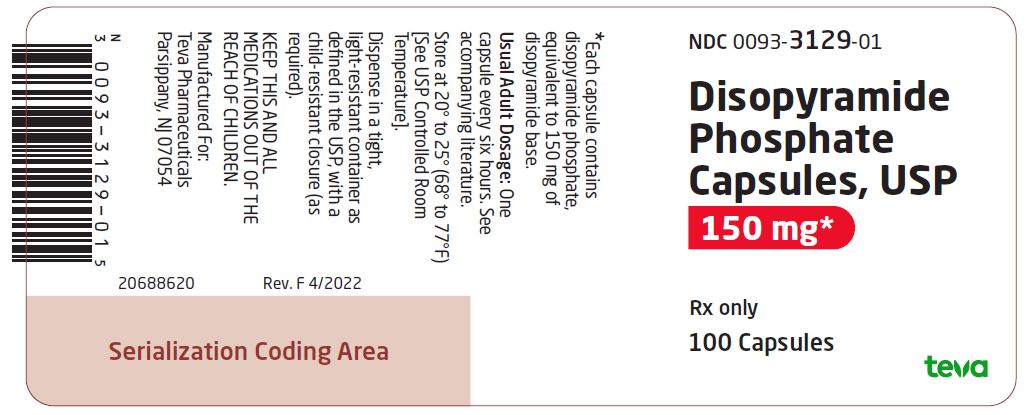
Disopyramide Phosphate 150 mg Capsule, 100-count — NDC 0093-3129-01 (Billing 00093-3129-01)
This is a package of 100 capsules of Disopyramide Phosphate 150 mg Capsule from Teva Pharmaceuticals USA, Inc., marketed since Sep 1990 and currently FDA-listed; retail pharmacies pay about $1.53 per capsule (NADAC). It is this product's only package size.
NDC database record
One package, one record: these facts belong to NDC 0093-3129-01 alone.
- Record
- FDA NDC Directory package listing · Human prescription drug
- Code segments
- 0093 labeler · 3129 product · 01 package
- Package marketed since
- Sep 30, 1990
- Sample package
- No — commercial package
- Listing certified through
- Dec 31, 2026
- Billing quantity
- 100 EA per package
- Barcode (UPC)
- 0300933129015, 0300933127011
- Medicaid fills, this package
- 139 prescriptions in the last four reported quarters
- FDA record last changed
- Jul 24, 2026
Identity & classification
Regulatory identifiers FDA, NLM and CMS codes for this package
Drug-database identifiers Medi-Span GPI and First Databank GCN / HICL / AHFS classification
- GSN (GCN sequence number): 000240
- GCN: 01131
- GPI-14 (Medi-Span): 35100010100110
- HICL (First Databank): 000077
- AHFS class code: 24:04.04.04
- RxCUI (RxNorm): 309958
Where does this data come from?
- FDA openFDA NDC Directory · synced Oct 8, 2026
- FDA label on DailyMed · label index refreshed Oct 8, 2026
- RxNorm (NLM RxNav) · catalog refreshed Oct 1, 2026
- Medi-Span GPI (licensed)
- First Databank (licensed) · refreshed Oct 8, 2026
RxNorm drug class
This medicine belongs to the Antiarrhythmic class.
Where does this data come from?
- RxClass (NLM) · catalog refreshed Oct 1, 2026
Clinical
- It treats life-threatening ventricular arrhythmias, which are dangerous heart rhythms from the lower heart chambers. An example is sustained ventricular tachycardia. It is not mean...
- You take it by mouth as capsules, in divided doses through the day. Norpace CR is extended-release and taken less often. Your doctor sets the dose for you, so follow the label and...
- Dry mouth, constipation, trouble starting urination and blurred vision are common. They come from its drying effects. Tell me or your doctor if they bother you or are severe.
- Call right away if you cannot urinate, faint, or have chest pain or a worsening heartbeat. Also call for shortness of breath, swelling or weight gain, which can mean heart failure....
Patient education
Supplement & herbal interactions
Some supplements/herbs that may interact with Disopyramide Phosphate — tap one for details:
Where does this data come from?
- MedlinePlus (NLM) · refreshed Oct 8, 2026
- FDA label on DailyMed · label index refreshed Oct 8, 2026
Ask a licensed pharmacist directly — free, answered by our team.
Pricing
A drug doesn't have one price. Each row is a different public payment system, and none is what you'd pay at the counter — that depends on your insurance. The ⓘ on each row explains what it measures.
| Price system | Per ea | Per package |
|---|---|---|
| Retail pharmacies payNADAC · weekly | $1.532 | $153.18 / 100 capsules |
| Medicaid paysCMS SDUD · 12 mo | $1.32 | $131.72 / 100 capsules |
| Medicare drug plans payPart D · Q2 2026 | $1.52 | $151.90 / 100 capsules |
Where does this data come from?
- CMS NADAC weekly file · file of Oct 7, 2026
- CMS ASP pricing files · refreshed Sep 20, 2026
- CMS Medicaid State Drug Utilization Data · through Q4 2025
- CMS Part D plan pricing files · refreshed Sep 24, 2026
- VA National Acquisition Center price file
Packaging — all sizes for this product
| Package NDC | Description | Marketing start | Marketing end | Status |
|---|---|---|---|---|
| 00093-3129-01 You're viewing this Main listing | 100 CAPSULE in 1 BOTTLE | 1990-09-30 | — | Active |
Therapeutic equivalents
| Product | Labeler | Pack | NADAC/unit | TE | Status | Price vs. this |
|---|---|---|---|---|---|---|
| Disopyramide Phosphate 150 mgthis 00093-3129-01 | Teva | 100 capsules | $1.532 | AB | Availability likely | — |
| Disopyramide Phosphate 150 mg 59762-0400-01 | Mylan | 100 capsules | $1.532 | AB | Availability likely | — |
| Disopyramide Phosphate 150 mg 75907-0026-01 | Dr. | 100 capsules | $1.532 | AB | Availability likely | — |
| Norpace 150 mg 00025-2762-31 | Pfizer | 100 capsules | — | AB | FDA listed | — |
Where does this data come from?
- FDA openFDA NDC Directory · synced Oct 8, 2026
- FDA Orange Book · refreshed Oct 3, 2026
- CMS NADAC weekly file · file of Oct 7, 2026
Availability & generic status
This product is an FDA-approved generic. Other versions of the same drug are listed under Therapeutic equivalents, least expensive first.
Where does this data come from?
- FDA Orange Book · refreshed Oct 3, 2026
What it looks like
Where does this data come from?
- FDA label on DailyMed · label index refreshed Oct 8, 2026
Inactive Ingredients / Excipients
Inactive ingredients, also called excipients, are components of the drug product other than the active ingredient. They may include fillers, dyes, coatings, preservatives, flavors, or other formulation ingredients.
🧪 Avoiding an ingredient? See Disopyramide inactive ingredients by manufacturer: every current product's list side by side, so you can ask your pharmacy for the version that does not list it.
💡 Tap an ingredient (hover on desktop) to see what it is and why it’s used.
-
UNII 767IP0Y5NH
A synthetic red colorant used to give medicines their color. It helps patients identify their medication and makes the product visually appealing.
-
UNII 9DBA0SBB0L
A synthetic red dye derived from coal tar used as a colorant in medicines and cosmetics. It gives tablets, capsules, and liquids their red or pink appearance for identification and visual appeal.
-
UNII 35SW5USQ3G
A synthetic yellow dye used to color medicines. It helps make tablets, capsules, and liquids visually distinct so patients can easily identify their medication.
-
UNII H3R47K3TBD
FD&C Blue No. 1 is a synthetic blue dye approved for use in foods and medicines. It serves as a colorant to give the medication its distinctive appearance and help with product identification.
-
UNII XM0M87F357
A dark iron oxide compound that gives medicines their black or dark color. It's used as a colorant in tablets and capsules to help identify the product and make it visually distinctive.
-
UNII 2G86QN327L
Gelatin is a protein derived from animal collagen, commonly used in medicines as a gelling agent and capsule material. It helps create soft or hard capsule shells that hold and release medication, and can also thicken liquid formulations.
-
UNII EWQ57Q8I5X
Lactose monohydrate is a natural sugar derived from milk. It serves as a filler and binder in tablets and capsules, helping create the proper size, texture, and consistency of the medicine.
-
UNII 70097M6I30
Magnesium stearate is a salt made from magnesium and stearic acid, a fatty substance. It's used in tablets and capsules as a lubricant and glidant to help ingredients flow smoothly during manufacturing and prevent sticking.
-
UNII 6DC9Q167V3
Propylene glycol is a clear liquid derived from petroleum or vegetable sources. It acts as a solvent, humectant, and preservative in medicines, helping dissolve active ingredients and maintain product stability.
-
UNII 46N107B71O
Shellac is a natural resin secreted by the lac beetle. It's used as a coating on tablets and capsules to control how quickly the medicine dissolves and to improve appearance and stability.
-
UNII 368GB5141J
A detergent and foaming agent derived from coconut or palm oil. In medications, it helps break down and mix oil and water-based ingredients, aids in tablet disintegration, and improves how the drug dissolves and spreads in the mouth or digestive system.
-
UNII 5856J3G2A2
A starch-based powder made from potatoes and processed with sodium. It acts as a disintegrant, helping the tablet or capsule break apart quickly in the stomach so the medicine can be absorbed.
-
UNII 15FIX9V2JP
Titanium dioxide is a bright white mineral powder commonly used as a colorant and opacifying agent. It makes pills and tablets white or lighter in color and helps make coatings non-transparent.
13 inactive ingredients listed in the exact product block matched to this NDC.
Where does this data come from?
ingredient classCode="IACT" elements from the exact product block matched by this NDC. Label-section narrative from DailyMed / the openFDA label index is shown separately when available.- FDA label on DailyMed · label index refreshed Oct 8, 2026
- FDA openFDA NDC Directory · synced Oct 8, 2026
Inactive ingredient FAQ
Are inactive ingredients the same for every manufacturer?
Why might an inactive ingredient be missing?
Can inactive ingredients matter?
Manufacturer & labeler
More NDCs from Teva Pharmaceuticals USA, Inc. labeler code 00093
- Amoxicillin 250 mg Capsule NDC 0093-3107-01
- Amoxicillin 500 mg Capsule NDC 0093-3109-01
- Jinteli norethindrone acetate and ethinyl estradiol 1 mg; 5 ug Tablet NDC 0093-3122-42
- Dicloxacillin Sodium 250 mg Capsule NDC 0093-3123-01
- Dicloxacillin Sodium 500 mg Capsule NDC 0093-3125-01
- Disopyramide Phosphate 100 mg Capsule NDC 0093-3127-01
- Imiquimod 37.5 mg/g Cream NDC 0093-3133-31
- Camrese Levonorgestrel / Ethinyl Estradiol and Kit NDC 0093-3134-82
- Cephalexin 250 mg Capsule NDC 0093-3145-01
- Cephalexin 500 mg Capsule NDC 0093-3147-01
- Cefdinir 300 mg Capsule NDC 0093-3160-06
- Albuterol Sulfate HFA 90 ug Aerosol, Metered NDC 0093-3174-31
Where does this data come from?
- FDA openFDA NDC Directory · synced Oct 8, 2026
- Drugs@FDA
Full prescribing information FDA SPL
🎯 Indications and Usage ▾
INDICATIONS AND USAGE Disopyramide phosphate is indicated for the treatment of documented ventricular arrhythmias such as sustained ventricular tachycardia, that, in the judgment of the physician, are life-threatening. Because of the proarrhythmic effects of disopyramide phosphate, its use with lesser arrhythmias is generally not recommended. Treatment of patients with asymptomatic ventricular premature contractions should be avoided.
Initiation of disopyramide phosphate treatment, as with other antiarrhythmic agents used to treat life-threatening arrhythmias, should be carried out in the hospital. Antiarrhythmic drugs have not been shown to enhance survival in patients with ventricular arrhythmias.
⏱️ Dosage and Administration ▾
DOSAGE AND ADMINISTRATION The dosage of disopyramide phosphate capsules must be individualized for each patient on the basis of response and tolerance. The usual adult dosage of disopyramide phosphate capsules is 400 to 800 mg per day given in divided doses. The recommended dosage for most adults is 600 mg/day given in divided doses (150 mg every 6 hours).
For patients whose body weight is less than 110 pounds (50 kg), the recommended dosage is 400 mg/day given in divided doses (100 mg every 6 hours). In the event of increased anticholinergic side effects, plasma levels of disopyramide should be monitored and the dose of the drug adjusted accordingly. A reduction of the dose by one third, from the recommended 600 mg/day to 400 mg/day, would be reasonable, without changing the dosing interval.
For patients with cardiomyopathy or possible cardiac decompensation, a loading dose, as discussed below, should not be given, and initial dosage should be limited to 100 mg every 6 to 8 hours. Subsequent dosage adjustments should be made gradually, with close monitoring for the possible development of hypotension and/or congestive heart failure (see WARNINGS ). For patients with moderate renal insufficiency (creatinine clearance greater than 40 mL/min) or hepatic insufficiency, the recommended dosage is 400 mg/day given in divided doses (100 mg every 6 hours).
For patients with severe renal insufficiency (C cr 40 mL/min or less), the recommended dosage regimen is 100 mg at intervals shown in the table below, with or without an initial loading dose of 150 mg. DISOPYRAMIDE PHOSPHATE CAPSULES DOSAGE INTERVAL FOR PATIENTS WITH RENAL INSUFFICIENCY Creatinine clearance (mL/min) 40 to 30 30 to 15 less than 15 Approximate maintenance – dosing interval q 8 hr q 12 hr q 24 hr For patients in whom rapid control of ventricular arrhythmia is essential, an initial loading dose of 300 mg of disopyramide phosphate capsules (200 mg for patients whose body weight is less than 110 pounds) is recommended, followed by the appropriate maintenance dosage.
Therapeutic effects are usually attained 30 minutes to 3 hours after administration of a 300 mg loading dose. If there is no response or evidence of toxicity within 6 hours of the loading dose, 200 mg of disopyramide phosphate capsules every 6 hours may be prescribed instead of the usual 150 mg. If there is no response to this dosage within 48 hours, either disopyramide phosphate capsules should then be discontinued or the physician should consider hospitalizing the patient for careful monitoring while subsequent disopyramide phosphate doses of 250 mg or 300 mg every 6 hours are given.
A limited number of patients with severe refractory ventricular tachycardia have tolerated daily doses of disopyramide phosphate up to 1,600 mg per day (400 mg every 6 hours), resulting in disopyramide plasma levels up to 9 mcg/mL. If such treatment is warranted, it is essential that patients be hospitalized for close evaluation and continuous monitoring. Transferring to Disopyramide Phosphate The following dosage schedule based on theoretical considerations rather than experimental data is suggested for transferring patients with normal renal function from either quinidine sulfate or procainamide therapy (Type 1 antiarrhythmic agents) to disopyramide phosphate capsules therapy: Disopyramide phosphate capsules should be started using the regular maintenance schedule without a loading dose 6 to 12 hours after the last dose of quinidine sulfate or 3 to 6 hours after the last dose of procainamide.
In patients in whom withdrawal of quinidine sulfate or procainamide is likely to produce life-threatening arrhythmias, the physician should consider hospitalization of the patient. Pediatric Dosage Controlled clinical studies have not been conducted in pediatric patients; however, the following suggested dosage table is based on published clinical experience. Total daily dosage should be divided and equal doses administered orally every 6… [Excerpted — this section continues on DailyMed.]
⛔ Contraindications ▾
CONTRAINDICATIONS Disopyramide phosphate is contraindicated in the presence of cardiogenic shock, preexisting second- or third-degree AV block (if no pacemaker is present), congenital Q-T prolongation, or known hypersensitivity to the drug.
⚠️ Warnings ▾
WARNINGS Mortality In the National Heart, Lung and Blood Institute’s Cardiac Arrhythmia Suppression Trial (CAST), a long-term, multi-center, randomized, double-blind study in patients with asymptomatic non-life-threatening ventricular arrhythmias who had had a myocardial infarction more than 6 days but less than 2 years previously, an excessive mortality or non-fatal cardiac arrest rate (7.7%) was seen in patients treated with encainide or flecainide compared with that seen in patients assigned to carefully matched placebo-treated groups (3.0%).
The average duration of treatment with encainide or flecainide in this study was 10 months. The applicability of the CAST results to other populations (e.g., those without recent myocardial infarction) is uncertain. Considering the known proarrhythmic properties of disopyramide phosphate and the lack of evidence of improved survival for any antiarrhythmic drug in patients without life-threatening arrhythmias, the use of disopyramide phosphate as well as other antiarrhythmic agents should be reserved for patients with life-threatening ventricular arrhythmias.
Negative Inotropic Properties Heart Failure/Hypotension Disopyramide phosphate may cause or worsen congestive heart failure or produce severe hypotension as a consequence of its negative inotropic properties. Hypotension has been observed primarily in patients with primary cardiomyopathy or inadequately compensated congestive heart failure. Disopyramide phosphate should not be used in patients with uncompensated or marginally compensated congestive heart failure or hypotension unless the congestive heart failure or hypotension is secondary to cardiac arrhythmia.
Patients with a history of heart failure may be treated with disopyramide phosphate, but careful attention must be given to the maintenance of cardiac function, including optimal digitalization. If hypotension occurs or congestive heart failure worsens, disopyramide phosphate should be discontinued and, if necessary, restarted at a lower dosage only after adequate cardiac compensation has been established. QRS Widening Although it is unusual, significant widening (greater than 25%) of the QRS complex may occur during disopyramide phosphate administration; in such cases disopyramide phosphate should be discontinued.
Q-T Prolongation As with other Type 1 antiarrhythmic drugs, prolongation of the Q-T interval (corrected) and worsening of the arrhythmia, including ventricular tachycardia and ventricular fibrillation, may occur. Patients who have evidenced prolongation of the Q-T interval in response to quinidine may be at particular risk. As with other Type 1A antiarrhythmics, disopyramide phosphate has been associated with torsade de pointes.
If a Q-T prolongation of greater than 25% is observed and if ectopy continues, the patient should be monitored closely, and consideration given to discontinuing disopyramide phosphate. Hypoglycemia In rare instances significant lowering of blood-glucose values has been reported during disopyramide phosphate administration. The physician should be alert to this possibility, especially in patients with congestive heart failure, chronic malnutrition, hepatic, renal or other diseases, or drugs (e.g., beta-adrenoceptor blockers, alcohol) which could compromise preservation of the normal glucoregulatory mechanisms in the absence of food.
In these patients, the blood-glucose levels should be carefully followed. Concomitant Antiarrhythmic Therapy The concomitant use of disopyramide phosphate with other Type 1A antiarrhythmic agents (such as quinidine or procainamide), Type 1C antiarrhythmics (such as encainide, flecainide or propafenone), and/or propranolol should be reserved for patients with life-threatening arrhythmias who are demonstrably unresponsive to single-agent antiarrhythmic therapy. Such use may produce serious negative inotropic effects, or may excessively prolong conduction.
This should be considered particularly in patients with an… [Excerpted — this section continues on DailyMed.]
🤒 Adverse Reactions ▾
ADVERSE REACTIONS The adverse reactions which were reported in disopyramide phosphate clinical trials encompass observations in 1,500 patients, including 90 patients studied for at least 4 years. The most serious adverse reactions are hypotension and congestive heart failure. The most common adverse reactions, which are dose dependent, are associated with the anticholinergic properties of the drug.
These may be transitory, but may be persistent or can be severe. Urinary retention is the most serious anticholinergic effect. The following reactions were reported in 10% to 40% of patients: Anticholinergic: dry mouth (32%), urinary hesitancy (14%), constipation (11%) The following reactions were reported in 3% to 9% of patients: Anticholinergic: blurred vision, dry nose/eyes/throat Genitourinary: urinary retention, urinary frequency and urgency Gastrointestinal: nausea, pain/bloating/gas General: dizziness, general fatigue/muscle weakness, headache, malaise, aches/pains The following reactions were reported in 1% to 3% of patients: Genitourinary: impotence Cardiovascular: hypotension with or without congestive heart failure, increased congestive heart failure (see WARNINGS ), cardiac conduction disturbances (see WARNINGS ), edema/weight gain, shortness of breath, syncope, chest pain Gastrointestinal: anorexia, diarrhea, vomiting Dermatologic: generalized rash/dermatoses, itching Central nervous system: nervousness Other: hypokalemia, elevated cholesterol/triglycerides The following reactions were reported in less than 1%: Depression, insomnia, dysuria, numbness/tingling, elevated liver enzymes, AV block, elevated BUN, elevated creatinine, decreased hemoglobin/hematocrit Hypoglycemia has been reported in association with disopyramide phosphate administration (see WARNINGS ).
Infrequent occurrences of reversible cholestatic jaundice, fever, and respiratory difficulty have been reported in association with disopyramide therapy, as have rare instances of thrombocytopenia, reversible agranulocytosis, and gynecomastia. Some cases of LE (lupus erythematosus) symptoms have been reported; most cases occurred in patients who had been switched to disopyramide from procainamide following the development of LE symptoms. Rarely, acute psychosis has been reported following disopyramide phosphate therapy, with prompt return to normal mental status when therapy was stopped.
The physician should be aware of these possible reactions and should discontinue disopyramide phosphate therapy promptly if they occur. To report SUSPECTED ADVERSE REACTIONS, contact Teva at 1-888-838-2872 or FDA at 1-800-FDA-1088 or http://www.fda.gov/ for voluntary reporting of adverse reactions.
🔄 Drug Interactions ▾
Drug Interactions If phenytoin or other hepatic enzyme inducers are taken concurrently with disopyramide phosphate, lower plasma levels of disopyramide may occur. Monitoring of disopyramide plasma levels is recommended in such concurrent use to avoid ineffective therapy. Other antiarrhythmic drugs (e.g., quinidine, procainamide, lidocaine, propranolol) have occasionally been used concurrently with disopyramide phosphate.
Excessive widening of the QRS complex and/or prolongation of the Q-T interval may occur in these situations (see WARNINGS ). In healthy subjects, no significant drug-drug interaction was observed when disopyramide phosphate was coadministered with either propranolol or diazepam. Concomitant administration of disopyramide phosphate and quinidine resulted in slight increases in plasma disopyramide levels and slight decreases in plasma quinidine levels. disopyramide phosphate does not increase serum digoxin levels.
Until data on possible interactions between verapamil and disopyramide phosphate are obtained, disopyramide should not be administered within 48 hours before or 24 hours after verapamil administration. Although potent inhibitors of cytochrome P450 3A4 (e.g., ketoconazole) have not been studied clinically, in vitro studies have shown that erythromycin and oleandomycin inhibit the metabolism of disopyramide. Cases of life-threatening interactions have been reported for disopyramide when given with clarithromycin and erythromycin indicating that coadministration of disopyramide with inhibitors of cytochrome P450 3A4 could result in potentially fatal interaction.
🤰 Pregnancy ▾
Pregnancy Teratogenic Effects Disopyramide phosphate was associated with decreased numbers of implantation sites and decreased growth and survival of pups when administered to pregnant rats at 250 mg/kg/day (20 or more times the usual daily human dose of 12 mg/kg, assuming a patient weight of at least 50 kg), a level at which weight gain and food consumption of dams were also reduced. Increased resorption rates were reported in rabbits at 60 mg/kg/day (5 or more times the usual daily human dose). Effects on implantation, pup growth, and survival were not evaluated in rabbits.
There are no adequate and well-controlled studies in pregnant women. Disopyramide phosphate should be used during pregnancy only if the potential benefit justifies the potential risk to the fetus. Nonteratogenic Effects Disopyramide phosphate has been reported to stimulate contractions of the pregnant uterus.
Disopyramide has been found in human fetal blood.
🧒 Pediatric Use ▾
Pediatric Use Safety and effectiveness in pediatric patients have not been established (see DOSAGE AND ADMINISTRATION ).
🧓 Geriatric Use ▾
Geriatric Use Clinical studies of disopyramide phosphate did not include sufficient numbers of subjects aged 65 and over to determine whether they respond differently from younger subjects. Other reported clinical experience has not identified differences in responses between the elderly and younger patients. In general, dose selection for an elderly patient should be cautious, usually starting at the low end of the dosing range, reflecting the greater frequency of decreased hepatic, renal, or cardiac function, and of concomitant disease or other drug therapy.
Because of its anticholinergic activity, disopyramide phosphate should not be used in patients with glaucoma, urinary retention, or benign prostatic hypertrophy (medical conditions commonly associated with the elderly) unless adequate overriding measures are taken (see WARNINGS: Anticholinergic Activity ). In the event of increased anticholinergic side effects, plasma levels of disopyramide should be monitored and the dose of the drug adjusted accordingly. A reduction of the dose by one third, from the recommended 600 mg/day to 400 mg/day, would be reasonable, without changing the dosing interval.
This drug is known to be substantially excreted by the kidney, and the risk of toxic reactions to this drug may be greater in patients with impaired renal function. Because elderly patients are more likely to have decreased renal function, care should be taken in dose selection, and it may be useful to monitor renal function (see PRECAUTIONS : Renal Impairment and DOSAGE AND ADMINISTRATION ).
🆘 Overdosage ▾
OVERDOSAGE Symptoms Deliberate or accidental overdosage of oral disopyramide may be followed by apnea, loss of consciousness, cardiac arrhythmias, and loss of spontaneous respiration. Death has occurred following overdosage. Toxic plasma levels of disopyramide produce excessive widening of the QRS complex and Q-T interval, worsening of congestive heart failure, hypotension, varying kinds and degrees of conduction disturbance, bradycardia, and finally asystole.
Obvious anticholinergic effects are also observed. The approximate oral LD 50 of disopyramide phosphate is 580 and 700 mg/kg for rats and mice, respectively. Treatment Experience indicates that prompt and vigorous treatment of overdosage is necessary, even in the absence of symptoms.
Such treatment may be life-saving. No specific antidote for disopyramide phosphate has been identified. Treatment should be symptomatic and may include induction of emesis or gastric lavage, administration of a cathartic followed by activated charcoal by mouth or stomach tube, intravenous administration of isoproterenol and dopamine, insertion of an intra-aortic balloon for counterpulsation, and mechanically assisted ventilation.
Hemodialysis or, preferably, hemoperfusion with charcoal may be employed to lower serum concentration of the drug. The electrocardiogram should be monitored, and supportive therapy with cardiac glycosides and diuretics should be given as required. If progressive AV block should develop, endocardial pacing should be implemented.
In case of any impaired renal function, measures to increase the glomerular filtration rate may reduce the toxicity (disopyramide is excreted primarily by the kidney). The anticholinergic effects can be reversed with neostigmine at the discretion of the physician. Altering the urinary pH in humans does not affect the plasma half-life or the amount of disopyramide excreted in the urine.
🧬 Clinical Pharmacology ▾
CLINICAL PHARMACOLOGY Mechanisms of Action Disopyramide phosphate is a Type 1 antiarrhythmic drug (i.e., similar to procainamide and quinidine). In animal studies, disopyramide phosphate decreases the rate of diastolic depolarization (phase 4) in cells with augmented automaticity, decreases the upstroke velocity (phase 0) and increases the action potential duration of normal cardiac cells, decreases the disparity in refractoriness between infarcted and adjacent normally perfused myocardium, and has no effect on alpha- or beta-adrenergic receptors.
Electrophysiology In man, disopyramide phosphate at therapeutic plasma levels shortens the sinus node recovery time, lengthens the effective refractory period of the atrium, and has a minimal effect on the effective refractory period of the AV node. Little effect has been shown on AV-nodal and His-Purkinje conduction times or QRS duration. However, prolongation of conduction in accessory pathways occurs.
Hemodynamics At recommended oral doses, disopyramide phosphate rarely produces significant alterations of blood pressure in patients without congestive heart failure (see WARNINGS ). With intravenous disopyramide phosphate, either increases in systolic/diastolic or decreases in systolic blood pressure have been reported, depending on the infusion rate and the patient population. Intravenous disopyramide phosphate may cause cardiac depression with an approximate mean 10% reduction of cardiac output, which is more pronounced in patients with cardiac dysfunction.
Anticholinergic Activity The in vitro anticholinergic activity of disopyramide phosphate is approximately 0.06% that of atropine; however, the usual dose for disopyramide phosphate is 150 mg every 6 hours compared to 0.4 to 0.6 mg for atropine (see WARNINGS and ADVERSE REACTIONS for anticholinergic side effects). Pharmacokinetics Following oral administration of disopyramide phosphate, disopyramide phosphate is rapidly and almost completely absorbed, and peak plasma levels are usually attained within 2 hours. The usual therapeutic plasma levels of disopyramide base are 2 to 4 mcg/mL, and at these concentrations protein binding varies from 50% to 65%.
Because of concentration-dependent protein binding, it is difficult to predict the concentration of the free drug when total drug is measured. The mean plasma half-life of disopyramide in healthy humans is 6.7 hours (range of 4 to 10 hours). In six patients with impaired renal function (creatinine clearance less than 40 mL/min), disopyramide half-life values were 8 to 18 hours.
After the oral administration of 200 mg of disopyramide to 10 cardiac patients with borderline to moderate heart failure, the time to peak serum concentration of 2.3 ± 1.5 hours (mean ± SD) was increased, and the mean peak serum concentration of 4.8 ± 1.6 mcg/mL was higher than in healthy volunteers. After intravenous administration in these same patients, the mean elimination half-life was 9.7 ± 4.2 hours (range in healthy volunteers of 4.4 to 7.8 hours). In a second study of the oral administration of disopyramide to 7 patients with heart disease, including left ventricular dysfunction, the mean plasma half-life was slightly prolonged to 7.8 ± 1.9 hours (range of 5 to 9.5 hours).
In healthy men, about 50% of a given dose of disopyramide is excreted in the urine as the unchanged drug, about 20% as the mono-N-dealkylated metabolite, and 10% as the other metabolites. The plasma concentration of the major metabolite is approximately one tenth that of disopyramide. Altering the urinary pH in man does not affect the plasma half-life of disopyramide.
Drug Interactions Effects of other drugs on disopyramide pharmacokinetics: In vitro metabolic studies indicated that disopyramide is metabolized by cytochrome P450 3A4 and that inhibitors of this enzyme may result in elevation of plasma levels of disopyramide. Although specific drug interaction studies have not been done, cases of life-threatening interactions have b… [Excerpted — this section continues on DailyMed.]
📦 How Supplied / Storage and Handling ▾
HOW SUPPLIED Disopyramide phosphate capsules, USP are supplied as: 100 mg - hard gelatin capsule with a light-blue body imprinted “93-3127” and a scarlet cap imprinted “93-3127”, containing 100 mg of disopyramide base present as the phosphate, in bottles of 100 (NDC 0093-3127-01). 150 mg - hard gelatin capsule with a scarlet body imprinted “93-3129” and a buff cap imprinted “93-3129”, containing 150 mg of disopyramide base present as the phosphate, in bottles of 100 (NDC 0093-3129-01). Storage Store at 20° to 25°C (68° to 77°F) [See USP Controlled Room Temperature].
Dispense in a tight, light-resistant container as defined in the USP, with a child-resistant closure (as required). Keep this and all medications out of the reach of children. Manufactured In Croatia By: Pliva Hrvatska d.o.o.
Zagreb, Croatia Manufactured For: Teva Pharmaceuticals Parsippany, NJ 07054 Rev. A 9/2024
📋 Description ▾
DESCRIPTION Disopyramide phosphate, USP is an antiarrhythmic drug available for oral administration in capsules containing 100 mg or 150 mg of disopyramide base, present as the phosphate. The base content of the phosphate salt is 77.6%. The structural formula of disopyramide phosphate, USP is: C 21 H 29 N 3 O•H 3 PO 4 M.W.
437.47 α-[2-(diisopropylamino) ethyl]-α-phenyl-2-pyridineacetamide phosphate Disopyramide phosphate, USP is freely soluble in water, and the free base (pKa 10.4) has an aqueous solubility of 1 mg/mL. The chloroform:water partition coefficient of the base is 3.1 at pH 7.2. Disopyramide phosphate, USP is a racemic mixture of d - and l -isomers.
This drug is not chemically related to other antiarrhythmic drugs. Inactive Ingredients: lactose monohydrate, magnesium stearate and sodium starch glycolate. Capsule shell and ink ingredients: black iron oxide, D&C Red #28, D&C Red #33, D&C Yellow #10, FD&C Blue #1, gelatin, propylene glycol, shellac, sodium lauryl sulfate and titanium dioxide.
1
⚠️ Precautions ▾
PRECAUTIONS General Atrial Tachyarrhythmias Patients with atrial flutter or fibrillation should be digitalized prior to disopyramide phosphate administration to ensure that drug-induced enhancement of AV conduction does not result in an increase of ventricular rate beyond physiologically acceptable limits. Conduction Abnormalities Care should be taken when prescribing disopyramide phosphate for patients with sick sinus syndrome (bradycardia-tachycardia syndrome), Wolff-Parkinson-White syndrome (WPW), or bundle branch block.
The effect of disopyramide phosphate in these conditions is uncertain at present. Cardiomyopathy Patients with myocarditis or other cardiomyopathy may develop significant hypotension in response to the usual dosage of disopyramide phosphate, probably due to cardiodepressant mechanisms. Therefore, a loading dose of disopyramide phosphate should not be given to such patients, and initial dosage and subsequent dosage adjustments should be made under close supervision (see DOSAGE AND ADMINISTRATION ).
Renal Impairment More than 50% of disopyramide is excreted in the urine unchanged. Therefore disopyramide phosphate dosage should be reduced in patients with impaired renal function (see DOSAGE AND ADMINISTRATION ). The electrocardiogram should be carefully monitored for prolongation of PR interval, evidence of QRS widening, or other signs of overdosage (see OVERDOSAGE ).
Hepatic Impairment Hepatic impairment also causes an increase in the plasma half-life of disopyramide. Dosage should be reduced for patients with such impairment. The electrocardiogram should be carefully monitored for signs of overdosage (see OVERDOSAGE ).
Patients with cardiac dysfunction have a higher potential for hepatic impairment; this should be considered when administering disopyramide phosphate. Potassium Imbalance Antiarrhythmic drugs may be ineffective in patients with hypokalemia, and their toxic effects may be enhanced in patients with hyperkalemia. Therefore, potassium abnormalities should be corrected before starting disopyramide phosphate therapy.
Drug Interactions If phenytoin or other hepatic enzyme inducers are taken concurrently with disopyramide phosphate, lower plasma levels of disopyramide may occur. Monitoring of disopyramide plasma levels is recommended in such concurrent use to avoid ineffective therapy. Other antiarrhythmic drugs (e.g., quinidine, procainamide, lidocaine, propranolol) have occasionally been used concurrently with disopyramide phosphate.
Excessive widening of the QRS complex and/or prolongation of the Q-T interval may occur in these situations (see WARNINGS ). In healthy subjects, no significant drug-drug interaction was observed when disopyramide phosphate was coadministered with either propranolol or diazepam. Concomitant administration of disopyramide phosphate and quinidine resulted in slight increases in plasma disopyramide levels and slight decreases in plasma quinidine levels. disopyramide phosphate does not increase serum digoxin levels.
Until data on possible interactions between verapamil and disopyramide phosphate are obtained, disopyramide should not be administered within 48 hours before or 24 hours after verapamil administration. Although potent inhibitors of cytochrome P450 3A4 (e.g., ketoconazole) have not been studied clinically, in vitro studies have shown that erythromycin and oleandomycin inhibit the metabolism of disopyramide. Cases of life-threatening interactions have been reported for disopyramide when given with clarithromycin and erythromycin indicating that coadministration of disopyramide with inhibitors of cytochrome P450 3A4 could result in potentially fatal interaction.
Carcinogenesis, Mutagenesis, Impairment of Fertility Eighteen months of disopyramide phosphate administration to rats, at oral doses up to 400 mg/kg/day (about 30 times the usual daily human dose of 600 mg/day, assuming a patient weight of at least 50 kg), revealed no evidence of carcinogenic potential. An… [Excerpted — this section continues on DailyMed.]
🍼 Nursing Mothers ▾
Nursing Mothers Studies in rats have shown that the concentration of disopyramide and its metabolites is between one and three times greater in milk than it is in plasma. Following oral administration, disopyramide has been detected in human milk at a concentration not exceeding that in plasma. Because of the potential for serious adverse reactions in nursing infants from disopyramide phosphate, a decision should be made whether to discontinue nursing or to discontinue the drug, taking into account the importance of the drug to the mother.
📄 Carcinogenesis, Mutagenesis, Impairment of Fertility ▾
Carcinogenesis, Mutagenesis, Impairment of Fertility Eighteen months of disopyramide phosphate administration to rats, at oral doses up to 400 mg/kg/day (about 30 times the usual daily human dose of 600 mg/day, assuming a patient weight of at least 50 kg), revealed no evidence of carcinogenic potential. An evaluation of mutagenic potential by Ames test was negative. disopyramide phosphate, at doses up to 250 mg/kg/day, did not adversely affect fertility of rats.
📄 Package Label / Principal Display Panel ▾
Package/Label Display Panel NDC 0093-3127-01 Disopyramide Phosphate Capsules, USP 100 mg* Rx only 100 Capsules 1
Package/Label Display Panel NDC 0093-3129-01 Disopyramide Phosphate Capsules, USP 150 mg* Rx only 100 Capsules 1