
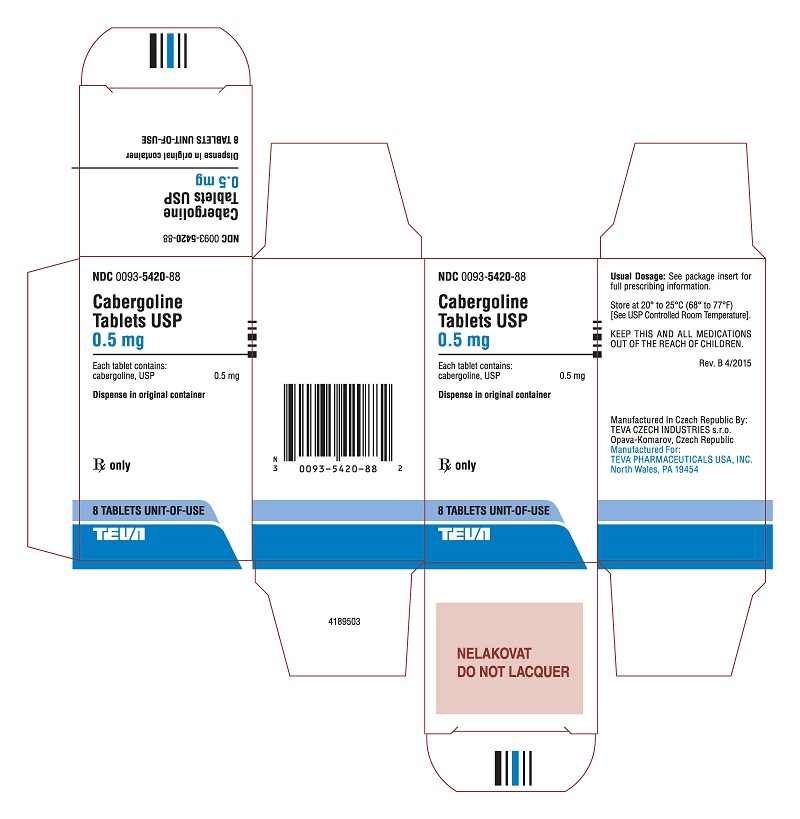
Cabergoline .5 mg Tablet, 8-count — NDC 0093-5420-88 (Billing 00093-5420-88)
This is a package of 8 tablets of Cabergoline .5 mg Tablet from Teva Pharmaceuticals USA, Inc., marketed since Mar 2007 and currently FDA-listed; retail pharmacies pay about $1.30 per tablet (NADAC). It is this product's only package size.
NDC database record
One package, one record: these facts belong to NDC 0093-5420-88 alone.
- Record
- FDA NDC Directory package listing · Human prescription drug
- Code segments
- 0093 labeler · 5420 product · 88 package
- Package marketed since
- Mar 7, 2007
- Sample package
- No — commercial package
- Listing certified through
- Dec 31, 2026
- Billing quantity
- 8 EA per package
- Barcode (UPC-A, from the NDC)
- 3 0093542088 2
- Medicaid fills, this package
- 27,727 prescriptions in the last four reported quarters
- FDA record last changed
- Jul 24, 2026
Identity & classification
Regulatory identifiers FDA, NLM and CMS codes for this package
Drug-database identifiers Medi-Span GPI and First Databank GCN / HICL / AHFS classification
- GSN (GCN sequence number): 025738
- GCN: 26051
- GPI-14 (Medi-Span): 30402020000320
- HICL (First Databank): 010803
- AHFS class code: 28:36.20.04
- RxCUI (RxNorm): 199703
Where does this data come from?
- FDA openFDA NDC Directory · synced Oct 8, 2026
- FDA label on DailyMed · label index refreshed Oct 8, 2026
- RxNorm (NLM RxNav) · catalog refreshed Oct 8, 2026
- Medi-Span GPI (licensed)
- First Databank (licensed) · refreshed Oct 8, 2026
RxNorm drug class
This medicine belongs to the Ergot Derivative class.
Where does this data come from?
- RxClass (NLM) · catalog refreshed Oct 8, 2026
Clinical
Cabergoline is used to treat hyperprolactinemia (high levels of prolactin, a natural substance that helps breast-feeding women produce milk but can cause symptoms such as infertility, sexual problems, and bone loss in women who are not breast-feeding or men). Cabergoline is in a class of medications called dopamine receptor agonists. It works by decreasing the amount of prolactin in the body.
Read the full MedlinePlus article ↗- Cabergoline lowers high prolactin levels in adults. This can be from an unknown cause or from a pituitary adenoma. It should not be used to stop breast milk production after childb...
- You take it by mouth, usually twice a week, exactly as your prescriber directs. Food doesn't change how it works. Your doctor may raise the dose slowly based on blood tests of your...
- The most common are nausea, headache, dizziness, constipation, and tiredness. Stand up slowly to avoid lightheadedness. Call your doctor if you notice shortness of breath, chest pa...
- Cabergoline can cause scar-like tissue in the heart valves. Your doctor checks your heart before you start, often with an echocardiogram, and repeats checks during treatment. Treat...
Patient education
Supplement & herbal interactions
Some supplements/herbs that may interact with Cabergoline — tap one for details:
Where does this data come from?
- MedlinePlus (NLM) · refreshed Oct 8, 2026
- FDA label on DailyMed · label index refreshed Oct 8, 2026
Ask a licensed pharmacist directly — free, answered by our team.
Pricing
A drug doesn't have one price. Each row is a different public payment system, and none is what you'd pay at the counter — that depends on your insurance. The ⓘ on each row explains what it measures.
| Price system | Per ea | Per package |
|---|---|---|
| Retail pharmacies payNADAC · weekly | $1.295 | $10.36 / 8 tablets |
| Medicaid paysCMS SDUD · 12 mo | $2.58 | $20.62 / 8 tablets |
| Medicare drug plans payPart D · Q2 2026 | $3.37 | $26.97 / 8 tablets |
| Medicare Part B allowsASP · J8515 | $0.302 / J8515 unit | — |
Where does this data come from?
- CMS NADAC weekly file · file of Oct 7, 2026
- CMS ASP pricing files · refreshed Sep 20, 2026
- CMS Medicaid State Drug Utilization Data · through Q1 2026
- CMS Part D plan pricing files · refreshed Sep 24, 2026
- VA National Acquisition Center price file
Billing & reimbursement
Where does this data come from?
- CMS ASP NDC-HCPCS crosswalk · refreshed Sep 22, 2026
- DMEPDAC NDC-HCPCS crosswalk
- openFDA NSDE billing units · refreshed Oct 7, 2026
Packaging — all sizes for this product
| Package NDC | Description | Marketing start | Marketing end | Status |
|---|---|---|---|---|
| 00093-5420-88 You're viewing this Main listing | 1 BOTTLE in 1 CARTON / 8 TABLET in 1 BOTTLE | 2007-03-07 | — | Active |
Therapeutic equivalents
| Product | Labeler | Pack | NADAC/unit | TE | Status | Price vs. this |
|---|---|---|---|---|---|---|
| Cabergoline .5 mgthis 00093-5420-88 | Teva | 8 tablets | $1.295 | AB | Availability likely | — |
| Cabergoline .5 mg 23155-0823-73 | Heritage | 8 tablets | $1.295 | AB | Availability likely | — |
| Cabergoline .5 mg 50742-0118-08 | Ingenus | 8 tablets | $1.295 | AB | Availability likely | — |
| Cabergoline .5 mg 59762-1005-01 | Mylan | 8 tablets | $1.295 | — | Availability likely | — |
| Cabergoline .5 mg 69238-2693-01 | Amneal | 8 tablets | $1.295 | AB | Availability likely | — |
| Cabergoline .5 mg 70069-0824-08 | Somerset | 8 tablets | $1.295 | AB | Availability likely | — |
| Cabergoline .5 mg 70512-0860-08 | SOLA | 8 tablets | $1.295 | AB | Availability likely | — |
| Cabergoline .5 mg 50090-3157-00 | A-S | 8 tablets | — | AB | FDA listed | — |
| Cabergoline .5 mg 50090-5834-00 | A-S | 8 tablets | — | AB | FDA listed | — |
| Cabergoline .5 mg 50090-6596-00 | A-S | 8 tablets | — | AB | FDA listed | — |
| Cabergoline .5 mg 50090-7642-00 | A-S | 8 tablets | — | AB | FDA listed | — |
| Cabergoline .5 mg 64380-0202-01 | Strides | 8 tablets | — | AB | Discontinued | — |
| Cabergoline .5 mg 27808-0315-01 | Cranbury | 8 tablets | — | AB | FDA listed | — |
Where does this data come from?
- FDA openFDA NDC Directory · synced Oct 8, 2026
- FDA Orange Book · refreshed Oct 3, 2026
- CMS NADAC weekly file · file of Oct 7, 2026
Availability & generic status
This product is an FDA-approved generic. Other versions of the same drug are listed under Therapeutic equivalents, least expensive first.
Where does this data come from?
- FDA Orange Book · refreshed Oct 3, 2026
What it looks like
Where does this data come from?
- FDA label on DailyMed · label index refreshed Oct 8, 2026
Inactive Ingredients / Excipients
Inactive ingredients, also called excipients, are components of the drug product other than the active ingredient. They may include fillers, dyes, coatings, preservatives, flavors, or other formulation ingredients.
🧪 Avoiding an ingredient? See Cabergoline inactive ingredients by manufacturer: every current product's list side by side, so you can ask your pharmacy for the version that does not list it.
💡 Tap an ingredient (hover on desktop) to see what it is and why it’s used.
-
UNII 3SY5LH9PMK
Anhydrous lactose is a milk sugar with no water content. It acts as a filler and binder in tablets and capsules, adding bulk and helping ingredients stick together.
-
UNII GMW67QNF9C
Leucine is an amino acid derived from natural sources. It acts as a glidant and flow agent in powders and tablets, helping the medicine move smoothly during manufacturing and packaging.
2 inactive ingredients listed in the exact product block matched to this NDC.
Where does this data come from?
ingredient classCode="IACT" elements from the exact product block matched by this NDC. Label-section narrative from DailyMed / the openFDA label index is shown separately when available.- FDA label on DailyMed · label index refreshed Oct 8, 2026
- FDA openFDA NDC Directory · synced Oct 8, 2026
Inactive ingredient FAQ
Are inactive ingredients the same for every manufacturer?
Why might an inactive ingredient be missing?
Can inactive ingredients matter?
Manufacturer & labeler
More NDCs from Teva Pharmaceuticals USA, Inc. labeler code 00093
- Methylphenidate Hydrochloride (LA) 40 mg Capsule, Extended Release NDC 0093-5348-01
- Clozapine 150 mg Tablet, Orally Disintegrating NDC 0093-5376-01
- Clozapine 200 mg Tablet, Orally Disintegrating NDC 0093-5377-01
- Clozapine 12.5 mg Tablet, Orally Disintegrating NDC 0093-5416-01
- Clozapine 25 mg Tablet, Orally Disintegrating NDC 0093-5417-01
- Clozapine 100 mg Tablet, Orally Disintegrating NDC 0093-5419-01
- Mimvey Estradiol and Norethindrone Acetate 1 mg; .5 mg Tablet, Film Coated NDC 0093-5455-28
- Olanzapine and Fluoxetine 3 mg; 25 mg Capsule NDC 0093-5503-56
- Olanzapine and Fluoxetine 6 mg; 25 mg Capsule NDC 0093-5504-56
- Olanzapine and Fluoxetine 6 mg; 50 mg Capsule NDC 0093-5505-56
- Olanzapine and Fluoxetine 12 mg; 25 mg Capsule NDC 0093-5506-56
- Olanzapine and Fluoxetine 12 mg; 50 mg Capsule NDC 0093-5507-56
Where does this data come from?
- FDA openFDA NDC Directory · synced Oct 8, 2026
- Drugs@FDA
Full prescribing information FDA SPL
🎯 Indications and Usage ▾
1 INDICATIONS AND USAGE Cabergoline tablets are an ergot derivative indicated for the treatment of hyperprolactinemic disorders, either idiopathic or due to pituitary adenomas in adults. Limitations of Use Avoid use of cabergoline tablets for the inhibition or suppression of postpartum physiologic lactation because of the risk of serious adverse reactions [see Warnings and Precautions (5.4)]. Cabergoline tablets are an ergot derivative indicated for the treatment of hyperprolactinemic disorders, either idiopathic or due to pituitary adenomas in adults.
( 1 ) Limitations of Use Avoid use of cabergoline tablets for the inhibition or suppression of postpartum physiologic lactation because of the risk of serious adverse reactions. ( 5.4 )
⏱️ Dosage and Administration ▾
2 DOSAGE AND ADMINISTRATION Before initiating cabergoline tablets evaluate for valvular heart disease, including with an echocardiogram. If valvular disease is detected, do not administer cabergoline tablets. ( 2.1 ) Recommended starting dosage of cabergoline tablets is 0.25 mg orally twice weekly.
( 2.2 ) Titrate cabergoline tablets to achieve normal serum prolactin levels by increasing cabergoline tablets by 0.25 mg orally twice weekly at intervals of no less than 4 weeks. ( 2.2 ) Maximum recommended dosage is 1 mg orally, twice weekly. ( 2.2 )
2.1Recommended Evaluation Before Initiating cabergoline tablets Before initiating cabergoline tablets evaluate for valvular heart disease, including with an echocardiogram. If valvular disease is detected, do not administer cabergoline tablets [see Contraindications ( 4 ) and Warnings and Precautions ( 5.1 )] .
2.2Recommended Dosage The recommended starting dosage of cabergoline tablets is 0.25 mg orally twice weekly. Titrate cabergoline tablets to achieve normal serum prolactin levels by increasing cabergoline tablets by 0.25 mg orally twice weekly at intervals of no less than 4 weeks. The maximum recommended dosage is 1 mg orally, twice weekly [see Warnings and Precautions ( 5.2 )] .
Administer cabergoline tablets with or without food [see Clinical Pharmacology ( 12.3 )]. If cabergoline tablets are discontinued, monitor the serum prolactin level periodically to determine whether cabergoline tablets should be reinstituted.
💊 Dosage Forms and Strengths ▾
3 DOSAGE FORMS AND STRENGTHS Tablets: 0.5 mg, white, oval-shaped, scored tablets, debossed “hourglass logo”, “0.5” with a score on one side and “5420” on the other side. Tablets: 0.5 mg, white, with functional score. ( 3 )
⛔ Contraindications ▾
4 CONTRAINDICATIONS Cabergoline tablets are contraindicated in patients with: Uncontrolled hypertension. Known hypersensitivity to ergot derivatives. History of cardiac valvular disorders, as suggested by anatomical evidence of valvulopathy of any valve, determined by pre-treatment evaluation including echocardiographic demonstration of valve leaflet thickening, valve restriction, or mixed valve restriction-stenosis, or history of pericardial fibrosis [see Warnings and Precautions ( 5.1 )].
History of pleural, pulmonary, or retroperitoneal fibrotic disorders [see Warnings and Precautions ( 5.2 )]. Uncontrolled hypertension ( 4 ) Known hypersensitivity to ergot derivatives ( 4 ) History of cardiac valvular disorders, or pericardial fibrosis. ( 5.1 ) History of pleural, pulmonary, or retroperitoneal fibrotic disorders.
( 5.2 )
⚠️ Warnings and Cautions ▾
5 WARNINGS AND PRECAUTIONS Cardiac Valvulopathy and Pericardial Fibrosis : Before initiating cabergoline tablets, perform a cardiovascular evaluation, including echocardiogram, to evaluate for valvular disease. During cabergoline tablets treatment, monitor for the development of valvulopathy with a cardiac echocardiogram at intervals of 6 to 12 months or as clinically indicated and monitor for chest pain and signs and symptoms of heart failure (if heart failure occurs, exclude valvular fibrosis and pericarditis). Consider additional clinical and diagnostic monitoring at baseline and as necessary during cabergoline tablets treatment.
Use cabergoline tablets in patients treated with other drugs associated with valvulopathy only if the potential benefit of cabergoline tablets outweighs the risk. Discontinue cabergoline tablets if the patient has a new diagnosis of valvular regurgitation, valvular restriction, valve leaflet thickening, or pericarditis. ( 5.1 ) Pleural, Pulmonary and Retroperitoneal Fibrosis : During cabergoline tablets treatment monitor for signs and symptoms of progressive fibrosis, (e.g., pleuro-pulmonary disease, renal impairment, ureteral/abdominal vascular obstruction).
Consider clinical and diagnostic monitoring for pleural, pulmonary, and retroperitoneal fibrosis at baseline and as necessary during cabergoline tablets treatment. If pleural, pericardial, retroperitoneal, or pulmonary fibrosis occur, discontinue cabergoline tablets. ( 5.2 ) Orthostatic Hypotension : Check blood pressure at baseline and during treatment with cabergoline tablets and monitor for orthostatic hypotension.
( 5.3 ) Risks with Use of cabergoline tablets for Postpartum Lactation Inhibition or Suppression : Avoid use of cabergoline tablets for the inhibition or suppression of physiologic lactation. Use of bromocriptine, another dopamine agonist for this unapproved use has been associated with cases of hypertension, stroke, myocardial infarction, seizures, and death. ( 5.4 ) Impulse Control Disorders and Compulsive Behaviors : Specifically ask patients about the development of new or increased gambling urges, sexual urges, uncontrolled spending, or other urges while being treated with cabergoline tablets.
Consider dosage reduction or stopping cabergoline tablets if a patient develops such urges while taking cabergoline tablets. ( 5.5 )
5.1Cardiac Valvulopathy and Pericardial Fibrosis Before initiating cabergoline tablets, perform a cardiovascular evaluation, including with an echocardiogram, to evaluate for valvular disease. cabergoline tablets are contraindicated in the presence of valvular disease or pericardial fibrosis [see Contraindications ( 4 )]. Cases of valvular and pericardial fibrosis have often manifested as heart failure. Following cabergoline tablets treatment initiation, monitor for the development of valvulopathy with a cardiac echocardiogram at intervals of 6 to 12 months or as clinically indicated with new onset edema, cardiac murmur, dyspnea, or heart failure.
During cabergoline tablets treatment, monitor for chest pain and signs and symptoms of heart failure and if heart failure occurs, valvular fibrosis and pericarditis should be excluded. Consider clinical and diagnostic monitoring such as erythrocyte sedimentation rate, serum creatinine measurements, chest-x- ray, and other investigations and cardiac imaging at baseline and as necessary while patients are treated with during cabergoline tablets treatment. Use cabergoline tablets in patients treated with other drugs associated with valvulopathy only if the potential benefit of cabergoline tablets outweighs the risk.
Discontinue cabergoline tablets if the patient has a new diagnosis of valvular regurgitation, valvular restriction, valve leaflet thickening, or pericarditis. Postmarketing cases of cardiac valvulopathy have been reported in patients who received cabergoline tablets. These cases have generally occurred during administration of high doses of cabergoline… [Excerpted — this section continues on DailyMed.]
🤒 Adverse Reactions ▾
6 ADVERSE REACTIONS The following clinically significant adverse reactions are described elsewhere in the labeling: Cardiac Valvulopathy and Pericardial Fibrosis [see Warnings and Precautions ( 5.1 )] . Pleural, Retroperitoneal, and Pulmonary Fibrosis [see Warnings and Precautions ( 5.2 )] . Orthostatic Hypotension [see Warnings and Precautions ( 5.3 )] .
Impulse Control Disorders and Compulsive Behaviors [see Warnings and Precautions ( 5.5 )] . The most common adverse reactions (incidence >10%) are nausea, headache, and dizziness. ( 6 ) To report SUSPECTED ADVERSE REACTIONS, contact Teva at 1-888-838-2872 or FDA at 1-800-FDA-1088 or www.fda.gov/medwatch.
6.1Clinical Trials Experience Because clinical trials are conducted under widely varying conditions, adverse reaction rates observed in the clinical trials of a drug cannot be directly compared to rates in the clinical trials of another drug and may not reflect the rates observed in practice. The safety of cabergoline tablets has been evaluated in more than 900 patients with hyperprolactinemic disorders. In a 4-week, double-blind, placebo-controlled trial (cabergoline tablets vs. placebo) [see Clinical Studies ( 14 )], the incidence of the most common adverse reactions during the placebo-controlled trial in patients with hyperprolactinemic disorders is presented in Table 1.
Table 1. Adverse Reactions (n (%)* During the 4-Week, Double-Blind, Placebo-Controlled Trial in Hyperprolactinemic Females Cabergoline Tablets (n=168) Placebo (n=20) Nausea 45 (27%) 4 (20%) Headache 43 (26%) 5 (25%) Dizziness 25 (15%) 1 (5%) Constipation 16 (10%) 0% Fatigue 12 (7%) 0% Postural hypotension 6 (4%) 0% Dyspepsia 4 (2%) 0% Vomiting 4 (2%) 0% Nervousness 4 (2%) 0% Vertigo 2 (1%) 0% Paresthesia 2 (1%) 0% Breast pain 2 (1%) 0% Dysmenorrhea 2 (1%) 0% Abnormal vision 2 (1%) 0% * Adverse reactions that occurred ≥1% in the cabergoline tablets group and frequency more than that reported in the placebo group.
In the 8-week, double-blind period of the comparative trial with bromocriptine, 2% (4/221) of cabergoline tablets-treated patients (0.5 mg twice weekly) discontinued treatment because of an adverse event and 6% (14/231) of bromocriptine-treated patients (at a dose of 2.5 mg twice daily) discontinued treatment because of an adverse event. The most common reasons for cabergoline tablets discontinuation were headache, nausea, and vomiting (3, 2, and 2 patients, respectively). The incidence of the most common adverse events during the double-blind period of the comparative trial with bromocriptine is presented in Table 2.
Table 2. Adverse Events* During the 8-Week, Double-Blind Period of the Comparative Trial in Hyperprolactinemic Females Cabergoline Tablets (n=221) Bromocriptine (n=231) Nausea 63 (29%) 100 (43%) Headache 58 (26%) 62 (27%) Dizziness 38 (17%) 42 (18%) Constipation 15 (7%) 21 (9%) Asthenia 13 (6%) 15 (6%) Abdominal pain 12 (5%) 19 (8%) Dyspepsia 11 (5%) 16 (7%) Fatigue 10 (5%) 18 (8%) Vertigo 9 (4%) 10 (4%) Vomiting 9 (4%) 16 (7%) Depression 7 (3%) 5 (2%) Hot flashes 6 (3%) 3 (1%) Breast pain 5 (2%) 8 (3%) Dry mouth 5 (2%) 2 (1%) Paresthesia 5 (2%) 6 (3%) Somnolence 5 (2%) 5 (2%) Diarrhea 4 (2%) 7 (3%) Flatulence 4 (2%) 3 (1%) Pain 4 (2%) 6 (3%) Acne 3 (1%) 0% Anorexia 3 (1%) 3 (1%) Anxiety 3 (1%) 3 (1%) Hypotension 3 (1%) 4 (2%) Insomnia 3 (1%) 2 (1%) Syncope 3 (1%) 3 (1%) Abnormal vision 2 (1%) 2 (1%) Arthralgia 2 (1%) 0% Dependent edema 2 (1%) 1 (<1%) Dysmenorrhea 2 (1%) 1 (<1%) Impaired concentration 2 (1%) 1 (<1%) Influenza-like symptoms 2 (1%) 0% Malaise 2 (1%) 0% Nervousness 2 (1%) 5 (2%) Palpitation 2 (1%) 5 (2%) Periorbital edema 2 (1%) 2 (1%) Peripheral edema 2 (1%) 1 (<1%) Pruritus 2 (1%) 1 (<1%) Rhinitis 2 (1%) 9 (4%) Throat irritation 2 (1%) 0% Toothache 2 (1%) 0% * Adverse events reported ≥1% in the cabergoline tablets group.
Abbreviation: n=number of patients. Events that were reported at an incidence of <1% in the clinical studies follow: Body As a Whole: facial edema, i… [Excerpted — this section continues on DailyMed.]
🔄 Drug Interactions ▾
7 DRUG INTERACTIONS Cabergoline tablets, a dopamine receptor agonist, is not recommended for concomitant use with D2-antagonists, such as phenothiazines, butyrophenones, thioxanthenes, or metoclopramide. Cabergoline tablets, a dopamine receptor agonist, is not recommended for concomitant use with D2-antagonists, such as phenothiazines, butyrophenones, thioxanthenes, or metoclopramide. ( 7 )
👥 Use in Specific Populations ▾
8 USE IN SPECIFIC POPULATIONS Pregnancy : If conception occurs during cabergoline tablets therapy, discontinue cabergoline tablets if the risks to the mother or fetus outweigh the benefits to the mother ( 8.1 )
8.1Pregnancy Risk Summary If conception occurs during cabergoline tablets therapy, discontinue cabergoline tablets if the risks to the mother or fetus outweigh the benefits to the mother. There are risks to the mother associated with the use of cabergoline tablets ( see Clinical Considerations ). The estimated background risk of major birth defects and miscarriage in patients with hyperprolactinemic disorders, either idiopathic or due to pituitary adenomas is unknown.
All pregnancies have a risk of birth defect, loss, or other adverse outcomes. In the U.S. general population, the estimated background risk of major birth defects and miscarriage in clinically recognized pregnancies is 2% to 4% and 15% to 20%, respectively. Clinical Considerations Maternal Adverse Reactions: In general, avoid use of dopamine agonists, including cabergoline tablets, during pregnancy and the postpartum period.
The risks of cabergoline tablets use increase in pregnant females with pregnancy-induced hypertension, preeclampsia, and eclampsia. Data Human Data: Published case reports have not reported a clear association with cabergoline tablets and major birth defects, miscarriage, or adverse fetal outcomes when cabergoline tablets was used during early pregnancy. However, these case reports cannot definitely establish the absence of cabergoline tablets-associated risk.
Animal Data: Embryo-fetal development studies have been performed with cabergoline administered by oral gavage in mice, rats, and rabbits: There were no teratogenic effects in the presence of maternal toxicity in mice given cabergoline at doses up to 8 mg/kg/day (approximately 55 times the maximum recommended human dose based on body surface area) during the period of organogenesis. A dose of 0.012 mg/kg/day (approximately 0.14 times the maximum recommended human dose) administered during the period of organogenesis in rats caused an increase in post-implantation loss.
This finding is likely due to the role of prolactin in implantation in rats and is not thought to be relevant to humans. At doses of 0.5 mg/kg/day (approximately 19 times the maximum recommended human dose) administered during the period of organogenesis in rabbits, cabergoline caused maternal toxicity characterized by a loss of body weight and decreased food consumption. Doses of 4 mg/kg/day (approximately 150 times the maximum recommended human dose) administered during the period of organogenesis in the rabbit caused an increased occurrence of various malformations.
However, in another study in rabbits, no treatment-related malformations or embryofetal toxicity were observed at doses up to 8 mg/kg/day (approximately 300 times the maximum recommended human dose).
8.2Lactation Risk Summary Cabergoline tablets are not recommended in postpartum women who are breastfeeding or who are planning to breastfeed. Avoid use of cabergoline tablets for the inhibition or suppression of physiologic lactation [see Indications and Usage ( 1 ) and Warnings and Precautions ( 5 . 4 )] .
8.4Pediatric Use Safety and effectiveness of cabergoline tablets in pediatric patients have not been established.
8.5Geriatric Use Clinical studies of cabergoline tablets did not include sufficient numbers of patients 65 years of age and older to determine whether they respond differently from younger adult patients.
8.6Hepatic Impairment The use of cabergoline tablets in patients with severe hepatic impairment (HI) (Child-Pugh C) is not recommended. When using cabergoline tablets in patients with moderate HI (Child-Pugh B) increase monitoring of cabergoline tablets-associated adverse reactions. The recommendations for use of cabergoline tablets in patients with mild HI (Child Pugh A) is the same as those with normal hepatic function.
Patients w… [Excerpted — this section continues on DailyMed.]
🤰 Pregnancy ▾
8.1Pregnancy Risk Summary If conception occurs during cabergoline tablets therapy, discontinue cabergoline tablets if the risks to the mother or fetus outweigh the benefits to the mother. There are risks to the mother associated with the use of cabergoline tablets ( see Clinical Considerations ). The estimated background risk of major birth defects and miscarriage in patients with hyperprolactinemic disorders, either idiopathic or due to pituitary adenomas is unknown.
All pregnancies have a risk of birth defect, loss, or other adverse outcomes. In the U.S. general population, the estimated background risk of major birth defects and miscarriage in clinically recognized pregnancies is 2% to 4% and 15% to 20%, respectively. Clinical Considerations Maternal Adverse Reactions: In general, avoid use of dopamine agonists, including cabergoline tablets, during pregnancy and the postpartum period.
The risks of cabergoline tablets use increase in pregnant females with pregnancy-induced hypertension, preeclampsia, and eclampsia. Data Human Data: Published case reports have not reported a clear association with cabergoline tablets and major birth defects, miscarriage, or adverse fetal outcomes when cabergoline tablets was used during early pregnancy. However, these case reports cannot definitely establish the absence of cabergoline tablets-associated risk.
Animal Data: Embryo-fetal development studies have been performed with cabergoline administered by oral gavage in mice, rats, and rabbits: There were no teratogenic effects in the presence of maternal toxicity in mice given cabergoline at doses up to 8 mg/kg/day (approximately 55 times the maximum recommended human dose based on body surface area) during the period of organogenesis. A dose of 0.012 mg/kg/day (approximately 0.14 times the maximum recommended human dose) administered during the period of organogenesis in rats caused an increase in post-implantation loss.
This finding is likely due to the role of prolactin in implantation in rats and is not thought to be relevant to humans. At doses of 0.5 mg/kg/day (approximately 19 times the maximum recommended human dose) administered during the period of organogenesis in rabbits, cabergoline caused maternal toxicity characterized by a loss of body weight and decreased food consumption. Doses of 4 mg/kg/day (approximately 150 times the maximum recommended human dose) administered during the period of organogenesis in the rabbit caused an increased occurrence of various malformations.
However, in another study in rabbits, no treatment-related malformations or embryofetal toxicity were observed at doses up to 8 mg/kg/day (approximately 300 times the maximum recommended human dose).
🧒 Pediatric Use ▾
8.4Pediatric Use Safety and effectiveness of cabergoline tablets in pediatric patients have not been established.
🧓 Geriatric Use ▾
8.5Geriatric Use Clinical studies of cabergoline tablets did not include sufficient numbers of patients 65 years of age and older to determine whether they respond differently from younger adult patients.
🆘 Overdosage ▾
10 OVERDOSAGE Take measures to support blood pressure, if necessary. Consider contacting the Poison Help line (1-800-222-1222) or a medical toxicologist for additional overdose management recommendations.
🧬 Clinical Pharmacology ▾
12 CLINICAL PHARMACOLOGY
12.1Mechanism of Action Cabergoline is an ergot derivative and dopamine receptor agonist with a high affinity for D2 receptors. Results of in vitro studies demonstrate that cabergoline exerts a direct inhibitory effect on the secretion of prolactin by rat pituitary lactotrophs. Cabergoline decreased serum prolactin levels in reserpinized rats.
Receptor-binding studies indicate that cabergoline has low affinity for dopamine D1, α1- and α2-adrenergic, and 5-HT1- and 5- HT2-serotonin receptors.
12.2Pharmacodynamics The exposure-response relationship and time course of pharmacodynamic response for the safety and effectiveness of cabergoline tablets have not been fully characterized.
12.3Pharmacokinetics Absorption The time to reach maximum cabergoline plasma concentration was 2 to 3 hours after single oral doses of 0.5 mg to 1.5 mg (1.5 times the maximum recommended dose) of cabergoline tablets in healthy subjects. Following dosing of cabergoline tablets between 0.5 mg to 7 mg (7 times the maximum recommended dose), cabergoline plasma levels appeared to be dose-proportional. The absolute bioavailability of cabergoline is unknown.
A significant fraction of the administered dose undergoes a first-pass effect. Effect of Food: High-fat food did not alter the pharmacokinetics of cabergoline [see Dosage and Administration ( 2.2 )]. Distribution Protein binding of cabergoline was 40% to 42%.
Elimination The elimination half-life of cabergoline estimated from urinary data of 12 healthy subjects ranged between 63 to 69 hours. Metabolism: Cabergoline is extensively metabolized, predominately via hydrolysis of the acylurea bond or the urea moiety. Hydrolysis of the acylurea or urea moiety abolishes the prolactin-lowering effect of cabergoline, and major metabolites identified thus far do not contribute to the therapeutic effect.
Excretion: After oral dosing of radioactive cabergoline to 5 healthy volunteers, approximately 22% and 60% of the dose was excreted within 20 days in the urine and feces, respectively. Less than 4% of the dose was excreted unchanged in the urine. Nonrenal and renal clearances for cabergoline are about
3.2 L/min and
0.08L/min, respectively. Urinary excretion in hyperprolactinemic patients was similar. Specific Populations Patients with Hepatic Impairment: In a pharmacokinetic hepatic impairment (HI) study [see Use in Specific Populations ( 8.6 )] : In 4 cabergoline tablets-treated patients with mild HI (Child-Pugh A), no effect on mean area under the cabergoline plasma concentration-time curve (AUC) was observed.
In 4 cabergoline tablets-treated patients with moderate HI (Child-Pugh B) there was a 1.5-fold increase in mean cabergoline AUC. In 4 cabergoline tablets-treated patients with severe HI (Child-Pugh C) there was a 5.6-fold increase in the mean cabergoline AUC. Male and Female Patients: Males aged 20 to 34 years were shown to have had higher C max than females aged 20 to 27 years) while males aged 66 to 75 years had lower C max compared to females aged 66 to 74 years.
The clinical significance of the findings is unknown. Patients with Renal Impairment: The pharmacokinetics of cabergoline were not altered in 12 patients with moderate-to-severe renal impairment as assessed by creatinine clearance.
🧬 Mechanism of Action ▾
12.1Mechanism of Action Cabergoline is an ergot derivative and dopamine receptor agonist with a high affinity for D2 receptors. Results of in vitro studies demonstrate that cabergoline exerts a direct inhibitory effect on the secretion of prolactin by rat pituitary lactotrophs. Cabergoline decreased serum prolactin levels in reserpinized rats.
Receptor-binding studies indicate that cabergoline has low affinity for dopamine D1, α1- and α2-adrenergic, and 5-HT1- and 5- HT2-serotonin receptors.
📦 How Supplied / Storage and Handling ▾
16 HOW SUPPLIED/STORAGE AND HANDLING Cabergoline tablets USP, 0.5 mg are available as white, oval-shaped, scored tablets, debossed “hourglass logo”, “0.5” with a score on one side and “5420” on the other side containing 0.5 mg cabergoline, USP packaged in unit-of-use bottles of 8 tablets (NDC 0093-5420-88). Store at 20° to 25°C (68° to 77°F) [see USP Controlled Room Temperature]. Dispense in original container.
Keep this and all medications out of the reach of children.
📋 Description ▾
11 DESCRIPTION Cabergoline, USP is an ergot derivative and dopamine receptor agonist. The chemical name for cabergoline, USP is 1-[(6-allylergolin-8β-yl)-carbonyl]-1-[3-(dimethylamino)propyl]-3-ethylurea and has the following structural formula: C 26 H 37 N 5 O 2 M.W. 451.6 Cabergoline, USP is a white powder soluble in ethyl alcohol, chloroform, and N, N-dimethylformamide (DMF); slightly soluble in 0.1N hydrochloric acid; very slightly soluble in n-hexane; and insoluble in water.
Each cabergoline tablet USP, for oral administration, contains 0.5 mg of cabergoline, USP and has the following inactive ingredients: anhydrous lactose and leucine. img-1
💬 Information for Patients ▾
17 PATIENT COUNSELING INFORMATION Advise the patient to read the FDA-approved patient labeling (Patient Information). Fibrotic Conditions There is a risk of cardiac valvulopathy, and pericardial, pleural, pulmonary, and retroperitoneal fibrosis with cabergoline tablets treatment Advise patients to notify their healthcare provider if they develop shortness of breath, chest pain, persistent cough, difficulty with breathing when lying down, or swelling in their extremities [see Warnings and Precautions ( 5.1 )] . Orthostatic Hypotension Warn patients about the risk of orthostatic hypotension and instruct patients to rise slowly from a supine or sitting position.
Advise patients to notify their healthcare provider if they develop dizziness or lightheadedness [see Warnings and Precautions ( 5.3 )] . Impulse Control Disorders and Compulsive Behaviors Patients should be alerted to the possibility that patients may experience intense urges to spend money uncontrollably, intense urges to gamble, increased sexual urges, and other intense urges and the inability to control these urges while taking cabergoline tablets. Advise patients to inform their health care provider if they develop new or increased uncontrolled spending, gambling urges, sexual urges, or other urges while being treated with cabergoline tablets [see Warnings and Precautions ( 5.5 )] .
Pregnancy Advise patients to notify their health care provider if they suspect they are pregnant, become pregnant, or intend to become pregnant during therapy. A pregnancy test should be done if there is any suspicion of pregnancy and continuation of cabergoline tablets treatment should be discussed with their health care provider [see Use in Specific Populations ( 8.1 )] . Manufactured In Czech Republic By: Teva Czech Industries s.r.o.
Opava-Komarov, Czech Republic Manufactured For: Teva Pharmaceuticals Parsippany, NJ 07054 Rev. H 6/2025
🧬 Pharmacokinetics ▾
12.3Pharmacokinetics Absorption The time to reach maximum cabergoline plasma concentration was 2 to 3 hours after single oral doses of 0.5 mg to 1.5 mg (1.5 times the maximum recommended dose) of cabergoline tablets in healthy subjects. Following dosing of cabergoline tablets between 0.5 mg to 7 mg (7 times the maximum recommended dose), cabergoline plasma levels appeared to be dose-proportional. The absolute bioavailability of cabergoline is unknown.
A significant fraction of the administered dose undergoes a first-pass effect. Effect of Food: High-fat food did not alter the pharmacokinetics of cabergoline [see Dosage and Administration ( 2.2 )]. Distribution Protein binding of cabergoline was 40% to 42%.
Elimination The elimination half-life of cabergoline estimated from urinary data of 12 healthy subjects ranged between 63 to 69 hours. Metabolism: Cabergoline is extensively metabolized, predominately via hydrolysis of the acylurea bond or the urea moiety. Hydrolysis of the acylurea or urea moiety abolishes the prolactin-lowering effect of cabergoline, and major metabolites identified thus far do not contribute to the therapeutic effect.
Excretion: After oral dosing of radioactive cabergoline to 5 healthy volunteers, approximately 22% and 60% of the dose was excreted within 20 days in the urine and feces, respectively. Less than 4% of the dose was excreted unchanged in the urine. Nonrenal and renal clearances for cabergoline are about
3.2 L/min and
0.08L/min, respectively. Urinary excretion in hyperprolactinemic patients was similar. Specific Populations Patients with Hepatic Impairment: In a pharmacokinetic hepatic impairment (HI) study [see Use in Specific Populations ( 8.6 )] : In 4 cabergoline tablets-treated patients with mild HI (Child-Pugh A), no effect on mean area under the cabergoline plasma concentration-time curve (AUC) was observed.
In 4 cabergoline tablets-treated patients with moderate HI (Child-Pugh B) there was a 1.5-fold increase in mean cabergoline AUC. In 4 cabergoline tablets-treated patients with severe HI (Child-Pugh C) there was a 5.6-fold increase in the mean cabergoline AUC. Male and Female Patients: Males aged 20 to 34 years were shown to have had higher C max than females aged 20 to 27 years) while males aged 66 to 75 years had lower C max compared to females aged 66 to 74 years.
The clinical significance of the findings is unknown. Patients with Renal Impairment: The pharmacokinetics of cabergoline were not altered in 12 patients with moderate-to-severe renal impairment as assessed by creatinine clearance.
🧬 Pharmacodynamics ▾
12.2Pharmacodynamics The exposure-response relationship and time course of pharmacodynamic response for the safety and effectiveness of cabergoline tablets have not been fully characterized.
🔬 Clinical Studies ▾
14 CLINICAL STUDIES The prolactin-lowering efficacy of cabergoline tablets was demonstrated in 647 females with hyperprolactinemic disorders (including 55% microprolactinomas, 7% macroprolactinomas, 3% empty sella syndromes, and 3% idiopathic) in two randomized, double-blind, studies: one 4-week placebo-controlled dose-response study with an 12-month open-label extension (Study 1) and one 8-week active comparator study comparing cabergoline tablets and bromocriptine with 16-week open extension (Study 2). Study 1: 4-Week Placebo-Controlled Dose-Response Study Study 1 enrolled 188 non-pregnant, hyperprolactinemic females (these patients had a prolactin level >20 ng/ml (the upper normal reference limit)) with the following hyperprolactinemic etiologies: macroprolactinoma (60%, n=113), idiopathic (36%, n=67) and another etiology (4%, n= 8).
Patients had a mean age of 32 years (range, 16-46 years of age), 99% were White (n=186), 0.5% were Asian (n=1) and 0.5% were another race (n=1). Patients were randomized one of the following five oral treatments given twice weekly for four weeks (for the cabergoline tablets groups, the first week the cabergoline tablets dosage was lower to reduce the risk of hypotensive reactions): Group 1: placebo twice weekly (n=20) Group 2: 0.0625 mg of cabergoline tablets twice weekly for the first week followed by 0.125 mg twice weekly for the next three weeks (n=42)-this dosage is not recommended because this dosage was not effective and results from this group are not presented below [see Dosage and Administration (2.2)], Group 3: 0.25 mg of cabergoline tablets twice weekly for the first week followed 0.5 mg twice weekly for the next three weeks (n=42), Group 4: 0.375 mg of cabergoline tablets twice weekly for the first week followed 0.75 mg twice weekly for the next three weeks (n=42), and Group 5: 0.5 mg of cabergoline tablets twice weekly for the first week followed 1 mg twice weekly for the next three weeks 0.75 mg, (n=42).
In Study 1, the endpoint was the percentage of patients who achieved a normal serum prolactin level (<20 ng/dL) at the end of the 4-week treatment period. At 4-weeks, 0%, 76%, 74% and 95% of patients in the placebo group (group 1), group 3, group 4, and group 5, achieved normal serum prolactin levels, respectively (p <0.0001 across all the cabergoline tablets groups vs. placebo). Study 2: 8-Week Active Comparator Study Study 2 was an 8-week, randomized, double-blind active-control study that compared cabergoline tablets (n=223) with bromocriptine (n=236) for the treatment of hyperprolactinemic amenorrhea.
In this study, patients had a mean age of 31 years (range 16 – 46 years of age). Patients were randomized to oral cabergoline tablets 0.5 mg twice weekly or oral bromocriptine 2.5 mg twice daily for eight weeks (there was an attrition rate respectively of 46% and 43%, in the cabergoline tablets and bromocriptine groups, respectively). Endpoints included percentage of patients who achieved the following at 8 weeks: A normal serum prolactin level (<20 ng/dL) Restoration of menses Disappearance of galactorrhea In Study 2, at 8 weeks, cabergoline tablets-treated and bromocriptine-treated patients had a normal serum prolactin level (77% and 59%, respectively), restoration of menses (77% and 70% respectively), and disappearance of galactorrhea, 73% and 56%, respectively).
The durability of the efficacy of cabergoline tablets beyond 24 months of therapy has not been established.
🧪 Nonclinical Toxicology ▾
13 NONCLINICAL TOXICOLOGY
13.1Carcinogenesis, Mutagenesis, Impairment of Fertility Carcinogenesis Carcinogenicity studies were conducted in mice and rats with cabergoline given by gavage at doses up to 0.98 mg/kg/day and 0.32 mg/kg/day, respectively. These doses are 7 times and 4 times the maximum recommended human dose calculated on a body surface area basis using total mg/m 2 /week in rodents and mg/m 2 /week for a 50 kg human. There was a slight increase in the incidence of cervical and uterine leiomyomas and uterine leiomyosarcomas in mice.
In rats, there was a slight increase in malignant tumors of the cervix and uterus and interstitial cell adenomas. The occurrence of tumors in female rodents may be related to the prolonged suppression of prolactin secretion because prolactin is needed in rodents for the maintenance of the corpus luteum. In the absence of prolactin, the estrogen/progesterone ratio is increased, thereby increasing the risk for uterine tumors.
In male rodents, the decrease in serum prolactin levels was associated with an increase in serum luteinizing hormone, which is thought to be a compensatory effect to maintain testicular steroid synthesis. Since these hormonal mechanisms are thought to be species-specific, the relevance of these tumors to humans is not known. Mutagenesis The mutagenic potential of cabergoline was evaluated and found to be negative in a battery of in vitro tests.
These tests included the bacterial mutation (Ames) test with Salmonella typhimurium, the gene mutation assay with Schizosaccharomyces pombe P 1 and V79 Chinese hamster cells, DNA damage and repair in Saccharomyces cerevisiae D 4 , and chromosomal aberrations in human lymphocytes. Cabergoline was also negative in the bone marrow micronucleus test in the mouse. Impairment of Fertility In female rats, a daily cabergoline dose of 0.003 mg/kg for 2 weeks prior to mating and throughout the mating period inhibited conception.
This dose represents approximately 0.04 times the maximum recommended human dose calculated on a body surface area basis using total mg/m 2 /week in rats and mg/m 2 /week for a 50 kg human. This finding is likely due to the role of prolactin in implantation in rats and is not thought to be relevant to humans.
📄 Carcinogenesis, Mutagenesis, Impairment of Fertility ▾
13.1Carcinogenesis, Mutagenesis, Impairment of Fertility Carcinogenesis Carcinogenicity studies were conducted in mice and rats with cabergoline given by gavage at doses up to 0.98 mg/kg/day and 0.32 mg/kg/day, respectively. These doses are 7 times and 4 times the maximum recommended human dose calculated on a body surface area basis using total mg/m 2 /week in rodents and mg/m 2 /week for a 50 kg human. There was a slight increase in the incidence of cervical and uterine leiomyomas and uterine leiomyosarcomas in mice.
In rats, there was a slight increase in malignant tumors of the cervix and uterus and interstitial cell adenomas. The occurrence of tumors in female rodents may be related to the prolonged suppression of prolactin secretion because prolactin is needed in rodents for the maintenance of the corpus luteum. In the absence of prolactin, the estrogen/progesterone ratio is increased, thereby increasing the risk for uterine tumors.
In male rodents, the decrease in serum prolactin levels was associated with an increase in serum luteinizing hormone, which is thought to be a compensatory effect to maintain testicular steroid synthesis. Since these hormonal mechanisms are thought to be species-specific, the relevance of these tumors to humans is not known. Mutagenesis The mutagenic potential of cabergoline was evaluated and found to be negative in a battery of in vitro tests.
These tests included the bacterial mutation (Ames) test with Salmonella typhimurium, the gene mutation assay with Schizosaccharomyces pombe P 1 and V79 Chinese hamster cells, DNA damage and repair in Saccharomyces cerevisiae D 4 , and chromosomal aberrations in human lymphocytes. Cabergoline was also negative in the bone marrow micronucleus test in the mouse. Impairment of Fertility In female rats, a daily cabergoline dose of 0.003 mg/kg for 2 weeks prior to mating and throughout the mating period inhibited conception.
This dose represents approximately 0.04 times the maximum recommended human dose calculated on a body surface area basis using total mg/m 2 /week in rats and mg/m 2 /week for a 50 kg human. This finding is likely due to the role of prolactin in implantation in rats and is not thought to be relevant to humans.
📄 Patient Package Insert ▾
PATIENT INFORMATION Cabergoline (ka ber′ goe leen) Tablets f or oral use What are cabergoline tablets? Cabergoline tablets are a prescription medicine used to treat a condition called hyperprolactinemia (increased levels of prolactin) in adults. Cabergoline tablets are not for use to prevent or suppress breastfeeding after having given birth (postpartum lactation).
It is not known if cabergoline tablets are safe and effective in children. Who should not take cabergoline tablets? Do not take cabergoline tablets if you: have uncontrolled high blood pressure. are allergic to medicines called ergot derivatives. have a history of heart valve disorders. have a history of fibrosis in your heart, chest, lungs or abdomen.
Before taking cabergoline tablets, tell your health care provider about all of your medical conditions, including if you: have heart problems. have low blood pressure. have liver problems. are pregnant or plan to become pregnant. It is not known if cabergoline tablets will harm your unborn baby. Tell your health care provider if you become pregnant or think you are pregnant during treatment with cabergoline tablets.
A pregnancy test should be done if you think you may be pregnant. You and your health care provider should discuss whether to continue treatment with cabergoline tablets. are breastfeeding or plan to breastfeed. Talk to your health care provider about the best way to feed your baby if you take cabergoline tablets.
Do not breastfeed during treatment while taking cabergoline tablets . Tell your health care provider about all the medicines you take , including prescription and over-the-counter medicines, vitamins, and herbal supplements. Cabergoline tablets may affect the way other medicines work, and other medicines may affect the way cabergoline tablets work.
How should I take cabergoline tablets? Take cabergoline tablets exactly how your health care provider tells you to take it. Your health care provider should check for heart valve problems before starting treatment with cabergoline tablets.
Take cabergoline tablets by mouth 2 times weekly or as directed by your health care provider. Take cabergoline tablets with or without food. Your health care provider should check your prolactin levels about every 4 weeks initially, and periodically thereafter, and may change your dose if needed.
If you take too many cabergoline tablets, call your Poison Help line at 1-800-222-1222 or go to the nearest hospital emergency room right away. What are the possible side effects of cabergoline tablets? Cabergoline tablets can cause serious side effects, including: Heart valve problems and fibrosis (scarring).
Cabergoline tablets can cause heart valve problems and fibrosis in the heart, chest, lungs or areas of the stomach (abdomen). Call your health care provider right away if you get any of the following signs or symptoms of heart valve problems and fibrosis: shortness of breath chest pain persistent cough difficulty with breathing when lying down swelling in the arms or legs pain in the side (flank) lump or tenderness in abdomen Decreased blood pressure (orthostatic hypotension). You may feel dizzy or lightheaded when you rise too quickly from a sitting or lying position.
Talk to your health care provider if you have dizziness or lightheadedness. Unusual and uncontrollable (compulsive) urges. Some people taking cabergoline tablets have had unusual strong urges to gamble and gambling that cannot be controlled (compulsive gambling), and other compulsive urges including sexual urges, shopping, and eating or binge eating.
Talk to your health care provider if you notice that you are having new or unusual strong urges or behaviors. The most common side effects of cabergoline tablets include: nausea headache dizziness These are not all the possible side effects of cabergoline tablets. For more information, ask your health care provider including your pharmacist.
Call your health care provider for medical advice about side effect… [Excerpted — this section continues on DailyMed.]
📄 Recent Major Changes ▾
Indications and Usage (1) 4/2025 Warnings and Precautions, Cardiac Valvulopathy and Pericardial Fibrosis (5.1) 4/2025 Warnings and Precautions, Risks with Use of cabergoline tablets for Postpartum Lactation Inhibition or Suppression (5.4) 4/2025
📄 Package Label / Principal Display Panel ▾
PRINCIPAL DISPLAY PANEL NDC 0093-5420-88 Cabergoline Tablets, USP 0.5 mg Each tablet contains: cabergoline, USP 0.5 mg Dispense in original container. Rx only 8 Tablets Unit-Of-Use Img 2