
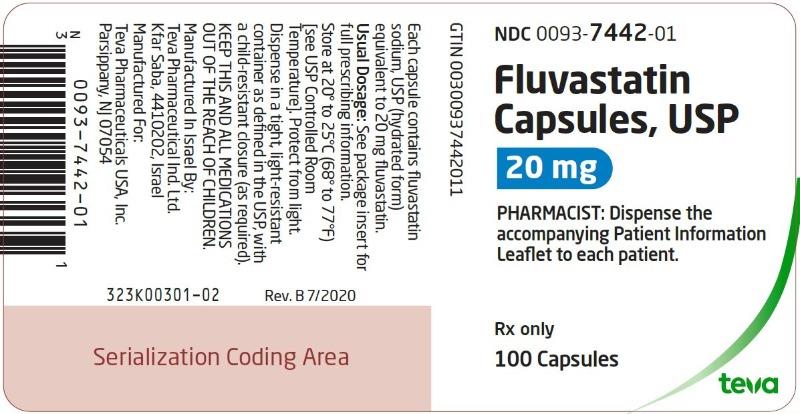
Fluvastatin 20 mg Capsule, 100-count — NDC 0093-7442-01 (Billing 00093-7442-01)
This is a package of 100 capsules of Fluvastatin 20 mg Capsule from Teva Pharmaceuticals USA, Inc., marketed since Jul 2012 and currently FDA-listed; retail pharmacies pay about $2.67 per capsule (NADAC). It is the main listing for this product, which comes in 2 package sizes.
NDC database record
One package, one record: these facts belong to NDC 0093-7442-01 alone.
- Record
- FDA NDC Directory package listing · Human prescription drug
- Code segments
- 0093 labeler · 7442 product · 01 package
- Package marketed since
- Jul 12, 2012
- Sample package
- No — commercial package
- Listing certified through
- Dec 31, 2026
- Billing quantity
- 100 EA per package
- Barcode (UPC)
- 0300937443568, 0300937442561
- FDA record last changed
- Jul 24, 2026
Identity & classification
Regulatory identifiers FDA, NLM and CMS codes for this package
Drug-database identifiers Medi-Span GPI and First Databank GCN / HICL / AHFS classification
- GSN (GCN sequence number): 021694
- GCN: 00030
- GPI-14 (Medi-Span): 39400030100120
- HICL (First Databank): 008946
- AHFS class code: 24:06.08.00
- RxCUI (RxNorm): 310404
Where does this data come from?
- FDA openFDA NDC Directory · synced Oct 8, 2026
- FDA label on DailyMed · label index refreshed Oct 6, 2026
- RxNorm (NLM RxNav) · catalog refreshed Oct 1, 2026
- Medi-Span GPI (licensed)
- First Databank (licensed) · refreshed Oct 8, 2026
RxNorm drug class
This medicine belongs to the HMG-CoA Reductase Inhibitor class.
Where does this data come from?
- RxClass (NLM) · catalog refreshed Oct 1, 2026
Clinical
- It lowers cholesterol along with a healthy diet. It is also used in people with coronary heart disease to lower the chance of needing a procedure to open the heart arteries and to...
- Take it by mouth, with or without food. Swallow capsules whole and do not open them. If you have the extended-release tablet, do not break, crush or chew it. Follow the schedule yo...
- Headache, mild muscle aches, stomach upset, nausea, diarrhea and flu-like symptoms are the more common ones. Most are mild. Let me or your doctor know if they bother you.
- Call promptly for unexplained muscle pain, tenderness or weakness, especially with fever. Also call for yellow skin or eyes, or signs of allergic reaction like swelling or trouble...
Patient education
Supplement & herbal interactions
Some supplements/herbs that may interact with Fluvastatin — tap one for details:
Fluvastatin may be associated with lower levels of 1 nutrient — worth a chat with your pharmacist, not a cause for alarm.
Where does this data come from?
- MedlinePlus (NLM) · refreshed Oct 1, 2026
- FDA label on DailyMed · label index refreshed Oct 6, 2026
Ask a licensed pharmacist directly — free, answered by our team.
Pricing
A drug doesn't have one price. Each row is a different public payment system, and none is what you'd pay at the counter — that depends on your insurance. The ⓘ on each row explains what it measures.
| Price system | Per ea | Per package |
|---|---|---|
| Retail pharmacies payNADAC · weekly | $2.673 | $267.29 / 100 capsules |
| Medicaid paysCMS SDUD · 12 mo | No recent Medicaid claims on file for this NDC — rare and low-volume NDCs are suppressed in the public data. | |
| Medicare drug plans payPart D · quarterly | No Part D plan price is available for this NDC in our data. | |
Where does this data come from?
- CMS NADAC weekly file · file of Oct 7, 2026
- CMS ASP pricing files · refreshed Sep 20, 2026
- CMS Medicaid State Drug Utilization Data · refreshed Oct 8, 2026
- CMS Part D plan pricing files · refreshed Sep 24, 2026
- VA National Acquisition Center price file
Packaging — all sizes for this product
| Package NDC | Description | Per unit | Per pack | Marketing start | Marketing end | Status |
|---|---|---|---|---|---|---|
| 00093-7442-01 You're viewing this Main listing | 100 CAPSULE in 1 BOTTLE | $2.67 / ea | $267.29 | 2012-07-12 | — | Active |
| 00093-7442-56 0093-7442-56 | 30 CAPSULE in 1 BOTTLE | $2.67 / ea | $80.19 | 2012-07-05 | — | Active |
You're viewing the largest of 2 pack sizes for this product.
This pack has the lowest per-ea cost of the 2 priced pack sizes ($2.67 NADAC).
Pack size FAQ
What quantity is in this package?
How does this package differ from NDC 00093-7442-56?
What NDC number is used to bill for this package of Fluvastatin 20 mg Capsule?
Prices are the latest CMS NADAC pharmacy acquisition cost per NDC; per-pack figures are per-unit × pack quantity, shown only when the pack is denominated in the same measure NADAC prices.
Therapeutic equivalents
| Product | Labeler | Pack | NADAC/unit | TE | Status | Price vs. this |
|---|---|---|---|---|---|---|
| Fluvastatin 20 mgthis 00093-7442-01 | Teva | 100 capsules | $2.673 | AB | Availability likely | — |
| Fluvastatin Sodium 20 mg 00378-8020-77 | Mylan | 90 capsules | $2.673 | AB | Availability likely | — |
| Fluvastatin 20 mg 63629-8812-01 | Bryant | 100 capsules | — | AB | FDA listed | — |
Where does this data come from?
- FDA openFDA NDC Directory · synced Oct 8, 2026
- FDA Orange Book · refreshed Oct 3, 2026
- CMS NADAC weekly file · file of Oct 7, 2026
Availability & generic status
This product is an FDA-approved generic. Other versions of the same drug are listed under Therapeutic equivalents, least expensive first.
Where does this data come from?
- FDA Orange Book · refreshed Oct 3, 2026
Inactive Ingredients / Excipients
Inactive ingredients, also called excipients, are components of the drug product other than the active ingredient. They may include fillers, dyes, coatings, preservatives, flavors, or other formulation ingredients.
🧪 Avoiding an ingredient? See Fluvastatin inactive ingredients by manufacturer: every current product's list side by side, so you can ask your pharmacy for the version that does not list it.
💡 Tap an ingredient (hover on desktop) to see what it is and why it’s used.
-
UNII 5138Q19F1X
Ammonia is a colorless gas made from nitrogen and hydrogen. It's used in medicines as a pH buffer to maintain the correct acidity level and help keep the product stable.
-
UNII 68401960MK
Crospovidone is a synthetic polymer made from polyvinylpyrrolidone. It acts as a disintegrant, helping tablets break apart quickly in the stomach so the medicine dissolves and absorbs into the body.
-
UNII 1K09F3G675
Ferric oxide red is an inorganic iron compound used as a colorant in medicines. It gives tablets, capsules, or other dosage forms a red or reddish tint for identification and appearance.
-
UNII EX438O2MRT
Ferric oxide yellow is a naturally occurring iron compound used as a colorant in medications. It gives tablets, capsules, and other forms a yellow or golden hue for identification and appearance.
-
UNII XM0M87F357
A dark iron oxide compound that gives medicines their black or dark color. It's used as a colorant in tablets and capsules to help identify the product and make it visually distinctive.
-
UNII 2G86QN327L
Gelatin is a protein derived from animal collagen, commonly used in medicines as a gelling agent and capsule material. It helps create soft or hard capsule shells that hold and release medication, and can also thicken liquid formulations.
-
UNII EWQ57Q8I5X
Lactose monohydrate is a natural sugar derived from milk. It serves as a filler and binder in tablets and capsules, helping create the proper size, texture, and consistency of the medicine.
-
UNII 70097M6I30
Magnesium stearate is a salt made from magnesium and stearic acid, a fatty substance. It's used in tablets and capsules as a lubricant and glidant to help ingredients flow smoothly during manufacturing and prevent sticking.
-
UNII 6DC9Q167V3
Propylene glycol is a clear liquid derived from petroleum or vegetable sources. It acts as a solvent, humectant, and preservative in medicines, helping dissolve active ingredients and maintain product stability.
-
UNII 46N107B71O
Shellac is a natural resin secreted by the lac beetle. It's used as a coating on tablets and capsules to control how quickly the medicine dissolves and to improve appearance and stability.
-
UNII ETJ7Z6XBU4
Silicon dioxide is a naturally occurring mineral used as a glidant and anti-caking agent. It helps powder ingredients flow smoothly and prevents clumping during manufacturing and storage.
-
UNII 15FIX9V2JP
Titanium dioxide is a bright white mineral powder commonly used as a colorant and opacifying agent. It makes pills and tablets white or lighter in color and helps make coatings non-transparent.
12 inactive ingredients listed in the exact product block matched to this NDC.
Where does this data come from?
ingredient classCode="IACT" elements from the exact product block matched by this NDC. Label-section narrative from DailyMed / the openFDA label index is shown separately when available.- FDA label on DailyMed · label index refreshed Oct 6, 2026
- FDA openFDA NDC Directory · synced Oct 8, 2026
Inactive ingredient FAQ
Are inactive ingredients the same for every manufacturer?
Why might an inactive ingredient be missing?
Can inactive ingredients matter?
Manufacturer & labeler
More NDCs from Teva Pharmaceuticals USA, Inc. labeler code 00093
- Losartan Potassium and Hydrochlorothiazide 50 mg; 12.5 mg Tablet, Film Coated NDC 0093-7367-10
- Losartan Potassium and Hydrochlorothiazide 100 mg; 25 mg Tablet, Film Coated NDC 0093-7368-10
- Losartan Potassium and Hydrochlorothiazide 100 mg; 12.5 mg Tablet, Film Coated NDC 0093-7369-10
- Venlafaxine Hydrochloride 37.5 mg Capsule, Extended Release NDC 0093-7384-05
- Venlafaxine Hydrochloride 75 mg Capsule, Extended Release NDC 0093-7385-05
- Venlafaxine Hydrochloride 150 mg Capsule, Extended Release NDC 0093-7386-05
- Fluvastatin 40 mg Capsule NDC 0093-7443-01
- Fluvastatin Sodium 80 mg Tablet, Film Coated, Extended Release NDC 0093-7446-01
- Glipizide and Metformin Hydrochloride 2.5 mg; 250 mg Tablet, Film Coated NDC 0093-7455-01
- Glipizide and Metformin Hydrochloride 2.5 mg; 500 mg Tablet, Film Coated NDC 0093-7456-01
- Glipizide and Metformin Hydrochloride 5 mg; 500 mg Tablet, Film Coated NDC 0093-7457-01
- Rizatriptan Benzoate 5 mg Tablet NDC 0093-7471-43
Where does this data come from?
- FDA openFDA NDC Directory · synced Oct 8, 2026
- Drugs@FDA
Full prescribing information FDA SPL
🎯 Indications and Usage ▾
1 INDICATIONS AND USAGE Therapy with lipid-altering agents should be only one component of multiple risk factor intervention in individuals at significantly increased risk for atherosclerotic vascular disease due to hypercholesterolemia. Drug therapy is indicated as an adjunct to diet when the response to a diet restricted in saturated fat and cholesterol and other non-pharmacologic measures alone has been inadequate. Fluvastatin capsules are an HMG-CoA reductase inhibitor (statin) indicated as an adjunctive therapy to diet to: Reduce elevated TC, LDL-C, Apo B, and TG, and to increase HDL-C in adult patients with primary hypercholesterolemia and mixed dyslipidemia ( 1.1 ) Reduce elevated TC, LDL-C, and Apo B levels in boys and post-menarchal girls, 10 to 16 years of age, with heterozygous familial hypercholesterolemia after failing an adequate trial of diet therapy ( 1.1 ) Reduce the risk of undergoing revascularization procedures in patients with clinically evident CHD ( 1.2 ) Slow the progression of atherosclerosis in patients with CHD ( 1.2 ) Limitations of Use: Fluvastatin capsules have not been studied in conditions where the major abnormality is elevation of chylomicrons, VLDL, or IDL (i.e., hyperlipoproteinemia Types I, III, IV, or V).
( 1.3 )
1.1Hypercholesterolemia (Heterozygous Familial and Nonfamilial) and Mixed Dyslipidemia Fluvastatin capsules are indicated as an adjunct to diet to reduce elevated total cholesterol (Total-C), low-density lipoprotein cholesterol (LDL-C), triglyceride (TG) and apolipoprotein B (Apo B) levels, and to increase high-density lipoprotein cholesterol (HDL-C) in patients with primary hypercholesterolemia and mixed dyslipidemia (Fredrickson Type IIa and IIb). as an adjunct to diet to reduce Total-C, LDL-C, and Apo B levels in adolescent boys and adolescent girls who are at least one year post-menarche, 10 to 16 years of age, with heterozygous familial hypercholesterolemia and the following findings are present: LDL-C remains ≥ 190 mg/dL or LDL-C remains ≥ 160 mg/dL and: there is a positive family history of premature cardiovascular disease or two or more other cardiovascular disease risk factors are present The NCEP classification of cholesterol levels in pediatric patients with a familial history of hypercholesterolemia or premature CVD is summarized below.
Category Total-C (mg/dL) LDL-C (mg/dL) Acceptable < 170 < 110 Borderline 170 to 199 110 to 129 High ≥ 200 ≥ 130 Children treated with fluvastatin in adolescence should be re-evaluated in adulthood and appropriate changes made to their cholesterol-lowering regimen to achieve adult treatment goals.
1.2Secondary Prevention of Cardiovascular Disease In patients with clinically evident CHD, fluvastatin capsules are indicated to: reduce the risk of undergoing coronary revascularization procedures slow the progression of coronary atherosclerosis
1.3Limitations of Use Fluvastatin capsules have not been studied in conditions where the major abnormality is elevation of chylomicrons, VLDL, or IDL (i.e., hyperlipoproteinemia Types I, III, IV, or V).
⏱️ Dosage and Administration ▾
2 DOSAGE AND ADMINISTRATION Dose range: 20 mg to 80 mg/day ( 2.1 ) Fluvastatin capsules can be taken with or without food. ( 2.1 ) Do not open fluvastatin capsules prior to administration ( 2.1 ) Adults: the recommended starting dose is 40 mg to 80 mg (administered as one fluvastatin capsule, 40 mg twice daily) ( 2.2 ) Do not take two fluvastatin capsules, 40 mg at one time Children with heterozygous familial hypercholesterolemia (ages 10 to 16, inclusive): the recommended starting dose is fluvastatin capsule, 20 mg once daily ( 2.3 )
2.1General Dosing Information Dose range: 20 mg to 80 mg/day. Fluvastatin capsules can be administered orally as a single dose, with or without food. Do not open fluvastatin capsules prior to administration.
Do not take two fluvastatin capsules, 40 mg at one time. Since the maximal effect of a given dose is seen within 4 weeks, periodic lipid determinations should be performed at this time and dosage adjusted according to the patient’s response to therapy and established treatment guidelines. For patients requiring LDL-C reduction to a goal of ≥ 25%, the recommended starting dose is 40 mg as one capsule in the evening, or 80 mg in divided doses of the 40 mg capsule given twice daily.
For patients requiring LDL-C reduction to a goal of < 25% a starting dose of 20 mg may be used.
2.2Adult Patients With Hypercholesterolemia (Heterozygous Familial and Nonfamilial) and Mixed Dyslipidemia Adult patients can be started on fluvastatin capsules. The recommended starting dose for fluvastatin capsules is one 40 mg capsule in the evening, or one fluvastatin capsule, 40 mg twice daily. Do not take two fluvastatin capsules, 40 mg at one time.
2.3Pediatric Patients (10 to 16 Years of Age) With Heterozygous Familial Hypercholesterolemia The recommended starting dose is one fluvastatin capsule, 20 mg. Dose adjustments, up to a maximum daily dose administered as fluvastatin capsules, 40 mg twice daily should be made at 6 week intervals. Doses should be individualized according to the goal of therapy [see NCEP Pediatric Panel Guidelines and CLINICAL STUDIES ( 14 )] 1 .
1 National Cholesterol Education Program (NCEP): Highlights of the Report of the Expert Panel on Blood Cholesterol Levels in Children and Adolescents. Pediatrics. 89(3):495-501.
1992.
2.4Use With Cyclosporine Do not exceed a dose of 20 mg b.i.d. fluvastatin capsules in patients taking cyclosporine [see Drug Interactions ( 7.1 )] .
2.5Use With Fluconazole Do not exceed a dose of 20 mg b.i.d. fluvastatin capsules in patients taking fluconazole [see Drug Interactions ( 7.2 )] .
💊 Dosage Forms and Strengths ▾
3 DOSAGE FORMS AND STRENGTHS 20 mg are hard gelatin capsules with ivory opaque body and pink opaque cap, filled with an off-white to yellowish powder with small agglomerates. Cap imprinted with “TEVA” and body imprinted with “7442”. 40 mg are hard gelatin capsules with yellow opaque body and pink opaque cap, filled with an off-white to yellowish powder with small agglomerates.
Cap imprinted with “TEVA” and body imprinted with “7443”. Capsules: 20 mg, 40 mg ( 3 )
⛔ Contraindications ▾
4 CONTRAINDICATIONS Hypersensitivity to any component of this medication ( 4 ) Active liver disease or unexplained, persistent elevations in serum transaminases ( 4 , 5.3 ) Women who are pregnant or may become pregnant ( 4 , 8.1 ) Nursing mothers ( 4 , 8.3 )
4.1Hypersensitivity to any Component of This Medication Fluvastatin capsules are contraindicated in patients with hypersensitivity to any component of this medication.
4.2Active Liver Disease Fluvastatin capsules are contraindicated in patients with active liver disease or unexplained, persistent elevations in serum transaminases [see Warnings and Precautions ( 5.3 )] .
4.3Pregnancy Fluvastatin capsules are contraindicated in women who are pregnant or may become pregnant. Serum cholesterol and triglycerides increase during normal pregnancy, and cholesterol or cholesterol derivatives are essential for fetal development. Fluvastatin capsules may cause fetal harm when administered to pregnant women.
Atherosclerosis is a chronic process and the discontinuation of lipid-lowering drugs during pregnancy should have little impact on the outcome of long-term therapy of primary hypercholesterolemia. Fluvastatin capsules should be administered to women of childbearing age only when such patients are highly unlikely to conceive and have been informed of the potential hazards. If the patient becomes pregnant while taking this drug, fluvastatin capsules should be discontinued and the patient should be apprised of the potential hazard to the fetus [see Use in Specific Populations ( 8.1 )] .
4.4Nursing Mothers Fluvastatin is secreted into the breast milk of animals and because HMG-CoA reductase inhibitors have the potential to cause serious adverse reactions in nursing infants, women who require treatment with fluvastatin capsules should be advised not to breastfeed their infants [see Use in Specific Populations ( 8.3 )] .
⚠️ Warnings and Cautions ▾
5 WARNINGS AND PRECAUTIONS Skeletal muscle effects (e.g., myopathy and rhabdomyolysis): Risks increase with advanced age (≥ 65), uncontrolled hypothyroidism, renal impairment, and combination use with cyclosporine,or gemfibrozil. Advise patients to promptly report to their physician unexplained and/or persistent muscle pain, tenderness, or weakness and discontinue fluvastatin if myopathy is diagnosed or suspected. ( 5.1 , 8.5 , 8.7 ) Patients should be advised to report promptly any symptoms of myopathy.
Fluvastatin capsules therapy should be discontinued if myopathy is diagnosed or suspected ( 5.1 ) Immune-Mediated Necrotizing Myopathy (IMNM): There have been rare reports of IMNM, an autoimmune myopathy, associated with statin use. IMNM is characterized by: proximal muscle weakness and elevated serum creatine kinase, which persist despite discontinuation of statin treatment; positive anti-HMG CoA reductase antibody; muscle biopsy showing necrotizing myopathy; and improvement with immunosuppressive agents. ( 5.2 ) Liver enzyme abnormalities: Persistent elevations in hepatic transaminases can occur.
Check liver enzyme tests before initiating therapy and as clinically indicated thereafter ( 5.3 )
5.1Skeletal Muscle Rhabdomyolysis with acute renal failure secondary to myoglobinuria have been reported with fluvastatin capsules and other drugs in this class. Fluvastatin capsules should be prescribed with caution in patients with predisposing factors for myopathy. These factors include advanced age (> 65 years), renal impairment, and inadequately treated hypothyroidism.
The risk of myopathy and/or rhabdomyolysis with statins is increased with concurrent therapy with cyclosporine, erythromycin, fibrates or niacin. Myopathy was not observed in a clinical trial in 74 patients involving patients who were treated with fluvastatin sodium together with niacin. Isolated cases of myopathy have been reported during postmarketing experience with concomitant administration of fluvastatin sodium and colchicine.
No information is available on the pharmacokinetic interaction between fluvastatin sodium and colchicine. Uncomplicated myalgia has also been reported in fluvastatin sodium-treated patients [see Adverse Reactions ( 6 )] . In clinical trials, uncomplicated myalgia has been observed infrequently in patients treated with fluvastatin sodium at rates indistinguishable from placebo.
Myopathy, defined as muscle aching or muscle weakness in conjunction with increases in CPK values to greater than 10 times the upper limit of normal, was < 0.1% in fluvastatin clinical trials. Myopathy should be considered in any patient with diffuse myalgias, muscle tenderness or weakness, and/or marked elevation of CPK. All patients should be advised to promptly report to their physician unexplained muscle pain, tenderness, or weakness, particularly if accompanied by malaise or fever or if muscle signs and symptoms persist after discontinuing fluvastatin.
Fluvastatin sodium therapy should be discontinued if markedly elevated CPK levels occur or myopathy is diagnosed or suspected. Fluvastatin sodium therapy should also be temporarily withheld in any patient experiencing an acute or serious condition predisposing to the development of renal failure secondary to rhabdomyolysis, e.g., sepsis; hypotension; major surgery; trauma; severe metabolic, endocrine, or electrolyte disorders; or uncontrolled epilepsy.
5.2Immune-Mediated Necrotizing Myopathy There have been rare reports of immune-mediated necrotizing myopathy (IMNM), an autoimmune myopathy, associated with statin use. IMNM is characterized by: proximal muscle weakness and elevated serum creatine kinase, which persist despite discontinuation of statin treatment; positive anti-HMG CoA reductase antibody; muscle biopsy showing necrotizing myopathy; and improvement with immunosuppressive agents. Additional neuromuscular and serologic testing may be necessary.
Treatment with immunosuppressive agents may be required.… [Excerpted — this section continues on DailyMed.]
🤒 Adverse Reactions ▾
6 ADVERSE REACTIONS The following serious adverse reactions are discussed in greater detail in other sections of the label: Rhabdomyolysis with myoglobinuria and acute renal failure and myopathy (including myositis) [ see Warnings and Precautions ( 5.1 ) ]. Liver Enzyme Abnormalities [ see Warnings and Precautions ( 5.3 ) ]. Most frequent adverse reactions (rate ≥ 2% and > placebo) are: headache, dyspepsia, myalgia, abdominal pain and nausea ( 6.1 ) To report SUSPECTED ADVERSE REACTIONS, contact Teva at 1-888-838-2872 or FDA at 1-800-FDA-1088 or www.fda.gov/medwatch.
6.1Clinical Studies Experience in Adult Patients Because clinical studies on fluvastatin capsules are conducted in varying study populations and study designs, the frequency of adverse reactions observed in the clinical studies of fluvastatin capsules cannot be directly compared with that in the clinical studies of other statins and may not reflect the frequency of adverse reactions observed in clinical practice. In the fluvastatin capsules placebo-controlled clinical trials database of 2326 patients treated with fluvastatin capsules 1 (age range 18 to 75 years, 44% women, 94% Caucasians, 4% Blacks, 2% other ethnicities) with a median treatment duration of 24 weeks, 3.4% of patients on fluvastatin capsules and 2.3% patients on placebo discontinued due to adverse reactions regardless of causality.
The most common adverse reactions that led to treatment discontinuation and occurred at an incidence greater than placebo were: transaminase increased (0.8%), upper abdominal pain (0.3%), dyspepsia (0.3%), fatigue (0.2%) and diarrhea (0.2%). Clinically relevant adverse experiences occurring in the fluvastatin capsules controlled studies with a frequency ≥ 2%, regardless of causality, included the following: Table 1: Clinical Adverse Events Reported in > 2% in Patients Treated With Fluvastatin Capsules and at an Incidence Greater Than Placebo in Placebo-Controlled Trials Regardless of Causality (% of Patients) Pooled Dosages Fluvastatin Capsules 1 N = 2326 (%) Placebo 1 N = 960 (%) Musculoskeletal Myalgia 5.0
4.5Arthritis 2.1
2.0Arthropathy NA NA Respiratory Sinusitis 2.6
1.9Bronchitis 1.8
1.0Gastrointestinal Dyspepsia 7.9
3.2Diarrhea 4.9
4.2Abdominal pain 4.9
3.8Nausea 3.2
2.0Flatulence 2.6
2.5Tooth disorder 2.1
1.7Psychiatric Insomnia 2.7
1.4Genitourinary Urinary tract infection 1.6
1.1Miscellaneous Headache 8.9
7.8Influenza-like symptoms 5.1
5.7Accidental Trauma 5.1
4.8Fatigue 2.7
2.3Allergy 2.3 2.2 1. Controlled trials with fluvastatin capsules (20 and 40 mg daily and 40 mg twice daily) compared to placebo Fluvastatin Capsules Intervention Prevention Study In the Fluvastatin Capsules Intervention Prevention Study, the effect of fluvastatin capsules, 40 mg, administered twice daily on the risk of recurrent cardiac events was assessed in 1677 patients with CHD who had undergone a percutaneous coronary intervention (PCI) procedure. This was a multicenter, randomized, double-blind, placebo-controlled study, patients were treated with dietary/lifestyle counseling and either fluvastatin capsules, 40 mg (n = 844) or placebo (n = 833) given twice daily for a median of 3.9 years [see Clinical Studies ( 14.3 )].
Table 2: Clinical Adverse Events Reported in ≥ 2% in Patients Treated With Fluvastatin Sodium and at an Incidence Greater Than Placebo in the Trial Regardless of Causality (% of Patients) Fluvastatin Capsules, 40 mg b.i.d. N = 822 (%) Placebo N = 818 (%) Cardiac disorders Atrial fibrillation 2.4
2.0Gastrointestinal disorders Abdominal pain upper 6.3
4.5Constipation 3.3
2.1Dyspepsia 4.5
4.0Gastric disorder 2.7
2.1Nausea 2.7
2.3General disorders Fatigue 4.7
3.8Edema peripheral 4.4
2.9Infections and infestations Bronchitis 2.3
2.0Nasopharyngitis 2.8
2.1Musculoskeletal and connective tissue disorders Arthralgia 2.1
1.8Myalgia 2.2
1.6Pain in extremity 4.1
2.7Nervous system disorders Dizziness 3.9
3.5Syncope 2.4
2.2Respiratory disorders Dyspnea… [Excerpted — this section continues on DailyMed.]
🔄 Drug Interactions ▾
7 DRUG INTERACTIONS Cyclosporine: Combination increases fluvastatin exposure. Limit fluvastatin dose to 20 mg ( 2.4 , 7.1 ) Fluconazole: Combination increases fluvastatin exposure. Limit fluvastatin dose to 20 mg ( 2.5 , 7.2 ) Concomitant lipid-lowering therapies: Use with fibrates or lipid-modifying doses (≥ 1 g/day) of niacin increases the risk of adverse skeletal muscle effects.
Caution should be used when prescribing with fluvastatin ( 5.1 , 7.3 , 7.4 ) Glyburide: Monitor blood glucose levels when fluvastatin dose is changed ( 7 ) Phenytoin: Monitor plasma phenytoin levels when fluvastatin treatment is initiated or when the dosage is changed ( 7 ) Warfarin and coumarin derivates: Monitor prothrombin times when fluvastatin coadministration is initiated, discontinued, or the dosage changed ( 7 )
7.1Cyclosporine Cyclosporine coadministration increases fluvastatin exposure. Therefore, in patients taking cyclosporine, therapy should be limited to fluvastatin 20 mg twice daily [see Warnings and Precautions ( 5.1 ) and Clinical Pharmacology ( 12.3 )].
7.2Fluconazole Administration of fluvastatin 40 mg single dose to healthy volunteers pre-treated with fluconazole for 4 days results in an increase of fluvastatin exposure. Therefore, in patients taking fluconazole, therapy should be limited to fluvastatin 20 mg twice daily [see Clinical Pharmacology ( 12.3 )].
7.3Gemfibrozil Due to an increased risk of myopathy/rhabdomyolysis when HMG-CoA reductase inhibitors are coadministered with gemfibrozil, concomitant administration of fluvastatin sodium with gemfibrozil should be avoided.
7.4Other Fibrates Because it is known that the risk of myopathy during treatment with HMG-CoA reductase inhibitors is increased with concurrent administration of other fibrates, fluvastatin sodium should be administered with caution when used concomitantly with other fibrates [see Warnings and Precautions ( 5.1 ) and Clinical Pharmacology ( 12.3 )].
7.5Niacin The risk of skeletal muscle effects may be enhanced when fluvastatin sodium is used in combination with lipid-modifying doses (≥ 1 g/day) of niacin; a reduction in fluvastatin sodium dosage should be considered in this setting [see Warnings and Precautions ( 5.1 )].
7.6Glyburide Concomitant administration of fluvastatin and glyburide increased glyburide exposures. Patients on concomitant therapy of glyburide and fluvastatin should continue to be monitored appropriately [see Clinical Pharmacology ( 12.3 )].
7.7Phenytoin Concomitant administration of fluvastatin and phenytoin increased phenytoin exposures. Patients should continue to be monitored appropriately when fluvastatin therapy is initiated or when fluvastatin dose is changed [see Clinical Pharmacology ( 12.3 )].
7.8Warfarin Bleeding and/or increased prothrombin times have been reported in patients taking coumarin anticoagulants concomitantly with other HMG-CoA reductase inhibitors. Therefore, patients receiving warfarin-type anticoagulants should have their prothrombin times closely monitored when fluvastatin sodium is initiated or the dosage of fluvastatin sodium is changed.
7.9Colchicine Cases of myopathy, including rhabdomyolysis, have been reported with fluvastatin coadministered with colchicine, and caution should be exercised when prescribing fluvastatin with colchicine.
👥 Use in Specific Populations ▾
8 USE IN SPECIFIC POPULATIONS
8.1Pregnancy Pregnancy Category X Fluvastatin sodium is contraindicated in women who are or may become pregnant [see Contraindications ( 4 )]. Lipid lowering drugs are contraindicated during pregnancy, because cholesterol and cholesterol derivatives are needed for normal fetal development. Serum cholesterol and triglycerides increase during normal pregnancy.
Atherosclerosis is a chronic process, and discontinuation of lipid-lowering drugs during pregnancy should have little impact on long-term outcomes of primary hypercholesterolemia therapy. There are no adequate and well-controlled studies of use with fluvastatin sodium during pregnancy. Rare reports of congenital anomalies have been received following intrauterine exposure to other statins.
In a review 2 of about 100 prospectively followed pregnancies in women exposed to other statins, the incidences of congenital anomalies, spontaneous abortions, and fetal deaths/stillbirths did not exceed the rate expected in the general population. The number of cases is adequate only to exclude a 3 to 4 fold increase in congenital anomalies over background incidence. In 89% of prospectively followed pregnancies, drug treatment was initiated prior to pregnancy and was discontinued at some point in the first trimester when pregnancy was identified.
Teratology studies with fluvastatin in rats and rabbits showed maternal toxicity at high dose levels, but there was no evidence of embryotoxic or teratogenic potential [see Nonclinical Toxicology ( 13 )]. Fluvastatin sodium should be administered to women of child-bearing potential only when such patients are highly unlikely to conceive and have been informed of the potential hazards. If a woman becomes pregnant while taking fluvastatin sodium, the drug should be discontinued and the patient advised again as to the potential hazards to the fetus.
8.3Nursing Mothers Based on animal data, fluvastatin is present in breast milk in a 2:1 ratio (milk:plasma). Because of the potential for serious adverse reactions in nursing infants, nursing women should not take fluvastatin sodium [see Contraindications ( 4 )].
8.4Pediatric Use The safety and efficacy of fluvastatin sodium in children and adolescent patients 9 to 16 years of age with heterozygous familial hypercholesterolemia have been evaluated in open-label, uncontrolled clinical trials for a duration of two years. The most common adverse events observed were influenza and infections. In these limited uncontrolled studies, there was no detectable effect on growth or sexual maturation in the adolescent boys or on menstrual cycle length in girls [see Clinical Studies ( 14.2 ), Adverse Reactions ( 6.3 ), and Dosage and Administration ( 2.2 )] .
Adolescent females should be counseled on appropriate contraceptive methods while on fluvastatin sodium therapy [see Contraindications ( 4 )].
8.5Geriatric Use Fluvastatin exposures were not significantly different between the nonelderly and elderly populations (age ≥ 65 years) [see Clinical Pharmacology ( 12.3 )]. Since advanced age (≥ 65 years) is a predisposing factor for myopathy, fluvastatin sodium should be prescribed with caution in the elderly.
8.6Hepatic Impairment Fluvastatin sodium is contraindicated in patients with active liver disease or unexplained, persistent elevations in serum transaminases [see Clinical Pharmacology ( 12.3 )].
8.7Renal Impairment Dose adjustments for mild to moderate renal impairment are not necessary. Fluvastatin has not been studied at doses greater than 40 mg in patients with severe renal impairment; therefore caution should be exercised when treating such patients at higher doses [see Clinical Pharmacology ( 12.3 )].
🤰 Pregnancy ▾
8.1Pregnancy Pregnancy Category X Fluvastatin sodium is contraindicated in women who are or may become pregnant [see Contraindications ( 4 )]. Lipid lowering drugs are contraindicated during pregnancy, because cholesterol and cholesterol derivatives are needed for normal fetal development. Serum cholesterol and triglycerides increase during normal pregnancy.
Atherosclerosis is a chronic process, and discontinuation of lipid-lowering drugs during pregnancy should have little impact on long-term outcomes of primary hypercholesterolemia therapy. There are no adequate and well-controlled studies of use with fluvastatin sodium during pregnancy. Rare reports of congenital anomalies have been received following intrauterine exposure to other statins.
In a review 2 of about 100 prospectively followed pregnancies in women exposed to other statins, the incidences of congenital anomalies, spontaneous abortions, and fetal deaths/stillbirths did not exceed the rate expected in the general population. The number of cases is adequate only to exclude a 3 to 4 fold increase in congenital anomalies over background incidence. In 89% of prospectively followed pregnancies, drug treatment was initiated prior to pregnancy and was discontinued at some point in the first trimester when pregnancy was identified.
Teratology studies with fluvastatin in rats and rabbits showed maternal toxicity at high dose levels, but there was no evidence of embryotoxic or teratogenic potential [see Nonclinical Toxicology ( 13 )]. Fluvastatin sodium should be administered to women of child-bearing potential only when such patients are highly unlikely to conceive and have been informed of the potential hazards. If a woman becomes pregnant while taking fluvastatin sodium, the drug should be discontinued and the patient advised again as to the potential hazards to the fetus.
🧒 Pediatric Use ▾
8.4Pediatric Use The safety and efficacy of fluvastatin sodium in children and adolescent patients 9 to 16 years of age with heterozygous familial hypercholesterolemia have been evaluated in open-label, uncontrolled clinical trials for a duration of two years. The most common adverse events observed were influenza and infections. In these limited uncontrolled studies, there was no detectable effect on growth or sexual maturation in the adolescent boys or on menstrual cycle length in girls [see Clinical Studies ( 14.2 ), Adverse Reactions ( 6.3 ), and Dosage and Administration ( 2.2 )] .
Adolescent females should be counseled on appropriate contraceptive methods while on fluvastatin sodium therapy [see Contraindications ( 4 )].
🧓 Geriatric Use ▾
8.5Geriatric Use Fluvastatin exposures were not significantly different between the nonelderly and elderly populations (age ≥ 65 years) [see Clinical Pharmacology ( 12.3 )]. Since advanced age (≥ 65 years) is a predisposing factor for myopathy, fluvastatin sodium should be prescribed with caution in the elderly.
🆘 Overdosage ▾
10 OVERDOSAGE To date, there has been limited experience with overdosage of fluvastatin. If an overdose occurs, it should be treated symptomatically with laboratory monitoring and supportive measures should be instituted as required. The dialyzability of fluvastatin sodium and of its metabolites in humans is not known at present [see Warnings and Precautions ( 5 )].
In the pediatric population, there have been reports of overdosage with fluvastatin sodium in children including a 2-year-old and the other 3 years of age, either of whom may have possibly ingested fluvastatin sodium. The maximum amount of fluvastatin sodium that could have been ingested was 80 mg (4 x 20 mg capsules). Vomiting was induced by ipecac in both children and no capsules were noted in their emesis.
Neither child experienced any adverse symptoms and both recovered from the incident without problems. In the postmarketing experience there have been reports of accidental ingestion of fluvastatin tablets in infants up to 3 years of age. In one case, increased serum CPK values were noted.
There have been reports of intentional overdose in adolescents with the development of hepatic enzyme elevations, convulsions and gastroenteritis/vomiting/diarrhea.
🧬 Clinical Pharmacology ▾
12 CLINICAL PHARMACOLOGY
12.1Mechanism of Action Fluvastatin sodium is a competitive inhibitor of HMG-CoA reductase, the rate limiting enzyme that converts 3-hydroxy-3-methylglutaryl-coenzyme A (HMG-CoA) to mevalonate, a precursor of sterols, including cholesterol. The inhibition of cholesterol biosynthesis reduces the cholesterol in hepatic cells, which stimulates the synthesis of LDL receptors and thereby increases the uptake of LDL particles. The end result of these biochemical processes is a reduction of the plasma cholesterol concentration.
12.3Pharmacokinetics Absorption: Following oral administration of the capsule, fluvastatin reaches peak concentrations in less than 1 hour. The absolute bioavailability is 24% (range 9% to 50%) after administration of a 10 mg dose. At steady state, administration of fluvastatin with the evening meal results in a 50% decrease in C max , an 11% decrease in AUC, and a more than two-fold increase in t max as compared to administration 4 hours after the evening meal.
No significant differences in the lipid-lowering effects were observed between the two administrations. After single or multiple doses above 20 mg, fluvastatin exhibits saturable first-pass metabolism resulting in more than dose proportional plasma fluvastatin concentrations. Fluvastatin administered as fluvastatin sodium extended-release 80 mg tablets reaches peak concentration in approximately 3 hours under fasting conditions, after a low fat meal, or 2.5 hours after a low fat meal.
The mean relative bioavailability of the extended-release tablet is approximately 29% (range: 9% to 66%) compared to that of the fluvastatin immediate-release capsule administered under fasting conditions. Administration of a high fat meal delayed the absorption (T max : 6h) and increased the bioavailability of the extended-release tablet by approximately 50%. However, the maximum concentration of fluvastatin sodium extended-release tablets seen after a high fat meal is less than the peak concentration following a single dose or twice daily dose of the 40 mg fluvastatin capsule.
Distribution: Fluvastatin is 98% bound to plasma proteins. The mean volume of distribution (VD ss ) is estimated at
0.35L/kg. At therapeutic concentrations, the protein binding of fluvastatin is not affected by warfarin, salicylic acid and glyburide. Metabolism: Fluvastatin is metabolized in the liver, primarily via hydroxylation of the indole ring at the 5 and 6 positions.
N-dealkylation and beta-oxidation of the side-chain also occurs. The hydroxy metabolites have some pharmacologic activity, but do not circulate in the blood. Fluvastatin has two enantiomers.
Both enantiomers of fluvastatin are metabolized in a similar manner. In vitro data indicate that fluvastatin metabolism involves multiple Cytochrome P450 (CYP) isozymes. CYP2C9 isoenzyme is primarily involved in the metabolism of fluvastatin (approximately 75%), while CYP2C8 and CYP3A4 isoenzymes are involved to a much less extent, i.e., approximately 5% and approximately 20%, respectively.
Excretion: Following oral administration, fluvastatin is primarily (about 90%) excreted in the feces as metabolites, with less than 2% present as unchanged drug. Approximately 5% of a radiolabeled oral dose were recovered in urine. The elimination half-life (t 1/2 ) of fluvastatin is approximately 3 hours.
Specific Populations Renal Impairment: In patients with moderate to severe renal impairment (CL Cr 10 to 40 mL/min), AUC and C max increased approximately 1.2 fold after administration of a single dose of 40 mg fluvastatin compared to healthy volunteers. In patients with end-stage renal disease on hemodialysis, the AUC increased by approximately 1.5 fold. Fluvastatin sodium extended-release tablets were not evaluated in patients with renal impairment.
However, systemic exposures after administration of fluvastatin sodium extended-release tablets are lower than after the 40 mg immediate-release capsule. Hepatic Impairment: In… [Excerpted — this section continues on DailyMed.]
🧬 Mechanism of Action ▾
12.1Mechanism of Action Fluvastatin sodium is a competitive inhibitor of HMG-CoA reductase, the rate limiting enzyme that converts 3-hydroxy-3-methylglutaryl-coenzyme A (HMG-CoA) to mevalonate, a precursor of sterols, including cholesterol. The inhibition of cholesterol biosynthesis reduces the cholesterol in hepatic cells, which stimulates the synthesis of LDL receptors and thereby increases the uptake of LDL particles. The end result of these biochemical processes is a reduction of the plasma cholesterol concentration.
📦 How Supplied / Storage and Handling ▾
16 HOW SUPPLIED/STORAGE AND HANDLING Fluvastatin Capsules, USP are available as follows: 20 mg - Hard gelatin capsules with ivory opaque body and pink opaque cap, filled with an off-white to yellowish powder with small agglomerates, cap imprinted with “TEVA” and body imprinted with “7442”, in bottles of 30 (NDC 0093-7442-56) and 100 (NDC 0093-7442-01). 40 mg - Hard gelatin capsules with yellow opaque body and pink opaque cap, filled with an off-white to yellowish powder with small agglomerates, cap imprinted with “TEVA” and body imprinted with “7443”, in bottles of 30 (NDC 0093-7443-56) and 100 (NDC 0093-7443-01).
Store and Dispense Store at 20° to 25°C (68° to 77°F) [see USP Controlled Room Temperature]. Dispense in a tight, light-resistant container as defined in the USP, with a child-resistant closure (as required). Protect from light.
📋 Description ▾
11 DESCRIPTION Fluvastatin sodium, USP is a water-soluble cholesterol lowering agent which acts through the inhibition of 3-hydroxy-3-methylglutaryl coenzyme A (HMG-CoA) reductase. Fluvastatin sodium, USP is [ R *, S *-( E )]-(±)-7-[3-(4-fluorophenyl)-1-(1-methylethyl)-1 H -indol-2-yl]-3,5-dihydroxy-6-heptenoic acid, monosodium salt. Its structural formula is: C 24 H 25 FNNaO 4 M.W.
433.45 This molecular entity is the first entirely synthetic HMG-CoA reductase inhibitor, and is in part structurally distinct from the fungal derivatives of this therapeutic class. Fluvastatin sodium, USP (hydrated form) is a white to pale yellow, brownish-pale yellow, or reddish-pale yellow, hygroscopic powder soluble in water, ethanol, and methanol. Fluvastatin Capsules, USP contain fluvastatin sodium, USP (hydrated form), equivalent to 20 mg or 40 mg of fluvastatin, for oral administration.
Active Ingredient: fluvastatin sodium, USP (hydrated form) Inactive Ingredients: ammonium hydroxide, black iron oxide, colloidal silicon dioxide, crospovidone, gelatin, lactose monohydrate, magnesium stearate, propylene glycol, red iron oxide, shellac, titanium dioxide, and yellow iron oxide. Structural formula for fluvastatin
💬 Information for Patients ▾
17 PATIENT COUNSELING INFORMATION Information for Patients Patients taking fluvastatin capsules should be advised that high cholesterol is a chronic condition and they should adhere to their medication along with their National Cholesterol Education Program (NCEP)-recommended diet, a regular exercise program, and periodic testing of a fasting lipid panel to determine goal attainment. Patients should be advised about substances they should not take concomitantly with fluvastatin capsules [see Warnings and Precautions ( 5.1 )].
Patients should also be advised to inform other healthcare professionals prescribing a new medication that they are taking fluvastatin capsules.
17.1Muscle Pain Patients starting therapy with fluvastatin capsules should be advised of the risk of myopathy and told to report promptly any unexplained muscle pain, tenderness or weakness, particularly if accompanied by malaise or fever or if these muscle signs or symptoms persist after discontinuing fluvastatin.
17.2Liver Enzymes It is recommended that liver enzyme tests be performed before the initiation of fluvastatin capsules and if signs or symptoms of liver injury occur. All patients treated with fluvastatin capsules should be advised to report promptly any symptoms that may indicate liver injury, including fatigue, anorexia, right upper abdominal discomfort, dark urine or jaundice.
17.3Pregnancy Women of childbearing age should be advised to use an effective method of birth control to prevent pregnancy while using fluvastatin capsules. Discuss future pregnancy plans with your patients, and discuss when to stop taking fluvastatin capsules if they are trying to conceive. Patients should be advised that if they become pregnant they should stop taking fluvastatin capsules and call their healthcare professional.
17.4Breastfeeding Women who are breastfeeding should not use fluvastatin capsules. Patients who have a lipid disorder and are breastfeeding should be advised to discuss the options with their healthcare professional. Manufactured In Israel By: Teva Pharmaceutical Ind. Ltd. Kfar Saba, 4410202, Israel Manufactured For: Teva Pharmaceuticals Parsippany, NJ 07054 Rev. J 4/2025
🍼 Nursing Mothers ▾
8.3Nursing Mothers Based on animal data, fluvastatin is present in breast milk in a 2:1 ratio (milk:plasma). Because of the potential for serious adverse reactions in nursing infants, nursing women should not take fluvastatin sodium [see Contraindications ( 4 )].
🧬 Pharmacokinetics ▾
12.3Pharmacokinetics Absorption: Following oral administration of the capsule, fluvastatin reaches peak concentrations in less than 1 hour. The absolute bioavailability is 24% (range 9% to 50%) after administration of a 10 mg dose. At steady state, administration of fluvastatin with the evening meal results in a 50% decrease in C max , an 11% decrease in AUC, and a more than two-fold increase in t max as compared to administration 4 hours after the evening meal.
No significant differences in the lipid-lowering effects were observed between the two administrations. After single or multiple doses above 20 mg, fluvastatin exhibits saturable first-pass metabolism resulting in more than dose proportional plasma fluvastatin concentrations. Fluvastatin administered as fluvastatin sodium extended-release 80 mg tablets reaches peak concentration in approximately 3 hours under fasting conditions, after a low fat meal, or 2.5 hours after a low fat meal.
The mean relative bioavailability of the extended-release tablet is approximately 29% (range: 9% to 66%) compared to that of the fluvastatin immediate-release capsule administered under fasting conditions. Administration of a high fat meal delayed the absorption (T max : 6h) and increased the bioavailability of the extended-release tablet by approximately 50%. However, the maximum concentration of fluvastatin sodium extended-release tablets seen after a high fat meal is less than the peak concentration following a single dose or twice daily dose of the 40 mg fluvastatin capsule.
Distribution: Fluvastatin is 98% bound to plasma proteins. The mean volume of distribution (VD ss ) is estimated at
0.35L/kg. At therapeutic concentrations, the protein binding of fluvastatin is not affected by warfarin, salicylic acid and glyburide. Metabolism: Fluvastatin is metabolized in the liver, primarily via hydroxylation of the indole ring at the 5 and 6 positions.
N-dealkylation and beta-oxidation of the side-chain also occurs. The hydroxy metabolites have some pharmacologic activity, but do not circulate in the blood. Fluvastatin has two enantiomers.
Both enantiomers of fluvastatin are metabolized in a similar manner. In vitro data indicate that fluvastatin metabolism involves multiple Cytochrome P450 (CYP) isozymes. CYP2C9 isoenzyme is primarily involved in the metabolism of fluvastatin (approximately 75%), while CYP2C8 and CYP3A4 isoenzymes are involved to a much less extent, i.e., approximately 5% and approximately 20%, respectively.
Excretion: Following oral administration, fluvastatin is primarily (about 90%) excreted in the feces as metabolites, with less than 2% present as unchanged drug. Approximately 5% of a radiolabeled oral dose were recovered in urine. The elimination half-life (t 1/2 ) of fluvastatin is approximately 3 hours.
Specific Populations Renal Impairment: In patients with moderate to severe renal impairment (CL Cr 10 to 40 mL/min), AUC and C max increased approximately 1.2 fold after administration of a single dose of 40 mg fluvastatin compared to healthy volunteers. In patients with end-stage renal disease on hemodialysis, the AUC increased by approximately 1.5 fold. Fluvastatin sodium extended-release tablets were not evaluated in patients with renal impairment.
However, systemic exposures after administration of fluvastatin sodium extended-release tablets are lower than after the 40 mg immediate-release capsule. Hepatic Impairment: In patients with hepatic impairment due to liver cirrhosis, fluvastatin AUC and C max increased approximately 2.5 fold compared to healthy subjects after administration of a single 40 mg dose. The enantiomer ratios of the two isomers of fluvastatin in hepatic impairment patients were comparable to those observed in healthy subjects.
Geriatric: Plasma levels of fluvastatin are not significantly different in patients age > 65 years compared to patients age 21 to 49 years. Gender: In a study evaluating the effect of age and gender on fluvastatin pharma… [Excerpted — this section continues on DailyMed.]
🔬 Clinical Studies ▾
14 CLINICAL STUDIES
14.1Hypercholesterolemia (Heterozygous Familial and Nonfamilial) and Mixed Dyslipidemia In 12 placebo-controlled studies in patients with primary hypercholesterolemia and mixed dyslipidemia, fluvastatin capsules were administered to 1621 patients in daily dose regimens of 20 mg, 40 mg, and 80 mg (40 mg twice daily) for at least 6 weeks duration (Table 5). After 24 weeks of treatment, treatment with fluvastatin capsules resulted in significantly reduced plasma LDL-C, TC, TG, and Apo B compared to placebo and was associated with variable increases in HDL-C across the dose range.
In patients with primary mixed dyslipidemia as defined by baseline plasma TG levels ≥ 200 mg/dL and < 400 mg/dL, treatment with fluvastatin capsules produced significant decreases in Total-C, LDL-C, TG and Apo B and variable increases in HDL-C (Table 5). Table 5: Median Percent Change in Lipid Parameters From Baseline to Week 24 Endpoint All Placebo-Controlled Studies (Fluvastatin Capsules) Total Chol TG LDL Apo B HDL Dose N % Δ N % Δ N % Δ N % Δ N % Δ All Patients fluvastatin capsules 20 mg 1 747 -17 747 -12 747 -22 114 -19 747 +3 fluvastatin capsules 40 mg 1 748 -19 748 -14 748 -25 125 -18 748 +4 fluvastatin capsules 40 mg twice daily 1 257 -27 257 -18 257 -36 232 -28 257 +6 Baseline TG ≥ 200 mg/dL fluvastatin capsules 20 mg 1 148 -16 148 -17 148 -22 23 -19 148 +6 fluvastatin capsules 40 mg 1 179 -18 179 -20 179 -24 47 -18 179 +7 fluvastatin capsules 40 mg twice daily 1 76 -27 76 -23 76 -35 69 -28 76 +9 1.
Data for fluvastatin capsules from 12 placebo-controlled trials
14.2Heterozygous Familial Hypercholesterolemia in Pediatric Patients Fluvastatin capsules were studied in two open-label, uncontrolled, dose-titration studies. The first study enrolled 29 pre-pubertal boys, 9 to 12 years of age, who had an LDL-C level > 90th percentile for age and one parent with primary hypercholesterolemia and either a family history of premature ischemic heart disease or tendon xanthomas. The mean baseline LDL-C was 226 mg/dL (range: 137 to 354 mg/dL).
All patients were started on fluvastatin capsules, 20 mg daily with dose adjustments every 6 weeks to 40 mg daily then 80 mg daily (40 mg b.i.d.) to achieve an LDL-C goal between 96.7 to 123.7 mg/dL. Endpoint analyses were performed at Year 2. Fluvastatin capsules decreased plasma levels of Total-C and LDL-C by 21% and 27%, respectively.
The mean achieved LDL-C was 161 mg/dL (range: 74 to 336 mg/dL). The second study enrolled 85 male and female patients, 10 to 16 years of age, who had an LDL-C > 190 mg/dL or LDL-C > 160 mg/dL and one or more risk factors for coronary heart disease, or LDL-C > 160 mg/dL and a proven LDL-receptor defect. The mean baseline LDL-C was 225 mg/dL (range: 148 to 343 mg/dL).
All patients were started on fluvastatin capsules 20 mg daily with dose adjustments every 6 weeks to 40 mg daily then 80 mg daily (fluvastatin sodium extended-release tablets, 80 mg) to achieve an LDL-C goal of < 130 mg/dL. Endpoint analyses were performed at Week 114. Fluvastatin sodium decreased plasma levels of Total-C and LDL-C by 22% and 28%, respectively.
The mean achieved LDL-C was 159 mg/dL (range: 90 to 295 mg/dL). The majority of patients in both studies (83% in the first study and 89% in the second study) were titrated to the maximum daily dose of 80 mg. At study endpoint, 26% to 30% of patients in both studies achieved a targeted LDL-C goal of < 130 mg/dL.
The long-term efficacy of fluvastatin sodium therapy in childhood to reduce morbidity and mortality in adulthood has not been established.
14.3Secondary Prevention of Cardiovascular Disease In the Fluvastatin Capsules Intervention Prevention Study, the effect of fluvastatin capsules, 40 mg administered twice daily on the risk of recurrent cardiac events (time to first occurrence of cardiac death, nonfatal myocardial infarction, or revascularization) was assessed in 1677 patients with CHD who had undergone a percutaneous coronary intervent… [Excerpted — this section continues on DailyMed.]
🧪 Nonclinical Toxicology ▾
13 NONCLINICAL TOXICOLOGY
13.1Carcinogenesis, Mutagenesis, Impairment of Fertility A 2 year study was performed in rats at dose levels of 6, 9, and 18 to 24 (escalated after 1 year) mg/kg/day. These treatment levels represented plasma drug levels of approximately 9, 13, and 26 to 35 times the mean human plasma drug concentration after a 40 mg oral dose. A low incidence of forestomach squamous papillomas and 1 carcinoma of the forestomach at the 24 mg/kg/day dose level was considered to reflect the prolonged hyperplasia induced by direct contact exposure to fluvastatin sodium rather than to a systemic effect of the drug.
In addition, an increased incidence of thyroid follicular cell adenomas and carcinomas was recorded for males treated with 18 to 24 mg/kg/day. The increased incidence of thyroid follicular cell neoplasm in male rats with fluvastatin sodium appears to be consistent with findings from other HMG-CoA reductase inhibitors. In contrast to other HMG-CoA reductase inhibitors, no hepatic adenomas or carcinomas were observed.
The carcinogenicity study conducted in mice at dose levels of 0.3, 15 and 30 mg/kg/day revealed, as in rats, a statistically significant increase in forestomach squamous cell papillomas in males and females at 30 mg/kg/day and in females at 15 mg/kg/day. These treatment levels represented plasma drug levels of approximately 0.05, 2, and 7 times the mean human plasma drug concentration after a 40 mg oral dose. No evidence of mutagenicity was observed in vitro , with or without rat-liver metabolic activation, in the following studies: microbial mutagen tests using mutant strains of Salmonella typhimurium or Escherichia coli ; malignant transformation assay in BALB/3T3 cells; unscheduled DNA synthesis in rat primary hepatocytes; chromosomal aberrations in V79 Chinese Hamster cells; HGPRT V79 Chinese Hamster cells.
In addition, there was no evidence of mutagenicity in vivo in either a rat or mouse micronucleus test. In a study in rats at dose levels for females of 0.6, 2, and 6 mg/kg/day and at dose levels for males of 2, 10 and 20 mg/kg/day, fluvastatin sodium had no adverse effects on the fertility or reproductive performance. Seminal vesicles and testes were small in hamsters treated for 3 months at 20 mg/kg/day (approximately three times the 40 mg human daily dose based on surface area, mg/m 2 ).
There was tubular degeneration and aspermatogenesis in testes as well as vesiculitis of seminal vesicles. Vesiculitis of seminal vesicles and edema of the testes were also seen in rats treated for 2 years at 18 mg/kg/day (approximately 4 times the human C max achieved with a 40 mg daily dose). Fluvastatin sodium produced delays in skeletal development in rats at doses of 12 mg/kg/day and in rabbits at doses of 10 mg/kg/day.
Malaligned thoracic vertebrae were seen in rats at 36 mg/kg, a dose that produced maternal toxicity. These doses resulted in 2 times (rat at 12 mg/kg) or 5 times (rabbit at 10 mg/kg) the 40 mg human exposure based on mg/m 2 surface area. A study in which female rats were dosed during the third trimester at 12 and 24 mg/kg/day resulted in maternal mortality at or near term and postpartum.
In addition, fetal and neonatal lethality were apparent. No effects on the dam or fetus occurred at 2 mg/kg/day. A second study at levels of 2, 6, 12 and 24 mg/kg/day confirmed the findings in the first study with neonatal mortality beginning at 6 mg/kg.
A modified Segment III study was performed at dose levels of 12 or 24 mg/kg/day with or without the presence of concurrent supplementation with mevalonic acid, a product of HMG-CoA reductase which is essential for cholesterol biosynthesis. The concurrent administration of mevalonic acid completely prevented the maternal and neonatal mortality but did not prevent low body weights in pups at 24 mg/kg on days 0 and 7 postpartum.
📄 Carcinogenesis, Mutagenesis, Impairment of Fertility ▾
13.1Carcinogenesis, Mutagenesis, Impairment of Fertility A 2 year study was performed in rats at dose levels of 6, 9, and 18 to 24 (escalated after 1 year) mg/kg/day. These treatment levels represented plasma drug levels of approximately 9, 13, and 26 to 35 times the mean human plasma drug concentration after a 40 mg oral dose. A low incidence of forestomach squamous papillomas and 1 carcinoma of the forestomach at the 24 mg/kg/day dose level was considered to reflect the prolonged hyperplasia induced by direct contact exposure to fluvastatin sodium rather than to a systemic effect of the drug.
In addition, an increased incidence of thyroid follicular cell adenomas and carcinomas was recorded for males treated with 18 to 24 mg/kg/day. The increased incidence of thyroid follicular cell neoplasm in male rats with fluvastatin sodium appears to be consistent with findings from other HMG-CoA reductase inhibitors. In contrast to other HMG-CoA reductase inhibitors, no hepatic adenomas or carcinomas were observed.
The carcinogenicity study conducted in mice at dose levels of 0.3, 15 and 30 mg/kg/day revealed, as in rats, a statistically significant increase in forestomach squamous cell papillomas in males and females at 30 mg/kg/day and in females at 15 mg/kg/day. These treatment levels represented plasma drug levels of approximately 0.05, 2, and 7 times the mean human plasma drug concentration after a 40 mg oral dose. No evidence of mutagenicity was observed in vitro , with or without rat-liver metabolic activation, in the following studies: microbial mutagen tests using mutant strains of Salmonella typhimurium or Escherichia coli ; malignant transformation assay in BALB/3T3 cells; unscheduled DNA synthesis in rat primary hepatocytes; chromosomal aberrations in V79 Chinese Hamster cells; HGPRT V79 Chinese Hamster cells.
In addition, there was no evidence of mutagenicity in vivo in either a rat or mouse micronucleus test. In a study in rats at dose levels for females of 0.6, 2, and 6 mg/kg/day and at dose levels for males of 2, 10 and 20 mg/kg/day, fluvastatin sodium had no adverse effects on the fertility or reproductive performance. Seminal vesicles and testes were small in hamsters treated for 3 months at 20 mg/kg/day (approximately three times the 40 mg human daily dose based on surface area, mg/m 2 ).
There was tubular degeneration and aspermatogenesis in testes as well as vesiculitis of seminal vesicles. Vesiculitis of seminal vesicles and edema of the testes were also seen in rats treated for 2 years at 18 mg/kg/day (approximately 4 times the human C max achieved with a 40 mg daily dose). Fluvastatin sodium produced delays in skeletal development in rats at doses of 12 mg/kg/day and in rabbits at doses of 10 mg/kg/day.
Malaligned thoracic vertebrae were seen in rats at 36 mg/kg, a dose that produced maternal toxicity. These doses resulted in 2 times (rat at 12 mg/kg) or 5 times (rabbit at 10 mg/kg) the 40 mg human exposure based on mg/m 2 surface area. A study in which female rats were dosed during the third trimester at 12 and 24 mg/kg/day resulted in maternal mortality at or near term and postpartum.
In addition, fetal and neonatal lethality were apparent. No effects on the dam or fetus occurred at 2 mg/kg/day. A second study at levels of 2, 6, 12 and 24 mg/kg/day confirmed the findings in the first study with neonatal mortality beginning at 6 mg/kg.
A modified Segment III study was performed at dose levels of 12 or 24 mg/kg/day with or without the presence of concurrent supplementation with mevalonic acid, a product of HMG-CoA reductase which is essential for cholesterol biosynthesis. The concurrent administration of mevalonic acid completely prevented the maternal and neonatal mortality but did not prevent low body weights in pups at 24 mg/kg on days 0 and 7 postpartum.
📚 References ▾
15 REFERENCES National Cholesterol Education Program (NCEP): Highlights of the Report of the Expert Panel on Blood Cholesterol Levels in Children and Adolescents. Pediatrics . 89(3):495-501.1992. Manson, J.M., Freyssinges, C., Ducrocq, M.B., Stephenson, W.P., Postmarketing Surveillance of Lovastatin and Simvastatin Exposure During Pregnancy, Reproductive Toxicology, 10(6): 439-446, 1996.
📄 Patient Package Insert ▾
FDA-Approved Patient Labeling Fluvastatin (floo'' va stat' in) Capsules 20 mg, 40 mg You must read and follow all instructions before using fluvastatin capsules. Read the Patient Information every time you or a family member gets fluvastatin capsules. There may be new information.
This Patient Information does not take the place of talking with your doctor about your medical condition or treatment. If you have any questions about fluvastatin capsules, ask your doctor or pharmacist. What are fluvastatin capsules?
Fluvastatin capsules are a prescription medicine called "statins" that lower cholesterol in your blood. They lower the "bad" cholesterol and triglycerides in your blood. They can raise your "good" cholesterol as well.
Fluvastatin capsules are for people whose cholesterol does not come down enough with exercise and a low-fat diet alone. Fluvastatin capsules may be used in patients with heart disease (coronary artery disease) to: lower the chances of heart problems which would require procedures to help restore blood flow to the heart. slow the buildup of too much cholesterol in the arteries of the heart. Treatment with fluvastatin capsules has not been shown to prevent heart attacks or stroke.
Fluvastatin capsules are taken one or two times a day. Who should not take fluvastatin capsules? Do not take fluvastatin capsules if you: are pregnant or think you may be pregnant, or are planning to become pregnant.
Fluvastatin capsules may harm your unborn baby. If you get pregnant, stop taking fluvastatin capsules and call your doctor right away. are breast-feeding. Fluvastatin sodium can pass into your breast milk and may harm your baby have liver problems are allergic to fluvastatin capsules or any of their ingredients.
The active ingredient in fluvastatin capsules is fluvastatin. See the end of this leaflet for a complete list of ingredients in fluvastatin capsules. Fluvastatin capsules have not been studied in children under 9 years of age.
Before taking fluvastatin capsules, tell your doctor if you: have muscle aches or weakness drink more than 2 glasses of alcohol daily have diabetes have a thyroid problem have kidney problems Some medicines should not be taken with fluvastatin capsules. Tell your doctor about all the medicines you take, including prescription and non-prescription medicines, vitamins and herbal supplements. Fluvastatin capsules and certain other medicines can interact causing serious side effects.
Especially tell your doctor if you take medicines for: your immune system cholesterol infections heart failure seizures diabetes heartburn or stomach ulcers Know all the medicines you take. Keep a list of all the medicines you take with you to show your doctor and pharmacist. How should I take fluvastatin capsules?
Your doctor will prescribe the medicine that is right for you. Take fluvastatin capsules exactly as prescribed. Do not change your dose or stop fluvastatin capsules without talking to your doctor.
Your doctor may do blood tests to check your cholesterol levels during treatment with fluvastatin capsules. Your dose of fluvastatin capsules may be changed based on these blood test results. Take fluvastatin capsules at the same time every evening.
When fluvastatin capsules are taken twice daily, the capsules may be taken once in the morning and once in the evening. Fluvastatin capsules can be taken with or without food. Do not open fluvastatin capsules.
Your doctor should start you on a low-fat and low-cholesterol diet before giving you fluvastatin capsules. Stay on this low-fat and low-cholesterol diet while taking fluvastatin capsules. If you miss a dose of fluvastatin capsules, take it as soon as you remember.
Do not take fluvastatin capsules if it has been more than 12 hours since your last dose. Wait and take the next dose at your regular time. Do not take 2 doses of fluvastatin capsules at the same time.
If you take too many fluvastatin capsules or overdose, call your doctor or Poison Control Center… [Excerpted — this section continues on DailyMed.]
📄 Package Label / Principal Display Panel ▾
Package/Label Display Panel NDC 0093-7442-56 Fluvastatin Capsules, USP 20 mg PHARMACIST: Dispense the accompanying Patient Information Leaflet to each patient. Rx only 30 Capsules 1
Package/Label Display Panel NDC 0093-7443-56 Fluvastatin Capsules, USP 40 mg PHARMACIST: Dispense the accompanying Patient Information Leaflet to each patient. Rx only 30 Capsules 2