
Cefotan Cefotetan 1 g/10mL Injection, Powder, For Solution — NDC 0121-0976-10 (Billing 00121-0976-10)
This is a package of Cefotan Cefotetan 1 g/10mL Injection, Powder, For Solution from PAI Holdings, LLC dba PAI Pharma, marketed since Apr 2024 and currently FDA-listed. It is this product's only package size.
Identity & classification
Regulatory identifiers FDA, NLM and CMS codes for this package
Drug-database identifiers Medi-Span GPI and First Databank GCN / HICL / AHFS classification
- GSN (GCN sequence number): 009180
- GCN: 32410
- GPI-14 (Medi-Span): 02200057102110
- HICL (First Databank): 003998
- AHFS class code: 08:12.06.08
- RxCUI (RxNorm): 1722919
Where does this data come from?
- FDA openFDA NDC Directory · synced Oct 1, 2026
- FDA label on DailyMed · label index refreshed Oct 1, 2026
- RxNorm (NLM RxNav) · catalog refreshed Oct 1, 2026
- Medi-Span GPI (licensed)
- First Databank (licensed) · refreshed Oct 1, 2026
RxNorm drug class
This medicine belongs to the Cephalosporin Antibacterial class.
Where does this data come from?
- RxClass (NLM) · catalog refreshed Oct 1, 2026
Clinical
- It treats bacterial infections of the urinary tract, lungs, skin, female reproductive organs, abdomen, and bones and joints. It is also given before certain surgeries to help preve...
- A healthcare professional gives it into a vein or deep into a large muscle, usually every 12 to 24 hours for treatment. For surgery, it is a single dose shortly before the procedur...
- The more common ones are diarrhea, nausea, rash, itching, and soreness or vein irritation where it is injected. Mild effects like these are usually manageable, but mention them to...
- Get emergency help for trouble breathing, swelling, or hives. Call your doctor for severe or watery diarrhea, even weeks after treatment. Also call for unusual tiredness, paleness,...
Patient education
Supplement & herbal interactions
Some supplements/herbs that may interact with Cefotetan — tap one for details:
Cefotetan may be associated with lower levels of 7 nutrients — worth a chat with your pharmacist, not a cause for alarm.
Where does this data come from?
- MedlinePlus (NLM) · refreshed Oct 1, 2026
- FDA label on DailyMed · label index refreshed Oct 1, 2026
Ask a licensed pharmacist directly — free, answered by our team.
Pricing
A drug doesn't have one price. Each row is a different public payment system, and none is what you'd pay at the counter — that depends on your insurance. The ⓘ on each row explains what it measures.
| Price system | Per mL | Per package |
|---|---|---|
| Retail pharmacies payNADAC · weekly | Not in the retail survey — common for institutional, discontinued, or low-volume packs. | |
| Medicaid paysCMS SDUD · 12 mo | No recent Medicaid claims on file for this NDC — rare and low-volume NDCs are suppressed in the public data. | |
| Medicare drug plans payPart D · quarterly | No Part D plan price is available for this NDC in our data. | |
| Medicare Part B allowsASP · J0525 | No ASP payment limit on file for J0525 this quarter. | |
Where does this data come from?
- CMS NADAC weekly file
- CMS ASP pricing files · refreshed Sep 20, 2026
- CMS Medicaid State Drug Utilization Data · refreshed Oct 3, 2026
- CMS Part D plan pricing files · refreshed Sep 24, 2026
- VA National Acquisition Center price file
Billing & reimbursement
Where does this data come from?
- CMS ASP NDC-HCPCS crosswalk · refreshed Sep 22, 2026
- DMEPDAC NDC-HCPCS crosswalk
- openFDA NSDE billing units · refreshed Sep 7, 2026
Packaging — all sizes for this product
| Package NDC | Description | Marketing start | Marketing end | Status |
|---|---|---|---|---|
| 00121-0976-10 You're viewing this Main listing | 10 VIAL in 1 TRAY / 10 mL in 1 VIAL | 2024-04-08 | — | Active |
Therapeutic equivalents
| Product | Labeler | Pack | NADAC/unit | TE | Status | Price vs. this |
|---|---|---|---|---|---|---|
| Cefotan 1 g/10mLthis 00121-0976-10 | PAI | 10 vials | — | AP | FDA listed | — |
| Cefotetan 1 g 00143-9670-10 | Hikma | 10 vials | — | — | FDA listed | — |
| Cefotetan 1 g/10mL 63323-0385-10 | Fresenius | 10 vials | — | AP | FDA listed | — |
Where does this data come from?
- FDA openFDA NDC Directory · synced Oct 1, 2026
- FDA Orange Book · refreshed Sep 3, 2026
- CMS NADAC weekly file
Availability & generic status
The FDA lists approved generic versions of this medicine, but that does not always mean a pharmacy can get one today. Patent rules, launch agreements, supply and pricing can affect when generics actually arrive.
Where does this data come from?
- FDA Orange Book · refreshed Sep 3, 2026
Inactive Ingredients / Excipients
Inactive ingredients, also called excipients, are components of the drug product other than the active ingredient. They may include fillers, dyes, coatings, preservatives, flavors, or other formulation ingredients.
Where does this data come from?
IACT rows and label-wide narrative are kept separate; availability and product-level specificity depend on the submitted label.- FDA label on DailyMed · label index refreshed Oct 1, 2026
- FDA openFDA NDC Directory · synced Oct 1, 2026
Inactive ingredient FAQ
Are inactive ingredients the same for every manufacturer?
Why might an inactive ingredient be missing?
Can inactive ingredients matter?
Manufacturer & labeler
Where does this data come from?
- FDA openFDA NDC Directory · synced Oct 1, 2026
- Drugs@FDA
Full prescribing information FDA SPL
🎯 Indications and Usage ▾
INDICATIONS AND USAGE To reduce the development of drug-resistant bacteria and maintain the effectiveness of CEFOTAN ® and other antibacterial drugs, CEFOTAN ® should be used only to treat or prevent infections that are proven or strongly suspected to be caused by susceptible bacteria. When culture and susceptibility information are available, they should be considered in selecting or modifying antibacterial therapy. In the absence of such data, local epidemiology and susceptibility patterns may contribute to the empiric selection of therapy.
Treatment CEFOTAN® (Cefotetan for Injection, USP) is indicated for the therapeutic treatment of the following infections when caused by susceptible strains of the designated organisms: Urinary Tract Infections caused by E. coli , Klebsiella spp (including K. pneumoniae ), Proteus mirabilis , Proteus vulgaris , Providencia rettgeri , and Morganella morganii . Lower Respiratory Tract Infections caused by Streptococcus pneumoniae , Staphylococcus aureus (methicillin susceptible), Haemophilus influenza e, Klebsiella species (including K. pneumoniae ), E. coli , Proteus mirabilis , and Serratia marcescens .* Skin and Skin Structure Infections due to Staphylococcus aureus (methicillin-susceptible), Staphylococcus epidermidis (methicillin susceptible), Streptococcus pyogenes , Streptococcus species, Escherichia coli , Klebsiella pneumoniae , Peptococcus niger *, Peptostreptococcus species.
Gynecologic Infections caused by Staphylococcus aureus (methicillin susceptible), Staphylococcus epidermidis (methicillin susceptible, Streptococcus species, Streptococcus agalactiae , E. coli , Proteus mirabilis , Neisseria gonorrhoeae , Bacteroides fragilis , Prevotella melaninogenica Bacteroides vulgatus , Fusobacterium species*, and gram-positive anaerobic cocci (including Peptococcus niger and Peptostreptococcus species). Cefotetan, like other cephalosporins, has no activity against Chlamydia trachomatis. Therefore, when cephalosporins are used in the treatment of pelvic inflammatory disease, and C. trachomatis is one of the suspected pathogens, appropriate antichlamydial coverage should be added.
Intra-abdominal Infections caused by E. coli , Klebsiella species (including K. pneumoniae ), Streptococcus species, Bacteroides fragilis , Prevotella melaninogenica , Bacteroides vulgatus and Clostridium species (other than Clostridium difficile [see WARNINGS ])*. Bone and Joint Infections caused by Staphylococcus aureus (methicillin susceptible)*. * Efficacy for this organism in this organ system was studied in fewer than ten infections in clinical studies Specimens for bacteriological examination should be obtained in order to isolate and identify causative organisms and to determine their susceptibilities to cefotetan.
Therapy may be instituted before results of susceptibility studies are known; however, once these results become available, the antibiotic treatment should be adjusted accordingly. In cases of confirmed or suspected gram-positive or gram-negative sepsis or in patients with other serious infections in which the causative organism has not been identified, it is possible to use CEFOTAN® concomitantly with an aminoglycoside. Cefotetan combinations with aminoglycosides have been shown to be synergistic in vitro against many Enterobacteriaceae and also some other gram-negative bacteria.
The dosage recommended in the labeling of both antibiotics may be given and depends on the severity of the infection and the patient's condition. NOTE : Increases in serum creatinine have occurred when CEFOTAN® was given alone. If CEFOTAN® and an aminoglycoside are used concomitantly, renal function should be carefully monitored, because nephrotoxicity may be potentiated.
Prophylaxis The preoperative administration of CEFOTAN® may reduce the incidence of certain postoperative infections in patients undergoing surgical procedures that are classified as clean contaminated or potentially contaminated (e.g., cesarean sec… [Excerpted — this section continues on DailyMed.]
⏱️ Dosage and Administration ▾
DOSAGE AND ADMINISTRATION Treatment The usual adult dosage is 1 gram (g) or 2 grams of CEFOTAN® (Cefotetan for Injection, USP) administered intravenously or intramuscularly. Proper dosage and route of administration should be determined by the condition of the patient, severity of the infection, and susceptibility of the causative organism. General Guidelines for Dosage of CEFOTAN ® (Cefotetan for Injection, USP) Type of Infection Daily Dose Frequency and Route Urinary Tract 1 g to 4 g 500 mg every 12 hours intravenous or intramuscular 1 or 2 g every 24 hours intravenous or intramuscular 1 or 2 g every 12 hours intravenous or intramuscular Skin & Skin Structure Mild - Moderate a 2 g 2 g every 24 hours intravenous 1 g every 12 hours intravenous or intramuscular Severe 4 g 2 g every 12 hours intravenous Other Sites 2 g to 4 g 1 g or 2 g every 12 hours intravenous or intramuscular Severe 4 g 2 g every 12 hours intravenous Life-Threatening 6 g b 3 g every 12 hours intravenous General Guidelines for Dosage of CEFOTAN ® (Cefotetan for Injection, USP) Type of Infection Daily Dose Frequency and Route Urinary Tract 1 to 4 grams 500 mg every 12 hours IV or IM 1 or 2 g every 24 hours IV or IM 1 or 2 g every 12 hours IV or IM Skin & Skin Structure Mild - Moderate a Severe 2 grams 2 g every 24 hours IV 1 g every 12 hours IV or IM 4 grams 2 g every 12 hours IV Other Sites 2 to 4 grams 1 or 2 g every 12 hours IV or IM Severe 4 grams 2 g every 12 hours IV Life-Threatening 6 grams b 3 g every 12 hours IV a Klebsiella pneumoniae skin and skin structure infections should be treated with 1 or 2 grams every 12 hours IV or IM. b Maximum daily dosage should not exceed 6 grams.
If Chlamydia trachomatis is a suspected pathogen in gynecologic infections, appropriate antichlamydial coverage should be added, since cefotetan has no activity against this organism. Prophylaxis To prevent postoperative infection in clean contaminated or potentially contaminated surgery in adults, the recommended dosage is 1 or 2 g of CEFOTAN® (Cefotetan for Injection, USP) administered once, intravenously, 30 to 60 minutes prior to surgery. In patients undergoing cesarean section, the dose should be administered as soon as the umbilical cord is clamped.
Impaired Renal Function When renal function is impaired, a reduced dosage schedule must be employed. The following dosage guidelines may be used. DOSAGE GUIDELINES FOR PATIENTS WITH IMPAIRED RENAL FUNCTION Creatinine Clearance mL/min Dose Frequency Greater than 30 Usual Recommended Dosage* Every 12 hours 10 to 30 Usual Recommended Dosage* Every 24 hours Less than 10 Usual Recommended Dosage* Every 48 hours * Dose determined by the type and severity of infection, and susceptibility of the causative organism.
Alternatively, the dosing interval may remain constant at 12 hour intervals, but the dose reduced to one-half the usual recommended dose for patients with a creatinine clearance of 10 to 30 mL/min, and one-quarter the usual recommended dose for patients with a creatinine clearance of less than 10 mL/min. When only serum creatinine levels are available, creatinine clearance may be calculated from the following formula. The serum creatinine level should represent a steady state of renal function.
Males: Weight (kg) x (140 - age) 72 x serum creatinine (mg/100 mL) Females: 0.85 x value for males Cefotetan is dialyzable and it is recommended that for patients undergoing intermittent hemodialysis, one-quarter of the usual recommended dose be given every 24 hours on days between dialysis and one-half the usual recommended dose on the day of dialysis. Preparation of Solution For Intravenous Use Reconstitute with Sterile Water for Injection. Shake to dissolve and let stand until clear.
Vial Size Amount of Diluent Added (mL) Approximate Withdrawable Vol (mL) Approximate Average Concentration (mg/mL) 1 gram 10 10.5 95 2 gram 10 to 20 11 to 21 182 to 95 For Intramuscular Use Reconstitute with Sterile Water for Injection; Bacteriostati… [Excerpted — this section continues on DailyMed.]
⛔ Contraindications ▾
CONTRAINDICATIONS CEFOTAN® is contraindicated in patients with a known allergy to the cephalosporin group of antibiotics and in those individuals who have experienced a cephalosporin associated hemolytic anemia.
⚠️ Warnings ▾
WARNINGS BEFORE THERAPY WITH CEFOTAN® IS INSTITUTED, CAREFUL INQUIRY SHOULD BE MADE TO DETERMINE WHETHER THE PATIENT HAS HAD PREVIOUS HYPERSENSITIVITY REACTIONS TO CEFOTETAN DISODIUM, CEPHALOSPORINS, PENICILLINS, OR OTHER DRUGS. IF THIS PRODUCT IS TO BE GIVEN TO PENICILLIN-SENSITIVE PATIENTS, CAUTION SHOULD BE EXERCISED BECAUSE CROSS-HYPERSENSITIVITY AMONG BETA-LACTAM ANTIBIOTICS HAS BEEN CLEARLY DOCUMENTED AND MAY OCCUR IN UP TO 10% OF PATIENTS WITH A HISTORY OF PENICILLIN ALLERGY. IF AN ALLERGIC REACTION TO CEFOTAN® OCCURS, DISCONTINUE THE DRUG.
SERIOUS ACUTE HYPERSENSITIVITY REACTIONS MAY REQUIRE TREATMENT WITH EPINEPHRINE AND OTHER EMERGENCY MEASURES, INCLUDING OXYGEN, INTRAVENOUS FLUIDS, INTRAVENOUS ANTIHISTAMINES, CORTICOSTEROIDS, PRESSOR AMINES, AND AIRWAY MANAGEMENT, AS CLINICALLY INDICATED. AN IMMUNE MEDIATED HEMOLYTIC ANEMIA HAS BEEN OBSERVED IN PATIENTS RECEIVING CEPHALOSPORIN CLASS ANTIBIOTICS. SEVERE CASES OF HEMOLYTIC ANEMIA, INCLUDING FATALITIES, HAVE BEEN REPORTED IN ASSOCIATION WITH THE ADMINISTRATION OF CEFOTETAN.
SUCH REPORTS ARE UNCOMMON. THERE APPEARS TO BE AN INCREASED RISK OF DEVELOPING HEMOLYTIC ANEMIA ON CEFOTETAN RELATIVE TO OTHER CEPHALOSPORINS OF AT LEAST 3 FOLD. IF A PATIENT DEVELOPS ANEMIA ANYTIME WITHIN 2 TO 3 WEEKS SUBSEQUENT TO THE ADMINISTRATION OF CEFOTETAN, THE DIAGNOSIS OF A CEPHALOSPORIN ASSOCIATED ANEMIA SHOULD BE CONSIDERED AND THE DRUG STOPPED UNTIL THE ETIOLOGY IS DETERMINED WITH CERTAINTY.
BLOOD TRANSFUSIONS MAY BE CONSIDERED AS NEEDED (see CONTRAINDICATIONS ). PATIENTS WHO RECEIVE COURSES OF CEFOTETAN FOR TREATMENT OR PROPHYLAXIS OF INFECTIONS SHOULD HAVE PERIODIC MONITORING FOR SIGNS AND SYMPTOMS OF HEMOLYTIC ANEMIA INCLUDING A MEASUREMENT OF HEMATOLOGICAL PARAMETERS WHERE APPROPRIATE. Clostridium difficile associated diarrhea (CDAD) has been reported with use of nearly all antibacterial agents, including cefotetan, and may range in severity from mild diarrhea to fatal colitis.
Treatment with antibacterial agents alters the normal flora of the colon leading to overgrowth of C. difficile . C. difficile produces toxins A and B which contribute to the development of CDAD. Hypertoxin producing strains of C. difficile cause increased morbidity and mortality, as these infections can be refractory to antimicrobial therapy and may require colectomy.
CDAD must be considered in all patients who present with diarrhea following antibiotic use. Careful medical history is necessary since CDAD has been reported to occur over two months after the administration of antibacterial agents. If CDAD is suspected or confirmed, ongoing antibiotic use not directed against C. difficile may need to be discontinued.
Appropriate fluid and electrolyte management, protein supplementation, antibiotic treatment of C. difficile , and surgical evaluation should be instituted as clinically indicated. In common with many other broad-spectrum antibiotics, CEFOTAN® may be associated with a fall in prothrombin activity and, possibly, subsequent bleeding. Those at increased risk include patients with renal or hepatobiliary impairment or poor nutritional state, the elderly, and patients with cancer.
Prothrombin time should be monitored and exogenous vitamin K administered as indicated.
🤒 Adverse Reactions ▾
ADVERSE REACTIONS In clinical studies, the following adverse effects were considered related to CEFOTAN therapy. Those appearing in italics have been reported during postmarketing experience. Gastrointestinal: symptoms occurred in 1.5% of patients, the most frequent were diarrhea (1 in 80) and nausea (1 in 700); pseudomembranous colitis .
Onset of pseudomembranous colitis symptoms may occur during or after antibiotic treatment or surgical prophylaxis (see WARNINGS ). Hematologic: laboratory abnormalities occurred in 1.4% of patients and included eosinophilia (1 in 200), positive direct Coombs test (1 in 250), and thrombocytosis (1 in 300); agranulocytosis, hemolytic anemia, leukopenia, thrombocytopenia, and prolonged prothrombin time with or without bleeding . Hepatic: enzyme elevations occurred in 1.2% of patients and included a rise in ALT (SGPT) (1 in 150), AST (SGOT) (1 in 300), alkaline phosphatase (1 in 700), and LDH (1 in 700).
Hypersensitivity: reactions were reported in 1.2% of patients and included rash (1 in 150) and itching (1 in 700); anaphylactic reactions and urticaria . Local: effects were reported in less than 1% of patients and included phlebitis at the site of injection (1 in 300), and discomfort (1 in 500). Renal: Elevations in BUN and serum creatinine have been reported .
Urogenital: Nephrotoxicity has rarely been reported . Miscellaneous: Fever In addition to the adverse reactions listed above which have been observed in patients treated with cefotetan, the following adverse reactions and altered laboratory tests have been reported for cephalosporin-class antibiotics: pruritus, Stevens-Johnson syndrome, erythema multiforme, toxic epidermal necrolysis, vomiting, abdominal pain, colitis, superinfection, vaginitis including vaginal candidiasis, renal dysfunction, toxic nephropathy, hepatic dysfunction including cholestasis, aplastic anemia, hemorrhage, elevated bilirubin, pancytopenia, and neutropenia.
Several cephalosporins have been implicated in triggering seizures, particularly in patients with renal impairment, when the dosage was not reduced (see DOSAGE AND ADMINISTRATION and OVERDOSAGE ). If seizures associated with drug therapy occur, the drug should be discontinued. Anticonvulsant therapy can be given if clinically indicated.
To report SUSPECTED ADVERSE REACTIONS , contact PAI Pharma at 1-800-845-8210, or FDA at 1-800-FDA-1088 or www.fda.gov/medwatch.
🆘 Overdosage ▾
OVERDOSAGE Information on overdosage with CEFOTAN® in humans is not available. If overdosage should occur, it should be treated symptomatically and hemodialysis considered, particularly if renal function is compromised.
🧬 Clinical Pharmacology ▾
CLINICAL PHARMACOLOGY High plasma levels of cefotetan are attained after intravenous and intramuscular administration of single doses to normal volunteers. PLASMA CONCENTRATIONS AFTER 1 GRAM IV a OR IM DOSE Mean Plasma Concentration (mcg/mL) Time After Injection Route 15 min 30 min 1 h 2 h 4 h 8 h 12 h IV 92 158 103 72 42 18 9 IM 34 56 71 68 47 20 9 a 30-minute infusion PLASMA CONCENTRATIONS AFTER 2 GRAM IV a OR IM DOSE Mean Plasma Concentration (mcg/mL) Time After Injection Route 5 min 10 min 1 h 3 h 5 h 9 h 12 h IV 237 223 135 74 48 22 12 b IM — 20 75 91 69 33 19 a Injected over 3 minutes b Concentrations estimated from regression line Repeated administration of CEFOTAN ® does not result in accumulation of the drug in normal subjects.
Distribution Cefotetan is 88% plasma protein bound. Therapeutic concentrations of cefotetan are achieved in many body tissues and fluids including: Therapeutic levels of cefotetan are achieved in many body tissues and fluids including: skin ureter muscle bladder fat maxillary sinus mucosa myometrium tonsil endometrium bile cervix peritoneal fluid ovary umbilical cord serum kidney amniotic fluid Metabolism and Excretion The plasma elimination half-life of cefotetan is 3 to 4.6 hours after either intravenous or intramuscular administration.
No active metabolites of cefotetan have been detected; however, small amounts (less than 7%) of cefotetan in plasma and urine may be converted to its tautomer, which has antimicrobial activity similar to the parent drug. In normal patients, from 51% to 81% of an administered dose of CEFOTAN ® is excreted unchanged by the kidneys over a 24-hour period, which results in high and prolonged urinary concentrations. Following intravenous doses of 1 gram and 2 grams, urinary concentrations are highest during the first hour and reach concentrations of approximately 1700 and 3500 mcg/mL, respectively.
Specific Populations Patients with Renal Impairment In volunteers with reduced renal function, the plasma half-life of cefotetan is prolonged. The mean terminal half-life increases with declining renal function, from approximately 4 hours in volunteers with normal renal function to about 10 hours in those with moderate renal impairment. There is a linear correlation between the systemic clearance of cefotetan and creatinine clearance.
When renal function is impaired, a reduced dosing schedule based on creatinine clearance must be used (see DOSAGE AND ADMINISTRATION ). Geriatric Patients In pharmacokinetic studies of eight elderly patients (greater than 65 years) with normal renal function and six healthy volunteers (aged 25 to 28 years), mean ± SD) Total Body Clearance (1.8 ± 0.1 vs. 1.8 ±
0.3L/h) and mean ± SD Volume of Distribution (10.4 ± 1.2 vs. 10.3 ±
1.6L) were similar following administration of a one gram intravenous bolus dose. Microbiology Mechanism of Action Cefotetan is a bactericidal agent that acts by inhibition of bacterial cell wall synthesis. Cefotetan has activity in the presence of some beta-lactamases, both penicillinases and cephalosporinases, of gram-negative and gram-positive bacteria.
Resistance Resistance to cefotetan is primarily through hydrolysis by some beta-lactamases, alteration of penicillin-binding proteins (PBPs) and decreased permeability. Antimicrobial Activity Cefotetan has been shown to be active against most isolates of the following microorganisms both in vitro and in clinical infections (see INDICATIONS AND USAGE ). Gram-Negative -Bacteria Escherichia coli Haemophilus influenzae Klebsiella species (including K. pneumoniae ) Morganella morganii Neisseria gonorrhoeae Proteus mirabilis Proteus vulgaris Providencia rettgeri Serratia marcescens Gram-Positive Bacteria Staphylococcus aureus (methicillin-susceptible isolates only) Staphylococcus epidermidis (methicillin-susceptible isolates only) Streptococcus agalactiae Streptococcus pneumoniae Streptococcus pyogenes Streptococcus species Anaerobes Prevotella bivia Prevotella disiens Ba… [Excerpted — this section continues on DailyMed.]
📦 How Supplied / Storage and Handling ▾
HOW SUPPLIED CEFOTAN® (Cefotetan for Injection, USP) is a dry, white to pale yellow powder supplied in vials containing cefotetan disodium equivalent to 1 g and 2 g cefotetan activity for intravenous and intramuscular administration. The vials should be stored at 20°C to 25° C (68° to 77° F) [see USP Controlled Room Temperature] and should be protected from light. The following packages are available: NDC No.
Strength Supplied 0121-0976-10 1 gram 10 mL vial, packaged in a tray of 10 0121-0977-10 2 grams 20 mL vial, packaged in a tray of 10 Vial stoppers do not contain natural rubber latex. ‡Clinitest® is a registered trademark of Siemens Healthcare Diagnostics Inc. CEFOTAN® is a registered trademark of PAI Holdings, LLC. Distributed by: PAI Pharma Greenville, SC 29605 Made in Italy I097609770723 Rev 07/2023
📋 Description ▾
DESCRIPTION CEFOTAN ® (Cefotetan for Injection, USP), as cefotetan disodium, is a sterile, semisynthetic, broad-spectrum, beta-lactamase resistant, cephalosporin (cephamycin) antibiotic for parenteral administration. It is the disodium salt of [6 R -(6α,7α)]-7-[[[4-(2-amino-1-carboxy-2-oxoethylidene)-1,3-dithietan-2-yl]carbonyl]amino]-7-methoxy-3-[[(1-methyl-1 H -tetrazol-5-yl)thio]methyl]-8-oxo-5-thia-1-azabicyclo[4.2.0]oct-2-ene-2-carboxylic acid. Structural formula: CEFOTAN ® (Cefotetan for Injection, USP) is supplied in vials containing 80 mg (3.5 mEq) of sodium per gram of cefotetan activity.
It is a white to pale yellow powder which is very soluble in water. Reconstituted solutions of CEFOTAN ® (cefotetan for Injection, USP) are intended for intravenous and intramuscular administration. The solution varies from colorless to yellow depending on the concentration.
The pH of freshly reconstituted solutions is usually between 4.5 to 6.5. CEFOTAN ® (Cefotetan for Injection, USP) is available in two vial strengths. Each 1 gram vial contains cefotetan disodium equivalent to 1 gram cefotetan activity.
Each 2 gram vial contains cefotetan disodium equivalent to 2 grams cefotetan activity. Cefotetan Chemical Structure
⚠️ Precautions ▾
PRECAUTIONS General Prescribing CEFOTAN® in the absence of proven or strongly suspected bacterial infection or a prophylactic indication is unlikely to provide benefit to the patient and increases the risk of the development of drug-resistant bacteria. As with other broad-spectrum antibiotics, prolonged use of CEFOTAN® may result in overgrowth of nonsusceptible organisms. Careful observation of the patient is essential.
If superinfection does occur during therapy, appropriate measures should be taken. CEFOTAN® should be used with caution in individuals with a history of gastrointestinal disease, particularly colitis. Information for Patients Diarrhea is a common problem caused by antibiotics which usually ends when the antibiotic is discontinued.
Sometimes after starting treatment with antibiotics, patients can develop watery and bloody stools (with or without stomach cramps and fever) even as late as two or more months after having taken the last dose of the antibiotic. If this occurs, patients should contact their physician as soon as possible. Patients should be counseled that antibacterial drugs, including CEFOTAN®, should only be used to treat bacterial infections.
They do not treat viral infections (e.g., the common cold). When CEFOTAN® is prescribed to treat a bacterial infection, patients should be told that although it is common to feel better early in the course of therapy, the medication should be taken exactly as directed. Skipping doses or not completing the full course of therapy may (1) decrease the effectiveness of the immediate treatment and (2) increase the likelihood that bacteria will develop resistance and will not be treatable by CEFOTAN® (Cefotetan for Injection, USP) or other antibacterial drugs in the future.
As with some other cephalosporins, a disulfiram-like reaction characterized by flushing, sweating, headache, and tachycardia may occur when alcohol (beer, wine, etc.) is ingested within 72 hours after CEFOTAN® (Cefotetan for Injection, USP) administration. Patients should be cautioned about the ingestion of alcoholic beverages following the administration of CEFOTAN®. Drug Interactions Increases in serum creatinine have occurred when CEFOTAN® was given alone.
If CEFOTAN® and an aminoglycoside are used concomitantly, renal function should be carefully monitored, because nephrotoxicity may be potentiated. Drug/Laboratory Test Interactions The administration of CEFOTAN ® may result in a false positive reaction for glucose in the urine using Clinitest® ‡ , Benedict’s solution, or Fehling’s solution. It is recommended that glucose tests based on enzymatic glucose oxidase be used.
As with other cephalosporins, high concentrations of cefotetan may interfere with measurement of serum and urine creatinine levels by Jaffé reaction and produce false increases in the levels of creatinine reported. Carcinogenesis, Mutagenesis, Impairment of Fertility Although long-term studies in animals have not been performed to evaluate carcinogenic potential, no mutagenic potential of cefotetan was found in standard laboratory tests. Cefotetan has adverse effects on the testes of prepubertal rats.
Subcutaneous administration of 500 mg/kg/day (approximately 0.8 times the maximum adult human dose on a body surface area basis) on days 6 to 35 of life (thought to be developmentally analogous to late childhood and prepuberty in humans) resulted in reduced testicular weight and seminiferous tubule degeneration in 10 of 10 animals. Affected cells included spermatogonia and spermatocytes; Sertoli and Leydig cells were unaffected. Incidence and severity of lesions were dose-dependent; at 120 mg/kg/day (0.2 times the maximum human dose on a body surface area basis) only 1 of 10 treated animals was affected, and the degree of degeneration was mild.
Similar lesions have been observed in experiments of comparable design with other methylthiotetrazole-containing antibiotics and impaired fertility has been reported, particularly at high… [Excerpted — this section continues on DailyMed.]
📄 Package Label / Principal Display Panel ▾
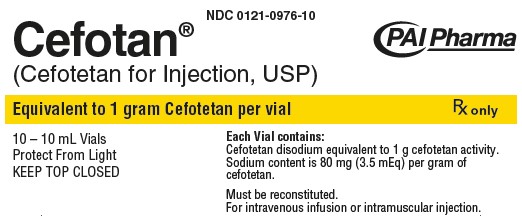
PACKAGE LABEL. CARTON PRINCIPAL DISPLAY PANEL NDC 0121-0976-10 CEFOTAN ® (Cefotetan for Injection, USP) PAI Pharma Equivalent to 1 gram Cefotetan per vial Rx only 10 - 10 mL Vials Protect from Light KEEP TOP CLOSED Each Vial contains: Cefotetan disodium equivalent to 1 g cefotetan activity. Sodium content is 80 mg (3.5 mEq) per gram of cefotetan.
Must be reconstituted. For intravenous infusion or intramuscular injection. Cefotetan for Injection 1 gram per vial carton
PACKAGE LABEL. CARTON PRINCIPAL DISPLAY PANEL NDC 0121-0977-10 CEFOTAN ® (Cefotetan for Injection, USP) PAI Pharma Equivalent to 2 grams Cefotetan per vial Rx only 10 - 20 mL Vials Protect from Light KEEP TOP CLOSED Must be reconstituted. For intravenous infusion or intramuscular injection.
Each Vial contains: Cefotetan disodium equivalent to 2 g cefotetan activity. Sodium content is 80 mg (3.5 mEq) per gram of cefotetan. Cefotetan for Injection 2 grams per vial carton
PACKAGE LABEL. VIAL PRINCIPAL DISPLAY PANEL NDC 0121-0976-55 CEFOTAN ® (Cefotetan for Injection, USP) 1 gram per vial* Must be reconstituted. For intravenous infusion or intramuscular injection. PAI Pharma Rx only Cefotetan for Injection 1 gram vial
PACKAGE LABEL. VIAL PRINCIPAL DISPLAY PANEL NDC 0121-0977-55 CEFOTAN ® (Cefotetan for Injection, USP) 2 gram per vial* Must be reconstituted. For intravenous infusion or intramuscular injection. PAI Pharma Rx only Cefotetan for Injection 2 grams vial label
Reported adverse events (FAERS)
Top reported reactions
Age at onset
Reporter sex
Serious outcomes
Where does this data come from?
About this NDC listing & data coverage
What data is (and isn’t) available for this NDC — tap to expand
| NDC identity (package / product / labeler codes) | ✓ Available |
| Labeler | ✓ Available |
| Product & package description | ✓ Available |
| Marketing category & status | ✓ Available |
| Active ingredient / dosage form / route | ✓ Available |
| FDA label (SPL via DailyMed) | ✓ Available |
| Package photos | ✓ Available |
| Inactive ingredients (structured) | — Not published for this NDC The labeler did not submit a structured excipient list, or no SPL is available. |
| NADAC pharmacy acquisition price (CMS) | — Not published for this NDC CMS publishes NADAC only for NDCs reported in its retail-pharmacy survey. |
| Orange Book / therapeutic-equivalence data | ✓ Available |
| HCPCS J-code billing crosswalk | ✓ Available |
| Medicaid utilization (CMS SDUD) | — Not published for this NDC CMS reports utilization only for NDCs with Medicaid claims above its privacy threshold. |