
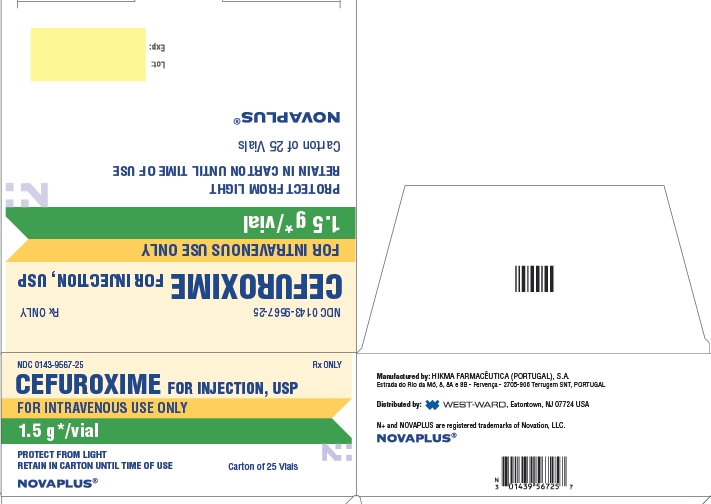
Cefuroxime 1.5 g Injection, Powder, For Solution, 25 vials — NDC 0143-9567-25 (Billing 00143-9567-25)
This is a package of 25 vials of Cefuroxime 1.5 g Injection, Powder, For Solution from Hikma Pharmaceuticals USA Inc., marketed since Jan 2004 and currently FDA-listed. It is this product's only package size.
NDC database record
One package, one record: these facts belong to NDC 0143-9567-25 alone.
- Record
- FDA NDC Directory package listing · Human prescription drug
- Code segments
- 0143 labeler · 9567 product · 25 package
- Package marketed since
- Jan 9, 2004
- Sample package
- No — commercial package
- Listing certified through
- Dec 31, 2026
- Billing quantity
- 25 EA per package
- Barcode (UPC-A, from the NDC)
- 3 0143956725 7
- Medicaid fills, this package
- 185 prescriptions in the last four reported quarters
- FDA record last changed
- Jul 24, 2026
Identity & classification
Regulatory identifiers FDA, NLM and CMS codes for this package
Drug-database identifiers Medi-Span GPI and First Databank GCN / HICL / AHFS classification
- GSN (GCN sequence number): 009140
- GCN: 25091
- GPI-14 (Medi-Span): 02200065102115
- HICL (First Databank): 003992
- AHFS class code: 08:12.06.08
- RxCUI (RxNorm): 1665444
Where does this data come from?
- FDA openFDA NDC Directory · synced Oct 8, 2026
- FDA label on DailyMed · label index refreshed Oct 8, 2026
- RxNorm (NLM RxNav) · catalog refreshed Oct 1, 2026
- Medi-Span GPI (licensed)
- First Databank (licensed) · refreshed Oct 8, 2026
RxNorm drug class
This medicine belongs to the Cephalosporin Antibacterial class.
Where does this data come from?
- RxClass (NLM) · catalog refreshed Oct 1, 2026
Clinical
- Cefuroxime is a broad-spectrum antibiotic that treats a range of bacterial infections. The tablet form (Cefuroxime Axetil) handles things like strep throat, sinus infections, ear i...
- What kinds of infections does cefuroxime treat?
- You can take Cefuroxime Axetil tablets with or without food, but taking them with a meal helps your body absorb more of the drug — so with food is generally the better choice if yo...
- Should I take the tablet with food or on an empty stomach?
Patient education
Supplement & herbal interactions
Some supplements/herbs that may interact with Cefuroxime — tap one for details:
Cefuroxime may be associated with lower levels of 7 nutrients — worth a chat with your pharmacist, not a cause for alarm.
Where does this data come from?
- MedlinePlus (NLM) · refreshed Oct 8, 2026
- FDA label on DailyMed · label index refreshed Oct 8, 2026
Ask a licensed pharmacist directly — free, answered by our team.
Pricing
A drug doesn't have one price. Each row is a different public payment system, and none is what you'd pay at the counter — that depends on your insurance. The ⓘ on each row explains what it measures.
| Price system | Per mL | Per package |
|---|---|---|
| Retail pharmacies payNADAC · weekly | Not in the retail survey — common for institutional, discontinued, or low-volume packs. | |
| Medicaid paysCMS SDUD · 12 mo | $1.98 | — |
| Medicare drug plans payPart D · Q2 2026 | $4.71 | — |
| Medicare Part B allowsASP · J0697 | $2.044 / J0697 unit | — |
Where does this data come from?
- CMS NADAC weekly file
- CMS ASP pricing files · refreshed Sep 20, 2026
- CMS Medicaid State Drug Utilization Data · through Q1 2026
- CMS Part D plan pricing files · refreshed Sep 24, 2026
- VA National Acquisition Center price file
Billing & reimbursement
Where does this data come from?
- CMS ASP NDC-HCPCS crosswalk · refreshed Sep 22, 2026
- DMEPDAC NDC-HCPCS crosswalk
- openFDA NSDE billing units · refreshed Oct 7, 2026
Packaging — all sizes for this product
| Package NDC | Description | Marketing start | Marketing end | Status |
|---|---|---|---|---|
| 00143-9567-25 You're viewing this Main listing | 25 VIAL in 1 CARTON / 1 INJECTION, POWDER, FOR SOLUTION in 1 VIAL | 2004-01-09 | — | Active |
Therapeutic equivalents
| Product | Labeler | Pack | NADAC/unit | TE | Status | Price vs. this |
|---|---|---|---|---|---|---|
| Cefuroxime 1.5 gthis 00143-9567-25 | Hikma | 25 vials | — | AP | FDA listed | — |
| Cefuroxime 1.5 g 00143-9977-22 | Hikma | 25 vials | — | AP | FDA listed | — |
| Cefuroxime and Dextrose 1.5 g/50mL 00264-3114-11 | B. | 50 ml | — | — | FDA listed | — |
| Cefuroxime sodium 1.5 g/20mL 25021-0119-20 | Sagent | 25 vials | — | AP | FDA listed | — |
Where does this data come from?
- FDA openFDA NDC Directory · synced Oct 8, 2026
- FDA Orange Book · refreshed Oct 3, 2026
- CMS NADAC weekly file
Availability & generic status
This product is an FDA-approved generic. Other versions of the same drug are listed under Therapeutic equivalents, least expensive first.
Where does this data come from?
- FDA Orange Book · refreshed Oct 3, 2026
Inactive Ingredients / Excipients
Inactive ingredients, also called excipients, are components of the drug product other than the active ingredient. They may include fillers, dyes, coatings, preservatives, flavors, or other formulation ingredients.
🧪 Avoiding an ingredient? See Cefuroxime inactive ingredients by manufacturer: every current product's list side by side, so you can ask your pharmacy for the version that does not list it.
Where does this data come from?
IACT rows and label-wide narrative are kept separate; availability and product-level specificity depend on the submitted label.- FDA label on DailyMed · label index refreshed Oct 8, 2026
- FDA openFDA NDC Directory · synced Oct 8, 2026
Inactive ingredient FAQ
Are inactive ingredients the same for every manufacturer?
Why might an inactive ingredient be missing?
Can inactive ingredients matter?
Manufacturer & labeler
More NDCs from Hikma Pharmaceuticals USA Inc. labeler code 00143
- Leucovorin Calcium 50 mg/5mL Injection, Powder, Lyophilized, For Solution NDC 0143-9555-01
- Levoleucovorin 50 mg/5mL Injection, Powder, Lyophilized, For Solution NDC 0143-9558-01
- Argatroban 50 mg/50mL Injection NDC 0143-9559-01
- Phentolamine Mesylate 5 mg/mL Injection, Powder, For Solution NDC 0143-9564-01
- Thiotepa 15 mg/1.5mL Injection, Powder, Lyophilized, For Solution NDC 0143-9565-01
- Azathioprine Sodium 100 mg/10mL Injection, Powder, Lyophilized, For Solution NDC 0143-9566-01
- Cefuroxime 750 mg Injection, Powder, For Solution NDC 0143-9568-25
- Cefuroxime 7.5 g Injection, Powder, For Solution NDC 0143-9569-10
- Sodium Ferric Gluconate Complex in Sucrose 12.5 mg/mL Injection NDC 0143-9570-10
- Levetiracetam 100 mg/mL Injection NDC 0143-9574-10
- Lidocaine 20 mg/mL Injection, Solution NDC 0143-9575-10
- Lidocaine 20 mg/mL Injection, Solution NDC 0143-9576-25
Where does this data come from?
- FDA openFDA NDC Directory · synced Oct 8, 2026
- Drugs@FDA
Full prescribing information FDA SPL
🎯 Indications and Usage ▾
INDICATIONS AND USAGE Cefuroxime for Injection is indicated for the treatment of patients with infections caused by susceptible strains of the designated organisms in the following diseases: Lower Respiratory Tract Infections , including pneumonia, caused by Streptococcus pneumoniae , Haemophilus influenzae (including ampicillin-resistant strains), Klebsiella spp., Staphylococcus aureus (penicillinase- and non–penicillinase-producing strains), Streptococcus pyogenes , and Escherichia coli . Urinary Tract Infections caused by Escherichia coli and Klebsiella spp.
Skin and Skin-Structure Infections caused by Staphylococcus aureus (penicillinase- and non–penicillinase-producing strains), Streptococcus pyogenes , Escherichia coli , Klebsiella spp., and Enterobacter spp. Septicemia caused by Staphylococcus aureus (penicillinase- and non–penicillinase-producing strains), Streptococcus pneumoniae , Escherichia coli , Haemophilus influenzae (including ampicillin-resistant strains), and Klebsiella spp. Meningitis caused by Streptococcus pneumoniae , Haemophilus influenzae (including ampicillin-resistant strains), Neisseria meningitidis , and Staphylococcus aureus (penicillinase- and non–penicillinase-producing strains).
Gonorrhea: Uncomplicated and disseminated gonococcal infections due to Neisseria gonorrhoeae (penicillinase- and non–penicillinase-producing strains) in both males and females. Bone and Joint Infections caused by Staphylococcus aureus (penicillinase- and non–penicillinase-producing strains). Clinical microbiological studies in skin and skin-structure infections frequently reveal the growth of susceptible strains of both aerobic and anaerobic organisms.
Cefuroxime for Injection has been used successfully in these mixed infections in which several organisms have been isolated. In certain cases of confirmed or suspected gram-positive or gram-negative sepsis or in patients with other serious infections in which the causative organism has not been identified, Cefuroxime for Injection may be used concomitantly with an aminoglycoside (see PRECAUTIONS ). The recommended doses of both antibiotics may be given depending on the severity of the infection and the patient's condition.
To reduce the development of drug-resistant bacteria and maintain the effectiveness of Cefuroxime for Injection and other antibacterial drugs, Cefuroxime for Injection should be used only to treat or prevent infections that are proven or strongly suspected to be caused by susceptible bacteria. When culture and susceptibility information are available, they should be considered in selecting or modifying antibacterial therapy. In the absence of such data, local epidemiology and susceptibility patterns may contribute to the empiric selection of therapy.
Prevention: The preoperative prophylactic administration of Cefuroxime for Injection may prevent the growth of susceptible disease-causing bacteria and thereby may reduce the incidence of certain postoperative infections in patients undergoing surgical procedures (e.g., vaginal hysterectomy) that are classified as clean-contaminated or potentially contaminated procedures. Effective prophylactic use of antibiotics in surgery depends on the time of administration. Cefuroxime for Injection should usually be given one-half to 1 hour before the operation to allow sufficient time to achieve effective antibiotic concentrations in the wound tissues during the procedure.
The dose should be repeated intraoperatively if the surgical procedure is lengthy. Prophylactic administration is usually not required after the surgical procedure ends and should be stopped within 24 hours. In the majority of surgical procedures, continuing prophylactic administration of any antibiotic does not reduce the incidence of subsequent infections but will increase the possibility of adverse reactions and the development of bacterial resistance.
The perioperative use of Cefuroxime for Injection has also been effective during open heart su… [Excerpted — this section continues on DailyMed.]
⏱️ Dosage and Administration ▾
DOSAGE AND ADMINISTRATION Dosage: Adults: The usual adult dosage range for Cefuroxime for Injection is 750 mg to 1.5 grams every 8 hours, usually for 5 to 10 days. In uncomplicated urinary tract infections, skin and skin-structure infections, disseminated gonococcal infections, and uncomplicated pneumonia, a 750 mg dose every 8 hours is recommended. In severe or complicated infections, a 1.5 gram dose every 8 hours is recommended.
In bone and joint infections, a 1.5-gram dose every 8 hours is recommended. In clinical trials, surgical intervention was performed when indicated as an adjunct to therapy with Cefuroxime for Injection. A course of oral antibiotics was administered when appropriate following the completion of parenteral administration of Cefuroxime for Injection.
In life-threatening infections or infections due to less susceptible organisms, 1.5 grams every 6 hours may be required. In bacterial meningitis, the dosage should not exceed 3 grams every 8 hours. The recommended dosage for uncomplicated gonococcal infection is 1.5 grams given intramuscularly as a single dose at 2 different sites together with 1 gram of oral probenecid.
For preventive use for clean-contaminated or potentially contaminated surgical procedures, a 1.5-gram dose administered intravenously just before surgery (approximately one-half to 1 hour before the initial incision) is recommended. Thereafter, give 750 mg intravenously or intramuscularly every 8 hours when the procedure is prolonged. For preventive use during open heart surgery, a 1.5 gram dose administered intravenously at the induction of anesthesia and every 12 hours thereafter for a total of 6 grams is recommended.
Impaired Renal Function: A reduced dosage must be employed when renal function is impaired. Dosage should be determined by the degree of renal impairment and the susceptibility of the causative organism (see Table 4 ). Table 4.
Dosage of Cefuroxime for Injection in Adults With Reduced Renal Function Creatinine Clearance mL/min) Dose Frequency > 20 750 mg - 1.5 grams q8h 10 - 20 750 mg q12h < 10 750 mg q24h Since Cefuroxime for Injection is dialyzable, patients on hemodialysis should be given a further dose at the end of the dialysis. When only serum creatinine is available, the following formula 4 (based on sex, weight, and age of the patient) may be used to convert this value into creatinine clearance. The serum creatinine should represent a steady state of renal function.
Males: Creatinine clearance (mL/min) = Weight (kg) x (140 - age) 72 x serum creatinine (mg/dL) Females: 0.85 x male value Note: As with antibiotic therapy in general, administration of Cefuroxime for Injection should be continued for a minimum of 48 to 72 hours after the patient becomes asymptomatic or after evidence of bacterial eradication has been obtained; a minimum of 10 days of treatment is recommended in infections caused by Streptococcus pyogenes in order to guard against the risk of rheumatic fever or glomerulonephritis; frequent bacteriologic and clinical appraisal is necessary during therapy of chronic urinary tract infection and may be required for several months after therapy has been completed; persistent infections may require treatment for several weeks; and doses smaller than those indicated above should not be used.
In staphylococcal and other infections involving a collection of pus, surgical drainage should be carried out where indicated. Pediatric Patients Above 3 Months of Age: Administration of 50 to 100 mg/kg/day in equally divided doses every 6 to 8 hours has been successful for most infections susceptible to Cefuroxime for Injection. The higher dosage of 100 mg/kg/day (not to exceed the maximum adult dosage) should be used for the more severe or serious infections.
In bone and joint infections, 150 mg/kg/day (not to exceed the maximum adult dosage) is recommended in equally divided doses every 8 hours. In clinical trials, a course of oral antibiotics was administered to pediatric… [Excerpted — this section continues on DailyMed.]
⛔ Contraindications ▾
CONTRAINDICATIONS Cefuroxime is contraindicated in patients with known allergy to the cephalosporin group of antibiotics.
⚠️ Warnings ▾
WARNINGS BEFORE THERAPY WITH CEFUROXIME FOR INJECTION IS INSTITUTED, CAREFUL INQUIRY SHOULD BE MADE TO DETERMINE WHETHER THE PATIENT HAS HAD PREVIOUS HYPERSENSITIVITY REACTIONS TO CEPHALOSPORINS, PENICILLINS, OR OTHER DRUGS. THIS PRODUCT SHOULD BE GIVEN CAUTIOUSLY TO PENICILLIN-SENSITIVE PATIENTS. ANTIBIOTICS SHOULD BE ADMINISTERED WITH CAUTION TO ANY PATIENT WHO HAS DEMONSTRATED SOME FORM OF ALLERGY, PARTICULARLY TO DRUGS.
IF AN ALLERGIC REACTION TO CEFUROXIME FOR INJECTION OCCURS, DISCONTINUE THE DRUG. SERIOUS ACUTE HYPERSENSITIVITY REACTIONS MAY REQUIRE EPINEPHRINE AND OTHER EMERGENCY MEASURES. Clostridium difficile associated diarrhea (CDAD) has been reported with use of nearly all antibacterial agents, including Cefuroxime for Injection, and may range in severity from mild diarrhea to fatal colitis.
Treatment with antibacterial agents alters the normal flora of the colon leading to overgrowth of C. difficile. C. difficile produces toxins A and B which contribute to the development of CDAD. Hypertoxin producing strains of C. difficile cause increased morbidity and mortality, as these infections can be refractory to antimicrobial therapy and may require colectomy.
CDAD must be considered in all patients who present with diarrhea following antibiotic use. Careful medical history is necessary since CDAD has been reported to occur over two months after the administration of antibacterial agents. If CDAD is suspected or confirmed, ongoing antibiotic use not directed against C. difficile may need to be discontinued.
Appropriate fluid and electrolyte management, protein supplementation, antibiotic treatment of C. difficile , and surgical evaluation should be instituted as clinically indicated. When the colitis is not relieved by drug discontinuation or when it is severe, oral vancomycin is the treatment of choice for antibiotic-associated pseudomembranous colitis produced by Clostridium difficile . Other causes of colitis should also be considered.
🤒 Adverse Reactions ▾
ADVERSE REACTIONS Cefuroxime is generally well-tolerated. The most common adverse effects have been local reactions following IV administration. Other adverse reactions have been encountered only rarely.
Local Reactions: Thrombophlebitis has occurred with IV administration in 1 in 60 patients. Gastrointestinal: Gastrointestinal symptoms occurred in 1 in 150 patients and included diarrhea (1 in 220 patients) and nausea (1 in 440 patients). The onset of pseudomembranous colitis may occur during or after antibacterial treatment (see WARNINGS).
Hypersensitivity Reactions: Hypersensitivity reactions have been reported in fewer than 1% of the patients treated with Cefuroxime for Injection and include rash (1 in 125). Pruritus, urticaria, and positive Coombs' test each occurred in fewer than 1 in 250 patients, and, as with other cephalosporins, rare cases of anaphylaxis, drug fever, erythema multiforme, interstitial nephritis, toxic epidermal necrolysis, and Stevens-Johnson syndrome have occurred. Blood: A decrease in hemoglobin and hematocrit has been observed in 1 in 10 patients and transient eosinophilia in 1 in 14 patients.
Less common reactions seen were transient neutropenia (fewer than 1 in 100 patients) and leukopenia (1 in 750 patients). A similar pattern and incidence were seen with other cephalosporins used in controlled studies. As with other cephalosporins, there have been rare reports of thrombocytopenia.
Hepatic: Transient rise in SGOT and SGPT (1 in 25 patients), alkaline phosphatase (1 in 50 patients), LDH (1 in 75 patients), and bilirubin (1 in 500 patients) levels has been noted. Kidney: Elevations in serum creatinine and/or blood urea nitrogen and a decreased creatinine clearance have been observed, but their relationship to cefuroxime is unknown. Postmarketing Experience with Cefuroxime for Injection: In addition to the adverse events reported during clinical trials, the following events have been observed during clinical practice in patients treated with Cefuroxime for Injection and were reported spontaneously.
Data are generally insufficient to allow an estimate of incidence or to establish causation. Immune System Disorders: Cutaneous vasculitis. Neurologic: Seizure.
Non-site specific: Angioedema. Cephalosporin-class Adverse Reactions: In addition to the adverse reactions listed above that have been observed in patients treated with Cefuroxime for Injection, the following adverse reactions and altered laboratory tests have been reported for cephalosporin-class antibiotics: Adverse Reactions: Vomiting, abdominal pain, colitis, vaginitis including vaginal candidiasis, toxic nephropathy, hepatic dysfunction including cholestasis, aplastic anemia, hemolytic anemia, hemorrhage. Several cephalosporins, including Cefuroxime for Injection, have been implicated in triggering seizures, particularly in patients with renal impairment when the dosage was not reduced (see DOSAGE AND ADMINISTRATION ).
If seizures associated with drug therapy should occur, the drug should be discontinued. Anticonvulsant therapy can be given if clinically indicated. Altered Laboratory Tests: Prolonged prothrombin time, pancytopenia, agranulocytosis.
To report SUSPECTED ADVERSE REACTIONS, contact West-Ward Pharmaceutical Corp. at 1-877-233-2001 or FDA at 1-800-FDA-1088 or www.fda.gov/medwatch.
🔄 Drug Interactions ▾
Drug Interactions: In common with other antibiotics, cefuroxime may affect the gut flora, leading to lower estrogen reabsorption and reduced efficacy of combined estrogen/progesterone oral contraceptives.
🔄 Drug / Laboratory Test Interactions ▾
Drug/Laboratory Test Interactions: A false-positive reaction for glucose in the urine may occur with copper reduction tests (Benedict's or Fehling's solution or with CLINITEST ® tablets) but not with enzyme-based tests for glycosuria. As a false-negative result may occur in the ferricyanide test, it is recommended that either the glucose oxidase or hexokinase method be used to determine blood plasma glucose levels in patients receiving Cefuroxime for Injection. Cefuroxime does not interfere with the assay of serum and urine creatinine by the alkaline picrate method.
🤰 Pregnancy ▾
Pregnancy: Teratogenic Effects: Pregnancy Category B. Reproduction studies have been performed in mice at doses up to 6,400 mg/kg/day (6.3 times the recommended maximum human dose based on mg/m 2 ) and rabbits at doses up to 400 mg/kg/day (2.1 times the recommended maximum human dose based on mg/m 2 ) and have revealed no evidence of impaired fertility or harm to the fetus due to cefuroxime. There are, however, no adequate and well-controlled studies in pregnant women.
Because animal reproduction studies are not always predictive of human response, this drug should be used during pregnancy only if clearly needed.
🧒 Pediatric Use ▾
Pediatric Use: Safety and effectiveness in pediatric patients below 3 months of age have not been established. Accumulation of other members of the cephalosporin class in newborn infants (with resulting prolongation of drug half-life) has been reported.
🧓 Geriatric Use ▾
Geriatric Use: Of the 1,914 subjects who received Cefuroxime for Injection in 24 clinical studies of cefuroxime, 901 (47%) were 65 years and older while 421 (22%) were 75 years and older. No overall differences in safety or effectiveness were observed between these subjects and younger subjects, and other reported clinical experience has not identified differences in responses between the elderly and younger patients, but greater susceptibility of some older individuals to drug effects cannot be ruled out. This drug is known to be substantially excreted by the kidney, and the risk of toxic reactions to this drug may be greater in patients with impaired renal function.
Because elderly patients are more likely to have decreased renal function, care should be taken in dose selection, and it may be useful to monitor renal function (see DOSAGE AND ADMINISTRATION ).
🆘 Overdosage ▾
OVERDOSAGE Overdosage of cephalosporins can cause cerebral irritation leading to convulsions. Serum levels of cefuroxime can be reduced by hemodialysis and peritoneal dialysis.
🧬 Clinical Pharmacology ▾
CLINICAL PHARMACOLOGY After intramuscular (IM) injection of a 750-mg dose of cefuroxime to normal volunteers, the mean peak serum concentration was 27 mcg/mL. The peak occurred at approximately 45 minutes (range, 15 to 60 minutes). Following IV doses of 750 mg and 1.5 grams, serum concentrations were approximately 50 and 100 mcg/mL, respectively, at 15 minutes.
Therapeutic serum concentrations of approximately 2 mcg/mL or more were maintained for 5.3 hours and 8 hours or more, respectively. There was no evidence of accumulation of cefuroxime in the serum following IV administration of 1.5-g doses every 8 hours to normal volunteers. The serum half-life after either IM or IV injections is approximately 80 minutes.
Approximately 89% of a dose of cefuroxime is excreted by the kidneys over an 8-hour period, resulting in high urinary concentrations. Following the IM administration of a 750-mg single dose, urinary concentrations averaged 1,300 mcg/mL during the first 8 hours. Intravenous doses of 750 mg and 1.5 g produced urinary levels averaging 1,150 and 2,500 mcg/mL, respectively, during the first 8-hour period.
The concomitant oral administration of probenecid with cefuroxime slows tubular secretion, decreases renal clearance by approximately 40%, increases the peak serum level by approximately 30%, and increases the serum half-life by approximately 30%. Cefuroxime is detectable in therapeutic concentrations in pleural fluid, joint fluid, bile, sputum, bone, and aqueous humor. Cefuroxime is detectable in therapeutic concentrations in cerebrospinal fluid (CSF) of adults and pediatric patients with meningitis.
The following table shows the concentrations of cefuroxime achieved in cerebrospinal fluid during multiple dosing of patients with meningitis. Table 1. Concentrations of Cefuroxime Achieved in Cerebrospinal Fluid During Multiple Dosing of Patients with Meningitis Patients Dose Number of Patients Mean (Range) CSF Cefuroxime Concentrations (mcg/mL) Achieved Within 8 Hours Post Dose Pediatric patients (4 weeks to 6.5 years) 200 mg/kg/day, divided q 6 hours 5 6.6 (0.9 - 17.3) Pediatric patients (7 months to 9 years) 200 to 230 mg/kg/day, divided q 8 hours 6 8.3 (<2 - 22.5) Adults 1.5 grams q 8 hours 2 5.2 (2.7 - 8.9) Adults 1.5 grams q 6 hours 10 6 (1.5 - 13.5) Cefuroxime is approximately 50% bound to serum protein.
Microbiology: Mechanism of Action : Cefuroxime is a bactericidal agent that acts by inhibition of bacterial cell wall synthesis. Cefuroxime has activity in the presence of some beta-lactamases, both penicillinases and cephalosporinases, of Gram-negative and Gram-positive bacteria. Mechanism of Resistance : Resistance to cefuroxime is primarily through hydrolysis by beta-lactamase, alteration of penicillin-binding proteins (PBPs), and decreased permeability.
Interaction with Other Antimicrobials In an in vitro study antagonistic effects have been observed with the combination of chloramphenicol and cefuroxime. Cefuroxime has been shown to be active against most isolates of the following bacteria, both in vitro and in clinical infections as described in the INDICATIONS AND USAGE section: Gram-negative bacteria Enterobacter spp. Escherichia coli Klebsiella spp.
Haemophilus influenzae Neisseria meningitidis Neisseria gonorrhoeae Gram-positive bacteria Staphylococcus aureus Streptococcus pneumoniae Streptococcus pyogenes The following in vitro data are available, but their clinical significance is unknown. At least 90 percent of the following microorganisms exhibit an in vitro minimum inhibitory concentration (MIC) less than or equal to the susceptible breakpoint for cefuroxime. However, the efficacy of cefuroxime in treating clinical infections due to these microorganisms has not been established in adequate and well-controlled clinical trials.
Gram-negative bacteria Citrobacter spp. Providencia rettgeri Haemophilus parainfluenzae Proteus mirabilis Moraxella catarrhalis Morganella morganii Salmonella spp. Shigella spp.
Gr… [Excerpted — this section continues on DailyMed.]
📦 How Supplied / Storage and Handling ▾
HOW SUPPLIED Cefuroxime for Injection, USP in the dry state should be stored at 20-25° (68-77°F) [see USP Controlled Room Temperature] and protected from light. Cefuroxime for Injection, USP, is a dry, white to off-white powder supplied as follows: NDC 0143-9568-25 Sterile Cefuroxime Sodium USP, 750 mg Carton of 25 Equivalent to Cefuroxime, IM/IV Injection NDC 0143-9567-25 Sterile Cefuroxime Sodium USP, 1.5 grams Carton of 25 Equivalent to Cefuroxime, IV Injection Also available as: NDC 0143-9569-10 Sterile Cefuroxime Sodium USP, 7.5 grams Carton of 10 Equivalent to Cefuroxime, Pharmacy Bulk Package
📋 Description ▾
DESCRIPTION Cefuroxime is a sterile semisynthetic, broad-spectrum, cephalosporin antibiotic for parenteral administration. It is the sodium salt of (6R,7R)-3-carbamoyloxymethyl-7-[Z-2-methoxyimino-2-(fur-2-yl)acetamido]ceph-3-em-4-carboxylate, and it has the following structural formula: The molecular formula is C 16 H 15 N 4 NaO 8 S, representing a molecular weight of 446.4. Cefuroxime for Injection, USP contains approximately 54.2 mg (2.4 mEq) of sodium per gram of cefuroxime activity.
Cefuroxime for Injection, USP in sterile crystalline form is supplied in vials equivalent to 750 mg or 1.5 g of cefuroxime as cefuroxime sodium. Solutions of Cefuroxime for Injection, USP range in color from light yellow to amber, depending on the concentration and diluent used. The pH of freshly constituted solutions usually ranges from 6 to 8.5. cefuroxime chemical structure
💬 Information for Patients ▾
Information for Patients: Patients should be counseled that antibacterial drugs, including Cefuroxime for Injection, should only be used to treat bacterial infections. They do not treat viral infections (e.g., the common cold). When Cefuroxime for Injection is prescribed to treat a bacterial infection, patients should be told that although it is common to feel better early in the course of therapy, the medication should be taken exactly as directed.
Skipping doses or not completing the full course of therapy may: 1. decrease the effectiveness of the immediate treatment and, 2. increase the likelihood that bacteria will develop resistance and will not be treatable by Cefuroxime for Injection or other antibacterial drugs in the future. Diarrhea is a common problem caused by antibiotics which usually ends when the antibiotic is discontinued. Sometimes after starting treatment with antibiotics, patients can develop watery and bloody stools (with or without stomach cramps and fever) even as late as 2 or more months after having taken the last dose of the antibiotic.
If this occurs, patients should contact their physician as soon as possible.
⚠️ Precautions ▾
PRECAUTIONS General: Although Cefuroxime for Injection rarely produces alterations in kidney function, evaluation of renal status during therapy is recommended, especially in seriously ill patients receiving the maximum doses. Cephalosporins should be given with caution to patients receiving concurrent treatment with potent diuretics as these regimens are suspected of adversely affecting renal function. The total daily dose of Cefuroxime for Injection should be reduced in patients with transient or persistent renal insufficiency (see DOSAGE AND ADMINISTRATION ), because high and prolonged serum antibiotic concentrations can occur in such individuals from usual doses.
As with other antibiotics, prolonged use of Cefuroxime for Injection may result in overgrowth of non-susceptible organisms. Careful observation of the patient is essential. If superinfection occurs during therapy, appropriate measures should be taken.
Broad-spectrum antibiotics should be prescribed with caution in individuals with a history of gastrointestinal disease, particularly colitis. Nephrotoxicity has been reported following concomitant administration of aminoglycoside antibiotics and cephalosporins. As with other therapeutic regimens used in the treatment of meningitis, mild-to-moderate hearing loss has been reported in a few pediatric patients treated with cefuroxime.
Persistence of positive CSF (cerebrospinal fluid) cultures at 18 to 36 hours has also been noted with cefuroxime injection, as well as with other antibiotic therapies; however, the clinical relevance of this is unknown. Cephalosporins may be associated with a fall in prothrombin activity. Those at risk include patients with renal or hepatic impairment, or poor nutritional state, as well as patients receiving a protracted course of antimicrobial therapy, and patients previously stabilized on anticoagulant therapy.
Prothrombin time should be monitored in patients at risk and exogenous Vitamin K administered as indicated. Prescribing Cefuroxime for Injection in the absence of a proven or strongly suspected bacterial infection or a prophylactic indication is unlikely to provide benefit to the patient and increases the risk of the development of drug-resistant bacteria. Information for Patients: Patients should be counseled that antibacterial drugs, including Cefuroxime for Injection, should only be used to treat bacterial infections.
They do not treat viral infections (e.g., the common cold). When Cefuroxime for Injection is prescribed to treat a bacterial infection, patients should be told that although it is common to feel better early in the course of therapy, the medication should be taken exactly as directed. Skipping doses or not completing the full course of therapy may: 1. decrease the effectiveness of the immediate treatment and, 2. increase the likelihood that bacteria will develop resistance and will not be treatable by Cefuroxime for Injection or other antibacterial drugs in the future.
Diarrhea is a common problem caused by antibiotics which usually ends when the antibiotic is discontinued. Sometimes after starting treatment with antibiotics, patients can develop watery and bloody stools (with or without stomach cramps and fever) even as late as 2 or more months after having taken the last dose of the antibiotic. If this occurs, patients should contact their physician as soon as possible.
Drug Interactions: In common with other antibiotics, cefuroxime may affect the gut flora, leading to lower estrogen reabsorption and reduced efficacy of combined estrogen/progesterone oral contraceptives. Drug/Laboratory Test Interactions: A false-positive reaction for glucose in the urine may occur with copper reduction tests (Benedict's or Fehling's solution or with CLINITEST ® tablets) but not with enzyme-based tests for glycosuria. As a false-negative result may occur in the ferricyanide test, it is recommended that either the glucose oxidase or hexokinase method be used to determine blood pla… [Excerpted — this section continues on DailyMed.]
🍼 Nursing Mothers ▾
Nursing Mothers: Since cefuroxime is excreted in human milk, caution should be exercised when Cefuroxime for Injection is administered to a nursing woman.
📄 Carcinogenesis, Mutagenesis, Impairment of Fertility ▾
Carcinogenesis, Mutagenesis, Impairment of Fertility: Although lifetime studies in animals have not been performed to evaluate carcinogenic potential, no mutagenic activity was found for cefuroxime in the mouse lymphoma assay and a battery of bacterial mutation tests. Positive results were obtained in an in vitro chromosome aberration assay, however, negative results were found in an in vivo micronucleus test at doses up to 10 g/kg. Reproduction studies in mice at doses up to 3,200 mg/kg/day (3.1 times the recommended maximum human dose based on mg/m 2 ) have revealed no impairment of fertility.
Reproductive studies revealed no impairment of fertility in animals.
📚 References ▾
REFERENCES 1. Cockcroft DW, Gault MH. Prediction of creatinine clearance from serum creatinine. Nephron . 1976; 16:31-41. CLINITEST ® is a registered trademark of Ames Division, Miles Laboratories, Inc. Manufactured by: Hikma Farmaceutica (Portugal), S.A. 2705-906 Terrugem SNT PORTUGAL Distributed by: WEST-WARD A HIKMA COMPANY Eatontown, NJ 07724, USA NOVAPLUS is a registered trademark of Vizient, Inc. NOVAPLUS ® Revised: July 2018 PIN383-NOV/3
📄 Package Label / Principal Display Panel ▾
PRINCIPAL DISPLAY PANEL NDC 0143-9568-01 Rx ONLY CEFUROXIME FOR INJECTION, USP FOR IV OR IM USE 750 mg*/vial PROTECT FROM LIGHT *Each vial contains sterile cefuroxime sodium equiva- lent to cefuroxime 750 mg. The sodium content is approximately 54.2 mg (2.4 mEq) of sodium per gram of cefuroxime activity. USUAL DOSAGE: See package insert.
For IM Suspension: Add 3 mL of Sterile Water for Injection. Shake gently to dispense and withdraw completely the resulting suspension for injection. For IV Solution: Add 8.3 mL of Sterile Water for Injec- tion.
Shake until dissolved and withdraw completely the resulting solution for injection. After constitution, the suspension and solution maintain potency for 24 hours at room temperature or 48 hours under refrigeration (5ºC or 41ºF). Color changes in solution do not affect potency.
Store at 20º to 25ºC (68º to 77ºF). NDC 0143-9568-01 Rx ONLY CEFUROXIME FOR INJECTION, USP FOR IV OR IM USE 750 mg*/vial PROTECT FROM LIGHT *Each vial contains sterile cefuroxime sodium equiva- lent to cefuroxime 750 mg. The sodium content is approximately 54.2 mg (2.4 mEq) of sodium per gram of cefuroxime activity.
USUAL DOSAGE: See package insert. For IM Suspension: Add 3 mL of Sterile Water for Injection. Shake gently to dispense and withdraw completely the resulting suspension for injection.
For IV Solution: Add 8.3 mL of Sterile Water for Injec- tion. Shake until dissolved and withdraw completely the resulting solution for injection. After constitution, the suspension and solution maintain potency for 24 hours at room temperature or 48 hours under refrigeration (5ºC or 41ºF).
Color changes in solution do not affect potency. Store at 20º to 25ºC (68º to 77ºF).
PRINCIPAL DISPLAY PANEL NDC 0143-9568-25 Rx ONLY CEFUROXIME FOR INJECTION, USP For INTRAVENOUS or INTRAMUSCULAR Use 750 mg*/vial PROTECT FROM LIGHT RETAIN IN CARTON UNTIL TIME OF USE Carton of 25 Vials NDC 0143-9568-25 Rx ONLY CEFUROXIME FOR INJECTION, USP For INTRAVENOUS or INTRAMUSCULAR Use 750 mg*/vial PROTECT FROM LIGHT RETAIN IN CARTON UNTIL TIME OF USE Carton of 25 Vials *Each vial contains sterile cefuroxime sodium equivalent to cefuroxime 750 mg. The sodium content is approximately 54.2 mg (2.4 mEq) of sodium per gram of cefuroxime activity.
USUAL DOSAGE: See package insert. For IM Suspension: Add 3 mL of Sterile Water for Injection. Shake gently to disperse and withdraw completely the resulting suspension for injection.
For IV Solution: Add 8.3 mL of Sterile Water for Injection. Shake until dissolved and withdraw completely the resulting solution for injection. After constitution, the suspension and solution maintain potency for 24 hours at room temperature or 48 hours under refrigeration (5ºC or 41ºF).
Color changes in solution do not affect potency. Store at 20º to 25ºC (68º to 77ºF) [See USP Controlled Room Temperature]. PROTECT FROM LIGHT.
STORE UPRIGHT. NDC 0143-9568-25 Rx ONLY CEFUROXIME FOR INJECTION, USP For INTRAVENOUS or INTRAMUSCULAR Use 750 mg*/vial PROTECT FROM LIGHT RETAIN IN CARTON UNTIL TIME OF USE Carton of 25 Vials NDC 0143-9568-25 Rx ONLY CEFUROXIME FOR INJECTION, USP For INTRAVENOUS or INTRAMUSCULAR Use 750 mg*/vial PROTECT FROM LIGHT RETAIN IN CARTON UNTIL TIME OF USE Carton of 25 Vials *Each vial contains sterile cefuroxime sodium equivalent to cefuroxime 750 mg. The sodium content is approximately 54.2 mg (2.4 mEq) of sodium per gram of cefuroxime activity.
USUAL DOSAGE: See package insert. For IM Suspension: Add 3 mL of Sterile Water for Injection. Shake gently to disperse and withdraw completely the resulting suspension for injection.
For IV Solution: Add 8.3 mL of Sterile Water for Injection. Shake until dissolved and withdraw completely the resulting solution for injection. After constitution, the suspension and solution maintain potency for 24 hours at room temperature or 48 hours under refrigeration (5ºC or 41ºF).
Color changes in solution do not affect potency. Store at 20º to 25ºC (68º to 77ºF) [See USP Controlled… [Excerpted — this section continues on DailyMed.]
Medicaid utilization & spend
Medicare Part D spend CMS · PART D · 2026 (Q1)
About this NDC listing & data coverage
What data is (and isn’t) available for this NDC — tap to expand
| NDC identity (package / product / labeler codes) | ✓ Available |
| Labeler | ✓ Available |
| Product & package description | ✓ Available |
| Marketing category & status | ✓ Available |
| Active ingredient / dosage form / route | ✓ Available |
| FDA label (SPL via DailyMed) | ✓ Available |
| Package photos | ✓ Available |
| Inactive ingredients (structured) | — Not published for this NDC The labeler did not submit a structured excipient list, or no SPL is available. |
| NADAC pharmacy acquisition price (CMS) | — Not published for this NDC CMS publishes NADAC only for NDCs reported in its retail-pharmacy survey. |
| Orange Book / therapeutic-equivalence data | ✓ Available |
| HCPCS J-code billing crosswalk | ✓ Available |
| Medicaid utilization (CMS SDUD) | ✓ Available |