
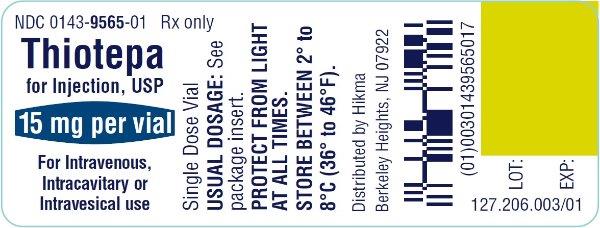
Thiotepa 15 mg/1.5mL Injection, Powder, Lyophilized, For Solution, 1 vial — NDC 0143-9565-01 (Billing 00143-9565-01)
This is a package of 1 vial of Thiotepa 15 mg/1.5mL Injection, Powder, Lyophilized, For Solution from Hikma Pharmaceuticals USA Inc., marketed since Jun 2001 and currently FDA-listed. It is this product's only package size.
NDC database record
One package, one record: these facts belong to NDC 0143-9565-01 alone.
- Record
- FDA NDC Directory package listing · Human prescription drug
- Code segments
- 0143 labeler · 9565 product · 01 package
- Package marketed since
- Jun 1, 2001
- Sample package
- No — commercial package
- Listing certified through
- Dec 31, 2026
- Billing quantity
- 1 EA per package
- Barcode (UPC-A, from the NDC)
- 3 0143956501 7
- FDA record last changed
- Jul 24, 2026
Identity & classification
Regulatory identifiers FDA, NLM and CMS codes for this package
Drug-database identifiers Medi-Span GPI and First Databank GCN / HICL / AHFS classification
- GSN (GCN sequence number): 008776
- GCN: 38410
- GPI-14 (Medi-Span): 21100040002105
- HICL (First Databank): 003898
- AHFS class code: 10:00.00.00
- RxCUI (RxNorm): 1660009
Where does this data come from?
- FDA openFDA NDC Directory · synced Oct 8, 2026
- FDA label on DailyMed · label index refreshed Oct 6, 2026
- RxNorm (NLM RxNav) · catalog refreshed Oct 1, 2026
- Medi-Span GPI (licensed)
- First Databank (licensed) · refreshed Oct 8, 2026
RxNorm drug class
This medicine belongs to the Alkylating Drug class.
Where does this data come from?
- RxClass (NLM) · catalog refreshed Oct 1, 2026
Clinical
Thiotepa injection is used to treat certain types of ovarian cancer (cancer that begins in the female reproductive organs where eggs are formed), breast, and bladder cancer. It is also used to treat malignant effusions (a condition when fluid collects in the lungs or around the heart) that are caused by cancerous tumors. Thiotepa is in a class of medications called alkylating agents. It works by slowing or stopping the growth of cancer cells in your body.
Read the full MedlinePlus article ↗- It is a chemotherapy medicine. Tepadina is used before stem cell transplant in children with class 3 beta-thalassemia. It is also used for breast or ovarian adenocarcinoma, cancer-...
- A healthcare team gives it to you. Depending on the use, it goes into a vein, into a body cavity, or into your bladder through a catheter. Your team decides the schedule and checks...
- Low blood counts are very common. You may also get mouth sores, diarrhea, rash, bleeding, blood in the urine, nausea and tiredness. Call right away for fever, signs of infection, u...
- Thiotepa can leave your body partly through the skin and cause discoloration, itching, blistering or peeling. The label advises bathing at least twice daily through 48 hours after...
Patient education
Supplement & herbal interactions
Some supplements/herbs that may interact with Thiotepa — tap one for details:
Thiotepa may be associated with lower levels of 1 nutrient — worth a chat with your pharmacist, not a cause for alarm.
Where does this data come from?
- MedlinePlus (NLM) · refreshed Oct 1, 2026
- FDA label on DailyMed · label index refreshed Oct 6, 2026
Ask a licensed pharmacist directly — free, answered by our team.
Pricing
A drug doesn't have one price. Each row is a different public payment system, and none is what you'd pay at the counter — that depends on your insurance. The ⓘ on each row explains what it measures.
| Price system | Per mL | Per package |
|---|---|---|
| Retail pharmacies payNADAC · weekly | Not in the retail survey — common for institutional, discontinued, or low-volume packs. | |
| Medicaid paysCMS SDUD · 12 mo | No recent Medicaid claims on file for this NDC — rare and low-volume NDCs are suppressed in the public data. | |
| Medicare drug plans payPart D · quarterly | No Part D plan price is available for this NDC in our data. | |
| Medicare Part B allowsASP · J9342 | $4.931 / J9342 unit | — |
Where does this data come from?
- CMS NADAC weekly file
- CMS ASP pricing files · refreshed Sep 20, 2026
- CMS Medicaid State Drug Utilization Data · refreshed Oct 8, 2026
- CMS Part D plan pricing files · refreshed Sep 24, 2026
- VA National Acquisition Center price file
Billing & reimbursement
Where does this data come from?
- CMS ASP NDC-HCPCS crosswalk · refreshed Sep 22, 2026
- DMEPDAC NDC-HCPCS crosswalk
- openFDA NSDE billing units · refreshed Oct 7, 2026
Packaging — all sizes for this product
| Package NDC | Description | Marketing start | Marketing end | Status |
|---|---|---|---|---|
| 00143-9565-01 You're viewing this Main listing | 1 VIAL in 1 BOX, UNIT-DOSE / 1.5 mL in 1 VIAL | 2001-06-01 | — | Active |
Therapeutic equivalents
| Product | Labeler | Pack | NADAC/unit | TE | Status | Price vs. this |
|---|---|---|---|---|---|---|
| Thiotepa 15 mg/1.5mL 00143-9309-01 | Hikma | 1 vial | — | AP | FDA listed | — |
| Thiotepa 15 mg/1.5mLthis 00143-9565-01 | Hikma | 1 vial | — | AP | FDA listed | — |
| Thiotepa 15 mg/1.5mL 25021-0246-02 | Sagent | 1 vial | — | — | FDA listed | — |
| Thiotepa 15 mg 43598-0650-11 | Dr.Reddy's | 1 vial | — | AP | FDA listed | — |
| Thiotepa 15 mg 68083-0446-01 | Gland | 1 vial | — | AP | FDA listed | — |
| Tepadina 15 mg 70121-1630-01 | Amneal | 1 vial | — | AP | FDA listed | — |
| Thiotepa 15 mg 71288-0156-05 | Meitheal | 1 vial | — | AP | FDA listed | — |
| Thiotepa 15 mg 72205-0045-01 | Novadoz | 1 vial | — | AP | FDA listed | — |
Where does this data come from?
- FDA openFDA NDC Directory · synced Oct 8, 2026
- FDA Orange Book · refreshed Oct 3, 2026
- CMS NADAC weekly file
Availability & generic status
This product is an FDA-approved generic. Other versions of the same drug are listed under Therapeutic equivalents, least expensive first.
Where does this data come from?
- FDA Orange Book · refreshed Oct 3, 2026
Inactive Ingredients / Excipients
Inactive ingredients, also called excipients, are components of the drug product other than the active ingredient. They may include fillers, dyes, coatings, preservatives, flavors, or other formulation ingredients.
🧪 Avoiding an ingredient? See Thiotepa Injection inactive ingredients by manufacturer: every current product's list side by side, so you can ask your pharmacy for the version that does not list it.
💡 Tap an ingredient (hover on desktop) to see what it is and why it’s used.
-
UNII 059QF0KO0R
Water is a liquid solvent that dissolves and mixes ingredients together in liquid medicines, syrups, and injections. It helps distribute the active drug evenly throughout the product.
1 inactive ingredient listed in the exact product block matched to this NDC.
Where does this data come from?
ingredient classCode="IACT" elements from the exact product block matched by this NDC. Label-section narrative from DailyMed / the openFDA label index is shown separately when available.- FDA label on DailyMed · label index refreshed Oct 6, 2026
- FDA openFDA NDC Directory · synced Oct 8, 2026
Inactive ingredient FAQ
Are inactive ingredients the same for every manufacturer?
Why might an inactive ingredient be missing?
Can inactive ingredients matter?
Manufacturer & labeler
More NDCs from Hikma Pharmaceuticals USA Inc. labeler code 00143
- Leucovorin Calcium 200 mg/20mL Injection, Powder, Lyophilized, For Solution NDC 0143-9553-01
- Leucovorin Calcium 100 mg/10mL Injection, Powder, Lyophilized, For Solution NDC 0143-9554-01
- Leucovorin Calcium 50 mg/5mL Injection, Powder, Lyophilized, For Solution NDC 0143-9555-01
- Levoleucovorin 50 mg/5mL Injection, Powder, Lyophilized, For Solution NDC 0143-9558-01
- Argatroban 50 mg/50mL Injection NDC 0143-9559-01
- Phentolamine Mesylate 5 mg/mL Injection, Powder, For Solution NDC 0143-9564-01
- Azathioprine Sodium 100 mg/10mL Injection, Powder, Lyophilized, For Solution NDC 0143-9566-01
- Cefuroxime 1.5 g Injection, Powder, For Solution NDC 0143-9567-25
- Cefuroxime 750 mg Injection, Powder, For Solution NDC 0143-9568-25
- Cefuroxime 7.5 g Injection, Powder, For Solution NDC 0143-9569-10
- Sodium Ferric Gluconate Complex in Sucrose 12.5 mg/mL Injection NDC 0143-9570-10
- Levetiracetam 100 mg/mL Injection NDC 0143-9574-10
Where does this data come from?
- FDA openFDA NDC Directory · synced Oct 8, 2026
- Drugs@FDA
Full prescribing information FDA SPL
🎯 Indications and Usage ▾
INDICATIONS AND USAGE Thiotepa for Injection, USP has been tried with varying results in the palliation of a wide variety of neoplastic diseases. However, the most consistent results have been seen in the following tumors: 1.Adenocarcinoma of the breast. 2.Adenocarcinoma of the ovary.
3.For controlling intracavitary effusions secondary to diffuse or localized neoplastic diseases of various serosal cavities. 4.For the treatment of superficial papillary carcinoma of the urinary bladder. While now largely superseded by other treatments, thiotepa has been effective against other lymphomas, such as lymphosarcoma and Hodgkin's disease.
⏱️ Dosage and Administration ▾
DOSAGE AND ADMINISTRATION Since absorption from the gastrointestinal tract is variable, thiotepa should not be administered orally. Dosage must be carefully individualized. A slow response to thiotepa does not necessarily indicate a lack of effect.
Therefore, increasing the frequency of dosing may only increase toxicity. After maximum benefit is obtained by initial therapy, it is necessary to continue the patient on maintenance therapy (1 to 4 week intervals). In order to continue optimal effect, maintenance doses should not be administered more frequently than weekly in order to preserve correlation between dose and blood counts.
Preparation and Administration Precautions Thiotepa is a cytotoxic anticancer drug and as with other potentially toxic compounds, caution should be exercised in handling and preparation of thiotepa. Skin reactions associated with accidental exposure to thiotepa may occur. The use of gloves is recommended.
If thiotepa solution contacts the skin, immediately wash the skin thoroughly with soap and water. If thiotepa contacts mucous membranes, the membranes should be flushed thoroughly with water. Preparation of Solution Thiotepa for injection should be reconstituted with 1.5 mL of sterile water for injection resulting in a drug concentration of approximately 10 mg/mL .
The actual withdrawable quantities and concentration achieved are illustrated in the following table: Label Claim (mg/vial) Actual Content (mg/vial) Amount of Diluent to be Added (mL) Approximate Withdrawable Volume (mL) Approximate Withdrawable Amount (mg/vial) Approximate Reconstituted Concentration (mg/mL) 15 15.6 1.5 1.4 14.7
10.4The reconstituted solution is hypotonic and should be further diluted with sodium chloride injection (0. 9% sodium chloride) before use. When reconstituted with sterile water for injection, solutions of thiotepa should be stored in a refrigerator and used within 8 hours.
Reconstituted solutions further diluted with sodium chloride injection should be used immediately. In order to eliminate haze, filter solutions through a 0.22 micron filter* prior to administration. Filtering does not alter solution potency.
Reconstituted solutions should be clear. Solutions that remain opaque or precipitate after filtration should not be used. *Polysulfone membrane (Gelman’s Sterile Aerodisc ® , Single Use) or triton-free mixed ester of cellulose/PVC (Millipore’s MILLEX ® -GS Filter Unit). Parenteral drug products should be inspected visually for particulate matter and discoloration prior to administration, whenever solution and container permit.
Initial and Maintenance Doses Initially the higher dose in the given range is commonly administered. The maintenance dose should be adjusted weekly on the basis of pretreatment control blood counts and subsequent blood counts. Intravenous Administration Thiotepa may be given by rapid intravenous administration in doses of 0.3 to 0.4 mg/kg.
Doses should be given at 1 to 4 week intervals. Intracavitary Administration The dosage recommended is 0.6 to 0.8 mg/kg. Administration is usually effected through the same tubing which is used to remove the fluid from the cavity involved.
Intravesical Administration Patients with papillary carcinoma of the bladder are dehydrated for 8 to 12 hours prior to treatment. Then 60 mg of thiotepa in 30 to 60 mL of Sodium Chloride Injection is instilled into the bladder by catheter. For maximum effect, the solution should be retained for 2 hours.
If the patient finds it impossible to retain 60 mL for 2 hours, the dose may be given in a volume of 30 mL. If desired, the patient may be positioned every 15 minutes for maximum area contact. The usual course of treatment is once a week for 4 weeks.
The course may be repeated if necessary, but second and third courses must be given with caution since bone-marrow depression may be increased. Deaths have occurred after intravesical administration, caused by bone-marrow depression from systemically absorbed drug.… [Excerpted — this section continues on DailyMed.]
⛔ Contraindications ▾
CONTRAINDICATIONS Thiotepa is contraindicated in patients with a known hypersensitivity (allergy) to this preparation. Therapy is probably contraindicated in cases of existing hepatic, renal, or bone-marrow damage. However, if the need outweighs the risk in such patients, thiotepa may be used in low dosage, and accompanied by hepatic, renal and hemopoietic function tests.
⚠️ Warnings ▾
WARNINGS Death has occurred after intravesical administration, caused by bone-marrow depression from systematically absorbed drug. Death from septicemia and hemorrhage has occurred as a direct result of hematopoietic depression by thiotepa. Thiotepa is highly toxic to the hematopoietic system.
A rapidly falling white blood cell or platelet count indicates the necessity for discontinuing or reducing the dosage of thiotepa. Weekly blood and platelet counts are recommended during therapy and for at least 3 weeks after therapy has been discontinued. Thiotepa can cause fetal harm when administered to a pregnant woman.
Thiotepa given by the intraperitoneal (IP) route was teratogenic in mice at doses ≥ 1 mg/kg (3.2 mg/m 2 ), approximately 8-fold less than the maximum recommended human therapeutic dose (0.8 mg/kg, 27 mg/m 2 ), based on body-surface area. Thiotepa given by the IP route was teratogenic in rats at doses ≥ 3 mg/kg (21 mg/m 2 ), approximately equal to the maximum recommended human therapeutic dose, based on body-surface area. Thiotepa was lethal to rabbit fetuses at a dose of 3 mg/kg (41 mg/m 2 ), approximately two times the maximum recommended human therapeutic dose based on body-surface area.
Effective contraception should be used during thiotepa therapy if either the patient or partner is of childbearing potential. There are no adequate and well-controlled studies in pregnant women. If thiotepa is used during pregnancy, or if pregnancy occurs during thiotepa therapy, the patient and partner should be apprised of the potential hazard to the fetus.
Thiotepa is a polyfunctional alkylating agent, capable of cross-linking the DNA within a cell and changing its nature. The replication of the cell is, therefore, altered, and thiotepa may be described as mutagenic. An in vitro study has shown that it causes chromosomal aberrations of the chromatid type and that the frequency of induced aberrations increases with the age of the subject.
Like many alkylating agents, thiotepa has been reported to be carcinogenic when administered to laboratory animals. Carcinogenicity is shown most clearly in studies using mice, but there is some evidence of carcinogenicity in man. In patients treated with thiotepa, cases of myelodysplastic syndromes and acute non-lymphocytic leukemia have been reported.
🤒 Adverse Reactions ▾
ADVERSE REACTIONS In addition to its effect on the blood-forming elements (see WARNINGS and PRECAUTIONS sections), thiotepa may cause other adverse reactions. General Fatigue, weakness. Febrile reaction and discharge from a subcutaneous lesion may occur as the result of breakdown of tumor tissue.
Hypersensitivity Reactions Allergic reactions - rash, urticaria, laryngeal edema, asthma, anaphylactic shock, wheezing. Local Reactions Contact dermatitis, pain at the injection site. Gastrointestinal Nausea, vomiting, abdominal pain, anorexia.
Renal Dysuria, urinary retention. There have been rare reports of chemical cystitis or hemorrhagic cystitis following intravesical, but not parenteral administration of thiotepa. Respiratory Prolonged apnea has been reported when succinylcholine was administered prior to surgery, following combined use of thiotepa and other anticancer agents.
It was theorized that this was caused by decrease of pseudocholinesterase activity caused by the anticancer drugs. Neurologic Dizziness, headache, blurred vision. Skin Dermatitis, alopecia.
Skin depigmentation has been reported following topical use. Special Senses Conjunctivitis. Reproductive Amenorrhea, interference with spermatogenesis.
🔄 Drug Interactions ▾
Drug Interactions It is not advisable to combine, simultaneously or sequentially, cancer chemotherapeutic agents or a cancer chemotherapeutic agent and a therapeutic modality having the same mechanism of action. Therefore, thiotepa combined with other alkylating agents such as nitrogen mustard or cyclophosphamide or thiotepa combined with irradiation would serve to intensify toxicity rather than to enhance therapeutic response. If these agents must follow each other, it is important that recovery from the first agent, as indicated by white blood cell count, be complete before therapy with the second agent is instituted.
Other drugs which are known to produce bone-marrow depression should be avoided.
🤰 Pregnancy ▾
Pregnancy Teratogenic Effects- Category D See WARNINGS section. Thiotepa can cause fetal harm when administered to a pregnant woman. Thiotepa given by the IP route was teratogenic in mice at doses ≥ 1 mg/kg (3.2 mg/m 2 ), approximately 8-fold less than the maximum recommended human therapeutic dose based on body-surface area.
Thiotepa given by the IP route was teratogenic in rats at doses ≥3 mg/kg (21 mg/m 2 ), approximately equal to the maximum recommended human therapeutic dose based on body-surface area. Thiotepa was lethal to rabbit fetuses at a dose of 3 mg/kg (41 mg/m 2 ), approximately 2 times the maximum recommended human therapeutic dose based on body-surface area. Patients of childbearing potential should be advised to avoid pregnancy.
There are no adequate and well-controlled studies in pregnant women. If thiotepa is used during pregnancy, or if pregnancy occurs during thiotepa therapy, the patient and partner should be apprised of the potential hazard to the fetus.
🧒 Pediatric Use ▾
Pediatric Use Safety and effectiveness in pediatric patients have not been established.
🧓 Geriatric Use ▾
Geriatric Use Clinical studies of thiotepa did not include sufficient numbers of subjects aged 65 and over to determine whether elderly subjects respond differently from younger subjects, and other reported clinical experience has not identified differences in responses between the elderly and younger patients. In general, dose selection for an elderly patient should be cautious, usually starting at the low end of the dosing range, reflecting the greater frequency of decreasing hepatic, renal or cardiac function, and of concomitant disease or other drug therapy.
🆘 Overdosage ▾
OVERDOSAGE Hematopoietic toxicity can occur following overdose, manifested by a decrease in the white cell count and/or platelets. Red blood cell count is a less accurate indicator of thiotepa toxicity. Bleeding manifestations may develop.
The patient may become more vulnerable to infection, and less able to combat such infection. Dosages within and minimally above the recommended therapeutic doses have been associated with potentially life-threatening hematopoietic toxicity. Thiotepa has a toxic effect on the hematopoietic system that is dose related.
Thiotepa is dialyzable. There is no known antidote for overdosage with thiotepa. Transfusions of whole blood or platelets have proven beneficial to the patient in combating hematopoietic toxicity.
🧬 Clinical Pharmacology ▾
CLINICAL PHARMACOLOGY Thiotepa is a cytotoxic agent of the polyfunctional type, related chemically and pharmacologically to nitrogen mustard. The radiomimetic action of thiotepa is believed to occur through the release of ethylenimine radicals which, like irradiation, disrupt the bonds of DNA. One of the principal bond disruptions is initiated by alkylation of guanine at the N-7 position, which severs the linkage between the purine base and the sugar and liberates alkylated guanines.
The pharmacokinetics of thiotepa and TEPA in thirteen female patients (45 to 84 years) with advanced stage ovarian cancer receiving 60 mg and 80 mg thiotepa by intravenous infusion on subsequent courses given at 4-week intervals are presented in the following table: Mean ± SEM Pharmacokinetic Parameters Thiotepa TEPA (units) 60 mg 80 mg 60 mg 80 mg Peak Serum concentration (ng/mL) 1331 ± 119 1828 ± 135 273 ± 46 353 ± 46 Elimination half-life (h) 2.4 ± 0.3 2.3 ± 0.3 17.6 ± 3.6 15.7 ±
2.7Area under the curve (ng/h/mL) 2832 ± 412 4127 ± 668 4789 ± 1022 7452 ± 1667 Total body clearance (mL/min) 446 ± 63 419 ± 56 TEPA, which possesses cytotoxic activity, appears to be the major metabolite of thiotepa found in human serum and urine. Urinary excretion of 14 C-labeled thiotepa and metabolites in a 34 year old patient with metastatic carcinoma of the cecum who received a dose of 0.3 mg/kg intravenously was 63%. Thiotepa and TEPA in urine each accounts for less than 2% of the administered dose.
The pharmacokinetics of thiotepa in renal and hepatic dysfunction patients have not been evaluated. Possible pharmacokinetic interactions of thiotepa with any concomitantly administered medications have not been formally investigated.
📦 How Supplied / Storage and Handling ▾
HOW SUPPLIED Thiotepa for Injection, USP, for single use only, is available in vials containing 15 mg of nonpyrogenic, sterile lyophilized powder, supplied as follows: NDC 0143-9565-01 . Unit carton contains 1 x 15 mg single dose vial thiotepa. Store in a refrigerator between 2° to 8°C (36° to 46°F).
PROTECT FROM LIGHT AT ALL TIMES. To report SUSPECTED ADVERSE REACTIONS, contact Hikma Pharmaceuticals USA Inc. at 1-877-845-0689, or the FDA at 1-800-FDA-1088 or www.fda.gov/medwatch . For Product Inquiry call 1-877-845-0689.
📋 Description ▾
DESCRIPTION Thiotepa for Injection, USP is an ethylenimine-type compound. It is supplied as a non-pyrogenic, sterile Iyophilized powder for intravenous, intracavitary or intravesical administration, containing 15 mg of thiotepa. Thiotepa is a synthetic product with antitumor activity.
The chemical name for thiotepa is Tris(1-aziridinyl)phosphine sulfide. Thiotepa has the following structural formula: Thiotepa has the molecular formula C 6 H 12 N 3 PS, and a molecular weight of 189.22. When reconstituted with sterile water for injection, the resulting solution has a pH of approximately 5.5 to 7.5.
Thiotepa is stable in alkaline medium and unstable in acid medium. Chemical formula for Thiotepa Injection, USP 15mg/vial
💬 Information for Patients ▾
Information for Patients The patient should notify the physician in the case of any sign of bleeding (epistaxis, easy bruising, change in color of urine, black stool) or infection (fever, chills) or for possible pregnancy to patient or partner. Effective contraception should be used during thiotepa therapy if either the patient or the partner is of childbearing potential.
⚠️ Precautions ▾
PRECAUTIONS General The serious complication of excessive thiotepa therapy, or sensitivity to the effects of thiotepa, is bone-marrow depression. If proper precautions are not observed thiotepa may cause leukopenia, thrombocytopenia, and anemia. Information for Patients The patient should notify the physician in the case of any sign of bleeding (epistaxis, easy bruising, change in color of urine, black stool) or infection (fever, chills) or for possible pregnancy to patient or partner.
Effective contraception should be used during thiotepa therapy if either the patient or the partner is of childbearing potential. Laboratory Tests The most reliable guide to thiotepa toxicity is the white blood cell count. If this falls to 3000 or less, the dose should be discontinued.
Another good index of thiotepa toxicity is the platelet count; if this falls to 150,000, therapy should be discontinued. Red blood cell count is a less accurate indicator of thiotepa toxicity. If the drug is used in patients with hepatic or renal damage (see CONTRAINDICATIONS section), regular assessment of hepatic and renal function tests are indicated.
Drug Interactions It is not advisable to combine, simultaneously or sequentially, cancer chemotherapeutic agents or a cancer chemotherapeutic agent and a therapeutic modality having the same mechanism of action. Therefore, thiotepa combined with other alkylating agents such as nitrogen mustard or cyclophosphamide or thiotepa combined with irradiation would serve to intensify toxicity rather than to enhance therapeutic response. If these agents must follow each other, it is important that recovery from the first agent, as indicated by white blood cell count, be complete before therapy with the second agent is instituted.
Other drugs which are known to produce bone-marrow depression should be avoided. Carcinogenesis, Mutagenesis, Impairment of Fertility Also see WARNINGS section. Carcinogenesis In mice, repeated IP administration of thiotepa (1.15 or 2.3 mg/kg three times per week for 52 or 43 weeks, respectively) produced a significant increase in the combined incidence of squamous-cell carcinomas of the skin, preputial gland, and ear canal, and combined incidence of lymphoma and lymphocytic leukemia.
In other studies in mice, repeated IP administration of thiotepa (4 or 8 mg/kg three times per week for 4 weeks followed by a 20 week observation period or 1.8 mg/kg three times per week for 4 weeks followed by a 35 week observation period) resulted in an increased incidence of lung tumors. In rats, repeated IP administration of thiotepa (0.7 or 1.4 mg/kg three times per week for 52 or 34 weeks, respectively) produced significant increases in the incidence of squamous-cell carcinomas of the skin or ear canal, combined hematopoietic neoplasms, and uterine adenocarcinomas.
Thiotepa given intravenously (IV) to rats (1 mg/kg once per week for 52 weeks) produced an increased incidence of malignant tumors (abdominal cavity sarcoma, lymphosarcoma myelosis, seminoma, fibrosarcoma, salivary gland hemangioendothelioma, mammary sarcoma, pheochromocytoma) and benign tumors. The lowest reported carcinogenic dose in mice (1.15 mg/kg, 3.68 mg/m 2 ) is approximately 7-fold less than the maximum recommended human therapeutic dose based on body-surface area. The lowest reported carcinogenic dose in rats (0.7 mg/kg, 4.9 mg/m 2 ) is approximately 6-fold less than the maximum recommended human therapeutic dose based on body-surface area.
Mutagenesis Thiotepa was mutagenic in in vitro assays in Salmonella typhimurium, E coli , Chinese hamster lung and human lymphocytes. Chromosomal aberrations and sister chromatid exchanges were observed in vitro with thiotepa in bean root tips, human lymphocytes, Chinese hamster lung, and monkey lymphocytes. Mutations were observed with oral thiotepa in mouse at doses > 2.5 mg/kg (8 mg/m 2 ).
The mouse micronucleus test was positive with IP administration of > 1 mg/kg (3.2 mg/m 2 ). Other positive in vivo… [Excerpted — this section continues on DailyMed.]
🍼 Nursing Mothers ▾
Nursing Mothers It is not known whether thiotepa is excreted in human milk. Because many drugs are excreted in human milk and because of the potential for tumorigenicity shown for thiotepa in animal studies, a decision should be made whether to discontinue nursing or to discontinue the drug, taking into account the importance of the drug to the mother.
📄 Carcinogenesis, Mutagenesis, Impairment of Fertility ▾
Carcinogenesis, Mutagenesis, Impairment of Fertility Also see WARNINGS section. Carcinogenesis In mice, repeated IP administration of thiotepa (1.15 or 2.3 mg/kg three times per week for 52 or 43 weeks, respectively) produced a significant increase in the combined incidence of squamous-cell carcinomas of the skin, preputial gland, and ear canal, and combined incidence of lymphoma and lymphocytic leukemia. In other studies in mice, repeated IP administration of thiotepa (4 or 8 mg/kg three times per week for 4 weeks followed by a 20 week observation period or 1.8 mg/kg three times per week for 4 weeks followed by a 35 week observation period) resulted in an increased incidence of lung tumors.
In rats, repeated IP administration of thiotepa (0.7 or 1.4 mg/kg three times per week for 52 or 34 weeks, respectively) produced significant increases in the incidence of squamous-cell carcinomas of the skin or ear canal, combined hematopoietic neoplasms, and uterine adenocarcinomas. Thiotepa given intravenously (IV) to rats (1 mg/kg once per week for 52 weeks) produced an increased incidence of malignant tumors (abdominal cavity sarcoma, lymphosarcoma myelosis, seminoma, fibrosarcoma, salivary gland hemangioendothelioma, mammary sarcoma, pheochromocytoma) and benign tumors.
The lowest reported carcinogenic dose in mice (1.15 mg/kg, 3.68 mg/m 2 ) is approximately 7-fold less than the maximum recommended human therapeutic dose based on body-surface area. The lowest reported carcinogenic dose in rats (0.7 mg/kg, 4.9 mg/m 2 ) is approximately 6-fold less than the maximum recommended human therapeutic dose based on body-surface area. Mutagenesis Thiotepa was mutagenic in in vitro assays in Salmonella typhimurium, E coli , Chinese hamster lung and human lymphocytes.
Chromosomal aberrations and sister chromatid exchanges were observed in vitro with thiotepa in bean root tips, human lymphocytes, Chinese hamster lung, and monkey lymphocytes. Mutations were observed with oral thiotepa in mouse at doses > 2.5 mg/kg (8 mg/m 2 ). The mouse micronucleus test was positive with IP administration of > 1 mg/kg (3.2 mg/m 2 ).
Other positive in vivo chromosomal aberration or mutation assays included Drosophila melanogaster , Chinese hamster marrow, murine marrow, monkey lymphocyte, and murine germ cell. Impairment of Fertility Thiotepa impaired fertility in male mice at PO or IP doses ≥ 0.7 mg/kg (2.24 mg/m 2 ), approximately 12-fold less than the maximum recommended human therapeutic dose based on body-surface area. Thiotepa (0.5 mg) inhibited implantation in female rats when instilled into the uterine cavity.
Thiotepa interfered with spermatogenesis in mice at IP doses ≥ 0.5 mg/kg (1.6 mg/m 2 ), approximately 17-fold less than the maximum recommended human therapeutic dose based on body-surface area. Thiotepa interfered with spermatogenesis in hamsters at an IP dose of 1 mg/kg (4.1 mg/m 2 ), approximately 7-fold less than the maximum recommended human therapeutic dose based on body-surface area.
📚 References ▾
REFERENCES 1.Recommendations for the Safe Handling of Parenteral Antineoplastic Drugs. NIH Publication No. 83-2621.
For sale by the Superintendent of Documents, US Government Printing Office, Washington, DC 20402. 2.AMA Council Report. Guidelines for Handling Parenteral Antineoplastics.
JAMA . 1985;253(11):1590-1592. 3.National Study Commission on Cytotosic Exposure - Recommendations for Handling Cytotoxic Agents.
Available from Louis P. Jeffrey, Sc D, Chairman, National Study Commission on Cytotoxic Exposure, Massachusetts College of Pharmacy and Allied Health Sciences, 179 Longwood Avenue, Boston, Massachusetts 02115. 4.Clinical Oncological Society of Australia: Guidelines and recommendations for safe handling of antineoplastic agents.
Med J Australia . 1983; 1:426-428. 5.Jones RB, et al.
Safe handling of chemotherapeutic agents: A report from the Mount Sinai Medical Center. Ca - A Cancer Journal for Clinicians . Sept/Oct 1983; 258-263.
6.American Society of Hospital Pharmacists technical assistance bulletin on handling cytotoxic and hazardous drugs. Am J Hosp Pharm . 1990; 47:1033-1049.
7.Controlling Occupational Exposure to Hazardous Drugs. (OSHA WORK-PRACTICE GUIDELINES). AM J Health-Syst Pharm .
1996:53:1669-1685.
📄 Package Label / Principal Display Panel ▾
Vial Label NDC 0143- 9565 -01 Rx only Thiotepa for Injection, USP 15 mg per vial For Intravenous, Intracavitary or Intravesical use Single Dose Vial vial
SERIALIZATION IMAGE Representative Carton Serialization Image Representative Carton Serialization Image
About this NDC listing & data coverage
What data is (and isn’t) available for this NDC — tap to expand
| NDC identity (package / product / labeler codes) | ✓ Available |
| Labeler | ✓ Available |
| Product & package description | ✓ Available |
| Marketing category & status | ✓ Available |
| Active ingredient / dosage form / route | ✓ Available |
| FDA label (SPL via DailyMed) | ✓ Available |
| Package photos | ✓ Available |
| Inactive ingredients (structured) | ✓ Available |
| NADAC pharmacy acquisition price (CMS) | — Not published for this NDC CMS publishes NADAC only for NDCs reported in its retail-pharmacy survey. |
| Orange Book / therapeutic-equivalence data | ✓ Available |
| HCPCS J-code billing crosswalk | ✓ Available |
| Medicaid utilization (CMS SDUD) | — Not published for this NDC CMS reports utilization only for NDCs with Medicaid claims above its privacy threshold. |