
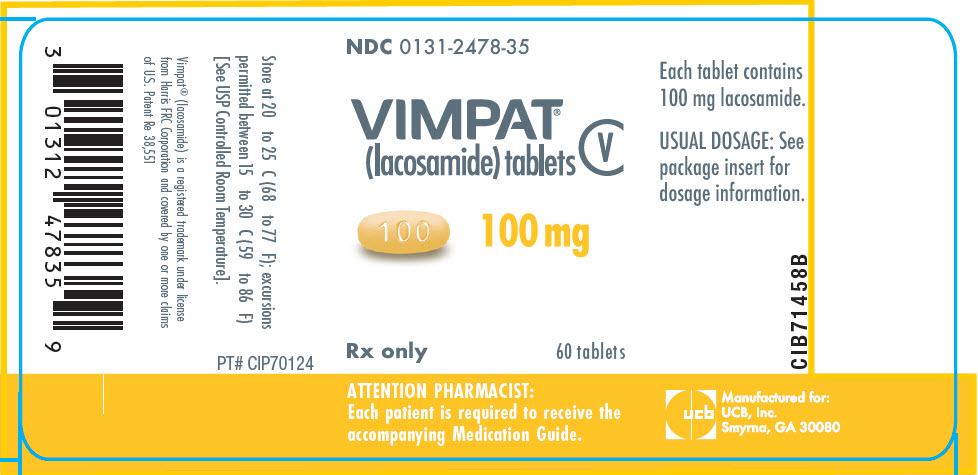
Vimpat lacosamide 100 mg Tablet, Film Coated, 14-count
Other active recalls for Lacosamide (different manufacturers) — 5 · tap to view
🆔 Identity & classification
Where does this data come from?
🏷️ RxNorm drug class
This medicine belongs to the Other antiepileptics class.
Where does this data come from?
🏭 Manufacturer & labeler
Where does this data come from?
🩺 Clinical
Lacosamide is used to control partial onset seizures (seizures that involve only one part of the brain). Lacosamide is also used in combination with other medications to control primary generalized tonic-clonic seizures (formerly known as a grand mal seizure; seizure that involves the entire body). Lacosamide is in a class of medications called anticonvulsants. It works by decreasing abnormal electrical activity in the brain.
Read the full MedlinePlus article ↗- Lacosamide is used to treat seizures — specifically partial-onset seizures, which start in one part of the brain, in adults and children. It's also approved as an add-on treatment...
- Yes — dizziness is the most commonly reported side effect of lacosamide, and it's most likely to happen during the early weeks when your dose is being increased. It usually gets be...
- Is it normal to feel dizzy when I start this medication?
- Please don't stop suddenly. Stopping lacosamide abruptly can cause a sudden increase in seizures, which can be dangerous. If you're having side effects or want to stop, talk to you...
Patient education
Supplement & herbal interactions
Some supplements/herbs that may interact with Lacosamide — tap one for details:
Where does this data come from?
Ask a licensed pharmacist directly — free, answered by our team.
💊 What it looks like
Where does this data come from?
🧪 Inactive Ingredients / Excipients
Inactive ingredients, also called excipients, are components of the drug product other than the active ingredient. They may include fillers, dyes, coatings, preservatives, flavors, or other formulation ingredients.
💡 Tap an ingredient (hover on desktop) to see what it is and why it’s used.
-
UNII 68401960MK
Crospovidone is a synthetic polymer made from polyvinylpyrrolidone. It acts as a disintegrant, helping tablets break apart quickly in the stomach so the medicine dissolves and absorbs into the body.
-
UNII EX438O2MRT
Ferric oxide yellow is a naturally occurring iron compound used as a colorant in medications. It gives tablets, capsules, and other forms a yellow or golden hue for identification and appearance.
-
UNII RFW2ET671P
Hydroxypropyl cellulose is a plant-derived thickening agent made from cellulose. It acts as a binder to hold tablet ingredients together and as a film-former to coat tablets or control how fast the medicine releases.
-
UNII 70097M6I30
Magnesium stearate is a salt made from magnesium and stearic acid, a fatty substance. It's used in tablets and capsules as a lubricant and glidant to help ingredients flow smoothly during manufacturing and prevent sticking.
-
UNII OP1R32D61U
Microcrystalline cellulose is a purified form of cellulose, a natural fiber from plant sources. It acts as a binder and filler in tablets and capsules, helping hold ingredients together and give the medicine its shape and size.
-
UNII 3WJQ0SDW1A
Polyethylene glycol is a synthetic liquid or solid polymer used in medicines as a solvent, lubricant, and humectant. It helps dissolve active ingredients, reduces friction during manufacturing, and retains moisture in the final product.
-
UNII 532B59J990
Polyvinyl alcohol is a synthetic polymer made from plant-derived materials. It's used as a binder to hold ingredients together, a film-former in coatings, and a thickener in liquid formulations.
-
UNII ETJ7Z6XBU4
Silicon dioxide is a naturally occurring mineral used as a glidant and anti-caking agent. It helps powder ingredients flow smoothly and prevents clumping during manufacturing and storage.
-
UNII 7SEV7J4R1U
A powder made from a naturally occurring mineral. In medicines, talc works as a glidant and anti-caking agent, helping tablets and capsules flow smoothly during manufacturing and preventing clumping.
-
UNII 15FIX9V2JP
Titanium dioxide is a bright white mineral powder commonly used as a colorant and opacifying agent. It makes pills and tablets white or lighter in color and helps make coatings non-transparent.
10 inactive ingredients listed in the exact product block matched to this NDC.
Where does this data come from?
ingredient classCode="IACT" elements from the exact product block matched by this NDC. Label-section narrative from DailyMed / the openFDA label index is shown separately when available.Inactive ingredient FAQ
Are inactive ingredients the same for every manufacturer?
Why might an inactive ingredient be missing?
Can inactive ingredients matter?
💲 Pricing
A drug doesn't have one price. Each row is a different public payment system, and none is what you'd pay at the counter — that depends on your insurance. The ⓘ on each row explains what it measures.
| Price system | Per each | Per package |
|---|---|---|
| Retail pharmacies payNADAC · weekly | Not in the retail survey — common for institutional, discontinued, or low-volume packs. | |
| Medicaid paysCMS SDUD · 12 mo | No recent Medicaid claims on file for this NDC — rare and low-volume NDCs are suppressed in the public data. | |
| Medicare drug plans payPart D · Q2 2026 | $12.20 | $170.86 / 14 tablets |
Where does this data come from?
🔁 Therapeutic equivalents
| Product | Labeler | Pack | NADAC/unit | TE | Status | Price vs. this |
|---|---|---|---|---|---|---|
| Lacosamide 100 mg 71921-0221-06 | Florida | 60 tablets | $0.167 | AB | Availability likely | — |
| Lacosamide 100 mg 00904-7245-68 | Major | 1 tablet | $0.168 | AB | Availability likely | — |
| Lacosamide 100 mg 16714-0549-01 | NorthStar | 60 tablets | $0.168 | AB | Availability likely | — |
| Lacosamide 100 mg 33342-0303-09 | Macleods | 60 tablets | $0.168 | AB | Availability likely | — |
| Lacosamide 100 mg 51991-0349-05 | Breckenridge | 500 tablets | $0.168 | AB | Availability likely | — |
| Lacosamide 100 mg 60687-0687-57 | American | 1 tablet | $0.168 | AB | Availability likely | — |
| Lacosamide 100 mg 69367-0349-60 | Westminster | 60 tablets | $0.168 | AB | Availability likely | — |
| Lacosamide 100 mg 27808-0244-01 | Tris | 60 tablets | $0.311 | AB | FDA listed | — |
| Vimpat 100 mgthis 00131-2478-99 | UCB, | 14 tablets | — | AB | FDA listed | — |
| Lacosamide 100 mg 10135-0800-60 | Marlex | 60 tablets | — | AB | FDA listed | — |
| Lacosamide 100 mg 14445-0130-60 | Indoco | 60 tablets | — | AB | FDA listed | — |
| Lacosamide 100 mg 29300-0365-05 | Unichem | 500 tablets | — | AB | FDA listed | — |
| Lacosamide 100 mg 31722-0813-05 | Camber | 500 tablets | — | AB | FDA listed | — |
| Lacosamide 100 mg 46708-0172-10 | Alembic | 100 tablets | — | AB | FDA listed | — |
| Lacosamide 100 mg 47335-0922-18 | Sun | 1000 tablets | — | AB | FDA listed | — |
| Lacosamide 100 mg 50228-0193-10 | ScieGen | 1000 tablets | — | AB | FDA listed | — |
| Lacosamide 100 mg 51407-0722-60 | Golden | 60 tablets | — | AB | FDA listed | — |
| Lacosamide 100 mg 53746-0924-05 | Amneal | 500 tablets | — | — | FDA listed | — |
| Lacosamide 100 mg 58118-8813-08 | Clinical | 30 tablets | — | AB | FDA listed | — |
| Lacosamide 100 mg 62332-0172-10 | Alembic | 10 tablets | — | AB | FDA listed | — |
| Lacosamide 100 mg 65862-0748-03 | Aurobindo | 10 tablets | — | AB | FDA listed | — |
| Lacosamide 100 mg 67877-0734-05 | Ascend | 500 tablets | — | AB | FDA listed | — |
| lacosamide 100 mg 68462-0679-10 | Glenmark | 1000 tablets | — | AB | FDA listed | — |
| lacosamide 100 mg 69539-0026-05 | MSN | 500 tablets | — | AB | FDA listed | — |
| Lacosamide 100 mg 70518-4505-00 | REMEDYREPACK | 30 tablets | — | AB | FDA listed | — |
| Lacosamide 100 mg 70518-4561-00 | REMEDYREPACK | 1 tablet | — | AB | FDA listed | — |
| Lacosamide 100 mg 70518-4562-00 | REMEDYREPACK | 1 tablet | — | AB | FDA listed | — |
| Lacosamide 100 mg 82804-0991-00 | Proficient | 100 tablets | — | AB | FDA listed | — |
| Lacosamide 100 mg 85742-0009-07 | Kanchan | 10 tablets | — | AB | FDA listed | — |
Where does this data come from?
⏳ Availability & generic status
FDA-approved generic versions are listed, and recent pricing/market data suggests they may be available — see Therapeutic equivalents.
Why the date isn’t exact: Generic timing can change because patents may be challenged, settled, licensed, added, removed, or worked around with a narrower label — and FDA approval does not always mean a pharmacy can get the generic today.
🛈 What do these terms mean?
- Patent
- Legal protection listed in the Orange Book that may delay generic approval or launch. Issued by the U.S. Patent & Trademark Office.
- Substance patent
- Covers the active drug molecule itself — the hardest to design around. A generic generally can’t launch until it expires.
- Formulation (product) patent
- Covers a specific formulation or dosage form. A generic can sometimes work around it with a different formulation.
- Method-of-use patent
- A patent covering one specific approved use of the drug — not necessarily the whole molecule. A generic can sometimes launch with a “skinny label” that carves out the protected use and keeps the others.
- Skinny label
- A generic label that omits a still-patented use when the FDA allows it — letting a generic reach the market for the unprotected uses.
- Exclusivity
- FDA-granted marketing protection, separate from patents — e.g. 5-yr new chemical entity, 7-yr orphan drug, or a +6-month pediatric extension.
- Paragraph IV
- A generic applicant’s formal challenge to a listed patent. It can potentially lead to earlier generic entry, but often involves litigation or a settlement.
- RLD / RS
- Reference Listed Drug — the brand product the FDA uses as the reference for generic applications. Reference Standard — the product the FDA expects generics to compare against in bioequivalence testing.
- TE / AB rating
- FDA therapeutic-equivalence rating. An AB rating generally means the FDA considers a generic therapeutically equivalent to — and substitutable for — the brand.
- LOE (loss of exclusivity)
- The latest patent or exclusivity currently listed — the loss-of-exclusivity / latest-listed-protection date shown on this page. Paragraph-IV challenges and settlements can move the real date earlier; FDA approval and a manufacturer’s decision to market can move it later.
Built from the FDA Orange Book. The bars above are scaled to each protection’s expiry; the red LOE marker is the last one to lapse.
| Code | What it grants | Expires |
|---|---|---|
| D-188 | Other change requiring clinical data (3-year) | Apr 28, 2026 |
| D-188 | Other change requiring clinical data (3-year) | Apr 28, 2026 |
| D-188 | Other change requiring clinical data (3-year) | Apr 28, 2026 |
| D-188 | Other change requiring clinical data (3-year) | Apr 28, 2026 |
Is there a generic version of VIMPAT 100 MG TABLET?
The FDA approved a generic — why can’t I get it at my pharmacy yet?
Why do different websites show different generic release dates?
What does “FDA listed” mean?
What does a patent or protection date mean here?
What does “current Orange Book estimate” mean?
Can a generic come out before the last patent expires?
Can a generic come out after the listed dates?
What is the difference between patents and exclusivity?
Why are there multiple patent dates?
Where does this data come from?
💊 Medicaid utilization by pack size
📊 Medicare Part D spend CMS · PART D · 2026 (Q1)
🔬 Reported adverse events (FAERS)
Top reported reactions
Age at onset
Reporter sex
Serious outcomes
Where does this data come from?
📦 Packaging — all sizes for this product
| Package NDC | Description | Per unit | Per pack | Marketing start | Status |
|---|---|---|---|---|---|
| 00131-2478-35 | 60 TABLET, FILM COATED in 1 BOTTLE, PLASTIC (0131-2478-35) | $18.52 / ea | $1,111.36 | 2009-05-26 | Active |
| 00131-2478-60 | 6 BLISTER PACK in 1 CARTON (0131-2478-60) / 10 TABLET, FILM COATED in 1 BLISTER PACK | $18.52 / ea | $1,111.36 | 2009-05-26 | Active |
| 00131-2478-99 You're viewing this | 1 BLISTER PACK in 1 CARTON (0131-2478-99) / 14 TABLET, FILM COATED in 1 BLISTER PACK | — | — | 2009-05-26 | Active |
This pack shows little to no recent Medicaid volume — the 60 tablets pack carries most fills. See all packs ↓
Pack size FAQ
What quantity is in NDC 00131-2478-99?
What is the difference between NDC 00131-2478-99 and NDC 00131-2478-35?
What NDC number is used to bill for this package of Vimpat lacosamide 100 mg Tablet, Film Coated?
Prices are the latest CMS NADAC pharmacy acquisition cost per NDC; per-pack figures are per-unit × pack quantity, shown only when the pack is denominated in the same measure NADAC prices.
🧭 About this NDC listing & data coverage
What data is (and isn’t) available for this NDC — tap to expand
| NDC identity (package / product / labeler codes) | ✓ Available |
| Labeler | ✓ Available |
| Product & package description | ✓ Available |
| Marketing category & status | ✓ Available |
| Active ingredient / dosage form / route | ✓ Available |
| FDA label (SPL via DailyMed) | ✓ Available |
| Package photos | ✓ Available |
| Inactive ingredients (structured) | ✓ Available |
| NADAC pharmacy acquisition price (CMS) | — Not published for this NDC CMS publishes NADAC only for NDCs reported in its retail-pharmacy survey. |
| Orange Book / therapeutic-equivalence data | ✓ Available |
| HCPCS J-code billing crosswalk | — Not published for this NDC Most self-administered / retail products have no J-code — that is normal. |
| Medicaid utilization (CMS SDUD) | — Not published for this NDC CMS reports utilization only for NDCs with Medicaid claims above its privacy threshold. |
Questions about this listing
Why is there no price listed?
Is the NDC printed on the package the same as the 11-digit billing NDC?
What do the three segments of this NDC mean?
Is this package still being marketed?
Does this product come in other package sizes?
Who lists this product with the FDA?
Do I need a prescription for this product?
Where does this data come from?
📄 Full prescribing information FDA SPL
🎯 Indications and Usage ▾
1 INDICATIONS AND USAGE VIMPAT is indicated for: Treatment of partial-onset seizures in patients 1 month of age and older ( 1.1 ) Adjunctive therapy in the treatment of primary generalized tonic-clonic seizures in patients 4 years of age and older ( 1.2 )
1.1Partial-Onset Seizures VIMPAT is indicated for the treatment of partial-onset seizures in patients 1 month of age and older.
1.2Primary Generalized Tonic-Clonic Seizures VIMPAT is indicated as adjunctive therapy in the treatment of primary generalized tonic-clonic seizures in patients 4 years of age and older.
⏱️ Dosage and Administration ▾
2 DOSAGE AND ADMINISTRATION Adults (17 years and older): Initial dosage for monotherapy for the treatment of partial-onset seizures is 100 mg twice daily ( 2.1 ) Initial dosage for adjunctive therapy for the treatment of partial-onset seizures or primary generalized tonic-clonic seizures is 50 mg twice daily ( 2.1 ) Maximum recommended dosage for monotherapy and adjunctive therapy is 200 mg twice daily ( 2.1 ) Pediatric Patients 1 month to less than 17 years : The recommended dosage is based on body weight and is administered orally twice daily ( 2.1 ) Increase dosage based on clinical response and tolerability, no more frequently than once per week ( 2.1 ) Injection: for intravenous use only when oral administration is temporarily not feasible; the recommended dosage is based on body weight and is administered two or three times daily over 15 to 60 minutes; obtaining ECG before initiation is recommended in certain patients ( 2.7 , 5.3 ) Dose adjustment is recommended for severe renal impairment ( 2.4 , 12.3 ) Dose adjustment is recommended for mild or moderate hepatic impairment; use in patients with severe hepatic impairment is not recommended ( 2.5 , 12.3 )
2.1Dosage Information The recommended dosage for monotherapy and adjunctive therapy for partial-onset seizures in patients 1 month of age and older and for adjunctive therapy for primary generalized tonic-clonic seizures in patients 4 years of age and older is included in Table 1. In pediatric patients, the recommended dosing regimen is dependent upon body weight. Dosage should be increased based on clinical response and tolerability, no more frequently than once per week.
Titration increments should not exceed those shown in Table 1. Table 1: Recommended Dosages for Partial-Onset Seizures (Monotherapy or Adjunctive Therapy) in Patients 1 Month and Older, and for Primary Generalized Tonic-Clonic Seizures (Adjunctive Therapy) in Patients 4 Years of Age and Older when not specified, the dosage is the same for monotherapy for partial-onset seizures and adjunctive therapy for partial-onset seizures or primary generalized tonic-clonic seizures. Oral and intravenous dosages are the same unless specified.
Age and Body Weight Initial Dosage Titration Regimen Maintenance Dosage Adults (17 years and older) Monotherapy Monotherapy for partial-onset seizures only : 100 mg twice daily (200 mg per day) Adjunctive Therapy: 50 mg twice daily (100 mg per day) Increase by 50 mg twice daily (100 mg per day) every week Monotherapy : 150 mg to 200 mg twice daily (300 mg to 400 mg per day) Adjunctive Therapy: 100 mg to 200 mg twice daily (200 mg to 400 mg per day) Pediatric patients weighing at least 50 kg 50 mg twice daily (100 mg per day) Increase by 50 mg twice daily (100 mg per day) every week Monotherapy : 150 mg to 200 mg twice daily (300 mg to 400 mg per day) Adjunctive Therapy: 100 mg to 200 mg twice daily (200 mg to 400 mg per day) Pediatric patients weighing 30 kg to less than 50 kg 1 mg/kg twice daily (2 mg/kg/day) Increase by 1 mg/kg twice daily (2 mg/kg/day) every week 2 mg/kg to 4 mg/kg twice daily (4 mg/kg/day to 8 mg/kg/day) Pediatric patients weighing 11 kg to less than 30 kg 1 mg/kg twice daily (2 mg/kg/day) Increase by 1 mg/kg twice daily (2 mg/kg/day) every week 3 mg/kg to 6 mg/kg twice daily (6 mg/kg/day to 12 mg/kg/day) Pediatric patients weighing 6 kg to less than 11 kg indicated only for partial-onset seizures Pediatric patients weighing less than 6 kg Intravenous: 0.66 mg/kg three times daily (2 mg/kg/day) Intravenous: Increase by 0.66 mg/kg three times daily (2 mg/kg/day) every week Intravenous: 2.5 mg/kg to 5 mg/kg three times daily (7.5 mg/kg/day to 15 mg/kg/day) Oral: 1 mg/kg twice daily (2 mg/kg/day) Oral: Increase by 1 mg/kg twice daily (2 mg/kg/day) every week Oral: 3.75 mg/kg to 7.5 mg/kg twice daily (7.5 mg/kg/day to 15 mg/kg/day) In adjunctive clinical trials in adult patients with partial-onset seizures, a dosage higher than 200 mg twice daily (400 mg per…
💊 Dosage Forms and Strengths ▾
3 DOSAGE FORMS AND STRENGTHS 50 mg, 100 mg, 150 mg, 200 mg tablets ( 3 ) 200 mg/20 mL single-dose vial for intravenous use ( 3 ) 10 mg/mL oral solution ( 3 ) VIMPAT Tablets 50 mg: pink, oval, film-coated, debossed with "SP" on one side and "50" on the other 100 mg: dark yellow, oval, film-coated, debossed with "SP" on one side and "100" on the other 150 mg: salmon, oval, film-coated, debossed with "SP" on one side and "150" on the other 200 mg: blue, oval, film-coated, debossed with "SP" on one side and "200" on the other VIMPAT Injection 200 mg/20 mL: clear, colorless sterile solution in single-dose vials VIMPAT Oral Solution 10 mg/mL: clear, colorless to yellow or yellow-brown, strawberry-flavored liquid
⛔ Contraindications ▾
4 CONTRAINDICATIONS None . None ( 4 )
⚠️ Warnings and Cautions ▾
5 WARNINGS AND PRECAUTIONS Monitor patients for suicidal behavior and ideation ( 5.1 ) VIMPAT may cause dizziness and ataxia ( 5.2 ) Cardiac Rhythm and Conduction Abnormalities: Obtaining ECG before beginning and after titration to steady-state maintenance is recommended in patients with underlying proarrhythmic conditions or on concomitant medications that affect cardiac conduction; closely monitor these patients ( 5.3 , 7.2 ) VIMPAT may cause syncope ( 5.4 ) VIMPAT should be gradually withdrawn to minimize the potential of increased seizure frequency ( 5.5 ) Drug Reaction with Eosinophilia and Systemic Symptoms (DRESS)/ Multi-Organ Hypersensitivity: Discontinue if no alternate etiology ( 5.6 )
5.1Suicidal Behavior and Ideation Antiepileptic drugs (AEDs), including VIMPAT, increase the risk of suicidal thoughts or behavior in patients taking these drugs for any indication. Patients treated with any AED for any indication should be monitored for the emergence or worsening of depression, suicidal thoughts or behavior, and/or any unusual changes in mood or behavior. Pooled analyses of 199 placebo-controlled clinical trials (mono- and adjunctive therapy) of 11 different AEDs showed that patients randomized to one of the AEDs had approximately twice the risk (adjusted Relative Risk 1.8, 95% CI:1.2, 2.7) of suicidal thinking or behavior compared to patients randomized to placebo.
In these trials, which had a median treatment duration of 12 weeks, the estimated incidence of suicidal behavior or ideation among 27,863 AED-treated patients was 0.43%, compared to 0.24% among 16,029 placebo-treated patients, representing an increase of approximately one case of suicidal thinking or behavior for every 530 patients treated.There were four suicides in drug-treated patients in the trials and none in placebo-treated patients, but the number of events is too small to allow any conclusion about drug effect on suicide.
The increased risk of suicidal thoughts or behavior with AEDs was observed as early as one week after starting treatment with AEDs and persisted for the duration of treatment assessed. Because most trials included in the analysis did not extend beyond 24 weeks, the risk of suicidal thoughts or behavior beyond 24 weeks could not be assessed. The risk of suicidal thoughts or behavior was generally consistent among drugs in the data analyzed.
The finding of increased risk with AEDs of varying mechanisms of action and across a range of indications suggests that the risk applies to all AEDs used for any indication. The risk did not vary substantially by age (5-100 years) in the clinical trials analyzed. Table 3 shows absolute and relative risk by indication for all evaluated AEDs.
Table 3: Risk by Indication for Antiepileptic Drugs in the Pooled Analysis Indication Placebo Patients with Events Per 1000 Patients Drug Patients with Events Per 1000 Patients Relative Risk: Incidence of Events in Drug Patients/Incidence in Placebo Patients Risk Difference: Additional Drug Patients with Events Per 1000 Patients Epilepsy 1.0 3.4 3.5
2.4Psychiatric 5.7 8.5 1.5
2.9Other 1.0 1.8 1.9
0.9Total 2.4 4.3 1.8
1.9The relative risk for suicidal thoughts or behavior was higher in clinical trials for epilepsy than in clinical trials for psychiatric or other conditions, but the absolute risk differences were similar. Anyone considering prescribing VIMPAT or any other AED must balance this risk with the risk of untreated illness. Epilepsy and many other illnesses for which antiepileptics are prescribed are themselves associated with morbidity and mortality and an increased risk of suicidal thoughts and behavior.
Should suicidal thoughts and behavior emerge during treatment, the prescriber needs to consider whether the emergence of these symptoms in any given patient may be related to the illness being treated.
5.2Dizziness and Ataxia VIMPAT may cause dizziness and ataxia in adult and pediatric patients. In adult patients with partial-onset seizures ta…
🤒 Adverse Reactions ▾
6 ADVERSE REACTIONS The following serious adverse reactions are described below and elsewhere in the labeling: Suicidal Behavior and Ideation [see Warnings and Precautions (5.1) ] Dizziness and Ataxia [see Warnings and Precautions (5.2) ] Cardiac Rhythm and Conduction Abnormalities [see Warnings and Precautions (5.3) ] Syncope [see Warnings and Precautions (5.4) ] Drug Reaction with Eosinophilia and Systemic Symptoms (DRESS)/Multiorgan Hypersensitivity Reactions [see Warnings and Precautions (5.6) ] Adjunctive therapy: Most common adverse reactions in adults (≥10% and greater than placebo) are diplopia, headache, dizziness, nausea, and somnolence ( 6.1 ) Monotherapy: Most common adverse reactions are similar to those seen in adjunctive therapy studies ( 6.1 ) Pediatric patients: Adverse reactions are similar to those seen in adult patients ( 6.1 ) To report SUSPECTED ADVERSE REACTIONS, contact UCB, Inc. at 1-844-599-2273 or FDA at 1-800-FDA-1088 or www.fda.gov/medwatch
6.1Clinical Trials Experience Because clinical trials are conducted under widely varying conditions, adverse reaction rates observed in the clinical trials of a drug cannot be directly compared to rates in the clinical trials of another drug and may not reflect the rates observed in practice. VIMPAT Tablet and Oral Solution in Adults In the premarketing development of adjunctive therapy for partial-onset seizures, 1327 adult patients received VIMPAT tablets in controlled and uncontrolled trials, of whom 1000 were treated for longer than 6 months, and 852 for longer than 12 months.
The monotherapy development program for partial-onset seizures included 425 adult patients, 310 of whom were treated for longer than 6 months, and 254 for longer than 12 months. Partial-Onset Seizures Monotherapy Historical-Control Trial (Study 1) In the monotherapy trial for partial-onset seizures, 16% of patients randomized to receive VIMPAT at the recommended doses of 300 and 400 mg/day discontinued from the trial as a result of an adverse reaction. The adverse reaction most commonly (≥1% on VIMPAT) leading to discontinuation was dizziness.
Adverse reactions that occurred in this study were generally similar to those that occurred in adjunctive placebo-controlled studies. One adverse reaction, insomnia, occurred at a rate of ≥2% and was not reported at a similar rate in previous studies. This adverse reaction has also been observed in postmarketing experience [see Adverse Reactions (6.2) ] .
Because this study did not include a placebo control group, causality could not be established. Dizziness, headache, nausea, somnolence, and fatigue all occurred at lower incidences during the AED Withdrawal Phase and Monotherapy Phase, compared with the Titration Phase [see Clinical Studies (14.1) ] . Adjunctive Therapy Controlled Trials (Studies 2, 3, and 4) In adjunctive therapy controlled clinical trials for partial-onset seizures, the rate of discontinuation as a result of an adverse reaction was 8% and 17% in patients randomized to receive VIMPAT at the recommended doses of 200 and 400 mg/day, respectively, 29% at 600 mg/day (1.5 times greater than the maximum recommended dose), and 5% in patients randomized to receive placebo.
The adverse reactions most commonly (>1% on VIMPAT and greater than placebo) leading to discontinuation were dizziness, ataxia, vomiting, diplopia, nausea, vertigo, and blurred vision. Table 4 gives the incidence of adverse reactions that occurred in ≥2% of adult patients with partial-onset seizures in the VIMPAT total group and for which the incidence was greater than placebo. Table 4: Adverse Reactions Incidence in Adjunctive Therapy Pooled, Placebo-Controlled Trials in Adult Patients with Partial-Onset Seizures (Studies 2, 3, and 4) Adverse Reaction Placebo N=364 % VIMPAT 200 mg/day N=270 % VIMPAT 400 mg/day N=471 % VIMPAT 600 mg/day 600 mg dose is 1.5 times greater than the maximum recommended dose.
N=203 % VIMPAT Total N=944 % Ear and labyrinth disorder Vertig…
🔄 Drug Interactions ▾
7 DRUG INTERACTIONS
7.1Strong CYP3A4 or CYP2C9 Inhibitors Patients with renal or hepatic impairment who are taking strong inhibitors of CYP3A4 and CYP2C9 may have a significant increase in exposure to VIMPAT. Dose reduction may be necessary in these patients.
7.2Concomitant Medications that Affect Cardiac Conduction VIMPAT should be used with caution in patients on concomitant medications that affect cardiac conduction (sodium channel blockers, beta-blockers, calcium channel blockers, potassium channel blockers) including those that prolong PR interval (including sodium channel blocking AEDs), because of a risk of AV block, bradycardia, or ventricular tachyarrhythmia. In such patients, obtaining an ECG before beginning VIMPAT, and after VIMPAT is titrated to steady-state, is recommended.
In addition, these patients should be closely monitored if they are administered VIMPAT through the intravenous route [see Warnings and Precautions (5.3) ] .
👥 Use in Specific Populations ▾
8 USE IN SPECIFIC POPULATIONS Pregnancy: Based on animal data, may cause fetal harm ( 8.1 )
8.1Pregnancy Pregnancy Exposure Registry There is a pregnancy exposure registry that monitors pregnancy outcomes in women exposed to antiepileptic drugs (AEDs), such as VIMPAT, during pregnancy. Encourage women who are taking VIMPAT during pregnancy to enroll in the North American Antiepileptic Drug (NAAED) pregnancy registry by calling 1-888-233-2334 or visiting http://www.aedpregnancyregistry.org/. Risk Summary Available data from the North American Antiepileptic Drug (NAAED) pregnancy registry, a prospective cohort study, case reports, and a case series with VIMPAT use in pregnant women are insufficient to identify a drug-associated risk of major birth defects, miscarriage or other adverse maternal or fetal outcomes .
Lacosamide produced developmental toxicity (increased embryofetal and perinatal mortality, growth deficit) in rats following administration during pregnancy. Developmental neurotoxicity was observed in rats following administration during a period of postnatal development corresponding to the third trimester of human pregnancy. These effects were observed at doses associated with clinically relevant plasma exposures (see Data ) .
The background risk of major birth defects and miscarriage for the indicated population is unknown. All pregnancies have a background risk of birth defect, loss, or other adverse outcomes. In the U.S. general population the estimated background risk of major birth defects and miscarriage in clinically recognized pregnancies is 2-4% and 15-20%, respectively.
Data Animal Data Oral administration of lacosamide to pregnant rats (20, 75, or 200 mg/kg/day) and rabbits (6.25, 12.5, or 25 mg/kg/day) during the period of organogenesis did not produce any effects on the incidences of fetal structural abnormalities. However, the maximum doses evaluated were limited by maternal toxicity in both species and embryofetal death in rats. These doses were associated with maternal plasma lacosamide exposures (AUC) approximately 2 and 1 times (rat and rabbit, respectively) that in humans at the maximum recommended human dose (MRHD) of 400 mg/day.
In two studies in which lacosamide (25, 70, or 200 mg/kg/day and 50, 100, or 200 mg/kg/day) was orally administered to rats throughout pregnancy and lactation, increased perinatal mortality and decreased body weights in the offspring were observed at the highest dose tested. The no-effect dose for pre- and postnatal developmental toxicity in rats (70 mg/kg/day) was associated with a maternal plasma lacosamide AUC similar to that in humans at the MRHD. Oral administration of lacosamide (30, 90, or 180 mg/kg/day) to rats during the neonatal and juvenile periods of development resulted in decreased brain weights and long-term neurobehavioral changes (altered open field performance, deficits in learning and memory).
The early postnatal period in rats is generally thought to correspond to late pregnancy in humans in terms of brain development. The no-effect dose for developmental neurotoxicity in rats was associated with a plasma lacosamide AUC less than that in humans at the MRHD. In Vitro Data Lacosamide has been shown in vitro to interfere with the activity of collapsin response mediator protein-2 (CRMP-2), a protein involved in neuronal differentiation and control of axonal outgrowth.
Potential adverse effects on CNS development related to this activity cannot be ruled out.
8.2Lactation Risk Summary Data from published literature indicate that lacosamide is present in human milk. There are reports of increased sleepiness in breastfed infants exposed to lacosamide (see Clinical Considerations ). There is no information on the effects of lacosamide on milk production.
The developmental and health benefits of breastfeeding should be considered along with the mother's clinical need for VIMPAT and any potential adverse effects on the breastfed infant from VIMPAT or from the u…
🤰 Pregnancy ▾
8.1Pregnancy Pregnancy Exposure Registry There is a pregnancy exposure registry that monitors pregnancy outcomes in women exposed to antiepileptic drugs (AEDs), such as VIMPAT, during pregnancy. Encourage women who are taking VIMPAT during pregnancy to enroll in the North American Antiepileptic Drug (NAAED) pregnancy registry by calling 1-888-233-2334 or visiting http://www.aedpregnancyregistry.org/. Risk Summary Available data from the North American Antiepileptic Drug (NAAED) pregnancy registry, a prospective cohort study, case reports, and a case series with VIMPAT use in pregnant women are insufficient to identify a drug-associated risk of major birth defects, miscarriage or other adverse maternal or fetal outcomes .
Lacosamide produced developmental toxicity (increased embryofetal and perinatal mortality, growth deficit) in rats following administration during pregnancy. Developmental neurotoxicity was observed in rats following administration during a period of postnatal development corresponding to the third trimester of human pregnancy. These effects were observed at doses associated with clinically relevant plasma exposures (see Data ) .
The background risk of major birth defects and miscarriage for the indicated population is unknown. All pregnancies have a background risk of birth defect, loss, or other adverse outcomes. In the U.S. general population the estimated background risk of major birth defects and miscarriage in clinically recognized pregnancies is 2-4% and 15-20%, respectively.
Data Animal Data Oral administration of lacosamide to pregnant rats (20, 75, or 200 mg/kg/day) and rabbits (6.25, 12.5, or 25 mg/kg/day) during the period of organogenesis did not produce any effects on the incidences of fetal structural abnormalities. However, the maximum doses evaluated were limited by maternal toxicity in both species and embryofetal death in rats. These doses were associated with maternal plasma lacosamide exposures (AUC) approximately 2 and 1 times (rat and rabbit, respectively) that in humans at the maximum recommended human dose (MRHD) of 400 mg/day.
In two studies in which lacosamide (25, 70, or 200 mg/kg/day and 50, 100, or 200 mg/kg/day) was orally administered to rats throughout pregnancy and lactation, increased perinatal mortality and decreased body weights in the offspring were observed at the highest dose tested. The no-effect dose for pre- and postnatal developmental toxicity in rats (70 mg/kg/day) was associated with a maternal plasma lacosamide AUC similar to that in humans at the MRHD. Oral administration of lacosamide (30, 90, or 180 mg/kg/day) to rats during the neonatal and juvenile periods of development resulted in decreased brain weights and long-term neurobehavioral changes (altered open field performance, deficits in learning and memory).
The early postnatal period in rats is generally thought to correspond to late pregnancy in humans in terms of brain development. The no-effect dose for developmental neurotoxicity in rats was associated with a plasma lacosamide AUC less than that in humans at the MRHD. In Vitro Data Lacosamide has been shown in vitro to interfere with the activity of collapsin response mediator protein-2 (CRMP-2), a protein involved in neuronal differentiation and control of axonal outgrowth.
Potential adverse effects on CNS development related to this activity cannot be ruled out.
🧒 Pediatric Use ▾
8.4Pediatric Use Partial-Onset Seizures Safety and effectiveness of VIMPAT for the treatment of partial-onset seizures have been established in pediatric patients 1 month to less than 17 years of age. Use of VIMPAT in this age group is supported by evidence from adequate and well-controlled studies of VIMPAT in adults with partial-onset seizures, pharmacokinetic data from adult and pediatric patients, and safety data in 847 pediatric patients 1 month to less than 17 years of age [see Adverse Reactions (6.1) , Clinical Pharmacology (12.3) , and Clinical Studies (14.1 , 14.2) ] .
Safety and effectiveness in pediatric patients below 1 month of age have not been established. Primary Generalized Tonic-Clonic Seizures Safety and effectiveness of VIMPAT as adjunctive therapy in the treatment of primary generalized tonic-clonic seizures in pediatric patients with idiopathic generalized epilepsy 4 years of age and older was established in a 24-week double-blind, randomized, placebo-controlled, parallel-group, multi-center study (Study 5), which included 37 pediatric patients 4 years to less than 17 years of age [see Adverse Reactions (6.1) and Clinical Studies (14.3) ] .
Safety and effectiveness in pediatric patients below the age of 4 years have not been established. Animal Data Lacosamide has been shown in vitro to interfere with the activity of collapsin response mediator protein-2 (CRMP-2), a protein involved in neuronal differentiation and control of axonal outgrowth. Potential related adverse effects on CNS development cannot be ruled out.
Administration of lacosamide to rats during the neonatal and juvenile periods of postnatal development (approximately equivalent to neonatal through adolescent development in humans) resulted in decreased brain weights and long-term neurobehavioral changes (altered open field performance, deficits in learning and memory). The no-effect dose for developmental neurotoxicity in rats was associated with a plasma lacosamide exposure (AUC) less than that in humans at the maximum recommended human dose of 400 mg/day.
🧓 Geriatric Use ▾
8.5Geriatric Use There were insufficient numbers of elderly patients enrolled in partial-onset seizure trials (n=18) to adequately determine whether they respond differently from younger patients. No VIMPAT dose adjustment based on age is necessary. In elderly patients, dose titration should be performed with caution, usually starting at the lower end of the dosing range, reflecting the greater frequency of decreased hepatic function, decreased renal function, increased cardiac conduction abnormalities, and polypharmacy [see Dosage and Administration (2.1 , 2.4 , 2.5) and Clinical Pharmacology (12.3) ] .
🆘 Overdosage ▾
10 OVERDOSAGE Events reported after an intake of more than 800 mg (twice the maximum recommended daily dosage) of VIMPAT include dizziness, nausea, and seizures (generalized tonic-clonic seizures, status epilepticus). Cardiac conduction disorders, confusion, decreased level of consciousness, cardiogenic shock, cardiac arrest, and coma have also been observed. Fatalities have occurred following lacosamide overdoses of several grams.
There is no specific antidote for overdose with VIMPAT. Standard decontamination procedures should be followed. General supportive care of the patient is indicated including monitoring of vital signs and observation of the clinical status of patient.
A Certified Poison Control Center should be contacted for up to date information on the management of overdose with VIMPAT. Standard hemodialysis procedures result in significant clearance of VIMPAT (reduction of systemic exposure by 50% in 4 hours). Hemodialysis may be indicated based on the patient's clinical state or in patients with significant renal impairment.
🧬 Clinical Pharmacology ▾
12 CLINICAL PHARMACOLOGY
12.1Mechanism of Action The precise mechanism by which VIMPAT exerts its antiepileptic effects in humans remains to be fully elucidated. In vitro electrophysiological studies have shown that lacosamide selectively enhances slow inactivation of voltage-gated sodium channels, resulting in stabilization of hyperexcitable neuronal membranes and inhibition of repetitive neuronal firing.
12.2Pharmacodynamics A pharmacokinetic-pharmacodynamic (efficacy) analysis was performed based on the pooled data from the 3 efficacy trials for partial-onset seizures. Lacosamide exposure is correlated with the reduction in seizure frequency. However, doses above 400 mg/day do not appear to confer additional benefit in group analyses.
Cardiac Electrophysiology Electrocardiographic effects of VIMPAT were determined in a double-blind, randomized clinical pharmacology trial of 247 healthy subjects. Chronic oral doses of 400 and 800 mg/day (equal to and two times the maximum daily recommended dose, respectively) were compared with placebo and a positive control (400 mg moxifloxacin). VIMPAT did not prolong QTc interval and did not have a dose-related or clinically important effect on QRS duration.
VIMPAT produced a small, dose-related increase in mean PR interval. At steady-state, the time of the maximum observed mean PR interval corresponded with t max . The placebo-subtracted maximum increase in PR interval (at t max ) was 7.3 ms for the 400 mg/day group and 11.9 ms for the 800 mg/day group.
For patients who participated in the controlled trials, the placebo-subtracted mean maximum increase in PR interval for a 400 mg/day VIMPAT dose was 3.1 ms in patients with partial-onset seizures and 9.4 ms for patients with diabetic neuropathy.
12.3Pharmacokinetics The pharmacokinetics of VIMPAT have been studied in healthy adult subjects (age range 18 to 87), adults with partial-onset seizures, adults with diabetic neuropathy, and subjects with renal and hepatic impairment. The pharmacokinetics of VIMPAT are similar in healthy subjects, patients with partial-onset seizures, and patients with primary generalized tonic-clonic seizures. VIMPAT is completely absorbed after oral administration with negligible first-pass effect with a high absolute bioavailability of approximately 100%.
The maximum lacosamide plasma concentrations occur approximately 1-to-4-hour post-dose after oral dosing, and elimination half-life is approximately 13 hours. Steady state plasma concentrations are achieved after 3 days of twice daily repeated administration. Pharmacokinetics of VIMPAT are dose proportional (100-800 mg) and time invariant, with low inter- and intra-subject variability.
Compared to lacosamide the major metabolite, O-desmethyl metabolite, has a longer T max (0.5 to 12 hours) and elimination half-life (15-23 hours). Absorption and Bioavailability VIMPAT is completely absorbed after oral administration. The oral bioavailability of VIMPAT tablets is approximately 100%.
Food does not affect the rate and extent of absorption. After intravenous administration, C max is reached at the end of infusion. The 30- and 60-minute intravenous infusions are bioequivalent to the oral tablet.
For the 15-minute intravenous infusion, bioequivalence was met for AUC (0-tz) but not for C max . The point estimate of C max was 20% higher than C max for oral tablet and the 90% CI for C max exceeded the upper boundary of the bioequivalence range. In a trial comparing the oral tablet with an oral solution containing 10 mg/mL lacosamide, bioequivalence between both formulations was shown.
A single loading dose of 200 mg approximates steady-state concentrations comparable to the 100 mg twice daily oral administration. Distribution The volume of distribution is approximately
0.6L/kg and thus close to the volume of total body water. VIMPAT is less than 15% bound to plasma proteins. Metabolism and Elimination VIMPAT is primarily eliminated from the systemic circulation by r…
🧬 Mechanism of Action ▾
12.1Mechanism of Action The precise mechanism by which VIMPAT exerts its antiepileptic effects in humans remains to be fully elucidated. In vitro electrophysiological studies have shown that lacosamide selectively enhances slow inactivation of voltage-gated sodium channels, resulting in stabilization of hyperexcitable neuronal membranes and inhibition of repetitive neuronal firing.
📦 How Supplied / Storage and Handling ▾
16 HOW SUPPLIED/STORAGE AND HANDLING
16.1How Supplied VIMPAT (lacosamide) Tablets 50 mg are pink, oval, film-coated tablets debossed with "SP" on one side and "50" on the other. They are supplied as follows: Bottles of 60 NDC 0131-2477-35 Unit Dose Carton of 60 tablets [6 cards, each card contains 10 tablets] NDC 0131-2477-60 100 mg are dark yellow, oval, film-coated tablets debossed with "SP" on one side and "100" on the other. They are supplied as follows: Bottles of 60 NDC 0131-2478-35 Unit Dose Carton of 60 tablets [6 cards, each card contains 10 tablets] NDC 0131-2478-60 150 mg are salmon, oval, film-coated tablets debossed with "SP" on one side and "150" on the other.
They are supplied as follows: Bottles of 60 NDC 0131-2479-35 Unit Dose Carton of 60 tablets [6 cards, each card contains 10 tablets] NDC 0131-2479-60 200 mg are blue, oval, film-coated tablets debossed with "SP" on one side and "200" on the other. They are supplied as follows: Bottles of 60 NDC 0131-2480-35 Unit Dose Carton of 60 tablets [6 cards, each card contains 10 tablets] NDC 0131-2480-60 VIMPAT (lacosamide) Injection 200 mg/20 mL is a clear, colorless sterile solution supplied in 20 mL colorless single-dose glass vials.
200 mg/20 mL vial in cartons of 10 vials NDC 0131-1810-67 VIMPAT (lacosamide) Oral Solution 10 mg/mL is a clear, colorless to yellow or yellow-brown, strawberry-flavored liquid. It is supplied as follows: 200 mL in glass bottles NDC 0131-5410-72
16.2Storage and Handling Store at 20°C to 25°C (68°F to 77°F); excursions permitted between 15°C to 30°C (59°F to 86°F). [See USP Controlled Room Temperature] Do not freeze VIMPAT injection or oral solution. Discard any unused VIMPAT oral solution remaining after six (6) months of first opening the bottle.
📦 Storage and Handling ▾
16.2Storage and Handling Store at 20°C to 25°C (68°F to 77°F); excursions permitted between 15°C to 30°C (59°F to 86°F). [See USP Controlled Room Temperature] Do not freeze VIMPAT injection or oral solution. Discard any unused VIMPAT oral solution remaining after six (6) months of first opening the bottle.
📋 Description ▾
11 DESCRIPTION The chemical name of lacosamide, the single (R)-enantiomer, is (R)-2-acetamido-N-benzyl-3-methoxypropionamide (IUPAC). Lacosamide is a functionalized amino acid. Its molecular formula is C 13 H 18 N 2 O 3 and its molecular weight is 250.30. The chemical structure is: Lacosamide is a white to light yellow powder. It is sparingly soluble in water and slightly soluble in acetonitrile and ethanol. Chemical Structure
11.1VIMPAT Tablets VIMPAT tablets for oral administration contain lacosamide and the following inactive ingredients: colloidal silicon dioxide, crospovidone, hydroxypropylcellulose, magnesium stearate, microcrystalline cellulose, polyethylene glycol, polyvinyl alcohol, talc, titanium dioxide, and dye pigments as specified below: VIMPAT tablets are supplied as debossed tablets and contain the following coloring agents: 50 mg tablets: red iron oxide, black iron oxide, FD&C Blue #2/indigo carmine aluminum lake 100 mg tablets: yellow iron oxide 150 mg tablets: yellow iron oxide, red iron oxide, black iron oxide 200 mg tablets: FD&C Blue #2/indigo carmine aluminum lake
11.2VIMPAT Injection VIMPAT injection is a clear, colorless, sterile solution containing 10 mg lacosamide per mL for intravenous infusion. One 20-mL vial contains 200 mg of lacosamide drug substance. The inactive ingredients are sodium chloride (7.62 mg/mL) and water for injection. Hydrochloric acid is used for pH adjustment. VIMPAT injection has a pH of 3.8 to 5.0.
11.3VIMPAT Oral Solution VIMPAT oral solution contains 10 mg of lacosamide per mL. The inactive ingredients are purified water, sorbitol solution, glycerin, polyethylene glycol, carboxymethylcellulose sodium, acesulfame potassium, methylparaben, flavoring (including natural and artificial flavors, propylene glycol, aspartame, and maltol), anhydrous citric acid and sodium chloride.
💬 Information for Patients ▾
17 PATIENT COUNSELING INFORMATION Advise the patient or caregiver to read the FDA-approved patient labeling (Medication Guide). The Medication Guide accompanies the product and can also be accessed on www.vimpat.com or by calling 1-844-599-2273. Suicidal Thinking and Behavior Patients, their caregivers, and families should be counseled that AEDs, including VIMPAT, may increase the risk of suicidal thoughts and behavior and should be advised of the need to be alert for the emergence or worsening of symptoms of depression, any unusual changes in mood or behavior, or the emergence of suicidal thoughts, behavior, or thoughts about self-harm.
Behaviors of concern should be reported immediately to healthcare providers [see Warnings and Precautions (5.1) ] . Dizziness and Ataxia Patients should be counseled that VIMPAT use may cause dizziness, double vision, abnormal coordination and balance, and somnolence. Patients taking VIMPAT should be advised not to drive, operate complex machinery, or engage in other hazardous activities until they have become accustomed to any such effects associated with VIMPAT [see Warnings and Precautions (5.2) ] .
Cardiac Rhythm and Conduction Abnormalities Patients should be counseled that VIMPAT is associated with electrocardiographic changes that may predispose to irregular heart beat and syncope. Cardiac arrest has been reported. This risk is increased in patients with underlying cardiovascular disease, with heart conduction problems, or who are taking other medications that affect the heart.
Patients should be made aware of and report cardiac signs or symptoms to their healthcare provider right away. Patients who develop syncope should lay down with raised legs and contact their health care provider [see Warnings and Precautions (5.3) ] . Drug Reaction with Eosinophilia and Systemic Symptoms (DRESS)/Multi-Organ Hypersensitivity Patients should be aware that VIMPAT may cause serious hypersensitivity reactions affecting multiple organs such as the liver and kidney.
VIMPAT should be discontinued if a serious hypersensitivity reaction is suspected. Patients should also be instructed to report promptly to their physicians any symptoms of liver toxicity (e.g., fatigue, jaundice, dark urine) [see Warnings and Precautions (5.6) ] . Pregnancy Registry Advise patients to notify their healthcare provider if they become pregnant or intend to become pregnant during VIMPAT therapy.
Encourage patients to enroll in the North American Antiepileptic Drug (NAAED) pregnancy registry if they become pregnant. This registry is collecting information about the safety of AEDs during pregnancy [see Use in Specific Populations (8.1) ] . Lactation Advise breastfeeding women using VIMPAT to monitor infants for excess sleepiness and to seek medical care if they notice this sign [see Use in Specific Populations (8.2) ].
💬 Medication Guide ▾
This Medication Guide has been approved by the U.S. Food and Drug Administration Revised: 9/2022 MEDICATION GUIDE VIMPAT (VIM-păt) (lacosamide) film coated tablet, for oral use, CV VIMPAT (VIM-păt) (lacosamide) injection, for intravenous use, CV VIMPAT (VIM-păt) (lacosamide) oral solution, CV Read this Medication Guide before you start taking VIMPAT and each time you get a refill. There may be new information.
This Medication Guide describes important safety information about VIMPAT. This information does not take the place of talking to your healthcare provider about your medical condition or treatment. What is the most important information I should know about VIMPAT?
Do not stop taking VIMPAT without first talking to your healthcare provider. Stopping VIMPAT suddenly can cause serious problems. Stopping seizure medicine suddenly in a patient who has epilepsy can cause seizures that will not stop (status epilepticus).
VIMPAT can cause serious side effects, including: Like other antiepileptic drugs, VIMPAT may cause suicidal thoughts or actions in a very small number of people, about 1 in 500. Call a healthcare provider right away if you have any of these symptoms, especially if they are new, worse, or worry you : thoughts about suicide or dying attempt to commit suicide new or worse depression new or worse anxiety feeling agitated or restless panic attacks trouble sleeping (insomnia) new or worse irritability acting aggressive, being angry, or violent acting on dangerous impulses an extreme increase in activity and talking (mania) other unusual changes in behavior or mood How can I watch for early symptoms of suicidal thoughts and actions?
Pay attention to any changes, especially sudden changes, in mood, behaviors, thoughts, or feelings. Keep all follow-up visits with your healthcare provider as scheduled. Call your healthcare provider between visits as needed, especially if you are worried about symptoms.
Suicidal thoughts or actions can be caused by things other than medicines. If you have suicidal thoughts or actions, your healthcare provider may check for other causes. VIMPAT may cause you to feel dizzy, have double vision, feel sleepy, or have problems with coordination and walking.
Do not drive, operate heavy machinery, or do other dangerous activities until you know how VIMPAT affects you. VIMPAT may cause you to have an irregular heartbeat or may cause you to faint. In rare cases, cardiac arrest has been reported.
Call your healthcare provider right away if you: have a fast, slow, or pounding heartbeat or feel your heart skip a beat have shortness of breath have chest pain feel lightheaded fainted or if you feel like you are going to faint If you have fainted or feel like you are going to faint you should lay down with your legs raised. VIMPAT is a federally controlled substance (CV) because it can be abused or lead to drug dependence. Keep your VIMPAT in a safe place, to protect it from theft.
Never give your VIMPAT to anyone else, because it may harm them. Selling or giving away this medicine is against the law. What is VIMPAT?
VIMPAT is a prescription medicine used: to treat partial-onset seizures in people 1 month of age and older. with other medicines to treat primary generalized tonic-clonic seizures in people 4 years of age and older. It is not known if VIMPAT is safe and effective for partial-onset seizures in children under 1 month of age or for primary generalized tonic-clonic seizures in children under 4 years of age. What should I tell my healthcare provider before taking VIMPAT?
Before you take VIMPAT, tell your healthcare provider about all of your medical conditions, including if you : have or have had depression, mood problems or suicidal thoughts or behavior. have heart problems. have kidney problems. have liver problems. have abused prescription medicines, street drugs or alcohol in the past. are pregnant or plan to become pregnant. It is not known if VIMPAT can harm your unborn baby. Tell your heal…