
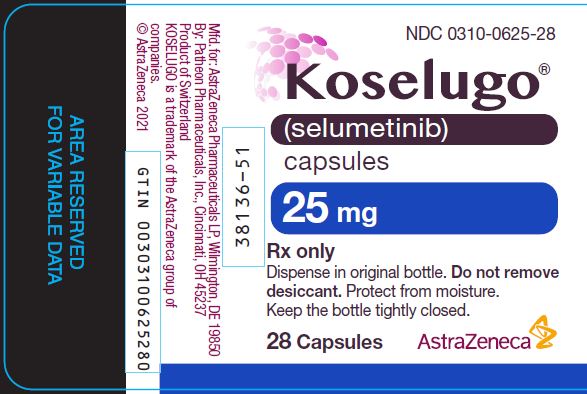
Koselugo Selumetinib 25 mg Capsule, 28-count — NDC 0310-0625-28 (Billing 00310-0625-28)
This is a package of 28 capsules of Koselugo Selumetinib 25 mg Capsule from AstraZeneca Pharmaceuticals LP, marketed since Apr 2020 and currently FDA-listed.
NDC database record
One package, one record: these facts belong to NDC 0310-0625-28 alone.
- Record
- FDA NDC Directory package listing · Human prescription drug
- Code segments
- 0310 labeler · 0625 product · 28 package
- Package marketed since
- Jun 11, 2021
- Sample package
- No — commercial package
- Listing certified through
- Dec 31, 2027
- Billing quantity
- 28 EA per package
- Barcode (UPC-A, from the NDC)
- 3 0310062528 0
- Medicaid fills, this package
- 11 prescriptions in the last four reported quarters
- FDA record last changed
- Jul 24, 2026
Identity & classification
Regulatory identifiers FDA, NLM and CMS codes for this package
Drug-database identifiers Medi-Span GPI and First Databank GCN / HICL / AHFS classification
- GSN (GCN sequence number): 080922
- GCN: 47909
- GPI-14 (Medi-Span): 21533565500125
- HICL (First Databank): 046451
- AHFS class code: 10:00.00.00
- RxCUI (RxNorm): 2289418
Where does this data come from?
- FDA openFDA NDC Directory · synced Oct 8, 2026
- FDA label on DailyMed · label index refreshed Oct 8, 2026
- RxNorm (NLM RxNav) · catalog refreshed Oct 8, 2026
- Medi-Span GPI (licensed)
- First Databank (licensed) · refreshed Oct 8, 2026
RxNorm drug class
This medicine belongs to the Kinase Inhibitor class.
Where does this data come from?
- RxClass (NLM) · catalog refreshed Oct 8, 2026
Clinical
Selumetinib is used to treat certain types of neurofibromatosis type 1 (NF1; a nervous system disorder that causes tumors to grow on nerves). Selumetinib is in a class of medications called kinase inhibitors. It works by helping stop tumor growth.
Read the full MedlinePlus article ↗- It treats neurofibromatosis type 1 in adults and children 1 year and older who have symptomatic plexiform neurofibromas that can't be removed by surgery. It works by blocking a gro...
- You take it by mouth twice a day, following the dose your prescriber set for your body size. Capsules are swallowed whole, with or without food. If swallowing capsules is hard, the...
- If you miss a dose, take it unless your next one is due within 6 hours. If you vomit after a dose, don't take another. Just take your next dose at the usual time.
- Vomiting, nausea, diarrhea, rash, dry skin and nail-area infections are common. At the first loose stool, start an anti-diarrheal and drink extra fluids. Call your doctor if you ha...
Patient education
Supplement & herbal interactions
Some supplements/herbs that may interact with Selumetinib Sulfate — tap one for details:
Where does this data come from?
- MedlinePlus (NLM) · refreshed Oct 8, 2026
- FDA label on DailyMed · label index refreshed Oct 8, 2026
Ask a licensed pharmacist directly — free, answered by our team.
Pricing
A drug doesn't have one price. Each row is a different public payment system, and none is what you'd pay at the counter — that depends on your insurance. The ⓘ on each row explains what it measures.
| Price system | Per each | Per package |
|---|---|---|
| Retail pharmacies payNADAC · weekly | Not in the retail survey — common for institutional, discontinued, or low-volume packs. | |
| Medicaid paysCMS SDUD · 12 mo | $241.88 | $6,772.58 / 28 capsules |
| Medicare drug plans payPart D · Q2 2026 | $99.90 | $2,797.27 / 28 capsules |
Where does this data come from?
- CMS NADAC weekly file
- CMS ASP pricing files · refreshed Sep 20, 2026
- CMS Medicaid State Drug Utilization Data · through Q1 2026
- CMS Part D plan pricing files · refreshed Sep 24, 2026
- VA National Acquisition Center price file
Packaging — all sizes for this product
| Package NDC | Description | Marketing start | Marketing end | Status |
|---|---|---|---|---|
| 00310-0625-28 You're viewing this | 28 CAPSULE in 1 BOTTLE | 2021-06-11 | — | Active |
| 00310-0625-60 0310-0625-60 Main listing | 60 CAPSULE in 1 BOTTLE | 2020-04-16 | — | Active |
You're viewing the smallest of 2 pack sizes for this product.
This pack accounts for about 0.6% of this product's recent Medicaid fills; most go to the 60 capsules pack. See all packs ↓
Pack size FAQ
What quantity is in this package?
How does this package differ from NDC 00310-0625-60?
What NDC number is used to bill for this package of Koselugo Selumetinib 25 mg Capsule?
Therapeutic equivalents
| Product | Labeler | Pack | NADAC/unit | TE | Status | Price vs. this |
|---|---|---|---|---|---|---|
| Koselugo 25 mgthis 00310-0625-28 | AstraZeneca | 28 capsules | — | — | FDA listed | — |
Where does this data come from?
- FDA openFDA NDC Directory · synced Oct 8, 2026
- FDA Orange Book · refreshed Oct 3, 2026
- CMS NADAC weekly file
Availability & generic status
We did not find an FDA-approved generic match for this exact strength, form and route. Patent/protection dates below may affect future generic timing.
Why the date isn’t exact: Generic timing can change because patents may be challenged, settled, licensed, added, removed, or worked around with a narrower label — and FDA approval does not always mean a pharmacy can get the generic today.
🛈 What do these terms mean?
- Patent
- Legal protection listed in the Orange Book that may delay generic approval or launch. Issued by the U.S. Patent & Trademark Office.
- Substance patent
- Covers the active drug molecule itself — the hardest to design around. A generic generally can’t launch until it expires.
- Formulation (product) patent
- Covers a specific formulation or dosage form. A generic can sometimes work around it with a different formulation.
- Method-of-use patent
- A patent covering one specific approved use of the drug — not necessarily the whole molecule. A generic can sometimes launch with a “skinny label” that carves out the protected use and keeps the others.
- Skinny label
- A generic label that omits a still-patented use when the FDA allows it — letting a generic reach the market for the unprotected uses.
- Exclusivity
- FDA-granted marketing protection, separate from patents — e.g. 5-yr new chemical entity, 7-yr orphan drug, or a +6-month pediatric extension.
- Paragraph IV
- A generic applicant’s formal challenge to a listed patent. It can potentially lead to earlier generic entry, but often involves litigation or a settlement.
- RLD / RS
- Reference Listed Drug — the brand product the FDA uses as the reference for generic applications. Reference Standard — the product the FDA expects generics to compare against in bioequivalence testing.
- TE / AB rating
- FDA therapeutic-equivalence rating. An AB rating generally means the FDA considers a generic therapeutically equivalent to — and substitutable for — the brand.
- LOE (loss of exclusivity)
- The latest patent or exclusivity currently listed — the loss-of-exclusivity / latest-listed-protection date shown on this page. Paragraph-IV challenges and settlements can move the real date earlier; FDA approval and a manufacturer’s decision to market can move it later.
Built from the FDA Orange Book. The bars above are scaled to each protection’s expiry; the red LOE marker is the last one to lapse.
| Patent | Type | Use code | Expires |
|---|---|---|---|
| US 12364684 ↗ | Method of use | U-4357 | Mar 26, 2029 |
| US 12364684 ↗ | Method of use | U-4357 | Mar 26, 2029 |
| US 9562017 ↗ | Drug substance | U-4357 | Dec 12, 2026 |
| US 9562017 ↗ | Drug substance | U-4357 | Dec 12, 2026 |
| US 9156795 ↗ | Drug substance | — | Dec 12, 2026 |
| US 11813246 ↗ | Drug product | — | Mar 26, 2029 |
| US 11813246 ↗ | Drug product | — | Mar 26, 2029 |
| US 8178693 ↗ | Drug substance | — | Mar 13, 2026 |
| US 12318367 ↗ | Drug product | — | Mar 26, 2029 |
| US 12220403 ↗ | Drug product | — | Mar 26, 2029 |
| US 7425637 ↗ | Drug substance | — | Mar 13, 2028 |
| US 9156795 ↗ | Drug substance | — | Dec 12, 2026 |
| US 12220403 ↗ | Drug product | — | Mar 26, 2029 |
| US 8178693 ↗ | Drug substance | — | Mar 13, 2026 |
| US 7425637 ↗ | Drug substance | — | Mar 13, 2028 |
| US 12318367 ↗ | Drug product | — | Mar 26, 2029 |
| Code | What it grants | Expires |
|---|---|---|
| NPP | New Patient Population | Sep 10, 2028 |
| NPP | New Patient Population | Nov 19, 2028 |
| ODE-288 | Orphan Drug Exclusivity (7-year) | Apr 10, 2027 |
| ODE-545 | Orphan Drug Exclusivity (7-year) | Nov 19, 2032 |
| NPP | New Patient Population | Sep 10, 2028 |
| NPP | New Patient Population | Nov 19, 2028 |
| ODE-288 | Orphan Drug Exclusivity (7-year) | Apr 10, 2027 |
| ODE-545 | Orphan Drug Exclusivity (7-year) | Nov 19, 2032 |
Is there a generic version of KOSELUGO 25 MG CAPSULE?
The FDA approved a generic — why can’t I get it at my pharmacy yet?
Why do different websites show different generic release dates?
What does “FDA listed” mean?
What does a patent or protection date mean here?
What does “current Orange Book estimate” mean?
Can a generic come out before the last patent expires?
Can a generic come out after the listed dates?
What is the difference between patents and exclusivity?
Why are there multiple patent dates?
Where does this data come from?
- FDA Orange Book · refreshed Oct 3, 2026
What it looks like
Where does this data come from?
- FDA label on DailyMed · label index refreshed Oct 8, 2026
Inactive Ingredients / Excipients
Inactive ingredients, also called excipients, are components of the drug product other than the active ingredient. They may include fillers, dyes, coatings, preservatives, flavors, or other formulation ingredients.
🧪 Avoiding an ingredient? See Selumetinib inactive ingredients by manufacturer: every current product's list side by side, so you can ask your pharmacy for the version that does not list it.
💡 Tap an ingredient (hover on desktop) to see what it is and why it’s used.
-
UNII 8LGM5RZX0N
A synthetic chemical compound used as a binder and film-former in solid dosage forms. It helps hold tablet ingredients together and can create a protective coating on the tablet surface.
-
UNII 3K9958V90M
A liquid solvent derived from fermentation or chemical synthesis. In medicines, alcohol dissolves active ingredients, helps preserve the product, and improves how the body absorbs certain drugs.
-
UNII R12CBM0EIZ
A natural wax derived from a Brazilian palm tree, used as a coating and polish on tablets and capsules. It creates a smooth, shiny finish that protects the medicine and improves appearance.
-
UNII 5C69YCD2YJ
Carrageenan is a natural thickener and stabilizer extracted from red seaweed. It's used in medicines to create gel-like textures, improve consistency, and help keep ingredients from separating during storage.
-
UNII L06K8R7DQK
A synthetic blue dye approved by the FDA for use in medications and foods. It serves as a colorant to make pills and liquids visually distinct and easier to identify.
-
UNII 1K09F3G675
Ferric oxide red is an inorganic iron compound used as a colorant in medicines. It gives tablets, capsules, or other dosage forms a red or reddish tint for identification and appearance.
-
UNII EX438O2MRT
Ferric oxide yellow is a naturally occurring iron compound used as a colorant in medications. It gives tablets, capsules, and other forms a yellow or golden hue for identification and appearance.
-
UNII 4PC054V79P
A fatty acid derived from glycerin and oleic acid (a natural oil component). It acts as an emulsifier to help mix oil and water-based ingredients, and serves as a lubricant and surfactant in the formulation.
-
UNII 3NXW29V3WO
Hypromellose is a plant-based thickener made from cellulose. It's used in medicines as a binder to hold ingredients together, a coating for tablets, and a thickener for liquids.
-
UNII 660YQ98I10
Potassium chloride is a mineral salt used in medicines as a buffer and to help maintain the proper pH balance and stability of the formulation during storage and use.
-
UNII 46N107B71O
Shellac is a natural resin secreted by the lac beetle. It's used as a coating on tablets and capsules to control how quickly the medicine dissolves and to improve appearance and stability.
-
UNII 15FIX9V2JP
Titanium dioxide is a bright white mineral powder commonly used as a colorant and opacifying agent. It makes pills and tablets white or lighter in color and helps make coatings non-transparent.
-
UNII O03S90U1F2
A synthetic compound combining vitamin E with polyethylene glycol and succinic acid. It acts as a solubilizer and antioxidant in medicines, helping dissolve poorly water-soluble drugs and prevent degradation of active ingredients.
-
UNII 059QF0KO0R
Water is a liquid solvent that dissolves and mixes ingredients together in liquid medicines, syrups, and injections. It helps distribute the active drug evenly throughout the product.
14 inactive ingredients listed in the exact product block matched to this NDC.
Where does this data come from?
ingredient classCode="IACT" elements from the exact product block matched by this NDC. Label-section narrative from DailyMed / the openFDA label index is shown separately when available.- FDA label on DailyMed · label index refreshed Oct 8, 2026
- FDA openFDA NDC Directory · synced Oct 8, 2026
Inactive ingredient FAQ
Are inactive ingredients the same for every manufacturer?
Why might an inactive ingredient be missing?
Can inactive ingredients matter?
Manufacturer & labeler
More NDCs from AstraZeneca Pharmaceuticals LP labeler code 00310
- quetiapine 300 mg Tablet, Extended Release NDC 0310-0530-10
- quetiapine 400 mg Tablet, Extended Release NDC 0310-0540-10
- Micronized Glycopyrronium Bromide 68 g/68g Powder NDC 0310-0561-60
- Lynparza olaparib 100 mg Tablet, Film Coated NDC 0310-0569-12
- Lynparza olaparib 150 mg Tablet, Film Coated NDC 0310-0578-12
- Koselugo Selumetinib 10 mg Capsule NDC 0310-0610-28
- Koselugo Selumetinib 5 mg Granule NDC 0310-0635-60
- Koselugo Selumetinib 7.5 mg Granule NDC 0310-0640-60
- Lynparza olaparib 100 mg Tablet, Film Coated NDC 0310-0668-12
- Lynparza olaparib 150 mg Tablet, Film Coated NDC 0310-0679-12
- FASLODEX Fulvestrant 50 mg/mL Injection NDC 0310-0720-10
- Lokelma sodium zirconium cyclosilicate 5 g/5g Powder, For Suspension NDC 0310-1105-30
Where does this data come from?
- FDA openFDA NDC Directory · synced Oct 8, 2026
- Drugs@FDA
Full prescribing information FDA SPL
🎯 Indications and Usage ▾
1 INDICATIONS AND USAGE KOSELUGO is indicated for the treatment of adult and pediatric patients 1 year of age and older with neurofibromatosis type 1 (NF1) who have symptomatic, inoperable plexiform neurofibromas (PN) [see Dosage and Administration (2) ]. KOSELUGO is a kinase inhibitor indicated for the treatment of adult and pediatric patients 1 year of age and older with neurofibromatosis type 1 (NF1) who have symptomatic, inoperable plexiform neurofibromas (PN). ( 1 )
⏱️ Dosage and Administration ▾
2 DOSAGE AND ADMINISTRATION • KOSELUGO capsules: The recommended dosage is 25 mg/m 2 , swallowed whole, taken orally twice daily with or without food (see Table 1) . (2.1 , 2.2 ) • KOSELUGO oral granules: The recommended dosage is equivalent to 25 mg/m 2 , sprinkled onto or mixed with soft food and taken orally twice daily (see Table 2). ( 2.1 , 2.2 ) • Moderate hepatic impairment (Child-Pugh B): The recommended dosage is 20 mg/m 2 orally twice daily (see Tables 6 and 7) .
( 2.2 , 2.4 ) • Severe hepatic impairment (Child-Pugh C): The recommended dosage has not been established. ( 2.4 , 8.6 ) • Strong or Moderate CYP3A4 Inhibitors or Fluconazole: If coadministration with strong or moderate CYP3A4 inhibitors or fluconazole cannot be avoided, reduce the dose of KOSELUGO (see Tables 8 and 9) . ( 2.5 )
2.1Recommended Dosage The recommended dosage of KOSELUGO capsules ( see Table 1 ) and KOSELUGO oral granules ( see Table 2 ) for adult and pediatric patients 1 year of age and older, based on body surface area, is 25 mg/m 2 orally twice daily, until disease progression or unacceptable toxicity [see Dosage and Administration (2.2)]. Table 1 Recommended Dosage: KOSELUGO Capsules Body Surface Area The recommended dosage of KOSELUGO capsules for patients with a BSA less than 0.55 m 2 has not been established. KOSELUGO Capsules 0.55 – 0.69 m 2 20 mg in the morning and 10 mg in the evening 0.70 – 0.89 m 2 20 mg twice daily 0.90 – 1.09 m 2 25 mg twice daily 1.10 – 1.29 m 2 30 mg twice daily 1.30 – 1.49 m 2 35 mg twice daily 1.50 – 1.69 m 2 40 mg twice daily 1.70 – 1.89 m 2 45 mg twice daily ≥ 1.90 m 2 50 mg twice daily Table 2 Recommended Dosage: KOSELUGO Oral Granules Body Surface Area The recommended dosage of KOSELUGO oral granules for patients with a BSA less than 0.40 m 2 has not been established.
KOSELUGO Oral Granules 0.40 – 0.59 m 2 12.5 mg twice daily 0.60 – 0.69 m 2 15 mg twice daily 0.70 – 0.89 m 2 20 mg twice daily 0.90 – 1.09 m 2 25 mg twice daily 1.10 – 1.29 m 2 30 mg twice daily 1.30 – 1.49 m 2 35 mg twice daily 1.50 – 1.69 m 2 40 mg twice daily 1.70 – 1.89 m 2 45 mg twice daily ≥ 1.90 m 2 50 mg twice daily
2.2Administration KOSELUGO is available in two dosage forms: KOSELUGO capsules and KOSELUGO oral granules. Prescribe KOSELUGO oral granules for patients who have difficulty swallowing whole capsules. KOSELUGO Capsules • Administer KOSELUGO capsules to patients who can swallow a whole capsule. • Swallow KOSELUGO capsules whole.
Do not open, chew or crush KOSELUGO capsules. • KOSELUGO capsules may be administered with or without food. KOSELUGO Oral Granules Administer KOSELUGO oral granules to patients who have difficulty swallowing a whole capsule. Sprinkle KOSELUGO oral granules on or mix with a small amount (about 1 to 3 teaspoons) of smooth yogurt, or fruit puree containing the following fruits: apple, banana, pear, or strawberry and consume within 30 minutes of preparation.
If not consumed within 30 minutes of preparation, discard and prepare a new dose. If a dose has been partially consumed within 30 minutes of preparation, discard the remainder of the dose and do not prepare a new dose, aim to complete dosing within 30 minutes next time. The KOSELUGO oral granules should be free-flowing.
Do NOT use if the oral granules are clumped or stuck inside the capsule shell. Instruct the patient or caregiver to contact their pharmacy if this happens. Discard the empty capsule shells after use.
Do NOT swallow, chew, or dissolve the capsule shells of KOSELUGO oral granules. Do NOT chew or crush the KOSELUGO oral granules. Do NOT add oral granules to liquids.
Do NOT mix KOSELUGO oral granules in grapefruit or any juice, fruit puree or jam containing Seville orange. Missed Dose If a dose of KOSELUGO capsules or KOSELUGO oral granules is missed, make up that dose unless the next dose is due within 6 hours. Vomiting If vomiting occurs after taking a dose of KOSELUGO capsules or KOSELUGO oral granules, do not take an additional dose… [Excerpted — this section continues on DailyMed.]
💊 Dosage Forms and Strengths ▾
3 DOSAGE FORMS AND STRENGTHS Capsules: • 10 mg selumetinib: white to off-white, opaque, hard capsule sealed with a clear band and marked with “SEL 10” in black ink. • 25 mg selumetinib: blue, opaque, hard capsule sealed with a clear band and marked with “SEL 25” in black ink. Oral Granules: • 5 mg selumetinib: off-white to light-yellow free-flowing oral granules contained within capsules. The capsules have a yellow cap and white body.
The cap is printed with “sel 5” in black ink, and body is printed with a sprinkle capsule image indicating opening. • 7.5 mg selumetinib: off-white to light-yellow free-flowing oral granules contained within capsules. The capsules have a pink cap and white body. The cap is printed with “sel 7.5” in black ink, and body is printed with a sprinkle capsule image indicating opening. • Capsules: 10 mg and 25 mg of selumetinib.
( 3 ) • Oral Granules: 5 mg and 7.5 mg of selumetinib. ( 3 )
⛔ Contraindications ▾
4 CONTRAINDICATIONS None. None. ( 4 )
⚠️ Warnings and Cautions ▾
5 WARNINGS AND PRECAUTIONS • Left Ventricular Dysfunction : Assess ejection fraction prior to initiating treatment, every 3 months during the first year, then every 6 months thereafter and as clinically indicated. Withhold, reduce the dose, or permanently discontinue KOSELUGO based on severity of adverse reaction. ( 2.3 , 5.1 ) • Ocular Toxicity : Conduct ophthalmic assessments prior to initiating KOSELUGO, at regular intervals during treatment and for new or worsening visual changes.
Permanently discontinue KOSELUGO for retinal vein occlusion (RVO). Withhold KOSELUGO for retinal pigment epithelial detachment (RPED), monitor with optical coherence tomography assessments until resolution, and resume at reduced dose. ( 2.3 , 5.2 ) • Gastrointestinal Toxicity : Advise patients to start an anti-diarrheal agent immediately after the first episode of loose stool and to increase fluid intake.
Withhold, reduce the dose, or permanently discontinue KOSELUGO based on severity of adverse reaction. ( 2.3 , 5.3 ) • Skin Toxicity : Monitor for severe skin rashes. Withhold, reduce the dose, or permanently discontinue KOSELUGO based on severity of adverse reaction.
( 2.3 , 5.4 ) • Increased Creatine Phosphokinase (CPK) : Increased CPK and rhabdomyolysis can occur. Obtain serum CPK prior to initiating KOSELUGO, periodically during treatment, and as clinically indicated. If increased CPK occurs, evaluate for rhabdomyolysis or other causes.
Withhold, reduce the dose, or permanently discontinue KOSELUGO based on severity of adverse reaction. ( 2.3 , 5.5 ) • Increased Vitamin E Levels and Increased Risk of Bleeding (KOSELUGO Capsules) : KOSELUGO capsules contain vitamin E and daily intake of vitamin E that exceeds the recommended or safe limits may increase the risk of bleeding. An increased risk of bleeding may occur in patients co-administered vitamin-K antagonists or anti-platelet agents.
KOSELUGO oral granules do not contain vitamin E. ( 5.6 ) • Embryo-Fetal Toxicity: Can cause fetal harm. Advise patients of reproductive potential of the potential risk to a fetus and to use effective contraception ( 5.7 , 8.1 , 8.3 ).
5.1Left Ventricular Dysfunction KOSELUGO can cause cardiomyopathy, defined as a decrease in left ventricular ejection fraction (LVEF) ≥ 10% below baseline. KOSELUGO has not been studied in patients with a history of clinically significant cardiac disease or LVEF less than 55% prior to treatment. Pediatric Patients In the NF1 PN pediatric safety pool (N = 134) [see Adverse Reactions (6.1) ], Grade 2 LVEF decrease [Grade 2 LVEF decrease (40% to 50%; 10 to 19% drop from baseline)], based on reported adverse reactions, occurred in 17% of evaluable patients.
Decreased LVEF of ≥ 20% occurred in 0.7% of patients and resulted in dose interruption and dose reduction. Decreased LVEF resolved in 75% of these patients. The median time to first onset of maximum CTCAE grade LVEF decrease was approximately 12 months (median duration approximately 3 months).
Adult Patients In the KOMET adult NF1 PN study (N = 71) [see Adverse Reactions (6.1) ], Grade 2 LVEF decrease [Grade 2 LVEF decrease (40% to 50%; 10 to 19% drop from baseline)], based on echocardiogram results, occurred in 14% of evaluable patients. Decreased LVEF resulted in dose interruption in 1.4% of patients. The median time to first onset of maximum CTCAE grade LVEF decrease was approximately 4 months (median duration approximately 4 months).
Assess ejection fraction by echocardiogram prior to initiating treatment, every 3 months during the first year of treatment, every 6 months thereafter, and as clinically indicated. Withhold, reduce dose, or permanently discontinue KOSELUGO based on severity of adverse reaction [see Dosage and Administration (2.3)]. In patients who interrupt KOSELUGO for decreased LVEF, obtain an echocardiogram or a cardiac MRI every 3 to 6 weeks until resolution.
Upon resolution of decreased LVEF to greater than or equal to the institutional LLN, obtain an echocar… [Excerpted — this section continues on DailyMed.]
🤒 Adverse Reactions ▾
6 ADVERSE REACTIONS The following clinically significant adverse reactions are described elsewhere in the labeling: • Left Ventricular Dysfunction [see Warnings and Precautions (5.1) ] • Ocular Toxicity [see Warnings and Precautions (5.2) ] • Gastrointestinal Toxicity [see Warnings and Precautions (5.3) ] • Skin Toxicity [see Warnings and Precautions (5.4) ] • Increased Creatine Phosphokinase [see Warnings and Precautions (5.5) ] Most common adverse reactions in pediatric patients (≥ 40%) are: vomiting, diarrhea, increased creatine phosphokinase, dry skin, paronychia, nausea, dermatitis acneiform, and pyrexia.
( 6.1 ) Most common adverse reactions in adult patients (≥ 40%) are rash (all), dermatitis acneiform, and diarrhea. ( 6.1 ) To report SUSPECTED ADVERSE REACTIONS, contact AstraZeneca 1-800-236-9933 or FDA at 1-800-FDA-1088 or www.fda.gov/medwatch.
6.1Clinical Trials Experience Because clinical trials are conducted under widely varying conditions, adverse reaction rates observed in the clinical trials of a drug cannot be directly compared to rates in the clinical trials of another drug and may not reflect the rates observed in practice. The NF1 PN pediatric safety pool described in the WARNINGS AND PRECAUTIONS reflects exposure to KOSELUGO at the recommended dosage in 134 pediatric patients in SPRINKLE (N = 36) (NCT05309668), SPRINT Phase I (N = 24) (NCT01362803), SPRINT Phase II Stratum 1 (N = 50) [see Clinical Studies (14.1) ] , and Phase I Food Effect Study (N = 24) (NCT05101148).
Among pediatric patients, the duration of KOSELUGO exposure was 12 months or longer (80%), more than 2 years (44%), or more than 3 years (37%). The most common adverse reactions in pediatric patients (≥ 40%) are vomiting, diarrhea, increased creatine phosphokinase, dry skin, paronychia, nausea, dermatitis acneiform, and pyrexia. In the KOMET adult NF1 PN study, 71 adult patients received KOSELUGO at the recommended dosage [see Clinical Studies (14.1) ] .
Among adult patients, the duration of KOSELUGO exposure in the randomized period was 6 months or longer (92%), and 11 months or longer (66%). The most common adverse reactions in adult patients (≥ 40%) are rash (all), dermatitis acneiform, and diarrhea. Neurofibromatosis Type 1 (NF1) with Inoperable Plexiform Neurofibromas (PN) Pediatrics 2-18 years of Age (SPRINT Phase II Stratum 1) The safety of KOSELUGO was evaluated in SPRINT Phase II Stratum 1 [see Clinical Studies (14.1) ] .
Eligible patients were 2-18 years of age with neurofibromatosis type 1 (NF1) who had inoperable plexiform neurofibromas (PN) that was causing significant morbidity. Patients were excluded for abnormal LVEF, uncontrolled hypertension (blood pressure ≥ the 95th percentile for age, height, and sex), any current or past history of RVO or RPED, intraocular pressure > 21 mmHg (or upper limit of normal adjusted by age), uncontrolled glaucoma, and inability to swallow whole capsules. Patients received KOSELUGO 25 mg/m 2 orally twice daily (N = 50).
Among these patients, 88% were exposed for 12 months or longer and 66% were exposed for greater than 2 years. Serious adverse reactions occurred in 24% of patients who received KOSELUGO. Serious adverse reactions that occurred in 2 or more patients were anemia, hypoxia and diarrhea.
Permanent discontinuation due to an adverse reaction occurred in 12% of patients who received KOSELUGO. Adverse reactions resulting in permanent discontinuation of KOSELUGO included increased blood creatinine, increased weight, diarrhea, paronychia, malignant peripheral nerve sheath tumor, acute kidney injury, and skin ulcer. Dosage interruptions and dose reductions due to adverse reactions occurred in 80% and 24% of patients who received KOSELUGO, respectively.
Adverse reactions requiring a dosage interruption or reduction in ≥ 5% of patients were vomiting, paronychia, diarrhea, nausea, abdominal pain, rash, skin infection, influenza-like illness, pyrexia and weight gain. The most common adverse rea… [Excerpted — this section continues on DailyMed.]
🔄 Drug Interactions ▾
7 DRUG INTERACTIONS • Strong or Moderate CYP3A4 Inhibitors or Fluconazole : Avoid coadministration of strong or moderate CYP3A4 inhibitors or fluconazole with KOSELUGO. If coadministration cannot be avoided, reduce the dose of KOSELUGO. ( 2.5 , 7.1 ) • Strong or Moderate CYP3A4 Inducers : Avoid concomitant use of strong and moderate CYP3A4 inducers. ( 7.1 )
7.1Effect of Other Drugs on KOSELUGO Strong or Moderate CYP3A4 Inhibitors or Fluconazole Management • Avoid concomitant use of strong or moderate CYP3A4 inhibitors or fluconazole with KOSELUGO. If coadministration with strong or moderate CYP3A4 inhibitors or fluconazole cannot be avoided, reduce KOSELUGO dosage [see Dosage Modifications for Drug Interactions (2.5) ]. Clinical Impact • Concomitant use of KOSELUGO with a strong or moderate CYP3A4 inhibitor or fluconazole increased selumetinib plasma concentrations [see Clinical Pharmacology (12.3) ] , which may increase the risk of adverse reactions.
Strong or Moderate CYP3A4 Inducers Management • Avoid concomitant use of strong or moderate CYP3A4 inducers with KOSELUGO. Clinical Impact • Concomitant use of KOSELUGO with a strong or moderate CYP3A4 inducer decreased selumetinib plasma concentrations [see Clinical Pharmacology (12.3) ] , which may reduce KOSELUGO efficacy. Vitamin E Management • Supplemental vitamin E is not recommended if daily vitamin E intake (including the amount of vitamin E in KOSELUGO capsules and supplement) will exceed the recommended or safe limits. • Monitor for bleeding in patients administered a vitamin‑K antagonist or an anti‑platelet agent with KOSELUGO capsules.
Increase INR monitoring, as appropriate, in patients taking a vitamin‑K antagonist [see Warnings and Precautions (5.3) ] . Clinical Impact • KOSELUGO capsules contain vitamin E and daily vitamin E intake that exceeds the recommended or safe limits may increase the risk of bleeding. An increased risk of bleeding may occur in patients taking a vitamin‑K antagonist or an anti‑platelet agent with KOSELUGO capsules.
👥 Use in Specific Populations ▾
8 USE IN SPECIFIC POPULATIONS • Lactation: Advise not to breastfeed. (8.2)
8.1Pregnancy Risk Summary Based on findings from animal studies and its mechanism of action [see Clinical Pharmacology (12.1) ] , KOSELUGO can cause fetal harm when administered to a pregnant woman. There are no available data on the use of KOSELUGO in pregnant women to evaluate drug-associated risk. In animal reproduction studies, administration of selumetinib to mice during organogenesis caused reduced fetal weight, adverse structural defects, and effects on embryofetal survival at exposures approximately > 5 times the human exposure at the clinical dose of 25 mg/m 2 twice daily ( see Data ).
Advise pregnant women of the potential risk to the fetus. In the U.S. general population, the estimated background risk of major birth defects and miscarriage in clinically recognized pregnancies is 2% to 4% and 15% to 20%, respectively. Data Human Data In KOMET, a first trimester spontaneous abortion was reported in a patient receiving KOSELUGO.
Animal Data In embryo-fetal development studies in mice at doses > 2.5 mg/kg twice daily (~5-times the human exposure based on area under the curve [AUC] at the clinical dose of 25 mg/m 2 twice daily), selumetinib caused increases in post-implantation loss, a reduction in mean fetal and litter weights, and an increased occurrence of open eye and cleft palate, but did not induce significant maternal toxicity. Administration of selumetinib to pregnant mice from gestation Day 6 through lactation Day 20 resulted in reduced pup body weights and fewer pups met the pupil constriction criterion on day 21 post-partum.
The incidence of malformations (e.g., prematurely open eye(s) and cleft palate) was increased even at the lowest dose of 0.5 mg/kg twice daily (maternal maximal concentration [C max ] of ~0.6 times the human C max at the clinical dose of 25 mg/m 2 twice daily).
8.2Lactation Risk Summary There are no data on the presence of selumetinib or its active metabolite in human milk or their effects on the breastfed child or milk production. Selumetinib and its active metabolite were present in the milk of lactating mice ( see Data ). Due to the potential for adverse reactions in a breastfed child, advise women not to breastfeed during treatment with KOSELUGO and for 1 week after the last dose.
Data Animal Data Selumetinib and its active metabolite were present in milk from mice dosed with selumetinib throughout gestation and lactation, with a mean plasma/milk ratio of 1.5 in lactating dams dosed at 5 mg/kg twice daily. Administration of selumetinib to dams during gestation and early lactation was associated with adverse events in pups, including reduced growth rates and incidence of malformations [see Use in Specific Populations (8.1) ].
8.3Females and Males of Reproductive Potential KOSELUGO can cause fetal harm when administered to a pregnant woman [see Use in Specific Populations (8.1) ] . Pregnancy Testing Verify the pregnancy status of females of reproductive potential prior to initiating KOSELUGO [see Use in Specific Populations (8.1) ] . Contraception Females Advise females of reproductive potential to use effective contraception during treatment and for 1 week after the last dose.
Males Advise male patients with female partners of reproductive potential to use effective contraception during treatment with KOSELUGO and for 1 week after the last dose.
8.4Pediatric Use The safety and effectiveness have been established in pediatric patients 1 year of age and older with NF1 who have inoperable PN and the information on this use is discussed throughout the labeling. The safety and effectiveness of KOSELUGO have not been established in pediatric patients younger than 1 year of age. Animal Toxicity Data In 3-month general toxicology studies, male rats receiving selumetinib at doses ≥ 10 mg/kg daily (~60-times the human exposure based on AUC at the clinical dose of 25 mg/m 2 twice daily) showed growth plate dysplasia.
8.… [Excerpted — this section continues on DailyMed.]
🤰 Pregnancy ▾
8.1Pregnancy Risk Summary Based on findings from animal studies and its mechanism of action [see Clinical Pharmacology (12.1) ] , KOSELUGO can cause fetal harm when administered to a pregnant woman. There are no available data on the use of KOSELUGO in pregnant women to evaluate drug-associated risk. In animal reproduction studies, administration of selumetinib to mice during organogenesis caused reduced fetal weight, adverse structural defects, and effects on embryofetal survival at exposures approximately > 5 times the human exposure at the clinical dose of 25 mg/m 2 twice daily ( see Data ).
Advise pregnant women of the potential risk to the fetus. In the U.S. general population, the estimated background risk of major birth defects and miscarriage in clinically recognized pregnancies is 2% to 4% and 15% to 20%, respectively. Data Human Data In KOMET, a first trimester spontaneous abortion was reported in a patient receiving KOSELUGO.
Animal Data In embryo-fetal development studies in mice at doses > 2.5 mg/kg twice daily (~5-times the human exposure based on area under the curve [AUC] at the clinical dose of 25 mg/m 2 twice daily), selumetinib caused increases in post-implantation loss, a reduction in mean fetal and litter weights, and an increased occurrence of open eye and cleft palate, but did not induce significant maternal toxicity. Administration of selumetinib to pregnant mice from gestation Day 6 through lactation Day 20 resulted in reduced pup body weights and fewer pups met the pupil constriction criterion on day 21 post-partum.
The incidence of malformations (e.g., prematurely open eye(s) and cleft palate) was increased even at the lowest dose of 0.5 mg/kg twice daily (maternal maximal concentration [C max ] of ~0.6 times the human C max at the clinical dose of 25 mg/m 2 twice daily).
🧒 Pediatric Use ▾
8.4Pediatric Use The safety and effectiveness have been established in pediatric patients 1 year of age and older with NF1 who have inoperable PN and the information on this use is discussed throughout the labeling. The safety and effectiveness of KOSELUGO have not been established in pediatric patients younger than 1 year of age. Animal Toxicity Data In 3-month general toxicology studies, male rats receiving selumetinib at doses ≥ 10 mg/kg daily (~60-times the human exposure based on AUC at the clinical dose of 25 mg/m 2 twice daily) showed growth plate dysplasia.
🧓 Geriatric Use ▾
8.5Geriatric Use Clinical studies of KOSELUGO did not include a sufficient number of patients aged 65 and over to determine whether they respond differently from younger patients.
🆘 Overdosage ▾
10 OVERDOSAGE Dialysis is not effective as KOSELUGO is highly protein bound and is extensively metabolized.
🧬 Clinical Pharmacology ▾
12 CLINICAL PHARMACOLOGY
12.1Mechanism of Action Selumetinib is an inhibitor of mitogen-activated protein kinase kinases 1 and 2 (MEK1/2). MEK1/2 proteins are upstream regulators of the extracellular signal-related kinase (ERK) pathway. Both MEK and ERK are critical components of the RAS-regulated RAF-MEK-ERK pathway, which is often activated in different types of cancers.
In genetically modified mouse models of NF1 that generate neurofibromas that recapitulate the genotype and phenotype of human NF1, oral dosing of selumetinib inhibited ERK phosphorylation, and reduced neurofibroma numbers, volume, and proliferation.
12.2Pharmacodynamics The exposure-response relationship and time course of pharmacodynamic response for the safety and effectiveness of KOSELUGO have not been fully characterized. Cardiac Electrophysiology At a dose 1.5-times the maximum recommended dose, clinically significant QTc interval prolongation was not observed.
12.3Pharmacokinetics Selumetinib pharmacokinetics were observed at steady state in adult and pediatric patients with NF1 and are presented as mean (CV%) unless otherwise indicated. The maximum plasma concentration (C max ) is 792 (49) ng/mL and systemic exposure (AUC) is 2141 (55) ng•h/mL following KOSELUGO 25 mg/m 2 twice daily. Selumetinib AUC and C max increases in a dose proportional manner over a dose range from 20 mg/m 2 to 30 mg/m 2 (0.8 to 1.2 times the recommended dose).
Selumetinib accumulation range is 1.2-1.5 fold following administration of KOSELUGO at 25 mg/m 2 . At the recommended dosage of 25 mg/m 2 of KOSELUGO oral granules (sprinkled on smooth yogurt, smooth fruit sauce, smooth fruit puree, or smooth fruit jam) twice daily in pediatric patients (> 1 year old to < 7 years old), the AUC 0-24h following the first dose of KOSELUGO oral granules was within the range of that in patients administered KOSELUGO capsules. No clinically relevant differences in the pharmacokinetics of selumetinib were observed following administration of a single-dose of either the granule or capsule dosage forms of KOSELUGO at equivalent dosages, under fasted and fed conditions, in healthy adults.
Absorption Selumetinib absolute oral bioavailability is 62%. Selumetinib median (min, max) time to maximum plasma concentrations (Tmax) is 1.5 (0.22, 6.0) hours. Effect of Food No clinically significant differences in selumetinib pharmacokinetics were observed following administration of low fat (400-500 calories) or high-fat (800-1000 calories) meal.
Distribution Selumetinib apparent volume of distribution across a dose range of 20 mg/m 2 to 30 mg/m 2 (0.8 to 1.2 times the recommended dosage) ranges from 40 L-3710 L (66). The plasma protein binding is 98.4% (primarily albumin). Elimination Selumetinib elimination half-life is 9 (28) hours with an apparent (oral) clearance of 16 (44) L/hr/m 2 .
Metabolism Selumetinib is primarily metabolized by CYP3A4 and to a lesser extent by CYP2C19, CYP1A2, CYP2C9, CYP2E1, and CYP3A5. Selumetinib also undergoes glucuronidation by UGT1A1 and UGT1A3. It is estimated that 56% of the observed intrinsic clearance of selumetinib can be attributed to CYP metabolism and about 29% to direct glucuronidation by UGT enzymes.
The active metabolite, N desmethyl selumetinib, is generated by CYP2C19 and CYP1A2 with additional contribution by CYP2C9 and CYP2A6, and it is metabolized through the same routes as selumetinib. N-desmethyl selumetinib represents < 10% of selumetinib levels in human plasma, but is approximately 3- to 5- times more potent than the parent compound, contributing to about 21% to 35% of the overall pharmacologic activity. Excretion After a single oral dose of radiolabeled selumetinib 75 mg (1.5-times the recommended dose) to healthy adults, 59% of the dose was recovered in feces (19% as unchanged) and 33% in urine (< 1% as parent).
Specific Populations No clinically significant differences in the pharmacokinetics of selumetinib or N-desmethyl selumetinib were observed… [Excerpted — this section continues on DailyMed.]
🧬 Mechanism of Action ▾
12.1Mechanism of Action Selumetinib is an inhibitor of mitogen-activated protein kinase kinases 1 and 2 (MEK1/2). MEK1/2 proteins are upstream regulators of the extracellular signal-related kinase (ERK) pathway. Both MEK and ERK are critical components of the RAS-regulated RAF-MEK-ERK pathway, which is often activated in different types of cancers.
In genetically modified mouse models of NF1 that generate neurofibromas that recapitulate the genotype and phenotype of human NF1, oral dosing of selumetinib inhibited ERK phosphorylation, and reduced neurofibroma numbers, volume, and proliferation.
📦 How Supplied / Storage and Handling ▾
16 HOW SUPPLIED/STORAGE AND HANDLING How Supplied Selumetinib Capsules Strength Description Capsules per Bottle NDC Number 10 mg White to off-white, opaque, hard capsule sealed with a clear band and marked with “SEL 10” in black ink. 60 0310-0610-60 28 0310-0610-28 25 mg Blue, opaque, hard capsule sealed with a clear band and marked with “SEL 25” in black ink. 60 0310-0625-60 28 0310-0625-28 Selumetinib Oral Granules Strength Description Capsules per Bottle NDC Number 5 mg Off‑white to light‑yellow free‑flowing oral granules contained within capsules.
The capsules have a yellow cap and white body. The cap is printed with “sel 5” in black ink, and body is printed with a sprinkle capsule image indicating opening. 60 0310‑0635‑60 7.5 mg Off‑white to light‑yellow free‑flowing oral granules contained within capsules.
The capsules have a pink cap and white body where the cap is printed with “sel 7.5” in black ink, and body is printed with a sprinkle capsule image indicating opening. 60 0310‑0640‑60 Storage KOSELUGO Capsules Store KOSELUGO capsules at 20°C to 25°C (68°F to 77°F) with excursions permitted to 15°C to 30°C (59°F to 86°F) [see USP Controlled Room Temperature]. Dispense and store in the original bottle to protect from light and moisture.
Do not remove desiccant. Keep the bottle tightly closed after first opening. KOSELUGO Oral Granules Store and transport KOSELUGO oral granules refrigerated at 2°C to 8°C (36°F to 46°F).
After receipt, patients may store at room temperature 20°C to 25°C (68°F to 77°F). Do NOT exceed 30°C (86°F). KOSELUGO oral granules may clump together or stick to the capsule shell if exposed to high temperatures, which may lead to underdose.
Dispense and store in the original bottle to protect from light and moisture. Do not remove desiccant. Keep the bottle tightly closed after first opening.
📋 Description ▾
11 DESCRIPTION KOSELUGO contains selumetinib sulfate, a kinase inhibitor. The chemical name is 5-[(4-bromo-2-chlorophenyl)amino]-4-fluoro-6-[(2-hydroxyethoxy)carbamoyl]-1-methyl-1 H -benzimidazol-3-ium hydrogen sulfate. The molecular formula for selumetinib sulfate is C 17 H 17 BrClFN 4 O 7 S and the relative molecular mass is 555.76 g/mol.
Selumetinib sulfate has the following structural formula: Selumetinib sulfate is a white to yellow monomorphic crystalline powder that exhibits a pH dependent solubility. Selumetinib sulfate is freely soluble at pH < 1.5, sparingly soluble in the pH range at 1.5 to 3 and slightly soluble at pH > 3. Selumetinib sulfate has two ionizable functions with pKa values of 2.8 and 8.4.
KOSELUGO (selumetinib) 10 mg capsules for oral use, contain 10 mg selumetinib (equivalent to 12.1 mg selumetinib sulfate) and the excipient, vitamin E polyethylene glycol succinate. The capsule shell contains carnauba wax, carrageenan, hypromellose, potassium chloride, purified water, and titanium dioxide. The capsule is imprinted with black ink that contains ammonium hydroxide, iron oxide black, propylene glycol, and shellac.
KOSELUGO (selumetinib) 25 mg capsules for oral use, contain 25 mg selumetinib (equivalent to 30.25 mg selumetinib sulfate) and the excipient, vitamin E polyethylene glycol succinate. The capsule shell contains carnauba wax and/or cornstarch, carrageenan, FD&C blue 2, ferric oxide yellow, hypromellose, potassium chloride, purified water, and titanium dioxide. The capsule is imprinted with black ink that contains carnauba wax, FD&C Blue 2 aluminum lake, ferric oxide red, ferric oxide yellow, glyceryl monooleate, and shellac.
KOSELUGO (selumetinib) 5 mg oral granules contain 5 mg selumetinib (equivalent to 6.05 mg selumetinib sulfate). The uncoated cores contain selumetinib sulfate, glyceryl dibehenate, and stearoyl polyoxylglycerides. The granule coating contains acetone, hypromellose acetate succinate, and stearic acid.
The capsule shell contains ferric oxide yellow, hypromellose, and titanium dioxide. The capsule shell is imprinted with black ink that contains butyl alcohol, dehydrated alcohol, ferric oxide black, isopropyl alcohol, potassium hydroxide, propylene glycol, purified water, shellac, and strong ammonia solution. KOSELUGO (selumetinib) 7.5 mg oral granules contain 7.5 mg selumetinib (equivalent to 9.08 mg selumetinib sulfate).
The uncoated cores contain selumetinib sulfate, glyceryl dibehenate, and stearoyl polyoxylglycerides. The granule coating contains acetone, hypromellose acetate succinate, and stearic acid. The capsule shell contains ferric oxide red, hypromellose, and titanium dioxide.
The capsule shell is imprinted with black ink that contains butyl alcohol, dehydrated alcohol, ferric oxide black, isopropyl alcohol, potassium hydroxide, propylene glycol, purified water, shellac, and strong ammonia solution. structure
💬 Information for Patients ▾
17 PATIENT COUNSELING INFORMATION Advise the patient to read the FDA-approved patient labeling (Patient Information and Instructions for Use). Left Ventricular Dysfunction Advise patients and caregivers that KOSELUGO can cause a reduction in LVEF and to immediately report any signs or symptoms of cardiomyopathy to their healthcare provider [see Warnings and Precautions (5.1) ] . Ocular Toxicity Advise patients and caregivers that KOSELUGO can cause ocular toxicity that can lead to blindness and to contact their healthcare provider if the patient experiences any changes in their vision [see Warnings and Precautions (5.2) ] .
Gastrointestinal Toxicity Advise patients and caregivers that KOSELUGO can cause diarrhea, nausea, vomiting, and stomatitis and to contact their healthcare provider at the first sign of gastrointestinal toxicity [see Warnings and Precautions (5.3) ] . Skin Toxicity Advise patients and caregivers that KOSELUGO can cause serious skin toxicities and to contact their healthcare provider for severe skin changes [see Warnings and Precautions (5.4) ] . Increased Creatine Phosphokinase Advise patients and caregivers that KOSELUGO can cause increased CPK and rhabsomyolysis to report any signs and symptoms of muscle pain or weakness to their healthcare provider [see Warnings and Precautions (5.5) ] .
Increased Vitamin E Levels and Increased Risk of Bleeding (KOSELUGO Capsules) Advise patients and caregivers to notify their healthcare provider if they are taking a supplement containing vitamin E, a vitamin-K antagonist or an anti-platelet agent [see Warnings and Precautions (5.6) ] . Embryo-Fetal Toxicity • Advise pregnant women and females of reproductive potential of the potential risk to a fetus. Advise females of reproductive potential to inform their healthcare provider of a known or suspected pregnancy [see Warnings and Precautions (5.7) , Use in Specific Populations (8.1) ]. • Advise females of reproductive potential to use effective contraception during treatment with KOSELUGO and for 1 week after the last dose [see Use in Specific Populations (8.3) ] . • Advise males with female partners of reproductive potential to use effective contraception during treatment with KOSELUGO and for 1 week after the last dose [see Use in Specific Populations (8.3) , Nonclinical Toxicology (13.1) ] .
Lactation Advise women not to breastfeed during treatment with KOSELUGO and for 1 week after the last dose [see Use in Specific Populations (8.2) ] . Drug Interactions Advise patients and caregivers to inform their healthcare provider of all concomitant medications, including prescription medicines, over-the-counter drugs, vitamins, and herbal products. Inform patients to avoid St.
John’s wort, grapefruit or grapefruit juice, and Seville orange while taking KOSELUGO [see Drug Interactions (7) ] . Dosing and Administration Inform patients and caregivers on how to take KOSELUGO and what to do for missed or vomited doses [see Dosage and Administration (2.1) ] . Distributed by: AstraZeneca Pharmaceuticals LP Wilmington, DE 19850 © AstraZeneca 20XX
🧬 Pharmacokinetics ▾
12.3Pharmacokinetics Selumetinib pharmacokinetics were observed at steady state in adult and pediatric patients with NF1 and are presented as mean (CV%) unless otherwise indicated. The maximum plasma concentration (C max ) is 792 (49) ng/mL and systemic exposure (AUC) is 2141 (55) ng•h/mL following KOSELUGO 25 mg/m 2 twice daily. Selumetinib AUC and C max increases in a dose proportional manner over a dose range from 20 mg/m 2 to 30 mg/m 2 (0.8 to 1.2 times the recommended dose).
Selumetinib accumulation range is 1.2-1.5 fold following administration of KOSELUGO at 25 mg/m 2 . At the recommended dosage of 25 mg/m 2 of KOSELUGO oral granules (sprinkled on smooth yogurt, smooth fruit sauce, smooth fruit puree, or smooth fruit jam) twice daily in pediatric patients (> 1 year old to < 7 years old), the AUC 0-24h following the first dose of KOSELUGO oral granules was within the range of that in patients administered KOSELUGO capsules. No clinically relevant differences in the pharmacokinetics of selumetinib were observed following administration of a single-dose of either the granule or capsule dosage forms of KOSELUGO at equivalent dosages, under fasted and fed conditions, in healthy adults.
Absorption Selumetinib absolute oral bioavailability is 62%. Selumetinib median (min, max) time to maximum plasma concentrations (Tmax) is 1.5 (0.22, 6.0) hours. Effect of Food No clinically significant differences in selumetinib pharmacokinetics were observed following administration of low fat (400-500 calories) or high-fat (800-1000 calories) meal.
Distribution Selumetinib apparent volume of distribution across a dose range of 20 mg/m 2 to 30 mg/m 2 (0.8 to 1.2 times the recommended dosage) ranges from 40 L-3710 L (66). The plasma protein binding is 98.4% (primarily albumin). Elimination Selumetinib elimination half-life is 9 (28) hours with an apparent (oral) clearance of 16 (44) L/hr/m 2 .
Metabolism Selumetinib is primarily metabolized by CYP3A4 and to a lesser extent by CYP2C19, CYP1A2, CYP2C9, CYP2E1, and CYP3A5. Selumetinib also undergoes glucuronidation by UGT1A1 and UGT1A3. It is estimated that 56% of the observed intrinsic clearance of selumetinib can be attributed to CYP metabolism and about 29% to direct glucuronidation by UGT enzymes.
The active metabolite, N desmethyl selumetinib, is generated by CYP2C19 and CYP1A2 with additional contribution by CYP2C9 and CYP2A6, and it is metabolized through the same routes as selumetinib. N-desmethyl selumetinib represents < 10% of selumetinib levels in human plasma, but is approximately 3- to 5- times more potent than the parent compound, contributing to about 21% to 35% of the overall pharmacologic activity. Excretion After a single oral dose of radiolabeled selumetinib 75 mg (1.5-times the recommended dose) to healthy adults, 59% of the dose was recovered in feces (19% as unchanged) and 33% in urine (< 1% as parent).
Specific Populations No clinically significant differences in the pharmacokinetics of selumetinib or N-desmethyl selumetinib were observed based on age (1-79 years) race [White (56%), Asian (22%), Black (19%)]. Pediatric Patients No clinically significant differences in the pharmacokinetics of selumetinib or N-desmethyl selumetinib were observed between the pediatric (aged 1 to < 17 years) and adult patients. Patients with Renal Impairment No clinically significant differences in selumetinib exposures were observed in patients with end stage renal disease (CLcr < 15 mL/min) who required dialysis.
CLcr was estimated using the Cockroft-Gault formula. Patients with Hepatic Impairment Dose normalized total AUC increased by 1.6-fold in patients with moderate hepatic impairment (Child-Pugh B) and in patients with severe hepatic impairment (Child-Pugh class C). Selumetinib unbound AUC increased by 1.4-fold in patients with moderate hepatic impairment (Child-Pugh B), and 3.2-fold in patients with severe hepatic impairment (Child-Pugh C).
Drug Interaction Studies Clinical Studies an… [Excerpted — this section continues on DailyMed.]
🧬 Pharmacodynamics ▾
12.2Pharmacodynamics The exposure-response relationship and time course of pharmacodynamic response for the safety and effectiveness of KOSELUGO have not been fully characterized. Cardiac Electrophysiology At a dose 1.5-times the maximum recommended dose, clinically significant QTc interval prolongation was not observed.
🔬 Clinical Studies ▾
14 CLINICAL STUDIES
14.1Neurofibromatosis Type 1 (NF1) with Inoperable Plexiform Neurofibromas (PN) Pediatrics 2 18 years of Age (SPRINT Phase II Stratum 1) The efficacy of KOSELUGO was evaluated in SPRINT Phase II Stratum 1, an-open label, multicenter, single arm trial (NCT01362803). Eligible patients were required to have NF1 with inoperable PN, defined as a PN that could not be completely removed without risk for substantial morbidity due to encasement of, or close proximity to, vital structures, invasiveness, or high vascularity of the PN.
Patients were also required to have significant morbidity related to the target PN. Morbidities that were present in > 20% of patients included disfigurement, motor dysfunction, pain, airway dysfunction, visual impairment, and bladder/bowel dysfunction. Patients received KOSELUGO 25 mg/m 2 orally twice daily until disease progression or unacceptable toxicity.
The major efficacy outcome measure was overall response rate (ORR), defined as the percentage of patients with complete response (defined as disappearance of the target PN) or confirmed partial response (defined as ≥ 20% reduction in PN volume confirmed at a subsequent tumor assessment within 3-6 months). The target PN, defined as the PN that caused relevant clinical symptoms or complications (PN-related morbidities), was evaluated for response rate using centrally read volumetric magnetic resonance imaging (MRI) analysis per Response Evaluation in Neurofibromatosis and Schwannomatosis (REiNS) criteria.
Tumor response was evaluated at baseline and while on treatment after every 4 cycles for 2 years, and then every 6 cycles. An additional efficacy outcome measure was duration of response (DoR). A total of 50 pediatric patients received KOSELUGO.
The median age was 10.2 years (range 3.5 to 17.4 years); 60% were male; and 84% were White, 8% were Black and 2% were Asian. Efficacy results are provided in Table 14. The median time to onset of response was 7.2 months (range: 3.3 months to 1.6 years).
Table 14 Efficacy Results from SPRINT Phase II Stratum 1 Efficacy Parameter SPRINT N = 50 Overall Response Rate Responses required confirmation at least 3 months after the criteria for first response were met. The ORR assessment (data cut-off date [DCO]: June 2018) was conducted by a single National Cancer Institute reviewer who was a SPRINT investigator and who evaluated all PN imaging from patients enrolled at all trial sites. Overall Response Rate, n (%) 33 (66%) 95% CI (51, 79) Complete Response Complete response: disappearance of the target lesion; Partial response: decrease in target PN volume by ≥ 20% compared to baseline.
0 Confirmed Partial Response, n (%) 33 (66%) Duration of Response DCO: March 2021. Median (95% CI) months NR (41.2 – NE) DoR ≥ 24 months, n (%) 26 (79%) DoR ≥ 36 months, n (%) 21 (64%) CI – confidence interval, DoR – duration of response, NE – not evaluable, NR – not reached. An independent centralized review of tumor response per REiNS criteria (data cut-off June 2018) resulted in an ORR of 44% (95% CI: 30, 59).
Adults ≥ 18 years of Age (KOMET) The efficacy of KOSELUGO in adult patients was evaluated in KOMET, a randomized, multicenter, double-blind, placebo-controlled trial (NCT04924608). Eligible patients were required to be 18 years of age or older with neurofibromatosis type 1 (NF1) and symptomatic, inoperable plexiform neurofibroma (PN). Inoperable plexiform neurofibroma (PN) is defined as a PN that could not be completely removed without risk for substantial morbidity due to encasement of, or close proximity to, vital structures, invasiveness, or high vascularity of the PN.
A total of 145 patients were randomized (1:1) to KOSELUGO 25 mg/m 2 (BSA) or placebo twice daily for 12 cycles (28-day cycles). After the end of Cycle 12, or earlier if disease progression was confirmed by the Independent Central Review (ICR), patients initially randomized to placebo crossed over to receive KOSELUGO in the open-label treatm… [Excerpted — this section continues on DailyMed.]
🧪 Nonclinical Toxicology ▾
13 NONCLINICAL TOXICOLOGY
13.1Carcinogenesis, Mutagenesis, Impairment of Fertility Carcinogenicity Selumetinib was not carcinogenic in a 6-month study in rasH2 transgenic mice and in 2-year carcinogenicity study in rats at exposures ≥ 15 times the human exposure (AUC) at the clinical dose of 25 mg/m 2 . Mutagenicity Selumetinib was not mutagenic or clastogenic in vitro . Selumetinib did result in an increase in micronucleated immature erythrocytes (chromosome aberrations) in mouse micronucleus studies, predominantly via an aneugenic mode of action, but at doses > 160 mg/kg (~38-times the human C max at the clinical dose of 25 mg/m 2 ).
Impairment of Fertility In a 6-month mouse study, selumetinib did not affect male mating performance at any dose up to 20 mg/kg twice daily (approximately 33-times the human exposure based on AUC at the clinical dose of 25 mg/m 2 twice daily). In female mice exposed to selumetinib at 12.5 mg/kg twice daily, mating performance and fertility were not affected. The NOAEL for both maternal toxicity and effects on reproductive performance was 2.5 mg/kg twice daily (approximately 5-times the human exposure based on AUC at the clinical dose of 25 mg/m 2 twice daily).
13.2Animal Toxicology and/or Pharmacology In a 26-week repeat-dose toxicology study, selumetinib at a dose of 20 mg/kg (approximately 33-times the human exposure based on AUC at the clinical dose of 25 mg/m 2 twice daily) led to significant urinary tract obstruction as well as inflammation and luminal hemorrhage of the urethra leading to early death in male mice.
📄 Carcinogenesis, Mutagenesis, Impairment of Fertility ▾
13.1Carcinogenesis, Mutagenesis, Impairment of Fertility Carcinogenicity Selumetinib was not carcinogenic in a 6-month study in rasH2 transgenic mice and in 2-year carcinogenicity study in rats at exposures ≥ 15 times the human exposure (AUC) at the clinical dose of 25 mg/m 2 . Mutagenicity Selumetinib was not mutagenic or clastogenic in vitro . Selumetinib did result in an increase in micronucleated immature erythrocytes (chromosome aberrations) in mouse micronucleus studies, predominantly via an aneugenic mode of action, but at doses > 160 mg/kg (~38-times the human C max at the clinical dose of 25 mg/m 2 ).
Impairment of Fertility In a 6-month mouse study, selumetinib did not affect male mating performance at any dose up to 20 mg/kg twice daily (approximately 33-times the human exposure based on AUC at the clinical dose of 25 mg/m 2 twice daily). In female mice exposed to selumetinib at 12.5 mg/kg twice daily, mating performance and fertility were not affected. The NOAEL for both maternal toxicity and effects on reproductive performance was 2.5 mg/kg twice daily (approximately 5-times the human exposure based on AUC at the clinical dose of 25 mg/m 2 twice daily).
📄 Patient Package Insert ▾
Patient Information KOSELUGO ® (ko-SEL-u-go) (selumetinib) capsules, for oral use KOSELUGO ® (ko-SEL-u-go) (selumetinib) oral granules What is KOSELUGO? KOSELUGO is a prescription medicine that is used to treat adults and children 1 year of age and older with neurofibromatosis type 1 (NF1) who have plexiform neurofibromas that cause symptoms and cannot be completely removed by surgery. It is not known if KOSELUGO is safe and effective in children under 1 year of age.
Before taking KOSELUGO, tell your healthcare provider about all of your medical conditions, including if you: • have heart problems. • have eye problems. • have liver problems. • are pregnant or plan to become pregnant. KOSELUGO can harm your unborn baby. Females who are able to become pregnant: ∘ Your healthcare provider should check to see if you are pregnant before you begin treatment with KOSELUGO. ∘ You should use effective birth control (contraception) during treatment with KOSELUGO and for 1 week after your last dose. ∘ Tell your healthcare provider right away if you become pregnant or think you may be pregnant during treatment with KOSELUGO.
Males with female partners who are able to become pregnant: ∘ You should use effective birth control (contraception) during treatment with KOSELUGO and for 1 week after your last dose. • are breastfeeding or plan to breastfeed. It is not known if KOSELUGO passes into your breast milk. ∘ Do not breastfeed during treatment with KOSELUGO and for 1 week after your last dose. ∘ Talk to your healthcare provider about the best way to feed your baby during this time. Tell your healthcare provider about all the medicines you take , including prescription and over-the-counter medicines, vitamins, or herbal supplements.
Certain medicines may affect the way KOSELUGO works. Especially tell your healthcare provider if you are taking a supplement containing vitamin E, aspirin, blood thinners, or other medicines to treat blood clots. KOSELUGO capsules contain vitamin E, which may increase your risk of bleeding.
How should I take KOSELUGO? • Take or give KOSELUGO exactly as your healthcare provider tells you to. • Do not change your dose or stop taking KOSELUGO unless your healthcare provider tells you to. • Your healthcare provider will decide on the right dose of KOSELUGO based on your or your child’s weight or size (body surface area). • Take or give KOSELUGO 2 times a day. • If you or your child miss a dose of KOSELUGO capsules or KOSELUGO oral granules, take or give the dose as soon as you remember, unless the next dose is due within 6 hours.
If your scheduled dose is due within 6 hours, skip the dose and take or give the next dose at the regular time. • If you or your child vomit after taking a dose of KOSELUGO capsules or KOSELUGO oral granules, do not take an additional dose. Take the next dose at the regular scheduled time. KOSELUGO comes in capsules and oral granules. • If your healthcare provider prescribes KOSELUGO capsules: ∘ Take KOSELUGO capsules with or without food. ∘ Swallow KOSELUGO capsules whole.
Do not open, chew, or crush the capsules. ∘ Tell your healthcare provider if you or your child has trouble swallowing capsules. • If your healthcare provider prescribes KOSELUGO oral granules: ∘ See the Instructions for Use for the instructions on how to prepare and take or give KOSELUGO oral granules. ∘ Prepare KOSELUGO oral granules by carefully opening the capsule and sprinkling all of the oral granules on a small amount (about 1 to 3 teaspoons) of smooth yogurt, or fruit puree containing the following fruits: apple, banana, pear, or strawberry. ∘ Take or give the KOSELUGO oral granules and food mixture within 30 minutes of preparing the dose. ∘ If the prepared dose of KOSELUGO oral granules and food mixture is not taken or given within 30 minutes, do not take or give the prepared dose.
Throw away the mixture and prepare a new dose. ∘ If part of a dose is taken or given within 30 minutes of preparing, throw away the rem… [Excerpted — this section continues on DailyMed.]
📖 Instructions for Use ▾
Instructions for Use INSTRUCTIONS FOR USE KOSELUGO ® (ko-SEL-u-go) (selumetinib) oral granules This Instructions for Use contains information on how to take or give KOSELUGO oral granules. Read this Instructions for Use before taking or giving KOSELUGO oral granules and each time you get a refill. There may be new information .
This information does not take the place of talking to your healthcare provider about your or your child’s medical condition or treatment. Talk to your healthcare provider or pharmacist if you have any questions about how to take or give KOSELUGO oral granules. Important Information You Need to Know Before Taking or Giving KOSELUGO oral granules • KOSELUGO oral granules come in capsules that must be opened before use.
Do not swallow, chew, or dissolve the capsule shells. Do not chew or crush the oral granules. Do not add oral granules to liquids. • Take or give KOSELUGO oral granules exactly as your healthcare provider tells you to. • Do not change your dose or stop taking KOSELUGO oral granules unless your healthcare provider tells you to. • Your healthcare provider will decide on the right dose of KOSELUGO based on your or your child’s weight or size (body surface area). • KOSELUGO oral granules come in 2 different strengths: 5 mg and 7.5 mg.
Each strength is a different color. Your healthcare provider may prescribe more than 1 strength of KOSELUGO oral granules for your or your child’s dose. Make sure that you understand how many capsules of KOSELUGO oral granules you need and what strengths to take. • Your healthcare provider may change the dose, temporarily stop, or permanently stop treatment with KOSELUGO oral granules if you or your child has side effects. • Take or give KOSELUGO oral granules 2 times a day. • If you or your child miss a dose of KOSELUGO oral granules, take or give the dose as soon as you remember, unless the next dose is due within 6 hours.
If your scheduled dose is due within 6 hours, skip the dose and take or give the next dose at the regular time. • If you or your child vomits after taking a dose of KOSELUGO oral granules, do not take an additional dose. Take the next dose at the regular scheduled time. • For more information about KOSELUGO oral granules, see the Patient Information leaflet. Supplies needed to prepare a dose of KOSELUGO oral granules : • The prescribed number of KOSELUGO oral granules. • Smooth yogurt, or fruit puree containing the following fruits: apple, banana, pear, or strawberry. • A spoon or a small cup. • A paper towel or plate.
Preparing KOSELUGO oral granules Step 1: Wash and dry your hands thoroughly. Step 2: Open the bottle(s) and take out the number of capsule(s) needed for your prescribed dose of KOSELUGO oral granules. Step 3: Add a small amount (about 1 to 3 teaspoons) of smooth yogurt, or fruit puree containing apple, banana, pear, or strawberry onto the spoon or into a small cup. • Do not mix KOSELUGO oral granules in grapefruit or any juice, fruit puree or jam containing Seville orange.
Step 4: Place the spoon or cup on the paper towel or plate. Carefully open the capsule(s) one at a time and sprinkle the entire contents of the capsule (oral granules) onto the food that is on the spoon or in the small cup. • If you are using a spoon to prepare KOSELUGO oral granules, you may find it easier to prepare and take or give 1 capsule at a time. Repeat Steps 3 to 6 for each capsule until the full dose is taken or given. • Do not swallow, chew, or dissolve the capsule shells.
Do not chew or crush the oral granules. Do not add oral granules to liquids. Important: The oral granules should flow freely inside the capsule.
Do not use the capsule if the oral granules are clumped or stuck inside the capsule shell. Contact your pharmacy if this happens. Taking or giving KOSELUGO oral granules Step 5: Take or give the KOSELUGO oral granules and food mixture within 30 minutes of preparing the dose.
Swallow the mixture without chewing while seated upright. Do n… [Excerpted — this section continues on DailyMed.]
📄 Recent Major Changes ▾
Indications and Usage ( 1 ) 11/2025 Dosage and Administration ( 2.1 ) 11/2025 Warnings and Precautions ( 5.2 ) 05/2026 Warnings and Precautions ( 5.4 , 5.5 , 5.7 ) 11/2025
📄 Package Label / Principal Display Panel ▾
PACKAGE/LABEL PRINCIPAL DISPLAY PANEL 10mg NDC 0310-0610-28 Koselugo ® (selumetinib) capsules 10 mg Rx only Dispense in original bottle. Do not remove desiccant . Protect from moisture. Keep the bottle tightly closed. 28 Capsules AstraZeneca 10mg 28count
PACKAGE/LABEL PRINCIPAL DISPLAY PANEL 25mg NDC 0310-0625-28 Koselugo ® (selumetinib) capsules 25 mg Rx only Dispense in original bottle. Do not remove desiccant . Protect from moisture. Keep the bottle tightly closed. 28 Capsules AstraZeneca 25mg 28ct
Package/Label Display Panel 5 mg NDC 0310-0635-60 Koselugo ® (selumetinib) Oral granules 7.5 mg Sprinkle oral granules on or mix with smooth yogurt or fruit puree. Dispense and store in original bottle below 25° C (77°F) to protect from light and moisture. 60 Capsules Rx only Astrazeneca 5mg_oral_granules
Package/Label Display Panel 7.5 mg NDC 0310-0640-60 Koselugo ® (selumetinib) Oral granules 7.5 mg Sprinkle oral granules on or mix with smooth yogurt or fruit puree. Dispense and store in original bottle below 25° C (77°F) to protect from light and moisture. 60 Capsules Rx only Astrazeneca 7_5mg_oral_granules
Medicaid utilization & spend
Medicaid utilization by pack size
Medicare Part D spend CMS · PART D · 2026 (Q1)
About this NDC listing & data coverage
What data is (and isn’t) available for this NDC — tap to expand
| NDC identity (package / product / labeler codes) | ✓ Available |
| Labeler | ✓ Available |
| Product & package description | ✓ Available |
| Marketing category & status | ✓ Available |
| Active ingredient / dosage form / route | ✓ Available |
| FDA label (SPL via DailyMed) | ✓ Available |
| Package photos | ✓ Available |
| Inactive ingredients (structured) | ✓ Available |
| NADAC pharmacy acquisition price (CMS) | — Not published for this NDC CMS publishes NADAC only for NDCs reported in its retail-pharmacy survey. |
| Orange Book / therapeutic-equivalence data | ✓ Available |
| HCPCS J-code billing crosswalk | — Not published for this NDC Most self-administered / retail products have no J-code — that is normal. |
| Medicaid utilization (CMS SDUD) | ✓ Available |