
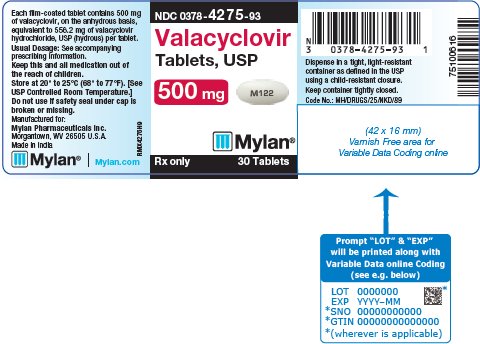
Valacyclovir Hydrochloride 500 mg Tablet, Film Coated, 30-count — NDC 0378-4275-93 (Billing 00378-4275-93)
This is a package of 30 tablets of Valacyclovir Hydrochloride 500 mg Tablet, Film Coated from Mylan Pharmaceuticals Inc., marketed since May 2010 and currently FDA-listed; retail pharmacies pay about $0.2289 per tablet (NADAC).
NDC database record
One package, one record: these facts belong to NDC 0378-4275-93 alone.
- Record
- FDA NDC Directory package listing · Human prescription drug
- Code segments
- 0378 labeler · 4275 product · 93 package
- Package marketed since
- May 24, 2010
- Sample package
- No — commercial package
- Listing certified through
- Dec 31, 2027
- Billing quantity
- 30 EA per package
- Barcode (UPC)
- 0303784276938, 0303784275931
- Medicaid fills, this package
- 28,271 prescriptions in the last four reported quarters
- FDA record last changed
- Oct 1, 2026
Past resolved recalls for this product (1)
Identity & classification
Regulatory identifiers FDA, NLM and CMS codes for this package
Drug-database identifiers Medi-Span GPI and First Databank GCN / HICL / AHFS classification
- GSN (GCN sequence number): 023989
- GCN: 13740
- GPI-14 (Medi-Span): 12405085100310
- HICL (First Databank): 010117
- AHFS class code: 08:18.32.00
- RxCUI (RxNorm): 313564
Where does this data come from?
- FDA openFDA NDC Directory · synced Oct 1, 2026
- FDA label on DailyMed · label index refreshed Oct 6, 2026
- RxNorm (NLM RxNav) · catalog refreshed Oct 1, 2026
- Medi-Span GPI (licensed)
- First Databank (licensed) · refreshed Oct 1, 2026
RxNorm drug class
This medicine belongs to the Herpesvirus Nucleoside Analog DNA Polymerase Inhibitor class.
Where does this data come from?
- RxClass (NLM) · catalog refreshed Oct 1, 2026
Clinical
- It treats herpes virus infections. That includes cold sores, genital herpes, and shingles in adults. Children can use it for cold sores (age 12 and older) and chickenpox (ages 2 to...
- No, you can take it with or without food. Do try to drink plenty of fluids while you are on it, since good hydration helps protect your kidneys.
- As early as you can. For cold sores, start at the first tingling, itching or burning. Treatment works best for genital herpes and shingles when started within a day or two of sympt...
- The most common ones are headache, nausea and stomach pain. Some people also get vomiting or dizziness. These are usually mild, but tell me if they bother you.
Patient education
Supplement & herbal interactions
Some supplements/herbs that may interact with Valacyclovir — tap one for details:
Where does this data come from?
- MedlinePlus (NLM) · refreshed Oct 1, 2026
- FDA label on DailyMed · label index refreshed Oct 6, 2026
Ask a licensed pharmacist directly — free, answered by our team.
Pricing
A drug doesn't have one price. Each row is a different public payment system, and none is what you'd pay at the counter — that depends on your insurance. The ⓘ on each row explains what it measures.
| Price system | Per ea | Per package |
|---|---|---|
| Retail pharmacies payNADAC · weekly | $0.229 | $6.87 / 30 tablets |
| Medicaid paysCMS SDUD · 12 mo | $0.5525 | $16.58 / 30 tablets |
| Medicare drug plans payPart D · quarterly | No Part D plan price is available for this NDC in our data. | |
Where does this data come from?
- CMS NADAC weekly file · file of Sep 30, 2026
- CMS ASP pricing files · refreshed Sep 20, 2026
- CMS Medicaid State Drug Utilization Data · through Q1 2026
- CMS Part D plan pricing files · refreshed Sep 24, 2026
- VA National Acquisition Center price file
Packaging — all sizes for this product
| Package NDC | Description | Per unit | Per pack | Marketing start | Marketing end | Status |
|---|---|---|---|---|---|---|
| 00378-4275-77 0378-4275-77 Main listing | 90 TABLET, FILM COATED in 1 BOTTLE, PLASTIC | $0.2289 / ea | $20.60 | 2010-05-24 | — | Active |
| 00378-4275-93 You're viewing this | 30 TABLET, FILM COATED in 1 BOTTLE, PLASTIC | $0.2289 / ea | $6.87 | 2010-05-24 | — | Active |
You're viewing the smallest of 2 pack sizes for this product.
This pack effectively ties for the lowest per-ea cost of the 2 priced pack sizes ($0.2289 NADAC).
This pack accounts for about 22% of this product's recent Medicaid fills; most go to the 90 tablets pack. See all packs ↓
Pack size FAQ
What quantity is in this package?
How does this package differ from NDC 00378-4275-77?
What NDC number is used to bill for this package of Valacyclovir Hydrochloride 500 mg Tablet, Film Coated?
Prices are the latest CMS NADAC pharmacy acquisition cost per NDC; per-pack figures are per-unit × pack quantity, shown only when the pack is denominated in the same measure NADAC prices.
Therapeutic equivalents
| Product | Labeler | Pack | NADAC/unit | TE | Status | Price vs. this |
|---|---|---|---|---|---|---|
| Valacyclovir Hydrochloride 500 mgthis 00378-4275-93 | Mylan | 30 tablets | $0.229 | AB | Availability likely | — |
| Valacyclovir Hydrochloride 500 mg 00904-6565-07 | Major | 1 tablet | $0.229 | AB | Availability likely | — |
| Valacyclovir Hydrochloride 500 mg 50268-0788-15 | AvPAK | 1 tablet | $0.229 | AB | Availability likely | — |
| Valacyclovir Hydrochloride 500 mg 51079-0093-03 | Mylan | 1 tablet | $0.229 | AB | Availability likely | — |
| Valacyclovir 500 mg 62135-0613-30 | Chartwell | 30 tablets | $0.229 | AB | Availability likely | — |
| Valacyclovir Hydrochloride 500 mg 68084-0215-01 | American | 1 tablet | $0.229 | AB | Availability likely | — |
| Valacyclovir 500 mg 69367-0262-09 | Westminster | 90 tablets | $0.229 | AB | Availability likely | — |
| Valacyclovir 500 mg 82009-0040-30 | Quallent | 30 tablets | $0.229 | AB | Discontinued | — |
| Valacyclovir Hydrochloride 500 mg 16714-0698-01 | NorthStar | 30 tablets | $0.277 | AB | Discontinued | +21% |
| Valtrex 500 mg 00173-0933-08 | GlaxoSmithKline | 30 tablets | $12.805 | AB | Availability likely | +5494% |
| Valacyclovir 500 mg 31722-0704-01 | Camber | 100 tablets | — | AB | FDA listed | — |
| Valacyclovir Hydrochloride 500 mg 43063-0730-10 | PD-Rx | 10 tablets | — | AB | FDA listed | — |
| Valacyclovir Hydrochloride 500 mg 48433-0144-03 | Safecor | 1 tablet | — | AB | FDA listed | — |
| Valacyclovir Hydrochloride 500 mg 49483-0690-03 | TIME | 30 tablets | — | AB | FDA listed | — |
| Valacyclovir 500 mg 50090-2510-00 | A-S | 10 tablets | — | AB | FDA listed | — |
| Valacyclovir Hydrochloride 500 mg 50090-5852-00 | A-S | 10 tablets | — | AB | FDA listed | — |
| Valacyclovir 500 mg 50090-6581-00 | A-S | 10 tablets | — | AB | FDA listed | — |
| Valacyclovir Hydrochloride 500 mg 50090-6918-00 | A-S | 90 tablets | — | AB | FDA listed | — |
| Valacyclovir 500 mg 50090-7702-00 | A-S | 90 tablets | — | AB | FDA listed | — |
| Valacyclovir 500 mg 51407-0107-30 | Golden | 30 tablets | — | AB | FDA listed | — |
| Valacyclovir Hydrochloride 500 mg 51655-0633-21 | Northwind | 21 tablets | — | AB | FDA listed | — |
| Valacyclovir Hydrochloride 500 mg 55154-7985-00 | Cardinal | 1 tablet | — | AB | FDA listed | — |
| Valacyclovir Hydrochloride 500 mg 57237-0042-05 | Rising | 500 tablets | — | AB | FDA listed | — |
| valacyclovir hydrochloride 500 mg 59746-0324-01 | Jubilant | 100 tablets | — | AB | FDA listed | — |
| Valacyclovir 500 mg 61919-0066-20 | Direct | 20 tablets | — | AB | FDA listed | — |
| Valacyclovir Hydrochloride 500 mg 63187-0832-04 | Proficient | 4 tablets | — | AB | FDA listed | — |
| Valacyclovir 500 mg 63304-0904-03 | SUN | 10 tablets | — | AB | FDA listed | — |
| Valacyclovir Hydrochloride 500 mg 65862-0448-01 | Aurobindo | 100 tablets | — | AB | FDA listed | — |
| Valacyclovir 500 mg 67046-1071-03 | Coupler | 30 tablets | — | AB | FDA listed | — |
| Valacyclovir Hydrochloride 500 mg 67296-2127-02 | Redpharm | 21 tablets | — | AB | FDA listed | — |
| Valacyclovir Hydrochloride 500 mg 68071-2738-01 | NuCare | 10 tablets | — | AB | FDA listed | — |
| Valacyclovir 500 mg 68071-3747-03 | NuCare | 30 tablets | — | AB | FDA listed | — |
| Valacyclovir 500 mg 68071-3749-04 | NuCare | 14 tablets | — | AB | FDA listed | — |
| Valacyclovir Hydrochloride 500 mg 68071-4783-03 | NuCare | 30 tablets | — | AB | FDA listed | — |
| Valacyclovir Hydrochloride 500 mg 68071-4885-03 | NuCare | 30 tablets | — | AB | FDA listed | — |
| Valacyclovir 500 mg 68788-4105-03 | Preferred | 30 tablets | — | AB | FDA listed | — |
| Valacyclovir Hydrochloride 500 mg 68788-8482-03 | Preferred | 30 tablets | — | AB | FDA listed | — |
| Valacyclovir Hydrochloride 500 mg 68788-8904-03 | Preferred | 30 tablets | — | AB | FDA listed | — |
| Valacyclovir 500 mg 69117-0010-01 | Yiling | 30 tablets | — | AB | FDA listed | — |
| Valacyclovir Hydrochloride 500 mg 70518-2266-00 | REMEDYREPACK | 30 tablets | — | AB | FDA listed | — |
| Valacyclovir 500 mg 70518-4417-00 | REMEDYREPACK | 30 tablets | — | AB | FDA listed | — |
| Valacyclovir 500 mg 70518-4661-00 | REMEDYREPACK | 30 tablets | — | AB | FDA listed | — |
| Valacyclovir Hydrochloride 500 mg 71335-0708-00 | Bryant | 60 tablets | — | AB | FDA listed | — |
| Valacyclovir Hydrochloride 500 mg 71335-1341-00 | Bryant | 60 tablets | — | AB | FDA listed | — |
| Valacyclovir 500 mg 71335-2566-00 | Bryant | 60 tablets | — | AB | FDA listed | — |
| Valacyclovir Hydrochloride 500 mg 72162-2366-09 | Bryant | 90 tablets | — | AB | FDA listed | — |
| Valacyclovir 500 mg 72189-0630-20 | Direct_Rx | 20 tablets | — | AB | FDA listed | — |
| Valacyclovir Hydrochloride 500 mg 72789-0263-10 | PD-Rx | 10 tablets | — | AB | FDA listed | — |
| Valacyclovir Hydrochloride 500 mg 72789-0264-30 | PD-Rx | 30 tablets | — | AB | FDA listed | — |
| Valacyclovir Hydrochloride 500 mg 76420-0053-12 | Asclemed | 12 tablets | — | AB | FDA listed | — |
| Valacyclovir 500 mg 82804-0009-06 | Proficient | 6 tablets | — | AB | FDA listed | — |
| Valacyclovir 500 mg 82804-0212-06 | Proficient | 6 tablets | — | AB | FDA listed | — |
| Valacyclovir Hydrochloride 500 mg 82868-0055-21 | Northwind | 21 tablets | — | AB | FDA listed | — |
| Valacyclovir Hydrochloride 500 mg 85766-0054-01 | Sportpharm | 100 tablets | — | AB | FDA listed | — |
| Valacyclovir 500 mg 53401-0031-81 | Aphena | 1080 tablets | — | AB | FDA listed | — |
| Valacyclovir 500 mg 85766-0270-02 | Sportpharm | 2 tablets | — | AB | FDA listed | — |
Where does this data come from?
- FDA openFDA NDC Directory · synced Oct 1, 2026
- FDA Orange Book · refreshed Oct 3, 2026
- CMS NADAC weekly file · file of Sep 30, 2026
Availability & generic status
This product is an FDA-approved generic. Other versions of the same drug are listed under Therapeutic equivalents, least expensive first.
Where does this data come from?
- FDA Orange Book · refreshed Oct 3, 2026
What it looks like
Where does this data come from?
- FDA label on DailyMed · label index refreshed Oct 6, 2026
Inactive Ingredients / Excipients
Inactive ingredients, also called excipients, are components of the drug product other than the active ingredient. They may include fillers, dyes, coatings, preservatives, flavors, or other formulation ingredients.
🧪 Avoiding an ingredient? See Valacyclovir inactive ingredients by manufacturer: every current product's list side by side, so you can ask your pharmacy for the version that does not list it.
💡 Tap an ingredient (hover on desktop) to see what it is and why it’s used.
-
UNII XM0M87F357
A dark iron oxide compound that gives medicines their black or dark color. It's used as a colorant in tablets and capsules to help identify the product and make it visually distinctive.
-
UNII 0WZ8WG20P6
Hypromellose 2910 is a plant-based cellulose derivative that acts as a thickener, binder, and film-coating agent. It helps control how quickly the medicine dissolves and protects the tablet or capsule from moisture and light.
-
UNII 70097M6I30
Magnesium stearate is a salt made from magnesium and stearic acid, a fatty substance. It's used in tablets and capsules as a lubricant and glidant to help ingredients flow smoothly during manufacturing and prevent sticking.
-
UNII 7T9FYH5QMK
A plant-derived powder that serves as a binder and filler in tablets and capsules. It helps hold ingredients together, adds bulk, and aids in smooth tablet disintegration when swallowed.
-
UNII B697894SGQ
Polyethylene glycol 400 is a clear, thick liquid made from petroleum-derived polymers. It acts as a solvent and humectant in medicines, helping dissolve active ingredients and retain moisture in the formulation.
-
UNII 6DC9Q167V3
Propylene glycol is a clear liquid derived from petroleum or vegetable sources. It acts as a solvent, humectant, and preservative in medicines, helping dissolve active ingredients and maintain product stability.
-
UNII 46N107B71O
Shellac is a natural resin secreted by the lac beetle. It's used as a coating on tablets and capsules to control how quickly the medicine dissolves and to improve appearance and stability.
-
UNII 15FIX9V2JP
Titanium dioxide is a bright white mineral powder commonly used as a colorant and opacifying agent. It makes pills and tablets white or lighter in color and helps make coatings non-transparent.
8 inactive ingredients listed in the exact product block matched to this NDC.
Where does this data come from?
ingredient classCode="IACT" elements from the exact product block matched by this NDC. Label-section narrative from DailyMed / the openFDA label index is shown separately when available.- FDA label on DailyMed · label index refreshed Oct 6, 2026
- FDA openFDA NDC Directory · synced Oct 1, 2026
Inactive ingredient FAQ
Are inactive ingredients the same for every manufacturer?
Why might an inactive ingredient be missing?
Can inactive ingredients matter?
Manufacturer & labeler
More NDCs from Mylan Pharmaceuticals Inc. labeler code 00378
- Abacavir Sulfate 300 mg Tablet, Film Coated NDC 0378-4105-91
- Atovaquone and Proguanil Hydrochloride 62.5 mg; 25 mg Tablet, Film Coated NDC 0378-4160-01
- Atovaquone and Proguanil Hydrochloride 250 mg; 100 mg Tablet, Film Coated NDC 0378-4162-01
- Doxepin Hydrochloride 50 mg Capsule NDC 0378-4250-01
- Ambrisentan 5 mg Tablet, Film Coated NDC 0378-4270-93
- Ambrisentan 10 mg Tablet, Film Coated NDC 0378-4271-93
- Valacyclovir Hydrochloride 1 g Tablet, Film Coated NDC 0378-4276-77
- Eletriptan Hydrobromide 20 mg Tablet, Film Coated NDC 0378-4287-85
- Eletriptan Hydrobromide 40 mg Tablet, Film Coated NDC 0378-4288-08
- Fenofibrate 40 mg Tablet NDC 0378-4390-77
- Fenofibrate 120 mg Tablet NDC 0378-4391-77
- Budesonide 9 mg Tablet, Film Coated, Extended Release NDC 0378-4500-93
Where does this data come from?
- FDA openFDA NDC Directory · synced Oct 1, 2026
- Drugs@FDA
Full prescribing information FDA SPL
🎯 Indications and Usage ▾
1 INDICATIONS AND USAGE Valacyclovir tablets are a deoxynucleoside analogue DNA polymerase inhibitor indicated for: Adult Patients ( 1.1 ) • Cold Sores (Herpes Labialis) • Genital Herpes • Treatment in immunocompetent patients (initial or recurrent episode) • Suppression in immunocompetent or HIV-1–infected patients • Reduction of transmission • Herpes Zoster Pediatric Patients ( 1.2 ) • Cold Sores (Herpes Labialis) • Chickenpox Limitations of Use ( 1.3 ) The efficacy and safety of valacyclovir tablets have not been established in immunocompromised patients other than for the suppression of genital herpes in HIV-1–infected patients.
1.1Adult Patients Cold Sores (Herpes Labialis) Valacyclovir tablets are indicated for treatment of cold sores (herpes labialis). The efficacy of valacyclovir tablets initiated after the development of clinical signs of a cold sore (e.g., papule, vesicle, or ulcer) has not been established. Genital Herpes Initial Episode Valacyclovir tablets are indicated for treatment of the initial episode of genital herpes in immunocompetent adults.
The efficacy of treatment with valacyclovir tablets when initiated more than 72 hours after the onset of signs and symptoms has not been established. Recurrent Episodes Valacyclovir tablets are indicated for treatment of recurrent episodes of genital herpes in immunocompetent adults. The efficacy of treatment with valacyclovir tablets when initiated more than 24 hours after the onset of signs and symptoms has not been established.
Suppressive Therapy Valacyclovir tablets are indicated for chronic suppressive therapy of recurrent episodes of genital herpes in immunocompetent and in HIV-1–infected adults. The efficacy and safety of valacyclovir tablets for the suppression of genital herpes beyond 1 year in immunocompetent patients and beyond 6 months in HIV-1–infected patients have not been established. Reduction of Transmission Valacyclovir tablets are indicated for the reduction of transmission of genital herpes in immunocompetent adults.
The efficacy of valacyclovir tablets for the reduction of transmission of genital herpes beyond 8 months in discordant couples has not been established. The efficacy of valacyclovir tablets for the reduction of transmission of genital herpes in individuals with multiple partners and non-heterosexual couples has not been established. Safer sex practices should be used with suppressive therapy (see current Centers for Disease Control and Prevention [CDC] Sexually Transmitted Diseases Treatment Guidelines ).
Herpes Zoster Valacyclovir tablets are indicated for the treatment of herpes zoster (shingles) in immunocompetent adults. The efficacy of valacyclovir tablets when initiated more than 72 hours after the onset of rash and the efficacy and safety of valacyclovir tablets for treatment of disseminated herpes zoster have not been established.
1.2Pediatric Patients Cold Sores (Herpes Labialis) Valacyclovir tablets are indicated for the treatment of cold sores (herpes labialis) in pediatric patients aged greater than or equal to 12 years. The efficacy of valacyclovir tablets initiated after the development of clinical signs of a cold sore (e.g., papule, vesicle, or ulcer) has not been established. Chickenpox Valacyclovir is indicated for the treatment of chickenpox in immunocompetent pediatric patients aged 2 to less than 18 years.
Based on efficacy data from clinical trials with oral acyclovir, treatment with valacyclovir should be initiated within 24 hours after the onset of rash [see Clinical Studies (14.4) ].
1.3Limitations of Use The efficacy and safety of valacyclovir have not been established in: • Immunocompromised patients other than for the suppression of genital herpes in HIV-1–infected patients with a CD4+ cell count greater than or equal to 100 cells/mm 3 . • Patients aged less than 12 years with cold sores (herpes labialis). • Patients aged less than 2 years or greater than or equal to 18 years with chickenpox. • Patients… [Excerpted — this section continues on DailyMed.]
⏱️ Dosage and Administration ▾
2 DOSAGE AND ADMINISTRATION • Valacyclovir tablets may be given without regard to meals. • Valacyclovir oral suspension (25 mg/mL or 50 mg/mL) may be prepared extemporaneously from 500-mg valacyclovir tablets for use in pediatric patients for whom a solid dosage form is not appropriate [see Dosage and Administration (2.3) ] . Adult Dosage ( 2.1 ) Cold Sores 2 grams every 12 hours for 1 day Genital Herpes Initial episode 1 gram twice daily for 10 days Recurrent episodes 500 mg twice daily for 3 days Suppressive therapy Immunocompetent patients 1 gram once daily Alternate dose in patients with less than or equal to 9 recurrences/year 500 mg once daily HIV-1–infected patients 500 mg twice daily Reduction of transmission 500 mg once daily Herpes Zoster 1 gram 3 times daily for 7 days Pediatric Dosage ( 2.2 ) Cold Sores (aged greater than or equal to 12 years) 2 grams every 12 hours for 1 day Chickenpox (aged 2 to less than 18 years) 20 mg/kg 3 times daily for 5 days; not to exceed 1 gram 3 times daily Valacyclovir oral suspension (25 mg/mL or 50 mg/mL) can be prepared from the 500 mg valacyclovir tablets.
( 2.3 )
2.1Adult Dosing Recommendations Cold Sores (Herpes Labialis) The recommended dosage of valacyclovir tablets for treatment of cold sores is 2 grams twice daily for 1 day taken 12 hours apart. Therapy should be initiated at the earliest symptom of a cold sore (e.g., tingling, itching, or burning). Genital Herpes Initial Episode The recommended dosage of valacyclovir tablets for treatment of initial genital herpes is 1 gram twice daily for 10 days.
Therapy was most effective when administered within 48 hours of the onset of signs and symptoms. Recurrent Episodes The recommended dosage of valacyclovir tablets for treatment of recurrent genital herpes is 500 mg twice daily for 3 days. Initiate treatment at the first sign or symptom of an episode.
Suppressive Therapy The recommended dosage of valacyclovir tablets for chronic suppressive therapy of recurrent genital herpes is 1 gram once daily in patients with normal immune function. In patients with a history of 9 or fewer recurrences per year, an alternative dose is 500 mg once daily. In HIV-1–infected patients with a CD4+ cell count greater than or equal to 100 cells/mm 3 , the recommended dosage of valacyclovir tablets for chronic suppressive therapy of recurrent genital herpes is 500 mg twice daily.
Reduction of Transmission The recommended dosage of valacyclovir tablets for reduction of transmission of genital herpes in patients with a history of 9 or fewer recurrences per year is 500 mg once daily for the source partner. Herpes Zoster The recommended dosage of valacyclovir tablets for treatment of herpes zoster is 1 gram 3 times daily for 7 days. Therapy should be initiated at the earliest sign or symptom of herpes zoster and is most effective when started within 48 hours of the onset of rash.
2.2Pediatric Dosing Recommendations Cold Sores (Herpes Labialis) The recommended dosage of valacyclovir tablets for the treatment of cold sores in pediatric patients aged greater than or equal to 12 years is 2 grams twice daily for 1 day taken 12 hours apart. Therapy should be initiated at the earliest symptom of a cold sore (e.g., tingling, itching, or burning). Chickenpox The recommended dosage of valacyclovir for treatment of chickenpox in immunocompetent pediatric patients aged 2 to less than 18 years is 20 mg/kg administered 3 times daily for 5 days.
The total dose should not exceed 1 gram 3 times daily. Therapy should be initiated at the earliest sign or symptom [see Use in Specific Populations (8.4) , Clinical Pharmacology (12.3) , Clinical Studies (14.4) ].
2.3Extemporaneous Preparation of Oral Suspension Ingredients and Preparation per USP-NF Valacyclovir tablets 500 mg, cherry flavor, and Suspension Structured Vehicle USP-NF (SSV). Valacyclovir oral suspension (25 mg/mL or 50 mg/mL) should be prepared in lots of 100 mL. Instructions for Preparing Suspension at Time of D… [Excerpted — this section continues on DailyMed.]
💊 Dosage Forms and Strengths ▾
3 DOSAGE FORMS AND STRENGTHS Valacyclovir Tablets, USP are available containing 556.2 mg or 1.112 grams of valacyclovir hydrochloride, USP (hydrous), which are equivalent to 500 mg or 1 gram of valacyclovir, on the anhydrous basis, respectively. • The 500 mg tablets are white, film-coated, oval, unscored tablets with M122 imprinted with black ink on one side of the tablet and plain on the other side of the tablet. • The 1 gram tablets are white, film-coated, oval tablets with a partial break line on both sides of the tablet and M123 imprinted with black ink on one side of the tablet.
Tablets: 500 mg (unscored), 1 gram (partial break line) ( 3 )
⛔ Contraindications ▾
4 CONTRAINDICATIONS Valacyclovir tablets are contraindicated in patients who have had a demonstrated clinically significant hypersensitivity reaction [e.g., anaphylaxis, severe cutaneous adverse reactions (SCARs)] to valacyclovir, acyclovir, or any component of the formulation [see Warnings and Precautions (5.4) , Adverse Reactions (6.3) ] . Hypersensitivity to valacyclovir (e.g., anaphylaxis), acyclovir, or any component of the formulation. ( 4 )
⚠️ Warnings and Cautions ▾
5 WARNINGS AND PRECAUTIONS • Thrombotic thrombocytopenic purpura/hemolytic uremic syndrome (TTP/HUS): Has occurred in patients with advanced HIV-1 disease and in allogenic bone marrow transplant and renal transplant patients receiving 8 grams per day of valacyclovir tablets in clinical trials. Discontinue treatment if clinical symptoms and laboratory findings consistent with TTP/HUS occur. ( 5.1 ) • Acute renal failure: May occur in elderly patients (with or without reduced renal function), patients with underlying renal disease who receive higher-than-recommended doses of valacyclovir tablets for their level of renal function, patients who receive concomitant nephrotoxic drugs, or inadequately hydrated patients.
Use with caution in elderly patients and reduce dosage in patients with renal impairment. ( 2.4 , 5.2 ) • Central nervous system adverse reactions (e.g., agitation, hallucinations, confusion, and encephalopathy): May occur in both adult and pediatric patients (with or without reduced renal function) and in patients with underlying renal disease who receive higher-than-recommended doses of valacyclovir tablets for their level of renal function. Elderly patients are more likely to have central nervous system adverse reactions.
Use with caution in elderly patients and reduce dosage in patients with renal impairment. ( 2.4 , 5.3 ) • Severe cutaneous adverse reactions (SCARs): Including acute generalized exanthematous pustulosis (AGEP), drug reaction with eosinophilia and systemic symptoms (DRESS), toxic epidermal necrolysis (TEN), and Stevens-Johnson syndrome (SJS) have been reported during the postmarketing experience with valacyclovir. Discontinue valacyclovir tablets immediately if a painful rash with mucosal involvement or a progressive severe rash develops, and closely monitor clinical status.
( 5.4 )
5.1Thrombotic Thrombocytopenic Purpura/Hemolytic Uremic Syndrome (TTP/HUS) TTP/HUS, in some cases resulting in death, has occurred in patients with advanced HIV-1 disease and also in allogeneic bone marrow transplant and renal transplant recipients participating in clinical trials of valacyclovir tablets at doses of 8 grams per day. Treatment with valacyclovir tablets should be stopped immediately if clinical signs, symptoms, and laboratory abnormalities consistent with TTP/HUS occur.
5.2Acute Renal Failure Cases of acute renal failure have been reported in: • Elderly patients with or without reduced renal function. Caution should be exercised when administering valacyclovir tablets to geriatric patients, and dosage reduction is recommended for those with impaired renal function [see Dosage and Administration (2.4) , Use in Specific Populations (8.5) ]. • Patients with underlying renal disease who received higher-than-recommended doses of valacyclovir tablets for their level of renal function. Dosage reduction is recommended when administering valacyclovir tablets to patients with renal impairment [see Dosage and Administration (2.4) , Use in Specific Populations (8.6) ]. • Patients receiving other nephrotoxic drugs.
Caution should be exercised when administering valacyclovir tablets to patients receiving potentially nephrotoxic drugs. • Patients without adequate hydration. Precipitation of acyclovir in renal tubules may occur when the solubility (2.5 mg/mL) is exceeded in the intratubular fluid. Adequate hydration should be maintained for all patients.
In the event of acute renal failure and anuria, the patient may benefit from hemodialysis until renal function is restored [see Dosage and Administration (2.4) , Adverse Reactions (6.3) ] .
5.3Central Nervous System Effects Central nervous system adverse reactions, including agitation, hallucinations, confusion, delirium, seizures, and encephalopathy, have been reported in both adult and pediatric patients with or without reduced renal function and in patients with underlying renal disease who received higher-than-recommended doses of valacyclovir tablets for their le… [Excerpted — this section continues on DailyMed.]
🤒 Adverse Reactions ▾
6 ADVERSE REACTIONS The following serious adverse reactions are discussed in greater detail in other sections of the labeling: • Thrombotic Thrombocytopenic Purpura/Hemolytic Uremic Syndrome [see Warnings and Precautions (5.1) ]. • Acute Renal Failure [see Warnings and Precautions (5.2) ] . • Central Nervous System Effects [see Warnings and Precautions (5.3) ] . • Severe Cutaneous Adverse Reactions [see Warnings and Precautions (5.4) ] . The most common adverse reactions reported in at least 1 indication by greater than 10% of adult subjects treated with valacyclovir tablets and observed more frequently with valacyclovir tablets compared with placebo are headache, nausea, and abdominal pain.
The only adverse reaction reported in greater than 10% of pediatric subjects aged less than 18 years was headache. • The most common adverse reactions reported in at least one indication by greater than 10% of adult subjects treated with valacyclovir tablets and more commonly than in subjects treated with placebo are headache, nausea, and abdominal pain. ( 6.1 ) • The only adverse reaction occurring in greater than 10% of pediatric subjects aged less than 18 years was headache. ( 6.2 ) To report SUSPECTED ADVERSE REACTIONS, contact Viatris at 1-877-446-3679 (1-877-4-INFO-RX) or FDA at 1-800-FDA-1088 or www.fda.gov/medwatch.
6.1Clinical Trials Experience in Adult Subjects Because clinical trials are conducted under widely varying conditions, adverse reaction rates observed in the clinical trials of a drug cannot be directly compared with rates in the clinical trials of another drug and may not reflect the rates observed in practice. Cold Sores (Herpes Labialis) In clinical trials for the treatment of cold sores, the adverse reactions reported by subjects receiving valacyclovir tablets 2 grams twice daily (n = 609) or placebo (n = 609) for 1 day, respectively, included headache (14%, 10%) and dizziness (2%, 1%).
The frequencies of abnormal ALT (greater than 2 x ULN) were 1.8% for subjects receiving valacyclovir tablets compared with 0.8% for placebo. Other laboratory abnormalities (hemoglobin, white blood cells, alkaline phosphatase, and serum creatinine) occurred with similar frequencies in the 2 groups. Genital Herpes Initial Episode In a clinical trial for the treatment of initial episodes of genital herpes, the adverse reactions reported by greater than or equal to 5% of subjects receiving valacyclovir tablets 1 gram twice daily for 10 days (n = 318) or oral acyclovir 200 mg 5 times daily for 10 days (n = 318), respectively, included headache (13%, 10%) and nausea (6%, 6%).
For the incidence of laboratory abnormalities see Table 2. Recurrent Episodes In 3 clinical trials for the episodic treatment of recurrent genital herpes, the adverse reactions reported by greater than or equal to 5% of subjects receiving valacyclovir tablets 500 mg twice daily for 3 days (n = 402), valacyclovir tablets 500 mg twice daily for 5 days (n = 1,136), or placebo (n = 259), respectively, included headache (16%, 11%, 14%) and nausea (5%, 4%, 5%). For the incidence of laboratory abnormalities see Table 2.
Suppressive Therapy: Suppression of Recurrent Genital Herpes in Immunocompetent Adults In a clinical trial for the suppression of recurrent genital herpes infections, the adverse reactions reported by subjects receiving valacyclovir tablets 1 gram once daily (n = 269), valacyclovir tablets 500 mg once daily (n = 266), or placebo (n = 134), respectively, included headache (35%, 38%, 34%), nausea (11%, 11%, 8%), abdominal pain (11%, 9%, 6%), dysmenorrhea (8%, 5%, 4%), depression (7%, 5%, 5%), arthralgia (6%, 5%, 4%), vomiting (3%, 3%, 2%), and dizziness (4%, 2%, 1%).
For the incidence of laboratory abnormalities see Table 2. Suppression of Recurrent Genital Herpes in HIV-1 - Infected Subjects In HIV-1-infected subjects, frequently reported adverse reactions for valacyclovir tablets (500 mg twice daily; n = 194, median days on therapy = 172) and placebo (n = 99… [Excerpted — this section continues on DailyMed.]
🔄 Drug Interactions ▾
7 DRUG INTERACTIONS No clinically significant drug-drug or drug-food interactions with valacyclovir tablets are known [see Clinical Pharmacology (12.3) ].
👥 Use in Specific Populations ▾
8 USE IN SPECIFIC POPULATIONS
8.1Pregnancy Risk Summary Clinical data over several decades with valacyclovir and its metabolite, acyclovir, in pregnant women, have not identified a drug associated risk of major birth defects. There are insufficient data on the use of valacyclovir regarding miscarriage or adverse maternal or fetal outcomes (see Data ) . There are risks to the fetus associated with untreated herpes simplex during pregnancy (see Clinical Considerations ).
In animal reproduction studies, no evidence of adverse developmental outcomes was observed with valacyclovir when administered to pregnant rats and rabbits at system exposures (AUC) 4 (rats) and 7 (rabbits) times the human exposure at the maximum recommended human dose (MRHD) (see Data ) . The estimated background risk of major birth defects and miscarriage for the indicated populations is unknown. All pregnancies have a background risk of birth defect, loss, or other adverse outcomes.
In the U.S. general population, the estimated background risk of major birth defects and miscarriage in clinically recognized pregnancies is 2% to 4% and 15% to 20%, respectively. Clinical Considerations Disease-Associated Maternal and/or Embryo/Fetal Risk The risk of neonatal HSV infection varies from 30% to 50% for genital HSV acquired in late pregnancy (third trimester), whereas with HSV acquisition in early pregnancy, the risk of neonatal infection is about 1%. A primary herpes occurrence during the first trimester of pregnancy has been associated with neonatal chorioretinitis, microcephaly, and, in rare cases, skin lesions.
In very rare cases, transplacental transmission can occur resulting in congenital infection, including microcephaly, hepatosplenomegaly, intrauterine growth restriction, and stillbirth. Co-infection with HSV increases the risk of perinatal HIV transmission in women who had a clinical diagnosis of genital herpes during pregnancy. Data Human Data Clinical data over several decades with valacyclovir and its metabolite, acyclovir, in pregnant women, based on published literature, have not identified a drug-associated risk of major birth defects.
There are insufficient data on the use of valacyclovir regarding miscarriage or adverse maternal or fetal outcomes. The Acyclovir and the Valacyclovir Pregnancy Registries, both population-based international prospective studies, collected pregnancy data through April 1999. The Acyclovir Registry documented outcomes of 1,246 infants and fetuses exposed to acyclovir during pregnancy (756 with earliest exposure during the first trimester, 197 during the second trimester, 291 during the third trimester, and 2 unknown).
The occurrence of major birth defects during first-trimester exposure to acyclovir was 3.2% (95% CI: 2.0% to 5.0%) and during any trimester of exposure was 2.6% (95% CI: 1.8% to 3.8%). The Valacyclovir Pregnancy Registry documented outcomes of 111 infants and fetuses exposed to valacyclovir during pregnancy (28 with earliest exposure in the first trimester, 31 during the second trimester, and 52 during the third trimester).The occurrence of major birth defects during first-trimester exposure to valacyclovir was 4.5% (95% CI: 0.24% to 24.9%) and during any trimester of exposure was 3.9% (95% CI: 1.3% to 10.7%).
Available studies have methodological limitations including insufficient sample size to support conclusions about overall malformation risk or for making comparisons of the frequencies of specific birth defects. Animal Data Valacyclovir was administered orally to pregnant rats and rabbits (up to 400 mg/kg/day) during organogenesis (Gestation Days 6 through 15, and 6 through 18, respectively). No adverse embryo-fetal effects were observed in rats and rabbits at acyclovir exposures (AUC) of up to approximately 4 (rats) and 7 (rabbits) times the exposure in humans at the MRHD.
Early embryo death, fetal growth retardation (weight and length), and variations in fetal skeletal development (primarily extra… [Excerpted — this section continues on DailyMed.]
🤰 Pregnancy ▾
8.1Pregnancy Risk Summary Clinical data over several decades with valacyclovir and its metabolite, acyclovir, in pregnant women, have not identified a drug associated risk of major birth defects. There are insufficient data on the use of valacyclovir regarding miscarriage or adverse maternal or fetal outcomes (see Data ) . There are risks to the fetus associated with untreated herpes simplex during pregnancy (see Clinical Considerations ).
In animal reproduction studies, no evidence of adverse developmental outcomes was observed with valacyclovir when administered to pregnant rats and rabbits at system exposures (AUC) 4 (rats) and 7 (rabbits) times the human exposure at the maximum recommended human dose (MRHD) (see Data ) . The estimated background risk of major birth defects and miscarriage for the indicated populations is unknown. All pregnancies have a background risk of birth defect, loss, or other adverse outcomes.
In the U.S. general population, the estimated background risk of major birth defects and miscarriage in clinically recognized pregnancies is 2% to 4% and 15% to 20%, respectively. Clinical Considerations Disease-Associated Maternal and/or Embryo/Fetal Risk The risk of neonatal HSV infection varies from 30% to 50% for genital HSV acquired in late pregnancy (third trimester), whereas with HSV acquisition in early pregnancy, the risk of neonatal infection is about 1%. A primary herpes occurrence during the first trimester of pregnancy has been associated with neonatal chorioretinitis, microcephaly, and, in rare cases, skin lesions.
In very rare cases, transplacental transmission can occur resulting in congenital infection, including microcephaly, hepatosplenomegaly, intrauterine growth restriction, and stillbirth. Co-infection with HSV increases the risk of perinatal HIV transmission in women who had a clinical diagnosis of genital herpes during pregnancy. Data Human Data Clinical data over several decades with valacyclovir and its metabolite, acyclovir, in pregnant women, based on published literature, have not identified a drug-associated risk of major birth defects.
There are insufficient data on the use of valacyclovir regarding miscarriage or adverse maternal or fetal outcomes. The Acyclovir and the Valacyclovir Pregnancy Registries, both population-based international prospective studies, collected pregnancy data through April 1999. The Acyclovir Registry documented outcomes of 1,246 infants and fetuses exposed to acyclovir during pregnancy (756 with earliest exposure during the first trimester, 197 during the second trimester, 291 during the third trimester, and 2 unknown).
The occurrence of major birth defects during first-trimester exposure to acyclovir was 3.2% (95% CI: 2.0% to 5.0%) and during any trimester of exposure was 2.6% (95% CI: 1.8% to 3.8%). The Valacyclovir Pregnancy Registry documented outcomes of 111 infants and fetuses exposed to valacyclovir during pregnancy (28 with earliest exposure in the first trimester, 31 during the second trimester, and 52 during the third trimester).The occurrence of major birth defects during first-trimester exposure to valacyclovir was 4.5% (95% CI: 0.24% to 24.9%) and during any trimester of exposure was 3.9% (95% CI: 1.3% to 10.7%).
Available studies have methodological limitations including insufficient sample size to support conclusions about overall malformation risk or for making comparisons of the frequencies of specific birth defects. Animal Data Valacyclovir was administered orally to pregnant rats and rabbits (up to 400 mg/kg/day) during organogenesis (Gestation Days 6 through 15, and 6 through 18, respectively). No adverse embryo-fetal effects were observed in rats and rabbits at acyclovir exposures (AUC) of up to approximately 4 (rats) and 7 (rabbits) times the exposure in humans at the MRHD.
Early embryo death, fetal growth retardation (weight and length), and variations in fetal skeletal development (primarily extra ribs and delayed ossification… [Excerpted — this section continues on DailyMed.]
🧒 Pediatric Use ▾
8.4Pediatric Use Valacyclovir is indicated for treatment of cold sores in pediatric patients aged greater than or equal to 12 years and for treatment of chickenpox in pediatric patients aged 2 to less than 18 years [see Indications and Usage (1.2) , Dosage and Administration (2.2) ] . The use of valacyclovir tablets for treatment of cold sores is based on 2 double-blind, placebo-controlled clinical trials in healthy adults and adolescents (aged greater than or equal to 12 years) with a history of recurrent cold sores [see Clinical Studies (14.1) ] .
The use of valacyclovir for treatment of chickenpox in pediatric patients aged 2 to less than 18 years is based on single-dose pharmacokinetic and multiple-dose safety data from an open-label trial with valacyclovir and supported by efficacy and safety data from 3 randomized, double-blind, placebo-controlled trials evaluating oral acyclovir in pediatric subjects with chickenpox [see Dosage and Administration (2.2) , Adverse Reactions (6.2) , Clinical Pharmacology (12.3) , Clinical Studies (14.4) ] . The efficacy and safety of valacyclovir have not been established in pediatric patients: • aged less than 12 years with cold sores • aged less than 18 years with genital herpes • aged less than 18 years with herpes zoster • aged less than 2 years with chickenpox • for suppressive therapy following neonatal HSV infection.
The pharmacokinetic profile and safety of valacyclovir oral suspension in children aged less than 12 years were studied in 3 open-label trials. No efficacy evaluations were conducted in any of the 3 trials. Trial 1 was a single-dose pharmacokinetic, multiple-dose safety trial in 27 pediatric subjects aged 1 to less than 12 years with clinically suspected varicella-zoster virus (VZV) infection [see Dosage and Administration (2.2) , Adverse Reactions (6.2) , Clinical Pharmacology (12.3) , Clinical Studies (14.4) ] .
Trial 2 was a single-dose pharmacokinetic and safety trial in pediatric subjects aged 1 month to less than 6 years who had an active herpes virus infection or who were at risk for herpes virus infection. Fifty-seven subjects were enrolled and received a single dose of 25 mg/kg valacyclovir oral suspension. In infants and children aged 3 months to less than 6 years, this dose provided comparable systemic acyclovir exposures to that from a 1-gram dose of valacyclovir in adults (historical data).
In infants aged 1 month to less than 3 months, mean acyclovir exposures resulting from a 25-mg/kg dose were higher (C max : ↑ 30%, AUC: ↑ 60%) than acyclovir exposures following a 1-gram dose of valacyclovir in adults. Acyclovir is not approved for suppressive therapy in infants and children following neonatal HSV infections; therefore, valacyclovir is not recommended for this indication because efficacy cannot be extrapolated from acyclovir. Trial 3 was a single-dose pharmacokinetic, multiple-dose safety trial in 28 pediatric subjects aged 1 to less than 12 years with clinically suspected HSV infection.
None of the subjects enrolled in this trial had genital herpes. Each subject was dosed with valacyclovir oral suspension 10 mg/kg twice daily for 3 to 5 days. Acyclovir systemic exposures in pediatric subjects following valacyclovir oral suspension were compared with historical acyclovir systemic exposures in immunocompetent adults receiving the solid oral dosage form of valacyclovir or acyclovir for the treatment of recurrent genital herpes.
The mean projected daily acyclovir systemic exposures in pediatric subjects across all age-groups (1 to less than 12 years) were lower (C max : ↓ 20%, AUC: ↓ 33%) compared with the acyclovir systemic exposures in adults receiving valacyclovir 500 mg twice daily but were higher (daily AUC: ↑ 16%) than systemic exposures in adults receiving acyclovir 200 mg 5 times daily. Insufficient data are available to support valacyclovir for the treatment of recurrent genital herpes in this age-group because clinical information on recurrent ge… [Excerpted — this section continues on DailyMed.]
🧓 Geriatric Use ▾
8.5Geriatric Use Of the total number of subjects in clinical trials of valacyclovir tablets, 906 were 65 and over, and 352 were 75 and over. In a clinical trial of herpes zoster, the duration of pain after healing (post-herpetic neuralgia) was longer in subjects 65 and older compared with younger adults. Elderly patients are more likely to have reduced renal function and require dose reduction.
Elderly patients are also more likely to have renal or CNS adverse events [see Dosage and Administration (2.4) , Warnings and Precautions (5.2 , 5.3) , Clinical Pharmacology (12.3) ] .
🆘 Overdosage ▾
10 OVERDOSAGE Caution should be exercised to prevent inadvertent overdose [see Use in Specific Populations (8.5 , 8.6) ] . Precipitation of acyclovir in renal tubules may occur when the solubility (2.5 mg/mL) is exceeded in the intratubular fluid. In the event of acute renal failure and anuria, the patient may benefit from hemodialysis until renal function is restored [see Dosage and Administration (2.4) ] .
🧬 Clinical Pharmacology ▾
12 CLINICAL PHARMACOLOGY
12.1Mechanism of Action Valacyclovir is an antiviral drug active against α-herpes viruses [see Microbiology (12.4) ].
12.3Pharmacokinetics The pharmacokinetics of valacyclovir and acyclovir after oral administration of valacyclovir tablets have been investigated in 14 volunteer trials involving 283 adults and in 3 trials involving 112 pediatric subjects aged 1 month to less than 12 years. Pharmacokinetics in Adults Absorption and Bioavailability After oral administration, valacyclovir hydrochloride is rapidly absorbed from the gastrointestinal tract and nearly completely converted to acyclovir and L -valine by first-pass intestinal and/or hepatic metabolism.
The absolute bioavailability of acyclovir after administration of valacyclovir tablets is 54.5% ± 9.1% as determined following a 1-gram oral dose of valacyclovir tablets and a 350-mg intravenous acyclovir dose to 12 healthy volunteers. Acyclovir bioavailability from the administration of valacyclovir tablets is not altered by administration with food (30 minutes after an 873 Kcal breakfast, which included 51 grams of fat). Acyclovir pharmacokinetic parameter estimates following administration of valacyclovir tablets to healthy adult volunteers are presented in Table 3.
There was a less than dose-proportional increase in acyclovir maximum concentration (C max ) and area under the acyclovir concentration-time curve (AUC) after single-dose and multiple-dose administration (4 times daily) of valacyclovir tablets from doses between 250 mg to 1 gram. There is no accumulation of acyclovir after the administration of valacyclovir at the recommended dosage regimens in adults with normal renal function. Table 3.
Mean (± SD) Plasma Acyclovir Pharmacokinetic Parameters Following Administration of Valacyclovir Tablets to Healthy Adult Volunteers ND = not done. Dose Single-Dose Administration (N = 8) Multiple-Dose Administration Administered 4 times daily for 11 days. (N = 24, 8 per treatment arm) C max (± SD) (mcg/mL) AUC (± SD) (h • mcg/mL) C max (± SD) (mcg/mL) AUC (± SD) (h • mcg/mL) 100 mg 0.83 (± 0.14) 2.28 (± 0.40) ND ND 250 mg 2.15 (± 0.50) 5.76 (± 0.60) 2.11 (± 0.33) 5.66 (± 1.09) 500 mg 3.28 (± 0.83) 11.59 (± 1.79) 3.69 (± 0.87) 9.88 (± 2.01) 750 mg 4.17 (± 1.14) 14.11 (± 3.54) ND ND 1,000 mg 5.65 (± 2.37) 19.52 (± 6.04) 4.96 (± 0.64) 15.70 (± 2.27) Distribution The binding of valacyclovir to human plasma proteins ranges from 13.5% to 17.9%.
The binding of acyclovir to human plasma proteins ranges from 9% to 33%. Metabolism Valacyclovir is converted to acyclovir and L-valine by first-pass intestinal and/or hepatic metabolism. Acyclovir is converted to a small extent to inactive metabolites by aldehyde oxidase and by alcohol and aldehyde dehydrogenase.
Neither valacyclovir nor acyclovir is metabolized by cytochrome P450 enzymes. Plasma concentrations of unconverted valacyclovir are low and transient, generally becoming non-quantifiable by 3 hours after administration. Peak plasma valacyclovir concentrations are generally less than 0.5 mcg/mL at all doses.
After single-dose administration of 1 gram of valacyclovir tablets, average plasma valacyclovir concentrations observed were 0.5, 0.4, and 0.8 mcg/mL in subjects with hepatic dysfunction, renal insufficiency, and in healthy subjects who received concomitant cimetidine and probenecid, respectively. Elimination The pharmacokinetic disposition of acyclovir delivered by valacyclovir is consistent with previous experience from intravenous and oral acyclovir. Following the oral administration of a single 1-gram dose of radiolabeled valacyclovir to 4 healthy subjects, 46% and 47% of administered radioactivity was recovered in urine and feces, respectively, over 96 hours.
Acyclovir accounted for 89% of the radioactivity excreted in the urine. Renal clearance of acyclovir following the administration of a single 1-gram dose of valacyclovir tablets to 12 healthy subjects was approximately 255 ± 86 mL/min which… [Excerpted — this section continues on DailyMed.]
🧬 Mechanism of Action ▾
12.1Mechanism of Action Valacyclovir is an antiviral drug active against α-herpes viruses [see Microbiology (12.4) ].
Mechanism of Action Valacyclovir is a deoxynucleoside analogue DNA polymerase inhibitor. Valacyclovir hydrochloride is rapidly converted to acyclovir, which has demonstrated antiviral activity against HSV types 1 (HSV-1) and 2 (HSV-2) and VZV both in cell culture and in vivo. Acyclovir is a synthetic purine deoxynucleoside that is phosphorylated intracellularly by the viral encoded thymidine kinase (TK; pUL23) of HSV or VZV into acyclovir monophosphate, a nucleotide analogue.
The monophosphate is further converted into diphosphate by cellular guanylate kinase and into triphosphate by a number of cellular enzymes. In biochemical assays, acyclovir triphosphate inhibits replication of α-herpes viral DNA. This is accomplished in 3 ways: 1) competitive inhibition of viral DNA polymerase, 2) incorporation and termination of the growing viral DNA chain, and 3) inactivation of the viral DNA polymerase.
The greater antiviral activity of acyclovir against HSV compared with VZV is due to its more efficient phosphorylation by the viral TK.
📦 How Supplied / Storage and Handling ▾
16 HOW SUPPLIED/STORAGE AND HANDLING Valacyclovir Tablets, USP are available containing 556.2 mg or 1.112 grams of valacyclovir hydrochloride, USP (hydrous), which are equivalent to 500 mg or 1 gram of valacyclovir, on the anhydrous basis, respectively. The 500 mg tablets are white, film-coated, oval, unscored tablets with M122 imprinted with black ink on one side of the tablet and plain on the other side of the tablet. They are available as follows: NDC 0378-4275-93 bottles of 30 tablets NDC 0378-4275-77 bottles of 90 tablets The 1 gram tablets are white, film-coated, oval tablets with a partial break line on both sides of the tablet and M123 imprinted with black ink on one side of the tablet.
They are available as follows: NDC 0378-4276-93 bottles of 30 tablets NDC 0378-4276-77 bottles of 90 tablets Storage: Store at 20º to 25ºC (68º to 77ºF). [See USP Controlled Room Temperature.] Dispense in a tight, light-resistant container as defined in the USP using a child-resistant closure.
📋 Description ▾
11 DESCRIPTION Valacyclovir hydrochloride is the hydrochloride salt of the L -valyl ester of the antiviral drug acyclovir. Valacyclovir tablets, USP are for oral administration. Each tablet contains 556.2 mg or 1.112 grams of valacyclovir hydrochloride, USP (hydrous), which are equivalent to 500 mg or 1 gram of valacyclovir, on the anhydrous basis, respectively, and the inactive ingredients hypromellose, magnesium stearate, microcrystalline cellulose, polyethylene glycol and titanium dioxide.
The white, film-coated tablets are printed with edible black ink which contains black iron oxide, propylene glycol and shellac glaze. The chemical name of valacyclovir hydrochloride is L -valine, 2-[(2-amino-1,6-dihydro-6-oxo-9 H -purin-9-yl)methoxy]ethyl ester, monohydrochloride. It has the following structural formula: Valacyclovir hydrochloride, USP (hydrous) is a white to off-white powder with the molecular formula C 13 H 20 N 6 O 4 •HCl and a molecular weight of 360.80.
The maximum solubility in water at 25°C is 174 mg/mL. The pk a s for valacyclovir hydrochloride are 7.47 and 9.43. Meets USP Dissolution Test 2.
Valacyclovir Hydrochloride Structural Formula
💬 Information for Patients ▾
17 PATIENT COUNSELING INFORMATION Advise the patient to read the FDA-approved patient labeling (Patient Information). Severe Cutaneous Adverse Reactions Inform patients that severe skin reactions including acute generalized exanthematous pustulosis (AGEP), drug reaction with eosinophilia and systemic symptoms (DRESS), toxic epidermal necrolysis (TEN), Stevens-Johnson syndrome (SJS), and erythema multiforme (EM) have been reported with valacyclovir. Advise patients to immediately contact their healthcare provider if they develop a rash.
Instruct patients to immediately stop taking valacyclovir tablets and seek medical attention if a painful rash with mucosal involvement develops [see Contraindications (4) , Warnings and Precautions (5.4) , Adverse Reactions (6.3) ] . Importance of Adequate Hydration Patients should be advised to maintain adequate hydration. Missed Dose Instruct patients that if they miss a dose of valacyclovir tablets, to take it as soon as they remember.
Advise patients not to double their next dose or take more than the prescribed dose. Cold Sores (Herpes Labialis) Patients should be advised to initiate treatment at the earliest symptom of a cold sore (e.g., tingling, itching, or burning). There are no data on the effectiveness of treatment initiated after the development of clinical signs of a cold sore (e.g., papule, vesicle, or ulcer).
Patients should be instructed that treatment for cold sores should not exceed 1 day (2 doses) and that their doses should be taken about 12 hours apart. Patients should be informed that valacyclovir tablets are not a cure for cold sores. Genital Herpes Patients should be informed that valacyclovir tablets are not a cure for genital herpes.
Because genital herpes is a sexually transmitted disease, patients should avoid contact with lesions or intercourse when lesions and/or symptoms are present to avoid infecting partners. Genital herpes is frequently transmitted in the absence of symptoms through asymptomatic viral shedding. Therefore, patients should be counseled to use safer sex practices in combination with suppressive therapy with valacyclovir tablets.
Sex partners of infected persons should be advised that they might be infected even if they have no symptoms. Type-specific serologic testing of asymptomatic partners of persons with genital herpes can determine whether risk for HSV-2 acquisition exists. Valacyclovir tablets have not been shown to reduce transmission of sexually transmitted infections other than HSV-2.
If medical management of a genital herpes recurrence is indicated, patients should be advised to initiate therapy at the first sign or symptom of an episode. There are no data on the effectiveness of treatment initiated more than 72 hours after the onset of signs and symptoms of a first episode of genital herpes or more than 24 hours after the onset of signs and symptoms of a recurrent episode. There are no data on the safety or effectiveness of chronic suppressive therapy of more than 1 year’s duration in otherwise healthy patients.
There are no data on the safety or effectiveness of chronic suppressive therapy of more than 6 months’ duration in HIV-1-infected patients. Herpes Zoster There are no data on treatment initiated more than 72 hours after onset of the zoster rash. Patients should be advised to initiate treatment as soon as possible after a diagnosis of herpes zoster.
Chickenpox Patients should be advised to initiate treatment at the earliest sign or symptom of chickenpox.
🧬 Pharmacokinetics ▾
12.3Pharmacokinetics The pharmacokinetics of valacyclovir and acyclovir after oral administration of valacyclovir tablets have been investigated in 14 volunteer trials involving 283 adults and in 3 trials involving 112 pediatric subjects aged 1 month to less than 12 years. Pharmacokinetics in Adults Absorption and Bioavailability After oral administration, valacyclovir hydrochloride is rapidly absorbed from the gastrointestinal tract and nearly completely converted to acyclovir and L -valine by first-pass intestinal and/or hepatic metabolism.
The absolute bioavailability of acyclovir after administration of valacyclovir tablets is 54.5% ± 9.1% as determined following a 1-gram oral dose of valacyclovir tablets and a 350-mg intravenous acyclovir dose to 12 healthy volunteers. Acyclovir bioavailability from the administration of valacyclovir tablets is not altered by administration with food (30 minutes after an 873 Kcal breakfast, which included 51 grams of fat). Acyclovir pharmacokinetic parameter estimates following administration of valacyclovir tablets to healthy adult volunteers are presented in Table 3.
There was a less than dose-proportional increase in acyclovir maximum concentration (C max ) and area under the acyclovir concentration-time curve (AUC) after single-dose and multiple-dose administration (4 times daily) of valacyclovir tablets from doses between 250 mg to 1 gram. There is no accumulation of acyclovir after the administration of valacyclovir at the recommended dosage regimens in adults with normal renal function. Table 3.
Mean (± SD) Plasma Acyclovir Pharmacokinetic Parameters Following Administration of Valacyclovir Tablets to Healthy Adult Volunteers ND = not done. Dose Single-Dose Administration (N = 8) Multiple-Dose Administration Administered 4 times daily for 11 days. (N = 24, 8 per treatment arm) C max (± SD) (mcg/mL) AUC (± SD) (h • mcg/mL) C max (± SD) (mcg/mL) AUC (± SD) (h • mcg/mL) 100 mg 0.83 (± 0.14) 2.28 (± 0.40) ND ND 250 mg 2.15 (± 0.50) 5.76 (± 0.60) 2.11 (± 0.33) 5.66 (± 1.09) 500 mg 3.28 (± 0.83) 11.59 (± 1.79) 3.69 (± 0.87) 9.88 (± 2.01) 750 mg 4.17 (± 1.14) 14.11 (± 3.54) ND ND 1,000 mg 5.65 (± 2.37) 19.52 (± 6.04) 4.96 (± 0.64) 15.70 (± 2.27) Distribution The binding of valacyclovir to human plasma proteins ranges from 13.5% to 17.9%.
The binding of acyclovir to human plasma proteins ranges from 9% to 33%. Metabolism Valacyclovir is converted to acyclovir and L-valine by first-pass intestinal and/or hepatic metabolism. Acyclovir is converted to a small extent to inactive metabolites by aldehyde oxidase and by alcohol and aldehyde dehydrogenase.
Neither valacyclovir nor acyclovir is metabolized by cytochrome P450 enzymes. Plasma concentrations of unconverted valacyclovir are low and transient, generally becoming non-quantifiable by 3 hours after administration. Peak plasma valacyclovir concentrations are generally less than 0.5 mcg/mL at all doses.
After single-dose administration of 1 gram of valacyclovir tablets, average plasma valacyclovir concentrations observed were 0.5, 0.4, and 0.8 mcg/mL in subjects with hepatic dysfunction, renal insufficiency, and in healthy subjects who received concomitant cimetidine and probenecid, respectively. Elimination The pharmacokinetic disposition of acyclovir delivered by valacyclovir is consistent with previous experience from intravenous and oral acyclovir. Following the oral administration of a single 1-gram dose of radiolabeled valacyclovir to 4 healthy subjects, 46% and 47% of administered radioactivity was recovered in urine and feces, respectively, over 96 hours.
Acyclovir accounted for 89% of the radioactivity excreted in the urine. Renal clearance of acyclovir following the administration of a single 1-gram dose of valacyclovir tablets to 12 healthy subjects was approximately 255 ± 86 mL/min which represents 42% of total acyclovir apparent plasma clearance. The plasma elimination half-life of acyclovir typically averaged 2.5 to 3.3 hours… [Excerpted — this section continues on DailyMed.]
🔬 Clinical Studies ▾
14 CLINICAL STUDIES
14.1Cold Sores (Herpes Labialis) Two double-blind, placebo-controlled clinical trials were conducted in 1,856 healthy adults and adolescents (aged greater than or equal to 12 years) with a history of recurrent cold sores. Subjects self-initiated therapy at the earliest symptoms and prior to any signs of a cold sore. The majority of subjects initiated treatment within 2 hours of onset of symptoms.
Subjects were randomized to valacyclovir tablets 2 grams twice daily on Day 1 followed by placebo on Day 2, valacyclovir tablets 2 grams twice daily on Day 1 followed by 1 gram twice daily on Day 2, or placebo on Days 1 and 2. The mean duration of cold sore episodes was about 1 day shorter in treated subjects as compared with placebo. The 2-day regimen did not offer additional benefit over the 1-day regimen.
No significant difference was observed between subjects receiving valacyclovir tablets or placebo in the prevention of progression of cold sore lesions beyond the papular stage.
14.2Genital Herpes Infections Initial Episode Six hundred forty-three immunocompetent adults with first-episode genital herpes who presented within 72 hours of symptom onset were randomized in a double-blind trial to receive 10 days of valacyclovir tablets 1 gram twice daily (n = 323) or oral acyclovir 200 mg 5 times a day (n = 320). For both treatment groups the median time to lesion healing was 9 days, the median time to cessation of pain was 5 days, and the median time to cessation of viral shedding was 3 days. Recurrent Episodes Three double-blind trials (2 of them placebo-controlled) in immunocompetent adults with recurrent genital herpes were conducted.
Subjects self-initiated therapy within 24 hours of the first sign or symptom of a recurrent genital herpes episode. In 1 trial, subjects were randomized to receive 5 days of treatment with either valacyclovir tablets 500 mg twice daily (n = 360) or placebo (n = 259). The median time to lesion healing was 4 days in the group receiving valacyclovir tablets 500 mg versus 6 days in the placebo group, and the median time to cessation of viral shedding in subjects with at least 1 positive culture (42% of the overall trial population) was 2 days in the group receiving valacyclovir tablets 500 mg versus 4 days in the placebo group.
The median time to cessation of pain was 3 days in the group receiving valacyclovir tablets 500 mg versus 4 days in the placebo group. Results supporting efficacy were replicated in a second trial. In a third trial, subjects were randomized to receive valacyclovir tablets 500 mg twice daily for 5 days (n = 398) or valacyclovir tablets 500 mg twice daily for 3 days (and matching placebo twice daily for 2 additional days) (n = 402).
The median time to lesion healing was about 4½ days in both treatment groups. The median time to cessation of pain was about 3 days in both treatment groups. Suppressive Therapy Two clinical trials were conducted, one in immunocompetent adults and one in HIV-1–infected adults.
A double-blind, 12-month, placebo- and active-controlled trial enrolled immunocompetent adults with a history of 6 or more recurrences per year. Outcomes for the overall trial population are shown in Table 8. Table 8.
Recurrence Rates in Immunocompetent Adults at 6 and 12 Months Outcome 6 Months 12 Months Valacyclovir Tablets 1 gram Once Daily (n = 269) Oral Acyclovir 400 mg Twice Daily (n = 267) Placebo (n = 134) Valacyclovir Tablets 1 gram Once Daily (n = 269) Oral Acyclovir 400 mg Twice Daily (n = 267) Placebo (n = 134) Recurrence free 55% 54% 7% 34% 34% 4% Recurrences 35% 36% 83% 46% 46% 85% Unknown Includes lost to follow-up, discontinuations due to adverse events, and consent withdrawn. 10% 10% 10% 19% 19% 10% Subjects with 9 or fewer recurrences per year showed comparable results with valacyclovir tablets 500 mg once daily.
In a second trial, 293 HIV-1–infected adults on stable antiretroviral therapy with a history of 4 or more recurrences of ano-genital… [Excerpted — this section continues on DailyMed.]
🧪 Nonclinical Toxicology ▾
13 NONCLINICAL TOXICOLOGY
13.1Carcinogenesis, Mutagenesis, Impairment of Fertility The data presented below include references to the steady-state acyclovir AUC observed in humans treated with 1 gram of valacyclovir tablets given orally 3 times a day to treat herpes zoster. Plasma drug concentrations in animal studies are expressed as multiples of human exposure to acyclovir [see Clinical Pharmacology (12.3) ]. Carcinogenesis Valacyclovir was noncarcinogenic in lifetime carcinogenicity bioassays at single daily doses (gavage) of valacyclovir giving plasma acyclovir concentrations equivalent to human levels in the mouse bioassay and 1.4 to 2.3 times human levels in the rat bioassay.
There was no significant difference in the incidence of tumors between treated and control animals, nor did valacyclovir shorten the latency of tumors. Mutagenesis Valacyclovir was tested in 5 genetic toxicity assays. An Ames assay was negative in the absence or presence of metabolic activation.
Also negative were an in vitro cytogenetic study with human lymphocytes and a rat cytogenetic study. In the mouse lymphoma assay, valacyclovir was not mutagenic in the absence of metabolic activation. In the presence of metabolic activation (76% to 88% conversion to acyclovir), valacyclovir was mutagenic.
Valacyclovir was mutagenic in a mouse micronucleus assay. Impairment of Fertility Valacyclovir did not impair fertility or reproduction in male or female rats at acyclovir exposures (AUC) 6 times higher than in humans given the MRHD. Testicular atrophy occurred in male rats (orally dosed for 97 days at 18 times the MRHD) and was reversible.
📄 Carcinogenesis, Mutagenesis, Impairment of Fertility ▾
13.1Carcinogenesis, Mutagenesis, Impairment of Fertility The data presented below include references to the steady-state acyclovir AUC observed in humans treated with 1 gram of valacyclovir tablets given orally 3 times a day to treat herpes zoster. Plasma drug concentrations in animal studies are expressed as multiples of human exposure to acyclovir [see Clinical Pharmacology (12.3) ]. Carcinogenesis Valacyclovir was noncarcinogenic in lifetime carcinogenicity bioassays at single daily doses (gavage) of valacyclovir giving plasma acyclovir concentrations equivalent to human levels in the mouse bioassay and 1.4 to 2.3 times human levels in the rat bioassay.
There was no significant difference in the incidence of tumors between treated and control animals, nor did valacyclovir shorten the latency of tumors. Mutagenesis Valacyclovir was tested in 5 genetic toxicity assays. An Ames assay was negative in the absence or presence of metabolic activation.
Also negative were an in vitro cytogenetic study with human lymphocytes and a rat cytogenetic study. In the mouse lymphoma assay, valacyclovir was not mutagenic in the absence of metabolic activation. In the presence of metabolic activation (76% to 88% conversion to acyclovir), valacyclovir was mutagenic.
Valacyclovir was mutagenic in a mouse micronucleus assay. Impairment of Fertility Valacyclovir did not impair fertility or reproduction in male or female rats at acyclovir exposures (AUC) 6 times higher than in humans given the MRHD. Testicular atrophy occurred in male rats (orally dosed for 97 days at 18 times the MRHD) and was reversible.
📄 Patient Package Insert ▾
Patient Information Valacyclovir Tablets, USP (val″ ay sye′ kloe vir) What are valacyclovir tablets? Valacyclovir tablets are a prescription medicine used in adults: • to treat cold sores (herpes labialis). • to treat or control genital herpes outbreaks in adults with normal immune systems. • to control genital herpes outbreaks in adults with human immunodeficiency virus-1 (HIV-1). • with safer sex practices to lower the chance of spreading genital herpes to others, in adults with normal immune systems. Even with safer sex practices, it is still possible to spread genital herpes. o Do not have sexual contact with your partner when you have any symptom or outbreak of genital herpes. o Use a condom made of latex or polyurethane whenever you have sexual contact. o Ask your healthcare provider for more information about safer sex practices. • to treat shingles (herpes zoster) in adults with normal immune systems.
Valacyclovir tablets are used in children to treat: • cold sores in children 12 years of age and older. • chickenpox in children with normal immune systems 2 years of age to less than 18 years of age. Valacyclovir tablets do not cure cold sores, chickenpox, shingles, or genital herpes. • It is not known if valacyclovir tablets are safe and effective in people with weakened immune systems, other than for control of outbreaks of genital herpes in people with HIV-1. • It is not known if valacyclovir tablets are safe and effective in people 18 years of age and older with chickenpox. • It is not known if valacyclovir tablets are safe and effective in children: o less than 12 years of age with cold sores o less than 2 years of age with chickenpox o less than 18 years of age with genital herpes or shingles Do not take valacyclovir tablets if you are allergic to valacyclovir, acyclovir, or any of the ingredients in valacyclovir tablets.
See the end of this leaflet for a complete list of ingredients in valacyclovir tablets. Before you take valacyclovir tablets, tell your healthcare provider about all of your medical conditions, including if you: • have had severe skin reactions with valacyclovir tablets or acyclovir. • have had a bone marrow transplant or kidney transplant, or if you have advanced HIV-1 infection or acquired immune deficiency syndrome (AIDS). • have kidney problems, including if you receive dialysis. • are pregnant or plan to become pregnant.
It is not known if valacyclovir will harm your unborn baby. You and your healthcare provider will decide if you will take valacyclovir tablets if you are pregnant. • are breastfeeding or plan to breastfeed. Valacyclovir may pass into your breastmilk.
Talk with your healthcare provider about the best way to feed your child if you take valacyclovir tablets. Tell your healthcare provider about all the medicines you take, including prescription and over-the-counter medicines, vitamins, and herbal supplements. How should I take valacyclovir tablets? • Take valacyclovir tablets exactly as your healthcare provider tells you to take them. • Your dose of valacyclovir tablets and length of treatment will depend on the type of infection that you have and any other medical problems that you have. • Do not stop valacyclovir tablets or change your treatment without talking to your healthcare provider. • Take valacyclovir tablets with or without food. • Tell your healthcare provider if your child cannot swallow valacyclovir tablets.
Your healthcare provider can prescribe valacyclovir as an oral suspension for your child. • If you are taking valacyclovir tablets to treat outbreaks of cold sores, chickenpox, shingles, or genital herpes, take valacyclovir tablets as soon as you have the first symptoms of infection such as tingling, itching, or burning, or when the sore appears. • It is important for you to stay well hydrated during treatment with valacyclovir tablets. Be sure to drink plenty of fluids during this time. • If you miss a dose of valacyclovir tablets, take it as soon as you rememb… [Excerpted — this section continues on DailyMed.]
📄 Recent Major Changes ▾
Contraindications ( 4 ) 11/2025 Warnings and Precautions, Severe Cutaneous Adverse Reactions ( 5.4 ) 11/2025
📄 Package Label / Principal Display Panel ▾
PRINCIPAL DISPLAY PANEL – 500 mg NDC 0378-4275-93 Valacyclovir Tablets, USP 500 mg Rx only 30 Tablets Each film-coated tablet contains 500 mg of valacyclovir, on the anhydrous basis, equivalent to 556.2 mg of valacyclovir hydrochloride, USP (hydrous) per tablet. Usual Dosage: See accompanying prescribing information. Keep this and all medication out of the reach of children.
Store at 20° to 25°C (68° to 77°F). [See USP Controlled Room Temperature.] Do not use if safety seal under cap is broken or missing. Manufactured for: Mylan Pharmaceuticals Inc. Morgantown, WV 26505 U.S.A.
Made in India Mylan.com RMX4275H10 Dispense in a tight, light-resistant container as defined in the USP using a child-resistant closure. Keep container tightly closed. Code No.: MH/DRUGS/25/NKD/89 Valacyclovir Tablets 500 mg Bottle Label
PRINCIPAL DISPLAY PANEL – 1 g NDC 0378-4276-93 Valacyclovir Tablets, USP 1 gram Rx only 30 Tablets Each film-coated tablet contains 1 gram of valacyclovir, on the anhydrous basis, equivalent to 1.112 grams of valacyclovir hydrochloride, USP (hydrous) per tablet. Usual Dosage: See accompanying prescribing information. Keep this and all medication out of the reach of children.
Store at 20° to 25°C (68° to 77°F). [See USP Controlled Room Temperature.] Do not use if safety seal under cap is broken or missing. Manufactured for: Mylan Pharmaceuticals Inc. Morgantown, WV 26505 U.S.A.
Made in India Mylan.com RMX4276H10 Dispense in a tight, light-resistant container as defined in the USP using a child-resistant closure. Keep container tightly closed. Code No.: MH/DRUGS/25/NKD/89 Valacyclovir Tablets 1 g Bottle Label