
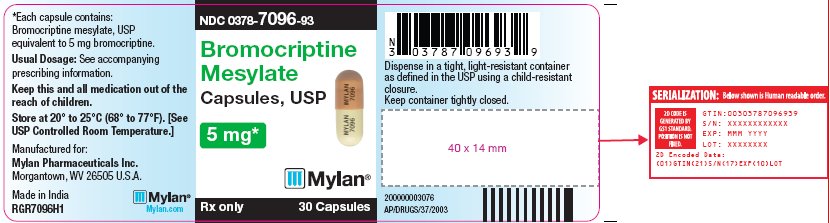
Bromocriptine Mesylate 5 mg Capsule, 30-count — NDC 0378-7096-93 (Billing 00378-7096-93)
This is a package of 30 capsules of Bromocriptine Mesylate 5 mg Capsule from Mylan Pharmaceuticals Inc., marketed since Jun 2013 and currently FDA-listed, this package's marketing is listed to end Apr 2027; retail pharmacies pay about $4.12 per capsule (NADAC). It is the main listing for this product, which comes in 2 package sizes.
NDC database record
One package, one record: these facts belong to NDC 0378-7096-93 alone.
- Record
- FDA NDC Directory package listing · Human prescription drug
- Code segments
- 0378 labeler · 7096 product · 93 package
- Package marketed since
- Jun 17, 2013
- Package marketing ended
- Apr 30, 2027
- Sample package
- No — commercial package
- Billing quantity
- 30 EA per package
- Barcode (UPC-A, from the NDC)
- 3 0378709693 9
- Medicaid fills, this package
- 1,038 prescriptions in the last four reported quarters
- FDA record last changed
- Jul 24, 2026
Other active recalls for Bromocriptine Mesylate (different manufacturers) — 1 · tap to view
Identity & classification
Regulatory identifiers FDA, NLM and CMS codes for this package
Drug-database identifiers Medi-Span GPI and First Databank GCN / HICL / AHFS classification
- GSN (GCN sequence number): 006603
- GCN: 26070
- GPI-14 (Medi-Span): 73200020100105
- HICL (First Databank): 002834
- AHFS class code: 28:36.20.04
- RxCUI (RxNorm): 197412
Where does this data come from?
- FDA openFDA NDC Directory · synced Oct 8, 2026
- FDA label on DailyMed · label index refreshed Oct 8, 2026
- RxNorm (NLM RxNav) · catalog refreshed Oct 1, 2026
- Medi-Span GPI (licensed)
- First Databank (licensed) · refreshed Oct 8, 2026
RxNorm drug class
This medicine belongs to the Ergot Derivative class.
Where does this data come from?
- RxClass (NLM) · catalog refreshed Oct 1, 2026
Clinical
- It depends on the product. Bromocriptine mesylate treats high prolactin problems, prolactin-secreting pituitary tumors, acromegaly and Parkinson's disease. The Cycloset brand is us...
- Yes. Taking it with food helps, because many people vomited when they took it on an empty stomach. Cycloset should be taken within two hours of waking, with food.
- Nausea, headache, dizziness, tiredness and constipation are the most common, and they are usually mild to moderate. Dizziness on standing is most likely early on. Tell me if side e...
- Call right away for sudden sleepiness, fainting, severe headache with vision changes, chest pain, trouble breathing, leg swelling or new urges to gamble or overspend. Don't drive i...
Patient education
Supplement & herbal interactions
Where does this data come from?
- MedlinePlus (NLM) · refreshed Oct 8, 2026
- FDA label on DailyMed · label index refreshed Oct 8, 2026
Ask a licensed pharmacist directly — free, answered by our team.
Pricing
A drug doesn't have one price. Each row is a different public payment system, and none is what you'd pay at the counter — that depends on your insurance. The ⓘ on each row explains what it measures.
| Price system | Per ea | Per package |
|---|---|---|
| Retail pharmacies payNADAC · weekly | $4.117 | $123.50 / 30 capsules |
| Medicaid paysCMS SDUD · 12 mo | $3.53 | $105.95 / 30 capsules |
| Medicare drug plans payPart D · Q2 2026 | $4.14 | $124.29 / 30 capsules |
Where does this data come from?
- CMS NADAC weekly file · file of Oct 7, 2026
- CMS ASP pricing files · refreshed Sep 20, 2026
- CMS Medicaid State Drug Utilization Data · through Q1 2026
- CMS Part D plan pricing files · refreshed Sep 24, 2026
- VA National Acquisition Center price file
Packaging — all sizes for this product
| Package NDC | Description | Per unit | Per pack | Marketing start | Marketing end | Status |
|---|---|---|---|---|---|---|
| 00378-7096-01 0378-7096-01 | 100 CAPSULE in 1 BOTTLE, UNIT-DOSE | $4.12 / ea | $411.67 | 2013-07-01 | Feb 28, 2027 | Active |
| 00378-7096-93 You're viewing this Main listing | 30 CAPSULE in 1 BOTTLE, UNIT-DOSE | $4.12 / ea | $123.50 | 2013-06-17 | Apr 30, 2027 | Active |
You're viewing the smallest of 2 pack sizes for this product.
This pack effectively ties for the lowest per-ea cost of the 2 priced pack sizes ($4.12 NADAC).
In Medicaid, this is the most-dispensed pack of this product — about 92% of fills over the last four reported quarters. See all packs ↓
Pack size FAQ
What quantity is in this package?
How does this package differ from NDC 00378-7096-01?
What NDC number is used to bill for this package of Bromocriptine Mesylate 5 mg Capsule?
Prices are the latest CMS NADAC pharmacy acquisition cost per NDC; per-pack figures are per-unit × pack quantity, shown only when the pack is denominated in the same measure NADAC prices.
Therapeutic equivalents
| Product | Labeler | Pack | NADAC/unit | TE | Status | Price vs. this |
|---|---|---|---|---|---|---|
| Bromocriptine Mesylate 5 mgthis 00378-7096-93 | Mylan | 30 capsules | $4.117 | AB | Availability likely | — |
| Bromocriptine mesylate 5 mg 65841-0654-01 | Zydus | 100 capsules | — | AB | FDA listed | — |
| Bromocriptine mesylate 5 mg 68382-0110-01 | Zydus | 100 capsules | — | AB | FDA listed | — |
| Bromocriptine Mesylate 5 mg 70954-0951-10 | ANI | 30 capsules | — | AB | FDA listed | — |
Where does this data come from?
- FDA openFDA NDC Directory · synced Oct 8, 2026
- FDA Orange Book · refreshed Oct 3, 2026
- CMS NADAC weekly file · file of Oct 7, 2026
Availability & generic status
This product is an FDA-approved generic. Other versions of the same drug are listed under Therapeutic equivalents, least expensive first.
Where does this data come from?
- FDA Orange Book · refreshed Oct 3, 2026
What it looks like
Where does this data come from?
- FDA label on DailyMed · label index refreshed Oct 8, 2026
Inactive Ingredients / Excipients
Inactive ingredients, also called excipients, are components of the drug product other than the active ingredient. They may include fillers, dyes, coatings, preservatives, flavors, or other formulation ingredients.
🧪 Avoiding an ingredient? See Bromocriptine inactive ingredients by manufacturer: every current product's list side by side, so you can ask your pharmacy for the version that does not list it.
💡 Tap an ingredient (hover on desktop) to see what it is and why it’s used.
-
UNII 3SY5LH9PMK
Anhydrous lactose is a milk sugar with no water content. It acts as a filler and binder in tablets and capsules, adding bulk and helping ingredients stick together.
-
UNII 8PJ61P6TS3
Butyl alcohol is a clear liquid organic solvent derived from petroleum or natural sources. In medicines, it helps dissolve active ingredients and serves as a solvent in liquid formulations and some topical products.
-
UNII 35SW5USQ3G
A synthetic yellow dye used to color medicines. It helps make tablets, capsules, and liquids visually distinct so patients can easily identify their medication.
-
UNII H3R47K3TBD
FD&C Blue No. 1 is a synthetic blue dye approved for use in foods and medicines. It serves as a colorant to give the medication its distinctive appearance and help with product identification.
-
UNII L06K8R7DQK
A synthetic blue dye approved by the FDA for use in medications and foods. It serves as a colorant to make pills and liquids visually distinct and easier to identify.
-
UNII WZB9127XOA
A synthetic red dye used to color medications and make them easier to identify. It serves as a colorant in tablets, capsules, and liquid formulations.
-
UNII 1K09F3G675
Ferric oxide red is an inorganic iron compound used as a colorant in medicines. It gives tablets, capsules, or other dosage forms a red or reddish tint for identification and appearance.
-
UNII EX438O2MRT
Ferric oxide yellow is a naturally occurring iron compound used as a colorant in medications. It gives tablets, capsules, and other forms a yellow or golden hue for identification and appearance.
-
UNII XM0M87F357
A dark iron oxide compound that gives medicines their black or dark color. It's used as a colorant in tablets and capsules to help identify the product and make it visually distinctive.
-
UNII 2G86QN327L
Gelatin is a protein derived from animal collagen, commonly used in medicines as a gelling agent and capsule material. It helps create soft or hard capsule shells that hold and release medication, and can also thicken liquid formulations.
-
UNII 70097M6I30
Magnesium stearate is a salt made from magnesium and stearic acid, a fatty substance. It's used in tablets and capsules as a lubricant and glidant to help ingredients flow smoothly during manufacturing and prevent sticking.
-
UNII 91XW058U2C
Maleic acid is an organic acid derived from maleic anhydride. In medicines, it acts as a buffer to help maintain the proper pH level and may also serve as a preservative or stabilizing agent in the formulation.
-
UNII 6DC9Q167V3
Propylene glycol is a clear liquid derived from petroleum or vegetable sources. It acts as a solvent, humectant, and preservative in medicines, helping dissolve active ingredients and maintain product stability.
-
UNII 46N107B71O
Shellac is a natural resin secreted by the lac beetle. It's used as a coating on tablets and capsules to control how quickly the medicine dissolves and to improve appearance and stability.
-
UNII 368GB5141J
A detergent and foaming agent derived from coconut or palm oil. In medications, it helps break down and mix oil and water-based ingredients, aids in tablet disintegration, and improves how the drug dissolves and spreads in the mouth or digestive system.
-
UNII O8232NY3SJ
A plant-based carbohydrate derived from corn kernels. It acts as a filler to add bulk, a binder to hold ingredients together, and a disintegrant to help the tablet break apart in your stomach for absorption.
-
UNII 15FIX9V2JP
Titanium dioxide is a bright white mineral powder commonly used as a colorant and opacifying agent. It makes pills and tablets white or lighter in color and helps make coatings non-transparent.
17 inactive ingredients listed in the exact product block matched to this NDC.
Where does this data come from?
ingredient classCode="IACT" elements from the exact product block matched by this NDC. Label-section narrative from DailyMed / the openFDA label index is shown separately when available.- FDA label on DailyMed · label index refreshed Oct 8, 2026
- FDA openFDA NDC Directory · synced Oct 8, 2026
Inactive ingredient FAQ
Are inactive ingredients the same for every manufacturer?
Why might an inactive ingredient be missing?
Can inactive ingredients matter?
Manufacturer & labeler
More NDCs from Mylan Pharmaceuticals Inc. labeler code 00378
- Paroxetine 40 mg Tablet, Film Coated NDC 0378-7004-10
- Acitretin 10 mg Capsule NDC 0378-7020-93
- Acitretin 25 mg Capsule NDC 0378-7023-93
- Bepotastine Besilate 15 mg/mL Solution/ Drops NDC 0378-7055-35
- Albuterol .63 mg/3mL Solution NDC 0378-7057-52
- Albuterol 1.25 mg/3mL Solution NDC 0378-7058-52
- Metformin Hydrochloride 500 mg Tablet, Film Coated NDC 0378-7185-05
- Metformin Hydrochloride 850 mg Tablet, Film Coated NDC 0378-7186-05
- Metformin Hydrochloride 1000 mg Tablet, Film Coated NDC 0378-7187-05
- Norethindrone Acetate and Ethinyl Estradiol .03 mg; 1.5 mg Tablet NDC 0378-7274-53
- Norethindrone Acetate and Ethinyl Estradiol .02 mg; 1 mg Tablet NDC 0378-7280-53
- Norethindrone Acetate and Ethinyl Estradiol Kit NDC 0378-7283-53
Where does this data come from?
- FDA openFDA NDC Directory · synced Oct 8, 2026
- Drugs@FDA
Full prescribing information FDA SPL
🎯 Indications and Usage ▾
INDICATIONS AND USAGE Hyperprolactinemia-Associated Dysfunctions Bromocriptine mesylate tablets and capsules are indicated for the treatment of dysfunctions associated with hyperprolactinemia including amenorrhea with or without galactorrhea, infertility or hypogonadism . Bromocriptine treatment is indicated in patients with prolactin-secreting adenomas , which may be the basic underlying endocrinopathy contributing to the above clinical presentations. Reduction in tumor size has been demonstrated in both male and female patients with macroadenomas.
In cases where adenectomy is elected, a course of bromocriptine therapy may be used to reduce the tumor mass prior to surgery. Acromegaly Bromocriptine mesylate tablet and capsule therapy is indicated in the treatment of acromegaly. Bromocriptine therapy, alone or as adjunctive therapy with pituitary irradiation or surgery, reduces serum growth hormone by 50% or more in approximately ½ of patients treated, although not usually to normal levels.
Since the effects of external pituitary radiation may not become maximal for several years, adjunctive therapy with bromocriptine offers potential benefit before the effects of irradiation are manifested. Parkinson’s Disease Bromocriptine mesylate tablets or capsules are indicated in the treatment of the signs and symptoms of idiopathic or postencephalitic Parkinson’s disease. As adjunctive treatment to levodopa (alone or with a peripheral decarboxylase inhibitor), bromocriptine therapy may provide additional therapeutic benefits in those patients who are currently maintained on optimal dosages of levodopa, those who are beginning to deteriorate (develop tolerance) to levodopa therapy, and those who are experiencing “end of dose failure” on levodopa therapy.
Bromocriptine therapy may permit a reduction of the maintenance dose of levodopa and, thus may ameliorate the occurrence and/or severity of adverse reactions associated with long-term levodopa therapy such as abnormal involuntary movements (e.g., dyskinesias) and the marked swings in motor function (“on-off” phenomenon). Continued efficacy of bromocriptine therapy during treatment of more than 2 years has not been established. Data are insufficient to evaluate potential benefit from treating newly diagnosed Parkinson’s disease with bromocriptine.
Studies have shown, however, significantly more adverse reactions (notably nausea, hallucinations, confusion and hypotension) in bromocriptine-treated patients than in levodopa/carbidopa-treated patients. Patients unresponsive to levodopa are poor candidates for bromocriptine therapy.
⏱️ Dosage and Administration ▾
DOSAGE AND ADMINISTRATION General It is recommended that bromocriptine mesylate tablets and capsules be taken with food. Patients should be evaluated frequently during dose escalation to determine the lowest dosage that produces a therapeutic response. Hyperprolactinemic Indications The initial dosage of bromocriptine mesylate tablets in adults is one ½ to one 2.5 mg scored tablet daily.
An additional 2.5 mg tablet may be added to the treatment regimen as tolerated every 2 to 7 days until an optimal therapeutic response is achieved. The therapeutic dosage ranged from 2.5-15 mg daily in adults studied clinically. Based on limited data in children of age 11 to 15, (see Pediatric Use ) the initial dose is one ½ to one 2.5 mg scored tablet daily.
Dosing may need to be increased as tolerated until a therapeutic response is achieved. The therapeutic dosage ranged from 2.5-10 mg daily in children with prolactin-secreting pituitary adenomas. In order to reduce the likelihood of prolonged exposure to bromocriptine mesylate tablets or capsules should an unsuspected pregnancy occur, a mechanical contraceptive should be used in conjunction with bromocriptine therapy until normal ovulatory menstrual cycles have been restored.
Contraception may then be discontinued in patients desiring pregnancy. Thereafter, if menstruation does not occur within 3 days of the expected date, bromocriptine therapy should be discontinued and a pregnancy test performed. Acromegaly Virtually all acromegalic patients receiving therapeutic benefit from bromocriptine mesylate tablets and capsules also have reductions in circulating levels of growth hormone.
Therefore, periodic assessment of circulating levels of growth hormone will, in most cases, serve as a guide in determining the therapeutic potential of bromocriptine. If, after a brief trial with bromocriptine therapy, no significant reduction in growth hormone levels has taken place, careful assessment of the clinical features of the disease should be made, and if no change has occurred, dosage adjustment or discontinuation of therapy should be considered. The initial recommended dosage is one ½ to one 2.5 mg bromocriptine mesylate tablet on retiring (with food) for 3 days.
An additional one ½ to 1 bromocriptine mesylate tablet should be added to the treatment regimen as tolerated every 3 to 7 days until the patient obtains optimal therapeutic benefit. Patients should be reevaluated monthly and the dosage adjusted based on reductions of growth hormone or clinical response. The usual optimal therapeutic dosage range of bromocriptine mesylate tablets and capsules varies from 20-30 mg/day in most patients.
The maximal dosage should not exceed 100 mg/day. Patients treated with pituitary irradiation should be withdrawn from bromocriptine therapy on a yearly basis to assess both the clinical effects of radiation on the disease process as well as the effects of bromocriptine therapy. Usually a 4 to 8 week withdrawal period is adequate for this purpose.
Recurrence of the signs/symptoms or increases in growth hormone indicate the disease process is still active and further courses of bromocriptine should be considered. Parkinson’s Disease The basic principle of bromocriptine mesylate therapy is to initiate treatment at a low dosage and, on an individual basis, increase the daily dosage slowly until a maximum therapeutic response is achieved. The dosage of levodopa during this introductory period should be maintained, if possible.
The initial dose of bromocriptine is one ½ of a 2.5 mg tablet twice daily with meals. Assessments are advised at 2-week intervals during dosage titration to ensure that the lowest dosage producing an optimal therapeutic response is not exceeded. If necessary, the dosage may be increased every 14 to 28 days by 2.5 mg/day with meals.
Should it be advisable to reduce the dosage of levodopa because of adverse reactions, the daily dosage of bromocriptine, if increased, should be accomplished gradua… [Excerpted — this section continues on DailyMed.]
⛔ Contraindications ▾
CONTRAINDICATIONS Hypersensitivity to bromocriptine or to any of the excipients of bromocriptine mesylate capsules, uncontrolled hypertension and sensitivity to any ergot alkaloids. In patients being treated for hyperprolactinemia, bromocriptine mesylate tablets and capsules should be withdrawn when pregnancy is diagnosed (see PRECAUTIONS: Hyperprolactinemic States ). In the event that bromocriptine is reinstituted to control a rapidly expanding macroadenoma (see PRECAUTIONS: Hyperprolactinemic States ) and a patient experiences a hypertensive disorder of pregnancy, the benefit of continuing bromocriptine must be weighed against the possible risk of its use during a hypertensive disorder of pregnancy.
When bromocriptine is being used to treat acromegaly, prolactinoma, or Parkinson’s disease in patients who subsequently become pregnant, a decision should be made as to whether the therapy continues to be medically necessary or can be withdrawn. If it is continued, the drug should be withdrawn in those who may experience hypertensive disorders of pregnancy (including eclampsia, preeclampsia, or pregnancy-induced hypertension) unless withdrawal of bromocriptine is considered to be medically contraindicated. The drug should not be used during the postpartum period in women with a history of coronary artery disease and other severe cardiovascular conditions unless withdrawal is considered medically contraindicated.
If the drug is used in the postpartum period, the patient should be observed with caution.
⚠️ Warnings ▾
WARNINGS Since hyperprolactinemia with amenorrhea/galactorrhea and infertility has been found in patients with pituitary tumors, a complete evaluation of the pituitary is indicated before treatment with bromocriptine. If pregnancy occurs during bromocriptine administration, careful observation of these patients is mandatory. Prolactin-secreting adenomas may expand and compression of the optic or other cranial nerves may occur, emergency pituitary surgery becoming necessary.
In most cases, the compression resolves following delivery. Reinitiation of bromocriptine treatment has been reported to produce improvement in the visual fields of patients in whom nerve compression has occurred during pregnancy. The safety of bromocriptine treatment during pregnancy to the mother and fetus has not been established.
Bromocriptine has been associated with somnolence, and episodes of sudden sleep onset, particularly in patients with Parkinson’s disease. Sudden onset of sleep during daily activities, in some cases without awareness or warning signs, has been reported. Patients must be informed of this and advised not to drive or operate machines during treatment with bromocriptine.
Patients who have experienced somnolence and/or an episode of sudden sleep onset must not drive or operate machines. Furthermore, a reduction of dosage or termination of therapy may be considered. Symptomatic hypotension can occur in patients treated with bromocriptine for any indication.
In postpartum studies with bromocriptine, decreases in supine systolic and diastolic pressures of greater than 20 mm and 10 mm Hg, respectively, have been observed in almost 30% of patients receiving bromocriptine. On occasion, the drop in supine systolic pressure was as much as 50-59 mm of Hg. Since, especially during the first days of treatment, hypotensive reactions may occasionally occur and result in reduced alertness, particular care should be exercised when driving a vehicle or operating machinery.
While hypotension during the start of therapy with bromocriptine occurs in some patients, in rare cases serious adverse events, including hypertension, myocardial infarction, seizures, stroke, have been reported in postpartum women treated with bromocriptine for the inhibition of lactation. Hypertension has been reported, sometimes at the initiation of therapy, but often developing in the second week of therapy; seizures have also been reported both with and without the prior development of hypertension; stroke has been reported mostly in postpartum patients whose prenatal and obstetric courses had been uncomplicated.
Many of these patients experiencing seizures (including cases of status epilepticus) and/or strokes reported developing a constant and often progressively severe headache hours to days prior to the acute event. Some cases of strokes and seizures were also preceded by visual disturbances (blurred vision, and transient cortical blindness). Cases of acute myocardial infarction have also been reported.
Although a causal relationship between bromocriptine administration and hypertension, seizures, strokes, and myocardial infarction in postpartum women has not been established, use of the drug for prevention of physiological lactation, or in patients with uncontrolled hypertension is not recommended. In patients being treated for hyperprolactinemia, bromocriptine should be withdrawn when pregnancy is diagnosed (see PRECAUTIONS: Hyperprolactinemic States ). In the event that bromocriptine is reinstituted to control a rapidly expanding macroadenoma (see PRECAUTIONS: Hyperprolactinemic States ) and a patient experiences a hypertensive disorder of pregnancy, the benefit of continuing bromocriptine must be weighed against the possible risk of its use during a hypertensive disorder of pregnancy.
When bromocriptine is being used to treat acromegaly or Parkinson’s disease in patients who subsequently become pregnant, a decision should be made as to whether the therapy continues t… [Excerpted — this section continues on DailyMed.]
🤒 Adverse Reactions ▾
ADVERSE REACTIONS Adverse Reactions from Clinical Trials Hyperprolactinemic Indications The incidence of adverse effects is quite high (69%) but these are generally mild to moderate in degree. Therapy was discontinued in approximately 5% of patients because of adverse effects. These in decreasing order of frequency are: nausea (49%), headache (19%), dizziness (17%), fatigue (7%), lightheadedness (5%), vomiting (5%), abdominal cramps (4%), nasal congestion (3%), constipation (3%), diarrhea (3%) and drowsiness (3%).
A slight hypotensive effect may accompany bromocriptine treatment. The occurrence of adverse reactions may be lessened by temporarily reducing dosage to ½ a bromocriptine mesylate tablet 2 or 3 times daily. A few cases of cerebrospinal fluid rhinorrhea have been reported in patients receiving bromocriptine for treatment of large prolactinomas.
This has occurred rarely, usually only in patients who have received previous transsphenoidal surgery, pituitary radiation, or both, and who were receiving bromocriptine for tumor recurrence. It may also occur in previously untreated patients whose tumor extends into the sphenoid sinus. Acromegaly The most frequent adverse reactions encountered in acromegalic patients treated with bromocriptine were: nausea (18%), constipation (14%), postural/orthostatic hypotension (6%), anorexia (4%), dry mouth/nasal stuffiness (4%), indigestion/dyspepsia (4%), digital vasospasm (3%), drowsiness/tiredness (3%) and vomiting (2%).
Less frequent adverse reactions (less than 2%) were: gastrointestinal bleeding, dizziness, exacerbation of Raynaud’s syndrome, headache and syncope. Rarely (less than 1%) hair loss, alcohol potentiation, faintness, lightheadedness, arrhythmia, ventricular tachycardia, decreased sleep requirement, visual hallucinations, lassitude, shortness of breath, bradycardia, vertigo, paresthesia, sluggishness, vasovagal attack, delusional psychosis, paranoia, insomnia, heavy headedness, reduced tolerance to cold, tingling of ears, facial pallor and muscle cramps have been reported.
Parkinson’s Disease In clinical trials in which bromocriptine was administered with concomitant reduction in the dose of levodopa/carbidopa, the most common newly appearing adverse reactions were: nausea, abnormal involuntary movements, hallucinations, confusion, “on-off’’ phenomenon, dizziness, drowsiness, faintness/fainting, vomiting, asthenia, abdominal discomfort, visual disturbance, ataxia, insomnia, depression, hypotension, shortness of breath, constipation, and vertigo. Less common adverse reactions which may be encountered include: anorexia, anxiety, blepharospasm, dry mouth, dysphagia, edema of the feet and ankles, erythromelalgia, epileptiform seizure, fatigue, headache, lethargy, mottling of skin, nasal stuffiness, nervousness, nightmares, paresthesia, skin rash, urinary frequency, urinary incontinence, urinary retention, and rarely, signs and symptoms of ergotism such as tingling of fingers, cold feet, numbness, muscle cramps of feet and legs or exacerbation of Raynaud’s syndrome.
Abnormalities in laboratory tests may include elevations in blood urea nitrogen, SGOT, SGPT, GGPT, CPK, alkaline phosphatase and uric acid, which are usually transient and not of clinical significance. Adverse Reactions from Postmarketing Experience The following adverse reactions have been reported during postapproval use of bromocriptine (All Indications Combined). Because adverse reactions from spontaneous reports are reported voluntarily from a population of uncertain size, it is generally not possible to reliably estimate their frequency or establish a causal relationship to drug exposure.
Psychiatric Disorders: Confusion, psychomotor agitation/excitation, hallucinations, psychotic disorders, insomnia, libido increase, hypersexuality, and impulse control/compulsive behaviors (including gambling, spending, and other intense urges). Nervous System Disorders: Headache, drowsiness, dizziness, dyskinaesia, somnole… [Excerpted — this section continues on DailyMed.]
🔄 Drug Interactions ▾
Drug Interactions The risk of using bromocriptine in combination with other drugs has not been systematically evaluated, but alcohol may potentiate the side effects of bromocriptine. Bromocriptine may interact with dopamine antagonists, butyrophenones, and certain other agents. Compounds in these categories result in a decreased efficacy of bromocriptine: phenothiazines, haloperidol, metoclopramide, and pimozide.
Bromocriptine is a substrate of CYP3A4. Caution should therefore be used when co-administering drugs which are strong inhibitors of this enzyme (such as azole antimycotics, HIV protease inhibitors). The concomitant use of macrolide antibiotics such as erythromycin was shown to increase the plasma levels of bromocriptine (mean AUC and C max values increased 3.7-fold and 4.6-fold, respectively).
1 The concomitant treatment of acromegalic patients with bromocriptine and octreotide led to increased plasma levels of bromocriptine (bromocriptine AUC increased about 38%). 4 Concomitant use of bromocriptine with other ergot alkaloids is not recommended. Dose adjustment may be necessary in those cases where high doses of bromocriptine are being used (such as Parkinson’s disease indication).
🤰 Pregnancy ▾
Pregnancy Administration of 10-30 mg/kg of bromocriptine to 2 strains of rats on days 6 to 15 post coitum (p.c.) as well as a single dose of 10 mg/kg on day 5 p.c. interfered with nidation. Three mg/kg given on days 6 to 15 were without effect on nidation, and did not produce any anomalies. In animals treated from day 8-15 p.c., i.e., after implantation, 30 mg/kg produced increased prenatal mortality in the form of increased incidence of embryonic resorption.
One anomaly, aplasia of spinal vertebrae and ribs, was found in the group of 262 fetuses derived from the dams treated with 30 mg/kg bromocriptine. No fetotoxic effects were found in offspring of dams treated during the peri- or postnatal period. Two studies were conducted in rabbits (2 strains) to determine the potential to interfere with nidation.
Dose levels of 100 or 300 mg/kg/day from day 1 to day 6 p.c. did not adversely affect nidation. The high dose was approximately 63 times the maximum human dose administered in controlled clinical trials (100 mg/day), based on body surface area. In New Zealand white rabbits, some embryo mortality occurred at 300 mg/kg which was a reflection of overt maternal toxicity.
Three studies were conducted in 2 strains of rabbits to determine the teratological potential of bromocriptine at dose levels of 3, 10, 30, 100, and 300 mg/kg given from day 6 to day 18 p.c. In 2 studies with the Yellow-silver strain, cleft palate was found in 3 and 2 fetuses at maternally toxic doses of 100 and 300 mg/kg, respectively. One control fetus also exhibited this anomaly.
In the third study conducted with New Zealand white rabbits using an identical protocol, no cleft palates were produced. No teratological or embryotoxic effects of bromocriptine were produced in any of 6 offspring from 6 monkeys at a dose level of 2 mg/kg. Information concerning 1276 pregnancies in women taking bromocriptine has been collected.
In the majority of cases, bromocriptine was discontinued within 8 weeks into pregnancy (mean 28.7 days), however, 8 patients received the drug continuously throughout pregnancy. The mean daily dose for all patients was 5.8 mg (range 1-40 mg). Of these 1276 pregnancies, there were 1088 full-term deliveries (4 stillborn), 145 spontaneous abortions (11.4%), and 28 induced abortions (2.2%).
Moreover, 12 extrauterine gravidities and 3 hydatidiform moles (twice in the same patient) caused early termination of pregnancy. These data compare favorably with the abortion rate (11% - 25%) cited for pregnancies induced by clomiphene citrate, menopausal gonadotropin, and chorionic gonadotropin. Although spontaneous abortions often go unreported, especially prior to 20 weeks of gestation, their frequency has been estimated to be 15%.
The incidence of birth defects in the population at large ranges from 2% - 4.5%. The incidence in 1109 live births from patients receiving bromocriptine is 3.3%. There is no suggestion that bromocriptine contributed to the type or incidence of birth defects in this group of infants.
🧒 Pediatric Use ▾
Pediatric Use The safety and effectiveness of bromocriptine for the treatment of prolactin-secreting pituitary adenomas have been established in patients age 16 to adult. No data are available for bromocriptine use in pediatric patients under the age of 8 years. A single 8-year-old patient treated with bromocriptine for a prolactin-secreting pituitary macroadenoma has been reported without therapeutic response.
The use of bromocriptine for the treatment of prolactin-secreting adenomas in pediatric patients in the age group 11 to under 16 years is supported by evidence from well-controlled trials in adults, with additional data in a limited number (n = 14) of children and adolescents 11 to 15 years of age with prolactin-secreting pituitary macro- and microadenomas who have been treated with bromocriptine. Of the 14 reported patients, 9 had successful outcomes, 3 partial responses, and 2 failed to respond to bromocriptine treatment.
Chronic hypopituitarism complicated macroadenoma treatment in 5 of the responders, both in patients receiving bromocriptine alone and in those who received bromocriptine in combination with surgical treatment and/or pituitary irradiation. Safety and effectiveness of bromocriptine in pediatric patients have not been established for any other indication listed in the INDICATIONS AND USAGE section.
🧓 Geriatric Use ▾
Geriatric Use Clinical studies for bromocriptine did not include sufficient numbers of subjects aged 65 and over to determine whether the elderly respond differently from younger subjects. However, other reported clinical experiences, including postmarketing reporting of adverse events, have not identified differences in response or tolerability between elderly and younger patients. Even though no variation in efficacy or adverse reaction profile in geriatric patients taking bromocriptine has been observed, greater sensitivity of some elderly individuals cannot be categorically ruled out.
In general, dose selection for an elderly patient should be cautious, starting at the lower end of the dose range, reflecting the greater frequency of decreased hepatic, renal or cardiac function, and of concomitant disease or other drug therapy in this population.
🆘 Overdosage ▾
OVERDOSAGE The most commonly reported signs and symptoms associated with acute bromocriptine overdose are: nausea, vomiting, constipation, diaphoresis, dizziness, pallor, severe hypotension, malaise, confusion, lethargy, drowsiness, delusions, hallucinations, and repetitive yawning. The lethal dose has not been established and the drug has a very wide margin of safety. However, one death occurred in a patient who committed suicide with an unknown quantity of bromocriptine and chloroquine.
Treatment of overdose consists of removal of the drug by emesis (if conscious), gastric lavage, activated charcoal, or saline catharsis. Careful supervision and recording of fluid intake and output is essential. Hypotension should be treated by placing the patient in the Trendelenburg position and administering I.V. fluids.
If satisfactory relief of hypotension cannot be achieved by using the above measures to their fullest extent, vasopressors should be considered. There have been isolated reports of children who accidentally ingested bromocriptine. Vomiting, somnolence and fever were reported as adverse events.
Patients recovered either spontaneously within a few hours or after appropriate management.
🧬 Clinical Pharmacology ▾
CLINICAL PHARMACOLOGY Bromocriptine mesylate is a dopamine receptor agonist, which activates post-synaptic dopamine receptors. The dopaminergic neurons in the tuberoinfundibular process modulate the secretion of prolactin from the anterior pituitary by secreting a prolactin inhibitory factor (thought to be dopamine); in the corpus striatum the dopaminergic neurons are involved in the control of motor function. Clinically, bromocriptine significantly reduces plasma levels of prolactin in patients with physiologically elevated prolactin as well as in patients with hyperprolactinemia.
The inhibition of physiological lactation as well as galactorrhea in pathological hyperprolactinemic states is obtained at dose levels that do not affect secretion of other tropic hormones from the anterior pituitary. Experiments have demonstrated that bromocriptine induces long-lasting stereotyped behavior in rodents and turning behavior in rats having unilateral lesions in the substantia nigra. These actions, characteristic of those produced by dopamine, are inhibited by dopamine antagonists and suggest a direct action of bromocriptine on striatal dopamine receptors.
Bromocriptine mesylate is a nonhormonal, nonestrogenic agent that inhibits the secretion of prolactin in humans, with little or no effect on other pituitary hormones, except in patients with acromegaly, where it lowers elevated blood levels of growth hormone in the majority of patients. Bromocriptine mesylate produces its therapeutic effect in the treatment of Parkinson’s disease, a clinical condition characterized by a progressive deficiency in dopamine synthesis in the substantia nigra, by directly stimulating the dopamine receptors in the corpus striatum.
In contrast, levodopa exerts its therapeutic effect only after conversion to dopamine by the neurons of the substantia nigra, which are known to be numerically diminished in this patient population. Pharmacokinetics Absorption Following single dose administration of bromocriptine mesylate tablets, 2 x 2.5 mg to 5 healthy volunteers under fasted conditions, the mean peak plasma levels of bromocriptine, time to reach peak plasma concentrations and elimination half-life were 465 pg/mL ± 226, 2.5 hrs ± 2 and 4.85 hr, respectively.
1 Linear relationship was found between single doses of bromocriptine and C max and AUC in the dose range of 1 to 7.5 mg. 2 The pharmacokinetics of bromocriptine metabolites have not been reported. Food did not significantly affect the systemic exposure of bromocriptine following administration of bromocriptine mesylate tablets, 2.5 mg.
3 It is recommended that bromocriptine be taken with food because of the high percentage of subjects who vomit upon receiving bromocriptine under fasting conditions. Following bromocriptine 5 mg administered twice daily for 14 days, the bromocriptine C max and AUC at steady-state were 628 ± 375 pg/mL and 2377 ± 1186 pg * hr/mL, respectively. 4 Distribution In vitro experiments showed that bromocriptine was 90% - 96% bound to serum albumin.
Metabolism Bromocriptine undergoes extensive first-pass biotransformation, reflected by complex metabolite profiles and by almost complete absence of parent drug in urine and feces. In vitro studies using human liver microsomes showed that bromocriptine has a high affinity for CYP3A and hydroxylations at the proline ring of the cyclopeptide moiety constituted a main metabolic pathway. 5 Inhibitors and/or potent substrates for CYP3A4 might therefore inhibit the clearance of bromocriptine and lead to increased levels (see PRECAUTIONS: Drug Interactions section).
The participation of other major CYP enzymes such as 2D6, 2C8, and 2C19 on the metabolism of bromocriptine has not been evaluated. Bromocriptine is also an inhibitor of CYP3A4 with a calculated IC50 value of 1.69 μM. 6 Given the low therapeutic concentrations of bromocriptine in patients (C max = 0.82 nM), a significant alteration of the metabolism of a second drug whose clearance is… [Excerpted — this section continues on DailyMed.]
📦 How Supplied / Storage and Handling ▾
HOW SUPPLIED Bromocriptine Mesylate Capsules, USP are available containing bromocriptine mesylate, USP equivalent to 5 mg bromocriptine. The 5 mg capsules are hard-shell gelatin capsules with a light brown opaque cap and ivory opaque body filled with a white to off-white powder. The capsules are axially printed with MYLAN over 7096 in black ink on both the cap and body.
They are available as follows: NDC 0378-7096-93 bottles of 30 capsules NDC 0378-7096-01 bottles of 100 capsules Store and Dispense: Store at 20° to 25°C (68° to 77°F). [See USP Controlled Room Temperature.] Dispense in a tight, light-resistant container as defined in the USP using a child-resistant closure. Manufactured for: Mylan Pharmaceuticals Inc. Morgantown, WV 26505 U.S.A.
Manufactured by: Granules India Limited Survey No. 160/A, 161/E, 162, 174/A, Gagillapur Village, Dundigal-Gandimaisamma Mandal, Medchal-Malkajgiri District – 500043, Telangana, INDIA AP/DRUGS/37/2003 Revised: 10/2021 GR:BROMC:R3
📋 Description ▾
DESCRIPTION Bromocriptine mesylate, USP is an ergot derivative with potent dopamine receptor agonist activity. Each bromocriptine mesylate capsule for oral administration contains 5 mg bromocriptine (as the mesylate). Bromocriptine mesylate is chemically designated as 2-Bromoergocryptine monomethanesulfonate (salt).
The structural formula is: The active ingredient in bromocriptine mesylate capsules, USP is bromocriptine mesylate, USP. The inactive ingredients are as follows: anhydrous lactose, black iron oxide, D&C Yellow No. 10 Aluminum Lake, gelatin, magnesium stearate, maleic acid, pregelatinized starch (corn), red iron oxide, sodium lauryl sulfate, titanium dioxide and yellow iron oxide.
In addition, the black imprinting ink contains black iron oxide, D&C Yellow No. 10 Aluminum Lake, FD&C Blue No. 1 Aluminum Lake, FD&C Blue No.
2 Aluminum Lake, FD&C Red No. 40 Aluminum Lake, n-butyl alcohol, propylene glycol, SDA 3A alcohol, SD-45 alcohol and shellac glaze. Bromocriptine Mesylate Structural Formula
💬 Information for Patients ▾
Information for Patients During clinical trials, dizziness, drowsiness, faintness, fainting, and syncope have been reported early in the course of bromocriptine therapy. In postmarketing reports, bromocriptine has been associated with somnolence, and episodes of sudden sleep onset, particularly in patients with Parkinson’s disease. Sudden onset of sleep during daily activities, in some cases without awareness or warning signs, has been reported very rarely.
All patients receiving bromocriptine should be cautioned with regard to engaging in activities requiring rapid and precise responses, such as driving an automobile or operating machinery. Patients being treated with bromocriptine and presenting with somnolence and/or sudden sleep episodes must be advised not to drive or engage in activities where impaired alertness may put themselves or others at risk of serious injury or death (e.g., operating machines). Patients receiving bromocriptine for hyperprolactinemic states associated with macroadenoma or those who have had previous transsphenoidal surgery should be told to report any persistent watery nasal discharge to their physician.
Patients receiving bromocriptine for treatment of a macroadenoma should be told that discontinuation of drug may be associated with rapid regrowth of the tumor and recurrence of their original symptoms. Patients and their caregivers should be alerted to the possibility that patients may experience intense urges to spend money uncontrollably, intense urges to gamble, increased sexual urges and other intense urges and the inability to control these urges while taking bromocriptine. Advise patients and their caregivers to inform their healthcare provider if they develop new or increased uncontrolled spending, gambling urges, sexual urges, or other urges while being treated with bromocriptine (see PRECAUTIONS ).
Especially during the first days of treatment, hypotensive reactions may occasionally occur and result in reduced alertness, particular care should be exercised when driving a vehicle or operating machinery. Advise patients to contact their healthcare provider if they wish to discontinue bromocriptine or decrease the dose of bromocriptine. Advise patients who have been prescribed a lower dose or who have been withdrawn from the drug to notify their healthcare provider if they have withdrawal symptoms such as fever, muscular rigidity, altered consciousness, apathy, anxiety, depression, fatigue, insomnia, sweating, or pain (see PRECAUTIONS ).
⚠️ Precautions ▾
PRECAUTIONS General There have been reports of patients experiencing intense urges to gamble, increased sexual urges, intense urges to spend money uncontrollably, and/or other intense urges, and the inability to control these urges while taking one or more of the medications, including bromocriptine, that increase central dopaminergic tone. In some cases, although not all, these urges were reported to have stopped when the dose was reduced, or the medication was discontinued. Because patients may not recognize these behaviors as abnormal, it is important for prescribers to specifically ask patients or their caregivers about the development of new or increased gambling urges, sexual urges, uncontrolled spending, or other urges while being treated with bromocriptine for Parkinson’s disease or hyperprolactinemia-associated dysfunctions.
Physicians should consider dose reduction or stopping the medication if a patient develops such urges while taking bromocriptine. Safety and efficacy of bromocriptine have not been established in patients with renal or hepatic disease. Care should be exercised when administering bromocriptine therapy concomitantly with other medications known to lower blood pressure.
The drug should be used with caution in patients with a history of psychosis or cardiovascular disease. If acromegalic patients or patients with prolactinoma or Parkinson’s disease are being treated with bromocriptine during pregnancy, they should be cautiously observed, particularly during the postpartum period if they have a history of cardiovascular disease. Patients with rare hereditary problems of galactose intolerance, severe lactase deficiency or glucose-galactose malabsorption should not take this medicine.
Hyperprolactinemic States Visual field impairment is a known complication of macroprolactinoma. Effective treatment with bromocriptine leads to a reduction in hyperprolactinemia and often to a resolution of the visual impairment. In some patients, however, a secondary deterioration of visual fields may subsequently develop despite normalized prolactin levels and tumor shrinkage, which may result from traction on the optic chiasm which is pulled down into the now partially empty sella.
In these cases, the visual field defect may improve on reduction of bromocriptine dosage while there is some elevation of prolactin and some tumor re-expansion. Monitoring of visual fields in patients with macroprolactinoma is therefore recommended for an early recognition of secondary field loss due to chiasmal herniation and adaptation of drug dosage. The relative efficacy of bromocriptine versus surgery in preserving visual fields is not known.
Patients with rapidly progressive visual field loss should be evaluated by a neurosurgeon to help decide on the most appropriate therapy. Since pregnancy is often the therapeutic objective in many hyperprolactinemic patients presenting with amenorrhea/galactorrhea and hypogonadism (infertility), a careful assessment of the pituitary is essential to detect the presence of a prolactin-secreting adenoma. Patients not seeking pregnancy, or those harboring large adenomas, should be advised to use contraceptive measures, other than oral contraceptives, during treatment with bromocriptine.
Since pregnancy may occur prior to reinitiation of menses, a pregnancy test is recommended at least every 4 weeks during the amenorrheic period, and, once menses are reinitiated, every time a patient misses a menstrual period. Treatment with bromocriptine mesylate tablets or capsules should be discontinued as soon as pregnancy has been established. Patients must be monitored closely throughout pregnancy for signs and symptoms that may signal the enlargement of a previously undetected or existing prolactin-secreting tumor.
Discontinuation of bromocriptine treatment in patients with known macroadenomas has been associated with rapid regrowth of tumor and increase in serum prolactin in most cases. Cerebrospinal fluid rhinorr… [Excerpted — this section continues on DailyMed.]
🍼 Nursing Mothers ▾
Nursing Mothers Bromocriptine should not be used during lactation in postpartum women.
🧬 Pharmacokinetics ▾
Pharmacokinetics Absorption Following single dose administration of bromocriptine mesylate tablets, 2 x 2.5 mg to 5 healthy volunteers under fasted conditions, the mean peak plasma levels of bromocriptine, time to reach peak plasma concentrations and elimination half-life were 465 pg/mL ± 226, 2.5 hrs ± 2 and 4.85 hr, respectively. 1 Linear relationship was found between single doses of bromocriptine and C max and AUC in the dose range of 1 to 7.5 mg. 2 The pharmacokinetics of bromocriptine metabolites have not been reported.
Food did not significantly affect the systemic exposure of bromocriptine following administration of bromocriptine mesylate tablets, 2.5 mg. 3 It is recommended that bromocriptine be taken with food because of the high percentage of subjects who vomit upon receiving bromocriptine under fasting conditions. Following bromocriptine 5 mg administered twice daily for 14 days, the bromocriptine C max and AUC at steady-state were 628 ± 375 pg/mL and 2377 ± 1186 pg * hr/mL, respectively.
4 Distribution In vitro experiments showed that bromocriptine was 90% - 96% bound to serum albumin. Metabolism Bromocriptine undergoes extensive first-pass biotransformation, reflected by complex metabolite profiles and by almost complete absence of parent drug in urine and feces. In vitro studies using human liver microsomes showed that bromocriptine has a high affinity for CYP3A and hydroxylations at the proline ring of the cyclopeptide moiety constituted a main metabolic pathway.
5 Inhibitors and/or potent substrates for CYP3A4 might therefore inhibit the clearance of bromocriptine and lead to increased levels (see PRECAUTIONS: Drug Interactions section). The participation of other major CYP enzymes such as 2D6, 2C8, and 2C19 on the metabolism of bromocriptine has not been evaluated. Bromocriptine is also an inhibitor of CYP3A4 with a calculated IC50 value of 1.69 μM.
6 Given the low therapeutic concentrations of bromocriptine in patients (C max = 0.82 nM), a significant alteration of the metabolism of a second drug whose clearance is mediated by CYP3A4 should not be expected. The potential effect of bromocriptine and its metabolites to act as inducers of CYP enzymes has not been reported. Excretion About 82% and 5.6% of the radioactive dose orally administered was recovered in feces and urine, respectively.
Bromolysergic acid and bromoisolysergic acid accounted for half of the radioactivity in urine. 5 __________________________________________________________________________ 1 Nelson, M. et. al. (1990).
Pharmacokinetic evaluation of erythromycin and caffeine administered with bromocriptine. Clin Pharmacol Ther; 47(6):694-7. 2 Schran, H.F., Bhuta, S.I., Schwartz, et al.
(1980). The pharmacokinetics of bromocriptine in man. In: Golstein, M.
Calne, D.B.,et. Al (eds). Ergot compound and brain function: Neuroendocrine and neuropsychiatric aspects, pp.
125-139, New York, Rave Press. 3 Kopitar, Z., Vrhovac, B., Povsic, L., Plavsic, F., Francetic, I., Urbancic, J. (1991).
The effect of food and metoclopramide on the pharmacokinetics and side effects of bromocriptine. Eur J Drug Metab Pharmacokinet; 16(3):177-81 4 Flogstad, A.K., Halse, J., Grass, P., Abisch, E., Djoseland, O., Kutz, K., Bodd, E., and Jervell, J., (1994). A comparison of octreotide, bromocriptine, or a combination of both drugs in acromegaly.
Journal of Clinical Endocrinology & Metabolism; Vol 79, 461-465 5 Peyronneau MA, Delaforge M, Riviere R et al. 1994. High affinity of ergopeptides for CYP P450 3A.
Importance of their peptide moiety for P450 recognition and hydroxylation of bromocriptine. Eur J Biochem 223:947-56. 6 Wynalda, M.A., Wienkers, L.C.
(1997). Assessment of potential interactions between dopamine receptor agonists and various human cytochrome P450 enzymes using a simple in vitro inhibition screen. Drug Metab Dispos; 25:1211-14.
📄 Carcinogenesis, Mutagenesis, Impairment of Fertility ▾
Carcinogenesis, Mutagenesis, Impairment of Fertility A 74-week study was conducted in mice using dietary levels of bromocriptine mesylate equivalent to oral doses of 10 and 50 mg/kg/day. A 100-week study in rats was conducted using dietary levels equivalent to oral doses of 1.7, 9.8, and 44 mg/kg/day. The highest doses tested in mice and rats were approximately 2.5 and 4.4 times, respectively, the maximum human dose administered in controlled clinical trials (100 mg/day) based on body surface area.
Malignant uterine tumors, endometrial and myometrial, were found in rats as follows: 0/50 control females, 2/50 females given 1.7 mg/kg daily, 7/49 females given 9.8 mg/kg daily, and 9/50 females given 44 mg/kg daily. The occurrence of these neoplasms is probably attributable to the high estrogen/progesterone ratio which occurs in rats as a result of the prolactin-inhibiting action of bromocriptine mesylate. The endocrine mechanisms believed to be involved in the rats are not present in humans.
There is no known correlation between uterine malignancies occurring in bromocriptine-treated rats and human risk. In contrast to the findings in rats, the uteri from mice killed after 74 weeks of treatment did not exhibit evidence of drug-related changes. Bromocriptine mesylate was evaluated for mutagenic potential in the battery of tests that included Ames bacterial mutation assay, mutagenic activity in vitro on V79 Chinese hamster fibroblasts, cytogenetic analysis of Chinese hamster bone marrow cells following in vivo treatment, and an in vivo micronucleus test for mutagenic potential in mice.
No mutagenic effects were obtained in any of these tests. Fertility and reproductive performance in female rats were not influenced adversely by treatment with bromocriptine beyond the predicted decrease in the weight of pups due to suppression of lactation. In males treated with 50 mg/kg of this drug, mating and fertility were within the normal range.
Increased perinatal loss was produced in the subgroups of dams, sacrificed on day 21 postpartum (p.p.) after mating with males treated with the highest dose (50 mg/kg).
📄 Package Label / Principal Display Panel ▾
PACKAGE/LABEL PRINCIPAL DISPLAY PANEL NDC 0378-7096-93 Bromocriptine Mesylate Capsules, USP 5 mg Rx only 30 Capsules *Each capsule contains: Bromocriptine mesylate, USP equivalent to 5 mg bromocriptine. Usual Dosage: See accompanying prescribing information. Keep this and all medication out of the reach of children.
Store at 20° to 25°C (68° to 77°F). [See USP Controlled Room Temperature.] Protect from light. Manufactured for: Mylan Pharmaceuticals Inc. Morgantown, WV 26505 U.S.A.
Made in India RGR7096H Dispense in a tight, light-resistant container as defined in the USP using a child-resistant closure. Keep container tightly closed. 200000002645 AP/DRUGS/37/2003 Bromocryptine Mesylate Capsules, USP 5 mg Bottle Label