
Fluconazole 200 mg/100mL Injection, Solution — NDC 0409-3435-24 (Billing 00409-3435-24)
This is a package of Fluconazole 200 mg/100mL Injection, Solution from Hospira, Inc, marketed since Jan 2025 and currently FDA-listed. It is this product's only package size.
NDC database record
One package, one record: these facts belong to NDC 0409-3435-24 alone.
- Record
- FDA NDC Directory package listing · Human prescription drug
- Code segments
- 0409 labeler · 3435 product · 24 package
- Package marketed since
- Jan 6, 2025
- Sample package
- No — commercial package
- Listing certified through
- Dec 31, 2026
- Barcode (UPC-A, from the NDC)
- 3 0409343524 5
- FDA record last changed
- Jul 24, 2026
Identity & classification
Regulatory identifiers FDA, NLM and CMS codes for this package
Drug-database identifiers Medi-Span GPI and First Databank GCN / HICL / AHFS classification
- GSN (GCN sequence number): 013726
- GCN: 69790
- GPI-14 (Medi-Span): 11407015012010
- HICL (First Databank): 034344
- AHFS class code: 08:14.08.00
- RxCUI (RxNorm): 1721314
Where does this data come from?
- FDA openFDA NDC Directory · synced Oct 1, 2026
- FDA label on DailyMed · label index refreshed Oct 6, 2026
- RxNorm (NLM RxNav) · catalog refreshed Oct 1, 2026
- Medi-Span GPI (licensed)
- First Databank (licensed) · refreshed Oct 1, 2026
RxNorm drug class
This medicine belongs to the Azole Antifungal class.
Where does this data come from?
- RxClass (NLM) · catalog refreshed Oct 1, 2026
Clinical
Fluconazole injection is used to treat fungal infections, including yeast infections of the mouth, throat, esophagus (tube leading from the mouth to the stomach), abdomen (area between the chest and waist), lungs, blood, and other organs. Fluconazole is also used to treat meningitis (infection of the membranes covering the brain and spine) caused by fungus. Fluconazole is also used to prevent yeast infections in patients who are likely to become infected because they are being treated with chemotherapy or radiation therapy before a bone marrow transplant (replacement of unhealthy spongy tissue...
Read the full MedlinePlus article ↗- It treats yeast infections such as vaginal, mouth, throat and esophagus infections. It also treats cryptococcal meningitis and helps prevent candidiasis in bone marrow transplant p...
- No. Oral fluconazole works the same with or without food, so take it whichever is easier for you. Follow your prescriber's directions for how often and for how long.
- Most people tolerate it well. The most common ones are headache, nausea, stomach pain, diarrhea and rash, and these are usually mild to moderate.
- Call if you notice a rash that spreads or blisters, yellow skin or eyes, dark urine, a racing or irregular heartbeat, fainting or seizures. Swelling of the face or trouble breathin...
Patient education
Supplement & herbal interactions
Some supplements/herbs that may interact with Fluconazole — tap one for details:
Where does this data come from?
- MedlinePlus (NLM) · refreshed Oct 1, 2026
- FDA label on DailyMed · label index refreshed Oct 6, 2026
Ask a licensed pharmacist directly — free, answered by our team.
Pricing
A drug doesn't have one price. Each row is a different public payment system, and none is what you'd pay at the counter — that depends on your insurance. The ⓘ on each row explains what it measures.
| Price system | Per mL | Per package |
|---|---|---|
| Retail pharmacies payNADAC · weekly | Not in the retail survey — common for institutional, discontinued, or low-volume packs. | |
| Medicaid paysCMS SDUD · 12 mo | No recent Medicaid claims on file for this NDC — rare and low-volume NDCs are suppressed in the public data. | |
| Medicare drug plans payPart D · Q2 2026 | $0.0578 | $138.72 / 2400 ml |
| Medicare Part B allowsASP · J1450 | $6.105 / J1450 unit | — |
Where does this data come from?
- CMS NADAC weekly file
- CMS ASP pricing files · refreshed Sep 20, 2026
- CMS Medicaid State Drug Utilization Data · refreshed Oct 7, 2026
- CMS Part D plan pricing files · refreshed Sep 24, 2026
- VA National Acquisition Center price file
Billing & reimbursement
Where does this data come from?
- CMS ASP NDC-HCPCS crosswalk · refreshed Sep 22, 2026
- DMEPDAC NDC-HCPCS crosswalk
- openFDA NSDE billing units · refreshed Sep 7, 2026
Packaging — all sizes for this product
| Package NDC | Description | Marketing start | Marketing end | Status |
|---|---|---|---|---|
| 00409-3435-24 You're viewing this Main listing | 24 POUCH in 1 CARTON / 1 BAG in 1 POUCH / 100 mL in 1 BAG | 2025-01-06 | — | Active |
Therapeutic equivalents
| Product | Labeler | Pack | NADAC/unit | TE | Status | Price vs. this |
|---|---|---|---|---|---|---|
| Fluconazole 2 mg/mL 00143-9667-06 | Hikma | 100 ml | — | — | FDA listed | — |
| Fluconazole 2 mg/mL 00143-9669-06 | Hikma | 100 ml | — | AP | FDA listed | — |
| Fluconazole 2 mg/mL 00143-9899-91 | Hikma | 6 vials | — | AP | FDA listed | — |
| Fluconazole 200 mg/100mL 00338-6046-48 | Baxter | 100 ml | — | AP | FDA listed | — |
| Fluconazole 200 mg/100mLthis 00409-3435-24 | Hospira, | 24 pouches | — | AP | FDA listed | — |
| Fluconazole 2 mg/mL 25021-0184-66 | Sagent | 10 pouches | — | AP | FDA listed | — |
Where does this data come from?
- FDA openFDA NDC Directory · synced Oct 1, 2026
- FDA Orange Book · refreshed Oct 3, 2026
- CMS NADAC weekly file
Availability & generic status
This product is an FDA-approved generic. Other versions of the same drug are listed under Therapeutic equivalents, least expensive first.
Where does this data come from?
- FDA Orange Book · refreshed Oct 3, 2026
Inactive Ingredients / Excipients
Inactive ingredients, also called excipients, are components of the drug product other than the active ingredient. They may include fillers, dyes, coatings, preservatives, flavors, or other formulation ingredients.
🧪 Avoiding an ingredient? See Fluconazole inactive ingredients by manufacturer: every current product's list side by side, so you can ask your pharmacy for the version that does not list it.
💡 Tap an ingredient (hover on desktop) to see what it is and why it’s used.
-
UNII 451W47IQ8X
Sodium chloride is common table salt. It's used in medicines as a buffer to maintain proper pH, as a filler to add bulk, or to adjust the osmotic balance in liquid formulations.
-
UNII 059QF0KO0R
Water is a liquid solvent that dissolves and mixes ingredients together in liquid medicines, syrups, and injections. It helps distribute the active drug evenly throughout the product.
2 inactive ingredients listed in the exact product block matched to this NDC.
Where does this data come from?
ingredient classCode="IACT" elements from the exact product block matched by this NDC. Label-section narrative from DailyMed / the openFDA label index is shown separately when available.- FDA label on DailyMed · label index refreshed Oct 6, 2026
- FDA openFDA NDC Directory · synced Oct 1, 2026
Inactive ingredient FAQ
Are inactive ingredients the same for every manufacturer?
Why might an inactive ingredient be missing?
Can inactive ingredients matter?
Manufacturer & labeler
More NDCs from Hospira, Inc labeler code 00409
- Sufentanil Citrate 50 ug/mL Injection, Solution NDC 0409-3382-21
- Piperacillin and Tazobactam 2 g/10mL; .25 g/10mL Injection, Powder, Lyophilized, For Solution NDC 0409-3383-02
- Piperacillin and Tazobactam 3 g/15mL; .375 g/15mL Injection, Powder, Lyophilized, For Solution NDC 0409-3385-13
- Piperacillin and Tazobactam 4 g/20mL; .5 g/20mL Injection, Powder, Lyophilized, For Solution NDC 0409-3390-04
- Meropenem 1 g/20mL Injection, Powder, For Solution NDC 0409-3412-10
- Metoclopramide 5 mg/mL Injection, Solution NDC 0409-3414-01
- Ertapenem 1 g Injection, Powder, Lyophilized, For Solution NDC 0409-3510-22
- Vancomycin Hydrochloride 1.5 g Injection, Powder, Lyophilized, For Solution NDC 0409-3515-01
- PEMETREXED 1 g/40mL Injection, Solution, Concentrate NDC 0409-3532-01
- TOBRAMYCIN 40 mg/mL Injection, Solution NDC 0409-3578-01
- Bupivacaine Spinal BUPIVACAINE HYDROCHLORIDE IN DEXTROSE 7.5 mg/mL Injection, Solution NDC 0409-3613-01
- Ketorolac Tromethamine 15 mg/mL Injection, Solution NDC 0409-3793-01
Where does this data come from?
- FDA openFDA NDC Directory · synced Oct 1, 2026
- Drugs@FDA
Full prescribing information FDA SPL
🎯 Indications and Usage ▾
INDICATIONS AND USAGE Fluconazole in Sodium Chloride Injection, USP is indicated for the treatment of: Oropharyngeal and esophageal candidiasis. In open noncomparative studies of relatively small numbers of patients, fluconazole was also effective for the treatment of Candida urinary tract infections, peritonitis, and systemic Candida infections including candidemia, disseminated candidiasis, and pneumonia. Cryptococcal meningitis.
Before prescribing fluconazole for AIDS patients with cryptococcal meningitis, please see CLINICAL STUDIES section. Studies comparing fluconazole to amphotericin B in non-HIV infected patients have not been conducted. Prophylaxis: Fluconazole is also indicated to decrease the incidence of candidiasis in patients undergoing bone marrow transplantation who receive cytotoxic chemotherapy and/or radiation therapy.
Specimens for fungal culture and other relevant laboratory studies (serology, histopathology) should be obtained prior to therapy to isolate and identify causative organisms. Therapy may be instituted before the results of the cultures and other laboratory studies are known; however, once these results become available, anti-infective therapy should be adjusted accordingly.
⏱️ Dosage and Administration ▾
DOSAGE AND ADMINISTRATION Dosage and Administration in Adults Multiple Dose SINCE ORAL ABSORPTION IS RAPID AND ALMOST COMPLETE, THE DAILY DOSE OF FLUCONAZOLE IS THE SAME FOR ORAL AND INTRAVENOUS ADMINISTRATION. In general, a loading dose of twice the daily dose is recommended on the first day of therapy to result in plasma concentrations close to steady-state by the second day of therapy. The daily dose of fluconazole for the treatment of infection should be based on the infecting organism and the patient's response to therapy.
Treatment should be continued until clinical parameters or laboratory tests indicate that active fungal infection has subsided. An inadequate period of treatment may lead to recurrence of active infection. Patients with AIDS and cryptococcal meningitis or recurrent oropharyngeal candidiasis usually require maintenance therapy to prevent relapse.
Oropharyngeal candidiasis: The recommended dosage of fluconazole for oropharyngeal candidiasis is 200 mg on the first day, followed by 100 mg once daily. Clinical evidence of oropharyngeal candidiasis generally resolves within several days, but treatment should be continued for at least 2 weeks to decrease the likelihood of relapse. Esophageal candidiasis: The recommended dosage of fluconazole for esophageal candidiasis is 200 mg on the first day, followed by 100 mg once daily.
Doses up to 400 mg/day may be used, based on medical judgment of the patient's response to therapy. Patients with esophageal candidiasis should be treated for a minimum of three weeks and for at least two weeks following resolution of symptoms. Systemic Candida infections: For systemic Candida infections including candidemia, disseminated candidiasis, and pneumonia, optimal therapeutic dosage and duration of therapy have not been established.
In open, noncomparative studies of small numbers of patients, doses of up to 400 mg daily have been used. Urinary tract infections and peritonitis: For the treatment of Candida urinary tract infections and peritonitis, daily doses of 50 to 200 mg have been used in open, noncomparative studies of small numbers of patients. Cryptococcal meningitis: The recommended dosage for treatment of acute cryptococcal meningitis is 400 mg on the first day, followed by 200 mg once daily.
A dosage of 400 mg once daily may be used, based on medical judgment of the patient's response to therapy. The recommended duration of treatment for initial therapy of cryptococcal meningitis is 10 to 12 weeks after the cerebrospinal fluid becomes culture negative. The recommended dosage of fluconazole for suppression of relapse of cryptococcal meningitis in patients with AIDS is 200 mg once daily.
Prophylaxis in patients undergoing bone marrow transplantation: The recommended fluconazole daily dosage for the prevention of candidiasis in patients undergoing bone marrow transplantation is 400 mg, once daily. Patients who are anticipated to have severe granulocytopenia (less than 500 neutrophils cells/mm3) should start fluconazole prophylaxis several days before the anticipated onset of neutropenia, and continue for 7 days after the neutrophil count rises above 1000 cells/mm 3 . Dosage and Administration in Children The following dose equivalency scheme should generally provide equivalent exposure in pediatric and adult patients: * Some older children may have clearances similar to that of adults.
Absolute doses exceeding 600 mg/day are not recommended. Pediatric Patients Adults 3 mg/kg 100 mg 6 mg/kg 200 mg 12* mg/kg 400 mg Experience with fluconazole in neonates is limited to pharmacokinetic studies in premature newborns. (See CLINICAL PHARMACOLOGY .) Based on the prolonged half-life seen in premature newborns (gestational age 26 to 29 weeks), these children, in the first two weeks of life, should receive the same dosage (mg/ kg) as in older children, but administered every 72 hours.
After the first two weeks, these children should be dosed once daily. No information regarding fluc… [Excerpted — this section continues on DailyMed.]
⛔ Contraindications ▾
CONTRAINDICATIONS Fluconazole is contraindicated in patients who have shown hypersensitivity to fluconazole or to any of its excipients. There is no information regarding crosshypersensitivity between fluconazole and other azole antifungal agents. Caution should be used in prescribing fluconazole to patients with hypersensitivity to other azoles.
Coadministration of other drugs known to prolong the QT interval and which are metabolized via the enzyme CYP3A4 such as erythromycin, pimozide, and quinidine are contraindicated in patients receiving fluconazole. (See CLINICAL PHARMACOLOGY: Drug Interaction Studies and PRECAUTIONS .)
⚠️ Warnings ▾
WARNINGS (1)Hepatic injury: Fluconazole should be administered with caution to patients with liver dysfunction. Fluconazole has been associated with rare cases of serious hepatic toxicity, including fatalities primarily in patients with serious underlying medical conditions. In cases of fluconazole- associated hepatotoxicity, no obvious relationship to total daily dose, duration of therapy, sex, or age of the patient has been observed.
Fluconazole hepatotoxicity has usually, but not always, been reversible on discontinuation of therapy. Patients who develop abnormal liver function tests during fluconazole therapy should be monitored for the development of more severe hepatic injury. Fluconazole should be discontinued if clinical signs and symptoms consistent with liver disease develop that may be attributable to fluconazole.
(2) Anaphylaxis: In rare cases, anaphylaxis has been reported. (3) Dermatologic: Exfoliative skin disorders during treatment with fluconazole have been reported. Fatal outcomes have been reported in patients with serious underlying diseases.
Patients with deep seated fungal infections who develop rashes during treatment with fluconazole should be monitored closely and the drug discontinued if lesions progress. Fluconazole should be discontinued in patients treated for superficial fungal infection who develop a rash that may be attributed to fluconazole. (4) Potential for fetal harm: There are no adequate and well-controlled clinical trials of fluconazole in pregnant women.
Case reports describe a pattern of distinct congenital anomalies in infants exposed in utero to high dose maternal fluconazole (400 to 800 mg/day) during most or all of the first trimester. These reported anomalies are similar to those seen in animal studies. If fluconazole is used during pregnancy or if the patient becomes pregnant while taking the drug, the patient should be informed of the potential hazard to the fetus.
Effective contraceptive measures should be considered in women of child-bearing potential who are being treated with fluconazole 400 to 800 mg/day and should continue throughout the treatment period and for approximately 1 week (5 to 6 half-lives) after the final dose. Epidemiological studies suggest a potential risk of spontaneous abortion and congenital abnormalities in infants whose mothers were treated with 150 mg of fluconazole as a single or repeated dose in the first trimester, but these epidemiological studies have limitations and these findings have not been confirmed in controlled clinical trials.
(See PRECAUTIONS: Pregnancy .)
🤒 Adverse Reactions ▾
ADVERSE REACTIONS Fluconazole is generally well tolerated. In some patients, particularly those with serious underlying diseases such as AIDS and cancer, changes in renal and hematological function test results and hepatic abnormalities have been observed during treatment with fluconazole and comparative agents, but the clinical significance and relationship to treatment is uncertain. In Patients Receiving Multiple Doses Sixteen percent of over 4000 patients treated with fluconazole in clinical trials of 7 days or more experienced adverse events.
Treatment was discontinued in 1.5% of patients due to adverse clinical events and in 1.3% of patients due to laboratory test abnormalities. Clinical adverse events were reported more frequently in HIV infected patients (21%) than in non-HIV infected patients (13%); however, the patterns in HIV infected and non-HIV infected patients were similar. The proportions of patients discontinuing therapy due to clinical adverse events were similar in the two groups (1.5%).
The following treatment-related clinical adverse events occurred at an incidence of 1% or greater in 4048 patients receiving fluconazole for 7 or more days in clinical trials: nausea 3.7%, headache 1.9%, skin rash 1.8%, vomiting 1.7%, abdominal pain 1.7%, and diarrhea 1.5%. Hepato-biliary: In combined clinical trials and marketing experience, there have been rare cases of serious hepatic reactions during treatment with fluconazole. (See WARNINGS .) The spectrum of these hepatic reactions has ranged from mild transient elevations in transaminases to clinical hepatitis, cholestasis and fulminant hepatic failure, including fatalities.
Instances of fatal hepatic reactions were noted to occur primarily in patients with serious underlying medical conditions (predominantly AIDS or malignancy) and often while taking multiple concomitant medications. Transient hepatic reactions, including hepatitis and jaundice, have occurred among patients with no other identifiable risk factors. In each of these cases, liver function returned to baseline on discontinuation of fluconazole.
In two comparative trials evaluating the efficacy of fluconazole for the suppression of relapse of cryptococcal meningitis, a statistically significant increase was observed in median AST (SGOT) levels from a baseline value of 30 international units/L to 41 international units/L in one trial and 34 international units/L to 66 international units/L in the other. The overall rate of serum transaminase elevations of more than 8 times the upper limit of normal was approximately 1% in fluconazole-treated patients in clinical trials.
These elevations occurred in patients with severe underlying disease, predominantly AIDS or malignancies, most of whom were receiving multiple concomitant medications, including many known to be hepatotoxic. The incidence of abnormally elevated serum transaminases was greater in patients taking fluconazole concomitantly with one or more of the following medications: rifampin, phenytoin, isoniazid, valproic acid, or oral sulfonylurea hypoglycemic agents. Post-Marketing Experience In addition, the following adverse events have occurred during post-marketing experience.
Immunologic: In rare cases, anaphylaxis (including angioedema, face edema and pruritus) has been reported. Body as a Whole: Asthenia, fatigue, fever, malaise. Cardiovascular: QT prolongation, torsade de pointes.
(See PRECAUTIONS .) Central Nervous System: Seizures, dizziness. Hematopoietic and Lymphatic: Leukopenia, including neutropenia and agranulocytosis.thrombocytopenia. Metabolic: Hypercholesterolemia, hypertriglyceridemia, hypokalemia.
Gastrointestinal: Cholestasis, dry mouth, hepatocellular damage, dyspepsia, vomiting. Other Senses: Taste perversion. Musculoskeletal System: myalgia.
Nervous System: Insomnia, paresthesia, somnolence, tremor, vertigo. Skin and Appendages: Acute generalized exanthematous pustulosis, drug eruption including fixed drug eruption, increased swea… [Excerpted — this section continues on DailyMed.]
🔄 Drug Interactions ▾
Drug Interactions: (See CONTRAINDICATIONS .) Fluconazole is a moderate CYP2C9 and CYP3A4 inhibitor. Fluconazole is also a strong inhibitor of CYP2C19. Patients treated with fluconazole, who are also concomitantly treated with drugs with a narrow therapeutic window metabolized through CYP2C9 and CYP3A4, should be monitored for adverse reactions associated with the concomitantly administered drugs.
In addition to the observed /documented interactions mentioned below, there is a risk of increased plasma concentration of other compounds metabolized by CYP2C9, CYP2C19, and CYP3A4 coadministered with fluconazole. Therefore, caution should be exercised when using these combinations and the patients should be carefully monitored. The enzyme inhibiting effect of fluconazole persists 4 to 5 days after discontinuation of fluconazole treatment due to the long half-life of fluconazole.
Clinically or potentially significant drug interactions between fluconazole and the following agents/classes have been observed and are described in greater detail below: Alfentanil: A study observed a reduction in clearance and distribution volume as well as prolongation of t½ of alfentanil following concomitant treatment with fluconazole. A possible mechanism of action is fluconazole's inhibition of CYP3A4. Dosage adjustment of alfentanil may be necessary.
Amiodarone: Concomitant administration of fluconazole with amiodarone may increase QT prolongation. Caution must be exercised if the concomitant use of fluconazole and amiodarone is necessary, notably with high-dose fluconazole (800 mg). Amitriptyline, nortriptyline: Fluconazole increases the effect of amitriptyline and nortriptyline.
5- Nortriptyline and/or S-amitriptyline may be measured at initiation of the combination therapy and after 1 week. Dosage of amitriptyline/nortriptyline should be adjusted, if necessary. Amphotericin B: Concurrent administration of fluconazole and amphotericin B in infected normal and immunosuppressed mice showed the following results: a small additive antifungal effect in systemic infection with Candida albicans, no interaction in intracranial infection with Cryptococcus neoformans, and antagonism of the two drugs in systemic infection with A. fumigatus.
The clinical significance of results obtained in these studies is unknown. Azithromycin: An open-label, randomized, three-way crossover study in 18 healthy subjects assessed the effect of a single 1200 mg oral dose of azithromycin on the pharmacokinetics of a single 800 mg oral dose of fluconazole as well as the effects of fluconazole on the pharmacokinetics of azithromycin. There was no significant pharmacokinetic interaction between fluconazole and azithromycin.
Calcium channel blockers: Certain calcium channel antagonists (nifedipine, isradipine, amlodipine, verapamil, and felodipine) are metabolized by CYP3A4. Fluconazole has the potential to increase the systemic exposure of the calcium channel antagonists. Frequent monitoring for adverse events is recommended.
Carbamazepine: Fluconazole inhibits the metabolism of carbamazepine and an increase in serum carbamazepine of 30% has been observed. There is a risk of developing carbamazepine toxicity. Dosage adjustment of carbamazepine may be necessary depending on concentration measurements/effect.
Celecoxib: During concomitant treatment with fluconazole (200 mg daily) and celecoxib (200 mg), the celecoxib C max and AUC increased by 68% and 134%, respectively. Half of the celecoxib dose may be necessary when combined with fluconazole. Coumarin-type anticoagulants: Prothrombin time may be increased in patients receiving concomitant fluconazole and coumarin-type anticoagulants.
In postmarketing experience, as with other azole antifungals, bleeding events (bruising, epistaxis, gastrointestinal bleeding, hematuria, and melena) have been reported in association with increases in prothrombin time in patients receiving fluconazole concurrently with warfarin. Careful monitoring of… [Excerpted — this section continues on DailyMed.]
🤰 Pregnancy ▾
Pregnancy Teratogenic Effects. Potential for Fetal Harm: Use in pregnancy should be avoided except in patients with severe or potentially life-threatening fungal infections in whom fluconazole may be used if the anticipated benefit outweighs the possible risk to the fetus. A few published case reports describe a pattern of distinct congenital anomalies in infants exposed in utero to high dose maternal fluconazole (400 to 800 mg/day) during most or all of the first trimester.
These reported anomalies are similar to those seen in animal studies. Effective contraceptive measures should be considered in women of child-bearing potential who are being treated with fluconazole 400 to 800 mg/day and should continue throughout the treatment period and for approximately 1 week (5 to 6 half-lives) after the final dose. If fluconazole is used during pregnancy, or if the patient becomes pregnant while taking the drug, the patient should be informed of the potential hazard to the fetus.
Spontaneous abortions and congenital abnormalities have been suggested as potential risks associated with 150 mg of fluconazole as a single or repeated dose in the first trimester of pregnancy based on retrospective epidemiological studies. There are no adequate and well-controlled studies of fluconazole in pregnant women. (See WARNINGS: Potential for Fetal Harm .) Human Data Case reports describe a distinctive and rare pattern of birth defects among infants whose mothers received high-dose (400 to 800 mg/day) fluconazole during most or all of the first trimester of pregnancy.
The features seen in these infants include brachycephaly, abnormal facies, abnormal calvarial development, cleft palate, femoral bowing, thin ribs and long bones, arthrogryposis, and congenital heart disease. These effects are similar to those seen in animal studies. Epidemiological studies suggest a potential risk of spontaneous abortion and congenital abnormalities in infants whose mothers were treated with 150 mg of fluconazole as a single or repeated dose in the first trimester, but these epidemiological studies have limitations and these findings have not been confirmed in controlled clinical trials.
Animal Data Fluconazole was administered orally to pregnant rabbits during organogenesis in two studies at doses of 5 mg/kg, 10 mg/kg, and 20 mg/kg and at 5 mg/kg, 25 mg/kg, and 75 mg/kg, respectively. Maternal weight gain was impaired at all dose levels (approximately 0.25 to 4 times the 400 mg clinical dose based on body surface area [BSA] comparison), and abortions occurred at 75 mg/kg (approximately 4 times the 400 mg clinical dose based on BSA); no adverse fetal effects were observed. In several studies in which pregnant rats received fluconazole orally during organogenesis, maternal weight gain was impaired and placental weights were increased at 25 mg/kg.
There were no fetal effects at 5 mg/kg or 10 mg/kg; increases in fetal anatomical variants (supernumerary ribs, renal pelvis dilation) and delays in ossification were observed at 25 mg/kg and 50 mg/kg and higher doses. At doses ranging from 80 to 320 mg/kg (approximately 2 to 8 times the 400 mg clinical dose based on BSA), embryolethality in rats was increased and fetal abnormalities included wavy ribs, cleft palate, and abnormal craniofacial ossification. These effects are consistent with the inhibition of estrogen synthesis in rats and may be a result of known effects of lowered estrogen on pregnancy, organogenesis, and parturition.
🧒 Pediatric Use ▾
Pediatric Use An open-label, randomized, controlled trial has shown fluconazole to be effective in the treatment of oropharyngeal candidiasis in children 6 months to 13 years of age. (See CLINICAL STUDIES .) The use of fluconazole in children with cryptococcal meningitis, Candida esophagitis, or systemic Candida infections is supported by the efficacy shown for these indications in adults and by the results from several small noncomparative pediatric clinical studies. In addition, pharmacokinetic studies in children (See CLINICAL PHARMACOLOGY ) have established a dose proportionality between children and adults.
(See DOSAGE AND ADMINISTRATION .) In a noncomparative study of children with serious systemic fungal infections, most of which were candidemia, the effectiveness of fluconazole was similar to that reported for the treatment of candidemia in adults. Of 17 subjects with culture-confirmed candidemia, 11 of 14 (79%) with baseline symptoms (3 were asymptomatic) had a clinical cure; 13/15 (87%) of evaluable patients had a mycologic cure at the end of treatment but two of these patients relapsed at 10 and 18 days, respectively, following cessation of therapy.
The efficacy of fluconazole for the suppression of cryptococcal meningitis was successful in 4 of 5 children treated in a compassionate-use study of fluconazole for the treatment of life-threatening or serious mycosis. There is no information regarding the efficacy of fluconazole for primary treatment of cryptococcal meningitis in children. The safety profile of fluconazole in children has been studied in 577 children ages 1 day to 17 years who received doses ranging from 1 to 15 mg/kg/day for 1 to 1,616 days.
(See ADVERSE REACTIONS .) Efficacy of fluconazole has not been established in infants less than 6 months of age. (See CLINICAL PHARMACOLOGY .) A small number of patients (29) ranging in age from 1 day to 6 months have been treated safely with fluconazole.
🧓 Geriatric Use ▾
Geriatric Use In non-AIDS patients, side effects possibly related to fluconazole treatment were reported in fewer patients aged 65 and older (9%, n =339) than for younger patients (14%, n=2240). However, there was no consistent difference between the older and younger patients with respect to individual side effects. Of the most frequently reported (>1%) side effects, rash, vomiting, and diarrhea occurred in greater proportions of older patients.
Similar proportions of older patients (2.4%) and younger patients (1.5%) discontinued fluconazole therapy because of side effects. In post-marketing experience, spontaneous reports of anemia and acute renal failure were more frequent among patients 65 years of age or older than in those between 12 and 65 years of age. Because of the voluntary nature of the reports and the natural increase in the incidence of anemia and renal failure in the elderly, it is however not possible to establish a causal relationship to drug exposure.
Controlled clinical trials of fluconazole did not include sufficient numbers of patients aged 65 and older to evaluate whether they respond differently from younger patients in each indication. Other reported clinical experience has not identified differences in responses between the elderly and younger patients. Fluconazole is primarily cleared by renal excretion as unchanged drug.
Because elderly patients are more likely to have decreased renal function, care should be taken to adjust dose based on creatinine clearance. It may be useful to monitor renal function. (See CLINICAL PHARMACOLOGY and DOSAGE AND ADMINISTRATION .)
🆘 Overdosage ▾
OVERDOSAGE There have been reports of overdose with fluconazole accompanied by hallucination and paranoid behavior. In the event of overdose, symptomatic treatment (with supportive measures and gastric lavage if clinically indicated) should be instituted. Fluconazole is largely excreted in urine.
A 3-hour hemodialysis session decreases plasma levels by approximately 50%. In mice and rats receiving very high doses of fluconazole, clinical effects in both species included decreased motility and respiration, ptosis, lacrimation, salivation, urinary incontinence, loss of righting reflex, and cyanosis; death was sometimes preceded by clonic convulsions.
🧬 Clinical Pharmacology ▾
CLINICAL PHARMACOLOGY Pharmacokinetics and Metabolism The pharmacokinetic properties of fluconazole are similar following administration by the intravenous or oral routes. In normal volunteers, the bioavailability of orally administered fluconazole is over 90% compared with intravenous administration. Bioequivalence was established between the 100 mg tablet and both suspension strengths when administered as a single 200 mg dose.
Peak plasma concentrations (C max ) in fasted normal volunteers occur between 1 and 2 hours with a terminal plasma elimination half-life of approximately 30 hours (range: 20 to 50 hours) after oral administration. In fasted normal volunteers, administration of a single oral 400 mg dose of fluconazole leads to a mean C max of 6.72 mcg/mL (range: 4.12 to 8.08 mcg/mL) and after single oral doses of 50 to 400 mg, fluconazole plasma concentrations and area under the plasma concentration-time curve (AUC) are dose proportional.
Steady-state concentrations are reached within 5 to 10 days following oral doses of 50 to 400 mg given once daily. Administration of a loading dose (on Day 1) of twice the usual daily dose results in plasma concentrations close to steady-state by the second day. The apparent volume of distribution of fluconazole approximates that of total body water.
Plasma protein binding is low (11 to 12%). Following either single- or multiple oral doses for up to 14 days, fluconazole penetrates into all body fluids studied (see table below). In normal volunteers, saliva concentrations of fluconazole were equal to or slightly greater than plasma concentrations regardless of dose, route, or duration of dosing.
In patients with bronchiectasis, sputum concentrations of fluconazole following a single 150 mg oral dose were equal to plasma concentrations at both 4 and 24 hours post dose. In patients with fungal meningitis, fluconazole concentrations in the cerebrospinal fluid (CSF) are approximately 80% of the corresponding plasma concentrations. A single oral 150 mg dose of fluconazole administered to 27 patients penetrated into vaginal tissue, resulting in tissue: plasma ratios ranging from 0.94 to 1.14 over the first 48 hours following dosing.
A single oral 150 mg dose of fluconazole administered to 14 patients penetrated into vaginal fluid, resulting in fluid: plasma ratios ranging from 0.36 to 0.71 over the first 72 hours following dosing. * Relative to concurrent concentrations in plasma in subjects with normal renal function. † Independent of degree of meningeal inflammation. Tissue or Fluid Ratio of Fluconazole Tissue (Fluid)/Plasma Concentration* Cerebrospinal fluid† 0.5 to
0.9Saliva 1 Sputum 1 Blister fluid 1 Urine 10 Normal skin 10 Nails 1 Blister skin 2 Vaginal tissue 1 Vaginal fluid 0.4 to
0.7In normal volunteers, fluconazole is cleared primarily by renal excretion, with approximately 80% of the administered dose appearing in the urine as unchanged drug. About 11% of the dose is excreted in the urine as metabolites. The pharmacokinetics of fluconazole are markedly affected by reduction in renal function.
There is an inverse relationship between the elimination half-life and creatinine clearance. The dose of fluconazole may need to be reduced in patients with impaired renal function. (See DOSAGE AND ADMINISTRATION .) A 3-hour hemodialysis session decreases plasma concentrations by approximately 50%.
In normal volunteers, fluconazole administration (doses ranging from 200 mg to 400 mg once daily for up to 14 days) was associated with small and inconsistent effects on testosterone concentrations, endogenous corticosteroid concentrations, and the adrenocorticotropic hormone (ACTH)-stimulated cortisol response. Pharmacokinetics in Children In children, the following pharmacokinetic data {Mean (%cv)} have been reported: Age Studied Dose (mg/kg) Clearance (mL/min/kg) Half-life (Hours) C max (mcg/mL) Vdss (L/kg) 9 months to 13 years Single-Oral 2 mg/kg 0.40 (38%) N=14 25.0 2.9 (22%) N=16 — 9 months… [Excerpted — this section continues on DailyMed.]
🧬 Mechanism of Action ▾
Mechanism of Action Fluconazole is a highly selective inhibitor of fungal cytochrome P450 dependent enzyme lanosterol 14-α-demethylase. This enzyme functions to convert lanosterol to ergosterol. The subsequent loss of normal sterols correlates with the accumulation of 14-α-methyl sterols in fungi and may be responsible for the fungistatic activity of fluconazole. Mammalian cell demethylation is much less sensitive to fluconazole inhibition.
📦 How Supplied / Storage and Handling ▾
HOW SUPPLIED Fluconazole in Sodium Chloride Injection, USP is supplied as follows: NDC Fluconazole in Sodium Chloride Injection, USP (2 mg per mL) Package Factor 0409-3435-24 200 mg per 100 mL in flexible container bag 24 bags per carton 0409-4321-24 400 mg per 200 mL in flexible container bag 24 bags per carton Fluconazole in Sodium Chloride Injection, USP for intravenous infusion administration is formulated as iso-osmotic solutions containing 2 mg per mL of fluconazole. Storage Conditions Store at 20° to 25°C (68° to 77°F). [See USP Controlled Room Temperature.] AVOID EXCESSIVE HEAT PROTECT FROM FREEZING.
Sterile, Nonpyrogenic, Preservative-free, PVC-free, DEHP-free. The container and container closure are not made with natural rubber latex. Brands listed are the trademarks of their respective owners.
Hospira Distributed by Hospira, Inc., Lake Forest, IL 60045 USA Revised: April 2023
📦 Storage and Handling ▾
Storage Conditions Store at 20° to 25°C (68° to 77°F). [See USP Controlled Room Temperature.] AVOID EXCESSIVE HEAT PROTECT FROM FREEZING. Sterile, Nonpyrogenic, Preservative-free, PVC-free, DEHP-free. The container and container closure are not made with natural rubber latex. Brands listed are the trademarks of their respective owners. Hospira Distributed by Hospira, Inc., Lake Forest, IL 60045 USA Revised: April 2023
📋 Description ▾
DESCRIPTION Fluconazole in Sodium Chloride Injection, USP, the first of a new subclass of synthetic triazole antifungal agents, is available as a sterile solution for intravenous use in plastic containers. Fluconazole is designated chemically as 2,4-difluoro-α,α 1 -bis(1H-1,2,4-triazol-1- ylmethyl) benzyl alcohol with an empirical formula of C 13 H 12 F 2 N 6 O and molecular weight of 306.3. The structural formula is: Fluconazole is a white crystalline solid which is slightly soluble in water and saline.
Fluconazole in Sodium Chloride Injection, USP is an iso-osmotic, sterile, nonpyrogenic solution of fluconazole in a sodium chloride diluent. Each mL contains 2 mg of fluconazole and 9 mg of sodium chloride. The pH ranges from 4.0 to 8.0.
Injection volumes of 100 mL and 200 mL are packaged in plastic containers. The flexible bag container is fabricated from a specially formulated non-plasticized thermoplastic co-polyolefin. The amount of water that can permeate from the container into the overwrap is insufficient to affect the solution significantly.
The suitability of the container material has been confirmed in tests in animals according to USP biological tests for plastic containers. Figure
⚠️ Precautions ▾
PRECAUTIONS General Some azoles, including fluconazole, have been associated with prolongation of the QT interval on the electrocardiogram. Fluconazole causes QT prolongation via the inhibition of Rectifier Potassium Channel current (Ikr). The QT prolongation caused by other medicinal products (such as amiodarone) may be amplified via the inhibition of cytochrome P450 (CYP) 3A4.
(See PRECAUTIONS, Drug Interactions .) During post-marketing surveillance, there have been rare cases of QT prolongation and torsade de pointes in patients taking fluconazole. Most of these reports involved seriously ill patients with multiple confounding risk factors, such as structural heart disease, electrolyte abnormalities, and concomitant medications that may have been contributory. Patients with hypokalemia and advanced cardiac failure are at an increased risk for the occurrence of life-threatening ventricular arrhythmias and torsade de pointes.
Fluconazole should be administered with caution to patients with these potentially proarrhythmic conditions. Concomitant use of fluconazole and erythromycin has the potential to increase the risk of cardiotoxicity (prolonged QT interval, torsade de pointes) and consequently sudden heart death. This combination should be avoided.
Fluconazole should be administered with caution to patients with renal dysfunction. Adrenal insufficiency has been reported in patients receiving azoles, including fluconazole. Reversible cases of adrenal insufficiency have been reported in patients receiving fluconazole.
When driving vehicles or operating machines, it should be taken into account that occasionally dizziness or seizures may occur. Drug Interactions: (See CONTRAINDICATIONS .) Fluconazole is a moderate CYP2C9 and CYP3A4 inhibitor. Fluconazole is also a strong inhibitor of CYP2C19.
Patients treated with fluconazole, who are also concomitantly treated with drugs with a narrow therapeutic window metabolized through CYP2C9 and CYP3A4, should be monitored for adverse reactions associated with the concomitantly administered drugs. In addition to the observed /documented interactions mentioned below, there is a risk of increased plasma concentration of other compounds metabolized by CYP2C9, CYP2C19, and CYP3A4 coadministered with fluconazole. Therefore, caution should be exercised when using these combinations and the patients should be carefully monitored.
The enzyme inhibiting effect of fluconazole persists 4 to 5 days after discontinuation of fluconazole treatment due to the long half-life of fluconazole. Clinically or potentially significant drug interactions between fluconazole and the following agents/classes have been observed and are described in greater detail below: Alfentanil: A study observed a reduction in clearance and distribution volume as well as prolongation of t½ of alfentanil following concomitant treatment with fluconazole. A possible mechanism of action is fluconazole's inhibition of CYP3A4.
Dosage adjustment of alfentanil may be necessary. Amiodarone: Concomitant administration of fluconazole with amiodarone may increase QT prolongation. Caution must be exercised if the concomitant use of fluconazole and amiodarone is necessary, notably with high-dose fluconazole (800 mg).
Amitriptyline, nortriptyline: Fluconazole increases the effect of amitriptyline and nortriptyline. 5- Nortriptyline and/or S-amitriptyline may be measured at initiation of the combination therapy and after 1 week. Dosage of amitriptyline/nortriptyline should be adjusted, if necessary.
Amphotericin B: Concurrent administration of fluconazole and amphotericin B in infected normal and immunosuppressed mice showed the following results: a small additive antifungal effect in systemic infection with Candida albicans, no interaction in intracranial infection with Cryptococcus neoformans, and antagonism of the two drugs in systemic infection with A. fumigatus. The clinical significance of results obtained in these studies is unknown. Azit… [Excerpted — this section continues on DailyMed.]
🍼 Nursing Mothers ▾
Nursing Mothers Fluconazole was present in low levels in breast milk following administration of a single 150 mg dose, based on data from a study in 10 breastfeeding women who temporarily or permanently discontinued breastfeeding 5 days to 19 months postpartum. The estimated daily infant dose of fluconazole from breast milk (assuming mean milk consumption of 150 mL/kg/day) based on the mean peak milk concentration (2.61 mcg/mL [range: 1.57 to 3.65 mcg/mL] at 5.2 hours post-dose) was 0.39 mg/kg/day, which is approximately 13% of the recommended pediatric dose for oropharyngeal candidiasis.
(Labeled pediatric dose is 6 mg/kg/day on the first day followed by 3 mg/kg/day; estimated infant dose is 13% of 3 mg/kg/day maintenance dose). There are no data on fluconazole levels in milk after repeated use or after high-dose fluconazole. A published survey of 96 breastfeeding women who were treated with fluconazole 150 mg every other day (average of 7.3 capsules [range 1 to 29 capsules]) for lactation-associated candida of the breasts reported no serious adverse reactions in infants.
Caution should be exercised when fluconazole is administered to a nursing woman.
🧬 Pharmacokinetics ▾
Pharmacokinetics and Metabolism The pharmacokinetic properties of fluconazole are similar following administration by the intravenous or oral routes. In normal volunteers, the bioavailability of orally administered fluconazole is over 90% compared with intravenous administration. Bioequivalence was established between the 100 mg tablet and both suspension strengths when administered as a single 200 mg dose.
Peak plasma concentrations (C max ) in fasted normal volunteers occur between 1 and 2 hours with a terminal plasma elimination half-life of approximately 30 hours (range: 20 to 50 hours) after oral administration. In fasted normal volunteers, administration of a single oral 400 mg dose of fluconazole leads to a mean C max of 6.72 mcg/mL (range: 4.12 to 8.08 mcg/mL) and after single oral doses of 50 to 400 mg, fluconazole plasma concentrations and area under the plasma concentration-time curve (AUC) are dose proportional.
Steady-state concentrations are reached within 5 to 10 days following oral doses of 50 to 400 mg given once daily. Administration of a loading dose (on Day 1) of twice the usual daily dose results in plasma concentrations close to steady-state by the second day. The apparent volume of distribution of fluconazole approximates that of total body water.
Plasma protein binding is low (11 to 12%). Following either single- or multiple oral doses for up to 14 days, fluconazole penetrates into all body fluids studied (see table below). In normal volunteers, saliva concentrations of fluconazole were equal to or slightly greater than plasma concentrations regardless of dose, route, or duration of dosing.
In patients with bronchiectasis, sputum concentrations of fluconazole following a single 150 mg oral dose were equal to plasma concentrations at both 4 and 24 hours post dose. In patients with fungal meningitis, fluconazole concentrations in the cerebrospinal fluid (CSF) are approximately 80% of the corresponding plasma concentrations. A single oral 150 mg dose of fluconazole administered to 27 patients penetrated into vaginal tissue, resulting in tissue: plasma ratios ranging from 0.94 to 1.14 over the first 48 hours following dosing.
A single oral 150 mg dose of fluconazole administered to 14 patients penetrated into vaginal fluid, resulting in fluid: plasma ratios ranging from 0.36 to 0.71 over the first 72 hours following dosing. * Relative to concurrent concentrations in plasma in subjects with normal renal function. † Independent of degree of meningeal inflammation. Tissue or Fluid Ratio of Fluconazole Tissue (Fluid)/Plasma Concentration* Cerebrospinal fluid† 0.5 to
0.9Saliva 1 Sputum 1 Blister fluid 1 Urine 10 Normal skin 10 Nails 1 Blister skin 2 Vaginal tissue 1 Vaginal fluid 0.4 to
0.7In normal volunteers, fluconazole is cleared primarily by renal excretion, with approximately 80% of the administered dose appearing in the urine as unchanged drug. About 11% of the dose is excreted in the urine as metabolites. The pharmacokinetics of fluconazole are markedly affected by reduction in renal function.
There is an inverse relationship between the elimination half-life and creatinine clearance. The dose of fluconazole may need to be reduced in patients with impaired renal function. (See DOSAGE AND ADMINISTRATION .) A 3-hour hemodialysis session decreases plasma concentrations by approximately 50%.
In normal volunteers, fluconazole administration (doses ranging from 200 mg to 400 mg once daily for up to 14 days) was associated with small and inconsistent effects on testosterone concentrations, endogenous corticosteroid concentrations, and the adrenocorticotropic hormone (ACTH)-stimulated cortisol response.
Pharmacokinetics in Children In children, the following pharmacokinetic data {Mean (%cv)} have been reported: Age Studied Dose (mg/kg) Clearance (mL/min/kg) Half-life (Hours) C max (mcg/mL) Vdss (L/kg) 9 months to 13 years Single-Oral 2 mg/kg 0.40 (38%) N=14 25.0 2.9 (22%) N=16 — 9 months to 13 years Single-Or… [Excerpted — this section continues on DailyMed.]
🔬 Clinical Studies ▾
CLINICAL STUDIES Cryptococcal meningitis: In a multicenter study comparing fluconazole (200 mg/ day) to amphotericin B (0.3 mg/kg/day) for treatment of cryptococcal meningitis in patients with AIDS, a multivariate analysis revealed three pretreatment factors that predicted death during the course of therapy: abnormal mental status, cerebrospinal fluid cryptococcal antigen titer greater than 1:1024, and cerebrospinal fluid white blood cell count of less than 20 cells/mm 3 . Mortality among high risk patients was 33% and 40% for amphotericin B and fluconazole patients, respectively (p=0.58), with overall deaths 14% (9 of 63 subjects) and 18% (24 of 131 subjects) for the 2 arms of the study (p=0.48).
Optimal doses and regimens for patients with acute cryptococcal meningitis and at high risk for treatment failure remain to be determined. (Saag, et al. N Engl J Med 1992; 326:83-9.) Pediatric Studies Oropharyngeal candidiasis: An open-label, comparative study of the efficacy and safety of fluconazole (2 to 3 mg/kg/day) and oral nystatin (400,000 I.U.
4 times daily) in immunocompromised children with oropharyngeal candidiasis was conducted. Clinical and mycological response rates were higher in the children treated with fluconazole. Clinical cure at the end of treatment was reported for 86% of fluconazole-treated patients compared to 46% of nystatin treated patients.
Mycologically, 76% of fluconazole treated patients had the infecting organism eradicated compared to 11% for nystatin treated patients. * Subjects without follow-up cultures for any reason were considered nonevaluable for mycological response. Fluconazole Nystatin Enrolled 96 90 Clinical Cure 76/88 (86%) 36/78 (46%) Mycological eradication* 55/72 (76%) 6/54 (11%) The proportion of patients with clinical relapse 2 weeks after the end of treatment was 14% for subjects receiving fluconazole and 16% for subjects receiving nystatin.
At 4 weeks after the end of treatment, the percentages of patients with clinical relapse were 22% for fluconazole and 23% for nystatin.
📄 Carcinogenesis, Mutagenesis, Impairment of Fertility ▾
Carcinogenesis, Mutagenesis, and Impairment of Fertility Fluconazole showed no evidence of carcinogenic potential in mice and rats treated orally for 24 months at doses of 2.5 mg/kg/day, 5 mg/kg/day, or 10 mg/kg/day (approximately 2 to 7 times the recommended human dose). Male rats treated with 5 mg/kg/day and 10 mg/kg/day had an increased incidence of hepatocellular adenomas. Fluconazole, with or without metabolic activation, was negative in tests for mutagenicity in four strains of S. typhimurium, and in the mouse lymphoma L5178Y system.
Cytogenetic studies in vivo (murine bone marrow cells, following oral administration of fluconazole) and in vitro (human lymphocytes exposed to fluconazole at 1000 mcg/mL) showed no evidence of chromosomal mutations. Fluconazole did not affect the fertility of male or female rats treated orally with daily doses of 5 mg/kg, 10 mg/kg, or 20 mg/kg or with parenteral doses of 5 mg/ kg, 25 mg/kg, or 75 mg/kg, although the onset of parturition was slightly delayed at 20 mg/kg PO. In an intravenous perinatal study in rats at 5 mg/kg, 20 mg/kg, and 40 mg/kg, dystocia and prolongation of parturition were observed in a few dams at 20 mg/kg (approximately 5 to 15 times the recommended human dose) and 40 mg/kg, but not at 5 mg/kg.
The disturbances in parturition were reflected by a slight increase in the number of still born pups and decrease of neonatal survival at these dose levels. The effects on parturition in rats are consistent with the species specific estrogen-lowering property produced by high doses of fluconazole. Such a hormone change has not been observed in women treated with fluconazole.
(See CLINICAL PHARMACOLOGY .)
📄 Package Label / Principal Display Panel ▾
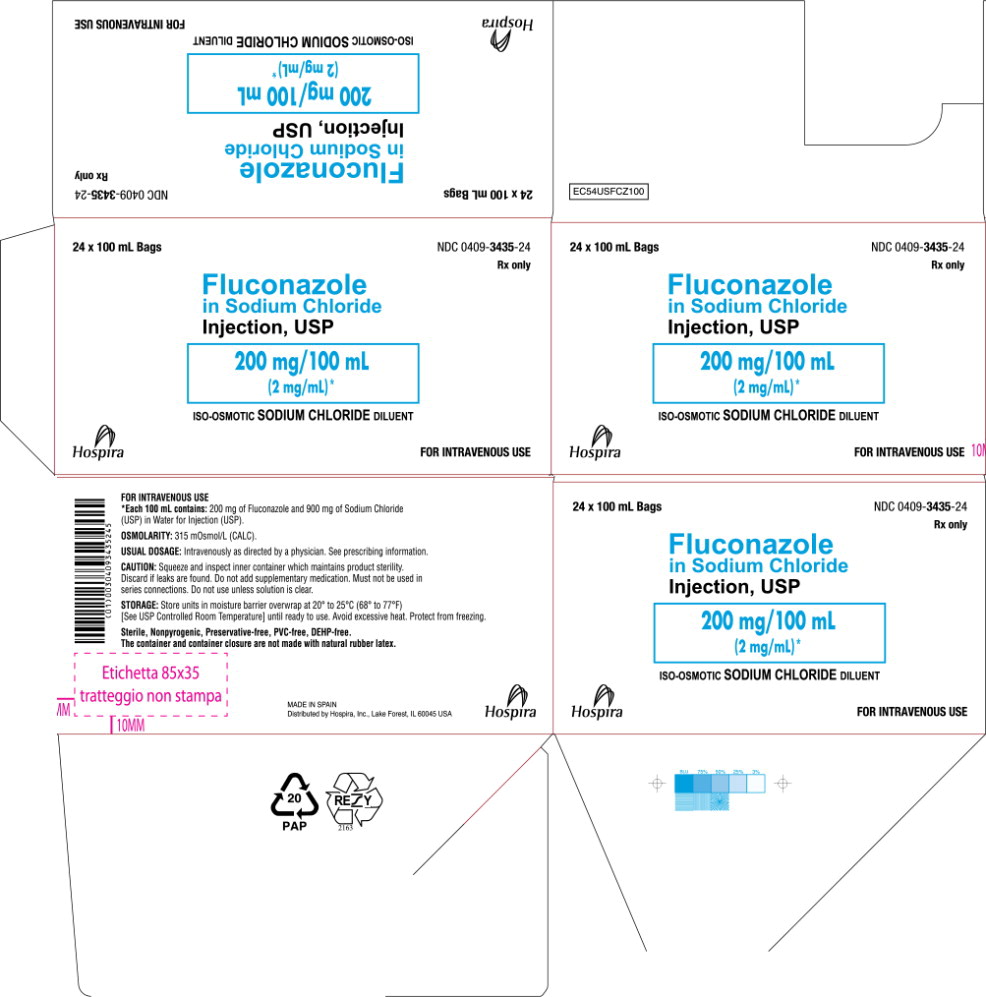
Principal Display Panel - 200 mg/100 mL Carton Label 24 x 100 mL Bags NDC 0409- 3435 -24 Rx only Fluconazole in Sodium Chloride Injection, USP 200 mg/100 mL (2 mg/mL)* ISO-OSMOTIC SODIUM CHLORIDE DILUENT Hospira FOR INTRAVENOUS USE Figure
Principal Display Panel - 400 mg/200 mL Carton Label 24 x 200 mL Bags NDC 0409- 4321 -24 Rx only Fluconazole in Sodium Chloride Injection, USP 400 mg/200 mL (2 mg/mL)* ISO-OSMOTIC SODIUM CHLORIDE DILUENT Hospira FOR INTRAVENOUS USE Figure
Medicare Part D spend CMS · PART D · 2026 (Q1)
About this NDC listing & data coverage
What data is (and isn’t) available for this NDC — tap to expand
| NDC identity (package / product / labeler codes) | ✓ Available |
| Labeler | ✓ Available |
| Product & package description | ✓ Available |
| Marketing category & status | ✓ Available |
| Active ingredient / dosage form / route | ✓ Available |
| FDA label (SPL via DailyMed) | ✓ Available |
| Package photos | ✓ Available |
| Inactive ingredients (structured) | ✓ Available |
| NADAC pharmacy acquisition price (CMS) | — Not published for this NDC CMS publishes NADAC only for NDCs reported in its retail-pharmacy survey. |
| Orange Book / therapeutic-equivalence data | ✓ Available |
| HCPCS J-code billing crosswalk | ✓ Available |
| Medicaid utilization (CMS SDUD) | — Not published for this NDC CMS reports utilization only for NDCs with Medicaid claims above its privacy threshold. |