
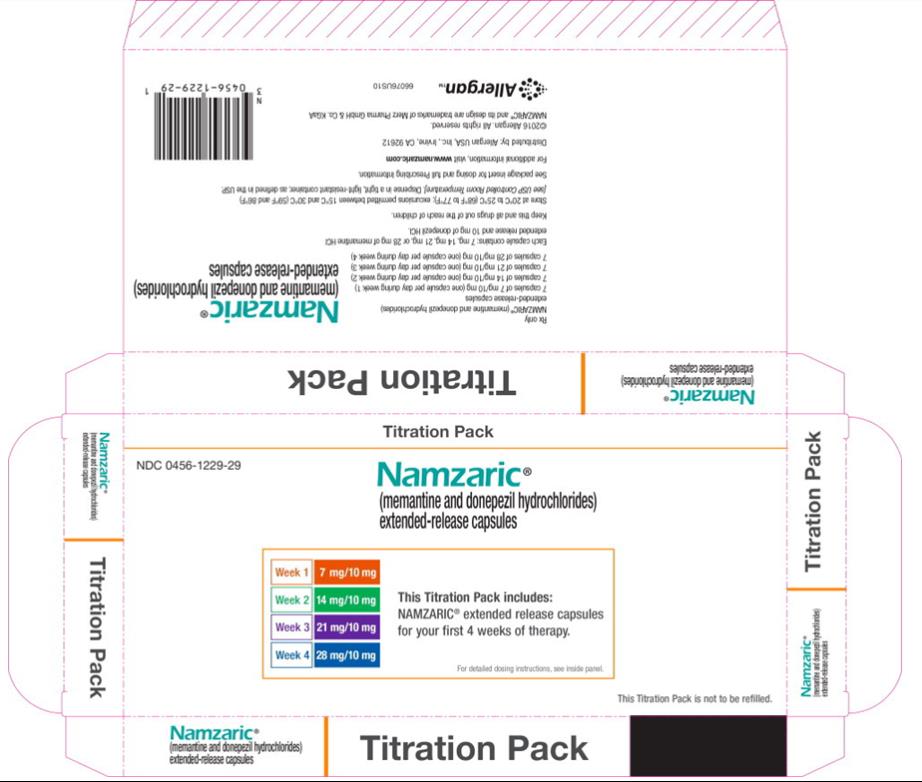
Namzaric memantine hydrochloride and donepezil Kit
🆔 Identity & classification
Where does this data come from?
🏭 Manufacturer & labeler
Where does this data come from?
🩺 Clinical
- This combination medicine brings together two drugs that work in different ways to help manage the symptoms of moderate to severe Alzheimer's dementia. One ingredient, memantine, t...
- What exactly does this medication do for Alzheimer's disease?
- You take it once in the evening, every day. You can take it with or without food — whatever is easiest for you. If you or your loved one has trouble swallowing capsules, you can ca...
- When and how should I take this capsule?
Patient education
Supplement & herbal interactions
Where does this data come from?
Ask a licensed pharmacist directly — free, answered by our team.
💊 What it looks like
Where does this data come from?
🧪 Inactive Ingredients / Excipients
Inactive ingredients, also called excipients, are components of the drug product other than the active ingredient. They may include fillers, dyes, coatings, preservatives, flavors, or other formulation ingredients.
Where does this data come from?
IACT rows and label-wide narrative are kept separate; availability and product-level specificity depend on the submitted label.Inactive ingredient FAQ
Are inactive ingredients the same for every manufacturer?
Why might an inactive ingredient be missing?
Can inactive ingredients matter?
💲 Pricing
A drug doesn't have one price. Each row is a different public payment system, and none is what you'd pay at the counter — that depends on your insurance. The ⓘ on each row explains what it measures.
| Price system | Per each | Per package |
|---|---|---|
| Retail pharmacies payNADAC · weekly | Not in the retail survey — common for institutional, discontinued, or low-volume packs. | |
| Medicaid paysCMS SDUD · 12 mo | No recent Medicaid claims on file for this NDC — rare and low-volume NDCs are suppressed in the public data. | |
| Medicare drug plans payPart D · quarterly | No Part D plan price is available for this NDC in our data. | |
Where does this data come from?
🔁 Therapeutic equivalents
| Product | Labeler | Pack | NADAC/unit | TE | Status | Price vs. this |
|---|---|---|---|---|---|---|
| Namzaricthis 00456-1229-04 | Allergan, | 7 capsules | — | AB | Discontinued | — |
Where does this data come from?
⏳ Availability & generic status
The FDA lists approved generic versions of this medicine, but that does not always mean a pharmacy can get one today. Patent rules, launch agreements, supply and pricing can affect when generics actually arrive.
Why the date isn’t exact: Generic timing can change because patents may be challenged, settled, licensed, added, removed, or worked around with a narrower label — and FDA approval does not always mean a pharmacy can get the generic today.
🛈 What do these terms mean?
- Patent
- Legal protection listed in the Orange Book that may delay generic approval or launch. Issued by the U.S. Patent & Trademark Office.
- Substance patent
- Covers the active drug molecule itself — the hardest to design around. A generic generally can’t launch until it expires.
- Formulation (product) patent
- Covers a specific formulation or dosage form. A generic can sometimes work around it with a different formulation.
- Method-of-use patent
- A patent covering one specific approved use of the drug — not necessarily the whole molecule. A generic can sometimes launch with a “skinny label” that carves out the protected use and keeps the others.
- Skinny label
- A generic label that omits a still-patented use when the FDA allows it — letting a generic reach the market for the unprotected uses.
- Exclusivity
- FDA-granted marketing protection, separate from patents — e.g. 5-yr new chemical entity, 7-yr orphan drug, or a +6-month pediatric extension.
- Paragraph IV
- A generic applicant’s formal challenge to a listed patent. It can potentially lead to earlier generic entry, but often involves litigation or a settlement.
- RLD / RS
- Reference Listed Drug — the brand product the FDA uses as the reference for generic applications. Reference Standard — the product the FDA expects generics to compare against in bioequivalence testing.
- TE / AB rating
- FDA therapeutic-equivalence rating. An AB rating generally means the FDA considers a generic therapeutically equivalent to — and substitutable for — the brand.
- LOE (loss of exclusivity)
- The latest patent or exclusivity currently listed — the loss-of-exclusivity / latest-listed-protection date shown on this page. Paragraph-IV challenges and settlements can move the real date earlier; FDA approval and a manufacturer’s decision to market can move it later.
Built from the FDA Orange Book. The bars above are scaled to each protection’s expiry; the red LOE marker is the last one to lapse.
| Patent | Type | Use code | Expires |
|---|---|---|---|
| US 8039009 ↗ | Method of use | U-1641 | Mar 24, 2029 |
| US 8058291 ↗ | Method of use | U-1641 | Dec 5, 2029 |
| US 8058291 ↗ | Method of use | U-1641 | Dec 5, 2029 |
| US 8058291 ↗ | Method of use | U-1641 | Dec 5, 2029 |
| US 8039009 ↗ | Method of use | U-1641 | Mar 24, 2029 |
| US 8039009 ↗ | Method of use | U-1641 | Mar 24, 2029 |
| US 8058291 ↗ | Method of use | U-1641 | Dec 5, 2029 |
| US 8039009 ↗ | Method of use | U-1641 | Mar 24, 2029 |
| US 8039009*PED ↗ | Drug product | — | Sep 24, 2029 |
| US 8039009*PED ↗ | Drug product | — | Sep 24, 2029 |
| US 8039009*PED ↗ | Drug product | — | Sep 24, 2029 |
| US 8039009*PED ↗ | Drug product | — | Sep 24, 2029 |
Is there a generic version of this drug?
The FDA approved a generic — why can’t I get it at my pharmacy yet?
Why do different websites show different generic release dates?
What does “FDA listed” mean?
What does a patent or protection date mean here?
What does “current Orange Book estimate” mean?
Can a generic come out before the last patent expires?
Can a generic come out after the listed dates?
What is the difference between patents and exclusivity?
Why are there multiple patent dates?
Where does this data come from?
📊 Medicare Part D spend CMS · PART D · 2026 (Q1)
🔬 Reported adverse events (FAERS)
Top reported reactions
Age at onset
Reporter sex
Serious outcomes
Where does this data come from?
📦 Packaging — all sizes for this product
| Package NDC | Description | Marketing start | Status |
|---|---|---|---|
| 00456-1229-29 | 1 BOX in 1 BOX (0456-1229-29) / 1 CARTON in 1 BOX / 1 KIT in 1 CARTON * 7 CAPSULE in 1 PACKAGE, COMBINATION * 7 CAPSULE in 1 PACKAGE, COMBINATION * 7 CAPSULE in 1 PACKAGE, COMBINATION * 7 CAPSULE in 1 PACKAGE, COMBINATION | 2016-11-28 | Discontinued by firm |
| 00456-1229-04 You're viewing this | 1 KIT in 1 CARTON (0456-1229-04) * 7 CAPSULE in 1 PACKAGE, COMBINATION * 7 CAPSULE in 1 PACKAGE, COMBINATION * 7 CAPSULE in 1 PACKAGE, COMBINATION * 7 CAPSULE in 1 PACKAGE, COMBINATION | 2016-11-28 | Discontinued by firm |
Pack size FAQ
What quantity is in NDC 00456-1229-04?
What NDC number is used to bill for this package of Namzaric memantine hydrochloride and donepezil Kit?
🧭 About this NDC listing & data coverage
Kit / multi-component package
This NDC identifies a kit — a package containing more than one component. Structured data (pricing, ingredients, equivalents) is often reported per component rather than for the kit NDC itself, which can make this page look thinner than the components' own pages.
What data is (and isn’t) available for this NDC — tap to expand
| NDC identity (package / product / labeler codes) | ✓ Available |
| Labeler | ✓ Available |
| Product & package description | ✓ Available |
| Marketing category & status | ✓ Available |
| Active ingredient / dosage form / route | ✓ Available |
| FDA label (SPL via DailyMed) | ✓ Available |
| Package photos | ✓ Available |
| Inactive ingredients (structured) | — Not published for this NDC The labeler did not submit a structured excipient list, or no SPL is available. |
| NADAC pharmacy acquisition price (CMS) | — Not published for this NDC CMS publishes NADAC only for NDCs reported in its retail-pharmacy survey. |
| Orange Book / therapeutic-equivalence data | ✓ Available |
| HCPCS J-code billing crosswalk | — Not published for this NDC Most self-administered / retail products have no J-code — that is normal. |
| Medicaid utilization (CMS SDUD) | — Not published for this NDC CMS reports utilization only for NDCs with Medicaid claims above its privacy threshold. |
Questions about this listing
Why is there no price listed?
What does the discontinued status mean for this NDC?
Is the NDC printed on the package the same as the 11-digit billing NDC?
What do the three segments of this NDC mean?
Does this product come in other package sizes?
Who lists this product with the FDA?
Do I need a prescription for this product?
Where does this data come from?
📄 Full prescribing information FDA SPL
🎯 Indications and Usage ▾
1 INDICATIONS AND USAGE NAMZARIC is indicated for the treatment of moderate to severe dementia of the Alzheimer’s type in patients stabilized on 10 mg of donepezil hydrochloride once daily. NAMZARIC is a combination of memantine hydrochloride, an NMDA receptor antagonist, and donepezil hydrochloride, an acetylcholinesterase inhibitor, indicated for the treatment of moderate to severe dementia of the Alzheimer’s type in patients stabilized on 10 mg of donepezil hydrochloride once daily. ( 1 )
⏱️ Dosage and Administration ▾
2 DOSAGE AND ADMINISTRATION For patients on donepezil hydrochloride 10 mg only, the recommended starting dose of NAMZARIC is 7 mg/10 mg, taken once daily in the evening. The dose should be increased in 7 mg increments to the recommended maintenance dose of 28 mg/10 mg. The minimum recommended interval between dose increases is one week.
( 2.1 ) Patients on memantine hydrochloride (10 mg twice daily or 28 mg extended-release once daily) and donepezil hydrochloride 10 mg once daily can be switched to NAMZARIC 28 mg/10 mg, taken once daily in the evening. ( 2.1 ) NAMZARIC can be taken with or without food, whole or sprinkled on applesauce; do not divide, chew, or crush. ( 2.2 ) Severe renal impairment: the recommended maintenance dose for NAMZARIC is 14 mg/10 mg once daily in the evening.
( 2.3 )
2.1Recommended Dosing The recommended dose of NAMZARIC is 28 mg/10 mg once daily. For patients stabilized on donepezil and not currently on memantine: For patients stabilized on donepezil hydrochloride 10 mg and not currently on memantine hydrochloride, the recommended starting dose of NAMZARIC is 7 mg/10 mg, taken once a day in the evening. The dose should be increased in 7 mg increments of the memantine hydrochloride component to the recommended maintenance dose of 28 mg/10 mg once daily.
The minimum recommended interval between dose increases is one week. The dose should only be increased if the previous dose has been well tolerated. The maximum dose is 28 mg/10 mg once daily.
For patients stabilized on both donepezil and memantine: Patients stabilized on memantine hydrochloride (10 mg twice daily or 28 mg extended-release once daily) and donepezil hydrochloride 10 mg once daily can be switched to NAMZARIC 28 mg/10 mg, taken once a day in the evening. Patients should start NAMZARIC the day following the last dose of memantine hydrochloride and donepezil hydrochloride administered separately. If a patient misses a single dose of NAMZARIC, the next dose should be taken as scheduled, without doubling up the dose.
2.2Administration Information NAMZARIC can be taken with or without food. NAMZARIC capsules can be taken intact or may be opened, sprinkled on applesauce, and swallowed without chewing. The entire contents of each NAMZARIC capsule should be consumed; the dose should not be divided. Except when opened and sprinkled on applesauce, as described above, NAMZARIC capsules should be swallowed whole. NAMZARIC capsules should not be divided, chewed, or crushed.
2.3Dosing in Patients with Severe Renal Impairment For patients stabilized on donepezil and not currently on memantine: For patients with severe renal impairment (creatinine clearance 5-29 mL/min, based on the Cockcroft-Gault equation) stabilized on donepezil hydrochloride 10 mg once daily and not currently on memantine hydrochloride, the recommended starting dose of NAMZARIC is 7 mg/10 mg taken once a day in the evening. The dose should be increased to the recommended maintenance dose of 14 mg/10 mg once daily in the evening after a minimum of one week [see Use in Specific Populations (8.6) ] .
For patients stabilized on both donepezil and memantine: Patients with severe renal impairment, stabilized on memantine hydrochloride (5 mg twice daily or 14 mg extended-release once daily) and donepezil hydrochloride 10 mg once daily, can be switched to NAMZARIC 14 mg/10 mg, taken once daily in the evening.
💊 Dosage Forms and Strengths ▾
3 DOSAGE FORMS AND STRENGTHS Extended-Release Capsules: 7 mg memantine hydrochloride and 10 mg donepezil hydrochloride: light green opaque body and an orange opaque cap with a black “FL 7/10” radial imprint 14 mg memantine hydrochloride and 10 mg donepezil hydrochloride: light green opaque capsules with a black “FL 14/10” radial imprint 21 mg memantine hydrochloride and 10 mg donepezil hydrochloride: white opaque body and an orange opaque cap with a black “FL 21/10” radial imprint 28 mg memantine hydrochloride and 10 mg donepezil hydrochloride: blue opaque capsules with a black “FL 28/10” radial imprint Extended-Release Capsules: 7 mg memantine hydrochloride and 10 mg donepezil hydrochloride ( 3 ) 14 mg memantine hydrochloride and 10 mg donepezil hydrochloride ( 3 ) 21 mg memantine hydrochloride and 10 mg donepezil hydrochloride ( 3 ) 28 mg memantine hydrochloride and 10 mg donepezil hydrochloride ( 3 )
⛔ Contraindications ▾
4 CONTRAINDICATIONS NAMZARIC is contraindicated in patients with known hypersensitivity to memantine hydrochloride, donepezil hydrochloride, piperidine derivatives, or to any excipients used in the formulation . NAMZARIC is contraindicated in patients with known hypersensitivity to memantine hydrochloride, donepezil hydrochloride, piperidine derivatives, or to any excipients used in the formulation. ( 4 )
⚠️ Warnings and Cautions ▾
5 WARNINGS AND PRECAUTIONS NAMZARIC is likely to exaggerate succinylcholine-type muscle relaxation during anesthesia. ( 5.1 ) NAMZARIC may have vagotonic effects on the sinoatrial and atrioventricular nodes manifesting as bradycardia or heart block. ( 5.2 ) Monitor patients for symptoms of active or occult gastrointestinal bleeding, especially those at increased risk for developing ulcers.
( 5.3 ) NAMZARIC can cause diarrhea, nausea, and vomiting. ( 5.4 ) NAMZARIC may cause bladder outflow obstructions. ( 5.5 ) Conditions that raise urine pH may decrease the urinary elimination of memantine, resulting in increased plasma levels of memantine.
( 5.5 , 7.1 )
5.1Anesthesia Donepezil hydrochloride, an active ingredient in NAMZARIC, as a cholinesterase inhibitor, is likely to exaggerate succinylcholine-type muscle relaxation during anesthesia.
5.2Cardiovascular Conditions Because of their pharmacological action, cholinesterase inhibitors may have vagotonic effects on the sinoatrial and atrioventricular nodes. This effect may manifest as bradycardia or heart block in patients both with and without known underlying cardiac conduction abnormalities. Syncopal episodes have been reported in association with the use of donepezil hydrochloride, an active ingredient in NAMZARIC.
5.3Peptic Ulcer Disease and Gastrointestinal Bleeding Through their primary action, cholinesterase inhibitors may be expected to increase gastric acid secretion due to increased cholinergic activity. Clinical studies of donepezil hydrochloride in a dose of 5 mg/day to 10 mg/day have shown no increase, relative to placebo, in the incidence of either peptic ulcer disease or gastrointestinal bleeding. Patients treated with NAMZARIC should be monitored closely for symptoms of active or occult gastrointestinal bleeding, especially those at increased risk for developing ulcers, e.g., those with a history of ulcer disease or those receiving concurrent nonsteroidal anti-inflammatory drugs (NSAIDs).
5.4Nausea and Vomiting Donepezil hydrochloride, an active ingredient in NAMZARIC, when initiated, as a predictable consequence of its pharmacological properties, has been shown to produce diarrhea, nausea, and vomiting. Although in most cases, these effects have been mild and transient, sometimes lasting one to three weeks, and have resolved during continued use of donepezil hydrochloride, patients should be observed closely at the initiation of treatment.
5.5Genitourinary Conditions Although not observed in clinical trials of donepezil hydrochloride, an active ingredient in NAMZARIC, cholinomimetics may cause bladder outflow obstruction. Conditions that raise urine pH may decrease the urinary elimination of memantine, an active ingredient in NAMZARIC, resulting in increased plasma levels of memantine [see Drug Interactions (7.1) ] .
5.6Seizures Cholinomimetics, including donepezil hydrochloride, an active ingredient in NAMZARIC, are believed to have some potential to cause generalized convulsions. However, seizure activity also may be a manifestation of Alzheimer’s disease.
5.7Pulmonary Conditions Because of their cholinomimetic actions, cholinesterase inhibitors should be prescribed with care to patients with a history of asthma or obstructive pulmonary disease.
🤒 Adverse Reactions ▾
6 ADVERSE REACTIONS The following serious adverse reactions are discussed below and elsewhere in the labeling. Cardiovascular Conditions [see Warnings and Precautions (5.2) ] Peptic Ulcer Disease and Gastrointestinal Bleeding [see Warnings and Precautions (5.3) ] Nausea and Vomiting [see Warnings and Precautions (5.4) ] Genitourinary Conditions [see Warnings and Precautions (5.5) ] Seizures [see Warnings and Precautions (5.6) ] Pulmonary Conditions [see Warnings and Precautions (5.7) ] The most common adverse reactions, occurring at a frequency of at least 5% and greater than placebo with memantine hydrochloride extended-release 28 mg/day, were headache, diarrhea, and dizziness.
( 6.1 ) The most common adverse reactions, occurring at a frequency of at least 5% in patients receiving donepezil hydrochloride and at twice or more the placebo rate, include diarrhea, anorexia, vomiting, nausea, and ecchymosis. ( 6.1 ) To report SUSPECTED ADVERSE REACTIONS, contact AbbVie Inc. at 1-800-633-9110 or FDA at 1-800-FDA-1088 or www.fda.gov/medwatch.
6.1Clinical Trials Experience Because clinical trials are conducted under widely varying conditions, adverse reaction rates observed in the clinical trials of a drug cannot be directly compared to rates in the clinical trials of another drug and may not reflect the rates observed in practice. Memantine Hydrochloride Memantine hydrochloride extended-release was evaluated in a double-blind, placebo-controlled trial in 676 patients with moderate to severe dementia of the Alzheimer’s type (341 patients treated with memantine 28 mg/day dose and 335 patients treated with placebo) for a treatment period up to 24 weeks.
Of the patients randomized, 236 treated with memantine 28 mg/day and 227 treated with placebo were on a stable dose of donepezil for 3 months prior to screening. Adverse Reactions Leading to Discontinuation with Memantine Hydrochloride In the placebo-controlled clinical trial of memantine hydrochloride extended-release, the proportion of patients in the memantine hydrochloride extended-release 28 mg/day dose group and in the placebo group who discontinued treatment due to adverse reactions was 10% and 6%, respectively.
The most common adverse reaction in the memantine hydrochloride extended- release treated group that led to treatment discontinuation was dizziness, at a rate of 1.5%. Most Common Adverse Reactions with Memantine Hydrochloride The most common adverse reactions with memantine hydrochloride extended-release in patients with moderate to severe Alzheimer’s disease, defined as those occurring at a frequency of at least 5% in the memantine hydrochloride extended-release group and at a higher frequency than placebo, were headache, diarrhea, and dizziness.
Table 1 lists adverse reactions that occurred at an incidence of ≥ 2% in the memantine hydrochloride extended-release treated group and occurred at a rate greater than placebo. Table 1: Adverse reactions with memantine hydrochloride extended-release in patients with moderate to severe Alzheimer’s disease Adverse Reaction Placebo (n = 335) % Memantine hydrochloride extended-release 28 mg (n = 341) % Gastrointestinal Disorders Diarrhea 4 5 Constipation 1 3 Abdominal pain 1 2 Vomiting 1 2 Infections and Infestations Influenza 3 4 Investigations Increased weight 1 3 Musculoskeletal and Connective Tissue Disorders Back pain 1 3 Nervous System Disorders Headache 5 6 Dizziness 1 5 Somnolence 1 3 Psychiatric Disorders Anxiety 3 4 Depression 1 3 Aggression 1 2 Renal and Urinary Disorders Urinary incontinence 1 2 Vascular Disorders Hypertension 2 4 Hypotension 1 2 Donepezil hydrochloride Adverse Reactions Leading to Discontinuation with Donepezil Hydrochloride In controlled clinical trials of donepezil hydrochloride, the rate of discontinuation due to adverse reactions for patients treated with donepezil hydrochloride was approximately 12%, compared to 7% for patients treated with placebo.
The most common adverse reactions leading to di…
🔄 Drug Interactions ▾
7 DRUG INTERACTIONS Combined use with NMDA antagonists: use with caution. ( 7.2 ) NAMZARIC may interfere with anticholinergic medications. ( 7.4 ) Concomitant administration of succinylcholine, similar neuromuscular blocking agents, or cholinergic agonists may lead to synergistic effect. ( 7.5 )
7.1Use of Memantine with Drugs That Make the Urine Alkaline The clearance of memantine was reduced by about 80% under alkaline urine conditions at pH 8. Therefore, alterations of urine pH towards the alkaline condition may lead to an accumulation of the drug with a possible increase in adverse reactions. Urine pH is altered by diet, drugs (e.g., carbonic anhydrase inhibitors, sodium bicarbonate) and clinical state of the patient (e.g., renal tubular acidosis or severe infections of the urinary tract).
Hence, memantine should be used with caution under these conditions.
7.2Use of Memantine with Other N-methyl-D-aspartate (NMDA) Antagonists The combined use of memantine hydrochloride with other NMDA antagonists (amantadine, ketamine, and dextromethorphan) has not been systematically evaluated and such use should be approached with caution.
7.3Effect of Other Drugs on the Metabolism of Donepezil Inhibitors of CYP3A4 (e.g., ketoconazole) and CYP2D6 (e.g., quinidine), inhibit donepezil metabolism in vitro . Whether there is a clinical effect of quinidine is not known. Inducers of CYP3A4 (e.g., phenytoin, carbamazepine, dexamethasone, rifampin, and phenobarbital) could increase the rate of elimination of donepezil.
7.4Use of Donepezil with Anticholinergics Because of their mechanism of action, cholinesterase inhibitors, including donepezil hydrochloride, have the potential to interfere with the activity of anticholinergic medications.
7.5Use of Donepezil with Cholinomimetics and Other Cholinesterase Inhibitors A synergistic effect may be expected when cholinesterase inhibitors, including donepezil hydrochloride, are given concurrently with succinylcholine, similar neuromuscular blocking agents, or cholinergic agonists such as bethanechol.
👥 Use in Specific Populations ▾
8. USE IN SPECIFIC POPULATIONS
8.1Pregnancy Risk Summary There are no adequate data on the developmental risk associated with the use of NAMZARIC or its active ingredients (memantine hydrochloride and donepezil hydrochloride) in pregnant women. Adverse developmental effects (mortality and decreased body weight and skeletal ossification) were observed in the offspring of rats administered memantine or donepezil during pregnancy at doses associated with minimal maternal toxicity. These doses are higher than those used in humans at the recommended daily dose of NAMZARIC [see Data ] .
In the U.S. general population, the estimated background risk of major birth defects and miscarriage in clinically recognized pregnancies is 2-4% and 15-20%, respectively. The background risk of major birth defects and miscarriage for the indicated population is unknown. Data Animal Data Memantine Hydrochloride Oral administration of memantine (2, 6, or 18 mg/kg/day) to rats during the period of organogenesis resulted in decreased skeletal ossification in fetuses at the highest dose tested.
The higher no-effect dose for adverse developmental effects (6 mg/kg) is 2 times the dose of memantine at the recommended human daily dose (RHD) of NAMZARIC (28 mg memantine/10 mg donepezil) on a body surface area (mg/m 2 ) basis. Oral administration of memantine to rabbits (3, 10, or 30 mg/kg/day) during the period of organogenesis resulted in no adverse developmental effects. The highest dose tested is approximately 20 times the dose of memantine at the RHD of NAMZARIC on a mg/m 2 basis.
In rats, memantine (2, 6, or 18 mg/kg/day) was administered orally prior to and throughout mating and, in females, through the period of organogenesis or continuing throughout lactation to weaning. Decreased skeletal ossification in fetuses and decreased body weight in pups were observed at the highest dose tested. The higher no-effect dose for adverse developmental effects (6 mg/kg/day) is 2 times the dose of memantine at the RHD of NAMZARIC on a mg/m 2 basis.
Oral administration of memantine (2, 6, or 18 mg/kg/day) to rats from late gestation throughout lactation to weaning, resulted in decreased pup weights at the highest dose tested. The higher no-effect dose (6 mg/kg/day) is approximately 2 times the dose of memantine at the RHD of NAMZARIC on a mg/m 2 basis. Donepezil Hydrochloride Oral administration of donepezil to rats and rabbits during the period of organogenesis resulted in no adverse developmental effects.
The highest doses (16 and 10 mg/kg/day, respectively) were approximately 15 and 7 times, respectively, the dose of donepezil at the RHD of NAMZARIC on a mg/m 2 basis. Oral administration of donepezil (1, 3, or 10 mg/kg/day) to rats during late gestation and throughout lactation to weaning resulted in an increase in stillbirths and offspring mortality at the highest dose tested. The higher no-effect dose (3 mg/kg/day) is approximately 3 times the dose of donepezil at the RHD of NAMZARIC on a mg/m 2 basis.
8.2Lactation Risk Summary There are no data on the presence of memantine or donepezil in human milk, the effects on the breastfed infant, or the effects of NAMZARIC or its metabolites on milk production. The developmental and health benefits of breastfeeding should be considered along with the mother’s clinical need for NAMZARIC and any potential adverse effects on the breastfed infant from NAMZARIC or from the underlying maternal condition.
8.4Pediatric Use Safety and effectiveness of NAMZARIC in pediatric patients have not been established. Memantine failed to demonstrate efficacy in two 12-week controlled clinical studies of 578 pediatric patients aged 6-12 years with autism spectrum disorders (ASD), including autism, Asperger’s disorder and Pervasive Development Disorder - Not Otherwise Specified (PDD-NOS). Memantine has not been studied in pediatric patients under 6 years of age or over 12 years of age.
Memantine treatment was initiated at 3 mg/day and the…
🤰 Pregnancy ▾
8.1Pregnancy Risk Summary There are no adequate data on the developmental risk associated with the use of NAMZARIC or its active ingredients (memantine hydrochloride and donepezil hydrochloride) in pregnant women. Adverse developmental effects (mortality and decreased body weight and skeletal ossification) were observed in the offspring of rats administered memantine or donepezil during pregnancy at doses associated with minimal maternal toxicity. These doses are higher than those used in humans at the recommended daily dose of NAMZARIC [see Data ] .
In the U.S. general population, the estimated background risk of major birth defects and miscarriage in clinically recognized pregnancies is 2-4% and 15-20%, respectively. The background risk of major birth defects and miscarriage for the indicated population is unknown. Data Animal Data Memantine Hydrochloride Oral administration of memantine (2, 6, or 18 mg/kg/day) to rats during the period of organogenesis resulted in decreased skeletal ossification in fetuses at the highest dose tested.
The higher no-effect dose for adverse developmental effects (6 mg/kg) is 2 times the dose of memantine at the recommended human daily dose (RHD) of NAMZARIC (28 mg memantine/10 mg donepezil) on a body surface area (mg/m 2 ) basis. Oral administration of memantine to rabbits (3, 10, or 30 mg/kg/day) during the period of organogenesis resulted in no adverse developmental effects. The highest dose tested is approximately 20 times the dose of memantine at the RHD of NAMZARIC on a mg/m 2 basis.
In rats, memantine (2, 6, or 18 mg/kg/day) was administered orally prior to and throughout mating and, in females, through the period of organogenesis or continuing throughout lactation to weaning. Decreased skeletal ossification in fetuses and decreased body weight in pups were observed at the highest dose tested. The higher no-effect dose for adverse developmental effects (6 mg/kg/day) is 2 times the dose of memantine at the RHD of NAMZARIC on a mg/m 2 basis.
Oral administration of memantine (2, 6, or 18 mg/kg/day) to rats from late gestation throughout lactation to weaning, resulted in decreased pup weights at the highest dose tested. The higher no-effect dose (6 mg/kg/day) is approximately 2 times the dose of memantine at the RHD of NAMZARIC on a mg/m 2 basis. Donepezil Hydrochloride Oral administration of donepezil to rats and rabbits during the period of organogenesis resulted in no adverse developmental effects.
The highest doses (16 and 10 mg/kg/day, respectively) were approximately 15 and 7 times, respectively, the dose of donepezil at the RHD of NAMZARIC on a mg/m 2 basis. Oral administration of donepezil (1, 3, or 10 mg/kg/day) to rats during late gestation and throughout lactation to weaning resulted in an increase in stillbirths and offspring mortality at the highest dose tested. The higher no-effect dose (3 mg/kg/day) is approximately 3 times the dose of donepezil at the RHD of NAMZARIC on a mg/m 2 basis.
🧒 Pediatric Use ▾
8.4Pediatric Use Safety and effectiveness of NAMZARIC in pediatric patients have not been established. Memantine failed to demonstrate efficacy in two 12-week controlled clinical studies of 578 pediatric patients aged 6-12 years with autism spectrum disorders (ASD), including autism, Asperger’s disorder and Pervasive Development Disorder - Not Otherwise Specified (PDD-NOS). Memantine has not been studied in pediatric patients under 6 years of age or over 12 years of age.
Memantine treatment was initiated at 3 mg/day and the dose was escalated to the target dose (weight-based) by week 6. Oral doses of memantine 3, 6, 9, or 15 mg extended-release capsules were administered once daily to patients with weights < 20 kg, 20-39 kg, 40-59 kg and ≥ 60 kg, respectively. In a randomized, 12-week double-blind, placebo-controlled parallel study (Study A) in patients with autism, there was no statistically significant difference in the Social Responsiveness Scale (SRS) total raw score between patients randomized to memantine (n=54) and those randomized to placebo (n=53).
In a 12-week responder-enriched randomized withdrawal study (Study B) in 471 patients with ASD, there was no statistically significant difference in the loss of therapeutic response rates between patients randomized to remain on full-dose memantine (n=153) and those randomized to switch to placebo (n=158). The overall risk profile of memantine in pediatric patients was generally consistent with the known risk profile in adults [see Adverse Reactions (6.1) ] . In Study A, the adverse reactions in the memantine group (n=56) that were reported in at least 5% of patients and at least twice the frequency of the placebo group (N=58) are listed in Table 3: Table 3: Study A Commonly Reported Adverse Reactions With a Frequency ≥ 5% and Twice That of Placebo Adverse Reaction Memantine N=56 Placebo N=58 Cough 8.9% 3.4% Influenza 7.1% 3.4% Rhinorrhea 5.4% 0% Agitation 5.4% 1.7% Discontinuations due to adverse reactions a Aggression 3.6% 1.7% Irritability 1.8% 3.4% a Reported adverse reactions leading to discontinuation in more than one patient in either treatment group.
The adverse reactions that were reported in at least 5% of patients in the 12-48 week open-label study to identify responders to enroll in Study B are listed in Table 4: Table 4: 12-48 Week Open Label Lead-In study to Study B Commonly Reported Adverse Reactions with a Frequency ≥ 5% Adverse Reaction Memantine N=903 Headache 8.0% Nasopharyngitis 6.3% Pyrexia 5.8% Irritability 5.4% Discontinuations due to adverse reactions a Irritability 1.2% Aggression 1.0% a At least 1% incidence of adverse reactions leading to premature discontinuation.
In the randomized withdrawal study (Study B), the adverse reaction in patients randomized to placebo (n=160) and reported in at least 5% of patients and at twice the frequency of the full-dose memantine treatment group (n=157) was irritability (5.0% vs 2.5%). In a juvenile animal study, male and female juvenile rats were administered memantine (15, 30, and 45 mg/kg/day) starting on postnatal day (PND) 14 through PND 70. Body weights were reduced at 45 mg/kg/day.
Delays in sexual maturation were noted in male and female rats at doses ≥ 30 mg/kg/day. Memantine induced neuronal lesions in several areas of the brain on PND 15 and 17 at doses ≥ 30 mg/kg/day. Behavioral toxicity (decrease percent of auditory startle habituation) was noted for animals in the 45 mg/kg/day dose group.
The 15 mg/kg/day dose was considered the No-Observed-Adverse-Effect-Level (NOAEL) for this study. In a second juvenile rat toxicity study, male and female juvenile rats were administered memantine (1, 3, 8, 15, 30, and 45 mg/kg/day) starting on postnatal day (PND) 7 through PND 70. Due to early memantine-related mortality, the 30 and 45 mg/kg/day dose groups were terminated without further evaluation.
Memantine induced apoptosis or neuronal degeneration in several areas of the brain on PND 8, 10, and 17 at a dose…
🧓 Geriatric Use ▾
8. 5 Geriatric Use Memantine Hydrochloride The majority of people with Alzheimer’s disease are 65 years and older. In the clinical study of memantine hydrochloride extended-release, the mean age of patients was approximately 77 years; over 91% of patients were 65 years of age and older, 67% were 75 years of age and older, and 14% were 85 years of age and older.
The efficacy and safety data presented in the clinical trials section were obtained from these patients. There were no clinically meaningful differences in most adverse events reported by patients ≥ 65 years old and < 65 years old. Donepezil Hydrochloride The mean age of patients enrolled in the clinical studies with donepezil hydrochloride was 73 years; 80% of these patients were between 65 and 84 years of age, and 49% of patients 75 years of age and older.
The efficacy and safety data presented in the clinical trials section were obtained from these patients. There were no clinically significant differences in most adverse events reported by patients ≥ 65 years old and < 65 years old.
🆘 Overdosage ▾
10 OVERDOSAGE Memantine hydrochloride and donepezil hydrochloride are the two active ingredients of NAMZARIC. No specific antidote for memantine hydrochloride overdose is known; however, elimination of memantine can be increased by acidification of the urine. Tertiary anticholinergics such as atropine may be used as an antidote for donepezil hydrochloride overdose.
In managing cases of overdose, consider the possibility of multiple drug involvement. In case of overdose, call Poison Control Center at 1-800-222-1222 for the latest recommendation. In general, supportive measures should be utilized, and treatment should be symptomatic.
Memantine Hydrochloride Signs and symptoms most often accompanying overdosage with other formulations of memantine in clinical trials and from worldwide marketing experience, alone or in combination with other drugs and/or alcohol, include agitation, asthenia, bradycardia, confusion, coma, dizziness, ECG changes, increased blood pressure, lethargy, loss of consciousness, psychosis, restlessness, slowed movement, somnolence, stupor, unsteady gait, visual hallucinations, vertigo, vomiting, and weakness. The largest known ingestion of memantine worldwide was 2 grams in an individual who took memantine in conjunction with unspecified antidiabetic medications.
This person experienced coma, diplopia, and agitation, but subsequently recovered. One patient participating in a memantine hydrochloride extended-release clinical trial unintentionally took 112 mg of memantine hydrochloride extended-release daily for 31 days and experienced elevated serum uric acid, elevated serum alkaline phosphatase, and low platelet count. No fatalities have been noted with overdoses of memantine alone.
A fatal outcome has very rarely been reported when memantine has been ingested as part of overdosing with multiple drugs; in those instances, the relationship between memantine and a fatal outcome has been unclear. Donepezil Hydrochloride Overdosage with cholinesterase inhibitors can result in cholinergic crisis characterized by severe nausea, vomiting, salivation, sweating, bradycardia, hypotension, respiratory depression, collapse, and convulsions. Increasing muscle weakness is a possibility and may result in death if respiratory muscles are involved.
Tertiary anticholinergics such as atropine may be used as an antidote for donepezil hydrochloride overdosage. Intravenous atropine sulfate titrated to effect is recommended: an initial dose of 1.0 to 2.0 mg IV with subsequent doses based upon clinical response. Atypical responses in blood pressure and heart rate have been reported with other cholinomimetics when coadministered with quaternary anticholinergics such as glycopyrrolate.
It is not known whether donepezil hydrochloride and/or its metabolites can be removed by dialysis (hemodialysis, peritoneal dialysis, or hemofiltration). Dose-related signs of toxicity in animals included reduced spontaneous movement, prone position, staggering gait, lacrimation, clonic convulsions, depressed respiration, salivation, miosis, tremors, fasciculation, and lower body surface temperature.
🧬 Clinical Pharmacology ▾
12 CLINICAL PHARMACOLOGY
12.1Mechanism of Action NAMZARIC capsules contain two approved medications: memantine hydrochloride and donepezil hydrochloride. Each of those medications is postulated to have a different mechanism in Alzheimer’s disease. Memantine Persistent activation of central nervous system NMDA receptors by the excitatory amino acid glutamate has been hypothesized to contribute to the symptomatology of Alzheimer’s disease.
Memantine is postulated to exert its therapeutic effect through its action as a low to moderate affinity uncompetitive (open channel) NMDA receptor antagonist which binds preferentially to the NMDA receptor-operated cation channels. There is no evidence that memantine prevents or slows neurodegeneration in patients with Alzheimer’s disease. Donepezil Current theories on the pathogenesis of the cognitive signs and symptoms of Alzheimer’s disease attribute some of them to a deficiency of cholinergic neurotransmission.
Donepezil is postulated to exert its therapeutic effect by enhancing cholinergic function. This is accomplished by increasing the concentration of acetylcholine in the central nervous system through reversible inhibition of its hydrolysis by acetylcholinesterase. There is no evidence that donepezil prevents or slows neurodegeneration in patients with Alzheimer’s disease.
12.3Pharmacokinetics NAMZARIC NAMZARIC was bioequivalent to co-administration of individual memantine hydrochloride extended-release and donepezil hydrochloride. Exposure (AUC and C max ) of memantine and donepezil following NAMZARIC administration in the fed or fasted state was similar. Further, exposure of memantine and donepezil following NAMZARIC administration as intact capsule or capsule contents sprinkled on applesauce was similar in healthy subjects.
Memantine Hydrochloride Memantine is well absorbed after oral administration and has linear pharmacokinetics over the therapeutic dose range. It is excreted predominantly unchanged in urine and has a terminal elimination half-life of about 60-80 hours. In a study comparing 28 mg once-daily memantine hydrochloride extended-release to 10 mg twice-daily memantine hydrochloride, C max and AUC 0-24 values were 48% and 33% higher for the memantine hydrochloride extended-release dosage regimen, respectively.
Absorption After multiple dose administration of memantine hydrochloride extended-release, memantine peak concentrations occur around 9-12 hours postdose. There is no difference in the absorption of memantine hydrochloride extended-release when the capsule is taken intact or when the contents are sprinkled on applesauce. After single-dose administration, there is no difference in memantine exposure, based on C max or AUC, for memantine hydrochloride extended-release when the drug product is administered with food or on an empty stomach.
However, peak plasma concentrations are achieved about 18 hours after administration with food versus approximately 25 hours after administration on an empty stomach. Distribution The mean volume of distribution of memantine is 9-11 L/kg and the plasma protein binding is low (45%). Metabolism Memantine undergoes partial hepatic metabolism.
The hepatic microsomal CYP450 enzyme system does not play a significant role in the metabolism of memantine. Elimination Memantine is excreted predominantly in the urine, unchanged, and has a terminal elimination half-life of about 60-80 hours. About 48% of administered drug is excreted unchanged in urine; the remainder is converted primarily to three polar metabolites which possess minimal NMDA receptor antagonistic activity: the N-glucuronide conjugate, 6-hydroxy memantine, and 1-nitroso-deaminated memantine.
A total of 74% of the administered dose is excreted as the sum of the parent drug and the N-glucuronide conjugate. Renal clearance involves active tubular secretion moderated by pH dependent tubular reabsorption. Pharmacokinetics in Special Populations Renal Impairment Memantine pharmaco…
🧬 Mechanism of Action ▾
12.1Mechanism of Action NAMZARIC capsules contain two approved medications: memantine hydrochloride and donepezil hydrochloride. Each of those medications is postulated to have a different mechanism in Alzheimer’s disease. Memantine Persistent activation of central nervous system NMDA receptors by the excitatory amino acid glutamate has been hypothesized to contribute to the symptomatology of Alzheimer’s disease.
Memantine is postulated to exert its therapeutic effect through its action as a low to moderate affinity uncompetitive (open channel) NMDA receptor antagonist which binds preferentially to the NMDA receptor-operated cation channels. There is no evidence that memantine prevents or slows neurodegeneration in patients with Alzheimer’s disease. Donepezil Current theories on the pathogenesis of the cognitive signs and symptoms of Alzheimer’s disease attribute some of them to a deficiency of cholinergic neurotransmission.
Donepezil is postulated to exert its therapeutic effect by enhancing cholinergic function. This is accomplished by increasing the concentration of acetylcholine in the central nervous system through reversible inhibition of its hydrolysis by acetylcholinesterase. There is no evidence that donepezil prevents or slows neurodegeneration in patients with Alzheimer’s disease.
📦 How Supplied / Storage and Handling ▾
16 HOW SUPPLIED/STORAGE AND HANDLING
16.1How Supplied 7 mg memantine hydrochloride and 10 mg donepezil hydrochloride: light green opaque body and an orange opaque cap with a black “FL 7/10” radial imprint. Bottle of 30: NDC# 0456-1207-30 14 mg memantine hydrochloride and 10 mg donepezil hydrochloride: light green opaque capsules with a black “FL 14/10” radial imprint. Bottle of 30: NDC# 0456-1214-30 21 mg memantine hydrochloride and 10 mg donepezil hydrochloride: white opaque body and an orange opaque cap with a black “FL 21/10” radial imprint.
Bottle of 30: NDC# 0456-1221-30 28 mg memantine hydrochloride and 10 mg donepezil hydrochloride: blue opaque capsules with a black “FL 28/10” radial imprint. Bottle of 30: NDC# 0456-1228-30
16.2Storage and Handling Store at 20°C to 25°C (68°F to 77°F); excursions permitted between 15°C and 30°C (59°F and 86°F) [see USP Controlled Room Temperature] . Dispense in a tight, light-resistant container, as defined in the USP.
16.1How Supplied 7 mg memantine hydrochloride and 10 mg donepezil hydrochloride: light green opaque body and an orange opaque cap with a black “FL 7/10” radial imprint. Bottle of 30: NDC# 0456-1207-30 14 mg memantine hydrochloride and 10 mg donepezil hydrochloride: light green opaque capsules with a black “FL 14/10” radial imprint. Bottle of 30: NDC# 0456-1214-30 21 mg memantine hydrochloride and 10 mg donepezil hydrochloride: white opaque body and an orange opaque cap with a black “FL 21/10” radial imprint.
Bottle of 30: NDC# 0456-1221-30 28 mg memantine hydrochloride and 10 mg donepezil hydrochloride: blue opaque capsules with a black “FL 28/10” radial imprint. Bottle of 30: NDC# 0456-1228-30
📦 Storage and Handling ▾
16.2Storage and Handling Store at 20°C to 25°C (68°F to 77°F); excursions permitted between 15°C and 30°C (59°F and 86°F) [see USP Controlled Room Temperature] . Dispense in a tight, light-resistant container, as defined in the USP.
📋 Description ▾
11 DESCRIPTION NAMZARIC contains memantine, an orally active NMDA receptor antagonist, as the hydrochloride salt and donepezil, a reversible inhibitor of the enzyme acetylcholinesterase, as the hydrochloride salt. Memantine Hydrochloride The chemical name for memantine hydrochloride is 1-amino-3,5-dimethyladamantane hydrochloride with the following structural formula: The molecular formula is C 12 H 21 N•HCl and the molecular weight is 215.76. Memantine hydrochloride occurs as a fine white to off-white powder.
Donepezil Hydrochloride The chemical name for donepezil hydrochloride is 2,3-dihydro-5,6-dimethoxy-2-[[1-(phenylmethyl)-4-piperidinyl]methyl]-1H-inden-1-one hydrochloride. The molecular formula is C 24 H 29 NO 3 •HCl and the molecular weight is 415.96. Donepezil hydrochloride is a white crystalline powder.
NAMZARIC extended-release capsules contain 7 mg, 14 mg, 21 mg or 28 mg memantine hydrochloride, 10 mg donepezil hydrochloride, and the following inactive ingredients: colloidal silicon dioxide, corn starch, ethylcellulose, hypromellose, lactose monohydrate, magnesium stearate, medium chain triglycerides, microcrystalline cellulose, oleic acid, polyethylene glycol, povidone, sugar spheres, and talc. The capsule shells contain gelatin and titanium dioxide and are imprinted with shellac glaze and black iron oxide. Colorants are FD&C Blue No.
1 (7 mg/10 mg, 14 mg/10 mg, 28 mg/10 mg), FD&C Yellow No. 6 (7 mg/10 mg, 21 mg/10 mg), red iron oxide (7 mg/10 mg, 21 mg/10 mg), and yellow iron oxide (7 mg/10 mg, 14 mg/10 mg, 21 mg/10 mg). structural formula donepezil hydrochloride
💬 Information for Patients ▾
17 PATIENT COUNSELING INFORMATION Advise the patient to read the FDA-approved patient labeling ( Patient Information ) . Dosing Information Instruct patients and caregivers to take NAMZARIC only once daily in the evening, as prescribed [see Dosage and Administration (2.1) ] . If a patient misses a single dose of NAMZARIC, that patient should not double up on the next dose.
The next dose should be taken as scheduled [see Dosage and Administration (2.1) ] . Instruct patients and caregivers that NAMZARIC capsules should be swallowed whole. Alternatively, NAMZARIC capsules may be opened and sprinkled on applesauce and the entire contents should be consumed.
The capsules should not be divided, chewed, or crushed. Warn patients and caregivers not to use any capsules of NAMZARIC that are damaged or show signs of tampering [see Dosage and Administration (2.2) ] . Common Adverse Reactions Advise patients and caregivers that NAMZARIC may cause headache, diarrhea, dizziness, anorexia, vomiting, nausea, and ecchymosis [see Adverse Reactions (6.1) ] .
Distributed by: AbbVie Inc., North Chicago, IL 60064 Licensed from Merz Pharma GmbH & Co. KGaA and Adamas Pharmaceuticals, Inc. NAMZARIC and its design are trademarks of Merz Pharma GmbH & Co.
KGaA. © 2026 AbbVie. All rights reserved. 20098490-R2