
Tasimelteon 20 mg Capsule, Gelatin Coated, 19,950-count — NDC 0480-4490-00 (Billing 00480-4490-00)
This is a package of 19,950 capsules of Tasimelteon 20 mg Capsule, Gelatin Coated from Teva Pharmaceuticals, Inc., marketed since May 2023 and currently FDA-listed.
NDC database record
One package, one record: these facts belong to NDC 0480-4490-00 alone.
- Record
- FDA NDC Directory package listing · Drug for further processing
- Code segments
- 0480 labeler · 4490 product · 00 package
- Package marketed since
- May 30, 2023
- Listing certified through
- Dec 31, 2027
- Barcode (UPC-A, from the NDC)
- 3 0480449000 6
- FDA record last changed
- Oct 8, 2026
Identity & classification
Regulatory identifiers FDA, NLM and CMS codes for this package
Drug-database identifiers Medi-Span GPI and First Databank GCN / HICL / AHFS classification
- GSN (GCN sequence number): 072007
- GCN: 36068
- HICL (First Databank): 040927
- AHFS class code: 28:24.48.00
Where does this data come from?
- FDA openFDA NDC Directory · synced Oct 1, 2026
- FDA label on DailyMed · label index refreshed Oct 6, 2026
- RxNorm (NLM RxNav) · catalog refreshed Oct 1, 2026
- Medi-Span GPI (licensed)
- First Databank (licensed) · refreshed Oct 1, 2026
Clinical
- It treats Non-24-Hour Sleep-Wake Disorder in adults, a body-clock problem that disrupts sleep. Hetlioz is also used for nighttime sleep problems in Smith-Magenis Syndrome, as capsu...
- Take it about an hour before bedtime, at the same time every night, on an empty stomach. Food, especially a high-fat meal, can make it work less well. Follow your prescriber’s dire...
- If you can’t take it at about the usual time, skip that night’s dose. Take the next dose at your regular time. Don’t double up.
- What happens if I miss a dose of Tasimelteon?
Patient education
Supplement & herbal interactions
Some supplements/herbs that may interact with Tasimelteon — tap one for details:
Where does this data come from?
- MedlinePlus (NLM) · refreshed Oct 1, 2026
- FDA label on DailyMed · label index refreshed Oct 6, 2026
Ask a licensed pharmacist directly — free, answered by our team.
Pricing
A drug doesn't have one price. Each row is a different public payment system, and none is what you'd pay at the counter — that depends on your insurance. The ⓘ on each row explains what it measures.
| Price system | Per each | Per package |
|---|---|---|
| Retail pharmacies payNADAC · weekly | Not in the retail survey — common for institutional, discontinued, or low-volume packs. | |
| Medicaid paysCMS SDUD · 12 mo | No recent Medicaid claims on file for this NDC — rare and low-volume NDCs are suppressed in the public data. | |
| Medicare drug plans payPart D · quarterly | No Part D plan price is available for this NDC in our data. | |
Where does this data come from?
- CMS NADAC weekly file
- CMS ASP pricing files · refreshed Sep 20, 2026
- CMS Medicaid State Drug Utilization Data · refreshed Oct 8, 2026
- CMS Part D plan pricing files · refreshed Sep 24, 2026
- VA National Acquisition Center price file
Packaging — all sizes for this product
| Package NDC | Description | Per unit | Per pack | Marketing start | Marketing end | Status |
|---|---|---|---|---|---|---|
| 00480-4490-56 0480-4490-56 Main listing | 30 CAPSULE, GELATIN COATED in 1 BOTTLE | $228.25 / ea | $6,847.44 | 2022-12-29 | — | Active |
| 00480-4490-00 You're viewing this | 19950 CAPSULE, GELATIN COATED in 1 BOX | — | — | — | — | Active |
You're viewing the largest of 2 pack sizes for this product.
This pack shows little to no recent Medicaid volume — the 30 capsules pack carries most fills. See all packs ↓
Pack size FAQ
What quantity is in this package?
How does this package differ from NDC 00480-4490-56?
What NDC number is used to bill for this package of Tasimelteon 20 mg Capsule, Gelatin Coated?
Prices are the latest CMS NADAC pharmacy acquisition cost per NDC; per-pack figures are per-unit × pack quantity, shown only when the pack is denominated in the same measure NADAC prices.
Therapeutic equivalents
| Product | Labeler | Pack | NADAC/unit | TE | Status | Price vs. this |
|---|---|---|---|---|---|---|
| Tasimelteon 20 mg 60505-4665-03 | Apotex | 30 capsules | $228.248 | AB | Availability likely | — |
| Tasimelteon 20 mg 69238-2548-03 | Amneal | 30 capsules | $228.248 | AB | Availability likely | — |
| Tasimelteon 20 mgthis 00480-4490-00 | Teva | 19950 capsules | — | — | FDA listed | — |
| Hetlioz 20 mg 43068-0220-01 | Vanda | 30 capsules | — | AB | FDA listed | — |
| Tasimelteon 20 mg 67651-0307-00 | Patheon | 21300 capsules | — | — | FDA listed | — |
Where does this data come from?
- FDA openFDA NDC Directory · synced Oct 1, 2026
- FDA Orange Book · refreshed Oct 3, 2026
- CMS NADAC weekly file
Availability & generic status
FDA-approved generic versions are listed, and recent pricing/market data suggests they may be available — see Therapeutic equivalents.
Where does this data come from?
- FDA Orange Book · refreshed Oct 3, 2026
What it looks like
Where does this data come from?
- FDA label on DailyMed · label index refreshed Oct 6, 2026
Inactive Ingredients / Excipients
Inactive ingredients, also called excipients, are components of the drug product other than the active ingredient. They may include fillers, dyes, coatings, preservatives, flavors, or other formulation ingredients.
🧪 Avoiding an ingredient? See Tasimelteon inactive ingredients by manufacturer: every current product's list side by side, so you can ask your pharmacy for the version that does not list it.
💡 Tap an ingredient (hover on desktop) to see what it is and why it’s used.
-
UNII 3SY5LH9PMK
Anhydrous lactose is a milk sugar with no water content. It acts as a filler and binder in tablets and capsules, adding bulk and helping ingredients stick together.
-
UNII M28OL1HH48
Croscarmellose sodium is a plant-based substance derived from cellulose. It acts as a disintegrant, helping tablets and capsules break down quickly in the digestive system so the medicine can be absorbed.
-
UNII H3R47K3TBD
FD&C Blue No. 1 is a synthetic blue dye approved for use in foods and medicines. It serves as a colorant to give the medication its distinctive appearance and help with product identification.
-
UNII WZB9127XOA
A synthetic red dye used to color medications and make them easier to identify. It serves as a colorant in tablets, capsules, and liquid formulations.
-
UNII XM0M87F357
A dark iron oxide compound that gives medicines their black or dark color. It's used as a colorant in tablets and capsules to help identify the product and make it visually distinctive.
-
UNII 2G86QN327L
Gelatin is a protein derived from animal collagen, commonly used in medicines as a gelling agent and capsule material. It helps create soft or hard capsule shells that hold and release medication, and can also thicken liquid formulations.
-
UNII 70097M6I30
Magnesium stearate is a salt made from magnesium and stearic acid, a fatty substance. It's used in tablets and capsules as a lubricant and glidant to help ingredients flow smoothly during manufacturing and prevent sticking.
-
UNII OP1R32D61U
Microcrystalline cellulose is a purified form of cellulose, a natural fiber from plant sources. It acts as a binder and filler in tablets and capsules, helping hold ingredients together and give the medicine its shape and size.
-
UNII WZH3C48M4T
Potassium hydroxide is a strong alkaline chemical used in medicines to adjust and maintain the pH level of liquid formulations, helping keep the product stable and the active ingredients effective.
-
UNII 6DC9Q167V3
Propylene glycol is a clear liquid derived from petroleum or vegetable sources. It acts as a solvent, humectant, and preservative in medicines, helping dissolve active ingredients and maintain product stability.
-
UNII 46N107B71O
Shellac is a natural resin secreted by the lac beetle. It's used as a coating on tablets and capsules to control how quickly the medicine dissolves and to improve appearance and stability.
-
UNII ETJ7Z6XBU4
Silicon dioxide is a naturally occurring mineral used as a glidant and anti-caking agent. It helps powder ingredients flow smoothly and prevents clumping during manufacturing and storage.
-
UNII 368GB5141J
A detergent and foaming agent derived from coconut or palm oil. In medications, it helps break down and mix oil and water-based ingredients, aids in tablet disintegration, and improves how the drug dissolves and spreads in the mouth or digestive system.
-
UNII 15FIX9V2JP
Titanium dioxide is a bright white mineral powder commonly used as a colorant and opacifying agent. It makes pills and tablets white or lighter in color and helps make coatings non-transparent.
14 inactive ingredients listed in the exact product block matched to this NDC.
Where does this data come from?
ingredient classCode="IACT" elements from the exact product block matched by this NDC. Label-section narrative from DailyMed / the openFDA label index is shown separately when available.- FDA label on DailyMed · label index refreshed Oct 6, 2026
- FDA openFDA NDC Directory · synced Oct 1, 2026
Inactive ingredient FAQ
Are inactive ingredients the same for every manufacturer?
Why might an inactive ingredient be missing?
Can inactive ingredients matter?
Manufacturer & labeler
More NDCs from Teva Pharmaceuticals, Inc. labeler code 00480
- Pomalidomide 4 mg Capsule NDC 0480-4035-21
- Gefitinib 250 mg Tablet, Film Coated NDC 0480-4053-56
- Cyclosporine .5 mg/mL Emulsion NDC 0480-4076-30
- Lubiprostone 24 ug Capsule, Gelatin Coated NDC 0480-4138-06
- Pazopanib 200 mg Tablet, Film Coated NDC 0480-4184-89
- Eltrombopag 25 mg Tablet, Film Coated NDC 0480-4210-56
- Pemetrexed 25 mg/mL Solution, Concentrate NDC 0480-4514-01
- Pemetrexed 25 mg/mL Solution, Concentrate NDC 0480-4515-01
- Pemetrexed 25 mg/mL Solution, Concentrate NDC 0480-4516-01
- Dasatinib 20 mg Tablet, Film Coated NDC 0480-5101-06
- Dasatinib 50 mg Tablet, Film Coated NDC 0480-5102-06
- Dasatinib 70 mg Tablet, Film Coated NDC 0480-5103-06
Where does this data come from?
- FDA openFDA NDC Directory · synced Oct 1, 2026
- Drugs@FDA
Full FDA label FDA SPL
🎯 Indications and Usage ▾
1 INDICATIONS AND USAGE Tasimelteon is a melatonin receptor agonist. Tasimelteon capsules are indicated for the treatment of: Non-24-Hour Sleep-Wake Disorder (Non-24) in adults ( 1 )
1.1Non-24-Hour Sleep-Wake Disorder (Non-24) Tasimelteon capsules are indicated for the treatment of Non-24 in adults.
⏱️ Dosage and Administration ▾
2 DOSAGE AND ADMINISTRATION Indicated Population Dosage Form Body Weight Recommended Dosage Non-24 ( 2.2 ) Adults Capsules Not applicable 20 mg one hour prior to bedtime Administer at the same time every night (2.2) Take without food ( 2.4 )
2.2Recommended Dosage for Tasimelteon Capsules for Non-24 Adults The recommended dosage of tasimelteon capsules in adults is 20 mg one hour before bedtime, at the same time every night. Because of individual differences in circadian rhythms, drug effect may not occur for weeks or months.
2.4Important Administration Information Administer tasimelteon capsules without food [see Clinical Pharmacology (12.3)] . If a patient is unable to take tasimelteon capsules at approximately the same time on a given night, they should skip that dose and take the next dose as scheduled.
💊 Dosage Forms and Strengths ▾
3 DOSAGE FORMS AND STRENGTHS Capsules: Each size 1 hard gelatin capsule with light blue opaque cap and body imprinted with A44 on cap in black ink contains white to off-white color granular powder. Capsules: 20 mg ( 3 )
⛔ Contraindications ▾
4 CONTRAINDICATIONS None. None ( 4 )
⚠️ Warnings and Cautions ▾
5 WARNINGS AND PRECAUTIONS May cause somnolence: After taking tasimelteon capsules, patients should limit their activity to preparing for going to bed, because tasimelteon can impair the performance of activities requiring complete mental alertness ( 5.1 )
5.1Somnolence After taking tasimelteon capsules, patients should limit their activity to preparing for going to bed. Tasimelteon can potentially impair the performance of activities requiring complete mental alertness.
🤒 Adverse Reactions ▾
6 ADVERSE REACTIONS The most common adverse reactions (incidence >5% and at least twice as high on tasimelteon than on placebo) were headache, increased alanine aminotransferase, nightmares or unusual dreams, and upper respiratory or urinary tract infection ( 6.1 ) To report SUSPECTED ADVERSE REACTIONS, contact Teva at 1-888-838-2872 or FDA at 1-800-FDA-1088 or www.fda.gov/medwatch .
6.1Clinical Trials Experience Because clinical trials are conducted under widely varying conditions, adverse reaction rates observed in the clinical trials of a drug cannot be directly compared to rates in the clinical trials of another drug and may not reflect the rates observed in clinical practice. More than 2080 subjects have been treated with at least one dose of tasimelteon, of which more than 380 have been treated for > 26 weeks and more than 170 have been treated for > 1 year. Non-24-Hour Sleep-Wake Disorder (Non-24) A 26-week, parallel-arm placebo-controlled study (Study 1) evaluated tasimelteon (n=42) compared to placebo (n=42) in patients with Non-24.
A randomized-withdrawal, placebo-controlled study of 8 weeks duration (Study 2) also evaluated tasimelteon (n=10), compared to placebo (n=10), in patients with Non-24. In placebo-controlled studies, 6% of patients exposed to tasimelteon discontinued treatment due to an adverse event, compared with 4% of patients who received placebo. Table 2 shows the incidence of adverse reactions from Study 1.
Table 2: Adverse Reactions in Study 1 Tasimelteon N=42 Placebo N=42 Headache 17% 7% Alanine aminotransferase increased 10% 5% Nightmare/abnormal dreams 10% 0% Upper respiratory tract infection 7% 0% Urinary tract infection 7% 2% *Adverse reactions with an incidence >5% and at least twice as high on tasimelteon than on placebo are displayed.
🔄 Drug Interactions ▾
7 DRUG INTERACTIONS Strong CYP1A2 inhibitors (e.g., fluvoxamine): Avoid use of tasimelteon in combination with strong CYP1A2 inhibitors because of increased exposure ( 7.1 , 12.3 ) Strong CYP3A4 inducers (e.g., rifampin): Avoid use of tasimelteon in combination with rifampin or other CYP3A4 inducers, because of decreased exposure ( 7.2 , 12.3 )
7.1Strong CYP1A2 Inhibitors (e.g., fluvoxamine) Avoid use of tasimelteon in combination with fluvoxamine or other strong CYP1A2 inhibitors because of a potentially large increase in tasimelteon exposure and greater risk of adverse reactions [see Clinical Pharmacology ( 12.3 )] .
7.2Strong CYP3A4 Inducers (e.g., rifampin) Avoid use of tasimelteon in combination with rifampin or other CYP3A4 inducers because of a potentially large decrease in tasimelteon exposure with reduced efficacy [see Clinical Pharmacology ( 12.3 )] .
7.3Beta-Adrenergic Receptor Antagonists (e.g., acebutolol, metoprolol) Beta-adrenergic receptor antagonists have been shown to reduce the production of melatonin via specific inhibition of beta-1 adrenergic receptors. Nighttime administration of beta- adrenergic receptor antagonists may reduce the efficacy of tasimelteon.
👥 Use in Specific Populations ▾
8 USE IN SPECIFIC POPULATIONS Hepatic impairment : Tasimelteon has not been studied in patients with severe hepatic impairment and is not recommended in these patients ( 8.6 )
8.1Pregnancy Risk Summary Available postmarketing case reports with tasimelteon use in pregnant women are not sufficient to evaluate drug-associated risk of major birth defects, miscarriage or adverse maternal or fetal outcomes. In pregnant rats, no embryofetal developmental toxicity was observed at exposures of 50 mg/kg/day, or up to 24 times higher than the human exposure at the maximum recommended human dose (MRHD) (see Data). The estimated background risk of major birth defects and miscarriage for the indicated populations are unknown.
In the U.S. general population, the estimated background risk of major birth defects and miscarriage in clinically recognized pregnancies is 2% to 4% and 15% to 20%, respectively. Data Animal Data In pregnant rats administered tasimelteon at oral doses of 5 mg/kg/day, 50 mg/kg/day, or 500 mg/kg/day during the period of organogenesis, there were no effects on embryofetal development. The highest dose tested is approximately 240 times the MRHD of 20 mg/day, based on mg/m 2 body surface area.
In pregnant rabbits administered tasimelteon at oral doses of 5 mg/kg/day, 30 mg/kg/day, or 200 mg/kg/day during the period of organogenesis, embryolethality and embryofetal toxicity (reduced fetal body weight and delayed ossification) were observed at the highest dose tested. The highest dose is approximately 200 times the MRHD. Oral administration of tasimelteon at 50 mg/kg/day, 150 mg/kg/day, or 450 mg/kg/day to rats throughout organogenesis resulted in persistent reductions in body weight, delayed sexual maturation, and physical development, and neurobehavioral impairment in offspring at the highest dose tested which is approximately 220 times the MRHD based on mg/m 2 body surface area.
Reduced body weight in offspring was also observed at the mid-dose. The no effect dose (NOEL), (50 mg/kg/day) is approximately 25 times the MRHD based on mg/m 2 body surface area.
8.2Lactation Risk Summary There are no data on the presence of tasimelteon or its metabolites in human or animal milk, the effects on the breastfed infant, or the effects on milk production. The developmental and health benefits of breastfeeding should be considered along with the mother’s clinical need for tasimelteon and any potential adverse effects on the breastfed infant from tasimelteon or from the underlying maternal condition.
8.4Pediatric Use Safety and effectiveness of tasimelteon for the treatment of Non-24 in pediatric patients have not been established. Juvenile Animal Toxicity Data Juvenile rats received oral doses of tasimelteon at 50, 150, or 450 mg/kg from weaning (day 21) through adulthood (day 90). These doses are approximately 12 to 108 times the maximum recommended human dose (MRHD) of 20 mg based on a mg/m 2 body surface area.
Toxicity was observed mainly at the highest dose and included mortality (females only), tremors, unsteady gait, decrease in growth and development compared to controls. The former reflected as decreases in bone growth, bone mineral content, bone ossification, and a delay in attainment of sexual maturation. Tasimelteon had no effect on fertility, reproduction, or learning and memory.
The No Observed Adverse Effect Level (NOAEL) is 150 mg/kg/day, which is approximately 178 times the MRHD based on AUC.
8.5Geriatric Use The risk of adverse reactions may be greater in elderly (>65 years) patients than younger patients because exposure to tasimelteon is increased by approximately 2-fold compared with younger patients.
8.6Hepatic Impairment Dose adjustment is not necessary in patients with mild or moderate hepatic impairment. Tasimelteon has not been studied in patients with severe hepatic impairment (Child-Pugh Class C). Therefore, tasimelteon is not recommended for use in patients with severe hepatic impairment [see Clinical P… [Excerpted — this section continues on DailyMed.]
🤰 Pregnancy ▾
8.1Pregnancy Risk Summary Available postmarketing case reports with tasimelteon use in pregnant women are not sufficient to evaluate drug-associated risk of major birth defects, miscarriage or adverse maternal or fetal outcomes. In pregnant rats, no embryofetal developmental toxicity was observed at exposures of 50 mg/kg/day, or up to 24 times higher than the human exposure at the maximum recommended human dose (MRHD) (see Data). The estimated background risk of major birth defects and miscarriage for the indicated populations are unknown.
In the U.S. general population, the estimated background risk of major birth defects and miscarriage in clinically recognized pregnancies is 2% to 4% and 15% to 20%, respectively. Data Animal Data In pregnant rats administered tasimelteon at oral doses of 5 mg/kg/day, 50 mg/kg/day, or 500 mg/kg/day during the period of organogenesis, there were no effects on embryofetal development. The highest dose tested is approximately 240 times the MRHD of 20 mg/day, based on mg/m 2 body surface area.
In pregnant rabbits administered tasimelteon at oral doses of 5 mg/kg/day, 30 mg/kg/day, or 200 mg/kg/day during the period of organogenesis, embryolethality and embryofetal toxicity (reduced fetal body weight and delayed ossification) were observed at the highest dose tested. The highest dose is approximately 200 times the MRHD. Oral administration of tasimelteon at 50 mg/kg/day, 150 mg/kg/day, or 450 mg/kg/day to rats throughout organogenesis resulted in persistent reductions in body weight, delayed sexual maturation, and physical development, and neurobehavioral impairment in offspring at the highest dose tested which is approximately 220 times the MRHD based on mg/m 2 body surface area.
Reduced body weight in offspring was also observed at the mid-dose. The no effect dose (NOEL), (50 mg/kg/day) is approximately 25 times the MRHD based on mg/m 2 body surface area.
🧒 Pediatric Use ▾
8.4Pediatric Use Safety and effectiveness of tasimelteon for the treatment of Non-24 in pediatric patients have not been established. Juvenile Animal Toxicity Data Juvenile rats received oral doses of tasimelteon at 50, 150, or 450 mg/kg from weaning (day 21) through adulthood (day 90). These doses are approximately 12 to 108 times the maximum recommended human dose (MRHD) of 20 mg based on a mg/m 2 body surface area.
Toxicity was observed mainly at the highest dose and included mortality (females only), tremors, unsteady gait, decrease in growth and development compared to controls. The former reflected as decreases in bone growth, bone mineral content, bone ossification, and a delay in attainment of sexual maturation. Tasimelteon had no effect on fertility, reproduction, or learning and memory.
The No Observed Adverse Effect Level (NOAEL) is 150 mg/kg/day, which is approximately 178 times the MRHD based on AUC.
🧓 Geriatric Use ▾
8.5Geriatric Use The risk of adverse reactions may be greater in elderly (>65 years) patients than younger patients because exposure to tasimelteon is increased by approximately 2-fold compared with younger patients.
🆘 Overdosage ▾
10 OVERDOSAGE There is limited premarketing clinical experience with the effects of an overdosage of tasimelteon. As with the management of any overdose, general symptomatic and supportive measures should be used, along with immediate gastric lavage where appropriate. Intravenous fluids should be administered as needed.
Respiration, pulse, blood pressure, and other appropriate vital signs should be monitored, and general supportive measures employed. While hemodialysis was effective at clearing tasimelteon and the majority of its major metabolites in patients with renal impairment, it is not known if hemodialysis will effectively reduce exposure in the case of overdose. As with the management of any overdose, the possibility of multiple drug ingestion should be considered.
Contact a poison control center for current information on the management of overdose.
🧬 Clinical Pharmacology ▾
12 CLINICAL PHARMACOLOGY
12.1Mechanism of Action The mechanism by which tasimelteon exerts its therapeutic effect in patients with Non-24 is unclear. However, tasimelteon is an agonist at melatonin MT 1 and MT 2 receptors which are thought to be involved in the control of circadian rhythms.
12.2Pharmacodynamics Tasimelteon is an agonist at MT 1 and MT 2 receptors with greater affinity for the MT 2 as compared to the MT 1 receptor (Ki = 0.304 nM and 0.07 nM, respectively). The major metabolites of tasimelteon have less than one-tenth of the binding affinity of the parent molecule for both the MT 1 and MT 2 receptors.
12.3Pharmacokinetics The pharmacokinetics of tasimelteon is linear over doses ranging from 3 to 300 mg (0.15 to 15 times the recommended daily dosage). The pharmacokinetics of tasimelteon and its metabolites did not change with repeated daily dosing. Absorption The absolute oral bioavailability is 38.3%.
The peak concentration (T max ) of tasimelteon occurred approximately 0.5 to 3 hours after fasted oral administration. Effect of food When administered with a high-fat meal, the C max of tasimelteon was 44% lower than when given in a fasted state, and the median T max was delayed by approximately 1.75 hours. Therefore, tasimelteon should be taken without food.
Distribution The apparent oral volume of distribution of tasimelteon at steady state in young healthy subjects is approximately 59 L to 126 L. At therapeutic concentrations, tasimelteon is about 90% bound to proteins. Metabolism Tasimelteon is extensively metabolized.
Metabolism of tasimelteon consists primarily of oxidation at multiple sites and oxidative dealkylation resulting in opening of the dihydrofuran ring followed by further oxidation to give a carboxylic acid. CYP1A2 and CYP3A4 are the major isozymes involved in the metabolism of tasimelteon. Phenolic glucuronidation is the major phase II metabolic route.
Major metabolites had 13-fold or less activity at melatonin receptors compared to tasimelteon. Elimination Following oral administration of radiolabeled tasimelteon, 80% of total radioactivity was excreted in urine and approximately 4% in feces, resulting in a mean recovery of 84%. Less than 1% of the dose was excreted in urine as the parent compound.
The observed mean elimination half-life for tasimelteon is 1.3 ± 0.4 hours. The mean terminal elimination half-life ± standard deviation of the main metabolites ranges from 1.3 ± 0.5 to 3.7 ± 2.2. Repeated once daily dosing with tasimelteon does not result in changes in pharmacokinetic parameters or significant accumulation of tasimelteon.
Studies in Specific Populations Elderly In elderly subjects, tasimelteon exposure increased by approximately two-fold compared with non-elderly adults. Gender The mean overall exposure of tasimelteon was approximately 20% to 30% greater in female than in male subjects. Race The effect of race on exposure of tasimelteon was not evaluated.
Hepatic Impairment The pharmacokinetic profile of a 20 mg dose of tasimelteon was compared among eight subjects with mild hepatic impairment (Child-Pugh Score ≥5 and ≤6 points), eight subjects with moderate hepatic impairment (Child-Pugh Score ≥7 and ≤9 points), and 13 healthy matched controls. Tasimelteon exposure was increased less than two-fold in subjects with moderate hepatic impairment. Therefore, no dose adjustment is needed in patients with mild or moderate hepatic impairment.
Tasimelteon has not been studied in patients with severe hepatic impairment (Child-Pugh Class C) and is not recommended in these patients. Renal Impairment The pharmacokinetic profile of a 20 mg dose of tasimelteon was compared among eight subjects with severe renal impairment (estimated glomerular filtration rate [eGFR] ≤29 mL/min/1.73 m 2 ), eight subjects with end-stage renal disease (ESRD) (GFR <15 mL/min/1.73 m 2 ) requiring hemodialysis, and sixteen healthy matched controls. There was no apparent relationship between tasimelteon CL/F and renal… [Excerpted — this section continues on DailyMed.]
🧬 Mechanism of Action ▾
12.1Mechanism of Action The mechanism by which tasimelteon exerts its therapeutic effect in patients with Non-24 is unclear. However, tasimelteon is an agonist at melatonin MT 1 and MT 2 receptors which are thought to be involved in the control of circadian rhythms.
📦 How Supplied / Storage and Handling ▾
16 HOW SUPPLIED/STORAGE AND HANDLING Tasimelteon capsules are available as follows: 20 mg – Each size 1 hard gelatin capsule with light blue opaque cap and body imprinted with A44 on cap in black ink contains white to off-white color granular powder. Capsules are supplied in bottles of 30 (NDC 0480-4490-56). Storage and Handling Store at 25°C (77°F); excursions permitted to 15° to 30°C (59° to 86°F) [see USP Controlled Room Temperature].
Protect from exposure to light and moisture.
📋 Description ▾
11 DESCRIPTION Tasimelteon is a melatonin receptor agonist, chemically designated as (1 R , 2 R )-N-[2- (2,3-dihydrobenzofuran-4-yl)cyclopropylmethyl]propanamide, containing two chiral centers. The molecular formula is C 15 H 19 NO 2 , and the molecular weight is 245.32. The structural formula is: Tasimelteon is a white to off-white crystalline powder. It is very slightly soluble in cyclohexane, slightly soluble in water and
0.1N hydrochloric acid, and freely soluble or very soluble in methanol, 95% ethanol, acetonitrile, isopropanol, polyethylene glycol 300, propylene glycol and ethyl acetate. Tasimelteon is available in 20 mg strength capsules for oral administration. Inactive ingredients are colloidal silicon dioxide, croscarmellose sodium, lactose anhydrous, magnesium stearate, and microcrystalline cellulose.
Each capsule shell consists of FD&C Blue No. 1, FD&C Red No. 40, gelatin, sodium lauryl sulfate, and titanium dioxide.
The imprinting ink contains black iron oxide, potassium hydroxide, propylene glycol, and shellac. 1
💬 Information for Patients ▾
17 PATIENT COUNSELING INFORMATION Advise patients to limit their activities to preparing for going to bed after taking tasimelteon capsules because tasimelteon can potentially impair the performance of activities requiring complete mental alertness [see Warnings and Precautions ( 5.1 )] . Administration Information for tasimelteon capsules [see Dosage and Administration ( 2.2 , 2.4 )] . Advise patients to take tasimelteon without food.
Advise patients to take tasimelteon before bedtime at the same time every night. Advise patients to skip the dose that night if they cannot take tasimelteon at approximately the same time on a given night. Advise patients to swallow tasimelteon capsules whole.
Advise patients that because of individual differences in circadian rhythms, daily use for several weeks or months may be necessary before benefit from tasimelteon capsules is observed [see Dosage and Administration ( 2.2 )] . Manufactured in India By: Watson Pharma Private Limited Verna, Salcette Goa 403 722 INDIA Manufactured For: Teva Pharmaceuticals Parsippany, NJ 07054 Rev. A 8/2026
🧬 Pharmacokinetics ▾
12.3Pharmacokinetics The pharmacokinetics of tasimelteon is linear over doses ranging from 3 to 300 mg (0.15 to 15 times the recommended daily dosage). The pharmacokinetics of tasimelteon and its metabolites did not change with repeated daily dosing. Absorption The absolute oral bioavailability is 38.3%.
The peak concentration (T max ) of tasimelteon occurred approximately 0.5 to 3 hours after fasted oral administration. Effect of food When administered with a high-fat meal, the C max of tasimelteon was 44% lower than when given in a fasted state, and the median T max was delayed by approximately 1.75 hours. Therefore, tasimelteon should be taken without food.
Distribution The apparent oral volume of distribution of tasimelteon at steady state in young healthy subjects is approximately 59 L to 126 L. At therapeutic concentrations, tasimelteon is about 90% bound to proteins. Metabolism Tasimelteon is extensively metabolized.
Metabolism of tasimelteon consists primarily of oxidation at multiple sites and oxidative dealkylation resulting in opening of the dihydrofuran ring followed by further oxidation to give a carboxylic acid. CYP1A2 and CYP3A4 are the major isozymes involved in the metabolism of tasimelteon. Phenolic glucuronidation is the major phase II metabolic route.
Major metabolites had 13-fold or less activity at melatonin receptors compared to tasimelteon. Elimination Following oral administration of radiolabeled tasimelteon, 80% of total radioactivity was excreted in urine and approximately 4% in feces, resulting in a mean recovery of 84%. Less than 1% of the dose was excreted in urine as the parent compound.
The observed mean elimination half-life for tasimelteon is 1.3 ± 0.4 hours. The mean terminal elimination half-life ± standard deviation of the main metabolites ranges from 1.3 ± 0.5 to 3.7 ± 2.2. Repeated once daily dosing with tasimelteon does not result in changes in pharmacokinetic parameters or significant accumulation of tasimelteon.
Studies in Specific Populations Elderly In elderly subjects, tasimelteon exposure increased by approximately two-fold compared with non-elderly adults. Gender The mean overall exposure of tasimelteon was approximately 20% to 30% greater in female than in male subjects. Race The effect of race on exposure of tasimelteon was not evaluated.
Hepatic Impairment The pharmacokinetic profile of a 20 mg dose of tasimelteon was compared among eight subjects with mild hepatic impairment (Child-Pugh Score ≥5 and ≤6 points), eight subjects with moderate hepatic impairment (Child-Pugh Score ≥7 and ≤9 points), and 13 healthy matched controls. Tasimelteon exposure was increased less than two-fold in subjects with moderate hepatic impairment. Therefore, no dose adjustment is needed in patients with mild or moderate hepatic impairment.
Tasimelteon has not been studied in patients with severe hepatic impairment (Child-Pugh Class C) and is not recommended in these patients. Renal Impairment The pharmacokinetic profile of a 20 mg dose of tasimelteon was compared among eight subjects with severe renal impairment (estimated glomerular filtration rate [eGFR] ≤29 mL/min/1.73 m 2 ), eight subjects with end-stage renal disease (ESRD) (GFR <15 mL/min/1.73 m 2 ) requiring hemodialysis, and sixteen healthy matched controls. There was no apparent relationship between tasimelteon CL/F and renal function, as measured by either estimated creatinine clearance or eGFR.
Subjects with severe renal impairment had a 30% lower clearance, and clearance in subjects with ESRD was comparable to that of healthy subjects. No dose adjustment is necessary for patients with renal impairment. Smokers (smoking is a moderate CYP1A2 inducer) Tasimelteon exposure decreased by approximately 40% in smokers, compared to non-smokers [see Use in Specific Populations ( 8.7 )] .
Drug Interaction Studies No potential drug interactions were identified in in vitro studies with CYP inducers or inhibitors of CYP1A1, CYP1A2, CYP2B6, CYP2C9/2C1… [Excerpted — this section continues on DailyMed.]
🧬 Pharmacodynamics ▾
12.2Pharmacodynamics Tasimelteon is an agonist at MT 1 and MT 2 receptors with greater affinity for the MT 2 as compared to the MT 1 receptor (Ki = 0.304 nM and 0.07 nM, respectively). The major metabolites of tasimelteon have less than one-tenth of the binding affinity of the parent molecule for both the MT 1 and MT 2 receptors.
🔒 Drug Abuse and Dependence ▾
9 DRUG ABUSE AND DEPENDENCE
9.1Controlled Substance Tasimelteon is not a controlled substance under the Controlled Substances Act.
9.2Abuse Tasimelteon did not produce any abuse-related signals in animal behavioral studies. Rats did not self-administer tasimelteon, suggesting that the drug does not have rewarding properties. There were also no signs or symptoms indicative of abuse potential in clinical studies with tasimelteon.
9.3Dependence Discontinuation of tasimelteon in humans following chronic administration did not produce withdrawal signs. Tasimelteon does not appear to produce physical dependence.
🧪 Nonclinical Toxicology ▾
13 NONCLINICAL TOXICOLOGY
13.1Carcinogenesis, Mutagenesis, Impairment of Fertility Carcinogenesis Tasimelteon was administered orally for up to two years to mice (30 mg/kg/day, 100 mg/kg/day, and 300 mg/kg/day) and rats (20 mg/kg/day, 100 mg/kg/day, and 250 mg/kg/day). No evidence of carcinogenic potential was observed in mice; the highest dose tested is approximately 75 times the maximum recommended human dose (MRHD) of 20 mg/day, based on a mg/m 2 body surface area. In rats, the incidence of liver tumors was increased in males (adenoma and carcinoma) and females (adenoma) at 100 mg/kg/day and 250 mg/kg/day; the incidence of tumors of the uterus (endometrial adenocarcinoma) and uterus and cervix (squamous cell carcinoma) were increased at 250 mg/kg/day.
There was no increase in tumors at the lowest dose tested in rats, which is approximately 10 times the MRHD based on a mg/m 2 body surface area. Mutagenesis Tasimelteon was negative in an in vitro bacterial reverse mutation (Ames) assay, an in vitro cytogenetics assay in primary human lymphocytes, and an in vivo micronucleus assay in rats. Impairment of Fertility When male and female rats were given tasimelteon at oral doses of 5 mg/kg/day, 50 mg/kg/day, or 500 mg/kg/day prior to and throughout mating and continuing in females to gestation day 7, estrus cycle disruption and decreased fertility were observed at all but the lowest dose tested.
The no-effect dose for effects on female reproduction (5 mg/kg/day) is approximately 2 times the MRHD based on a mg/m 2 body surface area.
📄 Carcinogenesis, Mutagenesis, Impairment of Fertility ▾
13.1Carcinogenesis, Mutagenesis, Impairment of Fertility Carcinogenesis Tasimelteon was administered orally for up to two years to mice (30 mg/kg/day, 100 mg/kg/day, and 300 mg/kg/day) and rats (20 mg/kg/day, 100 mg/kg/day, and 250 mg/kg/day). No evidence of carcinogenic potential was observed in mice; the highest dose tested is approximately 75 times the maximum recommended human dose (MRHD) of 20 mg/day, based on a mg/m 2 body surface area. In rats, the incidence of liver tumors was increased in males (adenoma and carcinoma) and females (adenoma) at 100 mg/kg/day and 250 mg/kg/day; the incidence of tumors of the uterus (endometrial adenocarcinoma) and uterus and cervix (squamous cell carcinoma) were increased at 250 mg/kg/day.
There was no increase in tumors at the lowest dose tested in rats, which is approximately 10 times the MRHD based on a mg/m 2 body surface area. Mutagenesis Tasimelteon was negative in an in vitro bacterial reverse mutation (Ames) assay, an in vitro cytogenetics assay in primary human lymphocytes, and an in vivo micronucleus assay in rats. Impairment of Fertility When male and female rats were given tasimelteon at oral doses of 5 mg/kg/day, 50 mg/kg/day, or 500 mg/kg/day prior to and throughout mating and continuing in females to gestation day 7, estrus cycle disruption and decreased fertility were observed at all but the lowest dose tested.
The no-effect dose for effects on female reproduction (5 mg/kg/day) is approximately 2 times the MRHD based on a mg/m 2 body surface area.
📄 Package Label / Principal Display Panel ▾
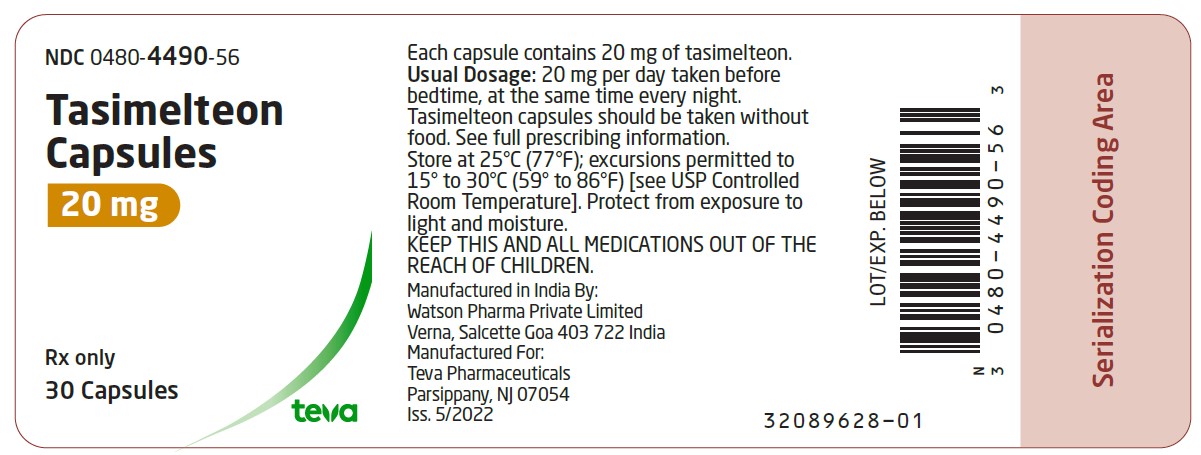
PACKAGE LABEL.PRINCIPAL DISPLAY PANEL NDC 0480-4490-56 Tasimelteon Capsules 20 mg Rx only 30 Capsules taismelteon
Medicaid utilization by pack size
Medicare Part D spend CMS · PART D · 2026 (Q1)
Reported adverse events (FAERS)
Top reported reactions
Reporter sex
Serious outcomes
Where does this data come from?
About this NDC listing & data coverage
What "drug for further processing" means
FDA lists this package under the "drug for further processing" marketing category: Teva Pharmaceuticals, Inc. supplies it to other companies for further processing or repackaging (blister cards that are later repackaged or co-packaged are a common example). The units themselves are a finished dosage form — which is why pricing or Medicaid data can still appear — but this exact package code may not be the presentation a retail pharmacy dispenses.
What data is (and isn’t) available for this NDC — tap to expand
| NDC identity (package / product / labeler codes) | ✓ Available |
| Labeler | ✓ Available |
| Product & package description | ✓ Available |
| Marketing category & status | ✓ Available |
| Active ingredient / dosage form / route | ✓ Available |
| FDA label (SPL via DailyMed) | ✓ Available |
| Package photos | ✓ Available |
| Inactive ingredients (structured) | ✓ Available |
| NADAC pharmacy acquisition price (CMS) | — Not published for this NDC CMS publishes NADAC only for NDCs reported in its retail-pharmacy survey. |
| Orange Book / therapeutic-equivalence data | — Not published for this NDC Applies only to products approved under an NDA/ANDA; many listings are out of scope. |
| HCPCS J-code billing crosswalk | — Not published for this NDC Most self-administered / retail products have no J-code — that is normal. |
| Medicaid utilization (CMS SDUD) | — Not published for this NDC CMS reports utilization only for NDCs with Medicaid claims above its privacy threshold. |