
fomepizole 1 g/mL Injection, Solution, 1 vial — NDC 0517-0710-01 (Billing 00517-0710-01)
This is a package of 1 vial of fomepizole 1 g/mL Injection, Solution from American Regent, Inc., marketed since Jul 2018 and currently FDA-listed. It is the main listing for this product, which comes in 2 package sizes.
NDC database record
One package, one record: these facts belong to NDC 0517-0710-01 alone.
- Record
- FDA NDC Directory package listing · Human prescription drug
- Code segments
- 0517 labeler · 0710 product · 01 package
- Package marketed since
- Jul 16, 2018
- Sample package
- No — commercial package
- Listing certified through
- Dec 31, 2026
- Barcode (UPC)
- 0300000000001
- FDA record last changed
- Oct 2, 2026
Identity & classification
Regulatory identifiers FDA, NLM and CMS codes for this package
Drug-database identifiers Medi-Span GPI and First Databank GCN / HICL / AHFS classification
- GSN (GCN sequence number): 037000
- GCN: 07565
- GPI-14 (Medi-Span): 93000045002010
- HICL (First Databank): 016908
- AHFS class code: 91:04.08.00
- RxCUI (RxNorm): 310414
Where does this data come from?
- FDA openFDA NDC Directory · synced Oct 1, 2026
- FDA label on DailyMed · label index refreshed Oct 6, 2026
- RxNorm (NLM RxNav) · catalog refreshed Oct 1, 2026
- Medi-Span GPI (licensed)
- First Databank (licensed) · refreshed Oct 1, 2026
RxNorm drug class
This medicine belongs to the Antidote class.
Where does this data come from?
- RxClass (NLM) · catalog refreshed Oct 1, 2026
Clinical
- It's an antidote for antifreeze (ethylene glycol) or methanol poisoning, including when someone is only suspected of swallowing them. It stops the body from turning these into the...
- It's given through an IV by healthcare staff, usually in a hospital. Each dose is diluted and given slowly over about 30 minutes, with repeat doses over time. Your team decides the...
- Headache, nausea, dizziness, drowsiness and a metallic taste are the most common. Tell your nurse or doctor about a rash, vision changes, seizures, a very fast or slow heartbeat, o...
- No. Alcohol and fomepizole slow each other's clearance from the body. Ask your care team about any other medicines you take as well.
Patient education
Supplement & herbal interactions
Where does this data come from?
- MedlinePlus (NLM) · refreshed Oct 1, 2026
- FDA label on DailyMed · label index refreshed Oct 6, 2026
Ask a licensed pharmacist directly — free, answered by our team.
Pricing
A drug doesn't have one price. Each row is a different public payment system, and none is what you'd pay at the counter — that depends on your insurance. The ⓘ on each row explains what it measures.
| Price system | Per mL | Per package |
|---|---|---|
| Retail pharmacies payNADAC · weekly | Not in the retail survey — common for institutional, discontinued, or low-volume packs. | |
| Medicaid paysCMS SDUD · 12 mo | No recent Medicaid claims on file for this NDC — rare and low-volume NDCs are suppressed in the public data. | |
| Medicare drug plans payPart D · quarterly | No Part D plan price is available for this NDC in our data. | |
| Medicare Part B allowsASP · J1451 | No ASP payment limit on file for J1451 this quarter. | |
Where does this data come from?
- CMS NADAC weekly file
- CMS ASP pricing files · refreshed Sep 20, 2026
- CMS Medicaid State Drug Utilization Data · refreshed Oct 6, 2026
- CMS Part D plan pricing files · refreshed Sep 24, 2026
- VA National Acquisition Center price file
Billing & reimbursement
Where does this data come from?
- CMS ASP NDC-HCPCS crosswalk · refreshed Sep 22, 2026
- DMEPDAC NDC-HCPCS crosswalk
- openFDA NSDE billing units · refreshed Sep 7, 2026
Packaging — all sizes for this product
| Package NDC | Description | Marketing start | Marketing end | Status |
|---|---|---|---|---|
| 00517-0710-88 0517-0710-88 | 1 VIAL in 1 CARTON / 1.5 mL in 1 VIAL | 2020-07-31 | — | Active |
| 00517-0710-01 You're viewing this Main listing | 1 VIAL in 1 CARTON / 1.5 mL in 1 VIAL | 2018-07-16 | — | Active |
Pack size FAQ
What quantity is in this package?
How does this package differ from NDC 00517-0710-88?
What NDC number is used to bill for this package of fomepizole 1 g/mL Injection, Solution?
Therapeutic equivalents
| Product | Labeler | Pack | NADAC/unit | TE | Status | Price vs. this |
|---|---|---|---|---|---|---|
| fomepizole 1 g/mLthis 00517-0710-01 | American | 1 vial | — | AP | FDA listed | — |
| Fomepizole 1.5 g/1.5mL 25021-0829-02 | Sagent | 1 vial | — | AP | FDA listed | — |
| Fomepizole 1 g/mL 67457-0211-02 | Mylan | 1 vial | — | AP | FDA listed | — |
| Fomepizole 1 g/mL 68083-0510-01 | Gland | 1 vial | — | AP | FDA listed | — |
| Fomepizole 1 g/mL 68475-0510-01 | Navinta | 1 vial | — | AP | FDA listed | — |
| Fomepizole 1 g/mL 70710-1478-01 | Zydus | 1 vial | — | AP | FDA listed | — |
Where does this data come from?
- FDA openFDA NDC Directory · synced Oct 1, 2026
- FDA Orange Book · refreshed Oct 3, 2026
- CMS NADAC weekly file
Availability & generic status
This product is an FDA-approved generic. Other versions of the same drug are listed under Therapeutic equivalents, least expensive first.
Where does this data come from?
- FDA Orange Book · refreshed Oct 3, 2026
Inactive Ingredients / Excipients
Inactive ingredients, also called excipients, are components of the drug product other than the active ingredient. They may include fillers, dyes, coatings, preservatives, flavors, or other formulation ingredients.
🧪 Avoiding an ingredient? See Fomepizole inactive ingredients by manufacturer: every current product's list side by side, so you can ask your pharmacy for the version that does not list it.
Where does this data come from?
IACT rows and label-wide narrative are kept separate; availability and product-level specificity depend on the submitted label.- FDA label on DailyMed · label index refreshed Oct 6, 2026
- FDA openFDA NDC Directory · synced Oct 1, 2026
Inactive ingredient FAQ
Are inactive ingredients the same for every manufacturer?
Why might an inactive ingredient be missing?
Can inactive ingredients matter?
Manufacturer & labeler
More NDCs from American Regent, Inc. labeler code 00517
- PROVAYBLUE methylene blue 5 mg/mL Injection NDC 0517-0381-05
- ESTRADIOL VALERATE 20 mg/mL Injection, Solution NDC 0517-0420-01
- ESTRADIOL VALERATE 40 mg/mL Injection, Solution NDC 0517-0440-01
- Injectafer Ferric Carboxymaltose Injection 50 mg/mL Injection, Solution NDC 0517-0602-01
- Injectafer Ferric Carboxymaltose 50 mg/mL Injection, Solution NDC 0517-0620-01
- Injectafer Ferric Carboxymaltose Injection 50 mg/mL Injection, Solution NDC 0517-0650-01
- Betamethasone Sodium Phosphate and Betamethasone Acetate 3 mg/mL; 3 mg/mL Injection, Suspension NDC 0517-0720-01
- Nicardipine Hydrochloride 2.5 mg/mL Injection, Solution NDC 0517-0735-10
- Methylergonovine Maleate .2 mg/mL Injection, Solution NDC 0517-0740-20
- Betamethasone Sodium Phosphate and Betamethasone Acetate 3 mg/mL; 3 mg/mL Injection, Suspension NDC 0517-0791-01
- Betamethasone Sodium Phosphate and Betamethasone Acetate 3 mg/mL; 3 mg/mL Injection, Suspension NDC 0517-0799-01
- Hydralazine Hydrochloride 20 mg/mL Injection, Solution NDC 0517-0901-25
Where does this data come from?
- FDA openFDA NDC Directory · synced Oct 1, 2026
- Drugs@FDA
Full prescribing information FDA SPL
🎯 Indications and Usage ▾
INDICATIONS AND USAGE Fomepizole injection is indicated as an antidote for ethylene glycol (such as antifreeze) or methanol poisoning, or for use in suspected ethylene glycol or methanol ingestion, either alone or in combination with hemodialysis (see DOSAGE AND ADMINISTRATION ).
⏱️ Dosage and Administration ▾
DOSAGE AND ADMINISTRATION Do not use polycarbonate syringes or polycarbonate-containing needles (including polycarbonate filter needles) when diluting or administering fomepizole injection. Fomepizole can interact with polycarbonate, compromising the integrity of the syringe and/or needle component containing polycarbonate. Treatment Guidelines: If ethylene glycol or methanol poisoning is left untreated, the natural progression of the poisoning leads to accumulation of toxic metabolites, including glycolic and oxalic acids (ethylene glycol intoxication) and formic acid (methanol intoxication).
These metabolites can induce metabolic acidosis, nausea/vomiting, seizures, stupor, coma, calcium oxaluria, acute tubular necrosis, blindness, and death. The diagnosis of these poisonings may be difficult because ethylene glycol and methanol concentrations diminish in the blood as they are metabolized to their respective metabolites. Hence, both ethylene glycol and methanol concentrations and acid base balance, as determined by serum electrolyte (anion gap) and/or arterial blood gas analysis, should be frequently monitored and used to guide treatment.
Treatment consists of blocking the formation of toxic metabolites using inhibitors of alcohol dehydrogenase, such as fomepizole injection, and correction of metabolic abnormalities. In patients with high ethylene glycol or methanol concentrations (≥ 50 mg/dL), significant metabolic acidosis, or renal failure, hemodialysis should be considered to remove ethylene glycol or methanol and the respective toxic metabolites of these alcohols. Treatment with Fomepizole Injection : Begin fomepizole injection treatment immediately upon suspicion of ethylene glycol or methanol ingestion based on patient history and/or anion gap metabolic acidosis, increased osmolar gap, visual disturbances, or oxalate crystals in the urine, OR a documented serum ethylene glycol or methanol concentration greater than 20 mg/dL.
Hemodialysis : Hemodialysis should be considered in addition to fomepizole injection in the case of renal failure, significant or worsening metabolic acidosis, or a measured ethylene glycol or methanol concentration of greater than or equal to 50 mg/dL. Patients should be dialyzed to correct metabolic abnormalities and to lower the ethylene glycol concentrations below 50 mg/dL. Discontinuation of Fomepizole Injection Treatment : Treatment with fomepizole injection may be discontinued when ethylene glycol or methanol concentrations are undetectable or have been reduced below 20 mg/dL, and the patient is asymptomatic with normal pH.
Dosing of Fomepizole Injection A loading dose of 15 mg/kg should be administered, followed by doses of 10 mg/kg every 12 hours for 4 doses, then 15 mg/kg every 12 hours thereafter until ethylene glycol or methanol concentrations are undetectable or have been reduced below 20 mg/dL, and the patient is asymptomatic with normal pH. All doses should be administered as a slow intravenous infusion over 30 minutes (see Administration ). Dosage with Renal Dialysis : Fomepizole injection is dialyzable and the frequency of dosing should be increased to every 4 hours during hemodialysis.
Fomepizole Injection Dosing in Patients Requiring Hemodialysis DOSE AT THE BEGINNING OF HEMODIALYSIS DOSING DURING HEMODIALYSIS If <6 hours since last fomepizole injection dose If ≥6 hours since last fomepizole injection dose Do not administer dose Administer next scheduled dose Dose every 4 hours DOSING AT THE TIME HEMODIALYSIS IS COMPLETED Time between last dose and the end of hemodialysis <1 hour Do not administer dose at the end of hemodialysis 1–3 hours Administer 1/2 of next scheduled dose >3 hours Administer next scheduled dose MAINTENANCE DOSING OFF HEMODIALYSIS Give next scheduled dose 12 hours from last dose administered Administration : Fomepizole injection solidifies at temperatures less than 25° C (77° F).
If the fomepizole injection solution has become solid in the vial, the solution… [Excerpted — this section continues on DailyMed.]
⛔ Contraindications ▾
CONTRAINDICATIONS Fomepizole injection should not be administered to patients with a documented serious hypersensitivity reaction to fomepizole injection or other pyrazoles.
🤒 Adverse Reactions ▾
ADVERSE REACTIONS The most frequent adverse events reported as drug-related or unknown relationship to study drug in the 78 patients and 63 normal volunteers who received fomepizole injection were headache (14%), nausea (11%), and dizziness, increased drowsiness, and bad taste/metallic taste (6% each). All other adverse events in this population were reported in approximately 3% or fewer of those receiving fomepizole and were as follows: Body as a Whole: Abdominal pain, fever, multiorgan system failure, pain during fomepizole injection, inflammation at injection site, lumbalgia/backache, hangover Cardiovascular: Sinus bradycardia/bradycardia, phlebosclerosis, tachycardia, phlebitis, shock, hypotension Gastrointestinal: Vomiting, diarrhea, dyspepsia, heartburn, decreased appetite, transient transaminitis Hemic/Lymphatic: Eosinophilia/hypereosinophilia, lymphangitis, disseminated intravascular coagulation, anemia Nervous: Lightheadedness, seizure, agitation, feeling drunk, facial flush, vertigo, nystagmus, anxiety, “felt strange”, decreased environmental awareness Respiratory: Hiccups, pharyngitis Skin/Appendages: Application site reaction, rash Special Senses: Abnormal smell, speech/visual disturbances, transient blurred vision, roar in ear Urogenital: Anuria
🔄 Drug Interactions ▾
Drug Interactions Drug Interactions Oral doses of fomepizole (10-20 mg/kg), via alcohol dehydrogenase inhibition, significantly reduced the rate of elimination of ethanol (by approximately 40%) given to healthy volunteers in moderate doses. Similarly, ethanol decreased the rate of elimination of fomepizole (by approximately 50%) by the same mechanism. Reciprocal interactions may occur with concomitant use of fomepizole and drugs that increase or inhibit the cytochrome P450 system (e.g., phenytoin, carbamazepine, cimetidine, ketoconazole), though this has not been studied.
🤰 Pregnancy ▾
Pregnancy Pregnancy Category C: Animal reproduction studies have not been conducted with fomepizole. It is also not known whether fomepizole can cause fetal harm when administered to pregnant women or can affect reproduction capacity. Fomepizole should be given to pregnant women only if clearly needed.
🧒 Pediatric Use ▾
Pediatric Use Safety and effectiveness in pediatric patients have not been established.
🧓 Geriatric Use ▾
Geriatric Use Safety and effectiveness in geriatric patients have not been established.
🆘 Overdosage ▾
OVERDOSAGE Nausea, dizziness, and vertigo were noted in healthy volunteers receiving 50 and 100 mg/kg doses of fomepizole (at plasma concentrations of 290-520 µmol/L, 23.8-42.6 mg/L). These doses are 3-6 times the recommended dose. This dose-dependent CNS effect was short-lived in most subjects and lasted up to 30 hours in one subject. Fomepizole is dialyzable, and hemodialysis may be useful in treating cases of overdosage.
🧬 Clinical Pharmacology ▾
CLINICAL PHARMACOLOGY Mechanism of Action : Fomepizole is a competitive inhibitor of alcohol dehydrogenase. Alcohol dehydrogenase catalyzes the oxidation of ethanol to acetaldehyde. Alcohol dehydrogenase also catalyzes the initial steps in the metabolism of ethylene glycol and methanol to their toxic metabolites.
Ethylene glycol, the main component of most antifreezes and coolants, is metabolized to glycoaldehyde, which undergoes subsequent sequential oxidations to yield glycolate, glyoxylate, and oxalate. Glycolate and oxalate are the metabolic by-products primarily responsible for the metabolic acidosis and renal damage seen in ethylene glycol toxicosis. The lethal dose of ethylene glycol in humans is approximately 1.4 mL/kg.
Methanol, the main component of windshield wiper fluid, is slowly metabolized via alcohol dehydrogenase to formaldehyde with subsequent oxidation via formaldehyde dehydrogenase to yield formic acid. Formic acid is primarily responsible for the metabolic acidosis and visual disturbances (e.g., decreased visual acuity and potential blindness) associated with methanol poisoning. A lethal dose of methanol in humans is approximately 1-2 mL/kg.
Fomepizole has been shown in vitro to block alcohol dehydrogenase enzyme activity in dog, monkey, and human liver. The concentration of fomepizole at which alcohol dehydrogenase is inhibited by 50% in vitro is approximately 0.1 µmol/L. In a study of dogs given a lethal dose of ethylene glycol, three animals each were administered fomepizole, ethanol, or left untreated (control group).
The three animals in the untreated group became progressively obtunded, moribund, and died. At necropsy, all three dogs had severe renal tubular damage. Fomepizole or ethanol, given 3 hours after ethylene glycol ingestion, attenuated the metabolic acidosis and prevented the renal tubular damage associated with ethylene glycol intoxication.
Several studies have demonstrated that fomepizole plasma concentrations of approximately 10 µmol/L (0.82 mg/L) in monkeys are sufficient to inhibit methanol metabolism to formate, which is also mediated by alcohol dehydrogenase. Based on these results, concentrations of fomepizole in humans in the range of 100 to 300 µmol/L (8.6-24.6 mg/L) have been targeted to assure adequate plasma concentrations for the effective inhibition of alcohol dehydrogenase. In healthy volunteers, oral doses of fomepizole (10-20 mg/kg) significantly reduced the rate of elimination of moderate doses of ethanol, which is also metabolized through the action of alcohol dehydrogenase (see PRECAUTIONS, Drug Interactions ).
Pharmacokinetics The plasma half-life of fomepizole injection varies with dose, even in patients with normal renal function, and has not been calculated. Distribution : After intravenous infusion, fomepizole rapidly distributes to total body water. The volume of distribution is between
0.6 L/kg and
1.02L/kg. Metabolism : In healthy volunteers, only 1-3.5% of the administered dose of fomepizole (7-20 mg/kg oral and IV) was excreted unchanged in the urine, indicating that metabolism is the major route of elimination. In humans, the primary metabolite of fomepizole is 4-carboxypyrazole (approximately 80-85% of administered dose), which is excreted in the urine.
Other metabolites of fomepizole observed in the urine are 4-hydroxymethylpyrazole and the N-glucuronide conjugates of 4-carboxypyrazole and 4-hydroxymethylpyrazole. Excretion: The elimination of fomepizole is best characterized by Michaelis-Menten kinetics after acute doses, with saturable elimination occurring at therapeutic blood concentrations [100-300 µmol/L, 8.2-24.6 mg/L]. With multiple doses, fomepizole rapidly induces its own metabolism via the cytochrome P450 mixed-function oxidase system, which produces a significant increase in the elimination rate after about 30-40 hours.
After enzyme induction, elimination follows first-order kinetics. Special Populations: Geriatric Use Fomepizole injection has… [Excerpted — this section continues on DailyMed.]
📦 How Supplied / Storage and Handling ▾
HOW SUPPLIED Fomepizole is supplied as a sterile, preservative-free solution for intravenous use as: Supplied in single vial cartons. Each vial contains 1.5 mL (1 g/mL) of fomepizole. NDC 0517-0710-88 Store at 20° to 25°C (68° to 77°F) [See USP Controlled Room Temperature]. Manufactured by: American Regent, Inc. Shirley, NY 11967 RQ1088-B Revised: November 2020 Novaplus is a registered trademark of Vizient, Inc. Novaplus Logo
📋 Description ▾
DESCRIPTION Fomepizole injection is a competitive inhibitor of alcohol dehydrogenase. The chemical name of fomepizole is 4-methylpyrazole. It has the molecular formula C 4 H 6 N 2 and a molecular weight of 82.1.
The structural formula is: It is a clear to yellow liquid at room temperature. Its melting point is 25° C (77° F) and it may present in a solid form at room temperature. Fomepizole is soluble in water and very soluble in ethanol, diethyl ether, and chloroform.
Each vial contains 1.5 mL (1 g/mL) of fomepizole. Image from Drug Label Content
⚠️ Precautions ▾
PRECAUTIONS General Fomepizole injection should not be given undiluted or by bolus injection. Venous irritation and phlebosclerosis were noted in two of six normal volunteers given bolus injections (over 5 minutes) of fomepizole at a concentration of 25 mg/mL. Do not use polycarbonate syringes or polycarbonate-containing needles (including polycarbonate filter needles) when diluting or administering fomepizole injection.
Fomepizole can interact with polycarbonate, compromising the integrity of the syringe and/or needle component containing polycarbonate. Minor allergic reactions (mild rash, eosinophilia) have been reported in a few patients receiving fomepizole (see ADVERSE REACTIONS ). Therefore, patients should be monitored for signs of allergic reactions.
Laboratory Tests In addition to specific antidote treatment with fomepizole, patients intoxicated with ethylene glycol or methanol must be managed for metabolic acidosis, acute renal failure (ethylene glycol), adult respiratory distress syndrome, visual disturbances (methanol), and hypocalcemia. Fluid therapy and sodium bicarbonate administration are potential supportive therapies. In addition, potassium and calcium supplementation and oxygen administration are usually necessary.
Hemodialysis is necessary in the anuric patient, or in patients with severe metabolic acidosis or azotemia (see DOSAGE AND ADMINISTRATION ). Treatment success should be assessed by frequent measurements of blood gases, pH, electrolytes, BUN, creatinine, and urinalysis, in addition to other laboratory tests as indicated by individual patient conditions. At frequent intervals throughout the treatment, patients poisoned with ethylene glycol should be monitored for ethylene glycol concentrations in serum and urine, and the presence of urinary oxalate crystals.
Similarly, serum methanol concentrations should be monitored in patients poisoned with methanol. Electrocardiography should be performed because acidosis and electrolyte imbalances can affect the cardiovascular system. In the comatose patient, electroencephalography may also be required.
In addition, hepatic enzymes and white blood cell counts should be monitored during treatment, as transient increases in serum transaminase concentrations and eosinophilia have been noted with repeated fomepizole dosing. Drug Interactions Drug Interactions Oral doses of fomepizole (10-20 mg/kg), via alcohol dehydrogenase inhibition, significantly reduced the rate of elimination of ethanol (by approximately 40%) given to healthy volunteers in moderate doses. Similarly, ethanol decreased the rate of elimination of fomepizole (by approximately 50%) by the same mechanism.
Reciprocal interactions may occur with concomitant use of fomepizole and drugs that increase or inhibit the cytochrome P450 system (e.g., phenytoin, carbamazepine, cimetidine, ketoconazole), though this has not been studied. Carcinogenesis, Mutagenesis, Impairment of Fertility There have been no long-term studies performed in animals to evaluate carcinogenic potential. There was a positive Ames test result in the Escherichia coli tester strain WP2uvrA and the Salmonella typhimurium tester strain TA102 in the absence of metabolic activation.
There was no evidence of a clastogenic effect in the in vivo mouse micronucleus assay. In rats, fomepizole (110 mg/kg) administered orally for 40 to 42 days resulted in decreased testicular mass (approximately 8% reduction). This dose is approximately 0.6 times the human maximum daily exposure based on surface area (mg/m2).
This reduction was similar for rats treated with either ethanol or fomepizole alone. When fomepizole was given in combination with ethanol, the decrease in testicular mass was significantly greater (approximately 30% reduction) compared to those rats treated exclusively with fomepizole or ethanol. Pregnancy Pregnancy Category C: Animal reproduction studies have not been conducted with fomepizole.
It is also not known whether fomepizole can ca… [Excerpted — this section continues on DailyMed.]
🍼 Nursing Mothers ▾
Nursing Mothers It is not known whether fomepizole is excreted in human milk. Because many drugs are excreted in human milk, caution should be exercised when fomepizole is administered to a nursing woman.
🧬 Pharmacokinetics ▾
Pharmacokinetics The plasma half-life of fomepizole injection varies with dose, even in patients with normal renal function, and has not been calculated. Distribution : After intravenous infusion, fomepizole rapidly distributes to total body water. The volume of distribution is between
0.6 L/kg and
1.02L/kg. Metabolism : In healthy volunteers, only 1-3.5% of the administered dose of fomepizole (7-20 mg/kg oral and IV) was excreted unchanged in the urine, indicating that metabolism is the major route of elimination. In humans, the primary metabolite of fomepizole is 4-carboxypyrazole (approximately 80-85% of administered dose), which is excreted in the urine.
Other metabolites of fomepizole observed in the urine are 4-hydroxymethylpyrazole and the N-glucuronide conjugates of 4-carboxypyrazole and 4-hydroxymethylpyrazole. Excretion: The elimination of fomepizole is best characterized by Michaelis-Menten kinetics after acute doses, with saturable elimination occurring at therapeutic blood concentrations [100-300 µmol/L, 8.2-24.6 mg/L]. With multiple doses, fomepizole rapidly induces its own metabolism via the cytochrome P450 mixed-function oxidase system, which produces a significant increase in the elimination rate after about 30-40 hours.
After enzyme induction, elimination follows first-order kinetics. Special Populations:
🔬 Clinical Studies ▾
Clinical Studies The efficacy of fomepizole in the treatment of ethylene glycol and methanol intoxication was studied in two prospective, U.S. clinical trials without concomitant control groups. Fourteen of 16 patients in the ethylene glycol trial and 7 of 11 patients in the methanol trial underwent hemodialysis because of severe intoxication (see DOSAGE AND ADMINISTRATION). All patients received fomepizole shortly after admission.
The results of these two studies provide evidence that fomepizole blocks ethylene glycol and methanol metabolism mediated by alcohol dehydrogenase in the clinical setting. In both studies, plasma concentrations of toxic metabolites of ethylene glycol and methanol failed to rise in the initial phases of treatment. The relationship to fomepizole therapy, however, was confounded by hemodialysis and significant blood ethanol concentrations in many of the patients.
Nevertheless, in the post-dialysis period(s), when ethanol concentrations were insignificant and the concentrations of ethylene glycol or methanol were > 20 mg/dL, the administration of fomepizole injection alone blocked any rise in glycolate or formate concentrations, respectively. In a separate French trial, 5 patients presented with ethylene glycol concentrations ranging from 46.5 to 345 mg/dL, insignificant ethanol blood concentrations, and normal renal function. These patients were treated with fomepizole alone without hemodialysis, and none developed signs of renal injury.
📄 Carcinogenesis, Mutagenesis, Impairment of Fertility ▾
Carcinogenesis, Mutagenesis, Impairment of Fertility There have been no long-term studies performed in animals to evaluate carcinogenic potential. There was a positive Ames test result in the Escherichia coli tester strain WP2uvrA and the Salmonella typhimurium tester strain TA102 in the absence of metabolic activation. There was no evidence of a clastogenic effect in the in vivo mouse micronucleus assay.
In rats, fomepizole (110 mg/kg) administered orally for 40 to 42 days resulted in decreased testicular mass (approximately 8% reduction). This dose is approximately 0.6 times the human maximum daily exposure based on surface area (mg/m2). This reduction was similar for rats treated with either ethanol or fomepizole alone.
When fomepizole was given in combination with ethanol, the decrease in testicular mass was significantly greater (approximately 30% reduction) compared to those rats treated exclusively with fomepizole or ethanol.
📄 Package Label / Principal Display Panel ▾
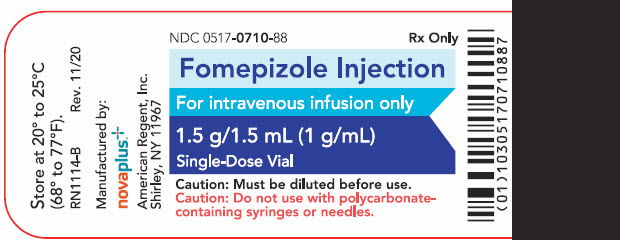
PACKAGE LABEL.PRINCIPAL DISPLAY PANEL NDC 0517-0710-88 Rx Only Fomepizole Injection For intravenous infusion only 1.5 g/1.5mL (1 g/mL) Single-Dose Vial Caution: Must be diluted before use. Caution: Do not use with polycarbonate-containing syringes or needles. NDC 0517-0710-88 Fomepizole Injection For intravenous infusion only 1.5 g/1.5mL (1 g/mL) One Single-Dose Vial Caution: Must be diluted before use.
Caution: Do not use with polycarbonate-containing syringes or needles. Rx Only Manufactured by: American Regent, Inc. Shirley, NY 11967 Novaplus is a registered trademark of Vizient, Inc.
Container Label - Novaplus Novaplus logo in color Carton Labeling - Novaplus
Serialization Label Serialization Label for Novaplus
About this NDC listing & data coverage
What data is (and isn’t) available for this NDC — tap to expand
| NDC identity (package / product / labeler codes) | ✓ Available |
| Labeler | ✓ Available |
| Product & package description | ✓ Available |
| Marketing category & status | ✓ Available |
| Active ingredient / dosage form / route | ✓ Available |
| FDA label (SPL via DailyMed) | ✓ Available |
| Package photos | ✓ Available |
| Inactive ingredients (structured) | — Not published for this NDC The labeler did not submit a structured excipient list, or no SPL is available. |
| NADAC pharmacy acquisition price (CMS) | — Not published for this NDC CMS publishes NADAC only for NDCs reported in its retail-pharmacy survey. |
| Orange Book / therapeutic-equivalence data | ✓ Available |
| HCPCS J-code billing crosswalk | ✓ Available |
| Medicaid utilization (CMS SDUD) | — Not published for this NDC CMS reports utilization only for NDCs with Medicaid claims above its privacy threshold. |