
Amoxapine 100 mg Tablet, 46,152-count — NDC 0591-5715-77 (Billing 00591-5715-77)
This is a package of 46,152 tablets of Amoxapine 100 mg Tablet from Actavis Pharma, Inc., marketed since Aug 1992 and currently FDA-listed.
NDC database record
One package, one record: these facts belong to NDC 0591-5715-77 alone.
- Record
- FDA NDC Directory package listing · Drug for further processing
- Code segments
- 0591 labeler · 5715 product · 77 package
- Package marketed since
- Jul 31, 2024
- Package marketing ended
- Jul 31, 2027
- Barcode (UPC-A, from the NDC)
- 3 0591571577 4
- FDA record last changed
- Oct 2, 2026
Identity & classification
Regulatory identifiers FDA, NLM and CMS codes for this package
Drug-database identifiers Medi-Span GPI and First Databank GCN / HICL / AHFS classification
- GSN (GCN sequence number): 046081
- GCN: 16557
- GPI-14 (Medi-Span): 58200020000315
- HICL (First Databank): 001648
- AHFS class code: 28:16.04.28
Where does this data come from?
- FDA openFDA NDC Directory · synced Oct 1, 2026
- FDA label on DailyMed · label index refreshed Oct 5, 2026
- RxNorm (NLM RxNav) · catalog refreshed Oct 1, 2026
- Medi-Span GPI (licensed)
- First Databank (licensed) · refreshed Oct 1, 2026
Clinical
- It treats depression, including depression with anxiety or agitation. It's used for several types, from reactive depression to psychotic depression. Your prescriber chose it based...
- Some people feel an effect within 4 to 7 days. For most who respond, it shows within about two weeks. Keep taking it as directed, and don't stop without talking to your prescriber.
- Take it by mouth exactly as prescribed. You may start with two or three doses a day. Later, you may be able to take it once at bedtime, which also helps with drowsiness.
- The most common are drowsiness, dry mouth, constipation and blurred vision. Call your doctor if you have seizures, unusual muscle movements, high fever with stiffness, a rash, or t...
Patient education
Supplement & herbal interactions
Some supplements/herbs that may interact with Amoxapine — tap one for details:
Amoxapine may be associated with lower levels of 3 nutrients — worth a chat with your pharmacist, not a cause for alarm.
Where does this data come from?
- MedlinePlus (NLM) · refreshed Oct 1, 2026
- FDA label on DailyMed · label index refreshed Oct 5, 2026
Ask a licensed pharmacist directly — free, answered by our team.
Pricing
A drug doesn't have one price. Each row is a different public payment system, and none is what you'd pay at the counter — that depends on your insurance. The ⓘ on each row explains what it measures.
| Price system | Per each | Per package |
|---|---|---|
| Retail pharmacies payNADAC · weekly | Not in the retail survey — common for institutional, discontinued, or low-volume packs. | |
| Medicaid paysCMS SDUD · 12 mo | No recent Medicaid claims on file for this NDC — rare and low-volume NDCs are suppressed in the public data. | |
| Medicare drug plans payPart D · quarterly | No Part D plan price is available for this NDC in our data. | |
Where does this data come from?
- CMS NADAC weekly file
- CMS ASP pricing files · refreshed Sep 20, 2026
- CMS Medicaid State Drug Utilization Data · refreshed Oct 5, 2026
- CMS Part D plan pricing files · refreshed Sep 24, 2026
- VA National Acquisition Center price file
Packaging — all sizes for this product
| Package NDC | Description | Marketing start | Marketing end | Status |
|---|---|---|---|---|
| 00591-5715-01 0591-5715-01 Main listing | 100 TABLET in 1 BOTTLE, PLASTIC | 1992-08-28 | — | Active |
| 00591-5715-77 You're viewing this | 46152 TABLET in 1 CONTAINER | — | — | Active |
You're viewing the largest of 2 pack sizes for this product.
Pack size FAQ
What quantity is in this package?
How does this package differ from NDC 00591-5715-01?
What NDC number is used to bill for this package of Amoxapine 100 mg Tablet?
Therapeutic equivalents
| Product | Labeler | Pack | NADAC/unit | TE | Status | Price vs. this |
|---|---|---|---|---|---|---|
| Amoxapine 100 mgthis 00591-5715-77 | Actavis | 46152 tablets | — | — | FDA listed | — |
| Amoxapine 100 mg 62135-0702-90 | Chartwell | 90 tablets | — | AB | FDA listed | — |
Where does this data come from?
- FDA openFDA NDC Directory · synced Oct 1, 2026
- FDA Orange Book · refreshed Oct 3, 2026
- CMS NADAC weekly file
Availability & generic status
The FDA lists approved generic versions of this medicine, but that does not always mean a pharmacy can get one today. Patent rules, launch agreements, supply and pricing can affect when generics actually arrive.
Where does this data come from?
- FDA Orange Book · refreshed Oct 3, 2026
What it looks like
Where does this data come from?
- FDA label on DailyMed · label index refreshed Oct 5, 2026
Inactive Ingredients / Excipients
Inactive ingredients, also called excipients, are components of the drug product other than the active ingredient. They may include fillers, dyes, coatings, preservatives, flavors, or other formulation ingredients.
🧪 Avoiding an ingredient? See Amoxapine inactive ingredients by manufacturer: every current product's list side by side, so you can ask your pharmacy for the version that does not list it.
💡 Tap an ingredient (hover on desktop) to see what it is and why it’s used.
-
UNII L11K75P92J
A mineral salt made from calcium and phosphate. It acts as a filler and binder in tablets to add bulk and help hold the medicine together in solid form.
-
UNII L06K8R7DQK
A synthetic blue dye approved by the FDA for use in medications and foods. It serves as a colorant to make pills and liquids visually distinct and easier to identify.
-
UNII 70097M6I30
Magnesium stearate is a salt made from magnesium and stearic acid, a fatty substance. It's used in tablets and capsules as a lubricant and glidant to help ingredients flow smoothly during manufacturing and prevent sticking.
-
UNII O8232NY3SJ
A plant-based carbohydrate derived from corn kernels. It acts as a filler to add bulk, a binder to hold ingredients together, and a disintegrant to help the tablet break apart in your stomach for absorption.
-
UNII 4ELV7Z65AP
Stearic acid is a fatty acid derived from plant or animal sources. It acts as a binder and lubricant in tablets and capsules, helping them hold together and flow smoothly during manufacturing.
5 inactive ingredients listed in the exact product block matched to this NDC.
Where does this data come from?
ingredient classCode="IACT" elements from the exact product block matched by this NDC. Label-section narrative from DailyMed / the openFDA label index is shown separately when available.- FDA label on DailyMed · label index refreshed Oct 5, 2026
- FDA openFDA NDC Directory · synced Oct 1, 2026
Inactive ingredient FAQ
Are inactive ingredients the same for every manufacturer?
Why might an inactive ingredient be missing?
Can inactive ingredients matter?
Manufacturer & labeler
More NDCs from Actavis Pharma, Inc. labeler code 00591
- Sulindac 200 mg Tablet NDC 0591-5660-00
- Sulindac 150 mg Tablet NDC 0591-5661-00
- Minocycline Hydrochloride 50 mg Capsule NDC 0591-5694-00
- Minocycline Hydrochloride 100 mg Capsule NDC 0591-5695-00
- Amoxapine 25 mg Tablet NDC 0591-5713-01
- Amoxapine 50 mg Tablet NDC 0591-5714-01
- Amoxapine 150 mg Tablet NDC 0591-5716-30
- Atenolol and Chlorthalidone 50 mg; 25 mg Tablet NDC 0591-5782-00
- Atenolol and Chlorthalidone 100 mg; 25 mg Tablet NDC 0591-5783-00
Where does this data come from?
- FDA openFDA NDC Directory · synced Oct 1, 2026
- Drugs@FDA
Full FDA label FDA SPL
🚨 Boxed Warning ▾
Suicidality and Antidepressant Drugs Antidepressants increased the risk compared to placebo of suicidal thinking and behavior (suicidality) in children, adolescents, and young adults in short-term studies of major depressive disorder (MDD) and other psychiatric disorders. Anyone considering the use of amoxapine or any other antidepressant in a child, adolescent, or young adult must balance this risk with the clinical need. Short-term studies did not show an increase in the risk of suicidality with antidepressants compared to placebo in adults beyond age 24; there was a reduction in risk with antidepressants compared to placebo in adults aged 65 and older.
Depression and certain other psychiatric disorders are themselves associated with increases in the risk of suicide. Patients of all ages who are started on antidepressant therapy should be monitored appropriately and observed closely for clinical worsening, suicidality, or unusual changes in behavior. Families and caregivers should be advised of the need for close observation and communication with the prescriber.
Amoxapine is not approved for use in pediatric patients. (See Warnings: Clinical Worsening and Suicide Risk , Precautions: Information for Patients , and Precautions: Pediatric Use )
🎯 Indications and Usage ▾
INDICATIONS AND USAGE Amoxapine is indicated for the relief of symptoms of depression in patients with neurotic or reactive depressive disorders as well as endogenous and psychotic depressions. It is indicated for depression accompanied by anxiety or agitation.
⏱️ Dosage and Administration ▾
DOSAGE AND ADMINISTRATION Effective dosage of amoxapine may vary from one patient to another. Usual effective dosage is 200 to 300 mg daily. Three weeks constitutes an adequate period of trial providing dosage has reached 300 mg daily (or lower level of tolerance) for at least two weeks.
If no response is seen at 300 mg, dosage may be increased, depending upon tolerance, up to 400 mg daily. Hospitalized patients who have been refractory to antidepressant therapy and who have no history of convulsive seizures may have dosage raised cautiously up to 600 mg daily in divided doses. Amoxapine may be given in a single daily dose, not to exceed 300 mg, preferably at bedtime.
If the total daily dosage exceeds 300 mg, it should be given in divided doses. Initial Dosage for Adults Usual starting dosage is 50 mg two or three times daily. Depending upon tolerance, dosage may be increased to 100 mg two or three times daily by the end of the first week.
(Initial dosage of 300 mg daily may be given, but notable sedation may occur in some patients during the first few days of therapy at this level.) Increases above 300 mg daily should be made only if 300 mg daily has been ineffective during a trial period of at least two weeks. When effective dosage is established, the drug may be given in a single dose (not to exceed 300 mg) at bedtime. Elderly Patients In general, lower dosages are recommended for these patients.
Recommended starting dosage of amoxapine is 25 mg two or three times daily. If no intolerance is observed, dosage may be increased by the end of the first week to 50 mg two or three times daily. Although 100 to 150 mg daily may be adequate for many elderly patients, some may require higher dosage.
Careful increases up to 300 mg daily are indicated in such cases. Once an effective dosage is established, amoxapine may conveniently be given in a single bedtime dose, not to exceed 300 mg. Maintenance Recommended maintenance dosage of amoxapine is the lowest dose that will maintain remission.
If symptoms reappear, dosage should be increased to the earlier level until they are controlled. For maintenance therapy at dosages of 300 mg or less, a single dose at bedtime is recommended.
⛔ Contraindications ▾
CONTRAINDICATIONS Amoxapine is contraindicated in patients who have shown prior hypersensitivity to dibenzoxazepine compounds. It should not be given concomitantly with monoamine oxidase inhibitors. Hyperpyretic crises, severe convulsions, and deaths have occurred in patients receiving tricyclic antidepressants and monoamine oxidase inhibitors simultaneously.
When it is desired to replace a monoamine oxidase inhibitor with amoxapine, a minimum of 14 days should be allowed to elapse after the former is discontinued. Amoxapine should then be initiated cautiously with gradual increase in dosage until optimum response is achieved. The drug is not recommended for use during the acute recovery phase following myocardial infarction.
⚠️ Warnings ▾
WARNINGS Clinical Worsening and Suicide Risk Patients with major depressive disorder (MDD), both adult and pediatric, may experience worsening of their depression and/or the emergence of suicidal ideation and behavior (suicidality) or unusual changes in behavior, whether or not they are taking antidepressant medications, and this risk may persist until significant remission occurs. Suicide is a known risk of depression and certain other psychiatric disorders, and these disorders themselves are the strongest predictors of suicide.
There has been a long-standing concern, however, that antidepressants may have a role in inducing worsening of depression and the emergence of suicidality in certain patients during the early phases of treatment. Pooled analyses of short-term placebo-controlled trials of antidepressant drugs (SSRIs and others) showed that these drugs increase the risk of suicidal thinking and behavior (suicidality) in children, adolescents, and young adults (ages 18 to 24) with major depressive disorder (MDD) and other psychiatric disorders.
Short-term studies did not show an increase in the risk of suicidality with antidepressants compared to placebo in adults beyond age 24; there was a reduction with antidepressants compared to placebo in adults aged 65 and older. The pooled analyses of placebo-controlled trials in children and adolescents with MDD, obsessive compulsive disorder (OCD), or other psychiatric disorders included a total of 24 short-term trials of 9 antidepressant drugs in over 4400 patients. The pooled analyses of placebo-controlled trials in adults with MDD or other psychiatric disorders included a total of 295 short-term trials (median duration of 2 months) of 11 antidepressant drugs in over 77,000 patients.
There was considerable variation in risk of suicidality among drugs, but a tendency toward an increase in the younger patients for almost all drugs studied. There were differences in absolute risk of suicidality across the different indications, with the highest incidence in MDD. The risk differences (drug vs placebo), however, were relatively stable within age strata and across indications.
These risk differences (drug-placebo difference in the number of cases of suicidality per 1000 patients treated) are provided in Table 1. Table 1 Age Range Drug-Placebo Difference in Number of Cases of Suicidality per 1000 Patients Treated Increases Compared to Placebo <18 14 additional cases 18 to 24 5 additional cases Decreases Compared to Placebo 25 to 64 1 fewer case ≥65 6 fewer cases No suicides occurred in any of the pediatric trials. There were suicides in the adult trials, but the number was not sufficient to reach any conclusion about drug effect on suicide.
It is unknown whether the suicidality risk extends to longer-term use, i.e., beyond several months. However, there is substantial evidence from placebo-controlled maintenance trials in adults with depression that the use of antidepressants can delay the recurrence of depression. All patients being treated with antidepressants for any indication should be monitored appropriately and observed closely for clinical worsening, suicidality, and unusual changes in behavior, especially during the initial few months of a course of drug therapy, or at times of dose changes, either increases or decreases.
The following symptoms, anxiety, agitation, panic attacks, insomnia, irritability, hostility, aggressiveness, impulsivity, akathisia (psychomotor restlessness), hypomania, and mania, have been reported in adult and pediatric patients being treated with antidepressants for major depressive disorder as well as for other indications, both psychiatric and nonpsychiatric. Although a causal link between the emergence of such symptoms and either the worsening of depression and/or the emergence of suicidal impulses has not been established, there is concern that such symptoms may represent precursors to emerging suicidality.
Consideration should be given to changin… [Excerpted — this section continues on DailyMed.]
🤒 Adverse Reactions ▾
ADVERSE REACTIONS Adverse reactions reported in controlled studies in the United States are categorized with respect to incidence below. Following this is a listing of reactions known to occur with other antidepressant drugs of this class. Incidence Greater Than 1% The most frequent types of adverse reactions occurring with amoxapine in controlled clinical trials were sedative and anticholinergic: these included drowsiness (14%), dry mouth (14%), constipation (12%), and blurred vision (7%).
Less frequently reported reactions are: CNS and Neuromuscular: anxiety, insomnia, restlessness, nervousness, palpitations, tremors, confusion, excitement, nightmares, ataxia, alterations in EEG patterns. Allergic: edema, skin rash. Endocrine: elevation of prolactin levels.
Gastrointestinal: nausea. Other: dizziness, headache, fatigue, weakness, excessive appetite, increased perspiration. Incidence Less Than 1% Anticholinergic: disturbances of accommodation, mydriasis, delayed micturition, urinary retention, nasal stuffiness.
Cardiovascular: hypotension, hypertension, syncope, tachycardia. Allergic: drug fever, urticaria, photosensitization, pruritus, vasculitis, hepatitis. CNS and Neuromuscular: tingling, paresthesias of the extremities, tinnitus, disorientation, seizures, hypomania, numbness, incoordination, disturbed concentration, hyperthermia, extrapyramidal symptoms, including, tardive dyskinesia.
Neuroleptic malignant syndrome has been reported. (See WARNINGS .) Hematologic: leukopenia, agranulocytosis. Gastrointestinal: epigastric distress, vomiting, flatulence, abdominal pain, peculiar taste, diarrhea.
Endocrine: increased or decreased libido, impotence, menstrual irregularity, breast enlargement and galactorrhea in the female, syndrome of inappropriate antidiuretic hormone secretion. Other: lacrimation, weight gain or loss, altered liver function, painful ejaculation. Drug Relationship Unknown The following reactions have been reported rarely, and occurred under uncontrolled circumstances where a drug relationship was difficult to assess.
These observations are listed to serve as alerting information to physicians. Anticholinergic: paralytic ileus. Cardiovascular: atrial arrhythmias (including atrial fibrillation), myocardial infarction, stroke, heart block.
CNS and Neuromuscular: hallucinations. Hematologic: thrombocytopenia, eosinophilia, purpura, petechiae. Gastrointestinal: parotid swelling.
Endocrine: change in blood glucose levels. Other: pancreatitis, hepatitis, jaundice, urinary frequency, testicular swelling, anorexia, alopecia. Additional Adverse Reactions The following reactions have been reported with other antidepressant drugs.
Anticholinergic: sublingual adenitis, dilation of the urinary tract. CNS and Neuromuscular: delusions. Gastrointestinal: stomatitis, black tongue.
Endocrine: gynecomastia. To report SUSPECTED ADVERSE REACTIONS, contact Teva at 1-888-838-2872 or FDA at 1-800-FDA-1088 or www.fda.gov/medwatch.
🔄 Drug Interactions ▾
Drug Interactions See CONTRAINDICATIONS about concurrent usage of tricyclic antidepressants and monoamine oxidase inhibitors. Paralytic ileus may occur in patients taking tricyclic antidepressants in combination with anticholinergic drugs. Amoxapine may enhance the response to alcohol and the effects of barbiturates and other CNS depressants.
Serum levels of several tricyclic antidepressants have been reported to be significantly increased when cimetidine is administered concurrently. Although such an interaction has not been reported to date with amoxapine, specific interaction studies have not been done, and the possibility should be considered. Drugs Metabolized by P450 2D6 The biochemical activity of the drug metabolizing isozyme cytochrome P450 2D6 (debrisoquin hydroxylase) is reduced in a subset of the caucasian population (about 7 to 10% of caucasians are so called “poor metabolizers”); reliable estimates of the prevalence of reduced P450 2D6 isozyme activity among Asian, African and other populations are not yet available.
Poor metabolizers have higher than expected plasma concentrations of tricyclic antidepressants (TCAs) when given usual doses. Depending on the fraction of drug metabolized by P450 2D6, the increase in plasma concentration may be small, or quite large (8 fold increase in plasma AUC of the TCA). In addition, certain drugs inhibit the activity of this isozyme and make normal metabolizers resemble poor metabolizers.
An individual who is stable on a given dose of TCA may become abruptly toxic when given one of these inhibiting drugs as concomitant therapy. The drugs that inhibit cytochrome P450 2D6 include some that are not metabolized by the enzyme (quinidine, cimetidine) and many that are substrates for P450 2D6 (many other antidepressants, phenothiazines, and the Type 1C antiarrhythmics propafenone and flecainide). While all the selective serotonin reuptake inhibitors (SSRIs), e.g., fluoxetine, sertraline, and paroxetine, inhibit P450 2D6, they may vary in the extent of inhibition.
The extent to which SSRI-TCA interactions may pose clinical problems will depend on the degree of inhibition and the pharmacokinetics of the SSRI involved. Nevertheless, caution is indicated in the co-administration of TCAs with any of the SSRIs and also in switching from one class to the other. Of particular importance, sufficient time must elapse before initiating TCA treatment in a patient being withdrawn from fluoxetine, given the long half-life of the parent and active metabolite (at least 5 weeks may be necessary).
Concomitant use of tricyclic antidepressants with drugs that can inhibit cytochrome P450 2D6 may require lower doses than usually prescribed for either the tricyclic antidepressant or the other drug. Furthermore, whenever one of these other drugs is withdrawn from co-therapy, an increased dose of tricyclic antidepressant may be required. It is desirable to monitor TCA plasma levels whenever a TCA is going to be co-administered with another drug known to be an inhibitor of P450 2D6.
🤰 Pregnancy ▾
Pregnancy Studies performed in mice, rats, and rabbits have demonstrated no evidence of teratogenic effect due to amoxapine. Embryotoxicity was seen in rats and rabbits given oral doses approximating the human dose. Fetotoxic effects (intrauterine death, stillbirth, decreased birth weight) were seen in animals studied at oral doses 3 to 10 times the human dose.
Decreased postnatal survival (between days 0 to 4) was demonstrated in the offspring of rats at 5 to 10 times the human dose. There are no adequate and well-controlled studies in pregnant women. Amoxapine should be used during pregnancy only if the potential benefit justifies the potential risk to the fetus.
🧒 Pediatric Use ▾
Pediatric Use Safety and effectiveness in the pediatric population have not been established (see BOX WARNING and WARNINGS–Clinical Worsening and Suicide Risk ). Anyone considering the use of amoxapine in a child or adolescent must balance the potential risks with the clinical need.
🧓 Geriatric Use ▾
Geriatric Use Clinical studies of amoxapine were not adequate to determine whether subjects aged 65 and over respond differently from younger subjects. Amoxapine is known to be substantially excreted by the kidney (see CLINICAL PHARMACOLOGY ). Clinical circumstances, some of which may be more common in the elderly, such as hepatic or renal impairment, should be considered.
Greater sensitivity (e.g., tardive dyskinesia, sedation) of some older individuals cannot be ruled out (see WARNINGS and ADVERSE REACTIONS ). In general, dose selection for an elderly patient should be cautious, usually starting at a lower dose (see DOSAGE AND ADMINISTRATION ).
🆘 Overdosage ▾
OVERDOSAGE Signs and Symptoms Toxic manifestations of amoxapine overdosage differ significantly from those of other tricyclic antidepressants. Serious cardiovascular effects are seldom if ever observed. However, CNS effects - particularly grand mal convulsions - occur frequently, and treatment should be directed primarily toward prevention or control of seizures.
Status epilepticus may develop and constitutes a neurologic emergency. Coma and acidosis are other serious complications of substantial amoxapine overdosage in some cases. Fatal overdoses with amoxapine have occurred.
Renal failure may develop two to five days after toxic overdosage in patients who may appear otherwise recovered. Acute tubular necrosis with rhabdomyolysis and myoglobinuria is the most common renal complication in such cases. This reaction probably occurs in less than 5% of overdose cases, and typically in those who have experienced multiple seizures.
Treatment Treatment of amoxapine overdosage should be symptomatic and supportive, but with special attention to prevention or control of seizures. If the patient is conscious, induced emesis followed by gastric lavage with appropriate precautions to prevent pulmonary aspiration should be accomplished as soon as possible. Following lavage, activated charcoal may be administered to reduce absorption, and repeated administrations may facilitate drug elimination.
An adequate airway should be established in comatose patients and assisted ventilation instituted if necessary. Seizures may respond to standard anticonvulsant therapy such as intravenous diazepam and/or phenytoin. The value of physostigmine appears less certain.
Status epilepticus, should it develop, requires vigorous treatment such as that described by Delgado-Escueta et al ( N Engl J Med 1982; 306:1337-1340). Convulsions, when they occur, typically begin within 12 hours after ingestion. Because seizures may occur precipitously in some overdosage patients who appear otherwise relatively asymptomatic, the treating physician may wish to consider prophylactic administration of anticonvulsant medication during this period.
Treatment of renal impairment, should it occur, is the same as that for nondrug-induced renal dysfunction. Serious cardiovascular effects are rare following amoxapine overdosage, and the ECG typically remains within normal limits except for sinus tachycardia. Hence, prolongation of the QRS interval beyond 100 milliseconds within the first 24 hours is not a useful guide to the severity of overdosage with this drug.
Fatalities and neurologic sequelae have resulted from prolonged status epilepticus in amoxapine overdosage patients. While the lethal dose appears higher than that of other tricyclic antidepressants (80% of lethal amoxapine overdosages have involved ingestion of 3 grams or more), many factors other than amount ingested are important in assessing probability of survival. These include age and physical condition of the patient, concomitant ingestion of other drugs, and especially the interval between drug ingestion and initiation of emergency treatment.
🧬 Clinical Pharmacology ▾
CLINICAL PHARMACOLOGY Amoxapine is an antidepressant with a mild sedative component to its action. The mechanism of its clinical action in man is not well understood. In animals, amoxapine reduced the uptake of norepinephrine and serotonin and blocked the response of dopamine receptors to dopamine.
Amoxapine is not a monoamine oxidase inhibitor. Amoxapine is absorbed rapidly and reaches peak blood levels approximately 90 minutes after ingestion. It is almost completely metabolized.
The main route of excretion is the kidney. In vitro tests show that amoxapine binding to human serum is approximately 90%. In man, amoxapine serum concentration declines with a half-life of eight hours.
However, the major metabolite, 8-hydroxy-amoxapine, has a biologic half-life of 30 hours. Metabolites are excreted in the urine in conjugated form as glucuronides. Clinical studies have demonstrated that amoxapine has a more rapid onset of action than either amitriptyline or imipramine.
The initial clinical effect may occur within four to seven days and occurs within two weeks in over 80% of responders.
📦 How Supplied / Storage and Handling ▾
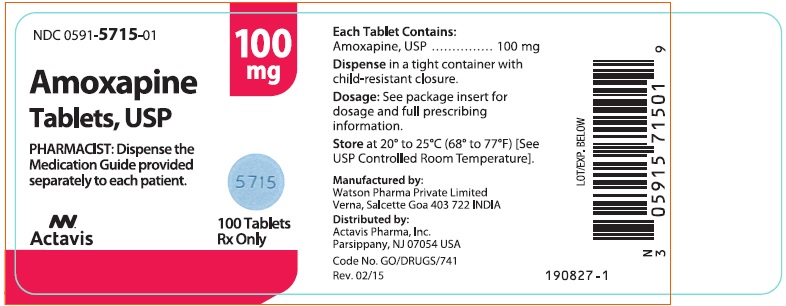
HOW SUPPLIED Amoxapine tablets USP, 25 mg are white, round, flat-faced, beveled, bisected tablets debossed with “ DAN 25 ” on one side and “ 5713 ” on the other side, supplied in bottles of 100 (NDC 0591-5713-01). Amoxapine tablets USP, 50 mg are orange, round, flat-faced, beveled, bisected tablets debossed with “ DAN 50 ” on one side and “ 5714 ” on the other side, supplied in bottles of 100 (NDC 0591-5714-01). Amoxapine tablets USP, 100 mg are blue, round, flat-faced, beveled, bisected tablets debossed with “ DAN 100 ” on one side and “ 5715 ” on the other side, supplied in bottles of 100 (NDC 0591-5715-01).
Amoxapine tablets USP, 150 mg are orange, round, flat-faced, beveled, bisected tablets debossed with “ DAN 150 ” one side and “ 5716 ” on the other side, supplied in bottles of 30 (NDC 0591-5716-30). Dispense in a tight container with child-resistant closure. Store at 20° to 25°C (68° to 77°F) [see USP Controlled Room Temperature].
Dispense with Medication Guide available at: www.tevausa.com/medguides Manufactured In India By: Watson Pharma Private Limited Verna, Salcette Goa 403 722 INDIA Manufactured For: Teva Pharmaceuticals Parsippany, NJ 07054 Rev. A 10/2024
📋 Description ▾
DESCRIPTION Amoxapine, USP is an antidepressant of the dibenzoxazepine class, chemically distinct from the dibenzazepines, dibenzocycloheptenes, and dibenzoxepines. It is designated chemically as 2-Chloro-11-(1-piperazinyl)dibenz[b,f][1,4]oxazepine. The structural formula is represented below: C 17 H 16 CIN 3 O M.W.
313.78 Amoxapine is supplied for oral administration as 25 mg, 50 mg, 100 mg and 150 mg tablets. Amoxapine tablets USP, 25 mg, 50 mg, 100 mg and 150 mg contain: dibasic calcium phosphate, magnesium stearate, pregelatinized (corn) starch, and stearic acid. Amoxapine tablets USP, 50 mg and 150 mg also contain: FD&C Yellow No.
6 Aluminum Lake. Amoxapine tablets USP, 100 mg also contain: FD&C Blue No. 2 Aluminum Lake.
Amoxapine structural formula
💬 Information for Patients ▾
Information for Patients Given the likelihood that some patients exposed chronically to neuroleptics will develop tardive dyskinesia, it is advised that all patients in whom chronic use is contemplated be given, if possible, full information about this risk. The decision to inform patients and/or their guardians must obviously take into account the clinical circumstances and the competency of the patient to understand the information provided. Patients should be warned of the possibility of drowsiness that may impair performance of potentially hazardous tasks such as driving an automobile or operating machinery.
Prescribers or other health professionals should inform patients, their families, and their caregivers about the benefits and risks associated with treatment with amoxapine and should counsel them in its appropriate use. A patient Medication Guide about “Antidepressant Medicines, Depression and other Serious Mental Illness, and Suicidal Thoughts or Actions” is available for amoxapine. The prescriber or health professional should instruct patients, their families, and their caregivers to read the Medication Guide and should assist them in understanding its contents.
Patients should be given the opportunity to discuss the contents of the Medication Guide and to obtain answers to any questions they may have. The complete text of the Medication Guide is reprinted at the end of this document. Patients should be advised of the following issues and asked to alert their prescriber if these occur while taking amoxapine.
Patients should be advised that taking amoxapine can cause mild pupillary dilation, which in susceptible individuals, can lead to an episode of angle-closure glaucoma. Pre-existing glaucoma is almost always open-angle glaucoma because angle-closure glaucoma, when diagnosed, can be treated definitively with iridectomy. Open-angle glaucoma is not a risk factor for angle closure glaucoma.
Patients may wish to be examined to determine whether they are susceptible to angle closure, and have a prophylactic procedure (e.g., iridectomy), if they are susceptible. Clinical Worsening and Suicide Risk: Patients, their families, and their caregivers should be encouraged to be alert to the emergence of anxiety, agitation, panic attacks, insomnia, irritability, hostility, aggressiveness, impulsivity, akathisia (psychomotor restlessness), hypomania, mania, other unusual changes in behavior, worsening of depression, and suicidal ideation, especially early during antidepressant treatment and when the dose is adjusted up or down.
Families and caregivers of patients should be advised to look for the emergence of such symptoms on a day-to-day basis, since changes may be abrupt. Such symptoms should be reported to the patient's prescriber or health professional, especially if they are severe, abrupt in onset, or were not part of the patient's presenting symptoms. Symptoms such as these may be associated with an increased risk for suicidal thinking and behavior and indicate a need for very close monitoring and possibly changes in the medication.
💬 Medication Guide ▾
Dispense with Medication Guide available at: www.tevausa.com/medguides Medication Guide Antidepressant Medicines, Depression and other Serious Mental Illnesses, and Suicidal Thoughts or Actions Read the Medication Guide that comes with you or your family member’s antidepressant medicine. This Medication Guide is only about the risk of suicidal thoughts and actions with antidepressant medicines. Talk to your, or your family member’s, healthcare provider about: all risks and benefits of treatment with antidepressant medicines all treatment choices for depression or other serious mental illness What is the most important information I should know about antidepressant medicines, depression and other serious mental illnesses, and suicidal thoughts or actions?
1. Antidepressant medicines may increase suicidal thoughts or actions in some children, teenagers, and young adults within the first few months of treatment. 2.
Depression and other serious mental illnesses are the most important causes of suicidal thoughts and actions. Some people may have a particularly high risk of having suicidal thoughts or actions. These include people who have (or have a family history of) bipolar illness (also called manic-depressive illness) or suicidal thoughts or actions.
3. How can I watch for and try to prevent suicidal thoughts and actions in myself or a family member? Pay close attention to any changes, especially sudden changes, in mood, behaviors, thoughts, or feelings.
This is very important when an antidepressant medicine is started or when the dose is changed. Call the healthcare provider right away to report new or sudden changes in mood, behavior, thoughts, or feelings. Keep all follow-up visits with the healthcare provider as scheduled.
Call the healthcare provider between visits as needed, especially if you have concerns about symptoms. Call a healthcare provider right away if you or your family member has any of the following symptoms, especially if they are new, worse, or worry you: thoughts about suicide or dying attempts to commit suicide new or worse depression new or worse anxiety feeling very agitated or restless panic attacks trouble sleeping (insomnia) new or worse irritability acting aggressive, being angry or violent acting on dangerous impulses an extreme increase in activity and talking (mania) other unusual changes in behavior or mood Visual problems: eye pain, changes in vision, swelling or redness in or around the eye What else do I need to know about antidepressant medicines?
Never stop an antidepressant medicine without first talking to a healthcare provider. Stopping an antidepressant medicine suddenly can cause other symptoms. Visual problems: Only some people are at risk for these problems.
You may want to undergo an eye examination to see if you are at risk and receive preventative treatment if you are. Antidepressants are medicines used to treat depression and other illnesses. It is important to discuss all the risks of treating depression and also the risks of not treating it.
Patients and their families or other caregivers should discuss all treatment choices with the healthcare provider, not just the use of antidepressants. Antidepressant medicines have other side effects. Talk to the healthcare provider about the side effects of the medicine prescribed for you or your family member.
Antidepressant medicines can interact with other medicines. Know all of the medicines that you or your family member takes. Keep a list of all medicines to show the healthcare provider.
Do not start new medicines without first checking with your healthcare provider. Not all antidepressant medicines prescribed for children are FDA approved for use in children. Talk to your child’s healthcare provider for more information.
Call your doctor for medical advice about side effects. You may report side effects to FDA at 1-800-FDA-1088. This Medication Guide has been approved by the U.S.
Food and Drug Administration for all antidepressants… [Excerpted — this section continues on DailyMed.]
⚠️ Precautions ▾
PRECAUTIONS General In prescribing the drug it should be borne in mind that the possibility of suicide is inherent in any severe depression, and persists until a significant remission occurs; the drug should be dispensed in the smallest suitable amount. Manic depressive patients may experience a shift to the manic phase. Schizophrenic patients may develop increased symptoms of psychosis; patients with paranoid symptomatology may have an exaggeration of such symptoms.
This may require reduction of dosage or the addition of a major tranquilizer to the therapeutic regimen. Antidepressant drugs can cause skin rashes and/or “drug fever” in susceptible individuals. These allergic reactions may, in rare cases, be severe.
They are more likely to occur during the first few days of treatment, but may also occur later. Amoxapine should be discontinued if rash and/or fever develop. Amoxapine possesses a degree of dopamine-blocking activity which may cause extrapyramidal symptoms in <1% of patients.
Rarely, symptoms indicative of tardive dyskinesia have been reported. Information for Patients Given the likelihood that some patients exposed chronically to neuroleptics will develop tardive dyskinesia, it is advised that all patients in whom chronic use is contemplated be given, if possible, full information about this risk. The decision to inform patients and/or their guardians must obviously take into account the clinical circumstances and the competency of the patient to understand the information provided.
Patients should be warned of the possibility of drowsiness that may impair performance of potentially hazardous tasks such as driving an automobile or operating machinery. Prescribers or other health professionals should inform patients, their families, and their caregivers about the benefits and risks associated with treatment with amoxapine and should counsel them in its appropriate use. A patient Medication Guide about “Antidepressant Medicines, Depression and other Serious Mental Illness, and Suicidal Thoughts or Actions” is available for amoxapine.
The prescriber or health professional should instruct patients, their families, and their caregivers to read the Medication Guide and should assist them in understanding its contents. Patients should be given the opportunity to discuss the contents of the Medication Guide and to obtain answers to any questions they may have. The complete text of the Medication Guide is reprinted at the end of this document.
Patients should be advised of the following issues and asked to alert their prescriber if these occur while taking amoxapine. Patients should be advised that taking amoxapine can cause mild pupillary dilation, which in susceptible individuals, can lead to an episode of angle-closure glaucoma. Pre-existing glaucoma is almost always open-angle glaucoma because angle-closure glaucoma, when diagnosed, can be treated definitively with iridectomy.
Open-angle glaucoma is not a risk factor for angle closure glaucoma. Patients may wish to be examined to determine whether they are susceptible to angle closure, and have a prophylactic procedure (e.g., iridectomy), if they are susceptible. Clinical Worsening and Suicide Risk: Patients, their families, and their caregivers should be encouraged to be alert to the emergence of anxiety, agitation, panic attacks, insomnia, irritability, hostility, aggressiveness, impulsivity, akathisia (psychomotor restlessness), hypomania, mania, other unusual changes in behavior, worsening of depression, and suicidal ideation, especially early during antidepressant treatment and when the dose is adjusted up or down.
Families and caregivers of patients should be advised to look for the emergence of such symptoms on a day-to-day basis, since changes may be abrupt. Such symptoms should be reported to the patient's prescriber or health professional, especially if they are severe, abrupt in onset, or were not part of the patient's presenting symptoms. Symptoms such as th… [Excerpted — this section continues on DailyMed.]
🍼 Nursing Mothers ▾
Nursing Mothers Amoxapine, like many other systemic drugs, is excreted in human milk. Because effects of the drug on infants are unknown, caution should be exercised when amoxapine is administered to nursing women.
📄 Carcinogenesis, Mutagenesis, Impairment of Fertility ▾
Carcinogenesis, Impairment of Fertility In a 21-month toxicity study at three dose levels in rats, pancreatic islet cell hyperplasia occurred with slightly increased incidence at doses 5 to 10 times the human dose. Pancreatic adenocarcinoma was detected in low incidence in the mid-dose group only, and may possibly have resulted from endocrine-mediated organ hyperfunction. The significance of these findings to man is not known.
Treatment of male rats with 5 to 10 times the human dose resulted in a slight decrease in the number of fertile matings. Female rats receiving oral doses within the therapeutic range displayed a reversible increase in estrous cycle length.
📄 Package Label / Principal Display Panel ▾
PRINCIPAL DISPLAY PANEL NDC 0591-5713-01 Amoxapine Tablets, USP 25 mg PHARMACIST: Dispense the accompanying Medication Guide to each patient. Rx only 100 Tablets 1
PRINCIPAL DISPLAY PANEL NDC 0591-5714-01 Amoxapine Tablets, USP 50 mg PHARMACIST: Dispense the accompanying Medication Guide to each patient. Rx only 100 Tablets 2
PRINCIPAL DISPLAY PANEL NDC 0591-5715-01 Amoxapine Tablets, USP 100 mg PHARMACIST: Dispense the accompanying Medication Guide to each patient. Rx only 100 Tablets 3
PRINCIPAL DISPLAY PANEL NDC 0591-5716-30 Amoxapine Tablets, USP 150 mg PHARMACIST: Dispense the accompanying Medication Guide to each patient. Rx only 30 Tablets 4
Medicare Part D spend CMS · PART D · 2026 (Q1)
Reported adverse events (FAERS)
Top reported reactions
Age at onset
Reporter sex
Serious outcomes
Where does this data come from?
About this NDC listing & data coverage
What "drug for further processing" means
FDA lists this package under the "drug for further processing" marketing category: Actavis Pharma, Inc. supplies it to other companies for further processing or repackaging (blister cards that are later repackaged or co-packaged are a common example). The units themselves are a finished dosage form — which is why pricing or Medicaid data can still appear — but this exact package code may not be the presentation a retail pharmacy dispenses.
What data is (and isn’t) available for this NDC — tap to expand
| NDC identity (package / product / labeler codes) | ✓ Available |
| Labeler | ✓ Available |
| Product & package description | ✓ Available |
| Marketing category & status | ✓ Available |
| Active ingredient / dosage form / route | ✓ Available |
| FDA label (SPL via DailyMed) | ✓ Available |
| Package photos | ✓ Available |
| Inactive ingredients (structured) | ✓ Available |
| NADAC pharmacy acquisition price (CMS) | — Not published for this NDC CMS publishes NADAC only for NDCs reported in its retail-pharmacy survey. |
| Orange Book / therapeutic-equivalence data | — Not published for this NDC Applies only to products approved under an NDA/ANDA; many listings are out of scope. |
| HCPCS J-code billing crosswalk | — Not published for this NDC Most self-administered / retail products have no J-code — that is normal. |
| Medicaid utilization (CMS SDUD) | — Not published for this NDC CMS reports utilization only for NDCs with Medicaid claims above its privacy threshold. |