
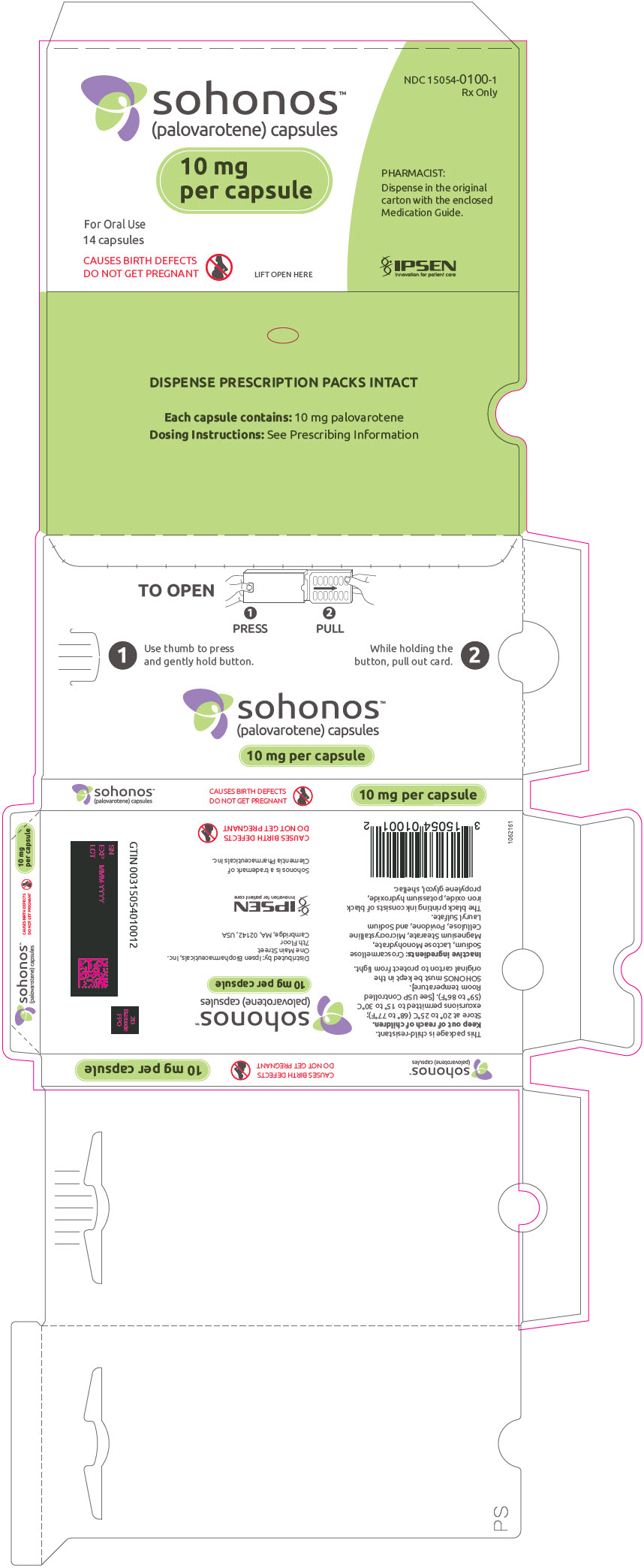
Sohonos palovarotene 10 mg Capsule, 14-count — NDC 15054-0100-1 (Billing 15054-0100-01)
This is a package of 14 capsules of Sohonos palovarotene 10 mg Capsule from Ipsen Biopharmaceuticals, Inc., marketed since Aug 2023 and currently FDA-listed. It is this product's only package size.
NDC database record
One package, one record: these facts belong to NDC 15054-0100-1 alone.
- Record
- FDA NDC Directory package listing · Human prescription drug
- Code segments
- 15054 labeler · 0100 product · 1 package
- Package marketed since
- Aug 16, 2023
- Sample package
- No — commercial package
- Listing certified through
- Dec 31, 2027
- Billing quantity
- 14 EA per package
- Barcode (UPC-A, from the NDC)
- 3 1505401001 2
- FDA record last changed
- Oct 8, 2026
Identity & classification
Regulatory identifiers FDA, NLM and CMS codes for this package
Drug-database identifiers Medi-Span GPI and First Databank GCN / HICL / AHFS classification
- GSN (GCN sequence number): 085018
- GCN: 54454
- HICL (First Databank): 049043
- AHFS class code: 92:92.00.00
Where does this data come from?
- FDA openFDA NDC Directory · synced Oct 8, 2026
- FDA label on DailyMed · label index refreshed Oct 8, 2026
- RxNorm (NLM RxNav) · catalog refreshed Oct 8, 2026
- Medi-Span GPI (licensed)
- First Databank (licensed) · refreshed Oct 8, 2026
Clinical
Palovarotene is used to reduce the number of new heterotrophic ossification (bony formations in muscle and soft tissue) in patients with fibrodysplasia ossificans progressive (FOP) in females aged 8 years or older or females aged 10 years or older. Palovarotene is in a class of medications called retinoids. It works by stopping the signaling responsible for heterotophic ossification.
Read the full MedlinePlus article ↗- Palovarotene (Sohonos) reduces new abnormal bone growth in people with FOP. It is for adults and for children aged 8 and older (females) or 10 and older (males).
- Take your capsule once a day with food, around the same time. You can swallow it whole or sprinkle the contents on a teaspoon of soft food like applesauce and take it within an hou...
- Dry skin, dry lips, itching, rash, hair loss and dry eyes are very common. Moisturizers, lip balm, sunscreen and artificial tears help. If it gets bothersome, tell your doctor, sin...
- No. It can cause serious birth defects. If you can become pregnant, you will need a negative pregnancy test first, effective contraception from 1 month before until 1 month after t...
Patient education
Supplement & herbal interactions
Some supplements/herbs that may interact with Palovarotene — tap one for details:
Where does this data come from?
- MedlinePlus (NLM) · refreshed Oct 8, 2026
- FDA label on DailyMed · label index refreshed Oct 8, 2026
Ask a licensed pharmacist directly — free, answered by our team.
Pricing
A drug doesn't have one price. Each row is a different public payment system, and none is what you'd pay at the counter — that depends on your insurance. The ⓘ on each row explains what it measures.
| Price system | Per each | Per package |
|---|---|---|
| Retail pharmacies payNADAC · weekly | Not in the retail survey — common for institutional, discontinued, or low-volume packs. | |
| Medicaid paysCMS SDUD · 12 mo | No recent Medicaid claims on file for this NDC — rare and low-volume NDCs are suppressed in the public data. | |
| Medicare drug plans payPart D · Q2 2026 | $3,495.36 | $48,934.99 / 14 capsules |
Where does this data come from?
- CMS NADAC weekly file
- CMS ASP pricing files · refreshed Sep 20, 2026
- CMS Medicaid State Drug Utilization Data · refreshed Oct 9, 2026
- CMS Part D plan pricing files · refreshed Sep 24, 2026
- VA National Acquisition Center price file
Packaging — all sizes for this product
| Package NDC | Description | Marketing start | Marketing end | Status |
|---|---|---|---|---|
| 15054-0100-01 You're viewing this Main listing | 1 BLISTER PACK in 1 CARTON / 14 CAPSULE in 1 BLISTER PACK | 2023-08-16 | — | Active |
Therapeutic equivalents
| Product | Labeler | Pack | NADAC/unit | TE | Status | Price vs. this |
|---|---|---|---|---|---|---|
| Sohonos 10 mgthis 15054-0100-01 | Ipsen | 14 capsules | — | — | FDA listed | — |
Where does this data come from?
- FDA openFDA NDC Directory · synced Oct 8, 2026
- FDA Orange Book · refreshed Oct 3, 2026
- CMS NADAC weekly file
Availability & generic status
We did not find an FDA-approved generic match for this exact strength, form and route. Patent/protection dates below may affect future generic timing.
Why the date isn’t exact: Generic timing can change because patents may be challenged, settled, licensed, added, removed, or worked around with a narrower label — and FDA approval does not always mean a pharmacy can get the generic today.
🛈 What do these terms mean?
- Patent
- Legal protection listed in the Orange Book that may delay generic approval or launch. Issued by the U.S. Patent & Trademark Office.
- Substance patent
- Covers the active drug molecule itself — the hardest to design around. A generic generally can’t launch until it expires.
- Formulation (product) patent
- Covers a specific formulation or dosage form. A generic can sometimes work around it with a different formulation.
- Method-of-use patent
- A patent covering one specific approved use of the drug — not necessarily the whole molecule. A generic can sometimes launch with a “skinny label” that carves out the protected use and keeps the others.
- Skinny label
- A generic label that omits a still-patented use when the FDA allows it — letting a generic reach the market for the unprotected uses.
- Exclusivity
- FDA-granted marketing protection, separate from patents — e.g. 5-yr new chemical entity, 7-yr orphan drug, or a +6-month pediatric extension.
- Paragraph IV
- A generic applicant’s formal challenge to a listed patent. It can potentially lead to earlier generic entry, but often involves litigation or a settlement.
- RLD / RS
- Reference Listed Drug — the brand product the FDA uses as the reference for generic applications. Reference Standard — the product the FDA expects generics to compare against in bioequivalence testing.
- TE / AB rating
- FDA therapeutic-equivalence rating. An AB rating generally means the FDA considers a generic therapeutically equivalent to — and substitutable for — the brand.
- LOE (loss of exclusivity)
- The latest patent or exclusivity currently listed — the loss-of-exclusivity / latest-listed-protection date shown on this page. Paragraph-IV challenges and settlements can move the real date earlier; FDA approval and a manufacturer’s decision to market can move it later.
Built from the FDA Orange Book. The bars above are scaled to each protection’s expiry; the red LOE marker is the last one to lapse.
| Patent | Type | Use code | Expires |
|---|---|---|---|
| US 11622959 ↗ | Method of use | U-3676 | Jun 8, 2037 |
| US 11622959 ↗ | Method of use | U-3676 | Jun 8, 2037 |
| US 11622959 ↗ | Method of use | U-3676 | Jun 8, 2037 |
| US 11622959 ↗ | Method of use | U-3676 | Jun 8, 2037 |
| US 11622959 ↗ | Method of use | U-3676 | Jun 8, 2037 |
| US 10864194 ↗ | Method of use | U-3676 | Jun 8, 2037 |
| US 10864194 ↗ | Method of use | U-3676 | Jun 8, 2037 |
| US 10864194 ↗ | Method of use | U-3676 | Jun 8, 2037 |
| US 10864194 ↗ | Method of use | U-3676 | Jun 8, 2037 |
| US 10864194 ↗ | Method of use | U-3676 | Jun 8, 2037 |
| US 10292954 ↗ | Method of use | U-3676 | Aug 31, 2031 |
| US 10292954 ↗ | Method of use | U-3676 | Aug 31, 2031 |
| US 10292954 ↗ | Method of use | U-3676 | Aug 31, 2031 |
| US 10292954 ↗ | Method of use | U-3676 | Aug 31, 2031 |
| US 10292954 ↗ | Method of use | U-3676 | Aug 31, 2031 |
| US 9789074 ↗ | Method of use | U-3676 | Aug 31, 2031 |
| US 9789074 ↗ | Method of use | U-3676 | Aug 31, 2031 |
| US 9789074 ↗ | Method of use | U-3676 | Aug 31, 2031 |
| US 9789074 ↗ | Method of use | U-3676 | Aug 31, 2031 |
| US 9789074 ↗ | Method of use | U-3676 | Aug 31, 2031 |
| US 9314439 ↗ | Method of use | U-3676 | Aug 31, 2031 |
| US 9314439 ↗ | Method of use | U-3676 | Aug 31, 2031 |
| US 9314439 ↗ | Method of use | U-3676 | Aug 31, 2031 |
| US 9314439 ↗ | Method of use | U-3676 | Aug 31, 2031 |
| US 9314439 ↗ | Method of use | U-3676 | Aug 31, 2031 |
| US 12023312 ↗ | Method of use | U-3966 | Aug 31, 2031 |
| US 12023312 ↗ | Method of use | U-3966 | Aug 31, 2031 |
| US 12023312 ↗ | Method of use | U-3966 | Aug 31, 2031 |
| US 12023312 ↗ | Method of use | U-3966 | Aug 31, 2031 |
| US 12023312 ↗ | Method of use | U-3966 | Aug 31, 2031 |
| US 12458626 ↗ | Method of use | U-3676 | Jun 8, 2037 |
| US 12458626 ↗ | Method of use | U-3676 | Jun 8, 2037 |
| US 12458626 ↗ | Method of use | U-3676 | Jun 8, 2037 |
| US 12458626 ↗ | Method of use | U-3676 | Jun 8, 2037 |
| US 12458626 ↗ | Method of use | U-3676 | Jun 8, 2037 |
| US 12138245 ↗ | Method of use | U-4031 | Jun 8, 2037 |
| US 12138245 ↗ | Method of use | U-4031 | Jun 8, 2037 |
| US 12138245 ↗ | Method of use | U-4031 | Jun 8, 2037 |
| US 12138245 ↗ | Method of use | U-4031 | Jun 8, 2037 |
| US 12138245 ↗ | Method of use | U-4031 | Jun 8, 2037 |
| US 12201614 ↗ | Method of use | U-4031 | Jun 8, 2037 |
| US 12201614 ↗ | Method of use | U-4031 | Jun 8, 2037 |
| US 12201614 ↗ | Method of use | U-4031 | Jun 8, 2037 |
| US 12201614 ↗ | Method of use | U-4031 | Jun 8, 2037 |
| US 12201614 ↗ | Method of use | U-4031 | Jun 8, 2037 |
| Code | What it grants | Expires |
|---|---|---|
| NCE | New Chemical Entity (5-year) | Aug 16, 2028 |
| ODE-439 | Orphan Drug Exclusivity (7-year) | Aug 16, 2030 |
| NCE | New Chemical Entity (5-year) | Aug 16, 2028 |
| ODE-439 | Orphan Drug Exclusivity (7-year) | Aug 16, 2030 |
| NCE | New Chemical Entity (5-year) | Aug 16, 2028 |
| ODE-439 | Orphan Drug Exclusivity (7-year) | Aug 16, 2030 |
| NCE | New Chemical Entity (5-year) | Aug 16, 2028 |
| ODE-439 | Orphan Drug Exclusivity (7-year) | Aug 16, 2030 |
| NCE | New Chemical Entity (5-year) | Aug 16, 2028 |
| ODE-439 | Orphan Drug Exclusivity (7-year) | Aug 16, 2030 |
Is there a generic version of SOHONOS 10 MG CAPSULE?
The FDA approved a generic — why can’t I get it at my pharmacy yet?
Why do different websites show different generic release dates?
What does “FDA listed” mean?
What does a patent or protection date mean here?
What does “current Orange Book estimate” mean?
Can a generic come out before the last patent expires?
Can a generic come out after the listed dates?
What is the difference between patents and exclusivity?
Why are there multiple patent dates?
Where does this data come from?
- FDA Orange Book · refreshed Oct 3, 2026
What it looks like
Where does this data come from?
- FDA label on DailyMed · label index refreshed Oct 8, 2026
Inactive Ingredients / Excipients
Inactive ingredients, also called excipients, are components of the drug product other than the active ingredient. They may include fillers, dyes, coatings, preservatives, flavors, or other formulation ingredients.
🧪 Avoiding an ingredient? See Palovarotene inactive ingredients by manufacturer: every current product's list side by side, so you can ask your pharmacy for the version that does not list it.
💡 Tap an ingredient (hover on desktop) to see what it is and why it’s used.
-
UNII M28OL1HH48
Croscarmellose sodium is a plant-based substance derived from cellulose. It acts as a disintegrant, helping tablets and capsules break down quickly in the digestive system so the medicine can be absorbed.
-
UNII XM0M87F357
A dark iron oxide compound that gives medicines their black or dark color. It's used as a colorant in tablets and capsules to help identify the product and make it visually distinctive.
-
UNII 2G86QN327L
Gelatin is a protein derived from animal collagen, commonly used in medicines as a gelling agent and capsule material. It helps create soft or hard capsule shells that hold and release medication, and can also thicken liquid formulations.
-
UNII EWQ57Q8I5X
Lactose monohydrate is a natural sugar derived from milk. It serves as a filler and binder in tablets and capsules, helping create the proper size, texture, and consistency of the medicine.
-
UNII 70097M6I30
Magnesium stearate is a salt made from magnesium and stearic acid, a fatty substance. It's used in tablets and capsules as a lubricant and glidant to help ingredients flow smoothly during manufacturing and prevent sticking.
-
UNII OP1R32D61U
Microcrystalline cellulose is a purified form of cellulose, a natural fiber from plant sources. It acts as a binder and filler in tablets and capsules, helping hold ingredients together and give the medicine its shape and size.
-
UNII WZH3C48M4T
Potassium hydroxide is a strong alkaline chemical used in medicines to adjust and maintain the pH level of liquid formulations, helping keep the product stable and the active ingredients effective.
-
UNII FZ989GH94E
Povidone is a synthetic polymer made from a plastic-like material. It acts as a binder to hold tablet ingredients together and as a disintegrant to help the tablet break apart in your stomach so the medicine can be absorbed.
-
UNII 6DC9Q167V3
Propylene glycol is a clear liquid derived from petroleum or vegetable sources. It acts as a solvent, humectant, and preservative in medicines, helping dissolve active ingredients and maintain product stability.
-
UNII 46N107B71O
Shellac is a natural resin secreted by the lac beetle. It's used as a coating on tablets and capsules to control how quickly the medicine dissolves and to improve appearance and stability.
-
UNII 368GB5141J
A detergent and foaming agent derived from coconut or palm oil. In medications, it helps break down and mix oil and water-based ingredients, aids in tablet disintegration, and improves how the drug dissolves and spreads in the mouth or digestive system.
-
UNII 15FIX9V2JP
Titanium dioxide is a bright white mineral powder commonly used as a colorant and opacifying agent. It makes pills and tablets white or lighter in color and helps make coatings non-transparent.
12 inactive ingredients listed in the exact product block matched to this NDC.
Where does this data come from?
ingredient classCode="IACT" elements from the exact product block matched by this NDC. Label-section narrative from DailyMed / the openFDA label index is shown separately when available.- FDA label on DailyMed · label index refreshed Oct 8, 2026
- FDA openFDA NDC Directory · synced Oct 8, 2026
Inactive ingredient FAQ
Are inactive ingredients the same for every manufacturer?
Why might an inactive ingredient be missing?
Can inactive ingredients matter?
Manufacturer & labeler
More NDCs from Ipsen Biopharmaceuticals, Inc. labeler code 15054
- Sohonos palovarotene 1 mg Capsule NDC 15054-0010-1
- Sohonos palovarotene 1.5 mg Capsule NDC 15054-0015-1
- Sohonos palovarotene 2.5 mg Capsule NDC 15054-0025-1
- Onivyde IRINOTECAN HYDROCHLORIDE 4.3 mg/mL Injection, Powder, For Solution NDC 15054-0043-1
- Sohonos palovarotene 5 mg Capsule NDC 15054-0050-1
- Iqirvo elafibranor 80 mg Tablet, Film Coated NDC 15054-0080-1
- Dysport Botulinum Toxin Type A 500 U Injection, Powder, Lyophilized, For Solution NDC 15054-0500-1
- Dysport Botulinum Toxin Type A 300 U Injection, Powder, Lyophilized, For Solution NDC 15054-0530-6
- Increlex mecasermin 40 mg/4mL Injection, Solution NDC 15054-1040-5
- SOMATULINE DEPOT lanreotide acetate 60 mg/.2mL Injection NDC 15054-1060-4
- SOMATULINE DEPOT lanreotide acetate 90 mg/.3mL Injection NDC 15054-1090-4
- SOMATULINE DEPOT lanreotide acetate 120 mg/.5mL Injection NDC 15054-1120-4
Where does this data come from?
- FDA openFDA NDC Directory · synced Oct 8, 2026
- Drugs@FDA
Full prescribing information FDA SPL
🚨 Boxed Warning ▾
WARNING: EMBRYO-FETAL TOXICITY and PREMATURE EPIPHYSEAL CLOSURE IN GROWING PEDIATRIC PATIENTS WARNING: EMBRYO-FETAL TOXICITY and PREMATURE EPIPHYSEAL CLOSURE IN GROWING PEDIATRIC PATIENTS See full prescribing information for complete boxed warning. SOHONOS is contraindicated in pregnancy ( 5.1 , 8.1 ) Because of the risk of teratogenicity and to minimize fetal exposure, SOHONOS is to be administered only if conditions for pregnancy prevention are met ( 5.1 , 8.1 ) SOHONOS causes premature epiphyseal closure in growing pediatric patients with FOP, close monitoring is recommended ( 5.2 , 8.4 ) Embryo-Fetal Toxicity SOHONOS is contraindicated in pregnancy.
SOHONOS may cause fetal harm. Because of the risk of teratogenicity and to minimize fetal exposure, SOHONOS is to be administered only if conditions for pregnancy prevention are met [see Warnings and Precautions (5.1) and Use in Specific Populations (8.1) ]. Premature Epiphyseal Closure Premature epiphyseal closure occurs in growing pediatric patients treated with SOHONOS, close monitoring is recommended [see Warnings and Precautions (5.2) and Use in Specific Populations (8.4) ] .
🎯 Indications and Usage ▾
1 INDICATIONS AND USAGE SOHONOS is indicated for the reduction in volume of new heterotopic ossification in adults and pediatric patients aged 8 years and older for females and 10 years and older for males with fibrodysplasia ossificans progressiva (FOP). SOHONOS is a retinoid indicated for reduction in the volume of new heterotopic ossification in adults and children aged 8 years and older for females and 10 years and older for males with fibrodysplasia ossificans progressiva (FOP) ( 1 ).
⏱️ Dosage and Administration ▾
2 DOSAGE AND ADMINISTRATION Obtain a negative pregnancy test in females of reproductive potential before initiation of SOHONOS ( 2.1 ) Recommended dosage includes a chronic daily dose, which can be increased for flare-up symptoms ( 2.2 ) For adults and pediatric patients 14 years and older: Recommended dosage is 5 mg once daily, with an increase in dose at the time of a flare-up to 20 mg once daily for 4 weeks, followed by 10 mg once daily for 8 weeks for a total of 12 weeks (20/10 mg flare-up treatment) ( 2.2 ) For pediatric patients under 14 years: Weight-adjusted for daily and flare-up dosing.
Recommended daily dosage range from 2.5 to 5 mg. Refer to Table 1 in Full Prescribing Information for complete pediatric dosing ( 2.2 ) Take SOHONOS with food preferably at same time each day ( 2.3 ). Reduce the dose in the event of adverse reactions as appropriate ( 2.4 ) See Full Prescribing Information for complete dosing instructions ( 2 )
2.1Pregnancy Testing Prior to Treatment with SOHONOS For females of reproductive potential, obtain a negative pregnancy test within one week prior to initiating and periodically during SOHONOS therapy . If pregnancy occurs, stop SOHONOS treatment immediately and refer patient to an obstetrician/gynecologist experienced in reproductive toxicity. [see Warnings and Precautions (5.1) and Use in Specific Populations (8.1 , 8.3) ].
2.2Recommended Dosage and Duration Dosage Overview Take SOHONOS with food preferably at the same time each day [see Dosage and Administration (2.3) ] . The recommended dosing for SOHONOS includes a chronic daily dosage (daily dose) which can then be modified/increased in the event of FOP flare-up symptoms (flare-up dose). Initiate flare-up treatment at the onset of the first symptom indicative of a FOP flare-up or substantial high-risk traumatic event likely to lead to a flare-up (e.g., surgery, intramuscular immunization, mandibular blocks for dental procedures, muscle fatigue, blunt muscle trauma from bumps, bruises, falls, or influenza-like viral illnesses).
Symptoms of a FOP flare-up typically include but are not limited to localized pain, soft tissue swelling/inflammation, redness, warmth, decreased joint range of motion, and stiffness. Recommended Dosage for Adults and Pediatric Patients 14 Years and Older Daily Dose: The recommended SOHONOS daily dosage for adults and pediatric patients 14 years and older is 5 mg daily. Stop daily dosing when flare-up dosing begins.
Flare-up Dose: The recommended SOHONOS flare-up dosage for adults and pediatric patients 14 years and older is 20 mg daily for 4 weeks, followed by 10 mg daily for 8 weeks (for a total of 12 weeks of flare-up treatment), even if symptoms resolve earlier, then return to daily dosing of 5 mg. If during the course of flare-up treatment, the patient experiences marked worsening of the original flare-up site or another flare-up at a new location, restart the 12-week flare-up dosing at 20 mg daily. For flare-up symptoms that have not resolved at the end of the 12-week period, the 10 mg daily dosage may be extended in 4-week intervals and continued until the flare-up symptoms resolve.
If new flare-up symptoms occur after the 5 mg daily dosing is resumed, flare-up dosing may be restarted. Recommended Dosage for Pediatric Patients Aged 8 to 13 Years for Females and Aged 10 to 13 Years for Males Daily Dose: The recommended SOHONOS daily dosage for patients under 14 years of age is weight-based ranging from 2.5 mg to 5 mg daily (see Table 1 ). Stop daily dosing when flare-up dosing begins.
Flare-up Dose: The recommended flare-up SOHONOS dosage for patients under 14 years of age is weight-based (see Table 1 ). Administer the initial flare-up dosage once daily for 4 weeks, then administer the lower flare-up dosage once daily for 8 weeks (for a total of 12 weeks of flare-up treatment), even if symptoms resolve earlier, then return to daily dosing (see Table 1 ). If during the course of flare-up treatment, the patient… [Excerpted — this section continues on DailyMed.]
💊 Dosage Forms and Strengths ▾
3 DOSAGE FORMS AND STRENGTHS SOHONOS is available in 4 strengths as an opaque white elongated size "0" hard-gelatin capsule, containing white to off-white powder. Table 4 shows capsules' strengths and imprints. Table 4. SOHONOS Capsules' Strengths and Imprints Strength (mg) Imprint 1 PVO 1
1.5PVO 1.5 5 PVO 5 10 PVO 10 Capsules: 1, 1.5, 5, 10 mg ( 3 )
⛔ Contraindications ▾
4 CONTRAINDICATIONS SOHONOS is contraindicated in the following patients: During Pregnancy [see Warnings and Precautions (5.1) and Use in Specific Populations (8.1) ] . A history of allergy or hypersensitivity to retinoids, or to any component of SOHONOS. Anaphylaxis and other allergic reactions have occurred with other retinoids. [see Description (11) ]. Pregnancy ( 4 , 5.1 , 8.1 ) Hypersensitivity to retinoids or any component of SOHONOS ( 4 , 11 )
⚠️ Warnings and Cautions ▾
5 WARNINGS AND PRECAUTIONS Premature Epiphyseal Closure: Premature epiphyseal closure occurred with SOHONOS. Assess baseline skeletal maturity before SOHONOS therapy and monitor linear growth in growing pediatric patients ( 5.2 ) Mucocutaneous Adverse Reactions: Dry skin, lip dry, pruritus, rash, alopecia, erythema, skin exfoliation, and dry eye occurred with SOHONOS. Prevent or treat with skin emollients, sunscreen, artificial tears.
Dosage reduction may be required in some patients ( 2.4 , 5.3 ) Metabolic Bone Disorders: Decreased vertebral bone mineral content and bone density may occur. Assess for spinal fracture periodically using radiologic method ( 5.4 ) Psychiatric Disorders: Depression, anxiety, mood alterations and suicidal thoughts and behaviors occurred with SOHONOS. Contact healthcare provider if new or worsening symptoms develop in patients treated with SOHONOS ( 5.5 ) Night Blindness: May occur and make driving at night hazardous ( 5.6 )
5.1Embryo-Fetal Toxicity SOHONOS can cause fetal harm and is contraindicated during pregnancy. SOHONOS is a member of the retinoid class of drugs which is associated with birth defects in humans. In animal reproduction studies, palovarotene administered orally to pregnant rats during organogenesis was teratogenic and caused fetal malformations typical of retinoids including cleft palate, misshapen skull bones, and shortening of the long bones at clinically relevant exposures.
For females of reproductive potential, verify that the patient is not pregnant prior to initiating treatment, periodically during the course of therapy and one month after treatment discontinuation. Advise females of reproductive potential to use an effective method of contraception at least one month prior to treatment, during treatment with SOHONOS and for 1 month after the last dose [see Use in Specific Populations (8.1 , 8.3) and Clinical Pharmacology (12.3) ]. If a pregnancy occurs during SOHONOS treatment, discontinue treatment immediately and refer the patient to an obstetrician/gynecologist experienced in reproductive toxicity for further evaluation and counseling.
Patients should be informed not to donate blood during SOHONOS therapy and for 1 week following discontinuation because the blood might be given to a pregnant patient whose fetus must not be exposed to palovarotene.
5.2Premature Epiphyseal Closure in Growing Pediatric Patients SOHONOS can cause irreversible premature epiphyseal closure and potential adverse effects on growth. In clinical studies, premature epiphyseal closure occurred with SOHONOS treatment in growing pediatric patients with FOP [see Adverse Reactions (6.1) and Use in Specific Populations (8.4) ] . Monitoring of linear growth is recommended in growing pediatric patients [see Use in Specific Populations (8.4) ] .
Prior to starting treatment with SOHONOS, all growing pediatric patients should undergo baseline assessment of skeletal maturity via hand/wrist and knee x-rays, standard growth curves and pubertal staging. Continued monitoring is recommended every 6 to 12 months until patients reach skeletal maturity or final adult height. If a patient exhibits signs of premature epiphyseal closure or adverse effects on growth based on clinical or radiologic evaluations, further evaluation may be required, including an assessment of the benefits and risks of continued treatment, or temporary or permanent discontinuation of SOHONOS until the patient achieves epiphyseal closure and skeletal maturity.
5.3Mucocutaneous Adverse Reactions Mucocutaneous adverse reactions including dry skin, lip dry, pruritus, rash, alopecia, erythema, skin exfoliation [skin peeling], and dry eye occurred in most (98%) patients treated with SOHONOS. SOHONOS may contribute to an increased risk of skin and soft tissue infections, particularly paronychia and decubitus ulcer, due to a decreased skin barrier from adverse reactions such as dry and peeling skin [see Adverse Reactions (6.1) ] . Some of these mu… [Excerpted — this section continues on DailyMed.]
🤒 Adverse Reactions ▾
6 ADVERSE REACTIONS The following clinically significant adverse reactions are described elsewhere in the labeling: Premature Epiphyseal Closure in Growing Pediatric Patients [see Warnings and Precautions (5.2) ] Mucocutaneous Adverse Reactions [see Warnings and Precautions (5.3) ] Metabolic Bone Disorders [see Warnings and Precautions (5.4) ] Psychiatric Disorders [see Warnings and Precautions (5.5) ] Night Blindness [see Warnings and Precautions (5.6) ] Most common adverse reactions (incidence ≥10%) are dry skin, lip dry, arthralgia, pruritus, pain in extremity, rash, alopecia, erythema, headache, back pain, skin exfoliation, nausea, musculoskeletal pain, myalgia, dry eye, hypersensitivity, peripheral edema, and fatigue ( 6.1 ) To report SUSPECTED ADVERSE REACTIONS, contact IPSEN Biopharmaceuticals, Inc at 1-855-463-5127 or FDA at 1-800-FDA-1088 or www.fda.gov/medwatch.
6.1Clinical Trials Experience Because clinical trials are conducted under widely varying conditions, adverse reaction rates observed in the clinical trials of a drug cannot be directly compared to rates in the clinical trials of another drug and may not reflect the rates observed in practice. The safety of SOHONOS was evaluated in clinical studies that enrolled a total of 164 subjects with FOP, including 139 subjects in the indicated population of ages 8 years and above for females and 10 years and above for males (8/10 years and older).
Most of these subjects received open label treatment with the chronic daily/flare-up regimen, consisting of 5 mg daily dosage of oral SOHONOS with a 20/10 mg dosage as needed for 12 weeks at the time of flare-up (4 weeks of 20 mg once daily followed by 10 mg once daily for 8 weeks), with all doses reduced by weight in subjects who were less than 90% skeletally mature. The mean duration of exposure was 79 weeks for chronic dosing (N=131 subjects) and 35 weeks for flare-up dosing (N=105 subjects). The mean age of these subjects was 19 years (range 8 to 61 years); 51% were male.
Serious adverse reactions occurred in 21 (15%) SOHONOS treated subjects in the 8/10 years or older population with the most common serious adverse reaction being premature epiphyseal closure. Adverse reactions leading to permanent discontinuation occurred in 11 (8%) SOHONOS treated subjects with dry skin being the most common in 2 (1%) subjects. Mucocutaneous adverse reactions leading to dose reductions were more common during SOHONOS 20/10 mg flare-up treatment (37%) than during chronic treatment (4%).
Table 5 below presents adverse reactions which occurred in at least 10% of FOP subjects 8/10 years and older during treatment with chronic or flare-up dosing. Table 5. Summary of Adverse Reactions Reported at greater than 10% Frequency in FOP Subjects 8/10 years and older in Clinical Trials Adverse Reaction Chronic 5 mg N=131 n (%) Flare-up dosing 20/10 mg N=105 n (%) Doses were reduced according to body weight in subjects who were less than 90% skeletally mature Dry skin 80 (61) 60 (57) Lip dry includes lip dry, chapped lips, cheilitis 62 (47) 40 (38) Arthralgia 47 (36) 32 (31) Pruritus includes pruritus, pruritus generalized, and rash pruritic 45 (34) 50 (48) Pain in extremity 38 (29) 29 (28) Rash includes rash, rash generalized, rash maculo-papular 36 (28) 31 (30) Alopecia 32 (24) 31 (30) Erythema includes erythema, generalized erythema, flushing, rash erythematous 25 (19) 34 (32) Headache includes headache and migraine 25 (19) 20 (19) Back pain includes back pain, flank pain, sciatica 22 (17) 12 (11) Skin exfoliation [skin peeling] 20 (15) 30 (29) Nausea 20 (15) 14 (13) Musculoskeletal pain 18 (14) 14 (13) Myalgia includes myalgia, musculoskeletal discomfort 15 (12) 9 (9) Dry eye 13 (10) 23 (22) Hypersensitivity includes drug eruption, hypersensitivity, pruritus allergic, drug hypersensitivity 13 (10) 21 (20) Peripheral edema includes peripheral swelling, edema peripheral 12 (9) 20 (19) Fatigue includes fatigue, lethargy, asthenia, malaise 7 (5) 12 (… [Excerpted — this section continues on DailyMed.]
🔄 Drug Interactions ▾
7 DRUG INTERACTIONS CYP3A4 Inhibitors: May increase SOHONOS exposure. Avoid concomitant use of strong/moderate CYP3A4 inhibitors. If concomitant use of moderate CYP3A4 inhibitors is unavoidable, reduce the dose of SOHONOS by half ( 2.5 , 7.1 ) CYP3A4 Inducers: May decrease SOHONOS exposure.
Avoid concomitant use of strong/moderate CYP3A4 inducers ( 7.1 ) Vitamin A: May cause additive effects ( 7.2 ) Tetracyclines: Avoid concomitant use with SOHONOS ( 7.3 ) Systemic Corticosteroids: No clinically significant drug interaction is expected with concomitant use of SOHONOS ( 7.4 )
7.1Effect of Other Drugs on SOHONOS Clinically significant drug interactions affecting the exposure of SOHONOS are listed in Table 6. Table 6. Drugs that affect exposure of SOHONOS.
Strong CYP3A Inhibitors Clinical Impact Co-administration of SOHONOS with strong CYP3A4 inhibitors increased the exposures of palovarotene [see Clinical Pharmacology (12.3) ] , which may increase the risk of SOHONOS adverse reactions. Prevention or Management Avoid concomitant use of a strong CYP3A4 inhibitor during SOHONOS treatment [see Dosage and Administration (2.5) ] . Moderate CYP3A Inhibitors Clinical Impact Co-administration of SOHONOS with moderate CYP3A4 inhibitors may increase the exposure of palovarotene [see Clinical Pharmacology (12.3) ] , which may increase the risk of SOHONOS adverse reactions.
Prevention or Management Avoid concomitant use of a moderate CYP3A4 inhibitor with SOHONOS, if possible. If co-administration will occur, reduce the SOHONOS dose by half when co-administered with moderate CYP3A inhibitors [see Dosage and Administration (2.5) ] . Strong CYP3A Inducers Clinical Impact Co-administration of SOHONOS with strong CYP3A4 inducers decreased the exposure of palovarotene [see Clinical Pharmacology (12.3) ] , which may reduce the effectiveness of SOHONOS.
Prevention or Management Avoid concomitant use of strong CYP3A4 inducers with SOHONOS. [see Dosage and Administration (2.5) ] . Moderate CYP3A Inducers Clinical Impact Co-administration of moderate CYP3A4 inducers with palovarotene may decrease palovarotene exposure [see Clinical Pharmacology (12.3) ], which may reduce the effectiveness of SOHONOS. Prevention or Management Avoid concomitant use of moderate CYP3A4 inducers with SOHONOS.
7.2Vitamin A Palovarotene belongs to the same pharmacological class as vitamin A. Therefore, the use of both vitamin A and SOHONOS at the same time may lead to additive effects. Concomitant administration of vitamin A in doses higher than the recommended daily allowance (RDA) and/or other oral retinoids with SOHONOS must be avoided because of the risk of hypervitaminosis A.
7.3Tetracyclines Systemic retinoid use has been associated with cases of benign intracranial hypertension (also called pseudotumor cerebri), some of which involved the concomitant use of tetracyclines. Avoid coadministration of SOHONOS with tetracycline derivatives [see Adverse Reactions (6.1) ] .
7.4Systemic Corticosteroids No clinically significant drug-drug interaction is expected when SOHONOS is co-administered with prednisone [see Clinical Pharmacology (12.3) ] .
👥 Use in Specific Populations ▾
8 USE IN SPECIFIC POPULATIONS Pregnancy: May cause fetal harm ( 2.1 , 4 , 8.1 ) Growing pediatric patients are recommended to undergo baseline assessment of growth and skeletal maturity before starting treatment and continued clinical and radiographic monitoring every 6 to 12 months until patients reach skeletal maturity or final adult height ( 5.2 , 8.4 )
8.1Pregnancy Risk Summary SOHONOS is contraindicated during pregnancy. Based on the findings in animal studies and class effects of retinoids, SOHONOS can cause fetal harm when administered during pregnancy [see Warnings and Precautions (5.1) and Use in Specific Populations (8.3) ] . In animal reproduction studies, oral administration of palovarotene to pregnant rats during the period of organogenesis resulted in multiple fetal malformations typical of retinoids (e.g., cleft palate, malformed skull bone, shortening of the long bones) at doses ≥0.25 mg/kg/day (less than the clinical exposure) (see Data ) .
There are no available human data on SOHONOS use in pregnant women. If pregnancy occurs during treatment with SOHONOS, discontinue treatment immediately and refer the patient to an obstetrician/gynecologist or other specialist experienced in reproductive toxicity for further evaluation and counseling. Data Animal Data Palovarotene oral administration to pregnant rats during the period of organogenesis (gestation day 6 to 17) at doses of 0.01, 0.25 and 1.25 mg/kg/day resulted in fetal malformations consistent with retinoid-mediated embryopathy.
Palovarotene exposure resulted in fetal external, visceral and skeletal malformations typical of retinoids, including defects in the mouth (cleft palate, protruding tongue), eye (anophthalmia, microphthalmia), skull (dilated cerebral ventricle, misshapen brain), skeleton (shortening of the long bones), blood vessels, kidney, and ureters at doses ≥ 0.25 mg/kg/day (less than the clinical exposure). The fetal toxicity was observed at maternal rat exposures well below the range of clinically relevant exposures.
8.2Lactation Risk Summary There are no data available on the presence of palovarotene or its main metabolites in either animal or human milk, the effects on the breastfed infant, or on milk production. Because of the potential for serious adverse reactions in breastfed infants exposed to palovarotene through breastmilk, advise females that breastfeeding is not recommended during treatment with SOHONOS, and for at least 1 month after the final dose of SOHONOS.
8.3Females and Males of Reproductive Potential SOHONOS can cause fetal harm when administered during pregnancy [see Use in Specific Populations (8.1) ] Pregnancy Testing Obtain a negative serum pregnancy test within one week prior to SOHONOS therapy . Verify that patient is not pregnant periodically, as needed, over the course of treatment with SOHONOS and one month after treatment discontinuation unless they are not at risk of pregnancy. Contraception Females SOHONOS can cause embryo-fetal harm when administered during pregnancy [see Warnings and Precautions (5.1) , Use in Specific Populations (8.1) ].
Advise females of reproductive potential to use effective contraception at least one month prior to treatment, during treatment with SOHONOS and for 1 month after the last dose, unless continuous abstinence is chosen. Males Palovarotene is present in semen (0.7 ng/mL) in amounts 100-fold lower than the maternal plasma exposure at the no observed adverse effect level (NOAEL) for fetal toxicity observed in animal studies. Administration of SOHONOS to a male patient is considered unlikely to affect development of an embryo or fetus carried by a pregnant female sexual partner exposed to SOHONOS via the patient's semen.
8.4Pediatric Use The safety and effectiveness of SOHONOS for the treatment of FOP have been established in pediatric patients aged 8 years and older for females and 10 years and older for males. Use of SOHONOS for this indication is supported by evidence from cli… [Excerpted — this section continues on DailyMed.]
🤰 Pregnancy ▾
8.1Pregnancy Risk Summary SOHONOS is contraindicated during pregnancy. Based on the findings in animal studies and class effects of retinoids, SOHONOS can cause fetal harm when administered during pregnancy [see Warnings and Precautions (5.1) and Use in Specific Populations (8.3) ] . In animal reproduction studies, oral administration of palovarotene to pregnant rats during the period of organogenesis resulted in multiple fetal malformations typical of retinoids (e.g., cleft palate, malformed skull bone, shortening of the long bones) at doses ≥0.25 mg/kg/day (less than the clinical exposure) (see Data ) .
There are no available human data on SOHONOS use in pregnant women. If pregnancy occurs during treatment with SOHONOS, discontinue treatment immediately and refer the patient to an obstetrician/gynecologist or other specialist experienced in reproductive toxicity for further evaluation and counseling. Data Animal Data Palovarotene oral administration to pregnant rats during the period of organogenesis (gestation day 6 to 17) at doses of 0.01, 0.25 and 1.25 mg/kg/day resulted in fetal malformations consistent with retinoid-mediated embryopathy.
Palovarotene exposure resulted in fetal external, visceral and skeletal malformations typical of retinoids, including defects in the mouth (cleft palate, protruding tongue), eye (anophthalmia, microphthalmia), skull (dilated cerebral ventricle, misshapen brain), skeleton (shortening of the long bones), blood vessels, kidney, and ureters at doses ≥ 0.25 mg/kg/day (less than the clinical exposure). The fetal toxicity was observed at maternal rat exposures well below the range of clinically relevant exposures.
🧒 Pediatric Use ▾
8.4Pediatric Use The safety and effectiveness of SOHONOS for the treatment of FOP have been established in pediatric patients aged 8 years and older for females and 10 years and older for males. Use of SOHONOS for this indication is supported by evidence from clinical studies in adults and pediatric subjects [see Clinical Studies (14) ] . The safety and effectiveness of SOHONOS for the treatment of FOP have not been established in pediatric patients less than 8 years of age in females and less than 10 years of age for males.
SOHONOS is not recommended for use in patients younger than 8 years of age for females and 10 years of age for males because of the potential for premature epiphyseal closure. Clinical studies have shown that growing patients with open epiphyses are at risk of developing premature epiphyseal closure when treated with SOHONOS [see Warnings and Precautions (5.2) , Adverse Reactions (6.1) and Clinical Studies (14.1) ] . Bone Safety In clinical studies with SOHONOS, assessments of growth and bone safety in growing children included linear and knee height, femur and tibia length measured by Whole-Body Computed Tomography (WBCT), and hand/wrist and knee radiographs.
Premature epiphyseal closure has been identified as an irreversible serious risk associated with SOHONOS treatment. Premature epiphyseal closure was observed as early as 6 months after initiating therapy with the majority occurring at or after 12 months. In SOHONOS treated subjects there was a trend of declining height Z-scores in adolescent subjects, potentially due to a loss of linear height and/or increasing spinal deformity.
The long-term effects on final height in subjects with FOP treated with SOHONOS have not been established. [see Adverse Reactions (6.1) ] . Monitoring Recommendation Prior to starting treatment with SOHONOS, all growing children should undergo baseline clinical and radiological assessments including but not limited to an assessment of skeletal maturity via hand/wrist and knee x-rays, standard growth curves and pubertal staging. Continued monitoring is recommended every 6-12 months until patients reach skeletal maturity (e.g., epiphyseal closure) or final adult height [see Warnings and Precautions (5.2) ] .
Juvenile Animal Data A juvenile animal study was conducted in juvenile rats given daily oral doses of palovarotene at 0.1, 0.5 or 1.2 mg/kg/day from Week 3 to Week 9 of age (prior to epiphyseal fusion). Palovarotene adversely affected skeletal growth and development including, reduction in bone size, abnormal bone shape and/or geometry, diffuse bone loss, and growth in general were affected at ≥ 0.5 mg/kg/day (less than the clinical exposure). As expected, physes were either widened due to an expanded zone of cartilage hypertrophy/maturation (sometimes accompanied by chondrodysplasia), narrowed, or partially/completely closed.
In the proximal femur, avascular necrosis of the femoral head was observed accompanied with malformations and microfractures of trabeculae in a few rats at 1.2 mg/kg/day (less than the clinical exposure). In vertebrae, palovarotene completely inhibited the endochondral ossification that normally occurs in the hyaline cartilage at the end of the vertebral body There also were tibial fractures in two high-dose females. The skeletal effects showed evidence of reversing after dosing discontinuation at 0.5 mg/kg/day, but not at highest dose of 1.2 mg/kg/day.
🧓 Geriatric Use ▾
8.5Geriatric Use Clinical studies of SOHONOS did not include sufficient numbers of subjects aged 65 and over to determine whether they respond differently from younger subjects. Other reported clinical experience has not identified differences in responses between the elderly and younger patients. In general, dose selection for an elderly patient should be cautious, usually starting at the low end of the dosing range, reflecting the greater frequency of decreased hepatic, renal, or cardiac function, and of concomitant disease or other drug therapy.
🆘 Overdosage ▾
10 OVERDOSAGE No clinical experience with an overdose of SOHONOS has been reported. SOHONOS is a derivative of vitamin A. In case of accidental overdose, signs of hypervitaminosis A could appear, including severe headache, nausea or vomiting, drowsiness, irritability and pruritus. Any overdose should be treated with supportive care according to the signs and symptoms exhibited by the patient.
🧬 Clinical Pharmacology ▾
12 CLINICAL PHARMACOLOGY
12.1Mechanism of Action In patients with FOP, abnormal bone formation, including heterotopic ossification (HO), is driven by a gain-of-function mutation in the bone morphogenetic protein (BMP) type I receptor ALK2 (ACVR1). Palovarotene is an orally bioavailable retinoic acid receptor agonist, with particular selectivity at the gamma subtype of RAR. Through binding to RARγ, palovarotene decreases the BMP/ALK2 downstream signaling pathway by inhibiting the phosphorylation of SMAD1/5/8, which reduces ALK2/SMAD-dependent chondrogenesis and osteocyte differentiation resulting in reduced endochondral bone formation.
12.2Pharmacodynamics Cardiac Electrophysiology At doses up to 2.5 times the maximum recommended dose, palovarotene does not prolong the QT interval to any clinically relevant extent.
12.3Pharmacokinetics Palovarotene exposure (AUC) increases proportionally from 0.02 to 50 mg (0.001 to 2.5 times the maximum recommended dosage). Steady-state is achieved by Day 3 following once daily dosing. Palovarotene exposure in patients with FOP are listed in Table 7.
Table 7. Palovarotene Exposures in Patients with FOP Palovarotene Dosage C max,ss (ng/mL) AUC 0-t (ng*h/mL) Accumulation Ratio Pharmacokinetics parameters are presented as mean (± SD). Chronic dose 5 mg or weight-based equivalent 40.6 (± 16.2) 264 (± 98.4)
1.16Flare-up dose 10 mg or weight-based equivalent 78.4 (± 33.3) 540 (± 226)
1.14Flare-up dose 20 mg or weight-based equivalent 165 (± 72.7) 1060 (± 449)
1.04Absorption The median time to achieve peak concentration (T max ) of palovarotene was 3.0 to 4.0 hours across the chronic dose of 5 mg to flare-up dose of 10 and 20 mg. Effect of Food Palovarotene mean AUC and mean C max increased by approximately 40% and 16%, respectively; T max was delayed by approximately 2 hours with a high-fat, high-calorie meal (800 to 1000 calories, 15% protein, 25% carbohydrate, and 50 to 60% fat). No clinically significant differences in the AUC and C max of palovarotene were observed when palovarotene was administered whole compared to the contents sprinkled onto one teaspoon of applesauce following a high-fat, high-caloric breakfast.
Distribution The mean (SD) apparent volume of distribution (Vd/F) is 237 (± 90.1) L following administration of a single 20 mg dose with food. Protein binding of palovarotene is 97.9% to 99.6% in vitro. The mean blood-to-plasma ratio of palovarotene in humans is 0.62.
Elimination The mean elimination half-life is 8.7 hours following administration of a 20 mg once daily dosage for 14 days with a standard breakfast (800 to 1000 calories, 15% protein, 25% carbohydrate, and 50 to 60% fat). The apparent total body clearance (CL/F) of palovarotene is estimated at
19.9L/h. Metabolism Palovarotene is extensively metabolized by CYP3A4 and to a minor extent by CYP2C8 and CYP2C19. Following administration of [ 14 -C]-radiolabeled palovarotene, the contribution of palovarotene and its four known major metabolites (M2, M3, M4a, and M4b) represented collectively 40% of the total exposure in plasma.
The pharmacological activity of M3 and M4b is approximately 1.7% and 4.2% of the activity of the parent drug. Excretion Following administration of a 1 mg dose of [ 14 C]-radiolabeled palovarotene in healthy subjects, 97.1% of the dose was recovered in the feces and 3.2% in the urine. Specific Populations There were no clinically significant differences in the pharmacokinetics of palovarotene based on age (2 to 85 years old), sex, race (Asian, black, white and others), smoking status, mild to moderate renal impairment, or mild hepatic impairment.
The effect of severe renal impairment, or moderate to severe hepatic impairment on the pharmacokinetics of palovarotene is unknown. Body Weight Body weight (13 to 130 kg) was found to have a significant effect on the pharmacokinetics of palovarotene resulting in increasing exposure with decreasing weight at the same dose. Pediatric Patients The estimated… [Excerpted — this section continues on DailyMed.]
🧬 Mechanism of Action ▾
12.1Mechanism of Action In patients with FOP, abnormal bone formation, including heterotopic ossification (HO), is driven by a gain-of-function mutation in the bone morphogenetic protein (BMP) type I receptor ALK2 (ACVR1). Palovarotene is an orally bioavailable retinoic acid receptor agonist, with particular selectivity at the gamma subtype of RAR. Through binding to RARγ, palovarotene decreases the BMP/ALK2 downstream signaling pathway by inhibiting the phosphorylation of SMAD1/5/8, which reduces ALK2/SMAD-dependent chondrogenesis and osteocyte differentiation resulting in reduced endochondral bone formation.
📦 How Supplied / Storage and Handling ▾
16 HOW SUPPLIED/STORAGE AND HANDLING How Supplied SOHONOS is an opaque white elongated hard-gelatin capsule. SOHONOS is available in size "0" capsule and supplied as a blister strip containing 14 capsules in a child resistant carton. Capsule contains white to off-white powder. Table 8 shows capsules' strengths, imprints, and NDC numbers. Table 8. Capsules' Strengths, Imprints, and NDC numbers Strength (mg) Imprint NDC 1 PVO 1 15054-0010-1
1.5PVO 1.5 15054-0015-1 5 PVO 5 15054-0050-1 10 PVO 10 15054-0100-1 Storage and Handling This package is child-resistant. Keep out of reach of children. Store at 20° to 25°C (68° to 77°F); excursions permitted to 15° to 30°C (59° to 86°F) [See USP Controlled Room temperature].
SOHONOS must be kept in the original carton to protect from light. SOHONOS capsules may be opened and the contents emptied on a teaspoon of soft food and taken immediately. If not taken immediately, it can be taken after a maximum of one hour after the sprinkling, provided it was maintained at room temperature and not exposed to direct sunlight.
How Supplied SOHONOS is an opaque white elongated hard-gelatin capsule. SOHONOS is available in size "0" capsule and supplied as a blister strip containing 14 capsules in a child resistant carton. Capsule contains white to off-white powder. Table 8 shows capsules' strengths, imprints, and NDC numbers. Table 8. Capsules' Strengths, Imprints, and NDC numbers Strength (mg) Imprint NDC 1 PVO 1 15054-0010-1
1.5PVO 1.5 15054-0015-1 5 PVO 5 15054-0050-1 10 PVO 10 15054-0100-1
📦 Storage and Handling ▾
Storage and Handling This package is child-resistant. Keep out of reach of children. Store at 20° to 25°C (68° to 77°F); excursions permitted to 15° to 30°C (59° to 86°F) [See USP Controlled Room temperature].
SOHONOS must be kept in the original carton to protect from light. SOHONOS capsules may be opened and the contents emptied on a teaspoon of soft food and taken immediately. If not taken immediately, it can be taken after a maximum of one hour after the sprinkling, provided it was maintained at room temperature and not exposed to direct sunlight.
📋 Description ▾
11 DESCRIPTION Palovarotene is an orally bioavailable retinoid that acts as a retinoic acid receptor (RAR) agonist with particular selectivity at the gamma subtype of RAR. Palovarotene is chemically described as 4-[( E )-2-(5,5,8,8-tetramethyl-3-pyrazol-1-ylmethyl-5,6,7,8-tetrahydro-naphthalen-2-yl)-vinyl]-benzoic acid with an empirical formula of C 27 H 30 N 2 O 2 and has a molecular weight of 414.54 g/mol. The structural formula is represented below: SOHONOS capsules are supplied in 1 mg, 1.5 mg, 5 mg and 10 mg strengths.
Each capsule contains palovarotene as the active ingredient and the following inactive ingredients: croscarmellose sodium, lactose monohydrate, magnesium stearate, microcrystalline cellulose, povidone, and sodium lauryl sulfate. The capsule consists of gelatin and titanium dioxide. The black printing ink consists of black iron oxide, potassium hydroxide, propylene glycol and Shellac.
Chemical Structure
💬 Information for Patients ▾
17 PATIENT COUNSELING INFORMATION Advise the patient and/or caregiver to read the FDA-approved patient labeling (Medication Guide). Embryo-Fetal Toxicity : Advise patients that SOHONOS can cause fetal harm and is contraindicated during pregnancy. Advise patients to verify that they are not pregnant prior to initiating and periodically during SOHONOS treatment as well as one month after treatment discontinuation [see Contraindications (4) , Warnings and Precautions (5.1) , and Use in Specific Populations (8.3) ] .
Advise females of reproductive potential that they must avoid pregnancy while taking SOHONOS and for at least one month following discontinuation of therapy. Advise females of childbearing potential to use at least one highly effective method of contraception (i.e. IUD) or two effective methods (i.e. combined hormonal contraception in combination with another method of contraception such as a barrier method) during treatment with SOHONOS [see Use in Specific Populations (8.3) ] .
Instruct patients to immediately stop taking SOHONOS if she becomes pregnant while taking SOHONOS and to rapidly consult her healthcare provider if there is a risk of pregnancy or if she might be pregnant. Instruct patients to not donate blood during SOHONOS treatment and for 1 week following discontinuation to avoid blood donation to a pregnant patient and fetus. Lactation Because of the potential for serious adverse reactions from SOHONOS in a breastfed child, advise females not to breastfeed during treatment with SOHONOS, and for at least 1 month after the last dose of SOHONOS.
Premature Epiphyseal Closure : Inform patients that SOHONOS has been shown to cause premature epiphyseal closure in growing pediatric patients with FOP and discuss the proposed monitoring plan with the patient and caregiver [see Warnings and Precautions (5.2) ]. Mucocutaneous Adverse Reactions : Advise patients that they may experience dry skin, lip dry, pruritus, rash, alopecia, erythema, skin exfoliation, and dry eye. Discuss the plan to assess their symptoms and adjust the dose if needed [see Dosage and Administration (2.4) and Warning and Precautions (5.3) ] .
Recommend prophylactic measures to minimize risk and/or treat the mucocutaneous adverse reactions are recommended (e.g. skin emollients, sunscreen, lip moisturizers, artificial tears) [see Warnings and Precautions (5.3) ] . Photosensitivity : Advise patients of potential increased skin sensitivity to sunlight while taking SOHONOS and to minimize exposure to sunlight and artificial ultraviolet light [see Warnings and Precautions (5.3) ]. Radiological Vertebral Fractures : Inform patients that SOHONOS resulted in decreased vertebral bone mineral content, bone density and bone strength as well as an increased risk of radiologically observed vertebral fractures and that periodic radiological assessment of the spine is recommended [see Warnings and Precautions (5.4) ].
Psychiatric Disorders: Advise patients of the possibility of experiencing new or worsening psychiatric effects, including suicidal thoughts and behaviors, depression, depression aggravated, anxiety, and mood alterations. Particular care should be taken in patients with a history of psychiatric illness. Patients should be monitored for signs of depression and referred for appropriate treatment if necessary [see Warnings and Precautions (5.5) ] .
Night Blindness: Advise patients of the risk of experiencing night blindness [see Warnings and Precautions (5.6) ]. Drug Interactions : Advise patients to inform their healthcare providers of all concomitant medications, including prescription medicines, over-the-counter drugs, and herbal products [see Dosage and Administration (2.5) and Drug Interactions (7) ] . Dosing Instructions : Advise the patient to take SOHONOS capsules with food.
If the patient is unable to swallow the capsule, the capsule contents may be emptied onto soft food [see Dosage and Administration (2.3) ] . Missed dose: If a dose is mis… [Excerpted — this section continues on DailyMed.]
💬 Medication Guide ▾
This Medication Guide has been approved by the U.S. Food and Drug Administration Revised: 3/2025 MEDICATION GUIDE SOHONOS [so-ho-nos] (palovarotene) capsules, for oral use What is the most important information I should know about SOHONOS? SOHONOS can cause birth defects (deformed babies) if taken during pregnancy.
Females who are pregnant or who plan to become pregnant must not take SOHONOS. Females who can become pregnant: - Your healthcare provider will ask you to take a pregnancy test 1 week before starting treatment with SOHONOS, periodically during treatment, and 1 month after you stop treatment with SOHONOS. - You must use effective birth control (contraception) starting at least 1 month before starting treatment with SOHONOS, during treatment and for 1 month after the last dose. Talk to your healthcare provider about birth control methods that may be right for you. - If you become pregnant or think you may be pregnant during treatment with SOHONOS, stop taking SOHONOS and call your healthcare provider right away.
Because SOHONOS can cause birth defects, SOHONOS is only for people who can understand and agree to carry out all instructions for pregnancy prevention. SOHONOS can cause bone growth changes. Children may stop growing while taking SOHONOS.
Bone growth changes such as permanent early closure of the growth plate in growing children have happened with SOHONOS. Your healthcare provider will closely monitor your child's bone growth and height during treatment with SOHONOS. What is SOHONOS?
SOHONOS is a prescription medicine used to reduce the amount of new heterotopic ossification in adults and children 8 years of age and older for females and 10 years of age and older for males with fibrodysplasia ossificans progressiva (FOP). SOHONOS is not recommended for females younger than 8 years of age or males younger than 10 years of age. Do not take SOHONOS if you: are pregnant.
(See " What is the most important information I should know about SOHONOS? " ) are allergic to medicines known as retinoids or any of the ingredients in SOHONOS. See the end of this Medication Guide for a complete list of ingredients in SOHONOS. Before taking SOHONOS, tell your healthcare provider about all your medical conditions, including if you: have bone loss (osteoporosis), weak bones or any other bone problems. have or had mental health problems. have or have had kidney problems. have or have had liver problems. are breastfeeding or plan to breastfeed.
It is not known if SOHONOS passes into your breastmilk. Breastfeeding is not recommended during treatment with SOHONOS and for at least 1 month after the last dose of SOHONOS. Talk to your healthcare provider about the best way to feed your baby if you take SOHONOS.
Tell your healthcare provider about all the medicines you take, including prescription and over-the-counter medicines, vitamins, and herbal supplements. SOHONOS and certain other medicines can interact with each other, sometimes causing serious side effects. Know the medicines you take.
Keep a list of them to show to your healthcare provider and pharmacist when you get a new medicine. How should I take SOHONOS? Take SOHONOS exactly as your healthcare provider tells you.
Take SOHONOS capsules whole with food. If you are unable to swallow the capsule, the capsule contents may be emptied onto a teaspoon (5 mL) of soft food (such as apple sauce, low-fat yogurt, or warm oatmeal) and taken within 1 hour of opening. Take SOHONOS at about the same time each day.
Do not eat grapefruit or drink grapefruit juice during treatment with SOHONOS. Grapefruit may increase the levels of SOHONOS in your blood. If you miss a dose of SOHONOS, take it as soon as you remember.
If the dose has been missed by more than 6 hours, the missed dose should be skipped, and next dose should be taken at the regular time. Do not take two doses at the same time or in the same day. Your healthcare provider may change your dose of SOHONOS as needed if you get certain… [Excerpted — this section continues on DailyMed.]
🧬 Pharmacokinetics ▾
12.3Pharmacokinetics Palovarotene exposure (AUC) increases proportionally from 0.02 to 50 mg (0.001 to 2.5 times the maximum recommended dosage). Steady-state is achieved by Day 3 following once daily dosing. Palovarotene exposure in patients with FOP are listed in Table 7.
Table 7. Palovarotene Exposures in Patients with FOP Palovarotene Dosage C max,ss (ng/mL) AUC 0-t (ng*h/mL) Accumulation Ratio Pharmacokinetics parameters are presented as mean (± SD). Chronic dose 5 mg or weight-based equivalent 40.6 (± 16.2) 264 (± 98.4)
1.16Flare-up dose 10 mg or weight-based equivalent 78.4 (± 33.3) 540 (± 226)
1.14Flare-up dose 20 mg or weight-based equivalent 165 (± 72.7) 1060 (± 449)
1.04Absorption The median time to achieve peak concentration (T max ) of palovarotene was 3.0 to 4.0 hours across the chronic dose of 5 mg to flare-up dose of 10 and 20 mg. Effect of Food Palovarotene mean AUC and mean C max increased by approximately 40% and 16%, respectively; T max was delayed by approximately 2 hours with a high-fat, high-calorie meal (800 to 1000 calories, 15% protein, 25% carbohydrate, and 50 to 60% fat). No clinically significant differences in the AUC and C max of palovarotene were observed when palovarotene was administered whole compared to the contents sprinkled onto one teaspoon of applesauce following a high-fat, high-caloric breakfast.
Distribution The mean (SD) apparent volume of distribution (Vd/F) is 237 (± 90.1) L following administration of a single 20 mg dose with food. Protein binding of palovarotene is 97.9% to 99.6% in vitro. The mean blood-to-plasma ratio of palovarotene in humans is 0.62.
Elimination The mean elimination half-life is 8.7 hours following administration of a 20 mg once daily dosage for 14 days with a standard breakfast (800 to 1000 calories, 15% protein, 25% carbohydrate, and 50 to 60% fat). The apparent total body clearance (CL/F) of palovarotene is estimated at
19.9L/h. Metabolism Palovarotene is extensively metabolized by CYP3A4 and to a minor extent by CYP2C8 and CYP2C19. Following administration of [ 14 -C]-radiolabeled palovarotene, the contribution of palovarotene and its four known major metabolites (M2, M3, M4a, and M4b) represented collectively 40% of the total exposure in plasma.
The pharmacological activity of M3 and M4b is approximately 1.7% and 4.2% of the activity of the parent drug. Excretion Following administration of a 1 mg dose of [ 14 C]-radiolabeled palovarotene in healthy subjects, 97.1% of the dose was recovered in the feces and 3.2% in the urine. Specific Populations There were no clinically significant differences in the pharmacokinetics of palovarotene based on age (2 to 85 years old), sex, race (Asian, black, white and others), smoking status, mild to moderate renal impairment, or mild hepatic impairment.
The effect of severe renal impairment, or moderate to severe hepatic impairment on the pharmacokinetics of palovarotene is unknown. Body Weight Body weight (13 to 130 kg) was found to have a significant effect on the pharmacokinetics of palovarotene resulting in increasing exposure with decreasing weight at the same dose. Pediatric Patients The estimated steady-state AUC 0-τ and C max,ss following weight-based dosing for 5, 10, and 20 mg (or dose equivalent) in pediatric patients <14 years old are comparable for the equivalent doses across the different weight groups.
Drug Interaction Studies Clinical Studies and Model-Informed Approaches Strong CYP3A Inhibitor : Co-administration of palovarotene with ketoconazole (strong CYP3A4 inhibitor) increased the C max and AUC of palovarotene by 2 and 3-fold, respectively. Moderate CYP3A Inhibitor : Co-administration of palovarotene with erythromycin (moderate CYP3A4 inhibitor) increased the C max and AUC of palovarotene by 1.6 and 2.5-fold, respectively. Strong CYP3A Inducer : Co-administration of palovarotene with rifampicin (strong CYP3A4 inducer) decrease the C max and AUC 0-t of palovarotene by 19% and 11%, respectively.… [Excerpted — this section continues on DailyMed.]
🧬 Pharmacodynamics ▾
12.2Pharmacodynamics Cardiac Electrophysiology At doses up to 2.5 times the maximum recommended dose, palovarotene does not prolong the QT interval to any clinically relevant extent.
🔬 Clinical Studies ▾
14 CLINICAL STUDIES
14.1Chronic/Flare-up Regimen Study PVO-1A-301 (NCT03312634, Study 301) was a single arm study in 97 subjects with FOP with R206H mutation aged 4 years and older utilizing the Natural History Study (NHS, PVO-1A-001) as an external control (n=101). The primary efficacy endpoint was annualized volume of new heterotopic ossification (HO) as assessed by low-dose, whole body CT (WBCT) imaging (excluding head). All WBCT images from treated subjects in the 301 study and untreated subjects in the NHS were read in a manner blinded to study origination.
Study 301 subjects received SOHONOS 5 mg daily with increased dosing at the time of a flare-up defined as at least one symptom (e.g. pain, swelling, redness) consistent with a previous flare-up or a substantial high-risk traumatic event likely to lead to a flare-up, to 20 mg once daily for 4 weeks followed by 10 mg once daily for 8 weeks (denoted as the chronic/flare-up regimen), with flare-up treatment extension in 4-week increments for persistent symptoms. Anytime during flare-up treatment, the 12-week treatment restarted if the subject had another flare-up or substantial high-risk traumatic event.
The dosing was adjusted according to body weight in skeletally immature children (children who had not reached at least 90% skeletal maturity defined as a bone age of ≥12 years 0 months for girls and ≥14 years 0 months for boys). The mean age of subjects in the SOHONOS group (N=97) was 15.1 years; and 17.8 years in the untreated group (N=101). There were more male than female subjects in both the SOHONOS (53% and 47%, respectively) and untreated (55% and 45%, respectively) groups.
The mean annualized new HO was 9.4 cm 3 /year in subjects receiving the chronic/flare-up SOHONOS treatment and 20.3 cm 3 /year in untreated subjects in the NHS based on a linear mixed effect model. The treatment effect was about 10.9 cm 3 /year with 95% confidence interval (-21.2 cm 3 /year, -0.6 cm 3 /year).
🧪 Nonclinical Toxicology ▾
13 NONCLINICAL TOXICOLOGY
13.1Carcinogenesis, Mutagenesis, Impairment of Fertility Carcinogenesis and Mutagenesis Long term studies to assess the carcinogenic potential of palovarotene have not been conducted. Palovarotene and its metabolites were negative in the vitro bacterial reverse mutation (Ames) assay and an in vitro micronucleus assay in primary human lymphocyte. Palovarotene did not have any clastogenic effect in the in vivo mouse micronucleus study.
Impairment of Fertility Palovarotene effects on fertility and reproductive function were assessed in male and female rats. In a female rat fertility study, palovarotene was orally administered to females for 14 days prior to mating with drug naïve males and up to GD 7 at the dose levels of 0.3, 1 and 3 mg/kg/day. Palovarotene caused prolonged periods of diestrous and reduced ovulation rate, resulting in lower numbers of implantation sites and live embryos at 3 mg/kg/day, a dose associated with maternal toxicity.
In a male rat fertility study, palovarotene was orally administered prior to mating, during mating, and up to scheduled euthanasia (approximately 11 weeks in total) at 0.3, 1 and 3 mg/kg/day. Palovarotene did not cause adverse effects on mating, fertility indices, conception rate, reproductive organ weights or sperm parameters up to 1 mg/kg/day (less than the clinical exposure). Males did not tolerate 3 mg/kg/day, as it produced severe systemic toxicity including deaths, adverse skin and hair coat clinical signs, and substantially reduced body weight.
📄 Carcinogenesis, Mutagenesis, Impairment of Fertility ▾
13.1Carcinogenesis, Mutagenesis, Impairment of Fertility Carcinogenesis and Mutagenesis Long term studies to assess the carcinogenic potential of palovarotene have not been conducted. Palovarotene and its metabolites were negative in the vitro bacterial reverse mutation (Ames) assay and an in vitro micronucleus assay in primary human lymphocyte. Palovarotene did not have any clastogenic effect in the in vivo mouse micronucleus study.
Impairment of Fertility Palovarotene effects on fertility and reproductive function were assessed in male and female rats. In a female rat fertility study, palovarotene was orally administered to females for 14 days prior to mating with drug naïve males and up to GD 7 at the dose levels of 0.3, 1 and 3 mg/kg/day. Palovarotene caused prolonged periods of diestrous and reduced ovulation rate, resulting in lower numbers of implantation sites and live embryos at 3 mg/kg/day, a dose associated with maternal toxicity.
In a male rat fertility study, palovarotene was orally administered prior to mating, during mating, and up to scheduled euthanasia (approximately 11 weeks in total) at 0.3, 1 and 3 mg/kg/day. Palovarotene did not cause adverse effects on mating, fertility indices, conception rate, reproductive organ weights or sperm parameters up to 1 mg/kg/day (less than the clinical exposure). Males did not tolerate 3 mg/kg/day, as it produced severe systemic toxicity including deaths, adverse skin and hair coat clinical signs, and substantially reduced body weight.
📄 Package Label / Principal Display Panel ▾
PRINCIPAL DISPLAY PANEL - 1 mg Capsule Blister Pack Carton NDC 15054-0010-1 Rx Only sohonos™ (palovarotene) capsules 1 mg per capsule For Oral Use 14 capsules CAUSES BIRTH DEFECTS DO NOT GET PREGNANT LIFT OPEN HERE PHARMACIST: Dispense in the original carton with the enclosed Medication Guide. IPSEN Innovation for patient care PRINCIPAL DISPLAY PANEL - 1 mg Capsule Blister Pack Carton
PRINCIPAL DISPLAY PANEL - 1.5 mg Capsule Blister Pack Carton NDC 15054-0015-1 Rx Only sohonos™ (palovarotene) capsules 1.5 mg per capsule For Oral Use 14 capsules CAUSES BIRTH DEFECTS DO NOT GET PREGNANT LIFT OPEN HERE PHARMACIST: Dispense in the original carton with the enclosed Medication Guide. IPSEN Innovation for patient care PRINCIPAL DISPLAY PANEL - 1.5 mg Capsule Blister Pack Carton
PRINCIPAL DISPLAY PANEL - 2.5 mg Capsule Blister Pack Carton NDC 15054-0025-1 Rx Only sohonos™ (palovarotene) capsules 2.5 mg per capsule For Oral Use 14 capsules CAUSES BIRTH DEFECTS DO NOT GET PREGNANT LIFT OPEN HERE PHARMACIST: Dispense in the original carton with the enclosed Medication Guide. IPSEN Innovation for patient care PRINCIPAL DISPLAY PANEL - 2.5 mg Capsule Blister Pack Carton
PRINCIPAL DISPLAY PANEL - 5 mg Capsule Blister Pack Carton NDC 15054-0050-1 Rx Only sohonos™ (palovarotene) capsules 5 mg per capsule For Oral Use 14 capsules CAUSES BIRTH DEFECTS DO NOT GET PREGNANT LIFT OPEN HERE PHARMACIST: Dispense in the original carton with the enclosed Medication Guide. IPSEN Innovation for patient care PRINCIPAL DISPLAY PANEL - 5 mg Capsule Blister Pack Carton
PRINCIPAL DISPLAY PANEL - 10 mg Capsule Blister Pack Carton NDC 15054-0100-1 Rx Only sohonos™ (palovarotene) capsules 10 mg per capsule For Oral Use 14 capsules CAUSES BIRTH DEFECTS DO NOT GET PREGNANT LIFT OPEN HERE PHARMACIST: Dispense in the original carton with the enclosed Medication Guide. IPSEN Innovation for patient care PRINCIPAL DISPLAY PANEL - 10 mg Capsule Blister Pack Carton
Medicare Part D spend CMS · PART D · 2026 (Q1)
Reported adverse events (FAERS)
Top reported reactions
Reporter sex
Serious outcomes
Where does this data come from?
About this NDC listing & data coverage
What data is (and isn’t) available for this NDC — tap to expand
| NDC identity (package / product / labeler codes) | ✓ Available |
| Labeler | ✓ Available |
| Product & package description | ✓ Available |
| Marketing category & status | ✓ Available |
| Active ingredient / dosage form / route | ✓ Available |
| FDA label (SPL via DailyMed) | ✓ Available |
| Package photos | ✓ Available |
| Inactive ingredients (structured) | ✓ Available |
| NADAC pharmacy acquisition price (CMS) | — Not published for this NDC CMS publishes NADAC only for NDCs reported in its retail-pharmacy survey. |
| Orange Book / therapeutic-equivalence data | ✓ Available |
| HCPCS J-code billing crosswalk | — Not published for this NDC Most self-administered / retail products have no J-code — that is normal. |
| Medicaid utilization (CMS SDUD) | — Not published for this NDC CMS reports utilization only for NDCs with Medicaid claims above its privacy threshold. |