
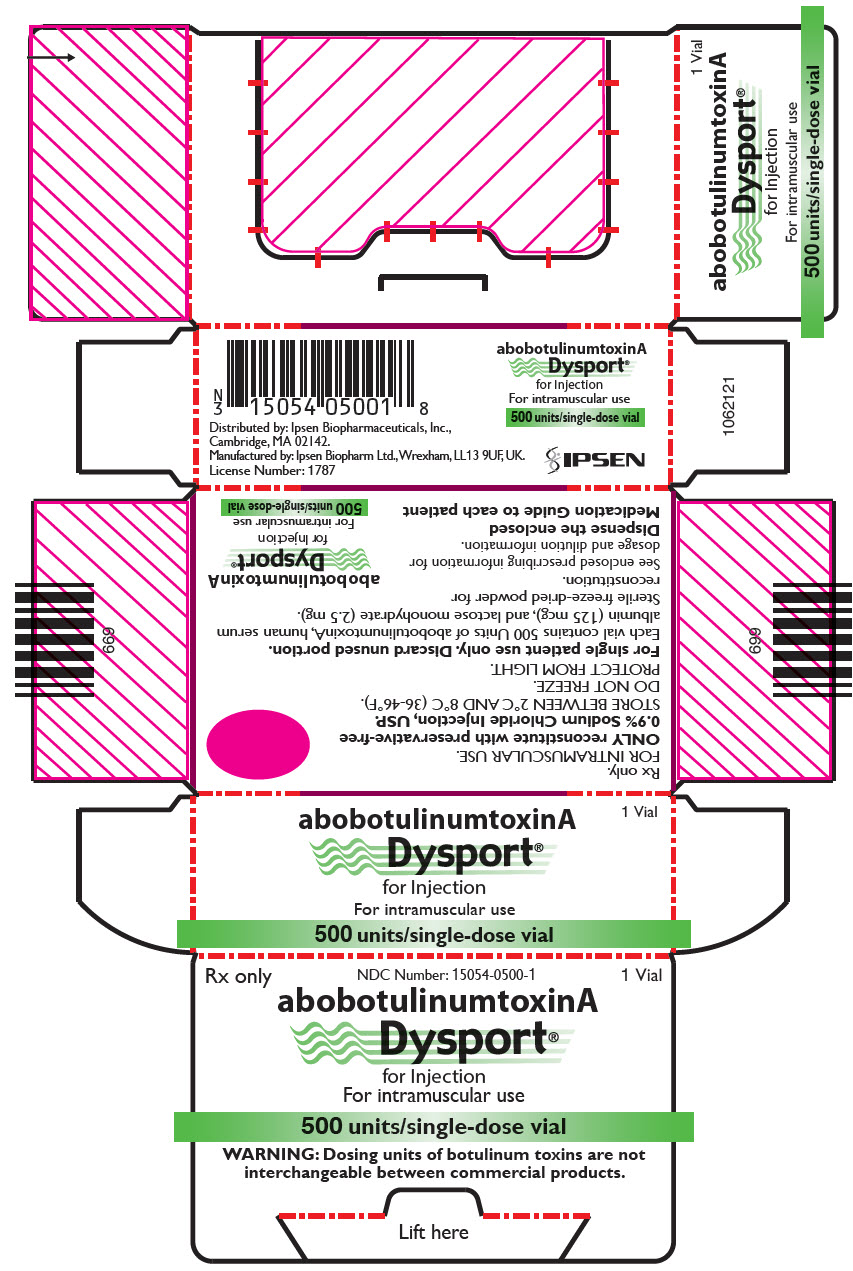
Dysport Botulinum Toxin Type A 500 U Injection, Powder, Lyophilized, For Solution, 1 vial — NDC 15054-0500-1 (Billing 15054-0500-01)
This is a package of 1 vial of Dysport Botulinum Toxin Type A 500 U Injection, Powder, Lyophilized, For Solution from Ipsen Biopharmaceuticals, Inc., marketed since Nov 2009 and currently FDA-listed. It is the main listing for this product, which comes in 3 package sizes.
NDC database record
One package, one record: these facts belong to NDC 15054-0500-1 alone.
- Record
- FDA NDC Directory package listing · Human prescription drug
- Code segments
- 15054 labeler · 0500 product · 1 package
- Package marketed since
- Nov 2, 2009
- Sample package
- No — commercial package
- Listing certified through
- Dec 31, 2026
- Billing quantity
- 1 EA per package
- Barcode (UPC)
- 0315054050018
- Medicaid fills, this package
- 7,557 prescriptions in the last four reported quarters
- FDA record last changed
- Jul 24, 2026
Identity & classification
Regulatory identifiers FDA, NLM and CMS codes for this package
Drug-database identifiers Medi-Span GPI and First Databank GCN / HICL / AHFS classification
- GSN (GCN sequence number): 018469
- GCN: 23361
- GPI-14 (Medi-Span): 74400020032120
- HICL (First Databank): 036477
- AHFS class code: 12:20.20.24
- RxCUI (RxNorm): 1789950
Where does this data come from?
- FDA openFDA NDC Directory · synced Oct 8, 2026
- FDA label on DailyMed · label index refreshed Oct 8, 2026
- RxNorm (NLM RxNav) · catalog refreshed Oct 1, 2026
- Medi-Span GPI (licensed)
- First Databank (licensed) · refreshed Oct 8, 2026
RxNorm drug class
This medicine belongs to the Acetylcholine Release Inhibitor class.
Where does this data come from?
- RxClass (NLM) · catalog refreshed Oct 1, 2026
Clinical
- Botox is used for overactive bladder, bladder leakage linked to a neurologic condition, chronic migraine prevention, spasticity, cervical dystonia, severe underarm sweating, and ey...
- A trained clinician injects it. Depending on the condition, it goes into a muscle, into the skin, or into the bladder wall through a scope. You do not take it at home.
- Soreness, bruising or swelling at the injection site is common. After bladder treatment, urinary tract infections and trouble emptying the bladder can occur. Neck pain, headache an...
- Get help right away if you have trouble swallowing, speaking or breathing, or notice widespread weakness, double vision or drooping eyelids. These can start hours to weeks later. A...
Patient education
Supplement & herbal interactions
Where does this data come from?
- MedlinePlus (NLM) · refreshed Oct 8, 2026
- FDA label on DailyMed · label index refreshed Oct 8, 2026
Ask a licensed pharmacist directly — free, answered by our team.
Pricing
A drug doesn't have one price. Each row is a different public payment system, and none is what you'd pay at the counter — that depends on your insurance. The ⓘ on each row explains what it measures.
| Price system | Per mL | Per package |
|---|---|---|
| Retail pharmacies payNADAC · weekly | Not in the retail survey — common for institutional, discontinued, or low-volume packs. | |
| Medicaid paysCMS SDUD · 12 mo | $825.93 | — |
| Medicare drug plans payPart D · quarterly | No Part D plan price is available for this NDC in our data. | |
| Medicare Part B allowsASP · J0586 | $8.946 / J0586 unit | — |
Where does this data come from?
- CMS NADAC weekly file
- CMS ASP pricing files · refreshed Sep 20, 2026
- CMS Medicaid State Drug Utilization Data · through Q1 2026
- CMS Part D plan pricing files · refreshed Sep 24, 2026
- VA National Acquisition Center price file
Billing & reimbursement
Where does this data come from?
- CMS ASP NDC-HCPCS crosswalk · refreshed Sep 22, 2026
- DMEPDAC NDC-HCPCS crosswalk
- openFDA NSDE billing units · refreshed Oct 7, 2026
Packaging — all sizes for this product
| Package NDC | Description | Marketing start | Marketing end | Status |
|---|---|---|---|---|
| 15054-0500-01 You're viewing this Main listing | 1 VIAL in 1 CARTON / 1 INJECTION, POWDER, LYOPHILIZED, FOR SOLUTION in 1 VIAL | 2009-11-02 | — | Active |
| 15054-0500-02 15054-0500-2 | 2 VIAL in 1 CARTON / 1 INJECTION, POWDER, LYOPHILIZED, FOR SOLUTION in 1 VIAL | 2009-11-02 | — | Active |
| 15054-0500-09 15054-0500-9 | 1 VIAL in 1 CARTON / 1 INJECTION, POWDER, LYOPHILIZED, FOR SOLUTION in 1 VIAL Sample | 2009-11-02 | — | Active |
In Medicaid, this is the most-dispensed pack of this product — about 100% of fills over the last four reported quarters. See all packs ↓
Pack size FAQ
What quantity is in this package?
How does this package differ from NDC 15054-0500-09?
What NDC number is used to bill for this package of Dysport Botulinum Toxin Type A 500 U Injection, Powder, Lyophilized, For Solution?
Therapeutic equivalents
| Product | Labeler | Pack | NADAC/unit | TE | Status | Price vs. this |
|---|---|---|---|---|---|---|
| Dysport 500 Uthis 15054-0500-01 | Ipsen | 1 vial | — | — | FDA listed | — |
Where does this data come from?
- FDA openFDA NDC Directory · synced Oct 8, 2026
- FDA Purple Book · refreshed Oct 5, 2026
- CMS NADAC weekly file
Availability & biosimilar status
Biologics have no small-molecule generics; biosimilar competition is tracked in the FDA Purple Book.
Where does this data come from?
- FDA Purple Book · refreshed Oct 5, 2026
Inactive Ingredients / Excipients
Inactive ingredients, also called excipients, are components of the drug product other than the active ingredient. They may include fillers, dyes, coatings, preservatives, flavors, or other formulation ingredients.
🧪 Avoiding an ingredient? See OnabotulinumtoxinA Injection inactive ingredients by manufacturer: every current product's list side by side, so you can ask your pharmacy for the version that does not list it.
💡 Tap an ingredient (hover on desktop) to see what it is and why it’s used.
-
UNII ZIF514RVZR
A protein derived from human blood plasma. In medicines, it acts as a stabilizer and binder, helping maintain drug potency and form, and may improve how the medication disperses or dissolves in the body.
-
UNII EWQ57Q8I5X
Lactose monohydrate is a natural sugar derived from milk. It serves as a filler and binder in tablets and capsules, helping create the proper size, texture, and consistency of the medicine.
2 inactive ingredients listed in the exact product block matched to this NDC.
Where does this data come from?
ingredient classCode="IACT" elements from the exact product block matched by this NDC. Label-section narrative from DailyMed / the openFDA label index is shown separately when available.- FDA label on DailyMed · label index refreshed Oct 8, 2026
- FDA openFDA NDC Directory · synced Oct 8, 2026
Inactive ingredient FAQ
Are inactive ingredients the same for every manufacturer?
Why might an inactive ingredient be missing?
Can inactive ingredients matter?
Manufacturer & labeler
More NDCs from Ipsen Biopharmaceuticals, Inc. labeler code 15054
- Sohonos palovarotene 1.5 mg Capsule NDC 15054-0015-1
- Sohonos palovarotene 2.5 mg Capsule NDC 15054-0025-1
- Onivyde IRINOTECAN HYDROCHLORIDE 4.3 mg/mL Injection, Powder, For Solution NDC 15054-0043-1
- Sohonos palovarotene 5 mg Capsule NDC 15054-0050-1
- Iqirvo elafibranor 80 mg Tablet, Film Coated NDC 15054-0080-1
- Sohonos palovarotene 10 mg Capsule NDC 15054-0100-1
- Dysport Botulinum Toxin Type A 300 U Injection, Powder, Lyophilized, For Solution NDC 15054-0530-6
- Increlex mecasermin 40 mg/4mL Injection, Solution NDC 15054-1040-5
- SOMATULINE DEPOT lanreotide acetate 60 mg/.2mL Injection NDC 15054-1060-4
- SOMATULINE DEPOT lanreotide acetate 90 mg/.3mL Injection NDC 15054-1090-4
- SOMATULINE DEPOT lanreotide acetate 120 mg/.5mL Injection NDC 15054-1120-4
- Bylvay odevixibat 200 ug Capsule, Coated Pellets NDC 15054-3301-1
Where does this data come from?
- FDA openFDA NDC Directory · synced Oct 8, 2026
- Drugs@FDA
Full prescribing information FDA SPL
🚨 Boxed Warning ▾
WARNING: DISTANT SPREAD OF TOXIN EFFECT Postmarketing reports indicate that the effects of DYSPORT and all botulinum toxin products may spread from the area of injection to produce symptoms consistent with botulinum toxin effects. These may include asthenia, generalized muscle weakness, diplopia, blurred vision, ptosis, dysphagia, dysphonia, dysarthria, urinary incontinence and breathing difficulties. These symptoms have been reported hours to weeks after injection.
Swallowing and breathing difficulties can be life threatening and there have been reports of death. The risk of symptoms is probably greatest in children treated for spasticity but symptoms can also occur in adults treated for spasticity and other conditions, particularly in those patients who have underlying conditions that would predispose them to these symptoms. In unapproved uses and in approved indications, cases of spread of effect have been reported at doses comparable to or lower than the maximum recommended total dose [see Warnings and Precautions (5.1) ] .
WARNING: DISTANT SPREAD OF TOXIN EFFECT See full prescribing information for complete boxed warning The effects of DYSPORT and all botulinum toxin products may spread from the area of injection to produce symptoms consistent with botulinum toxin effects. These symptoms have been reported hours to weeks after injection. Swallowing and breathing difficulties can be life-threatening and there have been reports of death.
The risk of symptoms is probably greatest in children treated for spasticity but symptoms can occur in adults, particularly in those patients who have underlying conditions that would predispose them to these symptoms ( 5.1 ).
🎯 Indications and Usage ▾
1 INDICATIONS AND USAGE DYSPORT is an acetylcholine release inhibitor and a neuromuscular blocking agent indicated for: The treatment of cervical dystonia in adults ( 1.1 ) The temporary improvement in the appearance of moderate to severe glabellar lines associated with procerus and corrugator muscle activity in adults < 65 years of age ( 1.2 ) The treatment of spasticity in patients 2 years of age and older ( 1.3 )
1.1Cervical Dystonia DYSPORT is indicated for the treatment of cervical dystonia in adults.
1.2Glabellar Lines DYSPORT is indicated for the temporary improvement in the appearance of moderate to severe glabellar lines associated with procerus and corrugator muscle activity in adults less than 65 years of age.
1.3Spasticity DYSPORT is indicated for the treatment of spasticity in patients 2 years of age and older.
⏱️ Dosage and Administration ▾
2 DOSAGE AND ADMINISTRATION Preparation of DYSPORT Solution for Administration ( 2.2 ) Once reconstituted, store in original container in a refrigerator at 2°C to 8°C (36°F to 46°F) and use within 24 hours Do not freeze after reconstitution Reconstitution instructions are specific for the 300 Unit and 500 Unit vials Reconstituted DYSPORT is intended for intramuscular injection only. After reconstitution, DYSPORT should be used for only one injection session and for only one patient Cervical Dystonia ( 2.3 ) Initial dose is 500 Units given intramuscularly as a divided dose among the affected muscles Re-treatment every 12 to 16 weeks or longer, as necessary, based on return of clinical symptoms with doses administered between 250 Units and 1000 Units to optimize clinical benefit Re-treatment should not occur in intervals of less than 12 weeks Titrate in 250 Unit steps according to patient's response Glabellar Lines ( 2.4 ) Administer a total dose of 50 Units, divided in five equal aliquots of 10 Units each, intramuscularly to affected muscles to achieve clinical effect Re-treatment should be administered no more frequently than every 3 months Spasticity in Adults ( 2.5 ) Select dose based on muscles affected, severity of spasticity, and treatment and adverse reaction history with botulinum toxins Dosing for upper limb spasticity: between 500 Units and 1000 Units Dosing for lower limb spasticity: up to 1500 Units The maximum recommended total dose per treatment session (upper and lower limb combined) in adults is 1500 Units Re-treatment, based on return of clinical symptoms, should not occur in intervals of less than 12 weeks Spasticity in Pediatric Patients ( 2.6 ) Select dose based on the affected muscle, severity of spasticity, and treatment and adverse reaction history with all botulinum toxins.
Recommended dosing for upper limb spasticity: 8 Units/kg to 16 Units/kg per limb. The maximum recommended total dose administered per treatment session must not exceed 16 Units/kg or 640 Units, whichever is lower. Recommended dosing for lower limb spasticity: 10 Units/kg to 15 Units/kg per limb.
Total dose per treatment session must not exceed 15 Units/kg for unilateral lower limb injections, 30 Units/kg for bilateral injections, or 1000 Units, whichever is lower. The maximum recommended total dose per treatment session is 30 Units/kg or 1000 Units, whichever is lower. Re-treatment, based on return of clinical symptoms, should not occur in intervals of less than 3 months.
2.1Instructions for Safe Use The potency units of DYSPORT are not interchangeable with other preparations of botulinum toxin products and, therefore, units of biological activity of DYSPORT cannot be compared to or converted into units of any other botulinum toxin products assessed with any other specific assay method [see Warnings and Precautions (5.2) and Description (11) ] . Reconstituted DYSPORT is intended for intramuscular injection only.
2.2Preparation of DYSPORT Solution for Administration DYSPORT is supplied as a dry powder, in single-dose 300 Unit and 500 Unit vials, which must be reconstituted with preservative-free 0.9% Sodium Chloride Injection, USP using aseptic technique prior to intramuscular injection. Table 1 provides dilution instructions for the 300 Unit and 500 Unit vials, depending on the desired final concentration. The desired final concentration after dilution varies depending on the indication (see Table 2 for the recommended solution concentration after dilution).
Table 1: Dilution Instructions for DYSPORT Vials (500 Units and 300 Units) Diluent Preservative-free 0.9% Sodium Chloride Injection, USP Only per 500 Unit Vial Resulting Dose Units per 0.1 mL Diluent per 300 Unit Vial Resulting Dose Units per 0.1 mL Note: These dilutions are calculated for an injection volume of 0.1 mL. A decrease or increase in the DYSPORT dose is also possible by administering a smaller or larger injection volume (i.e., 0.05 mL (50% decrease in dose), 0.08 mL… [Excerpted — this section continues on DailyMed.]
💊 Dosage Forms and Strengths ▾
3 DOSAGE FORMS AND STRENGTHS For injection: 300 Units or 500 Units of lyophilized powder in a single-dose vial for reconstitution with preservative-free 0.9% Sodium Chloride Injection, USP. For Injection: 300 Units or 500 Units lyophilized powder in a single-dose vial ( 3 )
⛔ Contraindications ▾
4 CONTRAINDICATIONS DYSPORT is contraindicated in patients with: Known hypersensitivity to any botulinum toxin products, cow's milk protein, or to any of the components in the formulation [see Warnings and Precautions (5.3) ]. This product may contain trace amounts of cow's milk protein [see Description (11) ] . Infection at the proposed injection site(s).
Hypersensitivity to: any botulinum toxin product or excipients ( 4 , 5.3 ) cow's milk protein ( 4 , 5.3 ) Infection at the proposed injection site(s) ( 4 )
⚠️ Warnings and Cautions ▾
5 WARNINGS AND PRECAUTIONS The potency units of DYSPORT are not interchangeable with other preparations of botulinum toxin products ( 5.2 ) Immediate medical attention may be required in cases of respiratory, speech or swallowing difficulties ( 5.4 ) Recommended dose and frequency of administration should not be exceeded ( 5.5 ) Dry eye may occur with glabellar line treatment; if symptoms persist, consider referring patient to an ophthalmologist ( 5.6 ) Concomitant neuromuscular disorder may exacerbate clinical effects of treatment ( 5.7 )
5.1Spread of Toxin Effect Postmarketing safety data from DYSPORT and other approved botulinum toxins suggest that botulinum toxin effects may, in some cases, be observed beyond the site of local injection. The symptoms are consistent with the mechanism of action of botulinum toxin and may include asthenia, generalized muscle weakness, diplopia, blurred vision, ptosis, dysphagia, dysphonia, dysarthria, urinary incontinence and breathing difficulties. These symptoms have been reported hours to weeks after injection.
Swallowing and breathing difficulties can be life-threatening and there have been reports of death related to spread of toxin effects . The risk of symptoms is probably greatest in children treated for spasticity but symptoms can also occur in adults treated for spasticity and other conditions, particularly in those patients who have underlying conditions that would predispose them to these symptoms. In unapproved uses and approved indications, symptoms consistent with spread of toxin effect have been reported at doses comparable to or lower than the maximum recommended total dose .
5.2Lack of Interchangeability between Botulinum Toxin Products The potency Units of DYSPORT are specific to the preparation and assay method utilized. They are not interchangeable with other preparations of botulinum toxin products and, therefore, units of biological activity of DYSPORT cannot be compared to or converted into units of any other botulinum toxin products assessed with any other specific assay method [see Description (11) ] .
5.3Hypersensitivity Reactions Serious hypersensitivity reactions have been reported with DYSPORT. Hypersensitivity reactions include anaphylaxis, serum sickness, urticaria, soft tissue edema, and dyspnea. If such a serious hypersensitivity reaction occurs, discontinue further injection of DYSPORT and institute appropriate medical therapy immediately.
5.4Dysphagia and Breathing Difficulties Treatment with DYSPORT and other botulinum toxin products can result in swallowing or breathing difficulties. Patients with pre-existing swallowing or breathing difficulties may be more susceptible to these complications. In most cases, this is a consequence of weakening of muscles in the area of injection that are involved in breathing or swallowing.
When distant effects occur, additional respiratory muscles may be involved [see Boxed Warning and Warnings and Precautions (5.2) ] . Deaths as a complication of severe dysphagia have been reported after treatment with botulinum toxin. Dysphagia may persist for several weeks and require use of a feeding tube to maintain adequate nutrition and hydration.
Aspiration may result from severe dysphagia and is a particular risk when treating patients in whom swallowing or respiratory function is already compromised. Treatment of cervical dystonia with botulinum toxins may weaken neck muscles that serve as accessory muscles of ventilation. This may result in a critical loss of breathing capacity in patients with respiratory disorders who may have become dependent upon these accessory muscles.
There have been post-marketing reports of serious breathing difficulties, including respiratory failure. Patients treated with botulinum toxin may require immediate medical attention should they develop problems with swallowing, speech or respiratory disorders. These reactions can occur within hours to weeks after injection with botulinum toxin [see Bo… [Excerpted — this section continues on DailyMed.]
🤒 Adverse Reactions ▾
6 ADVERSE REACTIONS The following serious adverse reactions are discussed below and elsewhere in labeling: Spread of Toxin Effect [see Warnings and Precautions (5.1) ] Lack of Interchangeability between Botulinum Toxin Products [see Warnings and Precautions (5.2) ] Hypersensitivity Reactions [see Warnings and Precautions (5.3) ] Dysphagia and Breathing Difficulties [see Warnings and Precautions (5.4) ] Facial Anatomy in the Treatment of Glabellar Lines [see Warnings and Precautions (5.5) ] Dry Eye with the Treatment of Glabellar Lines [see Warnings and Precautions (5.6) ] Pre-existing Neuromuscular Disorders [see Warnings and Precautions (5.7) ] Human Albumin and Transmission of Viral Diseases [see Warnings and Precautions (5.8) ] Intradermal Immune Reaction [see Warnings and Precautions (5.9) ] Pre-existing Conditions at the Injection Site [see Warnings and Precautions (5.10) ] Most commonly observed adverse reactions are ( 6.1 ): Cervical Dystonia (≥5%): muscular weakness, dysphagia, dry mouth, injection site discomfort, fatigue, headache, musculoskeletal pain, dysphonia, injection site pain and eye disorders Glabellar Lines (≥2%): nasopharyngitis, headache, injection site pain, injection site reaction, upper respiratory tract infection, eyelid edema, eyelid ptosis, sinusitis, nausea, and blood present in urine Spasticity in Adults Upper limb spasticity (≥4%): muscular weakness Lower limb spasticity (≥5%): falls, muscular weakness, and pain in extremity Spasticity in Pediatric Patients Upper limb spasticity (≥10%): upper respiratory tract infection and pharyngitis Lower limb spasticity (≥10%): nasopharyngitis, cough, and pyrexia To report SUSPECTED ADVERSE REACTIONS, contact Ipsen Biopharmaceuticals, Inc. at 855-463-5127 or FDA at 1-800-FDA-1088 or www.fda.gov/medwatch
6.1Clinical Trials Experience Because clinical trials are conducted under widely varying conditions, adverse reaction rates observed in the clinical trials of a drug cannot be directly compared to rates in the clinical trials of another drug and may not reflect the rates observed in practice. Cervical Dystonia The data described below reflect exposure to DYSPORT in 446 cervical dystonia patients in 7 studies. Of these, two studies were randomized, double-blind, single treatment, placebo-controlled studies with subsequent optional open-label treatment in which dose optimization (250 to 1000 Units per treatment) over the course of 5 treatment cycles was allowed [see Clinical Studies (14.1) ].
The population was almost entirely Caucasian (99%) with a median age of 51 years (range 18–82 years). Most patients (87%) were less than 65 years of age; 58.4% were women. Common Adverse Reactions The most commonly reported adverse reactions (occurring in 5% or more of patients who received 500 Units of DYSPORT in the placebo-controlled clinical trials) in cervical dystonia patients were: muscular weakness, dysphagia, dry mouth, injection site discomfort, fatigue, headache, musculoskeletal pain, dysphonia, injection site pain and eye disorders (consisting of blurred vision, diplopia, and reduced visual acuity and accommodation).
Other than injection site reactions, most adverse reactions became noticeable about one week after treatment and lasted several weeks. The rates of adverse reactions were higher in the combined controlled and open-label experience than in the placebo-controlled trials. During the clinical studies, two patients (<1%) experienced adverse reactions leading to withdrawal.
One patient experienced disturbance in attention, eyelid disorder, feeling abnormal and headache, and one patient experienced dysphagia. Table 7 compares the incidence of the most frequent adverse reactions from a single treatment cycle of 500 Units of DYSPORT compared to placebo [see Clinical Studies (14.1) ] . Table 7: Most Common Adverse Reactions (≥5%) and Greater than Placebo in the Pooled, Double-Blind, Placebo-Controlled Phase of Clinical Trials in Patients with Cervical Dyston… [Excerpted — this section continues on DailyMed.]
🔄 Drug Interactions ▾
7 DRUG INTERACTIONS Concomitant use of DYSPORT and aminoglycosides or other agents interfering with neuromuscular transmission or muscle relaxants, should be observed closely because effect of DYSPORT may be potentiated ( 7.1 , 7.4 ) Anticholinergic drugs may potentiate systemic anticholinergic effects ( 7.2 ) The effect of administering different botulinum neurotoxins during the course of treatment with DYSPORT is unknown ( 7.3 )
7.1Aminoglycosides and Other Agents Interfering with Neuromuscular Transmission Co-administration of DYSPORT and aminoglycosides or other agents interfering with neuromuscular transmission (e.g., curare-like agents) should only be performed with caution because the effect of the botulinum toxin may be potentiated. If co-administered, observe the patient closely.
7.2Anticholinergic Drugs Use of anticholinergic drugs after administration of DYSPORT may potentiate systemic anticholinergic effects such as blurred vision.
7.3Other Botulinum Neurotoxin Products The effect of administering botulinum neurotoxin products including DYSPORT, at the same time or within several months of each other is unknown. Excessive weakness may be exacerbated by another administration of botulinum toxin prior to the resolution of the effects of a previously administered botulinum toxin.
7.4Muscle Relaxants Excessive weakness may also be exaggerated by administration of a muscle relaxant before or after administration of DYSPORT.
👥 Use in Specific Populations ▾
8 USE IN SPECIFIC POPULATIONS Administer DYSPORT with care in elderly patients, reflecting the greater frequency of concomitant disease and other drug therapy ( 8.5 )
8.1Pregnancy Risk Summary There are no adequate and well-controlled clinical studies with DYSPORT in pregnant women. DYSPORT should only be used during pregnancy if the potential benefit justifies the potential risk to the fetus. DYSPORT produced embryo-fetal toxicity in relation to maternal toxicity when given to pregnant rats and rabbits at doses lower than or similar to the maximum recommended human dose (MRHD) of 1000 Units on a body weight (Units/kg) basis (see Data ).
In the U.S. general population, the estimated background risk of major birth defects and miscarriage in clinically recognized pregnancies is 2-4% and 15-20%, respectively. The background risk of major birth defects and miscarriage for the indicated populations is unknown. Data Animal Data In a study in which pregnant rats received daily intramuscular injections of DYSPORT (2.2, 6.6, or 22 Units/kg on gestation days 6 through 17 or intermittently 44 Units/kg on gestation days 6 and 12 only) during organogenesis, increased early embryonic death was observed with both schedules at the highest tested doses (22 and 44 Units/kg), which were associated with maternal toxicity.
The no-effect dose for embryo-fetal developmental toxicity was
2.2Units/kg (less than the maximum recommended human dose [MRHD] on a body weight basis). In a study in which pregnant rabbits received daily intramuscular injections of DYSPORT (0.3, 3.3, or
6.7Units/kg) on gestation days 6 through 19 or intermittently (13.3 Units/kg on gestation days 6 and 13 only) during organogenesis, no embryofetal data were available at the highest dose administered daily (6.7 Units/kg) because of premature death in all doses at that dose. At the lower daily doses or with intermittent dosing, no adverse developmental effects were observed. All doses for which data were available are less than the MRHD on a body weight basis.
In a study in which pregnant rats received 6 weekly intramuscular injections of DYSPORT (4.4, 11.1, 22.2, or 44 Units/kg) beginning on day 6 of gestation and continuing through parturition to weaning, an increase in stillbirths was observed at the highest dose tested, which was maternally toxic. The no-effect dose for pre- and post-natal developmental toxicity was
22.2Units/kg (similar to the MRHD).
8.2Lactation Risk Summary There are no data on the presence of DYSPORT in human or animal milk, the effects on the breastfed infant, or the effects on milk production. The developmental and health benefits of breastfeeding should be considered along with the mother's clinical need for DYSPORT and any potential adverse effects on the breastfed infant from DYSPORT or from the underlying maternal condition.
8.3Females and Males of Reproductive Potential Infertility In rats, DYSPORT produced adverse effects on mating behavior and fertility [see Nonclinical Toxicology (13.1) ].
8.4Pediatric Use Cervical Dystonia Safety and effectiveness in pediatric patients have not been established [ see Boxed Warning and Warnings and Precautions (5.2) ] . Glabellar Lines DYSPORT is not recommended for use in pediatric patients less than 18 years of age. Spasticity Safety and effectiveness have been established in pediatric patients 2 years of age and older [see Warnings and Precautions (5.1) , Adverse Reactions (6.1) , and Clinical Studies (14.4) ].
The safety and effectiveness of DYSPORT have been established by evidence from adequate and well-controlled studies of DYSPORT in patients 2 years of age and older with upper and lower limb spasticity. The safety and effectiveness of DYSPORT injected into proximal muscles of the lower limb for the treatment of spasticity in pediatric patients has not been established [see Boxed Warning , Warnings and Precautions (5.2) and Adverse Reactions (6.1) ] . Safety and effectiveness in pediatric patients… [Excerpted — this section continues on DailyMed.]
🤰 Pregnancy ▾
8.1Pregnancy Risk Summary There are no adequate and well-controlled clinical studies with DYSPORT in pregnant women. DYSPORT should only be used during pregnancy if the potential benefit justifies the potential risk to the fetus. DYSPORT produced embryo-fetal toxicity in relation to maternal toxicity when given to pregnant rats and rabbits at doses lower than or similar to the maximum recommended human dose (MRHD) of 1000 Units on a body weight (Units/kg) basis (see Data ).
In the U.S. general population, the estimated background risk of major birth defects and miscarriage in clinically recognized pregnancies is 2-4% and 15-20%, respectively. The background risk of major birth defects and miscarriage for the indicated populations is unknown. Data Animal Data In a study in which pregnant rats received daily intramuscular injections of DYSPORT (2.2, 6.6, or 22 Units/kg on gestation days 6 through 17 or intermittently 44 Units/kg on gestation days 6 and 12 only) during organogenesis, increased early embryonic death was observed with both schedules at the highest tested doses (22 and 44 Units/kg), which were associated with maternal toxicity.
The no-effect dose for embryo-fetal developmental toxicity was
2.2Units/kg (less than the maximum recommended human dose [MRHD] on a body weight basis). In a study in which pregnant rabbits received daily intramuscular injections of DYSPORT (0.3, 3.3, or
6.7Units/kg) on gestation days 6 through 19 or intermittently (13.3 Units/kg on gestation days 6 and 13 only) during organogenesis, no embryofetal data were available at the highest dose administered daily (6.7 Units/kg) because of premature death in all doses at that dose. At the lower daily doses or with intermittent dosing, no adverse developmental effects were observed. All doses for which data were available are less than the MRHD on a body weight basis.
In a study in which pregnant rats received 6 weekly intramuscular injections of DYSPORT (4.4, 11.1, 22.2, or 44 Units/kg) beginning on day 6 of gestation and continuing through parturition to weaning, an increase in stillbirths was observed at the highest dose tested, which was maternally toxic. The no-effect dose for pre- and post-natal developmental toxicity was
22.2Units/kg (similar to the MRHD).
🧒 Pediatric Use ▾
8.4Pediatric Use Cervical Dystonia Safety and effectiveness in pediatric patients have not been established [ see Boxed Warning and Warnings and Precautions (5.2) ] . Glabellar Lines DYSPORT is not recommended for use in pediatric patients less than 18 years of age. Spasticity Safety and effectiveness have been established in pediatric patients 2 years of age and older [see Warnings and Precautions (5.1) , Adverse Reactions (6.1) , and Clinical Studies (14.4) ].
The safety and effectiveness of DYSPORT have been established by evidence from adequate and well-controlled studies of DYSPORT in patients 2 years of age and older with upper and lower limb spasticity. The safety and effectiveness of DYSPORT injected into proximal muscles of the lower limb for the treatment of spasticity in pediatric patients has not been established [see Boxed Warning , Warnings and Precautions (5.2) and Adverse Reactions (6.1) ] . Safety and effectiveness in pediatric patients below the age of 2 years have not been established [see Boxed Warning and Warnings and Precautions (5.2) ] .
Juvenile Animal Data In a study in which juvenile rats received a single intramuscular injection of DYSPORT (1, 3, or 10 Units/animal) on postnatal day 21, decreased growth and bone length (injected and contralateral limbs), delayed sexual maturation, and decreased fertility were observed at the highest dose tested, which was associated with excessive toxicity during the first week after dosing. In a study in which juvenile rats received weekly intramuscular injections of DYSPORT (0.1, 0.3, or
1.0Units/animal) from postnatal day 21 to 13 weeks of age, decreases in bone mineral content in the injected limb, associated with atrophy of injected and adjacent muscles, were observed at the highest dose tested. No adverse effects were observed on neurobehavioral development. However, dose levels were not adjusted for growth of the pups.
On a body weight basis, the doses at the end of the dosing period were approximately 15% of those at initiation of dosing. Therefore, the effects of DYSPORT throughout postnatal development were not adequately evaluated.
🧓 Geriatric Use ▾
8.5Geriatric Use Cervical Dystonia There were insufficient numbers of patients aged 65 years and over in the clinical studies to determine whether they respond differently than younger patients. In general, elderly patients should be observed to evaluate their tolerability of DYSPORT, due to the greater frequency of concomitant disease and other drug therapy [see Dosage and Administration (2.3) ] . Glabellar Lines Of the total number of subjects in the placebo-controlled clinical studies of DYSPORT, 8 (1%) were 65 years and over.
Efficacy was not observed in subjects aged 65 years and over [see Clinical Studies (14.2) ] . For the entire safety database of geriatric subjects, although there was no increase in the incidence of eyelid ptosis, geriatric subjects did have an increase in the number of ocular adverse reactions compared to younger subjects (11% vs. 5%) [see Dosage and Administration (2.4) ] .
Adult Spasticity Upper Limb Spasticity Of the total number of subjects in placebo-controlled clinical studies of DYSPORT, 30 percent were aged 65 years and over, while 8 percent were aged 75 years and over. No overall differences in safety or effectiveness were observed between these subjects and younger subjects. Other reported clinical experience has not identified differences in responses between the elderly and younger patients, but greater sensitivity of some older individuals cannot be ruled out.
Lower Limb Spasticity Of the total number of subjects in placebo controlled clinical studies of DYSPORT, 18% (n = 115) were 65 and over, while 3% (n = 20) were 75 and over. Subjects aged 65 years and over who were treated with DYSPORT reported a greater percentage of adverse reactions as compared to younger subjects (46% versus 39%). Fall and asthenia were observed with greater frequency in older subjects, as compared to those younger (10% versus 6% and 4% versus 2%, respectively).
🆘 Overdosage ▾
10 OVERDOSAGE Excessive doses of DYSPORT may be expected to produce neuromuscular weakness with a variety of symptoms. Respiratory support may be required where excessive doses cause paralysis of respiratory muscles. In the event of overdose, the patient should be medically monitored for symptoms of excessive muscle weakness or muscle paralysis [see Boxed Warning and Warnings and Precautions (5.2) ] .
Symptomatic treatment may be necessary. Symptoms of overdose are likely not to be present immediately following injection. Should accidental injection or oral ingestion occur, the person should be medically supervised for several weeks for signs and symptoms of excessive muscle weakness or paralysis.
There is no significant information regarding overdose from clinical studies. In the event of overdose, antitoxin raised against botulinum toxin is available from the Centers for Disease Control and Prevention (CDC) in Atlanta, GA. However, the antitoxin will not reverse any botulinum toxin-induced effects already apparent by the time of antitoxin administration.
In the event of suspected or actual cases of botulinum toxin poisoning, please contact your local or state Health Department to process a request for antitoxin through the CDC. If you do not receive a response within 30 minutes, please contact the CDC directly at 770-488-7100. More information can be obtained at https://www.cdc.gov/laboratory/drugservice/index.html .
🧬 Clinical Pharmacology ▾
12 CLINICAL PHARMACOLOGY
12.1Mechanism of Action DYSPORT inhibits release of the neurotransmitter, acetylcholine, from peripheral cholinergic nerve endings. Toxin activity occurs in the following sequence: Toxin heavy chain mediated binding to specific surface receptors on nerve endings, internalization of the toxin by receptor mediated endocytosis, pH-induced translocation of the toxin light chain to the cell cytosol and cleavage of SNAP25 leading to intracellular blockage of neurotransmitter exocytosis into the neuromuscular junction. This accounts for the therapeutic utility of the toxin in diseases characterized by excessive efferent activity in motor nerves.
Recovery of transmission occurs gradually as the neuromuscular junction recovers from SNAP25 cleavage and as new nerve endings are formed.
12.2Pharmacodynamics The primary pharmacodynamic effect of DYSPORT is due to chemical denervation of the treated muscle resulting in a measurable decrease of the compound muscle action potential, causing a localized reduction of muscle activity.
12.3Pharmacokinetics Using currently available analytical technology, it is not possible to detect DYSPORT in the peripheral blood following intramuscular injection at the recommended doses.
🧬 Mechanism of Action ▾
12.1Mechanism of Action DYSPORT inhibits release of the neurotransmitter, acetylcholine, from peripheral cholinergic nerve endings. Toxin activity occurs in the following sequence: Toxin heavy chain mediated binding to specific surface receptors on nerve endings, internalization of the toxin by receptor mediated endocytosis, pH-induced translocation of the toxin light chain to the cell cytosol and cleavage of SNAP25 leading to intracellular blockage of neurotransmitter exocytosis into the neuromuscular junction. This accounts for the therapeutic utility of the toxin in diseases characterized by excessive efferent activity in motor nerves.
Recovery of transmission occurs gradually as the neuromuscular junction recovers from SNAP25 cleavage and as new nerve endings are formed.
📦 How Supplied / Storage and Handling ▾
16 HOW SUPPLIED/STORAGE AND HANDLING DYSPORT ® (abobotulinumtoxinA) for injection is a sterile, lyophilized powder supplied in a single-dose, glass vial. Unopened vials of DYSPORT must be stored refrigerated between 2°C to 8°C (36°F to 46°F). Protect from light.
Do not use after the expiration date on the vial. All vials, including expired vials, or equipment used with DYSPORT should be disposed of carefully as is done with all medical waste. DYSPORT contains a unique hologram on the carton.
If you do not see the hologram, do not use the product. Instead contact 855-463-5127. Cervical Dystonia, Spasticity in Adults and Pediatric Patients 500 Unit Vial Each vial contains 500 Units of freeze-dried abobotulinumtoxinA.
Box containing 1 vial—NDC 15054-0500-1 Box containing 2 vials—NDC 15054-0500-2 300 Unit Vial Each vial contains 300 Units of freeze-dried abobotulinumtoxinA. Box containing 1 vial—NDC 15054-0530-6 Glabellar Lines Each vial contains 300 Units of freeze-dried abobotulinumtoxinA. Box containing 1 vial— NDC 0299-5962-30
📦 Storage and Handling ▾
DYSPORT ® (abobotulinumtoxinA) for injection is a sterile, lyophilized powder supplied in a single-dose, glass vial. Unopened vials of DYSPORT must be stored refrigerated between 2°C to 8°C (36°F to 46°F). Protect from light.
Do not use after the expiration date on the vial. All vials, including expired vials, or equipment used with DYSPORT should be disposed of carefully as is done with all medical waste. DYSPORT contains a unique hologram on the carton.
If you do not see the hologram, do not use the product. Instead contact 855-463-5127. Cervical Dystonia, Spasticity in Adults and Pediatric Patients 500 Unit Vial Each vial contains 500 Units of freeze-dried abobotulinumtoxinA.
Box containing 1 vial—NDC 15054-0500-1 Box containing 2 vials—NDC 15054-0500-2 300 Unit Vial Each vial contains 300 Units of freeze-dried abobotulinumtoxinA. Box containing 1 vial—NDC 15054-0530-6 Glabellar Lines Each vial contains 300 Units of freeze-dried abobotulinumtoxinA. Box containing 1 vial— NDC 0299-5962-30
📋 Description ▾
11 DESCRIPTION Botulinum toxin type A, the active ingredient in DYSPORT, is a purified neurotoxin type A complex produced by fermentation of the bacterium Clostridium botulinum type A, Hall Strain. It is purified from the culture supernatant by a series of precipitation, dialysis, and chromatography steps. The neurotoxin complex is composed of the neurotoxin, hemagglutinin proteins and non-toxin non-hemagglutinin protein.
DYSPORT ® (abobotulinumtoxinA) for injection is a sterile, lyophilized powder supplied in a single-dose vial for reconstitution intended for intramuscular injection. Each vial contains 300 Units or 500 Units of lyophilized abobotulinumtoxinA, human serum albumin (125 mcg) and lactose (2.5 mg). DYSPORT may contain trace amounts of cow's milk proteins [see Contraindications (4) and Warnings and Precautions (5.3) ].
The primary release procedure for DYSPORT uses a cell-based potency assay to determine the potency relative to a reference standard. The assay and reference material are specific to DYSPORT. One unit of DYSPORT corresponds to the calculated median lethal intraperitoneal dose (LD 50 ) in mice.
Due to specific details of the assay system, such as vehicle, dilution scheme and laboratory protocols, Units of biological activity of DYSPORT cannot be converted into Units of any other botulinum toxin or any toxin assessed with any other specific assay method.
💬 Information for Patients ▾
17 PATIENT COUNSELING INFORMATION Advise the patient to read the FDA-approved patient labeling (Medication Guide). Swallowing, Speaking, or Breathing Difficulties, or Other Unusual Symptoms Advise patients to inform their doctor or pharmacist if they develop any unusual symptoms (including difficulty with swallowing, speaking or breathing), or if any known symptom persists or worsens [see Warnings and Precautions (5.1 , 5.4) ]. Dry Eye with the Treatment of Glabellar Lines Inform patients that DYSPORT injection may cause eye dryness [see Warnings and Precautions (5.6) ].
Advise patients to report symptoms of eye dryness (e.g., eye pain, eye irritation, photosensitivity, or changes in vision) to their doctor. Ability to Operate Machinery or Vehicles Inform patients that if loss of strength, muscle weakness, blurred vision or drooping eyelids occur, they should avoid driving a car or engaging in other potentially hazardous activities.
💬 Medication Guide ▾
This Medication Guide has been approved by the U.S. Food and Drug Administration. Revised 9/2023 MEDICATION GUIDE DYSPORT ® ( DIS-port ) (abobotulinumtoxinA) for Injection What is the most important information I should know about DYSPORT?
DYSPORT may cause serious side effects that can be life threatening including: Problems breathing or swallowing Spread of toxin effects These problems can happen within hours, or days to weeks after an injection of DYSPORT. Call your doctor or get medical help right away if you have any of these problems after treatment with DYSPORT: 1. Problems swallowing, speaking, or breathing.
These problems can happen within hours, or days to weeks after an injection of DYSPORT usually because the muscles that you use to breathe and swallow can become weak after the injection. Death can happen as a complication if you have severe problems with swallowing or breathing after treatment with DYSPORT. People with certain breathing problems may need to use muscles in their neck to help them breathe.
These patients may be at greater risk for serious breathing problems with DYSPORT. Swallowing problems may last for several weeks. People who cannot swallow well may need a feeding tube to receive food and water.
If swallowing problems are severe, food or liquids may go into your lungs. People who already have swallowing or breathing problems before receiving DYSPORT have the highest risk of getting these problems. 2.
Spread of toxin effects. In some cases, the effect of botulinum toxin may affect areas of the body away from the injection site and cause symptoms of a serious condition called botulism. The symptoms of botulism include: loss of strength and muscle weakness all over the body blurred vision and drooping eyelids trouble saying words clearly (dysarthria) trouble breathing double vision hoarseness or change or loss of voice (dysphonia) loss of bladder control trouble swallowing These symptoms can happen within hours, or days to weeks after you receive an injection of DYSPORT.
These problems could make it unsafe for you to drive a car or do other dangerous activities. See " What should I avoid while receiving DYSPORT? " What is DYSPORT? DYSPORT is a prescription medicine that is injected into muscles and used: to treat cervical dystonia (CD) in adults to improve the look of moderate to severe frown lines between the eyebrows (glabellar lines) in adults younger than 65 years of age for a short period of time (temporary) to treat increased muscle stiffness in people 2 years of age and older with spasticity It is not known whether DYSPORT is safe or effective in people younger than: 18 years of age for the treatment of cervical dystonia 18 years of age for the treatment of glabellar lines 2 years of age for the treatment of spasticity It is not known whether DYSPORT is safe or effective for the treatment of other wrinkles.
Who should not take DYSPORT? Do not take DYSPORT if you: are allergic to DYSPORT or any of the ingredients in DYSPORT. See the end of this Medication Guide for a list of ingredients in DYSPORT are allergic to cow's milk protein had an allergic reaction to any other botulinum toxin product such as Myobloc® (rimabotulinumtoxinB), Botox® (onabotulinumtoxinA), or Xeomin® (incobotulinumtoxinA) have a skin infection at the planned injection site What should I tell my doctor before taking DYSPORT?
Tell your doctor about all your medical conditions, including if you: have a disease that affects your muscles and nerves (such as amyotrophic lateral sclerosis [ALS or Lou Gehrig's disease], myasthenia gravis or Lambert-Eaton syndrome). See " What is the most important information I should know about DYSPORT? " have allergies to any botulinum toxin product had any side effect from any botulinum toxin product in the past have or have had a breathing problem, such as asthma or emphysema have or have had swallowing problems have or have had bleeding problems have diabetes have or have had a slow heart bea… [Excerpted — this section continues on DailyMed.]
🧬 Pharmacokinetics ▾
12.3Pharmacokinetics Using currently available analytical technology, it is not possible to detect DYSPORT in the peripheral blood following intramuscular injection at the recommended doses.
🧬 Pharmacodynamics ▾
12.2Pharmacodynamics The primary pharmacodynamic effect of DYSPORT is due to chemical denervation of the treated muscle resulting in a measurable decrease of the compound muscle action potential, causing a localized reduction of muscle activity.
🔬 Clinical Studies ▾
14 CLINICAL STUDIES
14.1Cervical Dystonia The efficacy of DYSPORT was evaluated in two randomized, double-blind, placebo-controlled, single-dose, parallel-group studies in treatment-naive cervical dystonia patients. The principal analyses from these trials provide the primary demonstration of efficacy involving 252 patients (121 on DYSPORT, 131 on placebo) with 36% male and 64% female. Ninety-nine percent of the patients were Caucasian.
In both placebo-controlled studies (Study 1 and Study 2), a dose of 500 Units of DYSPORT was given by intramuscular injection divided among two to four affected muscles. These studies were followed by long-term open-label extensions that allowed titration in 250 Unit steps to doses in a range of 250 to 1000 Units, after the initial dose of 500 Units. In the extension studies, re-treatment was determined by clinical need after a minimum of 12 weeks.
The median time to re-treatment was 14 weeks and 18 weeks for the 75 th percentile. The primary assessment of efficacy was based on the total Toronto Western Spasmodic Torticollis Rating Scale (TWSTRS) change from baseline at Week 4 for both studies. The scale evaluates the severity of dystonia, patient-perceived disability from dystonia, and pain.
The adjusted mean change from baseline in the TWSTRS total score was statistically significantly greater for the DYSPORT group than the placebo group at Week 4 in both studies (see Table 14 ). Table 14: TWSTRS Total Score Efficacy Outcome from the Phase 3 Cervical Dystonia Studies Intent to Treat Population Study 1 Study 2 DYSPORT 500 Units N=55 Placebo N=61 DYSPORT 500 Units N=37 Placebo N=43 Baseline (Week 0) Mean (SD) 43.8 (8.0) 45.8 (8.9) 45.1 (8.7) 46.2 (9.4) Week 4 Mean (SD) 30.0 (12.7) 40.2 (11.8) 35.2 (13.8) 42.4 (12.2) Change from Baseline Change from baseline is expressed as adjusted least squares mean (SE) -15.6 (2.0) -6.7 (2.0) -9.6 (2.0) -3.7 (1.8) Treatment difference -8.9 Significant at p -value < 0.05 -5.9 95% confidence interval [-12.9 to -4.7] [-10.6 to -1.3] Week 8 Mean (SD) 29.3 (11.0) 39.6 (13.5) Change from Baseline -14.7 (2.0) -5.9 (2.0) Treatment difference -8.8 95% confidence interval [-12.9 to -4.7] Analyses by gender, weight, geographic region, underlying pain, cervical dystonia severity at baseline and history of treatment with botulinum toxin did not show any meaningful differences between groups.
Table 15 indicates the average DYSPORT dose, and percentage of total dose, injected into specific muscles in the pivotal clinical trials. Table 15: DYSPORT 500 Units starting dose (units and % of the total dose) by Unilateral Muscle Injected During Double-Blind Pivotal Phase 3 studies 2 and 1 Combined Number of patients injected per muscle Total number of patients in combined studies 2 and 1 who received initial treatment = 121. DYSPORT Dose Injected Percentage of the total DYSPORT Dose Injected Median [DYSPORT Units] (min, max) 75th percentile [DYSPORT Units] Median [%] (min, max) 75th percentile [%] Sternocleidomastoid 90 125 Units (50, 350) 150 Units 26.5 % (10, 70) 30.0 % Splenius capitis 85 200 Units (75, 450) 250 Units 40.0 % (15, 90) 50.0 % Trapezius 50 102.6 Units (50, 300) 150 Units 20.6 % (10, 60) 30.0 % Levator scapulae 35 105.3 Units (50, 200) 125 Units 21.1 % (10, 40) 25.0 % Scalenus (medius and anterior) 26 115.5 Units (50, 300) 150 Units 23.1 % (10, 60) 30.0 % Semispinalis capitis 21 131.6 Units (50, 250) 175 Units 29.4 % (10, 50) 35.0 % Longissimus 3 150 Units (100, 200) 200 Units 30.0 % (20, 40) 40.0 %
14.2Glabellar Lines Three double-blind, randomized, placebo-controlled, clinical studies evaluated the efficacy of DYSPORT for use in the temporary improvement of the appearance of moderate to severe glabellar lines. These three studies enrolled healthy adults (ages 19-75) with glabellar lines of at least moderate severity at maximum frown. Subjects were excluded if they had marked ptosis, deep dermal scarring, or a substantial inability to lessen glabellar lines, eve… [Excerpted — this section continues on DailyMed.]
🧪 Nonclinical Toxicology ▾
13 NONCLINICAL TOXICOLOGY
13.1Carcinogenesis, Mutagenesis, Impairment of Fertility Carcinogenesis Studies to evaluate the carcinogenic potential of DYSPORT have not been conducted. Mutagenesis Genotoxicity studies have not been conducted for DYSPORT. Impairment of Fertility In a fertility and early embryonic development study in rats in which either males (2.9, 7.2, 14.5 or 29 Units/kg) or females (7.4, 19.7, 39.4 or
78.8Units/kg) received weekly intramuscular injections prior to and after mating, dose-related increases in pre-implantation loss and reduced numbers of corpora lutea were noted in treated females. Failure to mate was observed in males that received the high dose. The no-effect dose for effects on fertility was
7.4 Units/kg in females and
14.5Units/kg in males (approximately one-half and equal to, respectively, the maximum recommended human dose of 1000 Units on a body weight basis).
📄 Carcinogenesis, Mutagenesis, Impairment of Fertility ▾
13.1Carcinogenesis, Mutagenesis, Impairment of Fertility Carcinogenesis Studies to evaluate the carcinogenic potential of DYSPORT have not been conducted. Mutagenesis Genotoxicity studies have not been conducted for DYSPORT. Impairment of Fertility In a fertility and early embryonic development study in rats in which either males (2.9, 7.2, 14.5 or 29 Units/kg) or females (7.4, 19.7, 39.4 or
78.8Units/kg) received weekly intramuscular injections prior to and after mating, dose-related increases in pre-implantation loss and reduced numbers of corpora lutea were noted in treated females. Failure to mate was observed in males that received the high dose. The no-effect dose for effects on fertility was
7.4 Units/kg in females and
14.5Units/kg in males (approximately one-half and equal to, respectively, the maximum recommended human dose of 1000 Units on a body weight basis).
📄 Recent Major Changes ▾
Dosage and Administration ( 2.2 , 2.3 , 2.5 , 2.6 ) 1/2023 Warning and Precautions ( 5.5 , 5.10 ) 9/2023
📄 Package Label / Principal Display Panel ▾
PRINCIPAL DISPLAY PANEL - 500 Units Vial Carton Rx only NDC Number: 15054-0500-1 1 Vial abobotulinumtoxinA Dysport ® for Injection For intramuscular use 500 units/single-dose vial WARNING: Dosing units of botulinum toxins are not interchangeable between commercial products. Lift here PRINCIPAL DISPLAY PANEL - 500 Units Vial Carton
PRINCIPAL DISPLAY PANEL - 300 Units Vial Carton Rx only NDC Number: 15054-0530-6 1 Vial abobotulinumtoxinA Dysport ® for Injection For intramuscular use 300 units/single-dose vial WARNING: Dosing units of botulinum toxins are not interchangeable between commercial products. Lift here PRINCIPAL DISPLAY PANEL - 300 Units Vial Carton
Medicaid utilization & spend
Medicaid utilization by pack size
Medicare Part D spend CMS · PART D · 2026 (Q1)
About this NDC listing & data coverage
What data is (and isn’t) available for this NDC — tap to expand
| NDC identity (package / product / labeler codes) | ✓ Available |
| Labeler | ✓ Available |
| Product & package description | ✓ Available |
| Marketing category & status | ✓ Available |
| Active ingredient / dosage form / route | ✓ Available |
| FDA label (SPL via DailyMed) | ✓ Available |
| Package photos | ✓ Available |
| Inactive ingredients (structured) | ✓ Available |
| NADAC pharmacy acquisition price (CMS) | — Not published for this NDC CMS publishes NADAC only for NDCs reported in its retail-pharmacy survey. |
| Orange Book / therapeutic-equivalence data | — Not published for this NDC Applies only to products approved under an NDA/ANDA; many listings are out of scope. |
| HCPCS J-code billing crosswalk | ✓ Available |
| Medicaid utilization (CMS SDUD) | ✓ Available |