
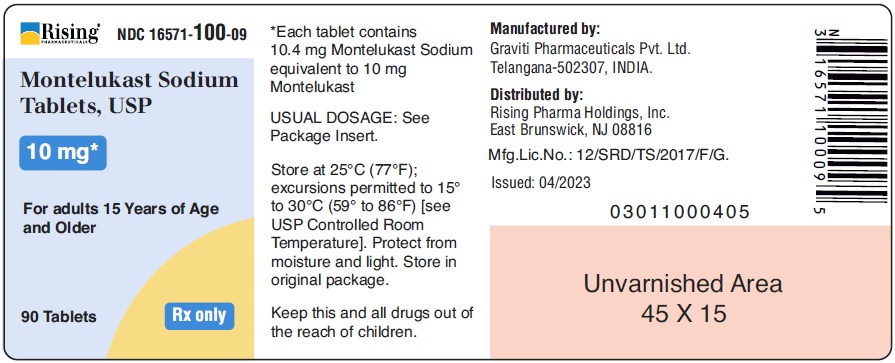
Montelukast Sodium 10 mg Tablet, 90-count — NDC 16571-100-09 (Billing 16571-0100-09)
This is a package of 90 tablets of Montelukast Sodium 10 mg Tablet from Rising Pharma Holdings, Inc., marketed since Jun 2023 and currently FDA-listed; retail pharmacies pay about $0.0419 per tablet (NADAC).
NDC database record
One package, one record: these facts belong to NDC 16571-100-09 alone.
- Record
- FDA NDC Directory package listing · Human prescription drug
- Code segments
- 16571 labeler · 100 product · 09 package
- Package marketed since
- Jun 1, 2023
- Sample package
- No — commercial package
- Listing certified through
- Dec 31, 2026
- Billing quantity
- 90 EA per package
- Barcode (UPC)
- 0316571100095
- Medicaid fills, this package
- 872 prescriptions in the last four reported quarters
- FDA record last changed
- Jul 24, 2026
Identity & classification
Regulatory identifiers FDA, NLM and CMS codes for this package
Drug-database identifiers Medi-Span GPI and First Databank GCN / HICL / AHFS classification
- GSN (GCN sequence number): 038451
- GCN: 94444
- GPI-14 (Medi-Span): 44505050100330
- HICL (First Databank): 016911
- AHFS class code: 48:10.24.00
- RxCUI (RxNorm): 200224
Where does this data come from?
- FDA openFDA NDC Directory · synced Oct 1, 2026
- FDA label on DailyMed · label index refreshed Oct 6, 2026
- RxNorm (NLM RxNav) · catalog refreshed Oct 1, 2026
- Medi-Span GPI (licensed)
- First Databank (licensed) · refreshed Oct 1, 2026
RxNorm drug class
This medicine belongs to the Leukotriene Receptor Antagonist class.
Where does this data come from?
- RxClass (NLM) · catalog refreshed Oct 1, 2026
Clinical
- It is used for long-term control of asthma, preventing breathing trouble triggered by exercise, and relieving seasonal and year-round allergy symptoms like a stuffy or runny nose....
- For asthma, take it once daily in the evening, with or without food. For exercise-triggered symptoms, take it at least 2 hours before exercise. If you have both asthma and allergie...
- No. Montelukast doesn't reverse an attack, so keep your rescue inhaler handy. You can keep taking montelukast during flare-ups, but use your rescue medicine when symptoms hit.
- Can I use it for a sudden asthma attack?
Patient education
Supplement & herbal interactions
Some supplements/herbs that may interact with Montelukast Sodium — tap one for details:
Where does this data come from?
- MedlinePlus (NLM) · refreshed Oct 1, 2026
- FDA label on DailyMed · label index refreshed Oct 6, 2026
Ask a licensed pharmacist directly — free, answered by our team.
Pricing
A drug doesn't have one price. Each row is a different public payment system, and none is what you'd pay at the counter — that depends on your insurance. The ⓘ on each row explains what it measures.
| Price system | Per ea | Per package |
|---|---|---|
| Retail pharmacies payNADAC · weekly | $0.042 | $3.77 / 90 tablets |
| Medicaid paysCMS SDUD · 12 mo | $0.1767 | $15.90 / 90 tablets |
| Medicare drug plans payPart D · Q2 2026 | $0.1490 | $13.41 / 90 tablets |
Where does this data come from?
- CMS NADAC weekly file · file of Sep 30, 2026
- CMS ASP pricing files · refreshed Sep 20, 2026
- CMS Medicaid State Drug Utilization Data · through Q1 2026
- CMS Part D plan pricing files · refreshed Sep 24, 2026
- VA National Acquisition Center price file
Packaging — all sizes for this product
| Package NDC | Description | Per unit | Per pack | Marketing start | Marketing end | Status |
|---|---|---|---|---|---|---|
| 16571-0100-09 You're viewing this | 90 TABLET in 1 BOTTLE | $0.0419 / ea | $3.77 | 2023-06-01 | — | Active |
| 16571-0100-10 16571-100-10 Main listing | 1000 TABLET in 1 BOTTLE | $0.0419 / ea | $41.91 | 2023-06-01 | — | Active |
You're viewing the smallest of 2 pack sizes for this product.
This pack has the lowest per-ea cost of the 2 priced pack sizes ($0.0419 NADAC).
This pack accounts for about 4.1% of this product's recent Medicaid fills; most go to the 1000 tablets pack. See all packs ↓
Pack size FAQ
What quantity is in this package?
How does this package differ from NDC 16571-0100-10?
What NDC number is used to bill for this package of Montelukast Sodium 10 mg Tablet?
Prices are the latest CMS NADAC pharmacy acquisition cost per NDC; per-pack figures are per-unit × pack quantity, shown only when the pack is denominated in the same measure NADAC prices.
Therapeutic equivalents
| Product | Labeler | Pack | NADAC/unit | TE | Status | Price vs. this |
|---|---|---|---|---|---|---|
| Montelukast Sodium 10 mg 00904-6808-06 | Major | 1 tablet | $0.042 | AB | Availability likely | — |
| Montelukast Sodium 10 mg 13668-0081-05 | Torrent | 500 tablets | $0.042 | AB | Availability likely | — |
| Montelukast Sodium 10 mgthis 16571-0100-09 | Rising | 90 tablets | $0.042 | AB | Availability likely | — |
| Montelukast 10 mg 33342-0102-07 | Macleods | 30 tablets | $0.042 | AB | Availability likely | — |
| Montelukast 10 mg 50268-0556-15 | AvPAK | 1 tablet | $0.042 | AB | Availability likely | — |
| Montelukast 10 mg 68001-0361-03 | BluePoint | 500 tablets | $0.042 | AB | Availability likely | — |
| Montelukast Sodium 10 mg 68084-0875-01 | American | 1 tablet | $0.042 | AB | Availability likely | — |
| Montelukast Sodium 10 mg 69367-0287-05 | Westminster | 500 tablets | $0.042 | AB | Availability likely | — |
| Montelukast 10 mg 82009-0009-10 | Quallent | 1000 tablets | $0.042 | AB | Availability likely | — |
| Montelukast Sodium 10 mg 16729-0119-10 | Accord | 30 tablets | $0.042 | AB | Availability likely | +1% |
| Singulair 10 mg 78206-0172-01 | Organon | 30 tablets | $9.213 | AB | Availability likely | +21883% |
| Montelukast 10 mg 00781-5560-13 | Sandoz | 10 tablets | — | AB | FDA listed | — |
| Montelukast Sodium 10 mg 27241-0018-03 | Ajanta | 30 tablets | — | — | FDA listed | — |
| montelukast sodium 10 mg 29300-0220-01 | Unichem | 100 tablets | — | AB | FDA listed | — |
| Montelukast Sodium 10 mg 31722-0726-01 | Camber | 100 tablets | — | AB | FDA listed | — |
| Montelukast Sodium 10 mg 43063-0762-30 | PD-Rx | 30 tablets | — | AB | FDA listed | — |
| Montelukast 10 mg 50090-6108-00 | A-S | 30 tablets | — | AB | FDA listed | — |
| Montelukast 10 mg 50090-6109-00 | A-S | 90 tablets | — | AB | FDA listed | — |
| Montelukast Sodium 10 mg 55111-0725-01 | Dr. | 100 tablets | — | — | FDA listed | — |
| Montelukast Sodium 10 mg 55154-8075-00 | Cardinal | 1 tablet | — | AB | FDA listed | — |
| Montelukast Sodium 10 mg 57237-0255-30 | Rising | 30 tablets | — | AB | FDA listed | — |
| Montelukast Sodium 10 mg 63187-0430-30 | Proficient | 30 tablets | — | AB | FDA listed | — |
| Montelukast Sodium 10 mg 63187-0692-30 | Proficient | 30 tablets | — | — | FDA listed | — |
| Montelukast Sodium 10 mg 63187-0781-14 | Proficient | 14 tablets | — | AB | FDA listed | — |
| Montelukast Sodium 10 mg 65162-0732-03 | Amneal | 30 tablets | — | AB | FDA listed | — |
| Montelukast Sodium 10 mg 65862-0574-10 | Aurobindo | 10 tablets | — | AB | Discontinued | — |
| Montelukast Sodium 10 mg 67296-1926-03 | Redpharm | 30 tablets | — | AB | FDA listed | — |
| Montelukast 10 mg 67296-2248-03 | Redpharm | 30 tablets | — | AB | Discontinued | — |
| Montelukast Sodium 10 mg 68071-3355-09 | NuCare | 90 tablets | — | AB | FDA listed | — |
| Montelukast 10 mg 68071-3855-03 | NuCare | 30 tablets | — | AB | FDA listed | — |
| Montelukast 10 mg 68071-4034-09 | NuCare | 90 tablets | — | AB | FDA listed | — |
| Montelukast Sodium 10 mg 68071-4047-03 | NuCare | 30 tablets | — | AB | FDA listed | — |
| montelukast sodium 10 mg 68071-5278-03 | NuCare | 30 tablets | — | AB | FDA listed | — |
| Montelukast 10 mg 68788-8099-03 | Preferred | 30 tablets | — | AB | FDA listed | — |
| Montelukast Sodium 10 mg 68788-8610-03 | Preferred | 30 tablets | — | AB | FDA listed | — |
| montelukast sodium 10 mg 68788-8617-03 | Preferred | 30 tablets | — | AB | FDA listed | — |
| Montelukast 10 mg 70518-3133-00 | REMEDYREPACK | 90 tablets | — | AB | FDA listed | — |
| montelukast sodium 10 mg 71205-0181-30 | Proficient | 30 tablets | — | AB | FDA listed | — |
| Montelukast Sodium 10 mg 71205-0778-30 | Proficient | 30 tablets | — | AB | FDA listed | — |
| Montelukast Sodium 10 mg 71335-0514-01 | Bryant | 30 tablets | — | AB | FDA listed | — |
| Montelukast 10 mg 71335-1979-01 | Bryant | 30 tablets | — | AB | FDA listed | — |
| montelukast sodium 10 mg 71335-1995-01 | Bryant | 30 tablets | — | AB | FDA listed | — |
| Montelukast 10 mg 71610-0563-30 | Aphena | 30 tablets | — | AB | FDA listed | — |
| Montelukast Sodium 10 mg 72189-0418-30 | Direct_Rx | 30 tablets | — | AB | FDA listed | — |
| Montelukast Sodium 10 mg 72789-0306-30 | PD-Rx | 30 tablets | — | AB | FDA listed | — |
| Montelukast 10 mg 72865-0175-10 | XLCare | 1000 tablets | — | AB | FDA listed | — |
| Montelukast Sodium 10 mg 70518-4753-00 | REMEDYREPACK | 90 tablets | — | AB | FDA listed | — |
Where does this data come from?
- FDA openFDA NDC Directory · synced Oct 1, 2026
- FDA Orange Book · refreshed Oct 3, 2026
- CMS NADAC weekly file · file of Sep 30, 2026
Availability & generic status
This product is an FDA-approved generic. Other versions of the same drug are listed under Therapeutic equivalents, least expensive first.
Where does this data come from?
- FDA Orange Book · refreshed Oct 3, 2026
What it looks like
Where does this data come from?
- FDA label on DailyMed · label index refreshed Oct 6, 2026
Inactive Ingredients / Excipients
Inactive ingredients, also called excipients, are components of the drug product other than the active ingredient. They may include fillers, dyes, coatings, preservatives, flavors, or other formulation ingredients.
🧪 Avoiding an ingredient? See Montelukast inactive ingredients by manufacturer: every current product's list side by side, so you can ask your pharmacy for the version that does not list it.
💡 Tap an ingredient (hover on desktop) to see what it is and why it’s used.
-
UNII OP1R32D61U
Microcrystalline cellulose is a purified form of cellulose, a natural fiber from plant sources. It acts as a binder and filler in tablets and capsules, helping hold ingredients together and give the medicine its shape and size.
-
UNII M28OL1HH48
Croscarmellose sodium is a plant-based substance derived from cellulose. It acts as a disintegrant, helping tablets and capsules break down quickly in the digestive system so the medicine can be absorbed.
-
UNII 1K09F3G675
Ferric oxide red is an inorganic iron compound used as a colorant in medicines. It gives tablets, capsules, or other dosage forms a red or reddish tint for identification and appearance.
-
UNII EX438O2MRT
Ferric oxide yellow is a naturally occurring iron compound used as a colorant in medications. It gives tablets, capsules, and other forms a yellow or golden hue for identification and appearance.
-
UNII RFW2ET671P
Hydroxypropyl cellulose is a plant-derived thickening agent made from cellulose. It acts as a binder to hold tablet ingredients together and as a film-former to coat tablets or control how fast the medicine releases.
-
UNII 0WZ8WG20P6
Hypromellose 2910 is a plant-based cellulose derivative that acts as a thickener, binder, and film-coating agent. It helps control how quickly the medicine dissolves and protects the tablet or capsule from moisture and light.
-
UNII EWQ57Q8I5X
Lactose monohydrate is a natural sugar derived from milk. It serves as a filler and binder in tablets and capsules, helping create the proper size, texture, and consistency of the medicine.
-
UNII 70097M6I30
Magnesium stearate is a salt made from magnesium and stearic acid, a fatty substance. It's used in tablets and capsules as a lubricant and glidant to help ingredients flow smoothly during manufacturing and prevent sticking.
-
UNII 15FIX9V2JP
Titanium dioxide is a bright white mineral powder commonly used as a colorant and opacifying agent. It makes pills and tablets white or lighter in color and helps make coatings non-transparent.
9 inactive ingredients listed in the exact product block matched to this NDC.
Where does this data come from?
ingredient classCode="IACT" elements from the exact product block matched by this NDC. Label-section narrative from DailyMed / the openFDA label index is shown separately when available.- FDA label on DailyMed · label index refreshed Oct 6, 2026
- FDA openFDA NDC Directory · synced Oct 1, 2026
Inactive ingredient FAQ
Are inactive ingredients the same for every manufacturer?
Why might an inactive ingredient be missing?
Can inactive ingredients matter?
Manufacturer & labeler
More NDCs from Rising Pharma Holdings, Inc. labeler code 16571
- Amitriptyline Hydrochloride 10 mg Tablet NDC 16571-105-01
- Amitriptyline Hydrochloride 25 mg Tablet NDC 16571-106-01
- Amitriptyline Hydrochloride 50 mg Tablet NDC 16571-107-01
- Amitriptyline Hydrochloride 75 mg Tablet NDC 16571-108-01
- Amitriptyline Hydrochloride 100 mg Tablet NDC 16571-109-01
- Amitriptyline Hydrochloride 150 mg Tablet NDC 16571-110-01
Where does this data come from?
- FDA openFDA NDC Directory · synced Oct 1, 2026
- Drugs@FDA
Full prescribing information FDA SPL
🚨 Boxed Warning ▾
WARNING: SERIOUS NEUROPSYCHIATRIC EVENTS Serious neuropsychiatric (NP) events have been reported with the use of montelukast sodium tablets. The types of events reported were highly variable, and included, but were not limited to, agitation, aggression, depression, sleep disturbances, suicidal thoughts and behavior (including suicide). The mechanisms underlying NP events associated with montelukast sodium use are currently not well understood [see Warnings and Precautions ( 5.1 )].
Because of the risk of NP events, the benefits of montelukast sodium may not outweigh the risks in some patients, particularly when the symptoms of disease may be mild and adequately treated with alternative therapies. Reserve use of montelukast sodium for patients with allergic rhinitis who have an inadequate response or intolerance to alternative therapies [see Indications and Usage ( 1.3 )] . In patients with asthma or exercise-induced bronchoconstriction, consider the benefits and risks before prescribing montelukast sodium.
Discuss the benefits and risks of montelukast sodium with patients and caregivers when prescribing montelukast sodium. Advise patients and/or caregivers to be alert for changes in behavior or new NP symptoms when taking montelukast sodium. If changes in behavior are observed, or if new NP symptoms or suicidal thoughts and/or behavior occur, advise patients to discontinue montelukast sodium and contact a healthcare provider immediately [see Warnings and Precautions ( 5.1 )] .
WARNING: SERIOUS NEUROPSYCHIATRIC EVENTS See full prescribing information for complete boxed warning. Serious neuropsychiatric events have been reported in patients taking montelukast sodium tablets ( 5.1 ). Discuss benefits and risks of montelukast sodium tablets with patients and caregivers ( 5.1 ).
Monitor for neuropsychiatric symptoms in patients taking montelukast sodium tablets ( 5.1 ). Discontinue montelukast sodium tablets immediately if neuropsychiatric symptoms occur ( 5.1 ). Because the benefits of montelukast sodium tablets may not outweigh the potential risk of neuropsychiatric symptoms in patients with allergic rhinitis, reserve use for patients who have an inadequate response or intolerance to alternative therapies ( 1.3 , 5.1 ).
🎯 Indications and Usage ▾
1 INDICATIONS AND USAGE Montelukast sodium tablets are a leukotriene receptor antagonist indicated for: Prophylaxis and chronic treatment of asthma in patients 15 years of age and older ( 1.1 ). Acute prevention of exercise-induced bronchoconstriction (EIB) in patients 15 years of age and older ( 1.2 ). Relief of symptoms of allergic rhinitis (AR): seasonal allergic rhinitis (SAR) in patients 15 years of age and older, and perennial allergic rhinitis (PAR) in patients 15 years of age and older.
Reserve use for patients who have an inadequate response or intolerance to alternative therapies ( 1.3 ). Limitations of Use: Not indicated to treat an acute asthma attack ( 5.2 ).
1.1Asthma Montelukast sodium tablets are indicated for the prophylaxis and chronic treatment of asthma in adults and pediatric patients 15 years of age and older.
1.2Exercise-Induced Bronchoconstriction (EIB) Montelukast sodium tablets are indicated for prevention of exercise-induced bronchoconstriction (EIB) in patients 15 years of age and older.
1.3Allergic Rhinitis Montelukast sodium tablets are indicated for the relief of symptoms of seasonal allergic rhinitis in patients 15 years of age and older and perennial allergic rhinitis in patients 15 years of age and older. Because the benefits of montelukast sodium tablets may not outweigh the risk of neuropsychiatric symptoms in patients with allergic rhinitis [see Warnings and Precautions ( 5.1 )] , reserve use for patients who have an inadequate response or intolerance to alternative therapies.
1.4Limitations of Use Montelukast sodium tablets are not indicated for the treatment of an acute asthma attack.
⏱️ Dosage and Administration ▾
2 DOSAGE AND ADMINISTRATION Administration (by indications): Asthma: Once daily in the evening for patients 15 years and older ( 2.1 ). Acute prevention of EIB: One tablet at least 2 hours before exercise for patients 15 years of age and older ( 2.2 ). Seasonal allergic rhinitis: Once daily for patients 15 years and older ( 2.3 ).
Perennial allergic rhinitis: Once daily for patients 15 years and older ( 2.3 ). Dosage (by age): 15 years and older: one 10 mg tablet ( 2 ). Patients with both asthma and allergic rhinitis should take only one dose daily in the evening ( 2.4 ).
2.1Asthma For asthma, administer montelukast sodium tablets orally once daily in the evening, with or without food. There have been no clinical trials in patients with asthma to evaluate the relative efficacy of morning versus evening dosing. The following doses are recommended: Table 1: Recommended Dosage in Asthma Age Dose Adult and adolescent patients 15 years of age and older one 10 mg tablet Patients who miss a dose should take the next dose at their regular time and should not take 2 doses at the same time.
2.2Exercise-Induced Bronchoconstriction (EIB) For prevention of EIB, administer a single dose of montelukast sodium tablets orally at least 2 hours, before exercise. The following doses are recommended: Table 2: Recommended Dosage in Exercise-Induced Bronchoconstriction (EIB) Age Dose Adult and adolescent patients 15 years of age and older one 10 mg tablet An additional dose of montelukast sodium tablets should not be taken within 24 hours of a previous dose. Patients already taking montelukast sodium tablets daily for another indication (including chronic asthma) should not take an additional dose to prevent EIB.
All patients should have available for rescue a short-acting β-agonist. Daily administration of montelukast sodium tablets for the chronic treatment of asthma has not been established to prevent acute episodes of EIB.
2.3Allergic Rhinitis For allergic rhinitis, administer montelukast sodium tablets orally once daily without regard to time of food ingestion. Time of administration in patients with allergic rhinitis can be individualized to suit patient needs. The following doses for the treatment of symptoms of seasonal allergic rhinitis are recommended: Table 3: Recommended Dosage in Seasonal Allergic Rhinitis Age Dose Adult and adolescent patients 15 years of age and older one 10 mg tablet The following doses for the treatment of symptoms of perennial allergic rhinitis are recommended: Table 4: Recommended Dosage in Perennial Allergic Rhinitis Age Dose Adult and adolescent patients 15 years of age and older one 10 mg tablet Patients who miss a dose should take the next dose at their regular time and should not take 2 doses at the same time.
2.4Asthma and Allergic Rhinitis For patients with both asthma and allergic rhinitis, administer only one montelukast sodium tablets dose orally once daily in the evening. Patients who miss a dose should take the next dose at their regular time and should not take 2 doses at the same time.
💊 Dosage Forms and Strengths ▾
3 DOSAGE FORMS AND STRENGTHS Montelukast Sodium Film-Coated Tablets USP, 10 mg are yellow round tablets, with "225" debossed on one side and plain on the other side. Tablets: 10 mg ( 3 )
⛔ Contraindications ▾
4 CONTRAINDICATIONS Montelukast sodium tablets are contraindicated in patients with hypersensitivity to any of its components. Hypersensitivity to any component of montelukast sodium tablets ( 4 )
⚠️ Warnings and Cautions ▾
5 WARNINGS AND PRECAUTIONS Do not prescribe montelukast sodium to treat an acute asthma attack ( 5.2 ). Advise patients to have appropriate rescue medication available ( 5.2 ). Inhaled corticosteroid may be reduced gradually.
Do not abruptly substitute montelukast sodium for inhaled or oral corticosteroids ( 5.3 ). Patients with known aspirin sensitivity should continue to avoid aspirin or non-steroidal anti-inflammatory agents while taking montelukast sodium ( 5.4 ). Systemic eosinophilia, sometimes presenting with clinical features of vasculitis consistent with Churg-Strauss syndrome, has been reported.
These events have been sometimes associated with the reduction of oral corticosteroid therapy ( 5.5 and 6.2 ).
5.1Neuropsychiatric Events Serious neuropsychiatric (NP) events have been reported with use of montelukast sodium. These postmarketing reports have been highly variable and included, but were not limited to, agitation, aggressive behavior or hostility, anxiousness, depression, disorientation, disturbance in attention, dream abnormalities, dysphemia (stuttering), hallucinations, insomnia, irritability, memory impairment, obsessive-compulsive symptoms, restlessness, somnambulism, suicidal thoughts and behavior (including suicide), tic, and tremor.
NP events have been reported in adult, adolescent, and pediatric patients with and without a previous history of psychiatric disorder. NP events have been reported mostly during montelukast sodium treatment, but some were reported after montelukast sodium discontinuation. Animal studies showed that montelukast distributes into the brain in rats [see Clinical Pharmacology ( 12.3 )] ; however, the mechanisms underlying montelukast sodium-associated NP events are currently not well understood.
Based upon the available data, it is difficult to identify risk factors for or quantify the risk of NP events with montelukast sodium use. Because of the risk of NP events, the benefits of montelukast sodium may not outweigh the risks in some patients, particularly when the symptoms of disease may be mild and adequately treated with alternative therapies. Reserve use of montelukast sodium for patients with allergic rhinitis who have an inadequate response or intolerance to alternative therapies [see Indications and Usage ( 1.3 )] .
In patients with asthma or exercise-induced bronchoconstriction, consider the benefits and risks before prescribing montelukast sodium. Discuss the benefits and risks of montelukast sodium use with patients and caregivers when prescribing montelukast sodium. Advise patients and/or caregivers to be alert for changes in behavior or for new NP symptoms when taking montelukast sodium.
If changes in behavior are observed, or if new NP symptoms or suicidal thoughts and/or behavior occur, advise patients to discontinue montelukast sodium and contact a healthcare provider immediately. In many cases, symptoms resolved after stopping montelukast sodium therapy; however, in some cases symptoms persisted after discontinuation of montelukast sodium. Therefore, continue to monitor and provide supportive care until symptoms resolve.
Re-evaluate the benefits and risks of restarting treatment with montelukast sodium if such events occur .
5.2Acute Asthma Montelukast sodium is not indicated for use in the reversal of bronchospasm in acute asthma attacks, including status asthmaticus. Patients should be advised to have appropriate rescue medication available. Therapy with montelukast sodium can be continued during acute exacerbations of asthma. Patients who have exacerbations of asthma after exercise should have available for rescue a short-acting inhaled β-agonist.
5.3Concomitant Corticosteroid Use While the dose of inhaled corticosteroid may be reduced gradually under medical supervision, montelukast sodium should not be abruptly substituted for inhaled or oral corticosteroids.
5.4Aspirin Sensitivity Patients with known aspirin sensitivity should continue avoidance of aspiri… [Excerpted — this section continues on DailyMed.]
🤒 Adverse Reactions ▾
6 ADVERSE REACTIONS The following clinically significant adverse reactions are described elsewhere in the labeling: Neuropsychiatric Events [see Warnings and Precautions ( 5.1 )] Most common adverse reactions (incidence ≥5% and greater than placebo listed in descending order of frequency): upper respiratory infection, fever, headache, pharyngitis, cough, abdominal pain, diarrhea, otitis media, influenza, rhinorrhea, sinusitis, otitis ( 6.1 ). To report SUSPECTED ADVERSE REACTIONS, contact Rising Pharma Holdings, Inc., at 1-844-874-7464 or FDA at 1-800-FDA-1088 or www.fda.gov/medwatch.
6.1Clinical Trials Experience Because clinical trials are conducted under widely varying conditions, adverse reaction rates observed in the clinical trials of a drug cannot be directly compared to rates in the clinical trials of another drug and may not reflect the rates observed in clinical practice. In the following description of clinical trials experience, adverse reactions are listed regardless of causality assessment. The most common adverse reactions (incidence ≥ 5% and greater than placebo; listed in descending order of frequency) in controlled clinical trials were: upper respiratory infection, fever, headache, pharyngitis, cough, abdominal pain, diarrhea, otitis media, influenza, rhinorrhea, sinusitis, otitis.
Adults and Adolescents 15 Years of Age and Older with Asthma Montelukast sodium has been evaluated for safety in approximately 2,950 adult and adolescent patients 15 years of age and older in clinical trials. In placebo-controlled clinical trials, the following adverse reactions reported with montelukast sodium occurred in greater than or equal to 1% of patients and at an incidence greater than that in patients treated with placebo: Table 5: Adverse Reactions Occurring in ≥ 1% of Patients with an Incidence Greater than that in Patients Treated with Placebo Montelukast Sodium 10 mg/day (%) (n=1,955) Placebo (%) (n=1,180) Body As A Whole Pain, abdominal 2.9
2.5Asthenia/fatigue 1.8
1.2Fever 1.5
0.9Trauma 1.0
0.8Digestive System Disorders Dyspepsia 2.1
1.1Pain, dental 1.7
1.0Gastroenteritis, infectious 1.5
0.5Nervous System/Psychiatric Headache 18.4
18.1Dizziness 1.9
1.4Respiratory System Disorders Influenza 4.2
3.9Cough 2.7
2.4Congestion, nasal 1.6
1.3Skin/Skin Appendages Disorder Rash 1.6
1.2Laboratory Adverse Reactions Number of patients tested (montelukast sodium and placebo, respectively): ALT and AST, 1,935, 1,170; pyuria, 1,924, 1,159. ALT increased 2.1
2.0AST increased 1.6
1.2Pyuria 1.0
0.9The frequency of less common adverse reactions was comparable between montelukast sodium and placebo. The safety profile of montelukast sodium, when administered as a single dose for prevention of EIB in adult and adolescent patients 15 years of age and older, was consistent with the safety profile previously described for montelukast sodium. Cumulatively, 569 patients were treated with montelukast sodium for at least 6 months, 480 for one year, and 49 for two years in clinical trials.
With prolonged treatment, the adverse reaction profile did not significantly change. Adults and Adolescents 15 Years of Age and Older with Seasonal Allergic Rhinitis Montelukast sodium has been evaluated for safety in 2,199 adult and adolescent patients 15 years of age and older in clinical trials. Montelukast sodium administered once daily in the morning or in the evening had a safety profile similar to that of placebo.
In placebo-controlled clinical trials, the following reaction was reported with montelukast sodium with a frequency ≥ 1% and at an incidence greater than placebo: upper respiratory infection, 1.9% of patients receiving montelukast sodium vs. 1.5% of patients receiving placebo. In a 4-week, placebo-controlled clinical study, the safety profile was consistent with that observed in 2-week studies.
The incidence of somnolence was similar to that of placebo in all studies. Adults and Adolescents 15 Years of Age and Older with Perenn… [Excerpted — this section continues on DailyMed.]
🔄 Drug Interactions ▾
7 DRUG INTERACTIONS No dose adjustment is needed when montelukast sodium is co-administered with theophylline, prednisone, prednisolone, oral contraceptives, fexofenadine, digoxin, warfarin, gemfibrozil, itraconazole, thyroid hormones, sedative hypnotics, non-steroidal anti-inflammatory agents, benzodiazepines, decongestants, and Cytochrome P450 (CYP) enzyme inducers [see Clinical Pharmacology ( 12.3 )] .
👥 Use in Specific Populations ▾
8 USE IN SPECIFIC POPULATIONS
8.1Pregnancy Risk Summary Available data from published prospective and retrospective cohort studies over decades with montelukast use in pregnant women have not established a drug-associated risk of major birth defects [see Data] . In animal reproduction studies, no adverse developmental effects were observed with oral administration of montelukast to pregnant rats and rabbits during organogenesis at doses approximately 100 and 110 times, respectively, the maximum recommended human daily oral dose (MRHDOD) based on AUCs [see Data].
The estimated background risk of major birth defects and miscarriage for the indicated population is unknown. All pregnancies have a background risk of birth defect, loss, or other adverse outcomes. In the U.S. general population, the estimated background risk of major birth defects and miscarriage in clinically recognized pregnancies is 2 to 4% and 15 to 20%, respectively.
Clinical Considerations Disease-associated maternal and/or embryo/fetal risk Poorly or moderately controlled asthma in pregnancy increases the maternal risk of perinatal adverse outcomes such as preeclampsia and infant prematurity, low birth weight, and small for gestational age. Data Human Data Published data from prospective and retrospective cohort studies have not identified an association with montelukast sodium use during pregnancy and major birth defects. Available studies have methodologic limitations, including small sample size, in some cases retrospective data collection, and inconsistent comparator groups.
Animal Data In embryo-fetal development studies, montelukast administered to pregnant rats and rabbits during organogenesis (gestation days 6 to 17 in rats and 6 to 18 in rabbits) did not cause any adverse developmental effects at maternal oral doses up to 400 and 300 mg/kg/day in rats and rabbits, respectively (approximately 100 and 110 times the AUC in humans at the MRHDOD, respectively).
8.2Lactation Risk Summary A published clinical lactation study reports the presence of montelukast in human milk. Data available on the effects of the drug on infants, either directly [see Use in Specific Populations ( 8.4 )] or through breast milk, do not suggest a significant risk of adverse reactions from exposure to montelukast sodium. The effects of the drug on milk production are unknown.
The developmental and health benefits of breastfeeding should be considered along with the mother's clinical need for montelukast sodium and any potential adverse reactions on the breastfed infant from montelukast sodium or from the underlying maternal condition.
8.4Pediatric Use The safety and effectiveness in pediatric patients below the age of 12 months with asthma, 6 months with perennial allergic rhinitis, and 6 years with exercise-induced bronchoconstriction have not been established.
8.5Geriatric Use Of the total number of subjects in clinical studies of montelukast, 3.5% were 65 years of age and over, and 0.4% were 75 years of age and over. No overall differences in safety or effectiveness were observed between these subjects and younger subjects, and other reported clinical experience has not identified differences in responses between the elderly and younger patients, but greater sensitivity of some older individuals cannot be ruled out. The pharmacokinetic profile and the oral bioavailability of a single 10 mg oral dose of montelukast are similar in elderly and younger adults.
The plasma half-life of montelukast is slightly longer in the elderly. No dosage adjustment in the elderly is required.
8.6Hepatic Impaiment No dosage adjustment is recommended in patients with mild-to-moderate hepatic insufficiency [see Clinical Pharmacology ( 12.3 )] .
8.7Renal Impaiment No dosage adjustment is recommended in patients with renal insufficiency [see Clinical Pharmacology ( 12.3 )] .
🆘 Overdosage ▾
10 OVERDOSAGE No specific information is available on the treatment of overdosage with montelukast sodium. In the event of overdose, it is reasonable to employ the usual supportive measures; e.g., remove unabsorbed material from the gastrointestinal tract, employ clinical monitoring, and institute supportive therapy, if required. It is not known whether montelukast is removed by peritoneal dialysis or hemodialysis.
🧬 Clinical Pharmacology ▾
12 CLINICAL PHARMACOLOGY
12.1Mechanism of Action The cysteinyl leukotrienes (LTC 4 , LTD 4 , LTE 4 ) are products of arachidonic acid metabolism and are released from various cells, including mast cells and eosinophils. These eicosanoids bind to cysteinyl leukotriene (CysLT) receptors. The CysLT type-1 (CysLT 1 ) receptor is found in the human airway (including airway smooth muscle cells and airway macrophages) and on other pro-inflammatory cells (including eosinophils and certain myeloid stem cells).
CysLTs have been correlated with the pathophysiology of asthma and allergic rhinitis. In asthma, leukotriene-mediated effects include airway edema, smooth muscle contraction, and altered cellular activity associated with the inflammatory process. In allergic rhinitis, CysLTs are released from the nasal mucosa after allergen exposure during both early- and late-phase reactions and are associated with symptoms of allergic rhinitis.
Montelukast is an orally active compound that binds with high affinity and selectivity to the CysLT 1 receptor (in preference to other pharmacologically important airway receptors, such as the prostanoid, cholinergic, or β-adrenergic receptor). Montelukast inhibits physiologic actions of LTD 4 at the CysLT 1 receptor without any agonist activity.
12.2Pharmacodynamics Montelukast causes inhibition of airway cysteinyl leukotriene receptors as demonstrated by the ability to inhibit bronchoconstriction due to inhaled LTD 4 in asthmatics. Doses as low as 5 mg cause substantial blockage of LTD 4 -induced bronchoconstriction. In a placebo-controlled, crossover study (n=12), montelukast sodium inhibited early- and late-phase bronchoconstriction due to antigen challenge by 75% and 57%, respectively.
The effect of montelukast sodium on eosinophils in the peripheral blood was examined in clinical trials. In patients with asthma aged 2 years and older who received montelukast sodium, a decrease in mean peripheral blood eosinophil counts ranging from 9% to 15% was noted, compared with placebo, over the double-blind treatment periods. In patients with seasonal allergic rhinitis aged 15 years and older who received montelukast sodium, a mean increase of 0.2% in peripheral blood eosinophil counts was noted, compared with a mean increase of 12.5% in placebo-treated patients, over the double-blind treatment periods; this reflects a mean difference of 12.3% in favor of montelukast sodium.
The relationship between these observations and the clinical benefits of montelukast noted in the clinical trials is not known [see Clinical Studies ( 14 )] .
12.3Pharmacokinetics Absorption Montelukast is rapidly absorbed following oral administration. After administration of the 10 mg film-coated tablet to fasted adults, the mean peak montelukast plasma concentration (C max ) is achieved in 3 to 4 hours (T max ). The mean oral bioavailability is 64%.
The oral bioavailability and C max are not influenced by a standard meal in the morning. The safety and efficacy of montelukast sodium in patients with asthma were demonstrated in clinical trials in which the 10 mg film-coated tablet were administered in the evening without regard to the time of food ingestion. The safety of montelukast sodium in patients with asthma was also demonstrated in clinical trials.
The safety and effectiveness of montelukast sodium tablets in patients with seasonal allergic rhinitis were demonstrated in clinical trials in which the 10 mg film-coated tablet was administered in the morning or evening without regard to the time of food ingestion. The comparative pharmacokinetics of montelukast when administered as two 5 mg chewable tablets versus one 10 mg film-coated tablet have not been evaluated. Distribution Montelukast is more than 99% bound to plasma proteins.
The steady state volume of distribution of montelukast averages 8 to 11 liters. Orally administered montelukast distributes into the brain in rats. Elimination The plasma clearance of montelukast avera… [Excerpted — this section continues on DailyMed.]
📦 How Supplied / Storage and Handling ▾
16 HOW SUPPLIED/STORAGE AND HANDLING Montelukast Sodium Tablets USP, 10 mg are yellow round tablets, with "225" debossed on one side and plain on the other side. NDC 16571-100-09 unit of use high-density polyethylene (HDPE) bottles of 90 with a polypropylene child-resistant cap, an aluminum foil induction seal, and silica gel desiccant NDC 16571-100-10 unit of use high-density polyethylene (HDPE) bottles of 1,000 with a polypropylene child-resistant cap, an aluminum foil induction seal, and silica gel desiccant Storage Store 10 mg film-coated tablets at 25°C (77°F), excursions permitted to 15° to 30°C (59° to 86°F) [see USP Controlled Room Temperature].
Protect from moisture and light. Store in original package.
📋 Description ▾
11 DESCRIPTION Montelukast sodium, the active ingredient in montelukast sodium tablets, USP, is a selective and orally active leukotriene receptor antagonist that inhibits the cysteinyl leukotriene CysLT 1 receptor. Montelukast sodium is described chemically as [ R -( E )]-1-[[[1-[3-[2-(7-chloro-2-quinolinyl) ethenyl]phenyl]-3-[2-(1-hydroxy-1-methylethyl)phenyl]propyl]thio]methyl]cyclopropaneacetic acid, monosodium salt. The empirical formula is C 35 H 35 ClNNaO 3 S, and its molecular weight is 608.18.
The structural formula is: Montelukast sodium is a hygroscopic, optically active, white to off-white powder. Montelukast sodium is freely soluble in ethanol, methanol, and water and practically insoluble in acetonitrile. Each 10 mg film-coated montelukast sodium tablet, USP, contains 10.4 mg montelukast sodium, which is equivalent to 10 mg of montelukast, and the following inactive ingredients: microcrystalline cellulose, lactose monohydrate, croscarmellose sodium, hydroxypropyl cellulose, and magnesium stearate.
The film coating consists of: hydroxypropyl methylcellulose, hydroxypropyl cellulose, titanium dioxide, red ferric oxide, and yellow ferric oxide. Image
💬 Information for Patients ▾
17 PATIENT COUNSELING INFORMATION For the tablets, advise the patient and/or caregiver to read the FDA-approved patient labeling (Medication Guide). Advise patients about the potential risk for serious neuropsychiatric symptoms and behavioral changes with montelukast sodium use [see Warnings and Precautions ( 5.1 )] . Discuss the benefits and risks of montelukast sodium with patients when prescribing or continuing treatment with montelukast sodium [see Warnings and Precautions ( 5.1 )] .
Advise patients to monitor for changes in behavior or neuropsychiatric symptoms in patients taking montelukast sodium [see Warnings and Precautions ( 5.1 )] . Instruct patients to discontinue montelukast sodium and contact a healthcare provider immediately if changes in behavior or thinking that are not typical for the patient occur, or if the patient develops suicidal ideation or suicidal behavior [see Warnings and Precautions ( 5.1 )] . Advise patients to take montelukast sodium daily as prescribed, even when they are asymptomatic, as well as during periods of worsening asthma, and to contact their physicians if their asthma is not well controlled.
Advise patients that oral montelukast sodium is not for the treatment of acute asthma attacks. They should have appropriate short-acting inhaled β-agonist medication available to treat asthma exacerbations. Patients who have exacerbations of asthma after exercise should be instructed to have available for rescue a short-acting inhaled β-agonist.
Daily administration of montelukast sodium for the chronic treatment of asthma has not been established to prevent acute episodes of EIB [see Warnings and Precautions ( 5.2 )] . Advise patients to seek medical attention if short-acting inhaled bronchodilators are needed more often than usual, or if more than the maximum number of inhalations of short-acting bronchodilator treatment prescribed for a 24 hour period are needed. Instruct patients to continue other anti-asthma medications as prescribed unless instructed by a physician.
Instruct patients with known aspirin sensitivity to continue avoidance of aspirin or non-steroidal anti-inflammatory agents while taking montelukast sodium tablets [see Warnings and Precautions ( 5.4 )] . Distributed by: Rising Pharma Holdings, Inc. East Brunswick, NJ 08816 Manufactured by: Graviti Pharmaceuticals Pvt.
Ltd. Telangana-502307, INDIA. Mfg.Lic.No.: 12/SRD/TS/2017/F/G.
Revised: 07/2024 Dispense with Medication Guide available at: https://www.risingpharma.com/med-guides.html
💬 Medication Guide ▾
MEDICATION GUIDE Montelukast Sodium Tablets, USP (mon te loo′kast soe′dee um) What is the most important information I should know about montelukast sodium tablets? Serious mental health problems have happened in people taking montelukast sodium tablets or even after treatment has stopped. This can happen in people with or without a history of mental health problems.
Stop taking montelukast sodium tablets and tell your healthcare provider right away if you or your child have any unusual changes in behavior or thinking, including any of these symptoms: agitation, including aggressive behavior or hostility hallucinations (seeing or hearing things that are not really there) suicidal thoughts and actions (including suicide) attention problems memory problems tremor bad or vivid dreams obsessive-compulsive symptoms trouble sleeping depression restlessness uncontrolled muscle movements disorientation (confusion) sleep walking feeling anxious stuttering irritability What are montelukast sodium tablets?
Montelukast sodium tablets are a prescription medicine that blocks substances in the body called leukotrienes. This may help to improve symptoms of asthma and inflammation of the lining of the nose (allergic rhinitis). Montelukast sodium tablets does not contain a steroid.
Montelukast sodium tablets are used to: Prevent asthma attacks and for the long-term treatment of asthma in adults and adolescents age 15 years and older. Do not take montelukast sodium tablets if you need relief right away for a sudden asthma attack . If you have an asthma attack, you should follow the instructions your healthcare provider gave you for treating asthma attacks.
Prevent exercise-induced asthma in people 15 years of age and older. Help control the symptoms of allergic rhinitis such as sneezing, stuffy nose, runny nose, and itching of the nose. Montelukast sodium tablets are used to treat the following in people who have already taken other medicines that did not work well enough or in people who could not tolerate other medicines: outdoor allergies that happen part of the year (seasonal allergic rhinitis) in adults and adolescents age 15 years and older, and indoor allergies that happen all year (perennial allergic rhinitis) in adults and adolescents age 15 years and older.
Do not take montelukast sodium tablets if you are allergic to any of its ingredients. See the end of this Medication Guide for a complete list of the ingredients in montelukast sodium tablets. Before taking montelukast sodium tablets, tell your healthcare provider about all your medical conditions, including if you: are allergic to aspirin. have or have had mental health problems. are pregnant or plan to become pregnant.
Talk to your healthcare provider if you are pregnant or plan to become pregnant, montelukast sodium tablets may not be right for you. are breastfeeding or plan to breastfeed. It is not known if montelukast sodium passes into your breast milk. Talk to your healthcare provider about the best way to feed your baby while taking montelukast sodium tablets.
Tell your healthcare provider about all the medicines you take, including prescription and over the counter medicines, vitamins, and herbal supplements. Some medicines may affect how montelukast sodium tablets works, or montelukast sodium tablets may affect how your other medicines work. How should I take montelukast sodium tablets?
For anyone who takes montelukast sodium tablets: Take montelukast sodium tablets exactly as prescribed by your healthcare provider. Your healthcare provider will tell you how much montelukast sodium tablets to take, and when to take it . Stop taking montelukast sodium tablets and tell your healthcare provider right away if you or your child have any unusual changes in behavior or thinking.
You can take montelukast sodium tablets with food or without food. If you or your child misses a dose of montelukast sodium tablets, just take the next dose at your regular time. Do not take 2 doses at th… [Excerpted — this section continues on DailyMed.]
🔬 Clinical Studies ▾
14 CLINICAL STUDIES
14.1Asthma Adults and Adolescents 15 Years of Age and Older with Asthma Clinical trials in adults and adolescents 15 years of age and older demonstrated there is no additional clinical benefit to montelukast doses above 10 mg once daily. The efficacy of montelukast sodium for the chronic treatment of asthma in adults and adolescents 15 years of age and older was demonstrated in two (U.S. and Multinational) similarly designed, randomized, 12-week, double-blind, placebo-controlled trials in 1,576 patients (795 treated with montelukast sodium, 530 treated with placebo, and 251 treated with active control).
The median age was 33 years (range 15 to 85); 56.8% were females and 43.2% were males. The ethnic/racial distribution in these studies was 71.6% Caucasian, 17.7% Hispanic, 7.2% other origins and 3.5% Black. Patients had mild or moderate asthma and were non-smokers who required approximately 5 puffs of inhaled β-agonist per day on an "as-needed" basis.
The patients had a mean baseline percent of predicted forced expiratory volume in 1 second (FEV 1 ) of 66% (approximate range, 40 to 90%). The co-primary endpoints in these trials were FEV 1 and daytime asthma symptoms. In both studies after 12 weeks, a random subset of patients receiving montelukast sodium was switched to placebo for an additional 3 weeks of double-blind treatment to evaluate for possible rebound effects.
The results of the U.S. trial on the primary endpoint, morning FEV 1 , expressed as mean percent change from baseline averaged over the 12-week treatment period, are shown in FIGURE 2. Compared with placebo, treatment with one montelukast sodium 10 mg tablet daily in the evening resulted in a statistically significant increase in FEV 1 percent change from baseline (13.0%-change in the group treated with montelukast sodium vs. 4.2%-change in the placebo group, p<0.001); the change from baseline in FEV 1 for montelukast sodium was 0.32 liters compared with 0.10 liters for placebo, corresponding to a between-group difference of 0.22 liters (p<0.001, 95% CI 0.17 liters, 0.27 liters).
The results of the Multinational trial on FEV 1 were similar. Figure 2: FEV 1 Mean Percent Change from Baseline (U.S. Trial: Montelukast Sodium N=406; Placebo N=270) (ANOVA Model) The effect of montelukast sodium on other primary and secondary endpoints, represented by the Multinational study is shown in TABLE 6.
Results on these endpoints were similar in the U.S. study. Table 6: Effect of Montelukast SodiumTablets on Primary and Secondary Endpoints in a Multinational Placebo-controlled Trial (ANOVA Model) Endpoint Montelukast Sodium Tablets Placebo N Baseline Mean Change from Baseline N Baseline Mean Change from Baseline Daytime Asthma Symptoms (0 to 6 scale) 372 2.35 -0.49 p<0.001, compared with placebo 245 2.40 -0.26 β-agonist (puffs per day) 371 5.35 -1.65 241 5.78 -0.42 AM PEFR (L/min) 372 339.57 25.03 244 335.24
1.83PM PEFR (L/min) 372 355.23 20.13 244 354.02 -0.49 Nocturnal Awakenings (#/week) 285 5.46 -2.03 195 5.57 -0.78 Both studies evaluated the effect of montelukast sodium on secondary outcomes, including asthma attack (utilization of health-care resources such as an unscheduled visit to a doctor's office, emergency room, or hospital; or treatment with oral, intravenous, or intramuscular corticosteroid), and use of oral corticosteroids for asthma rescue. In the Multinational study, significantly fewer patients (15.6% of patients) on montelukast sodium experienced asthma attacks compared with patients on placebo (27.3%, p<0.001).
In the U.S. study, 7.8% of patients on montelukast sodium and 10.3% of patients on placebo experienced asthma attacks, but the difference between the two treatment groups was not significant (p=0.334). In the Multinational study, significantly fewer patients (14.8% of patients) on montelukast sodium were prescribed oral corticosteroids for asthma rescue compared with patients on placebo (25.7%, p<0.001). In the U.S. study, 6.9%… [Excerpted — this section continues on DailyMed.]
🧪 Nonclinical Toxicology ▾
13 NONCLINICAL TOXICOLOGY
13.1Carcinogenesis, Mutagenesis, Impairment of Fertility No evidence of tumorigenicity was seen in carcinogenicity studies of either 2 years in Sprague-Dawley rats or 92 weeks in mice at oral gavage doses up to 200 mg/kg/day or 100 mg/kg/day, respectively. The estimated exposure in rats was approximately 120 and 75 times the AUC for adults and children, respectively, at the maximum recommended daily oral dose. The estimated exposure in mice was approximately 45 and 25 times the AUC for adults and children, respectively, at the maximum recommended daily oral dose.
Montelukast demonstrated no evidence of mutagenic or clastogenic activity in the following assays: the microbial mutagenesis assay, the V-79 mammalian cell mutagenesis assay, the alkaline elution assay in rat hepatocytes, the chromosomal aberration assay in Chinese hamster ovary cells, and in the in vivo mouse bone marrow chromosomal aberration assay. In fertility studies in female rats, montelukast produced reductions in fertility and fecundity indices at an oral dose of 200 mg/kg (estimated exposure was approximately 70 times the AUC for adults at the maximum recommended daily oral dose).
No effects on female fertility or fecundity were observed at an oral dose of 100 mg/kg (estimated exposure was approximately 20 times the AUC for adults at the maximum recommended daily oral dose). Montelukast had no effects on fertility in male rats at oral doses up to 800 mg/kg (estimated exposure was approximately 160 times the AUC for adults at the maximum recommended daily oral dose).
📄 Carcinogenesis, Mutagenesis, Impairment of Fertility ▾
13.1Carcinogenesis, Mutagenesis, Impairment of Fertility No evidence of tumorigenicity was seen in carcinogenicity studies of either 2 years in Sprague-Dawley rats or 92 weeks in mice at oral gavage doses up to 200 mg/kg/day or 100 mg/kg/day, respectively. The estimated exposure in rats was approximately 120 and 75 times the AUC for adults and children, respectively, at the maximum recommended daily oral dose. The estimated exposure in mice was approximately 45 and 25 times the AUC for adults and children, respectively, at the maximum recommended daily oral dose.
Montelukast demonstrated no evidence of mutagenic or clastogenic activity in the following assays: the microbial mutagenesis assay, the V-79 mammalian cell mutagenesis assay, the alkaline elution assay in rat hepatocytes, the chromosomal aberration assay in Chinese hamster ovary cells, and in the in vivo mouse bone marrow chromosomal aberration assay. In fertility studies in female rats, montelukast produced reductions in fertility and fecundity indices at an oral dose of 200 mg/kg (estimated exposure was approximately 70 times the AUC for adults at the maximum recommended daily oral dose).
No effects on female fertility or fecundity were observed at an oral dose of 100 mg/kg (estimated exposure was approximately 20 times the AUC for adults at the maximum recommended daily oral dose). Montelukast had no effects on fertility in male rats at oral doses up to 800 mg/kg (estimated exposure was approximately 160 times the AUC for adults at the maximum recommended daily oral dose).
📄 Package Label / Principal Display Panel ▾
PACKAGE LABEL.PRINCIPAL DISPLAY PANEL NDC 16571-100-09 Montelukast Sodium Tablets, USP 10 mg* For adults 15 Years of Age and Older Rx only 90 Tablets image