
Captopril and Hydrochlorothiazide 50 mg; 15 mg Tablet, 90-count — NDC 16571-829-09 (Billing 16571-0829-09)
This is a package of 90 tablets of Captopril and Hydrochlorothiazide 50 mg; 15 mg Tablet from Rising Pharma Holdings, Inc., marketed since Feb 2023 and currently FDA-listed. It is this product's only package size.
NDC database record
One package, one record: these facts belong to NDC 16571-829-09 alone.
- Record
- FDA NDC Directory package listing · Human prescription drug
- Code segments
- 16571 labeler · 829 product · 09 package
- Package marketed since
- Feb 14, 2023
- Sample package
- No — commercial package
- Listing certified through
- Dec 31, 2026
- Billing quantity
- 90 EA per package
- Barcode (UPC-A, from the NDC)
- 3 1657182909 5
- FDA record last changed
- Oct 8, 2026
Identity & classification
Regulatory identifiers FDA, NLM and CMS codes for this package
Drug-database identifiers Medi-Span GPI and First Databank GCN / HICL / AHFS classification
- GSN (GCN sequence number): 000376
- GCN: 54942
- GPI-14 (Medi-Span): 36991802250330
- HICL (First Databank): 000127
- AHFS class code: 24:32.04.00
- RxCUI (RxNorm): 197436
Where does this data come from?
- FDA openFDA NDC Directory · synced Oct 8, 2026
- FDA label on DailyMed · label index refreshed Oct 8, 2026
- RxNorm (NLM RxNav) · catalog refreshed Oct 8, 2026
- Medi-Span GPI (licensed)
- First Databank (licensed) · refreshed Oct 8, 2026
RxNorm drug class
This medicine belongs to the Angiotensin Converting Enzyme Inhibitor class.
Where does this data come from?
- RxClass (NLM) · catalog refreshed Oct 8, 2026
Clinical
The combination of captopril and hydrochlorothiazide is used to treat high blood pressure. Captopril is in a class of medications called angiotensin-converting enzyme (ACE) inhibitors. It works by decreasing certain chemicals that tighten the blood vessels, so blood flows more smoothly. Hydrochlorothiazide is in a class of medications called diuretics ('water pills'). It works by causing the kidneys to get rid of unneeded water and salt from the body into the urine. High blood pressure is a common condition, and when not treated it can cause damage to the brain, heart, blood vessels, kidneys,...
Read the full MedlinePlus article ↗- Food in your stomach can reduce the amount of captopril your body absorbs by nearly a third to a half — which means you'd get less of the blood pressure-lowering effect. Taking it...
- Why do I need to take this pill one hour before eating?
- Yes, a persistent dry cough is a well-known side effect of ACE inhibitors like captopril. It happens because captopril also affects a substance called bradykinin in the lungs. The...
- I've developed a dry, nagging cough since starting this — is that normal?
Patient education
Supplement & herbal interactions
Where does this data come from?
- MedlinePlus (NLM) · refreshed Oct 8, 2026
- FDA label on DailyMed · label index refreshed Oct 8, 2026
Ask a licensed pharmacist directly — free, answered by our team.
Pricing
A drug doesn't have one price. Each row is a different public payment system, and none is what you'd pay at the counter — that depends on your insurance. The ⓘ on each row explains what it measures.
| Price system | Per each | Per package |
|---|---|---|
| Retail pharmacies payNADAC · weekly | Not in the retail survey — common for institutional, discontinued, or low-volume packs. | |
| Medicaid paysCMS SDUD · 12 mo | No recent Medicaid claims on file for this NDC — rare and low-volume NDCs are suppressed in the public data. | |
| Medicare drug plans payPart D · quarterly | No Part D plan price is available for this NDC in our data. | |
Where does this data come from?
- CMS NADAC weekly file
- CMS ASP pricing files · refreshed Sep 20, 2026
- CMS Medicaid State Drug Utilization Data · refreshed Oct 9, 2026
- CMS Part D plan pricing files · refreshed Sep 24, 2026
- VA National Acquisition Center price file
Packaging — all sizes for this product
| Package NDC | Description | Marketing start | Marketing end | Status |
|---|---|---|---|---|
| 16571-0829-09 You're viewing this Main listing | 90 TABLET in 1 BOTTLE | 2023-02-14 | — | Active |
Therapeutic equivalents
| Product | Labeler | Pack | NADAC/unit | TE | Status | Price vs. this |
|---|---|---|---|---|---|---|
| Captopril And Hydrochlorothiazide 50 mg/1; 15 mgthis 16571-0829-09 | Rising | 90 tablets | — | — | FDA listed | — |
Where does this data come from?
- FDA openFDA NDC Directory · synced Oct 8, 2026
- FDA Orange Book · refreshed Oct 3, 2026
- CMS NADAC weekly file
Availability & generic status
This product is an FDA-approved generic. Other versions of the same drug are listed under Therapeutic equivalents, least expensive first.
Where does this data come from?
- FDA Orange Book · refreshed Oct 3, 2026
What it looks like
Where does this data come from?
- FDA label on DailyMed · label index refreshed Oct 8, 2026
Inactive Ingredients / Excipients
Inactive ingredients, also called excipients, are components of the drug product other than the active ingredient. They may include fillers, dyes, coatings, preservatives, flavors, or other formulation ingredients.
🧪 Avoiding an ingredient? See Captopril and Hydrochlorothiazide inactive ingredients by manufacturer: every current product's list side by side, so you can ask your pharmacy for the version that does not list it.
💡 Tap an ingredient (hover on desktop) to see what it is and why it’s used.
-
UNII 3SY5LH9PMK
Anhydrous lactose is a milk sugar with no water content. It acts as a filler and binder in tablets and capsules, adding bulk and helping ingredients stick together.
-
UNII OP1R32D61U
Microcrystalline cellulose is a purified form of cellulose, a natural fiber from plant sources. It acts as a binder and filler in tablets and capsules, helping hold ingredients together and give the medicine its shape and size.
-
UNII M28OL1HH48
Croscarmellose sodium is a plant-based substance derived from cellulose. It acts as a disintegrant, helping tablets and capsules break down quickly in the digestive system so the medicine can be absorbed.
-
UNII 70097M6I30
Magnesium stearate is a salt made from magnesium and stearic acid, a fatty substance. It's used in tablets and capsules as a lubricant and glidant to help ingredients flow smoothly during manufacturing and prevent sticking.
-
UNII ETJ7Z6XBU4
Silicon dioxide is a naturally occurring mineral used as a glidant and anti-caking agent. It helps powder ingredients flow smoothly and prevents clumping during manufacturing and storage.
-
UNII 368GB5141J
A detergent and foaming agent derived from coconut or palm oil. In medications, it helps break down and mix oil and water-based ingredients, aids in tablet disintegration, and improves how the drug dissolves and spreads in the mouth or digestive system.
-
UNII O8232NY3SJ
A plant-based carbohydrate derived from corn kernels. It acts as a filler to add bulk, a binder to hold ingredients together, and a disintegrant to help the tablet break apart in your stomach for absorption.
7 inactive ingredients listed in the exact product block matched to this NDC.
Where does this data come from?
ingredient classCode="IACT" elements from the exact product block matched by this NDC. Label-section narrative from DailyMed / the openFDA label index is shown separately when available.- FDA label on DailyMed · label index refreshed Oct 8, 2026
- FDA openFDA NDC Directory · synced Oct 8, 2026
Inactive ingredient FAQ
Are inactive ingredients the same for every manufacturer?
Why might an inactive ingredient be missing?
Can inactive ingredients matter?
Manufacturer & labeler
More NDCs from Rising Pharma Holdings, Inc. labeler code 16571
- Temozolomide 250 mg Capsule NDC 16571-821-02
- Loratadine 10 mg Tablet NDC 16571-822-01
- Denta 5000 Plus Sensitive Sodium fluoride and Potassium nitrate 5.8 mg/mL; 57.5 mg/mL Gel, Dentifrice NDC 16571-823-10
- Meclizine HCl MECLIZINE HYDROCHLORIDE CHEWABLE 25 mg Tablet, Chewable NDC 16571-824-01
- Captopril and Hydrochlorothiazide 25 mg; 15 mg Tablet NDC 16571-827-09
- Captopril and Hydrochlorothiazide 25 mg; 25 mg Tablet NDC 16571-828-09
- Captopril and Hydrochlorothiazide 50 mg; 25 mg Tablet NDC 16571-830-09
- Probenecid 500 mg Tablet NDC 16571-831-01
- Probenecid and Colchicine 500 mg; .5 mg Tablet NDC 16571-832-01
- Pryidostigmine Bromide Pyridostigmine 60 mg/5mL Solution NDC 16571-833-16
- Amantadine Hydrochloride 100 mg Capsule NDC 16571-834-01
- Azathioprine 50 mg Tablet NDC 16571-835-01
Where does this data come from?
- FDA openFDA NDC Directory · synced Oct 8, 2026
- Drugs@FDA
Full prescribing information FDA SPL
🚨 Boxed Warning ▾
BOXED WARNING USE IN PREGNANCY When used in pregnancy during the second and third trimesters, ACE Inhibitors can cause injury and even death to the developing fetus. When pregnancy is detected, captopril and hydrochlorothiazide should be discontinued as soon as possible. See WARNINGS: Captopril: Fetal/Neonatal Morbidity and Mortality .
🎯 Indications and Usage ▾
INDICATIONS & USAGE Captopril and hydrochlorothiazide tablets are indicated for the treatment of hypertension. The blood pressure lowering effects of captopril and thiazides are approximately additive. This fixed combination drug may be used as initial therapy or substituted for previously titrated doses of the individual components.
When captopril and hydrochlorothiazide are given together it may not be necessary to administer captopril in divided doses to attain blood pressure control at trough (before the next dose). Also, with such a combination, a daily dose of 15 mg of hydrochlorothiazide may be adequate. Treatment may, therefore, be initiated with captopril and hydrochlorothiazide tablets 25 mg/15 mg once daily.
Subsequent titration should be with additional doses of the components (captopril, hydrochlorothiazide) as single agents or as captopril and hydrochlorothiazide tablets 50 mg/15 mg, 25 mg/25 mg, or 50 mg/25 mg (see DOSAGE AND ADMINISTRATION ). In using captopril and hydrochlorothiazide, consideration should be given to the risk of neutropenia/agranulocytosis (see WARNINGS ). Captopril and hydrochlorothiazide may be used for patients with normal renal function, in whom the risk is relatively low.
In patients with impaired renal function, particularly those with collagen vascular disease, captopril and hydrochlorothiazide should be reserved for hypertensives who have either developed unacceptable side effects on other drugs, or have failed to respond satisfactorily to other drug combinations. ACE inhibitors (for which adequate data are available) cause a higher rate of angioedema in black than in non-black patients (see WARNINGS: Captopril: Head and Neck Angioedema and Intestinal Angioedema ).
⏱️ Dosage and Administration ▾
DOSAGE & ADMINISTRATION DOSAGE MUST BE INDIVIDUALIZED ACCORDING TO PATIENT'S RESPONSE. Captopril and hydrochlorothiazide tablets may be substituted for the previously titrated individual components. Alternatively, therapy may be instituted with a single tablet of captopril and hydrochlorothiazide 25 mg/15 mg taken once daily.
For patients insufficiently responsive to the initial dose, additional captopril or hydrochlorothiazide may be added as individual components or by using captopril and hydrochlorothiazide tablets 50 mg/15 mg, 25 mg/25 mg or 50 mg/25 mg, or divided doses may be used. Because the full effect of a given dose may not be attained for 6 to 8 weeks, dosage adjustments should generally be made at 6 week intervals, unless the clinical situation demands more rapid adjustment. In general, daily doses of captopril should not exceed 150 mg and of hydrochlorothiazide should not exceed 50 mg.
Captopril and hydrochlorothiazide tablets should be taken one hour before meals. Dosage Adjustment in Renal Impairment: Because captopril and hydrochlorothiazide are excreted primarily by the kidneys, excretion rates are reduced in patients with impaired renal function. These patients will take longer to reach steady-state captopril levels and will reach higher steady-state levels for a given daily dose than patients with normal renal function.
Therefore, these patients may respond to smaller or less frequent doses of captopril and hydrochlorothiazide. After the desired therapeutic effect has been achieved, the dose intervals should be increased or the total daily dose reduced until the minimal effective dose is achieved. When concomitant diuretic therapy is required in patients with severe renal impairment, a loop diuretic (e.g., furosemide), rather than a thiazide diuretic is preferred for use with captopril; therefore, for patients with severe renal dysfunction the captopril-hydrochlorothiazide combination tablet is not usually recommended.
(See WARNINGS: Captopril: Anaphylactoid Reactions During Membrane Exposure and PRECAUTIONS: Hemodialysis ).
⛔ Contraindications ▾
CONTRAINDICATIONS Captopril : This product is contraindicated in patients who are hypersensitive to captopril or any other angiotensin-converting enzyme inhibitor (e.g., a patient who has experienced angioedema during therapy with any other ACE inhibitor). Hydrochlorothiazide : Hydrochlorothiazide is contraindicated in anuria. It is also contraindicated in patients who have previously demonstrated hypersensitivity to hydrochlorothiazide or other sulfonamide-derived drugs.
⚠️ Warnings ▾
WARNINGS Captopril : Anaphylactoid and Possible Related Reactions : Presumably because angiotensin-converting enzyme inhibitors affect the metabolism of eicosanoids and polypeptides, including endogenous bradykinin, patients receiving ACE inhibitors (including captopril) may be subject to a variety of adverse reactions, some of them serious. Head and Neck Angioedema : Angioedema involving the extremities, face, lips, mucous membranes, tongue, glottis or larynx has been seen in patients treated with ACE inhibitors, including captopril.
If angioedema involves the tongue, glottis or larynx, airway obstruction may occur and be fatal. Emergency therapy, including but not necessarily limited to, subcutaneous administration of a 1:1000 solution of epinephrine should be promptly instituted. Swelling confined to the face, mucous membranes of the mouth, lips and extremities has usually resolved with discontinuation of treatment; some cases required medical therapy.
(See PRECAUTIONS: Information for Patients and ADVERSE REACTIONS: Captopril .) Intestinal Angioedema : Intestinal angioedema has been reported in patients treated with ACE inhibitors. These patients presented with abdominal pain (with or without nausea or vomiting); in some cases there was no prior history of facial angioedema and C-1 esterase levels were normal. The angioedema was diagnosed by procedures including abdominal CT scan or ultrasound, or at surgery, and symptoms resolved after stopping the ACE inhibitor.
Intestinal angioedema should be included in the differential diagnosis of patients on ACE inhibitors presenting with abdominal pain. Anaphylactoid Reactions During Desensitization : Two patients undergoing desensitizing treatment with hymenoptera venom while receiving ACE inhibitors sustained life-threatening anaphylactoid reactions. In the same patients, these reactions were avoided when ACE inhibitors were temporarily withheld, but they reappeared upon inadvertent rechallenge.
Anaphylactoid Reactions During Membrane Exposure : Anaphylactoid reactions have been reported in patients dialyzed with high-flux membranes and treated concomitantly with an ACE inhibitor. Anaphylactoid reactions have also been reported in patients undergoing low-density lipoprotein apheresis with dextran sulfate absorption. Neutropenia/Agranulocytosis : Neutropenia (< 1000/mm 3 ) with myeloid hypoplasia has resulted from use of captopril.
About half of the neutropenic patients developed systemic or oral cavity infections or other features of the syndrome of agranulocytosis. The risk of neutropenia is dependent on the clinical status of the patient: In clinical trials in patients with hypertension who have normal renal function (serum creatinine less than 1.6 mg/dL and no collagen vascular disease), neutropenia has been seen in one patient out of over 8,600 exposed. In patients with some degree of renal failure (serum creatinine at least 1.6 mg/dL) but no collagen vascular disease, the risk of neutropenia in clinical trials was about 1 per 500, a frequency over 15 times that for uncomplicated hypertension.
Daily doses of captopril were relatively high in these patients, particularly in view of their diminished renal function. In foreign marketing experience in patients with renal failure, use of allopurinol concomitantly with captopril has been associated with neutropenia but this association has not appeared in U.S. reports. In patients with collagen vascular diseases (e.g., systemic lupus erythematosus, scleroderma) and impaired renal function, neutropenia occurred in 3.7 percent of patients in clinical trials.
While none of the over 750 patients in formal clinical trials of heart failure developed neutropenia, it has occurred during the subsequent clinical experience. About half of the reported cases had serum creatinine ≥ 1.6 mg/dL and more than 75 percent were in patients also receiving procainamide. In heart failure, it appears that the same risk factors for neutropenia are present.… [Excerpted — this section continues on DailyMed.]
🤒 Adverse Reactions ▾
ADVERSE REACTIONS Captopril : Reported incidences are based on clinical trials involving approximately 7000 patients. Renal : About one of 100 patients developed proteinuria (see WARNINGS ). Each of the following has been reported in approximately 1 to 2 of 1000 patients and are of uncertain relationship to drug use: renal insufficiency, renal failure, nephrotic syndrome, polyuria, oliguria, and urinary frequency.
Hematologic : Neutropenia/agranulocytosis has occurred (see WARNINGS ). Cases of anemia, thrombocytopenia, and pancytopenia have been reported. Dermatologic : Rash, often with pruritus, and sometimes with fever, arthralgia, and eosinophilia, occurred in about 4 to 7 (depending on renal status and dose) of 100 patients, usually during the first four weeks of therapy.
It is usually maculopapular, and rarely urticarial. The rash is usually mild and disappears within a few days of dosage reduction, short-term treatment with an antihistaminic agent, and/or discontinuing therapy; remission may occur even if captopril is continued. Pruritus, without rash, occurs in about 2 of 100 patients.
Between 7 and 10 percent of patients with skin rash have shown eosinophilia and/or positive ANA titers. A reversible associated pemphigoid-like lesion, and photosensitivity, have also been reported. Flushing or pallor has been reported in 2 to 5 of 1000 patients.
Cardiovascular : Hypotension may occur; see WARNINGS and PRECAUTIONS (Drug Interactions) for discussion of hypotension with captopril therapy. Tachycardia, chest pain, and palpitations have each been observed in approximately 1 of 100 patients. Angina pectoris, myocardial infarction, Raynaud’s syndrome, and congestive heart failure have each occurred in 2 to 3 of 1000 patients.
Dysgeusia : Approximately 2 to 4 (depending on renal status and dose) of 100 patients developed a diminution or loss of taste perception. Taste impairment is reversible and usually self-limited (2 to 3 months) even with continued drug administration. Weight loss may be associated with the loss of taste.
Angioedema : Angioedema involving the extremities, face, lips, mucous membranes, tongue, glottis or larynx has been reported in approximately one in 1000 patients. Angioedema involving the upper airways has caused fatal airway obstruction. (See WARNINGS: Captopril: Head and Neck Angioedema and Intestinal Angioedema and PRECAUTIONS: Information for Patients ).
Cough : Cough has been reported in 0.5 to 2% of patients treated with captopril in clinical trials (see PRECAUTIONS: General: Captopril: Cough ). The following have been reported in about 0.5 to 2 percent of patients but did not appear at increased frequency compared to placebo or other treatments used in controlled trials: gastric irritation, abdominal pain, nausea, vomiting, diarrhea, anorexia, constipation, aphthous ulcers, peptic ulcer, dizziness, headache, malaise, fatigue, insomnia, dry mouth, dyspnea, alopecia, paresthesias.
Other clinical adverse effects reported since the drug was marketed are listed below by body system. In this setting, an incidence or causal relationship cannot be accurately determined. Body as a Whole : Anaphylactoid reactions (see WARNINGS: Captopril: Anaphylactoid and Possibly Related Reactions and PRECAUTIONS: Hemodialysis ).
General : asthenia, gynecomastia. Cardiovascular : cardiac arrest, cerebrovascular accident/insufficiency, rhythm disturbances, orthostatic hypotension, syncope. Dermatologic : bullous pemphigus, erythema multiforme (including Stevens-Johnson syndrome), exfoliative dermatitis.
Gastrointestinal : pancreatitis, glossitis, dyspepsia. Hematologic : anemia, including aplastic and hemolytic. Hepatobiliary : jaundice, hepatitis, including rare cases of necrosis, cholestasis.
Metabolic : symptomatic hyponatremia. Musculoskeletal : myalgia, myasthenia. Nervous/Psychiatric : ataxia, confusion, depression, nervousness, somnolence.
Respiratory : bronchospasm, eosinophilic pneumonitis, rhinitis. Special Senses… [Excerpted — this section continues on DailyMed.]
🔄 Drug Interactions ▾
Drug Interactions: Captopril : Hypotension—Patients On Diuretic Therapy : Patients on diuretics and especially those in whom diuretic therapy was recently instituted, as well as those on severe dietary salt restrictions or dialysis, may occasionally experience a precipitous reduction of blood pressure usually within the first hour after receiving the initial dose of captopril. The possibility of hypotensive effects with captopril can be minimized by either discontinuing the diuretic or increasing the salt intake approximately one week prior to initiation of treatment with captopril or initiating therapy with small doses (6.25 or 12.5 mg).
Alternatively, provide medical supervision for at least one hour after the initial dose. If hypotension occurs, the patient should be placed in a supine position and, if necessary, receive an intravenous infusion of normal saline. This transient hypotensive response is not a contraindication to further doses which can be given without difficulty once the blood pressure has increased after volume expansion.
Agents Having Vasodilator Activity : Data on the effect of concomitant use of other vasodilators in patients receiving captopril for heart failure are not available; therefore, nitroglycerin or other nitrates (as used for management of angina) or other drugs having vasodilator activity should, if possible, be discontinued before starting captopril. If resumed during captopril therapy, such agents should be administered cautiously, and perhaps at lower dosage. Agents Causing Renin Release : Captopril’s effect will be augmented by antihypertensive agents that cause renin release.
For example, diuretics (e.g., thiazides) may activate the renin-angiotensin-aldosterone system. Agents Affecting Sympathetic Activity : The sympathetic nervous system may be especially important in supporting blood pressure in patients receiving captopril alone or with diuretics. Therefore, agents affecting sympathetic activity (e.g., ganglionic blocking agents or adrenergic neuron blocking agents) should be used with caution.
Beta-adrenergic blocking drugs add some further antihypertensive effect to captopril, but the overall response is less than additive. Agents Increasing Serum Potassium : Since captopril decreases aldosterone production, elevation of serum potassium may occur. Potassium-sparing diuretics such as spironolactone, triamterene, or amiloride, or potassium supplements, should be given only for documented hypokalemia, and then with caution, since they may lead to a significant increase of serum potassium.
Salt substitutes containing potassium should also be used with caution. Gold : Nitritoid reactions (symptoms include facial flushing, nausea, vomiting and hypotension) have been reported rarely in patients on therapy with injectable gold (sodium aurothiomalate) and concomitant ACE inhibitor therapy including captopril and hydrochlorothiazide tablets. Inhibitors of Endogenous Prostaglandin Synthesis : It has been reported that indomethacin may reduce the antihypertensive effect of captopril, especially in cases of low renin hypertension.
Other non-steroidal anti-inflammatory agents (e.g., aspirin) may also have this effect. Lithium : Increased serum lithium levels and symptoms of lithium toxicity have been reported in patients receiving concomitant lithium and ACE inhibitor therapy. These drugs should be coadministered with caution and frequent monitoring of serum lithium levels is recommended.
If a diuretic is also used, it may increase the risk of lithium toxicity (see PRECAUTIONS: Drug Interactions: Hydrochlorothiazide: Lithium ). Hydrochlorothiazide : When administered concurrently the following drugs may interact with thiazide diuretics: Alcohol, Barbiturates, or Narcotics : potentiation of orthostatic hypotension may occur. Amphotericin B, Corticosteroids, or Corticotropin (ACTH) : may intensify electrolyte imbalance, particularly hypokalemia.
Monitor potassium levels; use potassium replacements… [Excerpted — this section continues on DailyMed.]
🔄 Drug / Laboratory Test Interactions ▾
Drug/Laboratory Test Interactions Captopril : Captopril may cause a false-positive urine test for acetone. Hydrochlorothiazide : Hydrochlorothiazide may cause diagnostic interference of the bentiromide test.
🤰 Pregnancy ▾
Pregnancy Female patients of childbearing age should be told about the consequences of second- and third-trimester exposure to ACE inhibitors, and they should also be told that these consequences do not appear to have resulted from intrauterine ACE-inhibitor exposure that has been limited to the first trimester. These patients should be asked to report pregnancies to their physicians as soon as possible.
🧒 Pediatric Use ▾
Pediatric Use Safety and effectiveness in pediatric patients have not been established. There is limited experience reported in the literature with the use of captopril in the pediatric population; dosage, on a weight basis, was generally reported to be comparable to or less than that used in adults. Infants, especially newborns, may be more susceptible to the adverse hemodynamic effects of captopril.
Excessive, prolonged and un-predictable decreases in blood pressure and associated complications, including oliguria and seizures, have been reported. Captopril and hydrochlorothiazide should be used in pediatric patients only if other measures for controlling blood pressure have not been effective.
🆘 Overdosage ▾
OVERDOSAGE Captopril : Correction of hypotension would be of primary concern. Volume expansion with an intravenous infusion of normal saline is the treatment of choice for restoration of blood pressure. While captopril may be removed from the adult circulation by hemodialysis, there is inadequate data concerning the effectiveness of hemodialysis for removing it from the circulation of neonates or children.
Peritoneal dialysis is not effective for removing captopril; there is no information concerning exchange transfusion for removing captopril from the general circulation. Hydrochlorothiazide : In addition to the expected diuresis, overdosage of thiazides may produce varying degrees of lethargy which may progress to coma within a few hours, with minimal depression of respiration and cardiovascular function and without evidence of serum electrolyte changes or dehydration. The mechanism of thiazide-induced CNS depression is unknown.
Gastrointestinal irritation and hypermotility may occur. Transitory increase in BUN has been reported, and serum electrolyte changes may occur, especially in patients with impaired renal function. In addition to gastric lavage and supportive therapy for stupor or coma, symptomatic treatment of gastrointestinal effects may be needed.
The degree to which hydrochlorothiazide is removed by hemodialysis has not been clearly established. Measures as required to maintain hydration, electrolyte balance, respiration, and cardiovascular and renal function should be instituted.
🧬 Clinical Pharmacology ▾
CLINICAL PHARMACOLOGY Captopril : Mechanism of Action : The mechanism of action of captopril has not yet been fully elucidated. Its beneficial effects in hypertension and heart failure appear to result primarily from suppression of the renin-angiotensin-aldosterone system. However, there is no consistent correlation between renin levels and response to the drug.
Renin, an enzyme synthesized by the kidneys, is released into the circulation where it acts on a plasma globulin substrate to produce angiotensin I, a relatively inactive decapeptide. Angiotensin I is then converted by angiotensin converting enzyme (ACE) to angiotensin II, a potent endogenous vasoconstrictor substance. Angiotensin II also stimulates aldosterone secretion from the adrenal cortex, thereby contributing to sodium and fluid retention.
Captopril prevents the conversion of angiotensin I to angiotensin II by inhibition of ACE, a peptidyldipeptide carboxy hydrolase. This inhibition has been demonstrated in both healthy human subjects and in animals by showing that the elevation of blood pressure caused by exogenously administered angiotensin I was attenuated or abolished by captopril. In animal studies, captopril did not alter the pressor responses to a number of other agents, including angiotensin II and norepinephrine, indicating specificity of action.
ACE is identical to “bradykininase”, and captopril may also interfere with the degradation of the vasodepressor peptide, bradykinin. Increased concentrations of bradykinin or prostaglandin E 2 may also have a role in the therapeutic effect of captopril. Inhibition of ACE results in decreased plasma angiotensin II and increased plasma renin activity (PRA), the latter resulting from loss of negative feedback on renin release caused by reduction in angiotensin II.
The reduction of angiotensin II leads to decreased aldosterone secretion, and, as a result, small increases in serum potassium may occur along with sodium and fluid loss. The antihypertensive effects persist for a longer period of time than does demonstrable inhibition of circulating ACE. It is not known whether the ACE present in vascular endothelium is inhibited longer than the ACE in circulating blood.
Pharmacokinetics: After oral administration of therapeutic doses of captopril, rapid absorption occurs with peak blood levels at about one hour. The presence of food in the gastrointestinal tract reduces absorption by about 30 to 40 percent; captopril therefore should be given one hour before meals. Based on carbon-14 labeling, average minimal absorption is approximately 75 percent.
In a 24-hour period, over 95 percent of the absorbed dose is eliminated in the urine; 40 to 50 percent is unchanged drug; most of the remainder is the disulfide dimer of captopril and captopril-cysteine disulfide. Approximately 25 to 30 percent of the circulating drug is bound to plasma proteins. The apparent elimination half-life for total radioactivity in blood is probably less than three hours.
An accurate determination of half-life of unchanged captopril is not, at present, possible, but it is probably less than two hours. In patients with renal impairment, however, retention of captopril occurs (see DOSAGE AND ADMINISTRATION ). Pharmacodynamics: Administration of captopril results in a reduction of peripheral arterial resistance in hypertensive patients with either no change, or an increase, in cardiac output.
There is an increase in renal blood flow following administration of captopril and glomerular filtration rate is usually unchanged. In patients with heart failure, significantly decreased peripheral (systemic vascular) resistance and blood pressure (afterload), reduced pulmonary capillary wedge pressure (preload) and pulmonary vascular resistance, increased cardiac output, and increased exercise tolerance time (ETT) have been demonstrated. Reductions of blood pressure are usually maximal 60 to 90 minutes after oral administration of an individual dose of captopril… [Excerpted — this section continues on DailyMed.]
📦 How Supplied / Storage and Handling ▾
HOW SUPPLIED Captopril and Hydrochlorothiazide Tablets, USP are available containing 25 mg or 50 mg of captopril, USP with 15 mg or 25 mg of hydrochlorothiazide, USP providing the following available combinations: 25 mg/15 mg, 25 mg/25 mg, 50 mg/15 mg or 50 mg/25 mg. The 25 mg/15 mg tablets are supplied as a white, round, biconvex tablet debossed with ‘R over 27’ on one side of the tablet and quadrisect scored on the other side. They are available as follows: Bottles of 90 tablets - NDC 16571-827-09 The 25 mg/25 mg tablets are supplied as a peach, round, biconvex tablet debossed with ‘R over 28’ on one side of the tablet and quadrisect scored on the other side.
They are available as follows: Bottles of 90 tablets - NDC 16571-828-09 The 50 mg/15 mg tablets are supplied as a white, capsule-shaped, biconvex tablet debossed with ‘ R ’ to the left of the partial score and ‘ 29 ’ to the right of the partial score on one side of the tablet and partially scored on the other side. They are available as follows: Bottles of 90 tablets - NDC 16571-829-09 The 50 mg/25 mg tablets are supplied as a peach, capsule-shaped, biconvex tablet debossed with R to the left of the partial score and 30 to the right of the partial score on one side of the tablet and partially scored on the other side.
They are available as follows: Bottles of 90 tablets - NDC 16571-830-09 Dispense in a tight, light-resistant container as defined in the USP using a child-resistant closure. Keep container tightly closed. Store at 20° to 25°C (68° to 77°F). [See USP Controlled Room Temperature.] Protect from moisture.
Manufactured for: Rising Pharma Holdings, Inc. East Brunswick, NJ 08816 Issued: 12/2022 200640 PIR83001-00
📋 Description ▾
DESCRIPTION Captopril and hydrochlorothiazide tablets, USP for oral administration combines two antihypertensive agents: captopril and hydrochlorothiazide. Captopril, the first of a new class of antihypertensive agents, is a specific competitive inhibitor of angiotensin I-converting enzyme (ACE), the enzyme responsible for the conversion of angiotensin I to angiotensin II. Hydrochlorothiazide is a benzothiadiazide (thiazide) diuretic-antihypertensive.
Captopril, USP is a white to off-white crystalline powder with characteristic sulfide-like odor; it is freely soluble in water, ethanol, methanol, chloroform, isopropyl alcohol and methylene chloride and soluble in ethyl acetate. It dissolves in dilute solution of alkali hydroxide. Hydrochlorothiazide, USP is a white or almost white, almost odorless crystalline powder.
Very slightly soluble in water, sparingly soluble in Ethanol and Methanol, soluble in Acetone. Freely soluble in N,N-Dimethylformamide, in n-Butylamine and in diluted solutions of alkali hydroxides. Practically insoluble in Ether, in Chloroform and in diluted mineral acids.
Captopril is designated chemically as 1-[(2S)-3-Mercapto-2-methylpropionyl]-L-proline; Hydrochlorothiazide is 6-Chloro-3,4-dihydro-2 H -1,2,4-benzothiadiazine-7-sulfonamide 1,1-dioxide. Their structural formulas are: Captopril and hydrochlorothiazide tablets are available for oral administration in four combinations of captopril with hydrochlorothiazide: 25 mg with 15 mg, 25 mg with 25 mg, 50 mg with 15 mg, and 50 mg with 25 mg. In addition, each tablet contains the following inactive ingredients: anhydrous lactose, colloidal silicon dioxide, croscarmellose sodium, magnesium stearate, microcrystalline cellulose, pregelatinized starch (corn) and sodium lauryl sulfate.
The 25 mg/25 mg and 50 mg/25 mg tablets also contain FD&C Yellow No. 6 Aluminum Lake. captopril-struct
💬 Information for Patients ▾
INFORMATION FOR PATIENTS Patients should be advised to immediately report to their physician any signs or symptoms suggesting angioedema (e.g., swelling of face, eyes, lips, tongue, larynx and extremities; difficulty in swallowing or breathing; hoarseness) and to discontinue therapy. (See WARNINGS: Captopril: Head and Neck Angioedema and Intestinal Angioedema .) Patients should be told to report promptly any indication of infection (e.g., sore throat, fever), which may be a sign of neutropenia, or of progressive edema which might be related to proteinuria and nephrotic syndrome.
All patients should be cautioned that excessive perspiration and dehydration may lead to an excessive fall in blood pressure because of reduction in fluid volume. Other causes of volume depletion such as vomiting or diarrhea may also lead to a fall in blood pressure; patients should be advised to consult with the physician. Patients should be advised not to use potassium-sparing diuretics, potassium supplements or potassium-containing salt substitutes without consulting their physician.
(See PRECAUTIONS: General and Drug Interactions: Captopril ; ADVERSE REACTIONS: Captopril .) Patients should be warned against interruption or discontinuation of medication unless instructed by the physician. Heart failure patients on captopril therapy should be cautioned against rapid increases in physical activity. Patients should be informed that captopril and hydrochlorothiazide tablets should be taken one hour before meals (see DOSAGE AND ADMINISTRATION ).
⚠️ Precautions ▾
PRECAUTIONS General : Captopril : Impaired Renal Function : Some patients with renal disease, particularly those with severe renal artery stenosis, have developed increases in BUN and serum creatinine after reduction of blood pressure with captopril. Captopril dosage reduction and/or discontinuation of diuretic may be required. For some of these patients, it may not be possible to normalize blood pressure and maintain adequate renal perfusion (see CLINICAL PHARMACOLOGY , DOSAGE AND ADMINISTRATION , ADVERSE REACTIONS: Altered Laboratory Findings ).
Hyperkalemia : Elevations in serum potassium have been observed in some patients treated with ACE inhibitors, including captopril. When treated with ACE inhibitors, patients at risk for the development of hyperkalemia include those with: renal insufficiency; diabetes mellitus; and those using concomitant potassium-sparing diuretics, potassium supplements or potassium-containing salt substitutes; or other drugs associated with increases in serum potassium. (See PRECAUTIONS: Information for Patients and Drug Interactions: Captopril ; ADVERSE REACTIONS: Altered Laboratory Findings .) Cough : Presumably due to the inhibition of the degradation of endogenous bradykinin, persistent nonproductive cough has been reported with all ACE inhibitors, always resolving after discontinuation of therapy.
ACE inhibitor-induced cough should be considered in the differential diagnosis of cough. Surgery/Anesthesia : In patients undergoing major surgery or during anesthesia with agents that produce hypotension, captopril will block angiotensin II formation secondary to compensatory renin release. If hypotension occurs and is considered to be due to this mechanism, it can be corrected by volume expansion.
Hemodialysis : Recent clinical observations have shown an association of hypersensitivity-like (anaphylactoid) reactions during hemodialysis with high-flux dialysis membranes (e.g., AN69) in patients receiving ACE inhibitors as medication. In these patients, consideration should be given to using a different type of dialysis membrane or a different class of medication. (See WARNINGS: Captopril: Anaphylactoid Reactions During Membrane Exposure ).
Hydrochlorothiazide : Periodic determination of serum electrolytes to detect possible electrolyte imbalance should be performed at appropriate intervals. All patients receiving thiazide therapy should be observed for clinical signs of fluid or electrolyte imbalance, namely: hyponatremia, hypochloremic alkalosis, and hypokalemia. Serum and urine electrolyte determinations are particularly important when the patient is vomiting excessively or receiving parenteral fluids.
Warning signs or symptoms of fluid and electrolyte imbalance may include: dryness of mouth, thirst, weakness, lethargy, drowsiness, restlessness, muscle pains or cramps, muscular fatigue, hypotension, oliguria, tachycardia, and gastrointestinal disturbances such as nausea and vomiting. Hypokalemia may develop, especially with brisk diuresis, or when severe cirrhosis is present. Interference with adequate oral electrolyte intake will also contribute to hypokalemia.
Hypokalemia can sensitize or exaggerate the response of the heart to the toxic effects of digitalis (e.g., increased ventricular irritability). Because captopril reduces the production of aldosterone, concomitant therapy with captopril reduces the diuretic-induced hypokalemia. Fewer patients may require potassium supplements and/or foods with a high potassium content (see Drug Interactions: Captopril: Agents Increasing Serum Potassium ).
Any chloride deficit is generally mild and usually does not require specific treatment except under extraordinary circumstances (as in liver disease or renal disease). Dilutional hyponatremia may occur in edematous patients in hot weather; appropriate therapy is water restriction, rather than administration of salt except in rare instances when the hyponatremia is life-threatening. In actual salt depletion… [Excerpted — this section continues on DailyMed.]
🍼 Nursing Mothers ▾
Nursing Mothers Both captopril and hydrochlorothiazide are excreted in human milk. Because of the potential for serious adverse reactions in nursing infants from both drugs, a decision should be made whether to discontinue nursing or to discontinue therapy taking into account the importance of captopril and hydrochlorothiazide to the mother. (See PRECAUTIONS: Pediatric Use. )
📄 Carcinogenesis, Mutagenesis, Impairment of Fertility ▾
Carcinogenesis, Mutagenesis, Impairment of Fertility Carcinogenicity and fertility studies have not been conducted with captopril and hydrochlorothiazide tablets, however, in animals they have been conducted with the individual components as noted below. Mutagenecity studies indicate that captopril in a 2:1 combination with hydrochlorothiazide was not mutagenic or clastogenic, with or without metabolic activation, in the following in vitro assays: 1) Ames reverse-mutation in Salmonella ; 2) forward mutation study in Saccharomyces pombe ; 3) mitotic gene conversion test in Saccharomyces cerevisiae ; and 4) sister-chromatid-exchange study in human lymphocytes.
In a cytogenetics study using human lymphocytes, there were no increases in chromosomal abnormalities without metabolic activation, nor with metabolic activation at 28 hours post-treatment. A statistically significant increase was found at 22 hours with metabolic activation at the three concentrations tested (captopril/hydrochlorothiazide in a 2:1 combination at 5, 25, 50 mcg/mL total weight); however, there was no dose response, and the difference is probably attributable to the unusual absence of any abnormalities in the negative-control cultures in this test.
In an oral micronucleus study in mice, the captopril/hydrochlorothiazide combination (2:1 mixture at 2500 mg/kg total weight) was not genotoxic. Captopril : Two-year studies with doses of 50 to 1350 mg/kg/day in mice and rats failed to show any evidence of carcinogenic potential. Studies in rats have revealed no impairment of fertility.
Hydrochlorothiazide : Two-year feeding studies in mice and rats conducted under the auspices of the National Toxicology Program (NTP) uncovered no evidence of a carcinogenic potential of hydrochlorothiazide in female mice (at doses of up to approximately 600 mg/kg/day) or in male and female rats (at doses of up to approximately 100 mg/kg/day). The NTP, however, found equivocal evidence for hepatocarcinogenicity in male mice. Hydrochlorothiazide was not genotoxic in in vitro assays using strains TA 98, TA 100, TA 1535, TA 1537 and TA 1538 of Salmonella typhimurium (Ames assay) and in the Chinese Hamster Ovary (CHO) test for chromosomal aberrations, or in vivo assays using mouse germinal cell chromosomes, Chinese hamster bone marrow chromosomes, and the Drosophilia sex linked recessive lethal trait gene.
Positive test results were obtained only in the in vitro CHO Sister Chromatid Exchange (clastogenicity) and in the Mouse Lymphoma Cell (mutagenicity) assays, using concentrations of hydrochlorothiazide from 43 to 1300 mcg/mL, and in the Aspergillus nidulans non-disjunction assay at an unspecified concentration. Hydrochlorothiazide had no adverse effects on the fertility of mice and rats of either sex in studies wherein these species were exposed, via their diet, to doses of up to 100 and 4 mg/kg, respectively, prior to conception and throughout gestation.
📄 Package Label / Principal Display Panel ▾
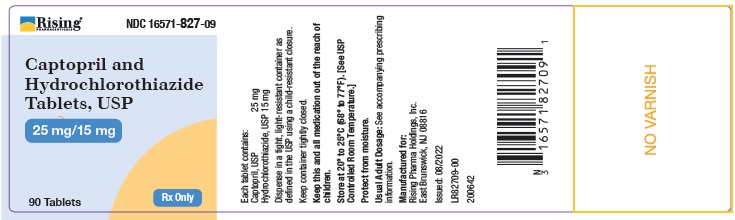
PACKAGE LABEL.PRINCIPAL DISPLAY PANEL 25 mg/15 mg: NDC: 16571-827-09 Captopril and Hydrochlorothiazide Tablets, USP 25 mg/ 15 mg Rx only 90 Tablets 25 mg/25 mg: NDC: 16571-828-09 Captopril and Hydrochlorothiazide Tablets, USP 25 mg/ 25 mg Rx only 90 Tablets 50 mg/15 mg: NDC: 16571-829-09 Captopril and Hydrochlorothiazide Tablets, USP 50 mg/ 15 mg Rx only 90 Tablets 50 mg/25 mg: NDC: 16571-830-09 Captopril and Hydrochlorothiazide Tablets, USP 50 mg/ 25 mg Rx only 90 Tablets 25-15mg-label 25-25mg-label 50-25mg-label 50-25mg-label
Reported adverse events (FAERS)
Top reported reactions
Reporter sex
Serious outcomes
Where does this data come from?
About this NDC listing & data coverage
What data is (and isn’t) available for this NDC — tap to expand
| NDC identity (package / product / labeler codes) | ✓ Available |
| Labeler | ✓ Available |
| Product & package description | ✓ Available |
| Marketing category & status | ✓ Available |
| Active ingredient / dosage form / route | ✓ Available |
| FDA label (SPL via DailyMed) | ✓ Available |
| Package photos | ✓ Available |
| Inactive ingredients (structured) | ✓ Available |
| NADAC pharmacy acquisition price (CMS) | — Not published for this NDC CMS publishes NADAC only for NDCs reported in its retail-pharmacy survey. |
| Orange Book / therapeutic-equivalence data | — Not published for this NDC Applies only to products approved under an NDA/ANDA; many listings are out of scope. |
| HCPCS J-code billing crosswalk | — Not published for this NDC Most self-administered / retail products have no J-code — that is normal. |
| Medicaid utilization (CMS SDUD) | — Not published for this NDC CMS reports utilization only for NDCs with Medicaid claims above its privacy threshold. |