
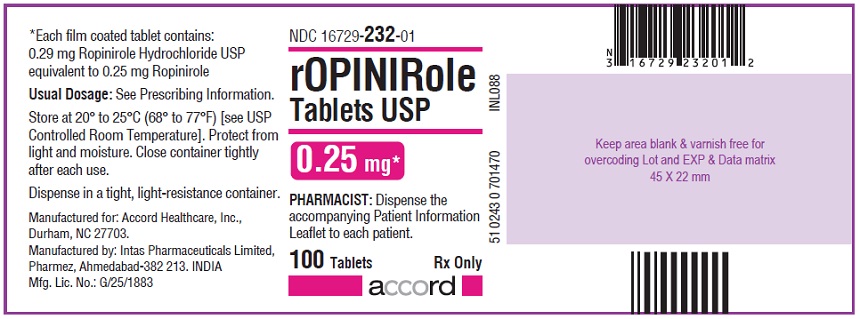
ropinirole .25 mg Tablet, Film Coated, 100-count — NDC 16729-232-01 (Billing 16729-0232-01)
This is a package of 100 tablets of ropinirole .25 mg Tablet, Film Coated from Accord Healthcare Inc., marketed since Oct 2018 and currently FDA-listed; retail pharmacies pay about $0.0472 per tablet (NADAC). It is this product's only package size.
Past resolved recalls for this product (6)
Identity & classification
Regulatory identifiers FDA, NLM and CMS codes for this package
Drug-database identifiers Medi-Span GPI and First Databank GCN / HICL / AHFS classification
- GSN (GCN sequence number): 029159
- GCN: 34100
- GPI-14 (Medi-Span): 73203070100310
- HICL (First Databank): 012182
- AHFS class code: 28:36.20.08
- RxCUI (RxNorm): 283858
Where does this data come from?
- FDA openFDA NDC Directory · synced Oct 1, 2026
- FDA label on DailyMed · label index refreshed Oct 1, 2026
- RxNorm (NLM RxNav) · catalog refreshed Oct 1, 2026
- Medi-Span GPI (licensed)
- First Databank (licensed) · refreshed Oct 1, 2026
RxNorm drug class
This medicine belongs to the Nonergot Dopamine Agonist class.
Where does this data come from?
- RxClass (NLM) · catalog refreshed Oct 1, 2026
Clinical
- Ropinirole is used to treat two conditions: Parkinson's disease and moderate-to-severe Restless Legs Syndrome (RLS). For Parkinson's disease, both the regular tablet and the extend...
- Yes, and it's one of the most important things to know. Some people on ropinirole have fallen asleep suddenly during everyday activities — including driving — sometimes without fee...
- I heard ropinirole can make you fall asleep suddenly — is that really true?
- Please don't stop it suddenly without talking to your doctor first — especially if you're taking it for Parkinson's disease. Stopping abruptly can cause a serious reaction that inc...
Patient education
Supplement & herbal interactions
Some supplements/herbs that may interact with Ropinirole — tap one for details:
Where does this data come from?
- MedlinePlus (NLM) · refreshed Oct 1, 2026
- FDA label on DailyMed · label index refreshed Oct 1, 2026
Ask a licensed pharmacist directly — free, answered by our team.
Pricing
A drug doesn't have one price. Each row is a different public payment system, and none is what you'd pay at the counter — that depends on your insurance. The ⓘ on each row explains what it measures.
| Price system | Per ea | Per package |
|---|---|---|
| Retail pharmacies payNADAC · weekly | $0.047 | $4.72 / 100 tablets |
| Medicaid paysCMS SDUD · 12 mo | No recent Medicaid claims on file for this NDC — rare and low-volume NDCs are suppressed in the public data. | |
| Medicare drug plans payPart D · Q2 2026 | $0.1503 | $15.03 / 100 tablets |
Where does this data come from?
- CMS NADAC weekly file · file of Feb 21, 2024
- CMS ASP pricing files · refreshed Sep 20, 2026
- CMS Medicaid State Drug Utilization Data · refreshed Oct 2, 2026
- CMS Part D plan pricing files · refreshed Sep 24, 2026
- VA National Acquisition Center price file
Packaging — all sizes for this product
| Package NDC | Description | Marketing start | Marketing end | Status |
|---|---|---|---|---|
| 16729-0232-01 You're viewing this Main listing | 100 TABLET, FILM COATED in 1 BOTTLE | 2018-10-17 | — | Active |
Therapeutic equivalents
| Product | Labeler | Pack | NADAC/unit | TE | Status | Price vs. this |
|---|---|---|---|---|---|---|
| Ropinirole .25 mg 00904-6373-61 | Major | 1 tablet | $0.046 | AB | Availability likely | save 3% |
| ropinirole hydrochloride .25 mg 43547-0268-10 | SOLCO | 100 tablets | $0.046 | AB | Availability likely | save 3% |
| ropinirole hydrochloride .25 mg 50268-0741-15 | AvPAK | 1 tablet | $0.046 | AB | Availability likely | save 3% |
| ropinirole hydrochloride .25 mg 60687-0577-01 | American | 1 tablet | $0.046 | AB | Availability likely | save 3% |
| ropinirole .25 mg 68462-0253-01 | Glenmark | 100 tablets | $0.046 | AB | Availability likely | save 3% |
| Ropinirole .25 mg 69452-0356-20 | Bionpharma | 100 tablets | $0.046 | AB | Availability likely | save 3% |
| ropinirole .25 mgthis 16729-0232-01 | Accord | 100 tablets | $0.047 | AB | FDA listed | — |
| Ropinirole Hydrochloride .25 mg 00615-8188-39 | NCS | 30 tablets | — | AB | FDA listed | — |
| Ropinirole .25 mg 10135-0673-01 | Marlex | 100 tablets | — | AB | FDA listed | — |
| ropinirole hydrochloride .25 mg 43547-0595-10 | SOLCO | 100 tablets | — | AB | FDA listed | — |
| Ropinirole .25 mg 46708-0030-30 | Alembic | 30 tablets | — | AB | FDA listed | — |
| ropinirole hydrochloride .25 mg 50090-1330-00 | A-S | 100 tablets | — | AB | FDA listed | — |
| ropinirole .25 mg 50090-1822-00 | A-S | 100 tablets | — | AB | FDA listed | — |
| ropinirole .25 mg 50090-4803-00 | A-S | 100 tablets | — | AB | FDA listed | — |
| ropinirole hydrochloride .25 mg 51655-0360-26 | Northwind | 90 tablets | — | AB | FDA listed | — |
| Ropinirole .25 mg 55154-7888-00 | Cardinal | 1 tablet | — | AB | FDA listed | — |
| Ropinirole .25 mg 62332-0030-30 | Alembic | 30 tablets | — | AB | FDA listed | — |
| ropinirole hydrochloride .25 mg 71205-0825-30 | Proficient | 30 tablets | — | AB | FDA listed | — |
| ropinirole hydrochloride .25 mg 71335-0587-01 | Bryant | 30 tablets | — | AB | FDA listed | — |
| ropinirole .25 mg 71335-1231-01 | Bryant | 30 tablets | — | AB | Discontinued | — |
| Ropinirole .25 mg 71335-2793-01 | Bryant | 30 tablets | — | AB | FDA listed | — |
| Ropinirole .25 mg 72189-0364-30 | Direct_Rx | 30 tablets | — | AB | FDA listed | — |
| Ropinirole .25 mg 72189-0416-30 | Direct_Rx | 30 tablets | — | AB | FDA listed | — |
| Ropinirole .25 mg 87063-0198-01 | ASCLEMED | 100 tablets | — | AB | FDA listed | — |
Where does this data come from?
- FDA openFDA NDC Directory · synced Oct 1, 2026
- FDA Orange Book · refreshed Sep 3, 2026
- CMS NADAC weekly file · file of Feb 21, 2024
Availability & generic status
This product is an FDA-approved generic. Other versions of the same drug are listed under Therapeutic equivalents, least expensive first.
Where does this data come from?
- FDA Orange Book · refreshed Sep 3, 2026
What it looks like
Where does this data come from?
- FDA label on DailyMed · label index refreshed Oct 1, 2026
Inactive Ingredients / Excipients
Inactive ingredients, also called excipients, are components of the drug product other than the active ingredient. They may include fillers, dyes, coatings, preservatives, flavors, or other formulation ingredients.
Where does this data come from?
IACT rows and label-wide narrative are kept separate; availability and product-level specificity depend on the submitted label.- FDA label on DailyMed · label index refreshed Oct 1, 2026
- FDA openFDA NDC Directory · synced Oct 1, 2026
Inactive ingredient FAQ
Are inactive ingredients the same for every manufacturer?
Why might an inactive ingredient be missing?
Can inactive ingredients matter?
Manufacturer & labeler
Where does this data come from?
- FDA openFDA NDC Directory · synced Oct 1, 2026
- Drugs@FDA
Full prescribing information FDA SPL
🎯 Indications and Usage ▾
1 INDICATIONS AND USAGE Ropinirole tablets are a non-ergoline dopamine agonist indicated for the treatment of Parkinson’s disease (PD) and moderate-to-severe primary Restless Legs Syndrome (RLS). ( 1.1, 1.2 )
1.1Parkinson’s Disease Ropinirole tablets are indicated for the treatment of Parkinson’s disease.
1.2Restless Legs Syndrome Ropinirole tablets are indicated for the treatment of moderate-to-severe primary Restless Legs Syndrome (RLS).
⏱️ Dosage and Administration ▾
2 DOSAGE AND ADMINISTRATION Ropinirole tablets can be taken with or without food. ( 2.1 ) Retitration of ropinirole hydrochloride may be warranted if therapy is interrupted. ( 2.1 ) Parkinson’s Disease: The recommended starting dose is 0.25 mg taken three times daily; titrate to a maximum daily dose of 24 mg.
(2.2) Renal Impairment: The maximum recommended dose is 18 mg/day in patients with end-stage renal disease on hemodialysis. (2.2) Restless Legs Syndrome : The recommended starting dose is 0.25 mg once daily, 1 to 3 hours before bedtime, titrate to a maximum recommended dose of 4 mg daily. (2.3) Renal Impairment: The maximum recommended dose is 3 mg/day in patients with end-stage renal disease on hemodialysis.
(2.3)
2.1General Dosing Recommendations Ropinirole tablets can be taken with or without food [see Clinical Pharmacology (12.3) ] . If a significant interruption in therapy with ropinirole hydrochloride has occurred, retitration of therapy may be warranted.
2.2Dosing for Parkinson’s Disease The recommended starting dose of ropinirole hydrochloride for Parkinson’s disease is 0.25 mg 3 times daily. Based on individual patient therapeutic response and tolerability, if necessary, the dose should then be titrated with weekly increments as described in Table 1. After Week 4, if necessary, the daily dose may be increased by 1.5 mg/day on a weekly basis up to a dose of 9 mg/day, and then by up to 3 mg/day weekly up to a maximum recommended total daily dose of 24 mg/day (8 mg 3 times daily).
Doses greater than 24 mg/day have not been tested in clinical trials. Table 1. Ascending-Dose Schedule of Ropinirole Hydrochloride for Parkinson’s Disease Week Dosage Total Daily Dose 1 0.25 mg 3 times daily 0.75 mg 2 0.5 mg 3 times daily 1.5 mg 3 0.75 mg 3 times daily 2.25 mg 4 1 mg 3 times daily 3 mg Ropinirole tablets should be discontinued gradually over a 7-day period in patients with Parkinson’s disease [ see Warnings and Precautions (5.8) ] .
The frequency of administration should be reduced from 3 times daily to twice daily for 4 days. For the remaining 3 days, the frequency should be reduced to once daily prior to complete withdrawal of ropinirole tablets. Renal Impairment No dose adjustment is necessary in patients with moderate renal impairment (creatinine clearance of 30 to 50 mL/min).
The recommended initial dose of ropinirole for patients with end-stage renal disease on hemodialysis is 0.25 mg 3 times a day. Further dose escalations should be based on tolerability and need for efficacy. The recommended maximum total daily dose is 18 mg/day in patients receiving regular dialysis.
Supplemental doses after dialysis are not required. The use of ropinirole hydrochloride in patients with severe renal impairment without regular dialysis has not been studied.
2.3Dosing for Restless Legs Syndrome The recommended adult starting dose for RLS is 0.25 mg once daily 1 to 3 hours before bedtime. After 2 days, if necessary, the dose can be increased to 0.5 mg once daily, and to 1 mg once daily at the end of the first week of dosing, then as shown in Table 2 as needed to achieve efficacy. Titration should be based on individual patient therapeutic response and tolerability, up to a maximum recommended dose of 4 mg daily.
For RLS, the safety and effectiveness of doses greater than 4 mg once daily have not been established. Table 2. Dose Titration Schedule of Ropinirole Hydrochloride for Restless Legs Syndrome Day/Week Dose to be taken once daily 1 to 3 hours before bedtime Days 1 and 2 0.25 mg Days 3 to 7 0.5 mg Week 2 1 mg Week 3 1.5 mg Week 4 2 mg Week 5 2.5 mg Week 6 3 mg Week 7 4 mg When discontinuing ropinirole hydrochloride in patients with RLS, gradual reduction of the daily dose is recommended [see Warnings and Precautions (5.8, 5.9) ] .
Renal Impairment No dose adjustment is necessary in patients with moderate renal impairment (creatinine clearance of 30 to 50 mL/min). The recommended initial dose of ropinirole for patients with en… [Excerpted — this section continues on DailyMed.]
💊 Dosage Forms and Strengths ▾
3 DOSAGE FORMS AND STRENGTHS 0.25 mg: White to off white, round, biconvex, film coated tablets debossed with "R6" on one side and plain on other side. 0.5 mg: Yellow, round, biconvex, film coated tablets debossed with "R7" on one side and plain on other side. 1 mg: Green, round, biconvex, film coated tablets debossed with "R1" on one side and plain on other side.
2 mg: Pink, round, biconvex, film coated tablets debossed with "R2" on one side and plain on other side. 3 mg: Purple to light purple, round, biconvex, film coated tablets debossed with "R3" on one side and plain on other side. 4 mg: Brown to pale brown, round, biconvex, film coated tablets debossed with "R4" on one side and plain on other side.
5 mg: Blue, round, biconvex, film coated tablets debossed with "R5" on one side and plain on other side. Tablets: 0.25 mg, 0.5 mg, 1 mg, 2 mg, 3 mg, 4 mg, and 5 mg (3)
⛔ Contraindications ▾
4 CONTRAINDICATIONS Ropinirole tablets are contraindicated in patients known to have a hypersensitivity/allergic reaction (including urticaria, angioedema, rash, pruritus) to ropinirole or to any of the excipients. History of hypersensitivity/allergic reaction (including urticaria, angioedema, rash, pruritus) to ropinirole or to any of the excipients. (4)
⚠️ Warnings and Cautions ▾
5 WARNINGS AND PRECAUTIONS Sudden onset of sleep and somnolence may occur (5.1) Syncope may occur (5.2) Hypotension, including orthostatic hypotension may occur (5.3) May cause hallucinations and psychotic-like behaviors (5.4) May cause or exacerbate dyskinesia (5.5) May cause problems with impulse control or compulsive behaviors (5.6)
5.1Falling Asleep during Activities of Daily Living and Somnolence Patients treated with ropinirole hydrochloride have reported falling asleep while engaged in activities of daily living, including driving or operating machinery, which sometimes resulted in accidents. Although many of these patients reported somnolence while on ropinirole hydrochloride, some perceived that they had no warning signs, such as excessive drowsiness, and believed that they were alert immediately prior to the event. Some have reported these events more than 1 year after initiation of treatment.
In controlled clinical trials, somnolence was commonly reported in patients receiving ropinirole hydrochloride and was more frequent in Parkinson's disease (up to 40% ropinirole hydrochloride, 6% placebo) than in RLS (12% ropinirole hydrochloride, 6% placebo) [see Adverse Reactions (6.1) ] . It has been reported that falling asleep while engaged in activities of daily living usually occurs in a setting of pre-existing somnolence, although patients may not give such a history. For this reason, prescribers should reassess patients for drowsiness or sleepiness, especially since some of the events occur well after the start of treatment.
Prescribers should also be aware that patients may not acknowledge drowsiness or sleepiness until directly questioned about drowsiness or sleepiness during specific activities. Before initiating treatment with ropinirole hydrochloride, patients should be advised of the potential to develop drowsiness and specifically asked about factors that may increase the risk with ropinirole hydrochloride such as concomitant sedating medications or alcohol, the presence of sleep disorders (other than RLS), and concomitant medications that increase ropinirole plasma levels (e.g., ciprofloxacin) [see Drug Interactions (7.1) ] .
If a patient develops significant daytime sleepiness or episodes of falling asleep during activities that require active participation (e.g., driving a motor vehicle, conversations, eating), ropinirole hydrochloride should ordinarily be discontinued [see Dosage and Administration (2.2, 2.3) ] . If a decision is made to continue ropinirole hydrochloride, patients should be advised to not drive and to avoid other potentially dangerous activities. There is insufficient information to establish that dose reduction will eliminate episodes of falling asleep while engaged in activities of daily living.
5.2Syncope Syncope, sometimes associated with bradycardia, was observed in association with treatment with ropinirole hydrochloride in both patients with Parkinson’s disease and patients with RLS. In controlled clinical trials in patients with Parkinson’s disease, syncope was observed more frequently in patients receiving ropinirole hydrochloride than in patients receiving placebo (early Parkinson’s disease without levodopa [L-dopa]: ropinirole hydrochloride 12%, placebo 1%; advanced Parkinson’s disease: ropinirole hydrochloride 3%, placebo 2%).
Syncope was reported in 1% of patients treated with ropinirole hydrochloride for RLS in 12-week, placebo-controlled clinical trials compared with 0.2% of patients treated with placebo [see Adverse Reactions (6.1) ] . Most cases occurred more than 4 weeks after initiation of therapy with ropinirole hydrochloride and were usually associated with a recent increase in dose. Because the trials conducted with ropinirole hydrochloride excluded patients with significant cardiovascular disease, patients with significant cardiovascular disease should be treated with caution.
Approximately 4% of patients with Parkinson’s disease enrolled in Phase 1 trials had syncop… [Excerpted — this section continues on DailyMed.]
🤒 Adverse Reactions ▾
6 ADVERSE REACTIONS The following adverse reactions are described in more detail in other sections of the label: Hypersensitivity [see Contraindications (4) ] Falling asleep during activities of daily living and somnolence [see Warnings and Precautions (5.1) ] Syncope [see Warnings and Precautions (5.2) ] Hypotension/orthostatic hypotension [see Warnings and Precautions (5.3) ] Hallucinations/psychotic-like behavior [see Warnings and Precautions (5.4) ] Dyskinesia [see Warnings and Precautions (5.5) ] Impulse control/compulsive behaviors [see Warnings and Precautions (5.6) ] Withdrawal-emergent hyperpyrexia and confusion [see Warnings and Precautions (5.7) ] Withdrawal Symptoms [see Warnings and Precautions (5.8) ] Augmentation and early-morning rebound in RLS [see Warnings and Precautions (5.9) ] Fibrotic complications [see Warnings and Precautions (5.10) ] Retinal pathology [see Warnings and Precautions (5.11) ] Most common adverse reactions (incidence with ropinirole hydrochloride at least 5% greater than placebo) in the respective indications were: Early PD: Nausea, somnolence, dizziness, syncope, asthenic condition, viral infection, leg edema, vomiting, and dyspepsia.
(6.1) Advanced PD: Dyskinesia, somnolence, nausea, dizziness, confusion, hallucinations, sweating, and headache. (6.1) RLS: Nausea, vomiting, somnolence, dizziness, and asthenic condition. (6.1) To report SUSPECTED ADVERSE REACTIONS, contact Accord Healthcare Inc. at 1-866-941-7875 or FDA at 1-800-FDA-1088 or www.fda.gov/medwatch.
6.1Clinical Trials Experience Because clinical trials are conducted under widely varying conditions, adverse reaction rates observed in the clinical trials of a drug cannot be directly compared with rates in the clinical trials of another drug (or of another development program of a different formulation of the same drug) and may not reflect the rates observed in practice. Parkinson’s Disease During the premarketing development of ropinirole hydrochloride, patients received ropinirole hydrochloride either without L-dopa (early Parkinson’s disease trials) or as concomitant therapy with L-dopa (advanced Parkinson’s disease trials).
Because these 2 populations may have differential risks for various adverse reactions, this section will in general present adverse reaction data for these 2 populations separately. Early Parkinson’s Disease (without L-dopa): In the double-blind, placebo-controlled trials in patients with early-stage Parkinson’s disease, the most commonly observed adverse reactions in patients treated with ropinirole hydrochloride (incidence at least 5% greater than placebo) were nausea, somnolence, dizziness, syncope, asthenic condition (i.e., asthenia, fatigue, and/or malaise), viral infection, leg edema, vomiting, and dyspepsia.
Approximately 24% of patients treated with ropinirole hydrochloride who participated in the double-blind, placebo-controlled early Parkinson’s disease (without L-dopa) trials discontinued treatment due to adverse reactions compared with 13% of patients who received placebo. The most common adverse reactions in patients treated with ropinirole hydrochloride (incidence at least 2% greater than placebo) of sufficient severity to cause discontinuation were nausea and dizziness. Table 3 lists treatment-emergent adverse reactions that occurred in at least 2% of patients with early Parkinson’s disease (without L-dopa) treated with ropinirole hydrochloride participating in the double-blind, placebo-controlled trials and were numerically more common than the incidence for placebo-treated patients.
In these trials, either ropinirole hydrochloride or placebo was used as early therapy (i.e., without L-dopa). Table 3. Treatment-Emergent Adverse Reaction Incidence in Double-blind, Placebo-Controlled Early Parkinson’s Disease (without L-dopa) Trials (Events ≥2% of Patients Treated with Ropinirole Hydrochloride and Numerically More Frequent than the Placebo Group) a Body System/Adverse Reaction Ropinirole Hydr… [Excerpted — this section continues on DailyMed.]
🔄 Drug Interactions ▾
7 DRUG INTERACTIONS Inhibitors or inducers of CYP1A2: May alter the clearance of ropinirole hydrochloride; dose adjustment of ropinirole hydrochloride may be required. ( 7.1 , 12.3 ) Hormone replacement therapy (HRT): Starting or stopping HRT may require dose adjustment of ropinirole hydrochloride. ( 7.2 , 12.3 ) Dopamine antagonists (e.g., neuroleptics, metoclopramide): May reduce efficacy of ropinirole hydrochloride. ( 7.3 )
7.1Cytochrome P450 1A2 Inhibitors and Inducers In vitro metabolism studies showed that cytochrome P450 1A2 (CYP1A2) is the major enzyme responsible for the metabolism of ropinirole. There is thus the potential for inducers or inhibitors of this enzyme to alter the clearance of ropinirole. Therefore, if therapy with a drug known to be a potent inducer or inhibitor of CYP1A2 is stopped or started during treatment with ropinirole hydrochloride, adjustment of the dose of ropinirole hydrochloride may be required.
Coadministration of ciprofloxacin, an inhibitor of CYP1A2, increases the AUC and C max of ropinirole [see Clinical Pharmacology (12.3) ] . Cigarette smoking is expected to increase the clearance of ropinirole since CYP1A2 is known to be induced by smoking [see Clinical Pharmacology (12.3) ] .
7.2Estrogens Population pharmacokinetic analysis revealed that higher doses of estrogens (usually associated with hormone replacement therapy) reduced the clearance of ropinirole. Starting or stopping hormone replacement therapy may require adjustment of dosage of ropinirole hydrochloride [see Clinical Pharmacology (12.3) ] .
7.3Dopamine Antagonists Because ropinirole is a dopamine agonist, it is possible that dopamine antagonists such as neuroleptics (e.g., phenothiazines, butyrophenones, thioxanthenes) or metoclopramide may reduce the efficacy of ropinirole hydrochloride.
👥 Use in Specific Populations ▾
8 USE IN SPECIFIC POPULATIONS Pregnancy: Based on animal data, may cause fetal harm. ( 8.1 )
8.1Pregnancy Risk Summary There are no adequate data on the developmental risk associated with the use of ropinirole hydrochloride in pregnant women. In animal studies, ropinirole had adverse effects on development when administered to pregnant rats at doses similar to (neurobehavioral impairment) or greater than (teratogenicity and embryolethality at >36 times) the MRHD for Parkinson’s disease. Ropinirole doses associated with teratogenicity and embryolethality in pregnant rats were associated with maternal toxicity.
In pregnant rabbits, ropinirole potentiated the teratogenic effects of L-dopa when these drugs were administered in combination [see Data] . In the U.S. general population, the estimated background risk of major birth defects and of miscarriage in clinically recognized pregnancies is 2% to 4% and 15% to 20%, respectively. The background risk of major birth defects and miscarriage in the indicated populations is unknown.
Data Animal Data: Oral administration of ropinirole (0, 20, 60, 90, 120, or 150 mg/kg/day) to pregnant rats during organogenesis resulted in embryolethality, increased incidence of fetal malformations (digit, cardiovascular, and neural tube defects) and variations, and decreased fetal weight at the 2 highest doses. These doses were also associated with maternal toxicity. The highest no-effect dose for adverse effects on embryofetal development (90 mg/kg/day) is approximately 36 times the MRHD for Parkinson’s disease (24 mg/day) on a body surface area (mg/m 2 ) basis.
No effect on embryofetal development was observed in rabbits when ropinirole was administered alone during organogenesis at oral doses of 0, 1, 5, or 20 mg/kg/day (up to 16 times the MRHD on a mg/m 2 basis). In pregnant rabbits, there was a greater incidence and severity of fetal malformations (primarily digit defects) when ropinirole (10 mg/kg/day) was administered orally during gestation in combination with L-dopa (250 mg/kg/day) than when L-dopa was administered alone. This drug combination was also associated with maternal toxicity.
Oral administration of ropinirole (0, 0.1, 1, or 10 mg/kg/day) to rats during late gestation and continuing throughout lactation resulted in neurobehavioral impairment (decreased startle response) and decreased body weight in offspring at the highest dose. The no-effect dose of 1 mg/kg/day is less than the MRHD on a (mg/m 2 ) basis.
8.2Lactation Risk Summary There are no data on the presence of ropinirole in human milk, the effects of ropinirole on the breastfed infant, or the effects of ropinirole on milk production. However, inhibition of lactation is expected because ropinirole inhibits secretion of prolactin in humans. Ropinirole or metabolites, or both, are present in rat milk.
The developmental and health benefits of breastfeeding should be considered along with the mother’s clinical need for ropinirole hydrochloride and any potential adverse effects on the breastfed infant from ropinirole or from the underlying maternal condition.
8.4Pediatric Use Safety and effectiveness in pediatric patients have not been established.
8.5Geriatric Use Dose adjustment is not necessary in elderly (65 years and older) patients, as the dose of ropinirole hydrochloride is individually titrated to clinical therapeutic response and tolerability. Pharmacokinetic trials conducted in patients demonstrated that oral clearance of ropinirole is reduced by 15% in patients older than 65 years compared with younger patients [see Clinical Pharmacology (12.3) ] . In flexible-dose clinical trials of extended-release ropinirole for Parkinson’s disease, 387 patients were 65 years and older and 107 patients were 75 years and older.
Among patients receiving extended-release ropinirole, hallucination was more common in elderly patients (10%) compared with non-elderly patients (2%). In these trials, the incidence of overall adverse reactio… [Excerpted — this section continues on DailyMed.]
🤰 Pregnancy ▾
8.1Pregnancy Risk Summary There are no adequate data on the developmental risk associated with the use of ropinirole hydrochloride in pregnant women. In animal studies, ropinirole had adverse effects on development when administered to pregnant rats at doses similar to (neurobehavioral impairment) or greater than (teratogenicity and embryolethality at >36 times) the MRHD for Parkinson’s disease. Ropinirole doses associated with teratogenicity and embryolethality in pregnant rats were associated with maternal toxicity.
In pregnant rabbits, ropinirole potentiated the teratogenic effects of L-dopa when these drugs were administered in combination [see Data] . In the U.S. general population, the estimated background risk of major birth defects and of miscarriage in clinically recognized pregnancies is 2% to 4% and 15% to 20%, respectively. The background risk of major birth defects and miscarriage in the indicated populations is unknown.
Data Animal Data: Oral administration of ropinirole (0, 20, 60, 90, 120, or 150 mg/kg/day) to pregnant rats during organogenesis resulted in embryolethality, increased incidence of fetal malformations (digit, cardiovascular, and neural tube defects) and variations, and decreased fetal weight at the 2 highest doses. These doses were also associated with maternal toxicity. The highest no-effect dose for adverse effects on embryofetal development (90 mg/kg/day) is approximately 36 times the MRHD for Parkinson’s disease (24 mg/day) on a body surface area (mg/m 2 ) basis.
No effect on embryofetal development was observed in rabbits when ropinirole was administered alone during organogenesis at oral doses of 0, 1, 5, or 20 mg/kg/day (up to 16 times the MRHD on a mg/m 2 basis). In pregnant rabbits, there was a greater incidence and severity of fetal malformations (primarily digit defects) when ropinirole (10 mg/kg/day) was administered orally during gestation in combination with L-dopa (250 mg/kg/day) than when L-dopa was administered alone. This drug combination was also associated with maternal toxicity.
Oral administration of ropinirole (0, 0.1, 1, or 10 mg/kg/day) to rats during late gestation and continuing throughout lactation resulted in neurobehavioral impairment (decreased startle response) and decreased body weight in offspring at the highest dose. The no-effect dose of 1 mg/kg/day is less than the MRHD on a (mg/m 2 ) basis.
🧒 Pediatric Use ▾
8.4Pediatric Use Safety and effectiveness in pediatric patients have not been established.
🧓 Geriatric Use ▾
8.5Geriatric Use Dose adjustment is not necessary in elderly (65 years and older) patients, as the dose of ropinirole hydrochloride is individually titrated to clinical therapeutic response and tolerability. Pharmacokinetic trials conducted in patients demonstrated that oral clearance of ropinirole is reduced by 15% in patients older than 65 years compared with younger patients [see Clinical Pharmacology (12.3) ] . In flexible-dose clinical trials of extended-release ropinirole for Parkinson’s disease, 387 patients were 65 years and older and 107 patients were 75 years and older.
Among patients receiving extended-release ropinirole, hallucination was more common in elderly patients (10%) compared with non-elderly patients (2%). In these trials, the incidence of overall adverse reactions increased with increasing age for both patients receiving extended-release ropinirole and placebo. In the fixed-dose clinical trials of extended-release ropinirole, 176 patients were 65 years and older and 73 were 75 and older.
Among patients with advanced Parkinson’s disease receiving extended-release ropinirole, vomiting and nausea were more common in patients greater than 65 years (5% and 9%, respectively) compared with patients less than 65 (1% and 7%, respectively).
🆘 Overdosage ▾
10 OVERDOSAGE The symptoms of overdose with ropinirole hydrochloride are related to its dopaminergic activity. General supportive measures are recommended. Vital signs should be maintained, if necessary.
In clinical trials, there have been patients who accidentally or intentionally took more than their prescribed dose of ropinirole. The largest overdose reported with ropinirole in clinical trials was 435 mg taken over a 7-day period (62.1 mg/day). Of patients who received a dose greater than 24 mg/day, reported symptoms included adverse events commonly reported during dopaminergic therapy (nausea, dizziness), as well as visual hallucinations, hyperhidrosis, claustrophobia, chorea, palpitations, asthenia, and nightmares.
Additional symptoms reported in cases of overdose included vomiting, increased coughing, fatigue, syncope, vasovagal syncope, dyskinesia, agitation, chest pain, orthostatic hypotension, somnolence, and confusional state.
🧬 Clinical Pharmacology ▾
12 CLINICAL PHARMACOLOGY
12.1Mechanism of Action Ropinirole is a non-ergoline dopamine agonist. The precise mechanism of action of ropinirole as a treatment for Parkinson’s disease is unknown, although it is thought to be related to its ability to stimulate dopamine D 2 receptors within the caudate-putamen in the brain. The precise mechanism of action of ropinirole as a treatment for RLS is unknown, although it is thought to be related to its ability to stimulate dopamine receptors.
12.2Pharmacodynamics Clinical experience with dopamine agonists, including ropinirole, suggests an association with impaired ability to regulate blood pressure resulting in orthostatic hypotension, especially during dose escalation. In some patients in clinical trials, blood pressure changes were associated with the emergence of orthostatic symptoms, bradycardia, and, in one case in a healthy volunteer, transient sinus arrest with syncope [see Warnings and Precautions ( 5.2, 5.3) ] . The mechanism of orthostatic hypotension induced by ropinirole is presumed to be due to a D2-mediated blunting of the noradrenergic response to standing and subsequent decrease in peripheral vascular resistance.
Nausea is a common concomitant symptom of orthostatic signs and symptoms. At oral doses as low as 0.2 mg, ropinirole suppressed serum prolactin concentrations in healthy male volunteers. Ropinirole had no dose-related effect on electrocardiogram wave form and rhythm in young, healthy, male volunteers in the range of 0.01 to 2.5 mg.
Ropinirole had no dose- or exposure-related effect on mean QT intervals in healthy male and female volunteers titrated to doses up to 4 mg/day. The effect of ropinirole on QTc intervals at higher exposures achieved either due to drug interactions, hepatic impairment, or at higher doses has not been systematically evaluated.
12.3Pharmacokinetics Ropinirole displayed linear kinetics over the dosing range of 1 to 8 mg 3 times daily. Steady-state concentrations are expected to be achieved within 2 days of dosing. Accumulation upon multiple dosing is predictive from single dosing.
Absorption Ropinirole is rapidly absorbed after oral administration, reaching peak concentration in approximately 1 to 2 hours. In clinical trials, more than 88% of a radiolabeled dose was recovered in urine and the absolute bioavailability was 45% to 55%, indicating approximately 50% first-pass effect. Relative bioavailability from a tablet compared with an oral solution is 85%.
Food does not affect the extent of absorption of ropinirole, although its T max is increased by 2.5 hours and its C max is decreased by approximately 25% when the drug is taken with a high-fat meal. Distribution Ropinirole is widely distributed throughout the body, with an apparent volume of distribution of
7.5L/kg. It is up to 40% bound to plasma proteins and has a blood-to-plasma ratio of 1:1. Metabolism Ropinirole is extensively metabolized by the liver.
The major metabolic pathways are N-despropylation and hydroxylation to form the inactive N-despropyl metabolite and hydroxy metabolites. The N-despropyl metabolite is converted to carbamyl glucuronide, carboxylic acid, and N-despropyl hydroxy metabolites. The hydroxy metabolite of ropinirole is rapidly glucuronidated.
In vitro studies indicate that the major cytochrome P450 enzyme involved in the metabolism of ropinirole is CYP1A2, an enzyme known to be induced by smoking and omeprazole and inhibited by, for example, fluvoxamine, mexiletine, and the older fluoroquinolones such as ciprofloxacin and norfloxacin. Elimination The clearance of ropinirole after oral administration is 47 L/h and its elimination half-life is approximately 6 hours. Less than 10% of the administered dose is excreted as unchanged drug in urine.
N-despropyl ropinirole is the predominant metabolite found in urine (40%), followed by the carboxylic acid metabolite (10%) and the glucuronide of the hydroxy metabolite (10%). Specific Populations Because therapy wi… [Excerpted — this section continues on DailyMed.]
🧬 Mechanism of Action ▾
12.1Mechanism of Action Ropinirole is a non-ergoline dopamine agonist. The precise mechanism of action of ropinirole as a treatment for Parkinson’s disease is unknown, although it is thought to be related to its ability to stimulate dopamine D 2 receptors within the caudate-putamen in the brain. The precise mechanism of action of ropinirole as a treatment for RLS is unknown, although it is thought to be related to its ability to stimulate dopamine receptors.
📦 How Supplied / Storage and Handling ▾
16 HOW SUPPLIED/STORAGE AND HANDLING Ropinirole tablets, USP are available as follows: 0.25 mg: White to off white, round, biconvex, film coated tablets debossed with "R6" on one side and plain on other side. Bottles of 100’s count (NDC 16729-232-01) comes with a child-resistant closure. 0.5 mg: Yellow, round, biconvex, film coated tablets debossed with "R7" on one side and plain on other side.
Bottles of 100’s count (NDC 16729-233-01) comes with a child-resistant closure. 1 mg: Green, round, biconvex, film coated tablets debossed with "R1" on one side and plain on other side. Bottles of 100’s count (NDC 16729-234-01) comes with a child-resistant closure.
2 mg: Pink, round, biconvex, film coated tablets debossed with "R2" on one side and plain on other side. Bottles of 100’s count (NDC 16729-235-01) comes with a child-resistant closure. 3 mg: Purple to light purple, round, biconvex, film coated tablets debossed with "R3" on one side and plain on other side.
Bottles of 100’s count (NDC 16729-236-01) comes with a child-resistant closure. 4 mg: Brown to pale brown, round, biconvex, film coated tablets debossed with "R4" on one side and plain on other side. Bottles of 100’s count (NDC 16729-237-01) comes with a child-resistant closure.
5 mg: Blue, round, biconvex, film coated tablets debossed with "R5" on one side and plain on other side. Bottles of 100’s count (NDC 16729-238-01) comes with a child-resistant closure. Storage Store at room temperature between 20°C and 25°C (68°F and 77°F); excursions permitted to 15°C to 30°C (59°F to 86°F) [see USP Controlled Room Temperature].
Protect from light and moisture. Close container tightly after each use.
📋 Description ▾
11 DESCRIPTION Ropinirole tablets, USP contains ropinirole, a non-ergoline dopamine agonist, as the hydrochloride salt. The chemical name of ropinirole hydrochloride is 4-[2-(dipropylamino)ethyl]-1,3-dihydro-2H-indol-2-one and the molecular formula is C 16 H 24 N 2 O•HCl. The molecular weight is 296.84 (260.38 as the free base).
The structural formula is: Ropinirole hydrochloride is a white to yellow solid with a melting range of 243°C to 250°C and a solubility of 133 mg/mL in water. Each film-coated tablet contains ropinirole hydrochloride equivalent to ropinirole, 0.25, 0.5, 1, 2, 3, 4, or 5 mg. Inactive ingredients consist of: croscarmellose sodium, lactose monohydrate, and magnesium stearate, microcrystalline cellulose.
The film coating of the tablet consists of following inactive ingredients: 0.25 mg: hypromellose, polyethylene glycol, polysorbate 80 and titanium dioxide. 0.5 mg: FD&C Blue #2/Indigo carmine aluminum lake, hypromellose, iron oxide red, iron oxide yellow, polyethylene glycol and titanium dioxide. 1 mg: FD&C Blue #2/Indigo carmine aluminum lake, hypromellose, iron oxide yellow, polyethylene glycol and titanium dioxide.
2 mg: hypromellose, iron oxide red, iron oxide yellow, polyethylene glycol and titanium dioxide. 3 mg: carmine, FD&C Blue #2/Indigo carmine aluminum lake, FD&C Yellow No. 6/Sunset yellow FCF aluminum lake, hypromellose, polyethylene glycol and titanium dioxide.
4 mg: hypromellose, iron oxide black, iron oxide red, iron oxide yellow, polyethylene glycol and titanium dioxide. 5 mg: FD&C Blue #2/Indigo carmine aluminum lake, hypromellose, polyethylene glycol, polysorbate 80 and titanium dioxide. chemical structure
💬 Information for Patients ▾
17 PATIENT COUNSELING INFORMATION Advise the patient to read the FDA-approved patient labeling (Patient Information). Dosing Instructions Instruct patients to take ropinirole hydrochloride only as prescribed. If a dose is missed, advise patients not to double their next dose.
Ropinirole tablets can be taken with or without food [see Dosage and Administration (2.1) ] . Ropinirole is the active ingredient in ropinirole tablets (the immediate‑release formulation). Ask your patients if they are taking another medication containing ropinirole.
Hypersensitivity/Allergic Reactions Advise patients about the potential for developing a hypersensitivity/allergic reaction including manifestations such as urticaria, angioedema, rash, and pruritus when taking any ropinirole product. Inform patients who experience these or similar reactions to immediately contact their healthcare professional [see Contraindications (4) ] . Falling Asleep during Activities of Daily Living and Somnolence Alert patients to the potential sedating effects caused by ropinirole hydrochloride, including somnolence and the possibility of falling asleep while engaged in activities of daily living.
Because somnolence is a frequent adverse reaction with potentially serious consequences, patients should not drive a car, operate machinery, or engage in other potentially dangerous activities until they have gained sufficient experience with ropinirole hydrochloride to gauge whether or not it adversely affects their mental and/or motor performance. Advise patients that if increased somnolence or episodes of falling asleep during activities of daily living (e.g., conversations, eating, driving a motor vehicle) are experienced at any time during treatment, they should not drive or participate in potentially dangerous activities until they have contacted their physician.
Advise patients of possible additive effects when patients are taking other sedating medications, alcohol, or other central nervous system depressants (e.g., benzodiazepines, antipsychotics, antidepressants) in combination with ropinirole hydrochloride or when taking a concomitant medication (e.g., ciprofloxacin) that increases plasma levels of ropinirole [see Warnings and Precautions (5.1) ] . Syncope and Hypotension/Orthostatic Hypotension Advise patients that they may experience syncope and may develop hypotension with or without symptoms such as dizziness, nausea, syncope, and sometimes sweating while taking ropinirole hydrochloride, especially if they are elderly.
Hypotension and/or orthostatic symptoms may occur more frequently during initial therapy or with an increase in dose at any time (cases have been seen after weeks of treatment). Postural/orthostatic symptoms may be related to sitting up or standing. Accordingly, caution patients against standing rapidly after sitting or lying down, especially if they have been doing so for prolonged periods and especially at the initiation of treatment with ropinirole hydrochloride [see Warnings and Precautions (5.2, 5.3 ) ] .
Hallucinations/Psychotic-Like Behavior Inform patients that they may experience hallucinations (unreal visions, sounds, or sensations), and that other psychotic-like behavior can occur while taking ropinirole hydrochloride. In patients with Parkinson’s disease, the elderly are at greater risk than younger patients. This risk is greater in patients who are taking ropinirole hydrochloride with L-dopa or taking higher doses of ropinirole hydrochloride and may also be further increased in patients taking any other drugs that increase dopaminergic tone.
Tell patients to report hallucinations or psychotic-like behavior to their healthcare provider promptly should they develop [see Warnings and Precautions (5.4) ] . Dyskinesia Inform patients that ropinirole hydrochloride may cause and/or exacerbate pre-existing dyskinesias [see Warnings and Precautions (5.5) ] . Impulse Control/Compulsive Behaviors Advise patients that they may experience impuls… [Excerpted — this section continues on DailyMed.]
🍼 Nursing Mothers ▾
8.2Lactation Risk Summary There are no data on the presence of ropinirole in human milk, the effects of ropinirole on the breastfed infant, or the effects of ropinirole on milk production. However, inhibition of lactation is expected because ropinirole inhibits secretion of prolactin in humans. Ropinirole or metabolites, or both, are present in rat milk.
The developmental and health benefits of breastfeeding should be considered along with the mother’s clinical need for ropinirole hydrochloride and any potential adverse effects on the breastfed infant from ropinirole or from the underlying maternal condition.
🧬 Pharmacokinetics ▾
12.3Pharmacokinetics Ropinirole displayed linear kinetics over the dosing range of 1 to 8 mg 3 times daily. Steady-state concentrations are expected to be achieved within 2 days of dosing. Accumulation upon multiple dosing is predictive from single dosing.
Absorption Ropinirole is rapidly absorbed after oral administration, reaching peak concentration in approximately 1 to 2 hours. In clinical trials, more than 88% of a radiolabeled dose was recovered in urine and the absolute bioavailability was 45% to 55%, indicating approximately 50% first-pass effect. Relative bioavailability from a tablet compared with an oral solution is 85%.
Food does not affect the extent of absorption of ropinirole, although its T max is increased by 2.5 hours and its C max is decreased by approximately 25% when the drug is taken with a high-fat meal. Distribution Ropinirole is widely distributed throughout the body, with an apparent volume of distribution of
7.5L/kg. It is up to 40% bound to plasma proteins and has a blood-to-plasma ratio of 1:1. Metabolism Ropinirole is extensively metabolized by the liver.
The major metabolic pathways are N-despropylation and hydroxylation to form the inactive N-despropyl metabolite and hydroxy metabolites. The N-despropyl metabolite is converted to carbamyl glucuronide, carboxylic acid, and N-despropyl hydroxy metabolites. The hydroxy metabolite of ropinirole is rapidly glucuronidated.
In vitro studies indicate that the major cytochrome P450 enzyme involved in the metabolism of ropinirole is CYP1A2, an enzyme known to be induced by smoking and omeprazole and inhibited by, for example, fluvoxamine, mexiletine, and the older fluoroquinolones such as ciprofloxacin and norfloxacin. Elimination The clearance of ropinirole after oral administration is 47 L/h and its elimination half-life is approximately 6 hours. Less than 10% of the administered dose is excreted as unchanged drug in urine.
N-despropyl ropinirole is the predominant metabolite found in urine (40%), followed by the carboxylic acid metabolite (10%) and the glucuronide of the hydroxy metabolite (10%). Specific Populations Because therapy with ropinirole hydrochloride is initiated at a low dose and gradually titrated upward according to clinical tolerability to obtain the optimum therapeutic effect, adjustment of the initial dose based on gender, weight, or age is not necessary. Geriatric Patients: Oral clearance of ropinirole is reduced by 15% in patients older than 65 years compared with younger patients.
Dosage adjustment is not necessary in the elderly (older than 65 years), as the dose of ropinirole is to be individually titrated to clinical response. Male and Female Patients: Male and female patients showed similar clearance. Racial or Ethnic Groups: The influence of race on the pharmacokinetics of ropinirole has not been evaluated.
Cigarette Smoking: Smoking is expected to increase the clearance of ropinirole since CYP1A2 is known to be induced by smoking. In a trial in patients with RLS, smokers (n = 7) had an approximately 30% lower C max and a 38% lower AUC than did nonsmokers (n = 11) when those parameters were normalized for dose. Patients with Renal Impairment: Based on population pharmacokinetic analysis, no difference was observed in the pharmacokinetics of ropinirole in subjects with moderate renal impairment (creatinine clearance between 30 to 50 mL/min) compared with an age-matched population with creatinine clearance above 50 mL/min.
Therefore, no dosage adjustment is necessary in patients with moderate renal impairment. A trial of ropinirole in subjects with end-stage renal disease on hemodialysis has shown that clearance of ropinirole was reduced by approximately 30%. The recommended maximum dose is lower in these patients [see Dosage and Administration ( 2.2, 2.3) ] .
The use of ropinirole in subjects with severe renal impairment (creatinine clearance <30 mL/min) without regular dialysis has not been studied. Patients with Hepatic Imp… [Excerpted — this section continues on DailyMed.]
🧬 Pharmacodynamics ▾
12.2Pharmacodynamics Clinical experience with dopamine agonists, including ropinirole, suggests an association with impaired ability to regulate blood pressure resulting in orthostatic hypotension, especially during dose escalation. In some patients in clinical trials, blood pressure changes were associated with the emergence of orthostatic symptoms, bradycardia, and, in one case in a healthy volunteer, transient sinus arrest with syncope [see Warnings and Precautions ( 5.2, 5.3) ] . The mechanism of orthostatic hypotension induced by ropinirole is presumed to be due to a D2-mediated blunting of the noradrenergic response to standing and subsequent decrease in peripheral vascular resistance.
Nausea is a common concomitant symptom of orthostatic signs and symptoms. At oral doses as low as 0.2 mg, ropinirole suppressed serum prolactin concentrations in healthy male volunteers. Ropinirole had no dose-related effect on electrocardiogram wave form and rhythm in young, healthy, male volunteers in the range of 0.01 to 2.5 mg.
Ropinirole had no dose- or exposure-related effect on mean QT intervals in healthy male and female volunteers titrated to doses up to 4 mg/day. The effect of ropinirole on QTc intervals at higher exposures achieved either due to drug interactions, hepatic impairment, or at higher doses has not been systematically evaluated.
🔬 Clinical Studies ▾
14 CLINICAL STUDIES
14.1Parkinson’s Disease The effectiveness of ropinirole hydrochloride in the treatment of Parkinson’s disease was evaluated in a multinational drug development program consisting of 11 randomized, controlled trials. Four trials were conducted in patients with early Parkinson’s disease and no concomitant L-dopa and 7 trials were conducted in patients with advanced Parkinson’s disease with concomitant L-dopa. Three placebo-controlled trials provide evidence of effectiveness of ropinirole hydrochloride in the management of patients with Parkinson’s disease who were and were not receiving concomitant L-dopa.
Two of these 3 trials enrolled patients with early Parkinson’s disease (without L-dopa) and 1 enrolled patients receiving L-dopa. In these trials a variety of measures were used to assess the effects of treatment (e.g., Unified Parkinson’s Disease Rating Scale [UPDRS], Clinical Global Impression [CGI] scores, patient diaries recording time “on” and “off,” tolerability of L-dopa dose reductions). In both trials of patients with early Parkinson’s disease (without L-dopa), the motor component (Part III) of the UPDRS was the primary outcome assessment.
The UPDRS is a multi-item rating scale intended to evaluate mentation (Part I), activities of daily living (Part II), motor performance (Part III), and complications of therapy (Part IV). Part III of the UPDRS contains 14 items designed to assess the severity of the cardinal motor findings in patients with Parkinson’s disease (e.g., tremor, rigidity, bradykinesia, postural instability) scored for different body regions and has a maximum (worst) score of 108. In the trial of patients with advanced Parkinson’s disease (with L-dopa), both reduction in percent awake time spent “off” and the ability to reduce the daily use of L-dopa were assessed as a combined endpoint and individually.
Trials in Patients with Early Parkinson’s Disease (without L-dopa) Trial 1 was a 12-week multicenter trial in which 63 patients with idiopathic Parkinson’s disease receiving concomitant anti-Parkinson medication (but not L-dopa) were enrolled and 41 were randomized to ropinirole hydrochloride and 22 to placebo. Patients had a mean disease duration of approximately 2 years. Patients were eligible for enrollment if they presented with bradykinesia and at least tremor, rigidity, or postural instability.
In addition, they must have been classified as Hoehn & Yahr Stage I-IV. This scale, ranging from I = unilateral involvement with minimal impairment to V = confined to wheelchair or bed, is a standard instrument used for staging patients with Parkinson’s disease. The primary outcome measure in this trial was the proportion of patients experiencing a decrease (compared with baseline) of at least 30% in the UPDRS motor score.
Patients were titrated for up to 10 weeks, starting at 0.5 mg twice daily, with weekly increments of 0.5 mg twice daily to a maximum of 5 mg twice daily. Once patients reached their maximally tolerated dose (or 5 mg twice daily), they were maintained on that dose through 12 weeks. The mean dose achieved by patients at trial endpoint was 7.4 mg/day.
Mean baseline UPDRS motor score was 18.6 for patients treated with ropinirole hydrochloride and 19.9 for patients treated with placebo. At the end of 12 weeks, the percentage of responders was greater on ropinirole hydrochloride than on placebo and the difference was statistically significant (Table 6). Table 6.
Percent Responders for Unified Parkinson’s Disease Rating Scale Motor Score in Trial 1 (Intent-to-Treat Population) Responders Difference from Placebo Placebo 41% NA Ropinirole hydrochloride 71% 30% Trial 2 in patients with early Parkinson’s disease (without L-dopa) was a double-blind, randomized, placebo-controlled, 6-month trial. In this trial, 241 patients were enrolled and 116 were randomized to ropinirole hydrochloride and 125 to placebo. Patients were essentially similar to those in the trial described above; co… [Excerpted — this section continues on DailyMed.]
🧪 Nonclinical Toxicology ▾
13 NONCLINICAL TOXICOLOGY
13.1Carcinogenesis, Mutagenesis, Impairment of Fertility Carcinogenesis Two-year carcinogenicity studies of ropinirole were conducted in mice at oral doses of 0, 5, 15, and 50 mg/kg/day and in rats at oral doses of 0, 1.5, 15, and 50 mg/kg/day. In rats, there was an increase in testicular Leydig cell adenomas at all doses tested. The lowest dose tested (1.5 mg/kg/day) is less than the MRHD for Parkinson’s disease (24 mg/day) on a mg/m2 basis.
The endocrine mechanisms believed to be involved in the production of these tumors in rats are not considered relevant to humans. In mice, there was an increase in benign uterine endometrial polyps at a dose of 50 mg/kg/day. The highest dose not associated with this finding (15 mg/kg/day) is 3 times the MRHD on a mg/m2 basis.
Mutagenesis Ropinirole was not mutagenic or clastogenic in in vitro (Ames, chromosomal aberration in human lymphocytes, mouse lymphoma tk) assays, or in the in vivo mouse micronucleus test. Impairment of Fertility When administered to female rats prior to and during mating and throughout pregnancy, ropinirole caused disruption of implantation at oral doses of 20 mg/kg/day (8 times the MRHD on a mg/m 2 basis) or greater. This effect in rats is thought to be due to the prolactin-lowering effect of ropinirole.
In rat studies using a low oral dose (5 mg/kg) during the prolactin-dependent phase of early pregnancy (gestation days 0 to 8), ropinirole did not affect female fertility at oral doses up to 100 mg/kg/day (40 times the MRHD on a mg/m 2 basis). No effect on male fertility was observed in rats at oral doses up to 125 mg/kg/day (50 times the MRHD on a mg/m 2 basis).
📄 Carcinogenesis, Mutagenesis, Impairment of Fertility ▾
13.1Carcinogenesis, Mutagenesis, Impairment of Fertility Carcinogenesis Two-year carcinogenicity studies of ropinirole were conducted in mice at oral doses of 0, 5, 15, and 50 mg/kg/day and in rats at oral doses of 0, 1.5, 15, and 50 mg/kg/day. In rats, there was an increase in testicular Leydig cell adenomas at all doses tested. The lowest dose tested (1.5 mg/kg/day) is less than the MRHD for Parkinson’s disease (24 mg/day) on a mg/m2 basis.
The endocrine mechanisms believed to be involved in the production of these tumors in rats are not considered relevant to humans. In mice, there was an increase in benign uterine endometrial polyps at a dose of 50 mg/kg/day. The highest dose not associated with this finding (15 mg/kg/day) is 3 times the MRHD on a mg/m2 basis.
Mutagenesis Ropinirole was not mutagenic or clastogenic in in vitro (Ames, chromosomal aberration in human lymphocytes, mouse lymphoma tk) assays, or in the in vivo mouse micronucleus test. Impairment of Fertility When administered to female rats prior to and during mating and throughout pregnancy, ropinirole caused disruption of implantation at oral doses of 20 mg/kg/day (8 times the MRHD on a mg/m 2 basis) or greater. This effect in rats is thought to be due to the prolactin-lowering effect of ropinirole.
In rat studies using a low oral dose (5 mg/kg) during the prolactin-dependent phase of early pregnancy (gestation days 0 to 8), ropinirole did not affect female fertility at oral doses up to 100 mg/kg/day (40 times the MRHD on a mg/m 2 basis). No effect on male fertility was observed in rats at oral doses up to 125 mg/kg/day (50 times the MRHD on a mg/m 2 basis).
📄 Patient Package Insert ▾
PATIENT INFORMATION Ropinirole Tablets (roe-PIN-i-ROLE) If you have Parkinson’s disease, read this. What is the most important information I should know about ropinirole tablets? Ropinirole tablets can cause serious side effects, including: Falling asleep during normal activities.
You may fall asleep while doing normal activities such as driving a car, doing physical tasks, or using hazardous machinery while taking ropinirole tablets. You may suddenly fall asleep without being drowsy or without warning. This may result in having accidents.
Your chances of falling asleep while doing normal activities while taking ropinirole tablets are greater if you take other medicines that cause drowsiness. Tell your healthcare provider right away if this happens. Before starting ropinirole tablets, be sure to tell your healthcare provider if you take any medicines that make you drowsy.
Fainting. Fainting can happen, and sometimes your heart rate may be decreased. This can happen especially when you start taking ropinirole tablets or your dose is increased.
Tell your healthcare provider if you faint, feel dizzy, or feel light-headed. Decrease in blood pressure. Ropinirole tablets can decrease your blood pressure (hypotension), especially when you start taking ropinirole tablets or when your dose is changed.
If you faint or feel dizzy, nauseated, or sweaty when you stand up from sitting or lying down (orthostatic hypotension), this may mean that your blood pressure is decreased. When you change position from lying down or sitting to standing up, you should do it carefully and slowly. Call your healthcare provider if you have any of the symptoms of decreased blood pressure listed above.
Increase in blood pressure. Ropinirole tablets may increase your blood pressure. Changes in heart rate (decrease or increase).
Ropinirole tablets can decrease or increase your heart rate. Hallucinations and other psychotic-like behavior. Ropinirole tablets can cause or worsen psychotic-like behavior including hallucinations (seeing or hearing things that are not real), confusion, excessive suspicion, aggressive behavior, agitation, delusional beliefs (believing things that are not real), and disorganized thinking.
The chances of having hallucinations or these other psychotic-like changes are higher in people with Parkinson’s disease who are taking ropinirole tablets or taking higher doses of these drugs. If you have hallucinations or any of these other psychotic-like changes, talk with your healthcare provider. Uncontrolled sudden movements.
Ropinirole tablets may cause uncontrolled sudden movements or make such movements you already have worse or more frequent. Tell your healthcare provider if this happens. The doses of your anti-Parkinson’s medicine may need to be changed.
Unusual urges. Some patients taking ropinirole tablets get urges to behave in a way unusual for them. Examples of this are an unusual urge to gamble, increased sexual urges and behaviors, or an uncontrollable urge to shop, spend money, or eat.
If you notice or your family notices that you are developing any unusual behaviors, talk to your healthcare provider. Withdrawal Symptoms. Ropinirole tablets are dopamine agonist medicines.
Dopamine agonist medicines, including ropinirole tablets can cause withdrawal symptoms as your dose is slowly lowered (tapered) or when treatment with ropinirole tablets is stopped. Tell your doctor right away if you get any of the following withdrawal symptoms: fever confusion severe muscle stiffness insomnia depression anxiety fatigue sweating pain feeling like you do not care about things you usually care about (apathy) After you have stopped taking ropinirole tablets, your healthcare provider may need to restart you at a low dose of ropinirole tablets if you get severe withdrawal symptoms What are ropinirole tablets?
Ropinirole tablets are a short-acting prescription medicine containing ropinirole (usually taken 3 times a day) that is used to treat Parkinson’s… [Excerpted — this section continues on DailyMed.]
📄 Recent Major Changes ▾
Warnings and Precautions, Withdrawal Symptoms ( 5.8 ) 7/2021 Melanoma-removal ( 5.9 ) 7/2021
📄 Package Label / Principal Display Panel ▾
PRINCIPAL DISPLAY PANEL 0.25 mg 0.5 mg 1 mg 2 mg 3 mg 4 mg 5 mg 5 mg : 30 Tablets 5 mg : 1000 Tablets 10 mg : 90 Tablets BLISTER LABEL LABEL LABEL