
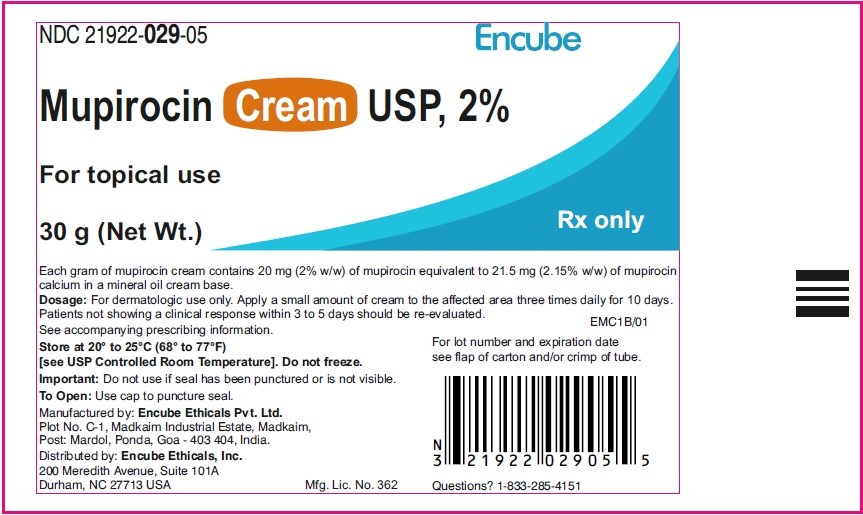
Mupirocin 2 g/100g Cream
🆔 Identity & classification
Where does this data come from?
🏷️ RxNorm drug class
This medicine belongs to the RNA Synthetase Inhibitor Antibacterial class.
Where does this data come from?
🏭 Manufacturer & labeler
Where does this data come from?
🩺 Clinical
Mupirocin, an antibiotic, is used to treat impetigo as well as other skin infections caused by bacteria. It is not effective against fungal or viral infections. This medication is sometimes prescribed for other uses; ask your doctor or pharmacist for more information.
Read the full MedlinePlus article ↗- Mupirocin is a topical antibiotic — meaning it's applied directly to the skin. The ointment form is used to treat impetigo, which is a contagious bacterial skin infection common in...
- Apply a small amount — about the size of a pea — to the affected area three times a day using a cotton swab or gauze pad. You can cover the area with a gauze dressing if you'd like...
- How do I apply it, and how long do I use it?
- Most people do just fine with mupirocin. The most common side effects are headache, nausea, rash, and a little burning or itching where you applied it. Those are usually mild and g...
Patient education
Supplement & herbal interactions
Some supplements/herbs that may interact with Mupirocin — tap one for details:
Where does this data come from?
Ask a licensed pharmacist directly — free, answered by our team.
🧪 Inactive Ingredients / Excipients
Inactive ingredients, also called excipients, are components of the drug product other than the active ingredient. They may include fillers, dyes, coatings, preservatives, flavors, or other formulation ingredients.
💡 Tap an ingredient (hover on desktop) to see what it is and why it’s used.
-
UNII LKG8494WBH
Benzyl alcohol is a clear liquid used as a preservative and solvent in medicines. It helps prevent bacterial and fungal growth and dissolves other ingredients to create uniform liquid formulations.
-
UNII KC98RO82HJ
A waxy substance made from glycerin and fatty acids. It acts as an emulsifier to help mix oil and water components, and as a thickener to give the medicine proper texture and consistency.
-
UNII T5L8T28FGP
Mineral oil is a clear, odorless liquid derived from crude oil. It acts as a lubricant and emollient in medications, helping pills slide smoothly during manufacturing and aiding moisture retention in topical products.
-
UNII HIE492ZZ3T
Phenoxyethanol is a synthetic preservative and antimicrobial agent used to prevent bacterial and fungal growth in medicines and cosmetic products, extending shelf life and maintaining product safety.
-
UNII YRC528SWUY
A waxy emulsifier made from plant-derived fatty alcohols. It helps blend oil and water-based ingredients together and improves how the medicine spreads and absorbs.
-
UNII 059QF0KO0R
Water is a liquid solvent that dissolves and mixes ingredients together in liquid medicines, syrups, and injections. It helps distribute the active drug evenly throughout the product.
-
UNII TTV12P4NEE
Xanthan gum is a thickening and stabilizing ingredient made from fermented corn or other sugars. It's added to medicines to improve texture, prevent separation of liquids and solids, and help the product stay consistent.
7 inactive ingredients listed in the exact product block matched to this NDC.
Where does this data come from?
ingredient classCode="IACT" elements from the exact product block matched by this NDC. Label-section narrative from DailyMed / the openFDA label index is shown separately when available.Inactive ingredient FAQ
Are inactive ingredients the same for every manufacturer?
Why might an inactive ingredient be missing?
Can inactive ingredients matter?
💲 Pricing
A drug doesn't have one price. Each row is a different public payment system, and none is what you'd pay at the counter — that depends on your insurance. The ⓘ on each row explains what it measures.
| Price system | Per g | Per package |
|---|---|---|
| Retail pharmacies payNADAC · weekly | $0.839 | $25.16 / 30 g |
| Medicaid paysCMS SDUD · 12 mo | $1.03 | $30.97 / 30 g |
| Medicare drug plans payPart D · Q2 2026 | $3.03 | $90.96 / 30 g |
Where does this data come from?
🔁 Therapeutic equivalents
| Product | Labeler | Pack | NADAC/unit | TE | Status | Price vs. this |
|---|---|---|---|---|---|---|
| Mupirocin 2 g/100gthis 21922-0029-05 | Encube | 1 tube | $0.839 | AB | Availability likely | — |
| Mupirocin 2 g/100g 69238-2029-03 | Amneal | 1 tube | $0.839 | AB | Availability likely | — |
| Mupirocin 20 mg/g 16714-0055-01 | NORTHSTAR | 1 tube | $0.907 | AB | Availability likely | +8% |
| Mupirocin 20 mg/g 51672-1370-01 | Sun | 1 tube | $0.907 | AB | Availability likely | +8% |
| Mupirocin 20 mg/g 62332-0624-15 | Alembic | 1 tube | $0.907 | AB | Availability likely | +8% |
| Mupirocin 2 g/100g 68462-0564-17 | Glenmark | 15 g | $0.907 | AB | Availability likely | +8% |
| Mupirocin 20 mg/g 46708-0624-15 | Alembic | 1 tube | — | AB | FDA listed | — |
| Pirnuo 2 g/100g 68462-0560-47 | Glenmark | 1 bottle | — | AB | FDA listed | — |
| Mupirocin 20 mg/g 70518-3774-00 | REMEDYREPACK | 1 tube | — | AB | FDA listed | — |
| Mupirocin 2 g/100g 85766-0204-15 | Sportpharm | 1 tube | — | AB | FDA listed | — |
Where does this data come from?
⏳ Availability & generic status
This product is an FDA-approved generic. Other versions of the same drug are listed under Therapeutic equivalents, least expensive first.
Where does this data come from?
🗺️ Medicaid utilization & spend
💊 Medicaid utilization by pack size
📊 Medicare Part D spend CMS · PART D · 2026 (Q1)
🔬 Reported adverse events (FAERS)
Top reported reactions
Reporter sex
Serious outcomes
Where does this data come from?
📦 Packaging — all sizes for this product
| Package NDC | Description | Per unit | Per pack | Marketing start | Status |
|---|---|---|---|---|---|
| 21922-0029-04 | 1 TUBE in 1 CARTON (21922-029-04) / 15 g in 1 TUBE | $0.9075 / g | $13.61 | 2021-09-02 | Active |
| 21922-0029-05 You're viewing this | 1 TUBE in 1 CARTON (21922-029-05) / 30 g in 1 TUBE | $0.8388 / g | $25.16 | 2021-09-02 | Active |
This pack has the lowest per-g cost of the 2 priced pack sizes ($0.8388 NADAC).
This pack accounts for about 42% of this product's recent Medicaid fills; most go to a different pack size. See all packs ↓
Pack size FAQ
What quantity is in NDC 21922-0029-05?
What NDC number is used to bill for this package of Mupirocin 2 g/100g Cream?
Prices are the latest CMS NADAC pharmacy acquisition cost per NDC; per-pack figures are per-unit × pack quantity, shown only when the pack is denominated in the same measure NADAC prices.
📄 Full prescribing information FDA SPL
🎯 Indications and Usage ▾
1 INDICATIONS AND USAGE Mupirocin Cream USP, 2% is indicated for the treatment of secondarily infected traumatic skin lesions (up to 10 cm in length or 100 cm 2 in area) due to susceptible isolates of Staphylococcus aureus (S. aureus) and Streptococcus pyogenes (S. pyogenes). Mupirocin cream is an RNA synthetase inhibitor antibacterial indicated for the treatment of secondarily infected traumatic skin lesions (up to 10 cm in length or 100 cm 2 in area) due to susceptible isolates of Staphylococcus aureus and Streptococcus pyogenes.
( 1 )
⏱️ Dosage and Administration ▾
2 DOSAGE AND ADMINISTRATION For Topical Use Only. Apply a small amount of mupirocin cream, with a cotton swab or gauze pad, to the affected area 3 times daily for 10 days. Cover the treated area with gauze dressing if desired.
Re-evaluate patients not showing a clinical response within 3 to 5 days. Mupirocin cream is not for intranasal, ophthalmic, or other mucosal use [see Warnings and Precautions ( 5.2 , 5.6 )] . Do not apply mupirocin cream concurrently with any other lotions, creams, or ointments [see Clinical Pharmacology ( 12.3 )].
For Topical Use Only. ( 2 ) Apply a small amount of mupirocin cream, with a cotton swab or gauze pad, to the affected area 3 times daily for 10 days. ( 2 ) Re-evaluate patients not showing a clinical response within 3 to 5 days.
( 2 ) Not for intranasal, ophthalmic, or other mucosal use. ( 2 )
💊 Dosage Forms and Strengths ▾
3 DOSAGE FORMS AND STRENGTHS Mupirocin Cream USP, 2% m is a white cream that contains 20 mg (2% w/w) of mupirocin per gram in an oil- and water-based emulsion, supplied in 15-gram and 30-gram tubes. Cream: 20 mg (2% w/w) of mupirocin per gram (equivalent to 21.5 mg (2.15% w/w) of mupirocin calcium, USP) in 15-gram and 30-gram tubes. ( 3 )
⛔ Contraindications ▾
4 CONTRAINDICATIONS Mupirocin cream is contraindicated in patients with known hypersensitivity to mupirocin or any of the excipients of mupirocin cream. Known hypersensitivity to mupirocin or any of the excipients of mupirocin cream. ( 4 )
⚠️ Warnings and Cautions ▾
5 WARNINGS AND PRECAUTIONS Severe Allergic Reactions: Anaphylaxis, urticaria, angioedema, and generalized rash have been reported in patients treated with formulations of mupirocin, including mupirocin cream. ( 5.1 ) Eye Irritation: Avoid contact with eyes. ( 5.2 ) Local Irritation: Discontinue in the event of sensitization or severe local irritation.
( 5.3 ) Clostridium difficile -Associated Diarrhea (CDAD): If diarrhea occurs, evaluate patients for CDAD. ( 5.4 ) Potential for Microbial Overgrowth: Prolonged use may result in overgrowth of nonsusceptible microorganisms, including fungi. ( 5.5 ) Risk Associated with Mucosal Use: Mupirocin cream is not formulated for use on mucosal surfaces.
A separate formulation, mupirocin nasal ointment, is available for intranasal use. ( 5.6 )
5.1Severe Allergic Reactions Systemic allergic reactions, including anaphylaxis, urticaria, angioedema, and generalized rash, have been reported in patients treated with formulations of mupirocin, including mupirocin cream [see Adverse Reactions ( 6.2 )].
5.2Eye Irritation Avoid contact with the eyes. In case of accidental contact, rinse well with water.
5.3Local Irritation In the event of a sensitization or severe local irritation from mupirocin cream, usage should be discontinued, and appropriate alternative therapy for the infection instituted.
5.4Clostridium difficile -Associated Diarrhea Clostridium difficile -associated diarrhea (CDAD) has been reported with use of nearly all antibacterial agents and may range in severity from mild diarrhea to fatal colitis. Treatment with antibacterial agents alters the normal flora of the colon leading to overgrowth of C. difficile . C. difficile produces toxins A and B which contribute to the development of CDAD.
Hypertoxin-producing strains of C. difficile cause increased morbidity and mortality, as these infections can be refractory to antimicrobial therapy and may require colectomy. CDAD must be considered in all patients who present with diarrhea following antibacterial drug use. Careful medical history is necessary since CDAD has been reported to occur over 2 months after the administration of antibacterial agents.
If CDAD is suspected or confirmed, ongoing antibacterial drug use not directed against C. difficile may need to be discontinued. Appropriate fluid and electrolyte management, protein supplementation, antibacterial treatment of C. difficile , and surgical evaluation should be instituted as clinically indicated.
5.5Potential for Microbial Overgrowth As with other antibacterial products, prolonged use of mupirocin cream may result in overgrowth of nonsusceptible microorganisms, including fungi [see Dosage and Administration ( 2 )] .
5.6Risk Associated with Mucosal Use Mupirocin cream is not formulated for use on mucosal surfaces. A separate formulation, mupirocin nasal ointment, is available for intranasal use.
🤒 Adverse Reactions ▾
6 ADVERSE REACTIONS The following adverse reactions are discussed in more detail in other sections of the labeling: Severe Allergic Reactions [see Warnings and Precautions ( 5.1 )] Eye Irritation [see Warnings and Precautions ( 5.2 )] Local Irritation [see Warnings and Precautions ( 5.3 )] Clostridium difficile -Associated Diarrhea [see Warnings and Precautions ( 5.4 )] The most frequent adverse reactions (at least 1%) were headache, rash, and nausea. ( 6.1 ) To report SUSPECTED ADVERSE REACTIONS, contact Encube Ethicals Private Limited at 1-833-285-4151 or FDA at 1-800-FDA-1088 or www.fda.gov/medwatch.
6.1Clinical Trials Experience Because clinical trials are conducted under widely varying conditions, adverse reaction rates observed in the clinical trials of a drug cannot be directly compared with rates in the clinical trials of another drug and may not reflect the rates observed in practice. In 2 randomized, double-blind, double-dummy trials, 339 subjects were treated with topical mupirocin cream plus oral placebo. Adverse reactions occurred in 28 (8.3%) subjects.
The following adverse reactions were reported by at least 1% of subjects in connection with the use of mupirocin cream in clinical trials: headache (1.7%), rash (1.1%), and nausea (1.1%). Other adverse reactions which occurred in less than 1% of subjects were: abdominal pain, burning at application site, cellulitis, dermatitis, dizziness, pruritus, secondary wound infection, and ulcerative stomatitis. In a supportive trial in the treatment of secondarily infected eczema, 82 subjects were treated with mupirocin cream.
The incidence of adverse reactions was as follows: nausea (4.9%), headache and burning at application site (3.6% each), pruritus (2.4%), and 1 report each of abdominal pain, bleeding secondary to eczema, pain secondary to eczema, hives, dry skin, and rash.
6.2Postmarketing Experience In addition to adverse reactions reported from clinical trials, the following reactions have been identified during postmarketing use of mupirocin cream. Because they are reported voluntarily from a population of unknown size, estimates of frequency cannot be made. These reactions have been chosen for inclusion due to a combination of their seriousness, frequency of reporting, or potential causal relationship to mupirocin cream.
Immune System Disorders Systemic allergic reactions, including anaphylaxis, urticaria, angioedema, and generalized rash [see Warnings and Precautions ( 5.1 )] .
👥 Use in Specific Populations ▾
8 USE IN SPECIFIC POPULATIONS
8.1Pregnancy Risk Summary There are insufficient human data to establish whether there is a drug-associated risk with mupirocin cream in pregnant women. Systemic absorption of mupirocin through intact human skin is minimal following topical administration of mupirocin cream [see Clinical Pharmacology ( 12.3 )] . No developmental toxicity was observed in rats or rabbits treated with mupirocin subcutaneously during organogenesis at doses of 160 or 40 mg per kg per day, respectively (22 and 11 times the human topical dose based on calculations of dose divided by the entire body surface area).
The estimated background risk of major birth defects and miscarriage for the indicated population is unknown. The estimated background risk in the U.S. general population of major birth defects is 2% to 4% and of miscarriage is 15% to 20% of clinically recognized pregnancies. Data Animal Data: Developmental toxicity studies have been performed with mupirocin administered subcutaneously to rats and rabbits at doses up to 160 mg per kg per day during organogenesis.
This dose is 22 and 43 times, respectively, the human topical dose (approximately 60 mg mupirocin per day) based on calculations of dose divided by the entire body surface area. Maternal toxicity was observed (body weight loss/decreased body weight gain and reduced feeding) in both species with no evidence of developmental toxicity in rats. In rabbits, excessive maternal toxicity at the high dose precluded the evaluation of fetal outcomes.
There was no developmental toxicity in rabbits at 40 mg per kg per day, 11 times the human topical dose based on calculations of dose divided by the entire body surface area. Mupirocin administered subcutaneously to rats in a pre- and postnatal development study (dosed during late gestation through lactation) was associated with reduced offspring viability in the early postnatal period at a dose of 106.7 mg per kg, in the presence of injection site irritation and/or subcutaneous hemorrhaging. This dose is 14 times the human topical dose based on calculations of dose divided by the entire body surface area.
The no-observed adverse effect level in this study was 44.2 mg per kg per day, which is 6 times the human topical dose.
8.2Lactation Risk Summary It is not known whether mupirocin is present in human milk, has effects on the breastfed child, or has effects on milk production. However, breastfeeding is not expected to result in exposure of the child to the drug due to the minimal systemic absorption of mupirocin in humans following topical administration of mupirocin cream [see Clinical Pharmacology ( 12.3 )] . The developmental and health benefits of breastfeeding should be considered along with the mother’s clinical need for mupirocin cream and any potential adverse effects on the breastfed child from mupirocin cream or from the underlying maternal condition.
Clinical Considerations To minimize oral exposure of the drug to children, a breast and/or nipple being treated with mupirocin cream should be thoroughly washed prior to breastfeeding.
8.4Pediatric Use The safety and effectiveness of mupirocin cream have been established in the age-groups of 3 months to 16 years. Use of mupirocin cream in these age-groups is supported by evidence from adequate and well-controlled trials of mupirocin cream in adults with additional data from 93 pediatric subjects studied as part of the pivotal trials in adults [see Clinical Studies ( 14 )] .
8.5Geriatric Use In 2 adequate and well-controlled trials, 30 subjects older than 65 years were treated with mupirocin cream. No overall difference in the efficacy or safety of mupirocin cream was observed in this patient population when compared with that observed in younger patients.
🤰 Pregnancy ▾
8.1Pregnancy Risk Summary There are insufficient human data to establish whether there is a drug-associated risk with mupirocin cream in pregnant women. Systemic absorption of mupirocin through intact human skin is minimal following topical administration of mupirocin cream [see Clinical Pharmacology ( 12.3 )] . No developmental toxicity was observed in rats or rabbits treated with mupirocin subcutaneously during organogenesis at doses of 160 or 40 mg per kg per day, respectively (22 and 11 times the human topical dose based on calculations of dose divided by the entire body surface area).
The estimated background risk of major birth defects and miscarriage for the indicated population is unknown. The estimated background risk in the U.S. general population of major birth defects is 2% to 4% and of miscarriage is 15% to 20% of clinically recognized pregnancies. Data Animal Data: Developmental toxicity studies have been performed with mupirocin administered subcutaneously to rats and rabbits at doses up to 160 mg per kg per day during organogenesis.
This dose is 22 and 43 times, respectively, the human topical dose (approximately 60 mg mupirocin per day) based on calculations of dose divided by the entire body surface area. Maternal toxicity was observed (body weight loss/decreased body weight gain and reduced feeding) in both species with no evidence of developmental toxicity in rats. In rabbits, excessive maternal toxicity at the high dose precluded the evaluation of fetal outcomes.
There was no developmental toxicity in rabbits at 40 mg per kg per day, 11 times the human topical dose based on calculations of dose divided by the entire body surface area. Mupirocin administered subcutaneously to rats in a pre- and postnatal development study (dosed during late gestation through lactation) was associated with reduced offspring viability in the early postnatal period at a dose of 106.7 mg per kg, in the presence of injection site irritation and/or subcutaneous hemorrhaging. This dose is 14 times the human topical dose based on calculations of dose divided by the entire body surface area.
The no-observed adverse effect level in this study was 44.2 mg per kg per day, which is 6 times the human topical dose.
🧒 Pediatric Use ▾
8.4Pediatric Use The safety and effectiveness of mupirocin cream have been established in the age-groups of 3 months to 16 years. Use of mupirocin cream in these age-groups is supported by evidence from adequate and well-controlled trials of mupirocin cream in adults with additional data from 93 pediatric subjects studied as part of the pivotal trials in adults [see Clinical Studies ( 14 )] .
🧓 Geriatric Use ▾
8.5Geriatric Use In 2 adequate and well-controlled trials, 30 subjects older than 65 years were treated with mupirocin cream. No overall difference in the efficacy or safety of mupirocin cream was observed in this patient population when compared with that observed in younger patients.
🧬 Clinical Pharmacology ▾
12 CLINICAL PHARMACOLOGY
12.1Mechanism of Action Mupirocin is an RNA synthetase inhibitor antibacterial [see Microbiology ( 12.4 )].
12.3Pharmacokinetics Absorption Systemic absorption of mupirocin through intact human skin is minimal. The systemic absorption of mupirocin was studied following application of mupirocin cream 3 times daily for 5 days to various skin lesions greater than 10 cm in length or 100 cm 2 in area in 16 adults (aged 29 to 60 years) and 10 children (aged 3 to 12 years). Some systemic absorption was observed as evidenced by the detection of the metabolite, monic acid, in urine.
Data from this trial indicated more frequent occurrence of percutaneous absorption in children (90% of subjects) compared with adults (44% of subjects); however, the observed urinary concentrations in children (0.07 to 1.3 mcg per mL [1 pediatric subject had no detectable level]) are within the observed range (0.08 to 10.03 mcg per mL [9 adults had no detectable level]) in the adult population. In general, the degree of percutaneous absorption following multiple dosing appears to be minimal in adults and children. The effect of the concurrent application of mupirocin cream with other topical products has not been studied [see Dosage and Administration ( 2 )] .
Elimination In a trial conducted in 7 healthy adult male subjects, the elimination half-life after intravenous administration of mupirocin was 20 to 40 minutes for mupirocin and 30 to 80 minutes for monic acid. Metabolism: Following intravenous or oral administration, mupirocin is rapidly metabolized. The principal metabolite, monic acid, demonstrates no antibacterial activity.
Excretion: Monic acid is predominantly eliminated by renal excretion.
12.4Microbiology Mupirocin is an RNA synthetase inhibitor antibacterial produced by fermentation using the organism Pseudomonas fluorescens . Mechanism of Action Mupirocin inhibits bacterial protein synthesis by reversibly and specifically binding to bacterial isoleucyl-transfer RNA (tRNA) synthetase. Mupirocin is bactericidal at concentrations achieved by topical administration.
Mupirocin is highly protein bound (greater than 97%) and the effect of wound secretions on the minimum inhibitory concentrations (MICs) of mupirocin has not been determined. Resistance When mupirocin resistance occurs, it results from the production of a modified isoleucyl-tRNA synthetase, or the acquisition of, by genetic transfer, a plasmid mediating a new isoleucyl-tRNA synthetase. High-level plasmid-mediated resistance (MIC ≥512 mcg/mL) has been reported in increasing numbers of isolates of S. aureus and with higher frequency in coagulase-negative staphylococci.
Mupirocin resistance occurs with greater frequency in methicillin-resistant than methicillin-susceptible staphylococci. Cross Resistance Due to its mode of action, mupirocin does not demonstrate cross resistance with other classes of antimicrobial agents. Antimicrobial Activity Mupirocin has been shown to be active against susceptible isolates of S. aureus and S. pyogenes , both in vitro and in clinical trials [see Indications and Usage ( 1 )].
The following in vitro data are available, but their clinical significance is unknown. Mupirocin is active against most isolates of Staphylococcus epidermidis . Susceptibility Test Methods High-level mupirocin resistance (≥512 mcg/mL) may be determined using standard disk diffusion or broth microdilution tests.
1,2 Because of the occurrence of mupirocin resistance in methicillin-resistant S. aureus (MRSA), it is appropriate to test MRSA populations for mupirocin susceptibility prior to the use of mupirocin using a standardized method. 3,4,5
🧬 Mechanism of Action ▾
12.1Mechanism of Action Mupirocin is an RNA synthetase inhibitor antibacterial [see Microbiology ( 12.4 )].
📦 How Supplied / Storage and Handling ▾
16 HOW SUPPLIED/STORAGE AND HANDLING Mupirocin Cream USP, 2% is a white cream that contains 20 mg (2% w/w) of mupirocin per gram in an oil- and water-based emulsion. Mupirocin Cream USP, 2% is supplied in 15-gram and 30-gram tubes. NDC 21922-029-04 (15-gram tube) NDC 21922-029-05 (30-gram tube) Store at 20°C to 25°C (68°F to 77°F) [see USP Controlled Room Temperature]. Do not freeze.
📋 Description ▾
11 DESCRIPTION Mupirocin Cream USP, 2% contains the dihydrate crystalline calcium hemi-salt of the RNA synthetase inhibitor antibacterial, mupirocin. Chemically, it is (α E, 2 S ,3 R ,4 R ,5 S )-5-[(2 S ,3 S ,4 S ,5 S )-2,3-epoxy-5-hydroxy-4-methylhexyl]tetrahydro-3,4-dihydroxy-β-methyl-2 H -pyran-2-crotonic acid, ester with 9-hydroxynonanoic acid, calcium salt (2:1), dihydrate. The molecular formula of mupirocin calcium, USP is (C 26 H 43 O 9 ) 2 Ca•2H 2 O, and the molecular weight is 1075.3 g/mol.
The molecular weight of mupirocin free acid is 500.6 g/mol. The structural formula of mupirocin calcium, USP is: Each gram of mupirocin cream contains 20 mg (2% w/w) of mupirocin equivalent to 21.5 mg (2.15% w/w) of mupirocin calcium. The inactive ingredients are benzyl alcohol, polyoxyl 20 cetostearyl ether, mono and di-glycerides, mineral oil, phenoxyethanol, purified water and xanthan gum.
Structure
💬 Information for Patients ▾
17 PATIENT COUNSELING INFORMATION dvise the patient to read the FDA-approved patient labeling (Patient Information). Advise the patient to administer mupirocin cream as follows: Use mupirocin cream only as directed by the healthcare provider. It is for external use only.
Avoid contact of mupirocin cream with the eyes. If mupirocin cream gets in the eyes, rinse thoroughly with water. Do not use mupirocin cream in the nose.
Wash your hands before and after applying mupirocin cream. Use a gauze pad or cotton swab to apply a small amount of mupirocin cream to the affected area. The treated area may be covered by gauze dressing if desired.
Report to the healthcare provider any signs of local adverse reactions. Mupirocin cream should be stopped and the healthcare provider contacted if irritation, severe itching, or rash occurs. Report to the healthcare provider or go to the nearest emergency room if severe allergic reactions, such as swelling of the lips, face, or tongue, or wheezing occur [see Warnings and Precautions ( 5.1 )] .
If no improvement is seen in 3 to 5 days, contact the healthcare provider. Manufactured by: Encube Ethicals Private Limited Plot No. C-1, Madkaim Industrial Estate, Madkaim, Post: Mardol, Ponda, Goa - 403 404, India.
Distributed by: Encube Ethicals, Inc. 200 Meredith Avenue, Suite 101A Durham, NC 27713 USA Rev. 11/2021 PHARMACIST-DETACH HERE AND GIVE INSTRUCTIONS TO PATIENT ---------------------------------------------------------------------------------------------------------------------------------------------------------------
💬 Patient Medication Information ▾
Patient Information PATIENT INFORMATION MUPIROCIN (mue pir'oh sin) CREAM, for topical us e What is mupirocin cream? Mupirocin cream is a prescription medicine used on the skin (topical use) to treat certain skin infections caused by bacteria called Staphylococcus aureus and Streptococcus pyogenes . It is not known if mupirocin cream is safe and effective in children under 3 months of age.
Who should not use mupirocin cream? Do not use mupirocin cream if: you are allergic to mupirocin or any of the ingredients in mupirocin cream. See the end of this Patient Information leaflet for a complete list of the ingredients in mupirocin cream.
What should I tell my healthcare provider before using mupirocin cream? Before using mupirocin cream, tell your healthcare provider about all of your medical conditions including if you: are pregnant or plan to become pregnant. It is not known if mupirocin cream will harm your unborn baby.•are breastfeeding or plan to breastfeed.
It is not known if mupirocin passes into your breast milk. You and your healthcare provider should decide if you can use mupirocin cream while breastfeeding. Tell your healthcare provider about all of the medicines you take, including prescription and over-the-counter medicines, vitamins, and herbal supplements.
Do not mix mupirocin cream with other lotions, creams, or ointments. How should I use mupirocin cream? Mupirocin cream is for use on the skin (topical).
Do not get mupirocin cream in your eyes, nose, mouth, or vagina (mucosal surfaces). Use mupirocin cream exactly as your healthcare provider tells you to use it. Apply a small amount of mupirocin cream, with a cotton swab or gauze pad, to the affected area 3 times each day.
Apply mupirocin cream for 10 days. It is important that you take the full course of mupirocin cream. Do not stop early because your symptoms may disappear before the infection is fully cleared.
Wash your hands before and after applying mupirocin cream. After applying mupirocin cream, you may cover the treated area with a clean gauze pad, unless your healthcare provider has told you to leave it uncovered. Talk to your healthcare provider if your skin does not improve after 3 to 5 days of treatment with mupirocin cream.
If you are breastfeeding and use mupirocin cream on your breast or nipple, wash the area well before breastfeeding your child. What are the possible side effects of mupirocin cream? Mupirocin cream may cause serious side effects, including: severe allergic reactions.
Stop using mupirocin cream and call your healthcare provider or go to the nearest emergency room right away if you have any of the following signs or symptoms of a severe allergic reaction: hives trouble breathing or wheezing swelling of your face, lips, mouth, or tongue dizziness, fast heartbeat, or pounding in your chest a rash over your whole body eye irritation. Do not get mupirocin cream in your eyes. If mupirocin cream gets in your eyes, rinse your eyes well with water . irritation in the area mupirocin cream is used .
A rash may occur after using mupirocin cream and can be severe. Stop using mupirocin cream and call your healthcare provider if you develop an irritation, severe itching, or a rash while using mupirocin cream. a type of diarrhea called clostridium difficile -associated diarrhea (CDAD). CDAD may happen in people who use or have used medicine to treat bacterial infections.
The severity of CDAD can range from mild diarrhea to severe diarrhea that may cause death (fatal colitis). Call your healthcare provider or go to the nearest emergency room right away if you have diarrhea while using or after you stop using mupirocin cream. The most common side effects of mupirocin cream include: headache rash nausea These are not all the possible side effects of mupirocin cream.
Call your doctor for medical advice about side effects. You may report side effects to FDA at 1-800-FDA-1088. How should I store mupirocin cream?
Store mupirocin cream at room temperature…