
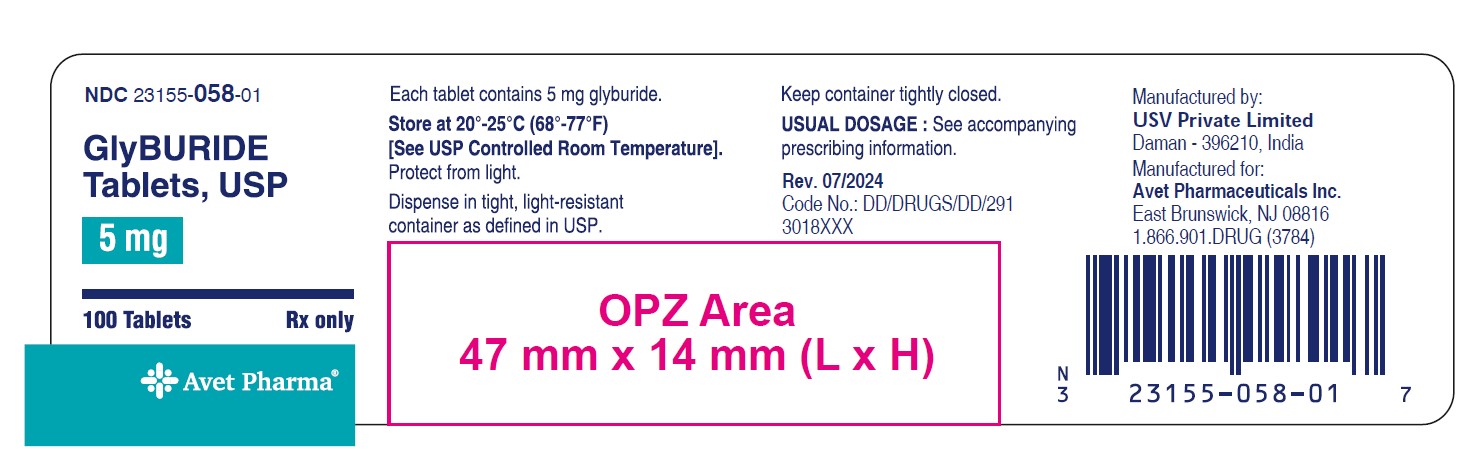
Glyburide 5 mg Tablet, 100-count — NDC 23155-058-01 (Billing 23155-0058-01)
This is a package of 100 tablets of Glyburide 5 mg Tablet from Heritage Pharmaceuticals Inc. d/b/a Avet Pharmaceuticals Inc., marketed since Oct 2010 and currently FDA-listed; retail pharmacies pay about $0.0643 per tablet (NADAC).
Identity & classification
Regulatory identifiers FDA, NLM and CMS codes for this package
Drug-database identifiers Medi-Span GPI and First Databank GCN / HICL / AHFS classification
- GSN (GCN sequence number): 001775
- GCN: 05712
- GPI-14 (Medi-Span): 27200040000315
- HICL (First Databank): 000802
- AHFS class code: 68:20.20.00
- RxCUI (RxNorm): 197737
Where does this data come from?
- FDA openFDA NDC Directory · synced Oct 1, 2026
- FDA label on DailyMed · label index refreshed Oct 1, 2026
- RxNorm (NLM RxNav) · catalog refreshed Oct 1, 2026
- Medi-Span GPI (licensed)
- First Databank (licensed) · refreshed Oct 1, 2026
RxNorm drug class
This medicine belongs to the Sulfonylurea class.
Where does this data come from?
- RxClass (NLM) · catalog refreshed Oct 1, 2026
Clinical
Glyburide is used along with diet and exercise, and sometimes with other medications, to treat type 2 diabetes (condition in which the body does not use insulin normally and, therefore, cannot control the amount of sugar in the blood). Glyburide is in a class of medications called sulfonylureas. Glyburide lowers blood sugar by causing the pancreas to produce insulin (a natural substance that is needed to break down sugar in the body) and helping the body use insulin efficiently. This medication will only help lower blood sugar in people whose bodies produce insulin naturally. Glyburide is not...
Read the full MedlinePlus article ↗- It helps control blood sugar in adults with type 2 diabetes. It works alongside healthy eating and exercise, not in place of them.
- Take it by mouth, usually with breakfast or your first main meal. Many people take it once a day, but some split it into two doses. Follow your prescriber's directions and the phar...
- Low blood sugar. Skipping meals or not following your plan can bring it on. If you get confusion, seizures or pass out, that's an emergency and you need immediate care.
- What is the biggest side effect to watch for?
Patient education
Supplement & herbal interactions
Some supplements/herbs that may interact with Glyburide — tap one for details:
Glyburide may be associated with lower levels of 1 nutrient — worth a chat with your pharmacist, not a cause for alarm.
Where does this data come from?
- MedlinePlus (NLM) · refreshed Oct 1, 2026
- FDA label on DailyMed · label index refreshed Oct 1, 2026
Ask a licensed pharmacist directly — free, answered by our team.
Pricing
A drug doesn't have one price. Each row is a different public payment system, and none is what you'd pay at the counter — that depends on your insurance. The ⓘ on each row explains what it measures.
| Price system | Per ea | Per package |
|---|---|---|
| Retail pharmacies payNADAC · weekly | $0.064 | $6.43 / 100 tablets |
| Medicaid paysCMS SDUD · 12 mo | $0.1716 | $17.16 / 100 tablets |
| Medicare drug plans payPart D · Q2 2026 | $0.1224 | $12.24 / 100 tablets |
Where does this data come from?
- CMS NADAC weekly file · file of Sep 30, 2026
- CMS ASP pricing files · refreshed Sep 20, 2026
- CMS Medicaid State Drug Utilization Data · through Q1 2026
- CMS Part D plan pricing files · refreshed Sep 24, 2026
- VA National Acquisition Center price file
Packaging — all sizes for this product
| Package NDC | Description | Per unit | Per pack | Marketing start | Marketing end | Status |
|---|---|---|---|---|---|---|
| 23155-0058-01 You're viewing this | 100 TABLET in 1 BOTTLE | $0.0643 / ea | $6.43 | 2010-10-05 | — | Active |
| 23155-0058-10 23155-058-10 Main listing | 1000 TABLET in 1 BOTTLE | $0.0643 / ea | $64.27 | 2010-10-05 | — | Active |
You're viewing the smallest of 2 pack sizes for this product.
This pack has the lowest per-ea cost of the 2 priced pack sizes ($0.0643 NADAC).
This pack accounts for about 47% of this product's recent Medicaid fills; most go to the 1000 tablets pack. See all packs ↓
Pack size FAQ
What quantity is in this package?
How does this package differ from NDC 23155-0058-10?
What NDC number is used to bill for this package of Glyburide 5 mg Tablet?
Prices are the latest CMS NADAC pharmacy acquisition cost per NDC; per-pack figures are per-unit × pack quantity, shown only when the pack is denominated in the same measure NADAC prices.
Therapeutic equivalents
| Product | Labeler | Pack | NADAC/unit | TE | Status | Price vs. this |
|---|---|---|---|---|---|---|
| Glyburide 5 mg 00093-8344-01 | Teva | 100 tablets | $0.064 | AB1 | Availability likely | — |
| Glyburide 5 mg 00093-9364-01 | TEVA | 100 tablets | $0.064 | AB2 | Availability likely | — |
| Glyburide 5 mgthis 23155-0058-01 | Heritage | 100 tablets | $0.064 | AB1 | Availability likely | — |
| Glyburide 5 mg 62135-0585-90 | Chartwell | 90 tablets | $0.064 | AB1 | Availability likely | — |
| Glyburide 5 mg 72241-0040-05 | Modavar | 100 tablets | $0.064 | AB1 | Availability likely | — |
| Glyburide 5 mg 75834-0204-00 | Nivagen | 1000 tablets | $0.070 | AB1 | Discontinued | +8% |
| Glyburide 5 mg 50090-0495-00 | A-S | 30 tablets | — | AB1 | FDA listed | — |
| Glyburide 5 mg 50090-6196-00 | A-S | 30 tablets | — | AB1 | FDA listed | — |
| Glyburide 5 mg 50090-6607-00 | A-S | 90 tablets | — | AB1 | FDA listed | — |
| Glyburide 5 mg 50090-7859-00 | A-S | 90 tablets | — | AB1 | FDA listed | — |
| Glyburide 5 mg 51655-0492-25 | Northwind | 60 tablets | — | AB1 | FDA listed | — |
| Glyburide 5 mg 63187-0667-30 | Proficient | 30 tablets | — | AB1 | FDA listed | — |
| glyburide 5 mg 65841-0834-01 | Zydus | 100 tablets | — | AB1 | FDA listed | — |
| Glyburide 5 mg 66267-0103-30 | NuCare | 30 tablets | — | AB1 | FDA listed | — |
| Glyburide 5 mg 68071-3452-03 | NuCare | 30 tablets | — | AB1 | FDA listed | — |
| Glyburide 5 mg 68071-3677-00 | NuCare | 100 tablets | — | AB1 | FDA listed | — |
| Glyburide 5 mg 68071-3702-06 | NuCare | 60 tablets | — | AB1 | FDA listed | — |
| Glyburide 5 mg 68071-4695-03 | NuCare | 30 tablets | — | AB1 | FDA listed | — |
| Glyburide 5 mg 68071-5030-00 | NuCare | 100 tablets | — | AB1 | FDA listed | — |
| Glyburide 5 mg 68071-5215-00 | NuCare | 100 tablets | — | AB1 | FDA listed | — |
| glyburide 5 mg 68382-0658-01 | Zydus | 100 tablets | — | AB1 | FDA listed | — |
| Glyburide 5 mg 68788-4073-01 | Preferred | 100 tablets | — | AB1 | FDA listed | — |
| Glyburide 5 mg 68788-8508-01 | Preferred | 100 tablets | — | AB1 | FDA listed | — |
| Glyburide 5 mg 70518-4035-00 | REMEDYREPACK | 30 tablets | — | AB1 | FDA listed | — |
| Glyburide 5 mg 71209-0011-05 | Cadila | 100 tablets | — | AB1 | FDA listed | — |
| Glyburide 5 mg 71335-0150-01 | Bryant | 30 tablets | — | AB1 | Discontinued | — |
| Glyburide 5 mg 71335-2771-01 | Bryant | 30 tablets | — | AB1 | FDA listed | — |
| Glyburide 5 mg 82804-0150-00 | Proficient | 100 tablets | — | AB1 | FDA listed | — |
Where does this data come from?
- FDA openFDA NDC Directory · synced Oct 1, 2026
- FDA Orange Book · refreshed Sep 3, 2026
- CMS NADAC weekly file · file of Sep 30, 2026
Availability & generic status
This product is an FDA-approved generic. Other versions of the same drug are listed under Therapeutic equivalents, least expensive first.
Where does this data come from?
- FDA Orange Book · refreshed Sep 3, 2026
What it looks like
Where does this data come from?
- FDA label on DailyMed · label index refreshed Oct 1, 2026
Inactive Ingredients / Excipients
Inactive ingredients, also called excipients, are components of the drug product other than the active ingredient. They may include fillers, dyes, coatings, preservatives, flavors, or other formulation ingredients.
💡 Tap an ingredient (hover on desktop) to see what it is and why it’s used.
-
UNII OP1R32D61U
Microcrystalline cellulose is a purified form of cellulose, a natural fiber from plant sources. It acts as a binder and filler in tablets and capsules, helping hold ingredients together and give the medicine its shape and size.
-
UNII H3R47K3TBD
FD&C Blue No. 1 is a synthetic blue dye approved for use in foods and medicines. It serves as a colorant to give the medication its distinctive appearance and help with product identification.
-
UNII EWQ57Q8I5X
Lactose monohydrate is a natural sugar derived from milk. It serves as a filler and binder in tablets and capsules, helping create the proper size, texture, and consistency of the medicine.
-
UNII 70097M6I30
Magnesium stearate is a salt made from magnesium and stearic acid, a fatty substance. It's used in tablets and capsules as a lubricant and glidant to help ingredients flow smoothly during manufacturing and prevent sticking.
4 inactive ingredients listed in the exact product block matched to this NDC.
Where does this data come from?
ingredient classCode="IACT" elements from the exact product block matched by this NDC. Label-section narrative from DailyMed / the openFDA label index is shown separately when available.- FDA label on DailyMed · label index refreshed Oct 1, 2026
- FDA openFDA NDC Directory · synced Oct 1, 2026
Inactive ingredient FAQ
Are inactive ingredients the same for every manufacturer?
Why might an inactive ingredient be missing?
Can inactive ingredients matter?
Manufacturer & labeler
Where does this data come from?
- FDA openFDA NDC Directory · synced Oct 1, 2026
- Drugs@FDA
Full prescribing information FDA SPL
🎯 Indications and Usage ▾
INDICATIONS AND USAGE Glyburide tablets, USP is indicated as an adjunct to diet and exercise to improve glycemic control in adults with type 2 diabetes mellitus.
⏱️ Dosage and Administration ▾
DOSAGE AND ADMINISTRATION Patients should be retitrated when transferred from glyburide tablets or other oral hypoglycemic agents. There is no fixed dosage regimen for the management of diabetes mellitus with glyburide tablets. In addition to the usual monitoring of urinary glucose, the patient's blood glucose must also be monitored periodically to determine the minimum effective dose for the patient; to detect primary failure, ie , inadequate lowering of blood glucose at the maximum recommended dose of medication; and to detect secondary failure, ie , loss of adequate blood glucose lowering response after an initial period of effectiveness.
Glycosylated hemoglobin levels may also be of value in monitoring the patient's response to therapy. Short-term administration of glyburide tablets may be sufficient during periods of transient loss of control in patients usually controlled well on diet. Usual Starting Dose The usual starting dose of glyburide tablets is 2.5 to 5 mg daily, administered with breakfast or the first main meal.
Those patients who may be more sensitive to hypoglycemic drugs should be started at 1.25 mg daily. (See PRECAUTIONS section for patients at increased risk.) Failure to follow an appropriate dosage regimen may precipitate hypoglycemia. Patients who do not adhere to their prescribed dietary and drug regimen are more prone to exhibit unsatisfactory response to therapy.
Transfer From Other Hypoglycemic Therapy Patients Receiving Other Oral Antidiabetic Therapy: Transfer of patients from other oral antidiabetic regimens to glyburide tablets should be done conservatively and the initial daily dose should be 2.5 to 5 mg. When transferring patients from oral hypoglycemic agents other than chlorpropamide to glyburide tablets, no transition period and no initial or priming dose are necessary. When transferring patients from chlorpropamide, particular care should be exercised during the first two weeks because the prolonged retention of chlorpropamide in the body and subsequent overlapping drug effects may provoke hypoglycemia.
Patients Receiving Insulin: Some Type II diabetic patients being treated with insulin may respond satisfactorily to glyburide tablets. If the insulin dose is less than 20 units daily, substitution of glyburide tablets 2.5 to 5 mg as a single daily dose may be tried. If the insulin dose is between 20 and 40 units daily, the patient may be placed directly on glyburide tablets 5 mg daily as a single dose.
If the insulin dose is more than 40 units daily, a transition period is required for conversion to glyburide tablets. In these patients, insulin dosage is decreased by 50% and glyburide tablets 5 mg daily is started. Please refer to Titration to Maintenance Dose for further explanation.
Patients Receiving Colesevelam: When colesevelam is coadministered with glyburide, maximum plasma concentration and total exposure to glyburide is reduced. Therefore, glyburide tablets should be administered at least 4 hours prior to colesevelam. Titration to Maintenance Dose The usual maintenance dose is in the range of 1.25 to 20 mg daily, which may be given as a single dose or in divided doses (See Dosage Interval section).
Dosage increases should be made in increments of no more than 2.5 mg at weekly intervals based upon the patient's blood glucose response. No exact dosage relationship exists between glyburide tablets and the other oral hypoglycemic agents. Although patients may be transferred from the maximum dose of other sulfonylureas, the maximum starting dose of 5 mg of glyburide tablets should be observed.
A maintenance dose of 5 mg of glyburide tablets provides approximately the same degree of blood glucose control as 250 to 375 mg chlorpropamide, 250 to 375 mg tolazamide, 500 to 750 mg acetohexamide, or 1000 to 1500 mg tolbutamide. When transferring patients receiving more than 40 units of insulin daily, they may be started on a daily dose of glyburide tablets 5 mg concomitantly with a 50% reducti… [Excerpted — this section continues on DailyMed.]
⛔ Contraindications ▾
CONTRAINDICATIONS Glyburide tablets are contraindicated in patients with: Known hypersensitivity or allergy to the drug. Diabetic ketoacidosis, with or without coma. This condition should be treated with insulin.
Type I diabetes mellitus. Concomitant administration of bosentan. SPECIAL WARNING ON INCREASED RISK OF CARDIOVASCULAR MORTALITY The administration of oral hypoglycemic drugs has been reported to be associated with increased cardiovascular mortality as compared to treatment with diet alone or diet plus insulin.
This warning is based on the study conducted by the University Group Diabetes Program (UGDP), a long-term prospective clinical trial designed to evaluate the effectiveness of glucose-lowering drugs in preventing or delaying vascular complications in patients with non-insulin-dependent diabetes. The study involved 823 patients who were randomly assigned to one of four treatment groups. UGDP reported that patients treated for 5 to 8 years with diet plus a fixed dose of tolbutamide (1.5 grams per day) had a rate of cardiovascular mortality approximately 2½ times that of patients treated with diet alone.
A significant increase in total mortality was not observed, but the use of tolbutamide was discontinued based on the increase in cardiovascular mortality, thus limiting the opportunity for the study to show an increase in overall mortality. Despite controversy regarding the interpretation of these results, the findings of the UGDP study provide an adequate basis for this warning. The patient should be informed of the potential risks and advantages of glyburide tablets and of alternative modes of therapy.
Although only one drug in the sulfonylurea class (tolbutamide) was included in this study, it is prudent from a safety standpoint to consider that this warning may also apply to other oral hypoglycemic drugs in this class, in view of their close similarities in mode of action and chemical structure.
🤒 Adverse Reactions ▾
ADVERSE REACTIONS Hypoglycemia: See Precautions and Overdosage Sections. Gastrointestinal Reactions: Cholestatic jaundice and hepatitis may occur rarely which may progress to liver failure; glyburide tablets should be discontinued if this occurs. Liver function abnormalities, including isolated transaminase elevations, have been reported.
Gastrointestinal disturbances, eg , nausea, epigastric fullness, and heartburn are the most common reactions, having occurred in 1.8% of treated patients during clinical trials. They tend to be dose related and may disappear when dosage is reduced. Dermatologic Reactions: Allergic skin reactions, eg , pruritus, erythema, urticaria, and morbilliform or maculopapular eruptions occurred in 1.5% of treated patients during clinical trials.
These may be transient and may disappear despite continued use of glyburide tablets; if skin reactions persist, the drug should be discontinued. Porphyria cutanea tarda and photosensitivity reactions have been reported with sulfonylureas. Hematologic Reactions: Leukopenia, agranulocytosis, thrombocytopenia, hemolytic anemia (see PRECAUTIONS ), aplastic anemia, and pancytopenia have been reported with sulfonylureas.
Metabolic Reactions: Hepatic porphyria and disulfiram-like reactions have been reported with sulfonylureas; however, hepatic porphyria has not been reported with Glyburide tablets and disulfiram-like reactions have been reported very rarely. Cases of hyponatremia have been reported with glyburide and all other sulfonylureas, most often in patients who are on other medications or have medical conditions known to cause hyponatremia or increase release of antidiuretic hormone. The syndrome of inappropriate antidiuretic hormone (SIADH) secretion has been reported with certain other sulfonylureas, and it has been suggested that these sulfonylureas may augment the peripheral (antidiuretic) action of ADH and/or increase release of ADH.
Other Reactions: Changes in accommodation and/or blurred vision have been reported with glyburide and other sulfonylureas. These are thought to be related to fluctuation in glucose levels. In addition to dermatologic reactions, allergic reactions such as angioedema, arthralgia, myalgia and vasculitis have been reported.
To report SUSPECTED ADVERSE REACTIONS, contact Avet Pharmaceuticals Inc. at 1-866-901-DRUG (3784) or FDA at 1-800-FDA-1088 or www.fda.gov/medwatch.
🆘 Overdosage ▾
OVERDOSAGE Overdosage of sulfonylureas, including glyburide tablets, can produce hypoglycemia. Mild hypoglycemic symptoms, without loss of consciousness or neurological findings, should be treated aggressively with oral glucose and adjustments in drug dosage and/or meal patterns. Close monitoring should continue until the physician is assured that the patient is out of danger.
Severe hypoglycemic reactions with coma, seizure, or other neurological impairment occur infrequently, but constitute medical emergencies requiring immediate hospitalization. If hypoglycemic coma is diagnosed or suspected, the patient should be given a rapid intravenous injection of concentrated (50%) glucose solution. This should be followed by a continuous infusion of a more dilute (10%) glucose solution at a rate which will maintain the blood glucose at a level above 100 mg/dL.
Patients should be closely monitored for a minimum of 24 to 48 hours, since hypoglycemia may recur after apparent clinical recovery.
🧬 Clinical Pharmacology ▾
CLINICAL PHARMACOLOGY Actions Glyburide appears to lower the blood glucose acutely by stimulating the release of insulin from the pancreas, an effect dependent upon functioning beta cells in the pancreatic islets. The mechanism by which glyburide lowers blood glucose during long-term administration has not been clearly established. With chronic administration in Type II diabetic patients, the blood glucose lowering effect persists despite a gradual decline in the insulin secretory response to the drug.
Extrapancreatic effects may be involved in the mechanism of action of oral sulfonylurea hypoglycemic drugs. The combination of glyburide and metformin may have a synergistic effect, since both agents act to improve glucose tolerance by different but complementary mechanisms. Some patients, who are initially responsive to oral hypoglycemic drugs, including glyburide tablets, may become unresponsive or poorly responsive over time.
Alternatively, glyburide tablets may be effective in some patients who have become unresponsive to one or more other sulfonylurea drugs. In addition to its blood glucose lowering actions, glyburide produces a mild diuresis by enhancement of renal free water clearance. Disulfiram-like reactions have very rarely been reported in patients treated with glyburide tablets.
Pharmacokinetics Single dose studies with glyburide tablets in normal subjects demonstrate significant absorption of glyburide within one hour, peak drug levels at about four hours, and low but detectable levels at twenty-four hours. Mean serum levels of glyburide, as reflected by areas under the serum concentration-time curve, increase in proportion to corresponding increases in dose. Multiple dose studies with glyburide tablets in diabetic patients demonstrate drug level concentration-time curves similar to single dose studies, indicating no buildup of drug in tissue depots.
The decrease of glyburide in the serum of normal healthy individuals is biphasic; the terminal half-life is about 10 hours. In single dose studies in fasting normal subjects, the degree and duration of blood glucose lowering is proportional to the dose administered and to the area under the drug level concentration-time curve. The blood glucose lowering effect persists for 24 hours following single morning doses in nonfasting diabetic patients.
Under conditions of repeated administration in diabetic patients, however, there is no reliable correlation between blood drug levels and fasting blood glucose levels. A one year study of diabetic patients treated with glyburide tablets showed no reliable correlation between administered dose and serum drug level. The major metabolite of glyburide is the 4-transhydroxy derivative.
A second metabolite, the 3-cishydroxy derivative, also occurs. These metabolites probably contribute no significant hypoglycemic action in humans since they are only weakly active (1/400th and 1/40th as active, respectively, as glyburide) in rabbits. Glyburide is excreted as metabolites in the bile and urine, approximately 50% by each route.
This dual excretory pathway is qualitatively different from that of other sulfonylureas, which are excreted primarily in the urine. Sulfonylurea drugs are extensively bound to serum proteins. Displacement from protein binding sites by other drugs may lead to enhanced hypoglycemic action.
In vitro , the protein binding exhibited by glyburide is predominantly non-ionic, whereas that of other sulfonylureas (chlorpropamide, tolbutamide, tolazamide) is predominantly ionic. Acidic drugs such as phenylbutazone, warfarin, and salicylates displace the ionic-binding sulfonylureas from serum proteins to a far greater extent than the non-ionic binding glyburide. It has not been shown that this difference in protein binding will result in fewer drug-drug interactions with glyburide tablets in clinical use.
📦 How Supplied / Storage and Handling ▾
HOW SUPPLIED Glyburide tablets, USP are supplied as follows: Glyburide tablets, USP 1.25 mg (White to off white colored, capsule shaped, biconvex tablets de-bossed with 'I35' on one side and scored on the other side) Bottles of 100 NDC 23155-056-01 Bottles of 1000 NDC 23155-056-10 Glyburide tablets, USP 2.5 mg (Pink colored, slightly mottled, capsule shaped, biconvex tablets de-bossed with 'I36' on one side and scored on the other side) Bottles of 100 NDC 23155-057-01 Bottles of 1000 NDC 23155-057-10 Glyburide tablets, USP 5 mg (Blue colored, slightly mottled, capsule shaped, biconvex tablets de-bossed with 'I37 ' on one side and scored on the other side) Bottles of 100 NDC 23155-058-01 Bottles of 1000 NDC 23155-058-10 Rx only Store at 20° to 25°C (68° to 77°F) [see USP controlled room temperature].
Dispensed in well closed containers with safety closures. Keep container tightly closed. Manufactured by: USV Private Limited Daman - 396210, India Manufactured for: Avet Pharmaceuticals Inc.
East Brunswick, NJ 08816 1.866.901.DRUG (3784) Revised: 07/2024 avet-logo
📋 Description ▾
DESCRIPTION Glyburide tablets, USP contain a smaller particle size glyburide, which is an oral blood-glucose-lowering drug of the sulfonylurea class. Glyburide is a white, crystalline compound, formulated as glyburide tablets, USP of 1.25, 2.5, and 5 mg strengths for oral administration. Inactive ingredients: lactose monohydrate, microcrystalline cellulose, magnesium stearate.
In addition, the 2.5 mg contains FD&C Red No.40 and the 5 mg contains FD&C Blue No.1. The chemical name for glyburide is 1-[[p-[2-(5-chloro-o-anisamido)-ethyl]phenyl]-sulfonyl]-3-cyclohexylurea and the molecular weight is 493.99. The structural formula is represented below. glyburide-structure
⚠️ Precautions ▾
PRECAUTIONS General Macrovascular Outcomes: There have been no clinical studies establishing conclusive evidence of macrovascular risk reduction with glyburide tablets or any other anti-diabetic drug. Hypoglycemia: All sulfonylureas including glyburide are capable of producing severe hypoglycemia. Proper patient selection and dosage and instructions are important to avoid hypoglycemic episodes.
Renal or hepatic insufficiency may cause elevated drug levels of glyburide and the latter may also diminish gluconeogenic capacity, both of which increase the risk of serious hypoglycemic reactions. Elderly, debilitated or malnourished patients, and those with adrenal or pituitary insufficiency, are particularly susceptible to the hypoglycemic action of glucose-lowering drugs. Hypoglycemia may be difficult to recognize in the elderly and in people who are taking beta-adrenergic blocking drugs.
Hypoglycemia is more likely to occur when caloric intake is deficient, after severe or prolonged exercise, when alcohol is ingested, or when more than one glucose lowering drug is used. The risk of hypoglycemia may be increased with combination therapy. Loss of Control of Blood Glucose: When a patient stabilized on any diabetic regimen is exposed to stress such as fever, trauma, infection or surgery, a loss of control may occur.
At such times it may be necessary to discontinue glyburide tablets and administer insulin. The effectiveness of any hypoglycemic drug, including glyburide tablets, in lowering blood glucose to a desired level decreases in many patients over a period of time which may be due to progression of the severity of diabetes or to diminished responsiveness to the drug. This phenomenon is known as secondary failure, to distinguish it from primary failure in which the drug is ineffective in an individual patient when glyburide tablets is first given.
Adequate adjustment of dose and adherence to diet should be assessed before classifying a patient as a secondary failure. Hemolytic Anemia: Treatment of patients with glucose 6-phosphate dehydrogenase (G6PD) deficiency with sulfonylurea agents can lead to hemolytic anemia. Because glyburide tablets belongs to the class of sulfonylurea agents, caution should be used in patients with G6PD deficiency and a non-sulfonylurea alternative should be considered.
In post marketing reports, hemolytic anemia has also been reported in patients who did not have known G6PD deficiency. Information for Patients: Patients should be informed of the potential risks and advantages of glyburide tablets and of alternative modes of therapy. They also should be informed about the importance of adherence to dietary instructions, of a regular exercise program, and of regular testing of urine and/or blood glucose.
The risks of hypoglycemia, its symptoms and treatment, and conditions that predispose to its development should be explained to patients and responsible family members. Primary and secondary failure also should be explained. Physician Counseling Information for Patients: In initiating treatment for type 2 diabetes, diet should be emphasized as the primary form of treatment.
Caloric restriction and weight loss are essential in the obese diabetic patient. Proper dietary management alone may be effective in controlling the blood glucose and symptoms of hyperglycemia. The importance of regular physical activity should also be stressed, and cardiovascular risk factors should be identified and corrective measures taken where possible.
Use of glyburide tablets or other antidiabetic medications must be viewed by both the physician and patient as a treatment in addition to diet and not as a substitution or as a convenient mechanism for avoiding dietary restraint. Furthermore, loss of blood glucose control on diet alone may be transient, thus requiring only short-term administration of glyburide tablets or other antidiabetic medications. Maintenance or discontinuation of glyburide tablets or other antidiabetic medi… [Excerpted — this section continues on DailyMed.]
📄 Package Label / Principal Display Panel ▾
PACKAGE LABEL.PRINCIPAL DISPLAY PANEL 1.25 mg Rx only GlyBURIDE Tablets, USP 1.25 mg 100 Tablets NDC 23155- 056 -01 Each tablet contains 1.25 mg glyburide. Store at 20°-25°C (68°-77°F) [See USP Controlled Room Temperature]. Protect from light.
Dispense in tight, light-resistant container as defined in USP. Keep container tightly closed. USUAL DOSAGE: See accompanying prescribing information.
Manufactured by: USV Private Limited Daman - 396210, India Manufactured for: Avet Pharmaceuticals Inc. East Brunswick, NJ 08816 1.866.901. DRUG (3784) Code No.: DD/DRUGS/DD/291 Rev: 07/2024 3018XXX Rx only GlyBURIDE Tablets, USP 1.25 mg 1000 Tablets NDC 23155- 056 -10 Each tablet contains 1.25 mg glyburide.
Store at 20°-25°C (68°-77°F) [See USP Controlled Room Temperature]. Protect from light. Dispense in tight, light-resistant container as defined in USP.
Keep container tightly closed. USUAL DOSAGE: See accompanying prescribing information. Manufactured by: USV Private Limited Daman - 396210, India Distributed by: Avet Pharmaceuticals Inc.
East Brunswick, NJ 08816 1.866.901. DRUG (3784) Code No.: DD/DRUGS/DD/291 Rev: 07/2024 3018XXX glyburide-1-25-100tab glyburide-1-25-1000tab
PACKAGE LABEL.PRINCIPAL DISPLAY PANEL 2.5 mg Rx only GlyBURIDE Tablets, USP 2.5 mg 100 Tablets NDC 23155- 057 -01 Each tablet contains 2.5 mg glyburide. Store at 20°-25°C (68°-77°F) [See USP Controlled Room Temperature]. Protect from light.
Dispense in tight, light-resistant container as defined in USP. Keep container tightly closed. USUAL DOSAGE: See accompanying prescribing information.
Manufactured by: USV Private Limited Daman - 396210, India Manufactured for: Avet Pharmaceuticals Inc. East Brunswick, NJ 08816 1.866.901. DRUG (3784) Code No.: DD/DRUGS/DD/291 Rev: 07/2024 3018XXX Rx only GlyBURIDE Tablets, USP 2.5 mg 1000 Tablets NDC 23155- 057 -10 Each tablet contains 2.5 mg glyburide.
Store at 20°-25°C (68°-77°F) [See USP Controlled Room Temperature]. Protect from light. Dispense in tight, light-resistant container as defined in USP.
Keep container tightly closed. USUAL DOSAGE: See accompanying prescribing information. Manufactured by: USV Private Limited Daman - 396210, India Manufactured for: Avet Pharmaceuticals Inc.
East Brunswick, NJ 08816 1.866.901. DRUG (3784) Code No.: DD/DRUGS/DD/291 Rev: 07/2024 3018XXX glyburide-2-5-100tab glyburide-2-5-1000tab
PACKAGE LABEL.PRINCIPAL DISPLAY PANEL 5 mg Rx only GlyBURIDE Tablets, USP 5 mg 100 Tablets NDC 23155- 058 -01 Each tablet contains 5 mg glyburide. Store at 20°-25°C (68°-77°F) [See USP Controlled Room Temperature]. Protect from light.
Dispense in tight, light-resistant container as defined in USP. Keep container tightly closed. USUAL DOSAGE: See accompanying prescribing information.
Manufactured by: USV Private Limited Daman - 396210, India Manufactured for: Avet Pharmaceuticals Inc. East Brunswick, NJ 08816 1.866.901. DRUG (3784) Code No.: DD/DRUGS/DD/291 Rev: 07/2024 3018XXX Rx only GlyBURIDE Tablets, USP 5 mg 1000 Tablets NDC 23155- 058 -10 Each tablet contains 5 mg glyburide.
Store at 20°-25°C (68°-77°F) [See USP Controlled Room Temperature]. Protect from light. Dispense in tight, light-resistant container as defined in USP.
Keep container tightly closed. USUAL DOSAGE: See accompanying prescribing information. Manufactured by: USV Private Limited Daman - 396210, India Manufactured for: Avet Pharmaceuticals Inc.
East Brunswick, NJ 08816 1.866.901. DRUG (3784) Code No.: DD/DRUGS/DD/291 Rev: 07/2024 3018XXX glyburide-5-1000tab glyburide-5-100tab