
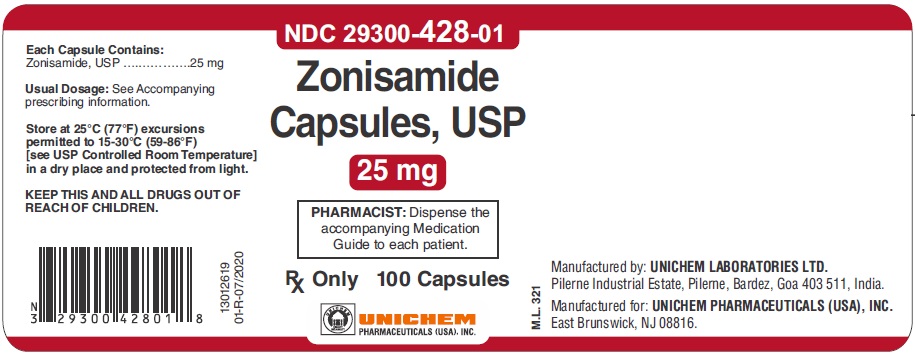
Zonisamide 50 mg Capsule, 100-count — NDC 29300-429-01 (Billing 29300-0429-01)
This is a package of 100 capsules of Zonisamide 50 mg Capsule from Unichem Pharmaceuticals (USA), Inc., marketed since Jul 2021 and currently FDA-listed; retail pharmacies pay about $0.0955 per capsule (NADAC). It is the main listing for this product, which comes in 2 package sizes.
Identity & classification
Regulatory identifiers FDA, NLM and CMS codes for this package
Drug-database identifiers Medi-Span GPI and First Databank GCN / HICL / AHFS classification
- GSN (GCN sequence number): 053368
- GCN: 20833
- GPI-14 (Medi-Span): 72600090000110
- HICL (First Databank): 021140
- AHFS class code: 28:12.24.00
- RxCUI (RxNorm): 314285
Where does this data come from?
- FDA openFDA NDC Directory · synced Oct 1, 2026
- FDA label on DailyMed · label index refreshed Oct 1, 2026
- RxNorm (NLM RxNav) · catalog refreshed Oct 1, 2026
- Medi-Span GPI (licensed)
- First Databank (licensed) · refreshed Oct 1, 2026
RxNorm drug class
This medicine belongs to the Anti-epileptic Agent class.
Where does this data come from?
- RxClass (NLM) · catalog refreshed Oct 1, 2026
Clinical
Zonisamide is used in combination with other medications to treat certain types of seizures. Zonisamide is in a class of medications called anticonvulsants. It works by decreasing abnormal electrical activity in the brain.
Read the full MedlinePlus article ↗- It's added to your other medicines to help control partial seizures. The capsules (Zonegran and generic zonisamide) are for adults with epilepsy. Zonisade liquid is for adults and...
- Take it by mouth once or twice a day, with or without food. Swallow capsules whole. If you use Zonisade liquid, shake it well and measure with the device your pharmacist gives you,...
- Sleepiness, dizziness, poor balance, loss of appetite, irritability, headache, nausea and trouble with memory or focus are the most common. Many are dose-related, so tell your pres...
- Call for any new rash, fever with swollen glands, eye pain or sudden vision changes, or mood changes and thoughts of self-harm. Also call for fast breathing, unusual tiredness, or...
Patient education
Supplement & herbal interactions
Some supplements/herbs that may interact with Zonisamide — tap one for details:
Zonisamide may be associated with lower levels of 1 nutrient — worth a chat with your pharmacist, not a cause for alarm.
Where does this data come from?
- MedlinePlus (NLM) · refreshed Oct 1, 2026
- FDA label on DailyMed · label index refreshed Oct 1, 2026
Ask a licensed pharmacist directly — free, answered by our team.
Pricing
A drug doesn't have one price. Each row is a different public payment system, and none is what you'd pay at the counter — that depends on your insurance. The ⓘ on each row explains what it measures.
| Price system | Per ea | Per package |
|---|---|---|
| Retail pharmacies payNADAC · weekly | $0.096 | $9.55 / 100 capsules |
| Medicaid paysCMS SDUD · 12 mo | $0.1785 | $17.85 / 100 capsules |
| Medicare drug plans payPart D · Q2 2026 | $0.1678 | $16.78 / 100 capsules |
Where does this data come from?
- CMS NADAC weekly file · file of Sep 30, 2026
- CMS ASP pricing files · refreshed Sep 20, 2026
- CMS Medicaid State Drug Utilization Data · through Q1 2026
- CMS Part D plan pricing files · refreshed Sep 24, 2026
- VA National Acquisition Center price file
Packaging — all sizes for this product
| Package NDC | Description | Per unit | Per pack | Marketing start | Marketing end | Status |
|---|---|---|---|---|---|---|
| 29300-0429-01 You're viewing this Main listing | 100 CAPSULE in 1 BOTTLE | $0.0955 / ea | $9.55 | 2021-07-09 | — | Active |
| 29300-0429-05 29300-429-05 | 500 CAPSULE in 1 BOTTLE | — | — | 2021-07-09 | — | Active |
You're viewing the smallest of 2 pack sizes for this product.
In Medicaid, this is the most-dispensed pack of this product — about 100% of fills over the last four reported quarters. See all packs ↓
Pack size FAQ
What quantity is in this package?
How does this package differ from NDC 29300-0429-05?
What NDC number is used to bill for this package of Zonisamide 50 mg Capsule?
Prices are the latest CMS NADAC pharmacy acquisition cost per NDC; per-pack figures are per-unit × pack quantity, shown only when the pack is denominated in the same measure NADAC prices.
Therapeutic equivalents
| Product | Labeler | Pack | NADAC/unit | TE | Status | Price vs. this |
|---|---|---|---|---|---|---|
| Zonisamide 50 mgthis 29300-0429-01 | Unichem | 100 capsules | $0.096 | AB | Availability likely | — |
| Zonisamide 50 mg 59651-0379-01 | Aurobindo | 100 capsules | $0.096 | AB | Availability likely | — |
| Zonisamide 50 mg 68001-0243-00 | BluePoint | 100 capsules | $0.096 | AB | Availability likely | — |
| Zonisamide 50 mg 68462-0129-01 | Glenmark | 100 capsules | $0.096 | AB | Availability likely | — |
| Zonisamide 50 mg 72578-0041-01 | Viona | 100 capsules | $0.096 | AB | Availability likely | — |
| Zonisamide 50 mg 76282-0227-01 | Exelan | 100 capsules | $0.096 | AB | Availability likely | — |
| Zonisamide 50 mg 62756-0259-01 | Sun | 30 capsules | — | — | FDA listed | — |
| Zonisamide 50 mg 70518-4349-00 | REMEDYREPACK | 100 capsules | — | AB | FDA listed | — |
| Zonisamide 50 mg 70771-1143-01 | Zydus | 100 capsules | — | AB | FDA listed | — |
| Zonisamide 50 mg 71335-0962-01 | Bryant | 30 capsules | — | — | FDA listed | — |
Where does this data come from?
- FDA openFDA NDC Directory · synced Oct 1, 2026
- FDA Orange Book · refreshed Sep 3, 2026
- CMS NADAC weekly file · file of Sep 30, 2026
Availability & generic status
This product is an FDA-approved generic. Other versions of the same drug are listed under Therapeutic equivalents, least expensive first.
Where does this data come from?
- FDA Orange Book · refreshed Sep 3, 2026
Inactive Ingredients / Excipients
Inactive ingredients, also called excipients, are components of the drug product other than the active ingredient. They may include fillers, dyes, coatings, preservatives, flavors, or other formulation ingredients.
💡 Tap an ingredient (hover on desktop) to see what it is and why it’s used.
-
UNII 767IP0Y5NH
A synthetic red colorant used to give medicines their color. It helps patients identify their medication and makes the product visually appealing.
-
UNII H3R47K3TBD
FD&C Blue No. 1 is a synthetic blue dye approved for use in foods and medicines. It serves as a colorant to give the medication its distinctive appearance and help with product identification.
-
UNII XM0M87F357
A dark iron oxide compound that gives medicines their black or dark color. It's used as a colorant in tablets and capsules to help identify the product and make it visually distinctive.
-
UNII 2G86QN327L
Gelatin is a protein derived from animal collagen, commonly used in medicines as a gelling agent and capsule material. It helps create soft or hard capsule shells that hold and release medication, and can also thicken liquid formulations.
-
UNII Z82Y2C65EA
Hydrogenated cottonseed oil is a solid fat made by adding hydrogen to cottonseed oil. It's used in medicines as a binder and lubricant to help hold ingredients together and make tablets easier to compress and release.
-
UNII OP1R32D61U
Microcrystalline cellulose is a purified form of cellulose, a natural fiber from plant sources. It acts as a binder and filler in tablets and capsules, helping hold ingredients together and give the medicine its shape and size.
-
UNII WZH3C48M4T
Potassium hydroxide is a strong alkaline chemical used in medicines to adjust and maintain the pH level of liquid formulations, helping keep the product stable and the active ingredients effective.
-
UNII 6DC9Q167V3
Propylene glycol is a clear liquid derived from petroleum or vegetable sources. It acts as a solvent, humectant, and preservative in medicines, helping dissolve active ingredients and maintain product stability.
-
UNII 46N107B71O
Shellac is a natural resin secreted by the lac beetle. It's used as a coating on tablets and capsules to control how quickly the medicine dissolves and to improve appearance and stability.
-
UNII ETJ7Z6XBU4
Silicon dioxide is a naturally occurring mineral used as a glidant and anti-caking agent. It helps powder ingredients flow smoothly and prevents clumping during manufacturing and storage.
-
UNII 368GB5141J
A detergent and foaming agent derived from coconut or palm oil. In medications, it helps break down and mix oil and water-based ingredients, aids in tablet disintegration, and improves how the drug dissolves and spreads in the mouth or digestive system.
-
UNII 15FIX9V2JP
Titanium dioxide is a bright white mineral powder commonly used as a colorant and opacifying agent. It makes pills and tablets white or lighter in color and helps make coatings non-transparent.
12 inactive ingredients listed in the exact product block matched to this NDC.
Where does this data come from?
ingredient classCode="IACT" elements from the exact product block matched by this NDC. Label-section narrative from DailyMed / the openFDA label index is shown separately when available.- FDA label on DailyMed · label index refreshed Oct 1, 2026
- FDA openFDA NDC Directory · synced Oct 1, 2026
Inactive ingredient FAQ
Are inactive ingredients the same for every manufacturer?
Why might an inactive ingredient be missing?
Can inactive ingredients matter?
Manufacturer & labeler
Where does this data come from?
- FDA openFDA NDC Directory · synced Oct 1, 2026
- Drugs@FDA
Full prescribing information FDA SPL
🎯 Indications and Usage ▾
INDICATIONS AND USAGE Zonisamide Capsules are indicated as adjunctive therapy in the treatment of partial seizures in adults with epilepsy.
⏱️ Dosage and Administration ▾
DOSAGE AND ADMINISTRATION Zonisamide Capsules are recommended as adjunctive therapy for the treatment of partial seizures in adults. Safety and efficacy in pediatric patients below the age of 16 have not been established. Zonisamide Capsules should be administered once or twice daily, using 25 mg, 50 mg or 100 mg capsules.
Zonisamide Capsules are given orally and can be taken with or without food. Capsules should be swallowed whole. Adults over Age 16: The prescriber should be aware that, because of the long half-life of zonisamide, up to two weeks may be required to achieve steady state levels upon reaching a stable dose or following dosage adjustment.
Although the regimen described below is one that has been shown to be tolerated, the prescriber may wish to prolong the duration of treatment at the lower doses in order to fully assess the effects of zonisamide at steady state, noting that many of the side effects of zonisamide are more frequent at doses of 300 mg per day and above. Although there is some evidence of greater response at doses above 100-200 mg/day, the increase appears small and formal dose-response studies have not been conducted. The initial dose of Zonisamide Capsules should be 100 mg daily.
After two weeks, the dose may be increased to 200 mg/day for at least two weeks. It can be increased to 300 mg/day and 400 mg/day, with the dose stable for at least two weeks to achieve steady state at each level. Evidence from controlled trials suggests that Zonisamide Capsules doses of 100–600 mg/day are effective, but there is no suggestion of increasing response above 400 mg/day (see CLINICAL PHARMACOLOGY, Clinical Studies subsection).
There is little experience with doses greater than 600 mg/day. Patients with Renal or Hepatic Disease: Because zonisamide is metabolized in the liver and excreted by the kidneys, patients with renal or hepatic disease should be treated with caution, and might require slower titration and more frequent monitoring (see CLINICAL PHARMACOLOGY and PRECAUTIONS ).
⛔ Contraindications ▾
CONTRAINDICATIONS Zonisamide Capsules are contraindicated in patients who have demonstrated hypersensitivity to sulfonamides or zonisamide.
⚠️ Warnings ▾
WARNINGS Potentially Fatal Reactions to Sulfonamides: Fatalities have occurred, although rarely, as a result of severe reactions to sulfonamides (zonisamide is a sulfonamide) including Stevens-Johnson syndrome, toxic epidermal necrolysis, fulminant hepatic necrosis, agranulocytosis, aplastic anemia, and other blood dyscrasias. Such reactions may occur when a sulfonamide is readministered irrespective of the route of administration. If signs of hypersensitivity or other serious reactions occur, discontinue zonisamide immediately.
Specific experience with sulfonamide-type adverse reaction to zonisamide is described below. Serious Skin Reactions: Consideration should be given to discontinuing Zonisamide Capsules in patients who develop an otherwise unexplained rash. If the drug is not discontinued, patients should be observed frequently.
Seven deaths from severe rash [i.e., Stevens-Johnson syndrome (SJS) and toxic epidermal necrolysis (TEN)] were reported in the first 11 years of marketing in Japan. All of the patients were receiving other drugs in addition to zonisamide. In post-marketing experience from Japan, a total of 49 cases of SJS or TEN have been reported, a reporting rate of 46 per million patient-years of exposure.
Although this rate is greater than background, it is probably an underestimate of the true incidence because of under-reporting. There were no confirmed cases of SJS or TEN in the US, European, or Japanese development programs. In the US and European randomized controlled trials, 6 of 269 (2.2%) zonisamide patients discontinued treatment because of rash compared to none on placebo.
Across all trials during the US and European development, rash that led to discontinuation of zonisamide was reported in 1.4% of patients (12.0 events per 1000 patient-years of exposure). During Japanese development, serious rash or rash that led to study drug discontinuation was reported in 2.0% of patients (27.8 events per 1000 patient-years). Rash usually occurred early in treatment, with 85% reported within 16 weeks in the US and European studies and 90% reported within two weeks in the Japanese studies.
There was no apparent relationship of dose to the occurrence of rash. Serious Hematologic Events: Two confirmed cases of aplastic anemia and one confirmed case of agranulocytosis were reported in the first 11 years of marketing in Japan, rates greater than generally accepted background rates. There were no cases of aplastic anemia and two confirmed cases of agranulocytosis in the US, European, or Japanese development programs.
There is inadequate information to assess the relationship, if any, between dose and duration of treatment and these events. Drug Reaction with Eosinophilia and Systemic Symptoms (DRESS)/Multi-Organ Hypersensitivity: Drug Reaction with Eosinophilia and Systemic Symptoms (DRESS), also known as multi-organ hypersensitivity, has occurred with Zonisamide Capsules. Some of these events have been fatal or life-threatening.
DRESS typically, although not exclusively, presents with fever, rash, lymphadenopathy and/or facial swelling, in association with other organ system involvement, such as hepatitis, nephritis, hematologic abnormalities, myocarditis, or myositis, sometimes resembling an acute viral infection. Eosinophilia is often present. This disorder is variable in its expression, and other organ systems not noted here may be involved.
It is important to note that early manifestations of hypersensitivity (e.g., fever, lymphadenopathy) may be present even though rash is not evident. If such signs or symptoms are present, the patient should be evaluated immediately. Zonisamide Capsules should be discontinued if an alternative etiology for the signs or symptoms cannot be established.
Oligohidrosis and Hyperthermia in Pediatric Patients: Oligohidrosis, sometimes resulting in heat stroke and hospitalization, is seen in association with zonisamide in pediatric patients. During the pre-approval development program… [Excerpted — this section continues on DailyMed.]
🤒 Adverse Reactions ▾
ADVERSE REACTIONS The most common adverse reactions with Zonisamide Capsules (an incidence at least 4% greater than placebo) in controlled clinical trials and shown in descending order of frequency were somnolence, anorexia, dizziness, ataxia, agitation/irritability, and difficulty with memory and/or concentration. In controlled clinical trials, 12% of patients receiving Zonisamide Capsules as adjunctive therapy discontinued due to an adverse reaction compared to 6% receiving placebo. Approximately 21% of the 1,336 patients with epilepsy who received Zonisamide Capsules in clinical studies discontinued treatment because of an adverse reaction.
The most common adverse reactions leading to discontinuation were somnolence, fatigue and/or ataxia (6%), anorexia (3%), difficulty concentrating (2%), difficulty with memory, mental slowing, nausea/vomiting (2%), and weight loss (1%). Many of these adverse reactions were dose-related (see WARNINGS and PRECAUTIONS ). Adverse Reaction Incidence in Controlled Clinical Trials: Table 4 lists adverse reactions that occurred in at least 2% of patients treated with Zonisamide Capsules in controlled clinical trials that were numerically more common in the Zonisamide Capsules group.
In these studies, either Zonisamide Capsules or placebo was added to the patient's current AED therapy. Table 4. Adverse Reactions in Placebo-Controlled, Add-On Trials (Events that occurred in at least 2% of Zonisamide Capsules-treated patients and occurred more frequently in Zonisamide Capsules-treated than placebo-treated patients) BODY SYSTEM/PREFERRED TERM Zonisamide Capsules (n=269) % PLACEBO (n=230) % BODY AS A WHOLE Headache 10 8 Abdominal Pain 6 3 Flu Syndrome 4 3 DIGESTIVE Anorexia 13 6 Nausea 9 6 Diarrhea 5 2 Dyspepsia 3 1 Constipation 2 1 Dry Mouth 2 1 HEMATOLOGIS AND LYMPHATIC Ecchymosis 2 1 METABOLIC AND NUTRITIONAL Weight Loss 3 2 NERVOUS SYSTEM Dizziness 13 7 Ataxia 6 1 Nystagmus 4 2 Paresthesia 4 1 NEUROPSYCHIATRIC AND COGNITIVE DYSFUNCTION-ALTERED COGNITIVE FUNCTION Confusion 6 3 Difficulty Concentrating 6 2 Difficulty with Memory 6 2 Mental Slowing 4 2 NEUROPSYCHIATRIC AND COGNITIVE DYSFUNCTION-BEHAVIORAL ABNORMALITIES(NON-PSYCHOSIS-RELATED) Agitation/Irritability 9 4 Depression 6 3 Insomnia 6 3 Anxiety 3 2 Nervousness 2 1 NEUROPSYCHIATRIC AND COGNITIVE DYSFUNCTION-BEHAVIORAL ABNORMALITIES (PSYCHOSIS-RELATED) Schizophrenic/Schizophreniform Behavior 2 0 NEUROPSYCHIATRIC AND COGNITIVE DYSFUNCTION-CNS DEPRESSION Somnolence 17 7 Fatigue 8 6 Tiredness 7 5 NEUROPSYCHIATRIC AND COGNITIVE DYSFUNCTION-SPEECH AND LANGUAGE ABNORMALITIES Speech Abnormalities 5 2 Difficulties in Verbal Expression 2 <1 RESPIRATORY Rhinitis 2 1 SKIN AND APPENDAGES Rash 3 2 SPECIAL SENSES Diplopia 6 3 Taste Perversion 2 0 Other Adverse Reactions in Clinical Trials: Zonisamide Capsules have been administered to 1,598 individuals during all clinical trials, only some of which were placebo-controlled.
The frequencies represent the proportion of the 1,598 individuals exposed to Zonisamide Capsules who experienced an event on at least one occasion. All events are included except those already listed in the previous table or discussed in WARNINGS or PRECAUTIONS , trivial events, those too general to be informative, and those not reasonably associated with Zonisamide Capsules. Events are further classified within each category and listed in order of decreasing frequency as follows: frequent occurring in at least 1:100 patients; infrequent occurring in 1:100 to 1:1000 patients; rare occurring in fewer than 1:1000 patients.
Body as a Whole : Frequent: Accidental injury, asthenia. Infrequent: Chest pain, flank pain, malaise, allergic reaction, face edema, neck rigidity. Rare: Lupus erythematosus.
Cardiovascular : Infrequent: Palpitation, tachycardia, vascular insufficiency, hypotension, hypertension, thrombophlebitis, syncope, bradycardia. Rare: Atrial fibrillation, heart failure, pulmonary embolus, ventricular extrasystoles. Digestive : Freq… [Excerpted — this section continues on DailyMed.]
🆘 Overdosage ▾
OVERDOSAGE Human Experience: Experience with Zonisamide Capsules daily doses over 800 mg/day is limited. During Zonisamide Capsules clinical development, three patients ingested unknown amounts of Zonisamide Capsules as suicide attempts, and all three were hospitalized with CNS symptoms. One patient became comatose and developed bradycardia, hypotension, and respiratory depression; the zonisamide plasma level was 100.1 mcg/mL measured 31 hours post-ingestion.
Zonisamide plasma levels fell with a half-life of 57 hours, and the patient became alert five days later. Management: No specific antidotes for Zonisamide Capsules overdosage are available. Following a suspected recent overdose, emesis should be induced or gastric lavage performed with the usual precautions to protect the airway.
General supportive care is indicated, including frequent monitoring of vital signs and close observation. Zonisamide has a long half-life (see CLINICAL PHARMACOLOGY section). Due to the low protein binding of zonisamide (40%), renal dialysis may be effective.
The effectiveness of renal dialysis as a treatment of overdose has not been formally studied. A poison control center should be contacted for information on the management of Zonisamide Capsules overdosage.
🧬 Clinical Pharmacology ▾
CLINICAL PHARMACOLOGY Mechanism of Action: The precise mechanism(s) by which zonisamide exerts its antiseizure effect is unknown. Zonisamide demonstrated anticonvulsant activity in several experimental models. In animals, zonisamide was effective against tonic extension seizures induced by maximal electroshock but ineffective against clonic seizures induced by subcutaneous pentylenetetrazol.
Zonisamide raised the threshold for generalized seizures in the kindled rat model and reduced the duration of cortical focal seizures induced by electrical stimulation of the visual cortex in cats. Furthermore, zonisamide suppressed both interictal spikes and the secondarily generalized seizures produced by cortical application of tungstic acid gel in rats or by cortical freezing in cats. The relevance of these models to human epilepsy is unknown.
Zonisamide may produce these effects through action at sodium and calcium channels. In vitro pharmacological studies suggest that zonisamide blocks sodium channels and reduces voltage-dependent, transient inward currents (T-type Ca 2+ currents), consequently stabilizing neuronal membranes and suppressing neuronal hypersynchronization. In vitro binding studies have demonstrated that zonisamide binds to the GABA/benzodiazepine receptor ionophore complex in an allosteric fashion which does not produce changes in chloride flux.
Other in vitro studies have demonstrated that zonisamide (10–30 mcg/mL) suppresses synaptically- driven electrical activity without affecting postsynaptic GABA or glutamate responses (cultured mouse spinal cord neurons) or neuronal or glial uptake of [ 3 H]-GABA (rat hippocampal slices). Thus, zonisamide does not appear to potentiate the synaptic activity of GABA. In vivo microdialysis studies demonstrated that zonisamide facilitates both dopaminergic and serotonergic neurotransmission.
Zonisamide is a carbonic anhydrase inhibitor. The contribution of this pharmacological action to the therapeutic effects of zonisamide is unknown. However, as a carbonic anhydrase inhibitor, zonisamide may cause metabolic acidosis (see WARNINGS, Metabolic Acidosis subsection).
Pharmacokinetics: Absorption Following a 200-400 mg oral zonisamide dose, peak plasma concentrations (range: 2-5 mcg/mL) in normal volunteers occur within 2-6 hours. In the presence of food, the time to maximum concentration is delayed; occurring at 4-6 hours, but food has no effect on the bioavailability of zonisamide. Zonisamide absorption is dose-proportional in the range of 200-400 mg.
Cmax and AUC, however, increase disproportionately at 800 mg, possibly due to saturable binding of zonisamide to red blood cells. Once a stable dose is reached, steady state is achieved within 14 days. Distribution The apparent volume of distribution (V/F) of zonisamide is about
1.45L/kg following a 400 mg oral dose. Zonisamide, at concentrations of 1.0-7.0 mcg/mL, is approximately 40% bound to human plasma proteins. Zonisamide extensively binds to erythrocytes, resulting in an eight-fold higher concentration of zonisamide in red blood cells than in plasma.
Protein binding of zonisamide is unaffected in the presence of therapeutic concentrations of phenytoin, phenobarbital or carbamazepine. Metabolism and Elimination Following oral administration of 14 C-zonisamide to healthy volunteers, only zonisamide was detected in plasma. Zonisamide is excreted primarily in urine as parent drug and as the glucuronide of a metabolite.
Following multiple dosing, 62% of the radiolabeled dose was recovered in the urine, with 3% in the feces by day 10. Zonisamide undergoes acetylation by N-acetyl-transferases to form N-acetyl zonisamide and reduction to form the open ring metabolite, 2–sulfamoylacetyl phenol (SMAP). Of the excreted dose, 35% was recovered as zonisamide, 15% as N-acetyl zonisamide, and 50% as the glucuronide of SMAP.
Reduction of zonisamide to SMAP is mediated by cytochrome P450 isozyme 3A4 (CYP3A4). Zonisamide does not induce its own m… [Excerpted — this section continues on DailyMed.]
📦 How Supplied / Storage and Handling ▾
HOW SUPPLIED Zonisamide Capsules USP, for oral administration, are available as 25 mg Hard gelatin capsules of size "4" with white to off white opaque cap and white to off white opaque body imprinted "U" on cap and "428" on body with black ink containing white to off white granular powder and supplied as: NDC 29300-428-01 bottles of 100 NDC 29300-428-05 bottles of 500 50 mg Hard gelatin capsules of size "3" with light blue opaque cap and white to off white opaque body imprinted "Ú" on cap and "429" on body with black ink, containing white to off white granular powder and supplied as: NDC 29300-429-01 bottles of 100 NDC 29300-429-05 bottles of 500 100 mg Hard gelatin capsules of size "1" with light red opaque cap and white to off white opaque body imprinted "Ú" on cap and "430" on body with black ink, containing white to off white granular powder and supplied as: NDC 29300-430-01 bottles of 100 NDC 29300-430-05 bottles of 500 Store at 25°C (77°F), excursions permitted to 15-30°C (59-86°F) [see USP Controlled Room Temperature], in a dry place and protected from light.
Additional Medication Guide can be obtained by calling Unichem at 1-866-562-4616 Manufactured by UNICHEM LABORATORIES LTD. Pilerne Ind. Estate, Pilerne, Bardez, Goa 403 511, India.
Manufactured for: East Brunswick, NJ 08816 02-R-07/2020 Image
📋 Description ▾
DESCRIPTION Zonisamide Capsules USP, are an antiseizure drug chemically classified as a sulfonamide and unrelated to other antiseizure agents. The active ingredient is zonisamide, 1,2 -benzisoxazole-3-methanesulfonamide. The empirical formula is C 8 H 8 N 2 O 3 S with a molecular weight of 212.23.
Zonisamide is a white to off white powder, pKa = 10.6, and is freely soluble in dimethyl formamide, soluble in methanol. The chemical structure is: Zonisamide Capsules USP, are supplied for oral administration as capsules containing 25 mg, 50 mg or 100 mg zonisamide. Each capsule contains the labeled amount of zonisamide plus the following inactive ingredients: hydrogenated vegetable oil, microcrystalline cellulose, colloidal silicon dioxide, sodium lauryl sulfate, gelatin and titanium dioxide.
Additionally the 50 mg contains D&C Red No. 28 and FD&C Blue No. 1 and the 100 mg contains FD&C Red No.
40. The black imprinting ink contains shellac, propylene glycol, black iron oxide and potassium hydroxide. Image
💬 Medication Guide ▾
SPL MEDGUIDE MEDICATION GUIDE Zonisamide (zoe nis' a mide) Capsules What is the most important information I should know about Zonisamide Capsules? Zonisamide Capsules may cause serious side effects, including: Serious skin rash that can cause death. Serious allergic reactions that may affect different parts of the body.
Less sweating and increase in your body temperature (fever). Serious eye problems Suicidal thoughts or actions in some people. Increased level of acid in your blood (metabolic acidosis).
Problems with your concentration, attention, memory, thinking, speech, or language. Blood cell changes such as reduced red and white blood cell counts. These serious side effects are described below.
1. Zonisamide Capsules may cause a serious skin rash that can cause death. These serious skin reactions are more likely to happen when you begin taking zonisamide within the first 4 months of treatment but may occur at later times.
2. Zonisamide Capsules can cause other types of allergic reactions or serious problems that may affect different parts of the body such as your liver, kidneys, heart, or blood cells. You may or may not have a rash with these types of reactions.
These reactions can be very serious and can cause death. Call your health care provider right away if you have: fever severe muscle pain rash swollen lymph glands swelling of your face unusual bruising or bleeding weakness, fatigue yellowing of your skin or the white part of your eyes 3. Zonisamide Capsules may cause you to sweat less and to increase your body temperature (fever).
You may need to be hospitalized for this. You should watch for decreased sweating and fever, especially when it is hot and especially in children taking Zonisamide Capsules. Call your health care provider right away if you have: high fever, recurring fever, or long lasting fever less sweat than normal 4.
Zonisamide Capsules may cause eye problems. Serious eye problems include: sudden decrease in vision with or without eye pain and redness a blockage of fluid in the eye causing increased pressure in the eye (secondary angle closure glaucoma) These eye problems can lead to permanent loss of vision if not treated. Call your healthcare provider right away if you have any new eye symptoms, including any eye pain or redness or any new problems with your vision.
5. Like other antiepileptic drugs, Zonisamide Capsules may cause suicidal thoughts or actions in a very small number of people, about 1 in 500. Call a healthcare provider right away if you have any of these symptoms, especially if they are new, worse, or worry you: thoughts about suicide or dying attempt to commit suicide new or worse depression new or worse anxiety feeling agitated or restless panic attacks trouble sleeping (insomnia) new or worse irritability acting aggressive, being angry, or violent acting on dangerous impulses an extreme increase in activity and talking (mania) other unusual changes in behavior or mood Suicidal thoughts or actions can be caused by things other than medicines.
If you have suicidal thoughts or actions, your healthcare provider may check for other causes. How can I watch for early symptoms of suicidal thoughts and actions? Pay attention to any changes, especially sudden changes, in mood, behaviors, thoughts, or feelings.
Keep all follow-up visits with your healthcare provider as scheduled. Call your healthcare provider between visits as needed, especially if you are worried about symptoms. Do not stop Zonisamide Capsules without first talking to a healthcare provider.
Stopping Zonisamide Capsules suddenly can cause serious problems. Stopping a seizure medicine suddenly in a patient who has epilepsy can cause seizures that will not stop (status epilepticus). 6.
Zonisamide Capsules can increase the level of acid in your blood (metabolic acidosis). If left untreated, metabolic acidosis can cause brittle or soft bones (osteoporosis, osteomalacia, osteopenia), kidney stones and can slow the rate of growth… [Excerpted — this section continues on DailyMed.]
⚠️ Precautions ▾
PRECAUTIONS General: Somnolence is commonly reported, especially at higher doses of Zonisamide Capsules (see WARNINGS: Cognitive/ Neuropsychiatric Adverse Events subsection). Zonisamide is metabolized by the liver and eliminated by the kidneys; caution should therefore be exercised when administering Zonisamide Capsules to patients with hepatic and renal dysfunction (see CLINICAL PHARMACOLOGY, Specific Populations subsection). Kidney Stones: Among 991 patients treated during the development of Zonisamide Capsules, 40 patients (4.0%) with epilepsy receiving Zonisamide Capsules developed clinically possible or confirmed kidney stones (e.g., clinical symptomatology, sonography, etc.), a rate of 34 per 1000 patient-years of exposure (40 patients with 1168 years of exposure).
Of these, 12 were symptomatic, and 28 were described as possible kidney stones based on sonographic detection. In nine patients, the diagnosis was confirmed by a passage of a stone or by a definitive sonographic finding. The rate of occurrence of kidney stones was 28.7 per 1000 patient-years of exposure in the first six months, 62.6 per 1000 patient-years of exposure between 6 and 12 months, and 24.3 per 1000 patient-years of exposure after 12 months of use.
There are no normative sonographic data available for either the general population or patients with epilepsy. Although the clinical significance of the sonographic findings may not be certain, the development of nephrolithiasis may be related to metabolic acidosis (see WARNINGS, Metabolic Acidosis subsection). The analyzed stones were composed of calcium or urate salts.
In general, increasing fluid intake and urine output can help reduce the risk of stone formation, particularly in those with predisposing risk factors. It is unknown, however, whether these measures will reduce the risk of stone formation in patients treated with Zonisamide Capsules. Although not approved in pediatric patients, sonographic findings consistent with nephrolithiasis were also detected in 8 % of a subset of Zonisamide Capsules treated pediatric patients who had at least one renal ultrasound prospectively performed in a clinical development program investigating open-label treatment.
The incidence of kidney stone as an adverse event was 3 % (see WARNINGS, Metabolic Acidosis subsection). Effect on Renal Function: In several clinical studies, zonisamide was associated with a statistically significant 8% mean increase from baseline of serum creatinine and blood urea nitrogen (BUN) compared to essentially no change in the placebo patients. The increase appeared to persist over time but was not progressive; this has been interpreted as an effect on glomerular filtration rate (GFR).
There were no episodes of unexplained acute renal failure in clinical development in the US, Europe, or Japan. The decrease in GFR appeared within the first 4 weeks of treatment. In a 30-day study, the GFR returned to baseline within 2–3 weeks of drug discontinuation.
There is no information about reversibility, after drug discontinuation, of the effects on GFR after long-term use. Zonisamide Capsules should be discontinued in patients who develop acute renal failure or a clinically significant sustained increase in the creatinine/BUN concentration. Zonisamide Capsules should not be used in patients with renal failure (estimated GFR < 50 mL/min) as there has been insufficient experience concerning drug dosing and toxicity.
Status Epilepticus: Estimates of the incidence of treatment emergent status epilepticus in Zonisamide Capsules-treated patients are difficult because a standard definition was not employed. Nonetheless, in controlled trials, 1.1% of patients treated with Zonisamide Capsules had an event labeled as status epilepticus compared to none of the patients treated with placebo. Among patients treated with Zonisamide Capsules across all epilepsy studies (controlled and uncontrolled), 1.0% of patients had an event reported as status epilepticus.… [Excerpted — this section continues on DailyMed.]
📄 Package Label / Principal Display Panel ▾
PACKAGE LABEL.PRINCIPAL DISPLAY PANEL 25mg-100s-bottle 50mg-100s-bottle 100mg-100s-bottle Image Image Image