
Valsartan 320 mg Tablet, Film Coated, 90-count — NDC 31722-748-90 (Billing 31722-0748-90)
This is a package of 90 tablets of Valsartan 320 mg Tablet, Film Coated from Camber Pharmaceuticals, Inc., marketed since Jan 2015 and currently FDA-listed; retail pharmacies pay about $0.2282 per tablet (NADAC). It is the main listing for this product, which comes in 5 package sizes.
Other active recalls for Valsartan (different manufacturers) — 1 · tap to view
Identity & classification
Regulatory identifiers FDA, NLM and CMS codes for this package
Drug-database identifiers Medi-Span GPI and First Databank GCN / HICL / AHFS classification
- GSN (GCN sequence number): 048399
- GCN: 13838
- GPI-14 (Medi-Span): 36150080000340
- HICL (First Databank): 012204
- AHFS class code: 24:32.08.00
- RxCUI (RxNorm): 349199
Where does this data come from?
- FDA openFDA NDC Directory · synced Oct 1, 2026
- FDA label on DailyMed · label index refreshed Oct 1, 2026
- RxNorm (NLM RxNav) · catalog refreshed Oct 1, 2026
- Medi-Span GPI (licensed)
- First Databank (licensed) · refreshed Oct 1, 2026
RxNorm drug class
This medicine belongs to the Angiotensin 2 Receptor Blocker class.
Where does this data come from?
- RxClass (NLM) · catalog refreshed Oct 1, 2026
Clinical
- Valsartan is mainly used to treat high blood pressure, which helps lower your risk of stroke and heart attack. It's also used in adults with heart failure to reduce the chance of b...
- Yes — valsartan tablets can be taken with or without food, so whatever works best for your routine is fine. If you're taking the oral solution, take it as directed by your prescrib...
- Can I take valsartan with or without food?
- Most people do well on valsartan. The most common issues are headache, dizziness, and fatigue. If you feel faint or lightheaded — especially when standing up — that can be a sign y...
Patient education
Supplement & herbal interactions
Some supplements/herbs that may interact with Valsartan — tap one for details:
Valsartan may be associated with lower levels of 1 nutrient — worth a chat with your pharmacist, not a cause for alarm.
Where does this data come from?
- MedlinePlus (NLM) · refreshed Oct 1, 2026
- FDA label on DailyMed · label index refreshed Oct 1, 2026
Ask a licensed pharmacist directly — free, answered by our team.
Pricing
A drug doesn't have one price. Each row is a different public payment system, and none is what you'd pay at the counter — that depends on your insurance. The ⓘ on each row explains what it measures.
| Price system | Per ea | Per package |
|---|---|---|
| Retail pharmacies payNADAC · weekly | $0.228 | $20.54 / 90 tablets |
| Medicaid paysCMS SDUD · 12 mo | $0.4211 | $37.90 / 90 tablets |
| Medicare drug plans payPart D · Q2 2026 | $0.2655 | $23.90 / 90 tablets |
Where does this data come from?
- CMS NADAC weekly file · file of Feb 21, 2024
- CMS ASP pricing files · refreshed Sep 20, 2026
- CMS Medicaid State Drug Utilization Data · through Q1 2026
- CMS Part D plan pricing files · refreshed Sep 24, 2026
- VA National Acquisition Center price file
Packaging — all sizes for this product
| Package NDC | Description | Per unit | Per pack | Marketing start | Marketing end | Status |
|---|---|---|---|---|---|---|
| 31722-0748-05 31722-748-05 | 500 TABLET, FILM COATED in 1 BOTTLE | — | — | 2015-01-05 | — | Active |
| 31722-0748-30 31722-748-30 | 30 TABLET, FILM COATED in 1 BOTTLE | — | — | 2015-01-05 | — | Active |
| 31722-0748-31 31722-748-31 | 10 TABLET, FILM COATED in 1 BLISTER PACK | — | — | 2015-01-05 | — | Active |
| 31722-0748-32 31722-748-32 | 100 TABLET, FILM COATED in 1 BLISTER PACK | — | — | 2015-01-05 | — | Active |
| 31722-0748-90 You're viewing this Main listing | 90 TABLET, FILM COATED in 1 BOTTLE | $0.2282 / ea | $20.53 | 2015-01-05 | — | Active |
You're viewing one of 5 pack sizes for this product.
Pack size FAQ
What quantity is in this package?
How does this package differ from NDC 31722-0748-31?
What NDC number is used to bill for this package of Valsartan 320 mg Tablet, Film Coated?
Prices are the latest CMS NADAC pharmacy acquisition cost per NDC; per-pack figures are per-unit × pack quantity, shown only when the pack is denominated in the same measure NADAC prices.
Therapeutic equivalents
| Product | Labeler | Pack | NADAC/unit | TE | Status | Price vs. this |
|---|---|---|---|---|---|---|
| Valsartan 320 mg 00378-5815-77 | Mylan | 90 tablets | $0.163 | AB | Availability likely | save 28% |
| Valsartan 320 mg 33342-0065-10 | Macleods | 90 tablets | $0.163 | AB | Availability likely | save 28% |
| Valsartan 320 mg 50268-0749-13 | AvPAK | 1 tablet | $0.163 | AB | Availability likely | save 28% |
| Valsartan 320 mg 65162-0840-09 | Amneal | 90 tablets | $0.163 | AB | Availability likely | save 28% |
| Valsartan 320 mg 72578-0134-16 | Viona | 90 tablets | $0.163 | AB | Availability likely | save 28% |
| Valsartan 320 mg 72819-0184-09 | Archis | 90 tablets | $0.165 | AB | Discontinued | save 28% |
| Valsartan 320 mgthis 31722-0748-90 | Camber | 90 tablets | $0.228 | AB | FDA listed | — |
| Diovan 320 mg 00078-0360-34 | Novartis | 90 tablets | $12.674 | AB | Availability likely | +5455% |
| Diovan 320 mg 00078-1259-34 | Novartis | 90 tablets | — | AB | FDA listed | — |
| Valsartan 320 mg 29300-0235-10 | Unichem | 1000 tablets | — | — | FDA listed | — |
| Valsartan 320 mg 31722-0154-05 | Camber | 500 tablets | — | AB | FDA listed | — |
| Valsartan 320 mg 42291-0859-90 | AvKARE | 90 tablets | — | AB | FDA listed | — |
| Valsartan 320 mg 42385-0992-05 | Laurus | 500 tablets | — | AB | FDA listed | — |
| Valsartan 320 mg 43547-0370-03 | Solco | 30 tablets | — | AB | FDA listed | — |
| Valsartan 320 mg 46708-0047-30 | Alembic | 30 tablets | — | AB | FDA listed | — |
| valsartan 320 mg 50090-5192-00 | A-S | 30 tablets | — | AB | FDA listed | — |
| Valsartan 320 mg 50090-6346-00 | A-S | 30 tablets | — | AB | FDA listed | — |
| Valsartan 320 mg 50090-7312-00 | A-S | 30 tablets | — | AB | FDA listed | — |
| Valsartan 320 mg 50228-0132-05 | ScieGen | 500 tablets | — | AB | FDA listed | — |
| Valsartan 320 mg 51660-0143-03 | Ohm | 10 tablets | — | AB | FDA listed | — |
| Valsartan 320 mg 53746-0840-05 | Amneal | 500 tablets | — | AB | FDA listed | — |
| Valsartan 320 mg 55111-0734-01 | Dr. | 100 tablets | — | AB | FDA listed | — |
| valsartan 320 mg 59746-0363-62 | Jubilant | 90 tablets | — | AB | FDA listed | — |
| Valsartan 320 mg 62332-0047-30 | Alembic | 30 tablets | — | AB | FDA listed | — |
| Valsartan 320 mg 63187-0655-30 | Proficient | 30 tablets | — | AB | FDA listed | — |
| Valsartan 320 mg 65862-0573-05 | Aurobindo | 500 tablets | — | — | FDA listed | — |
| Valsartan 320 mg 67046-1574-03 | Coupler | 30 tablets | — | AB | FDA listed | — |
| Valsartan 320 mg 67877-0418-05 | Ascend | 500 tablets | — | AB | FDA listed | — |
| Valsartan 320 mg 70771-1885-09 | Zydus | 90 tablets | — | AB | FDA listed | — |
| Valsartan 320 mg 71205-0301-30 | Proficient | 30 tablets | — | AB | FDA listed | — |
| Valsartan 320 mg 71335-0475-01 | Bryant | 30 tablets | — | AB | FDA listed | — |
| Valsartan 320 mg 71335-2155-01 | Bryant | 30 tablets | — | AB | FDA listed | — |
| Valsartan 320 mg 76483-0025-00 | SQUARE | 30 tablets | — | AB | FDA listed | — |
| Valsartan 320 mg 50090-4130-00 | A-S | 30 tablets | — | AB | FDA listed | — |
| valsartan 320 mg 59746-0393-30 | Jubilant | 30 tablets | — | AB | FDA listed | — |
Where does this data come from?
- FDA openFDA NDC Directory · synced Oct 1, 2026
- FDA Orange Book · refreshed Sep 3, 2026
- CMS NADAC weekly file · file of Feb 21, 2024
Availability & generic status
This product is an FDA-approved generic. Other versions of the same drug are listed under Therapeutic equivalents, least expensive first.
Where does this data come from?
- FDA Orange Book · refreshed Sep 3, 2026
What it looks like
Where does this data come from?
- FDA label on DailyMed · label index refreshed Oct 1, 2026
Inactive Ingredients / Excipients
Inactive ingredients, also called excipients, are components of the drug product other than the active ingredient. They may include fillers, dyes, coatings, preservatives, flavors, or other formulation ingredients.
Where does this data come from?
IACT rows and label-wide narrative are kept separate; availability and product-level specificity depend on the submitted label.- FDA label on DailyMed · label index refreshed Oct 1, 2026
- FDA openFDA NDC Directory · synced Oct 1, 2026
Inactive ingredient FAQ
Are inactive ingredients the same for every manufacturer?
Why might an inactive ingredient be missing?
Can inactive ingredients matter?
Manufacturer & labeler
Where does this data come from?
- FDA openFDA NDC Directory · synced Oct 1, 2026
- Drugs@FDA
Full prescribing information FDA SPL
🚨 Boxed Warning ▾
BOXED WARNING WARNING: FETAL TOXICITY • When pregnancy is detected, discontinue valsartan tablets as soon as possible. ( 5.1 ) • Drugs that act directly on the renin-angiotensin system can cause injury and death to the developing fetus. ( 5.1 ) WARNING: FETAL TOXICITY See full prescribing information for complete boxed warning. • When pregnancy is detected, discontinue valsartan tablets as soon as possible.
( 5.1 ) • Drugs that act directly on the renin-angiotensin system can cause injury and death to the developing fetus. ( 5.1 )
🎯 Indications and Usage ▾
1 INDICATIONS & USAGE Valsartan tablet is an angiotensin II receptor blocker (ARB) indicated for: • Treatment of hypertension, to lower blood pressure. Lowering blood pressure reduces the risk of fatal and nonfatal cardiovascular events, primarily strokes and myocardial infarctions ( 1.1 ) • Treatment of heart failure (NYHA class II to IV); valsartan tablets significantly reduced hospitalization for heart failure ( 1.2 ) • Post-myocardial infarction: for the reduction of cardiovascular mortality in clinically stable patients with left ventricular failure or left ventricular dysfunction following myocardial infrarction ( 1.3 )
1.1Hypertension Valsartan tablets are indicated for the treatment of hypertension, to lower blood pressure. Lowering blood pressure reduces the risk of fatal and nonfatal cardiovascular events, primarily strokes and myocardial infarctions. These benefits have been seen in controlled trials of antihypertensive drugs from a wide variety of pharmacologic classes including the class to which valsartan principally belongs.
There are no controlled trials in hypertensive patients demonstrating risk reduction with valsartan tablets. Control of high blood pressure should be part of comprehensive cardiovascular risk management, including, as appropriate, lipid control, diabetes management, antithrombotic therapy, smoking cessation, exercise, and limited sodium intake. Many patients will require more than one drug to achieve blood pressure goals.
For specific advice on goals and management, see published guidelines, such as those of the National High Blood Pressure Education Program’s Joint National Committee on Prevention, Detection, Evaluation, and Treatment of High Blood Pressure (JNC). Numerous antihypertensive drugs, from a variety of pharmacologic classes and with different mechanisms of action, have been shown in randomized controlled trials to reduce cardiovascular morbidity and mortality, and it can be concluded that it is blood pressure reduction, and not some other pharmacologic property of the drugs, that is largely responsible for those benefits.
The largest and most consistent cardiovascular outcome benefit has been a reduction in the risk of stroke, but reductions in myocardial infarction and cardiovascular mortality also have been seen regularly. Elevated systolic or diastolic pressure causes increased cardiovascular risk, and the absolute risk increase per mmHg is greater at higher blood pressures, so that even modest reductions of severe hypertension can provide substantial benefit. Relative risk reduction from blood pressure reduction is similar across populations with varying absolute risk, so the absolute benefit is greater in patients who are at higher risk independent of their hypertension (e.g., patients with diabetes or hyperlipidemia), and such patients would be expected to benefit from more aggressive treatment to a lower blood pressure goal.
Some antihypertensive drugs have smaller blood pressure effects (as monotherapy) in black patients, and many antihypertensive drugs have additional approved indications and effects (e.g., on angina, heart failure, or diabetic kidney disease). These considerations may guide selection of therapy. Valsartan tablets may be used alone or in combination with other antihypertensive agents.
1.2Heart Failure Valsartan tablets are indicated to reduce the risk of hospitalization for heart failure in patients with heart failure (NYHA class II to IV). There is no evidence that valsartan tablets provides added benefits when it is used with an adequate dose of an ACE inhibitor [see Clinical Studies ( 14.2 )].
1.3Post-Myocardial Infarction In clinically stable patients with left ventricular failure or left ventricular dysfunction following myocardial infarction, valsartan tablets are indicated to reduce the risk of cardiovascular mortality [see Clinical Studies ( 14.3 )].
⏱️ Dosage and Administration ▾
2 DOSAGE & ADMINISTRATION Indication Starting Dose Dose Range Target Maintenance Dose* Adult Hypertension ( 2.1 ) 80 or 160 mg once daily 80-320 mg once daily --- Pediatric Hypertension (6-16 years) ( 2.2 ) 1.3 mg/kg once daily (up to 40 mg total) 1.3-2.7 mg/kg once daily (up to 40-160 mg total) --- Heart Failure ( 2.3 ) 40 mg twice daily 40-160 mg twice daily 160 mg twice daily Post-Myocardial Infarction (2.4) 20 mg twice daily 20-160 mg twice daily 160 mg twice daily * as tolerated by patient
2.1Adult Hypertension The recommended starting dose of valsartan tablets is 80 mg or 160 mg once daily when used as monotherapy in patients who are not volume-depleted. Patients requiring greater reductions may be started at the higher dose. Valsartan tablet may be used over a dose range of 80 mg to 320 mg daily, administered once a day.
The antihypertensive effect is substantially present within 2 weeks and maximal reduction is generally attained after 4 weeks. If additional antihypertensive effect is required over the starting dose range, the dose may be increased to a maximum of 320 mg or a diuretic may be added. Addition of a diuretic has a greater effect than dose increases beyond 80 mg.
Valsartan tablets may be administered with other antihypertensive agents.
2.2Pediatric Hypertension 6 to 16 years of Age For pediatric patients children who can swallow tablets, the usual recommended starting dose is 1.3 mg/kg once daily (up to 40 mg total). The dosage should be adjusted according to blood pressure response. Doses higher than 2.7 mg/kg (up to 160 mg) once daily have not been studied in pediatric patients 6 to 16 years old.
For pediatric patients children who cannot swallow tablets, or children for whom the calculated dosage (mg/kg) does not correspond to the available tablet strengths of valsartan, the use of a suspension is recommended. Follow the suspension preparation instructions below to administer valsartan as a suspension. When the suspension is replaced by a tablet, the dose of valsartan may have to be increased.
The exposure to valsartan with the suspension is 1.6 times greater than with the tablet. No data are available in pediatric patients either undergoing dialysis or with a glomerular filtration rate <30 mL/min/1.73 m 2 . [See Pediatric Use ( 8.4 )]. Valsartan tablets are not recommended for patients <6 years old. [See Adverse Reactions ( 6.1 ), Clinical Studies ( 14.1 )].
Preparation of Suspension (for 160 mL of a 4 mg/mL suspension) Add 80 mL of Ora-Plus®* oral suspending vehicle to an amber glass bottle containing 8 valsartan 80 mg tablets, and shake for a minimum of 2 minutes. Allow the suspension to stand for a minimum of 1 hour. After the standing time, shake the suspension for a minimum of 1 additional minute.
Add 80 mL of Ora-Sweet SF®* oral sweetening vehicle to the bottle and shake the suspension for at least 10 seconds to disperse the ingredients. The suspension is homogenous and can be stored for either up to 30 days at room temperature (below 30°C/86°F) or up to 75 days at refrigerated conditions (2 to 8°C/35 to 46°F) in the glass bottle with a child-resistant screw-cap closure. Shake the bottle well (at least 10 seconds) prior to dispensing the suspension. *Ora-Sweet SF® and Ora-Plus® are registered trademarks of Paddock Laboratories, Inc.
2.3Heart Failure The recommended starting dose of valsartan tablets is 40 mg twice daily. Uptitration to 80 mg and 160 mg twice daily should be done to the highest dose, as tolerated by the patient. Consideration should be given to reducing the dose of concomitant diuretics. The maximum daily dose administered in clinical trials is 320 mg in divided doses.
2.4Post-Myocardial Infarction Valsartan tablets may be initiated as early as 12 hours after a myocardial infarction. The recommended starting dose of Valsartan tablets is 20 mg twice daily. Patients may be uptitrated within 7 days to 40 mg twice daily, with subsequent titrations to a target maintenance dose of 16… [Excerpted — this section continues on DailyMed.]
💊 Dosage Forms and Strengths ▾
3 DOSAGE FORMS & STRENGTHS 40 mg are yellow coloured, capsule shaped, biconvex, film coated tablets, debossed with 'H' on one side and '182' on the other side, 18 and 2 separated by a score line. 80 mg are pink coloured, round shaped, biconvex, film coated tablets, debossed with '183' on one side and 'H' on the other side. 160 mg are yellowish brown coloured, oval shaped, biconvex, film coated tablets, debossed with '184' on one side and 'H' on the other side.
320 mg are dark grey-violet colored, capsule shaped, biconvex, film coated tablets, debossed with '185' on one side and 'H' on the other side. Tablets (mg): 40 (scored), 80, 160, 320
⛔ Contraindications ▾
4 CONTRAINDICATIONS Do not use in patients with known hypersensitivity to any component. Do not coadminister aliskiren with valsartan tablets in patients with diabetes [see Drug Interactions (7)]. Known hypersensitivity to any component. Do not coadminister aliskiren with valsartan tablets in patients with diabetes ( 4 )
⚠️ Warnings and Cautions ▾
5 WARNINGS AND PRECAUTIONS • Observe for signs and symptoms of hypotension ( 5.2 ) • Monitor renal function and potassium in susceptible patients ( 5.3 , 5.4 )
5.1Fetal Toxicity Valsartan can cause fetal harm when administered to a pregnant woman. Use of drugs that act on the renin-angiotensin system during the second and third trimesters of pregnancy reduces fetal renal function and increases fetal and neonatal morbidity and death. Resulting oligohydramnios can be associated with fetal lung hypoplasia and skeletal deformations.
Potential neonatal adverse effects include skull hypoplasia, anuria, hypotension, renal failure, and death. When pregnancy is detected, discontinue valsartan tablets as soon as possible [see Use in Specific Populations ( 8.1 )].
5.2Hypotension Excessive hypotension was rarely seen (0.1%) in patients with uncomplicated hypertension treated with valsartan alone. In patients with an activated renin-angiotensin system, such as volume- and/or salt-depleted patients receiving high doses of diuretics, symptomatic hypotension may occur. This condition should be corrected prior to administration of valsartan, or the treatment should start under close medical supervision.
Patients with heart failure or post-myocardial infarction patients given valsartan commonly have some reduction in blood pressure, but discontinuation of therapy because of continuing symptomatic hypotension usually is not necessary when dosing instructions are followed. In controlled trials in heart failure patients, the incidence of hypotension in valsartan-treated patients was 5.5% compared to 1.8% in placebo-treated patients. In the VALsartan In Acute myocardial infarcTion trial (VALIANT), hypotension in post-myocardial infarction patients led to permanent discontinuation of therapy in 1.4% of valsartan-treated patients and 0.8% of captopril-treated patients.
If excessive hypotension occurs, place the patient in the supine position and, if necessary, give intravenous normal saline. A transient hypotensive response is not a contraindication to further treatment, which usually can be continued without difficulty once the blood pressure has stabilized.
5.3Impaired Renal Function Changes in renal function including acute renal failure can be caused by drugs that inhibit the renin-angiotensin system and by diuretics. Patients whose renal function may depend in part on the activity of the renin-angiotensin system (e.g. patients with renal artery stenosis, chronic kidney disease, severe congestive heart failure, or volume depletion) may be at particular risk of developing acute renal failure on valsartan. Monitor renal function periodically in these patients.
Consider withholding or discontinuing therapy in patients who develop a clinically significant decrease in renal function on valsartan tablets [see Drug Interactions ( 7 )].
5.4Hyperkalemia Some patients with heart failure have developed increases in potassium. These effects are usually minor and transient, and they are more likely to occur in patients with pre-existing renal impairment. Dosage reduction and/or discontinuation of valsartan tablets may be required. [see Adverse Reactions ( 6.1 )].
🤒 Adverse Reactions ▾
6 ADVERSE REACTIONS Hypertension : Most common adverse reactions are headache, dizziness, viral infection, fatigue and abdominal pain ( 6.1 ) Heart Failure: Most common adverse reactions are dizziness, hypotension, diarrhea, arthralgia, back pain, fatigue and hyperkalemia ( 6.1 ) Post-Myocardial Infarction: Most common adverse reactions which caused patients to discontinue therapy are hypotension, cough and increased blood creatinine ( 6.1 ) To report SUSPECTED ADVERSE REACTIONS, contact Hetero Labs Limited at 1-866-495-1995 or FDA at 1-800-FDA-1088 or www.fda.gov/medwatch .
6.1Clinical Studies Experience Because clinical studies are conducted under widely varying conditions, adverse reactions rates observed in the clinical studies of a drug cannot be directly compared to rates in the clinical studies of another drug and may not reflect the rates observed in practice. Adult Hypertension Valsartan has been evaluated for safety in more than 4,000 patients, including over 400 treated for over 6 months, and more than 160 for over 1 year. Adverse reactions have generally been mild and transient in nature and have only infrequently required discontinuation of therapy.
The overall incidence of adverse reactions with valsartan was similar to placebo. The overall frequency of adverse reactions was neither dose-related nor related to gender, age, race, or regimen. Discontinuation of therapy due to side effects was required in 2.3% of valsartan patients and 2.0 % of placebo patients.
The most common reasons for discontinuation of therapy with valsartan were headache and dizziness. The adverse reactions that occurred in placebo-controlled clinical trials in at least 1% of patients treated with valsartan and at a higher incidence in valsartan (n=2,316) than placebo (n=888) patients included viral infection (3% vs. 2%), fatigue (2% vs.
1%), and abdominal pain (2% vs. 1%). In trials in which valsartan was compared to an ACE inhibitor with or without placebo, the incidence of dry cough was significantly greater in the ACE-inhibitor group (7.9%) than in the groups who received valsartan (2.6%) or placebo (1.5%).
In a 129-patient trial limited to patients who had had dry cough when they had previously received ACE inhibitors, the incidences of cough in patients who received valsartan, HCTZ, or lisinopril were 20%, 19%, and 69% respectively (p <0.001). Dose-related orthostatic effects were seen in less than 1% of patients. An increase in the incidence of dizziness was observed in patients treated with valsartan 320 mg (8%) compared to 10 to 160 mg (2% to 4%).
Pediatric Hypertension Valsartan has been evaluated for safety in over 400 pediatric patients aged 6 to 17 years and more than 160 pediatric patients aged 6 months to 5 years. No relevant differences were identified between the adverse experience profile for pediatric patients aged 6 to 16 years and that previously reported for adult patients. Headache and hyperkalemia were the most common adverse events suspected to be study drug-related in older children (6 to 17 years old) and younger children (6 months to 5 years old), respectively.
Hyperkalemia was mainly observed in children with underlying renal disease. Neurocognitive and developmental assessment of pediatric patients aged 6 to 16 years revealed no overall clinically relevant adverse impact after treatment with valsartan tablets for up to 1 year. Valsartan is not recommended for pediatric patients under 6 years of age.
In a study (n=90) of pediatric patients (1 to 5 years), two deaths and three cases of on-treatment transaminase elevations were seen in the one-year open-label extension phase. These 5 events occurred in a study population in which patients frequently had significant co-morbidities. A causal relationship to valsartan tablets has not been established.
In a second study of 6-months duration in 75 children aged 1 to 5 years, there were no deaths; and one case of marked liver transaminase elevations occurred following 6… [Excerpted — this section continues on DailyMed.]
🔄 Drug Interactions ▾
7 DRUG INTERACTIONS • Potassium-sparing diuretics, potassium supplements or salt substitutes may lead to increases in serum potassium, and in heart failure patients, increases in serum creatinine ( 7.1 ) • NSAID use may lead to increased risk of renal impairment and loss of antihypertensive effect ( 7.2 ) • Dual inhibition of the renin-angiotensin system: Increased risk of renal impairment, hypotension, and hyperkalemia ( 7.3 ) • Lithium: Increases in serum lithium concentrations and lithium toxicity ( 7.4 )
7.1Agents Increasing Serum Potassium Concomitant use of valsartan with other agents that block the renin-angiotensin system, potassium-sparing diuretics (e.g., spironolactone, triamterene, amiloride), potassium supplements, salt substitutes containing potassium or other drugs that may increase potassium levels (e.g., heparin) may lead to increases in serum potassium and in heart failure patients to increases in serum creatinine. If co-medication is considered necessary, monitoring of serum potassium is advisable.
7.2Non-Steroidal Anti-Inflammatory Agents Including Selective Cyclooxygenase-2 Inhibitors (COX-2 Inhibitors) In patients who are elderly, volume-depleted (including those on diuretic therapy), or with compromised renal function, coadministration of NSAIDs, including selective COX-2 inhibitors, with angiotensin II receptor antagonists, including valsartan, may result in deterioration of renal function, including possible acute renal failure. These effects are usually reversible. Monitor renal function periodically in patients receiving valsartan and NSAID therapy.
The antihypertensive effect of angiotensin II receptor antagonists, including valsartan, may be attenuated by NSAIDs including selective COX-2 inhibitors.
7.3Dual Blockade of the Renin-Angiotensin System (RAS) Dual blockade of the RAS with angiotensin receptor blockers, ACE inhibitors, or aliskiren is associated with increased risks of hypotension, hyperkalemia, and changes in renal function (including acute renal failure) compared to monotherapy. Most patients receiving the combination of two RAS inhibitors do not obtain any additional benefit compared to monotherapy [see Clinical Studies ( 14.3 )]. In general, avoid combined use of RAS inhibitors.
Closely monitor blood pressure, renal function and electrolytes in patients on Diovan and other agents that affect the RAS. Do not coadminister aliskiren with valsartan in patients with diabetes. Avoid use of aliskiren with Diovan in patients with renal impairment (GFR <60 mL/min).
7.4Lithium Increases in serum lithium concentrations and lithium toxicity have been reported during concomitant administration of lithium with angiotensin II receptor antagonists. Monitor serum lithium levels during concomitant use.
👥 Use in Specific Populations ▾
8 USE IN SPECIFIC POPULATIONS Lactation: Breastfeeding is not recommended ( 8.2 ) Pediatrics: Efficacy and safety data support use in 6 to 16 year old patients; use is not recommended in patients <6 years old ( 6.1 , 8.4 )
8.1Pregnancy Risk Summary Valsartan can cause fetal harm when administered to a pregnant woman. Use of drugs that act on the renin-angiotensin system during the second and third trimesters of pregnancy reduces fetal renal function and increases fetal and neonatal morbidity and death. Most epidemiologic studies examining fetal abnormalities after exposure to antihypertensive use in the first trimester have not distinguished drugs affecting the renin-angiotensin system from other antihypertensive agents.
Published reports include cases of anhydramnios and oligohydramnios in pregnant women treated with valsartan (see Clinical Considerations). When pregnancy is detected, consider alternative drug treatment and discontinue valsartan as soon as possible. The estimated background risk of major birth defects and miscarriage for the indicated population is unknown.
All pregnancies have a background risk of birth defect, loss, or other adverse outcomes. In the U.S. general population, the estimated background risk of major birth defects and miscarriage in clinically recognized pregnancies is 2 to 4% and 1520%, respectively. Clinical Considerations Disease-associated maternal and/or embryo/fetal risk Hypertension in pregnancy increases the maternal risk for pre-eclampsia, gestational diabetes, premature delivery, and delivery complications (e.g., need for cesarean section, and post-partum hemorrhage).
Hypertension increases the fetal risk for intrauterine growth restriction and intrauterine death. Pregnant women with hypertension should be carefully monitored and managed accordingly. Fetal/Neonatal Adverse Reactions Oligohydramnios in pregnant women who use drugs affecting the renin-angiotensin system in the second and third trimesters of pregnancy can result in the following: reduced fetal renal function leading to anuria and renal failure, fetal lung hypoplasia, skeletal deformations, including skull hypoplasia, hypotension and death.
In the unusual case that there is no appropriate alternative to therapy with drugs affecting the renin-angiotensin system for a particular patient, apprise the mother of the potential risk to the fetus. In patients taking valsartan during pregnancy, perform serial ultrasound examinations to assess the intra-amniotic environment. Fetal testing may be appropriate, based on the week of gestation.
Patients and physicians should be aware, however, that oligohydramnios may not appear until after the fetus has sustained irreversible injury. If oligohydramnios is observed, consider alternative drug treatment. Closely observe neonates with histories of in utero exposure to valsartan for hypotension, oliguria, and hyperkalemia.
In neonates with a history of in utero exposure to valsartan, if oliguria or hypotension occurs, support blood pressure and renal perfusion. Exchange transfusions or dialysis may be required as a means of reversing hypotension and replacing renal function. Data Animal Data No teratogenic effects were observed when valsartan was administered to pregnant mice and rats at oral doses of up to 600 mg/kg/day (9 and 18 times the MRHD on a mg/m 2 basis) and to pregnant rabbits at oral doses of up to 10 mg/kg/day.
In rats, oral valsartan administered at maternally toxic doses (600 mg/kg/day) during organogenesis or late gestation and lactation, resulted in decreased fetal and pup weight, pup survival and delayed developmental milestones. In rabbits administered maternally toxic doses of 5 and 10 mg/kg/day, fetotoxicity was observed.
8.2Lactation Risk Summary There is no information regarding the presence of valsartan in human milk, the effects on the breastfed infant, or the effects on milk production. Valsartan is present in rat milk. Because of the potential for serious adverse… [Excerpted — this section continues on DailyMed.]
🤰 Pregnancy ▾
8.1Pregnancy Risk Summary Valsartan can cause fetal harm when administered to a pregnant woman. Use of drugs that act on the renin-angiotensin system during the second and third trimesters of pregnancy reduces fetal renal function and increases fetal and neonatal morbidity and death. Most epidemiologic studies examining fetal abnormalities after exposure to antihypertensive use in the first trimester have not distinguished drugs affecting the renin-angiotensin system from other antihypertensive agents.
Published reports include cases of anhydramnios and oligohydramnios in pregnant women treated with valsartan (see Clinical Considerations). When pregnancy is detected, consider alternative drug treatment and discontinue valsartan as soon as possible. The estimated background risk of major birth defects and miscarriage for the indicated population is unknown.
All pregnancies have a background risk of birth defect, loss, or other adverse outcomes. In the U.S. general population, the estimated background risk of major birth defects and miscarriage in clinically recognized pregnancies is 2 to 4% and 1520%, respectively. Clinical Considerations Disease-associated maternal and/or embryo/fetal risk Hypertension in pregnancy increases the maternal risk for pre-eclampsia, gestational diabetes, premature delivery, and delivery complications (e.g., need for cesarean section, and post-partum hemorrhage).
Hypertension increases the fetal risk for intrauterine growth restriction and intrauterine death. Pregnant women with hypertension should be carefully monitored and managed accordingly. Fetal/Neonatal Adverse Reactions Oligohydramnios in pregnant women who use drugs affecting the renin-angiotensin system in the second and third trimesters of pregnancy can result in the following: reduced fetal renal function leading to anuria and renal failure, fetal lung hypoplasia, skeletal deformations, including skull hypoplasia, hypotension and death.
In the unusual case that there is no appropriate alternative to therapy with drugs affecting the renin-angiotensin system for a particular patient, apprise the mother of the potential risk to the fetus. In patients taking valsartan during pregnancy, perform serial ultrasound examinations to assess the intra-amniotic environment. Fetal testing may be appropriate, based on the week of gestation.
Patients and physicians should be aware, however, that oligohydramnios may not appear until after the fetus has sustained irreversible injury. If oligohydramnios is observed, consider alternative drug treatment. Closely observe neonates with histories of in utero exposure to valsartan for hypotension, oliguria, and hyperkalemia.
In neonates with a history of in utero exposure to valsartan, if oliguria or hypotension occurs, support blood pressure and renal perfusion. Exchange transfusions or dialysis may be required as a means of reversing hypotension and replacing renal function. Data Animal Data No teratogenic effects were observed when valsartan was administered to pregnant mice and rats at oral doses of up to 600 mg/kg/day (9 and 18 times the MRHD on a mg/m 2 basis) and to pregnant rabbits at oral doses of up to 10 mg/kg/day.
In rats, oral valsartan administered at maternally toxic doses (600 mg/kg/day) during organogenesis or late gestation and lactation, resulted in decreased fetal and pup weight, pup survival and delayed developmental milestones. In rabbits administered maternally toxic doses of 5 and 10 mg/kg/day, fetotoxicity was observed.
🧒 Pediatric Use ▾
8.4Pediatric Use The antihypertensive effects of valsartan have been evaluated in two randomized, double-blind clinical studies in pediatric patients from 1 to 5 and 6 to 16 years of age [see Clinical Studies ( 14.1 )]. The pharmacokinetics of valsartan have been evaluated in pediatric patients 1 to 16 years of age [see Pharmacokinetics, Special Populations, Pediatric ( 12.3 )]. Valsartan were generally well tolerated in children 6 to 16 years and the adverse experience profile was similar to that described for adults.
In children and adolescents with hypertension where underlying renal abnormalities may be more common, renal function and serum potassium should be closely monitored as clinically indicated. Valsartan is not recommended for pediatric patients under 6 years of age due to safety findings for which a relationship to treatment could not be excluded [see Adverse Reactions ( 6.1 )]. No data are available in pediatric patients either undergoing dialysis or with a glomerular filtration rate <30 mL/min/1.73 m 2 .
There is limited clinical experience with valsartan in pediatric patients with mild to moderate hepatic impairment [See Warnings and Precautions ( 5.3 )].
🧓 Geriatric Use ▾
8.5Geriatric Use In the controlled clinical trials of valsartan, 1,214 (36.2%) hypertensive patients treated with valsartan were ≥65 years and 265 (7.9%) were ≥75 years. No overall difference in the efficacy or safety of valsartan was observed in this patient population, but greater sensitivity of some older individuals cannot be ruled out. Exposure (measured by AUC) to valsartan is higher by 70% in the elderly than in the young, however no dosage adjustment is necessary [see Clinical Pharmacology ( 12.3 )].
Of the 2,511 patients with heart failure randomized to valsartan in the Valsartan Heart Failure Trial, 45% (1,141) were 65 years of age or older. In the VALsartan In Acute myocardial infarcTion trial (VALIANT), 53% (2,596) of the 4,909 patients treated with valsartan and 51% (2,515) of the 4,885 patients treated with valsartan + captopril were 65 years of age or older. There were no notable differences in efficacy or safety between older and younger patients in this trial.
🆘 Overdosage ▾
10 OVERDOSAGE Limited data are available related to overdosage in humans. The most likely manifestations of overdosage would be hypotension and tachycardia; bradycardia could occur from parasympathetic (vagal) stimulation. Depressed level of consciousness, circulatory collapse and shock have been reported.
If symptomatic hypotension should occur, supportive treatment. Valsartan is not removed from the plasma by hemodialysis. Valsartan was without grossly observable adverse effects at single oral doses up to 2000 mg/kg in rats and up to 1000 mg/kg in marmosets, except for salivation and diarrhea in the rat and vomiting in the marmoset at the highest dose (60 and 31 times, respectively, the maximum recommended human dose on a mg/m2 basis).
(Calculations assume an oral dose of 320 mg/day and a 60-kg patient.)
🧬 Clinical Pharmacology ▾
12 CLINICAL PHARMACOLOGY
12.1Mechanism of Action Angiotensin II is formed from angiotensin I in a reaction catalyzed by angiotensin-converting enzyme (ACE, kininase II). Angiotensin II is the principal pressor agent of the renin-angiotensin system, with effects that include vasoconstriction, stimulation of synthesis and release of aldosterone, cardiac stimulation, and renal reabsorption of sodium. Valsartan blocks the vasoconstrictor and aldosterone-secreting effects of angiotensin II by selectively blocking the binding of angiotensin II to the AT1 receptor in many tissues, such as vascular smooth muscle and the adrenal gland.
Its action is therefore independent of the pathways for angiotensin II synthesis. There is also an AT2 receptor found in many tissues, but AT2 is not known to be associated with cardiovascular homeostasis. Valsartan has much greater affinity (about 20,000-fold) for the AT1 receptor than for the AT2 receptor.
The increased plasma levels of angiotensin II following AT1 receptor blockade with valsartan may stimulate the unblocked AT2 receptor. The primary metabolite of valsartan is essentially inactive with an affinity for the AT1 receptor about one-200th that of valsartan itself. Blockade of the renin-angiotensin system with ACE inhibitors, which inhibit the biosynthesis of angiotensin II from angiotensin I, is widely used in the treatment of hypertension.
ACE inhibitors also inhibit the degradation of bradykinin, a reaction also catalyzed by ACE. Because valsartan does not inhibit ACE (kininase II), it does not affect the response to bradykinin. Whether this difference has clinical relevance is not yet known.
Valsartan does not bind to or block other hormone receptors or ion channels known to be important in cardiovascular regulation. Blockade of the angiotensin II receptor inhibits the negative regulatory feedback of angiotensin II on renin secretion, but the resulting increased plasma renin activity and angiotensin II circulating levels do not overcome the effect of valsartan on blood pressure.
12.2Pharmacodynamics Valsartan inhibits the pressor effect of angiotensin II infusions. An oral dose of 80 mg inhibits the pressor effect by about 80% at peak with approximately 30% inhibition persisting for 24 hours. No information on the effect of larger doses is available.
Removal of the negative feedback of angiotensin II causes a 2- to 3-fold rise in plasma renin and consequent rise in angiotensin II plasma concentration in hypertensive patients. Minimal decreases in plasma aldosterone were observed after administration of valsartan; very little effect on serum potassium was observed. In multiple-dose studies in hypertensive patients with stable renal insufficiency and patients with renovascular hypertension, valsartan had no clinically significant effects on glomerular filtration rate, filtration fraction, creatinine clearance, or renal plasma flow.
In multiple-dose studies in hypertensive patients, valsartan had no notable effects on total cholesterol, fasting triglycerides, fasting serum glucose, or uric acid.
12.3Pharmacokinetics Absorption In healthy volunteers, valsartan peak plasma concentration is reached 2 to 4 hours after dosing. Valsartan shows bi-exponential decay kinetics following intravenous administration, with an average elimination half-life of about 6 hours. Absolute bioavailability for valsartan is about 25% (range 10% to 35%).
The bioavailability of the suspension [see Dosage and Administration (2.2)] is 1.6 times as great as with the tablet. AUC and C max values of valsartan increase approximately linearly with increasing dose over the clinical dosing range (80 to 320 mg). Valsartan does not accumulate appreciably in plasma following repeated administration of 200 mg once daily.
In heart failure patients, the average time to peak plasma concentration and elimination half-life of valsartan are similar to those observed in healthy volunteers. The average accumulation factor is about 1.… [Excerpted — this section continues on DailyMed.]
🧬 Mechanism of Action ▾
12.1Mechanism of Action Angiotensin II is formed from angiotensin I in a reaction catalyzed by angiotensin-converting enzyme (ACE, kininase II). Angiotensin II is the principal pressor agent of the renin-angiotensin system, with effects that include vasoconstriction, stimulation of synthesis and release of aldosterone, cardiac stimulation, and renal reabsorption of sodium. Valsartan blocks the vasoconstrictor and aldosterone-secreting effects of angiotensin II by selectively blocking the binding of angiotensin II to the AT1 receptor in many tissues, such as vascular smooth muscle and the adrenal gland.
Its action is therefore independent of the pathways for angiotensin II synthesis. There is also an AT2 receptor found in many tissues, but AT2 is not known to be associated with cardiovascular homeostasis. Valsartan has much greater affinity (about 20,000-fold) for the AT1 receptor than for the AT2 receptor.
The increased plasma levels of angiotensin II following AT1 receptor blockade with valsartan may stimulate the unblocked AT2 receptor. The primary metabolite of valsartan is essentially inactive with an affinity for the AT1 receptor about one-200th that of valsartan itself. Blockade of the renin-angiotensin system with ACE inhibitors, which inhibit the biosynthesis of angiotensin II from angiotensin I, is widely used in the treatment of hypertension.
ACE inhibitors also inhibit the degradation of bradykinin, a reaction also catalyzed by ACE. Because valsartan does not inhibit ACE (kininase II), it does not affect the response to bradykinin. Whether this difference has clinical relevance is not yet known.
Valsartan does not bind to or block other hormone receptors or ion channels known to be important in cardiovascular regulation. Blockade of the angiotensin II receptor inhibits the negative regulatory feedback of angiotensin II on renin secretion, but the resulting increased plasma renin activity and angiotensin II circulating levels do not overcome the effect of valsartan on blood pressure.
📦 How Supplied / Storage and Handling ▾
16 HOW SUPPLIED/STORAGE AND HANDLING Valsartan is available as tablets containing valsartan USP, 40 mg, 80 mg, 160 mg, or 320 mg. All strengths are packaged in bottles and unit dose blister packages as described below. Valsartan Tablets USP, 40 mg are yellow coloured, capsule shaped, biconvex, film coated tablets, debossed with 'H' on one side and '182' on the other side, 18 and 2 separated by a score line.
They are supplied as Bottle of 30 Tablets (NDC 31722-745-30) Bottle of 90 Tablets (NDC 31722-745-90) Bottle of 500 Tablets (NDC 31722-745-05) Blister Card of 10 Unit-Dose tablets (Alu-Alu) (NDC 31722-745-31) Blister Pack of 100 (10 x 10) Unit-Dose tablets (Alu-Alu) (NDC 31722-745-32) Valsartan Tablets USP, 80 mg are pink coloured, round shaped, biconvex, film coated tablets, debossed with '183' on one side and 'H' on the other side. They are supplied as Bottle of 30 Tablets (NDC 31722-746-30) Bottle of 90 Tablets (NDC 31722-746-90) Bottle of 500 Tablets (NDC 31722-746-05) Blister Card of 10 Unit-Dose tablets (Alu-Alu) (NDC 31722-746-31) Blister Pack of 100 (10 x 10) Unit-Dose tablets (Alu-Alu) (NDC 31722-746-32) Valsartan Tablets USP, 160 mg are yellowish brown coloured, oval shaped, biconvex, film coated tablets, debossed with '184' on one side and 'H' on the other side.
They are supplied as Bottle of 30 Tablets (NDC 31722-747-30) Bottle of 90 Tablets (NDC 31722-747-90) Bottle of 500 Tablets (NDC 31722-747-05) Blister Card of 10 Unit-Dose tablets (Alu-Alu) (NDC 31722-747-31) Blister Pack of 100 (10 x 10) Unit-Dose tablets (Alu-Alu) (NDC 31722-747-32) Valsartan Tablets USP, 320 mg are dark grey-violet colored, capsule shaped, biconvex, film coated tablets, debossed with '185' on one side and 'H' on the other side. They are supplied as Bottle of 30 Tablets (NDC 31722-748-30) Bottle of 90 Tablets (NDC 31722-748-90) Bottle of 500 Tablets (NDC 31722-748-05) Blister Card of 10 Unit-Dose tablets (Alu-Alu) (NDC 31722-748-31) Blister Pack of 100 (10 x 10) Unit-Dose tablets (Alu-Alu) (NDC 31722-748-32) Store at 20° to 25°C (68° to 77°F) [see USP Controlled Room Temperature].
Protect from moisture. Dispense in tight container (USP).
📋 Description ▾
11 DESCRIPTION Valsartan, USP is a nonpeptide, orally active, and specific angiotensin II receptor blocker acting on the AT 1 receptor subtype. Valsartan, USP is chemically described as L-valine, N-(1-oxopentyl)-N-[[2'-(1H-tetrazol-5-yl) [1,1'-biphenyl]-4-yl]methyl]-. Its empirical formula is C 24 H 29 N 5 O 3 , its molecular weight is 435.52, and its structural formula is Valsartan, USP is a white to an off-white powder.
It is soluble in ethanol and methanol and insoluble in water. Valsartan is available as tablets for oral administration, containing 40 mg, 80 mg, 160 mg or 320 mg of valsartan. The inactive ingredients of the tablets are croscarmellose sodium, hypromellose, magnesium stearate, mannitol, microcrystalline cellulose, polyethylene glycol, povidone, and titanium dioxide.
In addition to this 40 mg contains iron oxide yellow, 80 mg contains iron oxide red, 160 mg contains iron oxides (yellow and red) and 320 mg contains iron oxides (yellow, red and black). Meets USP dissolution test 2. Structure
💬 Information for Patients ▾
17 PATIENT COUNSELING INFORMATION Advise the patient to read the FDA-approved patient labeling (Patient Information). Pregnancy: Female patients of childbearing age should be told about the consequences of exposure to valsartan tablets during pregnancy. Discuss treatment options with women planning to become pregnant.
Patients should be asked to report pregnancies to their physicians as soon as possible [see Warnings and Precautions ( 5.1 ) and Use in Specific Populations ( 8.1 )]. Lactation: Advise women not to breastfeed during treatment with Diovan [see Use in Specific Populations ( 8.2 )]. Symptomatic Hypotension: Advise patients that lightheadedness can occur, especially during the first days of therapy, and that it should be reported to their healthcare provider.
Tell patients that if syncope occurs to discontinue valsartan tablets until the physician has been consulted. Caution all patients that inadequate fluid intake, excessive perspiration, diarrhea, or vomiting can lead to an excessive fall in blood pressure, with the same consequences of lightheadedness and possible syncope [see Warnings and Precautions ( 5.2 )]. Hyperkalemia: Advise patients not to use salt substitutes without consulting their healthcare provider [see Drug Interactions ( 7.1 )].
Manufactured for: Camber Pharmaceuticals, Inc. Piscataway, NJ 08854 By: HETERO TM HETERO LABS LIMITED, Unit V, Polepally, Jadcherla, Mahaboob Nagar-509 301, India. Revised: 09/2019 camber1
💬 Medication Guide ▾
SPL MEDGUIDE SECTION Valsartan Tablets (val SAR tan) Read the Patient Information that comes with valsartan tablets before you take it and each time you get a refill. There may be new information. This leaflet does not take the place of talking with your doctor about your medical condition or treatment.
If you have any questions about valsartan tablets, ask your doctor or pharmacist. What is the most important information I should know about valsartan tablets? Valsartan tablets can cause harm or death to an unborn baby.
Talk to your doctor about other ways to lower your blood pressure if you plan to become pregnant. If you get pregnant while taking valsartan tablets, tell your doctor right away. What are valsartan tablets?
Valsartan tablets are a prescription medicine called an angiotensin receptor blocker (ARB). It is used in adults to: • lower high blood pressure (hypertension) in adults and children, 6 to 16 years of age. • treat heart failure in adults. In these patients, valsartan tablets may lower the need for hospitalization that happens from heart failure.
Valsartan tablets are not for children under 6 years of age or children with certain kidney problems. High Blood Pressure (Hypertension). Blood pressure is the force in your blood vessels when your heart beats and when your heart rests.
You have high blood pressure when the force is too much. Valsartan tablet can help your blood vessels relax so your blood pressure is lower. Medicines that lower your blood pressure lower your chance of having a stroke or heart attack.
High blood pressure makes the heart work harder to pump blood throughout the body and causes damage to the blood vessels. If high blood pressure is not treated, it can lead to stroke, heart attack, heart failure, kidney failure and vision problems. Heart Failure occurs when the heart is weak and cannot pump enough blood to your lungs and the rest of your body.
Just walking or moving can make you short of breath, so you may have to rest a lot. What should I tell my doctor before taking valsartan tablets? Tell your doctor about all your medical conditions including whether you: • have any allergies.
See the end of this leaflet for a complete list of ingredients in valsartan tablets. • have a heart condition • have liver problems • have kidney problems • are pregnant or planning to become pregnant. See "What is the most important information I should know about valsartan tablets?" • are breast-feeding. It is not known if valsartan passes into your breast milk.
You and your doctor should decide if you will take valsartan tablet or breast-feed, but not both. Talk with your doctor about the best way to feed your baby if you take valsartan tablets. • have ever had a reaction called angioedema, to another blood pressure medicine. Angioedema causes swelling of the face, lips, tongue and/or throat, and may cause difficulty breathing.
Tell your doctor about all the medicines you take including prescription and nonprescription medicines, vitamins and herbal supplements. Especially tell your doctor if you take: • other medicines for high blood pressure or a heart problem • water pills (also called "diuretics") • potassium supplements. Your doctor may check the amount of potassium in your blood periodically • a salt substitute.
Your doctor may check the amount of potassium in your blood periodically • Nonsteroidal anti-inflammatory drugs (like ibuprofen or naproxen) • certain antibiotics (rifamycin group), a drug used to protect against transplant rejection (cyclosporine) or an antiretroviral drug used to treat HIV/AIDS infection (ritonavir). These drugs may increase the effect of valsartan. • Lithium, a medicine used in some types of depression Know the medicines you take. Keep a list of your medicines with you to show to your doctor and pharmacist when a new medicine is prescribed.
Talk to your doctor or pharmacist before you start taking any new medicine. Your doctor or pharmacist will know what medicines are safe… [Excerpted — this section continues on DailyMed.]
🧬 Pharmacokinetics ▾
12.3Pharmacokinetics Absorption In healthy volunteers, valsartan peak plasma concentration is reached 2 to 4 hours after dosing. Valsartan shows bi-exponential decay kinetics following intravenous administration, with an average elimination half-life of about 6 hours. Absolute bioavailability for valsartan is about 25% (range 10% to 35%).
The bioavailability of the suspension [see Dosage and Administration (2.2)] is 1.6 times as great as with the tablet. AUC and C max values of valsartan increase approximately linearly with increasing dose over the clinical dosing range (80 to 320 mg). Valsartan does not accumulate appreciably in plasma following repeated administration of 200 mg once daily.
In heart failure patients, the average time to peak plasma concentration and elimination half-life of valsartan are similar to those observed in healthy volunteers. The average accumulation factor is about 1.7 in heart failure patients following repeated administration of 160 mg twice daily. AUC and C max values of valsartan increase linearly and are almost proportional with increasing dose from 40 to 160 mg twice a day.
Effect of Food With the tablet, food decreases the exposure (as measured by AUC) to valsartan by about 40% and peak plasma concentration (C max ) by about 50 %. Valsartan can be administered with or without food. Distribution: The steady state volume of distribution of valsartan after intravenous administration is small (17 L), indicating that valsartan does not distribute into tissues extensively.
Valsartan is highly bound to serum proteins (95%), mainly serum albumin. Metabolism: The primary metabolite, accounting for about 9% of dose, is valeryl 4-hydroxy valsartan. In vitro metabolism studies involving recombinant CYP 450 enzymes indicated that the CYP 2C9 isoenzyme is responsible for the formation of valeryl-4-hydroxy valsartan.
Valsartan does not inhibit CYP 450 isozymes at clinically relevant concentrations. CYP 450 mediated drug interaction between valsartan and coadministered drugs are unlikely because of the low extent of metabolism. Excretion Valsartan, when administered as an oral solution, is primarily recovered in feces (about 83% of dose) and urine (about 13% of dose).
The recovery is mainly as unchanged drug, with only about 20% of dose recovered as metabolites. Following intravenous administration, plasma clearance of valsartan is about 2 L/h and its renal clearance is
0.62L/h (about 30% of total clearance). The apparent clearance of valsartan following oral administration is approximately
4.5L/h in heart failure patients. Age does not affect the apparent clearance in heart failure patients. Specific Populations: Geriatric: Exposure (measured by AUC) to valsartan is higher by 70% and the half-life is longer by 35% in the elderly than in the young. [see Use in Specific Populations ( 8.5 )].
Pediatric: In a study of pediatric hypertensive patients (n=26, 1 to 16 years of age) given single doses of a suspension of Diovan (mean: 0.9 to 2 mg/kg), the clearance (L/h/kg) of valsartan for children was similar to that of adults receiving the same formulation. Gender: Pharmacokinetics of valsartan does not differ significantly between males and females. Renal Insufficiency: There is no apparent correlation between renal function (measured by creatinine clearance) and exposure (measured by AUC) to valsartan in patients with different degrees of renal impairment (down to creatinine clearance of 10 mL/min).
Valsartan is not removed from the plasma by hemodialysis [see Use in Specific Populations ( 8.6 )]. Hepatic Insufficiency: On average, patients with mild-to-moderate chronic liver disease have twice the exposure (measured by AUC values) to valsartan of healthy volunteers (matched by age, sex, and weight) [see Use in Specific Populations ( 8.7 )]. Drug Interaction Studies No clinically significant pharmacokinetic interactions were observed when Diovan (valsartan) was coadministered with amlodipine, atenolol, cimet… [Excerpted — this section continues on DailyMed.]
🧬 Pharmacodynamics ▾
12.2Pharmacodynamics Valsartan inhibits the pressor effect of angiotensin II infusions. An oral dose of 80 mg inhibits the pressor effect by about 80% at peak with approximately 30% inhibition persisting for 24 hours. No information on the effect of larger doses is available.
Removal of the negative feedback of angiotensin II causes a 2- to 3-fold rise in plasma renin and consequent rise in angiotensin II plasma concentration in hypertensive patients. Minimal decreases in plasma aldosterone were observed after administration of valsartan; very little effect on serum potassium was observed. In multiple-dose studies in hypertensive patients with stable renal insufficiency and patients with renovascular hypertension, valsartan had no clinically significant effects on glomerular filtration rate, filtration fraction, creatinine clearance, or renal plasma flow.
In multiple-dose studies in hypertensive patients, valsartan had no notable effects on total cholesterol, fasting triglycerides, fasting serum glucose, or uric acid.
🔬 Clinical Studies ▾
14 CLINICAL STUDIES
14.1Hypertension Adult Hypertension The antihypertensive effects of valsartan were demonstrated principally in 7 placebo-controlled, 4- to 12-week trials (1 in patients over 65 years) of dosages from 10 to 320 mg/day in patients with baseline diastolic blood pressures of 95 to 115 mmHg. The studies allowed comparison of once-daily and twice-daily regimens of 160 mg/day; comparison of peak and trough effects; comparison (in pooled data) of response by gender, age, and race; and evaluation of incremental effects of hydrochlorothiazide.
Administration of valsartan to patients with essential hypertension results in a significant reduction of sitting, supine, and standing systolic and diastolic blood pressure, usually with little or no orthostatic change. In most patients, after administration of a single oral dose, onset of antihypertensive activity occurs at approximately 2 hours, and maximum reduction of blood pressure is achieved within 6 hours. The antihypertensive effect persists for 24 hours after dosing, but there is a decrease from peak effect at lower doses (40 mg) presumably reflecting loss of inhibition of angiotensin II.
At higher doses, however (160 mg), there is little difference in peak and trough effect. During repeated dosing, the reduction in blood pressure with any dose is substantially present within 2 weeks, and maximal reduction is generally attained after 4 weeks. In long-term follow-up studies (without placebo control), the effect of valsartan appeared to be maintained for up to 2 years.
The antihypertensive effect is independent of age, gender or race. The latter finding regarding race is based on pooled data and should be viewed with caution, because antihypertensive drugs that affect the renin-angiotensin system (that is, ACE inhibitors and angiotensin-II blockers) have generally been found to be less effective in low-renin hypertensives (frequently blacks) than in high-renin hypertensives (frequently whites). In pooled, randomized, controlled trials of valsartan tablets that included a total of 140 blacks and 830 whites, valsartan and an ACE-inhibitor control were generally at least as effective in blacks as whites.
The explanation for this difference from previous findings is unclear. Abrupt withdrawal of valsartan has not been associated with a rapid increase in blood pressure. The blood pressure-lowering effect of valsartan and thiazide-type diuretics are approximately additive.
The 7 studies of valsartan monotherapy included over 2,000 patients randomized to various doses of valsartan and about 800 patients randomized to placebo. Doses below 80 mg were not consistently distinguished from those of placebo at trough, but doses of 80, 160 and 320 mg produced dose-related decreases in systolic and diastolic blood pressure, with the difference from placebo of approximately 6 to 9/3 to 5 mmHg at 80 to 160 mg and 9/6 mmHg at 320 mg. In a controlled trial the addition of HCTZ to valsartan 80 mg resulted in additional lowering of systolic and diastolic blood pressure by approximately 6/3 and 12/5 mmHg for 12.5 and 25 mg of HCTZ, respectively, compared to valsartan 80 mg alone.
Patients with an inadequate response to 80 mg once daily were titrated to either 160 mg once daily or 80 mg twice daily, which resulted in a comparable response in both groups. In controlled trials, the antihypertensive effect of once-daily valsartan 80 mg was similar to that of once-daily enalapril 20 mg or once-daily lisinopril 10 mg. There are no trials of valsartan demonstrating reductions in cardiovascular risk in patients with hypertension, but at least one pharmacologically similar drug has demonstrated such benefits.
There was essentially no change in heart rate in valsartan-treated patients in controlled trials. Pediatric Hypertension The antihypertensive effects of valsartan were evaluated in two randomized, double-blind clinical studies. In a clinical study involving 261 hypertensive pediatric patients 6… [Excerpted — this section continues on DailyMed.]
🧪 Nonclinical Toxicology ▾
13 NONCLINICAL TOXICOLOGY
13.1Carcinogenesis & Mutagenesis & Impairment of Fertility There was no evidence of carcinogenicity when valsartan was administered in the diet to mice and rats for up to 2 years at doses up to 160 and 200 mg/kg/day, respectively. These doses in mice and rats are about 2.6 and 6 times, respectively, the maximum recommended human dose on a mg/m 2 basis. (Calculations assume an oral dose of 320 mg/day and a 60-kg patient.) Mutagenicity assays did not reveal any valsartan-related effects at either the gene or chromosome level.
These assays included bacterial mutagenicity tests with Salmonella (Ames) and E coli ; a gene mutation test with Chinese hamster V79 cells; a cytogenetic test with Chinese hamster ovary cells; and a rat micronucleus test. Valsartan had no adverse effects on the reproductive performance of male or female rats at oral doses up to 200 mg/kg/day. This dose is 6 times the maximum recommended human dose on a mg/m 2 basis.
(Calculations assume an oral dose of 320 mg/day and a 60-kg patient.)
13.2Animal Toxicology and/or Pharmacology Daily oral dosing of neonatal/juvenile rats with valsartan at doses as low as 1 mg/kg/day (about 10% of the maximum recommended pediatric dose on a mg/m 2 basis) from postnatal day 7 to postnatal day 70 produced persistent, irreversible kidney damage. These kidney effects in neonatal rats represent expected exaggerated pharmacological effects that are observed if rats are treated during the first 13 days of life.
📄 Carcinogenesis, Mutagenesis, Impairment of Fertility ▾
13.1Carcinogenesis & Mutagenesis & Impairment of Fertility There was no evidence of carcinogenicity when valsartan was administered in the diet to mice and rats for up to 2 years at doses up to 160 and 200 mg/kg/day, respectively. These doses in mice and rats are about 2.6 and 6 times, respectively, the maximum recommended human dose on a mg/m 2 basis. (Calculations assume an oral dose of 320 mg/day and a 60-kg patient.) Mutagenicity assays did not reveal any valsartan-related effects at either the gene or chromosome level.
These assays included bacterial mutagenicity tests with Salmonella (Ames) and E coli ; a gene mutation test with Chinese hamster V79 cells; a cytogenetic test with Chinese hamster ovary cells; and a rat micronucleus test. Valsartan had no adverse effects on the reproductive performance of male or female rats at oral doses up to 200 mg/kg/day. This dose is 6 times the maximum recommended human dose on a mg/m 2 basis.
(Calculations assume an oral dose of 320 mg/day and a 60-kg patient.)
📄 Package Label / Principal Display Panel ▾
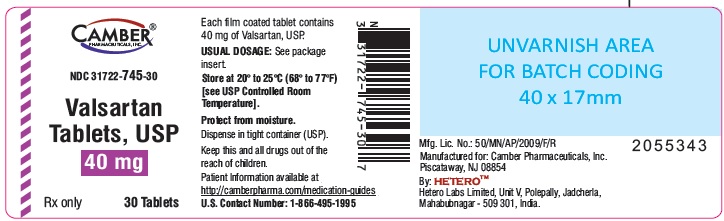
PACKAGE LABEL.PRINCIPAL DISPLAY PANEL 40 mg Valsartan Tablets USP, 40 mg - 30s count valtab40mg30scount
PACKAGE LABEL.PRINCIPAL DISPLAY PANEL 80 mg Valsartan Tablets USP, 80 mg - 30s count valtab80mg90scount
PACKAGE LABEL.PRINCIPAL DISPLAY PANEL 160 mg Valsartan Tablets USP, 160 mg - 30s count valtab160mg90scount
PACKAGE LABEL.PRINCIPAL DISPLAY PANEL 320 mg Valsartan Tablets USP, 320 mg - 30s valtab320mg90scount