
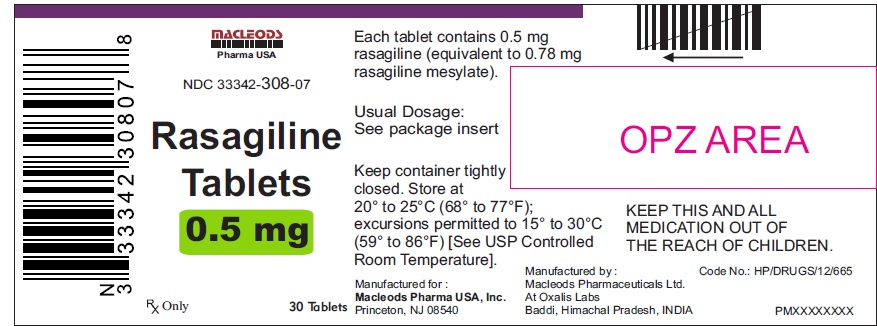
Rasagiline .5 mg Tablet, 30-count — NDC 33342-308-07 (Billing 33342-0308-07)
This is a package of 30 tablets of Rasagiline .5 mg Tablet from Macleods Pharmaceuticals Limited, marketed since Jun 2024 and currently FDA-listed; retail pharmacies pay about $0.5209 per tablet (NADAC). It is this product's only package size.
NDC database record
One package, one record: these facts belong to NDC 33342-308-07 alone.
- Record
- FDA NDC Directory package listing · Human prescription drug
- Code segments
- 33342 labeler · 308 product · 07 package
- Package marketed since
- Jun 29, 2024
- Sample package
- No — commercial package
- Listing certified through
- Dec 31, 2026
- Billing quantity
- 30 EA per package
- Barcode (UPC)
- 0333342309075, 0333342308078
- FDA record last changed
- Jul 24, 2026
Identity & classification
Regulatory identifiers FDA, NLM and CMS codes for this package
Drug-database identifiers Medi-Span GPI and First Databank GCN / HICL / AHFS classification
- GSN (GCN sequence number): 060915
- GCN: 27081
- GPI-14 (Medi-Span): 73300025200320
- HICL (First Databank): 032911
- AHFS class code: 28:16.04.12
- RxCUI (RxNorm): 608328
Where does this data come from?
- FDA openFDA NDC Directory · synced Oct 8, 2026
- FDA label on DailyMed · label index refreshed Oct 6, 2026
- RxNorm (NLM RxNav) · catalog refreshed Oct 1, 2026
- Medi-Span GPI (licensed)
- First Databank (licensed) · refreshed Oct 8, 2026
RxNorm drug class
This medicine belongs to the Monoamine Oxidase Inhibitor class.
Where does this data come from?
- RxClass (NLM) · catalog refreshed Oct 1, 2026
Clinical
Rasagiline is used alone or in combination with another medication to treat the symptoms of Parkinson's disease (a slowly progressing disease of the nervous system causing a fixed face without expression, tremor at rest, slowing of movements, walking with shuffling steps, stooped posture and muscle weakness). Rasagiline is in a class of medications called monoamine oxidase (MAO) type B inhibitors. It works by increasing the amounts of certain natural substances in the brain.
Read the full MedlinePlus article ↗- It treats Parkinson’s disease. Your doctor may prescribe it alone or along with other Parkinson’s medicines such as levodopa.
- You take one tablet by mouth once a day, with or without food. Follow your prescriber’s directions and do not take more than prescribed, since higher doses raise the risk of high b...
- You don’t need a strict diet at recommended doses. But avoid foods with very large amounts of tyramine, like aged cheeses such as Stilton, because they can cause a dangerous blood...
- Always ask me first. Some cough medicines with dextromethorphan, tramadol, meperidine, methadone, St. John’s wort, cyclobenzaprine, and other MAO inhibitors must not be used with i...
Patient education
Supplement & herbal interactions
Some supplements/herbs that may interact with Rasagiline — tap one for details:
Where does this data come from?
- MedlinePlus (NLM) · refreshed Oct 1, 2026
- FDA label on DailyMed · label index refreshed Oct 6, 2026
Ask a licensed pharmacist directly — free, answered by our team.
Pricing
A drug doesn't have one price. Each row is a different public payment system, and none is what you'd pay at the counter — that depends on your insurance. The ⓘ on each row explains what it measures.
| Price system | Per ea | Per package |
|---|---|---|
| Retail pharmacies payNADAC · weekly | $0.521 | $15.63 / 30 tablets |
| Medicaid paysCMS SDUD · 12 mo | No recent Medicaid claims on file for this NDC — rare and low-volume NDCs are suppressed in the public data. | |
| Medicare drug plans payPart D · Q2 2026 | $1.84 | $55.08 / 30 tablets |
Where does this data come from?
- CMS NADAC weekly file · file of Oct 7, 2026
- CMS ASP pricing files · refreshed Sep 20, 2026
- CMS Medicaid State Drug Utilization Data · refreshed Oct 8, 2026
- CMS Part D plan pricing files · refreshed Sep 24, 2026
- VA National Acquisition Center price file
Packaging — all sizes for this product
| Package NDC | Description | Marketing start | Marketing end | Status |
|---|---|---|---|---|
| 33342-0308-07 You're viewing this Main listing | 30 TABLET in 1 BOTTLE | 2024-06-29 | — | Active |
Therapeutic equivalents
| Product | Labeler | Pack | NADAC/unit | TE | Status | Price vs. this |
|---|---|---|---|---|---|---|
| Rasagiline .5 mg 00093-3060-56 | Teva | 30 tablets | $0.521 | AB | Availability likely | — |
| Rasagiline .5 mg 16714-0770-01 | NorthStar | 30 tablets | $0.521 | AB | Availability likely | — |
| Rasagiline mesylate .5 mg 23155-0746-03 | Avet | 30 tablets | $0.521 | AB | Discontinued | — |
| Rasagiline .5 mgthis 33342-0308-07 | Macleods | 30 tablets | $0.521 | AB | Availability likely | — |
| Rasagiline .5 mg 47781-0683-30 | Alvogen, | 30 tablets | $0.521 | AB | Availability likely | — |
| Rasagiline .5 mg 62135-0676-30 | Chartwell | 30 tablets | $0.521 | AB | Availability likely | — |
| Rasagiline .5 mg 64980-0711-30 | Rising | 30 tablets | $0.521 | AB | Availability likely | — |
| Rasagiline .5 mg 67877-0259-30 | Ascend | 30 tablets | $0.521 | AB | Availability likely | — |
| Rasagiline mesylate .5 mg 71921-0407-33 | Florida | 30 tablets | $0.521 | AB | Availability likely | — |
| Azilect .5 mg 68546-0142-56 | Teva | 30 tablets | $44.046 | AB | Availability likely | +8357% |
| Rasagiline .5 mg 13668-0447-05 | Torrent | 500 tablets | — | AB | FDA listed | — |
| Rasagiline .5 mg 42571-0220-05 | Micro | 500 tablets | — | AB | FDA listed | — |
| Rasagiline .5 mg 51407-0008-30 | Golden | 30 tablets | — | AB | FDA listed | — |
| Rasagiline .5 mg 80005-0141-08 | Carnegie | 30 tablets | — | AB | FDA listed | — |
| Rasagiline .5 mg 83085-0007-10 | SKG | 1000 tablets | — | AB | FDA listed | — |
| Rasagiline .5 mg 70518-4683-00 | REMEDYREPACK | 50 tablets | — | AB | FDA listed | — |
Where does this data come from?
- FDA openFDA NDC Directory · synced Oct 8, 2026
- FDA Orange Book · refreshed Oct 3, 2026
- CMS NADAC weekly file · file of Oct 7, 2026
Availability & generic status
This product is an FDA-approved generic. Other versions of the same drug are listed under Therapeutic equivalents, least expensive first.
Where does this data come from?
- FDA Orange Book · refreshed Oct 3, 2026
What it looks like
Where does this data come from?
- FDA label on DailyMed · label index refreshed Oct 6, 2026
Inactive Ingredients / Excipients
Inactive ingredients, also called excipients, are components of the drug product other than the active ingredient. They may include fillers, dyes, coatings, preservatives, flavors, or other formulation ingredients.
🧪 Avoiding an ingredient? See Rasagiline inactive ingredients by manufacturer: every current product's list side by side, so you can ask your pharmacy for the version that does not list it.
💡 Tap an ingredient (hover on desktop) to see what it is and why it’s used.
-
UNII XF417D3PSL
Anhydrous citric acid is a sour, crystalline powder derived from citric acid with water removed. In medicines, it acts as a buffer to control pH, adds tartness to improve taste, and helps tablets disintegrate.
-
UNII OP1R32D61U
Microcrystalline cellulose is a purified form of cellulose, a natural fiber from plant sources. It acts as a binder and filler in tablets and capsules, helping hold ingredients together and give the medicine its shape and size.
-
UNII ETJ7Z6XBU4
Silicon dioxide is a naturally occurring mineral used as a glidant and anti-caking agent. It helps powder ingredients flow smoothly and prevents clumping during manufacturing and storage.
-
UNII O8232NY3SJ
A plant-based carbohydrate derived from corn kernels. It acts as a filler to add bulk, a binder to hold ingredients together, and a disintegrant to help the tablet break apart in your stomach for absorption.
-
UNII 4ELV7Z65AP
Stearic acid is a fatty acid derived from plant or animal sources. It acts as a binder and lubricant in tablets and capsules, helping them hold together and flow smoothly during manufacturing.
-
UNII 7SEV7J4R1U
A powder made from a naturally occurring mineral. In medicines, talc works as a glidant and anti-caking agent, helping tablets and capsules flow smoothly during manufacturing and preventing clumping.
6 inactive ingredients listed in the exact product block matched to this NDC.
Where does this data come from?
ingredient classCode="IACT" elements from the exact product block matched by this NDC. Label-section narrative from DailyMed / the openFDA label index is shown separately when available.- FDA label on DailyMed · label index refreshed Oct 6, 2026
- FDA openFDA NDC Directory · synced Oct 8, 2026
Inactive ingredient FAQ
Are inactive ingredients the same for every manufacturer?
Why might an inactive ingredient be missing?
Can inactive ingredients matter?
Manufacturer & labeler
More NDCs from Macleods Pharmaceuticals Limited labeler code 33342
- Lacosamide 50 mg Tablet, Film Coated NDC 33342-302-09
- Lacosamide 100 mg Tablet, Film Coated NDC 33342-303-09
- Lacosamide 150 mg Tablet, Film Coated NDC 33342-304-09
- Lacosamide 200 mg Tablet, Film Coated NDC 33342-305-09
- esomeprazole 20 mg Capsule, Delayed Release NDC 33342-306-07
- esomeprazole 40 mg Capsule, Delayed Release NDC 33342-307-07
- Rasagiline 1 mg Tablet NDC 33342-309-07
- Lansoprazole 15 mg Capsule, Delayed Release NDC 33342-310-07
- Lansoprazole 30 mg Capsule, Delayed Release NDC 33342-311-07
- Memantine and Donepezil 14 mg; 10 mg Capsule, Extended Release NDC 33342-312-07
- Memantine and Donepezil 28 mg; 10 mg Capsule, Extended Release NDC 33342-313-07
- Propylthiouracil 50 mg Tablet NDC 33342-314-11
Where does this data come from?
- FDA openFDA NDC Directory · synced Oct 8, 2026
- Drugs@FDA
Full prescribing information FDA SPL
🎯 Indications and Usage ▾
1 INDICATIONS & USAGE Rasagiline tablets are indicated for the treatment of Parkinson's disease (PD). Rasagiline tablets, a monoamine oxidase (MAO)-B inhibitor (MAOI), is indicated for the treatment of Parkinson's disease
⏱️ Dosage and Administration ▾
2 DOSAGE & ADMINISTRATION • Monotherapy: Rasagiline tablets 1 mg once daily ( 2.1 ) • As adjunct without levodopa: Rasagiline tablets 1 mg once daily (2.1) • As adjunct to levodopa: Rasagiline tablets 0.5 mg once daily. Increase dose to 1 mg daily as needed for sufficient clinical response ( 2.1 ) • Patients taking ciprofloxacin or other CYP1A2 inhibitors: Rasagiline tablets 0.5 mg once daily ( 2.2 , 5.4 ) • Patients with mild hepatic impairment: Rasagiline tablets 0.5 mg once daily. Rasagiline tablets should not be used in patients with moderate or severe hepatic impairment ( 2.3 , 5.5 )
2.1General Dosing Recommendations When rasagiline tablets are prescribed as monotherapy or as adjunct therapy in patients not taking levodopa, patients may start rasagiline tablets at the recommended dose of 1 mg administered orally once daily. In patients taking levodopa, with or without other PD drugs (e.g., dopamine agonist, amantadine, anticholinergics) the recommended initial dose of rasagiline tablets is 0.5 mg once daily. If the patient tolerates the daily 0.5 mg dose, but a sufficient clinical response is not achieved, the dose may be increased to 1 mg once daily.
When rasagiline tablets are used in combination with levodopa, a reduction of the levodopa dose may be considered, based upon individual response. The recommended doses of rasagiline tablets should not be exceeded because of risk of hypertension [see Warnings and Precautions ( 5.1 )].
2.2Patients Taking Ciprofloxacin or Other CYP1A2 Inhibitors Patients taking concomitant ciprofloxacin or other CYP1A2 inhibitors should not exceed a dose of rasagiline tablets 0.5 mg once daily [see Warnings and Precautions ( 5.4 ), Drug Interactions ( 7.6 ), and Clinical Pharmacology ( 12.3 ].
2.3Patients with Hepatic Impairment Patients with mild hepatic impairment should not exceed a dose of rasagiline tablets 0.5 mg once daily. Rasagiline tablets should not be used in patients with moderate or severe hepatic impairment [see Warnings and Precautions ( 5.5 ), Use in Specific Populations ( 8.6 ), and Clinical Pharmacology ( 12.3 )].
💊 Dosage Forms and Strengths ▾
3 DOSAGE FORMS & STRENGTHS Rasagiline 0.5 mg Tablets: White to off-white, round, flat, beveled tablets, debossed with "C12" on one side and plain on the other side. Rasagiline 1 mg Tablets: White to off-white, round, flat, beveled tablets, debossed with "C13" on one side and plain on the other side. • Rasagiline Tablets 0.5 mg tablets ( 3 ) • Rasagiline Tablets 1 mg tablets ( 3 )
⛔ Contraindications ▾
4 CONTRAINDICATIONS Rasagiline Tablets are contraindicated for use with meperidine, tramadol, methadone, propoxyphene and MAO inhibitors (MAOIs), including other selective MAO-B inhibitors, because of risk of serotonin syndrome [See Warnings and Precautions ( 5.2 )]. At least 14 days should elapse between discontinuation of rasagiline tablets and initiation of treatment with these medications. Rasagiline Tablets are contraindicated for use with St.
John's wort and with cyclobenzaprine. Rasagiline Tablets are contraindicated for use with dextromethorphan because of risk of episode of psychosis or bizarre behavior. Concomitant use of meperidine, tramadol, methadone, propoxyphene dextromethorphan, St.
John's wort, cyclobenzaprine, or another (selective or non-selective) MAO inhibitor ( 4 )
⚠️ Warnings and Cautions ▾
5 WARNINGS AND PRECAUTIONS • May cause hypertension (including severe hypertensive syndromes) at recommended doses ( 5.1 ) • May cause serotonin syndrome when used with antidepressants ( 5.2 ) • May cause falling asleep during activities of daily living, daytime drowsiness, and somnolence ( 5.3 ) • May cause hypotension, especially orthostatic ( 5.6 ) • May cause or exacerbate dyskinesia. Decreasing the levodopa dose may lessen or eliminate this side effect ( 5.7 ) • May cause hallucinations and psychotic-like behavior ( 5.8 ) • May cause impulse control/compulsive behaviors ( 5.9 ) • May cause withdrawal-emergent hyperpyrexia and confusion ( 5.10 )
5.1Hypertension Exacerbation of hypertension may occur during treatment with rasagiline tablets. Medication adjustment may be necessary if elevation of blood pressure is sustained. Monitor patients for new onset hypertension or hypertension that is not adequately controlled after starting rasagiline tablets.
In Study 3, rasagiline tablets (1 mg/day) given in conjunction with levodopa, produced an increased incidence of significant blood pressure elevation (systolic > 180 or diastolic > 100 mm Hg) of 4% compared to 3% for placebo [see Adverse Reactions ( 6.1 )]. When used as an adjunct to levodopa (Studies 3 and 4), the risk for developing post-treatment high blood pressure (e.g., systolic > 180 or diastolic >100 mm Hg) combined with a significant increase from baseline (e.g., systolic > 30 or diastolic > 20 mm Hg) was higher for rasagiline tablets (2%) compared to placebo (1%).
Dietary tyramine restriction is not required during treatment with recommended doses of rasagiline tablets. However, certain foods that may contain very high amounts (i.e., more than 150 mg) of tyramine that could potentially cause severe hypertension because of tyramine interaction (including various clinical syndromes referred to as hypertensive urgency, crisis, or emergency) in patients taking rasagiline tablets, even at the recommended doses, due to increased sensitivity to tyramine. Patients should be advised to avoid foods containing a very large amount of tyramine while taking recommended doses of rasagiline tablets because of the potential for large increases in blood pressure including clinical syndromes referred to as hypertensive urgency, crisis, or emergency.
Rasagiline tablets are a selective inhibitor of MAO-B at the recommended doses of 0.5 or 1 mg daily. Selectivity for inhibiting MAO-B diminishes in a dose-related manner as the dose is progressively increased above the recommended daily doses.
5.2Serotonin Syndrome Serotonin syndrome has been reported with concomitant use of an antidepressant (e.g., selective serotonin reuptake inhibitors-SSRIs, serotonin-norepinephrine reuptake inhibitors-SNRIs, tricyclic antidepressants, tetracyclic antidepressants, triazolopyridine antidepressants) and a nonselective MAOI (e.g., phenelzine, tranylcypromine) or selective MAO-B inhibitors, such as selegiline (Eldepryl) and rasagiline tablets. Serotonin syndrome has also been reported with concomitant use of rasagiline tablets with meperidine, tramadol, methadone, or propoxyphene.
Rasagiline tablets are contraindicated for use with meperidine, tramadol, methadone, propoxyphene and MAO inhibitors (MAOIs), including other selective MAO-B inhibitors [see Contraindications ( 4 ) and Drug Interactions ( 7.1 , 7.2 , 7.3 )]. In the postmarketing period, potentially life- threatening serotonin syndrome has been reported in patients treated with antidepressants concomitantly with rasagiline tablets. Concomitant use of rasagiline tablets with one of many classes of antidepressants (e.g., SSRIs, SNRIs, triazolopyridine, tricyclic or tetracyclic antidepressants) is not recommended [see Drug Interactions ( 7.5 )].
The symptoms of serotonin syndrome have included behavioral and cognitive/mental status changes (e.g., confusion, hypomania, hallucinations, agitation, delirium, headache, and coma), autonomic effects (e.g.,… [Excerpted — this section continues on DailyMed.]
🤒 Adverse Reactions ▾
6 ADVERSE REACTIONS The following adverse reactions are described in more detail in the Warnings and Precautions section of the label: • Hypertension [see Warnings and Precautions ( 5.1 )] • Serotonin Syndrome [see Warnings and Precautions ( 5.2 )] • Falling Asleep During Activities of Daily Living and Somnolence [see Warnings and Precautions ( 5.3 )] • Hypotension / Orthostatic Hypotension [see Warnings and Precautions ( 5.6 )] • Dyskinesia [see Warnings and Precautions ( 5.7 )] • Hallucinations / Psychotic-Like Behavior [see Warnings and Precautions ( 5.8 )] • Impulse Control /Compulsive Behaviors [see Warnings and Precautions ( 5.9 )] • Withdrawal-Emergent Hyperpyrexia and Confusion [see Warnings and Precautions ( 5.10 )] Most common adverse reactions (incidence 3% or greater than placebo): • Rasagiline tablets monotherapy: flu syndrome, arthralgia, depression, dyspepsia ( 6.1 ) • Rasagiline tablets used as adjunct without levodopa: peripheral edema, fall, arthralgia, cough, and insomnia ( 6.1 ) • Rasagiline tablets used as adjunct to levodopa: dyskinesia, accidental injury, weight loss, postural hypotension, vomiting, anorexia, arthralgia, abdominal pain, nausea, constipation, dry mouth, rash, abnormal dreams, fall, and tenosynovitis ( 6.1 ) To report SUSPECTED ADVERSE REACTIONS, contact Macleods Pharma USA, Inc., at 1-888-943-3210 or 1-855-926-3384 or FDA at 1-800-FDA-1088 or www.fda.gov/medwatch
6.1Clinical Trials Experience Because clinical trials are conducted under widely varying conditions, adverse reaction rates observed in the clinical trials of a drug cannot be directly compared to the incidence of adverse reactions in the clinical trials of another drug and may not reflect the rates of adverse reactions observed in practice. During the clinical development of rasagiline tablets, Parkinson’s disease patients received rasagiline tablets as initial monotherapy (Study 1) and as adjunct therapy (Study 2, Study 3, Study 4).
As the populations in these studies differ, not only in the adjunct use of dopamine agonists or levodopa during rasagiline tablets treatment, but also in the severity and duration of their disease, the adverse reactions are presented separately for each study. Monotherapy Use of Rasagiline Tablets In Study 1, approximately 5% of the 149 patients treated with rasagiline tablets discontinued treatment due to adverse reactions compared to 2% of the 151 patients who received placebo. The only adverse reaction that led to the discontinuation of more than one patient was hallucinations.
The most commonly observed adverse reactions in Study 1 (incidence in rasagiline tablets -treated patients 3% or greater than the incidence in placebo-treated patients) included flu syndrome, arthralgia, depression, and dyspepsia. Table 1 lists adverse reactions that occurred in 2% or greater of patients receiving rasagiline tablets as monotherapy and were numerically more frequent than in the placebo group in Study 1. Table 1: Adverse Reactions* in Study 1 Rasagiline Tablets 1 mg (N=149) Placebo (N=151) % of Patients % of Patients Headache 14 12 Arthralgia 7 4 Dyspepsia 7 4 Depression 5 2 Fall 5 3 Flu syndrome 5 1 Conjunctivitis 3 1 Fever 3 1 Gastroenteritis 3 1 Rhinitis 3 1 Arthritis 2 1 Ecchymosis 2 0 Malaise 2 0 Neck Pain 2 0 Paresthesia 2 1 Vertigo 2 1 *Incidence 2% or greater in rasagiline tablets 1 mg group and numerically more frequent than in placebo group There were no significant differences in the safety profile based on age or gender.
Adjunct Use of Rasagiline Tablets Rasagiline tablets were studied as an adjunct therapy without levodopa (Study 2), or as an adjunct therapy to levodopa, with some patients also taking dopamine agonists, COMT inhibitors, anticholinergics, or amantadine (Study 3 and Study 4). In Study 2, approximately 8% of the 162 patients treated with rasagiline tablets discontinued treatment due to adverse reactions compared to 4% of the 164 patients who received placebo. Adverse reactions tha… [Excerpted — this section continues on DailyMed.]
🔄 Drug Interactions ▾
7 DRUG INTERACTIONS • Meperidine: Risk of serotonin syndrome ( 4 , 7.1 ) • Dextromethorphan: Risk of psychosis or bizarre behavior ( 4 , 7.2 ) • MAO inhibitors: Risk of non-selective MAO inhibition and hypertensive crisis ( 4 , 7.3 )
7.1Meperidine Serious, sometimes fatal reactions have been precipitated with concomitant use of meperidine (e.g., Demerol and other tradenames) and MAO inhibitors including selective MAO-B inhibitors [see Contraindications ( 4 )].
7.2Dextromethorphan The concomitant use of rasagiline tablets and dextromethorphan was not allowed in clinical studies. The combination of MAO inhibitors and dextromethorphan has been reported to cause brief episodes of psychosis or bizarre behavior. Therefore, in view of rasagiline's MAO inhibitory activity, dextromethorphan is contraindicated for use with rasagiline tablets [see Contraindications ( 4 )].
7.3MAO Inhibitors Rasagiline tablets are contraindicated for use with other MAO inhibitors because of the increased risk of nonselective MAO inhibition that may lead to a hypertensive crisis [see Contraindications ( 4 ) ].
7.4Sympathomimetic Medications The concomitant use of rasagiline tablets and sympathomimetic medications was not allowed in clinical studies. Severe hypertensive reactions have followed the administration of sympathomimetics and nonselective MAO inhibitors. Hypertensive crisis has been reported in patients taking the recommended dose of rasagiline tablets and sympathomimetic medications.
Severe hypertension has been reported in patients taking the recommended dose of rasagiline tablets and ophthalmic drops containing sympathomimetic medications. Because rasagiline tablets are a selective MAOI, hypertensive reactions are not ordinarily expected with the concomitant use of sympathomimetic medications. Nevertheless, caution should be exercised when concomitantly using recommended doses of rasagiline tablets with any sympathomimetic medications including nasal, oral, and ophthalmic decongestants and cold remedies.
7.5Antidepressants Concomitant use of rasagiline tablets with one of many classes of antidepressants (e.g., SSRIs, SNRIs, triazolopyridine, tricyclic or tetracyclic antidepressants) is not recommended [see Warnings and Precautions ( 5.2 ) and Clinical Pharmacology ( 12.3 )]. Concomitant use of rasagiline tablets and MAO inhibitors is contraindicated [ see Contraindications ( 4 )].
7.6Ciprofloxacin or Other CYP1A2 Inhibitors Rasagiline plasma concentrations may increase up to 2 fold in patients using concomitant ciprofloxacin and other CYP1A2 inhibitors. This could result in increased adverse events. Patients taking concomitant ciprofloxacin or other CYP1A2 inhibitors should not exceed a dose of rasagiline tablets 0.5 mg once daily [see Warnings and Precautions ( 5.4 ) and Clinical Pharmacology ( 12.3 )].
7.7Tyramine/Rasagiline Interaction MAO in the gastrointestinal tract and liver (primarily type A) provides protection from exogenous amines (e.g., tyramine) that have the capacity, if absorbed intact, to cause a tyramine reaction with hypertension including clinical syndromes referred to as hypertensive urgency, crisis, or emergency. Foods and medications containing large amounts of exogenous amines (e.g., from fermented cheese, herring, over-the-counter cough/cold medications) may cause release of norepinephrine resulting in a rise in systemic blood pressure.
Results of a special tyramine challenge study indicate that rasagiline is selective for MAO-B at recommended doses and can be used without dietary tyramine restriction. However, certain foods may contain very high amounts (i.e., 150 mg or greater) of tyramine and could potentially cause a hypertensive reaction in individual patients taking rasagiline tablets due to increased sensitivity to tyramine. Selectivity for inhibiting MAO-B diminishes in a dose-related manner as the dose is progressively increased above the recommended daily doses.
There were no cases of hypertensive crisis… [Excerpted — this section continues on DailyMed.]
👥 Use in Specific Populations ▾
8 USE IN SPECIFIC POPULATIONS •Pregnancy: Based on animal data, may cause fetal harm. ( 8.1 )
8.1Pregnancy Risk Summary There are no adequate data on the developmental risks associated with the use of rasagiline tablets in pregnant women. In animal studies, oral administration of rasagiline to rats during gestation and lactation resulted in decreased survival and reduced body weight in the offspring at doses similar to those used clinically. When administered to pregnant animals in combination with levodopa/carbidopa, there were increased incidences of fetal skeletal variations in rats and increases in embryofetal death and cardiovascular abnormalities in rabbits [see Data].
In the US general population, the estimated background risk of major birth defects and miscarriage in clinically recognized pregnancies is 2% to 4% and 15% to 20%, respectively. The background risks of major birth defects and miscarriage for the indicated population is unknown. Data Animal Data In a combined mating/fertility and embryofetal development study in pregnant rats, no effect on embryo-fetal development was observed at oral doses up to 3 mg/kg/day (approximately 30 times the plasma exposure (AUC) in humans at the maximum recommended human dose [MRHD, 1 mg/day]).
In pregnant rabbits administered rasagiline throughout the period of organogenesis at oral doses of up to 36 mg/kg/day, no developmental toxicity was observed. At the highest dose tested, the plasma AUC was approximately 800 times that in humans at the MRHD. In pregnant rats administered rasagiline (0, 0.1, 0.3, 1 mg/kg/day) orally during gestation and lactation, offspring survival was decreased and offspring body weight was reduced at 0.3 mg/kg/day and 1 mg/kg/day (10 and 16 times the plasma AUC in humans at the MRHD).
The no-effect dose (0.1 mg/kg) for adverse developmental effects is similar to the MRHD on a body surface area (mg/m2) basis. The effect of rasagiline on physical and behavioral development was not adequately assessed in this study. Rasagiline may be given as an adjunct therapy to levodopa/carbidopa treatment.
In pregnant rats administered rasagiline (0, 0.1, 0.3, 1 mg/kg/day) and levodopa/carbidopa (80/20 mg/kg/day)(alone and in combination orally throughout the period of organogenesis, there was an increased incidence of fetal skeletal variations in fetuses from rats treated with rasagiline in combination with levodopa/carbidopa at 1/80/20 mg/kg/day (approximately 8 times the rasagiline plasma AUC in humans at the MRHD and similar to the MRHD of levodopa/carbidopa [800/200 mg/day] on a mg/m2 basis). In pregnant rabbits dosed orally throughout the period of organogenesis with rasagiline alone (3 mg/kg) or in combination with levodopa/carbidopa (rasagiline: 0.1, 0.6, 1.2 mg/kg, levodopa/carbidopa: 80/20 mg/kg/day), an increase in embryofetal death was noted at rasagiline doses of 0.6 and 1.2 mg/kg/day when administered in combination with levodopa/carbidopa (approximately 7 and 13 times, respectively, the rasagiline plasma AUC in humans at the MRHD).
There was an increase in cardiovascular abnormalities with levodopa/carbidopa alone (similar to the MRHD on a mg/m2 basis) and to a greater extent when rasagiline(at all doses; 1-13 times the rasagiline plasma AUC in humans at the MRHD)was administered in combination with levodopa/carbidopa.
8.2Lactation Risk Summary There are no data on the presence of rasagiline in human milk or the effects on the breastfed infant. In rats, rasagiline was shown to inhibit prolactin secretion. The clinical relevance in humans is unknown, and there are no data on the effects of rasagiline on prolactin secretion or milk production in humans.
The developmental and health benefits of breastfeeding should be considered along with the mother’s clinical need for rasagiline tablets and any potential adverse effects on the breastfed infant from rasagiline tablets or from the underlying maternal condition.
8.4Pediatric Use The safety and effectivene… [Excerpted — this section continues on DailyMed.]
🤰 Pregnancy ▾
8.1Pregnancy Risk Summary There are no adequate data on the developmental risks associated with the use of rasagiline tablets in pregnant women. In animal studies, oral administration of rasagiline to rats during gestation and lactation resulted in decreased survival and reduced body weight in the offspring at doses similar to those used clinically. When administered to pregnant animals in combination with levodopa/carbidopa, there were increased incidences of fetal skeletal variations in rats and increases in embryofetal death and cardiovascular abnormalities in rabbits [see Data].
In the US general population, the estimated background risk of major birth defects and miscarriage in clinically recognized pregnancies is 2% to 4% and 15% to 20%, respectively. The background risks of major birth defects and miscarriage for the indicated population is unknown. Data Animal Data In a combined mating/fertility and embryofetal development study in pregnant rats, no effect on embryo-fetal development was observed at oral doses up to 3 mg/kg/day (approximately 30 times the plasma exposure (AUC) in humans at the maximum recommended human dose [MRHD, 1 mg/day]).
In pregnant rabbits administered rasagiline throughout the period of organogenesis at oral doses of up to 36 mg/kg/day, no developmental toxicity was observed. At the highest dose tested, the plasma AUC was approximately 800 times that in humans at the MRHD. In pregnant rats administered rasagiline (0, 0.1, 0.3, 1 mg/kg/day) orally during gestation and lactation, offspring survival was decreased and offspring body weight was reduced at 0.3 mg/kg/day and 1 mg/kg/day (10 and 16 times the plasma AUC in humans at the MRHD).
The no-effect dose (0.1 mg/kg) for adverse developmental effects is similar to the MRHD on a body surface area (mg/m2) basis. The effect of rasagiline on physical and behavioral development was not adequately assessed in this study. Rasagiline may be given as an adjunct therapy to levodopa/carbidopa treatment.
In pregnant rats administered rasagiline (0, 0.1, 0.3, 1 mg/kg/day) and levodopa/carbidopa (80/20 mg/kg/day)(alone and in combination orally throughout the period of organogenesis, there was an increased incidence of fetal skeletal variations in fetuses from rats treated with rasagiline in combination with levodopa/carbidopa at 1/80/20 mg/kg/day (approximately 8 times the rasagiline plasma AUC in humans at the MRHD and similar to the MRHD of levodopa/carbidopa [800/200 mg/day] on a mg/m2 basis). In pregnant rabbits dosed orally throughout the period of organogenesis with rasagiline alone (3 mg/kg) or in combination with levodopa/carbidopa (rasagiline: 0.1, 0.6, 1.2 mg/kg, levodopa/carbidopa: 80/20 mg/kg/day), an increase in embryofetal death was noted at rasagiline doses of 0.6 and 1.2 mg/kg/day when administered in combination with levodopa/carbidopa (approximately 7 and 13 times, respectively, the rasagiline plasma AUC in humans at the MRHD).
There was an increase in cardiovascular abnormalities with levodopa/carbidopa alone (similar to the MRHD on a mg/m2 basis) and to a greater extent when rasagiline(at all doses; 1-13 times the rasagiline plasma AUC in humans at the MRHD)was administered in combination with levodopa/carbidopa.
🧒 Pediatric Use ▾
8.4Pediatric Use The safety and effectiveness in pediatric patients have not been established.
🧓 Geriatric Use ▾
8.5Geriatric Use Approximately half of patients in clinical trials were 65 years and over. There were no significant differences in the safety profile of the geriatric and nongeriatric patients.
🆘 Overdosage ▾
10 OVERDOSAGE In a dose escalation study in patients on chronic levodopa therapy treated with 10 mg of rasagiline tablets there were three reports of cardiovascular side effects (including hypertension and postural hypotension) which resolved following treatment discontinuation. Although no cases of overdose have been observed with rasagiline tablets during the clinical development program, the following description of presenting symptoms and clinical course is based upon overdose descriptions of nonselective MAO inhibitors.
The signs and symptoms of nonselective MAOI overdose may not appear immediately. Delays of up to 12 hours after ingestion of drug and the appearance of signs may occur. The peak intensity of the syndrome may not be reached until for a day following the overdose.
Death has been reported following overdose; therefore, immediate hospitalization, with continuous patient observation and monitoring for at least two days following the ingestion of such drugs in overdose, is strongly recommended. The severity of the clinical signs and symptoms of MAOI overdose varies and may be related to the amount of drug consumed. The central nervous and cardiovascular systems are prominently involved.
Signs and symptoms of MAOI overdose may include: drowsiness, dizziness, faintness, irritability, hyperactivity, agitation, severe headache, hallucinations, trismus, opisthotonos, convulsions, and coma; rapid and irregular pulse, hypertension, hypotension and vascular collapse; precordial pain, respiratory depression and failure, hyperpyrexia, diaphoresis, and cool, clammy skin. There is no specific antidote for rasagiline tablets overdose. The following suggestions are offered based upon the assumption that rasagiline tablets overdose may be modeled after nonselective MAO inhibitor poisoning.
Treatment of overdose with nonselective MAO inhibitors is symptomatic and supportive. Respiration should be supported by appropriate measures, including management of the airway, use of supplemental oxygen, and mechanical ventilatory assistance, as required. Body temperature should be monitored closely.
Intensive management of hyperpyrexia may be required. Maintenance of fluid and electrolyte balance is essential. For this reason, in cases of overdose with rasagiline tablets, dietary tyramine restriction should be observed for several weeks to reduce the risk of hypertensive tyramine reaction.
A poison control center should be called for the most current treatment guidelines. A postmarketing report described a single patient who developed a nonfatal serotonin syndrome after ingesting 100 mg of rasagiline tablets in a suicide attempt. Another patient who was treated in error with 4 mg rasagiline tablets daily and tramadol also developed a serotonin syndrome.
One patient who was treated in error with 3 mg rasagiline tablets daily experienced alternating episodes of vascular fluctuations consisting of hypertension and orthostatic hypotension.
🧬 Clinical Pharmacology ▾
12 CLINICAL PHARMACOLOGY
12.1Mechanism of Action Rasagiline tablets are a selective, irreversible MAO-B inhibitor indicated for the treatment of idiopathic Parkinson’s disease. The results of a clinical trial designed to examine the effects of rasagiline tablets on blood pressure when it is administered with increasing doses of tyramine indicates the functional selectivity can be incomplete when healthy subjects ingest large amounts of tyramine while receiving recommended doses of rasagiline tablets. The selectivity for inhibiting MAO-B diminishes in a dose-related manner.
MAO, a flavin-containing enzyme, is classified into two major molecular species, A and B, and is localized in mitochondrial membranes throughout the body in nerve terminals, brain, liver and intestinal mucosa. MAO regulates the metabolic degradation of catecholamines and serotonin in the CNS and peripheral tissues. MAO-B is the major form in the human brain.
In ex vivo animal studies in brain, liver, and intestinal tissues, rasagiline was shown to be a potent, irreversible monoamine oxidase type B (MAO-B) selective inhibitor. Rasagiline at the recommended therapeutic dose was also shown to be a potent and irreversible inhibitor of MAO-B in platelets. The precise mechanisms of action of rasagiline are unknown.
One mechanism is believed to be related to its MAO-B inhibitory activity, which causes an increase in extracellular levels of dopamine in the striatum. The elevated dopamine level and subsequent increased dopaminergic activity are likely to mediate rasagiline's beneficial effects seen in models of dopaminergic motor dysfunction.
12.2Pharmacodynamics Tyramine Challenge Test Results of a tyramine challenge study indicate that rasagiline at recommended doses is relatively selective for inhibiting MAO-B and can be used without dietary tyramine restriction. However, certain foods (e.g., aged cheeses, such as Stilton cheese) may contain very high amounts of tyramine (i.e., 150 mg or greater) and could potentially cause severe hypertension caused by tyramine interaction in patients taking rasagiline tablets due to mild increased sensitivity to tyramine at recommended doses.
Relative selectivity of rasagiline tablets for inhibiting MAO-B diminished in a dose-related manner as the dose progressively increased above the highest recommended daily dose (1 mg) [see Warnings and Precautions ( 5.1 ) and Drug Interactions ( 7.7 )]. Platelet MAO Activity in Clinical Studies Studies in healthy subjects and in Parkinson’s disease patients have shown that rasagiline inhibits platelet MAO-B irreversibly. The inhibition lasts at least 1 week after last dose.
Almost 25-35% MAO-B inhibition was achieved after a single rasagiline dose of 1 mg/day and more than 55% of MAO-B inhibition was achieved after a single rasagiline dose of 2 mg/day. Over 90% inhibition was achieved 3 days after rasagiline daily dosing at 2 mg/day and this inhibition level was maintained 3 days postdose. Multiple doses of rasagiline of 0.5, 1 and 2 mg per day resulted in complete MAO-B inhibition.
12.3Pharmacokinetics Rasagiline in the range of 1 mg to 6 mg demonstrated a more than proportional increase in AUC, while C max was dose proportional. Rasagiline mean steady-state half life is 3 hours but there is no correlation of pharmacokinetics with its pharmacological effect because of its irreversible inhibition of MAO-B. Absorption Rasagiline is rapidly absorbed, reaching peak plasma concentration (C max ) in approximately 1 hour.
The absolute bioavailability of rasagiline is about 36%. Food does not affect the T max of rasagiline, although C max and exposure (AUC) are decreased by approximately 60% and 20%, respectively, when the drug is taken with a high fat meal. Because AUC is not significantly affected, rasagiline tablets can be administered with or without food.
Distribution The mean volume of distribution at steady-state is 87 L, indicating that the tissue binding of rasagiline is in excess of p… [Excerpted — this section continues on DailyMed.]
🧬 Mechanism of Action ▾
12.1Mechanism of Action Rasagiline tablets are a selective, irreversible MAO-B inhibitor indicated for the treatment of idiopathic Parkinson’s disease. The results of a clinical trial designed to examine the effects of rasagiline tablets on blood pressure when it is administered with increasing doses of tyramine indicates the functional selectivity can be incomplete when healthy subjects ingest large amounts of tyramine while receiving recommended doses of rasagiline tablets. The selectivity for inhibiting MAO-B diminishes in a dose-related manner.
MAO, a flavin-containing enzyme, is classified into two major molecular species, A and B, and is localized in mitochondrial membranes throughout the body in nerve terminals, brain, liver and intestinal mucosa. MAO regulates the metabolic degradation of catecholamines and serotonin in the CNS and peripheral tissues. MAO-B is the major form in the human brain.
In ex vivo animal studies in brain, liver, and intestinal tissues, rasagiline was shown to be a potent, irreversible monoamine oxidase type B (MAO-B) selective inhibitor. Rasagiline at the recommended therapeutic dose was also shown to be a potent and irreversible inhibitor of MAO-B in platelets. The precise mechanisms of action of rasagiline are unknown.
One mechanism is believed to be related to its MAO-B inhibitory activity, which causes an increase in extracellular levels of dopamine in the striatum. The elevated dopamine level and subsequent increased dopaminergic activity are likely to mediate rasagiline's beneficial effects seen in models of dopaminergic motor dysfunction.
📦 How Supplied / Storage and Handling ▾
16 HOW SUPPLIED/STORAGE AND HANDLING Rasagiline is supplied as round, flat, beveled tablets, available in bottles and unit dose blister packages as follows: Each 0.5 mg tablet is white to off-white, round, flat, beveled tablets, debossed with "C12" on one side and plain on the other side and is available as follows: Bottle of 30 tablets NDC 33342-308-07 Each 1 mg tablet is white to off-white, round, flat, beveled tablets, debossed with "C13" on one side and plain on the other side and is available as follows: Bottle of 30 tablets NDC 33342-309-07 Store at 20º to 25ºC (68º to 77ºF); excursions permitted between 15º to 30ºC (59° to 86ºF) [See USP Controlled Room Temperature].
📋 Description ▾
11 DESCRIPTION Rasagiline tablets contain rasagiline (as the mesylate), a propargylamine-based drug indicated for the treatment of idiopathic Parkinson's disease. Rasagiline mesylate is designated chemically as: 1H-Inden-1-amine, 2, 3-dihydro-N-2-propynyl-,(1R)-, methanesulfonate. The empirical formula of rasagiline mesylate is C 12 H 13 N.
CH 4 SO 3 and its molecular weight is 267.34. Its structural formula is: Rasagiline mesylate is a white to off-white powder, freely soluble in water or ethanol and sparingly soluble in isopropanol. Each rasagiline tablets for oral administration contains 0.5 mg or 1 mg of rasagiline (equivalent to 0.78 mg or 1.56 mg of rasagiline mesylate).
Each rasagiline tablet also contains the following inactive ingredients: microcrystalline cellulose, corn starch, colloidal silicon dioxide, anhydrous citric acid, pregelatinized starch, talc and stearic acid. fig
💬 Information for Patients ▾
17 PATIENT COUNSELING INFORMATION Hypertension Advise patients that treatment with recommended doses of rasagiline tablets may be associated with elevations of blood pressure. Tell patients who experience elevation of blood pressure while taking rasagiline tablets to contact their healthcare provider. The risk of using higher than recommended daily doses of rasagiline tablets should be explained, and a brief description of the tyramine associated hypertensive reaction provided.
Advise patients to avoid certain foods (e.g., aged cheese) containing a very large amount of tyramine while taking recommended doses of rasagiline tablets because of the potential for large increases in blood pressure. If patients eat foods very rich in tyramine and do not feel well soon after eating, they should contact their healthcare provider [see Warnings and Precautions ( 5.1 )]. Serotonin Syndrome Tell patients to inform their physician if they are taking, or planning to take, any prescription or over-the-counter drugs, especially antidepressants and over-the-counter cold medications, since there is a potential for interaction with rasagiline tablets.
Because patients should not use meperidine or certain other analgesics with rasagiline tablets, they should contact their healthcare provider before taking analgesics [see Contraindications ( 4 ) and Warnings and Precautions ( 5.2 )]. Falling Asleep During Activities of Daily Living and Somnolence Advise and alert patients about the potential for sedating effects associated with rasagiline tablets and other dopaminergic medications, including somnolence and particularly to the possibility of falling asleep while engaged in activities of daily living.
Because somnolence can be a frequent adverse reaction with potentially serious consequences, patients should neither drive a car nor engage in other potentially dangerous activities until they have gained sufficient experience with rasagiline tablets and other dopaminergic medications to gauge whether or not it affects their mental and/or motor performance adversely. Advise patients that if increased somnolence or new episodes of falling asleep during activities of daily living (e.g., watching television, passenger in a car, etc.) are experienced at any time during treatment, they should not drive or participate in potentially dangerous activities until they have contacted their physician.
Patients should not drive, operate machinery, or work at heights during treatment if they have previously experienced somnolence and/or have fallen asleep without warning prior to use of rasagiline tablets. Because of possible additive effects, advise patients to exercise caution when patients are taking other sedating medications, alcohol, or other central nervous system depressants (e.g., benzodiazepines, antipsychotics, antidepressants) in combination with rasagiline tablets or when taking concomitant medications that increase plasma levels of rasagiline (e.g., ciprofloxacin)[ see Warnings and Precautions (5.3)].
Ciprofloxacin or Other CYP1A2 Inhibitors Inform patients that they should contact their healthcare provider of rasagiline tablets if they take ciprofloxacin or a similar drug that could increase blood levels of rasagiline because of the need to adjust the dose of rasagiline tablets [see Dosage and Administration ( 2.2 ) and Warnings and Precautions ( 5.4 )]. Hepatic Impairment Tell patients who have hepatic problems to contact their healthcare provider regarding possible changes in rasagiline tablets dosing [see Warnings and Precautions ( 5.5 )].
Dyskinesia Advise patients taking rasagiline tablets as adjunct to levodopa that there is a possibility of dyskinesia or increased dyskinesia [see Warnings and Precautions ( 5.7 )]. Hallucinations / Psychotic-Like Behavior Inform patients that hallucinations or other manifestations of psychotic-like behavior can occur when taking rasagiline tablets. Advise patients that, if they have a major psychotic disorder, th… [Excerpted — this section continues on DailyMed.]
🧬 Pharmacokinetics ▾
12.3Pharmacokinetics Rasagiline in the range of 1 mg to 6 mg demonstrated a more than proportional increase in AUC, while C max was dose proportional. Rasagiline mean steady-state half life is 3 hours but there is no correlation of pharmacokinetics with its pharmacological effect because of its irreversible inhibition of MAO-B. Absorption Rasagiline is rapidly absorbed, reaching peak plasma concentration (C max ) in approximately 1 hour.
The absolute bioavailability of rasagiline is about 36%. Food does not affect the T max of rasagiline, although C max and exposure (AUC) are decreased by approximately 60% and 20%, respectively, when the drug is taken with a high fat meal. Because AUC is not significantly affected, rasagiline tablets can be administered with or without food.
Distribution The mean volume of distribution at steady-state is 87 L, indicating that the tissue binding of rasagiline is in excess of plasma protein binding. Plasma protein binding ranges from 88-94% with mean extent of binding of 61-63% to human albumin over the concentration range of 1-100 ng/mL. Metabolism and Elimination Rasagiline undergoes almost complete biotransformation in the liver prior to excretion.
The metabolism of rasagiline proceeds through two main pathways: N-dealkylation and/or hydroxylation to yield 1-aminoindan (AI), 3-hydroxy-N-propargyl-1 aminoindan (3-OH-PAI) and 3-hydroxy-1-aminoindan (3-OH-AI). In vitro experiments indicate that both routes of rasagiline metabolism are dependent on the cytochrome P450 (CYP) system, with CYP1A2 being the major isoenzyme involved in rasagiline metabolism. Glucuronide conjugation of rasagiline and its metabolites, with subsequent urinary excretion, is the major elimination pathway.
After oral administration of 14C-labeled rasagiline, elimination occurred primarily via urine and secondarily via feces (62% of total dose in urine and 7% of total dose in feces over 7 days), with a total calculated recovery of 84% of the dose over a period of 38 days. Less than 1% of rasagiline was excreted as unchanged drug in urine. Specific Populations Hepatic Impairment Following repeat dose administration (7 days) of rasagiline (1 mg/day) in subjects with mild hepatic impairment (Child-Pugh score 5-6), AUC and C max were increased by 2 fold and 1.4 fold, respectively, compared to healthy subjects.
In subjects with moderate hepatic impairment (Child-Pugh score 7-9), AUC and C max were increased by 7 fold and 2 fold, respectively, compared to healthy subjects [see Dosage and Administration ( 2.3 ) and Warnings and Precautions ( 5.5 )]. Renal Impairment Following repeat dose administration (8 days) of rasagiline (1 mg/day) in subjects with moderate renal impairment, rasagiline exposure (AUC) was similar to rasagiline exposure in healthy subjects, while the major metabolite 1-AI exposure (AUC) was increased 1.5-fold in subjects with moderate renal impairment, compared to healthy subjects.
Because 1-AI is not an MAO inhibitor, no dose adjustment is needed for patients with mild and moderate renal impairment. Data are not available for patients with severe renal impairment. Elderly Since age has little influence on rasagiline pharmacokinetics, it can be administered at the recommended dose in the elderly (> 65 years).
Pediatric Rasagiline tablets have not been investigated in patients below 18 years of age. Gender The pharmacokinetic profile of rasagiline is similar in men and women. Drug-Drug Interactions Levodopa A study in Parkinson’s disease patients, in which the effect of levodopa/carbidopa (LD/CD) on rasagiline pharmacokinetics at steady state was investigated, showed that the pharmacokinetics of rasagiline was not affected by concomitant administration of LD/CD.
Effect of Other Drugs on the Metabolism of Rasagiline Tablets In vitro metabolism studies showed that CYP1A2 was the major enzyme responsible for the metabolism of rasagiline tablets. There is the potential for inhibitors of this enzyme to alter rasagilin… [Excerpted — this section continues on DailyMed.]
🧬 Pharmacodynamics ▾
12.2Pharmacodynamics Tyramine Challenge Test Results of a tyramine challenge study indicate that rasagiline at recommended doses is relatively selective for inhibiting MAO-B and can be used without dietary tyramine restriction. However, certain foods (e.g., aged cheeses, such as Stilton cheese) may contain very high amounts of tyramine (i.e., 150 mg or greater) and could potentially cause severe hypertension caused by tyramine interaction in patients taking rasagiline tablets due to mild increased sensitivity to tyramine at recommended doses.
Relative selectivity of rasagiline tablets for inhibiting MAO-B diminished in a dose-related manner as the dose progressively increased above the highest recommended daily dose (1 mg) [see Warnings and Precautions ( 5.1 ) and Drug Interactions ( 7.7 )]. Platelet MAO Activity in Clinical Studies Studies in healthy subjects and in Parkinson’s disease patients have shown that rasagiline inhibits platelet MAO-B irreversibly. The inhibition lasts at least 1 week after last dose.
Almost 25-35% MAO-B inhibition was achieved after a single rasagiline dose of 1 mg/day and more than 55% of MAO-B inhibition was achieved after a single rasagiline dose of 2 mg/day. Over 90% inhibition was achieved 3 days after rasagiline daily dosing at 2 mg/day and this inhibition level was maintained 3 days postdose. Multiple doses of rasagiline of 0.5, 1 and 2 mg per day resulted in complete MAO-B inhibition.
🔬 Clinical Studies ▾
14 CLINICAL STUDIES The effectiveness of rasagiline tablets for the treatment of Parkinson’s disease was established in four 18-to 26-week, randomized, placebo-controlled trials, as initial monotherapy or adjunct therapy.
14.1Monotherapy Use of Rasagiline Tablets Study 1 was a double-blind, randomized, fixed- dose parallel group, 26-week study in early Parkinson’s disease patients not receiving any concomitant dopaminergic therapy at the start of the study. The majority of the patients were not treated with medications for Parkinson’s disease before receiving rasagiline tablets. In Study 1, 404 patients were randomly assigned to receive placebo (138 patients), rasagiline tablets 1 mg/day (134 patients) or rasagiline tablets 2 mg/day (132 patients).
Patients were not allowed to take levodopa, dopamine agonists, selegiline or amantadine, but could take stable doses of anticholinergic medication, if necessary. The average Parkinson’s disease duration was approximately 1 year (range 0 to 11 years). The primary measure of effectiveness was the change from baseline in the total score of the Unified Parkinson’s Disease Rating Scale (UPDRS), [mentation (Part I) + activities of daily living (ADL) (Part II) + motor function (Part III)].
The UPDRS is a multi-item rating scale that measures the ability of a patient to perform mental and motor tasks as well as activities of daily living. A reduction in the score represents improvement and a beneficial change from baseline appears as a negative number. Rasagiline tablets (1 or 2 mg once daily) were superior to placebo on the primary measure of effectiveness in patients receiving six months of treatment and not on dopaminergic therapy.
The effectiveness of rasagiline tablets 1 mg and 2 mg was comparable. Table 4 shows the results of Study 1. There were no differences in effectiveness based on age or gender between rasagiline tablets 1 mg/day and placebo.
Table 4: Change in Total UPDRS Score in Study 1 Baseline score Change from baseline to termination score p-value vs. placebo Placebo 24.5 3.9 --- Rasagiline tablets 1 mg 24.7 0.1 0.0001 Rasagiline tablets 2 mg 25.9 0.7 0.0001
14.2Adjunct Use of Rasagiline tablets Study 2 was a double-blind, randomized, placebo-controlled, parallel group, 18-week study, investigating rasagiline tablets 1 mg as adjunct therapy to dopamine agonists without levodopa. Patients were on a stable dose of dopamine agonist (ropinirole, mean 8 mg/day or pramipexole, mean 1.5 mg/day) therapy for ≥ 30 days, but at doses not sufficient to control Parkinson's disease symptoms. In Study 2, 321 patients randomly received placebo (162 patients) or rasagiline tablets 1 mg/day (159 patients) and had a post-baseline assessment.
The average Parkinson's disease duration was approximately 2 years (range 0.1 to 14.5 years). The primary measure of effectiveness was the change from baseline in the total score of the Unified Parkinson's Disease Rating Scal(UPDRS) [mentation (Part I) + activities of daily living (ADL) (Part II) + motor function (Part III)]. In Study 2, rasagiline tablets 1 mg was superior to placebo on the primary measure of effectiveness (see Table 5).
Table 5: Change in Total UPDRS Score in Study 2 Baseline score Change from baseline to termination score* p-value vs. placebo Placebo 29.8 –1.2 ----- Rasagiline tablets1 mg 32.1 –3.6 0.012 *A negative change from baseline indicates improvement in the UPDRS Secondary outcome assessment of the individual subscales of the UPDRS indicates that the UPDRS Part III motor subscale was primarily responsible for the overall rasagiline tablets effect on the UPDRS score (see Table 6). Table 6: Secondary Measures of Effectiveness in Study 2 Baseline (score) Change from baseline to termination score UPDRS Part II ADL (Activities of Daily Living) subscale score Placebo 7.9
0.4Rasagiline tablets1 mg 8.6 -0.3 UPDRS Part III Motor subscale score Placebo 20.4 -1.2 Rasagiline tablets1 mg 22.2 -3.7 Study 3 and Study 4 were randomized, mul… [Excerpted — this section continues on DailyMed.]
🔒 Drug Abuse and Dependence ▾
9 DRUG ABUSE AND DEPENDENCE
9.1Controlled Substance Rasagiline is not a controlled substance.
9.2Abuse Studies conducted in mice and rats did not reveal any potential for drug abuse and dependence. Clinical trials have not revealed any evidence of the potential for abuse, tolerance or physical dependence; however, systematic studies in humans designed to evaluate these effects have not been performed.
9.3Dependence Studies conducted in mice and rats did not reveal any potential for drug abuse and dependence. Clinical trials have not revealed any evidence of the potential for abuse, tolerance or physical dependence; however, systematic studies in humans designed to evaluate these effects have not been performed.
🔒 Controlled Substance ▾
9.1Controlled Substance Rasagiline is not a controlled substance.
🧪 Nonclinical Toxicology ▾
13 NONCLINICAL TOXICOLOGY
13.1Carcinogenesis & Mutagenesis & Impairment of Fertility Carcinogenesis Two-year carcinogenicity studies were conducted in mice at oral doses of 0, 1, 15, and 45 mg/kg/day and in rats at oral doses of 0.3, 1, and 3 mg/kg/day (males) or 0, 0.5, 2, 5, and 17 mg/kg/day(females). In rats, there was no increase in tumors at any dose tested. Plasma exposures (AUC) at the highest dose tested were approximately 33 and 260 times, in male and female rats, respectively, that in humans at the maximum recommended human dose (MRHD) of 1 mg/day.
In mice, there was an increase in lung tumors (combined adenomas/carcinomas) at 15 and 45 mg/kg in males and females. At the lowest dose tested, plasma AUCs were approximately 5 times those expected in humans at the MRHD. The carcinogenic potential of rasagiline administered in combination with levodopa/carbidopa has not been examined.
Mutagenesis Rasagiline was reproducibly clastogenic in in vitro chromosomal aberration assays in human lymphocytes in the presence of metabolic activation and was mutagenic and clastogenic in the in vitro mouse lymphoma tk assay in the absence and presence of metabolic activation. Rasagiline was negative in the in vitro bacterial reverse mutation (Ames) assay and in the in vivo micronucleus assay in mice. Rasagiline was also negative in the in vivo micronucleus assay in mice when administered in combination with levodopa/carbidopa.
Impairment of Fertility Rasagiline had no effect on mating performance or fertility in rats treated prior to and throughout the mating period and continuing in females through gestation day 17 at oral doses of up to 3 mg/kg/day (approximately 30 times the plasma AUC in humans at the MRHD). The effect of rasagiline administered in combination with levodopa/carbidopa on mating and fertility has not been examined.
📄 Carcinogenesis, Mutagenesis, Impairment of Fertility ▾
13.1Carcinogenesis & Mutagenesis & Impairment of Fertility Carcinogenesis Two-year carcinogenicity studies were conducted in mice at oral doses of 0, 1, 15, and 45 mg/kg/day and in rats at oral doses of 0.3, 1, and 3 mg/kg/day (males) or 0, 0.5, 2, 5, and 17 mg/kg/day(females). In rats, there was no increase in tumors at any dose tested. Plasma exposures (AUC) at the highest dose tested were approximately 33 and 260 times, in male and female rats, respectively, that in humans at the maximum recommended human dose (MRHD) of 1 mg/day.
In mice, there was an increase in lung tumors (combined adenomas/carcinomas) at 15 and 45 mg/kg in males and females. At the lowest dose tested, plasma AUCs were approximately 5 times those expected in humans at the MRHD. The carcinogenic potential of rasagiline administered in combination with levodopa/carbidopa has not been examined.
Mutagenesis Rasagiline was reproducibly clastogenic in in vitro chromosomal aberration assays in human lymphocytes in the presence of metabolic activation and was mutagenic and clastogenic in the in vitro mouse lymphoma tk assay in the absence and presence of metabolic activation. Rasagiline was negative in the in vitro bacterial reverse mutation (Ames) assay and in the in vivo micronucleus assay in mice. Rasagiline was also negative in the in vivo micronucleus assay in mice when administered in combination with levodopa/carbidopa.
Impairment of Fertility Rasagiline had no effect on mating performance or fertility in rats treated prior to and throughout the mating period and continuing in females through gestation day 17 at oral doses of up to 3 mg/kg/day (approximately 30 times the plasma AUC in humans at the MRHD). The effect of rasagiline administered in combination with levodopa/carbidopa on mating and fertility has not been examined.
📄 Package Label / Principal Display Panel ▾
PACKAGE LABEL.PRINCIPAL DISPLAY PANEL Rasagiline Tablets, 0.5 mg NDC 33342-308-07 Bottles of 30 tablets Rasagiline Tablets, 1 mg NDC 33342-309-07 Bottles of 30 tablets rasagiline-05mg.jpg rasagiline-1-mg.jpg