
Amoxicillin 250 mg Capsule, 100-count — NDC 42571-233-01 (Billing 42571-0233-01)
This is a package of 100 capsules of Amoxicillin 250 mg Capsule from Micro Labs Limited, marketed since Nov 2022 and currently FDA-listed. It is the main listing for this product, which comes in 4 package sizes.
NDC database record
One package, one record: these facts belong to NDC 42571-233-01 alone.
- Record
- FDA NDC Directory package listing · Human prescription drug
- Code segments
- 42571 labeler · 233 product · 01 package
- Package marketed since
- Nov 1, 2022
- Sample package
- No — commercial package
- Listing certified through
- Dec 31, 2026
- Barcode (UPC)
- 0342571234300, 0342571233303
- FDA record last changed
- Jul 24, 2026
Identity & classification
Regulatory identifiers FDA, NLM and CMS codes for this package
- RxCUI (RxNorm): 308182
Where does this data come from?
- FDA openFDA NDC Directory · synced Oct 8, 2026
- FDA label on DailyMed · label index refreshed Oct 6, 2026
- RxNorm (NLM RxNav) · catalog refreshed Oct 1, 2026
- Medi-Span GPI (licensed)
- First Databank (licensed) · refreshed Oct 8, 2026
RxNorm drug class
This medicine belongs to the Penicillin-class Antibacterial class.
Where does this data come from?
- RxClass (NLM) · catalog refreshed Oct 1, 2026
Clinical
Amoxicillin is used to treat certain infections caused by bacteria, such as pneumonia, skin, and urinary tract infections eliminate H. pylori, a bacteria that causes ulcers in combination with other medications Amoxicillin is in a class of medications called penicillin-like antibiotics. It works by stopping the growth of bacteria. Antibiotics such as amoxicillin will not work for colds, flu, and other viral infections. Taking antibiotics when they are not needed increases your risk of getting an infection later that resists antibiotic treatment.
Read the full MedlinePlus article ↗- It is an antibiotic for infections caused by susceptible bacteria. These include ear, nose and throat, chest, urinary tract and skin infections. In adults it is also used with othe...
- Take it by mouth at the start of a meal, which helps limit stomach upset. Follow the schedule your prescriber gave you. Finish the full course even if you feel better, because stop...
- Diarrhea, nausea, vomiting and mild rash are the most common. Call your doctor if a rash spreads, if you have severe or bloody diarrhea, or if your child has repeated vomiting an h...
- What side effects are normal, and when should I call?
Patient education
Supplement & herbal interactions
Some supplements/herbs that may interact with Amoxicillin — tap one for details:
Amoxicillin may be associated with lower levels of 8 nutrients — worth a chat with your pharmacist, not a cause for alarm.
Where does this data come from?
- MedlinePlus (NLM) · refreshed Oct 1, 2026
- FDA label on DailyMed · label index refreshed Oct 6, 2026
Ask a licensed pharmacist directly — free, answered by our team.
Pricing
A drug doesn't have one price. Each row is a different public payment system, and none is what you'd pay at the counter — that depends on your insurance. The ⓘ on each row explains what it measures.
| Price system | Per each | Per package |
|---|---|---|
| Retail pharmacies payNADAC · weekly | Not in the retail survey — common for institutional, discontinued, or low-volume packs. | |
| Medicaid paysCMS SDUD · 12 mo | No recent Medicaid claims on file for this NDC — rare and low-volume NDCs are suppressed in the public data. | |
| Medicare drug plans payPart D · Q2 2026 | $0.1924 | $19.24 / 100 capsules |
Where does this data come from?
- CMS NADAC weekly file
- CMS ASP pricing files · refreshed Sep 20, 2026
- CMS Medicaid State Drug Utilization Data · refreshed Oct 8, 2026
- CMS Part D plan pricing files · refreshed Sep 24, 2026
- VA National Acquisition Center price file
Packaging — all sizes for this product
| Package NDC | Description | Marketing start | Marketing end | Status |
|---|---|---|---|---|
| 42571-0233-01 You're viewing this Main listing | 100 CAPSULE in 1 BOTTLE | 2022-11-01 | — | Active |
| 42571-0233-05 42571-233-05 | 500 CAPSULE in 1 BOTTLE | 2022-11-01 | — | Active |
| 42571-0233-10 42571-233-10 | 1000 CAPSULE in 1 BOTTLE | 2022-11-01 | — | Active |
| 42571-0233-30 42571-233-30 | 30 CAPSULE in 1 BOTTLE | 2022-11-01 | — | Active |
You're viewing one of 4 pack sizes for this product.
Pack size FAQ
What quantity is in this package?
How does this package differ from NDC 42571-0233-30?
What NDC number is used to bill for this package of Amoxicillin 250 mg Capsule?
Therapeutic equivalents
| Product | Labeler | Pack | NADAC/unit | TE | Status | Price vs. this |
|---|---|---|---|---|---|---|
| Amoxicillin 250 mg 00093-3107-01 | Teva | 100 capsules | $0.069 | AB | Availability likely | — |
| Amoxicillin 250 mg 00781-2020-01 | Sandoz | 100 capsules | $0.069 | AB | Availability likely | — |
| Amoxicillin 250 mg 16714-0298-01 | NorthStar | 100 capsules | $0.069 | AB | Availability likely | — |
| Amoxicillin 250 mg 57237-0030-01 | Rising | 100 capsules | $0.069 | AB | Availability likely | — |
| Amoxicillin 250 mg 60687-0776-01 | American | 100 capsules | $0.069 | AB | Availability likely | — |
| Amoxicillin 250 mg 65862-0016-01 | Aurobindo | 100 capsules | $0.069 | AB | Availability likely | — |
| Amoxicillin 250 mgthis 42571-0233-01 | Micro | 100 capsules | — | AB | FDA listed | — |
| Amoxicillin 250 mg 43063-0574-04 | PD-Rx | 4 capsules | — | AB | FDA listed | — |
| Amoxicillin 250 mg 50090-1826-00 | A-S | 30 capsules | — | AB | FDA listed | — |
| Amoxicillin 250 mg 62135-0824-01 | Chartwell | 100 capsules | — | AB | FDA listed | — |
| Amoxicillin 250 mg 63187-0591-20 | Proficient | 20 capsules | — | AB | FDA listed | — |
| Amoxicillin 250 mg 63629-5512-01 | Bryant | 30 capsules | — | AB | FDA listed | — |
| Amoxicillin 250 mg 63629-7633-01 | Bryant | 30 capsules | — | AB | FDA listed | — |
| Amoxicillin 250 mg 67046-0127-03 | Coupler | 30 capsules | — | AB | FDA listed | — |
| Amoxicillin 250 mg 67296-0002-01 | Redpharm | 20 capsules | — | AB | FDA listed | — |
| Amoxicillin 250 mg 67296-1894-02 | Redpharm | 20 capsules | — | AB | FDA listed | — |
| Amoxicillin 250 mg 68071-3235-03 | NuCare | 30 capsules | — | AB | FDA listed | — |
| Amoxicillin 250 mg 68071-4741-03 | NuCare | 30 capsules | — | AB | FDA listed | — |
| Amoxicillin 250 mg 68071-4944-03 | NuCare | 3 capsules | — | AB | FDA listed | — |
| Amoxicillin 250 mg 68071-5019-04 | NuCare | 4 capsules | — | AB | FDA listed | — |
| Amoxicillin 250 mg 68071-5288-03 | NuCare | 30 capsules | — | AB | FDA listed | — |
| Amoxicillin 250 mg 68788-8240-02 | Preferred | 21 capsules | — | AB | FDA listed | — |
| Amoxicillin 250 mg 68999-0824-01 | Chartwell | 100 capsules | — | AB | FDA listed | — |
| Amoxicillin 250 mg 70518-2188-00 | REMEDYREPACK | 30 capsules | — | AB | FDA listed | — |
| Amoxicillin 250 mg 70882-0113-30 | Cambridge | 30 capsules | — | AB | Discontinued | — |
| Amoxicillin 250 mg 76420-0832-01 | Asclemed | 100 capsules | — | AB | FDA listed | — |
| Amoxicillin 250 mg 81964-0225-01 | USAntibiotics, | 100 capsules | — | AB | FDA listed | — |
| Amoxicillin 250 mg 82868-0072-30 | Northwind | 30 capsules | — | AB | FDA listed | — |
| Amoxicillin 250 mg 68071-4953-04 | NuCare | 40 capsules | — | AB | FDA listed | — |
| Amoxicillin 250 mg 62135-0082-01 | Chartwell | 100 capsules | — | AB | Discontinued | — |
| Amoxicillin 250 mg 67296-2295-03 | Redpharm | 30 capsules | — | AB | FDA listed | — |
Where does this data come from?
- FDA openFDA NDC Directory · synced Oct 8, 2026
- FDA Orange Book · refreshed Oct 3, 2026
- CMS NADAC weekly file
Availability & generic status
This product is an FDA-approved generic. Other versions of the same drug are listed under Therapeutic equivalents, least expensive first.
Where does this data come from?
- FDA Orange Book · refreshed Oct 3, 2026
What it looks like
Where does this data come from?
- FDA label on DailyMed · label index refreshed Oct 6, 2026
Inactive Ingredients / Excipients
Inactive ingredients, also called excipients, are components of the drug product other than the active ingredient. They may include fillers, dyes, coatings, preservatives, flavors, or other formulation ingredients.
🧪 Avoiding an ingredient? See Amoxicillin inactive ingredients by manufacturer: every current product's list side by side, so you can ask your pharmacy for the version that does not list it.
💡 Tap an ingredient (hover on desktop) to see what it is and why it’s used.
-
UNII 5138Q19F1X
Ammonia is a colorless gas made from nitrogen and hydrogen. It's used in medicines as a pH buffer to maintain the correct acidity level and help keep the product stable.
-
UNII XM0M87F357
A dark iron oxide compound that gives medicines their black or dark color. It's used as a colorant in tablets and capsules to help identify the product and make it visually distinctive.
-
UNII 2G86QN327L
Gelatin is a protein derived from animal collagen, commonly used in medicines as a gelling agent and capsule material. It helps create soft or hard capsule shells that hold and release medication, and can also thicken liquid formulations.
-
UNII 70097M6I30
Magnesium stearate is a salt made from magnesium and stearic acid, a fatty substance. It's used in tablets and capsules as a lubricant and glidant to help ingredients flow smoothly during manufacturing and prevent sticking.
-
UNII WZH3C48M4T
Potassium hydroxide is a strong alkaline chemical used in medicines to adjust and maintain the pH level of liquid formulations, helping keep the product stable and the active ingredients effective.
-
UNII 6DC9Q167V3
Propylene glycol is a clear liquid derived from petroleum or vegetable sources. It acts as a solvent, humectant, and preservative in medicines, helping dissolve active ingredients and maintain product stability.
-
UNII 46N107B71O
Shellac is a natural resin secreted by the lac beetle. It's used as a coating on tablets and capsules to control how quickly the medicine dissolves and to improve appearance and stability.
-
UNII 7SEV7J4R1U
A powder made from a naturally occurring mineral. In medicines, talc works as a glidant and anti-caking agent, helping tablets and capsules flow smoothly during manufacturing and preventing clumping.
-
UNII 15FIX9V2JP
Titanium dioxide is a bright white mineral powder commonly used as a colorant and opacifying agent. It makes pills and tablets white or lighter in color and helps make coatings non-transparent.
9 inactive ingredients listed in the exact product block matched to this NDC.
Where does this data come from?
ingredient classCode="IACT" elements from the exact product block matched by this NDC. Label-section narrative from DailyMed / the openFDA label index is shown separately when available.- FDA label on DailyMed · label index refreshed Oct 6, 2026
- FDA openFDA NDC Directory · synced Oct 8, 2026
Inactive ingredient FAQ
Are inactive ingredients the same for every manufacturer?
Why might an inactive ingredient be missing?
Can inactive ingredients matter?
Manufacturer & labeler
More NDCs from Micro Labs Limited labeler code 42571
- Olmesartan Medoxomil 40 mg Tablet, Film Coated NDC 42571-203-05
- Rasagiline .5 mg Tablet NDC 42571-220-05
- Rasagiline 1 mg Tablet NDC 42571-221-05
- Telmisartan 20 mg Tablet NDC 42571-226-05
- Telmisartan 40 mg Tablet NDC 42571-227-05
- Telmisartan 80 mg Tablet NDC 42571-228-05
- Amoxicillin 500 mg Capsule NDC 42571-234-01
- Amlodipine and Olmesartan Medoxomil 5 mg; 20 mg Tablet NDC 42571-235-05
- Amlodipine and Olmesartan Medoxomil 10 mg; 20 mg Tablet NDC 42571-236-05
- Amlodipine and Olmesartan Medoxomil 5 mg; 40 mg Tablet NDC 42571-237-05
- Amlodipine and Olmesartan Medoxomil 10 mg; 40 mg Tablet NDC 42571-238-05
- Methazolamide 25 mg Tablet NDC 42571-239-05
Where does this data come from?
- FDA openFDA NDC Directory · synced Oct 8, 2026
- Drugs@FDA
Full prescribing information FDA SPL
🎯 Indications and Usage ▾
1 INDICATIONS AND USAGE Amoxicillin capsules are a penicillin-class antibacterial indicated for treatment of infections due to susceptible strains of designated microorganisms. Infections of the ear, nose, throat, genitourinary tract, skin and skin structure, and lower respiratory tract. ( 1.1 to 1.4 ) In combination for treatment of H. pylori infection and duodenal ulcer disease.
( 1.5 ) To reduce the development of drug-resistant bacteria and maintain the effectiveness of amoxicillin capsules and other antibacterial drugs, amoxicillin capsules should be used only to treat infections that are proven or strongly suspected to be caused by bacteria. ( 1.6 )
1.1Infections of the Ear, Nose, and Throat Amoxicillin capsules are indicated in the treatment of infections due to susceptible (ONLY β-lactamase-negative) isolates of Streptococcus species. (α- and β-hemolytic isolates only), Streptococcus pneumoniae , Staphylococcus spp., or Haemophilus influenzae .
1.2Infections of the Genitourinary Tract Amoxicillin capsules are indicated in the treatment of infections due to susceptible (ONLY β-lactamase-negative) isolates of Escherichia coli, Proteus mirabilis , or Enterococcus faecalis .
1.3Infections of the Skin and Skin Structure Amoxicillin capsules are indicated in the treatment of infections due to susceptible (ONLY β-lactamase-negative) isolates of Streptococcus spp. (α- and β-hemolytic isolates only), Staphylococcus spp., or E. coli .
1.4Infections of the Lower Respiratory Tract Amoxicillin capsules are indicated in the treatment of infections due to susceptible (ONLY β-lactamase-negative) isolates of Streptococcus spp. (α- and β-hemolytic isolates only), S. pneumoniae, Staphylococcus spp., or H. influenzae .
1.5Helicobacter pylori Infection Triple therapy for Helicobacter pylori with clarithromycin and lansoprazole: Amoxicillin capsules, in combination with clarithromycin plus lansoprazole as triple therapy, is indicated for the treatment of patients with H. pylori infection and duodenal ulcer disease (active or 1-year history of a duodenal ulcer) to eradicate H. pylori . Eradication of H. pylori has been shown to reduce the risk of duodenal ulcer recurrence. Dual therapy for H. pylori with lansoprazole : Amoxicillin capsules, in combination with lansoprazole delayed-release capsules as dual therapy, is indicated for the treatment of patients with H. pylori infection and duodenal ulcer disease (active or 1-year history of a duodenal ulcer) who are either allergic or intolerant to clarithromycin or in whom resistance to clarithromycin is known or suspected .
(See the clarithromycin package insert, MICROBIOLOGY .) Eradication of H. pylori has been shown to reduce the risk of duodenal ulcer recurrence.
1.6Usage To reduce the development of drug-resistant bacteria and maintain the effectiveness of amoxicillin and other antibacterial drugs, amoxicillin capsules should be used only to treat infections that are proven or strongly suspected to be caused by bacteria. When culture and susceptibility information are available, they should be considered in selecting or modifying antibacterial therapy. In the absence of such data, local epidemiology and susceptibility patterns may contribute to the empiric selection of therapy.
⏱️ Dosage and Administration ▾
2 DOSAGE AND ADMINISTRATION In adults, 750 to 1750 mg/day in divided doses every 8 to 12 hours. In Pediatric Patients > 3 Months of Age, 20 to 45 mg/kg/day in divided doses every 8 to 12 hours. Refer to full prescribing information for specific dosing regimens.
( 2.1 , 2.2 , 2.3 ) The upper dose for neonates and infants ≤ 3 months is 30 mg/kg/day divided every 12 hours. ( 2.2 ) Dosing for H. pylori Infection: Triple therapy: 1 gram amoxicillin, 500 mg clarithromycin, and 30 mg lansoprazole, all given twice daily (every 12 hours) for 14 days. Dual therapy: 1 gram amoxicillin and 30 mg lansoprazole, each given three times daily (every 8 hours) for 14 days.
( 2.3 ) Reduce the dose in patients with severe renal impairment (GFR <30 mL/min). ( 2.4 )
2.1Dosing for Adult and Pediatric Patients > 3 Months of Age Treatment should be continued for a minimum of 48 to 72 hours beyond the time that the patient becomes asymptomatic or evidence of bacterial eradication has been obtained. It is recommended that there be at least 10 days’ treatment for any infection caused by Streptococcus pyogenes to prevent the occurrence of acute rheumatic fever. In some infections, therapy may be required for several weeks.
It may be necessary to continue clinical and/or bacteriological follow-up for several months after cessation of therapy. Table 1. Dosing Recommendations for Adult and Pediatric Patients > 3 Months of Age Infection Severity a Usual Adult Dose Usual Dose for Children > 3 Months b Ear/Nose/Throat Skin/Skin Structure Genitourinary Tract Mild/Moderate 500 mg every 12 hours or 250 mg every 8 hours 25 mg/kg/day in divided doses every 12 hours or 20 mg/kg/day in divided doses every 8 hours Severe 875 mg every 12 hours or 500 mg every 8 hours 45 mg/kg/day in divided doses every 12 hours or 40 mg/kg/day in divided doses every 8 hours Lower Respiratory Tract Mild/Moderate or Severe 875 mg every 12 hours or 500 mg every 8 hours 45 mg/kg/day in divided doses every 12 hours or 40 mg/kg/day in divided doses every 8 hours a Dosing for infections caused by bacteria that are intermediate in their susceptibility to amoxicillin should follow the recommendations for severe infections. b The children’s dosage is intended for individuals whose weight is less than 40 kg.
Children weighing 40 kg or more should be dosed according to the adult recommendations.
2.2Dosing in Neonates and Infants Aged ≤ 12 Weeks (≤ 3 Months) Treatment should be continued for a minimum of 48 to 72 hours beyond the time that the patient becomes asymptomatic or evidence of bacterial eradication has been obtained. It is recommended that there be at least 10 days’ treatment for any infection caused by Streptococcus pyogenes to prevent the occurrence of acute rheumatic fever. Due to incompletely developed renal function affecting elimination of amoxicillin in this age group, recommended upper dose of amoxicillin is 30 mg/kg/day divided every 12 hours.
There are currently no dosing recommendations for pediatric patients with impaired renal function.
2.3Dosing for H. pylori Infection Triple therapy: The recommended adult oral dose is 1 gram amoxicillin, 500 mg clarithromycin, and 30 mg lansoprazole, all given twice daily (every 12 hours) for 14 days. Dual therapy: The recommended adult oral dose is 1 gram amoxicillin and 30 mg lansoprazole, each given three times daily (every 8 hours) for 14 days. Please refer to clarithromycin and lansoprazole full prescribing information.
2.4Dosing in Renal Impairment Patients with impaired renal function do not generally require a reduction in dose unless the impairment is severe. Severely impaired patients with a glomerular filtration rate of < 30 mL/min. should not receive a 875 mg dose. Patients with a glomerular filtration rate of 10 to 30 mL/min should receive 500 mg or 250 mg every 12 hours, depending on the severity of the infection.
Patients with a glomerular filtration rate less than 10 mL/min should receive 500 mg or 250 mg every 24 hours, d… [Excerpted — this section continues on DailyMed.]
💊 Dosage Forms and Strengths ▾
3 DOSAGE FORMS AND STRENGTHS 250 mg: Hard gelatin capsules with white opaque cap imprinted with ‘M’ and white opaque body imprinted with ‘33’ containing white to off-white granular powder and contains 250 mg amoxicillin as the trihydrate. 500 mg: Hard gelatin capsules with white opaque cap imprinted with ‘M’ and white opaque body imprinted with ‘34’ containing white to off-white granular powder and contains 500 mg amoxicillin as the trihydrate. Capsules: 250 mg, 500 mg ( 3 )
⛔ Contraindications ▾
4 CONTRAINDICATIONS Amoxicillin capsules are contraindicated in patients who have experienced a serious hypersensitivity reaction (e.g., anaphylaxis or Stevens-Johnson syndrome) to amoxicillin capsules or to other β-lactam antibiotics (e.g., penicillins and cephalosporins). History of a serious hypersensitivity reaction (e.g., anaphylaxis or Stevens-Johnson syndrome) to amoxicillin or to other beta-lactams (e.g., penicillins or cephalosporins) ( 4 )
⚠️ Warnings and Cautions ▾
5 WARNINGS AND PRECAUTIONS Anaphylactic reactions: Serious and occasionally fatal anaphylactic reactions have been reported in patients on penicillin therapy. Serious anaphylactic reactions require immediate emergency treatment with supportive measures. ( 5.1 ) Drug-induced enterocolitis syndrome (DIES) has been reported with amoxicillin use.
If this occurs, discontinue amoxicillin and institute appropriate therapy. ( 5.2 ) Clostridium difficile -associated diarrhea (ranging from mild diarrhea to fatal colitis): Evaluate if diarrhea occurs. ( 5.3 )
5.1Anaphylactic Reactions Serious and occasionally fatal hypersensitivity (anaphylactic) reactions have been reported in patients on penicillin therapy including amoxicillin. Although anaphylaxis is more frequent following parenteral therapy, it has occurred in patients on oral penicillins. These reactions are more likely to occur in individuals with a history of penicillin hypersensitivity and/or a history of sensitivity to multiple allergens.
There have been reports of individuals with a history of penicillin hypersensitivity who have experienced severe reactions when treated with cephalosporins. Before initiating therapy with amoxicillin capsules, careful inquiry should be made regarding previous hypersensitivity reactions to penicillins, cephalosporins, or other allergens. If an allergic reaction occurs, amoxicillin capsules should be discontinued and appropriate therapy instituted.
5.2Drug-Induced Enterocolitis Syndrome (DIES) Drug-induced enterocolitis syndrome (DIES) has been reported with amoxicillin use [see Adverse Reactions ( 6.2 )] , with most cases occurring in pediatric patients ≤18 years of age. DIES is a non-IgE mediated hypersensitivity reaction characterized by protracted vomiting occurring 1 to 4 hours after drug ingestion in the absence of skin or respiratory symptoms. DIES may be associated with pallor, lethargy, hypotension, shock, diarrhea within 24 hours after ingesting amoxicillin, and leukocytosis with neutrophilia.
If DIES occurs, discontinue amoxicillin and institute appropriate therapy.
5.3Clostridium difficile Associated Diarrhea Clostridium difficile associated diarrhea (CDAD) has been reported with use of nearly all antibacterial agents, including amoxicillin capsules, and may range in severity from mild diarrhea to fatal colitis. Treatment with antibacterial agents alters the normal flora of the colon leading to overgrowth of C. difficile. C. difficile produces toxins A and B which contribute to the development of CDAD.
Hypertoxin-producing strains of C. difficile cause increased morbidity and mortality, as these infections can be refractory to antimicrobial therapy and may require colectomy. CDAD must be considered in all patients who present with diarrhea following antibacterial use. Careful medical history is necessary since CDAD has been reported to occur over 2 months after the administration of antibacterial agents.
If CDAD is suspected or confirmed, ongoing antibiotic use not directed against C. difficile may need to be discontinued. Appropriate fluid and electrolyte management, protein supplementation, antibiotic treatment of C. difficile , and surgical evaluation should be instituted as clinically indicated.
5.4Development of Drug-Resistant Bacteria Prescribing amoxicillin capsules in the absence of a proven or strongly suspected bacterial infection is unlikely to provide benefit to the patient and increases the risk of the development of drug-resistant bacteria.
5.5Use in Patients With Mononucleosis A high percentage of patients with mononucleosis who receive amoxicillin capsules develop an erythematous skin rash. Thus amoxicillin capsules should not be administered to patients with mononucleosis.
🤒 Adverse Reactions ▾
6 ADVERSE REACTIONS The following are discussed in more detail in other sections of the labeling: Anaphylactic reactions [see Warnings and Precautions ( 5.1 )] Drug-Induced Enterocolitis Syndrome (DIES) [see Warnings and Precautions ( 5.2 )] CDAD [see Warnings and Precautions ( 5.3 )] The most common adverse reactions (> 1%) observed in clinical trials of amoxicillin capsules, were diarrhea, rash, vomiting, and nausea. ( 6.1 ) To report SUSPECTED ADVERSE REACTIONS, contact Micro Labs USA, Inc. at 1-855-839-8195 or FDA at 1-800-FDA-1088 or www.fda.gov/medwatch.
6.1Clinical Trials Experience Because clinical trials are conducted under widely varying conditions, adverse reaction rates observed in the clinical trials of a drug cannot be directly compared to rates in the clinical trials of another drug and may not reflect the rates observed in practice. The most common adverse reactions (> 1%) observed in clinical trials of amoxicillin capsules, were diarrhea, rash, vomiting, and nausea. Triple therapy: The most frequently reported adverse events for patients who received triple therapy (amoxicillin /clarithromycin/lansoprazole) were diarrhea (7%), headache (6%), and taste perversion (5%).
Dual therapy: The most frequently reported adverse events for patients who received double therapy amoxicillin/lansoprazole were diarrhea (8%) and headache (7%). For more information on adverse reactions with clarithromycin or lansoprazole, refer to the Adverse Reactions section of their package inserts.
6.2Postmarketing or Other Experience In addition to adverse events reported from clinical trials, the following events have been identified during postmarketing use of penicillins. Because they are reported voluntarily from a population of unknown size, estimates of frequency cannot be made. These events have been chosen for inclusion due to a combination of their seriousness, frequency of reporting, or potential causal connection to amoxicillin capsules.
Infections and Infestations: Mucocutaneous candidiasis. Gastrointestinal: Drug-induced enterocolitis syndrome (DIES), black hairy tongue, and hemorrhagic/pseudomembranous colitis. Onset of pseudomembranous colitis symptoms may occur during or after antibacterial treatment [see Warnings and Precautions ( 5.3 )] .
Hypersensitivity Reactions: Anaphylaxis [see Warnings and Precautions ( 5.1 )] . Serum sickness–like reactions, erythematous maculopapular rashes, erythema multiforme, Stevens-Johnson syndrome, exfoliative dermatitis, toxic epidermal necrolysis, acute generalized exanthematous pustulosis, linear IgA bullous dermatosis, hypersensitivity vasculitis, and urticaria have been reported . Liver: A moderate rise in AST and/or ALT has been noted, but the significance of this finding is unknown.
Hepatic dysfunction including cholestatic jaundice, hepatic cholestasis and acute cytolytic hepatitis have been reported. Renal: Crystalluria has been reported [see Overdosage ( 10 )] . Hemic and Lymphatic Systems: Anemia, including hemolytic anemia, thrombocytopenia, thrombocytopenic purpura, eosinophilia, leukopenia, and agranulocytosis have been reported .
These reactions are usually reversible on discontinuation of therapy and are believed to be hypersensitivity phenomena. Central Nervous System: Reversible hyperactivity, agitation, anxiety, insomnia, confusion, convulsions, behavioral changes, and/or dizziness have been reported Miscellaneous: Tooth discoloration (brown, yellow, or gray staining ) has been reported . Most reports occurred in pediatric patients.
Discoloration was reduced or eliminated with brushing or dental cleaning in most cases.
🔄 Drug Interactions ▾
7 DRUG INTERACTIONS Probenicid decreases renal tubular secretion of amoxicillin which may result in increased blood levels of amoxicillin. ( 7.1 ) Concomitant use of amoxicillin and oral anticoagulants may increase the prolongation of prothrombin time. ( 7.2 ) Co-administration with allopurinol increases the risk of rash. ( 7.3 ) Amoxicillin may reduce the efficacy of oral contraceptives. ( 7.4 )
7.1Probenecid Probenecid decreases the renal tubular secretion of amoxicillin capsules. Concurrent use of amoxicillin and probenecid may result in increased and prolonged blood levels of amoxicillin.
7.2Oral Anticoagulants Abnormal prolongation of prothrombin time (increased international normalized ratio [INR]) has been reported in patients receiving amoxicillin and oral anticoagulants. Appropriate monitoring should be undertaken when anticoagulants are prescribed concurrently. Adjustments in the dose of oral anticoagulants may be necessary to maintain the desired level of anticoagulation.
7.3Allopurinol The concurrent administration of allopurinol and amoxicillin increases the incidence of rashes in patients receiving both drugs as compared to patients receiving amoxicillin alone. It is not known whether this potentiation of amoxicillin rashes is due to allopurinol or the hyperuricemia present in these patients.
7.4Oral Contraceptives Amoxicillin capsules may affect the gut flora, leading to lower estrogen reabsorption and reduced efficacy of combined oral estrogen/progesterone contraceptives.
7.5Other Antibacterials Chloramphenicol, macrolides, sulfonamides, and tetracyclines may interfere with the bactericidal effects of penicillin. This has been demonstrated in vitro ; however, the clinical significance of this interaction is not well documented.
7.6Effects on Laboratory Tests High urine concentrations of ampicillin may result in false-positive reactions when testing for the presence of glucose in urine using CLINITEST ® , Benedict’s Solution, or Fehling’s Solution. Since this effect may also occur with amoxicillin, it is recommended that glucose tests based on enzymatic glucose oxidase reactions (such as CLINISTIX ® ) be used. Following administration of ampicillin or amoxicillin to pregnant women, a transient decrease in plasma concentration of total conjugated estriol, estriol-glucuronide, conjugated estrone, and estradiol has been noted.
👥 Use in Specific Populations ▾
8 USE IN SPECIFIC POPULATIONS Pediatric: Modify dose in patients 12 weeks or younger (≤ 3 months). ( 8.4 )
8.1Pregnancy Reproduction studies have been performed in mice and rats at doses up to 2000 mg/kg (3 and 6 times the 3 g human dose, based on body surface area). There was no evidence of harm to the fetus due to amoxicillin. There are, however, no adequate and well-controlled studies in pregnant women. Because animal reproduction studies are not always predictive of human response, amoxicillin should be used during pregnancy only if clearly needed.
8.2Labor and Delivery Oral ampicillin is poorly absorbed during labor. It is not known whether use of amoxicillin in humans during labor or delivery has immediate or delayed adverse effects on the fetus, prolongs the duration of labor, or increases the likelihood of the necessity for an obstetrical intervention.
8.3Nursing Mothers Penicillins have been shown to be excreted in human milk. Amoxicillin use by nursing mothers may lead to sensitization of infants. Caution should be exercised when amoxicillin is administered to a nursing woman.
8.4Pediatric Use Because of incompletely developed renal function in neonates and young infants, the elimination of amoxicillin may be delayed. Dosing of amoxicillin capsules should be modified in pediatric patients 12 weeks or younger (≤ 3 months). [see Dosage and Administration ( 2.2 ).]
8.5Geriatric Use An analysis of clinical studies of amoxicillin capsules was conducted to determine whether subjects aged 65 and over respond differently from younger subjects. These analyses have not identified differences in responses between the elderly and younger patients, but a greater sensitivity of some older individuals cannot be ruled out. This drug is known to be substantially excreted by the kidney, and the risk of toxic reactions to this drug may be greater in patients with impaired renal function.
Because elderly patients are more likely to have decreased renal function, care should be taken in dose selection, and it may be useful to monitor renal function.
8.6Dosing in Renal Impairment Amoxicillin is primarily eliminated by the kidney and dosage adjustment is usually required in patients with severe renal impairment (GFR <30 mL/min). See Dosing in Renal Impairment ( 2.4 ) for specific recommendations in patients with renal impairment.
🤰 Pregnancy ▾
8.1Pregnancy Reproduction studies have been performed in mice and rats at doses up to 2000 mg/kg (3 and 6 times the 3 g human dose, based on body surface area). There was no evidence of harm to the fetus due to amoxicillin. There are, however, no adequate and well-controlled studies in pregnant women. Because animal reproduction studies are not always predictive of human response, amoxicillin should be used during pregnancy only if clearly needed.
🧒 Pediatric Use ▾
8.4Pediatric Use Because of incompletely developed renal function in neonates and young infants, the elimination of amoxicillin may be delayed. Dosing of amoxicillin capsules should be modified in pediatric patients 12 weeks or younger (≤ 3 months). [see Dosage and Administration ( 2.2 ).]
🧓 Geriatric Use ▾
8.5Geriatric Use An analysis of clinical studies of amoxicillin capsules was conducted to determine whether subjects aged 65 and over respond differently from younger subjects. These analyses have not identified differences in responses between the elderly and younger patients, but a greater sensitivity of some older individuals cannot be ruled out. This drug is known to be substantially excreted by the kidney, and the risk of toxic reactions to this drug may be greater in patients with impaired renal function.
Because elderly patients are more likely to have decreased renal function, care should be taken in dose selection, and it may be useful to monitor renal function.
🆘 Overdosage ▾
10 OVERDOSAGE In case of overdosage, discontinue medication, treat symptomatically, and institute supportive measures as required. A prospective study of 51 pediatric patients at a poison-control center suggested that overdosages of less than 250 mg/kg of amoxicillin are not associated with significant clinical symptoms. Interstitial nephritis resulting in oliguric renal failure has been reported in a small number of patients after overdosage with amoxicillin 1 .
Crystalluria, in some cases leading to renal failure, has also been reported after amoxicillin overdosage in adult and pediatric patients. In case of overdosage, adequate fluid intake and diuresis should be maintained to reduce the risk of amoxicillin crystalluria. Renal impairment appears to be reversible with cessation of drug administration.
High blood levels may occur more readily in patients with impaired renal function because of decreased renal clearance of amoxicillin. Amoxicillin may be removed from circulation by hemodialysis.
🧬 Clinical Pharmacology ▾
12 CLINICAL PHARMACOLOGY
12.1Mechanism of Action Amoxicillin is an antibacterial drug. [see Microbiology ( 12.4 )].
12.3Pharmacokinetics Absorption: Amoxicillin is stable in the presence of gastric acid and is rapidly absorbed after oral administration. Orally administered doses of 250 mg and 500 mg amoxicillin result in average peak blood levels 1 to 2 hours after administration in the range of 3.5 mcg/mL to 5 mcg/mL and 5.5 mcg/mL to 7.5 mcg/mL, respectively. Distribution: Amoxicillin diffuses readily into most body tissues and fluids, with the exception of brain and spinal fluid, except when meninges are inflamed.
In blood serum, amoxicillin is approximately 20% protein-bound. Following a 1 gram dose and utilizing a special skin window technique to determine levels of the antibiotic, it was noted that therapeutic levels were found in the interstitial fluid. Metabolism and Excretion: The half-life of amoxicillin is 61.3 minutes.
Approximately 60% of an orally administered dose of amoxicillin is excreted in the urine within 6 to 8 hours. Detectable serum levels are observed up to 8 hours after an orally administered dose of amoxicillin. Since most of the amoxicillin is excreted unchanged in the urine, its excretion can be delayed by concurrent administration of probenecid [see DRUG INTERACTIONS ( 7.1 )] .
12.4Microbiology Mechanism of Action Amoxicillin is similar to penicillin in its bactericidal action against susceptible bacteria during the stage of active multiplication. It acts through the inhibition of cell wall biosynthesis that leads to the death of the bacteria. Mechanism of Resistance Resistance to amoxicillin is mediated primarily through enzymes called beta-lactamases that cleave the beta-lactam ring of amoxicillin, rendering it inactive.
Amoxicillin has been shown to be active against most isolates of the bacteria listed below, both in vitro and in clinical infections as described in the INDICATIONS AND USAGE section. Gram-Positive Bacteria Enterococcus faecalis Staphylococcus spp. Streptococcus pneumoniae Streptococcus spp.
(alpha and beta-hemolytic) Gram-Negative Bacteria Escherichia coli Haemophilus influenzae Helicobacter pylori Proteus mirabilis Susceptibility Testing For specific information regarding susceptibility test interpretive criteria and associated test methods and quality control standards recognized by FDA for this drug, please see: https://www.fda.gov/STIC.
🧬 Mechanism of Action ▾
12.1Mechanism of Action Amoxicillin is an antibacterial drug. [see Microbiology ( 12.4 )].
📦 How Supplied / Storage and Handling ▾
16 HOW SUPPLIED/STORAGE AND HANDLING Amoxicillin Capsules, USP are supplied as follows: 250 mg: Hard gelatin capsules with white opaque cap imprinted with ‘M’ and white opaque body imprinted with ‘33’ containing white to off-white granular powder and contains 250 mg amoxicillin as the trihydrate. Bottles of 30 NDC 42571-233-30 Bottles of 100 NDC 42571-233-01 Bottles of 500 NDC 42571-233-05 Bottles of 1000 NDC 42571-233-10 500 mg: Hard gelatin capsules with white opaque cap imprinted with ‘M’ and white opaque body imprinted with ‘34’ containing white to off-white granular powder and contains 500 mg amoxicillin as the trihydrate.
Bottles of 30 NDC 42571-234-30 Bottles of 100 NDC 42571-234-01 Bottles of 500 NDC 42571-234-05 Bottles of 1000 NDC 42571-234-10 Store at 20° to 25°C (68° to 77°F) [see USP Controlled Room Temperature]. Dispense in a tight, light-resistant container as defined in the USP, with a child-resistant closure (as required).
📋 Description ▾
11 DESCRIPTION Formulations of Amoxicillin capsules, USP contain amoxicillin USP, a semisynthetic antibiotic, an analog of ampicillin, with a broad spectrum of bactericidal activity against many Gram-positive and Gram-negative microorganisms. Chemically, it is (2 S ,5 R ,6 R )-6-[( R )-(-)-2-amino-2-( p -hydroxyphenyl)acetamido]-3,3-dimethyl-7-oxo-4-thia-1-azabicyclo[3.2.0]heptane2-carboxylic acid trihydrate. It may be represented structurally as: The amoxicillin USP molecular formula is C 16 H 19 N 3 O 5 S•3H 2 O, and the molecular weight is 419.45.
Each capsule, for oral administration, contains 250 mg or 500 mg amoxicillin as the trihydrate. Inactive ingredients: black iron oxide, gelatin, magnesium stearate, potassium hydroxide, propylene glycol, shellac, strong ammonia, talc, and titanium dioxide. amoxicillin-structure.jpg
💬 Information for Patients ▾
17 PATIENT COUNSELING INFORMATION Information for Patients Patients should be advised that amoxicillin capsules may be taken every 8 hours or every 12 hours, depending on the dose prescribed. Patients should be counseled that antibacterial drugs, including amoxicillin capsules, should only be used to treat bacterial infections. They do not treat viral infections (e.g., the common cold).
When amoxicillin capsules are prescribed to treat a bacterial infection, patients should be told that although it is common to feel better early in the course of therapy, the medication should be taken exactly as directed. Skipping doses or not completing the full course of therapy may: (1) decrease the effectiveness of the immediate treatment, and (2) increase the likelihood that bacteria will develop resistance and will not be treatable by amoxicillin capsules or other antibacterial drugs in the future. Patients should be counseled that diarrhea is a common problem caused by antibiotics, and it usually ends when the antibiotic is discontinued.
Sometimes after starting treatment with antibiotics, patients can develop watery and bloody stools (with or without stomach cramps and fever) even as late as 2 or more months after having taken their last dose of the antibiotic. If this occurs, patients should contact their physician as soon as possible. Patients should be aware that amoxicillin capsules contains a penicillin class drug product that can cause allergic reactions in some individuals.
The brands listed are trademarks of their respective owners and are not trademarks of Micro Labs. The makers of these brands are not affiliated with and do not endorse Micro Labs or its products. Manufactured by: Micro Labs Limited Banglore-560100, INDIA.
Manufactured for: Micro Labs USA, Inc. Somerset, NJ 08873 Revised: 01/2024
🍼 Nursing Mothers ▾
8.3Nursing Mothers Penicillins have been shown to be excreted in human milk. Amoxicillin use by nursing mothers may lead to sensitization of infants. Caution should be exercised when amoxicillin is administered to a nursing woman.
🧬 Pharmacokinetics ▾
12.3Pharmacokinetics Absorption: Amoxicillin is stable in the presence of gastric acid and is rapidly absorbed after oral administration. Orally administered doses of 250 mg and 500 mg amoxicillin result in average peak blood levels 1 to 2 hours after administration in the range of 3.5 mcg/mL to 5 mcg/mL and 5.5 mcg/mL to 7.5 mcg/mL, respectively. Distribution: Amoxicillin diffuses readily into most body tissues and fluids, with the exception of brain and spinal fluid, except when meninges are inflamed.
In blood serum, amoxicillin is approximately 20% protein-bound. Following a 1 gram dose and utilizing a special skin window technique to determine levels of the antibiotic, it was noted that therapeutic levels were found in the interstitial fluid. Metabolism and Excretion: The half-life of amoxicillin is 61.3 minutes.
Approximately 60% of an orally administered dose of amoxicillin is excreted in the urine within 6 to 8 hours. Detectable serum levels are observed up to 8 hours after an orally administered dose of amoxicillin. Since most of the amoxicillin is excreted unchanged in the urine, its excretion can be delayed by concurrent administration of probenecid [see DRUG INTERACTIONS ( 7.1 )] .
🔬 Clinical Studies ▾
14 CLINICAL STUDIES
14.1H. pylori Eradication to Reduce the Risk of Duodenal Ulcer Recurrence Randomized, double-blind clinical studies performed in the United States in patients with H. pylori and duodenal ulcer disease (defined as an active ulcer or history of an ulcer within 1 year) evaluated the efficacy of lansoprazole in combination with amoxicillin capsules and clarithromycin tablets as triple 14-day therapy, or in combination with amoxicillin capsules as dual 14-day therapy, for the eradication of H. pylori . Based on the results of these studies, the safety and efficacy of 2 different eradication regimens were established: Triple therapy: Amoxicillin 1 gram twice daily/clarithromycin 500 mg twice daily/lansoprazole 30 mg twice daily (see Table 6).
Dual therapy: Amoxicillin 1 gram three times daily/lansoprazole 30 mg three times daily (see Table 7). All treatments were for 14 days. H. pylori eradication was defined as 2 negative tests (culture and histology) at 4 to 6 weeks following the end of treatment.
Triple therapy was shown to be more effective than all possible dual therapy combinations. Dual therapy was shown to be more effective than both monotherapies. Eradication of H. pylori has been shown to reduce the risk of duodenal ulcer recurrence.
Table 6. H. pylori Eradication Rates When Amoxicillin is Administered as Part of a Triple Therapy Regimen Study Triple Therapy Triple Therapy Evaluable Analysis a [95% Confidence Interval] (number of patients) Intent-to-Treat Analysis b [95% Confidence Interval] (number of patients) Study 1 92 [80 to 97.7] (n = 48) 86 [73.3 to 93.5] (n = 55) Study 2 86 [75.7 to 93.6] (n = 66) 83 [72 to 90.8] (n = 70) a This analysis was based on evaluable patients with confirmed duodenal ulcer (active or within 1 year) and H. pylori infection at baseline defined as at least 2 of 3 positive endoscopic tests from CLO test ® , histology, and/or culture.
Patients were included in the analysis if they completed the study. Additionally, if patients dropped out of the study due to an adverse event related to the study drug, they were included in the analysis as failures of therapy. b Patients were included in the analysis if they had documented H. pylori infection at baseline as defined above and had a confirmed duodenal ulcer (active or within 1 year). All dropouts were included as failures of therapy.
Table 7. H. pylori Eradication Rates When Amoxicillin is Administered as Part of a Dual Therapy Regimen Study Dual Therapy Dual Therapy Evaluable Analysis a [95% Confidence Interval] (number of patients) Intent-to-Treat Analysis b [95% Confidence Interval] (number of patients) Study 1 77 [62.5 to 87.2] (n = 51) 70 [56.8 to 81.2] (n = 60) Study 2 66 [51.9 to 77.5] (n = 58) 61 [48.5 to 72.9] (n = 67) a This analysis was based on evaluable patients with confirmed duodenal ulcer (active or within 1 year) and H. pylori infection at baseline defined as at least 2 of 3 positive endoscopic tests from CLO test ® , histology, and/or culture.
Patients were included in the analysis if they completed the study. Additionally, if patients dropped out of the study due to an adverse event related to the study drug, they were included in the analysis as failures of therapy. b Patients were included in the analysis if they had documented H. pylori infection at baseline as defined above and had a confirmed duodenal ulcer (active or within 1 year). All dropouts were included as failures of therapy.
🧪 Nonclinical Toxicology ▾
13 NONCLINICAL TOXICOLOGY
13.1Carcinogenesis, Mutagenesis, Impairment of Fertility Long-term studies in animals have not been performed to evaluate carcinogenic potential. Studies to detect mutagenic potential of amoxicillin alone have not been conducted; however, the following information is available from tests on a 4:1 mixture of amoxicillin and clavulanate potassium. Amoxicillin and clavulanate potassium was non-mutagenic in the Ames bacterial mutation assay, and the yeast gene conversion assay.
Amoxicillin and clavulanate potassium was weakly positive in the mouse lymphoma assay, but the trend toward increased mutation frequencies in this assay occurred at doses that were also associated with decreased cell survival. Amoxicillin and clavulanate potassium was negative in the mouse micronucleus test and in the dominant lethal assay in mice. Clavulanate potassium alone was tested in the Ames bacterial mutation assay and in the mouse micronucleus test, and was negative in each of these assays.
In a multi-generation reproduction study in rats, no impairment of fertility or other adverse reproductive effects were seen at doses up to 500 mg/kg (approximately 2 times the 3 g human dose based on body surface area).
📄 Carcinogenesis, Mutagenesis, Impairment of Fertility ▾
13.1Carcinogenesis, Mutagenesis, Impairment of Fertility Long-term studies in animals have not been performed to evaluate carcinogenic potential. Studies to detect mutagenic potential of amoxicillin alone have not been conducted; however, the following information is available from tests on a 4:1 mixture of amoxicillin and clavulanate potassium. Amoxicillin and clavulanate potassium was non-mutagenic in the Ames bacterial mutation assay, and the yeast gene conversion assay.
Amoxicillin and clavulanate potassium was weakly positive in the mouse lymphoma assay, but the trend toward increased mutation frequencies in this assay occurred at doses that were also associated with decreased cell survival. Amoxicillin and clavulanate potassium was negative in the mouse micronucleus test and in the dominant lethal assay in mice. Clavulanate potassium alone was tested in the Ames bacterial mutation assay and in the mouse micronucleus test, and was negative in each of these assays.
In a multi-generation reproduction study in rats, no impairment of fertility or other adverse reproductive effects were seen at doses up to 500 mg/kg (approximately 2 times the 3 g human dose based on body surface area).
📚 References ▾
15 REFERENCES Swanson-Biearman B, Dean BS, Lopez G, Krenzelok EP. The effects of penicillin and cephalosporin ingestions in children less than six years of age. Vet Hum Toxicol. 1988; 30: 66 to 67.
📄 Recent Major Changes ▾
Warnings and Precautions, Drug-Induced Enterocolitis Syndrome (DIES) ( 5.2 ) 01/2024
📄 Package Label / Principal Display Panel ▾
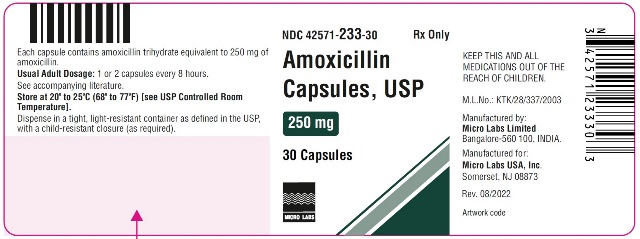
PACKAGE LABEL.PRINCIPAL DISPLAY PANEL NDC 42571-233-30 Rx Only Amoxicillin Capsules, USP 250 mg 30 Capsules MICRO LABS LIMITED NDC 42571-234-30 Rx Only Amoxicillin Capsules, USP 500 mg 30 Capsules MICRO LABS LIMITED amoxicillin-250mg.jpg amoxicillin-500mg.jpg
Medicare Part D spend CMS · PART D · 2026 (Q1)
About this NDC listing & data coverage
What data is (and isn’t) available for this NDC — tap to expand
| NDC identity (package / product / labeler codes) | ✓ Available |
| Labeler | ✓ Available |
| Product & package description | ✓ Available |
| Marketing category & status | ✓ Available |
| Active ingredient / dosage form / route | ✓ Available |
| FDA label (SPL via DailyMed) | ✓ Available |
| Package photos | ✓ Available |
| Inactive ingredients (structured) | ✓ Available |
| NADAC pharmacy acquisition price (CMS) | — Not published for this NDC CMS publishes NADAC only for NDCs reported in its retail-pharmacy survey. |
| Orange Book / therapeutic-equivalence data | ✓ Available |
| HCPCS J-code billing crosswalk | — Not published for this NDC Most self-administered / retail products have no J-code — that is normal. |
| Medicaid utilization (CMS SDUD) | — Not published for this NDC CMS reports utilization only for NDCs with Medicaid claims above its privacy threshold. |