
Roflumilast 500 ug Tablet, 110-count — NDC 42571-259-17 (Billing 42571-0259-17)
This is a package of 110 tablets of Roflumilast 500 ug Tablet from Micro Labs Limited, marketed since Oct 2022 and currently FDA-listed.
NDC database record
One package, one record: these facts belong to NDC 42571-259-17 alone.
- Record
- FDA NDC Directory package listing · Human prescription drug
- Code segments
- 42571 labeler · 259 product · 17 package
- Package marketed since
- Oct 19, 2022
- Sample package
- No — commercial package
- Listing certified through
- Dec 31, 2026
- Barcode (UPC)
- 0342571259327, 0342571369835, 0342571259303
- FDA record last changed
- Jul 24, 2026
Identity & classification
Regulatory identifiers FDA, NLM and CMS codes for this package
Drug-database identifiers Medi-Span GPI and First Databank GCN / HICL / AHFS classification
- GSN (GCN sequence number): 066612
- GCN: 28934
- GPI-14 (Medi-Span): 44450065000320
- HICL (First Databank): 037123
- AHFS class code: 48:32.00.00
- RxCUI (RxNorm): 1091839
Where does this data come from?
- FDA openFDA NDC Directory · synced Oct 1, 2026
- FDA label on DailyMed · label index refreshed Oct 6, 2026
- RxNorm (NLM RxNav) · catalog refreshed Oct 1, 2026
- Medi-Span GPI (licensed)
- First Databank (licensed) · refreshed Oct 1, 2026
RxNorm drug class
This medicine belongs to the Phosphodiesterase 4 Inhibitor class.
Where does this data come from?
- RxClass (NLM) · catalog refreshed Oct 1, 2026
Clinical
Roflumilast is used in people with severe chronic obstructive pulmonary disease (COPD; a group of diseases that affect the lungs and airways) to reduce the number of episodes or worsening of COPD symptoms. Roflumilast is in a class of medications called phosphodiesterase inhibitors. It works by decreasing swelling in the lungs.
Read the full MedlinePlus article ↗- The tablets (Daliresp or generic roflumilast) lower the chance of flare-ups in severe COPD with chronic bronchitis. The Zoryve cream and foam are skin products for conditions such...
- No. The tablets are not a bronchodilator and don't relieve sudden breathing trouble. Keep using your rescue treatment as your doctor directs.
- Can I use the tablets for sudden shortness of breath?
- Take one tablet by mouth once a day, with or without food. Your doctor may start you on a lower dose for the first 4 weeks, but that is not the effective dose. Follow your prescrib...
Patient education
Supplement & herbal interactions
Some supplements/herbs that may interact with Roflumilast — tap one for details:
Where does this data come from?
- MedlinePlus (NLM) · refreshed Oct 1, 2026
- FDA label on DailyMed · label index refreshed Oct 6, 2026
Ask a licensed pharmacist directly — free, answered by our team.
Pricing
A drug doesn't have one price. Each row is a different public payment system, and none is what you'd pay at the counter — that depends on your insurance. The ⓘ on each row explains what it measures.
| Price system | Per each | Per package |
|---|---|---|
| Retail pharmacies payNADAC · weekly | Not in the retail survey — common for institutional, discontinued, or low-volume packs. | |
| Medicaid paysCMS SDUD · 12 mo | No recent Medicaid claims on file for this NDC — rare and low-volume NDCs are suppressed in the public data. | |
| Medicare drug plans payPart D · Q2 2026 | $0.7736 | $85.10 / 110 tablets |
Where does this data come from?
- CMS NADAC weekly file
- CMS ASP pricing files · refreshed Sep 20, 2026
- CMS Medicaid State Drug Utilization Data · refreshed Oct 6, 2026
- CMS Part D plan pricing files · refreshed Sep 24, 2026
- VA National Acquisition Center price file
Packaging — all sizes for this product
| Package NDC | Description | Per unit | Per pack | Marketing start | Marketing end | Status |
|---|---|---|---|---|---|---|
| 42571-0259-05 42571-259-05 | 500 TABLET in 1 BOTTLE | — | — | 2022-10-19 | — | Active |
| 42571-0259-17 You're viewing this | 11 BLISTER PACK in 1 CARTON / 10 TABLET in 1 BLISTER PACK | — | — | 2022-10-19 | — | Active |
| 42571-0259-30 42571-259-30 Main listing | 30 TABLET in 1 BOTTLE | $0.3113 / ea | $9.34 | 2022-10-19 | — | Active |
| 42571-0259-90 42571-259-90 | 90 TABLET in 1 BOTTLE | — | — | 2022-10-19 | — | Active |
This pack shows little to no recent Medicaid volume — the 30 tablets pack carries most fills. See all packs ↓
Pack size FAQ
What quantity is in this package?
How does this package differ from NDC 42571-0259-30?
What NDC number is used to bill for this package of Roflumilast 500 ug Tablet?
Prices are the latest CMS NADAC pharmacy acquisition cost per NDC; per-pack figures are per-unit × pack quantity, shown only when the pack is denominated in the same measure NADAC prices.
Therapeutic equivalents
| Product | Labeler | Pack | NADAC/unit | TE | Status | Price vs. this |
|---|---|---|---|---|---|---|
| Roflumilast 500 ug 00904-7399-46 | MAJOR | 30 tablets | $0.311 | AB | Availability likely | — |
| Roflumilast 500 ug 00904-7483-03 | Major | 30 tablets | $0.311 | AB | Availability likely | — |
| Roflumilast 500 ug 31722-0623-30 | Camber | 30 tablets | $0.311 | AB | Availability likely | — |
| Roflumilast 500 ug 43547-0005-03 | Solco | 30 tablets | $0.311 | AB | Availability likely | — |
| Roflumilast 500 ug 59651-0275-30 | Aurobindo | 30 tablets | $0.311 | AB | Availability likely | — |
| Roflumilast 500 ug 60687-0786-21 | American | 30 tablets | $0.311 | AB | Availability likely | — |
| Roflumilast 500 ug 68382-0969-06 | Zydus | 30 tablets | $0.311 | AB | Availability likely | — |
| Daliresp 500 ug 00310-0095-30 | AstraZeneca | 30 tablets | $14.904 | AB | Availability likely | — |
| Roflumilast 500 ugthis 42571-0259-17 | Micro | 110 tablets | — | AB | FDA listed | — |
| Roflumilast 500 ug 51407-0975-90 | Golden | 90 tablets | — | AB | FDA listed | — |
| Roflumilast 500 ug 59746-0802-05 | Jubilant | 500 tablets | — | AB | FDA listed | — |
| roflumilast 500 ug 64380-0786-01 | Strides | 30 tablets | — | AB | Discontinued | — |
| Roflumilast 500 ug 67877-0480-05 | Ascend | 500 tablets | — | AB | FDA listed | — |
| Roflumilast 500 ug 69292-0631-30 | Amici | 30 tablets | — | AB | FDA listed | — |
| Roflumilast 500 ug 70771-1674-03 | Zydus | 30 tablets | — | AB | FDA listed | — |
| Roflumilast 500 ug 72162-2385-03 | Bryant | 30 tablets | — | AB | FDA listed | — |
| Roflumilast 500 ug 72205-0200-06 | Novadoz | 100 tablets | — | AB | FDA listed | — |
| roflumilast 500 ug 73190-0087-30 | AvKARE | 30 tablets | — | AB | FDA listed | — |
Where does this data come from?
- FDA openFDA NDC Directory · synced Oct 1, 2026
- FDA Orange Book · refreshed Oct 3, 2026
- CMS NADAC weekly file
Availability & generic status
This product is an FDA-approved generic. Other versions of the same drug are listed under Therapeutic equivalents, least expensive first.
Where does this data come from?
- FDA Orange Book · refreshed Oct 3, 2026
What it looks like
Where does this data come from?
- FDA label on DailyMed · label index refreshed Oct 6, 2026
Inactive Ingredients / Excipients
Inactive ingredients, also called excipients, are components of the drug product other than the active ingredient. They may include fillers, dyes, coatings, preservatives, flavors, or other formulation ingredients.
🧪 Avoiding an ingredient? See Roflumilast inactive ingredients by manufacturer: every current product's list side by side, so you can ask your pharmacy for the version that does not list it.
💡 Tap an ingredient (hover on desktop) to see what it is and why it’s used.
-
UNII RFW2ET671P
Hydroxypropyl cellulose is a plant-derived thickening agent made from cellulose. It acts as a binder to hold tablet ingredients together and as a film-former to coat tablets or control how fast the medicine releases.
-
UNII EWQ57Q8I5X
Lactose monohydrate is a natural sugar derived from milk. It serves as a filler and binder in tablets and capsules, helping create the proper size, texture, and consistency of the medicine.
-
UNII 70097M6I30
Magnesium stearate is a salt made from magnesium and stearic acid, a fatty substance. It's used in tablets and capsules as a lubricant and glidant to help ingredients flow smoothly during manufacturing and prevent sticking.
-
UNII O8232NY3SJ
A plant-based carbohydrate derived from corn kernels. It acts as a filler to add bulk, a binder to hold ingredients together, and a disintegrant to help the tablet break apart in your stomach for absorption.
4 inactive ingredients listed in the exact product block matched to this NDC.
Where does this data come from?
ingredient classCode="IACT" elements from the exact product block matched by this NDC. Label-section narrative from DailyMed / the openFDA label index is shown separately when available.- FDA label on DailyMed · label index refreshed Oct 6, 2026
- FDA openFDA NDC Directory · synced Oct 1, 2026
Inactive ingredient FAQ
Are inactive ingredients the same for every manufacturer?
Why might an inactive ingredient be missing?
Can inactive ingredients matter?
Manufacturer & labeler
More NDCs from Micro Labs Limited labeler code 42571
- Clindamycin Hydrochloride 75 mg Capsule NDC 42571-250-01
- Clindamycin Hydrochloride 150 mg Capsule NDC 42571-251-01
- Clindamycin Hydrochloride 300 mg Capsule NDC 42571-252-01
- Misoprostol 100 ug Tablet NDC 42571-253-12
- Misoprostol 200 ug Tablet NDC 42571-254-01
- Mefenamic acid 250 mg Capsule NDC 42571-258-01
- tafluprost .0045 mg/.3mL Solution/ Drops NDC 42571-264-26
- SODIUM NITROPRUSSIDE 50 mg/2mL Injection NDC 42571-265-75
- Tofacitinib 5 mg Tablet, Film Coated NDC 42571-268-05
- Aspirin and Extended-Release Dipyridamole 25 mg; 200 mg Capsule, Extended Release NDC 42571-274-60
- Dalfampridine 10 mg Tablet, Extended Release NDC 42571-275-05
- Bepotastine Besilate 10 kg/10kg Powder NDC 42571-277-37
Where does this data come from?
- FDA openFDA NDC Directory · synced Oct 1, 2026
- Drugs@FDA
Full prescribing information FDA SPL
🎯 Indications and Usage ▾
1 INDICATIONS AND USAGE Roflumilast tablets are indicated as a treatment to reduce the risk of COPD exacerbations in patients with severe COPD associated with chronic bronchitis and a history of exacerbations. Limitations of Use Roflumilast tablet is not a bronchodilator and is not indicated for the relief of acute bronchospasm. Roflumilast tablet 250 mcg is a starting dose, for the first 4 weeks of treatment only and is not the effective (therapeutic) dose.
Roflumilast is a selective phosphodiesterase 4 inhibitor indicated as a treatment to reduce the risk of COPD exacerbations in patients with severe COPD associated with chronic bronchitis and a history of exacerbations. ( 1 , 14 ) Limitations of Use: Roflumilast tablet is not a bronchodilator and is not indicated for the relief of acute bronchospasm. ( 1 , 14 ) Roflumilast tablet 250 mcg is a starting dose, for the first 4 weeks of treatment only and is not the effective (therapeutic) dose.
( 2 , 14 )
⏱️ Dosage and Administration ▾
2 DOSAGE AND ADMINISTRATION The maintenance dose of roflumilast tablet is one 500 micrograms (mcg) tablet per day, with or without food. Starting treatment with a dose of roflumilast tablet 250 mcg once daily for 4 weeks and increasing to roflumilast tablet 500 mcg once daily thereafter may reduce the rate of treatment discontinuation in some patients [see Clinical Studies ( 14.1 )]. However, 250 mcg per day is not the effective (therapeutic) dose.
The maintenance dose for patients with COPD is one 500 mcg tablet per day, with or without food. Starting treatment with a dose of roflumilast tablet 250 mcg once daily for 4 weeks and increasing to roflumilast tablet 500 mcg once daily thereafter may reduce the rate of treatment discontinuation in some patients. ( 2 )
💊 Dosage Forms and Strengths ▾
3 DOSAGE FORMS AND STRENGTHS Roflumilast tablets 250 mcg are supplied as white to off white colored, round shaped, flat face, beveled edge, uncoated tablets, debossed with ‘0.25’ on one face and plain on other face. Each tablet contains 250 mcg of roflumilast. Roflumilast tablets 500 mcg are supplied as white to off white colored, circular shaped, flat face, beveled edge, uncoated tablets, debossed with ‘0.5’ on one face and plain on other face.
Each tablet contains 500 mcg of roflumilast. Tablets: 250 mcg, 500 mcg ( 3 )
⛔ Contraindications ▾
4 CONTRAINDICATIONS The use of roflumilast tablet is contraindicated in the following condition: Moderate to severe liver impairment (Child-Pugh B or C) [see Clinical Pharmacology ( 12.3 ) and Use in Specific Populations ( 8.6 )]. Moderate to severe liver impairment (Child-Pugh B or C) ( 4 )
⚠️ Warnings and Cautions ▾
5 WARNINGS AND PRECAUTIONS Acute Bronchospasm: Do not use for the relief of acute bronchospasm. ( 5.1 ) Psychiatric Events Including Suicidality: Advise patients, their caregivers, and families to be alert for the emergence or worsening of insomnia, anxiety, depression, suicidal thoughts or other mood changes, and if such changes occur to contact their healthcare provider. Carefully weigh the risks and benefits of treatment with roflumilast tablets in patients with a history of depression and/or suicidal thoughts or behavior.
( 5.2 ) Weight Decrease: Monitor weight regularly. If unexplained or clinically significant weight loss occurs, evaluate weight loss and consider discontinuation of roflumilast tablets. ( 5.3 ) Drug Interactions: Use with strong cytochrome P450 enzyme inducers (e.g., rifampicin, phenobarbital, carbamazepine, phenytoin) is not recommended.
( 5.4 )
5.1Treatment of Acute Bronchospasm Roflumilast is not a bronchodilator and should not be used for the relief of acute bronchospasm.
5.2Psychiatric Events including Suicidality Treatment with roflumilast is associated with an increase in psychiatric adverse reactions. In 8 controlled clinical trials 5.9% (263) of patients treated with roflumilast tablet 500 mcg daily reported psychiatric adverse reactions compared to 3.3% (137) treated with placebo. The most commonly reported psychiatric adverse reactions were insomnia, anxiety, and depression which were reported at higher rates in those treated with roflumilast 500 mcg daily (2.4%, 1.4%, and 1.2% for roflumilast versus 1.0%, 0.9%, and 0.9% for placebo, respectively) [see Adverse Reactions ( 6.1 )].
Instances of suicidal ideation and behavior, including completed suicide, have been observed in clinical trials. Three patients experienced suicide-related adverse reactions (one completed suicide and two suicide attempts) while receiving roflumilast compared to one patient (suicidal ideation) who received placebo. One patient completed suicide while receiving roflumilast in Trial 9 [see Clinical Studies ( 14.1 )] , which assessed the effect of adding roflumilast to a fixed-dose combination (FDC) of ICS/LABA on rates of exacerbations in COPD patients over 1 year of treatment.
Cases of suicidal ideation and behavior, including completed suicide, have been observed in the post-marketing setting in patients with or without a history of depression. Before using roflumilast in patients with a history of depression and/or suicidal thoughts or behavior, prescribers should carefully weigh the risks and benefits of treatment with roflumilast in such patients. Patients, their caregivers, and families should be advised of the need to be alert for the emergence or worsening of insomnia, anxiety, depression, suicidal thoughts or other mood changes, and if such changes occur to contact their healthcare provider.
Prescribers should carefully evaluate the risks and benefits of continuing treatment with roflumilast if such events occur.
5.3Weight Decrease Weight loss was a common adverse reaction in roflumilast clinical trials and was reported in 7.5% (331) of patients treated with roflumilast 500 mcg once daily compared to 2.1% (89) treated with placebo [ see Adverse Reactions ( 6.1 ) ]. In addition to being reported as adverse reactions, weight was prospectively assessed in two placebo-controlled clinical trials of one year duration. In these studies, 20% of patients receiving roflumilast experienced moderate weight loss (defined as between 5 to 10% of body weight) compared to 7% of patients who received placebo.
In addition, 7% of patients who received roflumilast compared to 2% of patients receiving placebo experienced severe (>10% body weight) weight loss. During follow-up after treatment discontinuation, the majority of patients with weight loss regained some of the weight they had lost while receiving roflumilast. Patients treated with roflumilast should have their weight monitored regularly.
If unexplained or clinically sign… [Excerpted — this section continues on DailyMed.]
🤒 Adverse Reactions ▾
6 ADVERSE REACTIONS The following adverse reactions are described in greater detail in other sections: Psychiatric Events Including Suicidality [see Warnings and Precautions ( 5.2 )] Weight Decrease [see Warnings and Precautions ( 5.3 )] Most common adverse reactions (≥ 2%) are diarrhea, weight decrease, nausea, headache, back pain, influenza, insomnia, dizziness and decreased appetite. ( 6.1 ) To report SUSPECTED ADVERSE REACTIONS, contact Micro Labs USA Inc. at 1-855-839-8195 or FDA at 1-800-FDA-1088 or www.fda.gov/medwatch.
6.1Adverse Reactions in Clinical Studies Because clinical trials are conducted under widely varying conditions, adverse reaction rates observed in the clinical trials of a drug cannot be directly compared to rates in the clinical trials of another drug and may not reflect the rates observed in practice. The safety data described below reflect exposure of 4438 patients to roflumilast 500 mcg once daily in four 1 year placebo-controlled trials, two 6-month placebo-controlled trials, and two 6-month drug add-on trials [see Clinical Studies ( 14.1 )].
In these trials, 3136 and 1232 COPD patients were exposed to roflumilast tablet 500 mcg once daily for 6 months and 1 year, respectively. The population had a median age of 64 years (range 40 to 91), 73% were male, 92.9% were Caucasian, and had COPD with a mean pre-bronchodilator forced expiratory volume in one second (FEV 1 ) of 8.9 to 89.1% predicted. In these trials, 68.5% of the patients treated with roflumilast reported an adverse reaction compared with 65.3% treated with placebo.
The proportion of patients who discontinued treatment due to adverse reaction was 14.8% for roflumilast- treated patients and 9.9% for placebo-treated patients. The most common adverse reactions that led to discontinuation of roflumilast were diarrhea (2.4%) and nausea (1.6%). Serious adverse reactions, whether considered drug-related or not by the investigators, which occurred more frequently in roflumilast-treated patients include diarrhea, atrial fibrillation, lung cancer, prostate cancer, acute pancreatitis, and acute renal failure.
Table 1 summarizes the adverse reactions reported by ≥2% of patients in the roflumilast group in 8 controlled COPD clinical trials. Table 1: Adverse Reactions Reported by ≥2% of Patients Treated with Roflumilast 500 mcg daily and Greater Than Placebo Treatment Adverse Reactions (Preferred Term) Roflumilast Placebo (N=4438) (N= 4192) n (%) n (%) Diarrhea 420 (9.5) 113 (2.7) Weight decreased 331 (7.5) 89 (2.1) Nausea 209 (4.7) 60 (1.4) Headache 195 (4.4) 87 (2.1) Back pain 142 (3.2) 92 (2.2) Influenza 124 (2.8) 112 (2.7) Insomnia 105 (2.4) 41 (1) Dizziness 92 (2.1) 45 (1.1) Decreased appetite 91 (2.1) 15 (0.4) Adverse reactions that occurred in the roflumilast group at a frequency of 1 to 2% where rates exceeded that in the placebo group include: Gastrointestinal disorders - abdominal pain, dyspepsia, gastritis, vomiting Infections and infestations - rhinitis, sinusitis, urinary tract infection Musculoskeletal and connective tissue disorders - muscle spasms Nervous system disorders - tremor Psychiatric disorders - anxiety, depression The safety profile of roflumilast reported during Trial 9 was consistent with the key pivotal studies.
6.2Postmarketing Experience The following adverse reactions have been identified from spontaneous reports of roflumilast received worldwide and have not been listed elsewhere. These adverse reactions have been chosen for inclusion due to a combination of seriousness, frequency of reporting or potential causal connection to roflumilast. Because these adverse reactions were reported voluntarily from a population of uncertain size, it is not possible to estimate their frequency or establish a causal relationship to roflumilast exposure: hypersensitivity reactions (including angioedema, urticaria, and rash), gynecomastia.
🔄 Drug Interactions ▾
7 DRUG INTERACTIONS A major step in roflumilast metabolism is the N-oxidation of roflumilast to roflumilast N-oxide by CYP3A4 and CYP1A2 [see Clinical Pharmacology ( 12.3 )]. Use with inhibitors of CYP3A4 or dual inhibitors of CYP3A4 and CYP1A2 (e.g., erythromycin, ketoconazole, fluvoxamine, enoxacin, cimetidine) will increase roflumilast systemic exposure and may result in increased adverse reactions. The risk of such concurrent use should be weighed carefully against benefit.
( 7.2 )
7.1Drugs that Induce Cytochrome P450 (CYP) Enzymes Strong cytochrome P450 enzyme inducers decrease systemic exposure to roflumilast and may reduce the therapeutic effectiveness of roflumilast. Therefore the use of strong cytochrome P450 inducers (e.g., rifampicin, phenobarbital, carbamazepine, and phenytoin) with roflumilast is not recommended [see Warnings and Precautions ( 5.4 ) and Clinical Pharmacology ( 12.3 )].
7.2Drugs that Inhibit Cytochrome P450 (CYP) Enzymes The co-administration of roflumilast (500 mcg) with CYP3A4 inhibitors or dual inhibitors that inhibit both CYP3A4 and CYP1A2 simultaneously (e.g., erythromycin, ketoconazole, fluvoxamine, enoxacin, cimetidine) may increase roflumilast systemic exposure and may result in increased adverse reactions. The risk of such concurrent use should be weighed carefully against benefit [see Clinical Pharmacology ( 12.3 )] .
7.3Oral Contraceptives Containing Gestodene and Ethinyl Estradiol The co-administration of roflumilast (500 mcg) with oral contraceptives containing gestodene and ethinyl estradiol may increase roflumilast systemic exposure and may result in increased side effects. The risk of such concurrent use should be weighed carefully against benefit [see Clinical Pharmacology ( 12.3 )].
👥 Use in Specific Populations ▾
8 USE IN SPECIFIC POPULATIONS Nursing Mothers: Roflumilast tablets should not be used by women who are nursing as excretion of roflumilast and/or its metabolites into human milk is probable and there are no human studies that have investigated effects of roflumilast tablets on breast-fed infants. ( 8.2 )
8.1Pregnancy Risk Summary There are no randomized clinical studies of roflumilast in pregnant women. In animal reproductive toxicity studies, roflumilast administered to pregnant rats and rabbits during the period of organogenesis produced no fetal structural abnormalities. The highest roflumilast dose in these studies was approximately 30 and 26 times, respectively, the maximum recommended human dose (MRHD).
Roflumilast induced post-implantation loss in rats at doses greater than or equal to approximately 10 times the MRHD. Roflumilast induced stillbirth and decreased pup viability in mice at doses corresponding to approximately 16 and 49 times, respectively, the MRHD. Roflumilast has been shown to adversely affect pup post-natal development when dams were treated with the drug during pregnancy and lactation periods in mice at doses corresponding to 49 times the MRHD (see Data).
The background risk of major birth defects and miscarriage for the indicated population is unknown. In the U.S. general population, the estimated background risk of major birth defects and miscarriage in clinically recognized pregnancies is 2 to 4% and 15 to 20%, respectively. Clinical Considerations Labor and delivery Roflumilast should not be used during labor and delivery.
There are no human studies that have investigated effects of roflumilast on preterm labor or labor at term; however, animal studies showed that roflumilast disrupted the labor and delivery process in mice. Data Animal data In an embryo-fetal development study, pregnant rats were dosed orally during the period of organogenesis with up to 1.8 mg/kg/day roflumilast (approximately 30 times the MRHD on an AUC basis). No evidence of structural abnormalities or effects on survival rates were observed. roflumilast did not affect embryo-fetal development at approximately 3 times the MRHD (on a mg/m 2 basis at a maternal oral dose of 0.2 mg/kg/day).
In a fertility and embryo-fetal development study, male rats were dosed orally with up to 1.8 mg/kg/day roflumilast for 10 weeks and females for two weeks prior to pairing and throughout the organogenesis period. Roflumilast induced pre- and post-implantation loss at doses greater than or equal to approximately 10 times the MRHD (on a mg/m 2 basis at maternal oral doses greater than or equal to 0.6 mg/kg/day). Roflumilast did not cause fetal structural abnormalities at exposures up to approximately 29 times the MRHD (on an AUC basis at maternal oral doses up to 1.8 mg/kg/day).
In an embryo-fetal development study in rabbits, pregnant does were dosed orally with 0.8 mg/kg/day roflumilast during the period of organogenesis. Roflumilast did not cause fetal structural abnormalities at exposures approximately 26 times the MRHD (on a mg/m 2 basis at maternal oral doses of 0.8 mg/kg/day). In pre- and post-natal developmental studies in mice, dams were dosed orally with up to 12 mg/kg/day roflumilast during the period of organogenesis and lactation.
Roflumilast induced stillbirth and decreased pup viability at doses corresponding to approximately 16 and 49 times, respectively, the MRHD (on a mg/m 2 basis at maternal doses >2 mg/kg/day and 6 mg/kg/day, respectively). Roflumilast induced delivery retardation in pregnant mice at doses greater or equal to approximately 16 times the MRHD (on a mg/m 2 basis at maternal doses >2 mg/kg/day). Roflumilast decreased pup rearing frequencies at approximately 49 times the MRHD (on a mg/m 2 basis at a maternal dose of 6 mg/kg/day) during pregnancy and lactation.
Roflumilast also decreased survival and forelimb grip reflex and delayed pinna detachment in mouse pups at approximately 97 times the MRHD (on a mg/m 2 basi… [Excerpted — this section continues on DailyMed.]
🤰 Pregnancy ▾
8.1Pregnancy Risk Summary There are no randomized clinical studies of roflumilast in pregnant women. In animal reproductive toxicity studies, roflumilast administered to pregnant rats and rabbits during the period of organogenesis produced no fetal structural abnormalities. The highest roflumilast dose in these studies was approximately 30 and 26 times, respectively, the maximum recommended human dose (MRHD).
Roflumilast induced post-implantation loss in rats at doses greater than or equal to approximately 10 times the MRHD. Roflumilast induced stillbirth and decreased pup viability in mice at doses corresponding to approximately 16 and 49 times, respectively, the MRHD. Roflumilast has been shown to adversely affect pup post-natal development when dams were treated with the drug during pregnancy and lactation periods in mice at doses corresponding to 49 times the MRHD (see Data).
The background risk of major birth defects and miscarriage for the indicated population is unknown. In the U.S. general population, the estimated background risk of major birth defects and miscarriage in clinically recognized pregnancies is 2 to 4% and 15 to 20%, respectively. Clinical Considerations Labor and delivery Roflumilast should not be used during labor and delivery.
There are no human studies that have investigated effects of roflumilast on preterm labor or labor at term; however, animal studies showed that roflumilast disrupted the labor and delivery process in mice. Data Animal data In an embryo-fetal development study, pregnant rats were dosed orally during the period of organogenesis with up to 1.8 mg/kg/day roflumilast (approximately 30 times the MRHD on an AUC basis). No evidence of structural abnormalities or effects on survival rates were observed. roflumilast did not affect embryo-fetal development at approximately 3 times the MRHD (on a mg/m 2 basis at a maternal oral dose of 0.2 mg/kg/day).
In a fertility and embryo-fetal development study, male rats were dosed orally with up to 1.8 mg/kg/day roflumilast for 10 weeks and females for two weeks prior to pairing and throughout the organogenesis period. Roflumilast induced pre- and post-implantation loss at doses greater than or equal to approximately 10 times the MRHD (on a mg/m 2 basis at maternal oral doses greater than or equal to 0.6 mg/kg/day). Roflumilast did not cause fetal structural abnormalities at exposures up to approximately 29 times the MRHD (on an AUC basis at maternal oral doses up to 1.8 mg/kg/day).
In an embryo-fetal development study in rabbits, pregnant does were dosed orally with 0.8 mg/kg/day roflumilast during the period of organogenesis. Roflumilast did not cause fetal structural abnormalities at exposures approximately 26 times the MRHD (on a mg/m 2 basis at maternal oral doses of 0.8 mg/kg/day). In pre- and post-natal developmental studies in mice, dams were dosed orally with up to 12 mg/kg/day roflumilast during the period of organogenesis and lactation.
Roflumilast induced stillbirth and decreased pup viability at doses corresponding to approximately 16 and 49 times, respectively, the MRHD (on a mg/m 2 basis at maternal doses >2 mg/kg/day and 6 mg/kg/day, respectively). Roflumilast induced delivery retardation in pregnant mice at doses greater or equal to approximately 16 times the MRHD (on a mg/m 2 basis at maternal doses >2 mg/kg/day). Roflumilast decreased pup rearing frequencies at approximately 49 times the MRHD (on a mg/m 2 basis at a maternal dose of 6 mg/kg/day) during pregnancy and lactation.
Roflumilast also decreased survival and forelimb grip reflex and delayed pinna detachment in mouse pups at approximately 97 times the MRHD (on a mg/m 2 basis at a maternal dose of 12 mg/kg/day).
🧒 Pediatric Use ▾
8.4Pediatric Use COPD does not normally occur in children. The safety and effectiveness of roflumilast in pediatric patients have not been established.
🧓 Geriatric Use ▾
8.5Geriatric Use Of the 4438 COPD subjects exposed to roflumilast for up to 12 months in 8 controlled clinical trials, 2022 were > 65 years of age and 471 were > 75 years of age. No overall differences in safety or effectiveness were observed between these subjects and younger subjects and other reported clinical experience has not identified differences in responses between the elderly and younger patients, but greater sensitivity of some older individuals cannot be ruled out. Based on available data for roflumilast, no adjustment of dosage in geriatric patients is warranted [see Clinical Pharmacology ( 12.3 )].
🆘 Overdosage ▾
10 OVERDOSAGE
10.1Human Experience No case of overdose has been reported in clinical studies with roflumilast. During the Phase I studies of roflumilast, the following symptoms were observed at an increased rate after a single oral dose of 2500 mcg and a single dose of 5000 mcg: headache, gastrointestinal disorders, dizziness, palpitations, lightheadedness, clamminess, and arterial hypotension.
10.2Management of Overdose In case of overdose, patients should seek immediate medical help. Appropriate supportive medical care should be provided. Since roflumilast is highly protein bound, hemodialysis is not likely to be an efficient method of drug removal. It is not known whether roflumilast is dialyzable by peritoneal dialysis.
🧬 Clinical Pharmacology ▾
12 CLINICAL PHARMACOLOGY
12.1Mechanism of Action Roflumilast and its active metabolite (roflumilast N-oxide) are selective inhibitors of phosphodiesterase 4 (PDE4). Roflumilast and roflumilast N-oxide inhibition of PDE4 (a major cyclic-3′,5′-adenosine monophosphate (cyclic AMP)-metabolizing enzyme in lung tissue) activity leads to accumulation of intracellular cyclic AMP. While the specific mechanism(s) by which roflumilast exerts its therapeutic action in COPD patients is not well defined, it is thought to be related to the effects of increased intracellular cyclic AMP in lung cells.
12.2Pharmacodynamics In COPD patients, 4-week treatment with roflumilast 500 mcg oral once daily reduced sputum neutrophils and eosinophils by 31%, and 42%, respectively. In a pharmacodynamic study in healthy volunteers, roflumilast 500 mcg once daily reduced the number of total cells, neutrophils and eosinophils found in bronchoalveolar lavage fluid following segmental pulmonary lipopolysaccharide (LPS) challenge by 35%, 38% and 73%, respectively. The clinical significance of these findings is unknown.
12.3Pharmacokinetics Absorption The absolute bioavailability of roflumilast following a 500 mcg oral dose is approximately 80%. Maximum plasma concentrations (C max ) of roflumilast typically occur approximately one hour after dosing (ranging from 0.5 to 2 hours) in the fasted state while plateau-like maximum concentrations of the N-oxide metabolite are reached in approximately eight hours (ranging from 4 to 13 hours). Food has no effect on total drug absorption, but delays time to maximum concentration (T max ) of roflumilast by one hour and reduces C max by approximately 40%, however, C max and T max of roflumilast N-oxide are unaffected.
An in vitro study showed that roflumilast and roflumilast N-oxide did not inhibit P-gp transporter. Distribution Plasma protein binding of roflumilast and its N-oxide metabolite is approximately 99% and 97%, respectively. Volume of distribution for single-dose 500 mcg roflumilast is about
2.9L/kg. Studies in rats with radiolabeled roflumilast indicate low penetration across the blood-brain barrier. Metabolism Roflumilast is extensively metabolized via Phase I (cytochrome P450) and Phase II (conjugation) reactions.
The N-oxide metabolite is the only major metabolite observed in the plasma of humans. Together, roflumilast and roflumilast N-oxide account for the majority (87.5%) of total dose administered in plasma. In urine, roflumilast was not detectable while roflumilast N-oxide was only a trace metabolite (less than 1%).
Other conjugated metabolites such as roflumilast N-oxide glucuronide and 4-amino-3,5-dichloropyridine N-oxide were detected in urine. While roflumilast is three times more potent than roflumilast N-oxide at inhibition of the PDE4 enzyme in vitro , the plasma AUC of roflumilast N-oxide on average is about 10-fold greater than the plasma AUC of roflumilast. In vitro studies and clinical drug-drug interaction studies suggest that the biotransformation of roflumilast to its N-oxide metabolite is mediated by CYP1A2 and 3A4.
Based on further in vitro results in human liver microsomes, therapeutic plasma concentrations of roflumilast and roflumilast N-oxide do not inhibit CYP1A2, 2A6, 2B6, 2C8, 2C9, 2C19, 2D6, 2E1, 3A4/5, or 4A9/11. Therefore, there is a low probability of relevant interactions with substances metabolized by these P450 enzymes. In addition, in vitro studies demonstrated no induction of the CYP 1A2, 2A6, 2C9, 2C19, or 3A4/5 and only a weak induction of CYP2B6 by roflumilast.
Elimination The plasma clearance after short-term intravenous infusion of roflumilast is on average about
9.6L/h. Following an oral dose, the median plasma effective half-life of roflumilast and its N-oxide metabolite are approximately 17 and 30 hours, respectively. Steady state plasma concentrations of roflumilast and its N-oxide metabolite are reached after approximately 4 days for roflumilast and 6 days fo… [Excerpted — this section continues on DailyMed.]
🧬 Mechanism of Action ▾
12.1Mechanism of Action Roflumilast and its active metabolite (roflumilast N-oxide) are selective inhibitors of phosphodiesterase 4 (PDE4). Roflumilast and roflumilast N-oxide inhibition of PDE4 (a major cyclic-3′,5′-adenosine monophosphate (cyclic AMP)-metabolizing enzyme in lung tissue) activity leads to accumulation of intracellular cyclic AMP. While the specific mechanism(s) by which roflumilast exerts its therapeutic action in COPD patients is not well defined, it is thought to be related to the effects of increased intracellular cyclic AMP in lung cells.
📦 How Supplied / Storage and Handling ▾
16 HOW SUPPLIED/STORAGE AND HANDLING
16.1How Supplied Roflumilast tablets 250 mcg are supplied as white to off white colored, round shaped, flat face, beveled edge, uncoated tablets, debossed with ‘0.25’ on one face and plain on other face. Each tablet contains 250 mcg of roflumilast. Roflumilast 250 mcg tablets are available: Bottles of 28 NDC 42571-369-83 Bottles of 30 NDC 42571-369-30 Bottles of 90 NDC 42571-369-90 Bottles of 500 NDC 42571-369-05 Carton of 10 x10 Unit-dose Tablets NDC 42571-369-11 Roflumilast tablets 500 mcg are supplied as white to off white colored, circular shaped, flat face, beveled edge, uncoated tablets, debossed with ‘0.5’ on one face and plain on other face.
Each tablet contains 500 mcg of roflumilast. Roflumilast 500 mcg tablets are available: Bottles of 30 NDC 42571-259-30 Bottles of 90 NDC 42571-259-90 Bottles of 500 NDC 42571-259-05 Carton of 11x10 Unit-dose Tablets NDC 42571-259-17
16.2Storage and Handling Store roflumilast tablets at 20° to 25°C (68° to 77°F); excursions permitted to 15° to 30°C (59° to 86°F) [see USP Controlled Room Temperature].
📋 Description ▾
11 DESCRIPTION The active ingredient in roflumilast tablets is roflumilast. Roflumilast and its active metabolite (roflumilast N-oxide) are selective phosphodiesterase 4 (PDE4) inhibitors. The chemical name of roflumilast is N-(3,5-dichloropyridin-4-yl)-3-cyclopropylmethoxy-4-difluoromethoxy-benzamide.
Its molecular formula is C 17 H 14 Cl 2 F 2 N 2 O 3 and the molecular weight is 403.22. The chemical structure is: The drug substance is a white to off-white non-hygroscopic powder with a melting point of 160°C. It is practically insoluble in water and hexane, sparingly soluble in ethanol and freely soluble in acetone.
Roflumilast tablets are supplied as white to off white colored, round shaped, flat face, beveled edge, uncoated tablets, debossed with ‘0.25’ or ‘0.5’ on one face and plain on other face. Each tablet contains 250 mcg or 500 mcg of roflumilast. Each tablet of roflumilast for oral administration contains the following inactive ingredients: hydroxypropyl cellulose, lactose monohydrate, magnesium stearate, and maize starch. strc
💬 Information for Patients ▾
17 PATIENT COUNSELING INFORMATION Advise the patient to read the FDA-approved patient labeling (Medication Guide). Bronchospasm Roflumilast is not a bronchodilator and should not be used for immediate relief of breathing problems (i.e., as a rescue medication). Psychiatric Events including Suicidality Treatment with roflumilast is associated with an increase in psychiatric adverse reactions.
Cases of suicidal ideation and behavior, including completed suicide, have been observed in the post-marketing setting in patients with or without a history of depression. The risks and benefits of treatment with roflumilast in patients with a history of depression and/or suicidal thoughts or behavior should be carefully considered. Advise patients, caregivers, and families to be alert for the emergence or worsening of insomnia, anxiety, depression, suicidal thoughts or other mood changes, and if such changes occur to contact their healthcare provider so that the risks and benefits of continuing treatment with roflumilast may be considered [see Warnings and Precautions ( 5.2 )] .
Weight Decrease Weight loss was a common adverse reaction in roflumilast clinical trials. During follow-up after treatment discontinuation, the majority of patients with weight loss regained some of the weight they had lost while receiving roflumilast. Advise patients treated with roflumilast to have their weight monitored regularly.
If unexplained weight loss occurs, patients should inform their healthcare provider so that the weight loss can be evaluated, as discontinuation of roflumilast may need to be considered [see Warnings and Precautions ( 5.3 )] . Drug Interactions The use of cytochrome P450 enzyme inducers resulted in a reduction in exposure which may result in decreased therapeutic effectiveness of roflumilast. The use of strong cytochrome P450 enzyme inducers (e.g., rifampicin, phenobarbital, carbamazepine, phenytoin) with roflumilast is not recommended [see Drugs that Induce Cytochrome P450 (CYP) Enzymes ( 7.1 ) and Clinical Pharmacology ( 12.3 )] .
Manufactured by: Micro Labs Limited Goa-403 722, INDIA. Manufactured for: Micro Labs USA, Inc. Somerset, NJ 08873 Revised: 02/2023
💬 Medication Guide ▾
MEDICATION GUIDE Roflumilast (roe-FLUE-mi-last) Tablets Read this Medication Guide before you start taking roflumilast tablets and each time you get a refill. There may be new information. This information does not take the place of talking with your healthcare provider about your medical condition or treatment.
What is the most important information I should know about roflumilast tablets? Roflumilast tablets can cause serious side effects. Tell your healthcare provider right away if you have any of the symptoms listed below while taking roflumilast tablets.
1. Roflumilast tablets may cause mental health problems including suicidal thoughts and behavior. Some people taking roflumilast tablets may develop mood or behavior problems including: thoughts of suicide or dying attempt to commit suicide trouble sleeping (insomnia) new or worse anxiety new or worse depression acting on dangerous impulses other unusual changes in your behavior or mood 2.
Weight loss. Roflumilast tablets can cause weight loss. You should check your weight on a regular basis.
You will also need to see your healthcare provider regularly to have your weight checked. If you notice that you are losing weight, call your healthcare provider. Your healthcare provider may ask you to stop taking roflumilast tablets if you lose too much weight.
Roflumilast tablets may affect the way other medicines work, and other medicines may affect how roflumilast tablets works. Tell your healthcare provider about all the medicines you take, including prescription and non-prescription medicines, vitamins, and herbal supplements. What are roflumilast tablets?
Roflumilast tablets are a prescription medicine used in adults with severe Chronic Obstructive Pulmonary Disease (COPD) to decrease the number of flare-ups or the worsening of COPD symptoms (exacerbations). Roflumilast tablets are not a bronchodilator and should not be used for treating sudden breathing problems. Your healthcare provider may give you other medicine to use for sudden breathing problems.
It is not known if roflumilast tablets are safe and effective in children. Who should not take roflumilast tablets? Do not take roflumilast tablet if you: have certain liver problems.
Talk with your healthcare provider before you take roflumilast tablets if you have liver problems. What should I tell my healthcare provider before taking roflumilast tablets? Before you take roflumilast tablets, tell your healthcare provider if you: have or have had a history of mental health problems including depression and suicidal behavior. have liver problems have any other medical conditions are pregnant or plan to become pregnant.
It is not known if roflumilast tablets will harm your unborn baby. Talk to your healthcare provider if you are pregnant or plan to become pregnant. are breastfeeding or plan to breastfeed. It is not known if roflumilast passes into your breast milk.
You and your healthcare provider should decide if you will take roflumilast tablets or breastfeed. You should not do both. How should I take roflumilast tablets?
Take roflumilast tablets exactly as your healthcare provider tells you to take it. Roflumilast tablets can be taken with or without food. If you take more than your prescribed dose of roflumilast tablets, call your healthcare provider or go to the nearest hospital emergency room right away.
What are the possible side effects of roflumilast tablets? Roflumilast tablets can cause serious side effects, including: See “ What is the most important information I should know about roflumilast tablets? ” The most common side effects of roflumilast tablets include: diarrhea weight loss nausea headache back pain flu like symptoms problems sleeping (insomnia) dizziness decreased appetite Tell your healthcare provider if you have any side effect that bothers you or that does not go away. These are not all the possible side effects of roflumilast tablets.
Call your doctor for medical advice about side effects. You may re… [Excerpted — this section continues on DailyMed.]
🧬 Pharmacokinetics ▾
12.3Pharmacokinetics Absorption The absolute bioavailability of roflumilast following a 500 mcg oral dose is approximately 80%. Maximum plasma concentrations (C max ) of roflumilast typically occur approximately one hour after dosing (ranging from 0.5 to 2 hours) in the fasted state while plateau-like maximum concentrations of the N-oxide metabolite are reached in approximately eight hours (ranging from 4 to 13 hours). Food has no effect on total drug absorption, but delays time to maximum concentration (T max ) of roflumilast by one hour and reduces C max by approximately 40%, however, C max and T max of roflumilast N-oxide are unaffected.
An in vitro study showed that roflumilast and roflumilast N-oxide did not inhibit P-gp transporter. Distribution Plasma protein binding of roflumilast and its N-oxide metabolite is approximately 99% and 97%, respectively. Volume of distribution for single-dose 500 mcg roflumilast is about
2.9L/kg. Studies in rats with radiolabeled roflumilast indicate low penetration across the blood-brain barrier. Metabolism Roflumilast is extensively metabolized via Phase I (cytochrome P450) and Phase II (conjugation) reactions.
The N-oxide metabolite is the only major metabolite observed in the plasma of humans. Together, roflumilast and roflumilast N-oxide account for the majority (87.5%) of total dose administered in plasma. In urine, roflumilast was not detectable while roflumilast N-oxide was only a trace metabolite (less than 1%).
Other conjugated metabolites such as roflumilast N-oxide glucuronide and 4-amino-3,5-dichloropyridine N-oxide were detected in urine. While roflumilast is three times more potent than roflumilast N-oxide at inhibition of the PDE4 enzyme in vitro , the plasma AUC of roflumilast N-oxide on average is about 10-fold greater than the plasma AUC of roflumilast. In vitro studies and clinical drug-drug interaction studies suggest that the biotransformation of roflumilast to its N-oxide metabolite is mediated by CYP1A2 and 3A4.
Based on further in vitro results in human liver microsomes, therapeutic plasma concentrations of roflumilast and roflumilast N-oxide do not inhibit CYP1A2, 2A6, 2B6, 2C8, 2C9, 2C19, 2D6, 2E1, 3A4/5, or 4A9/11. Therefore, there is a low probability of relevant interactions with substances metabolized by these P450 enzymes. In addition, in vitro studies demonstrated no induction of the CYP 1A2, 2A6, 2C9, 2C19, or 3A4/5 and only a weak induction of CYP2B6 by roflumilast.
Elimination The plasma clearance after short-term intravenous infusion of roflumilast is on average about
9.6L/h. Following an oral dose, the median plasma effective half-life of roflumilast and its N-oxide metabolite are approximately 17 and 30 hours, respectively. Steady state plasma concentrations of roflumilast and its N-oxide metabolite are reached after approximately 4 days for roflumilast and 6 days for roflumilast N-oxide following once-daily dosing.
Following intravenous or oral administration of radiolabeled roflumilast, about 70% of the radioactivity was recovered in the urine. Special Populations Hepatic Impairment Roflumilast 250 mcg once daily for 14 days was studied in subjects with mild-to-moderate hepatic impairment classified as Child-Pugh A and B (8 subjects in each group). The AUC of roflumilast and roflumilast N-oxide were increased by 51% and 24%, respectively in Child-Pugh A subjects and by 92% and 41%, respectively, in Child-Pugh B subjects, as compared to age-, weight-, and gender-matched healthy subjects.
The C max of roflumilast and roflumilast N-oxide were increased by 3% and 26%, respectively, in Child-Pugh A subjects and by 26% and 40%, respectively in Child-Pugh B subjects, as compared to healthy subjects. Roflumilast 500 mcg has not been studied in hepatically impaired patients. Clinicians should consider the risk-benefit of administering roflumilast to patients who have mild liver impairment (Child-Pugh A).
Roflumilast is not recommended for use in patients… [Excerpted — this section continues on DailyMed.]
🧬 Pharmacodynamics ▾
12.2Pharmacodynamics In COPD patients, 4-week treatment with roflumilast 500 mcg oral once daily reduced sputum neutrophils and eosinophils by 31%, and 42%, respectively. In a pharmacodynamic study in healthy volunteers, roflumilast 500 mcg once daily reduced the number of total cells, neutrophils and eosinophils found in bronchoalveolar lavage fluid following segmental pulmonary lipopolysaccharide (LPS) challenge by 35%, 38% and 73%, respectively. The clinical significance of these findings is unknown.
🔬 Clinical Studies ▾
14 CLINICAL STUDIES
14.1Chronic Obstructive Pulmonary Disease (COPD) The efficacy and safety of roflumilast in COPD was evaluated in 8 randomized, double-blind, controlled, parallel-group clinical trials in 9394 adult patients (4425 receiving roflumilast 500 mcg) 40 years of age and older with COPD. Of the 8 trials, two were placebo-controlled dose selection trials (Trials 1 and 2) of 6 months’ duration that evaluated the efficacy of roflumilast 250 mcg and 500 mcg once daily, four were placebo-controlled 1-year trials (Trials 3, 4, 5, and 6) primarily designed to evaluate the efficacy of roflumilast on COPD exacerbations, and two were 6-month efficacy trials (Trials 7 and 8) which assessed the effect of roflumilast as add-on therapy to a long-acting beta agonist or long-acting anti-muscarinic.
The 8 trials enrolled patients with nonreversible obstructive lung disease (FEV 1 /FVC ≤ 70% and ≤ 12% or 200 mL improvement in FEV 1 in response to 4 puffs of albuterol/salbutamol) but the severity of airflow obstruction at baseline was different among the trials. Patients enrolled in the dose selection trials had the full range of COPD severity (FEV 1 30 to 80% predicted); median age of 63 years, 73% male, and 99% Caucasian. Patients enrolled in the four exacerbation trials had severe COPD (FEV 1 ≤ 50% predicted); median age of 64 years, 74% male, and 90% Caucasian.
Patients enrolled in the two 6-month efficacy trials had moderate to severe COPD (FEV 1 40 to 70% predicted); median age of 65 years, 68% male, and 97% Caucasian. COPD exacerbations and lung function (FEV 1 ) were co-primary efficacy outcome measures in the four 1-year trials. In the two 6-month supportive efficacy trials, lung function (FEV 1 ) alone was the primary efficacy outcome measure.
The two 6-month dose-selection efficacy trials (Trials 1 and 2) explored doses of 250 mcg and 500 mcg once daily in a total of 1929 patients (751 and 724 on roflumilast 250 and 500 mcg, respectively). The selection of the 500 mcg dose was primarily based on nominal improvements in lung function (FEV 1 ) over the 250 mcg dose. The once-daily dosing regimen was primarily based on the determination of a plasma half-life of 17 hours for roflumilast and 30 hours for its active metabolite roflumilast N-oxide [see Clinical Pharmacology ( 12.3 )] .
An additional placebo-controlled 1-year trial (Trial 9) evaluated the effect of roflumilast 500 mcg on COPD exacerbations when added to a fixed-dose combination (FDC) product containing an inhaled corticosteroid and long-acting beta agonist (ICS/LABA). At screening, patients were required to have two or more exacerbations in the previous year. This trial randomized a total of 2354 patients (1178 randomized to roflumilast, 1176 to placebo).
Approximately 60% of the patients enrolled had severe COPD (postbronchodilator FEV1 30% to 50% of predicted) associated with chronic bronchitis and 39% had very severe COPD (postbronchodilator FEV1 ≤ 30% of predicted) associated with chronic bronchitis; mean age of 64 years, 69% male, and 80% Caucasian. The use of long-acting muscarinic antagonists was allowed. Effect on Exacerbations The effect of roflumilast 500 mcg once daily on COPD exacerbations was evaluated in five 1-year trials (Trials 3, 4, 5, 6 and 9).
Two of the trials (Trials 3 and 4) conducted initially enrolled a population of patients with severe COPD (FEV 1 ≤ 50% of predicted) inclusive of those with chronic bronchitis and/or emphysema who had a history of smoking of at least 10 pack years. Inhaled corticosteroids were allowed as concomitant medications and used in 61% of both roflumilast and placebo-treated patients and short-acting beta agonists were allowed as rescue therapy. The use of long-acting beta agonists, long-acting anti-muscarinics, and theophylline were prohibited.
The rate of moderate or severe COPD exacerbations was a co-primary endpoint in both trials. There was not a symptomatic definition of exacerbation in these 2 trials. Exac… [Excerpted — this section continues on DailyMed.]
🧪 Nonclinical Toxicology ▾
13 NONCLINICAL TOXICOLOGY
13.1Carcinogenesis, Mutagenesis, Impairment of Fertility Long-term studies were conducted in hamsters and mice with roflumilast to evaluate its carcinogenic potential. In 2-year oral gavage carcinogenicity studies, roflumilast treatment resulted in dose-related, statistically significant increases in the incidence of undifferentiated carcinomas of nasal epithelium in hamsters at ≥ 8 mg/kg/day (approximately 11 times the MRHD based on summed AUCs of roflumilast and its metabolites). The tumorigenicity of roflumilast appears to be attributed to a reactive metabolite of 4-amino-3,5-dichloro-pyridine N-oxide (ADCP N-oxide).
No evidence of tumorigenicity was observed in mice at roflumilast oral doses up to 12 and 18 mg/kg/day in females and males, respectively (approximately 10 and 15 times the MRHD, respectively, based on summed AUCs of roflumilast and its metabolites). Roflumilast tested positive in an in vivo mouse micronucleus test, but negative in the following assays: Ames test for bacterial gene mutation, in vitro chromosome aberration assay in human lymphocytes, in vitro HPRT test with V79 cells, an in vitro micronucleus test with V79 cells, DNA adduct formation assay in rat nasal mucosa, liver and testes, and in vivo mouse bone marrow chromosome aberration assay.
Roflumilast N-oxide was negative in the Ames test and in vitro micronucleus test with V79 cells. In a human spermatogenesis study, roflumilast 500 mcg had no effects on semen parameters or reproductive hormones during the 3-month treatment period and the following 3-month off-treatment period. In a fertility study, roflumilast decreased fertility rates in male rats at 1.8 mg/kg/day (approximately 29 times the MRHD on a mg/m 2 basis).
The male rats also showed increases in the incidence of tubular atrophy, degeneration in the testis and spermiogenic granuloma in the epididymides. No effect on rat fertility rate or male reproductive organ morphology was observed at 0.6 mg/kg/day (approximately 10 times the MRHD on a mg/m 2 basis). In a female fertility study, no effect on fertility was observed up to the highest roflumilast dose of 1.5 mg/kg/day in rats (approximately 24 times the MRHD on a mg/m 2 basis).
📄 Carcinogenesis, Mutagenesis, Impairment of Fertility ▾
13.1Carcinogenesis, Mutagenesis, Impairment of Fertility Long-term studies were conducted in hamsters and mice with roflumilast to evaluate its carcinogenic potential. In 2-year oral gavage carcinogenicity studies, roflumilast treatment resulted in dose-related, statistically significant increases in the incidence of undifferentiated carcinomas of nasal epithelium in hamsters at ≥ 8 mg/kg/day (approximately 11 times the MRHD based on summed AUCs of roflumilast and its metabolites). The tumorigenicity of roflumilast appears to be attributed to a reactive metabolite of 4-amino-3,5-dichloro-pyridine N-oxide (ADCP N-oxide).
No evidence of tumorigenicity was observed in mice at roflumilast oral doses up to 12 and 18 mg/kg/day in females and males, respectively (approximately 10 and 15 times the MRHD, respectively, based on summed AUCs of roflumilast and its metabolites). Roflumilast tested positive in an in vivo mouse micronucleus test, but negative in the following assays: Ames test for bacterial gene mutation, in vitro chromosome aberration assay in human lymphocytes, in vitro HPRT test with V79 cells, an in vitro micronucleus test with V79 cells, DNA adduct formation assay in rat nasal mucosa, liver and testes, and in vivo mouse bone marrow chromosome aberration assay.
Roflumilast N-oxide was negative in the Ames test and in vitro micronucleus test with V79 cells. In a human spermatogenesis study, roflumilast 500 mcg had no effects on semen parameters or reproductive hormones during the 3-month treatment period and the following 3-month off-treatment period. In a fertility study, roflumilast decreased fertility rates in male rats at 1.8 mg/kg/day (approximately 29 times the MRHD on a mg/m 2 basis).
The male rats also showed increases in the incidence of tubular atrophy, degeneration in the testis and spermiogenic granuloma in the epididymides. No effect on rat fertility rate or male reproductive organ morphology was observed at 0.6 mg/kg/day (approximately 10 times the MRHD on a mg/m 2 basis). In a female fertility study, no effect on fertility was observed up to the highest roflumilast dose of 1.5 mg/kg/day in rats (approximately 24 times the MRHD on a mg/m 2 basis).
📄 Package Label / Principal Display Panel ▾
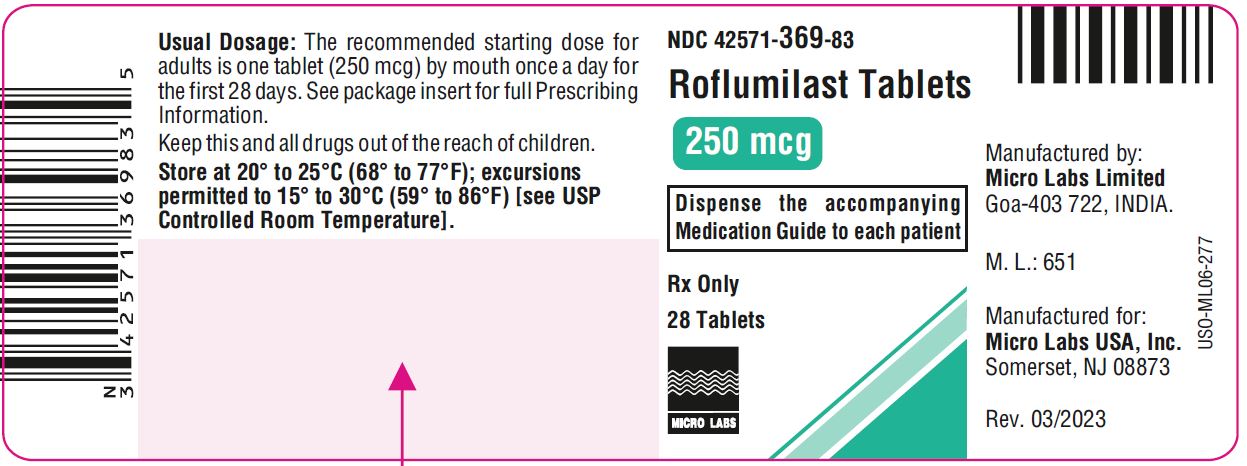
PACKAGE LABEL.PRINCIPAL DISPLAY PANEL NDC 42571-369-83 Roflumilast Tablets 250 mcg Dispense the accompanying Medication Guide to each patient Rx Only 28 Tablets MICRO LABS LIMITED NDC 42571-259-30 Roflumilast Tablets 500 mcg Dispense the accompanying Medication Guide to each patient Rx Only 30 Tablets MICRO LABS LIMITED NDC 42571-259-17 Roflumilast Tablets 500 mcg Dispense the accompanying Medication Guide to each patient Rx Only 110 (11X10) Unit-dose Tablets MICRO LABS LIMITED NDC 42571-259-32 Roflumilast Tablets 500 mcg Rx Only Blister of 10 Tablets MICRO LABS LIMITED roflumilast.jpg roflumilast-lbla.jpg roflumilast-carta.jpg roflumilast-blsta.jpg
Medicaid utilization by pack size
Medicare Part D spend CMS · PART D · 2026 (Q1)
About this NDC listing & data coverage
What data is (and isn’t) available for this NDC — tap to expand
| NDC identity (package / product / labeler codes) | ✓ Available |
| Labeler | ✓ Available |
| Product & package description | ✓ Available |
| Marketing category & status | ✓ Available |
| Active ingredient / dosage form / route | ✓ Available |
| FDA label (SPL via DailyMed) | ✓ Available |
| Package photos | ✓ Available |
| Inactive ingredients (structured) | ✓ Available |
| NADAC pharmacy acquisition price (CMS) | — Not published for this NDC CMS publishes NADAC only for NDCs reported in its retail-pharmacy survey. |
| Orange Book / therapeutic-equivalence data | ✓ Available |
| HCPCS J-code billing crosswalk | — Not published for this NDC Most self-administered / retail products have no J-code — that is normal. |
| Medicaid utilization (CMS SDUD) | — Not published for this NDC CMS reports utilization only for NDCs with Medicaid claims above its privacy threshold. |