
Irinotecan hydrochloride 20 mg/mL Injection, Solution — NDC 45963-614-85 (Billing 45963-0614-85)
This is a package of Irinotecan hydrochloride 20 mg/mL Injection, Solution from Actavis Pharma, Inc., no longer marketed (first marketed Mar 2015), no longer in the FDA NDC Directory.
NDC database record
One package, one record: these facts belong to NDC 45963-614-85 alone.
- Record
- FDA NDC Directory package listing · Human prescription drug
- Code segments
- 45963 labeler · 614 product · 85 package
- Barcode (UPC-A, from the NDC)
- 3 4596361485 8
- FDA record last changed
- Jul 24, 2026
Identity & classification
Regulatory identifiers FDA, NLM and CMS codes for this package
Drug-database identifiers Medi-Span GPI and First Databank GCN / HICL / AHFS classification
- GSN (GCN sequence number): 062174
- GCN: 97956
- GPI-14 (Medi-Span): 21550040102025
- HICL (First Databank): 010778
- AHFS class code: 10:00.00.00
- RxCUI (RxNorm): 1726319
Where does this data come from?
- FDA openFDA NDC Directory · synced Oct 1, 2026
- FDA label on DailyMed · label index refreshed Oct 5, 2026
- RxNorm (NLM RxNav) · catalog refreshed Oct 1, 2026
- Medi-Span GPI (licensed)
- First Databank (licensed) · refreshed Oct 1, 2026
RxNorm drug class
This medicine belongs to the Topoisomerase Inhibitor class.
Where does this data come from?
- RxClass (NLM) · catalog refreshed Oct 1, 2026
Clinical
- Irinotecan hydrochloride injection, including Camptosar, treats metastatic colon or rectum cancer. Onivyde, a different product, treats metastatic pancreatic adenocarcinoma in comb...
- It is given by IV infusion, usually over about 90 minutes, by your care team. The schedule depends on your regimen, so follow what your prescriber sets.
- Diarrhea is the main side effect to take seriously. Keep loperamide on hand as your team directs and start it at the first loose stool. Call your team promptly, especially if it co...
- Nausea, vomiting, belly pain, constipation, low appetite, tiredness, fever, low blood counts, and hair loss are common. Call your team for fever or signs of infection, since low wh...
Patient education
Supplement & herbal interactions
Some supplements/herbs that may interact with Irinotecan Hydrochloride — tap one for details:
Where does this data come from?
- MedlinePlus (NLM) · refreshed Oct 1, 2026
- FDA label on DailyMed · label index refreshed Oct 5, 2026
Ask a licensed pharmacist directly — free, answered by our team.
Pricing
A drug doesn't have one price. Each row is a different public payment system, and none is what you'd pay at the counter — that depends on your insurance. The ⓘ on each row explains what it measures.
| Price system | Per mL | Per package |
|---|---|---|
| Retail pharmacies payNADAC · weekly | Not in the retail survey — common for institutional, discontinued, or low-volume packs. | |
| Medicaid paysCMS SDUD · 12 mo | No recent Medicaid claims on file for this NDC — rare and low-volume NDCs are suppressed in the public data. | |
| Medicare drug plans payPart D · quarterly | No Part D plan price is available for this NDC in our data. | |
| Medicare Part B allowsASP · J9206 | $1.851 / J9206 unit | — |
Where does this data come from?
- CMS NADAC weekly file
- CMS ASP pricing files · refreshed Sep 20, 2026
- CMS Medicaid State Drug Utilization Data · refreshed Oct 5, 2026
- CMS Part D plan pricing files · refreshed Sep 24, 2026
- VA National Acquisition Center price file
Billing & reimbursement
Where does this data come from?
- CMS ASP NDC-HCPCS crosswalk · refreshed Sep 22, 2026
- DMEPDAC NDC-HCPCS crosswalk
- openFDA NSDE billing units · refreshed Sep 7, 2026
Packaging — all sizes for this product
| Package NDC | Description | Marketing start | Marketing end | Status |
|---|---|---|---|---|
| 45963-0614-85 You're viewing this | 1 VIAL, SINGLE-DOSE in 1 CARTON / 5 mL in 1 VIAL, SINGLE-DOSE | 2018-08-10 | — | Discontinued by firm |
| 45963-0614-51 45963-614-51 Main listing | 1 VIAL, SINGLE-DOSE in 1 CARTON / 2 mL in 1 VIAL, SINGLE-DOSE | 2015-03-12 | Sep 30, 2027 | Active |
| 45963-0614-55 45963-614-55 | 1 VIAL, SINGLE-DOSE in 1 CARTON / 5 mL in 1 VIAL, SINGLE-DOSE | 2015-03-12 | Sep 30, 2027 | Active |
This pack shows little to no recent Medicaid volume — a different pack size carries most fills. See all packs ↓
Pack size FAQ
What quantity is in this package?
What NDC number is used to bill for this package of Irinotecan hydrochloride 20 mg/mL Injection, Solution?
Therapeutic equivalents
| Product | Labeler | Pack | NADAC/unit | TE | Status | Price vs. this |
|---|---|---|---|---|---|---|
| Irinotecan Hydrochloride 20 mg/mL 00143-9583-01 | Hikma | 5 ml | — | AP | FDA listed | — |
| Irinotecan Hydrochloride 20 mg/mL 00143-9701-01 | Hikma | 5 ml | — | AP | FDA listed | — |
| Irinotecan Hydrochloride 20 mg/mL 00143-9702-01 | Hikma | 2 ml | — | AP | FDA listed | — |
| Irinotecan hydrochloride 20 mg/mL 16714-0027-01 | Northstar | 1 vial | — | AP | FDA listed | — |
| Irinotecan hydrochloride 20 mg/mL 16714-0131-01 | Northstar | 1 vial | — | AP | FDA listed | — |
| Irinotecan Hydrochloride 20 mg/mL 67184-0511-01 | Qilu | 1 vial | — | AP | FDA listed | — |
| Irinotecan Hydrochloride 20 mg/mL 67184-0512-01 | Qilu | 1 vial | — | AP | FDA listed | — |
| Irinotecan Hydrochloride 20 mg/mL 67184-0513-01 | Qilu | 1 vial | — | AP | FDA listed | — |
| Irinotecan hydrochloride 20 mg/mL 68083-0382-01 | Gland | 1 vial | — | AP | FDA listed | — |
| Irinotecan Hydrochloride 20 mg/mL 63323-0193-52 | Fresenius | 1 vial | — | AP | FDA listed | — |
| Irinotecan hydrochloride 20 mg/mLthis 45963-0614-85 | Actavis | 1 vial | — | AP | Discontinued | — |
| Camptosar 20 mg/mL 00009-7529-03 | Pharmacia | 1 vial | — | AP | Discontinued | — |
| Irinotecan Hydrochloride 20 mg/mL 55150-0353-01 | Eugia | 1 vial | — | AP | FDA listed | — |
| Irinotecan hydrochloride 20 mg/mL 70700-0170-22 | Xiromed | 1 vial | — | AP | FDA listed | — |
| Irinotecan Hydrochloride 20 mg/mL 55150-0355-01 | Eugia | 1 vial | — | AP | FDA listed | — |
| Irinotecan Hydrochloride 20 mg/mL 25021-0230-02 | Sagent | 1 vial | — | — | FDA listed | — |
| Camptosar 20 mg/mL 00009-0082-02 | Pharmacia | 1 vial | — | AP | FDA listed | — |
| Irinotecan Hydrochloride 20 mg/mL 55150-0354-01 | Eugia | 1 vial | — | AP | FDA listed | — |
| Irinotecan Hydrochloride 20 mg/mL 61703-0349-09 | Hospira, | 1 vial | — | AP | FDA listed | — |
| Camptosar 20 mg/mL 00009-0112-05 | Pharmacia | 1 vial | — | AP | FDA listed | — |
| Irinotecan Hydrochloride 20 mg/mL 60505-6128-00 | Apotex | 1 vial | — | AP | FDA listed | — |
| Irinotecan Hydrochloride 20 mg/mL 60505-6272-01 | Apotex | 1 vial | — | AP | FDA listed | — |
| Irinotecan Hydrochloride 20 mg/mL 55150-0352-01 | Eugia | 1 vial | — | AP | FDA listed | — |
Where does this data come from?
- FDA openFDA NDC Directory · synced Oct 1, 2026
- FDA Orange Book · refreshed Oct 3, 2026
- CMS NADAC weekly file
Availability & generic status
This product is an FDA-approved generic. Other versions of the same drug are listed under Therapeutic equivalents, least expensive first.
Where does this data come from?
- FDA Orange Book · refreshed Oct 3, 2026
Inactive Ingredients / Excipients
Inactive ingredients, also called excipients, are components of the drug product other than the active ingredient. They may include fillers, dyes, coatings, preservatives, flavors, or other formulation ingredients.
🧪 Avoiding an ingredient? See Irinotecan inactive ingredients by manufacturer: every current product's list side by side, so you can ask your pharmacy for the version that does not list it.
💡 Tap an ingredient (hover on desktop) to see what it is and why it’s used.
-
UNII QTT17582CB
A strong acid used to adjust and maintain the proper pH level in liquid medicines, ensuring stability and preventing breakdown of active ingredients.
-
UNII 33X04XA5AT
Lactic acid is a naturally occurring organic acid derived from milk or plant sources. It lowers and maintains pH in formulations, helps preserve the product, and can enhance ingredient stability and absorption.
-
UNII 55X04QC32I
A strong alkaline chemical used to adjust and maintain the pH balance of liquid medicines. It helps keep the medicine stable and ensures it stays effective during storage.
-
UNII 506T60A25R
Sorbitol is a natural sugar alcohol derived from glucose. It serves as a sweetener, humectant, and bulking agent in medications to improve taste and help maintain moisture in the product.
4 inactive ingredients listed in the exact product block matched to this NDC.
Where does this data come from?
ingredient classCode="IACT" elements from the exact product block matched by this NDC. Label-section narrative from DailyMed / the openFDA label index is shown separately when available.- FDA label on DailyMed · label index refreshed Oct 5, 2026
- FDA openFDA NDC Directory · synced Oct 1, 2026
Inactive ingredient FAQ
Are inactive ingredients the same for every manufacturer?
Why might an inactive ingredient be missing?
Can inactive ingredients matter?
Manufacturer & labeler
More NDCs from Actavis Pharma, Inc. labeler code 45963
- Deferasirox 500 mg Tablet, For Suspension NDC 45963-456-30
- Gabapentin 100 mg Capsule NDC 45963-555-00
- Gabapentin 300 mg Capsule NDC 45963-556-00
- Gabapentin 400 mg Capsule NDC 45963-557-00
- Vinorelbine 10 mg/mL Injection, Solution NDC 45963-607-55
- Fludarabine phosphate 50 mg/2mL Injection, Powder, Lyophilized, For Solution NDC 45963-609-55
- Topotecan hydrochloride 4 mg/4mL Injection, Powder, Lyophilized, For Solution NDC 45963-615-56
- metoprolol succinate 50 mg Tablet, Film Coated, Extended Release NDC 45963-676-11
- metoprolol succinate 100 mg Tablet, Film Coated, Extended Release NDC 45963-677-11
- metoprolol succinate 200 mg Tablet, Film Coated, Extended Release NDC 45963-678-11
- metoprolol succinate 25 mg Tablet, Film Coated, Extended Release NDC 45963-709-11
- Doxorubicin hydrochloride 2 mg/mL Injection, Solution NDC 45963-733-55
Where does this data come from?
- FDA openFDA NDC Directory · synced Oct 1, 2026
- Drugs@FDA
Full prescribing information FDA SPL
🚨 Boxed Warning ▾
WARNING: DIARRHEA and MYELOSUPPRESSION Early and late forms of diarrhea can occur. Early diarrhea may be accompanied by cholinergic symptoms which may be prevented or ameliorated by atropine. Late diarrhea can be life threatening and should be treated promptly with loperamide.
Monitor patients with diarrhea and give fluid and electrolytes as needed. Institute antibiotic therapy if patients develop ileus, fever, or severe neutropenia. Interrupt Irinotecan Hydrochloride Injection and reduce subsequent doses if severe diarrhea occurs [see Dosage and Administration ( 2.2 ) and Warnings and Precautions ( 5.1 )] .
Severe myelosuppression may occur [see Warnings and Precautions ( 5.2 )] . WARNING: DIARRHEA and MYELOSUPPRESSION See full prescribing information for complete boxed warning. Early and late forms of diarrhea can occur.
Early diarrhea may be accompanied by cholinergic symptoms which may be prevented or ameliorated by atropine. Late diarrhea can be life threatening and should be treated promptly with loperamide. Monitor patients with diarrhea and give fluid and electrolytes as needed.
Institute antibiotic therapy if patients develop ileus, fever, or severe neutropenia. Interrupt Irinotecan Hydrochloride Injection and reduce subsequent doses if severe diarrhea occurs. ( 2.2 , 5.1 ) Severe myelosuppression may occur.
( 5.2 )
🎯 Indications and Usage ▾
1 INDICATIONS AND USAGE Irinotecan Hydrochloride Injection is indicated as a component of first-line therapy in combination with 5-fluorouracil (5-FU) and leucovorin (LV) for patients with metastatic carcinoma of the colon or rectum. Irinotecan Hydrochloride Injection is indicated for patients with metastatic carcinoma of the colon or rectum whose disease has recurred or progressed following initial fluorouracil-based therapy. Irinotecan Hydrochloride Injection is a topoisomerase inhibitor indicated for: First-line therapy in combination with 5-fluorouracil and leucovorin for patients with metastatic carcinoma of the colon or rectum.
( 1 ) Patients with metastatic carcinoma of the colon or rectum whose disease has recurred or progressed following initial fluorouracil-based therapy. ( 1 )
⏱️ Dosage and Administration ▾
2 DOSAGE AND ADMINISTRATION Colorectal cancer combination regimen 1: Irinotecan Hydrochloride Injection 125 mg/m 2 intravenous infusion over 90 minutes on days 1, 8,15, 22 with LV 20 mg/m 2 intravenous bolus infusion on days 1, 8, 15, 22 followed by 5-FU intravenous bolus infusion on days 1, 8, 15, 22 every 6 weeks. ( 2.1 ) Colorectal cancer combination regimen 2: Irinotecan Hydrochloride Injection 180 mg/m 2 intravenous infusion over 90 minutes on days 1, 15, 29 with LV 200 mg/m 2 intravenous infusion over 2 hours on days 1, 2, 15, 16, 29, 30 followed by 5-FU 400 mg/m 2 intravenous bolus infusion on days 1, 2, 15, 16, 29, 30 and 5-FU 600 mg/m 2 intravenous infusion over 22 hours on days 1, 2, 15, 16, 29, 30.
( 2.1 ) Colorectal cancer single-agent regimen 1: Irinotecan Hydrochloride Injection 125 mg/m 2 intravenous infusion over 90 minutes on days 1, 8, 15, 22 then 2-week rest. ( 2.2 ) Colorectal cancer single-agent regimen 2: Irinotecan Hydrochloride Injection 350 mg/m 2 intravenous infusion over 90 minutes on day 1 every 3 weeks. ( 2.2 )
2.1Colorectal Cancer Combination Regimens 1 and 2 Administer Irinotecan Hydrochloride Injection as a 90-minute intravenous infusion followed by LV and 5-FU. The currently recommended regimens are shown in Table 1. A reduction in the starting dose by one dose level of Irinotecan Hydrochloride Injection may be considered for patients with any of the following conditions: prior pelvic/abdominal radiotherapy, performance status of 2, or increased bilirubin levels.
Dosing for patients with bilirubin > 2 mg/dL cannot be recommended because there is insufficient information to recommend a dose in these patients. Table 1. Combination-Agent Dosage Regimens and Dose Modifications a Regimen 1 6-wk cycle with bolus 5-FU/LV (next cycle begins on day 43) Irinotecan Hydrochloride Injection LV 5-FU 125 mg/m 2 intravenous infusion over 90 minutes, days 1,8,15,22 20 mg/m 2 intravenous injection bolus, days 1,8,15,22 500 mg/m 2 intravenous injection bolus, days 1,8,15,22 Starting Dose & Modified Dose Levels (mg/m 2 ) Starting Dose Dose Level -1 Dose Level -2 Irinotecan Hydrochloride Injection 125 100 75 LV 20 20 20 5-FU 500 400 300 Regimen 2 6-wk cycle with infusional 5-FU/LV (next cycle begins on day 43) Irinotecan Hydrochloride Injection LV 5-FU Bolus 5-FU Infusion b 180 mg/m 2 intravenous infusion over 90 minutes, days 1,15,29 200 mg/m 2 intravenous infusion over 2 hours, days 1,2,15,16,29,30 400 mg/m 2 intravenous injection bolus, days 1,2,15,16,29,30 600 mg/m 2 intravenous infusion over 22 hours, days 1,2,15,16,29,30 Starting Dose & Modified Dose Levels (mg/m 2 ) Starting Dose Dose Level -1 Dose Level -2 Irinotecan Hydrochloride Injection 180 150 120 LV 200 200 200 5-FU Bolus 400 320 240 5-FU Infusion b 600 480 360 a Dose reductions beyond Dose Level –2 by decrements of ≈ 20% may be warranted for patients continuing to experience toxicity.
Provided intolerable toxicity does not develop, treatment with additional cycles may be continued indefinitely as long as patients continue to experience clinical benefit. b Infusion follows bolus administration. Dosing for patients with bilirubin > 2 mg/dL cannot be recommended because there is insufficient information to recommend a dose in these patients [see Warnings and Precautions ( 5.10 ), Use in Specific Populations ( 8.7 ) and Clinical Pharmacology ( 12.3 )] . Dose Modifications Based on recommended dose levels described in Table 1, Combination Regimens of Irinotecan Hydrochloride Injection and Dose Modifications, subsequent doses should be adjusted as suggested in Table 2, Recommended Dose Modifications for Combination Regimens.
All dose modifications should be based on the worst preceding toxicity. Table 2. Recommended Dose Modifications for Irinotecan Hydrochloride Injection/5-Fluorouracil (5-FU)/Leucovorin (LV) Combination Schedules Patients should return to pre-treatment bowel function without requiring antidiarrhea medications for at least 24 hours befor… [Excerpted — this section continues on DailyMed.]
💊 Dosage Forms and Strengths ▾
3 DOSAGE FORMS AND STRENGTHS Injection: 40 mg/2 mL (20 mg/mL) and 100 mg/5 mL (20 mg/mL) sterile, pale yellow, clear, aqueous solution in a single-dose vial. Injection: 40 mg/2 mL (20 mg/mL) and 100 mg/5 mL (20 mg/mL) solution in a single-dose vial. ( 3 )
⛔ Contraindications ▾
4 CONTRAINDICATIONS Irinotecan Hydrochloride Injection is contraindicated in patients with a known hypersensitivity to the drug or its excipients. Hypersensitivity to Irinotecan Hydrochloride Injection or its excipients ( 4 )
⚠️ Warnings and Cautions ▾
5 WARNINGS AND PRECAUTIONS Diarrhea and Cholinergic Reactions: Early diarrhea (occurring during or shortly after infusion of Irinotecan Hydrochloride Injection) is usually transient and may be accompanied by cholinergic symptoms. Consider prophylactic or therapeutic administration of 0.25 mg to 1 mg of intravenous or subcutaneous atropine (unless clinically contraindicated). Late diarrhea (generally occurring more than 24 hours after administration of Irinotecan Hydrochloride Injection) can occur.
Monitor and replace fluid and electrolytes. Treat with loperamide. Use antibiotic support for ileus and fever.
Interrupt Irinotecan Hydrochloride Injection and reduce subsequent doses if severe diarrhea occurs. ( 5.1 ) Myelosuppression: Manage promptly with antibiotic support. Interrupt Irinotecan Hydrochloride Injection and reduce subsequent doses if necessary.
( 5.2 ) Increased Risk of Neutropenia in Patients with Reduced UGT1A1 Activity: Individuals with UGT1A1*28/*28, or *6/*6, or *6/*28 genotypes are at increased risk for severe neutropenia during Irinotecan Hydrochloride Injection treatment. ( 5.3 ) Hypersensitivity: Hypersensitivity reactions including severe anaphylactic or anaphylactoid reactions have been observed. Discontinue Irinotecan Hydrochloride Injection if this occurs.
( 5.4 ) Renal Impairment/Renal Failure: Rare cases of renal impairment and acute renal failure have been identified, usually in patients who became volume depleted from severe vomiting and/or diarrhea. ( 5.5 ) Pulmonary Toxicity: Interstitial Pulmonary Disease (IPD)-like events, including fatalities, have occurred. Interrupt for new or progressive dyspnea, cough, and fever pending evaluation.
If IPD diagnosed, discontinue and institute appropriate treatment as needed. ( 5.6 ) Toxicity of the 5 Day Regimen: Irinotecan Hydrochloride Injection should not be used in combination with a regimen of 5-FU/LV administered for 4 to 5 consecutive days every 4 weeks outside of a clinical study. ( 5.7 ) Embryo-Fetal Toxicity: Irinotecan Hydrochloride Injection can cause fetal harm.
Advise females of reproductive potential of the potential risk to a fetus and to use effective contraception. Advise male patients with female partners of reproductive potential to use condoms. ( 5.9 , 8.1 , 8.3 ) Patients with Hepatic Impairment: In clinical trials, Irinotecan Hydrochloride Injection has not been administered to patients with serum bilirubin > 2.0 mg/dL, or transaminases > 3 times ULN if no liver metastases, or transaminases > 5 times ULN if liver metastases.
With the weekly dosage schedule, patients with total bilirubin levels 1.0 to 2.0 mg/dL had greater likelihood of grade 3 to 4 neutropenia. ( 5.10 )
5.1Diarrhea and Cholinergic Reactions Early diarrhea (occurring during or shortly after infusion of Irinotecan Hydrochloride Injection) is usually transient and infrequently severe. It may be accompanied by cholinergic symptoms of rhinitis, increased salivation, miosis, lacrimation, diaphoresis, flushing, and intestinal hyperperistalsis that can cause abdominal cramping. Bradycardia may also occur.
Early diarrhea and other cholinergic symptoms may be prevented or treated. Consider prophylactic or therapeutic administration of 0.25 mg to 1 mg of intravenous or subcutaneous atropine (unless clinically contraindicated). These symptoms are expected to occur more frequently with higher irinotecan doses.
Late diarrhea (generally occurring more than 24 hours after administration of Irinotecan Hydrochloride Injection) can be life threatening since it may be prolonged and may lead to dehydration, electrolyte imbalance, or sepsis. Grade 3 to 4 late diarrhea occurred in 23 to 31% of patients receiving weekly dosing. In the clinical studies, the median time to the onset of late diarrhea was 5 days with 3-week dosing and 11 days with weekly dosing.
Late diarrhea can be complicated by colitis, ulceration, bleeding, ileus, obstruction, and infection. Cases of megacolon and intestinal… [Excerpted — this section continues on DailyMed.]
🤒 Adverse Reactions ▾
6 ADVERSE REACTIONS Common adverse reactions (≥ 30%) observed in combination therapy clinical studies are: nausea, vomiting, abdominal pain, diarrhea, constipation, anorexia, mucositis, neutropenia, leukopenia (including lymphocytopenia), anemia, thrombocytopenia, asthenia, pain, fever, infection, abnormal bilirubin, alopecia. ( 6.1 ) Common adverse reactions (≥ 30%) observed in single-agent therapy clinical studies are: nausea, vomiting, abdominal pain, diarrhea, constipation, anorexia, neutropenia, leukopenia (including lymphocytopenia), anemia, asthenia, fever, body weight decreasing, alopecia.
( 6.1 ) To report SUSPECTED ADVERSE REACTIONS, contact Teva at 1-888-838-2872 or FDA at 1-800-FDA-1088 or www.fda.gov/medwatch.
6.1Clinical Studies Experience Because clinical trials are conducted under widely varying conditions, adverse reaction rates observed in the clinical trials of a drug cannot be directly compared to rates in the clinical trials of another drug and may not reflect the rates observed in clinical practice. Common adverse reactions (≥ 30%) observed in combination therapy clinical studies are: nausea, vomiting, abdominal pain, diarrhea, constipation, anorexia, mucositis, neutropenia, leukopenia (including lymphocytopenia), anemia, thrombocytopenia, asthenia, pain, fever, infection, abnormal bilirubin, and alopecia.
Common adverse reactions (≥ 30%) observed in single-agent therapy clinical studies are: nausea, vomiting, abdominal pain, diarrhea, constipation, anorexia, neutropenia, leukopenia (including lymphocytopenia), anemia, asthenia, fever, body weight decreasing, and alopecia. First-Line Combination Therapy A total of 955 patients with metastatic colorectal cancer received the recommended regimens of irinotecan in combination with 5-FU/LV, 5-FU/LV alone, or irinotecan alone. In the two phase 3 studies, 370 patients received irinotecan in combination with 5-FU/LV, 362 patients received 5-FU/LV alone, and 223 patients received irinotecan alone [see Dosage and Administration ( 2 )] .
In Study 1, 49 (7.3%) patients died within 30 days of last study treatment: 21 (9.3%) received irinotecan in combination with 5-FU/LV, 15 (6.8%) received 5-FU/LV alone, and 13 (5.8%) received irinotecan alone. Deaths potentially related to treatment occurred in 2 (0.9%) patients who received irinotecan in combination with 5-FU/LV (2 neutropenic fever/sepsis), 3 (1.4%) patients who received 5-FU/LV alone (1 neutropenic fever/sepsis, 1 CNS bleeding during thrombocytopenia, 1 unknown) and 2 (0.9%) patients who received irinotecan alone (2 neutropenic fever).
Deaths from any cause within 60 days of first study treatment were reported for 15 (6.7%) patients who received irinotecan in combination with 5-FU/LV, 16 (7.3%) patients who received 5-FU/LV alone, and 15 (6.7%) patients who received irinotecan alone. Discontinuations due to adverse events were reported for 17 (7.6%) patients who received irinotecan in combination with 5FU/LV, 14 (6.4%) patients who received 5-FU/LV alone, and 26 (11.7%) patients who received irinotecan alone. In Study 2, 10 (3.5%) patients died within 30 days of last study treatment: 6 (4.1%) received irinotecan in combination with 5-FU/LV and 4 (2.8%) received 5-FU/LV alone.
There was one potentially treatment-related death, which occurred in a patient who received irinotecan in combination with 5-FU/LV (0.7%, neutropenic sepsis). Deaths from any cause within 60 days of first study treatment were reported for 3 (2.1%) patients who received irinotecan in combination with 5-FU/LV and 2 (1.4%) patients who received 5-FU/LV alone. Discontinuations due to adverse events were reported for 9 (6.2%) patients who received irinotecan in combination with 5FU/LV and 1 (0.7%) patient who received 5-FU/LV alone.
The most clinically significant adverse events for patients receiving irinotecan-based therapy were diarrhea, nausea, vomiting, neutropenia, and alopecia. The most clinically significant adverse events for patients r… [Excerpted — this section continues on DailyMed.]
🔄 Drug Interactions ▾
7 DRUG INTERACTIONS Strong CYP3A4 Inducers: Do not administer strong CYP3A4 inducers with Irinotecan Hydrochloride Injection. ( 7.2 ) Strong CYP3A4 Inhibitors: Do not administer strong CYP3A4 inhibitors with Irinotecan Hydrochloride Injection. ( 7.3 ) 7.1 5-Fluorouracil (5-FU) and Leucovorin (LV) In a phase 1 clinical study involving irinotecan, 5-fluorouracil (5-FU), and leucovorin (LV) in 26 patients with solid tumors, the disposition of irinotecan was not substantially altered when the drugs were co-administered.
Although the C max and AUC 0-24 of SN-38, the active metabolite, were reduced (by 14% and 8%, respectively) when irinotecan was followed by 5-FU and LV administration compared with when irinotecan was given alone, this sequence of administration was used in the combination trials and is recommended [see Dosage and Administration ( 2 )] . Formal in vivo or in vitro drug interaction studies to evaluate the influence of irinotecan on the disposition of 5-FU and LV have not been conducted.
7.2Strong CYP3A4 Inducers Exposure to irinotecan or its active metabolite SN-38 is substantially reduced in adult and pediatric patients concomitantly receiving the CYP3A4 enzyme-inducing anticonvulsants phenytoin, phenobarbital, carbamazepine, or St. John’s wort. The appropriate starting dose for patients taking these or other strong inducers such as rifampin and rifabutin has not been defined.
Consider substituting non-enzyme inducing therapies at least 2 weeks prior to initiation of Irinotecan Hydrochloride Injection therapy. Do not administer strong CYP3A4 inducers with Irinotecan Hydrochloride Injection unless there are no therapeutic alternatives.
7.3Strong CYP3A4 or UGT1A1 Inhibitors Irinotecan and its active metabolite, SN-38, are metabolized via the human cytochrome P450 3A4 isoenzyme (CYP3A4) and uridine diphosphate-glucuronosyl transferase 1A1 (UGT1A1), respectively, [see Clinical Pharmacology (12.3) ] . Patients receiving concomitant ketoconazole, a CYP3A4 and UGT1A1 inhibitor, have increased exposure to irinotecan and its active metabolite SN-38. Coadministration of Irinotecan Hydrochloride Injection with other inhibitors of CYP3A4 (e.g., clarithromycin, indinavir, itraconazole, lopinavir, nefazodone, nelfinavir, ritonavir, saquinavir, telaprevir, voriconazole) or UGT1A1 (e.g., atazanavir, gemfibrozil, indinavir) may increase systemic exposure to irinotecan or SN-38.
Discontinue strong CYP3A4 inhibitors at least 1 week prior to starting Irinotecan Hydrochloride Injection therapy. Do not administer strong CYP3A4 or UGT1A1 inhibitors with Irinotecan Hydrochloride Injection unless there are no therapeutic alternatives.
👥 Use in Specific Populations ▾
8 USE IN SPECIFIC POPULATIONS Lactation: Advise not to breastfeed. ( 8.2 ) Geriatric Use: Closely monitor patients greater than 65 years of age because of a greater risk of early and late diarrhea in this population. ( 8.5 ) Patients with Renal Impairment: Use caution and do not use in patients on dialysis. ( 8.6 ) Patients with Hepatic Impairment: Use caution. (2.1, 5.10 , 8.7 , 12.3 )
8.1Pregnancy Risk Summary Based on findings from animal studies and its mechanism of action, Irinotecan Hydrochloride Injection can cause fetal harm when administered to a pregnant woman [see Clinical Pharmacology ( 12.1 )] . Available postmarketing and published data reporting the use of Irinotecan Hydrochloride Injection in pregnant women, are insufficient and confounded by the concomitant use of other cytotoxic drugs, to evaluate for any drug-associated risk for major birth defects, miscarriage, or adverse maternal or fetal outcomes.
In animal studies, intravenous administration of irinotecan to rats and rabbits during the period of organogenesis resulted in embryofetal mortality and teratogenicity in pregnant animals at exposures lower than the human exposure based on AUC at the clinical dose of 125 mg/m 2 ( see Data ). Advise pregnant women of the potential risk to a fetus. In the U.S. general population, the estimated background risk of major birth defects and miscarriage in clinically recognized pregnancies is 2 to 4% and 15 to 20%, respectively.
Data Animal Data Radioactivity related to 14 C-irinotecan crosses the placenta of rats following intravenous administration. Intravenous administration of irinotecan to rats at a dose of 6 mg/kg/day (approximately 0.2 times the clinical exposure (AUC) at the 125 mg/m 2 dose based on exposure data from a separate rat study) during the period of organogenesis resulted in increased post-implantation loss and decreased numbers of live fetuses; at doses ≥ 1.2 mg/kg/day (approximately 0.03 times the clinical exposure (AUC) at the 125 mg/m 2 dose based on exposure data from a separate rat study) there were increases in a variety of external, visceral, and skeletal abnormalities.
Administration of irinotecan to pregnant rabbits at a dose of 6 mg/kg (approximately half of the clinical dose of 125 mg/m 2 based on BSA) resulted in similar findings to those in rats, with increased post-implantation loss, decreased live fetuses, and increased external, visceral, and skeletal abnormalities. Irinotecan administered to rat dams for the period following organogenesis through weaning at doses of 6 mg/kg/day caused decreased learning ability and decreased female body weights in the offspring.
8.2Lactation Risk Summary Irinotecan and its metabolites are present in human milk. There is no information regarding the effects of irinotecan on the breastfed infant, or on milk production. Because of the potential for serious adverse reactions from Irinotecan Hydrochloride Injection in the breastfed child, advise lactating women not to breastfeed during treatment with Irinotecan Hydrochloride Injection and for 7 days after the final dose.
8.3Females and Males of Reproductive Potential Pregnancy Testing Verify the pregnancy status in female patients of reproductive potential prior to initiating Irinotecan Hydrochloride Injection. Contraception Irinotecan Hydrochloride Injection can cause fetal harm when administered to a pregnant woman. Females Advise female patients of reproductive potential to use effective contraception during treatment and for 6 months after the final dose of Irinotecan Hydrochloride Injection [see Use in Specific Populations ( 8.1 ) and Nonclinical Toxicology ( 13.1 )] .
Males Due to the potential for genotoxicity, advise male patients with female partners of reproductive potential to use condoms during treatment and for 3 months after the final dose of Irinotecan Hydrochloride Injection [see Nonclinical Toxicology ( 13.1 )]. Infertility Females Based on postmarketing reports, female fertility may b… [Excerpted — this section continues on DailyMed.]
🆘 Overdosage ▾
10 OVERDOSAGE In U.S. phase 1 trials, single doses of up to 345 mg/m 2 of irinotecan were administered to patients with various cancers. Single doses of up to 750 mg/m 2 of irinotecan have been given in non-U.S. trials. The adverse events in these patients were similar to those reported with the recommended dosage and regimen.
There have been reports of overdosage at doses up to approximately twice the recommended therapeutic dose, which may be fatal. The most significant adverse reactions reported were severe neutropenia and severe diarrhea. There is no known antidote for overdosage of Irinotecan Hydrochloride Injection.
Maximum supportive care should be instituted to prevent dehydration due to diarrhea and to treat any infectious complications.
🧬 Clinical Pharmacology ▾
12 CLINICAL PHARMACOLOGY
12.1Mechanism of Action Irinotecan is a derivative of camptothecin. Camptothecins interact specifically with the enzyme topoisomerase I, which relieves torsional strain in DNA by inducing reversible single-strand breaks. Irinotecan and its active metabolite SN-38 bind to the topoisomerase I-DNA complex and prevent religation of these single-strand breaks.
Current research suggests that the cytotoxicity of irinotecan is due to double-strand DNA damage produced during DNA synthesis when replication enzymes interact with the ternary complex formed by topoisomerase I, DNA, and either irinotecan or SN-38. Mammalian cells cannot efficiently repair these double-strand breaks.
12.2Pharmacodynamics Irinotecan serves as a water-soluble precursor of the lipophilic metabolite SN-38. SN-38 is formed from irinotecan by carboxylesterase-mediated cleavage of the carbamate bond between the camptothecin moiety and the dipiperidino side chain. SN-38 is approximately 1000 times as potent as irinotecan as an inhibitor of topoisomerase I purified from human and rodent tumor cell lines.
In vitro cytotoxicity assays show that the potency of SN-38 relative to irinotecan varies from 2- to 2000-fold; however, the plasma area under the concentration versus time curve (AUC) values for SN-38 are 2% to 8% of irinotecan and SN-38 is 95% bound to plasma proteins compared to approximately 50% bound to plasma proteins for irinotecan [see Clinical Pharmacology (12.3) ] . The precise contribution of SN-38 to the activity of Irinotecan Hydrochloride Injection is thus unknown. Both irinotecan and SN-38 exist in an active lactone form and an inactive hydroxy acid anion form.
A pH-dependent equilibrium exists between the two forms such that an acid pH promotes the formation of the lactone, while a more basic pH favors the hydroxy acid anion form. Administration of irinotecan has resulted in antitumor activity in mice bearing cancers of rodent origin and in human carcinoma xenografts of various histological types.
12.3Pharmacokinetics After intravenous infusion of irinotecan in humans, irinotecan plasma concentrations decline in a multiexponential manner, with a mean terminal elimination half-life of about 6 to 12 hours. The mean terminal elimination half-life of the active metabolite SN-38 is about 10 to 20 hours. The half-lives of the lactone (active) forms of irinotecan and SN-38 are similar to those of total irinotecan and SN-38, as the lactone and hydroxy acid forms are in equilibrium.
Over the recommended dose range of 50 to 350 mg/m 2 , the AUC of irinotecan increases linearly with dose; the AUC of SN-38 increases less than proportionally with dose. Maximum concentrations of the active metabolite SN-38 are generally seen within 1 hour following the end of a 90-minute infusion of irinotecan. Pharmacokinetic parameters for irinotecan and SN-38 following a 90-minute infusion of irinotecan at dose levels of 125 and 340 mg/m 2 determined in two clinical studies in patients with solid tumors are summarized in Table 9: Table 9.
Summary of Mean (±Standard Deviation) Irinotecan and SN-38 Pharmacokinetic Parameters in Patients with Solid Tumors Irinotecan SN-38 Dose C max AUC 0-24 t 1/2 V z CL C max AUC 0-24 t 1/2 (mg/ m 2 ) (ng/mL) (ng·h/mL) (h) L/m 2 ) (L/h/m 2 ) (ng/mL) (ng·h/mL) (h) C max - Maximum plasma concentration AUC 0-24 - Area under the plasma concentration-time curve from time 0 to 24 hours after the end of the 90-minute infusion t 1/2 - Terminal elimination half-life V z - Volume of distribution of terminal elimination phase CL - Total systemic clearance a Plasma specimens collected for 24 hours following the end of the 90-minute infusion. b Plasma specimens collected for 48 hours following the end of the 90-minute infusion.
Because of the longer collection period, these values provide a more accurate reflection of the terminal elimination half-lives of irinotecan and SN-38. 125 1,660 10,200 5.8 a 110 13.3 26.3 229 10.4 a (N=64)… [Excerpted — this section continues on DailyMed.]
📦 How Supplied / Storage and Handling ▾
16 HOW SUPPLIED/STORAGE AND HANDLING Irinotecan Hydrochloride Injection, USP is available as a sterile, pale yellow, clear, aqueous solution in a single-dose, amber glass vial within a carton in the following presentations: 40 mg/2 mL (20 mg/mL) NDC 45963-614-51 100 mg/5 mL (20 mg/mL) NDC 45963-614-55 Store at 20°C to 25°C (68°F to 77°F) [See USP Controlled Room Temperature]. Protect from light. It is recommended that the vial should remain in the carton until the time of use.
Inspect the vial for damage and visible signs of leaks before removing from the carton. If damaged, incinerate the unopened package. Sterile, Nonpyrogenic, Preservative-free.
The vial stopper is not made with natural rubber latex. Irinotecan Hydrochloride Injection, USP is a hazardous drug. Follow special handling and disposal procedures.
1
📋 Description ▾
11 DESCRIPTION Irinotecan Hydrochloride Injection, USP is an antineoplastic agent of the topoisomerase I inhibitor class. Irinotecan Hydrochloride Injection, USP is supplied as a sterile, pale yellow, clear, aqueous solution. Each milliliter of solution contains 20 mg of irinotecan hydrochloride, USP (on the basis of the trihydrate salt), 45 mg of sorbitol, and 0.9 mg of lactic acid.
The pH of the solution has been adjusted to 3.4 (range, 3.0 to 3.8) with sodium hydroxide or hydrochloric acid. Irinotecan Hydrochloride Injection, USP is intended for dilution with 5% Dextrose Injection, USP (D5W), or 0.9% Sodium Chloride Injection, USP, prior to intravenous infusion. The preferred diluent is 5% Dextrose Injection, USP.
Irinotecan hydrochloride, USP is a semisynthetic derivative of camptothecin, an alkaloid extract from plants such as Camptotheca acuminata or is chemically synthesized. The chemical name is (S) -4,11-diethyl-3,4,12,14-tetrahydro-4-hydroxy-3,14-dioxo1 H -pyrano[3’,4’:6,7]-indolizino[1,2-b]quinolin-9-yl-[1,4’bipiperidine]-1’-carboxylate, monohydrochloride, trihydrate. Its molecular formula is C 33 H 38 N 4 O 6 •HCl•3H 2 O and molecular weight is 677.19.
It is slightly soluble in water and organic solvents. Its structural formula is as follows: 9a178e71-figure-01
💬 Information for Patients ▾
17 PATIENT COUNSELING INFORMATION Patients and caregivers should be informed of gastrointestinal complications, such as nausea, vomiting, abdominal cramping, and diarrhea. Patients should have loperamide readily available to begin treatment for late diarrhea (generally occurring more than 24 hours after administration of Irinotecan Hydrochloride Injection). Begin loperamide at the first episode of poorly formed or loose stools or the earliest onset of bowel movements more frequent than normal.
One dosage regimen for loperamide is 4 mg at the first onset of late diarrhea and then 2 mg every 2 hours until the patient is diarrhea-free for at least 12 hours. Loperamide is not recommended to be used for more than 48 consecutive hours at these doses, because of the risk of paralytic ileus. During the night, the patient may take 4 mg of loperamide every 4 hours.
Patients should contact their physician if any of the following occur: diarrhea for the first time during treatment; black or bloody stools; symptoms of dehydration such as lightheadedness, dizziness, or faintness; inability to take fluids by mouth due to nausea or vomiting; or inability to get diarrhea under control within 24 hours. Patients should be warned about the potential for dizziness or visual disturbances which may occur within 24 hours following the administration of Irinotecan Hydrochloride Injection. Explain the significance of routine blood cell counts.
Instruct patients to monitor their temperature frequently and immediately report any occurrence of fever or infection. Embryo-Fetal Toxicity [see Warnings and Precautions ( 5.9 ), Use in Specific Populations ( 8.1 , 8.3 ), Clinical Pharmacology ( 12.1 ) and Nonclinical Toxicology ( 13.1 )] Advise pregnant women and females of reproductive potential of the potential risk to a fetus and to inform their healthcare provider of a known or suspected pregnancy. Advise females of reproductive potential to use effective contraception during treatment with Irinotecan Hydrochloride Injection and for 6 months after the final dose.
Advise male patients with female partners of reproductive potential to use condoms during treatment and for 3 months after the final dose of Irinotecan Hydrochloride Injection. Lactation Advise women not to breastfeed during treatment with Irinotecan Hydrochloride Injection and for at least 7 days after the final dose [see Use in Specific Populations ( 8.2 )] . Infertility Advise females and males of reproductive potential that Irinotecan Hydrochloride Injection may impair fertility [see Use in Specific Populations ( 8.3 )].
Patients should be alerted to the possibility of alopecia. Contains sorbitol. Manufactured In Romania By: Sindan Pharma SRL Bucharest 1, Romania 011171 Manufactured For: Teva Pharmaceuticals Parsippany, NJ 07054 Rev.
D 5/2025
🔬 Clinical Studies ▾
14 CLINICAL STUDIES Irinotecan has been studied in clinical trials in combination with 5-fluorouracil (5-FU) and leucovorin (LV) and as a single-agent [see Dosage and Administration (2)] . When given as a component of combination-agent treatment, irinotecan was either given with a weekly schedule of bolus 5-FU/LV or with an every-2-week schedule of infusional 5-FU/LV. Weekly and once-every-3-week dosage schedules were used for the single-agent irinotecan studies.
Clinical studies of combination and single-agent use are described below.
14.1Metastatic Colorectal Cancer First-Line Therapy in Combination with 5-FU/LV: Studies 1 and 2 Two phase 3, randomized, controlled, multinational clinical trials support the use of Irinotecan Hydrochloride Injection as first-line treatment of patients with metastatic carcinoma of the colon or rectum. In each study, combinations of irinotecan with 5-FU and LV were compared with 5-FU and LV alone. Study 1 compared combination irinotecan/bolus 5-FU/LV therapy given weekly with a standard bolus regimen of 5-FU/LV alone given daily for 5 days every 4 weeks; an irinotecan-alone treatment arm given on a weekly schedule was also included.
Study 2 evaluated two different methods of administering infusional 5-FU/LV, with or without irinotecan. In both studies, concomitant medications such as antiemetics, atropine, and loperamide were given to patients for prophylaxis and/or management of symptoms from treatment. In Study 2, a 7-day course of fluoroquinolone antibiotic prophylaxis was given in patients whose diarrhea persisted for greater than 24 hours despite loperamide or if they developed a fever in addition to diarrhea.
Treatment with oral fluoroquinolone was also initiated in patients who developed an absolute neutrophil count (ANC) < 500/mm 3 , even in the absence of fever or diarrhea. Patients in both studies also received treatment with intravenous antibiotics if they had persistent diarrhea or fever or if ileus developed. In both studies, the combination of irinotecan/5-FU/LV therapy resulted in significant improvements in objective tumor response rates, time to tumor progression, and survival when compared with 5-FU/LV alone.
These differences in survival were observed in spite of second-line therapy in a majority of patients on both arms, including crossover to irinotecan-containing regimens in the control arm. Patient characteristics and major efficacy results are shown in Table 10. Table 10.
Combination Dosage Schedule: Study Results Study 1 Study 2 Irinotecan + Bolus 5-FU/LV weekly x 4 every 6 weeks Bolus 5-FU/LV daily x 5 every 4 weeks Irinotecan weekly x 4 every 6 weeks Irinotecan + Infusional 5-FU/LV Infusional 5-FU/LV Number of patients 231 226 226 198 187 Demographics and treatment administration Female/Male (%) 34/65 45/54 35/64 33/67 47/53 Median age in years (range) 62 (25 to 85) 61 (19 to 85) 61 (30 to 87) 62 (27 to 75) 59 (24 to 75) Performance status (%) 0 39 41 46 51 51 1 46 45 46 42 41 2 15 13 8 7 8 Primary tumor (%) Colon 81 85 84 55 65 Rectum 17 14 15 45 35 Median time from diagnosis to randomization 1.9 1.7 1.8 4.5 2.7 (months, range) (0 to 161) (0 to 203) (0.1 to 185) (0 to 88) (0 to 104) Prior adjuvant 5-FU therapy (%) No 89 92 90 74 76 Yes 11 8 10 26 24 Median duration of study treatment a (months) 5.5 4.1 3.9 5.6
4.5Median Relative Dose Intensity (%) a Irinotecan 72 --- 75 87 --- 5-FU 71 86 --- 86 93 Efficacy Results Confirmed objective tumor response rate b (%) 39 21 18 35 22 (p < 0.0001) c (p < 0.005) c Median time to tumor progression d (months) 7.0 4.3 4.2 6.7 4.4 (p=0.004) d (p < 0.001) d Median survival 14.8 12.6 12.0 17.4 14.1 (months) (p < 0.05) d (p < 0.05) d a Study 1: N=225 (irinotecan/5-FU/LV),N=219 (5-FU/LV),N=223 (irinotecan) Study 2: N=199 (irinotecan/5-FU/LV),N=186 (5-FU/LV) b Confirmed ≥ 4 to 6 weeks after first evidence of objective response c Chi-square test d Log-rank test Improvement was noted with irinotecan-based combination therapy relative to 5… [Excerpted — this section continues on DailyMed.]
🧪 Nonclinical Toxicology ▾
13 NONCLINICAL TOXICOLOGY
13.1Carcinogenesis, Mutagenesis, Impairment of Fertility Long-term carcinogenicity studies with irinotecan were not conducted. Rats were, however, administered intravenous doses of 2 mg/kg or 25 mg/kg irinotecan once per week for 13 weeks (in separate studies, the 25 mg/kg dose produced an irinotecan C max and AUC that were about 7.0 times and 1.3 times the respective values in patients administered 125 mg/m 2 weekly) and were then allowed to recover for 91 weeks. Under these conditions, there was a significant linear trend with dose for the incidence of combined uterine horn endometrial stromal polyps and endometrial stromal sarcomas.
Irinotecan was clastogenic both in vitro (chromosome aberrations in Chinese hamster ovary cells) and in vivo (micronucleus test in mice). Neither irinotecan nor its active metabolite SN-38 was mutagenic in the in vitro Ames assay. No significant adverse effects on fertility and general reproductive performance were observed after intravenous administration of irinotecan in doses of up to 6 mg/kg/day to rats and rabbits; however, atrophy of male reproductive organs was observed after multiple daily irinotecan doses both in rodents at 20 mg/kg and in dogs at 0.4 mg/kg.
In separate studies in rodents, this dose produced an irinotecan C max and AUC about 5 and 1 times, respectively, of the corresponding values in patients administered 125 mg/m 2 weekly. In dogs this dose produced an irinotecan C max and AUC about one-half and 1/15th, respectively, of the corresponding values in patients administered 125 mg/m 2 weekly.
📚 References ▾
15 REFERENCES 1. “OSHA Hazardous Drugs.” OSHA. http://www.osha.gov/SLTC/hazardousdrugs/index.html
📄 Package Label / Principal Display Panel ▾
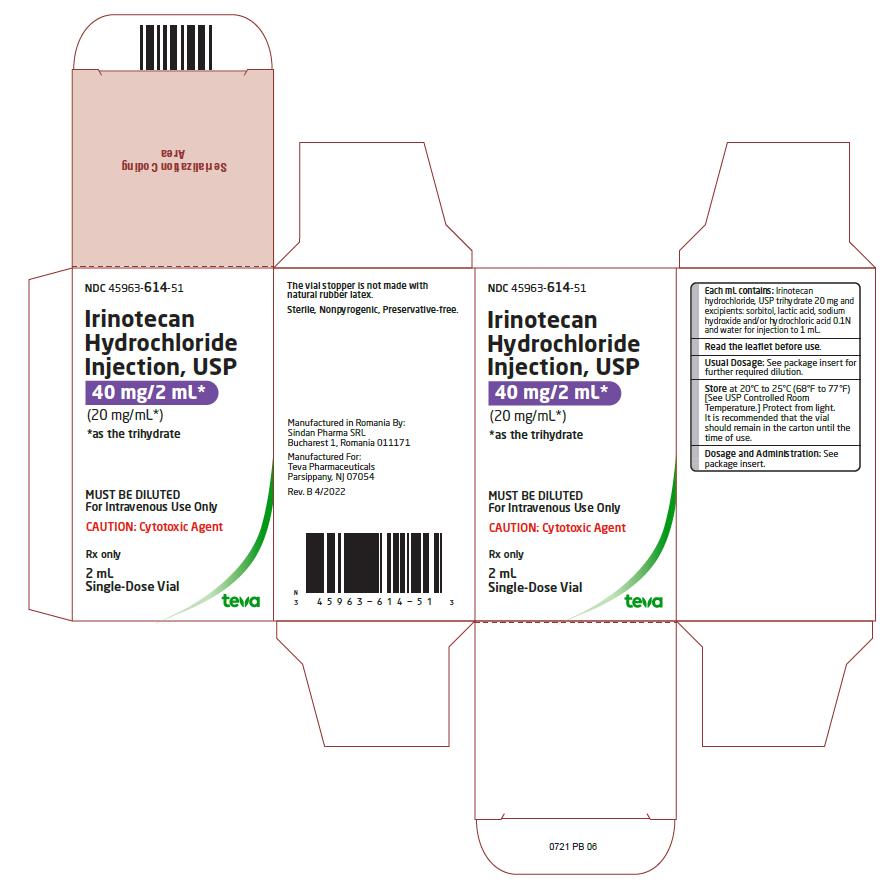
PACKAGE LABEL.PRINCIPAL DISPLAY PANEL NDC 45963-614-51 Irinotecan Hydrochloride Injection, USP 40 mg/ 2 mL* (20 mg/mL*) *as the trihydrate MUST BE DILUTED For Intravenous Use Only CAUTION: Cytotoxic Agent Rx only 2 mL Single-Dose Vial new
Medicaid utilization by pack size
About this NDC listing & data coverage
What data is (and isn’t) available for this NDC — tap to expand
| NDC identity (package / product / labeler codes) | ✓ Available |
| Labeler | ✓ Available |
| Product & package description | ✓ Available |
| Marketing category & status | ✓ Available |
| Active ingredient / dosage form / route | ✓ Available |
| FDA label (SPL via DailyMed) | ✓ Available |
| Package photos | ✓ Available |
| Inactive ingredients (structured) | ✓ Available |
| NADAC pharmacy acquisition price (CMS) | — Not published for this NDC CMS publishes NADAC only for NDCs reported in its retail-pharmacy survey. |
| Orange Book / therapeutic-equivalence data | ✓ Available |
| HCPCS J-code billing crosswalk | ✓ Available |
| Medicaid utilization (CMS SDUD) | — Not published for this NDC CMS reports utilization only for NDCs with Medicaid claims above its privacy threshold. |