
Selzentry maraviroc 150 mg Tablet, Film Coated, 60-count — NDC 49702-223-18 (Billing 49702-0223-18)
This is a package of 60 tablets of Selzentry maraviroc 150 mg Tablet, Film Coated from ViiV Healthcare Company, marketed since May 2011 and currently FDA-listed; retail pharmacies pay about $28.02 per tablet (NADAC). It is this product's only package size.
NDC database record
One package, one record: these facts belong to NDC 49702-223-18 alone.
- Record
- FDA NDC Directory package listing · Human prescription drug
- Code segments
- 49702 labeler · 223 product · 18 package
- Package marketed since
- May 16, 2011
- Sample package
- No — commercial package
- Listing certified through
- Dec 31, 2027
- Billing quantity
- 60 EA per package
- Barcode (UPC-A, from the NDC)
- 3 4970222318 9
- Medicaid fills, this package
- 283 prescriptions in the last four reported quarters
- FDA record last changed
- Jul 24, 2026
Identity & classification
Regulatory identifiers FDA, NLM and CMS codes for this package
Drug-database identifiers Medi-Span GPI and First Databank GCN / HICL / AHFS classification
- GSN (GCN sequence number): 062974
- GCN: 98734
- GPI-14 (Medi-Span): 12102060000320
- HICL (First Databank): 034927
- AHFS class code: 08:18.08.04
- RxCUI (RxNorm): 728223
Where does this data come from?
- FDA openFDA NDC Directory · synced Oct 8, 2026
- FDA label on DailyMed · label index refreshed Oct 6, 2026
- RxNorm (NLM RxNav) · catalog refreshed Oct 1, 2026
- Medi-Span GPI (licensed)
- First Databank (licensed) · refreshed Oct 8, 2026
RxNorm drug class
This medicine belongs to the CCR5 Co-receptor Antagonist class.
Where does this data come from?
- RxClass (NLM) · catalog refreshed Oct 1, 2026
Clinical
- Maraviroc is not a cure for HIV. It's an antiviral medication that helps control CCR5-tropic HIV-1 by blocking the virus from entering your immune cells. When taken consistently as...
- What exactly is maraviroc treating — is it a cure for HIV?
- Maraviroc only works against one specific type of HIV called CCR5-tropic HIV-1. Some people have a strain that uses a different receptor (CXCR4-tropic) or one that uses both — and...
- Why do I need a test before I can even start this medication?
Patient education
Supplement & herbal interactions
Some supplements/herbs that may interact with Maraviroc — tap one for details:
Where does this data come from?
- MedlinePlus (NLM) · refreshed Oct 1, 2026
- FDA label on DailyMed · label index refreshed Oct 6, 2026
Ask a licensed pharmacist directly — free, answered by our team.
Pricing
A drug doesn't have one price. Each row is a different public payment system, and none is what you'd pay at the counter — that depends on your insurance. The ⓘ on each row explains what it measures.
| Price system | Per ea | Per package |
|---|---|---|
| Retail pharmacies payNADAC · weekly | $28.016 | $1,680.95 / 60 tablets |
| Medicaid paysCMS SDUD · 12 mo | $28.05 | $1,682.87 / 60 tablets |
| Medicare drug plans payPart D · Q2 2026 | $28.25 | $1,694.87 / 60 tablets |
Where does this data come from?
- CMS NADAC weekly file · file of Oct 7, 2026
- CMS ASP pricing files · refreshed Sep 20, 2026
- CMS Medicaid State Drug Utilization Data · through Q1 2026
- CMS Part D plan pricing files · refreshed Sep 24, 2026
- VA National Acquisition Center price file
Packaging — all sizes for this product
| Package NDC | Description | Marketing start | Marketing end | Status |
|---|---|---|---|---|
| 49702-0223-18 You're viewing this Main listing | 60 TABLET, FILM COATED in 1 BOTTLE | 2011-05-16 | — | Active |
Therapeutic equivalents
| Product | Labeler | Pack | NADAC/unit | TE | Status | Price vs. this |
|---|---|---|---|---|---|---|
| Maraviroc 150 mg 31722-0579-60 | Camber | 60 tablets | $9.150 | AB | Availability likely | save 67% |
| Maraviroc 150 mg 70710-1930-06 | Zydus | 60 tablets | $9.150 | AB | Availability likely | save 67% |
| Maraviroc 150 mg 72319-0024-02 | i3 | 60 tablets | $9.150 | AB | Availability likely | save 67% |
| Selzentry 150 mgthis 49702-0223-18 | ViiV | 60 tablets | $28.016 | AB | Availability likely | — |
| Selzentry 150 mg 50090-6238-00 | A-S | 60 tablets | — | AB | FDA listed | — |
| Maraviroc 150 mg 68475-0008-01 | Navinta | 60 tablets | — | AB | FDA listed | — |
| Maraviroc 150 mg 68554-3079-00 | Hetero | 60 tablets | — | AB | Discontinued | — |
| Maraviroc 150 mg 72865-0231-60 | XLCare | 60 tablets | — | AB | FDA listed | — |
| Maraviroc 150 mg 73141-0024-02 | A2A | 60 tablets | — | AB | FDA listed | — |
| Maraviroc 150 mg 50090-8010-00 | A-S | 60 tablets | — | AB | FDA listed | — |
| Maraviroc 150 mg 42858-0246-06 | Rhodes | 60 tablets | — | — | FDA listed | — |
Where does this data come from?
- FDA openFDA NDC Directory · synced Oct 8, 2026
- FDA Orange Book · refreshed Oct 3, 2026
- CMS NADAC weekly file · file of Oct 7, 2026
Availability & generic status
FDA-approved generic versions are listed, and recent pricing/market data suggests they may be available — see Therapeutic equivalents.
Where does this data come from?
- FDA Orange Book · refreshed Oct 3, 2026
What it looks like
Where does this data come from?
- FDA label on DailyMed · label index refreshed Oct 6, 2026
Inactive Ingredients / Excipients
Inactive ingredients, also called excipients, are components of the drug product other than the active ingredient. They may include fillers, dyes, coatings, preservatives, flavors, or other formulation ingredients.
🧪 Avoiding an ingredient? See Maraviroc inactive ingredients by manufacturer: every current product's list side by side, so you can ask your pharmacy for the version that does not list it.
💡 Tap an ingredient (hover on desktop) to see what it is and why it’s used.
-
UNII LMI26O6933
Alumina is a white powder form of aluminum oxide. It's used as a filler to add bulk to tablets and capsules, and sometimes as a thickening or anti-caking agent in powdered formulations.
-
UNII L11K75P92J
A mineral salt made from calcium and phosphate. It acts as a filler and binder in tablets to add bulk and help hold the medicine together in solid form.
-
UNII L06K8R7DQK
A synthetic blue dye approved by the FDA for use in medications and foods. It serves as a colorant to make pills and liquids visually distinct and easier to identify.
-
UNII H1109Z9J4N
A natural emulsifier derived from soybean oil. It helps mix oil and water-based ingredients together, ensuring even distribution of active ingredients throughout the medicine.
-
UNII 70097M6I30
Magnesium stearate is a salt made from magnesium and stearic acid, a fatty substance. It's used in tablets and capsules as a lubricant and glidant to help ingredients flow smoothly during manufacturing and prevent sticking.
-
UNII OP1R32D61U
Microcrystalline cellulose is a purified form of cellulose, a natural fiber from plant sources. It acts as a binder and filler in tablets and capsules, helping hold ingredients together and give the medicine its shape and size.
-
UNII 3WJQ0SDW1A
Polyethylene glycol is a synthetic liquid or solid polymer used in medicines as a solvent, lubricant, and humectant. It helps dissolve active ingredients, reduces friction during manufacturing, and retains moisture in the final product.
-
UNII 532B59J990
Polyvinyl alcohol is a synthetic polymer made from plant-derived materials. It's used as a binder to hold ingredients together, a film-former in coatings, and a thickener in liquid formulations.
-
UNII 5856J3G2A2
A starch-based powder made from potatoes and processed with sodium. It acts as a disintegrant, helping the tablet or capsule break apart quickly in the stomach so the medicine can be absorbed.
-
UNII 7SEV7J4R1U
A powder made from a naturally occurring mineral. In medicines, talc works as a glidant and anti-caking agent, helping tablets and capsules flow smoothly during manufacturing and preventing clumping.
-
UNII 15FIX9V2JP
Titanium dioxide is a bright white mineral powder commonly used as a colorant and opacifying agent. It makes pills and tablets white or lighter in color and helps make coatings non-transparent.
11 inactive ingredients listed in the exact product block matched to this NDC.
Where does this data come from?
ingredient classCode="IACT" elements from the exact product block matched by this NDC. Label-section narrative from DailyMed / the openFDA label index is shown separately when available.- FDA label on DailyMed · label index refreshed Oct 6, 2026
- FDA openFDA NDC Directory · synced Oct 8, 2026
Inactive ingredient FAQ
Are inactive ingredients the same for every manufacturer?
Why might an inactive ingredient be missing?
Can inactive ingredients matter?
Manufacturer & labeler
More NDCs from ViiV Healthcare Company labeler code 49702
- Epivir lamivudine 300 mg Tablet, Film Coated NDC 49702-204-13
- EPIVIR lamivudine 10 mg/mL Solution NDC 49702-205-48
- Retrovir zidovudine 100 mg Capsule NDC 49702-211-20
- RETROVIR zidovudine 10 mg/mL Solution NDC 49702-212-48
- RETROVIR zidovudine 10 mg/mL Injection, Solution NDC 49702-213-26
- ZIAGEN abacavir sulfate 20 mg/mL Solution NDC 49702-222-48
- Selzentry maraviroc 300 mg Tablet, Film Coated NDC 49702-224-18
- Tivicay dolutegravir sodium 10 mg Tablet, Film Coated NDC 49702-226-13
- Tivicay dolutegravir sodium 25 mg Tablet, Film Coated NDC 49702-227-13
- Tivicay dolutegravir sodium 50 mg Tablet, Film Coated NDC 49702-228-13
- Triumeq abacavir sulfate, dolutegravir sodium, lamivudine 600 mg; 50 mg; 300 mg Tablet, Film Coated NDC 49702-231-13
- Cabenuva cabotegravir and rilpivirine Kit NDC 49702-240-15
Where does this data come from?
- FDA openFDA NDC Directory · synced Oct 8, 2026
- Drugs@FDA
Full prescribing information FDA SPL
🚨 Boxed Warning ▾
WARNING: HEPATOTOXICITY Hepatotoxicity has been reported with use of SELZENTRY. Severe rash or evidence of a systemic allergic reaction (e.g., fever, eosinophilia, or elevated IgE) prior to the development of hepatotoxicity may occur. Patients with signs or symptoms of hepatitis or allergic reaction following use of SELZENTRY should be evaluated immediately [see Warnings and Precautions ( 5.1 )] .
WARNING: HEPATOTOXICITY See full prescribing information for complete boxed warning. • Hepatotoxicity has been reported which may be preceded by severe rash or other features of a systemic allergic reaction (e.g., fever, eosinophilia, or elevated IgE). ( 5.1 ) • Immediately evaluate patients with signs or symptoms of hepatitis or allergic reaction. ( 5.1 )
🎯 Indications and Usage ▾
1 INDICATIONS AND USAGE SELZENTRY is indicated in combination with other antiretroviral agents for the treatment of only CCR5‑tropic human immunodeficiency virus type 1 (HIV‑1) infection in adult and pediatric patients weighing at least 2 kg. Limitations of Use • SELZENTRY is not recommended in patients with dual/mixed- or CXCR4-tropic HIV-1 [see Microbiology ( 12.4 )]. SELZENTRY is a CCR5 co-receptor antagonist indicated in combination with other antiretroviral agents for the treatment of only CCR5-tropic HIV-1 infection in adults and pediatric patients weighing at least 2 kg.
( 1 ) Limitations of Use: • Not recommended in patients with dual/mixed- or CXCR4-tropic HIV-1. ( 1 )
⏱️ Dosage and Administration ▾
2 DOSAGE AND ADMINISTRATION • Prior to initiation of SELZENTRY for treatment of HIV-1 infection, test all patients for CCR5 tropism using a highly sensitive tropism assay. ( 2.1 ) • SELZENTRY tablets and oral solution are taken twice daily by mouth and may be taken with or without food. SELZENTRY must be given in combination with other antiretroviral medications.
( 2.2 ) Recommended Dosage in Adult Patients: ( 2.3 ) Concomitant Medications Dosage of SELZENTRY When given with potent cytochrome P450 (CYP)3A inhibitors (with or without potent CYP3A inducers) including PIs (except tipranavir/ritonavir) ( 2.3 , 7.1 ) 150 mg twice daily With NRTIs, tipranavir/ritonavir, nevirapine, raltegravir, and other drugs that are not potent CYP3A inhibitors or CYP3A inducers ( 2.3 , 7.1 ) 300 mg twice daily With potent and moderate CYP3A inducers including efavirenz (without a potent CYP3A inhibitor) ( 2.3 , 7.1 ) 600 mg twice daily A more complete list of coadministered drugs is listed in Dosage and Administration .
( 2 ) Recommended Dosage in Pediatric Patients Weighing at Least 2 kg: Administer twice daily. Dosage should be based on body weight (kg) and concomitant medications and should not exceed the recommended adult dose. ( 2.4 ) Recommended Dosage in Patients with Renal Impairment: Dose adjustment may be necessary in adult patients with renal impairment.
( 2.5 )
2.1Testing prior to Initiation of SELZENTRY Prior to initiation of SELZENTRY for treatment of HIV-1 infection, test all patients for CCR5 tropism using a highly sensitive tropism assay. SELZENTRY is recommended for patients with only CCR5-tropic HIV-1 infection. Outgrowth of pre-existing low-level CXCR4- or dual/mixed-tropic HIV-1 not detected by tropism testing at screening has been associated with virologic failure on SELZENTRY [see Microbiology ( 12.4 ), Clinical Studies ( 14.1 )] .
Monitor patients for alanine aminotransferase (ALT), aspartate aminotransferase (AST), and bilirubin prior to initiation of SELZENTRY and at other time points during treatment as clinically indicated [see Warnings and Precautions ( 5.1 )].
2.2General Dosing Recommendations • SELZENTRY tablets and oral solution are taken twice daily by mouth and may be taken with or without food. • SELZENTRY must be given in combination with other antiretroviral medications. • The recommended dosage of SELZENTRY differs based on concomitant medications due to drug interactions.
2.3Recommended Dosage in Adult Patients with Normal Renal Function Table 1 displays oral dosage of SELZENTRY based on different concomitant medications [see Drug Interactions ( 7.1 )] . Table 1. Recommended Dosage in Adults Concomitant Medications Dosage of SELZENTRY a Potent CYP3A inhibitors (with or without a potent CYP3A inducer) including: clarithromycin, cobicistat, elvitegravir/ritonavir, itraconazole, ketoconazole, nefazodone, protease inhibitors (except tipranavir/ritonavir), telithromycin. b Noninteracting concomitant medications include all medications that are not potent CYP3A inhibitors or inducers such as: dolutegravir, enfuvirtide, nevirapine, all nucleoside reverse transcriptase inhibitors (NRTIs), raltegravir, and tipranavir/ritonavir. c Potent and moderate CYP3A inducers (without a potent CYP3A inhibitor) including: carbamazepine, efavirenz, etravirine, phenobarbital, phenytoin, and rifampin.
Potent cytochrome P450 (CYP)3A inhibitors (with or without a potent CYP3A inducer) a 150 mg twice daily Noninteracting concomitant medications b 300 mg twice daily Potent and moderate CYP3A inducers (without a potent CYP3A inhibitor) c 600 mg twice daily
2.4Recommended Dosage in Pediatric Patients with Normal Renal Function The recommended dosage of SELZENTRY should be based on body weight (kg) and should not exceed the recommended adult dose. The recommended dosage also differs based on concomitant medications due to drug interactions ( Table 2 and Table 3 ) [see Drug Interactions ( 7.1 ), Use in Specific Populations ( 8.4 )] . Be… [Excerpted — this section continues on DailyMed.]
💊 Dosage Forms and Strengths ▾
3 DOSAGE FORMS AND STRENGTHS Tablets: • 25-mg blue, oval, film-coated tablets debossed with “MVC 25” on one side and plain on the other. • 75-mg blue, oval, film-coated tablets debossed with “MVC 75” on one side and plain on the other. • 150-mg blue, oval, film-coated tablets debossed with “MVC 150” on one side and plain on the other. • 300-mg blue, oval, film-coated tablets debossed with “MVC 300” on one side and plain on the other. Oral Solution: • 20 mg per mL clear, colorless, strawberry-flavored oral solution. • Tablets: 25 mg, 75 mg, 150 mg and 300 mg.
( 3 ) • Oral Solution: 20 mg per mL ( 3 )
⛔ Contraindications ▾
4 CONTRAINDICATIONS SELZENTRY is contraindicated in patients with severe renal impairment or ESRD (creatinine clearance [CrCl] less than 30 mL per minute) who are concomitantly taking potent CYP3A inhibitors or inducers [see Warnings and Precautions ( 5.3 )]. SELZENTRY is contraindicated in patients with severe renal impairment or end-stage renal disease (ESRD) (creatinine clearance [CrCl] less than 30 mL per minute) who are concomitantly taking potent CYP3A inhibitors or inducers. ( 4 )
⚠️ Warnings and Cautions ▾
5 WARNINGS AND PRECAUTIONS • Hepatotoxicity accompanied by severe rash or systemic allergic reaction, including potentially life-threatening events, has been reported. Hepatic laboratory parameters including alanine aminotransferase (ALT), aspartate aminotransferase (AST), and bilirubin should be obtained prior to starting SELZENTRY and at other time points during treatment as clinically indicated. If rash or symptoms or signs of hepatitis or allergic reaction develop, hepatic laboratory parameters should be monitored and discontinuation of treatment should be considered.
When administering SELZENTRY to patients with pre-existing liver dysfunction or who are co-infected with hepatitis B and/or C virus, additional monitoring may be warranted. ( 5.1 ) • Severe and potentially life-threatening skin and hypersensitivity reactions have been reported in patients taking SELZENTRY. This includes cases of Stevens-Johnson syndrome, hypersensitivity reaction, and toxic epidermal necrolysis.
Immediately discontinue SELZENTRY and other suspected agents if signs or symptoms of severe skin or hypersensitivity reactions develop and monitor clinical status, including liver aminotransferases, closely. ( 5.2 ) • More cardiovascular events, including myocardial ischemia and/or infarction, were observed in treatment-experienced subjects who received SELZENTRY. Additional monitoring may be warranted.
( 5.3 ) • If patients with severe renal impairment or ESRD receiving SELZENTRY (without concomitant CYP3A inducers or inhibitors) experience postural hypotension, the dose of SELZENTRY should be reduced from 300 mg twice daily to 150 mg twice daily. ( 5.3 )
5.1Hepatotoxicity Hepatotoxicity with allergic features including life-threatening events has been reported in clinical trials and postmarketing. Severe rash or evidence of systemic allergic reaction including drug-related rash with fever, eosinophilia, elevated IgE, or other systemic symptoms have been reported in conjunction with hepatotoxicity [see Warnings and Precautions ( 5.2 )] . These events occurred approximately 1 month after starting treatment.
Among reported cases of hepatitis, some were observed in the absence of allergic features or with no pre-existing hepatic disease. Appropriate laboratory testing including ALT, AST, and bilirubin should be conducted prior to initiating therapy with SELZENTRY and at other time points during treatment as clinically indicated. Hepatic laboratory parameters should be obtained in any patient who develops rash, or signs or symptoms of hepatitis, or allergic reaction.
Discontinuation of SELZENTRY should be considered in any patient with signs or symptoms of hepatitis, or with increased liver transaminases combined with rash or other systemic symptoms. When administering SELZENTRY to patients with pre-existing liver dysfunction or who are co-infected with hepatitis B and/or C virus, additional monitoring may be warranted. The safety and efficacy of SELZENTRY have not been specifically studied in patients with significant underlying liver disorders.
5.2Severe Skin and Hypersensitivity Reactions Severe, potentially life-threatening skin and hypersensitivity reactions have been reported in patients taking SELZENTRY, in most cases concomitantly with other drugs associated with these reactions. These include cases of Stevens-Johnson syndrome (SJS), toxic epidermal necrolysis (TEN), and drug rash with eosinophilia and systemic symptoms (DRESS) [see Adverse Reactions ( 6.2 )] . The cases were characterized by features including rash, constitutional findings, and sometimes organ dysfunction, including hepatic failure.
Discontinue SELZENTRY and other suspected agents immediately if signs or symptoms of severe skin or hypersensitivity reactions develop (including, but not limited to, severe rash or rash accompanied by fever, malaise, muscle or joint aches, blisters, oral lesions, conjunctivitis, facial edema, lip swelling, eosinophilia). Delay in stopping treatmen… [Excerpted — this section continues on DailyMed.]
🤒 Adverse Reactions ▾
6 ADVERSE REACTIONS The following adverse reactions are discussed in other sections of the labeling: • Hepatotoxicity [see Boxed Warning , Warnings and Precautions ( 5.1 )] • Severe Skin and Hypersensitivity Reactions [see Warnings and Precautions ( 5.2 )] • Cardiovascular Events [see Warnings and Precautions ( 5.3 )] • The most common adverse events in treatment-experienced adult subjects (greater than 8% incidence) which occurred at a higher frequency compared with placebo are upper respiratory tract infections, cough, pyrexia, rash, and dizziness.
( 6.1 ) • The most common adverse events in treatment-naive adult subjects (greater than 8% incidence) which occurred at a higher frequency than the comparator arm are upper respiratory tract infections, bronchitis, flatulence, bloating and distention, upper respiratory tract signs and symptoms, and gastrointestinal atonic and hypomotility disorders. ( 6.1 ) • The most common adverse reactions in treatment-experienced pediatric subjects (greater than or equal to 3% incidence) are vomiting, abdominal pain, diarrhea, nausea, and dizziness.
( 6.1 ) To report SUSPECTED ADVERSE REACTIONS, contact ViiV Healthcare at 1-877-844-8872 or FDA at 1-800-FDA-1088 or www.fda.gov/medwatch.
6.1Clinical Trials Experience Because clinical trials are conducted under widely varying conditions, adverse reaction rates observed in the clinical trials of a drug cannot be directly compared with rates in the clinical trials of another drug and may not reflect the rates observed in practice. Clinical Trials Experience in Adult Subjects Treatment ‑ Experienced Subjects: The safety profile of SELZENTRY is primarily based on 840 HIV-1–infected subjects who received at least 1 dose of SELZENTRY during two Phase 3 trials.
A total of 426 of these subjects received the indicated twice‑daily dosing regimen. Assessment of treatment‑emergent adverse events is based on the pooled data from 2 trials in subjects with CCR5-tropic HIV‑1 (A4001027 and A4001028). The median duration of therapy with SELZENTRY for subjects in these trials was 48 weeks, with the total exposure on SELZENTRY twice daily at 309 patient‑years versus 111 patient‑years on placebo each administered with optimized background therapy (OBT).
The population was 89% male and 84% white, with mean age of 46 years (range: 17 to 75 years). Subjects received dose equivalents of 300 mg maraviroc once or twice daily. The most common adverse events reported with twice‑daily therapy with SELZENTRY with frequency rates higher than placebo, regardless of causality, were upper respiratory tract infections, cough, pyrexia, rash, and dizziness.
In these 2 trials, the rate of discontinuation due to adverse events was 5% for subjects who received SELZENTRY twice daily + OBT as well as those who received placebo + OBT. Most of the adverse events reported were judged to be mild to moderate in severity. The data described below occurred with twice‑daily dosing of SELZENTRY.
The total numbers of subjects reporting infections were 233 (55%) and 84 (40%) in the group receiving SELZENTRY twice daily and the placebo group, respectively. Correcting for the longer duration of exposure on SELZENTRY compared with placebo, the exposure‑adjusted frequency (rate per 100 subject‑years) of these events was 133 for both SELZENTRY twice daily and placebo. Dizziness or postural dizziness occurred in 8% of subjects on either SELZENTRY or placebo, with 2 subjects (0.5%) on SELZENTRY permanently discontinuing therapy (1 due to syncope, 1 due to orthostatic hypotension) versus 1 subject on placebo (0.5%) permanently discontinuing therapy due to dizziness.
Treatment-emergent adverse events, regardless of causality, from Trials A4001027 and A4001028 are summarized in Table 5 . Selected events occurring at greater than or equal to 2% of subjects and at a numerically higher rate in subjects treated with SELZENTRY are included; events that occurred at the same or higher rate on placebo are not displ… [Excerpted — this section continues on DailyMed.]
🔄 Drug Interactions ▾
7 DRUG INTERACTIONS • Coadministration with CYP3A inhibitors, including protease inhibitors (except tipranavir/ritonavir), will increase the concentration of SELZENTRY. ( 7.1 ) • Coadministration with CYP3A inducers, including efavirenz, may decrease the concentration of SELZENTRY. ( 7.1 ) • Coadministration with St. John’s wort is not recommended. ( 7.1 )
7.1Effect of Concomitant Drugs on the Pharmacokinetics of Maraviroc Maraviroc is metabolized by CYP3A and is also a substrate for P-glycoprotein (P-gp), organic anion-transporting polypeptide (OATP)1B1, and multidrug resistance-associated protein (MRP)2. The pharmacokinetics of maraviroc are likely to be modulated by inhibitors and inducers of CYP3A and P-gp and may be modulated by inhibitors of OATP1B1 and MRP2. Therefore, a dosage adjustment may be required when maraviroc is coadministered with those drugs [see Dosage and Administration ( 2.3 , 2.4 )] .
Concomitant use of maraviroc and St. John's wort ( Hypericum perforatum ) or products containing St. John's wort is not recommended.
Coadministration of maraviroc with St. John's wort is expected to substantially decrease maraviroc concentrations and may result in suboptimal levels of maraviroc and lead to loss of virologic response and possible resistance to maraviroc. Additional drug interaction information is available [see Clinical Pharmacology ( 12.3 )] .
👥 Use in Specific Populations ▾
8 USE IN SPECIFIC POPULATIONS • Lactation: Women infected with HIV should be instructed not to breastfeed due to the potential for HIV transmission. ( 8.2 )
8.1Pregnancy Pregnancy Exposure Registry There is a pregnancy exposure registry that monitors pregnancy outcomes in women exposed to SELZENTRY during pregnancy. Physicians are encouraged to register patients by calling the Antiretroviral Pregnancy Registry (APR) at 1-800-258-4263. Risk Summary Limited data on the use of SELZENTRY during pregnancy from the APR and case reports are not sufficient to inform a drug-associated risk of birth defects and miscarriage.
In animal reproduction studies, no evidence of adverse developmental outcomes was observed with maraviroc. During organogenesis in the rat and rabbit, systemic exposures (AUC) to maraviroc were approximately 20 times (rats) and 5 times (rabbits) the exposure in humans at the recommended 300-mg twice-daily dose. In the rat pre- and post-natal development study, maternal systemic exposure (AUC) to maraviroc was approximately 14 times the exposure in humans at the recommended 300-mg twice-daily dose (see Data).
The estimated background risk of major birth defects and miscarriage for the indicated population is unknown. All pregnancies have a background risk of birth defect, loss, or other adverse outcomes. In the U.S. general population, the estimated background risk of major birth defects and miscarriage in clinically recognized pregnancies is 2% to 4% and 15% to 20%, respectively.
Data Animal Data: Maraviroc was administered orally to pregnant rats (up to 1,000 mg per kg per day) and rabbits (up to 75 mg per kg per day) on gestation Days 6 to 17 and 7 to 19, respectively. No adverse effects on embryo-fetal development were observed at these dose levels, resulting in exposures (AUC) approximately 20 times (rats) and 5 times (rabbits) higher than human exposures at the recommended daily dose. In the rat pre- and post-natal development study, maraviroc was administered orally at up to 1,000 mg per kg per day on gestation Day 6 to lactation/post-partum Day 20, with development of the offspring (including fertility and reproductive performance) unaffected by maternal administration of maraviroc at an exposure (AUC) approximately 14 times higher than human exposure at the recommended daily dose.
8.2Lactation Risk Summary The Centers for Disease Control and Prevention recommend that HIV‑1–infected mothers in the United States not breastfeed their infants to avoid risking postnatal transmission of HIV‑1 infection. There are no data on the presence of maraviroc in human milk, the effects on the breastfed infant, or the effects on milk production. When administered to lactating rats, maraviroc was present in milk (see Data) .
Because of the potential for (1) HIV transmission (in HIV-negative infants), (2) developing viral resistance (in HIV-positive infants), and (3) serious adverse reactions in a breastfed infant similar to those seen in adults, instruct mothers not to breastfeed if they are receiving SELZENTRY. Data Maraviroc (and related metabolites) was excreted into the milk of lactating rats following a single oral dose of maraviroc (100 mg per kg) on lactation Day 12, with a maximal milk concentration achieved one hour post-administration at a milk concentration approximately 2.5 times that of maternal plasma concentrations.
8.4Pediatric Use The safety and efficacy of SELZENTRY have been established in pediatric patients aged from birth to less than 18 years. The use of SELZENTRY in pediatric patients was supported by pharmacokinetic and safety data described below and by previous demonstration of efficacy in adult patients [see Indications and Usage ( 1 ), Dosage and Administration ( 2.4 )]. HIV-1–Infected Pediatric Patients Aged 2 to Less Than 18 Years: The safety, pharmacokinetic profile, and antiviral activity of SELZENTRY were evaluated in treatment-experienced, CCR5-tropic, HIV-1–infected pediatric subjects aged… [Excerpted — this section continues on DailyMed.]
🤰 Pregnancy ▾
8.1Pregnancy Pregnancy Exposure Registry There is a pregnancy exposure registry that monitors pregnancy outcomes in women exposed to SELZENTRY during pregnancy. Physicians are encouraged to register patients by calling the Antiretroviral Pregnancy Registry (APR) at 1-800-258-4263. Risk Summary Limited data on the use of SELZENTRY during pregnancy from the APR and case reports are not sufficient to inform a drug-associated risk of birth defects and miscarriage.
In animal reproduction studies, no evidence of adverse developmental outcomes was observed with maraviroc. During organogenesis in the rat and rabbit, systemic exposures (AUC) to maraviroc were approximately 20 times (rats) and 5 times (rabbits) the exposure in humans at the recommended 300-mg twice-daily dose. In the rat pre- and post-natal development study, maternal systemic exposure (AUC) to maraviroc was approximately 14 times the exposure in humans at the recommended 300-mg twice-daily dose (see Data).
The estimated background risk of major birth defects and miscarriage for the indicated population is unknown. All pregnancies have a background risk of birth defect, loss, or other adverse outcomes. In the U.S. general population, the estimated background risk of major birth defects and miscarriage in clinically recognized pregnancies is 2% to 4% and 15% to 20%, respectively.
Data Animal Data: Maraviroc was administered orally to pregnant rats (up to 1,000 mg per kg per day) and rabbits (up to 75 mg per kg per day) on gestation Days 6 to 17 and 7 to 19, respectively. No adverse effects on embryo-fetal development were observed at these dose levels, resulting in exposures (AUC) approximately 20 times (rats) and 5 times (rabbits) higher than human exposures at the recommended daily dose. In the rat pre- and post-natal development study, maraviroc was administered orally at up to 1,000 mg per kg per day on gestation Day 6 to lactation/post-partum Day 20, with development of the offspring (including fertility and reproductive performance) unaffected by maternal administration of maraviroc at an exposure (AUC) approximately 14 times higher than human exposure at the recommended daily dose.
🧒 Pediatric Use ▾
8.4Pediatric Use The safety and efficacy of SELZENTRY have been established in pediatric patients aged from birth to less than 18 years. The use of SELZENTRY in pediatric patients was supported by pharmacokinetic and safety data described below and by previous demonstration of efficacy in adult patients [see Indications and Usage ( 1 ), Dosage and Administration ( 2.4 )]. HIV-1–Infected Pediatric Patients Aged 2 to Less Than 18 Years: The safety, pharmacokinetic profile, and antiviral activity of SELZENTRY were evaluated in treatment-experienced, CCR5-tropic, HIV-1–infected pediatric subjects aged 2 to less than 18 years weighing at least 10 kg in an open-label, multicenter clinical trial, A4001031 [see Adverse Reactions ( 6.1 ), Clinical Studies ( 14.2 )].
Pharmacokinetics were evaluated in a total of 98 pediatric subjects: 85 subjects received SELZENTRY and concomitant medications that included potent CYP3A inhibitors with or without potent CYP3A inducers, 10 subjects received SELZENTRY and noninteracting medications (not containing potent CYP3A inhibitors or potent CYP3A inducers), and three subjects received SELZENTRY and medications that included potent CYP3A inducers without potent CYP3A inhibitors [see Clinical Pharmacology ( 12.3 )] . HIV-1–Infected Pediatric Patients Aged Older Than 6 Weeks to Less Than 2 Years: No clinical trials have been conducted in children aged older than 6 weeks to less than 2 years.
Dosing recommendations for SELZENTRY in this population when concomitantly receiving noninteracting medications are based on population pharmacokinetic modeling and simulation only [see Dosage and Administration ( 2.4 ), Clinical Pharmacology ( 12.3 )] . HIV-1–Infected Neonates Aged from Birth to 6 Weeks: The recommendation of SELZENTRY for the treatment of HIV-1 infection in this pediatric population is based on safety and pharmacokinetic data obtained from clinical trial IMPAACT P2007. In IMPAACT P2007, the safety and pharmacokinetic profiles of SELZENTRY were evaluated in full-term HIV-1–exposed neonates (born to HIV-1–infected mothers) aged from birth through 6 weeks [see Adverse Reactions ( 6.1 )].
Pharmacokinetics were evaluated in 38 of 47 enrolled neonates who received SELZENTRY as a single dose (n = 13) or multiple doses (n = 25) up to 6 weeks of age concomitantly with other antiretrovirals (mostly zidovudine and/or nevirapine) with or without maternal exposure to efavirenz. HIV-1 status was assessed by nucleic acid test at birth, Week 6, and Week 16; all 47 enrolled neonates were HIV-1 negative at completion of the study [see Clinical Pharmacology ( 12.3 )] . There are insufficient data to make dosing recommendations for use of SELZENTRY in pediatric patients concomitantly receiving potent CYP3A inhibitors and weighing less than 10 kg, or in any pediatric patients concomitantly receiving potent CYP3A inducers without a potent CYP3A inhibitor [see Dosage and Administration ( 2.4 , 2.5 )].
SELZENTRY is not recommended in pre-term neonates or in pediatric patients weighing less than 2 kg .
🧓 Geriatric Use ▾
8.5Geriatric Use There were insufficient numbers of subjects aged 65 and over in the clinical trials to determine whether they respond differently from younger subjects. In general, caution should be exercised when administering SELZENTRY in elderly patients, also reflecting the greater frequency of decreased hepatic and renal function, of concomitant disease and other drug therapies.
🆘 Overdosage ▾
10 OVERDOSAGE The highest single dose administered in clinical trials was 1,200 mg. The dose-limiting adverse event was postural hypotension, which was observed at 600 mg. While the recommended dose for SELZENTRY in patients receiving a CYP3A inducer without a CYP3A inhibitor is 600 mg twice daily, this dose is appropriate due to enhanced metabolism.
Prolongation of the QT interval was seen in dogs and monkeys at plasma concentrations 6 and 12 times, respectively, those expected in humans at the intended exposure of 300-mg equivalents twice daily. However, no significant QT prolongation was seen in the trials in treatment-experienced subjects with HIV using the recommended doses of maraviroc, or in a specific pharmacokinetic trial to evaluate the potential of maraviroc to prolong the QT interval [see Clinical Pharmacology ( 12.2 )] . There is no specific antidote for overdose with maraviroc.
Treatment of overdose should consist of general supportive measures including keeping the patient in a supine position, careful assessment of patient vital signs, blood pressure, and electrocardiogram. Administration of activated charcoal may also be used to aid in removal of unabsorbed drug. Hemodialysis had a minimal effect on maraviroc clearance and exposure in a trial in subjects with ESRD [see Clinical Pharmacology ( 12.3 )] .
🧬 Clinical Pharmacology ▾
12 CLINICAL PHARMACOLOGY
12.1Mechanism of Action Maraviroc is an HIV-1 antiviral drug [see Microbiology ( 12.4 )] .
12.2Pharmacodynamics Exposure-Response Relationship in Treatment-Experienced Adult Subjects The relationship between maraviroc, modeled plasma trough concentration (C min ) (1 to 9 samples per subject taken on up to 7 visits), and virologic response was evaluated in 973 treatment-experienced HIV-1-infected subjects with varied optimized background antiretroviral regimens in Trials A4001027 and A4001028. The C min , baseline viral load, baseline CD4 + cell count, and overall sensitivity score (OSS) were found to be important predictors of virologic success (defined as viral load less than 400 copies per mL at 24 weeks).
Table 9 illustrates the proportions of subjects with virologic success (%) within each C min quartile for 150-mg twice-daily and 300-mg twice-daily groups. Table 9. Treatment-Experienced Subjects with Virologic Success by C min Quartile (Q1-Q4) 150 mg Twice Daily (with CYP3A Inhibitors) 300 mg Twice Daily (without CYP3A Inhibitors) n Median C min % Subjects with Virologic Success n Median C min % Subjects with Virologic Success Placebo 160 - 30.6 35 -
28.6Q1 78 33 52.6 22 13
50.0Q2 77 87 63.6 22 29
68.2Q3 78 166 78.2 22 46
63.6Q4 78 279 74.4 22 97
68.2Exposure-Response Relationship in Treatment-Naive Adult Subjects The relationship between maraviroc, modeled plasma trough concentration (C min ) (1 to 12 samples per subject taken on up to 8 visits), and virologic response was evaluated in 294 treatment-naive HIV–1-infected subjects receiving maraviroc 300 mg twice daily in combination with lamivudine/zidovudine in Trial A4001026. Table 10 illustrates the proportion (%) of subjects with virologic success less than 50 copies per mL at 48 weeks within each C min quartile for the 300-mg twice-daily dose.
Table 10. Treatment-Naive Subjects with Virologic Success by C min Quartile (Q1-Q4) 300 mg Twice Daily n Median C min % Subjects with Virologic Success Q1 75 23
57.3 Q2 72 39
72.2 Q3 73 56
74.0 Q4 74 81
83.8Eighteen of 75 (24%) subjects in Q1 had no measurable maraviroc concentration on at least one occasion versus 1 of 73 and 1 of 74 in Q3 and Q4, respectively. Effects on Electrocardiogram A placebo-controlled, randomized, crossover trial to evaluate the effect on the QT interval of healthy male and female volunteers was conducted with 3 single oral doses of maraviroc and moxifloxacin. The placebo-adjusted mean maximum (upper 1-sided 95% CI) increases in QTc from baseline after 100, 300, and 900 mg of maraviroc were –2 (0), -1 (1), and 1 (3) msec, respectively, and 13 (15) msec for moxifloxacin 400 mg.
No subject in any group had an increase in QTc of greater than or equal to 60 msec from baseline. No subject experienced an interval exceeding the potentially clinically relevant threshold of 500 msec.
12.3Pharmacokinetics Table 11. Mean Maraviroc Pharmacokinetic Parameters in Adults a The estimated exposure is lower compared with other trials possibly due to sparse sampling, food effect, compliance, and concomitant medications. Patient Population Maraviroc Dose n AUC 12 (ng.h/mL) C max (ng/mL) C min (ng/mL) Healthy volunteers (Phase 1) 300 mg twice daily 64 2,908 888
43.1 Asymptomatic HIV subjects (Phase 2a) 300 mg twice daily 8 2,550 618
33.6Treatment-experienced HIV subjects (Phase 3) a 300 mg twice daily 94 1,513 266 37.2 150 mg twice daily (+ CYP3A inhibitor) 375 2,463 332 101 Treatment-naive HIV subjects (Phase 2b/3) a 300 mg twice daily 344 1,865 287 60 Absorption Peak maraviroc plasma concentrations are attained 0.5 to 4 hours following single oral doses of 1 to 1,200 mg administered to uninfected volunteers. The pharmacokinetics of oral maraviroc are not dose proportional over the dose range. The absolute bioavailability of a 100‑mg dose is 23% and is predicted to be 33% at 300 mg.
Maraviroc is a substrate for the efflux transporter P-gp. Effect of Food on Oral Absorption: Coadministra… [Excerpted — this section continues on DailyMed.]
🧬 Mechanism of Action ▾
12.1Mechanism of Action Maraviroc is an HIV-1 antiviral drug [see Microbiology ( 12.4 )] .
📦 How Supplied / Storage and Handling ▾
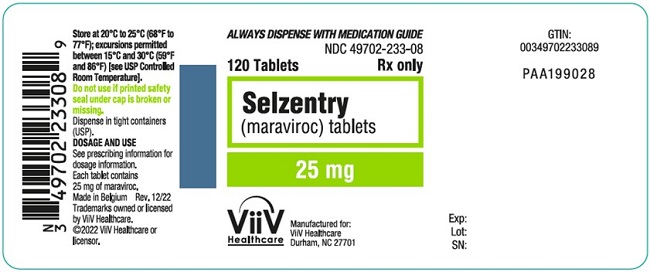
16 HOW SUPPLIED/STORAGE AND HANDLING SELZENTRY film-coated tablets are available as follows: 25-mg, 75-mg, 150-mg, and 300-mg tablets are blue, biconvex, oval, film-coated tablets debossed with “MVC 25”, “MVC 75”, “MVC 150”, or “MVC 300”, respectively, on one side and plain on the other. 25-mg tablets: Bottle of 120 tablets (NDC 49702-233-08). 75-mg tablets: Bottle of 120 tablets (NDC 49702-235-08).
150-mg tablets: Bottle of 60 tablets (NDC 49702-223-18). 300-mg tablets: Bottle of 60 tablets (NDC 49702-224-18). SELZENTRY film‑coated tablets should be stored at 20 o C to 25 o C (68 o F to 77 o F); excursions permitted between 15 o C and 30 o C (59 o F and 86 o F) [see USP Controlled Room Temperature].
SELZENTRY oral solution is a clear, colorless, strawberry-flavored liquid. Each mL of the solution contains 20 mg of maraviroc. It is supplied in a Convenience Combination Kit (NDC 49702-260-55) as follows: Bottle of 230 mL (NDC 49702-237-48).
Each plastic bottle is packaged with one press-in bottle adapter, one 10–mL oral dosing syringe with 0.5–mL gradations, and one 3–mL oral dosing syringe with 0.5–mL gradations. The press-in bottle adapter and oral dosing syringes are not made with natural rubber latex. This product does not require reconstitution.
SELZENTRY oral solution should be stored at 20 o C to 25 o C (68 o F to 77 o F); excursions permitted between 15 o C and 30 o C (59 o F and 86 o F) [see USP Controlled Room Temperature]. Discard any unused oral solution 60 days after first opening the bottle.
📋 Description ▾
11 DESCRIPTION SELZENTRY (maraviroc) is a selective, slowly reversible, small molecule antagonist of the interaction between human CCR5 and HIV-1 gp120. Blocking this interaction prevents CCR5-tropic HIV-1 entry into cells. SELZENTRY film-coated tablets for oral administration contain 25, 75, 150, or 300 mg of maraviroc and the following inactive ingredients: dibasic calcium phosphate (anhydrous), magnesium stearate, microcrystalline cellulose, and sodium starch glycolate.
The film coat (Opadry II Blue [85G20583]) contains FD&C blue #2 aluminum lake, soya lecithin, polyethylene glycol (macrogol 3350), polyvinyl alcohol, talc, and titanium dioxide. SELZENTRY oral solution contains 20 mg per mL of maraviroc and the following inactive ingredients: citric acid (anhydrous), purified water, sodium benzoate, sodium citrate dihydrate, strawberry flavoring (501440T), and sucralose. Maraviroc is chemically described as 4,4-difluoro- N -{(1 S )-3 - [ exo -3-(3-isopropyl-5-methyl-4 H -1,2,4-triazol-4-yl)-8-azabicyclo[3.2.1]oct-8-yl]-1-phenylpropyl}cyclohexanecarboxamide.
The molecular formula is C 29 H 41 F 2 N 5 O and the structural formula is: Maraviroc is a white to pale-colored powder with a molecular weight of 513.67. It is highly soluble across the physiological pH range (pH 1.0 to 7.5). Maraviroc chemical structure
💬 Information for Patients ▾
17 PATIENT COUNSELING INFORMATION Advise the patient to read the FDA-approved patient labeling (Medication Guide and Instructions for Use). Hepatotoxicity Inform patients that hepatotoxicity, including life-threatening cases, has been reported with SELZENTRY; therefore, it is important to inform the healthcare professional if patients have underlying hepatitis B or C or elevations in liver-associated tests prior to treatment. Inform patients to stop SELZENTRY and seek medical evaluation immediately if they develop signs or symptoms of hepatitis or allergic reaction following use of SELZENTRY.
Advise patients that laboratory tests for liver enzymes and bilirubin will be ordered prior to starting SELZENTRY, at other times during treatment, and if they develop severe rash or signs and symptoms of hepatitis or an allergic reaction on treatment [see Dosage and Administration ( 2.1 ), Warnings and Precautions ( 5.1 , 5.2 )] . Cardiovascular Events When administering SELZENTRY in patients with cardiovascular comorbidities, a history of postural hypotension or receiving concomitant medication known to lower blood pressure, advise patients that they may be at increased risk for cardiovascular events.
Advise patients to avoid driving or operating machinery if they experience dizziness while taking SELZENTRY [see Warnings and Precautions ( 5.3 )] . Drug Interactions Advise patients to inform their healthcare provider of concomitant HIV medications as dosage of SELZENTRY may be modified depending on other HIV medications taken with SELZENTRY. Advise patients that coadministration of SELZENTRY with St.
John’s wort is not recommended as it can lead to loss of virologic response and possible resistance to SELZENTRY [see Dosage and Administration ( 2.2 ), Drug Interactions ( 7.1 )] . Missed Dosage Inform patients that it is important to take SELZENTRY in combination with other antiretroviral medications on a regular dosing schedule with or without food. Advise patients to avoid missing doses as it can result in development of resistance .
Instruct patients that if they miss a dose, to take it as soon as they remember. Advise patients not to double their next dose or take more than the prescribed dose [see Dosage and Administration ( 2.2 )] . Pregnancy Inform patients that there is insufficient data on the safety of SELZENTRY in pregnancy.
Inform patients that there is an antiretroviral pregnancy registry that monitors pregnancy outcomes in women exposed to SELZENTRY during pregnancy [see Use in Specific Populations ( 8.1 )]. Lactation Instruct women with HIV-1 infection not to breastfeed because HIV-1 can be passed to the baby in breast milk [see Use in Specific Populations ( 8.2 )]. SELZENTRY and COMBIVIR are trademarks owned by or licensed to the ViiV Healthcare group of companies.
TROFILE is a trademark owned by or licensed to Monogram BioSciences, Inc., and is not owned by or licensed to the ViiV Healthcare group of companies. The maker of this brand is not affiliated with and does not endorse the ViiV Healthcare group of companies or its products. Manufactured for: ViiV Healthcare Durham, NC 27701 ©2022 ViiV Healthcare group of companies or its licensor.
SEL:16PI PHARMACIST‑DETACH HERE AND GIVE MEDICATION GUIDE TO PATIENT _ _ _ _ _ _ _ _ _ _ _ _ _ _ _ _ _ _ _ _ _ _ _ _ _ _ _ _ _ _ _ _ _ _ _ _ _ _ _ _ _ _ _ _ _ _ _ _ _ _ _ _ _
💬 Medication Guide ▾
MEDICATION GUIDE SELZENTRY (sell-ZEN-tree) (maraviroc) tablets SELZENTRY (sell-ZEN-tree) (maraviroc) oral solution What is the most important information I should know about SELZENTRY? SELZENTRY can cause serious side effects including serious liver problems (liver toxicity). Some people who take SELZENTRY can develop a severe rash or an allergic reaction before liver problems happen and may be life-threatening.
Stop taking SELZENTRY and call your healthcare provider right away if you get any of the following signs or symptoms of liver problems: • an itchy rash on your body (allergic reaction) • your skin or the white part of your eyes turns yellow (jaundice) • dark or “tea-colored” urine • vomiting • pain, aching, or tenderness on the right side of your stomach area Your healthcare provider will do blood tests to check your liver before you begin treatment with SELZENTRY and as needed during treatment with SELZENTRY. What is SELZENTRY?
SELZENTRY is a prescription Human Immunodeficiency Virus-1 (HIV-1) medicine given with other HIV-1 medicines to treat CCR5-tropic HIV-1 infection in adults and children weighing at least 4.4 lb (2 kg). HIV-1 is the virus that causes Acquired Immune Deficiency Syndrome (AIDS). Use of SELZENTRY is not recommended in people with dual/mixed- or CXCR4‑tropic HIV‑1.
SELZENTRY should not be used in premature newborns or children weighing less than 4.4 pounds (2 kg). Do not take SELZENTRY if you have severe kidney problems or are on hemodialysis and are also taking certain other medications. Before you take SELZENTRY, tell your healthcare provider about all of your medical conditions, including if you: • have or have had liver problems including hepatitis B or C virus infection. • have heart problems. • have kidney problems. • have low blood pressure or take medicines to lower blood pressure. • are pregnant or plan to become pregnant.
It is not known if SELZENTRY may harm your unborn baby. Pregnancy Registry. There is a pregnancy registry for women who take SELZENTRY during pregnancy.
The purpose of this registry is to collect information about the health of you and your baby. Talk to your healthcare provider about how you can take part in this registry. • are breastfeeding or plan to breastfeed. Do not breastfeed if you take SELZENTRY.
You should not breastfeed if you have HIV-1 because of the risk of passing HIV-1 to your baby. Talk to your healthcare provider about the best way to feed your baby. Tell your healthcare provider about all the medicines you take, including prescription and over-the-counter medicines, vitamins, and herbal supplements. • Some medicines may interact with SELZENTRY.
Keep a list of your medicines to show your healthcare provider and pharmacist. • You can ask your healthcare provider or pharmacist for a list of medicines that interact with SELZENTRY. Do not start taking a new medicine without telling your healthcare provider. Your healthcare provider can tell you if it is safe to take SELZENTRY with other medicines.
Your healthcare provider may need to change your dose of SELZENTRY when you take it with certain medicines. You should not take SELZENTRY if you also take St. John’s wort ( Hypericum perforatum ).
How should I take SELZENTRY? • Take SELZENTRY exactly as your healthcare provider tells you. • Do not change your dose or stop taking SELZENTRY without first talking with your healthcare provider. • If you miss a dose of SELZENTRY, take it as soon as you remember. Do not take 2 doses at the same time. If you are not sure about your dosing, call your healthcare provider. • Stay under the care of a healthcare provider during treatment with SELZENTRY. • Swallow SELZENTRY tablets whole.
Do not chew the tablets. • SELZENTRY may be taken with or without food. • Your healthcare provider will prescribe a dose of SELZENTRY based on your child’s body weight and other medicines they are taking. • Tell your healthcare provider if your child has trouble swallowing tablets. SELZENTRY… [Excerpted — this section continues on DailyMed.]
🧬 Pharmacokinetics ▾
12.3Pharmacokinetics Table 11. Mean Maraviroc Pharmacokinetic Parameters in Adults a The estimated exposure is lower compared with other trials possibly due to sparse sampling, food effect, compliance, and concomitant medications. Patient Population Maraviroc Dose n AUC 12 (ng.h/mL) C max (ng/mL) C min (ng/mL) Healthy volunteers (Phase 1) 300 mg twice daily 64 2,908 888
43.1 Asymptomatic HIV subjects (Phase 2a) 300 mg twice daily 8 2,550 618
33.6Treatment-experienced HIV subjects (Phase 3) a 300 mg twice daily 94 1,513 266 37.2 150 mg twice daily (+ CYP3A inhibitor) 375 2,463 332 101 Treatment-naive HIV subjects (Phase 2b/3) a 300 mg twice daily 344 1,865 287 60 Absorption Peak maraviroc plasma concentrations are attained 0.5 to 4 hours following single oral doses of 1 to 1,200 mg administered to uninfected volunteers. The pharmacokinetics of oral maraviroc are not dose proportional over the dose range. The absolute bioavailability of a 100‑mg dose is 23% and is predicted to be 33% at 300 mg.
Maraviroc is a substrate for the efflux transporter P-gp. Effect of Food on Oral Absorption: Coadministration of a 300‑mg tablet with a high‑fat breakfast reduced maraviroc C max and AUC by 33% and coadministration of 75 mg of oral solution with a high-fat breakfast reduced maraviroc AUC by 73% in healthy adult volunteers. Studies with the tablet formulation demonstrated a reduced food effect at higher doses.
There were no food restrictions in the adult trials (using the tablet formulation) or in the pediatric trial (using both tablet and oral solution formulations) that demonstrated the efficacy/antiviral activity and safety of maraviroc [see Clinical Studies ( 14.1 , 14.2 )]. Distribution Maraviroc is bound (approximately 76%) to human plasma proteins, and shows moderate affinity for albumin and alpha‑1 acid glycoprotein. The volume of distribution of maraviroc is approximately 194 L.
Elimination Metabolism: Trials in humans and in vitro studies using human liver microsomes and expressed enzymes have demonstrated that maraviroc is principally metabolized by the cytochrome P450 system to metabolites that are essentially inactive against HIV‑1. In vitro studies indicate that CYP3A is the major enzyme responsible for maraviroc metabolism. In vitro studies also indicate that polymorphic enzymes CYP2C9, CYP2D6, and CYP2C19 do not contribute significantly to the metabolism of maraviroc.
Maraviroc is the major circulating component (~42% drug‑related radioactivity) following a single oral dose of 300 mg [ 14 C]-maraviroc. The most significant circulating metabolite in humans is a secondary amine (~22% radioactivity) formed by N‑dealkylation. This polar metabolite has no significant pharmacological activity.
Other metabolites are products of mono‑oxidation and are only minor components of plasma drug‑related radioactivity. Excretion: The terminal half‑life of maraviroc following oral dosing to steady state in healthy subjects was 14 to 18 hours. A mass balance/excretion trial was conducted using a single 300‑mg dose of 14 C-labeled maraviroc.
Approximately 20% of the radiolabel was recovered in the urine and 76% was recovered in the feces over 168 hours. Maraviroc was the major component present in urine (mean of 8% dose) and feces (mean of 25% dose). The remainder was excreted as metabolites.
Specific Populations Patients with Hepatic Impairment: Maraviroc is primarily metabolized and eliminated by the liver. A trial compared the pharmacokinetics of a single 300‑mg dose of SELZENTRY in subjects with mild (Child‑Pugh Class A, n = 8) and moderate (Child‑Pugh Class B, n = 8) hepatic impairment with pharmacokinetics in healthy subjects (n = 8). The mean C max and AUC were 11% and 25% higher, respectively, for subjects with mild hepatic impairment, and 32% and 46% higher, respectively, for subjects with moderate hepatic impairment compared with subjects with normal hepatic function.
These changes do not warrant a dose adjustment. Maraviroc concen… [Excerpted — this section continues on DailyMed.]
🧬 Pharmacodynamics ▾
12.2Pharmacodynamics Exposure-Response Relationship in Treatment-Experienced Adult Subjects The relationship between maraviroc, modeled plasma trough concentration (C min ) (1 to 9 samples per subject taken on up to 7 visits), and virologic response was evaluated in 973 treatment-experienced HIV-1-infected subjects with varied optimized background antiretroviral regimens in Trials A4001027 and A4001028. The C min , baseline viral load, baseline CD4 + cell count, and overall sensitivity score (OSS) were found to be important predictors of virologic success (defined as viral load less than 400 copies per mL at 24 weeks).
Table 9 illustrates the proportions of subjects with virologic success (%) within each C min quartile for 150-mg twice-daily and 300-mg twice-daily groups. Table 9. Treatment-Experienced Subjects with Virologic Success by C min Quartile (Q1-Q4) 150 mg Twice Daily (with CYP3A Inhibitors) 300 mg Twice Daily (without CYP3A Inhibitors) n Median C min % Subjects with Virologic Success n Median C min % Subjects with Virologic Success Placebo 160 - 30.6 35 -
28.6Q1 78 33 52.6 22 13
50.0Q2 77 87 63.6 22 29
68.2Q3 78 166 78.2 22 46
63.6Q4 78 279 74.4 22 97
68.2Exposure-Response Relationship in Treatment-Naive Adult Subjects The relationship between maraviroc, modeled plasma trough concentration (C min ) (1 to 12 samples per subject taken on up to 8 visits), and virologic response was evaluated in 294 treatment-naive HIV–1-infected subjects receiving maraviroc 300 mg twice daily in combination with lamivudine/zidovudine in Trial A4001026. Table 10 illustrates the proportion (%) of subjects with virologic success less than 50 copies per mL at 48 weeks within each C min quartile for the 300-mg twice-daily dose.
Table 10. Treatment-Naive Subjects with Virologic Success by C min Quartile (Q1-Q4) 300 mg Twice Daily n Median C min % Subjects with Virologic Success Q1 75 23
57.3 Q2 72 39
72.2 Q3 73 56
74.0 Q4 74 81
83.8Eighteen of 75 (24%) subjects in Q1 had no measurable maraviroc concentration on at least one occasion versus 1 of 73 and 1 of 74 in Q3 and Q4, respectively. Effects on Electrocardiogram A placebo-controlled, randomized, crossover trial to evaluate the effect on the QT interval of healthy male and female volunteers was conducted with 3 single oral doses of maraviroc and moxifloxacin. The placebo-adjusted mean maximum (upper 1-sided 95% CI) increases in QTc from baseline after 100, 300, and 900 mg of maraviroc were –2 (0), -1 (1), and 1 (3) msec, respectively, and 13 (15) msec for moxifloxacin 400 mg.
No subject in any group had an increase in QTc of greater than or equal to 60 msec from baseline. No subject experienced an interval exceeding the potentially clinically relevant threshold of 500 msec.
🔬 Clinical Studies ▾
14 CLINICAL STUDIES
14.1Clinical Studies in Adult Subjects The clinical efficacy and safety of SELZENTRY are derived from analyses of data from 3 trials in adult subjects infected with CCR5-tropic HIV-1: Trials A4001027 and A4001028 in antiretroviral treatment-experienced adult subjects and Trial A4001026 in treatment-naive subjects. These trials were supported by a 48-week trial in antiretroviral treatment-experienced adult subjects infected with dual/mixed-tropic HIV-1, Trial A4001029. Trials in CCR5-Tropic, Treatment-Experienced Subjects Trials A4001027 and A4001028 were double-blind, randomized, placebo-controlled, multicenter trials in subjects infected with CCR5-tropic HIV-1.
Subjects were required to have an HIV-1 RNA greater than 5,000 copies per mL despite at least 6 months of prior therapy with at least 1 agent from 3 of the 4 antiretroviral drug classes (greater than or equal to 1 NRTI, greater than or equal to 1 NNRTI, greater than or equal to 2 PIs, and/or enfuvirtide) or documented resistance to at least 1 member of each class. All subjects received an optimized background regimen consisting of 3 to 6 antiretroviral agents (excluding low-dose ritonavir) selected on the basis of the subject’s prior treatment history and baseline genotypic and phenotypic viral resistance measurements.
In addition to the optimized background regimen, subjects were then randomized in a 2:2:1 ratio to SELZENTRY 300 mg once daily, SELZENTRY 300 mg twice daily, or placebo. Doses were adjusted based on background therapy as described in Dosage and Administration ( 2 ) , Table 1 . In the pooled analysis for Trials A4001027 and A4001028, the demographics and baseline characteristics of the treatment groups were comparable ( Table 16 ).
Of the 1,043 subjects with a CCR5-tropism result at screening, 7.6% had a dual/mixed-tropism result at the baseline visit 4 to 6 weeks later. This illustrates the background change from CCR5- to dual/mixed-tropism result over time in this treatment-experienced population, prior to a change in antiretroviral regimen or administration of a CCR5 co-receptor antagonist. Table 16.
Demographic and Baseline Characteristics of Subjects in Trials A4001027 and A4001028 NNRTI = Non-nucleoside reverse transcriptase inhibitors; NRTI = nucleoside reverse transcriptase inhibitors; OBT = optimized background therapy; PI = protease inhibitor. a OSS - Sum of active drugs in OBT based on combined information from genotypic and phenotypic testing. b Resistance substitutions based on IAS guidelines. 1 SELZENTRY Twice Daily (n = 426) Placebo (n = 209) Age (years) Mean (range) 46.3 (21-73) 45.7 (29-72) Sex: Male 382 (89.7%) 185 (88.5%) Female 44 (10.3%) 24 (11.5%) Race: White 363 (85.2%) 178 (85.2%) Black 51 (12.0%) 26 (12.4%) Other 12 (2.8%) 5 (2.4%) Region: U.S.
276 (64.8%) 135 (64.6%) Non-U.S. 150 (35.2%) 74 (35.4%) Subjects with previous enfuvirtide use 142 (33.3%) 62 (29.7%) Subjects with enfuvirtide as part of OBT 182 (42.7%) 91 (43.5%) Baseline plasma HIV-1 RNA (log 10 copies/mL) Mean (range) 4.85 (2.96-6.88) 4.86 (3.46-7.07) Subjects with screening viral load > 100,000 copies/mL 179 (42.0%) 84 (40.2%) Baseline CD4+ cell count (cells/mm 3 ) Median (range) 167 (2-820) 171 (1-675) Subjects with baseline CD4+ cell count ≤200 cells/mm 3 ) 250 (58.7%) 118 (56.5%) Subjects with Overall Susceptibility Score (OSS): a 0 57 (13.4%) 35 (16.7%) 1 136 (31.9%) 44 (21.1%) 2 104 (24.4%) 59 (28.2%) ≥3 125 (29.3%) 66 (31.6%) Subjects with enfuvirtide resistance substitutions 90 (21.2%) 45 (21.5%) Median number of resistance-associated: b PI substitutions 10 10 NNRTI substitutions 1 1 NRTI substitutions 6 6 The Week 48 results for the pooled Trials A4001027 and A4001028 are shown in Table 17 .
Table 17. Outcomes of Randomized Treatment at Week 48 in Trials A4001027 and A4001028 a One additional subject died while receiving open-label therapy with SELZENTRY subsequent to discontinuing double-blind placebo due to insufficient response. Outcome… [Excerpted — this section continues on DailyMed.]
🧪 Nonclinical Toxicology ▾
13 NONCLINICAL TOXICOLOGY
13.1Carcinogenesis, Mutagenesis, Impairment of Fertility Carcinogenesis Long-term oral carcinogenicity studies of maraviroc were carried out in rasH2 transgenic mice (6 months) and in rats for up to 96 weeks (females) and 104 weeks (males). No drug-related increases in tumor incidence were found in mice at 1,500 mg per kg per day and in male and female rats at 900 mg per kg per day. The highest exposures in rats were approximately 11 times those observed in humans at the therapeutic dose of 300 mg twice daily for the treatment of HIV-1 infection.
Mutagenesis Maraviroc was not genotoxic in the reverse mutation bacterial test (Ames test in Salmonella and E. coli), a chromosome aberration test in human lymphocytes, and mouse bone marrow micronucleus test. Impairment of Fertility Maraviroc did not impair mating or fertility of male or female rats and did not affect sperm of treated male rats at approximately 20-fold higher exposures (AUC) than in humans given the recommended 300-mg twice-daily dose.
📄 Carcinogenesis, Mutagenesis, Impairment of Fertility ▾
13.1Carcinogenesis, Mutagenesis, Impairment of Fertility Carcinogenesis Long-term oral carcinogenicity studies of maraviroc were carried out in rasH2 transgenic mice (6 months) and in rats for up to 96 weeks (females) and 104 weeks (males). No drug-related increases in tumor incidence were found in mice at 1,500 mg per kg per day and in male and female rats at 900 mg per kg per day. The highest exposures in rats were approximately 11 times those observed in humans at the therapeutic dose of 300 mg twice daily for the treatment of HIV-1 infection.
Mutagenesis Maraviroc was not genotoxic in the reverse mutation bacterial test (Ames test in Salmonella and E. coli), a chromosome aberration test in human lymphocytes, and mouse bone marrow micronucleus test. Impairment of Fertility Maraviroc did not impair mating or fertility of male or female rats and did not affect sperm of treated male rats at approximately 20-fold higher exposures (AUC) than in humans given the recommended 300-mg twice-daily dose.
📚 References ▾
15 REFERENCES 1. IAS-USA Drug Resistance Mutations Figures. https://www.iasusa.org/resources/hiv-drug-resistance-mutations
📖 Instructions for Use ▾
INSTRUCTIONS FOR USE SELZENTRY (sell-ZEN-tree) (maraviroc) oral solution Read this Instructions for Use before you start taking SELZENTRY oral solution and each time you get a refill. There may be new information. This leaflet does not take the place of talking to your healthcare provider about your medical condition or treatment.
Important information about measuring SELZENTRY oral solution: Always use the correct oral syringe that comes with your SELZENTRY oral solution to measure your prescribed dose. Ask your healthcare provider or pharmacist to show you which syringe to use and how to measure your prescribed dose if you are not sure. Each carton of SELZENTRY oral solution contains: • One 3-mL oral syringe (for doses of 2.5 mL or less) • One 10-mL oral syringe (for doses more than 2.5 mL) • 1 press-in bottle adapter • 1 bottle of SELZENTRY oral solution Before each use: Wash your hands with soap and water.
Place the items from the carton on a clean flat surface. Step 1. Open the bottle of SELZENTRY oral solution.
Open the bottle by pushing down firmly on the child-resistant cap and turning it counter-clockwise. See Figure A. Do not throw away the child-resistant cap.
Figure A. Opening the bottle Step 2. First time use only: Insert the press-in bottle adapter.
Remove the press-in bottle adapter and oral syringe from the plastic overwrap. With the bottle on a flat surface, push the ribbed end of the press-in bottle adapter all the way into the neck of the bottle while holding the bottle firmly. See Figure B.
Note: Do not remove the press-in bottle adapter from the bottle after it is inserted. Figure B. Inserting the press-in bottle adapter Step 3.
Choose the oral syringe you need and find your prescribed dose on the oral syringe. Check the dose in milliliters (mL) as prescribed by your healthcare provider. Choose the right syringe for your child’s dose: use the 3-mL (small) syringe for doses of 2.5 mL or less, or the 10-mL (large) syringe for doses more than 2.5 mL.
Then find this marking on the oral syringe. See Figure C. Figure C.
Choose the oral syringe you need and find your prescribed dose. Step 4. Remove air from oral syringe.
Push the oral syringe plunger to the bottom of the barrel of the syringe (toward its tip) to remove excess air. See Figure D. Figure D.
Removing air from oral syringe. Step 5. Insert the oral syringe.
Insert the oral syringe into the upright bottle through the opening of the press-in bottle adapter until it is firmly in place. See Figure E. Figure E.
Inserting the oral syringe Step 6. Withdraw the prescribed dose of SELZENTRY from the bottle. With the oral syringe in place, turn the bottle upside down.
Pull back the plunger of the oral syringe until the top of the plunger is even with the markings on the oral syringe for your prescribed dose. See Figure F. If you see air bubbles in the oral syringe, fully push the plunger in to empty the oral solution back into the bottle.
Then withdraw your prescribed dose of oral solution. Figure F. Withdrawing the oral solution Step 7.
Removing the oral syringe. Turn the bottle upright and place the bottle on a flat surface. Remove the oral syringe from the bottle adapter and bottle by pulling straight up on the barrel of the oral syringe.
See Figure G. Figure G. Removing the oral syringe Step 8.
Check the dose withdrawn. Check that the correct dose was drawn up into the oral syringe. See Figure H.
If the dose is not correct, re-insert the oral syringe tip firmly into the bottle adapter. Fully push in the plunger so that the oral solution flows back into the bottle. Repeat Steps 6 and 7.
Figure H. Checking the dose withdrawn. Step 9.
Take the dose of SELZENTRY. See Figure I. Place the tip of the oral syringe against the inside of the child’s cheek.
Slowly push the plunger all the way down to give all the medicine in the oral syringe. Make sure the child has time to swallow the medicine. Note: If the prescribed dose is more than 10 mL, you will need to divide t… [Excerpted — this section continues on DailyMed.]
📄 Package Label / Principal Display Panel ▾
PRINICIPAL DISPLAY PANEL NDC 49702-223-18 Selzentry (maraviroc) tablets 150 mg ALWAYS DISPENSE WITH MEDICATION GUIDE 60 Tablets Rx only Manufactured for: ViiV Healthcare Durham, NC 27701 Store at 20°C to 25°C (68°F to 77°F); excursions permitted between 15°C and 30°C (59°F - 86°F) [see USP Controlled Room Temperature]. Do not use if printed safety seal under cap is broken or missing. Dispense in tight containers (USP).
DOSAGE AND USE See prescribing information for dosage information. Each tablet contains 150 mg of maraviroc. Made in Belgium Rev.
12/22 Trademarks owned or licensed by ViiV Healthcare. ©2022 ViiV Healthcare or licensor. PAA199061 Selzentry 150 mg 60 count label
PRINICIPAL DISPLAY PANEL NDC 49702-224-18 Selzentry (maraviroc) tablets 300 mg ALWAYS DISPENSE WITH MEDICATION GUIDE 60 Tablets Rx only Manufactured for: ViiV Healthcare Durham, NC 27701 Store at 20°C to 25°C (68°F to 77°F); excursions permitted between 15°C and 30°C (59°F - 86°F) [see USP Controlled Room Temperature]. Do not use if printed safety seal under cap is broken or missing. Dispense in tight containers (USP).
DOSAGE AND USE See prescribing information for dosage information. Each tablet contains 300 mg of maraviroc. Made in Belgium Rev.
12/22 Trademarks owned or licensed by ViiV Healthcare. ©2022 ViiV Healthcare or licensor. PAA199029 Selzentry 300 mg 60 count label
PRINICIPAL DISPLAY PANEL NDC 49702-260-55 Selzentry (maraviroc) oral solution 20 mg/mL ALWAYS DISPENSE WITH MEDICATION GUIDE Contents: • Oral solution bottle • One 3-mL oral dosing syringe • One 10-mL oral dosing syringe • 1 Press-in bottle adapter • Prescribing Information • Medication Guide • Instructions for Use Rx only 230 mL Made in Belgium ©2022 the ViiV Healthcare group of companies or its licensor. Rev. 12/22 PAA199834 Selzentry Oral Solution 20 mg per mL 230 mL carton