
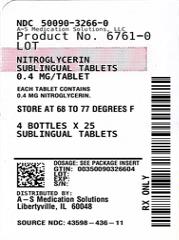
Nitroglycerin .4 mg Tablet, 100-count — NDC 50090-3266-0 (Billing 50090-3266-00)
This is a package of 100 tablets of Nitroglycerin .4 mg Tablet from A-S Medication Solutions, marketed since Aug 2016 and currently FDA-listed. It is the main listing for this product, which comes in 2 package sizes.
NDC database record
One package, one record: these facts belong to NDC 50090-3266-0 alone.
- Record
- FDA NDC Directory package listing · Human prescription drug
- Code segments
- 50090 labeler · 3266 product · 0 package
- Package marketed since
- Nov 15, 2017
- Sample package
- No — commercial package
- Listing certified through
- Dec 31, 2026
- Billing quantity
- 100 EA per package
- Barcode (UPC-A, from the NDC)
- 3 5009032660 4
- FDA record last changed
- Jul 24, 2026
Other active recalls for Nitroglycerin (different manufacturers) — 3 · tap to view
Identity & classification
Regulatory identifiers FDA, NLM and CMS codes for this package
Drug-database identifiers Medi-Span GPI and First Databank GCN / HICL / AHFS classification
- GSN (GCN sequence number): 000475
- GCN: 01772
- GPI-14 (Medi-Span): 32100030000715
- HICL (First Databank): 000159
- AHFS class code: 24:08.08.00
- RxCUI (RxNorm): 198039
Where does this data come from?
- FDA openFDA NDC Directory · synced Oct 1, 2026
- FDA label on DailyMed · label index refreshed Oct 3, 2026
- RxNorm (NLM RxNav) · catalog refreshed Oct 1, 2026
- Medi-Span GPI (licensed)
- First Databank (licensed) · refreshed Oct 1, 2026
RxNorm drug class
This medicine belongs to the Nitrate Vasodilator class.
Where does this data come from?
- RxClass (NLM) · catalog refreshed Oct 1, 2026
Clinical
- It is mainly used to relieve or prevent angina, which is chest pain from coronary artery disease. Rectal ointment treats chronic anal fissure pain, and IV forms are used in hospita...
- Use your spray or tablet at the first sign of an attack, ideally sitting down. You can repeat it about every 5 minutes, up to three doses in 15 minutes. If the pain continues or fe...
- How do I use it during an angina attack?
- Headache is the most common one, and it often eases with continued use. You may also feel lightheaded. Sit down if you feel dizzy, and call for help if you faint or feel very weak,...
Patient education
Supplement & herbal interactions
Some supplements/herbs that may interact with Nitroglycerin — tap one for details:
Where does this data come from?
- MedlinePlus (NLM) · refreshed Oct 1, 2026
- FDA label on DailyMed · label index refreshed Oct 3, 2026
Ask a licensed pharmacist directly — free, answered by our team.
Pricing
A drug doesn't have one price. Each row is a different public payment system, and none is what you'd pay at the counter — that depends on your insurance. The ⓘ on each row explains what it measures.
| Price system | Per each | Per package |
|---|---|---|
| Retail pharmacies payNADAC · weekly | Not in the retail survey — common for institutional, discontinued, or low-volume packs. | |
| Medicaid paysCMS SDUD · 12 mo | No recent Medicaid claims on file for this NDC — rare and low-volume NDCs are suppressed in the public data. | |
| Medicare drug plans payPart D · Q2 2026 | $0.1595 | $15.95 / 100 tablets |
Where does this data come from?
- CMS NADAC weekly file
- CMS ASP pricing files · refreshed Sep 20, 2026
- CMS Medicaid State Drug Utilization Data · refreshed Oct 4, 2026
- CMS Part D plan pricing files · refreshed Sep 24, 2026
- VA National Acquisition Center price file
Packaging — all sizes for this product
| Package NDC | Description | Marketing start | Marketing end | Status |
|---|---|---|---|---|
| 50090-3266-00 You're viewing this Main listing | 4 BOTTLE in 1 CARTON / 25 TABLET in 1 BOTTLE | 2017-11-15 | — | Active |
| 50090-3266-01 50090-3266-1 | 100 TABLET in 1 BOTTLE | 2018-03-15 | — | Active |
Pack size FAQ
What quantity is in this package?
How does this package differ from NDC 50090-3266-01?
What NDC number is used to bill for this package of Nitroglycerin .4 mg Tablet?
Therapeutic equivalents
| Product | Labeler | Pack | NADAC/unit | TE | Status | Price vs. this |
|---|---|---|---|---|---|---|
| Nitroglycerin .4 mg 43598-0436-01 | Dr. | 100 tablets | $0.079 | AB | Availability likely | — |
| Nitroglycerin .4 mg 59651-0658-00 | Aurobindo | 100 tablets | $0.079 | AB | Availability likely | — |
| Nitroglycerin .4 mg 59762-3304-01 | Mylan | 100 tablets | $0.079 | AB | Availability likely | — |
| Nitroglycerin .4 mg 68462-0639-01 | Glenmark | 100 tablets | $0.079 | AB | Availability likely | — |
| Nitroglycerin .4 mg 69339-0174-01 | Natco | 100 tablets | $0.079 | AB | Availability likely | — |
| Nitroglycerin .4 mg 72888-0139-01 | Advagen | 100 tablets | $0.079 | AB | Availability likely | — |
| Nitroglycerin .4 mg 43547-0986-04 | Solco | 100 tablets | $0.127 | AB | Availability likely | — |
| nitroglycerin .4 mg 70756-0014-02 | Lifestar | 100 tablets | $0.127 | AB | Availability likely | — |
| nitroglycerin .4 mg 72603-0266-04 | NorthStar | 100 tablets | $0.127 | AB | Availability likely | — |
| Nitrostat .4 mg 00404-9800-01 | Henry | 25 tablets | — | AB | FDA listed | — |
| Nitroglycerin .4 mgthis 50090-3266-00 | A-S | 100 tablets | — | AB | FDA listed | — |
| Nitroglycerin .4 mg 50090-6818-00 | A-S | 100 tablets | — | AB | FDA listed | — |
| Nitrostat .4 mg 50090-7203-00 | A-S | 25 tablets | — | AB | FDA listed | — |
| Nitroglycerin .4 mg 51662-1282-01 | HF | 25 tablets | — | AB | Discontinued | — |
| Nitroglycerin .4 mg 51662-1676-03 | HF | 600 tablets | — | AB | FDA listed | — |
| Nitrostat .4 mg 58151-0310-01 | Viatris | 100 tablets | — | AB | FDA listed | — |
| Nitroglycerin .4 mg 60429-0840-01 | Golden | 100 tablets | — | AB | FDA listed | — |
| Nitrostat .4 mg 63187-0884-25 | Proficient | 25 tablets | — | AB | FDA listed | — |
| Nitroglycerin .4 mg 67296-2177-02 | Redpharm | 100 tablets | — | AB | FDA listed | — |
| Nitroglycerin .4 mg 68071-2941-05 | NuCare | 25 tablets | — | AB | FDA listed | — |
| Nitroglycerin .4 mg 68071-3773-05 | NuCare | 100 tablets | — | AB | FDA listed | — |
| nitroglycerin .4 mg 70518-4277-00 | REMEDYREPACK | 100 tablets | — | AB | FDA listed | — |
| Nitroglycerin .4 mg 71205-0225-25 | Proficient | 25 tablets | — | AB | FDA listed | — |
| Nitroglycerin .4 mg 71872-7010-01 | Medical | 25 tablets | — | AB | FDA listed | — |
| Nitroglycerin .4 mg 71872-7033-01 | Medical | 25 tablets | — | AB | FDA listed | — |
| Nitroglycerin .4 mg 71872-7300-01 | Medical | 25 tablets | — | AB | FDA listed | — |
| nitroglycerin .4 mg 71872-7338-01 | Medical | 25 tablets | — | AB | FDA listed | — |
| Nitroglycerin .4 mg 71872-7368-01 | Medical | 25 tablets | — | AB | FDA listed | — |
| Nitroglycerin .4 mg 82804-0077-25 | Proficient | 25 tablets | — | AB | FDA listed | — |
| Nitroglycerin .4 mg 82804-0122-25 | Proficient | 25 tablets | — | AB | FDA listed | — |
| Nitroglycerin .4 mg 84549-0639-45 | ProPharma | 25 tablets | — | AB | FDA listed | — |
| Nitroglycerin .4 mg 85766-0116-00 | Sportpharm | 100 tablets | — | AB | FDA listed | — |
| Nitroglycerin .4 mg 70518-2910-00 | REMEDYREPACK | 25 tablets | — | AB | FDA listed | — |
| nitroglycerin .4 mg 67296-2313-02 | Redpharm | 25 tablets | — | AB | FDA listed | — |
| Nitroglycerin .4 mg 51662-1445-03 | HF | 600 tablets | — | AB | FDA listed | — |
| nitroglycerin .4 mg 71872-7383-01 | Medical | 25 tablets | — | AB | FDA listed | — |
Where does this data come from?
- FDA openFDA NDC Directory · synced Oct 1, 2026
- FDA Orange Book · refreshed Oct 3, 2026
- CMS NADAC weekly file
Availability & generic status
This product is an FDA-approved generic. Other versions of the same drug are listed under Therapeutic equivalents, least expensive first.
Where does this data come from?
- FDA Orange Book · refreshed Oct 3, 2026
Inactive Ingredients / Excipients
Inactive ingredients, also called excipients, are components of the drug product other than the active ingredient. They may include fillers, dyes, coatings, preservatives, flavors, or other formulation ingredients.
Where does this data come from?
IACT rows and label-wide narrative are kept separate; availability and product-level specificity depend on the submitted label.- FDA label on DailyMed · label index refreshed Oct 3, 2026
- FDA openFDA NDC Directory · synced Oct 1, 2026
Inactive ingredient FAQ
Are inactive ingredients the same for every manufacturer?
Why might an inactive ingredient be missing?
Can inactive ingredients matter?
Manufacturer & labeler
More NDCs from A-S Medication Solutions labeler code 50090
- Junel Fe 28 Day Norethindrone Acetate and Ethinyl Estradiol and Ferrous Fumarate Kit NDC 50090-3237-0
- Benazepril Hydrochloride 20 mg Tablet, Coated NDC 50090-3243-0
- Levofloxacin 250 mg Tablet, Film Coated NDC 50090-3245-2
- acyclovir 400 mg Tablet NDC 50090-3250-0
- Cephalexin 500 mg Capsule NDC 50090-3252-0
- acyclovir 400 mg Tablet NDC 50090-3254-0
- Lovastatin 10 mg Tablet NDC 50090-3268-0
- Fluticasone Propionate and Salmeterol 113 ug; 14 ug Powder, Metered NDC 50090-3271-0
- Fluticasone Propionate and Salmeterol 55 ug; 14 ug Powder, Metered NDC 50090-3272-0
- Bacitracin Zinc and Polymyxin B Sulfate 500 [USP'U]/g; 10000 [USP'U]/g Ointment NDC 50090-3274-0
- Betamethasone Dipropionate .5 mg/g Cream NDC 50090-3276-0
- Fluocinonide .5 mg/g Cream NDC 50090-3277-0
Where does this data come from?
- FDA openFDA NDC Directory · synced Oct 1, 2026
- Drugs@FDA
Full prescribing information FDA SPL
🎯 Indications and Usage ▾
INDICATIONS AND USAGE Nitroglycerin sublingual tablets are indicated for the acute relief of an attack or acute prophylaxis of angina pectoris due to coronary artery disease.
⏱️ Dosage and Administration ▾
DOSAGE AND ADMINISTRATION One tablet should be dissolved under the tongue or in the buccal pouch at the first sign of an acute anginal attack. The dose may be repeated approximately every 5 minutes until relief is obtained. If the pain persists after a total of 3 tablets in a 15-minute period, or if the pain is different than is typically experienced, prompt medical attention is recommended.
Nitroglycerin may be used prophylactically 5 to 10 minutes prior to engaging in activities that might precipitate an acute attack. During administration the patient should rest, preferably in the sitting position. No dosage adjustment is required in patients with renal failure.
⛔ Contraindications ▾
CONTRAINDICATIONS Nitroglycerin sublingual tablets are contraindicated in patients who are allergic to it. Sublingual nitroglycerin therapy is contraindicated in patients with early myocardial infarction, severe anemia, increased intracranial pressure, and those with a known hypersensitivity to nitroglycerin. Administration of nitroglycerin sublingual tablets are contraindicated in patients who are using a phosphodiesterase-5 (PDE-5) inhibitor (e.g., sildenafil citrate, tadalafil, vardenafil hydrochloride) since these compounds have been shown to potentiate the hypotensive effects of organic nitrates.
Do not use nitroglycerin sublingual tablets in patients who are taking the soluble guanylate cyclase stimulator riociguat. Concomitant use can cause hypotension.
⚠️ Warnings ▾
WARNINGS The benefits of sublingual nitroglycerin in patients with acute myocardial infarction or congestive heart failure have not been established. If one elects to use nitroglycerin in these conditions, careful clinical or hemodynamic monitoring must be used because of the possibility of hypotension and tachycardia.
🤒 Adverse Reactions ▾
ADVERSE REACTIONS Headache that may be severe and persistent may occur immediately after use. Vertigo, dizziness, weakness, palpitation, and other manifestations of postural hypotension may develop occasionally, particularly in erect, immobile patients. Marked sensitivity to the hypotensive effects of nitrates (manifested by nausea, vomiting, weakness, diaphoresis, pallor, and collapse) may occur at therapeutic doses.
Syncope due to nitrate vasodilatation has been reported. Flushing, drug rash, and exfoliative dermatitis have been reported in patients receiving nitrate therapy.
🔄 Drug Interactions ▾
Drug Interactions Concomitant use of nitroglycerin with soluble guanylate cyclasestimulators is contraindicated (see CONTRAINDICATIONS ). Concomitant use of nitrates and alcohol may cause hypotension. The vasodilatory and hemodynamic effects of nitroglycerin may be enhanced by concomitant administration of aspirin.
Intravenous administration of nitroglycerin decreases the thrombolytic effect of alteplase. Therefore, caution should be observed in patients receiving sublingual nitroglycerin during alteplase therapy. Intravenous nitroglycerin reduces the anticoagulant effect of heparin and activated partial thromboplastin times (APTT) should be monitored in patients receiving heparin and intravenous nitroglycerin.
It is not known if this effect occurs following single sublingual nitroglycerin doses. Tricyclic antidepressants (amitriptyline, desipramine, doxepin, others) and anticholinergic drugs may cause dry mouth and diminished salivary secretions. This may make dissolution of sublingual nitroglycerin difficult.
Increasing salivation with chewing gum or artificial saliva products may prove useful in aiding dissolution of sublingual nitroglycerin. Oral administration of nitroglycerin markedly decreases the first-pass metabolism of dihydroergotamine and subsequently increases its oral bioavailability. Ergotamine is known to precipitate angina pectoris.
Therefore, patients receiving sublingual nitroglycerin should avoid ergotamine and related drugs or be monitored for symptoms of ergotism if this is not possible. Administration of nitroglycerin is contraindicated in patients who are using PDE-5 inhibitors (e.g., sildenafil citrate, tadalafil, vardenafil hydrochloride). These compounds have been shown to potentiate the hypotensive effects of organic nitrates.
A decrease in therapeutic effect of sublingual nitroglycerin may result from use of long-acting nitrates.
🔄 Drug / Laboratory Test Interactions ▾
Drug/Laboratory Test Interactions Nitrates may interfere with the Zlatkis-Zak color reaction, causing a false report of decreased serum cholesterol.
🤰 Pregnancy ▾
Pregnancy: Category B . Animal reproduction and teratogenicity studies have not been conducted with nitroglycerin sublingual tablets. However, teratology studies conducted in rats and rabbits with topically applied nitroglycerin ointment at dosages up to 80 mg/kg/day and 240 mg/kg/day, respectively revealed no toxic effects on dams or fetuses.
There are no adequate and well-controlled studies in pregnant women. Nitroglycerin should be given to a pregnant woman only if clearly needed.
🧒 Pediatric Use ▾
Pediatric Use The safety and effectiveness of nitroglycerin in pediatric patients have not been established.
🧓 Geriatric Use ▾
Geriatric Use Clinical studies of nitroglycerin did not include sufficient numbers of subjects aged 65 and over to determine whether they respond differently from younger subjects. Other reported clinical experience has not identified differences in responses between the elderly and younger patients. In general, dose selection for an elderly patient should be cautious, usually starting at the low end of the dosing range, reflecting the greater frequency of decreased hepatic, renal, or cardiac function, and of concomitant disease or other drug therapy.
🆘 Overdosage ▾
OVERDOSAGE Hemodynamic Effects: The effects of nitroglycerin overdose are generally the results of nitroglycerin’s capacity to induce vasodilatation, venous pooling, reduced cardiac output, and hypotension. These hemodynamic changes may have protean manifestations, including increased intracranial pressure, with any or all of persistent throbbing headache, confusion, and moderate fever; vertigo; palpitations; tachycardia; visual disturbances; nausea and vomiting (possibly with colic and even bloody diarrhea); syncope (especially in the upright posture); dyspnea, later followed by reduced ventilatory effort; diaphoresis, with the skin either flushed or cold and clammy; heart block and bradycardia; paralysis; coma; seizures; and death.
No specific antagonist to the vasodilator effects of nitroglycerin is known, and no intervention has been subject to controlled study as a therapy of nitroglycerin overdose. Because the hypotension associated with nitroglycerin overdose is the result of venodilatation and arterial hypovolemia, prudent therapy in this situation should be directed toward increase in central fluid volume. Passive elevation of the patient’s legs may be sufficient, but intravenous infusion of normal saline or similar fluid may also be necessary.
The use of epinephrine or other arterial vasoconstrictors in this setting is likely to do more harm than good. In patients with renal disease or congestive heart failure, therapy resulting in central volume expansion is not without hazard. Treatment of nitroglycerin overdose in these patients may be subtle and difficult, and invasive monitoring may be required.
Methemoglobinemia: Methemoglobinemia has been rarely reported in association with organic nitrates. The diagnosis should be suspected in patients who exhibit signs of impaired oxygen delivery despite adequate cardiac output and adequate arterial PO 2 . Classically, methemoglobinemic blood is described as chocolate brown, without color change on exposure to air.
If methemoglobinemia is present, intravenous administration of methylene blue, 1 to 2 mg/kg of body weight, may be required.
🧬 Clinical Pharmacology ▾
CLINICAL PHARMACOLOGY The principal pharmacological action of nitroglycerin is relaxation of vascular smooth muscle. Although venous effects predominate, nitroglycerin produces, in a dose-related manner, dilation of both arterial and venous beds. Dilation of postcapillary vessels, including large veins, promotes peripheral pooling of blood, decreases venous return to the heart, and reduces left ventricular end-diastolic pressure (preload).
Nitroglycerin also produces arteriolar relaxation, thereby reducing peripheral vascular resistance and arterial pressure (afterload), and dilates large epicardial coronary arteries; however, the extent to which this latter effect contributes to the relief of exertional angina is unclear. Therapeutic doses of nitroglycerin may reduce systolic, diastolic, and mean arterial blood pressure. Effective coronary perfusion pressure is usually maintained, but can be compromised if blood pressure falls excessively, or increased heart rate decreases diastolic filling time.
Elevated central venous and pulmonary capillary wedge pressures, and pulmonary and systemic vascular resistance are also reduced by nitroglycerin therapy. Heart rate is usually slightly increased, presumably due to a compensatory response to the fall in blood pressure. Cardiac index may be increased, decreased, or unchanged.
Myocardial oxygen consumption or demand (as measured by the pressure-rate product, tension-time index, and stroke-work index) is decreased and a more favorable supply-demand ratio can be achieved. Patients with elevated left ventricular filling pressures and increased systemic vascular resistance in association with a depressed cardiac index are likely to experience an improvement in cardiac index. In contrast, when filling pressures and cardiac index are normal, cardiac index may be slightly reduced following nitroglycerin administration.
Mechanism of Action: Nitroglycerin forms free radical nitric oxide (NO) which activates guanylate cyclase, resulting in an increase of guanosine 3'5' monophosphate (cyclic GMP) in smooth muscle and other tissues. These events lead to dephosphorylation of myosin light chains, which regulate the contractile state in smooth muscle, and result in vasodilatation. Pharmacodynamics: Consistent with the symptomatic relief of angina, digital plethysmography indicates that onset of the vasodilatory effect occurs approximately 1 to 3 minutes after sublingual nitroglycerin administration and reaches a maximum by 5 minutes postdose.
Effects persist for at least 25 minutes following nitroglycerin administration. Pharmacokinetics and Drug Metabolism Absorption: Nitroglycerin is rapidly absorbed following sublingual administration of nitroglycerin sublingual tablets. Mean peak nitroglycerin plasma concentrations occur at a mean time of approximately 6 to 7 minutes postdose (Table 1).
Maximum plasma nitroglycerin concentrations (C max ) and area under the plasma concentration-time curves (AUC) increase dose-proportionally following 0.3 to 0.6 mg nitroglycerin. The absolute bioavailability of nitroglycerin from nitroglycerin sublingual tablets is approximately 40% but tends to be variable due to factors influencing drug absorption, such as sublingual hydration and mucosal metabolism. Table 1 Parameter Mean Nitroglycerin (SD) Values 2 x 0.3 mg Nitroglycerin Sublingual Tablets 1 x 0.6 mg Nitroglycerin Sublingual Tablets C max , ng/mL 2.3 (1.7) 2.1 (1.5) T max , min 6.4 (2.5) 7.2 (3.2) AUC (0–∞) , min 14.9 (8.2) 14.9 (11.4) t ½ , min 2.8 (1.1) 2.6 (0.6) Distribution: The volume of distribution (V Area ) of nitroglycerin following intravenous administration is
3.3L/kg. At plasma concentrations between 50 and 500 ng/mL, the binding of nitroglycerin to plasma proteins is approximately 60%, while that of 1,2- and 1,3-dinitroglycerin is 60% and 30%, respectively. Metabolism: A liver reductase enzyme is of primary importance in the metabolism of nitroglycerin to glycerol di- and mononitrate metabolites… [Excerpted — this section continues on DailyMed.]
📦 How Supplied / Storage and Handling ▾
HOW SUPPLIED Product: 50090-3266 NDC: 50090-3266-0 25 TABLET in a BOTTLE / 4 in a CARTON NDC: 50090-3266-1 100 TABLET in a BOTTLE
📋 Description ▾
DESCRIPTION Nitroglycerin is a stabilized sublingual compressed nitroglycerin tablet that contains 0.3 mg, 0.4 mg, or 0.6 mg nitroglycerin USP; as well as calcium stearate powder, colloidal silicon dioxide, hydrogenated vegetable oil, lactose monohydrate, and pregelatinized starch. Nitroglycerin, an organic nitrate, is a vasodilating agent. The chemical name for nitroglycerin is 1, 2, 3 propanetriol trinitrate and the chemical structure is: Molecular weight: 227.09
💬 Information for Patients ▾
Information for Patients Nitroglycerin is a sublingual tablet and should not be chewed, crushed, or swallowed. If possible, patients should sit down when taking nitroglycerin sublingual tablets and should use caution when returning to a standing position. This eliminates the possibility of falling due to lightheadedness or dizziness.
One tablet should be dissolved under the tongue or in the buccal pouch at the first sign of an acute anginal attack. The dose may be repeated approximately every 5 minutes until relief is obtained. If chest pain persists after a total of 3 tablets in a 15-minute period, or if the pain is different than is typically experienced, prompt medical attention is recommended.
Nitroglycerin may be used prophylactically 5 to 10 minutes prior to engaging in activities that might precipitate an acute attack. Nitroglycerin may produce a burning or tingling sensation when administered sublingually; however, the ability to produce a burning or tingling sensation should not be considered a reliable method for determining the potency of the tablets. Headaches can sometimes accompany treatment with nitroglycerin.
In patients who get these headaches, the headaches may be a marker of the activity of the drug. Treatment with nitroglycerin may be associated with lightheadedness upon standing, especially just after rising from a recumbent or seated position. This effect may be more frequent in patients who have also consumed alcohol.
Nitroglycerin should be kept in the original glass container and must be tightly capped after each use to prevent loss of tablet potency.
⚠️ Precautions ▾
PRECAUTIONS General Only the smallest dose required for effective relief of the acute anginal attack should be used. Excessive use may lead to the development of tolerance. Nitroglycerin sublingual tablets are intended for sublingual or buccal administration and should not be swallowed.
Severe hypotension, particularly with upright posture, may occur with small doses of nitroglycerin. This drug should therefore be used with caution in patients who may be volume-depleted or who, for whatever reason, are already hypotensive. Hypotension induced by nitroglycerin may be accompanied by paradoxical bradycardia and increased angina pectoris.
Nitrate therapy may aggravate the angina caused by hypertrophic cardiomyopathy. As tolerance to other forms of nitroglycerin develops, the effects of sublingual nitroglycerin on exercise tolerance, although still observable, is blunted. In industrial workers who have had long-term exposure to unknown (presumably high) doses of organic nitrates, tolerance rarely occurs.
Chest pain, acute myocardial infarction, and even sudden death have occurred during temporary withdrawal of nitrates from these workers, demonstrating the existence of true physical dependence. Several clinical trials of nitroglycerin patches or infusions in patients with angina pectoris have evaluated regimens that incorporated a 10- to 12-hour nitrate free interval. In some of these trials, an increase in the frequency of anginal attacks during the nitrate free interval was observed in a small number of patients.
In one trial, patients had decreased exercise tolerance at the end of the nitrate interval. Hemodynamic rebound has been observed only rarely; on the other hand, few studies were so designed that rebound, if it had occurred, would have been detected. Nitrate tolerance as a result of sublingual nitroglycerin administration is probably possible, but only in patients who maintain high continuous nitrate levels for more than 10 or 12 hours daily.
Such use of sublingual nitroglycerin would entail administration of scores of tablets daily and is not recommended. The drug should be discontinued if blurring of vision or drying of the mouth occurs. Excessive dosage of nitroglycerin may produce severe headaches.
Information for Patients Nitroglycerin is a sublingual tablet and should not be chewed, crushed, or swallowed. If possible, patients should sit down when taking nitroglycerin sublingual tablets and should use caution when returning to a standing position. This eliminates the possibility of falling due to lightheadedness or dizziness.
One tablet should be dissolved under the tongue or in the buccal pouch at the first sign of an acute anginal attack. The dose may be repeated approximately every 5 minutes until relief is obtained. If chest pain persists after a total of 3 tablets in a 15-minute period, or if the pain is different than is typically experienced, prompt medical attention is recommended.
Nitroglycerin may be used prophylactically 5 to 10 minutes prior to engaging in activities that might precipitate an acute attack. Nitroglycerin may produce a burning or tingling sensation when administered sublingually; however, the ability to produce a burning or tingling sensation should not be considered a reliable method for determining the potency of the tablets. Headaches can sometimes accompany treatment with nitroglycerin.
In patients who get these headaches, the headaches may be a marker of the activity of the drug. Treatment with nitroglycerin may be associated with lightheadedness upon standing, especially just after rising from a recumbent or seated position. This effect may be more frequent in patients who have also consumed alcohol.
Nitroglycerin should be kept in the original glass container and must be tightly capped after each use to prevent loss of tablet potency. Drug Interactions Concomitant use of nitroglycerin with soluble guanylate cyclasestimulators is contraindicated (see CONTRAINDICATIONS ). Concomitant… [Excerpted — this section continues on DailyMed.]
🍼 Nursing Mothers ▾
Nursing Mothers It is not known whether nitroglycerin is excreted in human milk. Because many drugs are excreted in human milk, caution should be exercised when nitroglycerin is administered to a nursing woman.
📄 Carcinogenesis, Mutagenesis, Impairment of Fertility ▾
Carcinogenesis, Mutagenesis, Impairment of Fertility Animal carcinogenesis studies with sublingually administered nitroglycerin have not been performed. Carcinogenicity potential of nitroglycerin was evaluated in rats receiving up to 434 mg/kg/day of dietary nitroglycerin for 2 years. Rats developed dose-related fibrotic and neoplastic changes in liver, including carcinomas, and interstitial cell tumors in testes.
At high dose, the incidences of hepatocellular carcinomas in males was 48% and in females was 33%, compared to 0% in untreated controls. Incidences of testicular tumors were 52% vs. 8% in controls.
Lifetime dietary administration of up to 1058 mg/kg/day of, nitroglycerin was not tumorigenic in mice. Nitroglycerin was mutagenic in Ames tests performed in 2 different laboratories. Nevertheless, there was no evidence of mutagenicity in an in vivo dominant lethal assay with male rats treated with doses up to about 363 mg/kg/day, PO, or in ex vivo cytogenetic tests in rat and dog cells.
In a 3-generation reproduction study, rats received dietary nitroglycerin at doses up to about 434 mg/kg/day for 6 months prior to mating of the F 0 generation, with treatment continuing through successive F 1 and F 2 generations. The high dose was associated with decreased feed intake and body weight gain in both sexes at all matings. No specific effect on the fertility of the F 0 generation was seen.
Infertility noted in subsequent generations, however, was attributed to increased interstitial cell tissue and aspermatogenesis in the high-dose males. In this 3-generation study, there was no clear evidence of teratogenicity.
📄 Patient Package Insert ▾
PATIENT PACKAGE INSERT Nitroglycerin Sublingual Tablets, USP (nahy-truh-glis-er-in) Read this information carefully before you start nitroglycerin sublingual tablets and each time you refill your prescription. There may be new information. This information does not replace talking with your doctor.
If you have any questions about nitroglycerin , ask your doctor. Your doctor will know if nitroglycerin sublingual tablet is right for you. What is nitroglycerin?
Nitroglycerin is a type of medicine known as an organic nitrate and is a vasodilating agent. It is used to treat a type of chest pain called angina. What is Angina?
Angina is a pain or discomfort that keeps coming back when part of your heart does not get enough blood. Angina feels like a pressing or squeezing pain, usually in your chest under the breastbone. Sometimes you can feel it in your shoulders, arms, neck, jaws, or back.
Nitroglycerin sublingual tablets can relieve this pain. Who should not use nitroglycerin sublingual tablets? Do not use nitroglycerin sublingual tablets if you are allergic to organic nitrates (like the active ingredient in nitroglycerin sublingual tablets) .
You should not take nitroglycerin sublingual tablets if you have the following conditions: very recent heart attack severe anemia increased pressure in the head Do not take nitroglycerin sublingual tablets with drugs for erectile dysfunction, like VIAGRA ® (sildenafil citrate), CIALIS ® (tadalafil), or LEVITRA ® (vardenafil hydrochloride), as this may lead to extreme lowering of your blood pressure. Do not take nitroglycerin sublingual tablets if you take medicines called guanylate cyclase stimulators which include riociguat, a medicine that treats pulmonary arterial hypertension and chronic-thromboembolic pulmonary hypertension.
What should I tell my doctor before taking nitroglycerin sublingual tablets? Before using nitroglycerin sublingual tablets , tell your doctor if: You are taking any medicines that are used to treat angina, heart failure, or an irregular heartbeat. You are taking any medicines that reduce blood pressure.
You are taking any diuretics (water pills). You are taking medications to treat depression or psychiatric illness. You are taking ergotamine or similar drugs for migraine headaches.
You are taking aspirin. You are taking the blood thinner medicine heparin. You are taking any medicines for erectile dysfunction.
You are pregnant or plan to become pregnant. You are breastfeeding. How should I take nitroglycerin sublingual tablets?
Do not chew, crush, or swallow nitroglycerin sublingual tablets. You should sit down when taking nitroglycerin sublingual tablets and use caution when you stand up. This eliminates the possibility of falling due to lightheadedness or dizziness.
One tablet should be dissolved under the tongue or in the oral cavity at the first sign of chest pain. The dose may be repeated approximately every 5 minutes, until the chest pain is relieved. If the pain persists after a total of 3 tablets in a 15-minute, period, or is different than you typically experience, call your doctor or seek emergency help.
Nitroglycerin sublingual tablets may be used 5 to 10 minutes prior to activities that might cause chest pain. You may feel a burning or tingling sensation in your mouth when you take nitroglycerin sublingual tablets . What should I avoid while taking nitroglycerin sublingual tablets?
Do not breastfeed. It is not known if nitroglycerin will pass through your milk. Do not consume alcohol while taking nitroglycerin sublingual tablets , as this can lower your blood pressure.
Do not start any new prescription or non-prescription medicines or supplements, unless you check with your doctor first. What are the possible side effects of nitroglycerin sublingual tablets? Nitroglycerin may cause the following side effects: headache vertigo (a major symptom of balance disorder) dizziness weakness heart palpitations (unusual awareness of the heartbeat) low blood pressure… [Excerpted — this section continues on DailyMed.]
📄 Package Label / Principal Display Panel ▾
Nitroglycerin Label Image
Medicare Part D spend CMS · PART D · 2026 (Q1)
About this NDC listing & data coverage
What data is (and isn’t) available for this NDC — tap to expand
| NDC identity (package / product / labeler codes) | ✓ Available |
| Labeler | ✓ Available |
| Product & package description | ✓ Available |
| Marketing category & status | ✓ Available |
| Active ingredient / dosage form / route | ✓ Available |
| FDA label (SPL via DailyMed) | ✓ Available |
| Package photos | ✓ Available |
| Inactive ingredients (structured) | — Not published for this NDC The labeler did not submit a structured excipient list, or no SPL is available. |
| NADAC pharmacy acquisition price (CMS) | — Not published for this NDC CMS publishes NADAC only for NDCs reported in its retail-pharmacy survey. |
| Orange Book / therapeutic-equivalence data | ✓ Available |
| HCPCS J-code billing crosswalk | — Not published for this NDC Most self-administered / retail products have no J-code — that is normal. |
| Medicaid utilization (CMS SDUD) | — Not published for this NDC CMS reports utilization only for NDCs with Medicaid claims above its privacy threshold. |