
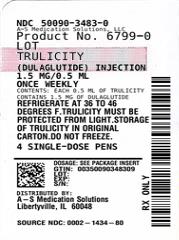
Trulicity Dulaglutide 1.5 mg/.5mL Injection, Solution, 4 syringes — NDC 50090-3483-0 (Billing 50090-3483-00)
This is a package of 4 syringes of Trulicity Dulaglutide 1.5 mg/.5mL Injection, Solution from A-S Medication Solutions, marketed since Sep 2014 and currently FDA-listed. It is this product's only package size.
NDC database record
One package, one record: these facts belong to NDC 50090-3483-0 alone.
- Record
- FDA NDC Directory package listing · Human prescription drug
- Code segments
- 50090 labeler · 3483 product · 0 package
- Package marketed since
- Jun 18, 2018
- Sample package
- No — commercial package
- Listing certified through
- Dec 31, 2026
- Barcode (UPC-A, from the NDC)
- 3 5009034830 9
- FDA record last changed
- Jul 24, 2026
Identity & classification
Regulatory identifiers FDA, NLM and CMS codes for this package
Drug-database identifiers Medi-Span GPI and First Databank GCN / HICL / AHFS classification
- GSN (GCN sequence number): 072873
- GCN: 37171
- GPI-14 (Medi-Span): 2717001500D230
- HICL (First Databank): 041421
- AHFS class code: 68:20.06.00
- RxCUI (RxNorm): 1551295
Where does this data come from?
- FDA openFDA NDC Directory · synced Oct 8, 2026
- FDA label on DailyMed · label index refreshed Oct 8, 2026
- RxNorm (NLM RxNav) · catalog refreshed Oct 1, 2026
- Medi-Span GPI (licensed)
- First Databank (licensed) · refreshed Oct 8, 2026
RxNorm drug class
This medicine belongs to the GLP-1 Receptor Agonist class.
Where does this data come from?
- RxClass (NLM) · catalog refreshed Oct 1, 2026
Clinical
- Trulicity helps control blood sugar in type 2 diabetes — it's used along with diet and exercise, not instead of them. If you also have heart disease or several heart risk factors,...
- What exactly is Trulicity used for? My doctor mentioned it for my diabetes.
- You inject Trulicity under the skin once a week — in your stomach area, thigh, or upper arm. The good news is that it doesn't matter what time of day you take it, and you can take...
- How do I take it, and does it matter what time of day I inject it?
Patient education
Supplement & herbal interactions
Some supplements/herbs that may interact with Dulaglutide — tap one for details:
Dulaglutide may be associated with lower levels of 1 nutrient — worth a chat with your pharmacist, not a cause for alarm.
Where does this data come from?
- MedlinePlus (NLM) · refreshed Oct 8, 2026
- FDA label on DailyMed · label index refreshed Oct 8, 2026
Ask a licensed pharmacist directly — free, answered by our team.
Pricing
A drug doesn't have one price. Each row is a different public payment system, and none is what you'd pay at the counter — that depends on your insurance. The ⓘ on each row explains what it measures.
| Price system | Per mL | Per package |
|---|---|---|
| Retail pharmacies payNADAC · weekly | Not in the retail survey — common for institutional, discontinued, or low-volume packs. | |
| Medicaid paysCMS SDUD · 12 mo | No recent Medicaid claims on file for this NDC — rare and low-volume NDCs are suppressed in the public data. | |
| Medicare drug plans payPart D · Q2 2026 | $483.37 | $966.75 / 2 ml |
Where does this data come from?
- CMS NADAC weekly file
- CMS ASP pricing files · refreshed Sep 20, 2026
- CMS Medicaid State Drug Utilization Data · refreshed Oct 8, 2026
- CMS Part D plan pricing files · refreshed Sep 24, 2026
- VA National Acquisition Center price file
Packaging — all sizes for this product
| Package NDC | Description | Marketing start | Marketing end | Status |
|---|---|---|---|---|
| 50090-3483-00 You're viewing this Main listing | 4 SYRINGE in 1 CARTON / .5 mL in 1 SYRINGE | 2018-06-18 | — | Active |
Therapeutic equivalents
| Product | Labeler | Pack | NADAC/unit | TE | Status | Price vs. this |
|---|---|---|---|---|---|---|
| Trulicity 1.5 mg/.5mL 00002-1434-61 | Eli | 2 syringes | — | — | Discontinued | — |
| Trulicity 1.5 mg/.5mLthis 50090-3483-00 | A-S | 4 syringes | — | — | FDA listed | — |
| Trulicity 1.5 mg/.5mL 50090-6456-00 | A-S | 4 syringes | — | — | FDA listed | — |
Where does this data come from?
- FDA openFDA NDC Directory · synced Oct 8, 2026
- FDA Purple Book · refreshed Oct 5, 2026
- CMS NADAC weekly file
Availability & biosimilar status
Biologics have no small-molecule generics; biosimilar competition is tracked in the FDA Purple Book.
Why the date isn’t exact: Biosimilar timing can change because patents may be challenged, settled, licensed, added or removed, and litigation can move the real date earlier or later.
🛈 What do these terms mean?
- Biologic patent
- A patent the reference product’s maker has publicly listed. A biosimilar generally can’t launch until these expire — unless they’re invalidated or resolved in a settlement.
- Reference-product exclusivity
- A flat 12 years of FDA market protection from the biologic’s first licensure (the BPCIA). No biosimilar can be licensed before it ends, regardless of patents.
- Interchangeable exclusivity
- The first interchangeable biosimilar can earn a period as the only interchangeable version (pharmacists can substitute it without the prescriber).
- Earliest biosimilar (LOE)
- The latest of all the dates above — the soonest a biosimilar can realistically reach the market. Litigation and settlements can move it earlier.
Biologics have no small-molecule “generics” — competition comes from FDA-licensed biosimilars, tracked in the FDA Purple Book.
| Code | What it grants | Expires |
|---|---|---|
| RefProduct | Reference-product exclusivity (12-year, BPCIA) — no biosimilar can be licensed before this date | Sep 18, 2026 |
Is there a biosimilar for TRULICITY 1.5 MG/0.5 ML PEN?
Why do different websites show different biosimilar dates?
Can a biosimilar launch before the last patent expires?
What does “current Purple Book estimate” mean?
What does “FDA listed” mean?
What does a patent or protection date mean here?
Where does this data come from?
- FDA Purple Book · refreshed Oct 5, 2026
Inactive Ingredients / Excipients
Inactive ingredients, also called excipients, are components of the drug product other than the active ingredient. They may include fillers, dyes, coatings, preservatives, flavors, or other formulation ingredients.
🧪 Avoiding an ingredient? See Dulaglutide Injection inactive ingredients by manufacturer: every current product's list side by side, so you can ask your pharmacy for the version that does not list it.
💡 Tap an ingredient (hover on desktop) to see what it is and why it’s used.
-
0.07 mg / 0.5 mL
UNII XF417D3PSL
Anhydrous citric acid is a sour, crystalline powder derived from citric acid with water removed. In medicines, it acts as a buffer to control pH, adds tartness to improve taste, and helps tablets disintegrate.
-
23.2 mg / 0.5 mL
UNII 3OWL53L36A
A natural sugar alcohol derived from seaweed or synthesized in the lab. It's used as a filler to add bulk, a sweetener in sugar-free formulas, and a disintegrant to help tablets break apart in the stomach.
-
0.10 mg / 0.5 mL
UNII 6OZP39ZG8H
Polysorbate 80 is a synthetic emulsifier derived from sorbitol and oleic acid. It helps mix oil and water-based ingredients together in medications and improves how the product disperses in the body.
-
1.37 mg / 0.5 mL
UNII B22547B95K
A salt derived from citric acid that helps maintain the proper acid-base balance in the medicine. It's used as a buffer to keep the product stable and at the right pH level.
-
UNII 059QF0KO0R
Water is a liquid solvent that dissolves and mixes ingredients together in liquid medicines, syrups, and injections. It helps distribute the active drug evenly throughout the product.
5 inactive ingredients listed in the exact product block matched to this NDC.
Where does this data come from?
ingredient classCode="IACT" elements from the exact product block matched by this NDC. Label-section narrative from DailyMed / the openFDA label index is shown separately when available.- FDA label on DailyMed · label index refreshed Oct 8, 2026
- FDA openFDA NDC Directory · synced Oct 8, 2026
Inactive ingredient FAQ
Are inactive ingredients the same for every manufacturer?
Why might an inactive ingredient be missing?
Can inactive ingredients matter?
Manufacturer & labeler
More NDCs from A-S Medication Solutions labeler code 50090
- olmesartan medoxomil 20 mg Tablet, Film Coated NDC 50090-3471-0
- Januvia sitagliptin 50 mg Tablet, Film Coated NDC 50090-3472-0
- Letrozole 2.5 mg Tablet, Film Coated NDC 50090-3474-0
- Tolterodine Tartrate 4 mg Capsule, Extended Release NDC 50090-3475-0
- Farxiga Dapagliflozin 10 mg Tablet, Film Coated NDC 50090-3481-0
- Farxiga Dapagliflozin 5 mg Tablet, Film Coated NDC 50090-3482-0
- Trulicity Dulaglutide .75 mg/.5mL Injection, Solution NDC 50090-3484-0
- olmesartan medoxomil 40 mg Tablet, Film Coated NDC 50090-3487-0
- Tresiba insulin degludec 200 U/mL Injection, Solution NDC 50090-3491-0
- Penicillin V Potassium 250 mg Tablet, Film Coated NDC 50090-3506-0
- PROPRINAL Ibuprofen Capsules 200 mg 200 mg Capsule, Liquid Filled NDC 50090-3507-0
- Triamcinolone Acetonide 1 mg/g Ointment NDC 50090-3508-0
Where does this data come from?
- FDA openFDA NDC Directory · synced Oct 8, 2026
- Drugs@FDA
Full prescribing information FDA SPL
🚨 Boxed Warning ▾
WARNING: RISK OF THYROID C-CELL TUMORS In male and female rats, dulaglutide causes a dose-related and treatment-duration-dependent increase in the incidence of thyroid C-cell tumors (adenomas and carcinomas) after lifetime exposure. It is unknown whether TRULICITY causes thyroid C-cell tumors, including medullary thyroid carcinoma (MTC), in humans as human relevance of dulaglutide-induced rodent thyroid C-cell tumors has not been determined [see Warnings and Precautions ( 5.1 ), and Nonclinical Toxicology ( 13.1 )] .
TRULICITY is contraindicated in patients with a personal or family history of MTC and in patients with Multiple Endocrine Neoplasia syndrome type 2 (MEN 2). Counsel patients regarding the potential risk of MTC with use of TRULICITY and inform them of symptoms of thyroid tumors (e.g., mass in the neck, dysphagia, dyspnea, persistent hoarseness). Routine monitoring of serum calcitonin or using thyroid ultrasound is of uncertain value for early detection of MTC in patients treated with TRULICITY [see Contraindications ( 4 ) and Warnings and Precautions ( 5.1 )] .
WARNING: RISK OF THYROID C-CELL TUMORS See full prescribing information for complete boxed warning. Dulaglutide causes thyroid C-cell tumors in rats. It is unknown whether TRULICITY causes thyroid C-cell tumors, including medullary thyroid carcinoma (MTC), in humans as the human relevance of dulaglutide-induced rodent thyroid C-cell tumors has not been determined ( 5.1 , 13.1 ).
TRULICITY is contraindicated in patients with a personal or family history of MTC and in patients with Multiple Endocrine Neoplasia syndrome type 2 (MEN 2). Counsel patients regarding the potential risk of MTC and symptoms of thyroid tumors ( 4 , 5.1 ).
🎯 Indications and Usage ▾
1 INDICATIONS AND USAGE TRULICITY ® is indicated: As an adjunct to diet and exercise to improve glycemic control in adults and pediatric patients 10 years of age and older with type 2 diabetes mellitus. To reduce the risk of major adverse cardiovascular events (cardiovascular death, non-fatal myocardial infarction, or non-fatal stroke) in adults with type 2 diabetes mellitus who have established cardiovascular disease or multiple cardiovascular risk factors. TRULICITY ® is a glucagon-like peptide-1 (GLP-1) receptor agonist indicated ( 1 ): As an adjunct to diet and exercise to improve glycemic control in adults and pediatric patients 10 years of age and older with type 2 diabetes mellitus.
To reduce the risk of major adverse cardiovascular events in adults with type 2 diabetes mellitus who have established cardiovascular disease or multiple cardiovascular risk factors. Limitations of Use: Has not been studied in patients with a history of pancreatitis. Consider other antidiabetic therapies in these patients ( 1 , 5.2 ).
Not for treatment of type 1 diabetes mellitus ( 1 ). Not recommended in patients with severe gastrointestinal disease, including severe gastroparesis ( 1 , 5.6 ). Limitations of Use TRULICITY: Has not been studied in patients with a history of pancreatitis [see Warnings and Precautions ( 5.2 )] .
Consider other antidiabetic therapies in patients with a history of pancreatitis. Should not be used in patients with type 1 diabetes mellitus. Has not been studied in patients with severe gastrointestinal disease, including severe gastroparesis and is therefore not recommended in these patients [see Warnings and Precautions ( 5.6 )] .
⏱️ Dosage and Administration ▾
2 DOSAGE AND ADMINISTRATION Adult Dosage ( 2.1 ) Recommended starting dosage is 0.75 mg injected subcutaneously once weekly. Increase dosage to 1.5 mg once weekly for additional glycemic control. If additional glycemic control is needed, increase dosage in 1.5 mg increments after at least 4 weeks on the current dosage.
Maximum recommended dosage is 4.5 mg injected subcutaneously once weekly. Pediatric Dosage ( 2.2 ) Recommended starting dosage is 0.75 mg injected subcutaneously once weekly. If additional glycemic control is needed, increase dosage to the maximum recommended dosage of 1.5 mg once weekly after at least 4 weeks on the 0.75 mg dosage.
Recommendations Regarding Missed Dose ( 2.3 ) If a dose is missed, administer the missed dose as soon as possible if there are at least 3 days (72 hours) until the next scheduled dose. Important Administration Instructions ( 2.4 ) Administer once weekly at any time of day with or without food. Inject subcutaneously in the abdomen, thigh, or upper arm.
2.1Adult Dosage The recommended starting dosage of TRULICITY is 0.75 mg injected subcutaneously once weekly. Increase the dosage to 1.5 mg once weekly for additional glycemic control. If additional glycemic control is needed, increase the dosage in 1.5 mg increments after at least 4 weeks on the current dosage. The maximum recommended dosage is 4.5 mg injected subcutaneously once weekly.
2.2Pediatric Dosage The recommended starting dosage of TRULICITY is 0.75 mg injected subcutaneously once weekly. If additional glycemic control is needed, increase the dosage to the maximum recommended dosage of 1.5 mg once weekly after at least 4 weeks on the 0.75 mg dosage.
2.3Recommendations Regarding Missed Dose If a dose is missed, instruct patients to administer the dose as soon as possible if there are at least 3 days (72 hours) until the next scheduled dose. If less than 3 days remain before the next scheduled dose, skip the missed dose and administer the next dose on the regularly scheduled day. In each case, patients can then resume their regular once weekly dosing schedule.
The day of weekly administration can be changed, if necessary, as long as the last dose was administered 3 or more days before the new day of administration.
2.4Important Administration Instructions Prior to initiation, train patients and caregivers on proper injection technique [see Instructions for Use] . Administer TRULICITY once weekly, any time of day, with or without food. Inject TRULICITY subcutaneously in the abdomen, thigh, or upper arm.
Rotate injection sites with each dose. Inspect TRULICITY visually before use. It should appear clear and colorless.
Do not use TRULICITY if particulate matter or coloration is seen. When using TRULICITY with insulin, administer as separate injections and never mix. It is acceptable to inject TRULICITY and insulin in the same body region, but the injections should not be adjacent to each other.
💊 Dosage Forms and Strengths ▾
3 DOSAGE FORMS AND STRENGTHS Injection: TRULICITY is a clear and colorless solution available as: 0.75 mg/0.5 mL solution in a single-dose pen 1.5 mg/0.5 mL solution in a single-dose pen 3 mg/0.5 mL solution in a single-dose pen 4.5 mg/0.5 mL solution in a single-dose pen Injection: 0.75 mg/0.5 mL solution in a single-dose pen ( 3 ) Injection: 1.5 mg/0.5 mL solution in a single-dose pen ( 3 ) Injection: 3 mg/0.5 mL solution in a single-dose pen ( 3 ) Injection: 4.5 mg/0.5 mL solution in a single-dose pen ( 3 )
⛔ Contraindications ▾
4 CONTRAINDICATIONS TRULICITY is contraindicated in patients with: Personal or family history of medullary thyroid carcinoma (MTC) or in patients with Multiple Endocrine Neoplasia syndrome type 2 (MEN 2) [see Warnings and Precautions ( 5.1 )] . Serious hypersensitivity reaction to dulaglutide or to any of the product components. Serious hypersensitivity reactions including anaphylactic reactions and angioedema have been reported with TRULICITY [see Warnings and Precautions ( 5.4 )] .
Patients with a personal or family history of medullary thyroid carcinoma or in patients with Multiple Endocrine Neoplasia syndrome type 2 ( 4 , 5.1 ). Patients with a serious hypersensitivity reaction to dulaglutide or any of the product components ( 4 , 5.4 ).
⚠️ Warnings and Cautions ▾
5 WARNINGS AND PRECAUTIONS Thyroid C-cell Tumors: See Boxed Warning ( 5.1 ). Pancreatitis: Has been reported in clinical trials. Discontinue promptly if pancreatitis is suspected.
Do not restart if pancreatitis is confirmed ( 5.2 ). Hypoglycemia: Concomitant use with an insulin secretagogue or insulin may increase the risk of hypoglycemia, including severe hypoglycemia. Reducing the dose of insulin secretagogue or insulin may be necessary ( 5.3 ).
Hypersensitivity Reactions: Serious hypersensitivity reactions (e.g., anaphylactic reactions and angioedema) have occurred. Discontinue TRULICITY and promptly seek medical advice ( 5.4 ). Acute Kidney Injury: Monitor renal function in patients with renal impairment reporting severe adverse gastrointestinal reactions ( 5.5 ).
Severe Gastrointestinal Disease: Use may be associated with gastrointestinal adverse reactions, sometimes severe. Has not been studied in patients with severe gastrointestinal disease and is not recommended in these patients ( 5.6 ). Diabetic Retinopathy Complications: Have been reported in a cardiovascular outcomes trial.
Monitor patients with a history of diabetic retinopathy ( 5.7 ). Acute Gallbladder Disease: If cholelithiasis or cholecystitis are suspected, gallbladder studies are indicated ( 5.8 ).
5.1Risk of Thyroid C-cell Tumors In male and female rats, dulaglutide causes a dose-related and treatment-duration-dependent increase in the incidence of thyroid C-cell tumors (adenomas and carcinomas) after lifetime exposure [see Nonclinical Toxicology ( 13.1 )] . Glucagon-like peptide-1 (GLP-1) receptor agonists have induced thyroid C-cell adenomas and carcinomas in mice and rats at clinically relevant exposures. It is unknown whether TRULICITY will cause thyroid C-cell tumors, including medullary thyroid carcinoma (MTC), in humans, as the human relevance of dulaglutide-induced rodent thyroid C-cell tumors has not been determined.
One case of MTC was reported in a patient treated with TRULICITY in a clinical trial. This patient had pretreatment calcitonin levels approximately 8 times the upper limit of normal (ULN). An additional case of C-cell hyperplasia with elevated calcitonin levels following treatment was reported in the cardiovascular outcomes trial (REWIND).
Cases of MTC in patients treated with liraglutide, another GLP-1 receptor agonist, have been reported in the postmarketing period; the data in these reports are insufficient to establish or exclude a causal relationship between MTC and GLP-1 receptor agonist use in humans. TRULICITY is contraindicated in patients with a personal or family history of MTC or in patients with MEN 2. Counsel patients regarding the potential risk for MTC with the use of TRULICITY and inform them of symptoms of thyroid tumors (e.g. a mass in the neck, dysphagia, dyspnea, persistent hoarseness).
Routine monitoring of serum calcitonin or using thyroid ultrasound is of uncertain value for early detection of MTC in patients treated with TRULICITY. Such monitoring may increase the risk of unnecessary procedures, due to the low test specificity for serum calcitonin and a high background incidence of thyroid disease. Significantly elevated serum calcitonin values may indicate MTC and patients with MTC usually have calcitonin values >50 ng/L.
If serum calcitonin is measured and found to be elevated, the patient should be further evaluated. Patients with thyroid nodules noted on physical examination or neck imaging should also be further evaluated.
5.2Pancreatitis In a pooled analysis from the original registration studies, 12 (3.4 cases per 1000 patient years) pancreatitis-related adverse reactions were reported in patients exposed to TRULICITY versus 3 in non-incretin comparators (2.7 cases per 1000 patient years). An analysis of adjudicated events revealed 5 cases of confirmed pancreatitis in patients exposed to TRULICITY (1.4 cases per 1000 patient years) versus 1 case in non-incretin comparators (0.88 cases per 1000 patient… [Excerpted — this section continues on DailyMed.]
🤒 Adverse Reactions ▾
6 ADVERSE REACTIONS The following serious reactions are described below or elsewhere in the prescribing information: Risk of Thyroid C-cell Tumors [see Warnings and Precautions ( 5.1 )] Pancreatitis [see Warnings and Precautions ( 5.2 )] Hypoglycemia with Concomitant Use of Insulin Secretagogues or Insulin [see Warnings and Precautions ( 5.3 )] Hypersensitivity Reactions [see Warnings and Precautions ( 5.4 )] Acute Kidney Injury [see Warnings and Precautions ( 5.5 )] Severe Gastrointestinal Disease [see Warnings and Precautions ( 5.6 )] Diabetic Retinopathy Complications in Patients with a History of Diabetic Retinopathy [see Warnings and Precautions ( 5.7 )] Acute Gallbladder Disease [see Warnings and Precautions ( 5.8 )] Most common adverse reactions (incidence ≥5%) are nausea, diarrhea, vomiting, abdominal pain, and decreased appetite ( 6.1 ).
To report SUSPECTED ADVERSE REACTIONS, contact Eli Lilly and Company at 1-800-LillyRx (1-800-545-5979) or FDA at 1-800-FDA-1088 or www.fda.gov/medwatch .
6.1Clinical Trials Experience Because clinical studies are conducted under widely varying conditions, adverse reaction rates observed in the clinical studies of a drug cannot be directly compared to rates in the clinical studies of another drug and may not reflect the rates observed in practice. Adverse Reactions in the Clinical Trials in Adults with Type 2 Diabetes Mellitus Pool of Adult Placebo-Controlled Trials for TRULICITY 0.75 mg and 1.5 mg Doses The data in Table 1 are derived from a pool of placebo-controlled trials and include 1,670 adult patients with type 2 diabetes mellitus exposed to TRULICITY with a mean duration of exposure of 23.8 weeks [see Clinical Studies ( 14 )] .
The mean age of patients was 56 years, 1% were 75 years or older and 53% were male. The population was 69% White, 7% Black or African American, 13% Asian; 30% were of Hispanic or Latino ethnicity. At baseline, the population had diabetes for an average of 8 years, a mean HbA1c of 8.0%, and 2.5% of the population reported retinopathy.
Baseline estimated renal function was normal or mildly impaired (eGFR ≥60 mL/min/1.73 m 2 ) in 96%. Table 1 shows adverse reactions, excluding hypoglycemia, occurring in ≥5% of TRULICITY treated adult patients and more commonly than placebo in a pool of placebo-controlled trials. Table 1: Adverse Reactions in Pool of Placebo-Controlled Trials That Occurred in ≥5% of TRULICITY-Treated Adult Patients with Type 2 Diabetes Mellitus a Includes diarrhea, fecal volume increased, frequent bowel movements. b Includes retching, vomiting, vomiting projectile. c Includes abdominal discomfort, abdominal pain, abdominal pain lower, abdominal pain upper, abdominal tenderness, gastrointestinal pain. d Includes fatigue, asthenia, malaise.
Note: Percentages reflect the number of patients that reported at least 1 treatment-emergent occurrence of the adverse reaction. Adverse Reaction Placebo (N=568) % TRULICITY 0.75 mg (N=836) % TRULICITY 1.5 mg (N=834) % Nausea 5.3 12.4
21.1Diarrhea a 6.7 8.9
12.6Vomiting b 2.3 6.0
12.7Abdominal Pain c 4.9 6.5
9.4Decreased Appetite 1.6 4.9
8.6Dyspepsia 2.3 4.1
5.8Fatigue d 2.6 4.2
5.6Gastrointestinal Adverse Reactions In the pool of placebo-controlled trials, gastrointestinal (GI) adverse reactions occurred more frequently among patients who received TRULICITY compared to patients who received placebo (placebo 21%, 0.75 mg 32%, 1.5 mg 41%). A higher percentage of patients who received TRULICITY 0.75 mg (1.3%) and TRULICITY 1.5 mg (3.5%) discontinued treatment due to GI adverse reactions than patients who received placebo (0.2%). Investigators graded the severity of GI adverse reactions that occurred in those treated with 0.75 mg and 1.5 mg of TRULICITY as “mild” in 58% and 48% of cases, respectively, “moderate” in 35% and 42% of cases, respectively, or “severe” in 7% and 11% of cases, respectively.
The following GI adverse reactions were reported more frequently in TRULICITY-treated patients than plac… [Excerpted — this section continues on DailyMed.]
🔄 Drug Interactions ▾
7 DRUG INTERACTIONS Oral Medications: Delays gastric emptying and has the potential to reduce the rate of absorption of concomitantly administered oral medications ( 7.1 , 12.3 ).
7.1Oral Medications TRULICITY delays gastric emptying and thus has the potential to reduce the rate of absorption of concomitantly administered oral medications. The delay in gastric emptying is dose-dependent but is attenuated with the recommended dose escalation to higher doses of TRULICITY [see Dosage and Administration ( 2.1 )] . The delay is largest after the first dose and diminishes with subsequent doses.
In clinical pharmacology studies, TRULICITY 1.5 mg did not affect the absorption of the tested orally administered medications to a clinically relevant degree [see Clinical Pharmacology ( 12.3 )] . There is limited experience with the use of concomitant medications in clinical trials with TRULICITY doses of 3 mg and 4.5 mg. Monitor drug levels of oral medications with a narrow therapeutic index (e.g., warfarin) when concomitantly administered with TRULICITY.
7.2Concomitant Use with an Insulin Secretagogue (e.g., Sulfonylurea) or with Insulin When initiating TRULICITY, consider reducing the dose of concomitantly administered insulin secretagogues (such as sulfonylureas) or insulin to reduce the risk of hypoglycemia [see Warnings and Precautions ( 5.3 ) and Adverse Reactions ( 6.1 )].
👥 Use in Specific Populations ▾
8 USE IN SPECIFIC POPULATIONS Pregnancy: Should be used during pregnancy only if the potential benefit justifies the potential risk to fetus ( 8.1 ).
8.1Pregnancy Risk Summary Limited data with TRULICITY in pregnant women are not sufficient to determine a drug-associated risk for major birth defects and miscarriage. There are clinical considerations regarding the risks of poorly controlled diabetes in pregnancy [see Clinical Considerations]. Based on animal reproduction studies, there may be risks to the fetus from exposure to dulaglutide during pregnancy.
TRULICITY should be used during pregnancy only if the potential benefit justifies the potential risk to the fetus. In pregnant rats administered dulaglutide during organogenesis, early embryonic deaths, fetal growth reductions, and fetal abnormalities occurred at systemic exposures at least 6-times human exposure at the maximum recommended human dose (MRHD) of 4.5 mg/week. In pregnant rabbits administered dulaglutide during organogenesis, major fetal abnormalities occurred at 5-times human exposure at the MRHD.
Adverse embryo/fetal effects in animals occurred in association with decreased maternal weight and food consumption attributed to the pharmacology of dulaglutide [see Data] . The estimated background risk of major birth defects is 6–10% in women with pre-gestational diabetes with an HbA1c >7% and has been reported to be as high as 20–25% in women with an HbA1c >10%. The estimated background risk of miscarriage for the indicated population is unknown.
In the U.S. general population, the estimated background risk of major birth defects and miscarriage in clinically recognized pregnancies is 2–4% and 15–20%, respectively. Clinical Considerations Disease-associated maternal and/or embryo/fetal risk Poorly controlled diabetes in pregnancy increases the maternal risk for diabetic ketoacidosis, pre-eclampsia, spontaneous abortions, preterm delivery and delivery complications. Poorly controlled diabetes increases the fetal risk for major birth defects, stillbirth, and macrosomia-related morbidity.
Data Animal Data Pregnant rats given subcutaneous doses of 0.49, 1.63, or 4.89 mg/kg dulaglutide every 3 days during organogenesis had systemic exposures 2-, 6-, and 18-times human exposure at the maximum recommended human dose (MRHD) of 4.5 mg/week, respectively, based on plasma area under the time-concentration curve (AUC) comparison. Reduced fetal weights associated with decreased maternal food intake and decreased weight gain attributed to the pharmacology of dulaglutide were observed at ≥1.63 mg/kg. Irregular skeletal ossifications and increases in post-implantation loss also were observed at 4.89 mg/kg.
In pregnant rabbits given subcutaneous doses of 0.04, 0.12, or 0.41 mg/kg dulaglutide every 3 days during organogenesis, systemic exposures in pregnant rabbits were 0.5-, 2-, and 5-times human exposure at the MRHD, based on plasma AUC comparison. Fetal visceral malformation of lung lobular agenesis and skeletal malformations of the vertebrae and/or ribs were observed in conjunction with decreased maternal food intake and decreased weight gain attributed to the pharmacology of dulaglutide at 0.41 mg/kg. In a prenatal-postnatal study in F 0 maternal rats given subcutaneous doses of 0.2, 0.49, or 1.63 mg/kg every third day from implantation through lactation, systemic exposures in pregnant rats were 1-, 2-, and 7-times human exposure at the MRHD, based on plasma AUC comparison.
F 1 pups from F 0 maternal rats given 1.63 mg/kg dulaglutide had statistically significantly lower mean body weight from birth through postnatal day 63 for males and postnatal day 84 for females. F 1 offspring from F 0 maternal rats receiving 1.63 mg/kg dulaglutide had decreased forelimb and hindlimb grip strength and males had delayed balano-preputial separation. Females had decreased startle response.
These physical findings may relate to the decreased size of the offspring relative to controls as they a… [Excerpted — this section continues on DailyMed.]
🤰 Pregnancy ▾
8.1Pregnancy Risk Summary Limited data with TRULICITY in pregnant women are not sufficient to determine a drug-associated risk for major birth defects and miscarriage. There are clinical considerations regarding the risks of poorly controlled diabetes in pregnancy [see Clinical Considerations]. Based on animal reproduction studies, there may be risks to the fetus from exposure to dulaglutide during pregnancy.
TRULICITY should be used during pregnancy only if the potential benefit justifies the potential risk to the fetus. In pregnant rats administered dulaglutide during organogenesis, early embryonic deaths, fetal growth reductions, and fetal abnormalities occurred at systemic exposures at least 6-times human exposure at the maximum recommended human dose (MRHD) of 4.5 mg/week. In pregnant rabbits administered dulaglutide during organogenesis, major fetal abnormalities occurred at 5-times human exposure at the MRHD.
Adverse embryo/fetal effects in animals occurred in association with decreased maternal weight and food consumption attributed to the pharmacology of dulaglutide [see Data] . The estimated background risk of major birth defects is 6–10% in women with pre-gestational diabetes with an HbA1c >7% and has been reported to be as high as 20–25% in women with an HbA1c >10%. The estimated background risk of miscarriage for the indicated population is unknown.
In the U.S. general population, the estimated background risk of major birth defects and miscarriage in clinically recognized pregnancies is 2–4% and 15–20%, respectively. Clinical Considerations Disease-associated maternal and/or embryo/fetal risk Poorly controlled diabetes in pregnancy increases the maternal risk for diabetic ketoacidosis, pre-eclampsia, spontaneous abortions, preterm delivery and delivery complications. Poorly controlled diabetes increases the fetal risk for major birth defects, stillbirth, and macrosomia-related morbidity.
Data Animal Data Pregnant rats given subcutaneous doses of 0.49, 1.63, or 4.89 mg/kg dulaglutide every 3 days during organogenesis had systemic exposures 2-, 6-, and 18-times human exposure at the maximum recommended human dose (MRHD) of 4.5 mg/week, respectively, based on plasma area under the time-concentration curve (AUC) comparison. Reduced fetal weights associated with decreased maternal food intake and decreased weight gain attributed to the pharmacology of dulaglutide were observed at ≥1.63 mg/kg. Irregular skeletal ossifications and increases in post-implantation loss also were observed at 4.89 mg/kg.
In pregnant rabbits given subcutaneous doses of 0.04, 0.12, or 0.41 mg/kg dulaglutide every 3 days during organogenesis, systemic exposures in pregnant rabbits were 0.5-, 2-, and 5-times human exposure at the MRHD, based on plasma AUC comparison. Fetal visceral malformation of lung lobular agenesis and skeletal malformations of the vertebrae and/or ribs were observed in conjunction with decreased maternal food intake and decreased weight gain attributed to the pharmacology of dulaglutide at 0.41 mg/kg. In a prenatal-postnatal study in F 0 maternal rats given subcutaneous doses of 0.2, 0.49, or 1.63 mg/kg every third day from implantation through lactation, systemic exposures in pregnant rats were 1-, 2-, and 7-times human exposure at the MRHD, based on plasma AUC comparison.
F 1 pups from F 0 maternal rats given 1.63 mg/kg dulaglutide had statistically significantly lower mean body weight from birth through postnatal day 63 for males and postnatal day 84 for females. F 1 offspring from F 0 maternal rats receiving 1.63 mg/kg dulaglutide had decreased forelimb and hindlimb grip strength and males had delayed balano-preputial separation. Females had decreased startle response.
These physical findings may relate to the decreased size of the offspring relative to controls as they appeared at early postnatal assessments but were not observed at a later assessment. F 1 female offspring of the F 0 maternal rats given 1.63 mg/kg of… [Excerpted — this section continues on DailyMed.]
🧒 Pediatric Use ▾
8.4Pediatric Use The safety and effectiveness of TRULICITY as an adjunct to diet and exercise to improve glycemic control in pediatric patients 10 years of age and older with type 2 diabetes mellitus have been established. Use of TRULICITY for this indication is supported by a 26-week, multicenter, randomized, double-blind, parallel arm, placebo-controlled trial in 154 pediatric patients 10 years of age and older with type 2 diabetes mellitus [see Clinical Studies ( 14.6 )] . TRULICITY-treated pediatric patients reported a higher incidence of injection site-related reactions compared to TRULICITY-treated adults [see Adverse Reactions ( 6.1 )] .
The safety and effectiveness of TRULICITY have not been established in pediatric patients less than 10 years of age.
🧓 Geriatric Use ▾
8.5Geriatric Use In the adult glycemic control trials [see Clinical Studies ( 14.2 , 14.3 )] , 620 (19%) of TRULICITY-treated patients were 65 years of age or older and 65 (2%) of TRULICITY-treated patients were 75 years of age or older at baseline. In the TRULICITY 1.5 mg treatment arm of the REWIND trial (cardiovascular outcomes trial in adults with type 2 diabetes mellitus and cardiovascular disease or multiple cardiovascular risk factors) [see Clinical Studies ( 14.5 )] , 2,619 (53%) patients were 65 years of age or older, and 484 (10%) patients were 75 years of age or older at baseline.
No overall differences in safety or effectiveness for TRULICITY have been observed between patients 65 years of age and older and younger adult patients.
🆘 Overdosage ▾
10 OVERDOSAGE Overdoses have been reported in clinical studies. Effects associated with these overdoses were primarily mild or moderate gastrointestinal events (e.g., nausea, vomiting) and non-severe hypoglycemia. In the event of overdose, appropriate supportive care (including frequent plasma glucose monitoring) should be initiated according to the patient's clinical signs and symptoms.
🧬 Clinical Pharmacology ▾
12 CLINICAL PHARMACOLOGY
12.1Mechanism of Action TRULICITY contains dulaglutide, which is a human GLP-1 receptor agonist with 90% amino acid sequence homology to endogenous human GLP-1 (7-37). Dulaglutide activates the GLP-1 receptor, a membrane-bound cell-surface receptor coupled to adenylyl cyclase in pancreatic beta cells. Dulaglutide increases intracellular cyclic AMP (cAMP) in beta cells leading to glucose-dependent insulin release.
Dulaglutide also decreases glucagon secretion and slows gastric emptying.
12.2Pharmacodynamics TRULICITY lowers fasting glucose and reduces postprandial glucose (PPG) concentrations in patients with type 2 diabetes mellitus. The reduction in fasting and postprandial glucose can be observed after a single dose. Fasting and Postprandial Glucose In a clinical pharmacology study in patients with type 2 diabetes mellitus, treatment with once weekly TRULICITY resulted in a reduction of fasting and 2-hour PPG concentrations, and postprandial serum glucose incremental AUC, when compared to placebo (-25.6 mg/dL, -59.5 mg/dL, and -197 mg*h/dL, respectively); these effects were sustained after 6 weeks of dosing with the 1.5 mg dose.
First- and Second-Phase Insulin Secretion Both first- and second-phase insulin secretion were increased in patients with type 2 diabetes treated with TRULICITY compared with placebo. Insulin and Glucagon Secretion TRULICITY stimulates glucose-dependent insulin secretion and reduces glucagon secretion. Treatment with TRULICITY 0.75 mg and 1.5 mg once weekly increased fasting insulin from baseline at Week 26 by 35.38 and 17.50 pmol/L, respectively, and C-peptide concentration by 0.09 and 0.07 nmol/L, respectively, in a monotherapy trial.
In the same trial, fasting glucagon concentration was reduced by 1.71 and 2.05 pmol/L from baseline with TRULICITY 0.75 mg and 1.5 mg, respectively. Gastric Motility Dulaglutide causes a delay of gastric emptying. The delay in gastric emptying is dose-dependent but is attenuated with adequate dose escalation to higher doses of TRULICITY.
The delay is largest after the first dose and diminishes with subsequent doses. Cardiac Electrophysiology (QTc) The effect of dulaglutide on cardiac repolarization was tested in a thorough QTc study. Dulaglutide did not produce QTc prolongation at doses of 4 and 7 mg.
The maximum recommended dose is 4.5 mg once weekly.
12.3Pharmacokinetics The pharmacokinetics of dulaglutide is similar between healthy subjects and patients with type 2 diabetes mellitus. Following subcutaneous administration, the time to maximum plasma concentration of dulaglutide at steady state ranges from 24 to 72 hours, with a median of 48 hours. After reaching steady state, the accumulation ratio was approximately 1.56.
Steady-state plasma dulaglutide concentrations were achieved between 2 and 4 weeks following once weekly administration. Site of subcutaneous administration (abdomen, upper arm, and thigh) had no statistically significant effect on the exposure to dulaglutide. Absorption – The mean absolute bioavailability of dulaglutide following subcutaneous administration of single 0.75 mg and 1.5 mg doses was 65% and 47%, respectively.
Absolute subcutaneous bioavailability for 3 mg and 4.5 mg doses were estimated to be similar to 1.5 mg although this has not been specifically studied. Dulaglutide concentrations increased approximately proportional to dose from 0.75 mg to 4.5 mg. Distribution – Apparent population mean central volume of distribution was
3.09 L and the apparent population mean peripheral volume of distribution was
5.98L. Elimination The apparent population mean clearance of dulaglutide was 0.142 L/h. The elimination half-life of dulaglutide was approximately 5 days.
Metabolism – Dulaglutide is presumed to be degraded into its component amino acids by general protein catabolism pathways. Specific Populations The intrinsic factors of age (≥ 65 years), sex, race, ethnicity, body weight, or renal or hepatic impairment did… [Excerpted — this section continues on DailyMed.]
🧬 Mechanism of Action ▾
12.1Mechanism of Action TRULICITY contains dulaglutide, which is a human GLP-1 receptor agonist with 90% amino acid sequence homology to endogenous human GLP-1 (7-37). Dulaglutide activates the GLP-1 receptor, a membrane-bound cell-surface receptor coupled to adenylyl cyclase in pancreatic beta cells. Dulaglutide increases intracellular cyclic AMP (cAMP) in beta cells leading to glucose-dependent insulin release.
Dulaglutide also decreases glucagon secretion and slows gastric emptying.
📦 How Supplied / Storage and Handling ▾
16 HOW SUPPLIED/STORAGE AND HANDLING Product: 50090-3483 NDC: 50090-3483-0 .5 mL in a SYRINGE / 4 in a CARTON Product: 50090-3484 NDC: 50090-3484-0 .5 mL in a SYRINGE / 4 in a CARTON
📋 Description ▾
11 DESCRIPTION Dulaglutide is a human glucagon-like peptide-1 (GLP-1) receptor agonist. The molecule is a fusion protein that consists of 2 identical, disulfide-linked chains, each containing an N-terminal GLP-1 analog sequence covalently linked to the Fc portion of a modified human immunoglobulin G4 (IgG4) heavy chain by a small peptide linker and is produced using mammalian cell (Chinese hamster ovary) culture. The GLP-1 analog portion of dulaglutide is 90% homologous to native human GLP-1 (7-37).
Structural modifications were introduced in the GLP-1 part of the molecule responsible for interaction with the enzyme dipeptidyl-peptidase-IV (DPP-4). Additional modifications were made in an area with a potential T-cell epitope and in the areas of the IgG4 Fc part of the molecule responsible for binding the high-affinity Fc receptors and half-antibody formation. The overall molecular weight of dulaglutide is approximately 63 kilodaltons.
TRULICITY (dulaglutide) injection is a clear, colorless, sterile, preservative-free solution for subcutaneous use. Each single-dose pen contains a 0.5 mL solution of 0.75 mg, 1.5 mg, 3 mg, or 4.5 mg of dulaglutide and the following excipients: citric acid anhydrous (0.07 mg), mannitol (23.2 mg), polysorbate 80 (0.10 mg for 0.75 mg and 1.5 mg; 0.125 mg for 3 mg and 4.5 mg), and trisodium citrate dihydrate (1.37 mg), in water for injection.
💬 Information for Patients ▾
17 PATIENT COUNSELING INFORMATION Advise the patient to read the FDA-approved patient labeling (Medication Guide and Instructions for Use). Inform patients that TRULICITY causes benign and malignant thyroid C-cell tumors in rats and that the human relevance of this finding has not been determined. Counsel patients to report symptoms of thyroid tumors (e.g., a lump in the neck, persistent hoarseness, dysphagia, or dyspnea) to their physician [see Boxed Warning and Warnings and Precautions ( 5.1 )] .
Inform patients that persistent severe abdominal pain, that may radiate to the back and which may (or may not) be accompanied by vomiting, is the hallmark symptom of acute pancreatitis. Instruct patients to discontinue TRULICITY promptly, and to contact their physician, if persistent severe abdominal pain occurs [see Warnings and Precautions ( 5.2 )] . Inform patients that the risk of hypoglycemia may be increased when TRULICITY is used in combination with an insulin secretagogue (such as a sulfonylurea) or insulin.
Educate patients on the signs and symptoms of hypoglycemia [see Warnings and Precautions ( 5.3 )] . Advise patients of the potential risk of dehydration due to gastrointestinal adverse reactions and take precautions to avoid fluid depletion. Inform patients treated with TRULICITY of the potential risk for worsening renal function and explain the associated signs and symptoms of renal impairment, as well as the possibility of dialysis as a medical intervention if renal failure occurs [see Warnings and Precautions ( 5.5 )] .
Inform patients that serious hypersensitivity reactions have been reported with use of TRULICITY. Advise patients on the symptoms of hypersensitivity reactions and instruct them to stop taking TRULICITY and seek medical advice promptly if such symptoms occur [see Warnings and Precautions ( 5.4 )] . Inform patients to contact their physician if changes in vision are experienced during treatment with TRULICITY [see Warnings and Precautions ( 5.7 )] .
Inform patients of the potential risk for cholelithiasis or cholecystitis. Instruct patients to contact their physician if cholelithiasis or cholecystitis is suspected for appropriate clinical follow-up [see Warnings and Precautions ( 5.8 )] . Advise patients to inform their healthcare provider if they are pregnant or intend to become pregnant [see Use in Specific Populations ( 8.1 )] .
Inform patients if a dose is missed and there are at least 3 days (72 hours) until the next scheduled dose, they should administer it as soon as possible and then resume their usual once weekly dosing schedule. If a dose is missed and the next regularly scheduled dose is due in 1 or 2 days, inform the patient to not administer the missed dose and instead resume TRULICITY with the next regularly scheduled dose [see Dosage and Administration ( 2.3 )] . Advise patients treated with TRULICITY of the potential risk of gastrointestinal side effects [see Adverse Reactions ( 6.1 )] .
Eli Lilly and Company, Indianapolis, IN 46285, USA US License Number 1891 Copyright © 2014, 2022, Eli Lilly and Company. All rights reserved. TRU-0017-USPI-20221117
💬 Medication Guide ▾
TRULICITY MEDICATION GUIDE This Medication Guide has been approved by the U.S. Food and Drug Administration Revised: November 2022 TRU-0009-MG-20221117 Medication Guide TRULICITY ® (TRU-li-si-tee) (dulaglutide) injection, for subcutaneous use Read this Medication Guide before you start using TRULICITY and each time you get a refill. There may be new information.
This information does not take the place of talking to your healthcare provider about your medical condition or your treatment. What is the most important information I should know about TRULICITY? TRULICITY may cause serious side effects, including: Possible thyroid tumors, including cancer.
Tell your healthcare provider if you get a lump or swelling in your neck, hoarseness, trouble swallowing, or shortness of breath. These may be symptoms of thyroid cancer. In studies with rats or mice, TRULICITY and medicines that work like TRULICITY caused thyroid tumors, including thyroid cancer.
It is not known if TRULICITY will cause thyroid tumors or a type of thyroid cancer called medullary thyroid carcinoma (MTC) in people. Do not use TRULICITY if you or any of your family have ever had a type of thyroid cancer called medullary thyroid carcinoma (MTC), or if you have an endocrine system condition called Multiple Endocrine Neoplasia syndrome type 2 (MEN 2). What is TRULICITY?
TRULICITY is an injectable prescription medicine that is used: along with diet and exercise to improve blood sugar (glucose) in adults and children 10 years of age and older with type 2 diabetes mellitus. to reduce the risk of major cardiovascular events such as death, heart attack, or stroke in adults with type 2 diabetes mellitus with known heart disease or multiple cardiovascular risk factors. It is not known if TRULICITY can be used in people who have had pancreatitis. TRULICITY is not for use in people with type 1 diabetes.
TRULICITY is not recommended for use in people with severe stomach or intestinal problems. It is not known if TRULICITY is safe and effective in children under 10 years of age. Do not use TRULICITY if: you or any of your family have ever had a type of thyroid cancer called medullary thyroid carcinoma (MTC) or if you have an endocrine system condition called Multiple Endocrine Neoplasia syndrome type 2 (MEN 2). you have had a serious allergic reaction to dulaglutide or any of the ingredients in TRULICITY.
See the end of this Medication Guide for a complete list of ingredients in TRULICITY. Symptoms of a serious allergic reaction include: swelling of your face, lips, tongue or throat problems breathing or swallowing severe rash or itching fainting or feeling dizzy very rapid heartbeat Before using TRULICITY, tell your healthcare provider about all of your medical conditions, including if you: have or have had problems with your pancreas, kidneys or liver. have severe problems with your stomach, such as slowed emptying of your stomach (gastroparesis) or problems with digesting food. have a history of diabetic retinopathy. are pregnant or plan to become pregnant.
It is not known if TRULICITY will harm your unborn baby. Tell your healthcare provider if you become pregnant while using TRULICITY. are breastfeeding or plan to breastfeed. It is not known if TRULICITY passes into your breast milk.
You and your healthcare provider should decide if you should breastfeed while taking TRULICITY. Tell your healthcare provider about all the medicines you take , including prescription and over-the-counter medicines, vitamins, and herbal supplements. TRULICITY may affect the way some medicines work, and some medicines may affect the way TRULICITY works.
Before using TRULICITY, tell your healthcare provider if you are taking other medicines to treat diabetes including insulin or sulfonylureas which could increase your risk of low blood sugar. Talk to your healthcare provider about low blood sugar and how to manage it. Know the medicines you take.
Keep a list of them to show your healthcare provider… [Excerpted — this section continues on DailyMed.]
🧬 Pharmacokinetics ▾
12.3Pharmacokinetics The pharmacokinetics of dulaglutide is similar between healthy subjects and patients with type 2 diabetes mellitus. Following subcutaneous administration, the time to maximum plasma concentration of dulaglutide at steady state ranges from 24 to 72 hours, with a median of 48 hours. After reaching steady state, the accumulation ratio was approximately 1.56.
Steady-state plasma dulaglutide concentrations were achieved between 2 and 4 weeks following once weekly administration. Site of subcutaneous administration (abdomen, upper arm, and thigh) had no statistically significant effect on the exposure to dulaglutide. Absorption – The mean absolute bioavailability of dulaglutide following subcutaneous administration of single 0.75 mg and 1.5 mg doses was 65% and 47%, respectively.
Absolute subcutaneous bioavailability for 3 mg and 4.5 mg doses were estimated to be similar to 1.5 mg although this has not been specifically studied. Dulaglutide concentrations increased approximately proportional to dose from 0.75 mg to 4.5 mg. Distribution – Apparent population mean central volume of distribution was
3.09 L and the apparent population mean peripheral volume of distribution was
5.98L. Elimination The apparent population mean clearance of dulaglutide was 0.142 L/h. The elimination half-life of dulaglutide was approximately 5 days.
Metabolism – Dulaglutide is presumed to be degraded into its component amino acids by general protein catabolism pathways. Specific Populations The intrinsic factors of age (≥ 65 years), sex, race, ethnicity, body weight, or renal or hepatic impairment did not have a clinically relevant effect on the PK of dulaglutide as shown in Figure 1 . Abbreviations: AUC = area under the time-concentration curve; CI = confidence interval; C max = maximum concentration; ESRD = end-stage renal disease; PK = pharmacokinetics.
Note: Reference values for weight, age, gender, and race comparisons are 93 kg, 56 years old, male, and white, respectively; reference groups for renal and hepatic impairment data are subjects with normal renal and hepatic function from the respective clinical pharmacology studies. The weight values shown in the plot (70 and 120 kg) are the 10 th and 90 th percentiles of weight in the PK population. Figure 1: Impact of intrinsic factors on dulaglutide pharmacokinetics.
Figure 1 Pediatric Patients A population pharmacokinetic analysis was conducted for dulaglutide 0.75 mg and 1.5 mg using data from 128 pediatric patients 10 years of age and older with type 2 diabetes mellitus. The AUC in pediatric patients was approximately 37% lower than that in adult patients. However, this difference was not determined to be clinically meaningful.
Patients with Renal Impairment Dulaglutide systemic exposure was increased by 20, 28, 14 and 12% for mild, moderate, severe, and ESRD renal impairment sub-groups, respectively, compared to subjects with normal renal function. The corresponding values for increase in C max were 13, 23, 20 and 11%, respectively ( Figure 1 ). Additionally, in a 52 week clinical trial in patients with type 2 diabetes mellitus and moderate to severe renal impairment, the PK behavior of TRULICITY 0.75 mg and 1.5 mg once weekly was similar to that demonstrated in previous clinical studies [see Warning and Precautions ( 5.5 ), Use in Specific Populations ( 8.6 )] .
Patients with Hepatic Impairment Dulaglutide systemic exposure decreased by 23, 33 and 21% for mild, moderate and severe hepatic impairment groups, respectively, compared to subjects with normal hepatic function, and C max was decreased by a similar magnitude ( Figure 1 ) [see Use in Specific Populations ( 8.7 )] . Drug Interaction Studies The potential effect of co-administered medications on the PK of dulaglutide 1.5 mg and vice versa was studied in several single- and multiple-dose studies in healthy subjects, patients with type 2 diabetes mellitus, and patients with hypertension.
Potential for Dulaglutide to Influ… [Excerpted — this section continues on DailyMed.]
🧬 Pharmacodynamics ▾
12.2Pharmacodynamics TRULICITY lowers fasting glucose and reduces postprandial glucose (PPG) concentrations in patients with type 2 diabetes mellitus. The reduction in fasting and postprandial glucose can be observed after a single dose. Fasting and Postprandial Glucose In a clinical pharmacology study in patients with type 2 diabetes mellitus, treatment with once weekly TRULICITY resulted in a reduction of fasting and 2-hour PPG concentrations, and postprandial serum glucose incremental AUC, when compared to placebo (-25.6 mg/dL, -59.5 mg/dL, and -197 mg*h/dL, respectively); these effects were sustained after 6 weeks of dosing with the 1.5 mg dose.
First- and Second-Phase Insulin Secretion Both first- and second-phase insulin secretion were increased in patients with type 2 diabetes treated with TRULICITY compared with placebo. Insulin and Glucagon Secretion TRULICITY stimulates glucose-dependent insulin secretion and reduces glucagon secretion. Treatment with TRULICITY 0.75 mg and 1.5 mg once weekly increased fasting insulin from baseline at Week 26 by 35.38 and 17.50 pmol/L, respectively, and C-peptide concentration by 0.09 and 0.07 nmol/L, respectively, in a monotherapy trial.
In the same trial, fasting glucagon concentration was reduced by 1.71 and 2.05 pmol/L from baseline with TRULICITY 0.75 mg and 1.5 mg, respectively. Gastric Motility Dulaglutide causes a delay of gastric emptying. The delay in gastric emptying is dose-dependent but is attenuated with adequate dose escalation to higher doses of TRULICITY.
The delay is largest after the first dose and diminishes with subsequent doses. Cardiac Electrophysiology (QTc) The effect of dulaglutide on cardiac repolarization was tested in a thorough QTc study. Dulaglutide did not produce QTc prolongation at doses of 4 and 7 mg.
The maximum recommended dose is 4.5 mg once weekly.
🔬 Clinical Studies ▾
14 CLINICAL STUDIES
14.1Overview of Clinical Trials TRULICITY has been studied in adults as monotherapy and in combination with metformin, sulfonylurea, metformin and sulfonylurea, metformin and thiazolidinedione, sodium-glucose co-transporter-2 inhibitors (SGLT2i) with or without metformin, basal insulin with or without metformin, and prandial insulin with or without metformin. TRULICITY has also been studied in patients with type 2 diabetes mellitus and moderate to severe renal impairment. Dose escalation was performed in one trial in adults with TRULICITY doses up to 4.5 mg added to metformin.
All other clinical studies in adults evaluated TRULICITY 0.75 mg and 1.5 mg without dose escalation; patients were initiated and maintained on either 0.75 mg or 1.5 mg for the duration of the trials [see Clinical Studies ( 14.2 , 14.3 , 14.4 )] . TRULICITY 0.75 mg and 1.5 mg was studied in pediatric patients 10 years of age and older with type 2 diabetes in combination with or without metformin and/or basal insulin treatment [see Clinical Studies ( 14.6 )] . In patients with type 2 diabetes mellitus, TRULICITY produced reductions from baseline in HbA1c compared to placebo.
No overall differences in glycemic effectiveness were observed across demographic subgroups (age, gender, race/ethnicity, duration of diabetes). A cardiovascular outcomes trial was conducted in adult patients with type 2 diabetes mellitus and established cardiovascular (CV) disease or multiple cardiovascular risk factors. Patients were randomized to TRULICITY 1.5 mg or placebo both added to standard of care.
TRULICITY significantly reduced the risk of first occurrence of primary composite endpoint of CV death, non-fatal MI, or non-fatal stroke [see Clinical Studies ( 14.5 )] .
14.2Glycemic Control Monotherapy Trials in Adults with Type 2 Diabetes Mellitus In a double-blind trial with primary endpoint at 26 weeks, 807 adult patients inadequately treated with diet and exercise, or with diet and exercise and one antidiabetic agent used at submaximal dose, were randomized to TRULICITY 0.75 mg once weekly, TRULICITY 1.5 mg once weekly, or metformin 1500 to 2000 mg/day following a two-week washout. Seventy-five percent (75%) of the randomized population were treated with one antidiabetic agent at the screening visit.
Most patients previously treated with an antidiabetic agent were receiving metformin (~90%) at a median dose of 1000 mg daily and approximately 10% were receiving a sulfonylurea. Patients had a mean age of 56 years and a mean duration of type 2 diabetes of 3 years. Forty-four percent were male.
The White, Black and Asian race accounted for 74%, 7% and 8% of the population, respectively. Twenty-nine percent of the trial population were from the US. Treatment with TRULICITY 0.75 mg and 1.5 mg once weekly resulted in reduction in HbA1c from baseline at 26-weeks ( Table 4 ).
The difference in observed effect size between TRULICITY 0.75 mg and 1.5 mg, respectively, and metformin excluded the pre-specified non-inferiority margin of 0.4%. Table 4: Results at Week 26 in a Trial of TRULICITY as Monotherapy in Adult Patients with Type 2 Diabetes Mellitus a Abbreviation: HbA1c = hemoglobin A1c. a Intent-to-treat population. Last observation carried forward (LOCF) was used to impute missing data.
Data post-onset of rescue therapy are treated as missing. At Week 26, primary efficacy was missing for 10%, 12% and 14% of individuals randomized to TRULICITY 0.75 mg, TRULICITY 1.5 mg and metformin, respectively. b Least-squares mean adjusted for baseline value and other stratification factors. ‡ Patients included in the analysis are a subset of the ITT population that had at least one post-baseline assessment. The primary analysis included 265 individuals in each of the treatment arms.
26-Week Primary Time Point TRULICITY 0.75 mg TRULICITY 1.5 mg Metformin 1500-2000 mg Intent-to-Treat (ITT) Population (N) ‡ 270 269 268 HbA1c (%) (Mean) Baseline 7.6 7.6
7.6Change from baseli… [Excerpted — this section continues on DailyMed.]
🧪 Nonclinical Toxicology ▾
13 NONCLINICAL TOXICOLOGY
13.1Carcinogenesis, Mutagenesis, and Impairment of Fertility A 2-year carcinogenicity study was conducted with dulaglutide in male and female rats at doses of 0.05, 0.5, 1.5, and 5 mg/kg (0.2-, 3-, 8-, and 24-fold the MRHD of 4.5 mg once weekly based on AUC) administered by subcutaneous injection twice weekly. In rats, dulaglutide caused a dose-related and treatment-duration-dependent increase in the incidence of thyroid C-cell tumors (adenomas and/or carcinomas) compared to controls, at ≥3-fold the MRHD based on AUC.
A statistically significant increase in C-cell adenomas was observed in rats receiving dulaglutide at ≥0.5 mg/kg. Numerical increases in thyroid C-cell carcinomas occurred at 5 mg/kg (24 times the MRHD based on AUC) and were considered to be treatment-related despite the absence of statistical significance. A 6-month carcinogenicity study was conducted with dulaglutide in rasH2 transgenic mice at doses of 0.3, 1, and 3 mg/kg administered by subcutaneous injection twice weekly.
Dulaglutide did not produce increased incidences of thyroid C-cell hyperplasia or neoplasia at any dose. Dulaglutide is a recombinant protein; no genotoxicity studies have been conducted. Human relevance of thyroid C-cell tumors in rats is unknown and could not be determined by clinical studies or nonclinical studies [see Boxed Warning and Warnings and Precautions ( 5.1 )] .
In fertility and early embryonic development studies in male and female rats, no adverse effects of dulaglutide on sperm morphology, mating, fertility, conception, and embryonic survival were observed at up to 16.3 mg/kg (55-fold the MRHD based on AUC). In female rats, an increase in the number of females with prolonged diestrus and a dose-related decrease in the mean number of corpora lutea, implantation sites, and viable embryos were observed at ≥4.9 mg/kg (≥13-fold the MRHD based on AUC), which occurred in the presence of decreased maternal food consumption and body weight gain.
13.2Animal Toxicology and/or Pharmacology Zucker diabetic fatty (ZDF) rats were given 0.5, 1.5, or 5 mg/kg/twice weekly of dulaglutide (1-, 3-, and 13-fold the MRHD based on AUC) for 3 months. Increases of 12% to 33% in total and pancreatic amylase, but not lipase, were observed at all doses without microscopic pancreatic inflammatory correlates in individual animals. Other changes in the dulaglutide-treated animals included increased interlobular ductal epithelium without active ductal cell proliferation (≥0.5 mg/kg), increased acinar atrophy with/without inflammation (≥1.5 mg/kg), and increased neutrophilic inflammation of the acinar pancreas (5 mg/kg).
Treatment of monkeys for 12 months with 8.15 mg/kg/twice weekly of dulaglutide (nearly 200-fold the MRHD based on AUC) demonstrated no evidence of pancreatic inflammation or pancreatic intraepithelial neoplasia. In 4 of 19 monkeys on dulaglutide treatment, there was an increase in goblet cells within the pancreatic ducts, but no differences from the control group in total amylase or lipase at study termination. There were no proliferative changes in the thyroid C-cells.
📄 Carcinogenesis, Mutagenesis, Impairment of Fertility ▾
13.1Carcinogenesis, Mutagenesis, and Impairment of Fertility A 2-year carcinogenicity study was conducted with dulaglutide in male and female rats at doses of 0.05, 0.5, 1.5, and 5 mg/kg (0.2-, 3-, 8-, and 24-fold the MRHD of 4.5 mg once weekly based on AUC) administered by subcutaneous injection twice weekly. In rats, dulaglutide caused a dose-related and treatment-duration-dependent increase in the incidence of thyroid C-cell tumors (adenomas and/or carcinomas) compared to controls, at ≥3-fold the MRHD based on AUC.
A statistically significant increase in C-cell adenomas was observed in rats receiving dulaglutide at ≥0.5 mg/kg. Numerical increases in thyroid C-cell carcinomas occurred at 5 mg/kg (24 times the MRHD based on AUC) and were considered to be treatment-related despite the absence of statistical significance. A 6-month carcinogenicity study was conducted with dulaglutide in rasH2 transgenic mice at doses of 0.3, 1, and 3 mg/kg administered by subcutaneous injection twice weekly.
Dulaglutide did not produce increased incidences of thyroid C-cell hyperplasia or neoplasia at any dose. Dulaglutide is a recombinant protein; no genotoxicity studies have been conducted. Human relevance of thyroid C-cell tumors in rats is unknown and could not be determined by clinical studies or nonclinical studies [see Boxed Warning and Warnings and Precautions ( 5.1 )] .
In fertility and early embryonic development studies in male and female rats, no adverse effects of dulaglutide on sperm morphology, mating, fertility, conception, and embryonic survival were observed at up to 16.3 mg/kg (55-fold the MRHD based on AUC). In female rats, an increase in the number of females with prolonged diestrus and a dose-related decrease in the mean number of corpora lutea, implantation sites, and viable embryos were observed at ≥4.9 mg/kg (≥13-fold the MRHD based on AUC), which occurred in the presence of decreased maternal food consumption and body weight gain.
📖 Instructions for Use ▾
TRULICITY
0.75MG SINGLE-DOSE PEN INSTRUCTIONS FOR USE Instructions for Use TRULICITY ® (TRU-li-si-tee) (dulaglutide) injection, for subcutaneous use 0.75 mg/0.5 mL Single-Dose Pen use 1 time each week (once weekly) Information About TRULICITY Single-Dose Pen Please read this Instructions for Use and the Medication Guide carefully and completely before using your TRULICITY Single-Dose Pen. Talk to your healthcare provider about how to inject TRULICITY the right way. TRULICITY Single-Dose Pen (Pen) is a disposable, prefilled medicine delivery device.
Each Pen contains 1 dose of TRULICITY (0.75 mg/0.5 mL). Each Pen should only be used 1 time. TRULICITY is used 1 time each week.
You may want to mark your calendar to remind you when to take your next dose. Before You Get Started Remove Check Inspect Prepare Remove the Pen from the refrigerator. Leave the Base Cap on until you are ready to inject.
Check the Pen label to make sure you have the right medicine and it has not expired. Check the Pen to make sure that it is not damaged and inspect the medicine to make sure it is not cloudy, discolored or has particles in it. Wash your hands.
Choose Your Injection Site Your healthcare provider can help you choose the injection site that is best for you. Change (rotate) your injection site each week. You may use the same area of your body, but be sure to choose a different injection site in that area.
You may inject the medicine into your stomach (abdomen) or thigh. Another person should give you the injection in the back of your upper arm. Step 1 Uncap the Pen Make sure the Pen is locked .
Pull the Base Cap straight off and throw it away in your household trash. Do not put the Base Cap back on — this could damage the needle. Do not touch the needle.
Step 2 Place and Unlock Place the Clear Base flat and firmly against your skin at the injection site. Unlock by turning the Lock Ring. Step 3 Press and Hold Press and hold the green Injection Button.
You will hear a loud click. Continue holding the Clear Base firmly against your skin until you hear a second click. This happens when the needle starts retracting in about 5-10 seconds.
Remove the Pen from your skin. You will know your injection is complete when the gray plunger is visible. Important Information Disposal of Pen Storage and Handling Commonly Asked Questions Other Information Where to Learn More Disposing of Your Used Pens Put your used Pens in a FDA-cleared sharps disposal container right away after use.
Do not throw away (dispose of) Pens in your household trash. If you do not have a FDA-cleared sharps disposal container, you may use a household container that is: - made of a heavy-duty plastic, - can be closed with a tight-fitting, puncture-resistant lid, without sharps being able to come out, - upright and stable during use, - leak-resistant, and - properly labeled to warn of hazardous waste inside the container. When your sharps disposal container is almost full, you will need to follow your community guidelines for the right way to dispose of your sharps disposal container.
There may be state or local laws about how you should throw away used needles and syringes. For more information about safe sharps disposal, and for specific information about sharps disposal in the state that you live in, go to the FDA's website at: http://www.fda.gov/safesharpsdisposal. Do not recycle your used sharps disposal container.
Storage and Handling Store your Pen in the refrigerator between 36°F to 46°F (2°C to 8°C). You may store your Pen at room temperature below 86°F (30°C) for up to a total of 14 days. Do not freeze your Pen.
If the Pen has been frozen, throw the Pen away and use a new Pen. Storage of your Pen in the original carton is recommended. Protect your Pen from direct heat and light.
The Pen has glass parts. Handle it carefully. If you drop it on a hard surface, do not use it.
Use a new Pen for your injection. Keep your TRULICITY Pen and all medicines out of the reach of children. C… [Excerpted — this section continues on DailyMed.]
📄 Recent Major Changes ▾
Indications and Usage ( 1 ) 11/2022 Dosage and Administration ( 2.2 ) 11/2022 Warnings and Precautions ( 5.8 ) 6/2022
📄 Package Label / Principal Display Panel ▾
Dulaglutide Label Image
Dulaglutide Label Image
Medicare Part D spend CMS · PART D · 2026 (Q1)
Reported adverse events (FAERS)
Top reported reactions
Reporter sex
Serious outcomes
Where does this data come from?
About this NDC listing & data coverage
What data is (and isn’t) available for this NDC — tap to expand
| NDC identity (package / product / labeler codes) | ✓ Available |
| Labeler | ✓ Available |
| Product & package description | ✓ Available |
| Marketing category & status | ✓ Available |
| Active ingredient / dosage form / route | ✓ Available |
| FDA label (SPL via DailyMed) | ✓ Available |
| Package photos | ✓ Available |
| Inactive ingredients (structured) | ✓ Available |
| NADAC pharmacy acquisition price (CMS) | — Not published for this NDC CMS publishes NADAC only for NDCs reported in its retail-pharmacy survey. |
| Orange Book / therapeutic-equivalence data | ✓ Available |
| HCPCS J-code billing crosswalk | — Not published for this NDC Most self-administered / retail products have no J-code — that is normal. |
| Medicaid utilization (CMS SDUD) | — Not published for this NDC CMS reports utilization only for NDCs with Medicaid claims above its privacy threshold. |