
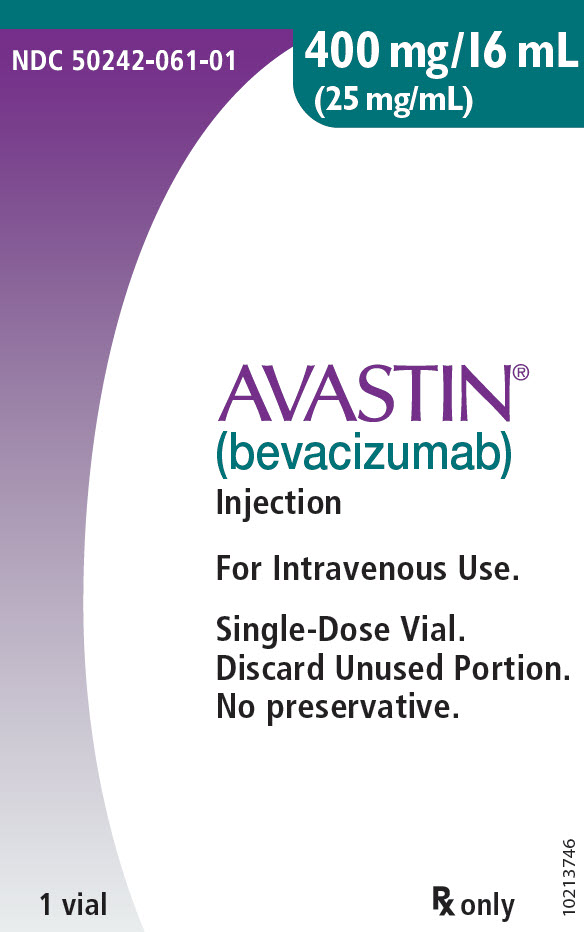
Avastin bevacizumab 400 mg/16mL Injection, Solution — NDC 50242-061-01 (Billing 50242-0061-01)
This is a package of Avastin bevacizumab 400 mg/16mL Injection, Solution from Genentech, Inc., marketed since Feb 2004 and currently FDA-listed. It is the main listing for this product, which comes in 2 package sizes.
NDC database record
One package, one record: these facts belong to NDC 50242-061-01 alone.
- Record
- FDA NDC Directory package listing · Human prescription drug
- Code segments
- 50242 labeler · 061 product · 01 package
- Package marketed since
- Feb 26, 2004
- Sample package
- No — commercial package
- Listing certified through
- Dec 31, 2026
- Barcode (UPC-A, from the NDC)
- 3 5024206101 8
- Medicaid fills, this package
- 10,081 prescriptions in the last four reported quarters
- FDA record last changed
- Jul 24, 2026
Identity & classification
Regulatory identifiers FDA, NLM and CMS codes for this package
Drug-database identifiers Medi-Span GPI and First Databank GCN / HICL / AHFS classification
- GSN (GCN sequence number): 053713
- GCN: 21427
- GPI-14 (Medi-Span): 21335020002030
- HICL (First Databank): 025963
- AHFS class code: 10:00.00.00
- RxCUI (RxNorm): 1657066
Where does this data come from?
- FDA openFDA NDC Directory · synced Oct 8, 2026
- FDA label on DailyMed · label index refreshed Oct 8, 2026
- RxNorm (NLM RxNav) · catalog refreshed Oct 8, 2026
- Medi-Span GPI (licensed)
- First Databank (licensed) · refreshed Oct 8, 2026
RxNorm drug class
This medicine belongs to the Vascular Endothelial Growth Factor Inhibitor class.
Where does this data come from?
- RxClass (NLM) · catalog refreshed Oct 8, 2026
Clinical
- Bevacizumab works by blocking a protein called VEGF, which tumors use to grow new blood vessels. Without that blood supply, the tumor has a harder time getting the nutrients it nee...
- What exactly does bevacizumab do, and why am I getting it?
- Bevacizumab is given through an IV — directly into a vein — by a nurse or infusion specialist at a clinic or cancer center. Your first infusion runs slowly over 90 minutes so the t...
- How is it given, and how long does each infusion take?
Patient education
Supplement & herbal interactions
Some supplements/herbs that may interact with Bevacizumab — tap one for details:
Where does this data come from?
- MedlinePlus (NLM) · refreshed Oct 8, 2026
- FDA label on DailyMed · label index refreshed Oct 8, 2026
Ask a licensed pharmacist directly — free, answered by our team.
Pricing
A drug doesn't have one price. Each row is a different public payment system, and none is what you'd pay at the counter — that depends on your insurance. The ⓘ on each row explains what it measures.
| Price system | Per mL | Per package |
|---|---|---|
| Retail pharmacies payNADAC · weekly | Not in the retail survey — common for institutional, discontinued, or low-volume packs. | |
| Medicaid paysCMS SDUD · 12 mo | $176.46 | $2,823.32 / 16 ml |
| Medicare drug plans payPart D · quarterly | No Part D plan price is available for this NDC in our data. | |
| Medicare Part B allowsASP · J9035 | $74.823 / J9035 unit | — |
Where does this data come from?
- CMS NADAC weekly file
- CMS ASP pricing files · refreshed Sep 20, 2026
- CMS Medicaid State Drug Utilization Data · through Q1 2026
- CMS Part D plan pricing files · refreshed Sep 24, 2026
- VA National Acquisition Center price file
Billing & reimbursement
Where does this data come from?
- CMS ASP NDC-HCPCS crosswalk · refreshed Sep 22, 2026
- DMEPDAC NDC-HCPCS crosswalk
- openFDA NSDE billing units · refreshed Oct 7, 2026
Packaging — all sizes for this product
| Package NDC | Description | Marketing start | Marketing end | Status |
|---|---|---|---|---|
| 50242-0061-01 You're viewing this Main listing | 1 VIAL, SINGLE-USE in 1 CARTON / 16 mL in 1 VIAL, SINGLE-USE | 2004-02-26 | — | Active |
| 50242-0061-10 50242-061-10 | 10 VIAL, SINGLE-USE in 1 CARTON / 16 mL in 1 VIAL, SINGLE-USE | 2019-04-01 | — | Discontinued by firm |
In Medicaid, this is the most-dispensed pack of this product — about 100% of fills over the last four reported quarters. See all packs ↓
Pack size FAQ
What quantity is in this package?
What NDC number is used to bill for this package of Avastin bevacizumab 400 mg/16mL Injection, Solution?
Therapeutic equivalents
| Product | Labeler | Pack | NADAC/unit | TE | Status | Price vs. this |
|---|---|---|---|---|---|---|
| Avastin 400 mg/16mLthis 50242-0061-01 | Genentech, | 1 vial | — | — | FDA listed | — |
Where does this data come from?
- FDA openFDA NDC Directory · synced Oct 8, 2026
- FDA Purple Book · refreshed Oct 5, 2026
- CMS NADAC weekly file
Availability & biosimilar status
6 biosimilars are FDA-licensed for this reference biologic — see the list below. (Biologics have no small-molecule generics.)
Why the date isn’t exact: Biosimilar timing can change because patents may be challenged, settled, licensed, added or removed, and litigation can move the real date earlier or later.
🛈 What do these terms mean?
- Biologic patent
- A patent the reference product’s maker has publicly listed. A biosimilar generally can’t launch until these expire — unless they’re invalidated or resolved in a settlement.
- Reference-product exclusivity
- A flat 12 years of FDA market protection from the biologic’s first licensure (the BPCIA). No biosimilar can be licensed before it ends, regardless of patents.
- Interchangeable exclusivity
- The first interchangeable biosimilar can earn a period as the only interchangeable version (pharmacists can substitute it without the prescriber).
- Earliest biosimilar (LOE)
- The latest of all the dates above — the soonest a biosimilar can realistically reach the market. Litigation and settlements can move it earlier.
Biologics have no small-molecule “generics” — competition comes from FDA-licensed biosimilars, tracked in the FDA Purple Book.
| Patent | Type | Use code | Expires |
|---|---|---|---|
| US 10,208,355 ↗ | Biologic patent | — | Jul 14, 2035 |
| US 10,017,732 ↗ | Biologic patent | — | Mar 14, 2034 |
| US 10,011,856 ↗ | Biologic patent | — | May 26, 2031 |
| US 9,795,672 ↗ | Biologic patent | — | May 28, 2024 |
| US 10,676,710 ↗ | Biologic patent | — | Mar 14, 2034 |
| US 9,714,293 ↗ | Biologic patent | — | Aug 6, 2030 |
| US 9,487,809 ↗ | Biologic patent | — | Jan 14, 2032 |
| US 9,441,035 ↗ | Biologic patent | — | Apr 23, 2034 |
| US 8,574,869 ↗ | Biologic patent | — | Jul 8, 2028 |
| US 8,512,983 ↗ | Biologic patent | — | Jan 4, 2031 |
| US 8,460,895 ↗ | Biologic patent | — | Aug 8, 2029 |
| US 7,485,704 ↗ | Biologic patent | — | Mar 8, 2025 |
| US 10,336,983 ↗ | Biologic patent | — | Jul 31, 2035 |
| US 10,274,466 ↗ | Biologic patent | — | Jul 11, 2035 |
| US 11,078,294 ↗ | Biologic patent | — | Jul 8, 2028 |
| US 10,982,003 ↗ | Biologic patent | — | Aug 6, 2030 |
| US 10,906,986 ↗ | Biologic patent | — | Jul 8, 2028 |
| US 10,906,934 ↗ | Biologic patent | — | Oct 12, 2033 |
| US 10,829,732 ↗ | Biologic patent | — | Mar 14, 2034 |
| US 10,704,071 ↗ | Biologic patent | — | Aug 18, 2031 |
| US 10,662,237 ↗ | Biologic patent | — | Aug 7, 2031 |
| US 10,513,697 ↗ | Biologic patent | — | Sep 17, 2032 |
Is there a biosimilar for AVASTIN 400 MG/16 ML VIAL?
Why do different websites show different biosimilar dates?
Can a biosimilar launch before the last patent expires?
What does “current Purple Book estimate” mean?
What does “FDA listed” mean?
What does a patent or protection date mean here?
Where does this data come from?
- FDA Purple Book · refreshed Oct 5, 2026
Inactive Ingredients / Excipients
Inactive ingredients, also called excipients, are components of the drug product other than the active ingredient. They may include fillers, dyes, coatings, preservatives, flavors, or other formulation ingredients.
🧪 Avoiding an ingredient? See Bevacizumab Injection inactive ingredients by manufacturer: every current product's list side by side, so you can ask your pharmacy for the version that does not list it.
💡 Tap an ingredient (hover on desktop) to see what it is and why it’s used.
-
6.4 mg / 16 mL
UNII 7T1F30V5YH
A synthetic emulsifier derived from sorbitol and oleic acid. It helps mix oil and water-based ingredients together and keeps them from separating in liquid formulations.
-
19.2 mg / 16 mL
UNII 22ADO53M6F
A mineral salt derived from phosphoric acid, used as a buffer to maintain the pH balance of the medication and help stabilize the active ingredients.
-
92.8 mg / 16 mL
UNII 593YOG76RN
A salt made from sodium and phosphate that helps regulate acidity and maintain proper pH balance in the medicine. It also acts as a buffer to keep the product stable.
-
960 mg / 16 mL
UNII 7YIN7J07X4
A natural sugar derived from plants and microorganisms. It acts as a filler to give the medication bulk and stability, and helps preserve the active ingredient during storage and manufacturing.
-
UNII 059QF0KO0R
Water is a liquid solvent that dissolves and mixes ingredients together in liquid medicines, syrups, and injections. It helps distribute the active drug evenly throughout the product.
5 inactive ingredients listed in the exact product block matched to this NDC.
Where does this data come from?
ingredient classCode="IACT" elements from the exact product block matched by this NDC. Label-section narrative from DailyMed / the openFDA label index is shown separately when available.- FDA label on DailyMed · label index refreshed Oct 8, 2026
- FDA openFDA NDC Directory · synced Oct 8, 2026
Inactive ingredient FAQ
Are inactive ingredients the same for every manufacturer?
Why might an inactive ingredient be missing?
Can inactive ingredients matter?
Manufacturer & labeler
More NDCs from Genentech, Inc. labeler code 50242
- Activase Alteplase Kit NDC 50242-044-13
- Rituxan rituximab 10 mg/mL Injection, Solution NDC 50242-051-10
- rituximab 10 g/L Liquid NDC 50242-052-01
- Rituxan rituximab 10 mg/mL Injection, Solution NDC 50242-053-06
- bevacizumab 25 g/L Liquid NDC 50242-059-01
- Avastin bevacizumab 100 mg/4mL Injection, Solution NDC 50242-060-01
- Gazyva obinutuzumab 1000 mg/40mL Injection, Solution, Concentrate NDC 50242-070-01
- Herceptin Hylecta Trastuzumab and hyaluronidase-oysk 600 mg/5mL; 10000 U/5mL Injection, Solution NDC 50242-077-01
- Susvimo Ranibizumab 100 mg/mL Injection, Solution NDC 50242-078-12
- Itovebi Inavolisib 9 mg Tablet, Film Coated NDC 50242-079-08
- LUCENTIS RANIBIZUMAB 10 mg/mL Injection, Solution NDC 50242-080-01
- LUCENTIS RANIBIZUMAB 6 mg/mL Injection, Solution NDC 50242-082-01
Where does this data come from?
- FDA openFDA NDC Directory · synced Oct 8, 2026
- Drugs@FDA
Full prescribing information FDA SPL
🎯 Indications and Usage ▾
1 INDICATIONS AND USAGE Avastin is a vascular endothelial growth factor inhibitor indicated for the treatment of: Metastatic colorectal cancer, in combination with intravenous fluorouracil-based chemotherapy for first- or second-line treatment. ( 1.1 ) Metastatic colorectal cancer, in combination with fluoropyrimidine-irinotecan- or fluoropyrimidine-oxaliplatin-based chemotherapy for second-line treatment in patients who have progressed on a first-line bevacizumab product-containing regimen. ( 1.1 ) Limitations of Use : Avastin is not indicated for adjuvant treatment of colon cancer.
( 1.1 ) Unresectable, locally advanced, recurrent or metastatic non-squamous non-small cell lung cancer, in combination with carboplatin and paclitaxel for first-line treatment. ( 1.2 ) Recurrent glioblastoma in adults. ( 1.3 ) Metastatic renal cell carcinoma in combination with interferon alfa.
( 1.4 ) Persistent, recurrent, or metastatic cervical cancer, in combination with paclitaxel and cisplatin, or paclitaxel and topotecan. ( 1.5 ) Epithelial ovarian, fallopian tube, or primary peritoneal cancer: in combination with carboplatin and paclitaxel, followed by Avastin as a single agent, for stage III or IV disease following initial surgical resection ( 1.6 ) in combination with paclitaxel, pegylated liposomal doxorubicin, or topotecan for platinum-resistant recurrent disease who received no more than 2 prior chemotherapy regimens ( 1.6 ) in combination with carboplatin and paclitaxel or carboplatin and gemcitabine, followed by Avastin as a single agent, for platinum-sensitive recurrent disease ( 1.6 ) Hepatocellular Carcinoma (HCC) in combination with atezolizumab for the treatment of patients with unresectable or metastatic HCC who have not received prior systemic therapy ( 1.7 )
1.1Metastatic Colorectal Cancer Avastin, in combination with intravenous fluorouracil-based chemotherapy, is indicated for the first-or second-line treatment of patients with metastatic colorectal cancer (mCRC). Avastin, in combination with fluoropyrimidine-irinotecan- or fluoropyrimidine-oxaliplatin-based chemotherapy, is indicated for the second-line treatment of patients with mCRC who have progressed on a first-line bevacizumab product-containing regimen. Limitations of Use : Avastin is not indicated for adjuvant treatment of colon cancer [see Clinical Studies (14.2) ].
1.2First-Line Non-Squamous Non–Small Cell Lung Cancer Avastin, in combination with carboplatin and paclitaxel, is indicated for the first-line treatment of patients with unresectable, locally advanced, recurrent or metastatic non–squamous non–small cell lung cancer (NSCLC).
1.3Recurrent Glioblastoma Avastin is indicated for the treatment of recurrent glioblastoma (GBM) in adults.
1.4Metastatic Renal Cell Carcinoma Avastin, in combination with interferon alfa, is indicated for the treatment of metastatic renal cell carcinoma (mRCC).
1.5Persistent, Recurrent, or Metastatic Cervical Cancer Avastin, in combination with paclitaxel and cisplatin or paclitaxel and topotecan, is indicated for the treatment of patients with persistent, recurrent, or metastatic cervical cancer.
1.6Epithelial Ovarian, Fallopian Tube, or Primary Peritoneal Cancer Avastin, in combination with carboplatin and paclitaxel, followed by Avastin as a single agent, is indicated for the treatment of patients with stage III or IV epithelial ovarian, fallopian tube, or primary peritoneal cancer following initial surgical resection. Avastin, in combination with paclitaxel, pegylated liposomal doxorubicin, or topotecan, is indicated for the treatment of patients with platinum-resistant recurrent epithelial ovarian, fallopian tube or primary peritoneal cancer who received no more than 2 prior chemotherapy regimens.
Avastin, in combination with carboplatin and paclitaxel, or with carboplatin and gemcitabine, followed by Avastin as a single agent, is indicated for the treatment of patients with platinum-sensitive recurrent epithelial ovari… [Excerpted — this section continues on DailyMed.]
⏱️ Dosage and Administration ▾
2 DOSAGE AND ADMINISTRATION Withhold for at least 28 days prior to elective surgery. Do not administer Avastin for 28 days following major surgery and until adequate wound healing. ( 2.1 ) Metastatic colorectal cancer ( 2.2 ) 5 mg/kg every 2 weeks with bolus-IFL 10 mg/kg every 2 weeks with FOLFOX4 5 mg/ kg every 2 weeks or 7.5 mg/kg every 3 weeks with fluoropyrimidine-irinotecan- or fluoropyrimidine-oxaliplatin-based chemotherapy after progression on a first-line bevacizumab product-containing regimen First-line non–squamous non–small cell lung cancer ( 2.3 ) 15 mg/kg every 3 weeks with carboplatin and paclitaxel Recurrent glioblastoma ( 2.4 ) 10 mg/kg every 2 weeks Metastatic renal cell carcinoma ( 2.5 ) 10 mg/kg every 2 weeks with interferon alfa Persistent, recurrent, or metastatic cervical cancer ( 2.6 ) 15 mg/kg every 3 weeks with paclitaxel and cisplatin, or paclitaxel and topotecan Stage III or IV epithelial ovarian, fallopian tube or primary peritoneal cancer following initial surgical resection ( 2.7 ) 15 mg/kg every 3 weeks with carboplatin and paclitaxel for up to 6 cycles, followed by 15 mg/kg every 3 weeks as a single agent, for a total of up to 22 cycles Platinum-resistant recurrent epithelial ovarian, fallopian tube or primary peritoneal cancer ( 2.7 ) 10 mg/kg every 2 weeks with paclitaxel, pegylated liposomal doxorubicin, or topotecan given every week 15 mg/kg every 3 weeks with topotecan given every 3 weeks Platinum-sensitive recurrent epithelial ovarian, fallopian tube, or primary peritoneal cancer ( 2.7 ) 15 mg/kg every 3 weeks with carboplatin and paclitaxel for 6-8 cycles, followed by 15 mg/kg every 3 weeks as a single agent 15 mg/kg every 3 weeks with carboplatin and gemcitabine for 6-10 cycles, followed by 15 mg/kg every 3 weeks as a single agent Hepatocellular Carcinoma ( 2.8 ) 15 mg/kg after administration of 1,200 mg of atezolizumab every 3 weeks Administer as an intravenous infusion after dilution.
See full Prescribing Information for preparation and administration instructions and dosage modifications for adverse reactions ( 2.9 , 2.10 )
2.1Important Administration Information Withhold for at least 28 days prior to elective surgery. Do not administer Avastin until at least 28 days following major surgery and until adequate wound healing.
2.2Metastatic Colorectal Cancer The recommended dosage when Avastin is administered in combination with intravenous fluorouracil-based chemotherapy is: 5 mg/kg intravenously every 2 weeks in combination with bolus-IFL. 10 mg/kg intravenously every 2 weeks in combination with FOLFOX4. 5 mg/kg intravenously every 2 weeks or 7.5 mg/kg intravenously every 3 weeks in combination with fluoropyrimidine-irinotecan- or fluoropyrimidine-oxaliplatin-based chemotherapy in patients who have progressed on a first-line bevacizumab product-containing regimen.
2.3First-Line Non-Squamous Non-Small Cell Lung Cancer The recommended dosage is 15 mg/kg intravenously every 3 weeks in combination with carboplatin and paclitaxel.
2.4Recurrent Glioblastoma The recommended dosage is 10 mg/kg intravenously every 2 weeks.
2.5Metastatic Renal Cell Carcinoma The recommended dosage is 10 mg/kg intravenously every 2 weeks in combination with interferon alfa.
2.6Persistent, Recurrent, or Metastatic Cervical Cancer The recommended dosage is 15 mg/kg intravenously every 3 weeks in combination with paclitaxel and cisplatin or in combination with paclitaxel and topotecan.
2.7Epithelial Ovarian, Fallopian Tube or Primary Peritoneal Cancer Stage III or IV Disease Following Initial Surgical Resection The recommended dosage is 15 mg/kg intravenously every 3 weeks in combination with carboplatin and paclitaxel for up to 6 cycles, followed by Avastin 15 mg/kg every 3 weeks as a single agent for a total of up to 22 cycles or until disease progression, whichever occurs earlier. Recurrent Disease Platinum Resistant The recommended dosage is 10 mg/kg intravenously every 2 weeks in combination with paclita… [Excerpted — this section continues on DailyMed.]
💊 Dosage Forms and Strengths ▾
3 DOSAGE FORMS AND STRENGTHS Injection: 100 mg/4 mL (25 mg/mL) or 400 mg/16 mL (25 mg/mL) clear to slightly opalescent, colorless to pale brown solution in a single-dose vial. Injection: 100 mg/4 mL (25 mg/mL) or 400 mg/16 mL (25 mg/mL) in a single-dose vial ( 3 )
⛔ Contraindications ▾
4 CONTRAINDICATIONS None. None ( 4 )
⚠️ Warnings and Cautions ▾
5 WARNINGS AND PRECAUTIONS Gastrointestinal Perforations and Fistula : Discontinue for gastrointestinal perforations, tracheoesophageal fistula, grade 4 fistula, or fistula formation involving any organ ( 5.1 ) Surgery and Wound Healing Complications : In patients who experience wound healing complications during Avastin treatment, withhold Avastin until adequate wound healing. Withhold for at least 28 days prior to elective surgery. Do not administer Avastin for at least 28 days following a major surgery, and until adequate wound healing.
The safety of resumption of AVASTIN after resolution of wound healing complication has not been established. Discontinue for wound healing complication of necrotizing fasciitis. ( 5.2 ) Hemorrhage: Severe or fatal hemorrhages have occurred.
Do not administer for recent hemoptysis. Discontinue for Grade 3-4 hemorrhage ( 5.3 ) Arterial Thromboembolic Events (ATE) : Discontinue for severe ATE. ( 5.4 ) Venous Thromboembolic Events (VTE) : Discontinue for Grade 4 VTE.
( 5.5 ) Hypertension : Monitor blood pressure and treat hypertension. Withhold if not medically controlled; resume once controlled. Discontinue for hypertensive crisis or hypertensive encephalopathy.
( 5.6 ) Posterior Reversible Encephalopathy Syndrome (PRES ) : Discontinue. ( 5.7 ) Renal Injury and Proteinuria : Monitor urine protein. Discontinue for nephrotic syndrome.
Withhold until less than 2 grams of protein in urine. ( 5.8 ) Infusion-Related Reactions : Decrease rate for infusion-related reactions. Discontinue for severe infusion-related reactions and administer medical therapy.
( 5.9 ) Embryo-Fetal Toxicity : May cause fetal harm. Advise females of potential risk to fetus and need for use of effective contraception. ( 5.10 , 8.1 , 8.3 ) Ovarian Failure : Advise females of the potential risk.
( 5.11 , 8.3 ) Congestive Heart Failure (CHF) : Discontinue Avastin in patients who develop CHF. ( 5.12 )
5.1Gastrointestinal Perforations and Fistulae Serious, and sometimes fatal, gastrointestinal perforation occurred at a higher incidence in patients receiving Avastin compared to patients receiving chemotherapy. The incidence ranged from 0.3% to 3% across clinical studies, with the highest incidence in patients with a history of prior pelvic radiation. Perforation can be complicated by intra-abdominal abscess, fistula formation, and the need for diverting ostomies.
The majority of perforations occurred within 50 days of the first dose [see Adverse Reactions (6.1) ] . Serious fistulae (including, tracheoesophageal, bronchopleural, biliary, vaginal, renal and bladder sites) occurred at a higher incidence in patients receiving Avastin compared to patients receiving chemotherapy. The incidence ranged from < 1% to 1.8% across clinical studies, with the highest incidence in patients with cervical cancer.
The majority of fistulae occurred within 6 months of the first dose. Patients who develop a gastrointestinal vaginal fistula may also have a bowel obstruction and require surgical intervention, as well as a diverting ostomy. Avoid Avastin in patients with ovarian cancer who have evidence of recto-sigmoid involvement by pelvic examination or bowel involvement on CT scan or clinical symptoms of bowel obstruction.
Discontinue in patients who develop gastrointestinal perforation, tracheoesophageal fistula or any Grade 4 fistula. Discontinue in patients with fistula formation involving any internal organ .
5.2Surgery and Wound Healing Complications In a controlled clinical study in which Avastin was not administered within 28 days of major surgical procedures, the incidence of wound healing complications, including serious and fatal complications, was 15% in patients with mCRC who underwent surgery while receiving Avastin and 4% in patients who did not receive Avastin. In a controlled clinical study in patients with relapsed or recurrent GBM, the incidence of wound healing events was 5% in patients who received Avastin and 0.7% in patients who… [Excerpted — this section continues on DailyMed.]
🤒 Adverse Reactions ▾
6 ADVERSE REACTIONS The following clinically significant adverse reactions are described elsewhere in the labeling: Gastrointestinal Perforations and Fistulae [see Warnings and Precautions (5.1) ] . Surgery and Wound Healing Complications [see Warnings and Precautions (5.2) ]. Hemorrhage [see Warnings and Precautions (5.3) ].
Arterial Thromboembolic Events [see Warnings and Precautions (5.4) ]. Venous Thromboembolic Events [see Warnings and Precautions (5.5) ]. Hypertension [see Warnings and Precautions (5.6) ].
Posterior Reversible Encephalopathy Syndrome [see Warnings and Precautions (5.7) ]. Renal Injury and Proteinuria [see Warnings and Precautions (5.8) ]. Infusion-Related Reactions [see Warnings and Precautions (5.9) ].
Ovarian Failure [see Warnings and Precautions (5.11) ]. Congestive Heart Failure [see Warnings and Precautions (5.12) ]. Most common adverse reactions incidence (incidence > 10%) are epistaxis, headache, hypertension, rhinitis, proteinuria, taste alteration, dry skin, hemorrhage, lacrimation disorder, back pain and exfoliative dermatitis.
( 6.1 ) To report SUSPECTED ADVERSE REACTIONS, contact Genentech, Inc. at 1-888-835-2555 or FDA at 1-800-FDA-1088 or www.fda.gov/medwatch.
6.1Clinical Trials Experience Because clinical studies are conducted under widely varying conditions, adverse reaction rates observed in the clinical studies of a drug cannot be directly compared to rates in the clinical studies of another drug and may not reflect the rates observed in practice. The safety data in Warnings and Precautions and described below reflect exposure to Avastin in 4463 patients including those with mCRC (AVF2107g, E3200), non-squamous NSCLC (E4599), GBM (EORTC 26101), mRCC (BO17705), cervical cancer (GOG-0240), epithelial ovarian, fallopian tube, or primary peritoneal cancer (MO22224, AVF4095, GOG-0213, and GOG-0218), or HCC (IMbrave150) at the recommended dose and schedule for a median of 6 to 23 doses.
The most common adverse reactions observed in patients receiving Avastin as a single agent or in combination with other anti-cancer therapies at a rate > 10% were epistaxis, headache, hypertension, rhinitis, proteinuria, taste alteration, dry skin, hemorrhage, lacrimation disorder, back pain, and exfoliative dermatitis. Across clinical studies, Avastin was discontinued in 8% to 22% of patients because of adverse reactions [see Clinical Studies (14) ]. Metastatic Colorectal Cancer In Combination with bolus-IFL The safety of Avastin was evaluated in 392 patients who received at least one dose of Avastin in a double-blind, active-controlled study (AVF2107g), which compared Avastin (5 mg/kg every 2 weeks) with bolus-IFL to placebo with bolus-IFL in patients with mCRC [see Clinical Studies (14.1) ] .
Patients were randomized (1:1:1) to placebo with bolus-IFL, Avastin with bolus-IFL, or Avastin with fluorouracil and leucovorin. The demographics of the safety population were similar to the demographics of the efficacy population. All Grades 3–4 adverse reactions and selected Grades 1–2 adverse reactions (i.e., hypertension, proteinuria, thromboembolic events) were collected in the entire study population.
Adverse reactions are presented in Table 2 . Table 2: Grades 3-4 Adverse Reactions Occurring at Higher Incidence (≥2%) in Patients Receiving Avastin vs. Placebo in Study AVF2107g Adverse Reaction NCI-CTC version 3 Avastin with IFL (N=392) Placebo with IFL (N=396) Hematology Leukopenia 37% 31% Neutropenia 21% 14% Gastrointestinal Diarrhea 34% 25% Abdominal pain 8% 5% Constipation 4% 2% Vascular Hypertension 12% 2% Deep vein thrombosis 9% 5% Intra-abdominal thrombosis 3% 1% Syncope 3% 1% General Asthenia 10% 7% Pain 8% 5% In Combination with FOLFOX4 The safety of Avastin was evaluated in 521 patients in an open-label, active-controlled study (E3200) in patients who were previously treated with irinotecan and fluorouracil for initial therapy for mCRC.
Patients were randomized (1:1:1) to FOLFOX4, Avastin (10 mg/kg ever… [Excerpted — this section continues on DailyMed.]
🔄 Drug Interactions ▾
7 DRUG INTERACTIONS Effects of Avastin on Other Drugs No clinically meaningful effect on the pharmacokinetics of irinotecan or its active metabolite SN38, interferon alfa, carboplatin or paclitaxel was observed when Avastin was administered in combination with these drugs; however, 3 of the 8 patients receiving Avastin with paclitaxel and carboplatin had lower paclitaxel exposure after four cycles of treatment (at Day 63) than those at Day 0, while patients receiving paclitaxel and carboplatin alone had a greater paclitaxel exposure at Day 63 than at Day 0.
👥 Use in Specific Populations ▾
8 USE IN SPECIFIC POPULATIONS Lactation: Advise not to breastfeed. ( 8.2 )
8.1Pregnancy Risk Summary Based on findings from animal studies and its mechanism of action [see Clinical Pharmacology (12.1) ], Avastin may cause fetal harm in pregnant women. Limited postmarketing reports describe cases of fetal malformations with use of Avastin in pregnancy; however, these reports are insufficient to determine drug-associated risks. In animal reproduction studies, intravenous administration of bevacizumab to pregnant rabbits every 3 days during organogenesis at doses approximately 1 to 10 times the clinical dose of 10 mg/kg produced fetal resorptions, decreased maternal and fetal weight gain and multiple congenital malformations including corneal opacities and abnormal ossification of the skull and skeleton including limb and phalangeal defects (see Data ) .
Furthermore, animal models link angiogenesis and VEGF and VEGFR2 to critical aspects of female reproduction, embryofetal development, and postnatal development. Advise pregnant women of the potential risk to a fetus. In the U.S. general population, the estimated background risk of major birth defects and miscarriage in clinically recognized pregnancies is 2% to 4% and 15% to 20%, respectively.
Data Animal Data Pregnant rabbits dosed with 10 mg/kg to 100 mg/kg bevacizumab (approximately 1 to 10 times the clinical dose of 10 mg/kg) every three days during the period of organogenesis (gestation day 6–18) exhibited decreases in maternal and fetal body weights and increased number of fetal resorptions. There were dose-related increases in the number of litters containing fetuses with any type of malformation (42% for the 0 mg/kg dose, 76% for the 30 mg/kg dose, and 95% for the 100 mg/kg dose) or fetal alterations (9% for the 0 mg/kg dose, 15% for the 30 mg/kg dose, and 61% for the 100 mg/kg dose).
Skeletal deformities were observed at all dose levels, with some abnormalities including meningocele observed only at the 100 mg/kg dose level. Teratogenic effects included: reduced or irregular ossification in the skull, jaw, spine, ribs, tibia and bones of the paws; fontanel, rib and hindlimb deformities; corneal opacity; and absent hindlimb phalanges.
8.2Lactation Risk Summary No data are available regarding the presence of bevacizumab in human milk, the effects on the breast fed infant, or the effects on milk production. Human IgG is present in human milk, but published data suggest that breast milk antibodies do not enter the neonatal and infant circulation in substantial amounts. Because of the potential for serious adverse reactions in breastfed infants, advise women not to breastfeed during treatment with Avastin and for 6 months after the last dose.
8.3Females and Males of Reproductive Potential Contraception Females Avastin may cause fetal harm when administered to a pregnant woman [see Use in Specific Populations (8.1) ] . Advise females of reproductive potential to use effective contraception during treatment with Avastin and for 6 months after the last dose. Infertility Females Avastin increases the risk of ovarian failure and may impair fertility.
Inform females of reproductive potential of the risk of ovarian failure prior to the first-dose of Avastin. Long-term effects of Avastin on fertility are not known. In a clinical study of 179 premenopausal women randomized to receive chemotherapy with or without Avastin, the incidence of ovarian failure was higher in patients who received Avastin with chemotherapy (34%) compared to patients who received chemotherapy alone (2%).
After discontinuing Avastin with chemotherapy, recovery of ovarian function occurred in 22% of these patients [see Warnings and Precautions (5.11) , Adverse Reactions (6.1) ] .
8.4Pediatric Use The safety and effectiveness of Avastin in pediatric patients have not been established. In published literature reports, cases of non-mandibular osteonecrosis have been observed in patients under the age of 18 years… [Excerpted — this section continues on DailyMed.]
🤰 Pregnancy ▾
8.1Pregnancy Risk Summary Based on findings from animal studies and its mechanism of action [see Clinical Pharmacology (12.1) ], Avastin may cause fetal harm in pregnant women. Limited postmarketing reports describe cases of fetal malformations with use of Avastin in pregnancy; however, these reports are insufficient to determine drug-associated risks. In animal reproduction studies, intravenous administration of bevacizumab to pregnant rabbits every 3 days during organogenesis at doses approximately 1 to 10 times the clinical dose of 10 mg/kg produced fetal resorptions, decreased maternal and fetal weight gain and multiple congenital malformations including corneal opacities and abnormal ossification of the skull and skeleton including limb and phalangeal defects (see Data ) .
Furthermore, animal models link angiogenesis and VEGF and VEGFR2 to critical aspects of female reproduction, embryofetal development, and postnatal development. Advise pregnant women of the potential risk to a fetus. In the U.S. general population, the estimated background risk of major birth defects and miscarriage in clinically recognized pregnancies is 2% to 4% and 15% to 20%, respectively.
Data Animal Data Pregnant rabbits dosed with 10 mg/kg to 100 mg/kg bevacizumab (approximately 1 to 10 times the clinical dose of 10 mg/kg) every three days during the period of organogenesis (gestation day 6–18) exhibited decreases in maternal and fetal body weights and increased number of fetal resorptions. There were dose-related increases in the number of litters containing fetuses with any type of malformation (42% for the 0 mg/kg dose, 76% for the 30 mg/kg dose, and 95% for the 100 mg/kg dose) or fetal alterations (9% for the 0 mg/kg dose, 15% for the 30 mg/kg dose, and 61% for the 100 mg/kg dose).
Skeletal deformities were observed at all dose levels, with some abnormalities including meningocele observed only at the 100 mg/kg dose level. Teratogenic effects included: reduced or irregular ossification in the skull, jaw, spine, ribs, tibia and bones of the paws; fontanel, rib and hindlimb deformities; corneal opacity; and absent hindlimb phalanges.
🧒 Pediatric Use ▾
8.4Pediatric Use The safety and effectiveness of Avastin in pediatric patients have not been established. In published literature reports, cases of non-mandibular osteonecrosis have been observed in patients under the age of 18 years who received Avastin. Avastin is not approved for use in patients under the age of 18 years.
Antitumor activity was not observed among eight pediatric patients with relapsed GBM who received bevacizumab and irinotecan. Addition of Avastin to standard of care did not result in improved event-free survival in pediatric patients enrolled in two randomized clinical studies, one in high grade glioma (n= 121) and one in metastatic rhabdomyosarcoma or non-rhabdomyosarcoma soft tissue sarcoma (n= 154). Based on the population pharmacokinetics analysis of data from 152 pediatric and young adult patients with cancer (7 months to 21 years of age), bevacizumab clearance normalized by body weight in pediatrics was comparable to that in adults.
Juvenile Animal Toxicity Data Juvenile cynomolgus monkeys with open growth plates exhibited physeal dysplasia following 4 to 26 weeks exposure at 0.4 to 20 times the recommended human dose (based on mg/kg and exposure). The incidence and severity of physeal dysplasia were dose-related and were partially reversible upon cessation of treatment.
🧓 Geriatric Use ▾
8.5Geriatric Use In an exploratory pooled analysis of 1745 patients from five randomized, controlled studies, 35% of patients were ≥ 65 years old. The overall incidence of ATE was increased in all patients receiving Avastin with chemotherapy as compared to those receiving chemotherapy alone, regardless of age; however, the increase in the incidence of ATE was greater in patients ≥ 65 years (8% vs. 3%) as compared to patients < 65 years (2% vs.
1%) [see Warnings and Precautions (5.4) ].
🧬 Clinical Pharmacology ▾
12 CLINICAL PHARMACOLOGY
12.1Mechanism of Action Bevacizumab binds VEGF and prevents the interaction of VEGF to its receptors (Flt-1 and KDR) on the surface of endothelial cells. The interaction of VEGF with its receptors leads to endothelial cell proliferation and new blood vessel formation in in vitro models of angiogenesis. Administration of bevacizumab to xenotransplant models of colon cancer in nude (athymic) mice caused reduction of microvascular growth and inhibition of metastatic disease progression.
12.3Pharmacokinetics The pharmacokinetic profile of bevacizumab was assessed using an assay that measures total serum bevacizumab concentrations (i.e., the assay did not distinguish between free bevacizumab and bevacizumab bound to VEGF ligand). Based on a population pharmacokinetic analysis of 491 patients who received 1 to 20 mg/kg of Avastin every week, every 2 weeks, or every 3 weeks, bevacizumab pharmacokinetics are linear and the predicted time to reach more than 90% of steady state concentration is 84 days. The accumulation ratio following a dose of 10 mg/kg once every 2 weeks is 2.8.
Population simulations of bevacizumab exposures provide a median trough concentration of 80.3 mcg/mL on Day 84 (10 th , 90 th percentile: 45, 128) following a dose of 5 mg/kg once every two weeks. Distribution The mean (% coefficient of variation [CV%]) central volume of distribution is 2.9 (22%) L. Elimination The mean (CV%) clearance is 0.23 (33) L/day.
The estimated half-life is 20 days (11 to 50 days). Specific Populations The clearance of bevacizumab varied by body weight, sex, and tumor burden. After correcting for body weight, males had a higher bevacizumab clearance (0.26 L/day vs.
0.21L/day) and a larger central volume of distribution (3.2 L vs.
2.7L) than females. Patients with higher tumor burden (at or above median value of tumor surface area) had a higher bevacizumab clearance (0.25 L/day vs.
0.20L/day) than patients with tumor burdens below the median. In Study AVF2107g, there was no evidence of lesser efficacy (hazard ratio for overall survival) in males or patients with higher tumor burden treated with Avastin as compared to females and patients with low tumor burden.
🧬 Mechanism of Action ▾
12.1Mechanism of Action Bevacizumab binds VEGF and prevents the interaction of VEGF to its receptors (Flt-1 and KDR) on the surface of endothelial cells. The interaction of VEGF with its receptors leads to endothelial cell proliferation and new blood vessel formation in in vitro models of angiogenesis. Administration of bevacizumab to xenotransplant models of colon cancer in nude (athymic) mice caused reduction of microvascular growth and inhibition of metastatic disease progression.
📦 How Supplied / Storage and Handling ▾
16 HOW SUPPLIED/STORAGE AND HANDLING Avastin (bevacizumab) injection is a clear to slightly opalescent, colorless to pale brown, sterile solution for intravenous infusion supplied as single-dose vials in the following strengths: 100 mg/4 mL (25 mg/mL): carton of one vial (NDC 50242-060-01) 400 mg/16 mL (25 mg/mL): carton of one vial (NDC 50242-061-01) Store refrigerated at 2°C to 8°C (36°F to 46°F) in the original carton until time of use to protect from light. Do not freeze or shake the vial or carton.
📦 Storage and Handling ▾
Store refrigerated at 2°C to 8°C (36°F to 46°F) in the original carton until time of use to protect from light. Do not freeze or shake the vial or carton.
📋 Description ▾
11 DESCRIPTION Bevacizumab is a vascular endothelial growth factor inhibitor. Bevacizumab is a recombinant humanized monoclonal IgG1 antibody that contains human framework regions and murine complementarity-determining regions. Bevacizumab has an approximate molecular weight of 149 kDa.
Bevacizumab is produced in a mammalian cell (Chinese Hamster Ovary) expression system. Avastin (bevacizumab) injection is a sterile, preservative-free, clear to slightly opalescent, colorless to pale brown solution in a single-dose vial for intravenous use. Avastin contains bevacizumab at a concentration of 25 mg/mL in either a 100 mg/4 mL or 400 mg/16 mL single-dose vial.
Each mL of solution contains 25 mg bevacizumab, α,α-trehalose dihydrate (60 mg), polysorbate 20 (0.4 mg), sodium phosphate dibasic, anhydrous (1.2 mg), sodium phosphate monobasic, monohydrate (5.8 mg), and Water for Injection, USP. The pH is 6.2.
💬 Information for Patients ▾
17 PATIENT COUNSELING INFORMATION Gastrointestinal Perforations and Fistulae : Avastin may increase the risk of developing gastrointestinal perforations and fistulae. Advise patients to immediately contact their healthcare provider for high fever, rigors, persistent or severe abdominal pain, severe constipation, or vomiting [ see Warnings and Precautions (5.1) ]. Surgery and Wound Healing Complications : Avastin can increase the risk of wound healing complications.
Instruct patients not to undergo surgery without first discussing this potential risk with their healthcare provider [see Warnings and Precautions (5.2) ] . Hemorrhage : Avastin can increase the risk of hemorrhage. Advise patients to immediately contact their healthcare provider for signs and symptoms of serious or unusual bleeding including coughing or spitting blood [see Warnings and Precautions (5.3) ] .
Arterial and Venous Thromboembolic Events : Avastin increases the risk of arterial and venous thromboembolic events. Advise patients to immediately contact their healthcare provider for signs and symptoms of arterial or venous thromboembolism [see Warnings and Precautions (5.4 , 5.5) ] . Hypertension : Avastin can increase blood pressure.
Advise patients that they will undergo routine blood pressure monitoring and to contact their healthcare provider if they experience changes in blood pressure [see Warnings and Precautions (5.6) ] . Posterior Reversible Leukoencephalopathy Syndrome : Posterior reversible encephalopathy syndrome (PRES) has been associated with Avastin treatment. Advise patients to immediately contact their healthcare provider for new onset or worsening neurological function [see Warnings and Precautions (5.7) ] .
Renal Injury and Proteinuria : Avastin increases the risk of proteinuria and renal injury, including nephrotic syndrome. Advise patients that treatment with Avastin requires regular monitoring of renal function and to contact their healthcare provider for proteinuria or signs and symptoms of nephrotic syndrome [ see Warnings and Precautions (5.8) ] . Infusion-Related Reactions : Avastin can cause infusion-related reactions.
Advise patients to contact their healthcare provider immediately for signs or symptoms of infusion-related reactions [see Warnings and Precautions (5.9) ]. Congestive Heart Failure : Avastin can increase the risk of developing congestive heart failure. Advise patients to contact their healthcare provider immediately for signs and symptoms of CHF [see Warnings and Precautions (5.12) ].
Embryo-Fetal Toxicity : Advise female patients that Avastin may cause fetal harm and to inform their healthcare provider with a known or suspected pregnancy [see Warnings and Precautions (5.10) , Use in Specific Populations (8.1) ]. Advise females of reproductive potential to use effective contraception during treatment with Avastin and for 6 months after the last dose [see Use in Specific Populations (8.3) ]. Ovarian Failure : Avastin may lead to ovarian failure.
Advise patients of potential options for preservation of ova prior to starting treatment [see Warnings and Precautions (5.11) ]. Lactation : Advise women not to breastfeed during treatment with Avastin and for 6 months after the last dose [see Use in Specific Populations (8.2) ] .
🧬 Pharmacokinetics ▾
12.3Pharmacokinetics The pharmacokinetic profile of bevacizumab was assessed using an assay that measures total serum bevacizumab concentrations (i.e., the assay did not distinguish between free bevacizumab and bevacizumab bound to VEGF ligand). Based on a population pharmacokinetic analysis of 491 patients who received 1 to 20 mg/kg of Avastin every week, every 2 weeks, or every 3 weeks, bevacizumab pharmacokinetics are linear and the predicted time to reach more than 90% of steady state concentration is 84 days. The accumulation ratio following a dose of 10 mg/kg once every 2 weeks is 2.8.
Population simulations of bevacizumab exposures provide a median trough concentration of 80.3 mcg/mL on Day 84 (10 th , 90 th percentile: 45, 128) following a dose of 5 mg/kg once every two weeks. Distribution The mean (% coefficient of variation [CV%]) central volume of distribution is 2.9 (22%) L. Elimination The mean (CV%) clearance is 0.23 (33) L/day.
The estimated half-life is 20 days (11 to 50 days). Specific Populations The clearance of bevacizumab varied by body weight, sex, and tumor burden. After correcting for body weight, males had a higher bevacizumab clearance (0.26 L/day vs.
0.21L/day) and a larger central volume of distribution (3.2 L vs.
2.7L) than females. Patients with higher tumor burden (at or above median value of tumor surface area) had a higher bevacizumab clearance (0.25 L/day vs.
0.20L/day) than patients with tumor burdens below the median. In Study AVF2107g, there was no evidence of lesser efficacy (hazard ratio for overall survival) in males or patients with higher tumor burden treated with Avastin as compared to females and patients with low tumor burden.
🔬 Clinical Studies ▾
14 CLINICAL STUDIES
14.1Metastatic Colorectal Cancer Study AVF2107g The safety and efficacy of Avastin was evaluated in a double-blind, active-controlled study [AVF2107g (NCT00109070)] in 923 patients with previously untreated mCRC who were randomized (1:1:1) to placebo with bolus-IFL (irinotecan 125 mg/m 2 , fluorouracil 500 mg/m 2 , and leucovorin 20 mg/m 2 given once weekly for 4 weeks every 6 weeks), Avastin (5 mg/kg every 2 weeks) with bolus-IFL, or Avastin (5 mg/kg every 2 weeks) with fluorouracil and leucovorin. Enrollment to the Avastin with fluorouracil and leucovorin arm was discontinued after enrollment of 110 patients in accordance with the protocol-specified adaptive design.
Avastin was continued until disease progression or unacceptable toxicity or for a maximum of 96 weeks. The main outcome measure was overall survival (OS). The median age was 60 years; 60% were male, 79% were White, 57% had an ECOG performance status of 0, 21% had a rectal primary and 28% received prior adjuvant chemotherapy.
The dominant site of disease was extra-abdominal in 56% of patients and was the liver in 38% of patients. The addition of Avastin improved survival across subgroups defined by age (< 65 years, ≥ 65 years) and sex. Results are presented in Table 11 and Figure 1 .
Table 11: Efficacy Results in Study AVF2107g Efficacy Parameter Avastin with bolus-IFL (N=402) Placebo with bolus-IFL (N=411) Overall Survival Median, in months 20.3
15.6Hazard ratio (95% CI) 0.66 (0.54, 0.81) p-value by stratified log-rank test. < 0.001 Progression-Free Survival Median, in months 10.6
6.2Hazard ratio (95% CI) 0.54 (0.45, 0.66) p-value < 0.001 Overall Response Rate Rate (%) 45% 35% p-value by χ 2 test <
0.01Duration of Response Median, in months 10.4
7.1Figure 1: Kaplan-Meier Curves for Duration of Survival in Metastatic Colorectal Cancer in Study AVF2107g Among the 110 patients randomized to Avastin with fluorouracil and leucovorin, median OS was 18.3 months, median progression-free survival (PFS) was 8.8 months, overall response rate (ORR) was 39%, and median duration of response was 8.5 months. Figure 1 Study E3200 The safety and efficacy of Avastin were evaluated in a randomized, open-label, active-controlled study [E3200 (NCT00025337)] in 829 patients who were previously treated with irinotecan and fluorouracil for initial therapy for metastatic disease or as adjuvant therapy.
Patients were randomized (1:1:1) to FOLFOX4 (Day 1: oxaliplatin 85 mg/m 2 and leucovorin 200 mg/m 2 concurrently, then fluorouracil 400 mg/m 2 bolus followed by 600 mg/m 2 continuously; Day 2: leucovorin 200 mg/m 2 , then fluorouracil 400 mg/m 2 bolus followed by 600 mg/m 2 continuously; every 2 weeks), Avastin (10 mg/kg every 2 weeks prior to FOLFOX4 on Day 1) with FOLFOX4, or Avastin alone (10 mg/kg every 2 weeks). Avastin was continued until disease progression or unacceptable toxicity. The main outcome measure was OS.
The Avastin alone arm was closed to accrual after enrollment of 244 of the planned 290 patients following a planned interim analysis by the data monitoring committee based on evidence of decreased survival compared to FOLFOX4 alone. The median age was 61 years; 60% were male, 87% were White, 49% had an ECOG performance status of 0, 26% received prior radiation therapy, and 80% received prior adjuvant chemotherapy, 99% received prior irinotecan with or without fluorouracil for metastatic disease, and 1% received prior irinotecan and fluorouracil as adjuvant therapy.
The addition of Avastin to FOLFOX4 resulted in significantly longer survival as compared to FOLFOX4 alone; median OS was 13.0 months vs. 10.8 months [hazard ratio (HR) 0.75 (95% CI: 0.63, 0.89), p-value of 0.001 stratified log-rank test] with clinical benefit seen in subgroups defined by age (< 65 years, ≥ 65 years) and sex. PFS and ORR based on investigator assessment were higher in patients receiving Avastin with FOLFOX4.
Study TRC-0301 The activity of Avastin with fluorouracil (as bol… [Excerpted — this section continues on DailyMed.]
🧪 Nonclinical Toxicology ▾
13 NONCLINICAL TOXICOLOGY
13.1Carcinogenesis, Mutagenesis, Impairment of Fertility No studies have been conducted to assess potential of bevacizumab for carcinogenicity or mutagenicity. Bevacizumab may impair fertility. Female cynomolgus monkeys treated with 0.4 to 20 times the recommended human dose of bevacizumab exhibited arrested follicular development or absent corpora lutea, as well as dose-related decreases in ovarian and uterine weights, endometrial proliferation, and the number of menstrual cycles.
Following a 4- or 12-week recovery period, there was a trend suggestive of reversibility. After the 12-week recovery period, follicular maturation arrest was no longer observed, but ovarian weights were still moderately decreased. Reduced endometrial proliferation was no longer observed at the 12-week recovery time point; however, decreased uterine weight, absent corpora lutea, and reduced number of menstrual cycles remained evident.
13.2Animal Toxicology and/or Pharmacology Rabbits dosed with bevacizumab exhibited reduced wound healing capacity. Using full-thickness skin incision and partial thickness circular dermal wound models, bevacizumab dosing resulted in reductions in wound tensile strength, decreased granulation and re-epithelialization, and delayed time to wound closure.
📄 Carcinogenesis, Mutagenesis, Impairment of Fertility ▾
13.1Carcinogenesis, Mutagenesis, Impairment of Fertility No studies have been conducted to assess potential of bevacizumab for carcinogenicity or mutagenicity. Bevacizumab may impair fertility. Female cynomolgus monkeys treated with 0.4 to 20 times the recommended human dose of bevacizumab exhibited arrested follicular development or absent corpora lutea, as well as dose-related decreases in ovarian and uterine weights, endometrial proliferation, and the number of menstrual cycles.
Following a 4- or 12-week recovery period, there was a trend suggestive of reversibility. After the 12-week recovery period, follicular maturation arrest was no longer observed, but ovarian weights were still moderately decreased. Reduced endometrial proliferation was no longer observed at the 12-week recovery time point; however, decreased uterine weight, absent corpora lutea, and reduced number of menstrual cycles remained evident.
📄 Recent Major Changes ▾
Indications and Usage ( 1.1 ) 9/2022 Dosage and Administration ( 2.2 ) 9/2022 Warnings and Precautions, Infusion-Related Reactions ( 5.9 ) 9/2022
📄 Package Label / Principal Display Panel ▾
PRINCIPAL DISPLAY PANEL - 4 mL Vial Carton NDC 50242-060-01 100 mg/4 mL (25 mg/mL) AVASTIN ® (bevacizumab) Injection For Intravenous Use. Single-Dose Vial. Discard Unused Portion. No preservative. 1 vial Rx only Genentech 10213744 PRINCIPAL DISPLAY PANEL - 4 mL Vial Carton
PRINCIPAL DISPLAY PANEL - 16 mL Vial Carton NDC 50242-061-01 400 mg/16 mL (25 mg/mL) AVASTIN ® (bevacizumab) Injection For Intravenous Use. Single-Dose Vial. Discard Unused Portion. No preservative. 1 vial Rx only 10213746 PRINCIPAL DISPLAY PANEL - 16 mL Vial Carton
Medicaid utilization & spend
Medicaid utilization by pack size
Medicare Part D spend CMS · PART D · 2026 (Q1)
About this NDC listing & data coverage
What data is (and isn’t) available for this NDC — tap to expand
| NDC identity (package / product / labeler codes) | ✓ Available |
| Labeler | ✓ Available |
| Product & package description | ✓ Available |
| Marketing category & status | ✓ Available |
| Active ingredient / dosage form / route | ✓ Available |
| FDA label (SPL via DailyMed) | ✓ Available |
| Package photos | ✓ Available |
| Inactive ingredients (structured) | ✓ Available |
| NADAC pharmacy acquisition price (CMS) | — Not published for this NDC CMS publishes NADAC only for NDCs reported in its retail-pharmacy survey. |
| Orange Book / therapeutic-equivalence data | ✓ Available |
| HCPCS J-code billing crosswalk | ✓ Available |
| Medicaid utilization (CMS SDUD) | ✓ Available |