
Rituxan Hycela rituximab and hyaluronidase 120 mg/mL; 2000 U/mL Injection, Solution, 1 vial — NDC 50242-108-86 (Billing 50242-0108-86)
This is a package of 1 vial of Rituxan Hycela rituximab and hyaluronidase 120 mg/mL; 2000 U/mL Injection, Solution from Genentech, Inc., marketed since Jun 2017 and currently FDA-listed.
NDC database record
One package, one record: these facts belong to NDC 50242-108-86 alone.
- Record
- FDA NDC Directory package listing · Human prescription drug
- Code segments
- 50242 labeler · 108 product · 86 package
- Package marketed since
- Jun 23, 2017
- Sample package
- Yes — professional sample, not for sale
- Listing certified through
- Dec 31, 2027
- Barcode (UPC-A, from the NDC)
- 3 5024210886 7
- FDA record last changed
- Oct 8, 2026
Identity & classification
Regulatory identifiers FDA, NLM and CMS codes for this package
Drug-database identifiers Medi-Span GPI and First Databank GCN / HICL / AHFS classification
- GSN (GCN sequence number): 072319
- GCN: 36469
- HICL (First Databank): 044378
- AHFS class code: 10:00.00.00
Where does this data come from?
- FDA openFDA NDC Directory · synced Oct 8, 2026
- FDA label on DailyMed · label index refreshed Oct 8, 2026
- RxNorm (NLM RxNav) · catalog refreshed Oct 8, 2026
- Medi-Span GPI (licensed)
- First Databank (licensed) · refreshed Oct 8, 2026
Clinical
- That's a really common question. The IV dose is given first so your care team can monitor how you respond to rituximab in a controlled setting — since serious reactions are more li...
- Why do I have to get an IV infusion first before switching to the injection?
- No — this one has to be given by a healthcare professional in a clinical setting every time. After each injection you'll be observed for at least 15 minutes, because serious reacti...
- Is the injection something I can do at home?
Patient education
Supplement & herbal interactions
Where does this data come from?
- MedlinePlus (NLM) · refreshed Oct 8, 2026
- FDA label on DailyMed · label index refreshed Oct 8, 2026
Ask a licensed pharmacist directly — free, answered by our team.
Pricing
A drug doesn't have one price. Each row is a different public payment system, and none is what you'd pay at the counter — that depends on your insurance. The ⓘ on each row explains what it measures.
| Price system | Per mL | Per package |
|---|---|---|
| Retail pharmacies payNADAC · weekly | Not in the retail survey — common for institutional, discontinued, or low-volume packs. | |
| Medicaid paysCMS SDUD · 12 mo | No recent Medicaid claims on file for this NDC — rare and low-volume NDCs are suppressed in the public data. | |
| Medicare drug plans payPart D · quarterly | No Part D plan price is available for this NDC in our data. | |
Where does this data come from?
- CMS NADAC weekly file
- CMS ASP pricing files · refreshed Sep 20, 2026
- CMS Medicaid State Drug Utilization Data · refreshed Oct 9, 2026
- CMS Part D plan pricing files · refreshed Sep 24, 2026
- VA National Acquisition Center price file
Packaging — all sizes for this product
| Package NDC | Description | Marketing start | Marketing end | Status |
|---|---|---|---|---|
| 50242-0108-01 50242-108-01 Main listing | 1 VIAL, SINGLE-DOSE in 1 CARTON / 11.7 mL in 1 VIAL, SINGLE-DOSE | 2017-06-22 | — | Active |
| 50242-0108-86 You're viewing this | 1 VIAL, SINGLE-DOSE in 1 CARTON / 11.7 mL in 1 VIAL, SINGLE-DOSE Sample | 2017-06-23 | — | Active |
Pack size FAQ
What quantity is in this package?
How does this package differ from NDC 50242-0108-01?
What NDC number is used to bill for this package of Rituxan Hycela rituximab and hyaluronidase 120 mg/mL; 2000 U/mL Injection, Solution?
Therapeutic equivalents
| Product | Labeler | Pack | NADAC/unit | TE | Status | Price vs. this |
|---|---|---|---|---|---|---|
| Rituxan Hycela 120 mg/mL; 2000 U/mLthis 50242-0108-86 | Genentech, | 1 vial | — | — | FDA listed | — |
| Rituxan Hycela 120 mg/mL; 2000 U/mL 50242-0109-01 | Genentech, | 1 vial | — | — | FDA listed | — |
Where does this data come from?
- FDA openFDA NDC Directory · synced Oct 8, 2026
- FDA Purple Book · refreshed Oct 5, 2026
- CMS NADAC weekly file
Availability & biosimilar status
Biologics have no small-molecule generics; biosimilar competition is tracked in the FDA Purple Book.
Why the date isn’t exact: Biosimilar timing can change because patents may be challenged, settled, licensed, added or removed, and litigation can move the real date earlier or later.
🛈 What do these terms mean?
- Biologic patent
- A patent the reference product’s maker has publicly listed. A biosimilar generally can’t launch until these expire — unless they’re invalidated or resolved in a settlement.
- Reference-product exclusivity
- A flat 12 years of FDA market protection from the biologic’s first licensure (the BPCIA). No biosimilar can be licensed before it ends, regardless of patents.
- Interchangeable exclusivity
- The first interchangeable biosimilar can earn a period as the only interchangeable version (pharmacists can substitute it without the prescriber).
- Earliest biosimilar (LOE)
- The latest of all the dates above — the soonest a biosimilar can realistically reach the market. Litigation and settlements can move it earlier.
Biologics have no small-molecule “generics” — competition comes from FDA-licensed biosimilars, tracked in the FDA Purple Book.
| Code | What it grants | Expires |
|---|---|---|
| RefProduct | Reference-product exclusivity (12-year, BPCIA) — no biosimilar can be licensed before this date | Jun 22, 2029 |
Is there a biosimilar for RITUXAN HYCELA 1,400 MG-23,400?
Why do different websites show different biosimilar dates?
Can a biosimilar launch before the last patent expires?
What does “current Purple Book estimate” mean?
What does “FDA listed” mean?
What does a patent or protection date mean here?
Where does this data come from?
- FDA Purple Book · refreshed Oct 5, 2026
Inactive Ingredients / Excipients
Inactive ingredients, also called excipients, are components of the drug product other than the active ingredient. They may include fillers, dyes, coatings, preservatives, flavors, or other formulation ingredients.
🧪 Avoiding an ingredient? See Rituximab and Hyaluronidase Human Injection inactive ingredients by manufacturer: every current product's list side by side, so you can ask your pharmacy for the version that does not list it.
💡 Tap an ingredient (hover on desktop) to see what it is and why it’s used.
-
UNII 4QD397987E
An amino acid used as a buffer and stabilizer in medications. It helps maintain the pH balance and protects the active drug from breaking down during storage and use.
-
UNII X573657P6P
Histidine monohydrochloride monohydrate is an amino acid salt used as a buffer in medicines. It helps maintain the proper acidity level of liquid formulations to keep the drug stable and effective.
-
UNII AE28F7PNPL
Methionine is an amino acid used as a nutrient supplement and pH buffer in medicines. It helps stabilize the formulation and supports the product's overall composition.
-
UNII 6OZP39ZG8H
Polysorbate 80 is a synthetic emulsifier derived from sorbitol and oleic acid. It helps mix oil and water-based ingredients together in medications and improves how the product disperses in the body.
-
UNII 7YIN7J07X4
A natural sugar derived from plants and microorganisms. It acts as a filler to give the medication bulk and stability, and helps preserve the active ingredient during storage and manufacturing.
-
UNII 059QF0KO0R
Water is a liquid solvent that dissolves and mixes ingredients together in liquid medicines, syrups, and injections. It helps distribute the active drug evenly throughout the product.
6 inactive ingredients listed in the exact product block matched to this NDC.
Where does this data come from?
ingredient classCode="IACT" elements from the exact product block matched by this NDC. Label-section narrative from DailyMed / the openFDA label index is shown separately when available.- FDA label on DailyMed · label index refreshed Oct 8, 2026
- FDA openFDA NDC Directory · synced Oct 8, 2026
Inactive ingredient FAQ
Are inactive ingredients the same for every manufacturer?
Why might an inactive ingredient be missing?
Can inactive ingredients matter?
Manufacturer & labeler
More NDCs from Genentech, Inc. labeler code 50242
- Rozlytrek ENTRECTINIB 200 mg Capsule NDC 50242-094-47
- VABYSMO Faricimab 6 mg/.05mL Injection, Solution NDC 50242-096-01
- dornase alfa 14 g/L Liquid NDC 50242-099-01
- Pulmozyme dornase alfa 1 mg/mL Solution NDC 50242-100-40
- POLIVY polatuzumab vedotin 30 mg/1.88mL Injection, Powder, Lyophilized, For Solution NDC 50242-103-01
- POLIVY polatuzumab vedotin 140 mg/7.52mL Injection, Powder, Lyophilized, For Solution NDC 50242-105-01
- Rituxan Hycela rituximab and hyaluronidase 120 mg/mL; 2000 U/mL Injection, Solution NDC 50242-109-01
- Piasky Crovalimab 340 mg/2mL Injection, Solution NDC 50242-115-01
- TNKase tenecteplase Kit NDC 50242-120-47
- Esbriet Pirfenidone 267 mg Tablet, Coated NDC 50242-122-06
- Esbriet Pirfenidone 801 mg Tablet, Coated NDC 50242-123-01
- Columvi Glofitamab 2.5 mg/2.5mL Solution, Concentrate NDC 50242-125-01
Where does this data come from?
- FDA openFDA NDC Directory · synced Oct 8, 2026
- Drugs@FDA
Full prescribing information FDA SPL
🚨 Boxed Warning ▾
WARNING: SEVERE MUCOCUTANEOUS REACTIONS, HEPATITIS B VIRUS REACTIVATION and PROGRESSIVE MULTIFOCAL LEUKOENCEPHALOPATHY WARNING: SEVERE MUCOCUTANEOUS REACTIONS, HEPATITIS B VIRUS REACTIVATION and PROGRESSIVE MULTIFOCAL LEUKOENCEPHALOPATHY See full prescribing information for complete boxed warning. Severe mucocutaneous reactions, some with fatal outcomes ( 5.1 ). Hepatitis B virus reactivation, in some cases resulting in fulminant hepatitis, hepatic failure, and death ( 5.2 ).
Progressive multifocal leukoencephalopathy resulting in death ( 5.3 ). Severe Mucocutaneous Reactions Severe, including fatal, mucocutaneous reactions can occur in patients receiving rituximab-containing products, including RITUXAN HYCELA [see Warnings and Precautions (5.1) ]. Hepatitis B Virus (HBV) Reactivation HBV reactivation can occur in patients treated with rituximab-containing products, including RITUXAN HYCELA, in some cases resulting in fulminant hepatitis, hepatic failure, and death.
Screen all patients for HBV infection before treatment initiation, and monitor patients during and after treatment with RITUXAN HYCELA. Discontinue RITUXAN HYCELA and concomitant medications in the event of HBV reactivation [see Warnings and Precautions (5.2) ] . Progressive Multifocal Leukoencephalopathy (PML), including fatal PML, can occur in patients receiving rituximab-containing products, including RITUXAN HYCELA [see Warnings and Precautions (5.3) and Adverse Reactions (6.1) ].
🎯 Indications and Usage ▾
1 INDICATIONS AND USAGE RITUXAN HYCELA is a combination of rituximab, a CD20-directed cytolytic antibody, and hyaluronidase human, an endoglycosidase, indicated for the treatment of adult patients with: Follicular Lymphoma (FL) ( 1.1 ) Relapsed or refractory, follicular lymphoma as a single agent Previously untreated follicular lymphoma in combination with first line chemotherapy and, in patients achieving a complete or partial response to rituximab in combination with chemotherapy, as single-agent maintenance therapy Non-progressing (including stable disease), follicular lymphoma as a single agent after first-line cyclophosphamide, vincristine, and prednisone (CVP) chemotherapy Diffuse Large B-cell Lymphoma (DLBCL) ( 1.2 ) Previously untreated diffuse large B-cell lymphoma in combination with cyclophosphamide, doxorubicin, vincristine, prednisone (CHOP) or other anthracycline-based chemotherapy regimens Chronic Lymphocytic Leukemia (CLL) ( 1.3 ) Previously untreated and previously treated CLL in combination with fludarabine and cyclophosphamide (FC) Limitations of Use: Initiate treatment with RITUXAN HYCELA only after patients have received at least one full dose of a rituximab product by intravenous infusion.
( 1.4 , 2.1 , 5.4 ). RITUXAN HYCELA is not indicated for the treatment of non-malignant conditions. ( 1.4 )
1.1Follicular Lymphoma (FL) RITUXAN HYCELA is indicated for the treatment of adult patients with: Relapsed or refractory, follicular lymphoma as a single agent. Previously untreated follicular lymphoma in combination with first line chemotherapy and, in patients achieving a complete or partial response to rituximab in combination with chemotherapy, as single-agent maintenance therapy. Non-progressing (including stable disease), follicular lymphoma as a single agent after first-line cyclophosphamide, vincristine, and prednisone (CVP) chemotherapy.
1.2Diffuse Large B-Cell Lymphoma (DLBCL) RITUXAN HYCELA is indicated for the treatment of adult patients with previously untreated diffuse large B-cell lymphoma in combination with cyclophosphamide, doxorubicin, vincristine, prednisone (CHOP) or other anthracycline-based chemotherapy regimens.
1.3Chronic Lymphocytic Leukemia (CLL) RITUXAN HYCELA is indicated, in combination with fludarabine and cyclophosphamide (FC), for the treatment of adult patients with previously untreated and previously treated CLL.
1.4Limitations of Use Initiate treatment with RITUXAN HYCELA only after patients have received at least one full dose of a rituximab product by intravenous infusion [see Dosage and Administration (2.1) and Warnings and Precautions (5.4) ]. RITUXAN HYCELA is not indicated for the treatment of non-malignant conditions.
⏱️ Dosage and Administration ▾
2 DOSAGE AND ADMINISTRATION For subcutaneous use only ( 2.1 ) All patients must receive at least one full dose of a rituximab product by intravenous infusion before receiving RITUXAN HYCELA by subcutaneous injection ( 2.1 ). FL/DLBCL: Administer 1,400 mg/23,400 Units (1,400 mg rituximab and 23,400 Units hyaluronidase human) subcutaneously according to recommended schedule ( 2.2 , 2.3 ). CLL: Administer 1,600 mg/26,800 Units (1,600 mg rituximab and 26,800 Units hyaluronidase human) subcutaneously according to recommended schedule ( 2.4 ).
Premedicate with acetaminophen and antihistamine before each dose; in addition, consider premedication with glucocorticoids ( 2.5 , 5.4 ) Administer specified volume into subcutaneous tissue of abdomen: ( 2.6 ) 11.7 mL from 1,400 mg/23,400 Units vial over approximately 5 minutes. 13.4 mL from 1,600 mg/26,800 Units vial over approximately 7 minutes. Observe 15 minutes following administration
2.1Important Dosing Information RITUXAN HYCELA is for subcutaneous use only. RITUXAN HYCELA should only be administered by a healthcare professional with appropriate medical support to manage severe reactions that can be fatal if they occur. All patients must first receive at least one full dose of a rituximab product by intravenous infusion without experiencing severe adverse reactions before starting treatment with RITUXAN HYCELA.
If patients are not able to receive one full dose by intravenous infusion, they should continue subsequent cycles with a rituximab product by intravenous infusion and not switch to RITUXAN HYCELA until a full intravenous dose is successfully administered [see Warnings and Precautions (5.4) ]. Refer to the prescribing information for a rituximab product for intravenous infusion for additional information. Premedicate before each dose of RITUXAN HYCELA [see Dosage and Administration (2.5) ] .
Dose reductions of RITUXAN HYCELA are not recommended. When RITUXAN HYCELA is given in combination with chemotherapy dose, reduce the chemotherapeutic drugs to manage adverse reactions.
2.2Recommended Dosage for Follicular Lymphoma (FL) All patients must receive at least one full dose of a rituximab product by intravenous infusion before starting treatment with RITUXAN HYCELA [see Dosage and Administration (2.1) and Warnings and Precautions (5.4) ]. Premedicate before each dose [see Dosage and Administration (2.5) ]. The recommended dose is RITUXAN HYCELA 1,400 mg/23,400 Units (1,400 mg rituximab and 23,400 Units hyaluronidase human) subcutaneously at a fixed dose irrespective of patient's body surface area according to the following schedules: Relapsed or Refractory, Follicular Lymphoma Administer once weekly for 3 or 7 weeks following a full dose of a rituximab product by intravenous infusion at week 1 (i.e., 4 or 8 weeks in total).
Retreatment for Relapsed or Refractory, Follicular Lymphoma Administer once weekly for 3 weeks following a full dose of a rituximab product by intravenous infusion at week 1 (i.e., 4 weeks in total). Previously Untreated, Follicular Lymphoma Administer on Day 1 of Cycles 2–8 of chemotherapy (every 21 days), for up to 7 cycles following a full dose of a rituximab product by intravenous infusion on Day 1 of Cycle 1 of chemotherapy (i.e., up to 8 cycles in total). In patients with complete or partial response, initiate RITUXAN HYCELA maintenance treatment 8 weeks following completion of RITUXAN HYCELA in combination with chemotherapy.
Administer RITUXAN HYCELA as a single-agent every 8 weeks for 12 doses. Non-progressing, Follicular Lymphoma after first line CVP chemotherapy Following completion of 6–8 cycles of CVP chemotherapy and a full dose of a rituximab product by intravenous infusion at week 1, administer once weekly for 3 weeks (i.e., 4 weeks in total) at 6 month intervals to a maximum of 16 doses.
2.3Recommended Dosage for Diffuse Large B-Cell Lymphoma (DLBCL) All patients must receive at least one full dose of a rituximab product by intravenous infusi… [Excerpted — this section continues on DailyMed.]
💊 Dosage Forms and Strengths ▾
3 DOSAGE FORMS AND STRENGTHS RITUXAN HYCELA is a colorless to yellowish, clear to opalescent solution for subcutaneous injection: Injection: 1,400 mg rituximab and 23,400 Units hyaluronidase human per 11.7 mL (120 mg/2,000 Units per mL) in a single-dose vial. Injection: 1,600 mg rituximab and 26,800 Units hyaluronidase human per 13.4 mL (120 mg/2,000 Units per mL) in a single-dose vial. Injection: ( 3 ) 1,400 mg rituximab and 23,400 Units hyaluronidase human per 11.7 mL (120 mg/2,000 Units per mL) solution in a single-dose vial 1,600 mg rituximab and 26,800 Units hyaluronidase human per 13.4 mL (120 mg/2,000 Units per mL) solution in a single-dose vial
⛔ Contraindications ▾
4 CONTRAINDICATIONS None None.
⚠️ Warnings and Cautions ▾
5 WARNINGS AND PRECAUTIONS Hypersensitivity and other administration reactions: Local cutaneous reactions may occur more than 24 hours after administration. Interrupt injection if severe reaction develops. Premedicate before injection.
( 5.4 ) Tumor lysis syndrome: Administer aggressive intravenous hydration, anti hyperuricemic agents, monitor renal function. ( 5.5 ) Infections: Withhold and institute appropriate anti-infective therapy. ( 5.6 ) Cardiac adverse reactions: Discontinue in case of serious or life-threatening events.
( 5.7 ) Renal toxicity: Discontinue in patients with rising serum creatinine or oliguria. ( 5.8 ) Bowel obstruction and perforation: Consider and evaluate for abdominal pain, vomiting, or related symptoms. ( 5.9 ) Immunizations: Live virus vaccinations prior to or during treatment not recommended.
( 5.10 ) Embryo-Fetal toxicity: Can cause fetal harm. Advise females of reproductive potential of the potential risk to a fetus and use of effective contraception. ( 5.11 )
5.1Severe Mucocutaneous Reactions Mucocutaneous reactions, some with fatal outcome, can occur in patients treated with rituximab-containing products, including RITUXAN HYCELA. These reactions include paraneoplastic pemphigus, Stevens-Johnson syndrome, lichenoid dermatitis, vesiculobullous dermatitis, and toxic epidermal necrolysis. Discontinue RITUXAN HYCELA in patients who experience a severe mucocutaneous reaction.
The safety of re-administration of a rituximab-containing product, including RITUXAN HYCELA, to patients with severe mucocutaneous reactions has not been determined .
5.2Hepatitis B Virus Reactivation Hepatitis B virus (HBV) reactivation, in some cases resulting in fulminant hepatitis, hepatic failure and death, can occur in patients treated with drugs classified as CD20-directed cytolytic antibodies, including rituximab-containing products. HBV reactivation is defined as an abrupt increase in HBV replication manifesting as a rapid increase in serum HBV DNA levels or detection of HBsAg in a person who was previously HBsAg negative and anti-HBc positive. Reactivation of HBV replication is often followed by hepatitis, i.e., increase in transaminase levels.
In severe cases increase in bilirubin levels, liver failure, and death can occur. Screen all patients for HBV infection by measuring HBsAg and anti-HBc before initiating treatment with a rituximab-containing product. For patients who show evidence of prior hepatitis B infection (HBsAg positive [regardless of antibody status] or HBsAg negative but anti-HBc positive), consult with physicians with expertise in managing hepatitis B regarding monitoring and consideration for HBV antiviral therapy before and/or during treatment with a rituximab-containing product.
Monitor patients with evidence of current or prior HBV infection for clinical and laboratory signs of hepatitis or HBV reactivation during and for several months following RITUXAN HYCELA. HBV reactivation has been reported up to 24 months following completion of therapy containing rituximab. In patients who develop reactivation of HBV while on RITUXAN HYCELA, immediately discontinue treatment and any concomitant chemotherapy, and institute appropriate treatment.
Insufficient data exist regarding the safety of resuming RITUXAN HYCELA treatment in patients who develop HBV reactivation. Resumption of RITUXAN HYCELA treatment in patients whose HBV reactivation resolves should be discussed with physicians with expertise in managing HBV.
5.3Progressive Multifocal Leukoencephalopathy (PML) JC virus infection resulting in PML and death has been observed in patients receiving rituximab-containing products, including RITUXAN HYCELA. Consider the diagnosis of PML in any patient presenting with new-onset neurologic manifestations. Evaluation of PML includes, but is not limited to, consultation with a neurologist, brain MRI, and lumbar puncture.
Discontinue RITUXAN HYCELA and consider discontinuation or reduction of any concomitant… [Excerpted — this section continues on DailyMed.]
🤒 Adverse Reactions ▾
6 ADVERSE REACTIONS The following clinically significant adverse reactions are described elsewhere in the labeling: Mucocutaneous reactions [see Warnings and Precautions (5.1) ] Hepatitis B reactivation including fulminant hepatitis [see Warnings and Precautions (5.2) ] Progressive multifocal leukoencephalopathy [see Warnings and Precautions (5.3) ] Hypersensitivity and other administration reactions [see Warnings and Precautions (5.4) ] Tumor lysis syndrome [see Warnings and Precautions (5.5) ] Infections [see Warnings and Precautions (5.6) ] Cardiac arrhythmias [see Warnings and Precautions (5.7) ] Renal toxicity [see Warnings and Precautions (5.8) ] Bowel obstruction and perforation [see Warnings and Precautions (5.9) ] Most common adverse reactions (incidence of ≥ 20%) are: ( 6.1 ) FL: infections, neutropenia, nausea, constipation, cough, and fatigue DLBCL: infections, neutropenia, alopecia, nausea, and anemia CLL: infections, neutropenia, nausea, thrombocytopenia, pyrexia, vomiting, and injection site erythema To report SUSPECTED ADVERSE REACTIONS, contact Genentech at 1-888-835-2555 or FDA at 1-800-FDA-1088 or www.fda.gov/medwatch.
6.1Clinical Trials Experience Because clinical trials are conducted under widely varying conditions, adverse reaction rates observed in the clinical trials of a drug cannot be directly compared to rates in the clinical trials of another drug and may not reflect the rates observed in clinical practice. The data described below reflect exposure to RITUXAN HYCELA in 892 patients in four controlled trials with exposures ranging from a single injection up to 27 months of treatment. The population included 382 patients with follicular lymphoma (FL), 369 patients with diffuse large B-cell lymphoma (DLBCL), and 141 patients with chronic lymphocytic leukemia (CLL).
The median age was 60 years (range: 18–85 years, 53% were male, and 84% were White. In the SABRINA study patients with FL received a full dose of a rituximab product by intravenous infusion, followed by RITUXAN HYCELA (1,400 mg rituximab/23,400 Units hyaluronidase human), in combination with chemotherapy for up to 7 doses (i.e., total of 8 doses in combination with chemotherapy), or as monotherapy for up to 12 doses (maintenance treatment). In the MabEase study patients with DLBCL received a full dose of a rituximab product by intravenous infusion, followed by RITUXAN HYCELA (1,400 mg rituximab/23,400 Units hyaluronidase human), given in combination with chemotherapy for up to 7 doses (i.e., up to a total of 8 doses).
In the SAWYER study patients with CLL on part 2 received a full dose of a rituximab product by intravenous infusion, followed by RITUXAN HYCELA (1,600 mg rituximab/26,800 Units hyaluronidase human) for up to 5 doses, in combination with fludarabine and cyclophosphamide (i.e., total of 6 doses). The most common adverse reactions (≥ 20%) of RITUXAN HYCELA observed in patients with FL on the SABRINA study were: infections, neutropenia, nausea, constipation, cough, and fatigue. The most common adverse reactions (≥ 20%) of RITUXAN HYCELA observed in patients with DLBCL on the MabEase study were: infections, neutropenia, alopecia, nausea, and anemia.
The most common adverse reactions (≥ 20%) of RITUXAN HYCELA observed in patients with CLL on part 2 of the SAWYER study were: infections, neutropenia, nausea, thrombocytopenia, pyrexia, vomiting, and injection site erythema. Administration-related reactions (ARRs) Administration-related reactions (ARRs) with RITUXAN HYCELA were defined as all the adverse reactions related to the administration of RITUXAN HYCELA within the 24 hours post injection. The incidence of ARRs with RITUXAN HYCELA was 34% in FL/DLBCL in combination with chemotherapy with injection site erythema (5%), chills (3%), dyspnea, erythema, flushing, injection site pain, nausea, pruritus, pyrexia, rash, and throat irritation (2% each) being the most common ARRs.
The incidence of ARRs in FL maintenance setting was 20%. The… [Excerpted — this section continues on DailyMed.]
🔄 Drug Interactions ▾
Renal toxicity when used in combination with cisplatin. ( 5.8 )
👥 Use in Specific Populations ▾
8 USE IN SPECIFIC POPULATIONS Lactation: Advise not to breastfeed. ( 8.2 )
8.1Pregnancy Risk Summary Based on human data, rituximab-containing products can cause fetal harm due to B-cell lymphocytopenia in infants exposed to rituximab in-utero (see Clinical Considerations ) . There are no available data on RITUXAN HYCELA use in pregnant women to inform a drug-associated risk of major birth defects and miscarriage. In animal reproduction studies, intravenous administration of a rituximab product to pregnant cynomolgus monkeys during the period of organogenesis caused lymphoid B cell depletion in the newborn offspring at doses resulting in 80% of the exposure (based on AUC) of those achieved following a dose of 2 grams in humans.
Reduced fetal weight and increased fetal lethality were observed following subcutaneous administration of hyaluronidase human in mice at a dose > 2700 times higher than the human dose. Comparable systemic exposure levels could occur in a pregnant patient following accidental intravenous administration of an entire vial of RITUXAN HYCELA (see Data ) . Advise pregnant women of the potential risk to a fetus.
The estimated background risk of major birth defects and miscarriage for the indicated populations is unknown. All pregnancies have a background risk of birth defect, loss, or other adverse outcomes. The estimated background risk in the U.S. general population of major birth defects is 2%–4% and of miscarriage is 15%–20% of clinically recognized pregnancies.
Clinical Considerations Fetal/Neonatal Adverse Reactions Observe newborns and infants for signs of infection and manage accordingly. Data Human Data Postmarketing data indicate that B-cell lymphocytopenia generally lasting less than 6 months can occur in infants exposed to rituximab in-utero. Rituximab was detected postnatally in the serum of infants exposed in-utero.
Animal Data RITUXAN HYCELA for subcutaneous injection contains rituximab and hyaluronidase human [see Description (11) ] . Rituximab Product: An embryo-fetal developmental toxicity study was performed on pregnant cynomolgus monkeys. Pregnant animals received rituximab via the intravenous route during early gestation (organogenesis period; post coitum days 20 through 50).
Rituximab was administered as loading doses on post coitum (PC) Days 20, 21 and 22, at 15, 37.5 or 75 mg/kg/day, and then weekly on PC Days 29, 36, 43 and 50, at 20, 50 or 100 mg/kg/week. The 100 mg/kg/week dose resulted in 80% of the exposure (based on AUC) of those achieved following a dose of 2 grams in humans. Rituximab crosses the monkey placenta.
Exposed offspring did not exhibit any teratogenic effects but did have decreased lymphoid tissue B cells. A subsequent pre-and postnatal reproductive toxicity study in cynomolgus monkeys was completed to assess developmental effects including the recovery of B cells and immune function in infants exposed to rituximab in utero. Animals were treated with a loading dose of 0, 15, or 75 mg/kg every day for 3 days, followed by weekly dosing with 0, 20, or 100 mg/kg dose.
Subsets of pregnant females were treated from PC Day 20 through postpartum Day 78, PC Day 76 through PC Day 134, and from PC Day 132 through delivery and postpartum Day 28. Regardless of the timing of treatment, decreased B cells and immunosuppression were noted in the offspring of rituximab-treated pregnant animals. The B-cell counts returned to normal levels, and immunologic function was restored within 6 months postpartum.
Hyaluronidase Human: In an embryo-fetal study, mice have been dosed daily by subcutaneous injection during the period of organogenesis with hyaluronidase human at dose levels up to 2,200,000 U/kg, which is > 2700 times higher than the human dose. The study found no evidence of teratogenicity. Reduced fetal weight and increased numbers of fetal resorptions were observed, with no effects found at a daily dose of 360,000 U/kg, which is > 450 times higher than the human dose.
In a peri-and… [Excerpted — this section continues on DailyMed.]
🤰 Pregnancy ▾
8.1Pregnancy Risk Summary Based on human data, rituximab-containing products can cause fetal harm due to B-cell lymphocytopenia in infants exposed to rituximab in-utero (see Clinical Considerations ) . There are no available data on RITUXAN HYCELA use in pregnant women to inform a drug-associated risk of major birth defects and miscarriage. In animal reproduction studies, intravenous administration of a rituximab product to pregnant cynomolgus monkeys during the period of organogenesis caused lymphoid B cell depletion in the newborn offspring at doses resulting in 80% of the exposure (based on AUC) of those achieved following a dose of 2 grams in humans.
Reduced fetal weight and increased fetal lethality were observed following subcutaneous administration of hyaluronidase human in mice at a dose > 2700 times higher than the human dose. Comparable systemic exposure levels could occur in a pregnant patient following accidental intravenous administration of an entire vial of RITUXAN HYCELA (see Data ) . Advise pregnant women of the potential risk to a fetus.
The estimated background risk of major birth defects and miscarriage for the indicated populations is unknown. All pregnancies have a background risk of birth defect, loss, or other adverse outcomes. The estimated background risk in the U.S. general population of major birth defects is 2%–4% and of miscarriage is 15%–20% of clinically recognized pregnancies.
Clinical Considerations Fetal/Neonatal Adverse Reactions Observe newborns and infants for signs of infection and manage accordingly. Data Human Data Postmarketing data indicate that B-cell lymphocytopenia generally lasting less than 6 months can occur in infants exposed to rituximab in-utero. Rituximab was detected postnatally in the serum of infants exposed in-utero.
Animal Data RITUXAN HYCELA for subcutaneous injection contains rituximab and hyaluronidase human [see Description (11) ] . Rituximab Product: An embryo-fetal developmental toxicity study was performed on pregnant cynomolgus monkeys. Pregnant animals received rituximab via the intravenous route during early gestation (organogenesis period; post coitum days 20 through 50).
Rituximab was administered as loading doses on post coitum (PC) Days 20, 21 and 22, at 15, 37.5 or 75 mg/kg/day, and then weekly on PC Days 29, 36, 43 and 50, at 20, 50 or 100 mg/kg/week. The 100 mg/kg/week dose resulted in 80% of the exposure (based on AUC) of those achieved following a dose of 2 grams in humans. Rituximab crosses the monkey placenta.
Exposed offspring did not exhibit any teratogenic effects but did have decreased lymphoid tissue B cells. A subsequent pre-and postnatal reproductive toxicity study in cynomolgus monkeys was completed to assess developmental effects including the recovery of B cells and immune function in infants exposed to rituximab in utero. Animals were treated with a loading dose of 0, 15, or 75 mg/kg every day for 3 days, followed by weekly dosing with 0, 20, or 100 mg/kg dose.
Subsets of pregnant females were treated from PC Day 20 through postpartum Day 78, PC Day 76 through PC Day 134, and from PC Day 132 through delivery and postpartum Day 28. Regardless of the timing of treatment, decreased B cells and immunosuppression were noted in the offspring of rituximab-treated pregnant animals. The B-cell counts returned to normal levels, and immunologic function was restored within 6 months postpartum.
Hyaluronidase Human: In an embryo-fetal study, mice have been dosed daily by subcutaneous injection during the period of organogenesis with hyaluronidase human at dose levels up to 2,200,000 U/kg, which is > 2700 times higher than the human dose. The study found no evidence of teratogenicity. Reduced fetal weight and increased numbers of fetal resorptions were observed, with no effects found at a daily dose of 360,000 U/kg, which is > 450 times higher than the human dose.
In a peri-and post-natal reproduction study, mice have been dosed daily by subcutaneous… [Excerpted — this section continues on DailyMed.]
🧒 Pediatric Use ▾
8.4Pediatric Use The safety and effectiveness of RITUXAN HYCELA in pediatric patients have not been established.
🧓 Geriatric Use ▾
8.5Geriatric Use Of the total number of subjects in the SABRINA, MabEase, and SAWYER studies, 37% were 65 and over, while 10% were 75 and over. No overall differences in safety or effectiveness were observed between these subjects and younger subjects, and other reported clinical experience has not identified differences in responses between the elderly and younger patients, but greater sensitivity of some older individuals cannot be ruled out.
🧬 Clinical Pharmacology ▾
12 CLINICAL PHARMACOLOGY
12.1Mechanism of Action Rituximab is a monoclonal antibody that targets the CD20 antigen expressed on the surface of pre-B and mature B-lymphocytes. Upon binding to CD20, rituximab mediates B-cell lysis. Possible mechanisms of cell lysis include complement dependent cytotoxicity (CDC) and antibody dependent cell mediated cytotoxicity (ADCC).
Hyaluronan is a polysaccharide found in the extracellular matrix of the subcutaneous tissue. It is depolymerized by the naturally occurring enzyme hyaluronidase. Unlike the stable structural components of the interstitial matrix, hyaluronan has a half-life of approximately 0.5 days.
Hyaluronidase human increases permeability of the subcutaneous tissue by temporarily depolymerizing hyaluronan. In the doses administered, hyaluronidase human in RITUXAN HYCELA acts locally. The effects of hyaluronidase human are reversible and permeability of the subcutaneous tissue is restored within 24 to 48 hours.
Hyaluronidase human has been shown to increase the absorption rate of a rituximab product into the systemic circulation when given in the subcutis of Göttingen Minipigs.
12.2Pharmacodynamics Peripheral B-cell counts declined to levels below normal following a dose of rituximab by intravenous infusion. In patients treated with rituximab for hematological malignancies, B cell recovery began within 6 months of treatment and generally returned to normal levels within 12 months after completion of therapy, although in some patients this may take longer. Follicular Lymphoma (FL) Peripheral B-cell counts decline to levels below normal following the first cycle of rituximab and are maintained during treatment with RITUXAN HYCELA.
After stopping RITUXAN HYCELA treatment, B-cell repletion followed similar kinetics to that of rituximab with B-cell repletion beginning after 6 months of stopping treatment, although in some patients this may take longer. Chronic Lymphocytic Leukemia (CLL) Following the first cycle of treatment of rituximab, B-cells begin to deplete, with 28% of patients B-cell depleted at pre-dose Cycle 2 in the SAWYER study. An increase in the proportion of B-cell depleted patients was observed with subsequent cycles of RITUXAN HYCELA and by Cycle 6, 96% of patients were depleted.
Patients remained B-cell depleted until the month 9 follow-up visit, where signs of repletion were seen.
12.3Pharmacokinetics The geometric mean rituximab exposures are provided in Table 4 . The pharmacokinetic properties of rituximab following the administration of RITUXAN HYCELA in the approved indications are provided in Table 5 . The elimination of rituximab was characterized by a time-dependent process that occurred early in therapy and a time-independent process.
Table 4: Rituximab Exposure Values following Subcutaneous Administration of RITUXAN HYCELA Pharmacokinetic parameters are presented as geometric mean unless otherwise specified. Study For study design information, see Clinical Studies (14) . Cycle Rituximab FL RITUXAN HYCELA 1,400 mg/23,400 Units (1,400 mg rituximab and 23,400 Units hyaluronidase human) C max , mcg/mL (CV%) SABRINA 7 237 (29.4) 18 156 (24.7) Based on predicted values C trough , mcg/mL (CV%) 7 122.2 (55.3) 18 45.5 (53.6) AUC TAU , mcg∙day/mL (CV%) 7 3779 (33.7) 18 5000 (34.3) CLL RITUXAN HYCELA 1,600 mg/26,800 Units (1,600 mg rituximab and 26,800 Units hyaluronidase human) C max , mcg/mL (CV%) SAWYER 6 202 (36.1) C trough , mcg/mL (CV%) 5 97.5 (42.6) AUC TAU , mcg∙day/mL (CV%) 5 4088 (34.2) In the SABRINA study, the geometric mean C trough in the RITUXAN HYCELA arm was higher than in the rituximab arm with a geometric mean ratio (C trough , RITUXAN HYCELA/C trough , rituximab) of 1.52 (90% CI: 1.36, 1.70) at Cycle 7 [see Clinical Studies (14.1) ] .
In the SAWYER study, the geometric mean C trough in the RITUXAN HYCELA arm was higher than in the rituximab arm with an adjusted geometric mean ratio of 1.53 (90% CI: 1.27–1.85) at Cycle 5 [see Clinical Studies (14… [Excerpted — this section continues on DailyMed.]
🧬 Mechanism of Action ▾
12.1Mechanism of Action Rituximab is a monoclonal antibody that targets the CD20 antigen expressed on the surface of pre-B and mature B-lymphocytes. Upon binding to CD20, rituximab mediates B-cell lysis. Possible mechanisms of cell lysis include complement dependent cytotoxicity (CDC) and antibody dependent cell mediated cytotoxicity (ADCC).
Hyaluronan is a polysaccharide found in the extracellular matrix of the subcutaneous tissue. It is depolymerized by the naturally occurring enzyme hyaluronidase. Unlike the stable structural components of the interstitial matrix, hyaluronan has a half-life of approximately 0.5 days.
Hyaluronidase human increases permeability of the subcutaneous tissue by temporarily depolymerizing hyaluronan. In the doses administered, hyaluronidase human in RITUXAN HYCELA acts locally. The effects of hyaluronidase human are reversible and permeability of the subcutaneous tissue is restored within 24 to 48 hours.
Hyaluronidase human has been shown to increase the absorption rate of a rituximab product into the systemic circulation when given in the subcutis of Göttingen Minipigs.
📦 How Supplied / Storage and Handling ▾
16 HOW SUPPLIED/STORAGE AND HANDLING RITUXAN HYCELA (rituximab and hyaluronidase human) injection, for subcutaneous use is supplied as a sterile preservative-free liquid solution in a single-dose vial. The following configurations are available: Individually packaged single-dose vials: RITUXAN HYCELA 1,400 mg/23,400 Units (NDC 50242-108-01) providing 1,400 mg rituximab and 23,400 Units hyaluronidase human per 11.7 mL RITUXAN HYCELA 1,600 mg/26,800 Units (NDC 50242-109-01) providing 1,600 mg rituximab and 26,800 Units hyaluronidase human per 13.4 mL Storage Store RITUXAN HYCELA vials in the refrigerator at 2°C to 8°C (36°F to 46°F) in the original carton to protect from light.
Do not freeze.
📦 Storage and Handling ▾
Storage Store RITUXAN HYCELA vials in the refrigerator at 2°C to 8°C (36°F to 46°F) in the original carton to protect from light. Do not freeze.
📋 Description ▾
11 DESCRIPTION RITUXAN HYCELA is a combination of rituximab and hyaluronidase human. Rituximab is a genetically engineered chimeric murine/human monoclonal IgG1 kappa antibody directed against the CD20 antigen. Rituximab has an approximate molecular weight of 145 kD.
Rituximab has a binding affinity for the CD20 antigen of approximately 8.0 nM. Rituximab is produced by mammalian cell (Chinese Hamster Ovary) suspension. Recombinant human hyaluronidase is an endoglycosidase used to increase the dispersion and absorption of co-administered drugs when administered subcutaneously.
It is produced by mammalian (Chinese Hamster Ovary) cells containing a DNA plasmid encoding for a soluble fragment of human hyaluronidase (PH20). It is a glycosylated single-chain protein with an approximate molecular weight of 61 kD. RITUXAN HYCELA (rituximab and hyaluronidase human) injection is a colorless to yellowish, clear to opalescent solution supplied in sterile, preservative-free, single-dose vials for subcutaneous use.
RITUXAN HYCELA is supplied as 1,400 mg rituximab and 23,400 Units hyaluronidase human per 11.7 mL in single-dose vials or 1,600 mg rituximab and 26,800 Units hyaluronidase human per 13.4 mL in single-dose vials. Each mL of solution contains rituximab (120 mg), hyaluronidase human (2,000 Units), L-histidine (0.53 mg), L-histidine hydrochloride monohydrate (3.47 mg), L-methionine (1.49 mg), polysorbate 80 (0.6 mg), α,α-trehalose dihydrate (79.45 mg), and Water for Injection.
💬 Information for Patients ▾
17 PATIENT COUNSELING INFORMATION Advise the patient to read the FDA-approved patient labeling ( Medication Guide ). Severe Mucocutaneous Reactions Advise patients to contact their healthcare provider immediately for symptoms of severe mucocutaneous reactions, including painful sores or ulcers on the lips or mouth, blisters, peeling skin, rash, and pustules [see Warnings and Precautions (5.1) ]. Hepatitis B Virus Reactivation Advise patients to contact their healthcare provider immediately for symptoms of hepatitis including worsening fatigue or yellow discoloration of skin or eyes [see Warnings and Precautions (5.2) ].
Progressive Multifocal Leukoencephalopathy (PML) Advise patients to contact their healthcare provider immediately for signs and symptoms of PML, including new or changes in neurological symptoms such as confusion, dizziness or loss of balance, difficulty talking or walking, decreased strength or weakness on one side of the body, or vision problems [see Warnings and Precautions (5.3) ]. Hypersensitivity and Other Administration Reactions Inform patients about the signs and symptoms of hypersensitivity and administration-related reactions.
Advise patients to contact their healthcare provider immediately to report symptoms of administration-related reactions including dizziness, nausea, chills, fever, vomiting, diarrhea, urticaria, angioedema, breathing problems, or chest pain [see Warnings and Precautions (5.4) ] . Tumor Lysis Syndrome (TLS) Advise patients to contact their healthcare provider immediately for signs and symptoms of tumor lysis syndrome such as nausea, vomiting, diarrhea, and lethargy [see Warnings and Precautions (5.5) ]. Infections Advise patients to contact their healthcare provider immediately for signs and symptoms of infections including fever, cold symptoms (e.g., rhinorrhea or laryngitis), flu symptoms (e.g., cough, fatigue, body aches), earache or headache, dysuria, cold sores, and painful wounds with erythema [see Warnings and Precautions (5.6) ] Cardiovascular Adverse Reactions Advise patients of the risk of cardiovascular adverse reactions, including ventricular fibrillation, myocardial infarction, and cardiogenic shock.
Advise patients to contact their healthcare provider immediately to report chest pain and irregular heartbeats. [see Warnings and Precautions (5.7) ] Renal Toxicity Advise patients of the risk of renal toxicity. Inform patients of the need for healthcare providers to monitor kidney function [see Warnings and Precautions (5.8) ]. Bowel Obstruction and Perforation Advise patients to contact their healthcare provider immediately for signs and symptoms of bowel obstruction and perforation, including severe abdominal pain or repeated vomiting [see Warnings and Precautions (5.9) ].
Embryo-Fetal Toxicity Advise pregnant women of the potential risk to a fetus. Advise femalesof reproductive potential to inform their healthcare provider of a known or suspected pregnancy [see Warnings and Precautions (5.11) , Use in Specific Populations (8.1 , 8.3) ]. Advise females of reproductive potential to use effective contraception during treatment with RITUXAN HYCELA and for 12 months after the last dose of of rituximab-containing products, including RITUXAN HYCELA [see Use in Specific Populations (8.3) ] .
Lactation Advise women not to breastfeed during treatment with RITUXAN HYCELA and for 6 months after the last dose [see Use in Specific Populations (8.2) ].
💬 Medication Guide ▾
This Medication Guide has been approved by the U.S. Food and Drug Administration Revised: 6/2021 MEDICATION GUIDE RITUXAN HYCELA ® [rih-TUKS-an hye-SELL-uh] (rituximab and hyaluronidase human) injection What is the most important information I should know about RITUXAN HYCELA? RITUXAN HYCELA can cause serious side effects that can lead to death, including: Severe skin and mouth reactions.
Tell your healthcare provider or get medical help right away if you get any of these symptoms at any time during your treatment with RITUXAN HYCELA: painful sores or ulcers on your skin, lips or in your mouth blisters peeling skin rash pustules Hepatitis B virus (HBV) reactivation. Before you receive RITUXAN HYCELA, your doctor will do blood tests to check for HBV infection. If you have had hepatitis B or are a carrier of hepatitis B virus, receiving RITUXAN HYCELA could cause the virus to become an active infection again.
Hepatitis B reactivation may cause serious liver problems including liver failure, and death. Your healthcare provider will monitor you for hepatitis B infection during and for several months after you stop receiving RITUXAN HYCELA. Tell your healthcare provider right away if you get worsening tiredness, or yellowing of your skin or white part of your eyes during treatment with RITUXAN HYCELA.
Progressive Multifocal Leukoencephalopathy (PML) . PML is a rare, serious brain infection caused by a virus that can happen in people who receive RITUXAN HYCELA. People with weakened immune systems can get PML.
PML can result in death or severe disability. There is no known treatment, prevention, or cure for PML. Tell your healthcare provider right away if you have any new or worsening symptoms or if anyone close to you notices these symptoms: confusion dizziness or loss of balance difficulty walking or talking decreased strength or weakness on one side of your body vision problems, such as blurred vision or loss of vision Serious allergic reactions and other severe reactions.
Serious allergic reactions, and reactions due to release of certain substances by your body that can lead to death, can happen with rituximab products, including RITUXAN HYCELA. Skin reactions at or near the injection site (local), including injection site reactions, can happen with RITUXAN HYCELA. Symptoms at or near the injection site may include: pain, swelling, hardness, redness, bleeding, itching, and rash.
These reactions sometimes happen more than 24 hours after an injection of RITUXAN HYCELA. Tell your healthcare provider or get medical help right away if you get any of these symptoms during or after an injection of RITUXAN HYCELA: hives (red itchy welts) or rash itching swelling of your lips, tongue, throat or face sudden cough shortness of breath, difficulty breathing, or wheezing weakness dizziness or feel faint palpitations (feel like your heart is racing or fluttering) chest pain fever chills or shaking chills See " What are the possible side effects of RITUXAN HYCELA? " for more information about side effects.
What is RITUXAN HYCELA? RITUXAN HYCELA is a prescription medicine used to treat adults with: Follicular Lymphoma (FL): alone or with certain chemotherapy medicines. Diffuse Large B-Cell Lymphoma (DLBCL): with certain other chemotherapy medicines in people who have not had previous treatment for their DLBCL.
Chronic Lymphocytic Leukemia (CLL): with the chemotherapy medicines fludarabine and cyclophosphamide. You can only receive RITUXAN HYCELA after you receive at least 1 full dose of a rituximab product by IV infusion. Read the rituximab by IV infusion Medication Guide for more information about severe infusion reactions, which usually happen during the first dose with a rituximab product given by IV infusion.
RITUXAN HYCELA is not for use to treat medical conditions other than cancers. It is not known if RITUXAN HYCELA is safe and effective in children. Before you receive RITUXAN HYCELA, tell your healthcare provider about all of your medica… [Excerpted — this section continues on DailyMed.]
🧬 Pharmacokinetics ▾
12.3Pharmacokinetics The geometric mean rituximab exposures are provided in Table 4 . The pharmacokinetic properties of rituximab following the administration of RITUXAN HYCELA in the approved indications are provided in Table 5 . The elimination of rituximab was characterized by a time-dependent process that occurred early in therapy and a time-independent process.
Table 4: Rituximab Exposure Values following Subcutaneous Administration of RITUXAN HYCELA Pharmacokinetic parameters are presented as geometric mean unless otherwise specified. Study For study design information, see Clinical Studies (14) . Cycle Rituximab FL RITUXAN HYCELA 1,400 mg/23,400 Units (1,400 mg rituximab and 23,400 Units hyaluronidase human) C max , mcg/mL (CV%) SABRINA 7 237 (29.4) 18 156 (24.7) Based on predicted values C trough , mcg/mL (CV%) 7 122.2 (55.3) 18 45.5 (53.6) AUC TAU , mcg∙day/mL (CV%) 7 3779 (33.7) 18 5000 (34.3) CLL RITUXAN HYCELA 1,600 mg/26,800 Units (1,600 mg rituximab and 26,800 Units hyaluronidase human) C max , mcg/mL (CV%) SAWYER 6 202 (36.1) C trough , mcg/mL (CV%) 5 97.5 (42.6) AUC TAU , mcg∙day/mL (CV%) 5 4088 (34.2) In the SABRINA study, the geometric mean C trough in the RITUXAN HYCELA arm was higher than in the rituximab arm with a geometric mean ratio (C trough , RITUXAN HYCELA/C trough , rituximab) of 1.52 (90% CI: 1.36, 1.70) at Cycle 7 [see Clinical Studies (14.1) ] .
In the SAWYER study, the geometric mean C trough in the RITUXAN HYCELA arm was higher than in the rituximab arm with an adjusted geometric mean ratio of 1.53 (90% CI: 1.27–1.85) at Cycle 5 [see Clinical Studies (14.3) ] . Table 5: Pharmacokinetic Parameters of Rituximab following Subcutaneous Administration of RITUXAN HYCELA Parameters represented as geometric mean (%CV) unless otherwise specified FL CLL Absorption Absolute Bioavailability Compared to a rituximab product administered intravenously 0.646 (0.634–0.659 95% CI ) 0.634 (0.602–0.665 ) Distribution Volume of Central compartment (L) 4.06 (26) 4.80 (18) Apparent Volume of Distribution at steady state Volume of central compartment and peripheral compartment (L) 8.09 (19) 8.52 (13) Elimination Terminal Half-life (days) 34.1 (27) 32 (24) Clearance (L/day) 0.18 (34) 0.204 (31) Specific Populations The pharmacokinetics of rituximab and hyaluronidase human in children and adolescents is unknown.
The effect of either renal or hepatic impairment on the pharmacokinetics of rituximab and hyaluronidase human is unknown. Drug Interaction Studies The drug interaction potential of rituximab and hyaluronidase human is unknown.
🧬 Pharmacodynamics ▾
12.2Pharmacodynamics Peripheral B-cell counts declined to levels below normal following a dose of rituximab by intravenous infusion. In patients treated with rituximab for hematological malignancies, B cell recovery began within 6 months of treatment and generally returned to normal levels within 12 months after completion of therapy, although in some patients this may take longer. Follicular Lymphoma (FL) Peripheral B-cell counts decline to levels below normal following the first cycle of rituximab and are maintained during treatment with RITUXAN HYCELA.
After stopping RITUXAN HYCELA treatment, B-cell repletion followed similar kinetics to that of rituximab with B-cell repletion beginning after 6 months of stopping treatment, although in some patients this may take longer. Chronic Lymphocytic Leukemia (CLL) Following the first cycle of treatment of rituximab, B-cells begin to deplete, with 28% of patients B-cell depleted at pre-dose Cycle 2 in the SAWYER study. An increase in the proportion of B-cell depleted patients was observed with subsequent cycles of RITUXAN HYCELA and by Cycle 6, 96% of patients were depleted.
Patients remained B-cell depleted until the month 9 follow-up visit, where signs of repletion were seen.
🔬 Clinical Studies ▾
14 CLINICAL STUDIES
14.1Follicular Lymphoma The SABRINA study [NCT01200758] was a randomized, two-stage, open-label, multicenter study that enrolled a total of 410 patients with previously untreated, CD20-positive follicular lymphoma of Grade 1, 2 or 3a requiring therapy. The study design is identical in stage 1 and 2. Patients were randomized (1:1) to receive either a rituximab product by intravenous infusion 375 mg/m 2 for 8 cycles or 1 cycle of a rituximab product by intravenous infusion 375 mg/m 2 followed by 7 cycles of RITUXAN HYCELA 1,400 mg/23,400 Units (1,400 mg rituximab and 23,400 Units hyaluronidase human) both every 3 weeks in combination with a total of 6–8 cycles of CHOP or 8 cycles of CVP chemotherapy.
Patients underwent interim staging after 4 cycles. Patients who received R-CHOP and achieved a CR, CRu, PR or SD at the interim assessment could receive either 4 more cycles of R-CHOP or 2 cycles of R-CHOP followed by 2 cycles of monotherapy with rituximab product or RITUXAN HYCELA depending on randomization arm (i.e., a total of 8 cycles of rituximab product or RITUXAN HYCELA). Patients with at least a PR after combination treatment with chemotherapy continued with single agent maintenance treatment administered every 8 weeks for 24 months with rituximab product or RITUXAN HYCELA as per their randomization (i.e., total of 12 cycles of maintenance treatment).
Randomization was stratified by: underlying chemotherapy backbone (CHOP vs CVP), Follicular Lymphoma International Prognostic Index (FLIPI) (low-risk vs. intermediate-risk vs. high-risk), and region (Europe and North America vs. South and Central America vs Asia). The main outcome measure for Stage 1 was the estimated ratio of observed rituximab serum C trough SC /C trough IV at Cycle 7 of combination treatment with chemotherapy every 3 weeks.
The main outcome measure for Stage 2 was the investigator-assessed ORR consisting of CR, CRu, and PR at the completion of combination treatment with chemotherapy. Additional outcome measures were CRR (CR and CRu) at the end of completion of combination treatment with chemotherapy, ORR and CRR at the end of completion of maintenance treatment, and time-to-event endpoints (progression-free survival (PFS), and overall survival (OS)). Of all randomized patients, the median age was 57 years (range: 28 to 86), 53% were female, and 86% were White.
The median BSA was 1.83 m 2 . 45% had high risk or 34% had intermediate risk FLIPI score, and 54% had Ann Arbor Stage IV disease. Ninety percent of patients completed all 8 cycles of combination treatment with chemotherapy, and 70% of patients completed 20 cycles of both combination and maintenance treatment.
Median treatment duration was 27.1 months in both groups. The median number of cycles received was 20 in both groups. The pharmacokinetic results for the primary endpoint in Stage 1, rituximab C trough at Cycle 7 (i.e., 21 days after Cycle 7 rituximab administration), demonstrated that RITUXAN HYCELA 1,400 mg/23,400 Units was non-inferior compared with rituximab at 375 mg/m 2 in patients receiving combination treatment with chemotherapy [see Clinical Pharmacology (12.3) ] .
The efficacy results are presented in Table 6 . Table 6: Efficacy in Patients with Previously Untreated Follicular Lymphoma (SABRINA Study) RITUXAN HYCELA N=205 Rituximab N=205 Overall Response Rate at End of combination treatment with chemotherapy Stage 2 main outcome measure was ORR at the end of combination treatment with chemotherapy; however pooled results which were preplanned are presented in this Table. Response rates based on investigator assessment.
Response rates at end of maintenance based on patients who received at least one cycle of maintenance treatment (n). , Investigator-assessed ORR (comprising CR, CRu and PR). Number of responders (CR/CRu, PR) 173 174 Overall response (CR/CRu, PR) rate (%, [95% CI]) 84% [79;89] 85% [79;90] Difference in overall response rates Difference in response rates… [Excerpted — this section continues on DailyMed.]
🧪 Nonclinical Toxicology ▾
13 NONCLINICAL TOXICOLOGY
13.1Carcinogenesis, Mutagenesis, Impairment of Fertility No long term animal studies have been performed to establish the carcinogenic or mutagenic potential of RITUXAN HYCELA or rituximab, or to determine potential effects on fertility in males or females. RITUXAN HYCELA contains hyaluronidase human. Hyaluronidases are found in most tissues of the body.
Long-term animal studies have not been performed to assess the carcinogenic or mutagenic potential of hyaluronidase human. In addition, when hyaluronidase human was administered to cynomolgus monkeys for 39 weeks at dose levels up to 220,000 U/kg, which is > 90 times higher than the human dose, no evidence of toxicity to the male or female reproductive system was found through periodic monitoring of in-life parameters, e.g., semen analyses, hormone levels, menstrual cycles, and also from gross pathology, histopathology and organ weight data.
📄 Carcinogenesis, Mutagenesis, Impairment of Fertility ▾
13.1Carcinogenesis, Mutagenesis, Impairment of Fertility No long term animal studies have been performed to establish the carcinogenic or mutagenic potential of RITUXAN HYCELA or rituximab, or to determine potential effects on fertility in males or females. RITUXAN HYCELA contains hyaluronidase human. Hyaluronidases are found in most tissues of the body.
Long-term animal studies have not been performed to assess the carcinogenic or mutagenic potential of hyaluronidase human. In addition, when hyaluronidase human was administered to cynomolgus monkeys for 39 weeks at dose levels up to 220,000 U/kg, which is > 90 times higher than the human dose, no evidence of toxicity to the male or female reproductive system was found through periodic monitoring of in-life parameters, e.g., semen analyses, hormone levels, menstrual cycles, and also from gross pathology, histopathology and organ weight data.
📄 Recent Major Changes ▾
Dosage and Administration, Preparation and Administration ( 2.6 ) 06/2021
📄 Package Label / Principal Display Panel ▾
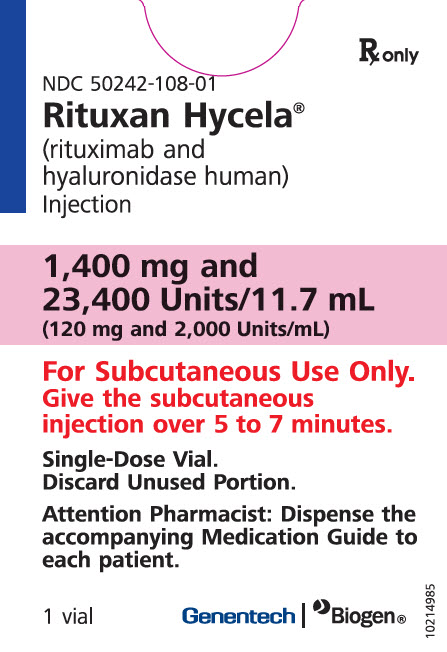
PRINCIPAL DISPLAY PANEL - 11.7 mL Vial Carton Rx only NDC 50242-108-01 Rituxan Hycela ® (rituximab and hyaluronidase human) Injection 1,400 mg and 23,400 Units/11.7 mL (120 mg and 2,000 Units/mL) For Subcutaneous Use Only. Give the subcutaneous injection over 5 to 7 minutes. Single-Dose Vial.
Discard Unused Portion. Attention Pharmacist: Dispense the accompanying Medication Guide to each patient. 1 vial Genentech | Biogen ® 10214985 PRINCIPAL DISPLAY PANEL - 11.7 mL Vial Carton
PRINCIPAL DISPLAY PANEL - 13.4 mL Vial Carton Rx only NDC 50242-109-01 Rituxan Hycela ® (rituximab and hyaluronidase human) Injection 1,600 mg and 26,800 Units/13.4 mL (120 mg and 2,000 Units/mL) For Subcutaneous Use Only. Give the subcutaneous injection over 5 to 7 minutes. Single-Dose Vial.
Discard Unused Portion. Attention Pharmacist: Dispense the accompanying Medication Guide to each patient. 1 vial Genentech | Biogen ® 10214988 PRINCIPAL DISPLAY PANEL - 13.4 mL Vial Carton
Medicaid utilization by pack size
Medicare Part D spend CMS · PART D · 2026 (Q1)
About this NDC listing & data coverage
What data is (and isn’t) available for this NDC — tap to expand
| NDC identity (package / product / labeler codes) | ✓ Available |
| Labeler | ✓ Available |
| Product & package description | ✓ Available |
| Marketing category & status | ✓ Available |
| Active ingredient / dosage form / route | ✓ Available |
| FDA label (SPL via DailyMed) | ✓ Available |
| Package photos | ✓ Available |
| Inactive ingredients (structured) | ✓ Available |
| NADAC pharmacy acquisition price (CMS) | — Not published for this NDC CMS publishes NADAC only for NDCs reported in its retail-pharmacy survey. |
| Orange Book / therapeutic-equivalence data | ✓ Available |
| HCPCS J-code billing crosswalk | — Not published for this NDC Most self-administered / retail products have no J-code — that is normal. |
| Medicaid utilization (CMS SDUD) | — Not published for this NDC CMS reports utilization only for NDCs with Medicaid claims above its privacy threshold. |