
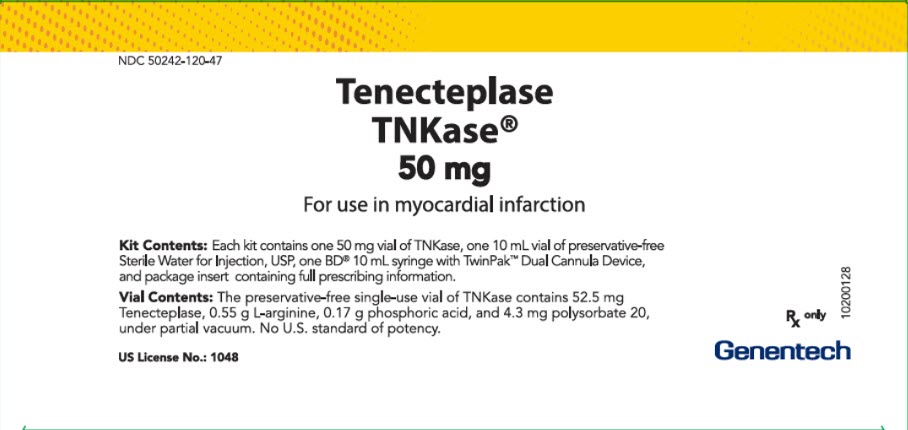
TNKase tenecteplase Kit
🆔 Identity & classification
Where does this data come from?
🏷️ RxNorm drug class
This medicine belongs to the Enzymes class.
Where does this data come from?
🏭 Manufacturer & labeler
Where does this data come from?
🩺 Clinical
Tenecteplase is used to treat a certain type of heart attack to reduce the risk of death. It is also used to treat strokes. Tenecteplase is in a class of medications called thrombolytics. It works by helping the body to dissolve blood clots and restoring blood flow.
Read the full MedlinePlus article ↗Patient education
Supplement & herbal interactions
Some supplements/herbs that may interact with Tenecteplase — tap one for details:
Where does this data come from?
Ask a licensed pharmacist directly — free, answered by our team.
🧪 Inactive Ingredients / Excipients
Inactive ingredients, also called excipients, are components of the drug product other than the active ingredient. They may include fillers, dyes, coatings, preservatives, flavors, or other formulation ingredients.
Where does this data come from?
IACT rows and label-wide narrative are kept separate; availability and product-level specificity depend on the submitted label.Inactive ingredient FAQ
Are inactive ingredients the same for every manufacturer?
Why might an inactive ingredient be missing?
Can inactive ingredients matter?
💲 Pricing
A drug doesn't have one price. Each row is a different public payment system, and none is what you'd pay at the counter — that depends on your insurance. The ⓘ on each row explains what it measures.
| Price system | Per each | Per package |
|---|---|---|
| Retail pharmacies payNADAC · weekly | Not in the retail survey — common for institutional, discontinued, or low-volume packs. | |
| Medicaid paysCMS SDUD · 12 mo | $7,272.01 | — |
| Medicare drug plans payPart D · quarterly | No Part D plan price is available for this NDC in our data. | |
| Medicare Part B allowsASP · J3101 | $217.421 / J3101 unit | — |
Where does this data come from?
🧾 Billing & reimbursement
Where does this data come from?
🔁 Therapeutic equivalents
| Product | Labeler | Pack | NADAC/unit | TE | Status | Price vs. this |
|---|---|---|---|---|---|---|
| TNKasethis 50242-0120-47 | Genentech, | 1 kit | — | — | FDA listed | — |
| TNKase 50242-0176-01 | Genentech, | 1 kit | — | — | FDA listed | — |
| TNKase 50242-0014-03 | Genentech, | 1 kit | — | — | FDA listed | — |
Where does this data come from?
⏳ Availability & biosimilar status
Biologics have no small-molecule generics; biosimilar competition is tracked in the FDA Purple Book.
Where does this data come from?
🗺️ Medicaid utilization & spend
🔬 Reported adverse events (FAERS)
Top reported reactions
Reporter sex
Serious outcomes
Where does this data come from?
📦 Packaging — all sizes for this product
| Package NDC | Description | Marketing start | Status |
|---|---|---|---|
| 50242-0120-47 You're viewing this | 1 KIT in 1 CARTON (50242-120-47) * 1 VIAL, SINGLE-USE in 1 CARTON (50242-901-09) / 10 mL in 1 VIAL, SINGLE-USE * 1 VIAL, SINGLE-USE in 1 CARTON (50242-037-06) / 50 mg in 1 VIAL, SINGLE-USE | 2018-11-07 | Active |
🧭 About this NDC listing & data coverage
Kit / multi-component package
This NDC identifies a kit — a package containing more than one component. Structured data (pricing, ingredients, equivalents) is often reported per component rather than for the kit NDC itself, which can make this page look thinner than the components' own pages.
What data is (and isn’t) available for this NDC — tap to expand
| NDC identity (package / product / labeler codes) | ✓ Available |
| Labeler | ✓ Available |
| Product & package description | ✓ Available |
| Marketing category & status | ✓ Available |
| Active ingredient / dosage form / route | ✓ Available |
| FDA label (SPL via DailyMed) | ✓ Available |
| Package photos | ✓ Available |
| Inactive ingredients (structured) | — Not published for this NDC The labeler did not submit a structured excipient list, or no SPL is available. |
| NADAC pharmacy acquisition price (CMS) | — Not published for this NDC CMS publishes NADAC only for NDCs reported in its retail-pharmacy survey. |
| Orange Book / therapeutic-equivalence data | — Not published for this NDC Applies only to products approved under an NDA/ANDA; many listings are out of scope. |
| HCPCS J-code billing crosswalk | ✓ Available |
| Medicaid utilization (CMS SDUD) | ✓ Available |
Questions about this listing
Why is there no price listed?
Is the NDC printed on the package the same as the 11-digit billing NDC?
What do the three segments of this NDC mean?
Is this package still being marketed?
Who lists this product with the FDA?
Do I need a prescription for this product?
Does this product have a billing J-code?
Where does this data come from?
📄 Full prescribing information FDA SPL
🎯 Indications and Usage ▾
1 INDICATIONS AND USAGE TNKase ® is indicated to reduce the risk of death associated with acute ST elevation myocardial infarction (STEMI). TNKase is a tissue plasminogen activator, indicated to reduce the risk of death associated with acute ST elevation myocardial infarction (STEMI). ( 1 )
⏱️ Dosage and Administration ▾
2 DOSAGE AND ADMINISTRATION Initiate treatment as soon as possible after the onset of STEMI symptoms. ( 2.1 ) TNKase is for intravenous administration only, administered as a single bolus over 5 seconds. Individualize dosage based on patient's weight. ( 2.1 )
2.1Recommended Dosage Initiate treatment as soon as possible after the onset of STEMI symptoms. TNKase is for intravenous (IV) administration only, administered as a single bolus over 5 seconds. Individualize dosage based on the patient's weight (see Table 1 ).
Table 1: Recommended Dosage Patient Weight (kg) TNKase (mg) Volume TNKase From one vial of TNKase reconstituted with 10 mL Sterile Water for Injection. to be administered (mL) < 60 30 6 ≥ 60 to < 70 35 7 ≥ 70 to < 80 40 8 ≥ 80 to < 90 45 9 ≥ 90 50 10
2.2Preparation Follow the below steps to prepare TNKase for administration: Remove the shield assembly from the supplied B-D ® 10 mL syringe with TwinPak™ Dual Cannula Device (see Figure 1 ) and aseptically withdraw 10 mL of Sterile Water for Injection, USP, from the supplied diluent vial using the red hub cannula syringe filling device. Only use the supplied Sterile Water for Injection, USP for reconstitution. Note: Do not discard the shield assembly.
Aseptically reconstitute the vial with 10 mL Sterile Water for Injection, USP by directing the stream into the lyophilized powder to obtain a final concentration of 5 mg/mL. Slight foaming upon reconstitution is not unusual; any large bubbles will dissipate if the product is allowed to stand undisturbed for several minutes. Gently swirl until contents are completely dissolved.
DO NOT SHAKE. The reconstituted preparation results in a colorless to pale yellow transparent solution. Determine the appropriate dose of TNKase [see Dosage and Administration (2.1) ] and withdraw this volume (in milliliters) from the reconstituted vial with the syringe.
Discard any unused solution. Stand the shield vertically on a flat surface (with green side down) and passively recap the red hub cannula. Remove the entire shield assembly, including the red hub cannula, by twisting counterclockwise.
Note: The shield assembly also contains the clear-ended blunt plastic cannula; retain for split septum intravenous access. Figure 1 Figure 1
2.3Administration Follow the below steps for administration of TNKase; Inspect the product prior to administration for particulate matter and discoloration. Administer TNKase as reconstituted at 5 mg/mL. Precipitation may occur when TNKase is administered in an intravenous line containing dextrose.
Flush dextrose-containing lines with a saline-containing solution prior to and following single bolus administration of TNKase. Administer reconstituted TNKase as a single intravenous bolus over 5 seconds. Because TNKase contains no antibacterial preservatives, reconstitute immediately before use.
If the reconstituted TNKase is not used immediately, refrigerate the TNKase vial at 2°C to 8°C (36°F to 46°F) and use within 8 hours. Although the supplied syringe is compatible with a conventional needle, this syringe is designed to be used with needleless intravenous systems. From the information below, follow the instructions applicable to the intravenous system in use.
Split septum intravenous system : Remove the green cap. Attach the clear-ended blunt plastic cannula to the syringe. Remove the shield and use the blunt plastic cannula to access the split septum injection port.
Because the blunt plastic cannula has two side ports, air or fluid expelled through the cannula will exit in two sideways directions; direct away from face or mucous membranes. Luer-Lok ® system: Connect syringe directly to intravenous port. Conventional needle (not supplied in this kit): Attach a large bore needle, e.g., 18 gauge, to the syringe's universal Luer-Lok ® .
Dispose of the syringe, cannula and shield per established procedures.
2.4Chemical Incompatibilities TNKase is incompatible with dextrose containing solutions. When used togethe…
💊 Dosage Forms and Strengths ▾
3 DOSAGE FORMS AND STRENGTHS For injection: 50 mg as a white to pale yellow lyophilized powder in a single-dose vial for reconstitution with the co-packaged 10 mL single-dose vial of Sterile Water for Injection, USP (diluent). For Injection: 50 mg as a white to pale yellow lyophilized powder in a single-dose vial for reconstitution with the co-packaged 10 mL Sterile Water for Injection USP (diluent). ( 3 )
⛔ Contraindications ▾
4 CONTRAINDICATIONS TNKase is contraindicated in patients with [see Warnings and Precautions (5.1) ] : Active internal bleeding History of cerebrovascular accident Intracranial or intraspinal surgery or trauma within 2 months Intracranial neoplasm, arteriovenous malformation, or aneurysm Known bleeding diathesis Severe uncontrolled hypertension Active internal bleeding ( 4 ) History of cerebrovascular accident ( 4 ) Intracranial or intraspinal surgery or trauma within 2 months ( 4 ) Intracranial neoplasm, arteriovenous malformation, or aneurysm ( 4 ) Known bleeding diathesis ( 4 ) Severe uncontrolled hypertension ( 4 )
⚠️ Warnings and Cautions ▾
5 WARNINGS AND PRECAUTIONS Bleeding: Increases the risk of bleeding. Avoid intramuscular injections. Monitor for bleeding.
( 5.1 ) Thromboembolism: The use of thrombolytics can increase the risk of thrombo-embolic events in patients with high likelihood of left heart thrombus. ( 5.2 ) Cholesterol Embolization: Has been reported in patients treated with thrombolytic agents. ( 5.3 ) Arrhythmias: It is recommended that anti-arrhythmic therapy for bradycardia and/or ventricular irritability be available when TNKase is administered.
( 5.4 ) Increased Risk of Heart Failure and Recurrent Ischemia when used with Planned Percutaneous Coronary Intervention (PCI) in STEMI: In patients with a large ST segment elevation myocardial infarction, physicians should choose either thrombolysis or PCI as the primary treatment strategy for reperfusion. Rescue PCI or subsequent elective PCI may be performed after administration of thrombolytic therapies if medically appropriate. ( 5.5 ) Hypersensitivity: Monitor patients treated with TNKase during and for several hours after infusion.
If symptoms of hypersensitivity occur, initiate appropriate therapy (e.g., antihistamines, corticosteroids). ( 5.6 )
5.1Bleeding TNKase can cause bleeding, including intracranial hemorrhage and fatal bleeding. Concomitant use of other drugs that impair hemostasis increases the risk of bleeding. Should serious bleeding that is not controlled by local pressure occur, discontinue any concomitant heparin or antiplatelet agents immediately and treat appropriately.
Avoid intramuscular injections and nonessential handling of the patient for the first few hours following treatment with TNKase. Perform arterial and venous punctures carefully and only as required. To minimize bleeding from noncompressible sites, avoid internal jugular and subclavian venous punctures.
If an arterial puncture is necessary during TNKase infusion, use an upper extremity vessel that is accessible to manual compression. Apply pressure for at least 30 minutes.
5.2Thromboembolism The use of thrombolytics can increase the risk of thrombo-embolic events in patients with high likelihood of left heart thrombus, such as patients with mitral stenosis or atrial fibrillation.
5.3Cholesterol Embolization Cholesterol embolism has been reported in patients treated with thrombolytic agents. Investigate cause of any new embolic event and treat appropriately.
5.4Arrhythmias Coronary thrombolysis may result in arrhythmias associated with reperfusion. These arrhythmias (such as sinus bradycardia, accelerated idioventricular rhythm, ventricular premature depolarizations, ventricular tachycardia) may be managed with standard anti-arrhythmic measures. It is recommended that anti-arrhythmic therapy for bradycardia and/or ventricular irritability be available when TNKase is administered.
5.5Increased Risk of Heart Failure and Recurrent Ischemia when used with Planned Percutaneous Coronary Intervention (PCI) in STEMI. In a trial of patients with STEMI, there were trends toward worse outcomes in the individual components of the primary endpoint between TNKase plus PCI versus PCI alone (mortality 6.7% vs. 4.9%, respectively; cardiogenic shock 6.3% vs.
4.8%, respectively; and CHF 12% vs. 9.2%, respectively). In addition, there were trends towards worse outcomes in recurrent MI (6.1% vs.
3.7%, respectively; p = 0.03) and repeat target vessel revascularization (6.6% vs. 3.4%, respectively; p = 0.0045) in patients receiving TNKase plus PCI versus PCI alone [see Clinical Studies (14.1) ] . In patients with large ST segment elevation myocardial infarction, physicians should choose either thrombolysis or PCI as the primary treatment strategy for reperfusion.
Rescue PCI or subsequent elective PCI may be performed after administration of thrombolytic therapies if medically appropriate; however, the optimal use of adjunctive antithrombotic and antiplatelet therapies in this setting is unknown.
5.6 Hypersensitivity Hypersensitivity,…
🤒 Adverse Reactions ▾
6 ADVERSE REACTIONS The following adverse reactions are discussed in other sections of the label: Bleeding [see Contraindications (4) , Warnings and Precautions (5.1) ] Hypersensitivity [see Warnings and Precautions (5.6) ] The most common adverse reactions are bleeding and hypersensitivity. ( 6 ) To report SUSPECTED ADVERSE REACTIONS, contact Roche at 1-800-526-6367 or FDA at 1-800-FDA-1088 or www.fda.gov/medwatch .
6.1Immunogenicity Four of 625 (0.64%) patients tested for antibody formation to TNKase had a positive antibody titer at 30 days in studies with TNKase. The observed incidence of antibody positivity in an assay may be influenced by several factors including sample handling, concomitant medications, and underlying disease. For these reasons, comparison of the incidence of antibodies to TNKase with the incidence of antibodies to other products may be misleading.
🔄 Drug Interactions ▾
7 DRUG INTERACTIONS During TNKase therapy, results of coagulation tests and/or measures of fibrinolytic activity may be unreliable unless specific precautions are taken to prevent in vitro artifacts. ( 7.1 )
7.1Drug/Laboratory Test Interactions During TNKase therapy, results of coagulation tests and/or measures of fibrinolytic activity may be unreliable unless specific precautions are taken to prevent in vitro artifacts. Tenecteplase is an enzyme that, when present in blood in pharmacologic concentrations, remains active under in vitro conditions. This can lead to degradation of fibrinogen in blood samples removed for analysis.
👥 Use in Specific Populations ▾
8 USE IN SPECIFIC POPULATIONS
8.1Pregnancy Risk Summary There are risks to the mother and fetus from acute ST elevation myocardial infarction, which is a medical emergency in pregnancy and can be fatal if left untreated (see Clinical Considerations ). Published data consisting of a small number of case reports involving the use of related thrombolytic agents in pregnant women have not identified an increased risk of major birth defects. There are no data on the use of tenecteplase during pregnancy to evaluate for a drug-associated risk of major birth defects, miscarriage, or adverse maternal or fetal outcomes.
TNKase does not elicit maternal and direct embryo toxicity in rabbits following a single IV administration. In developmental toxicity studies conducted in rabbits, the no observable effect level (NOEL) of a single IV administration of TNKase on maternal or developmental toxicity (5 mg/kg) was approximately 7 times human exposure (based on AUC) at the dose for STEMI. The estimated background risk of major birth defects and miscarriage for the indicated population is unknown.
All pregnancies have a background risk of birth defect, loss, or other adverse outcomes. In the U.S. general population, the estimated background risk of major birth defects and miscarriage in clinically recognized pregnancies is 2% to 4% and 15% to 20%, respectively. Clinical Considerations Disease-Associated Maternal and/or Embryo/Fetal Risk Myocardial infarction is a medical emergency which can be fatal if left untreated.
Life-sustaining therapy for the pregnant woman should not be withheld because of potential concerns regarding the effects of tenecteplase on the fetus.
8.2Lactation Risk Summary There are no data on the presence of tenecteplase in either human or animal milk, the effects on the breastfed infant, or the effect on milk production. The developmental and health benefits of breastfeeding should be considered along with the mother's clinical need for TNKase and any potential adverse effects on the breastfed infant from the TNKase or from the underlying maternal condition.
8.4Pediatric Use The safety and effectiveness of TNKase in pediatric patients have not been established.
8.5Geriatric Use In the ASSENT-2 study, 41% (3500/8458) of patients who were treated with TNKase were aged 65 years or older. In this population, rates of 30-day mortality, stroke, intracranial hemorrhage and major bleeds requiring blood transfusion or leading to hemodynamic complications were higher than in those aged less than 65 years.
🤰 Pregnancy ▾
8.1Pregnancy Risk Summary There are risks to the mother and fetus from acute ST elevation myocardial infarction, which is a medical emergency in pregnancy and can be fatal if left untreated (see Clinical Considerations ). Published data consisting of a small number of case reports involving the use of related thrombolytic agents in pregnant women have not identified an increased risk of major birth defects. There are no data on the use of tenecteplase during pregnancy to evaluate for a drug-associated risk of major birth defects, miscarriage, or adverse maternal or fetal outcomes.
TNKase does not elicit maternal and direct embryo toxicity in rabbits following a single IV administration. In developmental toxicity studies conducted in rabbits, the no observable effect level (NOEL) of a single IV administration of TNKase on maternal or developmental toxicity (5 mg/kg) was approximately 7 times human exposure (based on AUC) at the dose for STEMI. The estimated background risk of major birth defects and miscarriage for the indicated population is unknown.
All pregnancies have a background risk of birth defect, loss, or other adverse outcomes. In the U.S. general population, the estimated background risk of major birth defects and miscarriage in clinically recognized pregnancies is 2% to 4% and 15% to 20%, respectively. Clinical Considerations Disease-Associated Maternal and/or Embryo/Fetal Risk Myocardial infarction is a medical emergency which can be fatal if left untreated.
Life-sustaining therapy for the pregnant woman should not be withheld because of potential concerns regarding the effects of tenecteplase on the fetus.
🧒 Pediatric Use ▾
8.4Pediatric Use The safety and effectiveness of TNKase in pediatric patients have not been established.
🧓 Geriatric Use ▾
8.5Geriatric Use In the ASSENT-2 study, 41% (3500/8458) of patients who were treated with TNKase were aged 65 years or older. In this population, rates of 30-day mortality, stroke, intracranial hemorrhage and major bleeds requiring blood transfusion or leading to hemodynamic complications were higher than in those aged less than 65 years.
🧬 Clinical Pharmacology ▾
12 CLINICAL PHARMACOLOGY
12.1Mechanism of Action Tenecteplase is a modified form of human tissue plasminogen activator (tPA) that binds to fibrin and converts plasminogen to plasmin. In the presence of fibrin, in vitro studies demonstrate that tenecteplase-mediated conversion of plasminogen to plasmin is increased relative to its conversion in the absence of fibrin. This fibrin specificity decreases systemic activation of plasminogen and the resulting degradation of circulating fibrinogen as compared to a molecule lacking this property.
The clinical significance of fibrin-specificity on safety (e.g., bleeding) or efficacy has not been established.
12.2Pharmacodynamics Following administration of 30, 40, or 50 mg of TNKase, there are decreases in circulating fibrinogen (4%–15%) and plasminogen (11%–24%).
12.3Pharmacokinetics Distribution In patients with STEMI, TNKase administered as a single IV bolus exhibits a biphasic disposition from the plasma. Volume of distribution at central compartment ranges from 4.22 to
5.43L, approximating plasma volume. Steady-state volume of distribution was approximately 50% greater (6.12 to
8.01L), suggestive of some extravascular distribution. Elimination After IV bolus administration, the terminal phase half-life of tenecteplase was 90 to 130 minutes. In 99 of 104 patients treated with TNKase, TNKase has linear PK with mean maximum concentrations increased in a dose-proportional manner and mean plasma clearance was similar for the 30, 40, and 50 mg doses ranging from 99 to 119 mL/min.
Metabolism Liver metabolism is the major clearance mechanism for tenecteplase. Body weight A stepwise linear regression analysis indicated that total body weight explained 19% of the variability in plasma clearance and 11% of the variability in volume of distribution.
🧬 Mechanism of Action ▾
12.1Mechanism of Action Tenecteplase is a modified form of human tissue plasminogen activator (tPA) that binds to fibrin and converts plasminogen to plasmin. In the presence of fibrin, in vitro studies demonstrate that tenecteplase-mediated conversion of plasminogen to plasmin is increased relative to its conversion in the absence of fibrin. This fibrin specificity decreases systemic activation of plasminogen and the resulting degradation of circulating fibrinogen as compared to a molecule lacking this property.
The clinical significance of fibrin-specificity on safety (e.g., bleeding) or efficacy has not been established.
📦 How Supplied / Storage and Handling ▾
16 HOW SUPPLIED/STORAGE AND HANDLING
16.1How Supplied TNKase (tenecteplase) for injection is supplied as a sterile, white to pale yellow lyophilized powder in a 50 mg single-dose vial under partial vacuum. Each 50 mg single-dose vial of TNKase is packaged with one 10 mL single-dose vial of Sterile Water for Injection, USP for reconstitution, and the B-D ® 10 mL syringe with TwinPak™ Dual Cannula Device: NDC 50242-120-47.
16.2Stability and Storage Store lyophilized TNKase at room temperature up to 30°C (86°F) or refrigerated at 2°C to 8°C (36°F to 46°F). Do not use beyond the expiration date stamped on the vial.
📦 Storage and Handling ▾
16.2Stability and Storage Store lyophilized TNKase at room temperature up to 30°C (86°F) or refrigerated at 2°C to 8°C (36°F to 46°F). Do not use beyond the expiration date stamped on the vial.
📋 Description ▾
11 DESCRIPTION Tenecteplase is a tissue plasminogen activator (tPA) produced by recombinant DNA technology using a mammalian cell line (Chinese Hamster Ovary cells). Tenecteplase is a 527-amino acid glycoprotein developed by introducing the following modifications to the complementary DNA (cDNA) for natural human tPA: a substitution of threonine 103 with asparagine, and a substitution of asparagine 117 with glutamine, both within the kringle 1 domain, and a tetra-alanine substitution at amino acids 296–299 in the protease domain.
It has a molecular weight of 58,742 daltons. Biological potency is determined by an in vitro clot lysis assay and is expressed in tenecteplase specific units. The specific activity of tenecteplase has been defined as 200 units/mg.
TNKase (tenecteplase) for injection is a sterile, white to pale yellow, lyophilized powder for intravenous bolus administration after reconstitution with Sterile Water for Injection, USP. Each single-dose vial of TNKase nominally contains 50 mg of tenecteplase, arginine (522 mg), phosphoric acid (approximately 160 mg), and polysorbate 20 (4.0 mg). Following reconstitution with the supplied 10 mL single-dose vial of Sterile Water for Injection, USP, the final concentration is 5 mg/mL with a pH of approximately 7.3.