
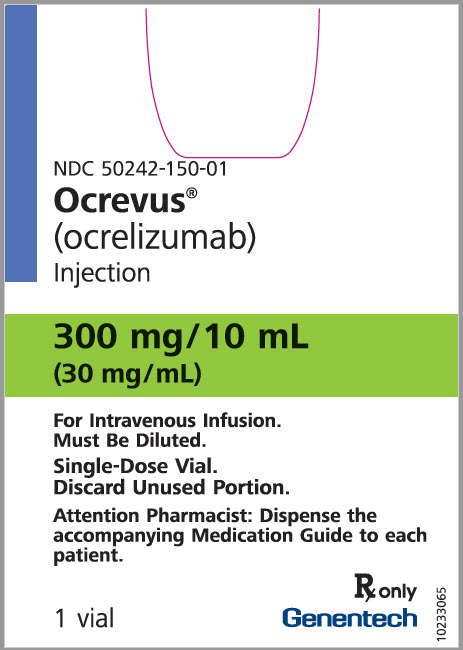
OCREVUS ocrelizumab 300 mg/10mL Injection — NDC 50242-150-01 (Billing 50242-0150-01)
This is a package of OCREVUS ocrelizumab 300 mg/10mL Injection from Genentech, Inc., marketed since Mar 2017 and currently FDA-listed. It is this product's only package size.
NDC database record
One package, one record: these facts belong to NDC 50242-150-01 alone.
- Record
- FDA NDC Directory package listing · Human prescription drug
- Code segments
- 50242 labeler · 150 product · 01 package
- Package marketed since
- Mar 28, 2017
- Sample package
- No — commercial package
- Listing certified through
- Dec 31, 2027
- Barcode (UPC-A, from the NDC)
- 3 5024215001 9
- Medicaid fills, this package
- 12,918 prescriptions in the last four reported quarters
- FDA record last changed
- Jul 24, 2026
Identity & classification
Regulatory identifiers FDA, NLM and CMS codes for this package
Drug-database identifiers Medi-Span GPI and First Databank GCN / HICL / AHFS classification
- GSN (GCN sequence number): 077262
- GCN: 43221
- GPI-14 (Medi-Span): 62405060002020
- HICL (First Databank): 044178
- AHFS class code: 90:04.04.00
- RxCUI (RxNorm): 1876380
Where does this data come from?
- FDA openFDA NDC Directory · synced Oct 8, 2026
- FDA label on DailyMed · label index refreshed Oct 8, 2026
- RxNorm (NLM RxNav) · catalog refreshed Oct 8, 2026
- Medi-Span GPI (licensed)
- First Databank (licensed) · refreshed Oct 8, 2026
RxNorm drug class
This medicine belongs to the CD20-directed Cytolytic Antibody class.
Where does this data come from?
- RxClass (NLM) · catalog refreshed Oct 8, 2026
Clinical
- Ocrevus treats multiple sclerosis. In adults, that means relapsing forms of MS and primary progressive MS. In children 10 and older who weigh at least 25 kg, it treats relapsing-re...
- Your first dose is split into two infusions two weeks apart. After that, you get one about every 6 months. Each visit takes a few hours, and you will be watched for at least an hou...
- Infusion reactions and colds or other respiratory infections are the most common. Infusion reactions can include itching, rash, flushing, headache, or fever. You will get medicines...
- Call right away for trouble breathing, face or throat swelling, fever or signs of infection, ongoing diarrhea, or signs of liver problems. Also call for new weakness on one side, v...
Patient education
Supplement & herbal interactions
Some supplements/herbs that may interact with Ocrelizumab — tap one for details:
Where does this data come from?
- MedlinePlus (NLM) · refreshed Oct 8, 2026
- FDA label on DailyMed · label index refreshed Oct 8, 2026
Ask a licensed pharmacist directly — free, answered by our team.
Pricing
A drug doesn't have one price. Each row is a different public payment system, and none is what you'd pay at the counter — that depends on your insurance. The ⓘ on each row explains what it measures.
| Price system | Per each | Per package |
|---|---|---|
| Retail pharmacies payNADAC · weekly | Not in the retail survey — common for institutional, discontinued, or low-volume packs. | |
| Medicaid paysCMS SDUD · 12 mo | $1,738.97 | $1,738.97 / 1 vial |
| Medicare drug plans payPart D · quarterly | No Part D plan price is available for this NDC in our data. | |
| Medicare Part B allowsASP · J2350 | $60.970 / J2350 unit | — |
Where does this data come from?
- CMS NADAC weekly file
- CMS ASP pricing files · refreshed Sep 20, 2026
- CMS Medicaid State Drug Utilization Data · through Q1 2026
- CMS Part D plan pricing files · refreshed Sep 24, 2026
- VA National Acquisition Center price file
Billing & reimbursement
Where does this data come from?
- CMS ASP NDC-HCPCS crosswalk · refreshed Sep 22, 2026
- DMEPDAC NDC-HCPCS crosswalk
- openFDA NSDE billing units · refreshed Oct 7, 2026
Packaging — all sizes for this product
| Package NDC | Description | Marketing start | Marketing end | Status |
|---|---|---|---|---|
| 50242-0150-01 You're viewing this Main listing | 1 VIAL, SINGLE-USE in 1 CARTON / 10 mL in 1 VIAL, SINGLE-USE | 2017-03-28 | — | Active |
Therapeutic equivalents
| Product | Labeler | Pack | NADAC/unit | TE | Status | Price vs. this |
|---|---|---|---|---|---|---|
| Ocrevus 300 mg/10mLthis 50242-0150-01 | Genentech, | 1 vial | — | — | FDA listed | — |
Where does this data come from?
- FDA openFDA NDC Directory · synced Oct 8, 2026
- FDA Purple Book · refreshed Oct 5, 2026
- CMS NADAC weekly file
Availability & biosimilar status
Biologics have no small-molecule generics; biosimilar competition is tracked in the FDA Purple Book.
Why the date isn’t exact: Biosimilar timing can change because patents may be challenged, settled, licensed, added or removed, and litigation can move the real date earlier or later.
🛈 What do these terms mean?
- Biologic patent
- A patent the reference product’s maker has publicly listed. A biosimilar generally can’t launch until these expire — unless they’re invalidated or resolved in a settlement.
- Reference-product exclusivity
- A flat 12 years of FDA market protection from the biologic’s first licensure (the BPCIA). No biosimilar can be licensed before it ends, regardless of patents.
- Interchangeable exclusivity
- The first interchangeable biosimilar can earn a period as the only interchangeable version (pharmacists can substitute it without the prescriber).
- Earliest biosimilar (LOE)
- The latest of all the dates above — the soonest a biosimilar can realistically reach the market. Litigation and settlements can move it earlier.
Biologics have no small-molecule “generics” — competition comes from FDA-licensed biosimilars, tracked in the FDA Purple Book.
| Code | What it grants | Expires |
|---|---|---|
| RefProduct | Reference-product exclusivity (12-year, BPCIA) — no biosimilar can be licensed before this date | Mar 28, 2029 |
Is there a biosimilar for OCREVUS 300 MG/10 ML VIAL?
Why do different websites show different biosimilar dates?
Can a biosimilar launch before the last patent expires?
What does “current Purple Book estimate” mean?
What does “FDA listed” mean?
What does a patent or protection date mean here?
Where does this data come from?
- FDA Purple Book · refreshed Oct 5, 2026
Inactive Ingredients / Excipients
Inactive ingredients, also called excipients, are components of the drug product other than the active ingredient. They may include fillers, dyes, coatings, preservatives, flavors, or other formulation ingredients.
🧪 Avoiding an ingredient? See Ocrelizumab Injection inactive ingredients by manufacturer: every current product's list side by side, so you can ask your pharmacy for the version that does not list it.
💡 Tap an ingredient (hover on desktop) to see what it is and why it’s used.
-
2.5 mg / 10 mL
UNII Q40Q9N063P
Acetic acid is a weak organic acid commonly used in medicines as a buffer and pH adjuster. It helps maintain the proper acidity level to ensure the drug remains stable and effective in its formulation.
-
2 mg / 10 mL
UNII 7T1F30V5YH
A synthetic emulsifier derived from sorbitol and oleic acid. It helps mix oil and water-based ingredients together and keeps them from separating in liquid formulations.
-
21.4 mg / 10 mL
UNII 4550K0SC9B
Sodium acetate is a salt derived from acetic acid. It acts as a buffer to help maintain the medicine's pH stability and may serve as a preservative or solubilizer in liquid formulations.
-
400 mg / 10 mL
UNII 7YIN7J07X4
A natural sugar derived from plants and microorganisms. It acts as a filler to give the medication bulk and stability, and helps preserve the active ingredient during storage and manufacturing.
-
UNII 059QF0KO0R
Water is a liquid solvent that dissolves and mixes ingredients together in liquid medicines, syrups, and injections. It helps distribute the active drug evenly throughout the product.
5 inactive ingredients listed in the exact product block matched to this NDC.
Where does this data come from?
ingredient classCode="IACT" elements from the exact product block matched by this NDC. Label-section narrative from DailyMed / the openFDA label index is shown separately when available.- FDA label on DailyMed · label index refreshed Oct 8, 2026
- FDA openFDA NDC Directory · synced Oct 8, 2026
Inactive ingredient FAQ
Are inactive ingredients the same for every manufacturer?
Why might an inactive ingredient be missing?
Can inactive ingredients matter?
Manufacturer & labeler
More NDCs from Genentech, Inc. labeler code 50242
- Erivedge vismodegib 150 mg Capsule NDC 50242-140-01
- Tocilizumab 50 g/L Liquid NDC 50242-141-04
- Lunsumio Mosunetuzumab 30 mg/30mL Concentrate NDC 50242-142-01
- Actemra ACTPen tocilizumab 162 mg/.9mL Injection, Solution NDC 50242-143-01
- pertuzumab 30 g/L Solution NDC 50242-144-02
- PERJETA Pertuzumab 30 mg/mL Injection, Solution, Concentrate NDC 50242-145-01
- Lunsumio Mosunetuzumab 1 mg/mL Concentrate NDC 50242-159-01
- Bevacizumab 25 g/L Liquid NDC 50242-160-01
- EVRYSDI Risdiplam .75 mg/mL Powder, For Solution NDC 50242-175-07
- TNKase tenecteplase Kit NDC 50242-176-01
- Lunsumio Velo Mosunetuzumab 5 mg/.5mL Injection NDC 50242-177-01
- RANIBIZUMAB 6 mg/mL Solution NDC 50242-183-06
Where does this data come from?
- FDA openFDA NDC Directory · synced Oct 8, 2026
- Drugs@FDA
Full prescribing information FDA SPL
🎯 Indications and Usage ▾
1 INDICATIONS AND USAGE OCREVUS is indicated for the treatment of: Relapsing forms of multiple sclerosis (MS), to include clinically isolated syndrome, relapsing-remitting disease, and active secondary progressive disease, in adults Primary progressive MS, in adults Relapsing-remitting MS, in pediatric patients 10 years of age and older who weigh 25 kg or more. OCREVUS is a CD20-directed cytolytic antibody indicated for the treatment of: Relapsing forms of multiple sclerosis (MS), to include clinically isolated syndrome, relapsing-remitting disease, and active secondary progressive disease, in adults ( 1 ) Primary progressive MS, in adults ( 1 ) Relapsing-remitting MS, in pediatric patients 10 years of age and older who weigh 25 kg or more ( 1 )
⏱️ Dosage and Administration ▾
2 DOSAGE AND ADMINISTRATION Before initiating OCREVUS, screen for Hepatitis B virus and obtain serum quantitative immunoglobulins, aminotransferases, alkaline phosphatase, and bilirubin ( 2.1 ) Pre-medicate with methylprednisolone (or an equivalent corticosteroid) and an antihistamine (e.g., diphenhydramine) prior to each infusion ( 2.2 ) Administer OCREVUS by intravenous infusion ( 2.3 ) Adults and pediatric patients (10 years of age and older), who weigh 35 kg or more: Start dose: 300 mg intravenous infusion, followed two weeks later by a second 300 mg intravenous infusion ( 2.3 ) Subsequent doses: 600 mg intravenous infusion every 6 months ( 2.3 ) Pediatric patients (10 years of age and older) who weigh 25 kg to less than 35 kg: Start dose: 150 mg intravenous infusion, followed two weeks later by a second 150 mg intravenous infusion ( 2.3 ) Subsequent doses: 300 mg intravenous infusion every 6 months ( 2.3 ) Must be diluted prior to administration ( 2.3 , 2.6 ) Monitor patients closely during and for at least one hour after infusion ( 2.3 , 2.5 )
2.1Assessments Prior to First Dose of OCREVUS Hepatitis B Virus Screening Prior to initiating OCREVUS, perform Hepatitis B virus (HBV) screening. OCREVUS is contraindicated in patients with active HBV confirmed by positive results for HBsAg and anti-HBV tests. For patients who are negative for surface antigen [HBsAg] and positive for HB core antibody [HBcAb+] or are carriers of HBV [HBsAg+], consult liver disease experts before starting and during treatment [see Warnings and Precautions (5.2) ] .
Serum Immunoglobulins Prior to initiating OCREVUS, perform testing for quantitative serum immunoglobulins [see Warnings and Precautions (5.4) ] . For patients with low serum immunoglobulins, consult immunology experts before initiating treatment with OCREVUS. Vaccinations Because vaccination with live-attenuated or live vaccines is not recommended during treatment and after discontinuation until B-cell repletion, administer all age-appropriate immunizations according to immunization guidelines at least 4 weeks prior to initiation of OCREVUS for live or live-attenuated vaccines and, whenever possible, at least 2 weeks prior to initiation of OCREVUS for non-live vaccines [see Warnings and Precautions (5.2) and Clinical Pharmacology (12.2) ] .
Liver Function Tests Prior to initiating OCREVUS, obtain serum aminotransferases (alanine aminotransferase [ALT] and aspartate aminotransferase [AST]), alkaline phosphatase, and bilirubin levels [see Warnings and Precautions (5.7) ] .
2.2Preparation Before Every Infusion Infection Assessment Prior to every infusion of OCREVUS, determine whether there is an active infection. In case of active infection, delay infusion of OCREVUS until the infection resolves [see Warnings and Precautions (5.2) ]. Recommended Premedication To reduce the frequency and severity of infusion reactions, administer the following premedications [see Warnings and Precautions (5.1) ] : Methylprednisolone (or an equivalent corticosteroid) by intravenous infusion to be completed approximately 30 minutes prior to each OCREVUS infusion, as follows: Adults and pediatric patients who weigh 40 kg or more: 100 mg Pediatric patients who weigh less than 40 kg: 2 mg/kg An antihistamine (e.g., diphenhydramine) 30 to 60 minutes prior to each OCREVUS infusion.
An antipyretic (e.g., acetaminophen) may also be considered. Administer the antipyretic 30 minutes to 60 minutes prior to OCREVUS infusion.
2.3Recommended Dosage and Dose Administration Administer OCREVUS under the close supervision of an experienced healthcare professional with access to appropriate medical support to manage severe reactions such as serious infusion reactions. Observe the patient for at least one hour after the completion of the infusion [see Warnings and Precautions (5.1) ] . OCREVUS is administered as an intravenous infusion.
The initial dose is split into two equal infusions administered two weeks apart. Subsequent… [Excerpted — this section continues on DailyMed.]
💊 Dosage Forms and Strengths ▾
3 DOSAGE FORMS AND STRENGTHS Injection: 300 mg/10 mL (30 mg/mL) clear or slightly opalescent, and colorless to pale brown solution in a single-dose vial. Injection: 300 mg/10 mL (30 mg/mL) in a single-dose vial ( 3 )
⛔ Contraindications ▾
4 CONTRAINDICATIONS OCREVUS is contraindicated in patients with: Active HBV infection [see Dosage and Administration (2.1) and Warnings and Precautions (5.2) ] A history of life-threatening infusion reaction to OCREVUS [see Warnings and Precautions (5.1) ] Active hepatitis B virus infection ( 4 ) History of life-threatening infusion reaction to OCREVUS ( 4 )
⚠️ Warnings and Cautions ▾
5 WARNINGS AND PRECAUTIONS Infusion Reactions: Management recommendations for infusion reactions depend on the type and severity of the reaction. Permanently discontinue OCREVUS if a life-threatening or disabling infusion reaction occurs ( 2.3 , 5.1 ) Infections: Serious, including life-threatening and fatal infections, have occurred. Delay OCREVUS administration in patients with an active infection until the infection is resolved.
Vaccination with live-attenuated or live vaccines is not recommended during treatment with OCREVUS and after discontinuation, until B-cell repletion ( 5.2 ) Progressive Multifocal Leukoencephalopathy (PML): Withhold OCREVUS at the first sign or symptom suggestive of PML ( 5.3 ) Reduction in Immunoglobulins: Monitor the level of immunoglobulins at the beginning of treatment. Monitor during and after discontinuation of treatment with OCREVUS, until B-cell repletion, and especially when recurrent serious infections are suspected.
Consider discontinuing OCREVUS in patients with serious opportunistic or recurrent serious infections, and if prolonged hypogammaglobulinemia requires treatment with intravenous immunoglobulins ( 2.1 , 5.4 ) Malignancies: An increased risk of malignancy, including breast cancer, may exist with OCREVUS ( 5.5 ) Immune-Mediated Colitis: Immune-mediated colitis has been reported in the postmarketing setting. Monitor patients for new or persistent diarrhea or other gastrointestinal symptoms, and evaluate promptly if colitis is suspected ( 5.6 ) Liver Injury: Clinically significant liver injury has occurred.
Obtain serum aminotransferases, alkaline phosphatase, and bilirubin levels before initiating OCREVUS, and during treatment as clinically indicated. Discontinue OCREVUS in patients with evidence of liver injury in the absence of an alternative etiology ( 5.7 ).
5.1Infusion Reactions OCREVUS can cause infusion reactions, which can include pruritus, rash, urticaria, erythema, bronchospasm, throat irritation, oropharyngeal pain, dyspnea, pharyngeal or laryngeal edema, flushing, hypotension, pyrexia, fatigue, headache, dizziness, nausea, tachycardia, and anaphylaxis. These reactions are more commonly reported with the first infusion. In multiple sclerosis (MS) clinical trials, all adult and pediatric patients who were treated with OCREVUS received premedication with methylprednisolone (or an equivalent steroid), and may have also received an antihistamine (all pediatric patients) and/or an analgesic/antipyretic to reduce the risk of infusion reactions prior to each infusion.
In adults, the incidence of infusion reactions in patients treated with OCREVUS was 34 to 40%. There were no fatal infusion reactions, but 0.3% of patients with MS who were treated with OCREVUS experienced infusion reactions that were serious, some requiring hospitalization. In pediatric patients, the incidence of infusion reactions in patients treated with OCREVUS was 48%, compared with an incidence of 24% in patients who received placebo infusion (fingolimod-treated patients).
There were no fatal infusion reactions, but one pediatric patient (1.1%) treated with OCREVUS experienced an infusion reaction that was serious because it required hospitalization [see Adverse Reactions (6.1) ] . Observe patients treated with OCREVUS for infusion reactions during the infusion and for at least one hour after completion of the infusion. Inform patients that infusion reactions can occur up to 24 hours after the infusion.
Reducing the Risk of Infusion Reactions and Managing Infusion Reactions Administer pre-medication (e.g., methylprednisolone or an equivalent corticosteroid, and an antihistamine) to reduce the frequency and severity of infusion reactions. The addition of an antipyretic (e.g., acetaminophen) may also be considered [see Dosage and Administration (2.2) ]. Management recommendations for infusion reactions depend on the type and severity of the reaction [see Dosage and Administration (2.5) ].
For life-threatenin… [Excerpted — this section continues on DailyMed.]
🤒 Adverse Reactions ▾
6 ADVERSE REACTIONS The following serious adverse reactions are discussed elsewhere in the labeling: Infusion Reactions [see Warnings and Precautions (5.1) ] Infections [see Warnings and Precautions (5.2) ] Progressive Multifocal Leukoencephalopathy [see Warnings and Precautions (5.3) ] Reduction in Immunoglobulins [see Warnings and Precautions (5.4) ] Malignancies [see Warnings and Precautions (5.5) ] Immune-Mediated Colitis [see Warnings and Precautions (5.6) ] Liver Injury [see Warnings and Precautions (5.7) ] The most common adverse reactions were: RMS (incidence ≥10% and > REBIF ® ): upper respiratory tract infections and infusion reactions ( 6.1 ) PPMS (incidence ≥10% and > placebo): upper respiratory tract infections, infusion reactions, skin infections, and lower respiratory tract infections ( 6.1 ) RRMS in pediatric patients 10 years of age and older: Adverse reactions were consistent with those observed in adults with RMS ( 6.1 ) To report SUSPECTED ADVERSE REACTIONS, contact Genentech at 1-888-835-2555 or FDA at 1-800-FDA-1088 or www.fda.gov/medwatch.
6.1Clinical Trials Experience Because clinical trials are conducted under widely varying conditions, adverse reactions rates observed in the clinical trials of a drug cannot be directly compared to rates in the clinical trials of another drug and may not reflect the rates observed in clinical practice. Adults The safety of OCREVUS has been evaluated in 1311 adult patients across MS clinical studies, which included 825 patients in active-controlled clinical trials in patients with relapsing forms of MS (RMS) and 486 patients in a placebo-controlled study in patients with primary progressive MS (PPMS).
Adverse Reactions in Adult Patients with Relapsing Forms of MS In active-controlled clinical trials (Study 1 and Study 2), 825 patients with RMS received OCREVUS 600 mg intravenously every 24 weeks (initial treatment was given as two separate 300 mg infusions at Weeks 0 and 2) [see Clinical Studies (14.1) ]. The overall exposure in the 96-week controlled treatment periods was 1448 patient-years. The most common adverse reactions in RMS trials (incidence ≥ 10%) were upper respiratory tract infections and infusion reactions.
Table 4 summarizes the adverse reactions that occurred in RMS trials (Study 1 and Study 2). Table 4 Adverse Reactions in Adult Patients with RMS with an Incidence of at least 5% for OCREVUS and Higher than REBIF Adverse Reactions Studies 1 and 2 OCREVUS 600 mg IV Every 24 Weeks The first dose was given as two separate 300 mg infusions at Weeks 0 and 2. (n=825) % REBIF 44 mcg SQ 3 Times per Week (n=826) % Upper respiratory tract infections 40 33 Infusion reactions 34 10 Depression 8 7 Lower respiratory tract infections 8 5 Back pain 6 5 Herpes virus- associated infections 6 4 Pain in extremity 5 4 Adverse Reactions in Adult Patients with Primary Progressive MS In a placebo-controlled clinical trial (Study 3), a total of 486 patients with PPMS received one course of OCREVUS (600 mg of OCREVUS administered as two 300 mg infusions two weeks apart) given intravenously every 24 weeks and 239 patients received placebo intravenously [see Clinical Studies (14.2) ].
The overall exposure in the controlled treatment period was 1416 patient-years, with median treatment duration of 3 years. The most common adverse reactions in the PPMS trial (incidence ≥ 10%) were upper respiratory tract infections, infusion reactions, skin infections, and lower respiratory tract infections. Table 5 summarizes the adverse reactions that occurred in the PPMS trial (Study 3).
Table 5 Adverse Reactions in Adult Patients with PPMS with an Incidence of at least 5% for OCREVUS and Higher than Placebo Adverse Reactions Study 3 OCREVUS 600 mg IV Every 24 Weeks One dose of OCREVUS (600 mg administered as two 300 mg infusions two weeks apart) Placebo (n=486) % (n=239) % Upper respiratory tract infections 49 43 Infusion reactions 40 26 Skin infections 14 11 Lower respiratory tract infections 10… [Excerpted — this section continues on DailyMed.]
🔄 Drug Interactions ▾
7 DRUG INTERACTIONS
7.1Immunosuppressive or Immune-Modulating Therapies The concomitant use of OCREVUS and other immune-modulating or immunosuppressive therapies, including immunosuppressant doses of corticosteroids, is expected to increase the risk of immunosuppression. Consider the risk of additive immune system effects when coadministering immunosuppressive therapies with OCREVUS. When switching from drugs with prolonged immune effects, such as daclizumab, fingolimod, natalizumab, teriflunomide, or mitoxantrone, consider the duration and mode of action of these drugs because of additive immunosuppressive effects when initiating OCREVUS [see Warnings and Precautions (5.2) ].
7.2Vaccinations A Phase 3b randomized, open-label study examined the concomitant use of OCREVUS and several non-live vaccines in adults 18-55 years of age with relapsing forms of MS (68 subjects undergoing treatment with OCREVUS at the time of vaccination and 34 subjects not undergoing treatment with OCREVUS at the time of vaccination). Concomitant exposure to OCREVUS attenuated antibody responses to tetanus toxoid-containing vaccine, pneumococcal polysaccharide, pneumococcal conjugate vaccines, and seasonal inactivated influenza vaccines.
The impact of the observed attenuation on vaccine effectiveness in this patient population is unknown. The safety and effectiveness of live or live-attenuated vaccines administered concomitantly with OCREVUS have not been assessed [see Warnings and Precautions (5.2) ] .
👥 Use in Specific Populations ▾
8 USE IN SPECIFIC POPULATIONS Pregnancy: Based on animal data, may cause fetal harm ( 8.1 )
8.1Pregnancy Risk Summary OCREVUS is a humanized monoclonal antibody of an immunoglobulin G1 subtype and immunoglobulins are known to cross the placental barrier. There are no adequate data on the developmental risk associated with use of OCREVUS in pregnant women. However, transient peripheral B-cell depletion and lymphocytopenia have been reported in infants born to mothers exposed to other anti-CD20 antibodies during pregnancy.
B-cell levels in infants following maternal exposure to OCREVUS have not been studied in clinical trials. The potential duration of B-cell depletion in such infants, and the impact of B-cell depletion on vaccine safety and effectiveness, is unknown [see Warnings and Precautions (5.2) ] . Following administration of ocrelizumab to pregnant monkeys at doses similar to or greater than those used clinically, increased perinatal mortality, depletion of B-cell populations, renal, bone marrow, and testicular toxicity were observed in the offspring in the absence of maternal toxicity [see Data ] .
In the U.S. general population, the estimated background risk of major birth defects and miscarriage in clinically recognized pregnancies is 2% to 4% and 15% to 20%, respectively. The background risk of major birth defects and miscarriage for the indicated population is unknown. Data Animal Data Following intravenous administration of OCREVUS to monkeys during organogenesis (loading doses of 15 or 75 mg/kg on gestation days 20, 21, and 22, followed by weekly doses of 20 or 100 mg/kg), depletion of B-lymphocytes in lymphoid tissue (spleen and lymph nodes) was observed in fetuses at both doses.
Intravenous administration of OCREVUS (three daily loading doses of 15 or 75 mg/kg, followed by weekly doses of 20 or 100 mg/kg) to pregnant monkeys throughout the period of organogenesis and continuing through the neonatal period resulted in perinatal deaths (some associated with bacterial infections), renal toxicity (glomerulopathy and inflammation), lymphoid follicle formation in the bone marrow, and severe decreases in circulating B-lymphocytes in neonates. The cause of the neonatal deaths is uncertain; however, both affected neonates were found to have bacterial infections.
Reduced testicular weight was observed in neonates at the high dose. A no-effect dose for adverse developmental effects was not identified; the doses tested in monkey are 2 and 10 times the recommended human dose of 600 mg, on a mg/kg basis.
8.2Lactation Risk Summary There are no data on the presence of ocrelizumab in human milk, the effects on the breastfed infant, or the effects of the drug on milk production. Ocrelizumab was excreted in the milk of ocrelizumab-treated monkeys. Human IgG is excreted in human milk, and the potential for absorption of ocrelizumab to lead to B-cell depletion in the infant is unknown.
The developmental and health benefits of breastfeeding should be considered along with the mother's clinical need for OCREVUS and any potential adverse effects on the breastfed infant from OCREVUS or from the underlying maternal condition.
8.3Females and Males of Reproductive Potential Contraception Females of reproductive potential should use effective contraception while receiving OCREVUS and for 6 months after the last infusion of OCREVUS [see Clinical Pharmacology (12.3) ] .
8.4Pediatric Use The safety and effectiveness of OCREVUS for the treatment of relapsing-remitting MS have been established in pediatric patients 10 years of age and older who weigh 25 kg or more. Use of OCREVUS for this indication is supported by evidence from one randomized, double-blind clinical study in 187 pediatric patients (93 of whom received OCREVUS) and additional pharmacokinetic data in pediatric patients [see Clinical Pharmacology (12.3) and Clinical Studies (14.4) ] . The overall safety profile in pediatric patients 10 years of age and older receiving OCREVUS… [Excerpted — this section continues on DailyMed.]
🤰 Pregnancy ▾
8.1Pregnancy Risk Summary OCREVUS is a humanized monoclonal antibody of an immunoglobulin G1 subtype and immunoglobulins are known to cross the placental barrier. There are no adequate data on the developmental risk associated with use of OCREVUS in pregnant women. However, transient peripheral B-cell depletion and lymphocytopenia have been reported in infants born to mothers exposed to other anti-CD20 antibodies during pregnancy.
B-cell levels in infants following maternal exposure to OCREVUS have not been studied in clinical trials. The potential duration of B-cell depletion in such infants, and the impact of B-cell depletion on vaccine safety and effectiveness, is unknown [see Warnings and Precautions (5.2) ] . Following administration of ocrelizumab to pregnant monkeys at doses similar to or greater than those used clinically, increased perinatal mortality, depletion of B-cell populations, renal, bone marrow, and testicular toxicity were observed in the offspring in the absence of maternal toxicity [see Data ] .
In the U.S. general population, the estimated background risk of major birth defects and miscarriage in clinically recognized pregnancies is 2% to 4% and 15% to 20%, respectively. The background risk of major birth defects and miscarriage for the indicated population is unknown. Data Animal Data Following intravenous administration of OCREVUS to monkeys during organogenesis (loading doses of 15 or 75 mg/kg on gestation days 20, 21, and 22, followed by weekly doses of 20 or 100 mg/kg), depletion of B-lymphocytes in lymphoid tissue (spleen and lymph nodes) was observed in fetuses at both doses.
Intravenous administration of OCREVUS (three daily loading doses of 15 or 75 mg/kg, followed by weekly doses of 20 or 100 mg/kg) to pregnant monkeys throughout the period of organogenesis and continuing through the neonatal period resulted in perinatal deaths (some associated with bacterial infections), renal toxicity (glomerulopathy and inflammation), lymphoid follicle formation in the bone marrow, and severe decreases in circulating B-lymphocytes in neonates. The cause of the neonatal deaths is uncertain; however, both affected neonates were found to have bacterial infections.
Reduced testicular weight was observed in neonates at the high dose. A no-effect dose for adverse developmental effects was not identified; the doses tested in monkey are 2 and 10 times the recommended human dose of 600 mg, on a mg/kg basis.
🧒 Pediatric Use ▾
8.4Pediatric Use The safety and effectiveness of OCREVUS for the treatment of relapsing-remitting MS have been established in pediatric patients 10 years of age and older who weigh 25 kg or more. Use of OCREVUS for this indication is supported by evidence from one randomized, double-blind clinical study in 187 pediatric patients (93 of whom received OCREVUS) and additional pharmacokinetic data in pediatric patients [see Clinical Pharmacology (12.3) and Clinical Studies (14.4) ] . The overall safety profile in pediatric patients 10 years of age and older receiving OCREVUS was generally consistent with that observed in adult patients [see Adverse Reactions (6.1) ] .
Safety and effectiveness of OCREVUS have not been established in pediatric patients less than 10 years of age or who weigh less than 25 kg.
🧓 Geriatric Use ▾
8.5Geriatric Use Clinical studies of OCREVUS did not include sufficient numbers of subjects aged 65 and over to determine whether they respond differently from younger subjects.
🧬 Clinical Pharmacology ▾
12 CLINICAL PHARMACOLOGY
12.1Mechanism of Action The precise mechanism by which ocrelizumab exerts its therapeutic effects in multiple sclerosis is unknown, but is presumed to involve binding to CD20, a cell surface antigen present on pre-B and mature B lymphocytes. Following cell surface binding to B lymphocytes, ocrelizumab results in antibody-dependent cellular cytolysis and complement-mediated lysis.
12.2Pharmacodynamics For B-cell counts, assays for CD19 + B-cells are used because the presence of OCREVUS interferes with the CD20 assay. Treatment with OCREVUS reduces CD19 + B-cell counts in blood by 14 days after infusion in adult and pediatric patients. In clinical studies in adults, B-cell counts rose to above the lower limit of normal (LLN) or above baseline counts between infusions of OCREVUS at least one time in 0.3% to 4.1% of patients.
In a clinical study of 51 adult patients, the median time for B-cell counts to return to either baseline or LLN was 72 weeks (range 27-175 weeks) after the last OCREVUS infusion. Within 2.5 years after the last infusion, B-cell counts rose to either baseline or LLN in 90% of adult patients.
12.3Pharmacokinetics Pharmacokinetics (PK) of OCREVUS in MS clinical studies fit a two compartment model with time-dependent clearance. The overall exposure at the steady-state (AUC over the 24 week dosing intervals) of OCREVUS was 3,510 mcg/mL per day. In clinical studies in adult MS patients, maintenance doses of ocrelizumab were either 600 mg every 6 months (RMS patients) or two 300 mg infusions separated by 14 days every 6 months (PPMS patients).
The mean maximum concentration was 212 mcg/mL in patients with RMS (600 mg infusion over 3.5 hours) and 141 mcg/mL in patients with PPMS (two 300 mg infusions over 2.5 hours administered within two weeks). The mean maximum peak concentrations (C max ) of ocrelizumab in patients with relapsing-remitting multiple sclerosis (RRMS) observed after the 3.5-hour infusion and 2-hour infusion were 202 ± 42 (mean ± SD) and 200 ± 46 mcg/mL, respectively, compared to the previously reported C max of 212 mcg/mL. The pharmacokinetics of ocrelizumab was essentially linear and dose proportional between 400 mg and 2000 mg.
Distribution The population PK estimate of the central volume of distribution was
2.78L. Peripheral volume and inter-compartment clearance were estimated at
2.68 L and
0.29L/day, respectively. Elimination Constant clearance was estimated at
0.17 L/day, and initial time-dependent clearance at
0.05L/day, which declined with a half-life of 33 weeks. The terminal elimination half-life was 26 days. Metabolism The metabolism of OCREVUS has not been directly studied because antibodies are cleared principally by catabolism.
Specific Populations Pediatric Patients The median AUC over the first 24-week dosing interval was 3130 mcg/mL per day, and C max was 147 mcg/mL, in patients 10 years to less than 18 years of age receiving OCREVUS 600 mg (body weight ≥ 35 kg) or 300 mg (body weight < 35 kg). Renal Impairment Patients with mild renal impairment were included in clinical trials. No significant change in the pharmacokinetics of OCREVUS was observed in those patients.
Hepatic Impairment Patients with mild hepatic impairment were included in clinical trials. No significant change in the pharmacokinetics of OCREVUS was observed in those patients.
12.6Immunogenicity The observed incidence of anti-drug antibodies is highly dependent on the sensitivity and specificity of the assay. Differences in assay methods preclude meaningful comparisons of the incidence of anti-drug antibodies in other studies, including those of OCREVUS or of other ocrelizumab products. Patients in MS trials (Study 1, Study 2, Study 3, and Study 5) were tested at multiple time points (baseline and every 6 months post-treatment for the duration of the trial) for anti-drug antibodies (ADAs).
In Studies 1, 2, and 3, 12 (~1%) out of 1131 adult patients tested positive for ADAs, of which 2… [Excerpted — this section continues on DailyMed.]
🧬 Mechanism of Action ▾
12.1Mechanism of Action The precise mechanism by which ocrelizumab exerts its therapeutic effects in multiple sclerosis is unknown, but is presumed to involve binding to CD20, a cell surface antigen present on pre-B and mature B lymphocytes. Following cell surface binding to B lymphocytes, ocrelizumab results in antibody-dependent cellular cytolysis and complement-mediated lysis.
📦 How Supplied / Storage and Handling ▾
16 HOW SUPPLIED/STORAGE AND HANDLING OCREVUS (ocrelizumab) injection is a preservative-free, sterile, clear or slightly opalescent, and colorless to pale brown solution supplied as a carton containing one 300 mg/10 mL (30 mg/mL) single-dose vial (NDC 50242-150-01). Store OCREVUS vials at 2°C to 8°C (36°F to 46°F) in the outer carton to protect from light. Do not freeze or shake.
📦 Storage and Handling ▾
Store OCREVUS vials at 2°C to 8°C (36°F to 46°F) in the outer carton to protect from light. Do not freeze or shake.
📋 Description ▾
11 DESCRIPTION Ocrelizumab is a recombinant humanized monoclonal antibody directed against CD20-expressing B-cells. Ocrelizumab is a glycosylated immunoglobulin G1 (IgG1) with a molecular mass of approximately 145 kDa. OCREVUS (ocrelizumab) injection for intravenous infusion is a preservative-free, sterile, clear or slightly opalescent, and colorless to pale brown solution supplied in single-dose vials.
Each mL of solution contains 30 mg ocrelizumab, glacial acetic acid (0.25 mg), polysorbate 20 (0.2 mg), sodium acetate trihydrate (2.14 mg), and trehalose dihydrate (40 mg) at pH 5.3.
💬 Information for Patients ▾
17 PATIENT COUNSELING INFORMATION Advise the patient and caregiver to read the FDA-approved patient labeling (Medication Guide). Infusion Reactions Inform patients and caregivers about the signs and symptoms of infusion reactions, and that infusion reactions can occur up to 24 hours after infusion. Advise patients and caregivers to contact the patient's healthcare provider immediately for signs or symptoms of infusion reactions [see Warnings and Precautions (5.1) ] .
Infection Advise patients and caregivers to contact the patient's healthcare provider for any signs of infection during treatment or after the last dose [see Clinical Pharmacology (12.2) ]. Signs include fever, chills, constant cough, dysuria, or signs of herpes such as cold sores, shingles, or genital sores [see Warnings and Precautions (5.2) ] . Advise patients and caregivers that OCREVUS may cause reactivation of hepatitis B infection and that monitoring will be required if the patient is at risk [see Warnings and Precautions (5.2) ] .
Advise patients and caregivers that herpes infections, including serious herpes infections affecting the central nervous system, skin, and eyes, have occurred during treatment with OCREVUS. Advise patients and caregivers to promptly contact the patient's healthcare provider if any signs or symptoms of herpes infections occur, including oral or genital symptoms, fever, skin rash, pain, itching, decreased visual acuity, eye redness, eye pain, headache, neck stiffness, or change in mental status [see Warnings and Precautions (5.2) ].
Vaccination Advise patients and caregivers that any age-appropriate live or live-attenuated vaccinations should be completed at least 4 weeks and, whenever possible, age-appropriate non-live vaccinations at least 2 weeks prior to initiation of OCREVUS. Administration of live-attenuated or live vaccines is not recommended during OCREVUS treatment and until B-cell recovery [see Warnings and Precautions (5.2) ] . Progressive Multifocal Leukoencephalopathy Inform patients and caregivers that PML has occurred in patients who received OCREVUS.
Inform the patient and caregiver that PML is characterized by a progression of deficits and usually leads to death or severe disability over weeks or months. Instruct the patient and caregiver of the importance of contacting the patient's healthcare provider if any symptoms suggestive of PML develop. Inform the patient and caregiver that typical symptoms associated with PML are diverse, progress over days to weeks, and include progressive weakness on one side of the body or clumsiness of limbs, disturbance of vision, and changes in thinking, memory, and orientation leading to confusion and personality changes [see Warnings and Precautions (5.3) ].
Malignancies Advise patients and caregivers that an increased risk of malignancy, including breast cancer, may exist with OCREVUS. Advise patients and caregivers that they should follow standard breast cancer screening guidelines [see Warnings and Precautions (5.5) ] . Immune-Mediated Colitis Advise patients and caregivers to promptly contact the patient's healthcare provider if any signs and symptoms of colitis, including diarrhea, abdominal pain, and blood in stool occur while taking OCREVUS [see Warnings and Precautions (5.6) ].
Liver Injury Inform patients and caregivers that liver injury has been reported with anti-CD20 B-cell depleting therapies, including OCREVUS. Instruct patients and caregivers to promptly report any symptoms that may indicate liver injury, including fatigue, anorexia, nausea, vomiting, right upper abdominal discomfort, dark urine, or jaundice. A blood test should be obtained before patients start therapy, and during treatment as clinically indicated [see Warnings and Precautions (5.7) ] .
Contraception Females of childbearing potential should use effective contraception while receiving OCREVUS and for 6 months after the last infusion of OCREVUS [see Clinical Pharmacology (12.3) ] . Instruct patients… [Excerpted — this section continues on DailyMed.]
💬 Medication Guide ▾
This Medication Guide has been approved by the U.S. Food and Drug Administration Revised: 5/2026 MEDICATION GUIDE OCREVUS ® (oak-rev-us) (ocrelizumab) injection, for intravenous use This information does not take the place of talking to your healthcare provider about your medical condition or your treatment. If you are the parent or guardian of a child who is being treated with OCREVUS, the following information applies to your child.
What is the most important information I should know about OCREVUS? OCREVUS can cause serious side effects, including: Infusion reactions : Infusion reactions are a common side effect of OCREVUS, which can be serious and may require you to be hospitalized. You will be monitored during your infusion and for at least 1 hour after each infusion of OCREVUS for signs and symptoms of an infusion reaction.
Tell your healthcare provider or nurse if you get any of these symptoms: itchy skin rash hives tiredness coughing or wheezing trouble breathing throat irritation or pain feeling faint fever redness on your face (flushing) nausea headache swelling of the throat dizziness shortness of breath fatigue fast heart beat These infusion reactions can happen for up to 24 hours after your infusion . It is important that you call your healthcare provider right away if you get any of the signs or symptoms listed above after each infusion.
If you get infusion reactions, your healthcare provider may need to stop or slow down the rate of your infusion. Infection: Infections are a common side effect. OCREVUS increases your risk of getting upper respiratory tract infections, lower respiratory tract infections, skin infections, and herpes infections.
Serious infections can happen with OCREVUS, which can be life-threatening or cause death . Tell your healthcare provider if you have an infection or have any of the following signs of infection including fever, chills, a cough that does not go away, or painful urination. Signs of herpes infection include: cold sores shingles genital sores skin rash pain itching Signs of a more serious herpes infection include: changes in vision eye redness or eye pain severe or persistent headache stiff neck confusion Signs of infection can happen during treatment or after you have received your last dose of OCREVUS.
Tell your healthcare provider right away if you have an infection. Your healthcare provider should delay your treatment with OCREVUS until your infection is gone. Hepatitis B virus (HBV) reactivation : Before starting treatment with OCREVUS, your healthcare provider will do blood tests to check for hepatitis B viral infection.
If you have ever had hepatitis B virus infection, the hepatitis B virus may become active again during or after treatment with OCREVUS. Hepatitis B virus becoming active again (called reactivation) may cause serious liver problems including liver failure or death. Your healthcare provider will monitor you if you are at risk for hepatitis B virus reactivation during treatment and after you stop receiving OCREVUS.
Weakened immune system : OCREVUS taken before or after other medicines that weaken the immune system could increase your risk of getting infections. Progressive Multifocal Leukoencephalopathy (PML): PML is a rare brain infection that usually leads to death or severe disability, and has been reported with OCREVUS. Symptoms of PML get worse over days to weeks.
It is important that you call your healthcare provider right away if you have any new or worsening neurologic signs or symptoms that have lasted several days, including problems with: thinking eyesight strength balance weakness on 1 side of your body using your arms or legs Decreased immunoglobulins: OCREVUS may cause a decrease in some types of antibodies. Your healthcare provider will do blood tests to check your blood immunoglobulin levels. See "What are the possible side effects of OCREVUS? " for more information about side effects.
What is OCREVUS? OCREVUS is a prescription medicine used… [Excerpted — this section continues on DailyMed.]
🧬 Pharmacokinetics ▾
12.3Pharmacokinetics Pharmacokinetics (PK) of OCREVUS in MS clinical studies fit a two compartment model with time-dependent clearance. The overall exposure at the steady-state (AUC over the 24 week dosing intervals) of OCREVUS was 3,510 mcg/mL per day. In clinical studies in adult MS patients, maintenance doses of ocrelizumab were either 600 mg every 6 months (RMS patients) or two 300 mg infusions separated by 14 days every 6 months (PPMS patients).
The mean maximum concentration was 212 mcg/mL in patients with RMS (600 mg infusion over 3.5 hours) and 141 mcg/mL in patients with PPMS (two 300 mg infusions over 2.5 hours administered within two weeks). The mean maximum peak concentrations (C max ) of ocrelizumab in patients with relapsing-remitting multiple sclerosis (RRMS) observed after the 3.5-hour infusion and 2-hour infusion were 202 ± 42 (mean ± SD) and 200 ± 46 mcg/mL, respectively, compared to the previously reported C max of 212 mcg/mL. The pharmacokinetics of ocrelizumab was essentially linear and dose proportional between 400 mg and 2000 mg.
Distribution The population PK estimate of the central volume of distribution was
2.78L. Peripheral volume and inter-compartment clearance were estimated at
2.68 L and
0.29L/day, respectively. Elimination Constant clearance was estimated at
0.17 L/day, and initial time-dependent clearance at
0.05L/day, which declined with a half-life of 33 weeks. The terminal elimination half-life was 26 days. Metabolism The metabolism of OCREVUS has not been directly studied because antibodies are cleared principally by catabolism.
Specific Populations Pediatric Patients The median AUC over the first 24-week dosing interval was 3130 mcg/mL per day, and C max was 147 mcg/mL, in patients 10 years to less than 18 years of age receiving OCREVUS 600 mg (body weight ≥ 35 kg) or 300 mg (body weight < 35 kg). Renal Impairment Patients with mild renal impairment were included in clinical trials. No significant change in the pharmacokinetics of OCREVUS was observed in those patients.
Hepatic Impairment Patients with mild hepatic impairment were included in clinical trials. No significant change in the pharmacokinetics of OCREVUS was observed in those patients.
🧬 Pharmacodynamics ▾
12.2Pharmacodynamics For B-cell counts, assays for CD19 + B-cells are used because the presence of OCREVUS interferes with the CD20 assay. Treatment with OCREVUS reduces CD19 + B-cell counts in blood by 14 days after infusion in adult and pediatric patients. In clinical studies in adults, B-cell counts rose to above the lower limit of normal (LLN) or above baseline counts between infusions of OCREVUS at least one time in 0.3% to 4.1% of patients.
In a clinical study of 51 adult patients, the median time for B-cell counts to return to either baseline or LLN was 72 weeks (range 27-175 weeks) after the last OCREVUS infusion. Within 2.5 years after the last infusion, B-cell counts rose to either baseline or LLN in 90% of adult patients.
🔬 Clinical Studies ▾
14 CLINICAL STUDIES
14.1Relapsing Forms of Multiple Sclerosis in Adults The efficacy of OCREVUS was demonstrated in two randomized, double-blind, double-dummy, active comparator-controlled clinical trials of identical design, in adult patients with relapsing forms of multiple sclerosis (RMS) treated for 96 weeks (Study 1 and Study 2). The dose of OCREVUS was 600 mg every 24 weeks (initial treatment was given as two 300 mg IV infusions administered 2 weeks apart, and subsequent doses were administered as a single 600 mg IV infusion) and placebo subcutaneous injections were given 3 times per week.
The dose of REBIF, the active comparator, was 44 mcg given as subcutaneous injections 3 times per week and placebo IV infusions were given every 24 weeks. Both studies included patients who had experienced at least one relapse within the prior year, or two relapses within the prior two years, and had an Expanded Disability Status Scale (EDSS) score from 0 to 5.5. Patients with primary progressive forms of multiple sclerosis (MS) were excluded.
Neurological evaluations were performed every 12 weeks and at the time of a suspected relapse. Brain MRIs were performed at baseline and at Weeks 24, 48, and 96. The primary outcome of both Study 1 and Study 2 was the annualized relapse rate (ARR).
Additional outcome measures included the proportion of patients with confirmed disability progression, the mean number of MRI T1 gadolinium (Gd)-enhancing lesions at Weeks 24, 48, and 96, and new or enlarging MRI T2 hyperintense lesions. Progression of disability was defined as an increase of 1 point or more from the baseline EDSS score attributable to MS when the baseline EDSS score was 5.5 or less, or 0.5 points or more when the baseline EDSS score was above 5.5. Disability progression was considered confirmed when the increase in the EDSS was confirmed at a regularly scheduled visit 12 weeks after the initial documentation of neurological worsening.
The primary population for analysis of confirmed disability progression was the pooled population from Studies 1 and 2. In Study 1, 410 patients were randomized to OCREVUS and 411 to REBIF; 11% of OCREVUS-treated and 17% of REBIF-treated patients did not complete the 96-week double-blind treatment period. The baseline demographic and disease characteristics were balanced between the two treatment groups.
At baseline, the mean age of patients was 37 years; 66% were female. The mean time from MS diagnosis to randomization was 3.8 years, the mean number of relapses in the previous year was 1.3, and the mean EDSS score was 2.8; 74% of patients had not been treated with a non-steroid therapy for MS in the 2 years prior to the study. At baseline, 40% of patients had one or more T1 Gd-enhancing lesions (mean 1.8).
In Study 2, 417 patients were randomized to OCREVUS and 418 to REBIF; 14% of OCREVUS-treated and 23% of REBIF-treated patients did not complete the 96-week double-blind treatment period. The baseline demographic and disease characteristics were balanced between the two treatment groups. At baseline, the mean age of patients was 37 years; 66% were female.
The mean time from MS diagnosis to randomization was 4.1 years, the mean number of relapses in the previous year was 1.3, and the mean EDSS score was 2.8; 74% of patients had not been treated with a non-steroid therapy for MS in the 2 years prior to the study. At baseline, 40% of OCREVUS-treated patients had one or more T1 Gd-enhancing lesions (mean 1.9). In Study 1 and Study 2, OCREVUS significantly lowered the annualized relapse rate and the proportion of patients with disability progression confirmed at 12 weeks after onset compared to REBIF.
Results for Study 1 and Study 2 are presented in Table 6 and Figure 1 . Table 6 Key Clinical and MRI Endpoints in Adult RMS Patients from Study 1 and Study 2 Endpoints Study 1 Study 2 OCREVUS 600 mg every 24 weeks REBIF 44 mcg three times a week OCREVUS 600 mg every 24 weeks REBIF 44 mcg three times a week N=… [Excerpted — this section continues on DailyMed.]
🧪 Nonclinical Toxicology ▾
13 NONCLINICAL TOXICOLOGY
13.1Carcinogenesis, Mutagenesis, Impairment of Fertility No carcinogenicity studies have been performed to assess the carcinogenic potential of OCREVUS. No studies have been performed to assess the mutagenic potential of OCREVUS. As an antibody, OCREVUS is not expected to interact directly with DNA.
No effects on reproductive organs were observed in male monkeys administered ocrelizumab by intravenous injection (three loading doses of 15 or 75 mg/kg, followed by weekly doses of 20 or 100 mg/kg) for 8 weeks. There were also no effects on estrus cycle in female monkeys administered ocrelizumab over three menstrual cycles using the same dosing regimen. The doses tested in monkey are 2 and 10 times the recommended human dose of 600 mg, on a mg/kg basis.
📄 Carcinogenesis, Mutagenesis, Impairment of Fertility ▾
13.1Carcinogenesis, Mutagenesis, Impairment of Fertility No carcinogenicity studies have been performed to assess the carcinogenic potential of OCREVUS. No studies have been performed to assess the mutagenic potential of OCREVUS. As an antibody, OCREVUS is not expected to interact directly with DNA.
No effects on reproductive organs were observed in male monkeys administered ocrelizumab by intravenous injection (three loading doses of 15 or 75 mg/kg, followed by weekly doses of 20 or 100 mg/kg) for 8 weeks. There were also no effects on estrus cycle in female monkeys administered ocrelizumab over three menstrual cycles using the same dosing regimen. The doses tested in monkey are 2 and 10 times the recommended human dose of 600 mg, on a mg/kg basis.
📄 Recent Major Changes ▾
Indications and Usage ( 1 ) 5/2026 Dosage and Administration ( 2.1 ) 8/2025 Dosage and Administration ( 2.2 , 2.3 , 2.6 ) 5/2026 Warnings and Precautions ( 5.1 , 5.2 ) 5/2026 Warnings and Precautions ( 5.7 ) 8/2025
📄 Package Label / Principal Display Panel ▾
PRINCIPAL DISPLAY PANEL - 300 mg/10 mL Vial Carton NDC 50242-150-01 Ocrevus ® (ocrelizumab) Injection 300 mg/10 mL (30 mg/mL) For Intravenous Infusion. Must Be Diluted. Single-Dose Vial. Discard Unused Portion. Attention Pharmacist: Dispense the accompanying Medication Guide to each patient. Rx only 1 vial Genentech 10233065 PRINCIPAL DISPLAY PANEL - 300 mg/10 mL Vial Carton
Medicaid utilization & spend
Medicare Part D spend CMS · PART D · 2026 (Q1)
About this NDC listing & data coverage
What data is (and isn’t) available for this NDC — tap to expand
| NDC identity (package / product / labeler codes) | ✓ Available |
| Labeler | ✓ Available |
| Product & package description | ✓ Available |
| Marketing category & status | ✓ Available |
| Active ingredient / dosage form / route | ✓ Available |
| FDA label (SPL via DailyMed) | ✓ Available |
| Package photos | ✓ Available |
| Inactive ingredients (structured) | ✓ Available |
| NADAC pharmacy acquisition price (CMS) | — Not published for this NDC CMS publishes NADAC only for NDCs reported in its retail-pharmacy survey. |
| Orange Book / therapeutic-equivalence data | ✓ Available |
| HCPCS J-code billing crosswalk | ✓ Available |
| Medicaid utilization (CMS SDUD) | ✓ Available |