
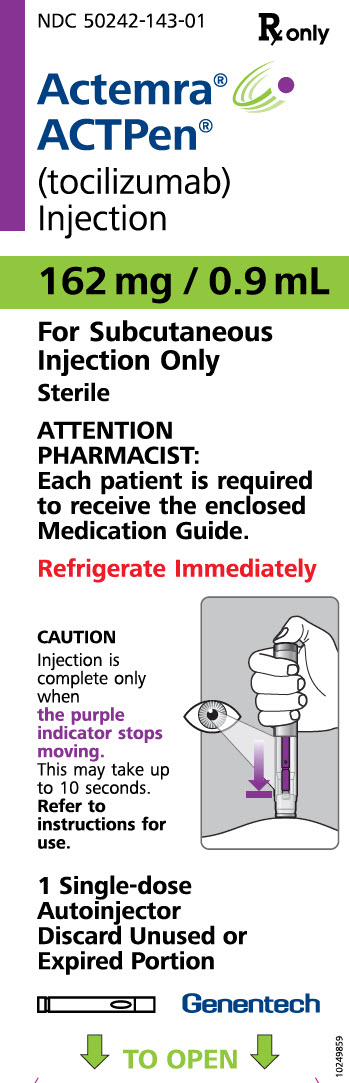
Actemra ACTPen tocilizumab 162 mg/.9mL Injection, Solution, 1 syringe — NDC 50242-143-01 (Billing 50242-0143-01)
This is a package of 1 syringe of Actemra ACTPen tocilizumab 162 mg/.9mL Injection, Solution from Genentech, Inc., marketed since Nov 2018 and currently FDA-listed; retail pharmacies pay about $1,279.06 per mL (NADAC). It is the main listing for this product, which comes in 2 package sizes.
NDC database record
One package, one record: these facts belong to NDC 50242-143-01 alone.
- Record
- FDA NDC Directory package listing · Human prescription drug
- Code segments
- 50242 labeler · 143 product · 01 package
- Package marketed since
- Nov 19, 2018
- Sample package
- No — commercial package
- Listing certified through
- Dec 31, 2026
- Barcode (UPC-A, from the NDC)
- 3 5024214301 1
- Medicaid fills, this package
- 15,639 prescriptions in the last four reported quarters
- FDA record last changed
- Jul 24, 2026
Identity & classification
Regulatory identifiers FDA, NLM and CMS codes for this package
Drug-database identifiers Medi-Span GPI and First Databank GCN / HICL / AHFS classification
- GSN (GCN sequence number): 078707
- GCN: 45082
- GPI-14 (Medi-Span): 6650007000D520
- HICL (First Databank): 036466
- AHFS class code: 90:24.20.92
- RxCUI (RxNorm): 1441527
Where does this data come from?
- FDA openFDA NDC Directory · synced Oct 8, 2026
- FDA label on DailyMed · label index refreshed Oct 8, 2026
- RxNorm (NLM RxNav) · catalog refreshed Oct 8, 2026
- Medi-Span GPI (licensed)
- First Databank (licensed) · refreshed Oct 8, 2026
RxNorm drug class
This medicine belongs to the Interleukin-6 Receptor Antagonist class.
Where does this data come from?
- RxClass (NLM) · catalog refreshed Oct 8, 2026
Clinical
- It calms inflammation in conditions like rheumatoid arthritis, giant cell arteritis, juvenile idiopathic arthritis and lung disease from systemic sclerosis. It is also used for cyt...
- It may be given as an IV infusion at a medical office over about an hour, or as an injection under the skin. Actemra's subcutaneous form comes as a prefilled syringe or ACTPen with...
- Common ones are colds and sinus infections, sore nose or throat, headache, high blood pressure, higher liver enzymes on blood tests and injection site reactions. Most are manageabl...
- Call for fever, cough, chills or any sign of infection, since serious infections including TB can happen. Also call for belly pain with fever, dark urine, yellow skin or eyes, or s...
Patient education
Supplement & herbal interactions
Some supplements/herbs that may interact with Tocilizumab — tap one for details:
Where does this data come from?
- MedlinePlus (NLM) · refreshed Oct 8, 2026
- FDA label on DailyMed · label index refreshed Oct 8, 2026
Ask a licensed pharmacist directly — free, answered by our team.
Pricing
A drug doesn't have one price. Each row is a different public payment system, and none is what you'd pay at the counter — that depends on your insurance. The ⓘ on each row explains what it measures.
| Price system | Per mL | Per package |
|---|---|---|
| Retail pharmacies payNADAC · weekly | $1,279.060 | $1,151.15 / 0.9 ml |
| Medicaid paysCMS SDUD · 12 mo | $1,284.98 | $1,156.48 / 0.9 ml |
| Medicare drug plans payPart D · Q2 2026 | $1,240.30 | $1,116.27 / 0.9 ml |
Where does this data come from?
- CMS NADAC weekly file · file of Oct 7, 2026
- CMS ASP pricing files · refreshed Sep 20, 2026
- CMS Medicaid State Drug Utilization Data · through Q1 2026
- CMS Part D plan pricing files · refreshed Sep 24, 2026
- VA National Acquisition Center price file
Packaging — all sizes for this product
| Package NDC | Description | Per unit | Per pack | Marketing start | Marketing end | Status |
|---|---|---|---|---|---|---|
| 50242-0143-01 You're viewing this Main listing | 1 SYRINGE, GLASS in 1 BOX / .9 mL in 1 SYRINGE, GLASS | $1,279.06 / mL | $1,151.15 | 2018-11-19 | — | Active |
| 50242-0143-86 50242-143-86 | 1 SYRINGE, GLASS in 1 BOX / .9 mL in 1 SYRINGE, GLASS Sample | — | — | 2018-11-19 | — | Active |
In Medicaid, this is the most-dispensed pack of this product — about 100% of fills over the last four reported quarters. See all packs ↓
Pack size FAQ
What quantity is in this package?
How does this package differ from NDC 50242-0143-86?
What NDC number is used to bill for this package of Actemra ACTPen tocilizumab 162 mg/.9mL Injection, Solution?
Prices are the latest CMS NADAC pharmacy acquisition cost per NDC; per-pack figures are per-unit × pack quantity, shown only when the pack is denominated in the same measure NADAC prices.
Therapeutic equivalents
| Product | Labeler | Pack | NADAC/unit | TE | Status | Price vs. this |
|---|---|---|---|---|---|---|
| Actemra ACTPen 162 mg/.9mLthis 50242-0143-01 | Genentech, | 1 syringe | $1,279.060 | — | Availability likely | — |
| Actemra 162 mg/.9mL 50242-0138-01 | Genentech, | 1 syringe | — | — | FDA listed | — |
| Avtozma 162 mg/.9mL 72606-0045-01 | CELLTRION | 1 syringe | — | — | FDA listed | — |
Where does this data come from?
- FDA openFDA NDC Directory · synced Oct 8, 2026
- FDA Purple Book · refreshed Oct 5, 2026
- CMS NADAC weekly file · file of Oct 7, 2026
Availability & biosimilar status
2 biosimilars and 1 interchangeable are FDA-licensed for this reference biologic — see the list below. (Biologics have no small-molecule generics.)
Why the date isn’t exact: Biosimilar timing can change because patents may be challenged, settled, licensed, added or removed, and litigation can move the real date earlier or later.
🛈 What do these terms mean?
- Biologic patent
- A patent the reference product’s maker has publicly listed. A biosimilar generally can’t launch until these expire — unless they’re invalidated or resolved in a settlement.
- Reference-product exclusivity
- A flat 12 years of FDA market protection from the biologic’s first licensure (the BPCIA). No biosimilar can be licensed before it ends, regardless of patents.
- Interchangeable exclusivity
- The first interchangeable biosimilar can earn a period as the only interchangeable version (pharmacists can substitute it without the prescriber).
- Earliest biosimilar (LOE)
- The latest of all the dates above — the soonest a biosimilar can realistically reach the market. Litigation and settlements can move it earlier.
Biologics have no small-molecule “generics” — competition comes from FDA-licensed biosimilars, tracked in the FDA Purple Book.
| Patent | Type | Use code | Expires |
|---|---|---|---|
| US 10,336,983 ↗ | Biologic patent | — | Jul 31, 2035 |
| US 7,521,052 ↗ | Biologic patent | — | Apr 28, 2024 |
| US 10,231,981 ↗ | Biologic patent | — | Dec 3, 2031 |
| US 10,017,732 ↗ | Biologic patent | — | Dec 25, 2034 |
| US 9,902,777 ↗ | Biologic patent | — | May 28, 2025 |
| US 9,750,752 ↗ | Biologic patent | — | Aug 30, 2032 |
| US 9,714,293 ↗ | Biologic patent | — | Aug 6, 2030 |
| US 9,630,988 ↗ | Biologic patent | — | Jun 13, 2033 |
| US 9,539,263 ↗ | Biologic patent | — | May 23, 2032 |
| US 8,734,800 ↗ | Biologic patent | — | Mar 24, 2025 |
| US 8,709,409 ↗ | Biologic patent | — | Jun 22, 2024 |
| US 8,617,550 ↗ | Biologic patent | — | Mar 3, 2026 |
| US 8,580,264 ↗ | Biologic patent | — | Nov 7, 2031 |
| US 8,574,869 ↗ | Biologic patent | — | Jul 8, 2028 |
| US 8,568,720 ↗ | Biologic patent | — | Nov 5, 2029 |
| US 8,512,983 ↗ | Biologic patent | — | Jan 4, 2031 |
| US 8,398,980 ↗ | Biologic patent | — | Feb 25, 2028 |
| US 11,021,728 ↗ | Biologic patent | — | Oct 25, 2030 |
| US 7,332,289 ↗ | Biologic patent | — | Aug 4, 2023 |
| US 11,667,720 ↗ | Biologic patent | — | Nov 7, 2031 |
| US 11,584,798 ↗ | Biologic patent | — | Dec 26, 2028 |
| US 11,377,678 ↗ | Biologic patent | — | Oct 25, 2030 |
| US 11,359,026 ↗ | Biologic patent | — | Dec 26, 2028 |
| US 11,136,610 ↗ | Biologic patent | — | Oct 25, 2030 |
| US 11,136,375 ↗ | Biologic patent | — | Jul 19, 2029 |
| US 11,078,294 ↗ | Biologic patent | — | Jul 8, 2028 |
| US 10,501,769 ↗ | Biologic patent | — | Oct 25, 2030 |
| US 11,008,394 ↗ | Biologic patent | — | Dec 26, 2028 |
| US 10,982,003 ↗ | Biologic patent | — | Aug 6, 2030 |
| US 10,874,677 ↗ | Biologic patent | — | Mar 2, 2032 |
| US 10,829,732 ↗ | Biologic patent | — | Mar 14, 2034 |
| US 10,744,201 ↗ | Biologic patent | — | Apr 28, 2024 |
| US 10,676,710 ↗ | Biologic patent | — | Mar 14, 2034 |
| US 10,662,237 ↗ | Biologic patent | — | Aug 7, 2031 |
| US 10,590,164 ↗ | Biologic patent | — | Mar 19, 2033 |
| Code | What it grants | Expires |
|---|---|---|
| RefProduct | Reference-product exclusivity (12-year, BPCIA) — no biosimilar can be licensed before this date | Oct 21, 2025 |
Is there a biosimilar for ACTEMRA ACTPEN 162 MG/0.9 ML?
Why do different websites show different biosimilar dates?
Can a biosimilar launch before the last patent expires?
What does “current Purple Book estimate” mean?
What does “FDA listed” mean?
What does a patent or protection date mean here?
Where does this data come from?
- FDA Purple Book · refreshed Oct 5, 2026
Inactive Ingredients / Excipients
Inactive ingredients, also called excipients, are components of the drug product other than the active ingredient. They may include fillers, dyes, coatings, preservatives, flavors, or other formulation ingredients.
🧪 Avoiding an ingredient? See Tocilizumab Injection inactive ingredients by manufacturer: every current product's list side by side, so you can ask your pharmacy for the version that does not list it.
💡 Tap an ingredient (hover on desktop) to see what it is and why it’s used.
-
UNII F7LTH1E20Y
Arginine hydrochloride is an amino acid salt used as a buffer and pH adjuster in medicines. It helps maintain the correct acidity level to keep the drug stable and effective.
-
UNII 4QD397987E
An amino acid used as a buffer and stabilizer in medications. It helps maintain the pH balance and protects the active drug from breaking down during storage and use.
-
UNII X573657P6P
Histidine monohydrochloride monohydrate is an amino acid salt used as a buffer in medicines. It helps maintain the proper acidity level of liquid formulations to keep the drug stable and effective.
-
UNII AE28F7PNPL
Methionine is an amino acid used as a nutrient supplement and pH buffer in medicines. It helps stabilize the formulation and supports the product's overall composition.
-
UNII 6OZP39ZG8H
Polysorbate 80 is a synthetic emulsifier derived from sorbitol and oleic acid. It helps mix oil and water-based ingredients together in medications and improves how the product disperses in the body.
-
UNII 059QF0KO0R
Water is a liquid solvent that dissolves and mixes ingredients together in liquid medicines, syrups, and injections. It helps distribute the active drug evenly throughout the product.
6 inactive ingredients listed in the exact product block matched to this NDC.
Where does this data come from?
ingredient classCode="IACT" elements from the exact product block matched by this NDC. Label-section narrative from DailyMed / the openFDA label index is shown separately when available.- FDA label on DailyMed · label index refreshed Oct 8, 2026
- FDA openFDA NDC Directory · synced Oct 8, 2026
Inactive ingredient FAQ
Are inactive ingredients the same for every manufacturer?
Why might an inactive ingredient be missing?
Can inactive ingredients matter?
Manufacturer & labeler
More NDCs from Genentech, Inc. labeler code 50242
- ACTEMRA tocilizumab 400 mg/20mL Injection, Solution, Concentrate NDC 50242-137-01
- Actemra tocilizumab 162 mg/.9mL Injection, Solution NDC 50242-138-01
- Tocilizumab 50 g/L Liquid NDC 50242-139-04
- Erivedge vismodegib 150 mg Capsule NDC 50242-140-01
- Tocilizumab 50 g/L Liquid NDC 50242-141-04
- Lunsumio Mosunetuzumab 30 mg/30mL Concentrate NDC 50242-142-01
- pertuzumab 30 g/L Solution NDC 50242-144-02
- PERJETA Pertuzumab 30 mg/mL Injection, Solution, Concentrate NDC 50242-145-01
- OCREVUS ocrelizumab 300 mg/10mL Injection NDC 50242-150-01
- Lunsumio Mosunetuzumab 1 mg/mL Concentrate NDC 50242-159-01
- Bevacizumab 25 g/L Liquid NDC 50242-160-01
- EVRYSDI Risdiplam .75 mg/mL Powder, For Solution NDC 50242-175-07
Where does this data come from?
- FDA openFDA NDC Directory · synced Oct 8, 2026
- Drugs@FDA
Full prescribing information FDA SPL
🚨 Boxed Warning ▾
WARNING: RISK OF SERIOUS INFECTIONS Patients treated with ACTEMRA are at increased risk for developing serious infections that may lead to hospitalization or death [see Warnings and Precautions (5.1) , Adverse Reactions (6.1) ] . Most patients who developed these infections were taking concomitant immunosuppressants such as methotrexate or corticosteroids. If a serious infection develops, interrupt ACTEMRA until the infection is controlled.
Reported infections include: Active tuberculosis, which may present with pulmonary or extrapulmonary disease. Patients, except those with COVID-19, should be tested for latent tuberculosis before ACTEMRA use and during therapy. Treatment for latent infection should be initiated prior to ACTEMRA use.
Invasive fungal infections, including candidiasis, aspergillosis, and pneumocystis. Patients with invasive fungal infections may present with disseminated, rather than localized, disease. Bacterial, viral and other infections due to opportunistic pathogens.
The risks and benefits of treatment with ACTEMRA should be carefully considered prior to initiating therapy in patients with chronic or recurrent infection. Patients should be closely monitored for the development of signs and symptoms of infection during and after treatment with ACTEMRA, including the possible development of tuberculosis in patients who tested negative for latent tuberculosis infection prior to initiating therapy [see Warnings and Precautions (5.1) ] . WARNING: RISK OF SERIOUS INFECTIONS See full prescribing information for complete boxed warning.
Serious infections leading to hospitalization or death including tuberculosis (TB), bacterial, invasive fungal, viral, and other opportunistic infections have occurred in patients receiving ACTEMRA. ( 5.1 ) If a serious infection develops, interrupt ACTEMRA until the infection is controlled. ( 5.1 ) Perform test for latent TB (except patients with COVID-19); if positive, start treatment for TB prior to starting ACTEMRA.
( 5.1 ) Monitor all patients for active TB during treatment, even if initial latent TB test is negative. ( 5.1 )
🎯 Indications and Usage ▾
1 INDICATIONS AND USAGE ACTEMRA ® (tocilizumab) is an interleukin-6 (IL-6) receptor antagonist indicated for treatment of: Rheumatoid Arthritis (RA) ( 1.1 ) Adult patients with moderately to severely active rheumatoid arthritis who have had an inadequate response to one or more Disease-Modifying Anti-Rheumatic Drugs (DMARDs). Giant Cell Arteritis (GCA) ( 1.2 ) Adult patients with giant cell arteritis. Systemic Sclerosis-Associated Interstitial Lung Disease (SSc-ILD) ( 1.3 ) Slowing the rate of decline in pulmonary function in adult patients with systemic sclerosis-associated interstitial lung disease (SSc-ILD) Polyarticular Juvenile Idiopathic Arthritis (PJIA) ( 1.4 ) Patients 2 years of age and older with active polyarticular juvenile idiopathic arthritis.
Systemic Juvenile Idiopathic Arthritis (SJIA) ( 1.5 ) Patients 2 years of age and older with active systemic juvenile idiopathic arthritis. Cytokine Release Syndrome (CRS) ( 1.6 ) Adults and pediatric patients 2 years of age and older with chimeric antigen receptor (CAR) T cell-induced severe or life-threatening cytokine release syndrome. Coronavirus Disease 2019 (COVID-19) ( 1.7 ) Hospitalized adult and pediatric patients aged 2 years and older with coronavirus disease 2019 (COVID-19) who are receiving systemic corticosteroids and require supplemental oxygen, non-invasive or invasive mechanical ventilation, or extracorporeal membrane oxygenation (ECMO).
1.1Rheumatoid Arthritis (RA) ACTEMRA ® (tocilizumab) is indicated for the treatment of adult patients with moderately to severely active rheumatoid arthritis who have had an inadequate response to one or more Disease-Modifying Anti-Rheumatic Drugs (DMARDs).
1.2Giant Cell Arteritis (GCA) ACTEMRA ® (tocilizumab) is indicated for the treatment of giant cell arteritis (GCA) in adult patients.
1.3Systemic Sclerosis-Associated Interstitial Lung Disease (SSc-ILD) ACTEMRA ® (tocilizumab) is indicated for slowing the rate of decline in pulmonary function in adult patients with systemic sclerosis-associated interstitial lung disease.
1.4Polyarticular Juvenile Idiopathic Arthritis (PJIA) ACTEMRA ® (tocilizumab) is indicated for the treatment of active polyarticular juvenile idiopathic arthritis in patients 2 years of age and older.
1.5Systemic Juvenile Idiopathic Arthritis (SJIA) ACTEMRA ® (tocilizumab) is indicated for the treatment of active systemic juvenile idiopathic arthritis in patients 2 years of age and older.
1.6Cytokine Release Syndrome (CRS) ACTEMRA ® (tocilizumab) is indicated for the treatment of chimeric antigen receptor (CAR) T cell-induced severe or life-threatening cytokine release syndrome in adults and pediatric patients 2 years of age and older.
1.7Coronavirus Disease 2019 (COVID-19) ACTEMRA® (tocilizumab) is indicated for the treatment of coronavirus disease 2019 (COVID-19) in hospitalized adult and pediatric patients aged 2 years and older who are receiving systemic corticosteroids and require supplemental oxygen, non-invasive or invasive mechanical ventilation, or extracorporeal membrane oxygenation (ECMO).
⏱️ Dosage and Administration ▾
2 DOSAGE AND ADMINISTRATION For RA, pJIA and sJIA, ACTEMRA may be used alone or in combination with methotrexate: and in RA, other non-biologic DMARDs may be used. ( 2 ) General Administration and Dosing Information ( 2.1 ) RA, GCA, SSc-ILD, PJIA and SJIA – It is recommended that ACTEMRA not be initiated in patients with an absolute neutrophil count (ANC) below 2000 per mm 3 , platelet count below 100,000 per mm 3 , or ALT or AST above 1.5 times the upper limit of normal (ULN) ( 5.3 , 5.4 ) . COVID-19 – It is recommended that ACTEMRA not be initiated in patients with an absolute neutrophil count (ANC) below 1000 per mm 3 , platelet count below 50,000 mm 3 , or ALT or AST above 10 times ULN ( 5.3 , 5.4 ) .
In RA, CRS or COVID-19 patients, ACTEMRA doses exceeding 800 mg per infusion are not recommended. ( 2.2 , 2.7 , 12.3 ) In GCA patients, ACTEMRA doses exceeding 600 mg per infusion are not recommended. ( 2.3 , 12.3 ) Rheumatoid Arthritis ( 2.2 ) Recommended Adult Intravenous Dosage: When used in combination with non-biologic DMARDs or as monotherapy the recommended starting dose is 4 mg per kg every 4 weeks followed by an increase to 8 mg per kg every 4 weeks based on clinical response.
Recommended Adult Subcutaneous Dosage: Patients less than 100 kg weight 162 mg administered subcutaneously every other week, followed by an increase to every week based on clinical response Patients at or above 100 kg weight 162 mg administered subcutaneously every week Giant Cell Arteritis ( 2.3 ) Recommended Adult Intravenous Dosage: The recommended dose is 6 mg per kg every 4 weeks in combination with a tapering course of glucocorticoids. ACTEMRA can be used alone following discontinuation of glucocorticoids. Recommended Adult Subcutaneous Dosage: The recommended dose is 162 mg given once every week as a subcutaneous injection, in combination with a tapering course of glucocorticoids.
A dose of 162 mg given once every other week as a subcutaneous injection, in combination with a tapering course of glucocorticoids, may be prescribed based on clinical considerations. ACTEMRA can be used alone following discontinuation of glucocorticoids. Systemic Sclerosis-Associated Interstitial Lung Disease (SSc-ILD) ( 2.4 ) Recommended Adult Subcutaneous Dosage: The recommended dose of ACTEMRA for adult patients with SSc-ILD is 162 mg given once every week as a subcutaneous injection.
Polyarticular Juvenile Idiopathic Arthritis ( 2.5 ) Recommended Intravenous PJIA Dosage Every 4 Weeks Patients less than 30 kg weight 10 mg per kg Patients at or above 30 kg weight 8 mg per kg Recommended Subcutaneous PJIA Dosage Patients less than 30 kg weight 162 mg once every three weeks Patients at or above 30 kg weight 162 mg once every two weeks Systemic Juvenile Idiopathic Arthritis ( 2.6 ) Recommended Intravenous SJIA Dosage Every 2 Weeks Patients less than 30 kg weight 12 mg per kg Patients at or above 30 kg weight 8 mg per kg Recommended Subcutaneous SJIA Dosage Patients less than 30 kg weight 162 mg every two weeks Patients at or above 30 kg weight 162 mg every week Cytokine Release Syndrome ( 2.7 ) Recommended Intravenous CRS Dosage Patients less than 30 kg weight 12 mg per kg Patients at or above 30 kg weight 8 mg per kg Alone or in combination with corticosteroids.
Coronavirus Disease 2019 ( 2.8 ) Recommended Intravenous COVID-19 Dosage Patients less than 30 kg weight 12 mg per kg Patients at or above 30 kg weight 8 mg per kg Administered by a 60-minute intravenous infusion Administration of Intravenous formulation ( 2.9 ) For patients with RA, GCA, COVID-19, CRS, PJIA, and SJIA patients at or above 30 kg, dilute to 100 mL in 0.9% or 0.45% Sodium Chloride Injection, USP for intravenous infusion using aseptic technique. For PJIA, SJIA, CRS and COVID-19 patients less than 30 kg, dilute to 50 mL in 0.9% or 0.45% Sodium Chloride Injection, USP for intravenous infusion using aseptic technique.
Administer as a single intravenous drip infusion over 1 hour; do not admini… [Excerpted — this section continues on DailyMed.]
💊 Dosage Forms and Strengths ▾
3 DOSAGE FORMS AND STRENGTHS Intravenous Infusion Injection: 80 mg/4 mL (20 mg/mL), 200 mg/10 mL (20 mg/mL), 400 mg/20 mL (20 mg/mL) in single-dose vials for further dilution prior to intravenous infusion ( 3 ) Subcutaneous Injection Injection: 162 mg/0.9 mL in a single-dose prefilled syringe or single-dose prefilled ACTPen ® autoinjector ( 3 ) Intravenous Infusion Injection: 80 mg/4 mL, 200 mg/10 mL, 400 mg/20 mL as a clear, colorless to pale yellow solution in 20 mg/mL single-dose vials for further dilution prior to intravenous infusion.
Subcutaneous Injection Injection: 162 mg/0.9 mL clear, colorless to slightly yellowish solution in a single-dose prefilled syringe or single-dose prefilled ACTPen ® autoinjector.
⛔ Contraindications ▾
4 CONTRAINDICATIONS ACTEMRA is contraindicated in patients with known hypersensitivity to ACTEMRA [see Warnings and Precautions (5.6) ]. Known hypersensitivity to ACTEMRA. ( 4 )
⚠️ Warnings and Cautions ▾
5 WARNINGS AND PRECAUTIONS Serious Infections – do not administer ACTEMRA during an active infection, including localized infections. If a serious infection develops, interrupt ACTEMRA until the infection is controlled. ( 5.1 ) Gastrointestinal (GI) perforation—use with caution in patients who may be at increased risk.
( 5.2 ) Hepatotoxicity- Monitor patients for signs and symptoms of hepatic injury. Modify or discontinue ACTEMRA if abnormal liver tests persist or worsen or if clinical signs and symptoms of liver disease develop. ( 2.10 , 5.3 ) Laboratory monitoring—recommended due to potential consequences of treatment-related changes in neutrophils, platelets, lipids, and liver function tests.
( 2.10 , 5.4 ) Hypersensitivity reactions, including anaphylaxis and death, and serious cutaneous reactions including Drug Reaction with Eosinophilia and Systemic Symptoms (DRESS) – discontinue ACTEMRA, treat promptly, and monitor until reaction resolves. ( 5.6 ) Live vaccines—Avoid use with ACTEMRA. ( 5.9 , 7.3 )
5.1Serious Infections Serious and sometimes fatal infections due to bacterial, mycobacterial, invasive fungal, viral, protozoal, or other opportunistic pathogens have been reported in patients receiving immunosuppressive agents including ACTEMRA. The most common serious infections included pneumonia, urinary tract infection, cellulitis, herpes zoster, gastroenteritis, diverticulitis, sepsis and bacterial arthritis [see Adverse Reactions (6.1) ] . Among opportunistic infections, tuberculosis, cryptococcus, aspergillosis, candidiasis, and pneumocystosis were reported with ACTEMRA.
Other serious infections, not reported in clinical studies, may also occur (e.g., histoplasmosis, coccidioidomycosis, listeriosis). Patients have presented with disseminated rather than localized disease, and were often taking concomitant immunosuppressants such as methotrexate or corticosteroids which in addition to rheumatoid arthritis may predispose them to infections. Do not administer ACTEMRA in patients with an active infection, including localized infections.
The risks and benefits of treatment should be considered prior to initiating ACTEMRA in patients: with chronic or recurrent infection; who have been exposed to tuberculosis; with a history of serious or an opportunistic infection; who have resided or traveled in areas of endemic tuberculosis or endemic mycoses; or with underlying conditions that may predispose them to infection. Closely monitor patients for the development of signs and symptoms of infection during and after treatment with ACTEMRA, as signs and symptoms of acute inflammation may be lessened due to suppression of the acute phase reactants [see Dosage and Administration (2.8) , Adverse Reactions (6.1) , and Patient Counseling Information (17) ] .
Hold ACTEMRA if a patient develops a serious infection, an opportunistic infection, or sepsis. A patient who develops a new infection during treatment with ACTEMRA should undergo a prompt and complete diagnostic workup appropriate for an immunocompromised patient, initiate appropriate antimicrobial therapy, and closely monitor the patient. COVID-19 In patients with COVID-19, monitor for signs and symptoms of new infections during and after treatment with ACTEMRA.
There is limited information regarding the use of ACTEMRA in patients with COVID-19 and concomitant active serious infections. The risks and benefits of treatment with ACTEMRA in COVID-19 patients with other concurrent infections should be considered. Tuberculosis Evaluate patients for tuberculosis risk factors and test for latent infection prior to initiating ACTEMRA.
In patients with COVID-19, testing for latent infection is not necessary prior to initiating treatment with ACTEMRA. Consider anti-tuberculosis therapy prior to initiation of ACTEMRA in patients with a past history of latent or active tuberculosis in whom an adequate course of treatment cannot be confirmed, and for patients with a negative test for latent tub… [Excerpted — this section continues on DailyMed.]
🤒 Adverse Reactions ▾
6 ADVERSE REACTIONS The following serious adverse reactions are described elsewhere in labeling: Serious Infections [see Warnings and Precautions (5.1) ] Gastrointestinal Perforations [see Warnings and Precautions (5.2) ] Laboratory Parameters [see Warnings and Precautions (5.4) ] Immunosuppression [see Warnings and Precautions (5.5) ] Hypersensitivity Reactions, Including Anaphylaxis [see Warnings and Precautions (5.6) ] Demyelinating Disorders [see Warnings and Precautions (5.7) ] Active Hepatic Disease and Hepatic Impairment [see Warnings and Precautions (5.8) ] Because clinical studies are conducted under widely varying conditions, adverse reaction rates observed in the clinical studies of a drug cannot be directly compared to rates in the clinical studies of another drug and may not predict the rates observed in a broader patient population in clinical practice.
Most common adverse reactions (incidence of at least 5%): upper respiratory tract infections, nasopharyngitis, headache, hypertension, increased ALT, injection site reactions. ( 6 ) To report SUSPECTED ADVERSE REACTIONS, contact Genentech at 1-888-835-2555 or FDA at 1-800-FDA-1088 or www.fda.gov/medwatch
6.1Clinical Trials Experience in Rheumatoid Arthritis Patients Treated with Intravenous ACTEMRA (ACTEMRA-IV) The ACTEMRA-IV data in rheumatoid arthritis (RA) includes 5 double-blind, controlled, multicenter studies. In these studies, patients received doses of ACTEMRA-IV 8 mg per kg monotherapy (288 patients), ACTEMRA-IV 8 mg per kg in combination with DMARDs (including methotrexate) (1582 patients), or ACTEMRA-IV 4 mg per kg in combination with methotrexate (774 patients). The all exposure population includes all patients in registration studies who received at least one dose of ACTEMRA-IV.
Of the 4009 patients in this population, 3577 received treatment for at least 6 months, 3309 for at least one year; 2954 received treatment for at least 2 years and 2189 for 3 years. All patients in these studies had moderately to severely active rheumatoid arthritis. The study population had a mean age of 52 years, 82% were female and 74% were Caucasian.
The most common serious adverse reactions were serious infections [see Warnings and Precautions (5.1) ] . The most commonly reported adverse reactions in controlled studies up to 24 weeks (occurring in at least 5% of patients treated with ACTEMRA-IV monotherapy or in combination with DMARDs) were upper respiratory tract infections, nasopharyngitis, headache, hypertension and increased ALT. The proportion of patients who discontinued treatment due to any adverse reactions during the double-blind, placebo-controlled studies was 5% for patients taking ACTEMRA-IV and 3% for placebo-treated patients.
The most common adverse reactions that required discontinuation of ACTEMRA-IV were increased hepatic transaminase values (per protocol requirement) and serious infections. Overall Infections In the 24 week, controlled clinical studies, the rate of infections in the ACTEMRA-IV monotherapy group was 119 events per 100 patient-years and was similar in the methotrexate monotherapy group. The rate of infections in the 4 mg per kg and 8 mg per kg ACTEMRA-IV plus DMARD group was 133 and 127 events per 100 patient-years, respectively, compared to 112 events per 100 patient-years in the placebo plus DMARD group.
The most commonly reported infections (5% to 8% of patients) were upper respiratory tract infections and nasopharyngitis. The overall rate of infections with ACTEMRA-IV in the all exposure population remained consistent with rates in the controlled periods of the studies. Serious Infections In the 24 week, controlled clinical studies, the rate of serious infections in the ACTEMRA-IV monotherapy group was 3.6 per 100 patient-years compared to 1.5 per 100 patient-years in the methotrexate group.
The rate of serious infections in the 4 mg per kg and 8 mg per kg ACTEMRA-IV plus DMARD group was 4.4 and 5.3 events per 100 patient-years, res… [Excerpted — this section continues on DailyMed.]
🔄 Drug Interactions ▾
7 DRUG INTERACTIONS
7.1Concomitant Drugs for Treatment of Adult Indications In RA patients, population pharmacokinetic analyses did not detect any effect of methotrexate (MTX), non-steroidal anti-inflammatory drugs or corticosteroids on tocilizumab clearance. Concomitant administration of a single intravenous dose of 10 mg/kg ACTEMRA with 10-25 mg MTX once weekly had no clinically significant effect on MTX exposure. ACTEMRA has not been studied in combination with biological DMARDs such as TNF antagonists [see Dosage and Administration (2.2) ] .
In GCA patients, no effect of concomitant corticosteroid on tocilizumab exposure was observed.
7.2Interactions with CYP450 Substrates Cytochrome P450s in the liver are down-regulated by infection and inflammation stimuli including cytokines such as IL-6. Inhibition of IL-6 signaling in RA patients treated with tocilizumab may restore CYP450 activities to higher levels than those in the absence of tocilizumab leading to increased metabolism of drugs that are CYP450 substrates. In vitro studies showed that tocilizumab has the potential to affect expression of multiple CYP enzymes including CYP1A2, CYP2B6, CYP2C9, CYP2C19, CYP2D6 and CYP3A4.
Its effect on CYP2C8 or transporters is unknown. In vivo studies with omeprazole, metabolized by CYP2C19 and CYP3A4, and simvastatin, metabolized by CYP3A4, showed up to a 28% and 57% decrease in exposure one week following a single dose of ACTEMRA, respectively. The effect of tocilizumab on CYP enzymes may be clinically relevant for CYP450 substrates with narrow therapeutic index, where the dose is individually adjusted.
Upon initiation or discontinuation of ACTEMRA, in patients being treated with these types of medicinal products, perform therapeutic monitoring of effect (e.g., warfarin) or drug concentration (e.g., cyclosporine or theophylline) and the individual dose of the medicinal product adjusted as needed. Exercise caution when coadministering ACTEMRA with CYP3A4 substrate drugs where decrease in effectiveness is undesirable, e.g., oral contraceptives, lovastatin, atorvastatin, etc. The effect of tocilizumab on CYP450 enzyme activity may persist for several weeks after stopping therapy [see Clinical Pharmacology (12.3) ] .
7.3Live Vaccines Avoid use of live vaccines concurrently with ACTEMRA [see Warnings and Precautions (5.9) ] .
👥 Use in Specific Populations ▾
8 USE IN SPECIFIC POPULATIONS Pregnancy: Based on animal data, may cause fetal harm. ( 8.1 ) Lactation: Discontinue drug or nursing taking into consideration importance of drug to mother. ( 8.2 )
8.1Pregnancy Risk Summary The available data with ACTEMRA from a pregnancy exposure registry, retrospective cohort study, pharmacovigilance, and published literature are insufficient to draw conclusions about a drug-associated risk of major birth defects, miscarriage, or other adverse maternal or fetal outcomes. These studies had methodological limitations, including small sample size of tocilizumab exposed groups, missing exposure and outcomes information, and lack of adjustment for confounders. Monoclonal antibodies, such as tocilizumab, are actively transported across the placenta during the third trimester of pregnancy and may affect immune response in the in utero exposed infant [see Clinical Considerations ].
In animal reproduction studies, intravenous administration of tocilizumab to Cynomolgus monkeys during organogenesis caused abortion/embryo-fetal death at doses 1.25 times and higher than the maximum recommended human dose by the intravenous route of 8 mg per kg every 2 to 4 weeks. The literature in animals suggests that inhibition of IL-6 signaling may interfere with cervical ripening and dilatation and myometrial contractile activity leading to potential delays of parturition [see Data ] . Based on the animal data, there may be a potential risk to the fetus.
The estimated background risk of major birth defects and miscarriage for the indicated population is unknown. All pregnancies have a background risk of birth defect, loss or other adverse outcomes. In the U.S. general population, the estimated background risk of major birth defects and miscarriage in clinically recognized pregnancies is 2 to 4% and 15 to 20%, respectively.
Clinical Considerations Fetal/Neonatal adverse reactions Monoclonal antibodies are increasingly transported across the placenta as pregnancy progresses, with the largest amount transferred during the third trimester. Risks and benefits should be considered prior to administering live or live-attenuated vaccines to infants exposed to ACTEMRA in utero [see Warnings and Precautions 5.9) ] . Disease-associated Maternal Risk Published data suggest that the risk of adverse pregnancy outcomes in women with rheumatoid arthritis is associated with increased disease activity.
Adverse pregnancy outcomes include preterm delivery (before 37 weeks of gestation), low birth weight (less than 2500 g) infants, and small for gestational age at birth. Data Animal Data An embryo-fetal developmental toxicity study was performed in which pregnant Cynomolgus monkeys were treated intravenously with tocilizumab at daily doses of 2, 10, or 50 mg/ kg during organogenesis from gestation day (GD) 20-50. Although there was no evidence for a teratogenic/dysmorphogenic effect at any dose, tocilizumab produced an increase in the incidence of abortion/embryo-fetal death at doses 1.25 times and higher the MRHD by the intravenous route at maternal intravenous doses of 10 and 50 mg/ kg.
Testing of a murine analogue of tocilizumab in mice did not yield any evidence of harm to offspring during the pre- and postnatal development phase when dosed at 50 mg/kg intravenously with treatment every three days from implantation (GD 6) until post-partum day 21 (weaning). There was no evidence for any functional impairment of the development and behavior, learning ability, immune competence and fertility of the offspring. Parturition is associated with significant increases of IL-6 in the cervix and myometrium.
The literature suggests that inhibition of IL-6 signaling may interfere with cervical ripening and dilatation and myometrial contractile activity leading to potential delays of parturition. For mice deficient in IL-6 (ll6 -/- null mice), parturition was delayed relative to wild-type (ll6 +/+ ) mice. Administration of recombinant IL-6 to ll6… [Excerpted — this section continues on DailyMed.]
🤰 Pregnancy ▾
8.1Pregnancy Risk Summary The available data with ACTEMRA from a pregnancy exposure registry, retrospective cohort study, pharmacovigilance, and published literature are insufficient to draw conclusions about a drug-associated risk of major birth defects, miscarriage, or other adverse maternal or fetal outcomes. These studies had methodological limitations, including small sample size of tocilizumab exposed groups, missing exposure and outcomes information, and lack of adjustment for confounders. Monoclonal antibodies, such as tocilizumab, are actively transported across the placenta during the third trimester of pregnancy and may affect immune response in the in utero exposed infant [see Clinical Considerations ].
In animal reproduction studies, intravenous administration of tocilizumab to Cynomolgus monkeys during organogenesis caused abortion/embryo-fetal death at doses 1.25 times and higher than the maximum recommended human dose by the intravenous route of 8 mg per kg every 2 to 4 weeks. The literature in animals suggests that inhibition of IL-6 signaling may interfere with cervical ripening and dilatation and myometrial contractile activity leading to potential delays of parturition [see Data ] . Based on the animal data, there may be a potential risk to the fetus.
The estimated background risk of major birth defects and miscarriage for the indicated population is unknown. All pregnancies have a background risk of birth defect, loss or other adverse outcomes. In the U.S. general population, the estimated background risk of major birth defects and miscarriage in clinically recognized pregnancies is 2 to 4% and 15 to 20%, respectively.
Clinical Considerations Fetal/Neonatal adverse reactions Monoclonal antibodies are increasingly transported across the placenta as pregnancy progresses, with the largest amount transferred during the third trimester. Risks and benefits should be considered prior to administering live or live-attenuated vaccines to infants exposed to ACTEMRA in utero [see Warnings and Precautions 5.9) ] . Disease-associated Maternal Risk Published data suggest that the risk of adverse pregnancy outcomes in women with rheumatoid arthritis is associated with increased disease activity.
Adverse pregnancy outcomes include preterm delivery (before 37 weeks of gestation), low birth weight (less than 2500 g) infants, and small for gestational age at birth. Data Animal Data An embryo-fetal developmental toxicity study was performed in which pregnant Cynomolgus monkeys were treated intravenously with tocilizumab at daily doses of 2, 10, or 50 mg/ kg during organogenesis from gestation day (GD) 20-50. Although there was no evidence for a teratogenic/dysmorphogenic effect at any dose, tocilizumab produced an increase in the incidence of abortion/embryo-fetal death at doses 1.25 times and higher the MRHD by the intravenous route at maternal intravenous doses of 10 and 50 mg/ kg.
Testing of a murine analogue of tocilizumab in mice did not yield any evidence of harm to offspring during the pre- and postnatal development phase when dosed at 50 mg/kg intravenously with treatment every three days from implantation (GD 6) until post-partum day 21 (weaning). There was no evidence for any functional impairment of the development and behavior, learning ability, immune competence and fertility of the offspring. Parturition is associated with significant increases of IL-6 in the cervix and myometrium.
The literature suggests that inhibition of IL-6 signaling may interfere with cervical ripening and dilatation and myometrial contractile activity leading to potential delays of parturition. For mice deficient in IL-6 (ll6 -/- null mice), parturition was delayed relative to wild-type (ll6 +/+ ) mice. Administration of recombinant IL-6 to ll6 -/- null mice restored the normal timing of delivery.
🧒 Pediatric Use ▾
8.4Pediatric Use ACTEMRA by intravenous use is indicated for the treatment of pediatric patients with: Active systemic juvenile idiopathic arthritis in patients 2 years of age and older Active polyarticular juvenile idiopathic arthritis in patients 2 years of age and older Severe or life-threatening CAR T cell-induced cytokine release syndrome (CRS) in patients 2 years of age and older. Hospitalized Coronavirus disease 2019 (COVID-19) patients 2 years of age and older who are receiving systemic corticosteroids and require supplemental oxygen, non-invasive or invasive mechanical ventilation, or extracorporeal membrane oxygenation (ECMO).
ACTEMRA by subcutaneous use is indicated for the treatment of pediatric patients with: Active polyarticular juvenile idiopathic arthritis in patients 2 years of age and older Active systemic juvenile idiopathic arthritis in patients 2 years of age and older The safety and effectiveness of ACTEMRA in pediatric patients with conditions other than PJIA, SJIA, CRS or COVID-19 have not been established. The safety and effectiveness in pediatric patients below the age of 2 have not been established in PJIA, SJIA, CRS or COVID-19.
Systemic Juvenile Idiopathic Arthritis – Intravenous Use A multicenter, open-label, single arm study to evaluate the PK, safety and exploratory PD and efficacy of ACTEMRA over 12-weeks in SJIA patients (N=11) under 2 years of age was conducted. Patients received intravenous ACTEMRA 12 mg/kg every two weeks. Concurrent use of stable background treatment with corticosteroids, MTX, and/or non-steroidal anti-inflammatory drugs was permitted.
Patients who completed the 12-week period could continue to the optional extension period (a total of 52-weeks or until the age of 2 years, whichever was longer). The primary PK endpoints (C max , C trough and AUC 2weeks ) of ACTEMRA at steady-state in this study were within the ranges of these parameters observed in patients with SJIA aged 2 to 17 years. The safety and immunogenicity of ACTEMRA for patients with SJIA under 2 years of age was assessed descriptively.
SAEs, AEs leading to discontinuation, and infectious AEs were reported by 27.3%, 36.4%, and 81.8% of patients. Six patients (54.5%) experienced hypersensitivity reactions, defined as all adverse events occurring during or within 24 hours after an infusion considered related to ACTEMRA. Three of these patients experienced serious hypersensitivity reactions and were withdrawn from the study.
Three patients with hypersensitivity reactions (two with serious hypersensitivity reactions) developed treatment induced anti-tocilizumab antibodies after the event. There were no cases of MAS based on the protocol-specified criteria, but 2 cases of suspected MAS based on Ravelli criteria Ravelli A, Minoia F, Davì S on behalf of the Paediatric Rheumatology International Trials Organisation, the Childhood Arthritis and Rheumatology Research Alliance, the Pediatric Rheumatology Collaborative Study Group, and the Histiocyte Society , et al.
2016 Classification Criteria for Macrophage Activation Syndrome Complicating Systemic Juvenile Idiopathic Arthritis. Annals of the Rheumatic Diseases 2016;75:481-489. . Cytokine Release Syndrome – Intravenous Use In the retrospective analysis of pooled outcome data for patients treated with ACTEMRA for CAR T cell-induced CRS, 25 patients were children (2 years up to 12 years of age), and 17 patients were adolescents (12 years up to 18 years of age).
There were no differences between the pediatric patients and the adults for safety or efficacy. COVID-19 – Intravenous Use The safety and effectiveness of ACTEMRA have been established for the treatment of pediatric patients aged 2 years and older with COVID-19. Use of ACTEMRA in these age groups is supported by evidence from adequate and well-controlled studies of ACTEMRA in adults with COVID-19 [See Adverse Reactions (6.11) and Clinical Studies (14.11) ] , predicted pharmacokinetic data modeling and simulation fo… [Excerpted — this section continues on DailyMed.]
🧓 Geriatric Use ▾
8.5Geriatric Use Of the 2644 patients who received ACTEMRA in Studies I to V [see Clinical Studies (14) ] , a total of 435 rheumatoid arthritis patients were 65 years of age and older, including 50 patients 75 years and older. Of the 1069 patients who received ACTEMRA-SC in studies SC-I and SC-II there were 295 patients 65 years of age and older, including 41 patients 75 years and older. The frequency of serious infection among ACTEMRA treated subjects 65 years of age and older was higher than those under the age of 65.
As there is a higher incidence of infections in the elderly population in general, caution should be used when treating the elderly. Clinical studies that included ACTEMRA for CRS did not include sufficient numbers of patients aged 65 and over to determine whether they respond differently from younger patients. In the EMPACTA, COVACTA, and REMDACTA studies, of the 974 COVID-19 patients in the ACTEMRA arm, 375 (39%) were 65 years of age or older.
No overall differences in safety or effectiveness of ACTEMRA were observed between patients 65 years of age and older and those under the age of 65 years of age in these studies [see Adverse Reactions (6.1) and Clinical Studies (14.11) ] . In the RECOVERY study, of the 2022 COVID-19 patients in the ACTEMRA arm, 930 (46%) were 65 years of age or older. No overall differences in effectiveness of ACTEMRA were observed between patients 65 years of age and older and those under the age 65 years of age in this study [see Clinical Studies (14.11) ] .
🆘 Overdosage ▾
10 OVERDOSAGE There are limited data available on overdoses with ACTEMRA. One case of accidental overdose was reported with intravenous ACTEMRA in which a patient with multiple myeloma received a dose of 40 mg per kg. No adverse drug reactions were observed.
No serious adverse drug reactions were observed in healthy volunteers who received single doses of up to 28 mg per kg, although all 5 patients at the highest dose of 28 mg per kg developed dose-limiting neutropenia. In case of an overdose, it is recommended that the patient be monitored for signs and symptoms of adverse reactions. Patients who develop adverse reactions should receive appropriate symptomatic treatment.
🧬 Clinical Pharmacology ▾
12 CLINICAL PHARMACOLOGY
12.1Mechanism of Action Tocilizumab binds to both soluble and membrane-bound IL-6 receptors (sIL-6R and mIL-6R), and has been shown to inhibit IL-6-mediated signaling through these receptors. IL-6 is a pleiotropic pro-inflammatory cytokine produced by a variety of cell types including T- and B-cells, lymphocytes, monocytes and fibroblasts. IL-6 has been shown to be involved in diverse physiological processes such as T-cell activation, induction of immunoglobulin secretion, initiation of hepatic acute phase protein synthesis, and stimulation of hematopoietic precursor cell proliferation and differentiation.
IL-6 is also produced by synovial and endothelial cells leading to local production of IL-6 in joints affected by inflammatory processes such as rheumatoid arthritis.
12.2Pharmacodynamics In clinical studies in RA patients with the 4 mg per kg and 8 mg per kg intravenous doses or the 162 mg weekly and every other weekly subcutaneous doses of ACTEMRA, decreases in levels of C-reactive protein (CRP) to within normal ranges were seen as early as week 2. Changes in pharmacodynamic parameters were observed (i.e., decreases in rheumatoid factor, erythrocyte sedimentation rate (ESR), serum amyloid A, fibrinogen and increases in hemoglobin) with doses, however the greatest improvements were observed with 8 mg per kg ACTEMRA.
Pharmacodynamic changes were also observed to occur after ACTEMRA administration in GCA, SSc-ILD, PJIA, and SJIA patients (decreases in CRP, ESR, and increases in hemoglobin). The relationship between these pharmacodynamic findings and clinical efficacy is not known. In healthy subjects administered ACTEMRA in doses from 2 to 28 mg per kg intravenously and 81 to 162 mg subcutaneously, absolute neutrophil counts decreased to the nadir 3 to 5 days following ACTEMRA administration.
Thereafter, neutrophils recovered towards baseline in a dose dependent manner. Rheumatoid arthritis and GCA patients demonstrated a similar pattern of absolute neutrophil counts following ACTEMRA administration [see Warnings and Precautions (5.4) ] .
12.3Pharmacokinetics PK of tocilizumab is characterized by nonlinear elimination which is a combination of linear clearance and Michaelis-Menten elimination. The nonlinear part of tocilizumab elimination leads to an increase in exposure that is more than dose-proportional. The pharmacokinetic parameters of tocilizumab do not change with time.
Due to the dependence of total clearance on tocilizumab serum concentrations, the half-life of tocilizumab is also concentration-dependent and varies depending on the serum concentration level. Population pharmacokinetic analyses in any patient population tested so far indicate no relationship between apparent clearance and the presence of anti-drug antibodies. Rheumatoid Arthritis - Intravenous and Subcutaneous Administration The pharmacokinetics in healthy subjects and RA patients suggest that PK is similar between the two populations.
The population PK model was developed from an analysis dataset composed of an IV dataset of 1793 patients from Study I, Study III, Study IV, and Study V, and from an IV and SC dataset of 1759 patients from Studies SC-I and SC-II. C mean is included in place of AUC tau , since for dosing regimens with different inter-dose intervals, the mean concentration over the dosing period characterizes the comparative exposure better than AUC tau. At high serum concentrations, when total clearance of tocilizumab is dominated by linear clearance, a terminal half-life of approximately 21.5 days was derived from the population parameter estimates.
For doses of 4 mg/kg tocilizumab given every 4 weeks intravenously, the estimated median (range) C max , C trough , and C mean of tocilizumab at steady state were 86.1 (44.8–202) mcg/mL, 0.1 (0.0–14.6) mcg/mL, and 18.0 (8.9–50.7) mcg/mL, respectively. For doses of 8 mg/kg tocilizumab given every 4 weeks intravenously, the estimated median (range) C max , C trough,… [Excerpted — this section continues on DailyMed.]
🧬 Mechanism of Action ▾
12.1Mechanism of Action Tocilizumab binds to both soluble and membrane-bound IL-6 receptors (sIL-6R and mIL-6R), and has been shown to inhibit IL-6-mediated signaling through these receptors. IL-6 is a pleiotropic pro-inflammatory cytokine produced by a variety of cell types including T- and B-cells, lymphocytes, monocytes and fibroblasts. IL-6 has been shown to be involved in diverse physiological processes such as T-cell activation, induction of immunoglobulin secretion, initiation of hepatic acute phase protein synthesis, and stimulation of hematopoietic precursor cell proliferation and differentiation.
IL-6 is also produced by synovial and endothelial cells leading to local production of IL-6 in joints affected by inflammatory processes such as rheumatoid arthritis.
📦 How Supplied / Storage and Handling ▾
16 HOW SUPPLIED/STORAGE AND HANDLING For Intravenous Infusion ACTEMRA (tocilizumab) injection is a preservative-free, sterile clear, colorless to pale yellow solution. ACTEMRA is supplied as 80 mg/4 mL (NDC 50242-135-01), 200 mg/10 mL (NDC 50242-136-01), and 400 mg/20 mL (NDC 50242-137-01) individually packaged 20 mg/mL single-dose vials for further dilution prior to intravenous infusion. For Subcutaneous Injection ACTEMRA (tocilizumab) injection is supplied as a preservative-free, sterile, clear, colorless to slightly yellowish solution for subcutaneous administration.
The following packaging configurations are available: Each single-dose prefilled syringe delivers 162 mg/0.9 mL (NDC 50242-138-01). Each single-dose ACTPen ® autoinjector delivers 162 mg/0.9 mL (NDC 50242-143-01). Storage and Handling: Do not use beyond expiration date on the container, package, prefilled syringe, or autoinjector.
ACTEMRA must be refrigerated at 36°F to 46°F (2ºC to 8ºC). Do not freeze. Protect the vials, syringes, and autoinjectors from light by storage in the original package until time of use, and keep syringes and autoinjectors dry.
Once removed from the refrigerator, the prefilled syringe and autoinjector can be stored up to 2 weeks at or below 86°F (30°C). The prefilled syringe and autoinjector must always be kept in the carton.
📦 Storage and Handling ▾
Storage and Handling: Do not use beyond expiration date on the container, package, prefilled syringe, or autoinjector. ACTEMRA must be refrigerated at 36°F to 46°F (2ºC to 8ºC). Do not freeze.
Protect the vials, syringes, and autoinjectors from light by storage in the original package until time of use, and keep syringes and autoinjectors dry. Once removed from the refrigerator, the prefilled syringe and autoinjector can be stored up to 2 weeks at or below 86°F (30°C). The prefilled syringe and autoinjector must always be kept in the carton.
📋 Description ▾
11 DESCRIPTION Tocilizumab is a recombinant humanized anti-human interleukin 6 (IL-6) receptor monoclonal antibody of the immunoglobulin IgG1κ (gamma 1, kappa) subclass with a typical H 2 L 2 polypeptide structure. Each light chain and heavy chain consists of 214 and 448 amino acids, respectively. The four polypeptide chains are linked intra- and inter-molecularly by disulfide bonds.
ACTEMRA has a molecular weight of approximately 148 kDa. The antibody is produced in mammalian (Chinese hamster ovary) cells. Intravenous Infusion ACTEMRA (tocilizumab) injection is a sterile, clear, colorless to pale yellow, preservative-free solution for further dilution prior to intravenous infusion with a pH of approximately 6.5.
Each single-dose vial, formulated with a disodium phosphate dodecahydrate/sodium dihydrogen phosphate dihydrate buffered solution, is available at a concentration of 20 mg/mL containing 80 mg/4 mL, 200 mg/10 mL, or 400 mg/20 mL of ACTEMRA. Each mL of solution contains polysorbate 80 (0.5 mg), sucrose (50 mg), and Water for Injection, USP. Subcutaneous Injection ACTEMRA (tocilizumab) injection is a sterile, clear, colorless to slightly yellowish, preservative-free, histidine buffered solution for subcutaneous use with a pH of approximately 6.0.
It is supplied in a ready-to-use, single-dose 0.9 mL prefilled syringe (PFS) with a needle safety device or a ready-to-use, single-dose 0.9 mL autoinjector that delivers 162 mg tocilizumab, L-arginine hydrochloride (19 mg), L-histidine (1.52 mg), L-histidine hydrochloride monohydrate (1.74 mg), L-methionine (4.03 mg), polysorbate 80 (0.18 mg), and Water for Injection, USP.
💬 Information for Patients ▾
17 PATIENT COUNSELING INFORMATION Advise the patient to read the FDA-approved patient labeling ( Medication Guide and Instructions for Use ). Serious Infections Inform patients that ACTEMRA may lower their resistance to infections [see Warnings and Precautions (5.1) ] . Instruct the patient of the importance of contacting their doctor immediately when symptoms suggesting infection appear in order to assure rapid evaluation and appropriate treatment.
Gastrointestinal Perforation Inform patients that some patients who have been treated with ACTEMRA have had serious side effects in the stomach and intestines [see Warnings and Precautions (5.2) ] . Instruct the patient of the importance of contacting their doctor immediately when symptoms of fever, severe, persistent abdominal pain, and change in bowel habits appear to assure rapid evaluation and appropriate treatment. Hypersensitivity and Serious Allergic Reactions Inform patients that some patients who have been treated with ACTEMRA have developed serious allergic reactions, including anaphylaxis, as well as serious skin reactions [see Warnings and Precautions (5.6) ] .
Advise patients to stop taking ACTEMRA and seek immediate medical attention if they experience any symptom of serious allergic reactions (including rash, hives, and swelling of the face, lips, tongue, and throat that may cause difficulty in breathing or swallowing). Instruction on Injection Technique Assess patient suitability for home use for subcutaneous injection. Perform the first injection under the supervision of a qualified healthcare professional.
If a patient or caregiver is to administer subcutaneous ACTEMRA, instruct him/her in injection techniques and assess his/her ability to inject subcutaneously to ensure proper administration of subcutaneous ACTEMRA and the suitability for home use [see Instructions for Use ]. Prior to use, remove the prefilled syringe (PFS) or autoinjector from the refrigerator and allow to sit at room temperature outside of the carton for 30 minutes (PFS) or 45 minutes (autoinjector), out of the reach of children. Do not warm ACTEMRA in any other way.
Advise patients to consult their healthcare provider if the full dose is not received. A puncture-resistant container for disposal of needles, syringes and autoinjectors should be used and should be kept out of the reach of children. Instruct patients or caregivers in the technique as well as proper needle, syringe and autoinjector disposal, and caution against reuse of these items.
Pregnancy Inform female patients of reproductive potential that ACTEMRA may cause fetal harm and to inform their prescriber of a known or suspected pregnancy [see Use in Specific Populations (8.1) ].
💬 Medication Guide ▾
Medication Guide has been approved by the U.S. Food and Drug Administration Revised: 08/2025 Medication Guide ACTEMRA ® (AC-TEM-RA) (tocilizumab) injection for intravenous use ACTEMRA ® (AC-TEM-RA) (tocilizumab) injection for subcutaneous use What is the most important information I should know about ACTEMRA? ACTEMRA can cause serious side effects including : 1.
Serious Infections . ACTEMRA is a medicine that affects your immune system. ACTEMRA can lower the ability of your immune system to fight infections.
Some people have serious infections while taking ACTEMRA, including tuberculosis (TB), and infections caused by bacteria, fungi, or viruses that can spread throughout the body. Some people have died from these infections. Your healthcare provider should assess you for TB before starting ACTEMRA (except if you have COVID-19).
If you have COVID-19, your healthcare provider should monitor you for signs and symptoms of new infections during and after treatment with ACTEMRA. Your healthcare provider should monitor you closely for signs and symptoms of TB during and after treatment with ACTEMRA. You should not start taking ACTEMRA if you have any kind of infection unless your healthcare provider says it is okay.
Before starting ACTEMRA, tell your healthcare provider if you: think you have an infection or have symptoms of an infection, with or without a fever, such as: sweating or chills shortness of breath warm, red, or painful skin or sores on your body feel very tired muscle aches blood in phlegm diarrhea or stomach pain cough weight loss burning when you urinate or urinating more often than normal are being treated for an infection. get a lot of infections or have infections that keep coming back. have diabetes, HIV, or a weak immune system.
People with these conditions have a higher chance for infections. have TB, or have been in close contact with someone with TB. live or have lived, or have traveled to certain parts of the country (such as the Ohio and Mississippi River valleys and the Southwest) where there is an increased chance for getting certain kinds of fungal infections (histoplasmosis, coccidiomycosis, or blastomycosis). These infections may happen or become more severe if you use ACTEMRA. Ask your healthcare provider, if you do not know if you have lived in an area where these infections are common. have or have had hepatitis B.
After starting ACTEMRA, call your healthcare provider right away if you have any symptoms of an infection. ACTEMRA can make you more likely to get infections or make worse any infection that you have. 2.
Tears (perforation) of the stomach or intestines. Tell your healthcare provider if you have had diverticulitis (inflammation in parts of the large intestine) or ulcers in your stomach or intestines. Some people taking ACTEMRA get tears in their stomach or intestine.
This happens most often in people who also take nonsteroidal anti-inflammatory drugs (NSAIDs), corticosteroids, or methotrexate. Tell your healthcare provider right away if you have fever and new onset stomach-area pain that does not go away, and a change in your bowel habits. 3.
Liver problems (Hepatotoxicity): Some people have experienced serious life-threatening liver problems, which required a liver transplant or led to death. Your healthcare provider may tell you to stop taking ACTEMRA if you develop new or worse liver problems during treatment with ACTEMRA. Tell your healthcare provider right away if you have any of the following symptoms: feeling tired (fatigue) lack of appetite for several days or longer (anorexia) yellowing of your skin or the whites of your eyes (jaundice) abdominal swelling and pain on the right side of your stomach-area light colored stools weakness nausea and vomiting confusion dark "tea-colored" urine 4.
Changes in certain laboratory test results . Your healthcare provider should do blood tests before you start receiving ACTEMRA. If you have rheumatoid arthritis (RA), giant cell arteritis (GCA), o… [Excerpted — this section continues on DailyMed.]
🧬 Pharmacokinetics ▾
12.3Pharmacokinetics PK of tocilizumab is characterized by nonlinear elimination which is a combination of linear clearance and Michaelis-Menten elimination. The nonlinear part of tocilizumab elimination leads to an increase in exposure that is more than dose-proportional. The pharmacokinetic parameters of tocilizumab do not change with time.
Due to the dependence of total clearance on tocilizumab serum concentrations, the half-life of tocilizumab is also concentration-dependent and varies depending on the serum concentration level. Population pharmacokinetic analyses in any patient population tested so far indicate no relationship between apparent clearance and the presence of anti-drug antibodies. Rheumatoid Arthritis - Intravenous and Subcutaneous Administration The pharmacokinetics in healthy subjects and RA patients suggest that PK is similar between the two populations.
The population PK model was developed from an analysis dataset composed of an IV dataset of 1793 patients from Study I, Study III, Study IV, and Study V, and from an IV and SC dataset of 1759 patients from Studies SC-I and SC-II. C mean is included in place of AUC tau , since for dosing regimens with different inter-dose intervals, the mean concentration over the dosing period characterizes the comparative exposure better than AUC tau. At high serum concentrations, when total clearance of tocilizumab is dominated by linear clearance, a terminal half-life of approximately 21.5 days was derived from the population parameter estimates.
For doses of 4 mg/kg tocilizumab given every 4 weeks intravenously, the estimated median (range) C max , C trough , and C mean of tocilizumab at steady state were 86.1 (44.8–202) mcg/mL, 0.1 (0.0–14.6) mcg/mL, and 18.0 (8.9–50.7) mcg/mL, respectively. For doses of 8 mg/kg tocilizumab given every 4 weeks intravenously, the estimated median (range) C max , C trough, and C mean of tocilizumab were 176 (75.4–557) mcg/mL, 13.4 (0.1–154) mcg/mL, and 54.0 (17–260) mcg/mL, respectively. C max increased dose-proportionally between doses of 4 and 8 mg/kg IV every 4 weeks, while a greater than dose-proportional increase was observed in C mean and C trough .
At steady-state, C mean and C trough were 3.0 and 134 fold higher at 8 mg/kg as compared to 4 mg/kg, respectively. The accumulation ratios for AUC and C max after multiple doses of 4 and 8 mg/kg IV Q4W are low, while the accumulation ratios for C trough are higher (2.62 and 2.47, respectively). For C max , greater than 90% of the steady-state value was reached after the 1st IV infusion.
For AUC tau and C mean , 90% of the steady-state value was reached after the 1st and 3rd infusion for 4 mg/kg and 8 mg/kg IV, while for C trough , approximately 90% of the steady-state value was reached after the 4th IV infusion after both doses. For doses of 162 mg given every other week subcutaneously, the estimated median (range) steady-state C max , C trough , and C mean of tocilizumab were 12.1 (0.4–49.3) mcg/mL, 4.1 (0.0–34.2) mcg/mL, and 9.2 (0.2–43.6) mcg/mL, respectively. For doses of 162 mg given every week subcutaneously, the estimated median (range) steady-state C max , C trough , and C mean of tocilizumab were 49.8 (3–150) mcg/mL, 42.9 (1.3–144) mcg/mL, and 47.3 (2.4–147) mcg/mL, respectively.
Exposures after the 162 mg SC QW regimen were greater by 5.1 (C mean ) to 10.5 fold (C trough ) compared to the 162 mg SC Q2W regimen. Accumulation ratios after multiple doses of either SC regimen were higher than after IV regimen with the highest ratios for C trough (6.02 and 6.30, for 162 mg SC Q2W and 162 mg SC QW, respectively). The higher accumulation for C trough was expected based on the nonlinear clearance contribution at lower concentrations.
For C max , greater than 90% of the steady-state value was reached after the 5th SC and the 12th SC injection with the Q2W and QW regimens, respectively. For AUC tau and C mean , 90% of the steady-state value was reached after the 6th and 12th injectio… [Excerpted — this section continues on DailyMed.]
🧬 Pharmacodynamics ▾
12.2Pharmacodynamics In clinical studies in RA patients with the 4 mg per kg and 8 mg per kg intravenous doses or the 162 mg weekly and every other weekly subcutaneous doses of ACTEMRA, decreases in levels of C-reactive protein (CRP) to within normal ranges were seen as early as week 2. Changes in pharmacodynamic parameters were observed (i.e., decreases in rheumatoid factor, erythrocyte sedimentation rate (ESR), serum amyloid A, fibrinogen and increases in hemoglobin) with doses, however the greatest improvements were observed with 8 mg per kg ACTEMRA.
Pharmacodynamic changes were also observed to occur after ACTEMRA administration in GCA, SSc-ILD, PJIA, and SJIA patients (decreases in CRP, ESR, and increases in hemoglobin). The relationship between these pharmacodynamic findings and clinical efficacy is not known. In healthy subjects administered ACTEMRA in doses from 2 to 28 mg per kg intravenously and 81 to 162 mg subcutaneously, absolute neutrophil counts decreased to the nadir 3 to 5 days following ACTEMRA administration.
Thereafter, neutrophils recovered towards baseline in a dose dependent manner. Rheumatoid arthritis and GCA patients demonstrated a similar pattern of absolute neutrophil counts following ACTEMRA administration [see Warnings and Precautions (5.4) ] .
🔬 Clinical Studies ▾
14 CLINICAL STUDIES
14.1Rheumatoid Arthritis – Intravenous Administration The efficacy and safety of intravenously administered ACTEMRA was assessed in five randomized, double-blind, multicenter studies in patients greater than 18 years with active rheumatoid arthritis diagnosed according to American College of Rheumatology (ACR) criteria. Patients had at least 8 tender and 6 swollen joints at baseline. ACTEMRA was given intravenously every 4 weeks as monotherapy (Study I), in combination with methotrexate (MTX) (Studies II and III) or other disease-modifying anti-rheumatic drugs (DMARDs) (Study IV) in patients with an inadequate response to those drugs, or in combination with MTX in patients with an inadequate response to TNF antagonists (Study V).
Study I (NCT00109408) evaluated patients with moderate to severe active rheumatoid arthritis who had not been treated with MTX within 24 weeks prior to randomization, or who had not discontinued previous methotrexate treatment as a result of clinically important toxic effects or lack of response. In this study, 67% of patients were MTX-naïve, and over 40% of patients had rheumatoid arthritis less than 2 years. Patients received ACTEMRA 8 mg per kg monotherapy or MTX alone (dose titrated over 8 weeks from 7.5 mg to a maximum of 20 mg weekly).
The primary endpoint was the proportion of ACTEMRA patients who achieved an ACR 20 response at Week 24. Study II (NCT00106535) was a 104-week study with an optional 156-week extension phase that evaluated patients with moderate to severe active rheumatoid arthritis who had an inadequate clinical response to MTX. Patients received ACTEMRA 8 mg per kg, ACTEMRA 4 mg per kg, or placebo every four weeks, in combination with MTX (10 to 25 mg weekly).
Upon completion of 52-weeks, patients received open-label treatment with ACTEMRA 8 mg per kg through 104 weeks or they had the option to continue their double-blind treatment if they maintained a greater than 70% improvement in swollen/tender joint count. Two pre-specified interim analyses at week 24 and week 52 were conducted. The primary endpoint at week 24 was the proportion of patients who achieved an ACR 20 response.
At weeks 52 and 104, the primary endpoints were change from baseline in modified total Sharp-Genant score and the area under the curve (AUC) of the change from baseline in HAQ-DI score. Study III (NCT00106548) evaluated patients with moderate to severe active rheumatoid arthritis who had an inadequate clinical response to MTX. Patients received ACTEMRA 8 mg per kg, ACTEMRA 4 mg per kg, or placebo every four weeks, in combination with MTX (10 to 25 mg weekly).
The primary endpoint was the proportion of patients who achieved an ACR 20 response at week 24. Study IV (NCT00106574) evaluated patients who had an inadequate response to their existing therapy, including one or more DMARDs. Patients received ACTEMRA 8 mg per kg or placebo every four weeks, in combination with the stable DMARDs.
The primary endpoint was the proportion of patients who achieved an ACR 20 response at week 24. Study V (NCT00106522) evaluated patients with moderate to severe active rheumatoid arthritis who had an inadequate clinical response or were intolerant to one or more TNF antagonist therapies. The TNF antagonist therapy was discontinued prior to randomization.
Patients received ACTEMRA 8 mg per kg, ACTEMRA 4 mg per kg, or placebo every four weeks, in combination with MTX (10 to 25 mg weekly). The primary endpoint was the proportion of patients who achieved an ACR 20 response at week 24. Clinical Response The percentages of intravenous ACTEMRA-treated patients achieving ACR 20, 50 and 70 responses are shown in Table 4 .
In all intravenous studies, patients treated with 8 mg per kg ACTEMRA had higher ACR 20, ACR 50, and ACR 70 response rates versus MTX- or placebo-treated patients at week 24. During the 24 week controlled portions of Studies I to V, patients treated with ACTEMRA at a dose of 4 mg per kg in patien… [Excerpted — this section continues on DailyMed.]
🔒 Drug Abuse and Dependence ▾
9 DRUG ABUSE AND DEPENDENCE No studies on the potential for ACTEMRA to cause dependence have been performed. However, there is no evidence from the available data that ACTEMRA treatment results in dependence.
🧪 Nonclinical Toxicology ▾
13 NONCLINICAL TOXICOLOGY
13.1Carcinogenesis, Mutagenesis, Impairment of Fertility No long-term animal studies have been performed to establish the carcinogenicity potential of tocilizumab. Literature indicates that the IL-6 pathway can mediate anti-tumor responses by promoting increased immune cell surveillance of the tumor microenvironment. However, available published evidence also supports that IL-6 signaling through the IL-6 receptor may be involved in pathways that lead to tumorigenesis.
The malignancy risk in humans from an antibody that disrupts signaling through the IL-6 receptor, such as tocilizumab, is presently unknown. Fertility and reproductive performance were unaffected in male and female mice that received a murine analogue of tocilizumab administered by the intravenous route at a dose of 50 mg/kg every three days.
📄 Carcinogenesis, Mutagenesis, Impairment of Fertility ▾
13.1Carcinogenesis, Mutagenesis, Impairment of Fertility No long-term animal studies have been performed to establish the carcinogenicity potential of tocilizumab. Literature indicates that the IL-6 pathway can mediate anti-tumor responses by promoting increased immune cell surveillance of the tumor microenvironment. However, available published evidence also supports that IL-6 signaling through the IL-6 receptor may be involved in pathways that lead to tumorigenesis.
The malignancy risk in humans from an antibody that disrupts signaling through the IL-6 receptor, such as tocilizumab, is presently unknown. Fertility and reproductive performance were unaffected in male and female mice that received a murine analogue of tocilizumab administered by the intravenous route at a dose of 50 mg/kg every three days.
📖 Instructions for Use ▾
Instructions for Use ACTEMRA ® (AC-TEM-RA) (tocilizumab) Injection, For Subcutaneous Use Single-dose Prefilled Syringe Read and follow the Instructions for Use that come with your ACTEMRA prefilled syringe before you start using it and each time you get a prescription refill. Before you use ACTEMRA prefilled syringe for the first time, make sure your healthcare provider shows you the right way to use it. Do not remove the needle cap until you are ready to inject ACTEMRA.
Do not try to take apart the syringe at any time. Do not reuse the same syringe. Parts of your ACTEMRA Prefilled Syringe (See Figure A ).
Figure A Supplies needed for your ACTEMRA Prefilled Syringe Injection (See Figure B ): ACTEMRA prefilled syringe alcohol pad sterile cotton ball or gauze puncture-resistant container or sharps container for safe disposal of needle cap and used syringe (See Step 4 "Dispose of the syringe" ) Figure B Step 1. Preparing for an ACTEMRA Injection Find a comfortable space with a clean, flat, working surface. Take the box containing the syringe out of the refrigerator and open the box.
Do not touch the trigger fingers on the syringe as this may damage the syringe. Remove 1 single-use ACTEMRA prefilled syringe from the box and let it warm up for 30 minutes to allow it to reach room temperature. If the syringe does not reach room temperature, this could cause your injection to feel uncomfortable and make it difficult to push the plunger in.
Do not speed up the warming process in any way, such as using the microwave or placing the syringe in warm water. Check the expiration date on the ACTEMRA prefilled syringe (See Figure A ). Do not use it if the expiration date has passed because it may not be safe to use.
If the expiration date has passed safely dispose of the syringe in a sharps container and get a new one. Do not remove the needle cap while allowing your ACTEMRA prefilled syringe to reach room temperature. Keep your unused syringes in the original carton and keep in the refrigerator at 36°F to 46°F (2°C to 8°C).
Do not freeze. Once removed from the refrigerator, your prefilled syringe can be stored up to 2 weeks at or below 86°F (30°C). Your prefilled syringe must always be kept in the original carton in order to protect from light and moisture.
Hold your ACTEMRA prefilled syringe with the covered needle pointing down (See Figure C ). Figure C Check the liquid in the ACTEMRA prefilled syringe. It should be clear and colorless to pale yellow.
Do not inject ACTEMRA if the liquid is cloudy, discolored, or has lumps or particles in it because it may not be safe to use. Safely dispose of the syringe in a sharps container and get a new one. Wash your hands well with soap and water.
Step 2. Choose and Prepare an Injection Site Choose an Injection Site The front of your thigh and your abdomen except for the 2-inch area around your navel are the recommended injection sites (See Figure D ). The outer area of the upper arms may also be used only if the injection is being given by a caregiver.
Do not attempt to use the upper arm area by yourself (See Figure D ). Rotate Injection Site Choose a different injection site for each new injection at least 1-inch from the last area you injected. Do not inject into moles, scars, bruises, or areas where the skin is tender, red, hard or not intact.
Figure D Prepare the Injection Site Wipe the injection site with an alcohol pad in a circular motion and let it air dry to reduce the chance of getting an infection. Do not touch the injection site again before giving the injection. Do not fan or blow on the clean area.
Step 3. Inject ACTEMRA Hold the ACTEMRA prefilled syringe with 1 hand and pull the needle cap straight off with your other hand (See Figure E ). Do not hold the plunger while you remove the needle cap.
If you cannot remove the needle cap you should ask a caregiver for help or contact your healthcare provider. Figure E Throw away the needle cap in a sharps container. There may be a small air b… [Excerpted — this section continues on DailyMed.]
📄 Recent Major Changes ▾
Indications and Usage ( 1.7 ) 08/2025 Dosage and Administration ( 2.8 , 2.9 ) 08/2025 Warnings and Precautions ( 5.2 , 5.6 ) 09/2024
📄 Package Label / Principal Display Panel ▾
PRINCIPAL DISPLAY PANEL - 80 mg/4 mL Vial Carton NDC 50242-135-01 Actemra ® (tocilizumab) Injection 80 mg/4 mL (20 mg/mL) For Intravenous Infusion only after dilution. Single-Dose Vial; Discard unused portion ATTENTION PROVIDER: Each patient is required to receive the enclosed Medication Guide No Preservative Rx only Genentech 11037819 PRINCIPAL DISPLAY PANEL - 80 mg/4 mL Vial Carton
PRINCIPAL DISPLAY PANEL - 200 mg/10 mL Vial Carton NDC 50242-136-01 Actemra ® (tocilizumab) Injection 200 mg/10 mL (20 mg/mL) For Intravenous Infusion only after dilution. Single-Dose Vial; Discard unused portion ATTENTION PROVIDER: Each patient is required to receive the enclosed Medication Guide No Preservative Rx only Genentech 11037833 PRINCIPAL DISPLAY PANEL - 200 mg/10 mL Vial Carton
PRINCIPAL DISPLAY PANEL - 400 mg/20 mL Vial Carton NDC 50242-137-01 Actemra ® (tocilizumab) Injection 400 mg/20 mL (20 mg/mL) For Intravenous Infusion only after dilution. Single-Dose Vial; Discard unused portion ATTENTION PROVIDER: Each patient is required to receive the enclosed Medication Guide No Preservative Rx only Genentech 11037818 PRINCIPAL DISPLAY PANEL - 400 mg/20 mL Vial Carton
PRINCIPAL DISPLAY PANEL - 162 mg/0.9 mL Prefilled Syringe Carton NDC 50242-138-01 Rx only Actemra ® (tocilizumab) Injection 162 mg/0.9 mL For Subcutaneous Injection Only Single Dose Prefilled Syringe - Discard Unused Portion Sterile ATTENTION PHARMACIST: Each patient is required to receive the enclosed Medication Guide. Refrigerate Immediately Each Prefilled Syringe Contains: 162 mg/0.9 mL Genentech ↓ TO OPEN ↓ 10249853 PRINCIPAL DISPLAY PANEL - 162 mg/0.9 mL Prefilled Syringe Carton
PRINCIPAL DISPLAY PANEL - 162 mg/0.9 mL Autoinjector Carton NDC 50242-143-01 Rx only Actemra ® ACTPen ® (tocilizumab) Injection 162 mg/0.9 mL For Subcutaneous Injection Only Sterile ATTENTION PHARMACIST: Each patient is required to receive the enclosed Medication Guide. Refrigerate Immediately CAUTION Injection is complete only when the purple indicator stops moving. This may take up to 10 seconds.
Refer to instructions for use. 1 Single-dose Autoinjector Discard Unused or Expired Portion Genentech ↓ TO OPEN ↓ 10249859 PRINCIPAL DISPLAY PANEL - 162 mg/0.9 mL Autoinjector Carton