
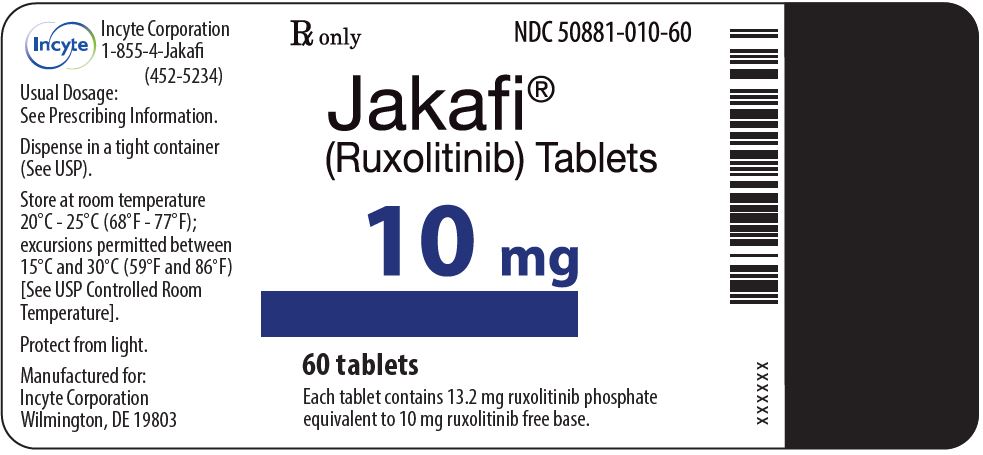
JAKAFI ruxolitinib 10 mg Tablet, 28-count
🆔 Identity & classification
Where does this data come from?
🏷️ RxNorm drug class
This medicine belongs to the Kinase Inhibitor class.
Where does this data come from?
🏭 Manufacturer & labeler
Where does this data come from?
🩺 Clinical
Ruxolitinib is used to treat myelofibrosis (a cancer of the bone marrow in which the bone marrow is replaced by scar tissue and causes decreased blood cell production) polycythemia vera (PV; a slow growing cancer of the blood in which the bone marrow makes too many red blood cells) acute graft versus host disease (aGVHD; a complication of hematopoietic stem-cell transplant [HSCT; a procedure that replaces diseased bone marrow with healthy bone marrow] that usually develops within the first months after HSCT) chronic GVHD (cGVHD; a complication of HSCT that usually develops at least 3 mon...
Read the full MedlinePlus article ↗- Ruxolitinib targets overactive enzymes called JAK1 and JAK2 that are driving your condition — whether that's abnormal bone marrow cell growth in myelofibrosis or polycythemia vera,...
- What exactly is ruxolitinib treating in my body?
- Please don't stop suddenly without talking to your doctor first. If you stop ruxolitinib abruptly, your disease symptoms can come back quickly and sometimes more severely. If a sid...
- Can I stop taking it if I feel better or if the side effects bother me?
Patient education
Supplement & herbal interactions
Some supplements/herbs that may interact with Ruxolitinib — tap one for details:
Where does this data come from?
Ask a licensed pharmacist directly — free, answered by our team.
💊 What it looks like
Where does this data come from?
🧪 Inactive Ingredients / Excipients
Inactive ingredients, also called excipients, are components of the drug product other than the active ingredient. They may include fillers, dyes, coatings, preservatives, flavors, or other formulation ingredients.
💡 Tap an ingredient (hover on desktop) to see what it is and why it’s used.
-
UNII OP1R32D61U
Microcrystalline cellulose is a purified form of cellulose, a natural fiber from plant sources. It acts as a binder and filler in tablets and capsules, helping hold ingredients together and give the medicine its shape and size.
-
UNII 66O7AQV0RT
Hydroxypropyl cellulose is a plant-derived thickener and binder made from cellulose. In medicines, it helps hold tablet ingredients together, thickens liquids, and can form a coating on pills or capsules.
-
UNII EWQ57Q8I5X
Lactose monohydrate is a natural sugar derived from milk. It serves as a filler and binder in tablets and capsules, helping create the proper size, texture, and consistency of the medicine.
-
UNII 70097M6I30
Magnesium stearate is a salt made from magnesium and stearic acid, a fatty substance. It's used in tablets and capsules as a lubricant and glidant to help ingredients flow smoothly during manufacturing and prevent sticking.
-
UNII FZ989GH94E
Povidone is a synthetic polymer made from a plastic-like material. It acts as a binder to hold tablet ingredients together and as a disintegrant to help the tablet break apart in your stomach so the medicine can be absorbed.
-
UNII ETJ7Z6XBU4
Silicon dioxide is a naturally occurring mineral used as a glidant and anti-caking agent. It helps powder ingredients flow smoothly and prevents clumping during manufacturing and storage.
-
UNII 5856J3G2A2
A starch-based powder made from potatoes and processed with sodium. It acts as a disintegrant, helping the tablet or capsule break apart quickly in the stomach so the medicine can be absorbed.
7 inactive ingredients listed in the exact product block matched to this NDC.
Where does this data come from?
ingredient classCode="IACT" elements from the exact product block matched by this NDC. Label-section narrative from DailyMed / the openFDA label index is shown separately when available.Inactive ingredient FAQ
Are inactive ingredients the same for every manufacturer?
Why might an inactive ingredient be missing?
Can inactive ingredients matter?
💲 Pricing
A drug doesn't have one price. Each row is a different public payment system, and none is what you'd pay at the counter — that depends on your insurance. The ⓘ on each row explains what it measures.
| Price system | Per each | Per package |
|---|---|---|
| Retail pharmacies payNADAC · weekly | Not in the retail survey — common for institutional, discontinued, or low-volume packs. | |
| Medicaid paysCMS SDUD · 12 mo | No recent Medicaid claims on file for this NDC — rare and low-volume NDCs are suppressed in the public data. | |
| Medicare drug plans payPart D · Q2 2026 | $293.48 | $8,217.41 / 28 tablets |
Where does this data come from?
🔁 Therapeutic equivalents
| Product | Labeler | Pack | NADAC/unit | TE | Status | Price vs. this |
|---|---|---|---|---|---|---|
| Jakafi 10 mgthis 50881-0010-01 | Incyte | 28 tablets | — | — | FDA listed | — |
Where does this data come from?
⏳ Availability & generic status
We did not find an FDA-approved generic match for this exact strength, form and route. Patent/protection dates below may affect future generic timing.
Why the date isn’t exact: Generic timing can change because patents may be challenged, settled, licensed, added, removed, or worked around with a narrower label — and FDA approval does not always mean a pharmacy can get the generic today.
🛈 What do these terms mean?
- Patent
- Legal protection listed in the Orange Book that may delay generic approval or launch. Issued by the U.S. Patent & Trademark Office.
- Substance patent
- Covers the active drug molecule itself — the hardest to design around. A generic generally can’t launch until it expires.
- Formulation (product) patent
- Covers a specific formulation or dosage form. A generic can sometimes work around it with a different formulation.
- Method-of-use patent
- A patent covering one specific approved use of the drug — not necessarily the whole molecule. A generic can sometimes launch with a “skinny label” that carves out the protected use and keeps the others.
- Skinny label
- A generic label that omits a still-patented use when the FDA allows it — letting a generic reach the market for the unprotected uses.
- Exclusivity
- FDA-granted marketing protection, separate from patents — e.g. 5-yr new chemical entity, 7-yr orphan drug, or a +6-month pediatric extension.
- Paragraph IV
- A generic applicant’s formal challenge to a listed patent. It can potentially lead to earlier generic entry, but often involves litigation or a settlement.
- RLD / RS
- Reference Listed Drug — the brand product the FDA uses as the reference for generic applications. Reference Standard — the product the FDA expects generics to compare against in bioequivalence testing.
- TE / AB rating
- FDA therapeutic-equivalence rating. An AB rating generally means the FDA considers a generic therapeutically equivalent to — and substitutable for — the brand.
- LOE (loss of exclusivity)
- The latest patent or exclusivity currently listed — the loss-of-exclusivity / latest-listed-protection date shown on this page. Paragraph-IV challenges and settlements can move the real date earlier; FDA approval and a manufacturer’s decision to market can move it later.
Built from the FDA Orange Book. The bars above are scaled to each protection’s expiry; the red LOE marker is the last one to lapse.
| Patent | Type | Use code | Expires |
|---|---|---|---|
| US 8822481 ↗ | Method of use | U-1573 | Jun 12, 2028 |
| US 8822481 ↗ | Method of use | U-1573 | Jun 12, 2028 |
| US 8822481 ↗ | Method of use | U-1573 | Jun 12, 2028 |
| US 8822481 ↗ | Method of use | U-1573 | Jun 12, 2028 |
| US 8822481 ↗ | Method of use | U-1573 | Jun 12, 2028 |
| US 8829013 ↗ | Method of use | U-1622 | Jun 12, 2028 |
| US 8829013 ↗ | Method of use | U-1201 | Jun 12, 2028 |
| US 8829013 ↗ | Method of use | U-1201 | Jun 12, 2028 |
| US 8829013 ↗ | Method of use | U-1622 | Jun 12, 2028 |
| US 8829013 ↗ | Method of use | U-1201 | Jun 12, 2028 |
| US 8829013 ↗ | Method of use | U-1622 | Jun 12, 2028 |
| US 8829013 ↗ | Method of use | U-1622 | Jun 12, 2028 |
| US 8829013 ↗ | Method of use | U-1201 | Jun 12, 2028 |
| US 8829013 ↗ | Method of use | U-1622 | Jun 12, 2028 |
| US 8829013 ↗ | Method of use | U-1201 | Jun 12, 2028 |
| US 8822481 ↗ | Method of use | U-3226 | Jun 12, 2028 |
| US 8822481 ↗ | Method of use | U-3228 | Jun 12, 2028 |
| US 8822481 ↗ | Method of use | U-3227 | Jun 12, 2028 |
| US 10016429 ↗ | Method of use | U-3226 | Jun 12, 2028 |
| US 8829013 ↗ | Method of use | U-3227 | Jun 12, 2028 |
| US 8829013 ↗ | Method of use | U-3228 | Jun 12, 2028 |
| US 9079912 ↗ | Method of use | U-3226 | Dec 12, 2026 |
| US 9079912 ↗ | Method of use | U-3228 | Dec 12, 2026 |
| US 9079912 ↗ | Method of use | U-3227 | Dec 12, 2026 |
| US 7598257 ↗ | Drug substance | U-3228 | Dec 24, 2027 |
| US 7598257 ↗ | Drug substance | U-3227 | Dec 24, 2027 |
| US 9814722 ↗ | Method of use | U-3226 | Dec 12, 2026 |
| US 9079912 ↗ | Method of use | U-3227 | Dec 12, 2026 |
| US 9079912 ↗ | Method of use | U-3226 | Dec 12, 2026 |
| US 9079912 ↗ | Method of use | U-3228 | Dec 12, 2026 |
| US 8822481 ↗ | Method of use | U-3228 | Jun 12, 2028 |
| US 8822481 ↗ | Method of use | U-3226 | Jun 12, 2028 |
| US 8822481 ↗ | Method of use | U-3227 | Jun 12, 2028 |
| US 10016429 ↗ | Method of use | U-3226 | Jun 12, 2028 |
| US 7598257 ↗ | Drug substance | U-3228 | Dec 24, 2027 |
| US 7598257 ↗ | Drug substance | U-3227 | Dec 24, 2027 |
| US 9814722 ↗ | Method of use | U-3226 | Dec 12, 2026 |
| US 8829013 ↗ | Method of use | U-3228 | Jun 12, 2028 |
| US 8829013 ↗ | Method of use | U-3227 | Jun 12, 2028 |
| US 8822481 ↗ | Method of use | U-3226 | Jun 12, 2028 |
| US 8822481 ↗ | Method of use | U-3227 | Jun 12, 2028 |
| US 8822481 ↗ | Method of use | U-3228 | Jun 12, 2028 |
| US 7598257 ↗ | Drug substance | U-3228 | Dec 24, 2027 |
| US 7598257 ↗ | Drug substance | U-3227 | Dec 24, 2027 |
| US 10016429 ↗ | Method of use | U-3226 | Jun 12, 2028 |
| US 9814722 ↗ | Method of use | U-3226 | Dec 12, 2026 |
| US 9079912 ↗ | Method of use | U-3228 | Dec 12, 2026 |
| US 9079912 ↗ | Method of use | U-3226 | Dec 12, 2026 |
| US 9079912 ↗ | Method of use | U-3227 | Dec 12, 2026 |
| US 10016429 ↗ | Method of use | U-3226 | Jun 12, 2028 |
| US 9079912 ↗ | Method of use | U-3227 | Dec 12, 2026 |
| US 9079912 ↗ | Method of use | U-3228 | Dec 12, 2026 |
| US 9079912 ↗ | Method of use | U-3226 | Dec 12, 2026 |
| US 8822481 ↗ | Method of use | U-3226 | Jun 12, 2028 |
| US 8822481 ↗ | Method of use | U-3228 | Jun 12, 2028 |
| US 8822481 ↗ | Method of use | U-3227 | Jun 12, 2028 |
| US 9814722 ↗ | Method of use | U-3226 | Dec 12, 2026 |
| US 8829013 ↗ | Method of use | U-3227 | Jun 12, 2028 |
| US 8829013 ↗ | Method of use | U-3228 | Jun 12, 2028 |
| US 7598257 ↗ | Drug substance | U-3227 | Dec 24, 2027 |
| US 7598257 ↗ | Drug substance | U-3228 | Dec 24, 2027 |
| US 8822481 ↗ | Method of use | U-3228 | Jun 12, 2028 |
| US 8822481 ↗ | Method of use | U-3227 | Jun 12, 2028 |
| US 8822481 ↗ | Method of use | U-3226 | Jun 12, 2028 |
| US 10016429 ↗ | Method of use | U-3226 | Jun 12, 2028 |
| US 9079912 ↗ | Method of use | U-3228 | Dec 12, 2026 |
| US 9079912 ↗ | Method of use | U-3226 | Dec 12, 2026 |
| US 9079912 ↗ | Method of use | U-3227 | Dec 12, 2026 |
| US 7598257 ↗ | Drug substance | U-3227 | Dec 24, 2027 |
| US 7598257 ↗ | Drug substance | U-3228 | Dec 24, 2027 |
| US 8829013 ↗ | Method of use | U-3228 | Jun 12, 2028 |
| US 8829013 ↗ | Method of use | U-3227 | Jun 12, 2028 |
| US 9814722 ↗ | Method of use | U-3226 | Dec 12, 2026 |
| US 8829013 ↗ | Method of use | U-3228 | Jun 12, 2028 |
| US 8829013 ↗ | Method of use | U-3227 | Jun 12, 2028 |
| US 9079912 ↗ | Method of use | U-3230 | Dec 12, 2026 |
| US 9814722 ↗ | Method of use | U-3230 | Dec 12, 2026 |
| US 10016429 ↗ | Method of use | U-3230 | Jun 12, 2028 |
| US 8822481 ↗ | Method of use | U-3230 | Jun 12, 2028 |
| US 10016429 ↗ | Method of use | U-3230 | Jun 12, 2028 |
| US 8822481 ↗ | Method of use | U-3230 | Jun 12, 2028 |
| US 9814722 ↗ | Method of use | U-3230 | Dec 12, 2026 |
| US 9079912 ↗ | Method of use | U-3230 | Dec 12, 2026 |
| US 8822481 ↗ | Method of use | U-3230 | Jun 12, 2028 |
| US 9079912 ↗ | Method of use | U-3230 | Dec 12, 2026 |
| US 10016429 ↗ | Method of use | U-3230 | Jun 12, 2028 |
| US 9814722 ↗ | Method of use | U-3230 | Dec 12, 2026 |
| US 8822481 ↗ | Method of use | U-3230 | Jun 12, 2028 |
| US 9079912 ↗ | Method of use | U-3230 | Dec 12, 2026 |
| US 10016429 ↗ | Method of use | U-3230 | Jun 12, 2028 |
| US 9814722 ↗ | Method of use | U-3230 | Dec 12, 2026 |
| US 10016429 ↗ | Method of use | U-3230 | Jun 12, 2028 |
| US 8822481 ↗ | Method of use | U-3230 | Jun 12, 2028 |
| US 9814722 ↗ | Method of use | U-3230 | Dec 12, 2026 |
| US 9079912 ↗ | Method of use | U-3230 | Dec 12, 2026 |
| US 8722693 ↗ | Drug substance | — | Jun 12, 2028 |
| US 8722693 ↗ | Drug substance | — | Jun 12, 2028 |
| US 8415362 ↗ | Drug substance | — | Dec 24, 2027 |
| US 8722693 ↗ | Drug substance | — | Jun 12, 2028 |
| US 8415362 ↗ | Drug substance | — | Dec 24, 2027 |
| US 8415362 ↗ | Drug substance | — | Dec 24, 2027 |
| US 8722693 ↗ | Drug substance | — | Jun 12, 2028 |
| US 8415362 ↗ | Drug substance | — | Dec 24, 2027 |
| US 8722693 ↗ | Drug substance | — | Jun 12, 2028 |
| US 8415362 ↗ | Drug substance | — | Dec 24, 2027 |
| US 7598257*PED ↗ | Drug product | — | Jun 24, 2028 |
| US 8415362*PED ↗ | Drug product | — | Jun 24, 2028 |
| US 7598257*PED ↗ | Drug product | — | Jun 24, 2028 |
| US 8415362*PED ↗ | Drug product | — | Jun 24, 2028 |
| US 7598257*PED ↗ | Drug product | — | Jun 24, 2028 |
| US 8415362*PED ↗ | Drug product | — | Jun 24, 2028 |
| US 7598257*PED ↗ | Drug product | — | Jun 24, 2028 |
| US 8415362*PED ↗ | Drug product | — | Jun 24, 2028 |
| US 7598257*PED ↗ | Drug product | — | Jun 24, 2028 |
| US 8415362*PED ↗ | Drug product | — | Jun 24, 2028 |
| US 8722693*PED ↗ | Drug product | — | Dec 12, 2028 |
| US 8722693*PED ↗ | Drug product | — | Dec 12, 2028 |
| US 8722693*PED ↗ | Drug product | — | Dec 12, 2028 |
| US 8722693*PED ↗ | Drug product | — | Dec 12, 2028 |
| US 8722693*PED ↗ | Drug product | — | Dec 12, 2028 |
| US 8822481*PED ↗ | Drug product | — | Dec 12, 2028 |
| US 8822481*PED ↗ | Drug product | — | Dec 12, 2028 |
| US 8822481*PED ↗ | Drug product | — | Dec 12, 2028 |
| US 8822481*PED ↗ | Drug product | — | Dec 12, 2028 |
| US 8822481*PED ↗ | Drug product | — | Dec 12, 2028 |
| US 8829013*PED ↗ | Drug product | — | Dec 12, 2028 |
| US 8829013*PED ↗ | Drug product | — | Dec 12, 2028 |
| US 8829013*PED ↗ | Drug product | — | Dec 12, 2028 |
| US 8829013*PED ↗ | Drug product | — | Dec 12, 2028 |
| US 8829013*PED ↗ | Drug product | — | Dec 12, 2028 |
| US 9079912*PED ↗ | Drug product | — | Jun 12, 2027 |
| US 9079912*PED ↗ | Drug product | — | Jun 12, 2027 |
| US 9079912*PED ↗ | Drug product | — | Jun 12, 2027 |
| US 9079912*PED ↗ | Drug product | — | Jun 12, 2027 |
| US 9079912*PED ↗ | Drug product | — | Jun 12, 2027 |
| US 9814722*PED ↗ | Drug product | — | Jun 12, 2027 |
| US 10016429*PED ↗ | Drug product | — | Dec 12, 2028 |
| US 10016429*PED ↗ | Drug product | — | Dec 12, 2028 |
| US 9814722*PED ↗ | Drug product | — | Jun 12, 2027 |
| US 9814722*PED ↗ | Drug product | — | Jun 12, 2027 |
| US 10016429*PED ↗ | Drug product | — | Dec 12, 2028 |
| US 10016429*PED ↗ | Drug product | — | Dec 12, 2028 |
| US 9814722*PED ↗ | Drug product | — | Jun 12, 2027 |
| US 10016429*PED ↗ | Drug product | — | Dec 12, 2028 |
| US 9814722*PED ↗ | Drug product | — | Jun 12, 2027 |
| Code | What it grants | Expires |
|---|---|---|
| M-285 | New indication / labeling change (3-year) | Dec 19, 2025 |
| ODE-238 | Orphan Drug Exclusivity (7-year) | May 24, 2026 |
| ODE-373 | Orphan Drug Exclusivity (7-year) | Sep 22, 2028 |
| M-285 | New indication / labeling change (3-year) | Dec 19, 2025 |
| ODE-238 | Orphan Drug Exclusivity (7-year) | May 24, 2026 |
| ODE-373 | Orphan Drug Exclusivity (7-year) | Sep 22, 2028 |
| M-285 | New indication / labeling change (3-year) | Dec 19, 2025 |
| ODE-238 | Orphan Drug Exclusivity (7-year) | May 24, 2026 |
| ODE-373 | Orphan Drug Exclusivity (7-year) | Sep 22, 2028 |
| M-285 | New indication / labeling change (3-year) | Dec 19, 2025 |
| ODE-238 | Orphan Drug Exclusivity (7-year) | May 24, 2026 |
| ODE-373 | Orphan Drug Exclusivity (7-year) | Sep 22, 2028 |
| M-285 | New indication / labeling change (3-year) | Dec 19, 2025 |
| ODE-238 | Orphan Drug Exclusivity (7-year) | May 24, 2026 |
| ODE-373 | Orphan Drug Exclusivity (7-year) | Sep 22, 2028 |
| PED | Pediatric Exclusivity (+6 months) | Nov 24, 2026 |
| PED | Pediatric Exclusivity (+6 months) | Nov 24, 2026 |
| PED | Pediatric Exclusivity (+6 months) | Nov 24, 2026 |
| PED | Pediatric Exclusivity (+6 months) | Nov 24, 2026 |
| PED | Pediatric Exclusivity (+6 months) | Nov 24, 2026 |
| PED | Pediatric Exclusivity (+6 months) | Jun 19, 2026 |
| PED | Pediatric Exclusivity (+6 months) | Jun 19, 2026 |
| PED | Pediatric Exclusivity (+6 months) | Jun 19, 2026 |
| PED | Pediatric Exclusivity (+6 months) | Jun 19, 2026 |
| PED | Pediatric Exclusivity (+6 months) | Jun 19, 2026 |
| PED | Pediatric Exclusivity (+6 months) | Mar 22, 2029 |
| PED | Pediatric Exclusivity (+6 months) | Mar 22, 2029 |
| PED | Pediatric Exclusivity (+6 months) | Mar 22, 2029 |
| PED | Pediatric Exclusivity (+6 months) | Mar 22, 2029 |
| PED | Pediatric Exclusivity (+6 months) | Mar 22, 2029 |
Is there a generic version of JAKAFI 10 MG TABLET?
The FDA approved a generic — why can’t I get it at my pharmacy yet?
Why do different websites show different generic release dates?
What does “FDA listed” mean?
What does a patent or protection date mean here?
What does “current Orange Book estimate” mean?
Can a generic come out before the last patent expires?
Can a generic come out after the listed dates?
What is the difference between patents and exclusivity?
Why are there multiple patent dates?
Where does this data come from?
💊 Medicaid utilization by pack size
📊 Medicare Part D spend CMS · PART D · 2026 (Q1)
🔬 Reported adverse events (FAERS)
Top reported reactions
Age at onset
Reporter sex
Serious outcomes
Where does this data come from?
📦 Packaging — all sizes for this product
| Package NDC | Description | Marketing start | Status |
|---|---|---|---|
| 50881-0010-01 You're viewing this | 28 TABLET in 1 BOTTLE, PLASTIC (50881-010-01) | 2011-11-16 | Active |
| 50881-0010-60 | 60 TABLET in 1 BOTTLE, PLASTIC (50881-010-60) | 2011-11-16 | Active |
You're viewing the smallest of 2 pack sizes for this product.
This pack shows little to no recent Medicaid volume — the 60 tablets pack carries most fills. See all packs ↓
Pack size FAQ
What quantity is in NDC 50881-0010-01?
What is the difference between NDC 50881-0010-01 and NDC 50881-0010-60?
What NDC number is used to bill for this package of JAKAFI ruxolitinib 10 mg Tablet?
🧭 About this NDC listing & data coverage
What data is (and isn’t) available for this NDC — tap to expand
| NDC identity (package / product / labeler codes) | ✓ Available |
| Labeler | ✓ Available |
| Product & package description | ✓ Available |
| Marketing category & status | ✓ Available |
| Active ingredient / dosage form / route | ✓ Available |
| FDA label (SPL via DailyMed) | ✓ Available |
| Package photos | ✓ Available |
| Inactive ingredients (structured) | ✓ Available |
| NADAC pharmacy acquisition price (CMS) | — Not published for this NDC CMS publishes NADAC only for NDCs reported in its retail-pharmacy survey. |
| Orange Book / therapeutic-equivalence data | ✓ Available |
| HCPCS J-code billing crosswalk | — Not published for this NDC Most self-administered / retail products have no J-code — that is normal. |
| Medicaid utilization (CMS SDUD) | — Not published for this NDC CMS reports utilization only for NDCs with Medicaid claims above its privacy threshold. |
Questions about this listing
Why is there no price listed?
Is the NDC printed on the package the same as the 11-digit billing NDC?
What do the three segments of this NDC mean?
Is this package still being marketed?
Does this product come in other package sizes?
Who lists this product with the FDA?
Do I need a prescription for this product?
Where does this data come from?
📄 Full prescribing information FDA SPL
🎯 Indications and Usage ▾
1 INDICATIONS AND USAGE JAKAFI/JAKAFI XR is a kinase inhibitor indicated for treatment of: intermediate or high-risk myelofibrosis, including primary myelofibrosis, post-polycythemia vera myelofibrosis, and post-essential thrombocythemia myelofibrosis in adults. ( 1.1 ) polycythemia vera in adults who have had an inadequate response to or are intolerant of hydroxyurea. ( 1.2 ) steroid-refractory acute graft-versus-host disease in adult and pediatric patients 12 years and older.
( 1.3 ) chronic graft-versus-host disease after failure of one or two lines of systemic therapy in adult and pediatric patients 12 years and older. ( 1.4 )
1.1Myelofibrosis JAKAFI/JAKAFI XR is indicated for treatment of intermediate or high-risk myelofibrosis (MF), including primary MF, post-polycythemia vera MF, and post-essential thrombocythemia MF in adults.
1.2Polycythemia Vera JAKAFI/JAKAFI XR is indicated for treatment of polycythemia vera (PV) in adults who have had an inadequate response to or are intolerant of hydroxyurea.
1.3Acute Graft-Versus-Host Disease JAKAFI/JAKAFI XR is indicated for treatment of steroid-refractory acute graft-versus-host disease (aGVHD) in adult and pediatric patients 12 years and older.
1.4Chronic Graft-Versus-Host Disease JAKAFI/JAKAFI XR is indicated for treatment of chronic graft-versus-host disease (cGVHD) after failure of one or two lines of systemic therapy in adult and pediatric patients 12 years and older.
⏱️ Dosage and Administration ▾
2 DOSAGE AND ADMINISTRATION Doses should be individualized based on safety and efficacy. Starting doses per indication are noted below. Myelofibrosis ( 2.2 ) The starting dose of JAKAFI/JAKAFI XR is based on patient’s baseline platelet count: • Greater than 200 × 10 9 /L: JAKAFI 20 mg given orally twice daily or JAKAFI XR 44 mg given orally once daily. • 100 x 10 9 /L to 200 x 10 9 /L: JAKAFI 15 mg given orally twice daily or JAKAFI XR 33 mg given orally once daily. • 50 x 10 9 /L to less than 100 x 10 9 /L: JAKAFI 5 mg given orally twice daily or JAKAFI XR 11 mg given orally once daily.
Polycythemia Vera ( 2.3 ) The starting dose of JAKAFI is 10 mg given orally twice daily or JAKAFI XR 22 mg given orally once daily. Acute Graft-Versus-Host Disease ( 2.4 ) The starting dose of JAKAFI is 5 mg given orally twice daily or JAKAFI XR 11 mg given orally once daily. Chronic Graft-Versus-Host Disease ( 2.5 ) The starting dose of JAKAFI is 10 mg given orally twice daily or JAKAFI XR 22 mg given orally once daily.
2.1Monitoring to Assess Safety Prior to JAKAFI/JAKAFI XR treatment: Perform a complete blood count (CBC) [see Warnings and Precautions ( 5.1 )] . Inquire about past infections, including tuberculosis, herpes simplex, herpes zoster, and hepatitis B [see Warnings and Precautions ( 5.2 )] . During treatment with JAKAFI/JAKAFI XR : Perform a CBC every 2 to 4 weeks until doses are stabilized, and then as clinically indicated [see Warnings and Precautions ( 5.1 )] .
Assess lipid parameters approximately 8 to 12 weeks following initiation of JAKAFI/JAKAFI XR therapy [see Warnings and Precautions ( 5.5 )] .
2.2Recommended Dosage for Myelofibrosis The recommended starting dose of JAKAFI/JAKAFI XR is based on platelet count (Table 1). Doses may be titrated based on safety and efficacy. Table 1: JAKAFI/JAKAFI XR Starting Doses for Myelofibrosis Platelet Count JAKAFI Starting Dose JAKAFI XR Starting Dose Greater than 200 x 10 9 /L 20 mg orally twice daily 44 mg orally once daily 100 x 10 9 /L to 200 x 10 9 /L 15 mg orally twice daily 33 mg orally once daily 50 x 10 9 /L to less than 100 x 10 9 /L 5 mg orally twice daily 11 mg orally once daily Dose Modification Guidelines for Hematologic Toxicity for Patients With Myelofibrosis Starting Treatment With a Platelet Count of 100 × 10 9 /L or Greater Dose Reductions JAKAFI dose reductions should be considered if the platelet counts decrease as outlined in Table 2 with the goal of avoiding dose interruptions for thrombocytopenia.
Table 2: Myelofibrosis: JAKAFI Dosing Recommendations for Thrombocytopenia for Patients Starting Treatment With a Platelet Count of 100 × 10 9 /L or Greater Dose at Time of Platelet Decline Platelet Count 25 mg Twice Daily 20 mg Twice Daily 15 mg Twice Daily 10 mg Twice Daily 5 mg Twice Daily New Dose New Dose New Dose New Dose New Dose 100 to less than 125 x 10 9 /L 20 mg twice daily 15 mg twice daily No change No change No change 75 to less than 100 x 10 9 /L 10 mg twice daily 10 mg twice daily 10 mg twice daily No change No change 50 to less than 75 x 10 9 /L 5 mg twice daily 5 mg twice daily 5 mg twice daily 5 mg twice daily No change Less than 50 x 10 9 /L Hold Hold Hold Hold Hold JAKAFI XR dose reductions should be considered if the platelet counts decrease as outlined in Table 3, with the goal of avoiding dose interruptions for thrombocytopenia.
Table 3: Myelofibrosis: JAKAFI XR Dosing Recommendations for Thrombocytopenia for Patients Starting Treatment With a Platelet Count of 100 × 10 9 /L or Greater Dose at Time of Platelet Decline Platelet Count 55 mg Once Daily 44 mg Once Daily 33 mg Once Daily 22 mg Once Daily 11 mg Once Daily New Dose New Dose New Dose New Dose New Dose 100 to less than 125 x 10 9 /L 44 mg once daily 33 mg once daily No change No change No change 75 to less than 100 x 10 9 /L 22 mg once daily 22 mg once daily 22 mg once daily No change No change 50 to less than 75 x 10 9 /L 11 mg once daily 11 mg once daily 11 mg once daily 11 mg once d…
💊 Dosage Forms and Strengths ▾
3 DOSAGE FORMS AND STRENGTHS JAKAFI : 5 mg tablets - round and white with "INCY" on one side and "5" on the other. 10 mg tablets - round and white with "INCY" on one side and "10" on the other. 15 mg tablets - oval and white with "INCY" on one side and "15" on the other.
20 mg tablets - capsule-shaped and white with "INCY" on one side and "20" on the other. 25 mg tablets - oval and white with "INCY" on one side and "25" on the other. JAKAFI XR : 11 mg extended-release tablets - round and light pink with “I” on one side and “11” on the other.
22 mg extended-release tablets - round and light yellow with “I” on one side and “22” on the other. 33 mg extended-release tablets - round and pink with “I” on one side and “33” on the other. 44 mg extended-release tablets - round and grey with “I” on one side and “44” on the other.
55 mg extended-release tablets - round and yellow with “I” on one side and “55” on the other. JAKAFI tablets: 5 mg, 10 mg, 15 mg, 20 mg and 25 mg. ( 3 ) JAKAFI XR extended-release tablets: 11 mg, 22 mg, 33 mg, 44 mg and 55 mg.
( 3 )
⛔ Contraindications ▾
4 CONTRAINDICATIONS None. None. ( 4 )
⚠️ Warnings and Cautions ▾
5 WARNINGS AND PRECAUTIONS Thrombocytopenia, Anemia, and Neutropenia: Manage by dose reduction or interruption, or transfusion. ( 5.1 ) Risk of Infection: Assess patients for signs and symptoms of infection and initiate appropriate treatment promptly. Serious infections should have resolved before starting therapy with JAKAFI/JAKAFI XR.
( 5.2 ) Symptom Exacerbation Following Interruption or Discontinuation: Manage with supportive care and consider resuming treatment with JAKAFI/JAKAFI XR. ( 5.3 ) Risk of Non-Melanoma Skin Cancer: Perform periodic skin examinations. ( 5.4 ) Lipid Elevations: Assess lipid levels 8 to 12 weeks from start of therapy and treat as needed.
( 5.5 ) Major Adverse Cardiovascular Events (MACE): Monitor for development of MACE. ( 5.6 ) Thrombosis: Evaluate and treat symptoms of thrombosis promptly. ( 5.7 ) Secondary Malignancies: Monitor for development of secondary malignancies, particularly in patients who are current or past smokers.
( 5.8 )
5.1Thrombocytopenia, Anemia, and Neutropenia Treatment with JAKAFI/JAKAFI XR can cause thrombocytopenia, anemia, and neutropenia [ see Adverse Reactions ( 6.1 )] . Manage thrombocytopenia by reducing the dose or temporarily interrupting JAKAFI/JAKAFI XR. Platelet transfusions may be necessary [ see Dosage and Administration ( 2 ) ] .
Patients developing anemia may require blood transfusions and/or dose modifications of JAKAFI/JAKAFI XR. Severe neutropenia (ANC less than 0.5 × 10 9 /L) was generally reversible by withholding JAKAFI/JAKAFI XR until recovery. Perform a pre-treatment CBC and monitor CBCs every 2 to 4 weeks until doses are stabilized, and then as clinically indicated [ see Dosage and Administration ( 2 )] .
5.2Risk of Infection Serious bacterial, mycobacterial, fungal, and viral infections have occurred [ see Adverse Reactions ( 6.1 )] . Delay starting therapy with JAKAFI/JAKAFI XR until active serious infections have resolved. Observe patients receiving JAKAFI/JAKAFI XR for signs and symptoms of infection and manage promptly.
Use active surveillance and prophylactic antibiotics according to clinical guidelines. Tuberculosis Tuberculosis infection has been reported in patients receiving JAKAFI. Observe patients receiving JAKAFI/JAKAFI XR for signs and symptoms of active tuberculosis and manage promptly.
Prior to initiating JAKAFI/JAKAFI XR, patients should be evaluated for tuberculosis risk factors, and those at higher risk should be tested for latent infection. Risk factors include, but are not limited to, prior residence in or travel to countries with a high prevalence of tuberculosis, close contact with a person with active tuberculosis, and a history of active or latent tuberculosis where an adequate course of treatment cannot be confirmed. For patients with evidence of active or latent tuberculosis, consult a physician with expertise in the treatment of tuberculosis before starting JAKAFI/JAKAFI XR.
The decision to continue JAKAFI/JAKAFI XR during treatment of active tuberculosis should be based on the overall risk-benefit determination. Progressive Multifocal Leukoencephalopathy Progressive multifocal leukoencephalopathy (PML) has occurred with JAKAFI treatment. If PML is suspected, stop JAKAFI/JAKAFI XR and evaluate.
Herpes Zoster and Herpes Simplex Herpes zoster infection has been reported in patients receiving JAKAFI [see Adverse Reactions ( 6.1 )] . Advise patients about early signs and symptoms of herpes zoster and to seek treatment as early as possible if suspected. Herpes simplex virus reactivation and/or dissemination has been reported in patients receiving JAKAFI [see Adverse Reactions ( 6.2 )] .
Monitor patients for the development of herpes simplex infections. If a patient develops evidence of dissemination of herpes simplex, consider interrupting treatment with JAKAFI/JAKAFI XR; patients should be promptly treated and monitored according to clinical guidelines. Hepatitis B Hepatitis B viral load (HBV-DNA titer) increases, with or wit…
🤒 Adverse Reactions ▾
6 ADVERSE REACTIONS The following clinically significant adverse reactions are discussed in greater detail in other sections of the labeling: Thrombocytopenia, Anemia and Neutropenia [see Warnings and Precautions ( 5.1 )] Risk of Infection [see Warnings and Precautions ( 5.2 )] Symptom Exacerbation Following Interruption or Discontinuation of Treatment [see Warnings and Precautions ( 5.3 )] Non-Melanoma Skin Cancer [see Warnings and Precautions ( 5.4 )] Lipid Elevations [ see Warnings and Precautions ( 5.5 )] Major Adverse Cardiovascular Events (MACE) [ see Warnings and Precautions ( 5.6 )] Thrombosis [ see Warnings and Precautions ( 5.7 )] Secondary Malignancies [ see Warnings and Precautions ( 5.8 )] In myelofibrosis and polycythemia vera, the most common hematologic adverse reactions (incidence > 20%) are thrombocytopenia and anemia.
The most common nonhematologic adverse reactions (incidence ≥ 15%) are bruising, dizziness, headache, and diarrhea. ( 6.1 ) In acute graft-versus-host disease, the most common hematologic adverse reactions (incidence > 50%) are anemia, thrombocytopenia, and neutropenia. The most common nonhematologic adverse reactions (incidence > 50%) are infections (pathogen not specified) and edema.
( 6.1 ) In chronic graft-versus-host disease, the most common hematologic adverse reactions (incidence > 35%) are anemia and thrombocytopenia. The most common nonhematologic adverse reactions (incidence ≥ 20%) are infections (pathogen not specified) and viral infections. ( 6.1 ) To report SUSPECTED ADVERSE REACTIONS, contact Incyte Corporation at 1-855-463-3463 or FDA at 1-800-FDA-1088 or www.fda.gov/medwatch
6.1Clinical Trials Experience Because clinical trials are conducted under widely varying conditions, adverse reaction rates observed in the clinical trials of a drug cannot be directly compared to rates in the clinical trials of another drug and may not reflect the rates observed in practice. The safety of JAKAFI XR has been established from adequate and well-controlled studies of JAKAFI in adult patients with myelofibrosis, polycythemia vera, and adult and pediatric patients with acute and chronic graft-versus-host-disease [see Clinical Studies ( 14 )] .
Below is a display of the adverse reactions of JAKAFI in these adequate and well-controlled studies. Myelofibrosis The safety of JAKAFI was assessed in 617 patients in 6 clinical studies with a median duration of follow-up of 10.9 months, including 301 patients with MF in 2 Phase 3 studies. In these 2 Phase 3 studies, patients had a median duration of exposure to JAKAFI of 9.5 months (range: 0.5 to 17 months), with 89% of patients treated for more than 6 months and 25% treated for more than 12 months.
One hundred and eleven (111) patients started treatment at 15 mg twice daily and 190 patients started at 20 mg twice daily. In patients starting treatment with 15 mg twice daily (pretreatment platelet counts of 100 to 200 × 10 9 /L) and 20 mg twice daily (pretreatment platelet counts greater than 200 × 10 9 /L), 65% and 25% of patients, respectively, required a dose reduction below the starting dose within the first 8 weeks of therapy. In a double-blind, randomized, placebo-controlled study of JAKAFI, among the 155 patients treated with JAKAFI, the most frequent adverse reactions were thrombocytopenia and anemia [see Table 14] .
Thrombocytopenia, anemia, and neutropenia are dose-related effects. The 3 most frequent nonhematologic adverse reactions were bruising, dizziness, and headache [see Table 13 ] . Discontinuation for adverse events, regardless of causality, was observed in 11% of patients treated with JAKAFI and 11% of patients treated with placebo.
Table 15 presents the most common nonhematologic adverse reactions occurring in patients who received JAKAFI in the double-blind, placebo-controlled study during randomized treatment. Table 15: Myelofibrosis: Nonhematologic Adverse Reactions Occurring in Patients on JAKAFI in the Double-Blind, Placebo-Contro…
🔄 Drug Interactions ▾
7 DRUG INTERACTIONS Fluconazole: Avoid concomitant use with fluconazole doses greater than 200 mg. Reduce JAKAFI/JAKAFI XR dosage with fluconazole doses less than or equal to 200 mg. ( 2.6 , 7 ) Strong CYP3A4 Inhibitors: Reduce, interrupt, or discontinue JAKAFI/JAKAFI XR doses as recommended except in patients with acute or chronic graft-versus-host-disease. ( 2.6 , 7 )
7.1Effect of Other Drugs on JAKAFI/JAKAFI XR Fluconazole Concomitant use of JAKAFI/JAKAFI XR with fluconazole increases ruxolitinib exposure [ see Clinical Pharmacology ( 12.3 )] , which may increase the risk of exposure-related adverse reactions. Avoid concomitant use of JAKAFI/JAKAFI XR with fluconazole doses of greater than 200 mg daily. Reduce the JAKAFI/JAKAFI XR dosage when used concomitantly with fluconazole doses of less than or equal to 200 mg [ see Dosage and Administration ( 2.6 )] .
Strong CYP3A4 Inhibitors Concomitant use of JAKAFI/JAKAFI XR with strong CYP3A4 inhibitors increases ruxolitinib exposure [ see Clinical Pharmacology ( 12.3 )] , which may increase the risk of exposure-related adverse reactions. Reduce the JAKAFI/JAKAFI XR dosage when used concomitantly with strong CYP3A4 inhibitors except in patients with aGVHD or cGVHD [ see Dosage and Administration ( 2.6 )] . Strong CYP3A4 Inducers Concomitant use of JAKAFI/JAKAFI XR with strong CYP3A4 inducers may decrease ruxolitinib exposure [ see Clinical Pharmacology ( 12.3 )] , which may reduce efficacy of JAKAFI/JAKAFI XR.
Monitor patients frequently and adjust the JAKAFI/JAKAFI XR dose based on safety and efficacy [ see Clinical Pharmacology ( 12.3 )] .
👥 Use in Specific Populations ▾
8 USE IN SPECIFIC POPULATIONS Renal Impairment: Reduce JAKAFI/JAKAFI XR starting dose or avoid treatment as recommended. ( 2.7 , 8.6 ) Hepatic Impairment: Reduce JAKAFI/JAKAFI XR starting dose or avoid treatment as recommended. ( 2.7 , 8.7 ) Lactation: Advise not to breastfeed. ( 8.2 )
8.1Pregnancy Risk Summary When pregnant rats and rabbits were administered ruxolitinib during the period of organogenesis adverse developmental outcomes occurred at doses associated with maternal toxicity (see Data) . There are no studies with the use of JAKAFI/JAKAFI XR in pregnant women to inform drug-associated risks. The background risk of major birth defects and miscarriage for the indicated populations is unknown.
Adverse outcomes in pregnancy occur regardless of the health of the mother or the use of medications. The background risk in the U.S. general population of major birth defects is 2% to 4% and miscarriage is 15% to 20% of clinically recognized pregnancies. Data Animal Data Ruxolitinib was administered orally to pregnant rats or rabbits during the period of organogenesis, at doses of 15, 30, or 60 mg/kg/day in rats and 10, 30, or 60 mg/kg/day in rabbits.
There were no treatment-related malformations. Adverse developmental outcomes, such as decreases of approximately 9% in fetal weights were noted in rats at the highest and maternally toxic dose of 60 mg/kg/day. This dose results in an exposure (AUC) that is approximately 2 times the clinical exposure at the maximum recommended dose of 25 mg twice daily.
In rabbits, lower fetal weights of approximately 8% and increased late resorptions were noted at the highest and maternally toxic dose of 60 mg/kg/day. This dose is approximately 7% of the clinical exposure at the maximum recommended dose. In a pre- and post-natal development study in rats, pregnant animals were dosed with ruxolitinib from implantation through lactation at doses up to 30 mg/kg/day.
There were no drug-related adverse findings in pups for fertility indices or for maternal or embryofetal survival, growth, and development parameters at the highest dose evaluated (34% the clinical exposure at the maximum recommended dose of 25 mg twice daily).
8.2Lactation Risk Summary No data are available regarding the presence of ruxolitinib in human milk, the effects on the breast-fed child, or the effects on milk production. Ruxolitinib and/or its metabolites were present in the milk of lactating rats (see Data) . Because many drugs are present in human milk and because of the potential for thrombocytopenia and anemia shown for JAKAFI in human studies, discontinue breastfeeding during treatment with JAKAFI/JAKAFI XR and for 2 weeks after the final dose.
Data Animal Data Lactating rats were administered a single dose of [ 14 C]-labeled ruxolitinib (30 mg/kg) on postnatal Day 10, after which plasma and milk samples were collected for up to 24 hours. The AUC for total radioactivity in milk was approximately 13-fold the maternal plasma AUC. Additional analysis showed the presence of ruxolitinib and several of its metabolites in milk, all at levels higher than those in maternal plasma.
8.4Pediatric Use Myelofibrosis The safety and effectiveness of JAKAFI/JAKAFI XR for treatment of MF in pediatric patients have not been established. Polycythemia Vera The safety and effectiveness of JAKAFI/JAKAFI XR for treatment of PV in pediatric patients have not been established. Acute Graft-Versus-Host Disease The safety and effectiveness of JAKAFI for treatment of steroid-refractory aGVHD has been established for treatment of pediatric patients 12 years and older.
Use of JAKAFI in pediatric patients with steroid-refractory aGVHD is supported by evidence from adequate and well-controlled trials of JAKAFI in adults [ see Clinical Studies ( 14.3 )] and additional pharmacokinetic and safety data in pediatric patients. The safety and effectiveness of JAKAFI/JAKAFI XR for treatment of steroid-refractory aGVHD has not been established in pediatric patien…
🤰 Pregnancy ▾
8.1Pregnancy Risk Summary When pregnant rats and rabbits were administered ruxolitinib during the period of organogenesis adverse developmental outcomes occurred at doses associated with maternal toxicity (see Data) . There are no studies with the use of JAKAFI/JAKAFI XR in pregnant women to inform drug-associated risks. The background risk of major birth defects and miscarriage for the indicated populations is unknown.
Adverse outcomes in pregnancy occur regardless of the health of the mother or the use of medications. The background risk in the U.S. general population of major birth defects is 2% to 4% and miscarriage is 15% to 20% of clinically recognized pregnancies. Data Animal Data Ruxolitinib was administered orally to pregnant rats or rabbits during the period of organogenesis, at doses of 15, 30, or 60 mg/kg/day in rats and 10, 30, or 60 mg/kg/day in rabbits.
There were no treatment-related malformations. Adverse developmental outcomes, such as decreases of approximately 9% in fetal weights were noted in rats at the highest and maternally toxic dose of 60 mg/kg/day. This dose results in an exposure (AUC) that is approximately 2 times the clinical exposure at the maximum recommended dose of 25 mg twice daily.
In rabbits, lower fetal weights of approximately 8% and increased late resorptions were noted at the highest and maternally toxic dose of 60 mg/kg/day. This dose is approximately 7% of the clinical exposure at the maximum recommended dose. In a pre- and post-natal development study in rats, pregnant animals were dosed with ruxolitinib from implantation through lactation at doses up to 30 mg/kg/day.
There were no drug-related adverse findings in pups for fertility indices or for maternal or embryofetal survival, growth, and development parameters at the highest dose evaluated (34% the clinical exposure at the maximum recommended dose of 25 mg twice daily).
🧒 Pediatric Use ▾
8.4Pediatric Use Myelofibrosis The safety and effectiveness of JAKAFI/JAKAFI XR for treatment of MF in pediatric patients have not been established. Polycythemia Vera The safety and effectiveness of JAKAFI/JAKAFI XR for treatment of PV in pediatric patients have not been established. Acute Graft-Versus-Host Disease The safety and effectiveness of JAKAFI for treatment of steroid-refractory aGVHD has been established for treatment of pediatric patients 12 years and older.
Use of JAKAFI in pediatric patients with steroid-refractory aGVHD is supported by evidence from adequate and well-controlled trials of JAKAFI in adults [ see Clinical Studies ( 14.3 )] and additional pharmacokinetic and safety data in pediatric patients. The safety and effectiveness of JAKAFI/JAKAFI XR for treatment of steroid-refractory aGVHD has not been established in pediatric patients younger than 12 years old. Chronic Graft-Versus-Host Disease The safety and effectiveness of JAKAFI for treatment of cGVHD after failure of one or two lines of systemic therapy has been established for treatment of pediatric patients 12 years and older.
Use of JAKAFI in pediatric patients with cGVHD after failure of one or two lines of systemic therapy is supported by evidence from adequate and well-controlled trials of JAKAFI in adults and adolescents [ see Clinical Studies ( 14.4 )] and additional pharmacokinetic and safety data in pediatric patients. The safety and effectiveness of JAKAFI/JAKAFI XR for treatment of cGVHD has not been established in pediatric patients younger than 12 years old. Other Myeloproliferative Neoplasms, Leukemias, and Solid Tumors The safety and effectiveness of ruxolitinib were assessed but not established in a single-arm trial (NCT01164163) in patients with relapsed or refractory solid tumors, leukemias, or myeloproliferative neoplasms.
The patients included 18 children (age 2 to < 12 years) and 14 adolescents (age 12 to < 17 years). Overall, 19% of patients received more than 1 cycle. No new safety signals were observed in pediatric patients in this trial.
The safety and effectiveness of ruxolitinib in combination with chemotherapy for treatment of high-risk, de novo CRLF2 rearranged or JAK pathway–mutant Ph-like acute lymphoblastic leukemia (ALL) were assessed but not established in a single-arm trial (NCT02723994). The patients included 2 infants (age < 2 years), 42 children (age 2 to < 12 years) and 62 adolescents (age 12 to < 17 years). No new safety signals were observed in pediatric patients in this trial.
Juvenile Animal Toxicity Data Administration of ruxolitinib to juvenile rats resulted in effects on growth and bone measures. When administered starting at postnatal Day 7 (the equivalent of a human newborn) at doses of 1.5 to 75 mg/kg/day, evidence of fractures occurred at doses ≥ 30 mg/kg/day, and effects on body weight and other bone measures (eg, bone mineral content, peripheral quantitative computed tomography, and x-ray analysis) occurred at doses ≥ 5 mg/kg/day. When administered starting at postnatal Day 21 (the equivalent of a human 2-3 years of age) at doses of 5 to 60 mg/kg/day, effects on body weight and bone occurred at doses ≥ 15 mg/kg/day, which were considered adverse at 60 mg/kg/day.
Males were more severely affected than females in all age groups, and effects were generally more severe when administration was initiated earlier in the postnatal period. These findings were observed at exposures that are at least 27% the clinical exposure at the maximum recommended dose of 25 mg twice daily.
🧓 Geriatric Use ▾
8.5Geriatric Use Of the total number of patients with MF in clinical studies with JAKAFI, 52% were 65 years and older, while 15% were 75 years and older. No overall differences in safety or effectiveness of JAKAFI were observed between these patients and younger patients. Clinical studies of JAKAFI in patients with aGVHD did not include sufficient numbers of subjects age 65 and over to determine whether they respond differently from younger subjects.
Of the total number of patients with cGVHD treated with JAKAFI in clinical trials, 11% were 65 years and older. No overall differences in safety or effectiveness of JAKAFI were observed between these patients and younger patients.
🆘 Overdosage ▾
10 OVERDOSAGE There is no known antidote for overdoses with JAKAFI/JAKAFI XR. Single doses up to 200 mg have been given with acceptable acute tolerability. Higher than recommended repeat doses are associated with increased myelosuppression including leukopenia, anemia, and thrombocytopenia. Appropriate supportive treatment should be given. Hemodialysis is not expected to enhance the elimination of JAKAFI/JAKAFI XR.
🧬 Clinical Pharmacology ▾
12 CLINICAL PHARMACOLOGY
12.1Mechanism of Action Ruxolitinib, a kinase inhibitor, inhibits Janus Associated Kinases (JAKs), JAK1 and JAK2, which mediate the signaling of a number of cytokines and growth factors that are important for hematopoiesis and immune function. JAK signaling involves recruitment of STATs (signal transducers and activators of transcription) to cytokine receptors, activation, and subsequent localization of STATs to the nucleus leading to modulation of gene expression. MF and PV are myeloproliferative neoplasms (MPNs) known to be associated with dysregulated JAK1 and JAK2 signaling.
In a mouse model of JAK2V617F-positive MPN, oral administration of ruxolitinib prevented splenomegaly, preferentially decreased JAK2V617F mutant cells in the spleen and decreased circulating inflammatory cytokines (eg, TNF-α, IL-6). JAK-STAT signaling pathways play a role in regulating the development, proliferation, and activation of several immune cell types important for GVHD pathogenesis. In a mouse model of aGVHD, oral administration of ruxolitinib was associated with decreased expression of inflammatory cytokines in colon homogenates and reduced immune-cell infiltration in the colon.
12.2Pharmacodynamics JAKAFI inhibits cytokine-induced STAT3 phosphorylation in whole blood from patients with MF and PV. STAT3 phosphorylation reached maximal inhibition 2 hours after JAKAFI dosing and returned to near baseline by 10 hours in patients with MF and PV. Cardiac Electrophysiology At a dose of 1.25 to 10 times the highest recommended starting dosage, JAKAFI does not prolong the QT interval to any clinically relevant extent.
12.3Pharmacokinetics JAKAFI Mean ruxolitinib maximal plasma concentration (C max ) and AUC increased proportionally over a single dose range of 5 mg to 200 mg (4 times the approved highest recommended total daily dosage of 25 mg twice daily). Mean ruxolitinib C max ranged from 205 nM to 7100 nM and AUC ranged from 862 nM*hr to 30,700 nM*hr over a single dose range of 5 mg to 200 mg. Steady state is reached by Day 3 following repeat twice daily administration of JAKAFI.
JAKAFI XR Ruxolitinib C max and AUC increased in a dose proportional manner following single dose administration from the lowest to the highest strength of JAKAFI XR. Steady state is reached by Day 3 following repeat once daily administration of JAKAFI XR. Absorption JAKAFI Ruxolitinib achieves C max within 1 hour to 2 hours post-dose.
Oral absorption of ruxolitinib is estimated to be at least 95%. JAKAFI XR Ruxolitinib extended-release achieves C max within approximately 3 hours post-dose. Effect of Food JAKAFI and JAKAFI XR No clinically relevant changes in the pharmacokinetics of ruxolitinib were observed upon administration of JAKAFI with a high-fat, high-calorie meal (approximately 800 to 1000 calories of which 50% were derived from fat).
Distribution The mean ruxolitinib volume of distribution at steady-state is 72 L (coefficient of variation [CV] 29%) in patients with MF and 75 L (23%) in patients with PV. Protein binding of ruxolitinib is approximately 97%, mostly to albumin. Elimination JAKAFI The mean elimination half-life of ruxolitinib is approximately 3 hours and the mean elimination half-life of ruxolitinib and its metabolites is approximately 5.8 hours in healthy volunteers.
Ruxolitinib clearance (%CV) was
17.7 L/h in women and
22.1L/h in men with MF (39%). Ruxolitinib clearance (%CV) was
12.7L/h (42%) in patients with PV. Ruxolitinib clearance (%CV) was
11.8L/h (63%) in patients with aGVHD. Ruxolitinib clearance (%CV) was
9.7L/h (51%) in patients with cGVHD. JAKAFI XR The mean elimination half-life of ruxolitinib extended-release is approximately 5 hours in healthy volunteers. Metabolism Ruxolitinib is metabolized by CYP3A4 and to a lesser extent by CYP2C9. Excretion Following a single oral dose of radiolabeled ruxolitinib, 74% of radioactivity was excreted in urine and 22% via feces. Unchanged drug accounted for less than…
🧬 Mechanism of Action ▾
12.1Mechanism of Action Ruxolitinib, a kinase inhibitor, inhibits Janus Associated Kinases (JAKs), JAK1 and JAK2, which mediate the signaling of a number of cytokines and growth factors that are important for hematopoiesis and immune function. JAK signaling involves recruitment of STATs (signal transducers and activators of transcription) to cytokine receptors, activation, and subsequent localization of STATs to the nucleus leading to modulation of gene expression. MF and PV are myeloproliferative neoplasms (MPNs) known to be associated with dysregulated JAK1 and JAK2 signaling.
In a mouse model of JAK2V617F-positive MPN, oral administration of ruxolitinib prevented splenomegaly, preferentially decreased JAK2V617F mutant cells in the spleen and decreased circulating inflammatory cytokines (eg, TNF-α, IL-6). JAK-STAT signaling pathways play a role in regulating the development, proliferation, and activation of several immune cell types important for GVHD pathogenesis. In a mouse model of aGVHD, oral administration of ruxolitinib was associated with decreased expression of inflammatory cytokines in colon homogenates and reduced immune-cell infiltration in the colon.
📦 How Supplied / Storage and Handling ▾
16 HOW SUPPLIED/STORAGE AND HANDLING JAKAFI (ruxolitinib) tablets are available as follows: JAKAFI Trade Presentations NDC Number Strength Description Tablets per Bottle 50881-005-60 5 mg Round tablet with “INCY” on one side and “5” on the other 60 50881-010-60 10 mg Round tablet with “INCY” on one side and “10” on the other 60 50881-015-60 15 mg Oval tablet with “INCY” on one side and “15” on the other 60 50881-020-60 20 mg Capsule-shaped tablet with “INCY” on one side and “20” on the other 60 50881-025-60 25 mg Oval tablet with “INCY” on one side and “25” on the other 60 JAKAFI XR (ruxolitinib) extended-release tablets are available as follows: JAKAFI XR Trade Presentations NDC Number Strength Description Tablets per Bottle 50881-011-08 11 mg Round light pink tablet with “I” on one side and “11” on the other 30 50881-022-08 22 mg Round light yellow tablet with “I” on one side and “22” on the other 30 50881-033-08 33 mg Round pink tablet with “I” on one side and “33” on the other 30 50881-044-08 44 mg Round grey tablet with “I” on one side and “44” on the other 30 50881-055-08 55 mg Round yellow tablet with “I” on one side and “55” on the other 30 Store JAKAFI/JAKAFI XR at 20°C to 25°C (68°F to 77°F); excursions permitted between 15°C and 30°C (59°F and 86°F) [see USP Controlled Room Temperature].
Dispense in a tight container. Protect from light.
📋 Description ▾
11 DESCRIPTION Ruxolitinib phosphate is a kinase inhibitor with the chemical name ( R )-3-(4-(7 H -pyrrolo[2,3- d ]pyrimidin-4-yl)-1 H -pyrazol-1-yl)-3-cyclopentylpropanenitrile phosphate and a molecular weight of 404.36. Ruxolitinib phosphate has the following structural formula: Ruxolitinib phosphate is a white to off-white to light pink powder and is soluble in aqueous buffers across a pH range of 1 to 8. JAKAFI (ruxolitinib) tablets are for oral administration.
Each tablet contains 5 mg, 10 mg, 15 mg, 20 mg, or 25 mg of ruxolitinib free base, equivalent to 6.6 mg, 13.2 mg, 19.8 mg, 26.4 mg, or 33 mg of ruxolitinib phosphate, respectively, and the following inactive ingredients: colloidal silicon dioxide, hydroxypropyl cellulose, lactose monohydrate, magnesium stearate, microcrystalline cellulose, povidone and sodium starch glycolate. JAKAFI XR (ruxolitinib) extended-release tablets are for oral administration. Each tablet contains 11 mg, 22 mg, 33 mg, 44 mg, or 55 mg of ruxolitinib free base equivalent to 14.5 mg, 29 mg, 43.6 mg, 58.1 mg, or 72.6 mg of ruxolitinib phosphate, respectively, and the following inactive ingredients: colloidal silicon dioxide, hypromellose, lactose monohydrate, magnesium stearate, microcrystalline cellulose, and sodium stearyl fumarate.
In addition, the film coating contains the following inactive ingredients: colorants (black iron oxide, red iron oxide, and yellow iron oxide), copovidone, hypromellose, polydextrose, polyethylene glycol, titanium dioxide, and triglycerides. Ruxolitinib phosphate structure
💬 Information for Patients ▾
17 PATIENT COUNSELING INFORMATION Advise the patient to read the FDA-approved patient labeling (Patient Information). Thrombocytopenia, Anemia, and Neutropenia Inform patients that JAKAFI/JAKAFI XR is associated with thrombocytopenia, anemia and neutropenia, and of the need to monitor CBC before and during treatment. Advise patients to observe for and report bleeding [see Warnings and Precautions ( 5.1 )] .
Infections Inform patients of the signs and symptoms of infection and to report any such signs and symptoms promptly. Inform patients regarding the early signs and symptoms of herpes zoster and of PML, and advise patients to seek the advice of a clinician if such symptoms are observed [see Warnings and Precautions ( 5.2 )] . Symptom Exacerbation Following Interruption or Discontinuation of Treatment Inform patients that after discontinuation of treatment, signs and symptoms from myeloproliferative neoplasms may flare.
Instruct patients not to interrupt or discontinue JAKAFI/JAKAFI XR therapy without consulting their healthcare provider [see Warnings and Precautions ( 5.3 )] . Non-Melanoma Skin Cancer Inform patients that JAKAFI/JAKAFI XR may increase their risk of certain NMSCs. Advise patients to inform their healthcare provider if they have ever had any type of skin cancer or if they observe any new or changing skin lesions [see Warnings and Precautions ( 5.4 )] .
Lipid Elevations Inform patients that JAKAFI/JAKAFI XR may increase blood cholesterol, and of the need to monitor blood cholesterol levels [see Warnings and Precautions ( 5.5 )] . Major Adverse Cardiovascular Events Advise patients that events of MACE including myocardial infarction, stroke, and cardiovascular death, have been reported in clinical studies with another JAK-inhibitor used to treat rheumatoid arthritis, a condition for which JAKAFI/JAKAFI XR is not indicated. Advise patients, especially current or past smokers or patients with other cardiovascular risk factors, to be alert for the development of signs and symptoms of cardiovascular events [see Warnings and Precautions ( 5.6 )] .
Thrombosis Advise patients that events of DVT and PE have been reported in clinical studies with another JAK-inhibitor used to treat rheumatoid arthritis, a condition for which JAKAFI/JAKAFI XR is not indicated. Advise patients to tell their healthcare provider if they develop any signs or symptoms of a DVT or PE [see Warnings and Precautions ( 5.7 )] . Secondary Malignancies Advise patients, especially current or past smokers and patients with a known secondary malignancy (other than a successfully treated NMSC), that lymphoma and other malignancies (excluding NMSC) have been reported in clinical studies with another JAK-inhibitor used to treat rheumatoid arthritis, a condition for which JAKAFI/JAKAFI XR is not indicated [see Warnings and Precautions ( 5.8 )] .
Drug-Drug Interactions Advise patients to inform their healthcare providers of all medications they are taking, including over-the-counter medications, herbal products and dietary supplements [see Drug Interactions ( 7.1 ) and Clinical Pharmacology ( 12.3 )] . Dialysis Inform patients on dialysis that their dose should not be taken before dialysis but only following dialysis [see Dosage and Administration ( 2.7 )] . Lactation Inform women not to breastfeed during treatment with JAKAFI/JAKAFI XR and for 2 weeks after the final dose [see Use in Specific Populations ( 8.2 )] .
Compliance Advise patients to continue taking JAKAFI/JAKAFI XR every day for as long as their physician tells them and that this is a long-term treatment. Patients should not change dose or stop taking JAKAFI/JAKAFI XR without first consulting their physician. Patients should be aware that after discontinuation of treatment, signs and symptoms from myeloproliferative neoplasms are expected to return.
Manufactured for: Incyte Corporation 1801 Augustine Cut-off Wilmington, DE 19803 JAKAFI is a registered trademark of Incyte. JAKAFI XR is a trademar…