
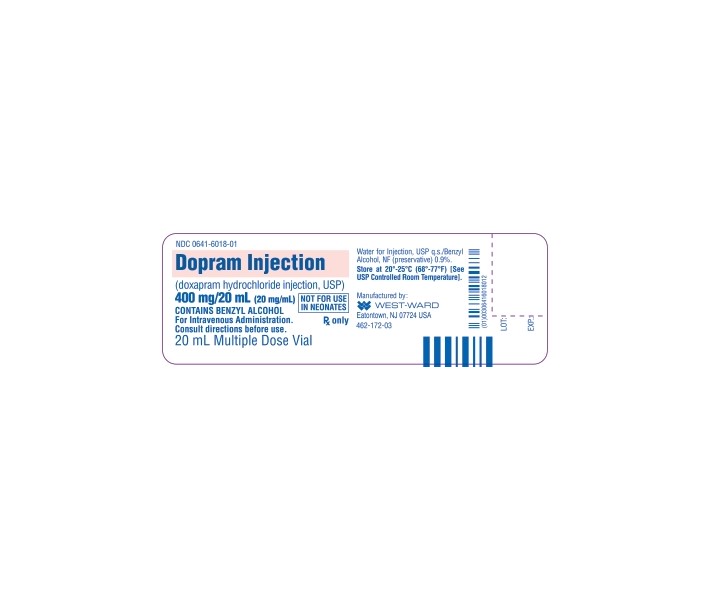
DOXAPRAM HYDROCHLORIDE 20 mg/mL Injection — NDC 51662-1404-1 (Billing 51662-1404-01)
This is a package of DOXAPRAM HYDROCHLORIDE 20 mg/mL Injection from HF Acquisition Co LLC, DBA HealthFirst, marketed since Oct 2019 and currently FDA-listed. It is this product's only package size.
NDC database record
One package, one record: these facts belong to NDC 51662-1404-1 alone.
- Record
- FDA NDC Directory package listing · Human prescription drug
- Code segments
- 51662 labeler · 1404 product · 1 package
- Package marketed since
- Oct 19, 2019
- Sample package
- No — commercial package
- Listing certified through
- Dec 31, 2026
- Barcode (UPC-A, from the NDC)
- 3 5166214041 3
- FDA record last changed
- Jul 24, 2026
Identity & classification
Regulatory identifiers FDA, NLM and CMS codes for this package
- RxCUI (RxNorm): 1047087
Where does this data come from?
- FDA openFDA NDC Directory · synced Oct 1, 2026
- FDA label on DailyMed · label index refreshed Oct 5, 2026
- RxNorm (NLM RxNav) · catalog refreshed Oct 1, 2026
- Medi-Span GPI (licensed)
- First Databank (licensed) · refreshed Oct 1, 2026
RxNorm drug class
This medicine belongs to the Respiratory Stimulant class.
Where does this data come from?
- RxClass (NLM) · catalog refreshed Oct 1, 2026
Clinical
Patient education
Supplement & herbal interactions
Where does this data come from?
- MedlinePlus (NLM) · refreshed Oct 1, 2026
- FDA label on DailyMed · label index refreshed Oct 5, 2026
Ask a licensed pharmacist directly — free, answered by our team.
Pricing
A drug doesn't have one price. Each row is a different public payment system, and none is what you'd pay at the counter — that depends on your insurance. The ⓘ on each row explains what it measures.
| Price system | Per each | Per package |
|---|---|---|
| Retail pharmacies payNADAC · weekly | Not in the retail survey — common for institutional, discontinued, or low-volume packs. | |
| Medicaid paysCMS SDUD · 12 mo | No recent Medicaid claims on file for this NDC — rare and low-volume NDCs are suppressed in the public data. | |
| Medicare drug plans payPart D · quarterly | No Part D plan price is available for this NDC in our data. | |
Where does this data come from?
- CMS NADAC weekly file
- CMS ASP pricing files · refreshed Sep 20, 2026
- CMS Medicaid State Drug Utilization Data · refreshed Oct 5, 2026
- CMS Part D plan pricing files · refreshed Sep 24, 2026
- VA National Acquisition Center price file
Packaging — all sizes for this product
| Package NDC | Description | Marketing start | Marketing end | Status |
|---|---|---|---|---|
| 51662-1404-01 You're viewing this Main listing | 1 VIAL in 1 CARTON / 20 mL in 1 VIAL | 2019-10-19 | — | Active |
Therapeutic equivalents
| Product | Labeler | Pack | NADAC/unit | TE | Status | Price vs. this |
|---|---|---|---|---|---|---|
| Dopram 20 mg/mL 00641-6018-01 | Hikma | 20 ml | — | AP | FDA listed | — |
| Doxapram Hydrochloride 20 mg/mLthis 51662-1404-01 | HF | 1 vial | — | AP | FDA listed | — |
Where does this data come from?
- FDA openFDA NDC Directory · synced Oct 1, 2026
- FDA Orange Book · refreshed Oct 3, 2026
- CMS NADAC weekly file
Availability & generic status
The FDA lists approved generic versions of this medicine, but that does not always mean a pharmacy can get one today. Patent rules, launch agreements, supply and pricing can affect when generics actually arrive.
Where does this data come from?
- FDA Orange Book · refreshed Oct 3, 2026
Inactive Ingredients / Excipients
Inactive ingredients, also called excipients, are components of the drug product other than the active ingredient. They may include fillers, dyes, coatings, preservatives, flavors, or other formulation ingredients.
💡 Tap an ingredient (hover on desktop) to see what it is and why it’s used.
-
9 mg / 1 mL
UNII LKG8494WBH
Benzyl alcohol is a clear liquid used as a preservative and solvent in medicines. It helps prevent bacterial and fungal growth and dissolves other ingredients to create uniform liquid formulations.
-
UNII 059QF0KO0R
Water is a liquid solvent that dissolves and mixes ingredients together in liquid medicines, syrups, and injections. It helps distribute the active drug evenly throughout the product.
2 inactive ingredients listed in the exact product block matched to this NDC.
Where does this data come from?
ingredient classCode="IACT" elements from the exact product block matched by this NDC. Label-section narrative from DailyMed / the openFDA label index is shown separately when available.- FDA label on DailyMed · label index refreshed Oct 5, 2026
- FDA openFDA NDC Directory · synced Oct 1, 2026
Inactive ingredient FAQ
Are inactive ingredients the same for every manufacturer?
Why might an inactive ingredient be missing?
Can inactive ingredients matter?
Manufacturer & labeler
More NDCs from HF Acquisition Co LLC, DBA HealthFirst labeler code 51662
- VERAPAMIL HYDROCHLORIDE 2.5 mg/mL Injection, Solution NDC 51662-1398-1
- BUPIVACAINE HCI AND EPINEPHRINE 5 mg/mL; .005 mg/mL Injection, Solution NDC 51662-1399-1
- SODIUM BICARBONATE 42 mg/mL Injection, Solution NDC 51662-1400-1
- CHLOROPROCAINE HCI 20 mg/mL Injection, Solution NDC 51662-1401-1
- DOXY 100(TM) DOXYCYCLINE 100 mg/10mL Injection, Powder, Lyophilized, For Solution NDC 51662-1402-1
- POLOCAINE(R) -MPF (MEPIVACAINE HCI) 10 mg/mL Injection, Solution NDC 51662-1403-1
- XYLOCAINE(R) -MPF (LIDOCAINE HCI AND EPINEPHRINE) 10 mg/mL; .005 mg/mL Injection, Solution NDC 51662-1405-1
- CHLORPROMAZINE HCI 25 mg/mL Injection NDC 51662-1406-1
- (CHLOROPROCAINE HCI 10 mg/mL Injection, Solution NDC 51662-1407-1
- CHLOROPROCAINE HCI 20 mg/mL Injection, Solution NDC 51662-1408-1
- HEPARIN SODIUM 10000 [USP'U]/mL Injection, Solution NDC 51662-1409-1
- PYRIDOXINE HCI 100 mg/mL Injection, Solution NDC 51662-1410-1
Where does this data come from?
- FDA openFDA NDC Directory · synced Oct 1, 2026
- Drugs@FDA
Full prescribing information FDA SPL
🎯 Indications and Usage ▾
INDICATIONS & USAGE Postanesthesia When the possibility of airway obstruction and/or hypoxia have been eliminated, doxapram may be used to stimulate respiration in patients with drug-induced postanesthesia respiratory depression or apnea other than that due to muscle relaxant drugs. To pharmacologically stimulate deep breathing in the postoperative patient. (A quantitative method of assessing oxygenation, such as pulse oximetry, is recommended.) Drug-Induced Central Nervous System Depression Exercising care to prevent vomiting and aspiration, doxapram may be used to stimulate respiration, hasten arousal, and to encourage the return of laryngopharyngeal reflexes in patients with mild to moderate respiratory and CNS depression due to drug overdosage.
Chronic Pulmonary Disease Associated with Acute Hypercapnia Doxapram is indicated as a temporary measure in hospitalized patients with acute respiratory insufficiency superimposed on chronic obstructive pulmonary disease. Its use should be for a short period of time (see DOSAGE & ADMINISTRATION ) as an aid in the prevention of elevation of arterial CO2 tension during the administration of oxygen. It should not be used in conjunction with mechanical ventilation.
⏱️ Dosage and Administration ▾
DOSAGE & ADMINISTRATION NOTE: CONTAINS BENZYL ALCOHOL (see PRECAUTIONS ) In Postanesthetic Use Table I. Dosage for postanesthetic use-I.V. and infusion. * Dose not to exceed 3 grams/24 hours. BY I.V.
INJECTION (See Table I. Dosage for postanesthetic use—I.V.) The recommended dose for I.V. administration is 0.5 – 1 mg/kg for a single injection and at 5-minute intervals. Careful observation of the patient during administration and for some time subsequently are advisable.
The maximum total dosage by I.V. injection is 2 mg/kg. BY INFUSION The solution is prepared by adding 250 mg of doxapram (12.5 mL) to 250 mL of dextrose 5% or 10% in water or normal saline solution. The infusion is initiated at a rate of approximately 5 mg/minute until a satisfactory respiratory response is observed, and maintained at a rate of 1 to 3 mg/minute.
The rate of infusion should be adjusted to sustain the desired level of respiratory stimulation with a minimum of side effects. The maximum total dosage by infusion is 4 mg/kg, or approximately 300 mg for the average adult. In the Management of Drug-Induced CNS Depression (See Table II.
Dosage for drug-induced CNS depression.) Table II. Dosage for drug-induced CNS depression. * Mild Depression Class 0: Asleep, but can be aroused and can answer questions. Class 1: Comatose, will withdraw from painful stimuli, reflexes intact. † Moderate Depression Class 2: Comatose, will not withdraw from painful stimuli, reflexes intact.
Class 3: Comatose, reflexes absent, no depression of circulation or respiration. METHOD ONE Using Single and/or Repeat Single I.V. Injections Give priming dose of 2 mg/kg body weight and repeat in 5 minutes.
The priming dose for moderate depression is 2 mg/kg and the priming dose for mild depression is 1 mg/kg. Repeat same dose q 1 to 2h until patient wakens. Watch for relapse into unconsciousness or development of respiratory depression, since DOPRAM does not affect the metabolism of CNS-depressant drugs.
If relapse occurs, resume injections q 1 to 2h until arousal is sustained, or total maximum daily dose (3 grams) is given. After maximum dose has been given (3 grams), allow patient to sleep until 24 hours have elapsed from first injection of DOPRAM, using assisted or automatic respiration if necessary. Repeat procedure the following day until patient breathes spontaneously and sustains desired level of consciousness, or until maximum dosage (3 grams) is given.
Repetitive doses should be administered only to patients who have shown response to the initial dose. Failure to respond appropriately indicates the need for neurologic evaluation for a possible central nervous system source of sustained coma. METHOD TWO By Intermittent I.V.
Infusion Give priming dose as in Method One. If patient wakens, watch for relapse; if no response, continue general supportive treatment for 1 to 2 hours and repeat priming dose of DOPRAM. If some respiratory stimulation occurs, prepare I.V. infusion by adding 250 mg of DOPRAM (12.5 mL) to 250 mL of saline or dextrose solution.
Deliver at rate of 1 to 3 mg/min (60 to 180 mL/hr) according to size of patient and depth of coma. Discontinue DOPRAM if patient begins to waken or at end of 2 hours. Continue supportive treatment for ½ to 2 hours and repeat Step b.
Do not exceed 3 grams/day. Chronic Obstructive Pulmonary Disease Associated with Acute Hypercapnia One vial of doxapram (400 mg) should be mixed with 180 mL of dextrose 5% or 10% or normal saline solution (concentration of 2 mg/mL). The infusion should be started at 1 to 2 mg/minute (½ to 1 mL/minute); if indicated, increase to a maximum of 3 mg/minute.
Arterial blood gases should be determined prior to the onset of doxapram’s administration and at least every half hour during the two hours of infusion to insure against the insidious development of CO2-RETENTION AND ACIDOSIS. Alteration of oxygen concentration or flow rate may necessitate adjustment in the rate of doxapram infusion. Predictable blood gas… [Excerpted — this section continues on DailyMed.]
⛔ Contraindications ▾
CONTRAINDICATIONS Doxapram is contraindicated in patients with known hypersensitivity to the drug or any of the injection components. Doxapram should not be used in patients with epilepsy or other convulsive disorders. Doxapram is contraindicated in patients with proven or suspected pulmonary embolism.
Doxapram is contraindicated in patients with mechanical disorders of ventilation such as mechanical obstruction, muscle paresis (including neuromuscular blockade), flail chest, pneumothorax, acute bronchial asthma, pulmonary fibrosis, or other conditions resulting in restriction of the chest wall, muscles of respiration, or alveolar expansion. Doxapram is contraindicated in patients with evidence of head injury, cerebral vascular accident, or cerebral edema, and in those with significant cardiovascular impairment, uncompensated heart failure, severe coronary artery disease, or severe hypertension, including that associated with hyperthyroidism or pheochromocytoma.
(See WARNINGS .)
⚠️ Warnings ▾
WARNINGS Doxapram should not be used in conjunction with mechanical ventilation. Exposure to excessive amounts of benzyl alcohol has been associated with toxicity (hypotension, metabolic acidosis), particularly in neonates, and an increased incidence of kernicterus, particularly in small preterm infants. There have been rare reports of deaths, primarily in preterm infants, associated with exposure to excessive amounts of benzyl alcohol.
The amount of benzyl alcohol from medications is usually considered negligible compared to that received in flush solutions containing benzyl alcohol. Administration of high dosages of medications containing this preservative must take into account the total amount of benzyl alcohol administered. The amount of benzyl alcohol at which toxicity may occur is not known.
If the patient requires more than the recommended dosages or other medications containing this preservative, the practitioner must consider the daily metabolic load of benzyl alcohol from these combined sources (see PRECAUTIONS , Pediatric Use). In Postanesthetic Use Doxapram is neither an antagonist to muscle relaxant drugs nor a specific narcotic antagonist. More specific tests (eg, peripheral nerve stimulation, airway pressures, head lift, pulse oximetry, and end-tidal carbon dioxide) to assess adequacy of ventilation are recommended before administering doxapram.
Doxapram should be administered with great care and only under careful supervision to patients with hypermetabolic states such as hyperthyroidism or pheochromocytoma. Since narcosis may recur after stimulation with doxapram, care should be taken to maintain close observation until the patient has been fully alert for ½ to 1 hour. In patients who have received general anesthesia utilizing a volatile agent known to sensitize the myocardium to catecholamines, administration of doxapram should be delayed until the volatile agent has been excreted in order to lessen the potential for arrhythmias, including ventricular tachycardia and ventricular fibrillation (see PRECAUTIONS, Drug Interactions).
In Drug-Induced CNS and Respiratory Depression Doxapram alone may not stimulate adequate spontaneous breathing or provide sufficient arousal in patients who are severely depressed either due to respiratory failure or to CNS depressant drugs, but may be used as an adjunct to established supportive measures and resuscitative techniques. In Chronic Obstructive Pulmonary Disease Because of the associated increased work of breathing, do not increase the rate of infusion of doxapram in severely ill patients in an attempt to lower pCO2.
🤒 Adverse Reactions ▾
ADVERSE REACTIONS Adverse reactions reported coincident with the administration of DOPRAM (doxapram hydrochloride, USP) include: 1. Central and Autonomic Nervous Systems Pyrexia, flushing, sweating; pruritus and paresthesia, such as a feeling of warmth, burning, or hot sensation, especially in the area of genitalia and perineum; apprehension, disorientation, pupillary dilatation, hallucinations, headache, dizziness, hyperactivity, involuntary movements, muscle spasticity, muscle fasciculations, increased deep tendon reflexes, clonus, bilateral Babinski, and convulsions.
2. Respiratory Dyspnea, cough, hyperventilation, tachypnea, laryngospasm, bronchospasm, hiccough, and rebound hypoventilation. 3.
Cardiovascular Phlebitis, variations in heart rate, lowered T-waves, arrhythmias (including ventricular tachycardia and ventricular fibrillation), chest pain, tightness in chest. A mild to moderate increase in blood pressure is commonly noted and may be of concern in patients with severe cardiovascular diseases. 4.
Gastrointestinal Nausea, vomiting, diarrhea, desire to defecate. 5. Genitourinary Stimulation of urinary bladder with spontaneous voiding; urinary retention.
Elevation of BUN and albuminuria. 6. Hemic and Lymphatic Hemolysis with rapid infusion.
A decrease in hemoglobin, hematocrit, or red blood cell count has been observed in postoperative patients. In the presence of pre-existing leukopenia, a further decrease in WBC has been observed following anesthesia and treatment with doxapram hydrochloride.
🆘 Overdosage ▾
OVERDOSAGE Signs and Symptoms Symptoms of overdosage are extensions of the pharmacologic effects of the drug. Excessive pressor effect, such as hypertension, tachycardia, skeletal muscle hyperactivity, and enhanced deep tendon reflexes may be early signs of overdosage. Therefore, the blood pressure, pulse rate, and deep tendon reflexes should be evaluated periodically and the dosage or infusion rate adjusted accordingly.
Other effects may include agitation, confusion, sweating, cough, and dyspnea. Convulsive seizures are unlikely at recommended dosages. In unanesthetized animals, the convulsant dose is 70 times greater than the respiratory stimulant dose.
Intravenous LD50 values in the mouse and rat were approximately 75 mg/kg and in the cat and dog were 40 to 80 mg/kg. Except for management of chronic obstructive pulmonary disease associated with acute hypercapnia, the maximum recommended dosage is 3 GRAMS/24 HOURS. (See DOSAGE & ADMINISTRATION .) Management There is no specific antidote for doxapram.
Management should be symptomatic. Anticonvulsants, along with oxygen and resuscitative equipment should be readily available to manage overdosage manifested by excessive central nervous system stimulation. Slow administration of the drug and careful observation of the patient during administration and for some time subsequently are advisable.
These precautions are to assure that the protective reflexes have been restored and to prevent possible post-hyperventilation or hypoventilation. There is no evidence that doxapram is dialyzable; further, the half-life of doxapram makes it unlikely that dialysis would be appropriate in managing overdose with this drug. Close
🧬 Clinical Pharmacology ▾
CLINICAL PHARMACOLOGY Pharmacodynamics Doxapram hydrochloride produces respiratory stimulation mediated through the peripheral carotid chemoreceptors. As the dosage level is increased, the central respiratory centers in the medulla are stimulated with progressive stimulation of other parts of the brain and spinal cord. The onset of respiratory stimulation following the recommended single intravenous injection of doxapram hydrochloride usually occurs in 20 to 40 seconds with peak effect at 1 to 2 minutes.
The duration of effect may vary from 5 to 12 minutes. The respiratory stimulant action is manifested by an increase in tidal volume associated with a slight increase in respiratory rate. A pressor response may result following doxapram administration.
Provided there is no impairment of cardiac function, the pressor effect is more marked in hypovolemic than in normovolemic states. The pressor response is due to the improved cardiac output rather than peripheral vasoconstriction. Following doxapram administration, an increased release of catecholamines has been noted.
Although opiate-induced respiratory depression is antagonized by doxapram, the analgesic effect is not affected. Pharmacokinetics Doxapram is metabolized via ring hydroxylation to ketodoxapram, an active metabolite readily detected in the plasma.
📦 How Supplied / Storage and Handling ▾
HOW SUPPLIED DOPRAM INJECTION (DOXAPRAM HYDROCHLORIDE INJECTION, USP) is supplied in the following dosage forms. NDC 51662-1404-1 DOPRAM INJECTION (DOXAPRAM HYDROCHLORIDE INJECTION, USP) 400 mg/20 mL (20 mg/mL) 20 mL VIAL BOXED HF Acquisition Co LLC, DBA HealthFirst Mukilteo, WA 98275 Also supplied in the following manufacture supplied dosage forms DOPRAM Injection (doxapram hydrochloride injection, USP) is available in boxes of six 20 mL multiple dose vials containing 20 mg of doxapram hydrochloride per mL with benzyl alcohol 0.9% as the preservative (NDC 0641-6018-06).
Store at Controlled Room Temperature, Between 20˚C to 25˚C (68˚F to 77˚F). See USP.
📋 Description ▾
DESCRIPTION DOPRAM Injection (doxapram hydrochloride injection, USP) is a clear, colorless, sterile, non-pyrogenic, aqueous solution with pH 3.5 to 5, for intravenous administration. Each 1 mL contains: Doxapram Hydrochloride, USP ................................................................. 20 mg Benzyl Alcohol, NF (as preservative) .........................................................
0.9% Water for Injection, USP ...........…................................................................. q.s. Doxapram Injection is a respiratory stimulant. Doxapram hydrochloride is a white to off-white, crystalline powder, sparingly soluble in water, alcohol and chloroform.
Chemically, doxapram hydrochloride is 1-ethyl-4-[2-(4-morpholinyl)ethyl]-3,3-diphenyl-2-pyrrolidinone monohydrochloride, monohydrate. The chemical structure is: C24H31ClN2O2 • H2O M.W. 432.98 STRUCTURE
⚠️ Precautions ▾
PRECAUTIONS General An adequate airway is essential and airway protection should be considered since doxapram may stimulate vomiting. Recommended dosages of doxapram should be employed and maximum total dosages should not be exceeded. In order to avoid side effects, it is advisable to use the minimum effective dosage.
Monitoring of the blood pressure, pulse rate, and deep tendon reflexes is recommended to prevent overdosage. Vascular extravasation or use of a single injection site over an extended period should be avoided since either may lead to thrombophlebitis or local skin irritation. Rapid infusion may result in hemolysis.
Lowered pCO2 induced by hyperventilation produces cerebral vasoconstriction and slowing of the cerebral circulation. This should be taken into consideration on an individual basis. In certain patients a pressor effect of doxapram on the pulmonary circulation may result in a fall of the arterial pO2 probably due to a worsening of ventilation perfusion-matching in the lungs despite an overall improvement in alveolar ventilation and a fall in pCO2.
Patients should be carefully supervised taking into account available blood gas measurements. There is a risk that doxapram will produce adverse effects (including seizures) due to general central nervous system stimulation. Muscle involvement may range from fasciculation to spasticity.
Anticonvulsants such as intravenous short-acting barbiturates, along with oxygen and resuscitative equipment should be readily available to manage overdosage manifested by excessive central nervous system stimulation. Slow administration of the drug and careful observation of the patient during administration and for some time subsequently are advisable. These precautions are to assure that the protective reflexes have been restored and to prevent possible post-hyperventilation or hypoventilation.
Doxapram should be administered cautiously to patients receiving sympathomimetic or monoamine oxidase inhibiting drugs, since an additive pressor effect may occur. Blood pressure increases are generally modest but significant increases have been noted in some patients. Because of this, doxapram is not recommended for use in patients with severe hypertension (see CONTRAINDICATIONS ).
Cardiovascular effects may include various dysrhythmias. Patients receiving doxapram should be monitored for disturbance of their cardiac rhythm. If sudden hypotension or dyspnea develops, doxapram should be stopped.
Doxapram should be administered with caution to patients with significantly impaired hepatic or renal function as a reduction in the rate of metabolism or excretion of metabolites may alter the response. In Postanesthetic Use The same consideration to pre-existing disease states should be exercised as in non-anesthetized individuals. See CONTRAINDICATIONS and WARNINGS covering use in hypertension, asthma, disturbances of respiratory mechanics including airway obstruction, CNS disorders including increased cerebrospinal fluid pressure, convulsive disorders, acute agitation, and profound metabolic disorders.
See PRECAUTIONS , Drug Interactions. In Chronic Obstructive Pulmonary Disease Arrhythmias seen in some patients in acute respiratory failure secondary to chronic obstructive pulmonary disease are probably the result of hypoxia. Doxapram should be used with caution in these patients.
Arterial blood gases should be drawn prior to the initiation of doxapram infusion and oxygen administration, then at least every ½ hour during the infusion period to prevent development of CO2 retention and acidosis in patients with chronic obstructive pulmonary disease with acute hypercapnia. Doxapram administration does not diminish the need for careful monitoring of the patient or the need for supplemental oxygen in patients with acute respiratory failure. Doxapram should be stopped if the arterial blood gases deteriorate, and mechanical ventilation should be initiated.
Drug Interactions Administration of doxapr… [Excerpted — this section continues on DailyMed.]
📄 Package Label / Principal Display Panel ▾
PRINCIPAL DISPLAY PANEL - VIAL LABEL VIAL LABEL
PRINCIPAL DISPLAY PANEL - CARTON LABELING CARTON LABELING
PRINCIPAL DISPLAY PANEL - SERIALIZED LABELING SERIALIZED CARTON
About this NDC listing & data coverage
What data is (and isn’t) available for this NDC — tap to expand
| NDC identity (package / product / labeler codes) | ✓ Available |
| Labeler | ✓ Available |
| Product & package description | ✓ Available |
| Marketing category & status | ✓ Available |
| Active ingredient / dosage form / route | ✓ Available |
| FDA label (SPL via DailyMed) | ✓ Available |
| Package photos | ✓ Available |
| Inactive ingredients (structured) | ✓ Available |
| NADAC pharmacy acquisition price (CMS) | — Not published for this NDC CMS publishes NADAC only for NDCs reported in its retail-pharmacy survey. |
| Orange Book / therapeutic-equivalence data | ✓ Available |
| HCPCS J-code billing crosswalk | — Not published for this NDC Most self-administered / retail products have no J-code — that is normal. |
| Medicaid utilization (CMS SDUD) | — Not published for this NDC CMS reports utilization only for NDCs with Medicaid claims above its privacy threshold. |